Dub music
Dub is a Jamaican studio genre from the late 1960s, built by stripping reggae tracks to drums and bass and reshaping them with echo, reverb and dropouts.
Jamaica, around 1967
Caribbean family
Born
around 1967
Jamaica
Subgenres
1
Documented branches
Links
47
Genres it drew on or shaped
Tempo
65-80 BPMLineage
Family tree
Timeline
Era by era
From the first sparks to today. Select a dot to read the story behind it.
- Versions and B-sides
1967 to 1972
- Kingston dub albums
1973 to 1978
- British dub and post-punk
1979 to 1989
- Electronic dub and revival
1990 to today
Eras
Moments
- 1 Versions and B-sides, 1967 to 1972
- 2 Kingston dub albums, 1973 to 1978
- 3 British dub and post-punk, 1979 to 1989
- 4 Electronic dub and revival, 1990 to today
around 1967
Versions and B-sides
Kingston sound system men and producers press instrumental versions on record B-sides, and engineers start treating the vocal-free track as raw material.
- 1968Vocal-free dub plate of On the BeachSound system operator Ruddy Redwood keeps an accidental instrumental of the Paragons hit cut at Duke Reid's Treasure Isle and plays it at a dance.
- 1968King Tubby makes instrumental versionsPrompted by Bunny Lee, Tubby builds versions of Ain't Too Proud to Beg by swapping vocal and rhythm in the mix.
- 1970The UndertakerDerrick Harriott and the Crystallites release one of the first strictly instrumental reggae albums, engineered by Errol Thompson.
- 1972Dub mixes at Randy'sClive and Vincent Chin cut dub mixes at Randy's studio, with Errol Thompson engineering Impact All-Stars sessions.
1973
Kingston dub albums
Dub becomes a subgenre of reggae with full LPs from Lee Perry, King Tubby, Keith Hudson and Augustus Pablo, mixed at the console with echo and reverb.
- 1973Black Ark studio builtLee Perry builds his Black Ark studio behind his family home in Washington Gardens, Kingston.
- 1973Blackboard Jungle DubLee Perry's album, mixed with King Tubby, is among the earliest dub LPs.
- 1974Pick a DubKeith Hudson's album is widely seen as the first deliberately thematic dub LP.
- 1974At the Grass Roots of DubKing Tubby's debut album, released alongside Surrounded by the Dreads at the National Arena.
- 1974King Tubby Meets the Rockers UptownAugustus Pablo's melodica dub of a Jacob Miller song is issued as a single.
- 1976Chase the DevilMax Romeo and the Upsetters record the Lee Perry production later sampled across electronic music.
1979
British dub and post-punk
London studios such as Ariwa and On-U Sound carry dub into British reggae and post-punk, and UB40 reach the UK top 40 with a dub album.
- 1979Ariwa Sounds foundedMad Professor opens his south London studio in the front room of his family house.
- 1980On-U Sound foundedAdrian Sherwood starts the London label that mixes dub with post-punk and electronic music.
- 1981Present Arms in DubUB40's dub companion album becomes the first dub album in the UK top 40.
- 1989Death of King TubbyThe Kingston engineer dies in February 1989.
around 1990
Electronic dub and revival
Dub methods feed jungle, drum and bass, dub techno and dubstep while veterans such as Mad Professor keep making traditional dub.
Listening path
Start listening
A short path from an easy way in to the deep end. Thumbnails come from YouTube; the player loads only when you press play.
- 01
Augustus Pablo, 1974
Melodica over a stripped Jacob Miller riddim; listen for the echo on the drums.
- 02
Max Romeo and Lee Perry, 1976
Perry's Black Ark production: heavy bass, spare drums and echoed voices.
Facts
| Family | Caribbean |
| Origin | Jamaica |
| Emerged | Late 1960s-early 1970s |
| Status | Active |
| Tempo | 65 to 80 BPM |
| Meter | 4/4 |
| Grew out of | Reggae, Rocksteady, Ska |
| Subgenres | 1 |
Dub is a style of Jamaican studio music that grew out of reggae in the late 1960s and early 1970s. A dub track is a remix of an existing recording: the vocal is largely removed, the drum and bass line is pushed forward, and delay, reverb and sudden dropouts are applied at the mixing desk.
It is usually filed under reggae, a branch of the Caribbean tradition, though it has developed well beyond that style.
Origins
The practice began with the Kingston sound systems, mobile dance rigs whose operators competed to play records no rival owned. In 1968 a sound system operator, Ruddy Redwood, went to Duke Reid’s Treasure Isle studio to cut a one-off dub plate of the Paragons hit On the Beach. The engineer left the vocal off by accident. Redwood kept the result, played it at his next dance with a deejay talking over it, and the crowd sang the missing words themselves.
The producer Bunny Lee saw the dance and told King Tubby that more instrumentals were needed. Tubby treated the new tracks as more than karaoke backing: he swapped vocal and rhythm in and out of the mix, and the results became known as versions. By the end of 1968 instrumental versions were common among Jamaican producers, and they were routinely pressed on the B-side of a single. One account places the start of this habit in 1967 rather than 1968.
Two motives drove the experiment. A version gave a deejay a clear track to toast over, and it let a producer get several releases from one studio session. Sound systems also wanted exclusive mixes, so a studio would supply many copies of the same record, each cut differently.
Kingston, 1970-1978
By 1973 versions from several competing studios had settled into a subgenre. Derrick Harriott and the Crystallites released The Undertaker in 1970, one of the first strictly instrumental reggae albums, engineered by Errol Thompson. By 1972 Clive and Vincent Chin were making dub mixes at Randy’s studio, and Herman Chin Loy’s Aquarius Dub appeared at about the same time.
In 1973 Lee “Scratch” Perry released Blackboard Jungle Dub, mixed with King Tubby. Perry had built his Black Ark studio that year behind his family home in Washington Gardens, and he worked there until 1979. In 1974 Keith Hudson’s Pick a Dub became the first dub album deliberately conceived as a whole LP rather than a collection of B-sides, and King Tubby issued his own first albums, At the Grass Roots of Dub and Surrounded by the Dreads at the National Arena.
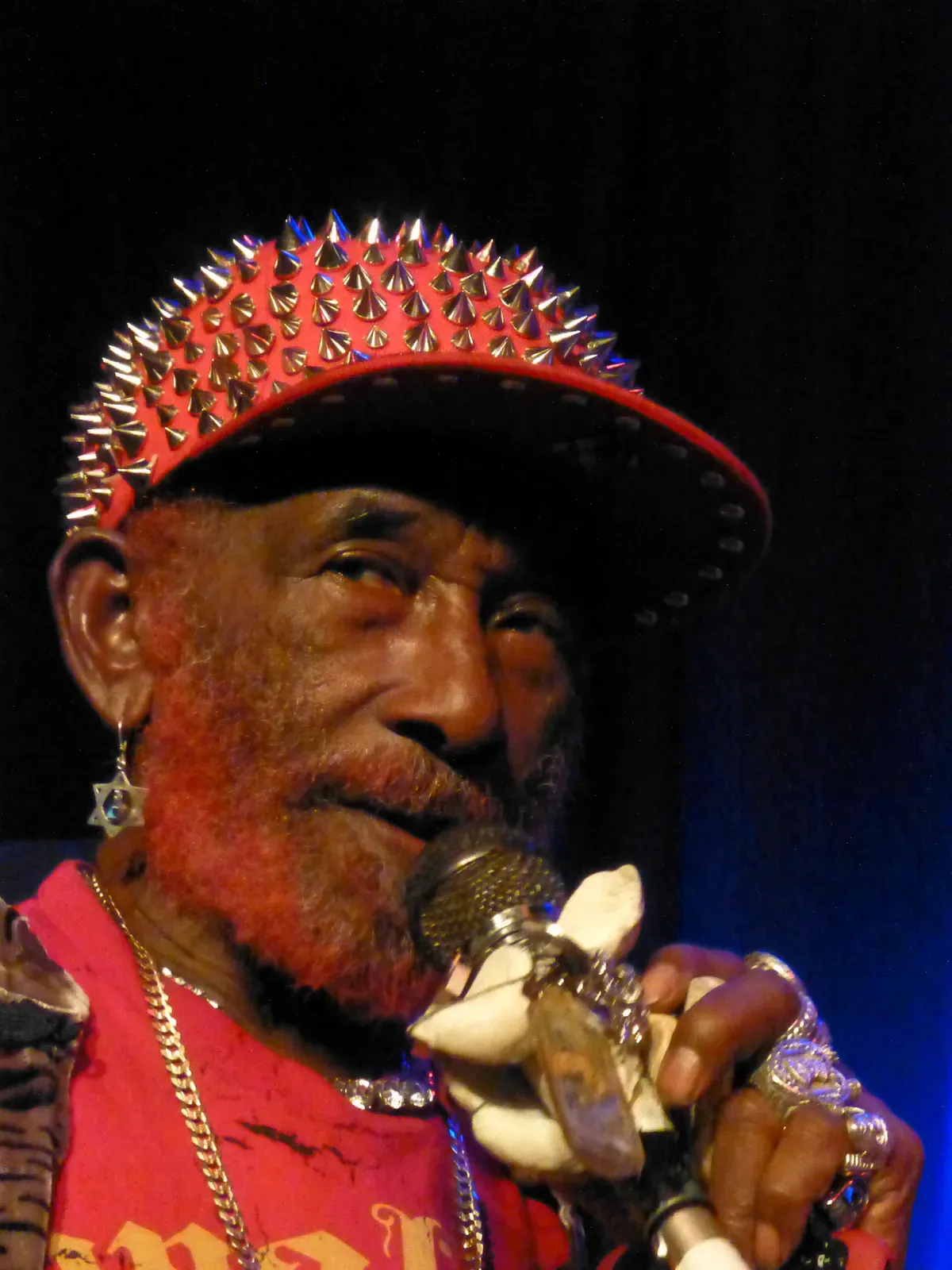
Augustus Pablo brought the melodica to the style. His Rockers Uptown sessions were recorded at Randy’s and then taken to King Tubby for mixing, and the title track, first a single in 1974, became one of the best-known dub instrumentals. Perry’s production of Chase the Devil, recorded by Max Romeo and the Upsetters in 1976, carried the same heavy bass and echo to a wider audience.
Characteristics
A dub version typically keeps the drums and bass as the centre of the mix. Other parts come in and out: a guitar chop, an organ bubble or a fragment of the original voice appears, is echoed, and disappears. Birds, thunder, running water and the producer’s own shouted instructions are sometimes added. The effect is a sculpted space, with attention drawn to the gaps between sounds as much as to the sounds.
Tempo sits in the slow reggae range. The canonical recordings measured here run at roughly 65 to 80 beats per minute at the felt pulse.
Instruments and production
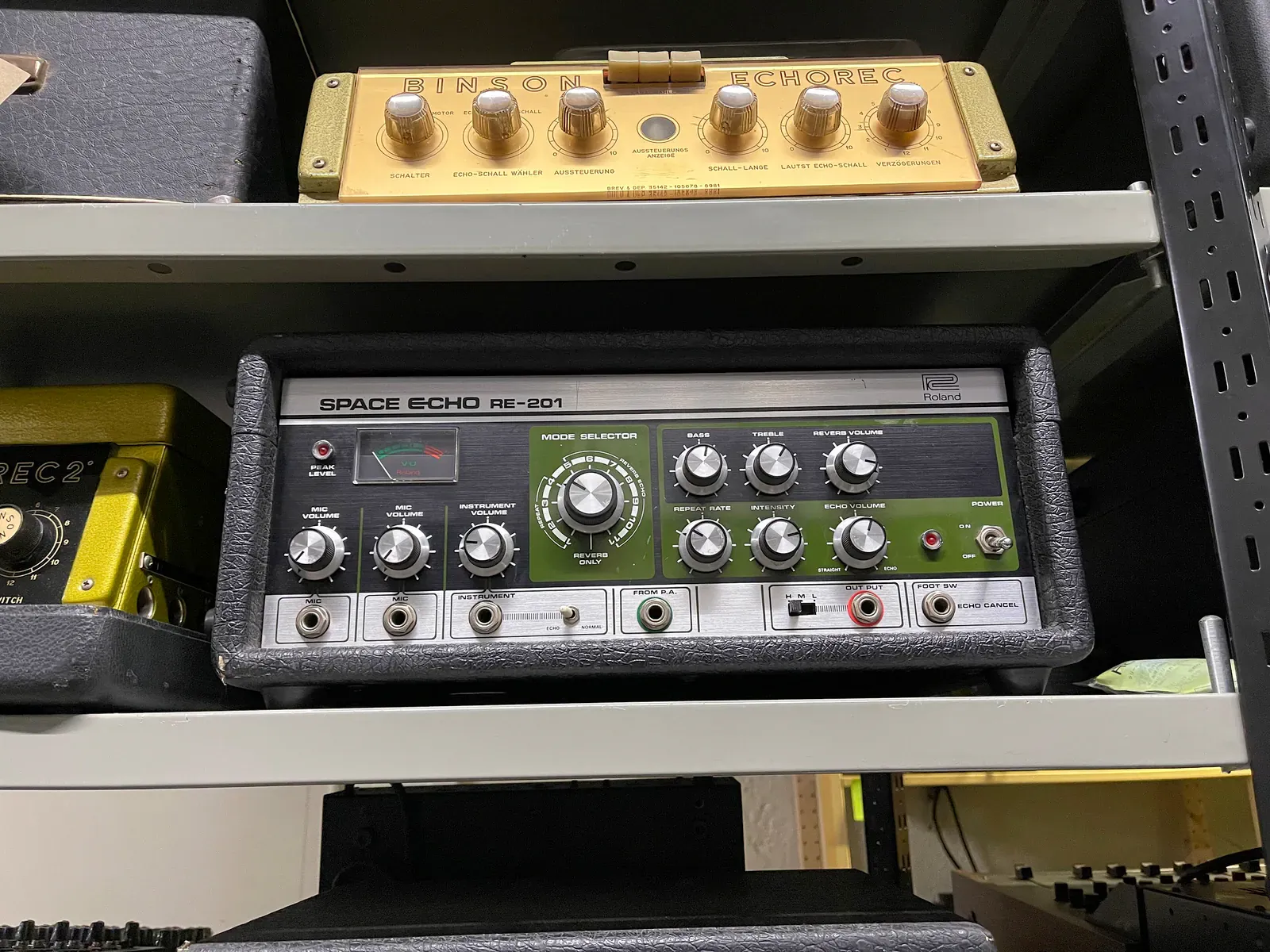
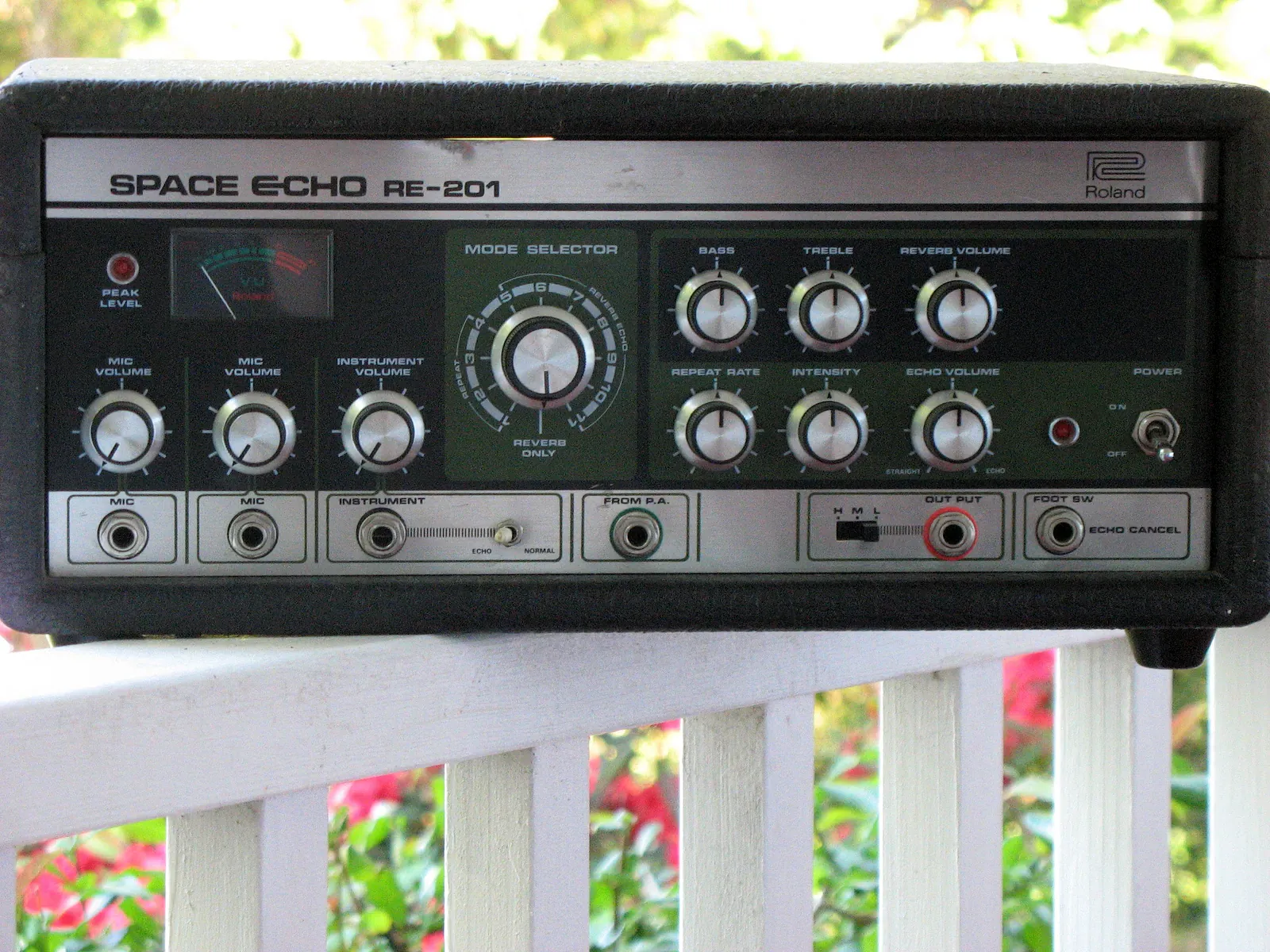
Tubby and Perry treated the console itself as the instrument. Faders and mutes shaped the arrangement live, while tape delay and spring reverb thickened single hits. The Roland Space Echo, a tape-loop delay unit, was widely used by 1970s dub producers. Much of the work was done on modest equipment: Perry’s Black Ark was rudimentary and the gear dated, yet it produced some of the most inventive recordings of the decade.
British dub and post-punk, 1979-1989
In the late 1970s the United Kingdom became a second centre of dub. Mikey Dread, Mad Professor and Jah Shaka were among the best known figures there. In 1979 the Guyana-born Neil Fraser began recording in the front room of his family house in Thornton Heath and called the project Ariwa Sounds. His Dub Me Crazy series, begun in 1982, ran to many volumes.
Adrian Sherwood’s On-U Sound, founded around 1980 in London, applied dub mixing to harder, more experimental material, and many post-punk bands of the period were heavily influenced by dub. The Clash worked with Perry and Mikey Dread, the Police and UB40 helped popularize the sound, and UB40’s Present Arms in Dub was the first dub album to reach the UK top 40.
Mainstream success
Dub itself seldom charted, but its method reached the mainstream through other styles. Almost every reggae single carried an instrumental version on its B-side, and those versions remain a blank canvas for sound system singers and deejays. In New York, post-disco producers began issuing 12-inch singles with dub mixes that emphasised the beat and dropped vocals, a step toward the modern remix.
Culture
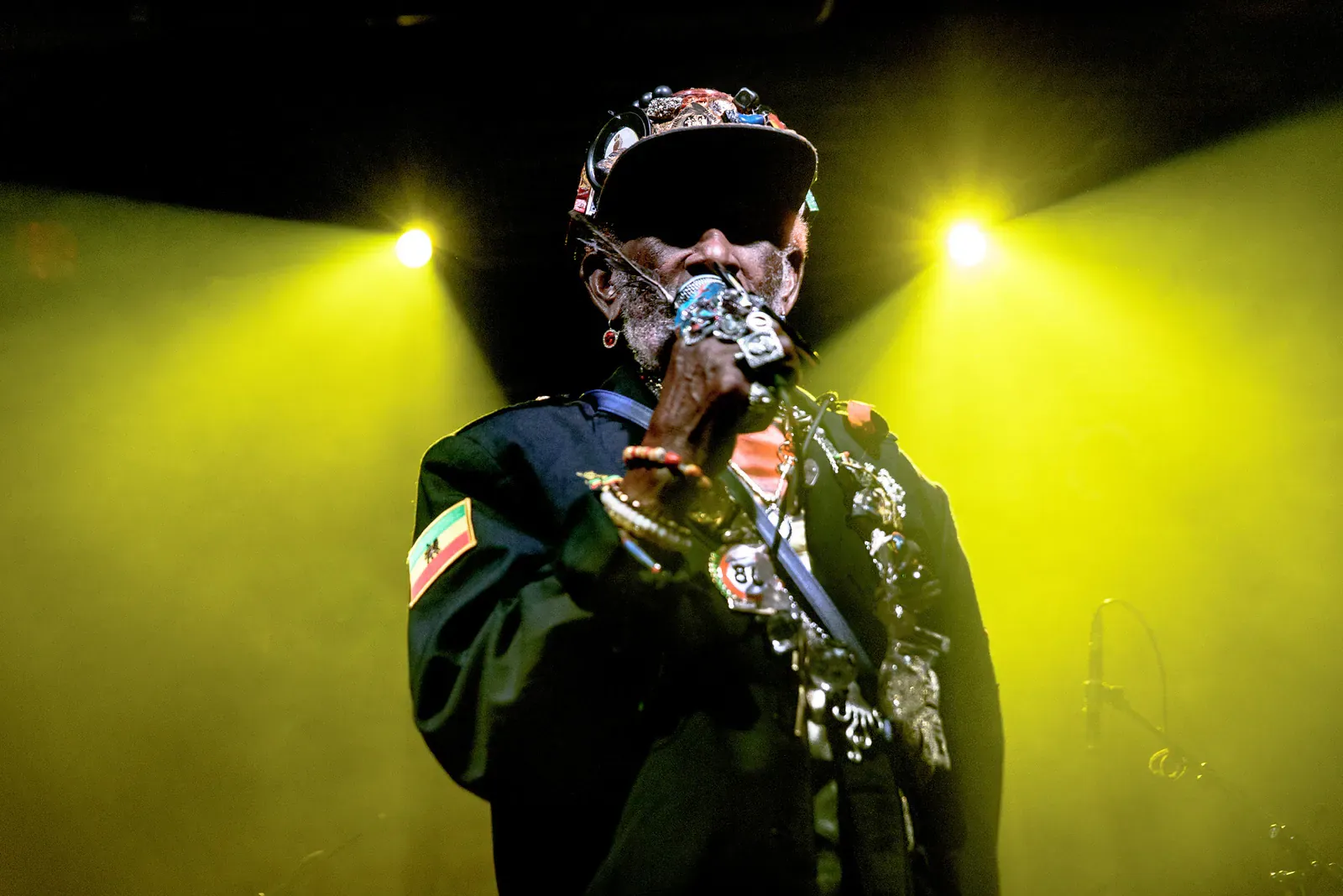
Dub belongs to the sound system dance: a selector chooses records, a deejay toasts alliterative rhymes over the version, and the system’s own mixes are a point of pride. The practice also tied Jamaican music more closely to local identity. Jamaican audiences had favoured American rhythm and blues in the 1940s and 1950s, and the sound system and its versions gave them a form that was their own, after independence in 1962.
Legacy
Dub has shaped rock, punk, post-punk, hip-hop, post-disco, house, techno, ambient, trip hop and other electronic dance music. It was a basis for jungle and drum and bass and a major influence on dubstep, which shares its focus on bass and effects. Traditional dub has survived: Mad Professor and Adrian Sherwood were still releasing in the 2020s.
Misconceptions
One myth is that dub is a kind of reggae sung or played by a band. It is a remix form, made at the console, and the engineer is as much the author as the musicians. Another is that it began as a deliberate art project; the first dub plate came from an accidental missing vocal. A third is that dub is only Jamaican: British studios, Japanese bands and American producers all built their own versions of it.
Frequently asked questions
What is dub music?
Dub is a remix style from Jamaica in which a reggae recording is stripped of most of its vocals and reshaped with echo, reverb and dropouts, so that the drum and bass line dominate.
Who invented dub?
No single person did. King Tubby, Lee Perry, Errol Thompson and the Chin family are among the engineers and producers credited with developing it in Kingston between 1968 and the mid-1970s.
What does “version” mean in dub?
A version is an alternative cut of a song, usually instrumental, pressed on the B-side of a Jamaican single so that a deejay could talk over it.
How fast is dub?
Classic dub runs at about 65 to 80 beats per minute at the felt pulse, in the slow roots-reggae range.
Sound
Sound sheet
Anatomy of a track
| # | Part |
|---|---|
| 1 | Full riddim with drums and bass |
| 2 | Vocals or instruments drop out |
| 3 | Echo and reverb throws on single hits |
| 4 | Original vocal fragments return |
Signature sounds
- Dropped-out vocals
- Tape echo on snare and guitar
- Bass-heavy mix
- Sound effects such as thunder and water
Techniques
- Echo and delay
- Reverb
- Dropouts
- Added sound effects
Keys and modes
Minor keys. Many classic cuts sit on a minor-key bass line under offbeat guitar and organ.
Vocals
Mostly absent; fragments of the original vocal are echoed, and a deejay may toast over the mix.
Scenes
Where it happened
Where and when the sound lived: one bar per city on a shared timeline.
Caribbean
Europe
Active scenes
Peak 2, 1979-2025
Home of Treasure Isle, Randy's, King Tubby's Waterhouse studio and Perry's Black Ark.
Centre of British dub with Mad Professor, Jah Shaka, Mikey Dread and Adrian Sherwood's On-U Sound.
Venues and places
Kingston, 1968 to today. Waterhouse studio where Osbourne Ruddock mixed versions and dubs.
Kingston, 1973 to 1979. Lee Perry's home studio in Washington Gardens.
Thornton Heath, 1979 to today. Mad Professor's studio in his family house in south London.
Culture
Culture markers
- Sound system dance
Selectors and deejays play versions at open-air dances where each system wants its own mixes.
Ritual - Toasting
Deejays chat rhymed, alliterative lines over a version.
Slang - Riddim and version
Vocabulary for reusing one backing track under many songs.
Slang
Glossary
Terms on this page
A one-off acetate cut of a track for a single sound system.
The stripped drum and bass track that is reused under many songs and versions.
The person who chooses and plays records at a sound system.
Jamaican rapping by a deejay over a version at a sound system dance.
An alternative cut of a song, often instrumental, pressed on the B-side of a Jamaican single.
Caribbean family