Ska
Ska is Jamaican dance music from the late 1950s built on an offbeat guitar chop, walking bass and horns, later revived in Britain and the United States.
Jamaica, 1958
Caribbean family
Born
1958
Jamaica
Subgenres
5
Documented branches
Links
22
Genres it drew on or shaped
Tempo
105-170 BPMLineage
Family tree
Grew out of
Derived from
Influenced by
Jamaica, 1958
Ska
Led to (9)
Timeline
Era by era
From the first sparks to today. Select a dot to read the story behind it.
- Kingston ska
1959 to 1966
- 2 Tone revival
1977 to 1983
- Third wave
1981 to 2000
- Independent scenes
2000 to today
Eras
Moments
- 1 Kingston ska, 1959 to 1966
- 2 2 Tone revival, 1977 to 1983
- 3 Third wave, 1981 to 2000
- 4 Independent scenes, 2000 to today
around 1959
Kingston ska
Sound system men turned producers cut local rhythm and blues on 45s, and session bands such as the Skatalites fixed the offbeat sound that carried the independence years.
- 1950Kingston sound systemsPrince Buster, Coxsone Dodd and Duke Reid run sound systems that play imported American rhythm and blues.
- 1959Local rhythm and blues on 45sAs new American records dry up, Dodd and Reid press Jamaican-made tracks on 7-inch discs, at first copying the American shuffle.
- 1962Jamaican independenceThe new nation's celebrations are marked by ska such as Derrick Morgan's Forward March and the Skatalites' Freedom Sound.
- 1964My Boy LollypopMillie Small's cover reaches number two in the UK and US and sells over seven million copies, the first major Island hit.
- 1964The Skatalites formSession players including Don Drummond, Tommy McCook and Roland Alphonso back most of the era's Kingston singers.
- 1966Slowdown into rocksteadyAs American soul slows and smooths, Jamaican bands drop the pace; rocksteady peaks in 1967 and reggae follows by 1968.
- 1967Ska in the UK Top 40Prince Buster's Al Capone reaches number 18 and the Skatalites' Guns of Navarone reaches the Top 40.
1977
2 Tone revival
In Coventry and across Britain, multiracial bands joined ska rhythms to punk speed. 2 Tone Records and the Specials, the Selecter, the Beat and Madness took the sound into the UK charts.
- 19792 Tone Records and the revivalJerry Dammers founds the label with the Specials, whose A Message to You Rudy features trombonist Rico Rodriguez.
1981
Third wave
American bands from New York and southern California, and others in Latin America and Europe, mixed ska with punk and pop. Ska punk reached US radio in the mid 1990s.
- 1981American ska bands formThe Uptones in Berkeley and the Toasters in New York start the first North American bands influenced by 2 Tone.
- 1983Moon Ska RecordsToasters frontman Robert Hingley founds the label in New York, which becomes the largest independent ska label in the US.
- 1995Time Bomb on US radioRancid's single reaches number 8 on the Billboard Modern Rock chart, the first major ska punk hit of the decade.
around 2000
Independent scenes
Radio interest faded as the big labels withdrew, and ska carried on through independent labels, touring bands and local scenes.
- 2000Moon Ska foldsThe label closes as mainstream interest in third-wave bands fades.
Listening path
Start listening
A short path from an easy way in to the deep end. Thumbnails come from YouTube; the player loads only when you press play.
- 01
The Skatalites, 1965
Listen for the horn melody over the offbeat chop and walking bass of classic Kingston ska.
- 02
Prince Buster, 1964
A sound system producer's hit with jazzy horns, a piano holding the rhythm and a staged gunfight intro.
- 03
The Specials, 1979
The 2 Tone sound: Jamaican rhythm with a harder edge and a trombone from the original recording.
- 04
Madness, 1979
A Prince Buster tune sped up into the revival's most recognizable opening.
- 05
The Mighty Mighty Bosstones, 1997
Third-wave ska punk as it sounded on American radio, with horns and a shouted vocal.
Ska is a Jamaican dance music that emerged in the late 1950s, combining mento and calypso with American jazz and rhythm and blues. Its defining traits are a guitar and piano chop on the offbeat, a walking bass line and a horn section that carries the melody.
It was the dominant sound of Jamaica in the early 1960s and the root of rocksteady and reggae, and it has since returned in two revivals, in Britain and in the United States.
Origins
After the Second World War, radios and imported records brought rhythm and blues from the American South to Jamaica. Demand outran supply, and the men who ran Kingston’s sound systems, including Prince Buster, Coxsone Dodd and Duke Reid, began to record local musicians when new American tunes ran short in the late 1950s. The first of these tracks were cut on acetate discs for the sound systems alone. In the second half of 1959 Dodd and Reid started pressing them on 7-inch 45s.
At first the records copied the American shuffle. Within two or three years the guitar had moved onto the offbeat, a change owed in part to uptempo rhythm and blues such as Fats Domino’s “Be My Guest”. One account credits Prince Buster with creating the beat during the first session for his Wild Bells label by flipping the shuffle and stressing the offbeats. Studio One, Federal and WIRL were among the Kingston facilities where the first ska was recorded.
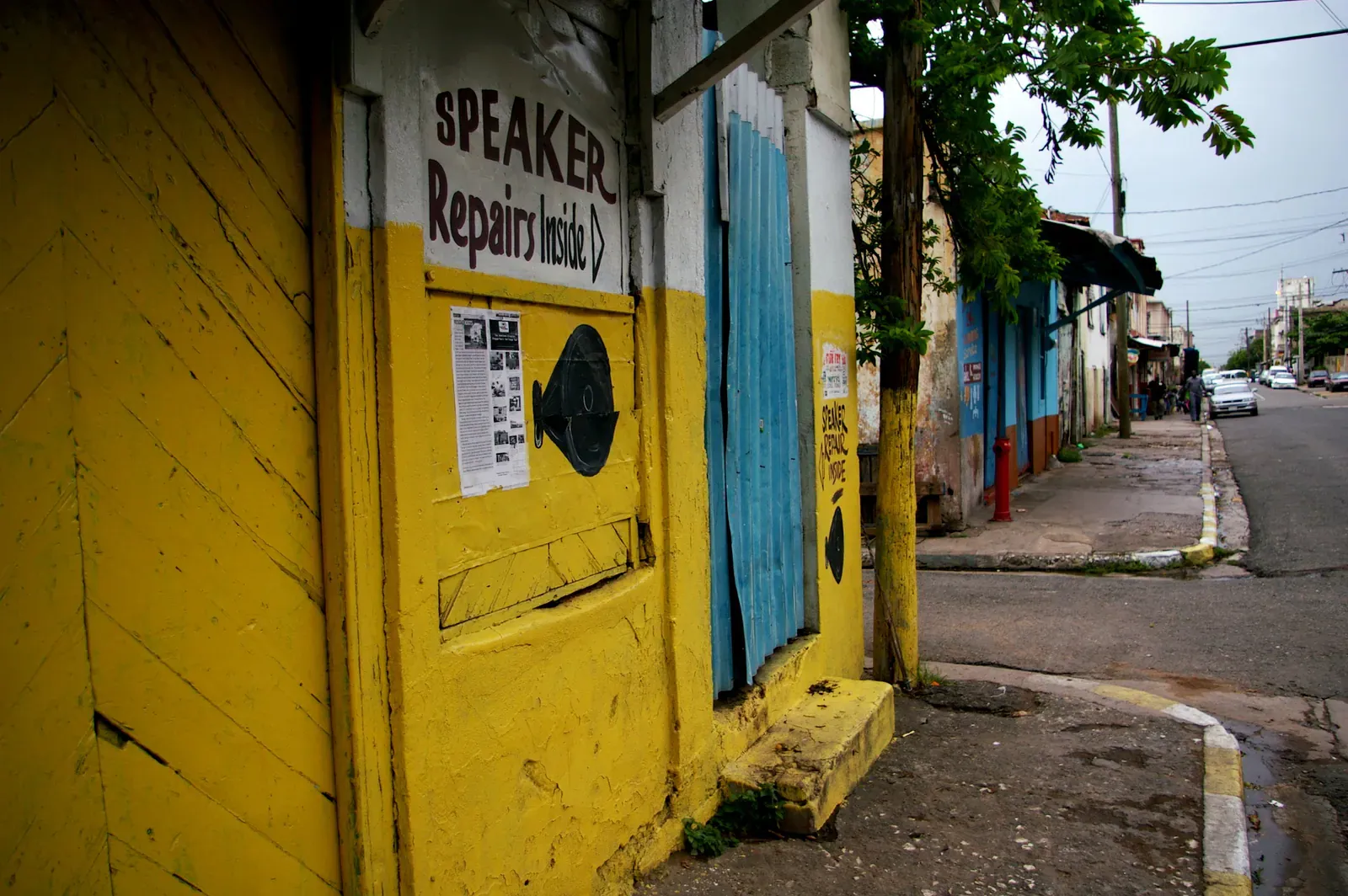
Kingston ska, 1959-1966
The new sound matched the mood of Jamaican independence in 1962, which songs such as Derrick Morgan’s “Forward March” and the Skatalites’ “Freedom Sound” celebrated. The Skatalites formed in 1964 around session players including Don Drummond, Tommy McCook and Roland Alphonso. They backed most of the era’s Kingston singers, among them the early Wailers on “Simmer Down”, and recorded instrumentals of their own such as “Guns of Navarone”.
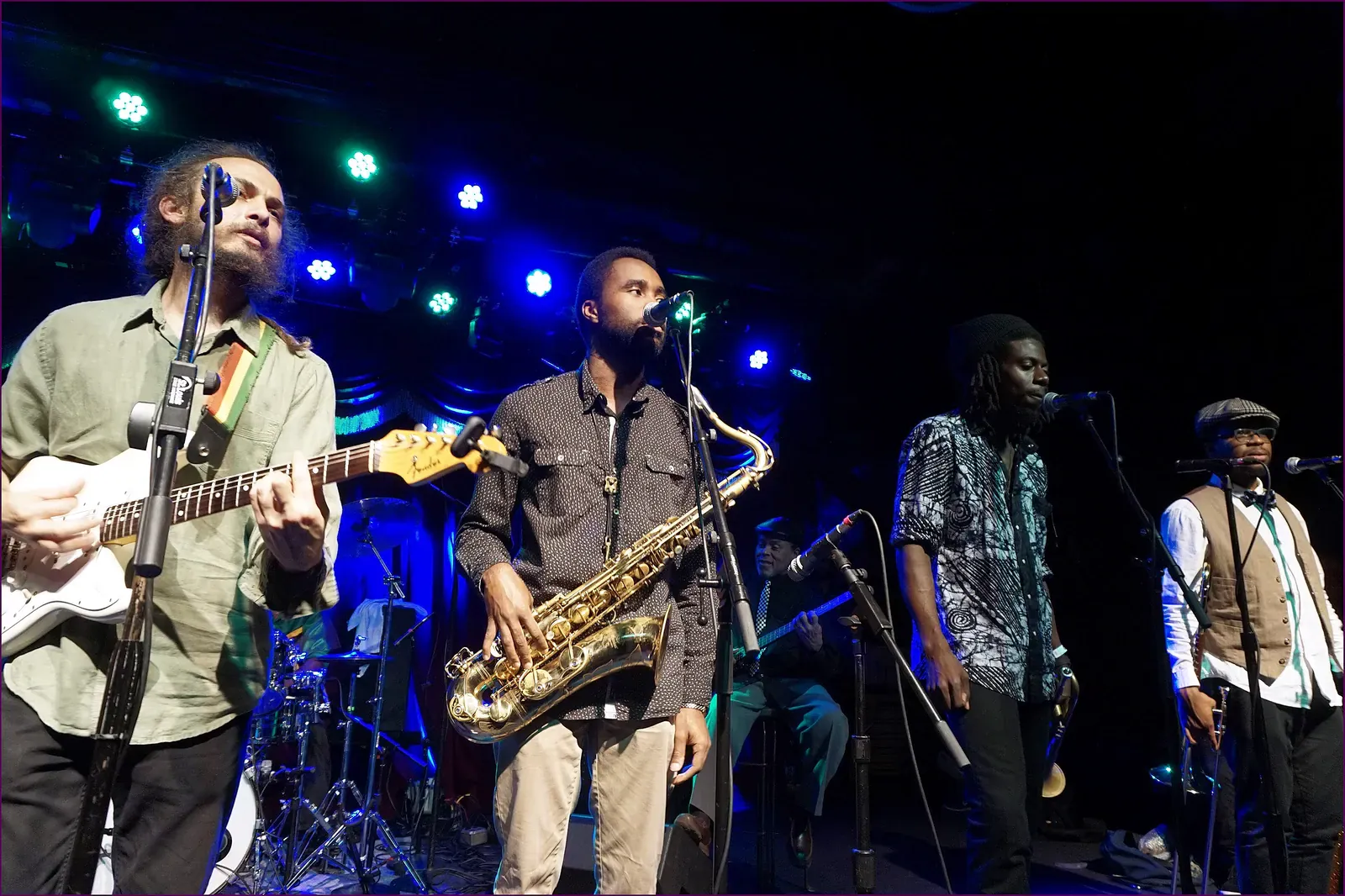
Jamaica did not honour international copyright until it joined the Berne Convention, which encouraged covers and reinterpretations. Ska bands played instrumental versions of Beatles songs, Motown and Atlantic soul and film themes. Byron Lee and the Dragonaires played ska with Prince Buster, Eric “Monty” Morris and Jimmy Cliff at the 1964 New York World’s Fair.
From 1965 and 1966, as American soul became slower and smoother, Jamaican bands slowed down too. Rocksteady peaked in 1967 and by 1968 the music had become reggae, the subject of reggae.
2 Tone, 1977-1983
The British revival began in the Coventry area in the late 1970s. It joined Jamaican rhythms and melodies to the faster tempos and harder guitars of punk rock, in the manner of punk rock. It took its name from 2 Tone Records, founded by Jerry Dammers of the Specials and backed by Chrysalis Records. Many revival songs were reworkings of classic ska tunes, which returned the originals to the UK charts.
The Specials, the Selecter and the Beat had multiracial line-ups, and the movement promoted racial unity at a time of high tension in England. The Specials recorded “A Message to You Rudy” in 1979 with the trombonist Rico Rodriguez, who had played on the original by Dandy Livingstone. Madness appeared on the 2 Tone label for one single only, yet took the sound into the mainstream with “One Step Beyond”, “Night Boat to Cairo” and “Our House”. “Ghost Town”, a Specials hit in the summer of riots in English cities, moved to a slower reggae beat.
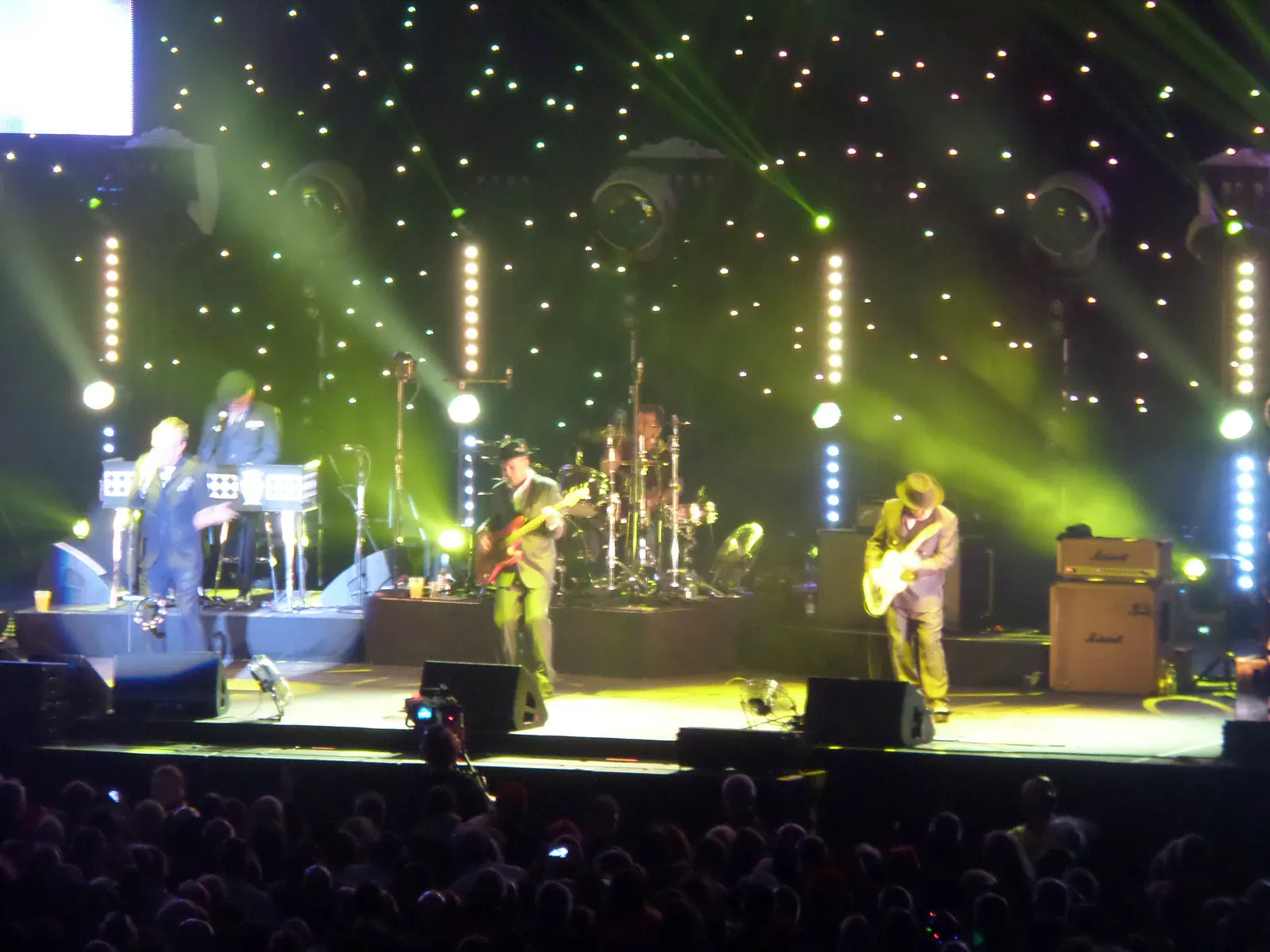
Third wave, 1981-2000
American bands influenced by 2 Tone formed from 1981. The Uptones in Berkeley and the Toasters in New York were among the first, and the Untouchables followed in Los Angeles. Fishbone, the Mighty Mighty Bosstones and Operation Ivy pioneered ska punk, which set aside ska’s rhythm and blues roots for faster tempos and distorted guitar. In 1983 the Toasters’ Robert Hingley founded Moon Ska Records in New York, which became the largest independent ska label in the United States.
Orange County, California, was a second centre of ska punk and pop-influenced ska, and the term third-wave ska was coined there and popularized by two radio hosts. The Latin American scene, which began in the mid 1980s, produced Desorden Público of Venezuela and Los Fabulosos Cadillacs of Argentina, whose “El Matador” was an international hit in 1994.
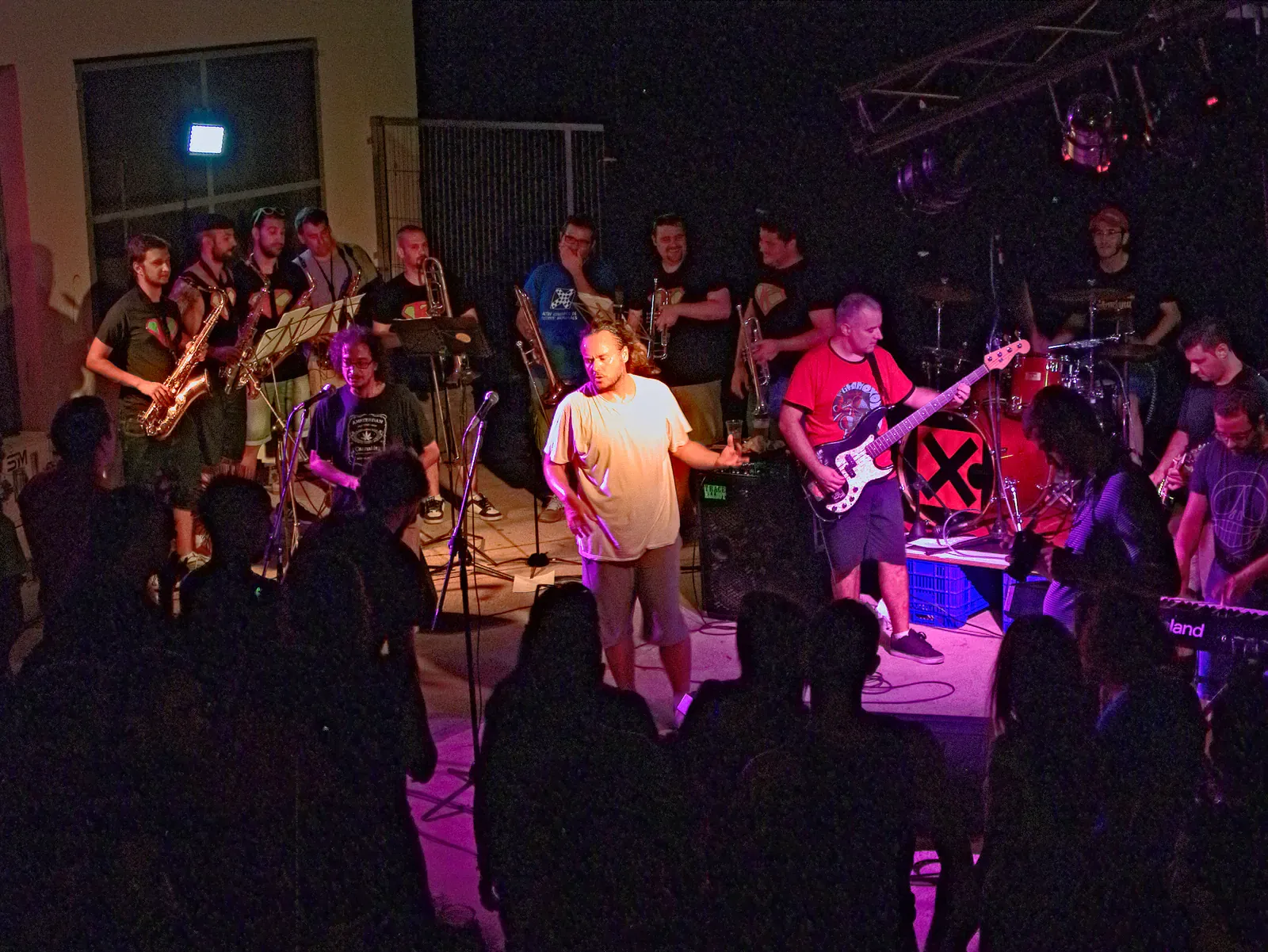
Characteristics
Classic ska counts bars of four triplets, with the guitar chop falling on the offbeat as an upstroke, the horns leading and often following the chop, and the piano emphasizing the bass line. The drums keep four-four time with a side stick on the snare and an accent on the third beat of each phrase. One Jamaican guitarist’s summary is that rhythm and blues goes “chink-ka” and ska goes “ka-chink”. The 2 Tone and third-wave bands kept the offbeat and raised the tempo, adding harder guitars and fuller instrumentation.
Instruments and production
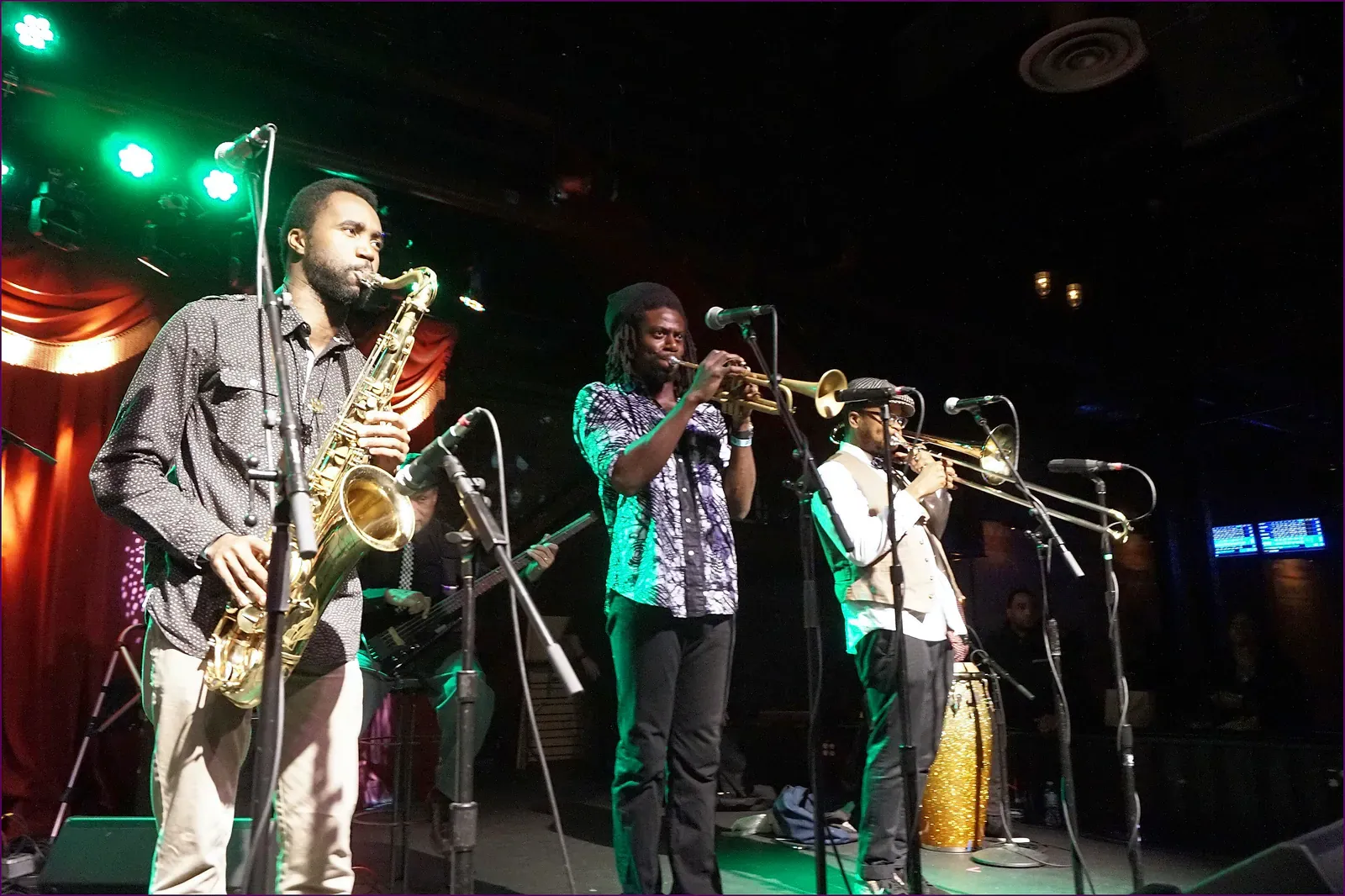
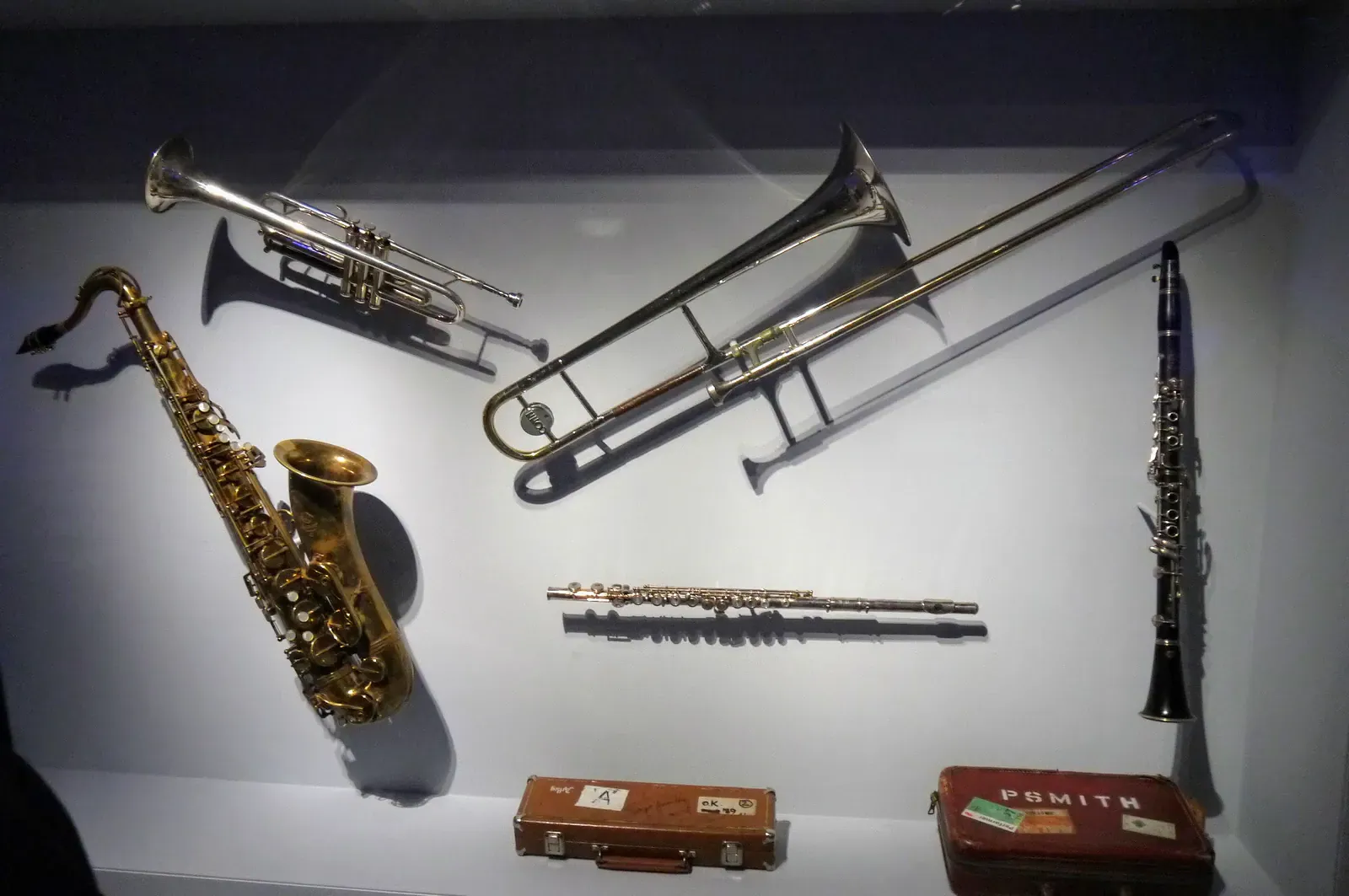
The core is a rhythm section of guitar, bass, piano or organ and a drum kit, with trombone, saxophones and trumpet forming the horn line. Early records were cut quickly at Kingston studios, often by the same session musicians for several producers, which gave the period its consistent sound. Later ska punk bands used distorted guitar and a harder drum attack while keeping the horns.
Mainstream success
Millie Small’s “My Boy Lollypop” in 1964 was Jamaica’s first commercially successful international hit. It reached number two in both the UK and US charts, sold over seven million copies and was Island Records’ first major hit. In 1967 Prince Buster’s “Al Capone” reached number 18 in the UK and the Skatalites’ “Guns of Navarone” entered the Top 40.
The 2 Tone bands made the UK charts again from 1979. In the United States, the Mighty Mighty Bosstones signed to Mercury in 1993, and their 1994 album “Question the Answers” went gold. Rancid’s “Time Bomb” reached number 8 on the Modern Rock chart in 1995, and by 1996 third-wave ska was one of the most popular forms of alternative music there. Interest waned in the late 1990s, and Moon Ska closed in 2000.
Notable recordings
“Guns of Navarone” is an instrumental version of a film theme; the Skatalites recorded it in 1965 and it reached the UK Top 40 two years later. “Al Capone” by Prince Buster, on the Blue Beat label, opens with a car crash and gunfire and is largely instrumental, with jazzy horns over a piano that holds the rhythm. Its B-side, “One Step Beyond”, later gave Madness the title of its debut album. “A Message to You Rudy” revived a Dandy Livingstone song and announced 2 Tone.
Culture
The rude boy, a figure from 1960s Jamaican street culture, gave his name to fans of ska and 2 Tone in Britain from the late 1970s. The revival drew white working-class youth and West Indian immigrants who recognized their own struggles in the lyrics. Dancing to the offbeat, known as skanking, moved from Kingston dancehalls to ska punk shows. The 2 Tone concert film “Dance Craze”, shot in 1980 and released in 1981, recorded the bands on tour.
Legacy
Ska is the base from which rocksteady and reggae grew, and its offbeat survives in much of the Caribbean music that followed. Its two revivals made it an international form with local scenes in Britain, North and Latin America and Europe. Labels such as Studio One, Treasure Isle, Island and Trojan preserved and exported the original catalogue, and the broader Caribbean context is covered in Caribbean music.
Misconceptions
Ska is not simply early reggae. It came first and is faster and more triplet-based, and the music slowed into rocksteady and then reggae between 1966 and 1968. It is also not a British invention: the British revival drew on Jamaican records from the early 1960s, and Rico Rodriguez played on both an original and its 1979 revival. Finally, ska is not just fast punk with horns. Ska punk is a hybrid that deliberately downplays ska’s rhythm and blues roots, while classic ska grew from jump blues, mento and jazz.
Frequently asked questions
Where does ska come from?
Ska comes from Kingston, Jamaica, where sound system operators began recording local rhythm and blues in the late 1950s. By the early 1960s it was the dominant music on the island.
What is the difference between ska and reggae?
Ska is the earlier and faster style, with a triplet feel, offbeat guitar chop and horns, and it was the dominant style in the early 1960s. Reggae developed from it by 1968 after the slower rocksteady phase.
What were the three waves of ska?
The first wave was the Jamaican scene of the 1960s. The second was the 2 Tone revival in Britain in the late 1970s, and the third was the wave of bands from many countries from the late 1980s through the 1990s.
Who were the main ska bands?
In Jamaica, the Skatalites and Prince Buster’s All Stars defined the classic sound. In Britain the Specials, the Selecter, the Beat and Madness led 2 Tone, and in the United States the Mighty Mighty Bosstones, Operation Ivy and Reel Big Fish were among the best-known third-wave acts.
Sound
Sound sheet
Anatomy of a track
| # | Part | Bars |
|---|---|---|
| 1 | Horn or guitar intro | 4 |
| 2 | Verse over offbeat chop | 16 |
| 3 | Horn solo or instrumental break | 8 |
| 4 | Verse and chorus return | 16 |
Signature sounds
- Offbeat guitar and piano chop
- Walking bass line
- Horn section carrying the melody
- Side-stick snare with a third-beat accent
Drums and percussion
- Drum kit
Techniques
- Skank upstroke
- Walking bass
- Horn-led melody
- Punk tempo
Tuning
12-TET, A=440
Vocals
Sung leads and group harmony in early ska, many tracks purely instrumental; chanted and shouted lines in 2 Tone and ska punk.
Scenes
Where it happened
Where and when the sound lived: one bar per city on a shared timeline.
Caribbean
Europe
North America
Active scenes
Peak 2, 1981-1999
Studio One, Federal and WIRL studios and the rival sound systems of Dodd, Reid and Prince Buster.
Home of the Specials and 2 Tone Records, with multiracial bands drawing white working-class and West Indian audiences.
The Toasters and Moon Ska Records anchored the East Coast scene.
Breeding ground of ska punk and pop-influenced ska, where the name third-wave ska was coined.
Culture
Culture markers
- Rude boy
Jamaican street identity of the 1960s, revived in Britain by 2 Tone and ska fans.
Slang - Multiracial line-ups
2 Tone bands promoted racial unity at a time of racial tension in England.
Ritual - Skanking
Offbeat dance matched to the guitar upstroke, carried from Kingston dancehalls to ska punk shows.
Dance
Media
Key media
- 1981Dance Craze
by Joe Massot. Documentary of the 2 Tone movement shot in 1980 with the Specials, Madness, the Selecter, the Beat and others on tour.
Film
Glossary
Terms on this page
The late-1970s British revival, named after the label Jerry Dammers founded.
A one-off acetate disc, called soft wax, on which producers first cut local records for sound systems.
A Jamaican street-culture figure of the 1960s whose name was revived for fans of 2 Tone and ska in Britain.
The guitar or piano upstroke played on the offbeat that gives ska its signature rhythm.
Mobile Kingston disco of speakers and a selector whose rivals recorded their own tracks.
The ska of bands from the 1980s and 1990s, mostly American, that blended ska with punk and pop.
Caribbean family