Mento
Mento is Jamaican acoustic folk dance music built on banjo, guitar and rhumba box, recorded from 1951 and the root of ska and reggae.
Jamaica, around 1800
Caribbean family
Born
around 1800
Jamaica
Subgenres
1
Documented branches
Links
8
Genres it drew on or shaped
Tempo
80-145 BPMLineage
Family tree
Timeline
Era by era
From the first sparks to today. Select a dot to read the story behind it.
- Rural folk roots
1800 to 1950
- Recording golden age
1951 to 1959
- The calypso craze
1956 to 1959
- Ska to reggae
1960 to 1979
- Revival
1980 to today
Eras
Moments
- 1 Rural folk roots, 1800 to 1950
- 2 Recording golden age, 1951 to 1959
- 3 The calypso craze, 1956 to 1959
- 4 Ska to reggae, 1960 to 1979
- 5 Revival, 1980 to today
around 1800
Rural folk roots
A creole style fusing African rhythms with European folk and quadrille, played at jonkunnu, quadrille, burru and Maypole events, and consolidated as a Jamaican folk genre by the early 1900s.
- 1890Mento consolidates as a folk styleBy the late 1800s and early 1900s mento is a recognisable Jamaican folk genre built on African and European elements.
1951
Recording golden age
Stanley Motta, Ken Khouri and others pressed 78 rpm mento records in Kingston, and hotel and club bands made it Jamaica's first commercially recorded music.
- 1951Motta opens Jamaica's first private studioStanley Motta opens the first privately owned recording studio in Jamaica and records calypso and mento on 78 rpm discs.
- 1952Khouri's Times Record labelKen Khouri and Alec Durie set up the Times Record label and make the first mento records produced in Jamaica.
- 1953Lord Flea's first singlesLord Flea records for the Calypsodisc and Calypsotime labels with the Blue Mountain Caroleers.
1956
The calypso craze
Harry Belafonte and Lord Flea took mento songs to the United States under the calypso label, which blurred the two styles for decades.
- 1956Belafonte's Calypso albumHarry Belafonte's Calypso, with Day-O and Jamaica Farewell, becomes the first million-selling LP by a single artist and popularises mento songs as calypso.
- 1957Lord Flea on US televisionOn 9 February Lord Flea and his Calypsonians play The Perry Como Show, and the band also appears in the films Calypso Joe and Bop Girl Goes Calypso.
- 1957Federated Calypso ClashOn 20 April Ward's Theatre in Kingston stages a contest between Trinidadian calypsonians and the mento locals Count Lasher and Lord Messam.
- 1958The Naughty Little Flea on CapitolCapitol Records issues Lord Flea's signature song on a 78 rpm single.
- 1959Lord Flea diesThe mento singer who helped start the US calypso craze dies on 18 May, in his twenties.
1960
Ska to reggae
Ska, rocksteady and reggae replaced mento in Jamaican popular music, while singers such as Stanley Beckford kept its sound alive on the hotel circuit.
- 1973You Are a Wanted ManStanley Beckford's mento-styled song, with the Starlites, goes to number one in Jamaica against reggae trends.
- 1975Soldering banned from radioBeckford's bawdy hit is banned by Jamaican radio and prompts answer records from Big Youth, I-Roy and Jah Lloyd.
1980
Revival
The Jolly Boys, Stanley Beckford and the Blue Glaze Mento Band brought mento back to international world-music audiences.
- 1989Pop 'n' MentoAfter producer Jules Shear hears them at a hotel, the Jolly Boys record the first of four albums that bring world tours.
- 2009Jamaica - Mento 1951-1958A French reissue gathers the original Jamaican versions of songs later made famous as calypso hits.
- 2010Great ExpectationThe Jolly Boys release mento covers of rock songs with singer Albert Minott and begin an international tour.
Listening path
Start listening
A short path from an easy way in to the deep end. Thumbnails come from YouTube; the player loads only when you press play.
- 01
Lord Flea and His Calypsonians, 1958
The signature song of the mento singer who toured America; listen for the banjo and walking bass.
- 02
Harry Belafonte, 1956
A Jamaican work song with call and response, sold worldwide as calypso.
- 03
The Jolly Boys, 2010
Mento revival band playing a rock song with banjo, rhumba box and guitar.
Facts
| Family | Caribbean |
| Origin | Jamaica |
| Emerged | Early 20th century |
| Status | Revival |
| Tempo | 80 to 145 BPM |
| Meter | 4/4 |
| Subgenres | 1 |
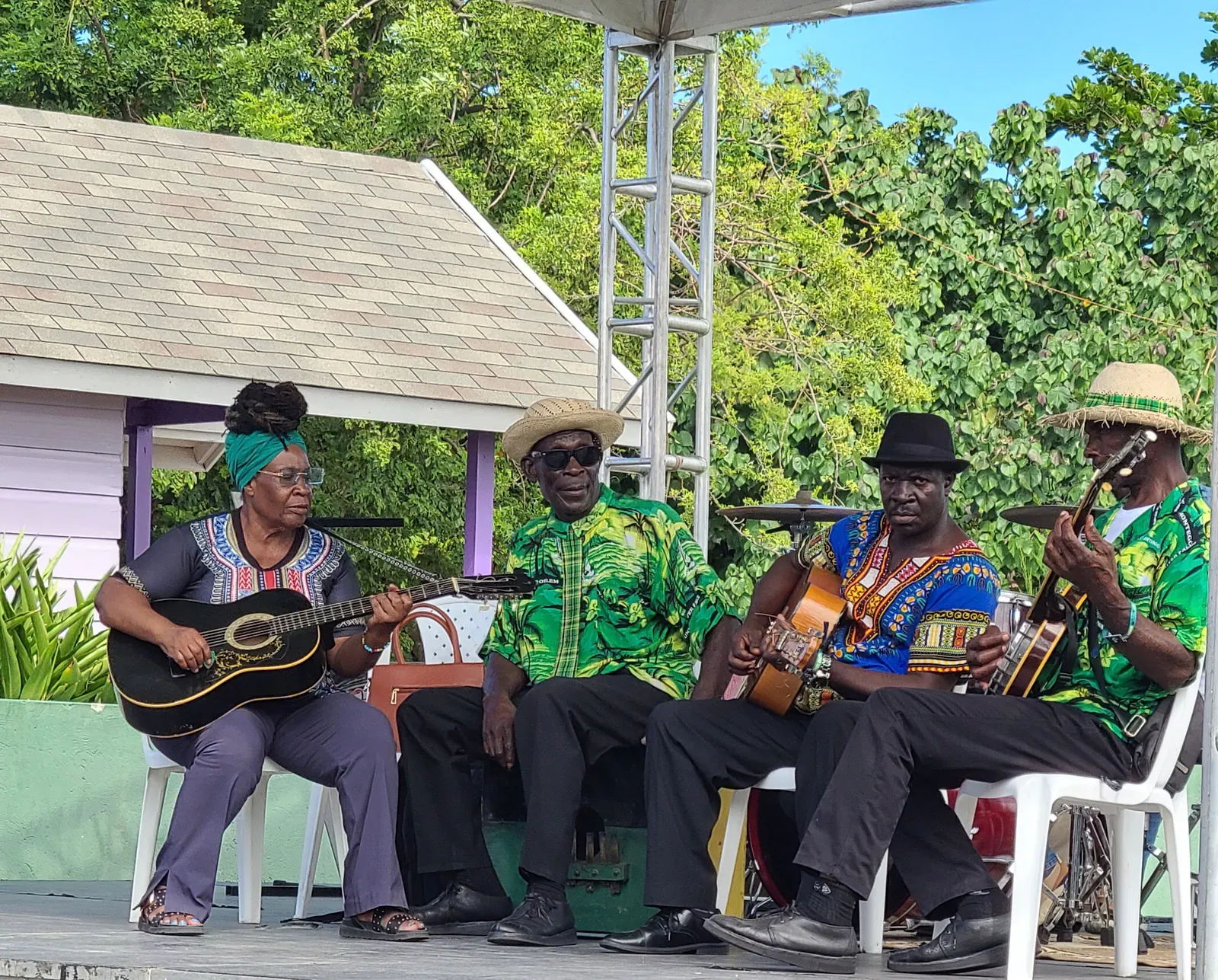
Mento is a style of Jamaican folk music played on acoustic instruments, usually banjo, guitar, hand percussion and a bass rhumba box, with lively call-and-response vocals and humorous lyrics.
It grew from a fusion of African rhythms and European dance traditions in the nineteenth century, became Jamaica’s first commercially recorded music in the 1950s, and is the acoustic root of ska and reggae. It belongs to the wider Caribbean family.
Origins
Mento developed in the nineteenth century among enslaved Africans and their descendants. Enslaved musicians were sometimes required to play European folk songs and dances such as the quadrille, and they fused these with their own rhythms and singing to create a creole style. By the late 1800s and early 1900s it was a recognisable Jamaican genre, played at the island’s oldest festive traditions, among them jonkunnu, quadrille, burru and Maypole events.
The word is thought to have come from Cuban Spanish, perhaps from the verb mentar, to mention or call out, a nod to lyrics that comment on neighbours and society. Jamaicans who cut sugarcane in eastern Cuba are among those said to have brought such musical ideas home, and the rhumba box is related to the marimbula heard in Cuban son and changui.
Characteristics
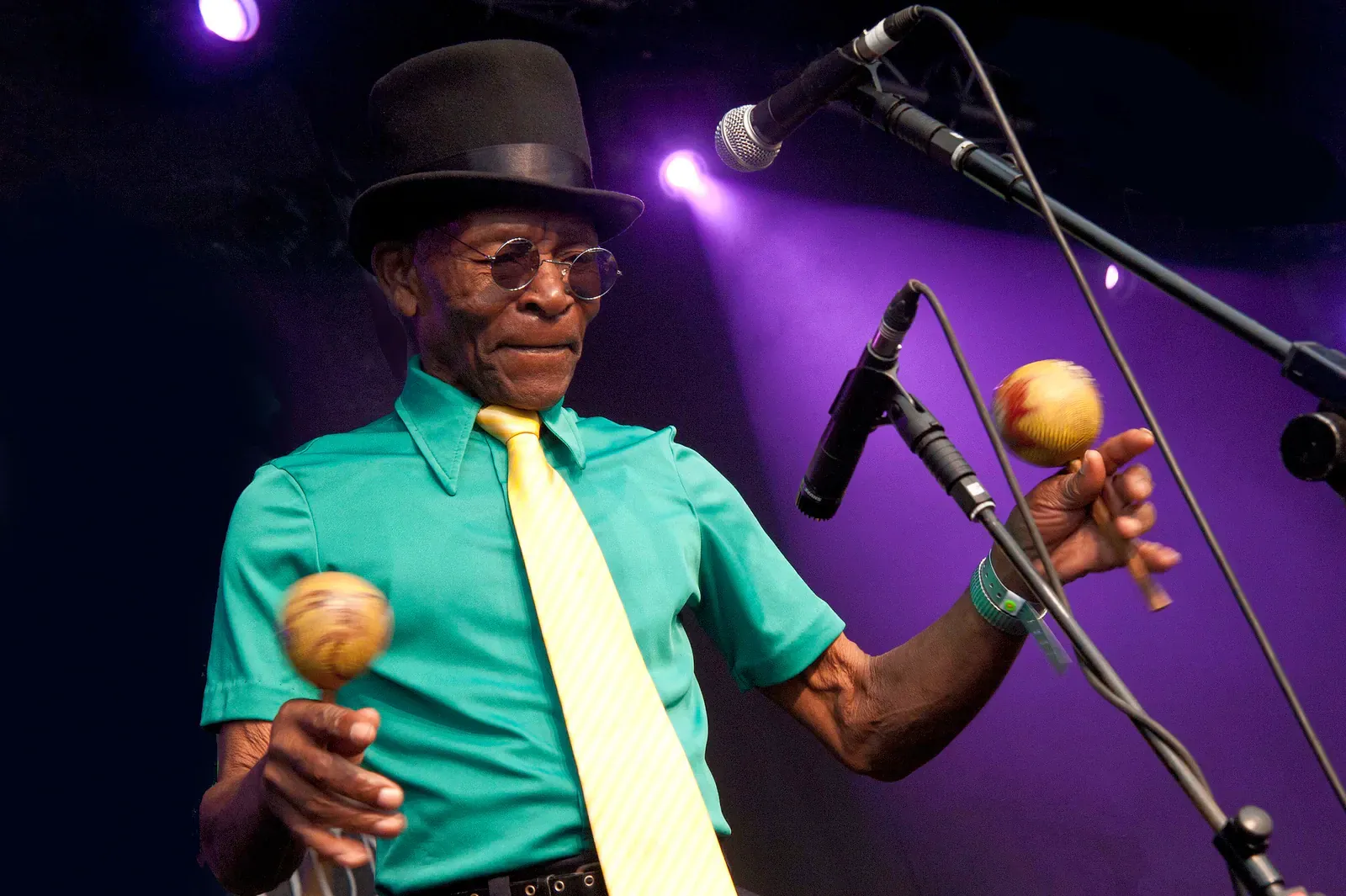
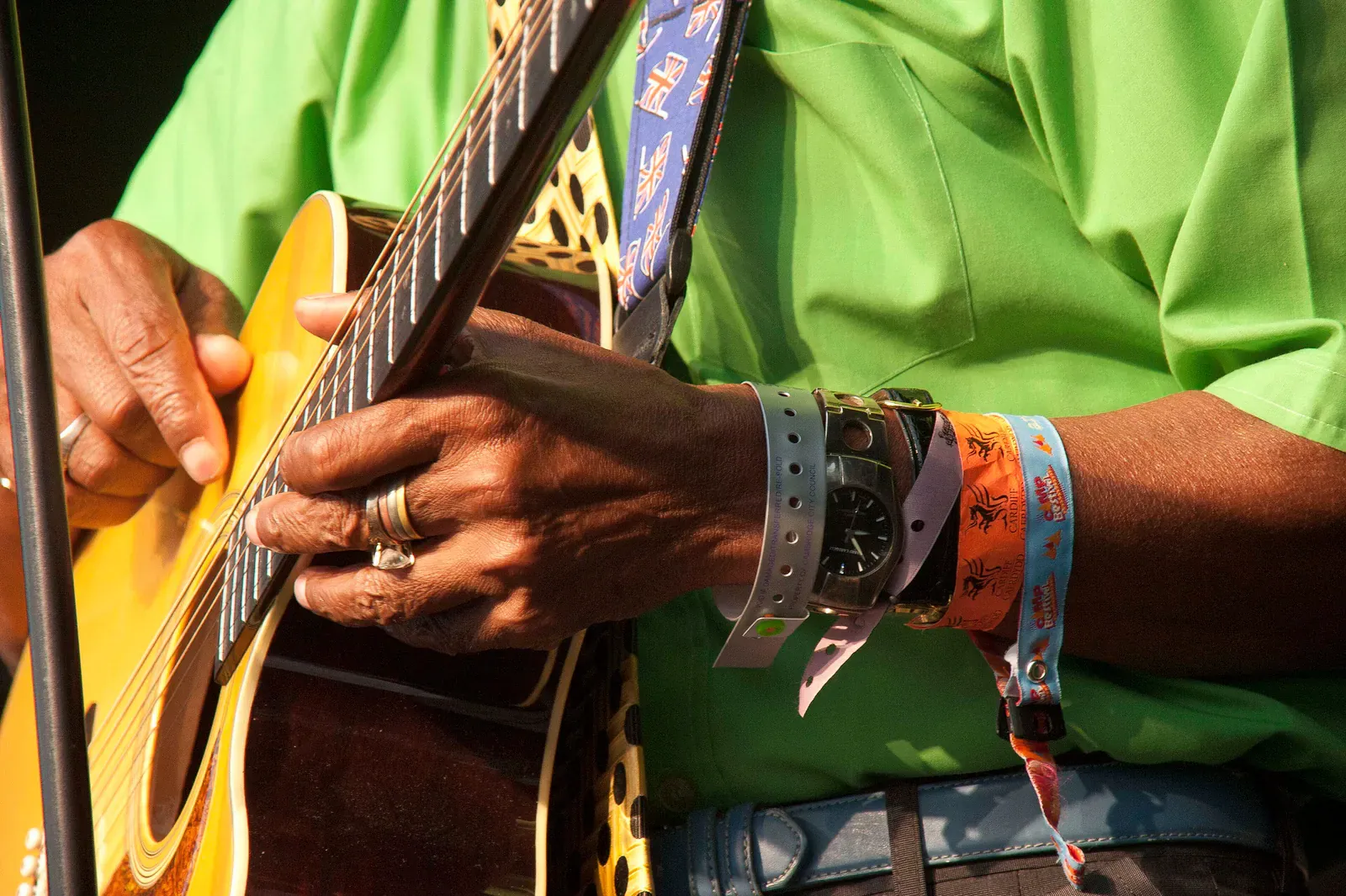
Early mento was largely instrumental, with syncopated rhythms, and singing was added gradually. The music grew out of a rural, agricultural society and carries the call and response of work and field songs. The banjo, hand drums and rhumba box have African roots, while the guitar and fiddle are European. Some bands add a bamboo saxophone, a bamboo fife, a harmonica or an accordion, and one early bandleader recalled a fork scraped across a grater serving as percussion.
The rhumba box is a large lamellophone shaped like a box. The player sits on it and plucks metal tongues, so it carries the bass line. Lyrics are playful and often comic, describing daily life, poverty and housing, Jamaican pride, religion and infidelity. Sexual references are usually veiled in double meaning, partly because commercial records and radio were censored, and that wit became a defining feature. Many listeners compared it to country music for its light tone and lack of electric instruments. Mento dance is simple and communal, with bent knees, hip sway and a loose hold to a 3-3-2 pattern.
The recording age, 1951-1959
Recording turned mento from a folk custom into a business. In 1951 Stanley Motta opened Jamaica’s first privately owned recording studio in Kingston, and singers such as Count Lasher recorded there on 78 rpm discs; his label is described on its own page, Motta’s Recording Studio. Around the same time Ken Khouri and Alec Durie started the Times Record label and made the first mento records produced in Jamaica, among them early singles by Lord Flea. Nightclubs in Kingston and north-coast hotels, including the Silver Slipper and the Glass Bucket, kept mento bands busy through the late 1940s and 1950s.
Stage names borrowed from calypso, such as Lord Flea, Lord Fly, Lord Composer and Count Lasher, were common. Louise Bennett, Count Owen, Harold Richardson, Laurel Aitken and Alerth Bedasse with Chin’s Calypso Sextet also made records in these years. Singers and producers were largely working for a market of tourists, so many records carried the word calypso.
Mento and calypso
Mento is often confused with calypso, the music of Trinidad and Tobago. The two share humour, social comment and call and response, but their histories, rhythms and instruments differ. Calypso reached Jamaica from the eastern Caribbean and was welcomed by the elite as polished, and as it gained horn sections mento stayed more rural and subdued. Producers were reluctant to back mento, but some would record it if it was sold as calypso.
International fame sealed the confusion. Calypso reached North American listeners first, so the term became a catch-all for Caribbean music. Lord Flea and His Calypsonians played the Jamaica Room in New York, appeared on The Perry Como Show on 9 February 1957 and featured in the films Calypso Joe and Bop Girl Goes Calypso. Lord Flea himself pointed out in 1957 that Jamaicans called the music mento until recently, and that tourists wanted calypso, so that was what was sold.
Mainstream success
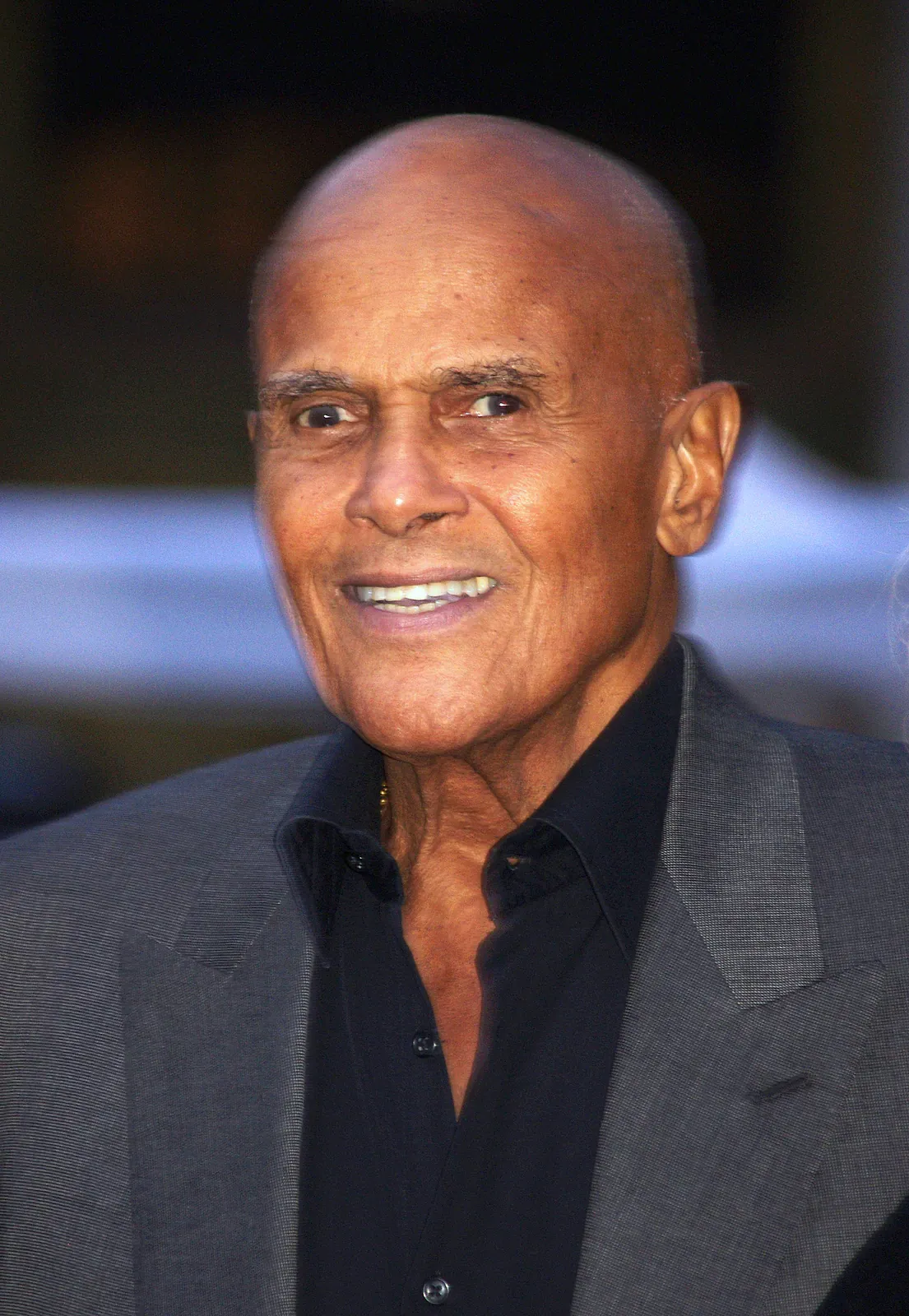
The biggest crossover came from Harry Belafonte, a New Yorker of Jamaican background. His 1956 album Calypso, with “Banana Boat (Day-O)” and “Jamaica Farewell”, was the first million-selling LP by a single artist. Many of the songs were Jamaican mento material sold as calypso, and their original Jamaican versions were gathered in 2009 on the reissue Jamaica - Mento 1951-1958. Lord Flea’s “The Naughty Little Flea” (1958) and the earlier “Shake Shake Sonora” are the other well-known results of the craze, while Flea died in 1959, only in his twenties.
Decline and revival
Ska, rocksteady and reggae overshadowed mento from the 1960s. It lived on at cultural events, at jonkunnu, and for tourists, and its themes and some of its rhythmic feel entered reggae and later dancehall. Stanley Beckford took a mento-flavoured style to the top of the Jamaican charts in 1973 with “You Are a Wanted Man”, and his bawdy “Soldering” was banned from radio in 1975, prompting answer records by several deejays.
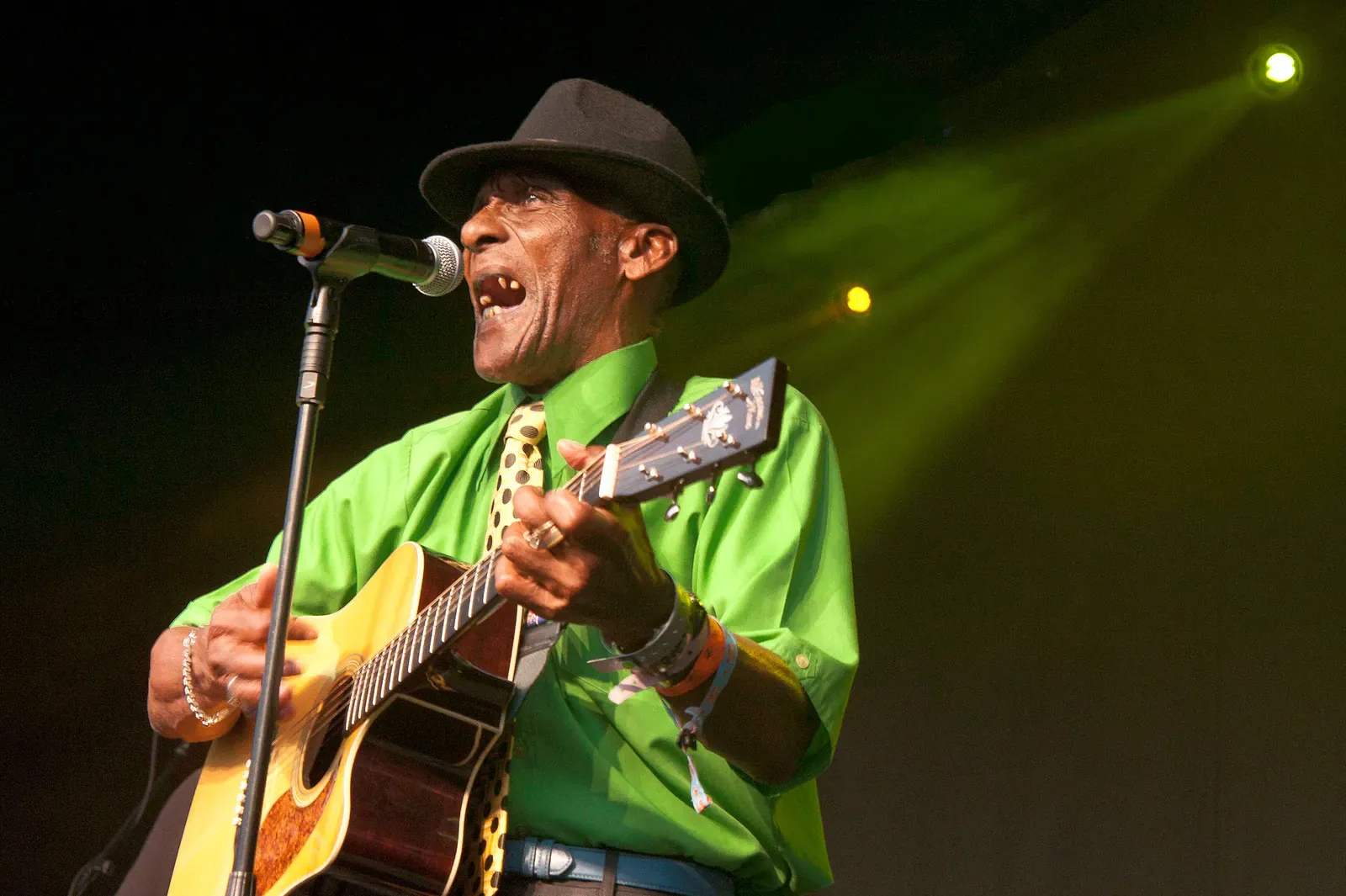
The Jolly Boys, formed in Port Antonio in 1955, revived mento for world-music audiences after a producer heard them at a hotel in 1989 and recorded the first of four albums released between 1989 and 1997. In 2010 they released Great Expectation, covers of rock songs in mento style, led by singer Albert Minott. Beckford returned in the 2000s with the old-time album Stanley Beckford Plays Mento, backed by the Blue Glaze band, and the Blue Glaze Mento Band and Gilzene and the Blue Light Mento Band also carried the rural style forward.
Culture
Mento remains tied to Jamaican cultural identity. It accompanies jonkunnu masquerades, quadrille and Maypole performances, and it is played at nine nights, house parties and tea parties. The dance is more about communal fun than formal technique. At its peak it drew large crowds, which reinforced community ties.
Legacy
Mento is Jamaica’s first recorded popular music and a foundation for what followed. Its rhythmic ideas, call and response, and the habit of using humorous lyrics to comment on society all fed ska, rocksteady, reggae and dancehall. It also left a lasting mark on the global idea of Caribbean music, since much of what the world heard as calypso in the 1950s was mento.
Misconceptions
Mento is not calypso. It is a separate Jamaican tradition whose commercial recordings were labelled calypso for tourists, and Trinidadian calypso arrived in Jamaica later.
Mento is not only music for tourists. Its roots are rural and communal, in work songs, dances and festival masquerades long before hotel bands.
Mento did not disappear after ska arrived. It was overshadowed commercially but kept alive at cultural events and on the hotel circuit, and it was revived from the late 1980s.
Frequently asked questions
What is mento music?
Mento is a Jamaican folk dance music played on acoustic banjo, guitar, hand percussion and rhumba box, with witty call-and-response lyrics, and it was the island’s first commercially recorded music.
What is the difference between mento and calypso?
Mento is from Jamaica and calypso is from Trinidad and Tobago. They share humour and social commentary, but mento stayed more rural and acoustic, while calypso added horns and was more polished. In the 1950s Jamaican mento was frequently sold abroad as calypso.
What is a rhumba box?
A rhumba box is a large box-shaped lamellophone, played while sitting on it, that provides the bass line in a mento band.
Is mento the origin of reggae?
Mento is one of the earliest Jamaican popular styles and influenced ska, rocksteady and reggae, which developed from the 1960s with electric instruments and new rhythms.
Sound
Sound sheet
Signature sounds
- Rhumba box bass line
- Banjo and acoustic guitar strumming
- Call-and-response vocals
- Witty lyrics with double meanings
Drums and percussion
- Hand drums
- Maracas
Techniques
- Call and response
- Rhumba box bass
- Double entendre
- Walking bass
Keys and modes
Major keys. Standards such as Jamaica Farewell and Banana Boat sit in plain major tonality.
Vocals
Lighthearted, witty storytelling about daily life, poverty and romance, with call-and-response refrains.
Scenes
Where it happened
Where and when the sound lived: one bar per city on a shared timeline.
Caribbean
North America
Active scenes
Peak 3, 1956-2025
Studios, record shops and nightclubs such as the Silver Slipper and Glass Bucket made the capital the recording centre.
Home of the Jolly Boys, a long-lived mento band that plays for hotel guests.
Calypso-craze clubs such as the Jamaica Room hosted Lord Flea and his Calypsonians.
Venues and places
Kingston, 1951 to today. Jamaica's first privately owned recording studio, where Count Lasher and other mento acts recorded.
Port Antonio, 2008 to today. Hotel where the Jolly Boys are the house band, after first playing there when it was a recording studio.
Culture
Culture markers
- Mento dance
Couples dance with bent knees, hip sway and loose contact to a 3-3-2 rhythm pattern, at festivals, nine nights and house parties.
Dance - Jonkunnu and quadrille
Mento accompanies the old Jamaican jonkunnu, quadrille, burru and Maypole traditions.
Ritual - Lord and Count stage names
Performers took titles such as Lord Flea and Count Lasher, borrowed from calypso naming.
Slang
Media
Key media
- 1957Calypso Joe
by Lord Flea and His Calypsonians. A calypso-craze film in which Lord Flea's band appears.
Film - 2002Rookumbine: Authentic Calypsos and Mentos
by Various. Includes the original Times Record version of The Naughty Little Flea.
Compilation - 2009Jamaica - Mento 1951-1958
by Various. Collects early Jamaican versions of songs later popularised as calypso.
Compilation
Glossary
Terms on this page
A Jamaican masquerade tradition whose music includes mento.
Jamaican folk dance music; the name likely comes from Cuban Spanish mentar, to mention or call out.
The commercial label under which Jamaican mento was sold to tourists and US audiences.
A Jamaican wake gathering where mento music and dance are common.
A large box lamellophone played seated, the bass voice of a mento band.
Caribbean family