Southern hip hop
Southern hip hop is rap from the American South, shaped by Miami bass, Houston tapes, New Orleans bounce and Atlanta crunk and trap since the mid 1980s.
Atlanta, 1986
Hip Hop family
Born
1986
Atlanta
Subgenres
8
Documented branches
Links
22
Genres it drew on or shaped
Tempo
75-135 BPMLineage
Family tree
Grew out of
Derived from
Derived from
Atlanta, 1986
Southern hip hop
Led to (14)
Timeline
Era by era
From the first sparks to today. Select a dot to read the story behind it.
- Local scenes and Miami bass
1979 to 1992
- The Dirty South breakthrough
1993 to 2000
- Crunk, trap and the mixtape era
2001 to 2008
- Internet era and trap's ascendancy
2009 to today
Eras
Moments
- 1 Local scenes and Miami bass, 1979 to 1992
- 2 The Dirty South breakthrough, 1993 to 2000
- 3 Crunk, trap and the mixtape era, 2001 to 2008
- 4 Internet era and trap's ascendancy, 2009 to today
1979
Local scenes and Miami bass
Southern cities build separate rap scenes around Miami bass, Houston's Rap-A-Lot and the Triggerman beat of Memphis and New Orleans, before any shared Southern identity exists.
- 1979The Sequence record Funk You UpA South Carolina trio on Sugar Hill Records puts out the first notable rap single by a Southern act, then moves to New York.
- 19862 Live Crew release Throw the DA foundational Miami bass track, following MC A.D.E.'s Bass Rock Express of 1985.
- 1986Rap-A-Lot founded in HoustonJames Prince and Cliff Blodget start the label that assembles the Geto Boys.
- 1986Showboys release Drag RapIts drum loop, the Triggerman beat, later anchors Memphis and New Orleans dance records.
- 1989Obscenity ruling on As Nasty as They Wanna BeA federal judge rules the 2 Live Crew album obscene; an appeals court later overturns the finding.
- 1991Geto Boys release We Can't Be StoppedThe Houston group's breakthrough album includes Mind Playing Tricks on Me, which reaches number 23 on the Hot 100.
- 1991Cash Money Records founded in New OrleansBrothers Bryan and Ronald Williams start a label that first focuses on bounce.
- 1991Where Dey At becomes an early bounce hitA live recording by DJ Irv and MC T. Tucker; DJ Jimi cuts a studio version the next year.
- 1992UGK release Too Hard to SwallowThe Port Arthur duo issue their first major-label album.
- 1992DJ Screw develops chopped and screwedIn Houston he slows records down and repeats passages, selling the results on the Screw tapes.
1993
The Dirty South breakthrough
OutKast, Goodie Mob, No Limit, Cash Money and UGK turn the South into a national force, and the term Dirty South becomes a banner.
- 1994OutKast release SouthernplayalisticadillacmuzikThe debut on LaFace brings live funk and soul instrumentation to Atlanta rap.
- 1995The Source Awards booingOutKast win Best New Rap Group in New York; Andre 3000 answers the booing with the line the South got something to say.
- 1995Goodie Mob release Soul FoodThe title track popularizes the term Dirty South as a comment on Southern racism and corruption.
- 1996No Limit signs a distribution deal with PriorityMaster P keeps ownership of all master recordings and releases more than fifty albums by decade's end.
- 1998Juvenile release 400 DegreezUnder a new Universal deal, Cash Money has its commercial breakthrough with bounce-tinged singles such as Ha.
- 2000OutKast release StankoniaThe album, with Ms. Jackson, shows how far Atlanta rap had moved beyond regional labels.
2001
Crunk, trap and the mixtape era
Lil Jon's crunk, Atlanta snap, T.I.'s trap and Houston's Swishahouse dominate radio, while free mixtapes become the main way to build a name.
- 2003Lil Jon's Get Low takes crunk nationalShouted call-and-response over drum machines, a style that started with Three 6 Mafia in Memphis.
- 2003T.I. releases Trap MuzikA platinum album about life in the trap; its hi-hats and bass give the subgenre its name.
- 2004Mike Jones releases Still Tippin'A Swishahouse single, distributed through Asylum, takes screwed Houston rap to national radio.
- 2005Three 6 Mafia release Stay FlyThe group's biggest hit reaches number 13 on the Hot 100.
- 2007Soulja Boy's Crank That goes viralSelf-promotion on MySpace and YouTube leads to a record deal and shows the internet route to a hit.
- 2008Lil Wayne releases Tha Carter IIIReleased after a run of free mixtapes made to beat leaks and bootlegs.
2009
Internet era and trap's ascendancy
Streaming, YouTube and SoundCloud carry Atlanta trap, Auto-Tuned melody and Miami phonk across the world, making the South the centre of hip hop.
- 2010Lex Luger's grand trap productionHis beats for Waka Flocka Flame push hi-hat fills to extremes and spread trap into pop and EDM.
- 2011Future releases Tony MontanaMelodic, Auto-Tuned rapping that is often cited as the first mumble rap release.
- 2013Migos rise with Zaytoven's supportThe trio's triplet flows spread across trap.
Listening path
Start listening
A short path from an easy way in to the deep end. Thumbnails come from YouTube; the player loads only when you press play.
- 01
Geto Boys, 1991
The Houston classic that showed Southern rap could reach the Hot 100 with introspective, unsettling storytelling.
- 02
OutKast, 2000
Atlanta's most inventive duo at their commercial peak, over a loose, funk-inflected groove.
- 03
UGK ft. OutKast, 2007
A slow, soulful meeting of Texas and Atlanta, produced by Three 6 Mafia's DJ Paul and Juicy J.
- 04
Lil Jon & The East Side Boyz ft. Ying Yang Twins, 2003
The shouted, club-built sound that carried crunk to national radio.
- 05
Three 6 Mafia ft. Young Buck, 8Ball & MJG, 2005
The Memphis group's biggest hit, a faster, brass-led track from the genre's trap-and-crunk era.
Facts
| Family | Hip Hop |
| Origin | Atlanta, United States |
| Emerged | Mid 1980s-present |
| Status | Active |
| Tempo | 75 to 135 BPM |
| Meter | 4/4 |
| Grew out of | East Coast hip hop, West Coast hip hop |
| Subgenres | 6 |
Southern hip hop, also called Dirty South or Southern rap, is hip hop made in the American South. It grew from separate city scenes in Miami, Houston, Memphis, New Orleans and Atlanta in the 1980s and became the commercial and stylistic centre of the genre in the 2000s.
Bass-heavy beats, chanted hooks and music made for dancing mark most of it, and it produced crunk, bounce, chopped and screwed rap and trap. It belongs to the wider hip hop family.
Origins
The first Southern act to record rap was the Sequence, a South Carolina group signed to Sugar Hill Records, whose single Funk You Up came out in 1979. They went to New York to work, and that set a pattern: for years the South was treated by New York and by the music industry as unsophisticated, and Southern rappers identified with a neighbourhood or a city rather than a region.
Miami moved first. The city already had independent labels working in disco and other Black music, and local DJ culture mixed electro with Caribbean sound systems. That produced Miami bass, with MC A.D.E.’s Bass Rock Express in 1985 and 2 Live Crew’s Throw the D in 1986. The sexual content of the style drew a legal fight when a federal judge ruled the 1989 album As Nasty as They Wanna Be obscene; an appeals court overturned the finding, and 2 Live Crew’s leader Luther Campbell became a symbol of free expression for later rappers.
Houston followed through a label. James Prince and Cliff Blodget founded Rap-A-Lot around 1986 and built the Geto Boys around it. The 1990 album The Geto Boys led its distributor to cut ties over its lyrics, but Prince found a new deal, and We Can’t Be Stopped in 1991 brought the group a national audience.
The local scenes, 1979 to 1992
Memphis and New Orleans formed their sound from one record. The 1986 Showboys single Drag Rap contained a drum loop that became known as the Triggerman beat. In Memphis, DJ Spanish Fly paired it with a dance called the Gangsta Walk. In New Orleans it merged with the Brown Beats of Cameron Paul into the base of bounce, and the 1991 live recording Where Dey At by DJ Irv and MC T. Tucker was among the first bounce hits.
In the same years Port Arthur, Texas gave rise to UGK, formed in 1987 by Bun B and Pimp C, who released Too Hard to Swallow in 1992 with a slower, soul-heavy Texas sound.
The Dirty South breakthrough, 1993 to 2000
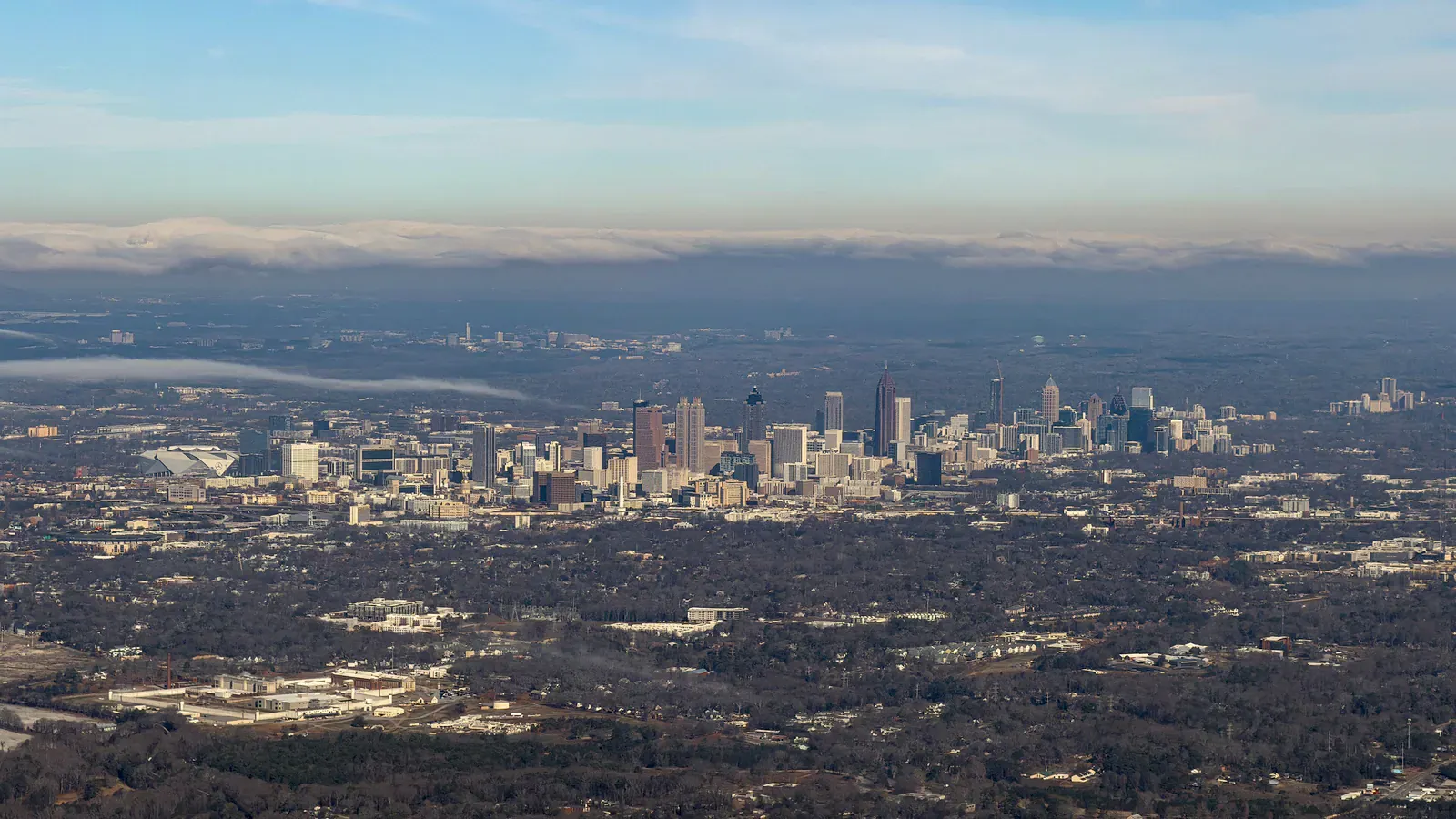
Atlanta set the first national terms. Jermaine Dupri launched Kris Kross and the So So Def label, and LaFace Records, founded in 1989 for R&B, turned to rap. Through the producers Organized Noize, LaFace signed OutKast and Goodie Mob of the Dungeon Family collective. OutKast built on funk, soul and gospel with live instruments and a relaxed, celebratory mood rather than the hard posture of West Coast G-funk. Their debut Southernplayalisticadillacmuzik of 1994 won Best New Rap Group at the 1995 Source Awards. The New York audience booed, and Andre 3000 replied that the South had something to say. That sentence is often cited as the moment a pan-Southern identity took hold.
Goodie Mob’s 1995 album Soul Food spread the phrase Dirty South, reworking an older term for sex or crime into a comment on the region’s racism and corruption. The phrase was then adopted widely and has since become a general mark of Southern authenticity, even as its meaning loosened.
New Orleans exploded commercially. Mystikal’s 1995 album on Jive pulled attention to the city. Master P’s No Limit Records signed a 1996 deal with Priority that left it owning its masters, and released more than fifty albums over the later 1990s. Cash Money answered with a 1998 Universal deal, and Juvenile’s 400 Degreez, produced largely by Mannie Fresh, carried bounce rhythms onto national radio.
In Houston, DJ Screw developed chopped and screwed in the early 1990s: records slowed down and passages repeated, sold on the Screw tapes through a circle of local rappers.
Crunk, snap and trap, 2001 to 2008
By the early 2000s many New Orleans stars had left their labels and the spotlight moved to Atlanta. Crunk, with shouted call-and-response vocals over bass and drum machines, began with Three 6 Mafia of Memphis and took hold in Atlanta around Lil Jon, whose 2003 single Get Low made it national. Three 6 Mafia, on Hypnotize Minds, later reached number 13 on the Hot 100 with Stay Fly and won an Academy Award for the song in the film Hustle & Flow. Snap, a sparse style built on finger snaps, rose briefly in 2005 and 2006.
Trap took its name from T.I.’s 2003 album Trap Muzik. In Atlanta slang a trap is a drug house, and the title described the subject, not a genre, but the album’s heavy bass and busy hi-hats became the template. DJ Toomp, Shawty Redd and Zaytoven shaped it as producers; Young Jeezy and Gucci Mane carried it as rappers. The style is explored further on the trap page.
Houston reached the mainstream through Swishahouse, whose Mike Jones took Still Tippin’ to national radio in 2004, with Slim Thug and Paul Wall alongside. Mixtapes changed too. DJ Drama’s Gangsta Grillz series, begun after he arrived at Clark Atlanta University, turned free tapes into a career tool for T.I., Young Jeezy and Gucci Mane, and Lil Wayne released a run of free tapes ahead of Tha Carter III in 2008 to get ahead of leaks.
The internet era, 2009 to present
After DJ Drama’s 2007 arrest, mixtapes moved online. Soulja Boy’s Crank That showed in 2007 that MySpace and YouTube could replace a radio campaign. Lex Luger’s heavy production for Waka Flocka Flame around 2010 pushed trap hi-hats to extremes and spread them into pop and electronic music. Migos popularized triplet flows, and Future used Auto-Tune for melancholy melody, an approach linked to what was later called mumble rap, alongside Young Thug. In Miami, SoundCloud artists around Raider Klan revived Memphis-style darkness as phonk. Critics outside the South mocked much of this, but by 2009 Atlanta was being called hip hop’s centre of gravity.
Characteristics
Seen as a whole, Southern rap tends to put bass and rhythm ahead of lyric density. It uses less sampling than New York styles, favouring programmed or live instruments, and it often replaces intricate verses with chants, drawled delivery or processed singing. Much of it was written for clubs and strip clubs, and dances such as the Gangsta Walk and twerking grew up beside it. Regional slang and local independent labels are as much a part of the identity as any sound.
Legacy
The independent label model of Rap-A-Lot, No Limit, Cash Money and Swishahouse showed that artists could keep ownership and sell nationally without a New York or Los Angeles base. Mixtapes, YouTube and SoundCloud routes pioneered in the South are now standard. Trap production influences pop, electronic music and rap worldwide, and the South is regarded by many writers as the most important region in twenty-first-century hip hop.
Misconceptions
Southern rap is not one sound. Houston’s slow screwed tapes, New Orleans bounce, Memphis horror-tinged crunk and Atlanta trap differ in tempo and mood, and early stars such as the Geto Boys were seen as national acts first and Southern ones second. Dirty South did not begin as a simple celebration; Goodie Mob used it to criticise Southern racism. And trap is not only a beat: the word first named the setting of the lyrics.
Frequently asked questions
What is Southern hip hop?
Southern hip hop is rap from the American South, centred on Atlanta, Houston, New Orleans, Memphis and Miami. It favours heavy bass, chanted hooks and dance rhythms and includes bounce, crunk, chopped and screwed and trap.
What does Dirty South mean?
Dirty South is a name for Southern rap popularized by Goodie Mob’s 1995 song of that title. They used it to comment on the region’s racism and corruption, and it later became a general sign of Southern identity.
Which city started Southern hip hop?
No single city did. Miami bass and Houston’s Rap-A-Lot scene came first in the mid 1980s, with Memphis and New Orleans following in the early 1990s and Atlanta rising as the centre afterward.
How is Southern hip hop different from East Coast and West Coast rap?
Southern rap puts more weight on bass, rhythm and chants and less on dense lyrics or sampled breaks. It was built around local independent labels and club dances rather than the New York or Los Angeles industry.
Where did trap music come from?
Trap came from Atlanta, where the word means a drug house. T.I.’s 2003 album Trap Muzik fixed its sound, and producers such as DJ Toomp, Shawty Redd, Zaytoven and later Lex Luger developed it.
Sound
Sound sheet
Anatomy of a track
| # | Part | Bars |
|---|---|---|
| 1 | Intro or chant | 4 |
| 2 | Hook | 8 |
| 3 | Verse | 16 |
| 4 | Hook | 8 |
| 5 | Verse | 16 |
| 6 | Hook and outro | 8 |
Signature sounds
- TR-808 sub-bass and long kick
- Chanted call-and-response hooks
- Rolling hi-hat fills (trap)
- Slowed, screwed vocals (Houston)
- Dance-driven drops for clubs
Drums and percussion
- Roland TR-808
Synths and software
- FL Studio
Techniques
- Chopped and screwed
- Call-and-response hooks
- Hi-hat rolls
- Melodic Auto-Tune
Keys and modes
Minor keys. Common for dark trap and crunk, over sustained 808 bass notes.
Tuning
12-TET, A=440
Vocals
Drawled rapping, shouted chants and Auto-Tuned melody
Scenes
Where it happened
Where and when the sound lived: one bar per city on a shared timeline.
North America
Active scenes
Peak 5, 1991-2025
Home of LaFace, So So Def, the Dungeon Family, crunk, snap and trap.
Rap-A-Lot, Swishahouse and DJ Screw's chopped and screwed tapes.
Bounce, then the No Limit and Cash Money empires.
The Gangsta Walk, Triggerman beat and Three 6 Mafia's dark crunk prototype.
Miami bass, 2 Live Crew and later SoundCloud-era phonk.
Venues and places
Atlanta, 1985 to today. Long-running Atlanta club where DJs break new rap records.
Atlanta, 1992 to today. The basement of Rico Wade's mother's house, base of the Dungeon Family and Organized Noize.
Houston, 1994 to today. DJ Screw's shop and home of the Screw tapes.
Culture
Culture markers
- Twerking
A dance that grew in close connection with New Orleans bounce and later Southern rap.
Dance - Gangsta Walk
Memphis circle march tied to the Triggerman beat.
Dance - Candy-painted cars
Houston car culture, with chrome rims and slabs, became a symbol of the screwed sound.
Artwork - Trap
Atlanta term for a drug house that became the name of a genre.
Slang
Media
Key media
- 1992Screw tapes
by DJ Screw. Mixtape series that spread chopped and screwed from Houston.
Mix - 2003Gangsta Grillz
by DJ Drama. Mixtape series that made free tapes central to Southern rap careers, notably T.I. and Lil Wayne.
Mix - 2005Hustle & Flow
by Craig Brewer. Memphis-set film whose song It's Hard out Here for a Pimp, by Three 6 Mafia, won the Academy Award for Best Original Song.
Film
Glossary
Terms on this page
New Orleans party rap built on the Triggerman beat and call-and-response chants.
Houston method of slowing a record down and repeating passages for a woozy effect.
Shouted call-and-response rap over bass and drum machines, from Memphis and Atlanta.
A name for the region's rap, popularized by Goodie Mob in 1995 and now a claim of Southern authenticity.
A Memphis dance in which participants march in circles around the floor.
Atlanta slang for a drug house, and the style of rap about it built on heavy bass and rolling hi-hats.
Hip Hop family