Alternative hip hop
Alternative hip hop is rap that sidesteps commercial stereotypes, built on jazz, soul and funk samples, and formed around New York's Native Tongues from 1988.
New York City, 1988
Hip Hop family
Born
1988
New York City
Subgenres
9
Documented branches
Links
9
Genres it drew on or shaped
Tempo
80-100 BPMLineage
Family tree
Timeline
Era by era
From the first sparks to today. Select a dot to read the story behind it.
- Native Tongues and jazz samples
1988 to 1993
- West Coast, South and gangsta eclipse
1992 to 1999
- Independent labels and crossover
1997 to 2009
- Internet collectives
2010 to 2026
Eras
Moments
- 1 Native Tongues and jazz samples, 1988 to 1993
- 2 West Coast, South and gangsta eclipse, 1992 to 1999
- 3 Independent labels and crossover, 1997 to 2009
- 4 Internet collectives, 2010 to 2026
1988
Native Tongues and jazz samples
Jungle Brothers, De La Soul and A Tribe Called Quest pair Afrocentric, playful lyrics with jazz, soul and funk samples, setting the template for the genre.
- 1988Native Tongues collective formsJungle Brothers, De La Soul and A Tribe Called Quest ally in New York with Afrocentric themes and eclectic samples.
- 1988Jungle Brothers release Straight Out the JungleA debut mixing house, jazz and hip hop, an early blueprint for the Native Tongues sound.
- 1989De La Soul's 3 Feet High and RisingA sample-dense, skit-filled debut that rejected hardcore posturing and became a critical landmark.
- 1990A Tribe Called Quest debut with People's Instinctive TravelsQ-Tip and Phife Dawg introduce a relaxed, jazz-inflected style.
- 1991The Low End TheoryUpright bass and jazz loops define the Tribe's sound and a generation of producers.
1992
West Coast, South and gangsta eclipse
The Pharcyde, Outkast and the Roots extend the style to Los Angeles, Atlanta and Philadelphia while gangsta rap takes over the charts.
- 1992Bizarre Ride II the PharcydeA Los Angeles group brings comic, self-deprecating storytelling to the West Coast.
- 1992The Chronic and gangsta rap dominanceDr. Dre's album helps make gangsta rap the commercial standard, squeezing alternative acts.
- 1993Arrested Development win two Grammy AwardsThe Atlanta group takes Best New Artist and a rap duo or group award for Tennessee.
- 1994Outkast debut with SouthernplayalisticadillacmuzikThe Atlanta duo begins a run that moves alternative rap into the South.
- 1996Fugees and A Tribe Called Quest reach number oneThe Score and Beats, Rhymes and Life top the Billboard 200 within the year.
around 1997
Independent labels and crossover
Rawkus, Rhymesayers, Definitive Jux and Stones Throw build an underground circuit, while Outkast, Kanye West and Gnarls Barkley reach the top of the charts.
- 1999The Roots release Things Fall ApartA live-band hip hop album with Erykah Badu that reaches a wide audience.
- 2004Outkast win Album of the YearSpeakerboxxx/The Love Below takes the Grammy, the second hip hop album to do so.
- 2006Gnarls Barkley's Crazy tops the UK chartA genre-blurring single becomes the best-selling UK single of the year.
- 2007Kanye West outsells 50 CentThe Graduation and Curtis sales race is read as a turning point away from the gangster mold.
2010
Internet collectives
Odd Future, Brockhampton and online scenes carry the alternative stance into streaming and social media, merging with trap and experimental production.
Listening path
Start listening
A short path from an easy way in to the deep end. Thumbnails come from YouTube; the player loads only when you press play.
- 01
A Tribe Called Quest, 1990
A relaxed Lou Reed sample loop at about 97 BPM that sums up the Native Tongues feel.
- 02
De La Soul, 1989
A funk-sampling single that mocked the hardcore pose and brought the group to a wide audience.
- 03
The Pharcyde, 1993
A jazzy West Coast classic produced by J-Swift about unrequited crushes, at about 87 BPM.
- 04
The Roots ft. Erykah Badu, 1999
A live-band, neo-soul-leaning single that reached a wide audience, at about 81 BPM.
- 05
OutKast, 2000
The alternative crossover at its height, a number one on the Hot 100, at about 95 BPM.
Facts
| Family | Hip Hop |
| Origin | New York City, United States |
| Emerged | Mid-to-late 1980s |
| Status | Active |
| Tempo | 80 to 100 BPM |
| Meter | 4/4 |
| Subgenres | 9 |
Alternative hip hop, also called alternative rap or alt-rap, is a branch of hip hop defined by what it refuses: the gangster, party and club stereotypes that dominated rap’s commercial image from the late 1980s.
It emerged in New York around 1988 with the Native Tongues collective and draws on jazz, soul, funk and reggae through eclectic sampling, with lyrics that are humorous, introspective or socially aware.
Origins
The style began as a reaction. By the late 1980s, hardcore and gangsta rap were turning violence, money and nightlife into the expected themes of the genre. A group of young New York acts answered with Afrocentric imagery, wordplay and a lighter manner. The Jungle Brothers, De La Soul and A Tribe Called Quest allied in 1988 as the Native Tongues, joined by Queen Latifah, Monie Love and others, and the name described a shared outlook more than a sound.
De La Soul, from Amityville on Long Island, supplied the first landmark with 3 Feet High and Rising (1989), produced with Prince Paul on Tommy Boy. It stitched dozens of samples from soul, funk, pop and children’s records into songs with skits and in-jokes, and its refusal of tough-guy posing made it a critical event. A Tribe Called Quest, from Queens, followed on Jive in 1990 with a looser, jazz-flavoured style that Q-Tip and Phife Dawg refined on The Low End Theory (1991), where the bassist Ron Carter guested on one track. Sampling lawsuits that followed 3 Feet High and Rising also began to change how producers cleared records.
New York, 1988-1993
This first phase set the vocabulary. Producers dug through crates for jazz, soul and rock records, and the resulting loops sat under relaxed rhymes about everyday life, relationships and Black identity. The scene grew out of Queens and Long Island rather than the Bronx and Brooklyn crews that supplied hardcore rap, and it overlapped with jazz listeners as much as with rap audiences. Its loops drew heavily on funk and soul records.
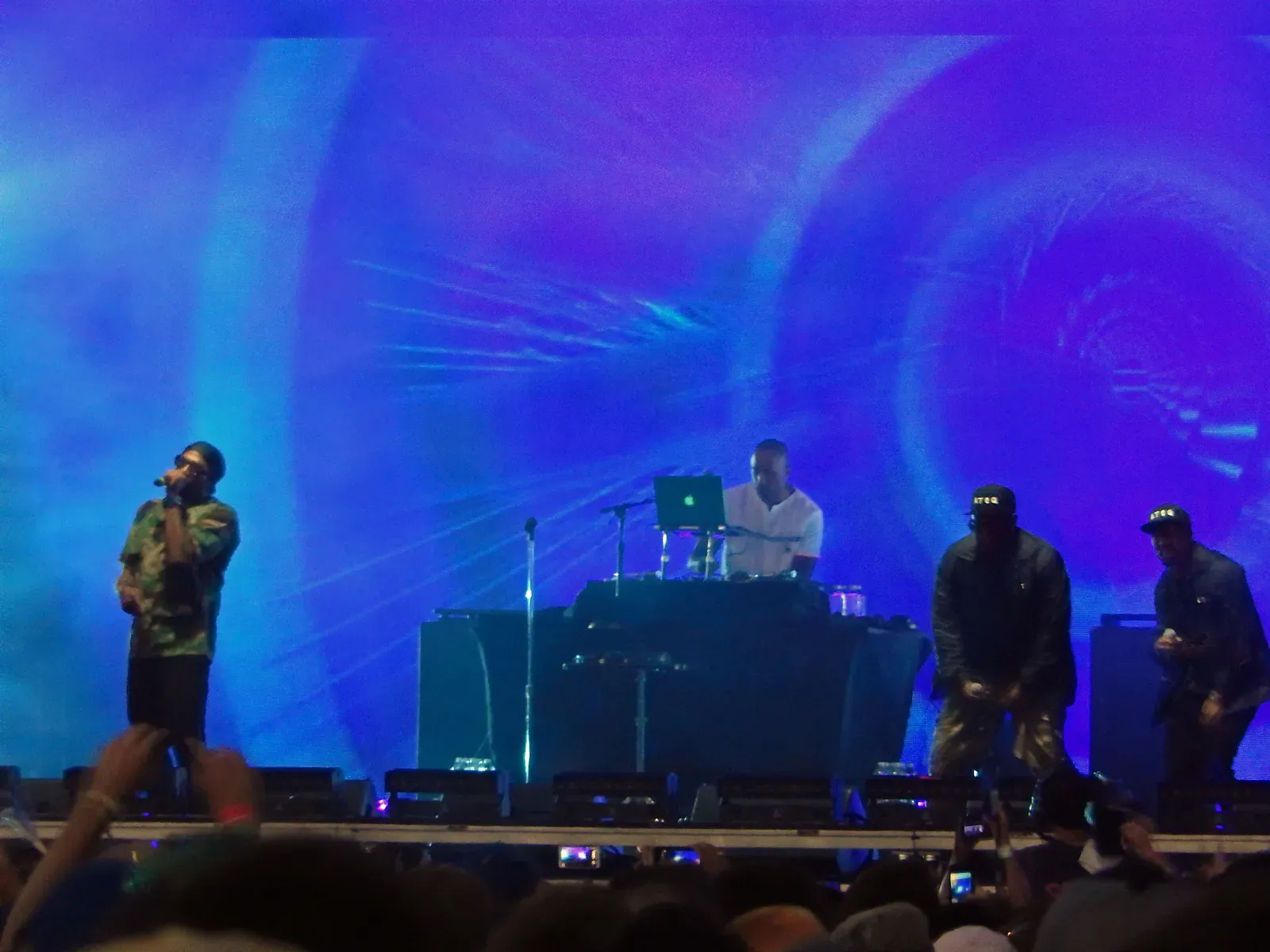
Los Angeles, Atlanta and Philadelphia, 1992-1999
The approach did not stay on the East Coast. In South Central Los Angeles the Pharcyde released Bizarre Ride II the Pharcyde in 1992, a comic and self-mocking album of storytelling set to jazzy beats largely made by J-Swift. In Atlanta, Arrested Development won two Grammy Awards in 1993 for Tennessee, and Outkast began with Southernplayalisticadillacmuzik in 1994 on LaFace. When the group was booed at the 1995 Source Awards, Andre 3000 answered that the South had something to say, a moment often cited as the start of a change in hip hop’s geography. In Philadelphia the Roots pushed in another direction, replacing samples with a live band led by the drummer Questlove and the rapper Black Thought.
Commercially the decade was hard. The Chronic (1992) and its imitators made gangsta rap the format’s sales standard, and from the mid-1990s East Coast hardcore acts such as Wu-Tang Clan, Nas and the Notorious B.I.G. held the other half of the market. Many alternative acts faded or split, and critics sometimes judged the movement a failure at changing hip hop’s image. Yet the Fugees’ The Score reached number one in 1996, as did A Tribe Called Quest’s Beats, Rhymes and Life in the same year.
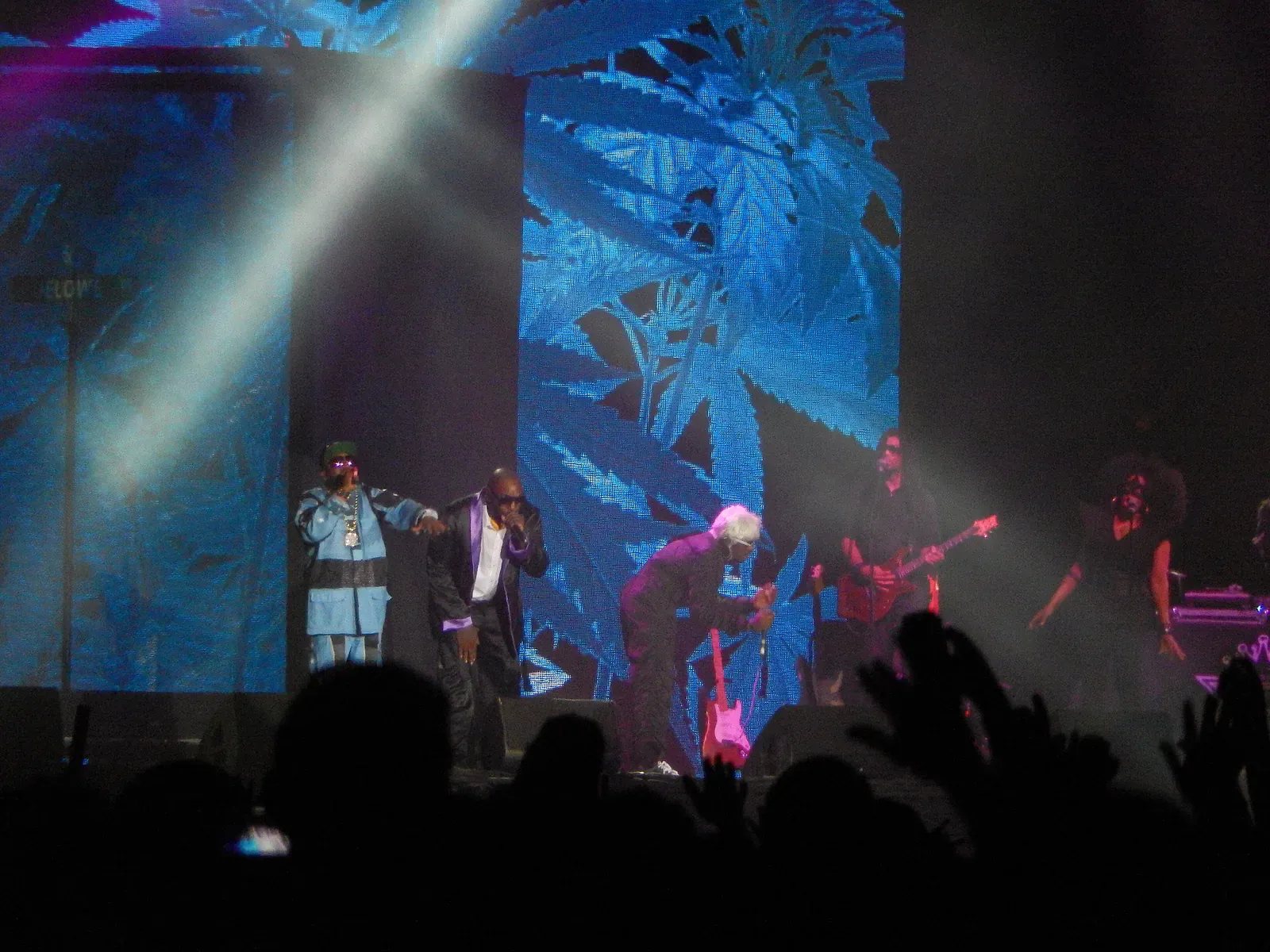
Independent labels and crossover, 1997-2009
As radio narrowed, alternative rap built its own circuit. Rawkus in New York, Rhymesayers in Minneapolis, Definitive Jux, Anticon and Stones Throw in Los Angeles released records that sold modestly but found devoted audiences, and the term backpack rap came to describe the lyrical, record-collecting fan base. MF Doom and Madlib’s Madvillainy (2004) became the underground’s most admired album.
At the same time the mainstream opened. Outkast’s Aquemini (1998) and Stankonia (2000) mixed funk, rock and electronic sounds, and Speakerboxxx/The Love Below won the Grammy for Album of the Year in 2004. Gnarls Barkley’s Crazy was the best-selling UK single of 2006, and Kanye West’s soul-sampling debut The College Dropout led a wave of artists who did not follow the gangster template. His Graduation outsold 50 Cent’s Curtis in 2007, a race many commentators read as a turning point.
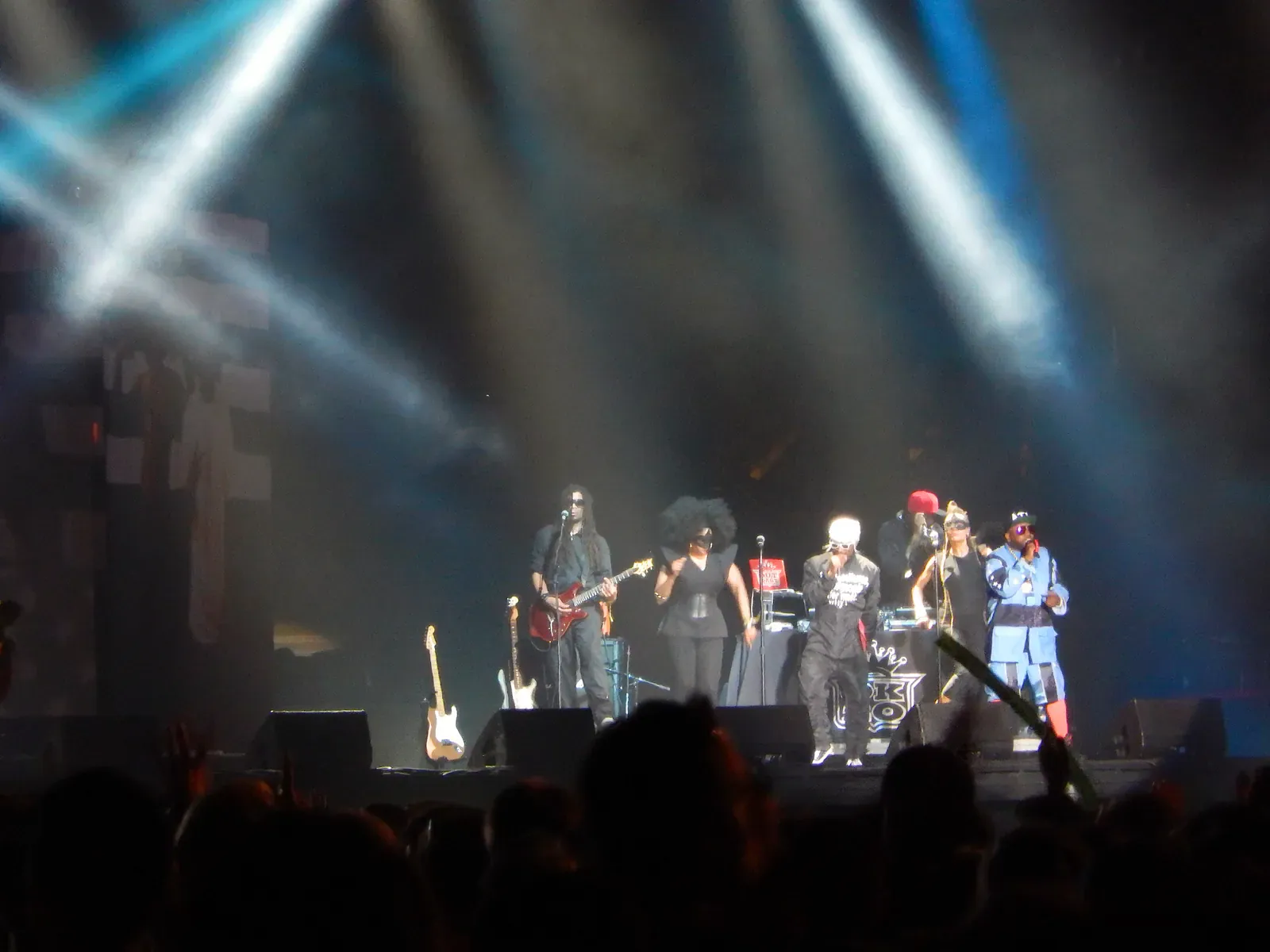
Characteristics
The sound is mid-tempo, usually between about 80 and 100 beats per minute, and built on loops from records that few rappers had used. Beats keep the boom bap pulse of older hip hop but leave space, so lyrics carry the weight. Subjects range from personal doubt to politics to comedy, and many early groups avoided profanity. Aesthetically the scene aligned with skaters, students, punks and other youth subcultures rather than street codes. Gender and sexuality politics were uneven: the movement challenged some stereotypes while a few of its early songs reproduced others.
Instruments and production
Samplers and turntables are the central tools, with crate digging a matter of pride. Live bands, as with the Roots, show a second line of work, in which players recreate the textures that producers once cut from vinyl. Because the label covers any non-commercial rap, production ranges from jazz loops to the synthetic sounds of later experimental artists.
Internet collectives, 2010-present
From the 2010s the stance moved online. Odd Future in Los Angeles and Brockhampton, a collective formed in Texas in 2015, spread through blogs and social platforms, and the alternative label expanded to include internet rap and acts that blend with trap or experimental production. Questlove and the Roots became the house band for late-night television, and A Tribe Called Quest returned with a final album, We Got It from Here… Thank You 4 Your Service, which reached number one in the United States in 2016 after the death of Phife Dawg.
Legacy
Alternative hip hop widened what a rap record could be. It established jazz and soul sampling as a craft, made the concept album and skit a hip hop form, and showed that artists from outside New York and Los Angeles could lead the genre. Its influence runs through Kanye West, Pharrell Williams, the Black Eyed Peas and later artists who treat genre as optional.
Misconceptions
One myth holds that alternative rap was always commercially marginal. Several of its groups had number one albums, and Outkast’s Album of the Year win placed it at the centre of the industry. A second claims that it was a purely New York movement; the Native Tongues began there, but the Pharcyde, Outkast and the Roots show that Los Angeles, Atlanta and Philadelphia developed their own versions within a few years. A third equates the term with a single sound. The label grew from the Native Tongues into a broad umbrella for non-mainstream rap, so it describes an attitude and a range of sounds rather than a fixed style.
Frequently asked questions
What is alternative hip hop?
Alternative hip hop is rap that avoids the gangster, party and consumer clichés of commercial hip hop, using eclectic samples, live instruments and introspective, witty or socially conscious lyrics. It began with the Native Tongues in New York in 1988.
Who are the most important alternative hip hop artists?
A Tribe Called Quest, De La Soul, Outkast, the Roots and the Pharcyde are the most cited acts, with the Jungle Brothers, Arrested Development, the Fugees, Kanye West and MF Doom also central.
How is alternative hip hop different from jazz rap?
Jazz rap is a sound, built on jazz samples or players. Alternative hip hop is a wider category defined by attitude and range, and jazz rap is one of its main strands.
How fast is alternative hip hop?
Most songs sit at roughly 80 to 100 beats per minute in 4/4 time, a relaxed mid-tempo that leaves room for dense lyrics.
Sound
Sound sheet
Anatomy of a track
| # | Part | Bars |
|---|---|---|
| 1 | Intro or skit | 4 |
| 2 | Verse | 16 |
| 3 | Hook | 8 |
| 4 | Verse | 16 |
| 5 | Hook and outro | 8 |
Signature sounds
- Sampled jazz, soul or funk loop
- Mid-tempo, relaxed boom bap drums
- Introspective or humorous lyrics
- Skits and conceptual album framing
Techniques
- Eclectic sampling
- Skits and concept framing
- Live band hybrid
- Jazz-influenced basslines
Keys and modes
Minor and modal jazz loops. Samples taken from jazz, soul and funk records fix the harmony.
Vocals
Conversational or witty rapping, often with sung or guest-vocal hooks.
Scenes
Where it happened
Where and when the sound lived: one bar per city on a shared timeline.
North America
Active scenes
Peak 5, 1993-1996
Queens and Long Island crews form Native Tongues and the East Coast alternative sound.
The Pharcyde and the Good Life workshop scene start a left-field West Coast tradition.
Arrested Development and Outkast put Atlanta on the alternative map.
The Roots build a live-band hip hop practice and a neo-soul circle.
Hieroglyphics and the Bay Area underground develop an independent, backpack-oriented scene.
Venues and places
New York City, 1992 to today. Record store that supplied independent hip hop vinyl to DJs and fans.
Los Angeles, 1989 to today. Health-food cafe whose open-mic workshop nurtured left-field West Coast MCs.
New York City, 1970 to today. Studio in Greenwich Village where Things Fall Apart and other soul-leaning records were made.
Culture
Culture markers
- Daisy Age and Afrocentric dress
Colourful, African-influenced clothing set against hardcore style.
Fashion - Backpack rapper
Label for the lyrical, underground fan and artist, sometimes used as an insult.
Slang - Collage and cartoon sleeves
Early alternative covers favoured playful, pop-art imagery over street realism.
Artwork
Media
Key media
- 1990The Stretch Armstrong and Bobbito Show
by WKCR. A Columbia University radio show that gave early airplay to underground New York hip hop.
Radio - 2011Beats, Rhymes and Life: The Travels of A Tribe Called Quest
by Michael Rapaport. Documentary on the group's rise and internal tensions.
Film - 2013Mo' Meta Blues
by Questlove. Memoir by the Roots' drummer on hip hop and soul culture.
Book
Glossary
Terms on this page
Label for lyrical, independent hip hop, named after the rucksacks its fans carried.
Hip hop with socially aware or introspective lyrics, a frequent theme in alternative rap.
Searching record stores for obscure vinyl to sample.
Hip hop built on jazz samples or live jazz instruments, closely tied to the early alternative scene.
A late-1980s collective of Afrocentric, positive-minded New York hip hop acts, including De La Soul and A Tribe Called Quest.
A short spoken or comic interlude between songs, common on early alternative albums.
Hip Hop family