Post-bop
Post-bop is small-group jazz of the 1960s that keeps composed themes but loosens tempo, meter and harmony, shaped by Miles Davis's second quintet and Blue Note.
United States, 1959
Jazz family
Born
1959
United States
Subgenres
1
Documented branches
Links
11
Genres it drew on or shaped
Tempo
65-150 BPMLineage
Family tree
Grew out of
Derived from
Derived from
Influenced by
United States, 1959
Post-bop
Led to (3)
Timeline
Era by era
From the first sparks to today. Select a dot to read the story behind it.
- Modal and hard-bop roots
1959 to 1963
- Blue Note and the second quintet
1964 to 1968
- Electric turn and ECM
1969 to 1979
- Neo-traditional and M-Base
1980 to today
Eras
Moments
- 1 Modal and hard-bop roots, 1959 to 1963
- 2 Blue Note and the second quintet, 1964 to 1968
- 3 Electric turn and ECM, 1969 to 1979
- 4 Neo-traditional and M-Base, 1980 to today
1959
Modal and hard-bop roots
Kind of Blue, Coltrane's Giant Steps and Blue Note's hard-bop roster supplied the harmonic and rhythmic ideas that younger players later recombined.
- 1959Kind of BlueMiles Davis records the modal album on which later post-bop leaders built.
- 1960Giant StepsColtrane's fast chord-cycle tunes show the harmonic pressure players then tried to loosen.
- 1963Davis forms a new rhythm sectionHerbie Hancock, Ron Carter and 17-year-old Tony Williams join Miles Davis in 1963.
1964
Blue Note and the second quintet
Miles Davis's second quintet and Blue Note sessions by Shorter, Hancock, Williams, Hutcherson and Henderson fixed the style: original tunes, loose time and open harmony.
- 1964Out to Lunch!Eric Dolphy records his only Blue Note leader date, with Hutcherson, Hubbard and Williams.
- 1964Shorter joins DavisWayne Shorter replaces George Coleman, completing the second quintet.
- 1964Life TimeTony Williams records his debut for Blue Note as a teenager.
- 1965Maiden VoyageHancock records his sea-themed modal suite for Blue Note on 17 March.
- 1965Speak No EvilShorter's Blue Note album, with Hancock, Hubbard, Carter and Elvin Jones, is among the style's reference sessions.
- 1965E.S.P.The second quintet's first studio album for Columbia.
- 1965Point of DepartureAndrew Hill's sextet album with Dolphy, Henderson and Williams comes out on Blue Note.
- 1966ComponentsBobby Hutcherson's Blue Note album pairs hard-bop writing with avant-garde pieces; Little B's Poem is the best-known tune.
- 1967Miles SmilesRecorded in October 1966, the album carries Footprints and lets Williams shift freely between swing and a three-over-two feel.
- 1968NefertitiDavis's last fully acoustic album has the horns repeat the melody while the rhythm section improvises.
1969
Electric turn and ECM
Many post-bop leaders moved into fusion, while ECM and Impulse kept acoustic small-group work alive with Tyner and others.
- 1969ECM foundedManfred Eicher starts the Munich label that gives post-bop a European, spacious counterpart.
- 1970Bitches BrewDavis's electric album marks the exit of much of the quintet's circle into fusion.
- 1976V.S.O.P. reunionHancock, Shorter, Hubbard, Carter and Williams reunite as an acoustic quintet and tour.
1980
Neo-traditional and M-Base
Acoustic post-bop became a mainstream repertoire in the 1980s through the Young Lions and quintet reunions, and Steve Coleman's M-Base collective pushed its rhythm further.
- 1981Young Lions debutWynton Marsalis's first album for Columbia opens a decade of young acoustic players working in the 1960s idiom.
Listening path
Start listening
A short path from an easy way in to the deep end. Thumbnails come from YouTube; the player loads only when you press play.
- 01
Herbie Hancock, 1965
A suspended-chord theme that is an easy way into the style.
- 02
Wayne Shorter, 1965
Shorter's quintet shows lyrical writing over ambiguous harmony.
- 03
Bobby Hutcherson, 1966
A slow vibraphone piece written for the leader's young son.
- 04
Miles Davis, 1968
The horns repeat one theme while the rhythm section drives the improvisation.
Facts
| Family | Jazz |
| Origin | United States |
| Emerged | Late 1950s-1960s |
| Status | Active |
| Tempo | 65 to 150 BPM |
| Meter | 4/4, with 3/4 and 6/4 pieces |
| Grew out of | Hard bop, Modal jazz |
| Subgenres | 1 |
Post-bop is a body of small-group jazz that took shape in the United States from the late 1950s and through the 1960s. It keeps the composed theme and the improvising soloist of bebop and hard bop, but loosens tempo, meter and harmony through ideas taken from modal jazz and free jazz.
Miles Davis’s second quintet and the Blue Note albums of Wayne Shorter, Herbie Hancock and their circle define it.
The term is slippery. Some writers use it for a period, others for a style, and one standard reference calls it a vague label for any continuation or mixture of bop, modal and free jazz. This page follows the narrower sense: the 1960s small-group music of original compositions, flexible time and open harmony, plus its later descendants. It sits inside jazz and is a close neighbour of cool jazz and jazz fusion.
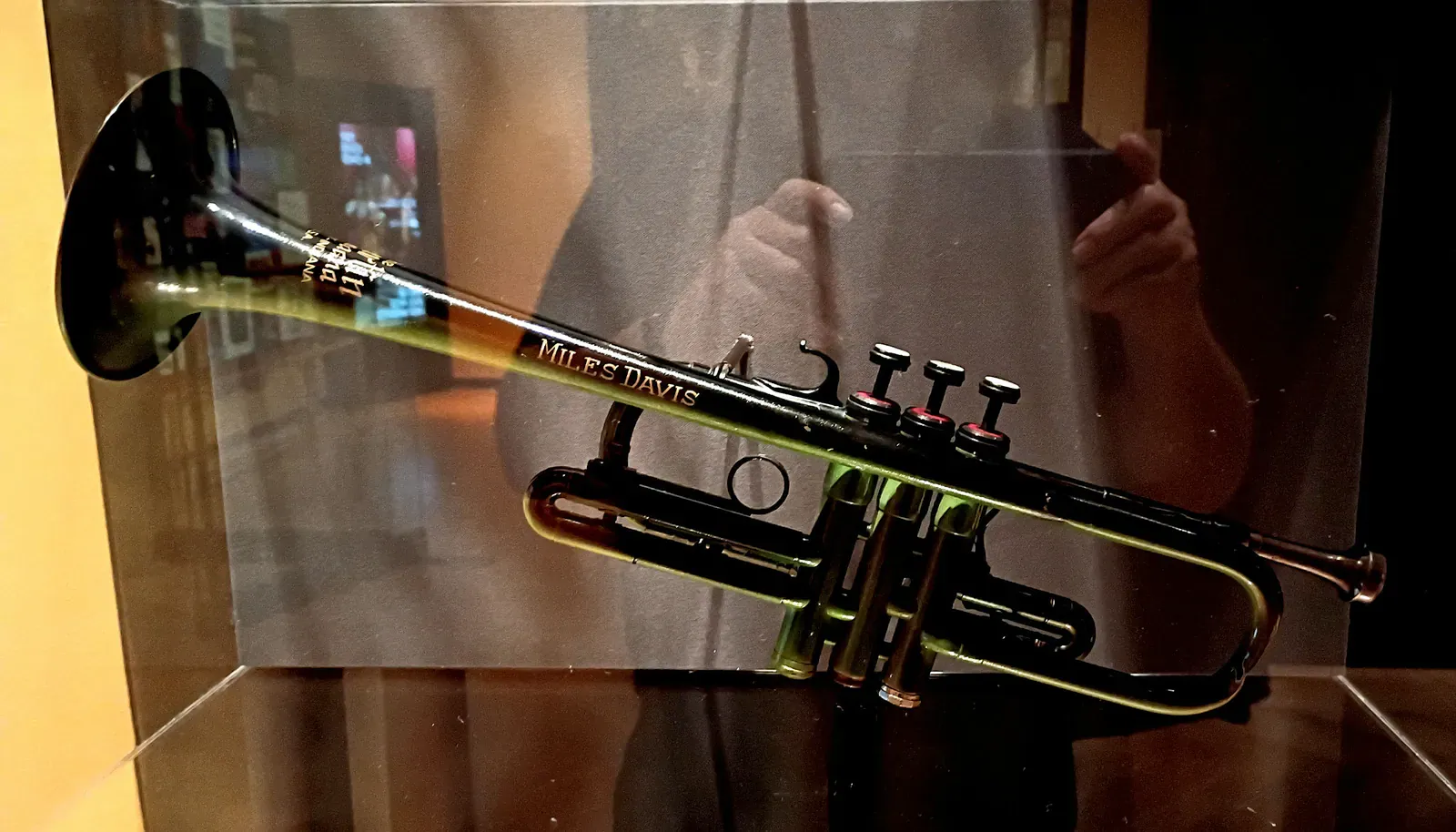
Origins
The harmonic groundwork came from two directions. Hard bop, played by quintets on Blue Note and other labels in the 1950s, supplied the repertoire of tight themes and strong solos. Modal jazz, announced by Miles Davis’s Kind of Blue in 1959, showed that a soloist could improvise over one scale or a slowly moving harmony instead of a fast chord cycle. John Coltrane’s Giant Steps, recorded around the same time, pushed the chord-cycle approach to its limit and prompted many players to look for a different freedom.
Free jazz, associated with Ornette Coleman, made the other argument: that fixed chords and a fixed pulse were optional. Post-bop players did not follow that path all the way. They kept forms, written themes and a recognisable beat, and treated them as flexible rather than binding. Scholars describe this middle position: forms, tempos and meters are freer, every tune is new, and band members are the composers.
The second quintet, 1964-1968
The centre of the style is Miles Davis’s second great quintet. Herbie Hancock, bassist Ron Carter and the 17-year-old drummer Tony Williams joined Davis in 1963, and tenor saxophonist Wayne Shorter replaced George Coleman in 1964. Between 1965 and 1968 the group made six studio albums for Columbia: E.S.P., Miles Smiles, Sorcerer, Nefertiti, Miles in the Sky and Filles de Kilimanjaro.
On these records the rhythm section stopped acting as a metronome. Williams played independent patterns on the ride cymbal and snare, Carter and Hancock answered the soloist and sometimes dropped the chord sequence altogether, and the band could speed up, slow down or change feel in the middle of a chorus. Miles Smiles, recorded in October 1966, includes Shorter’s Footprints, which moves between a swing feel and a three-over-two cross rhythm. On the title tune of Nefertiti the horns state the melody over and over while the rhythm section does the improvising, which reverses the usual roles. It was Davis’s last fully acoustic album.
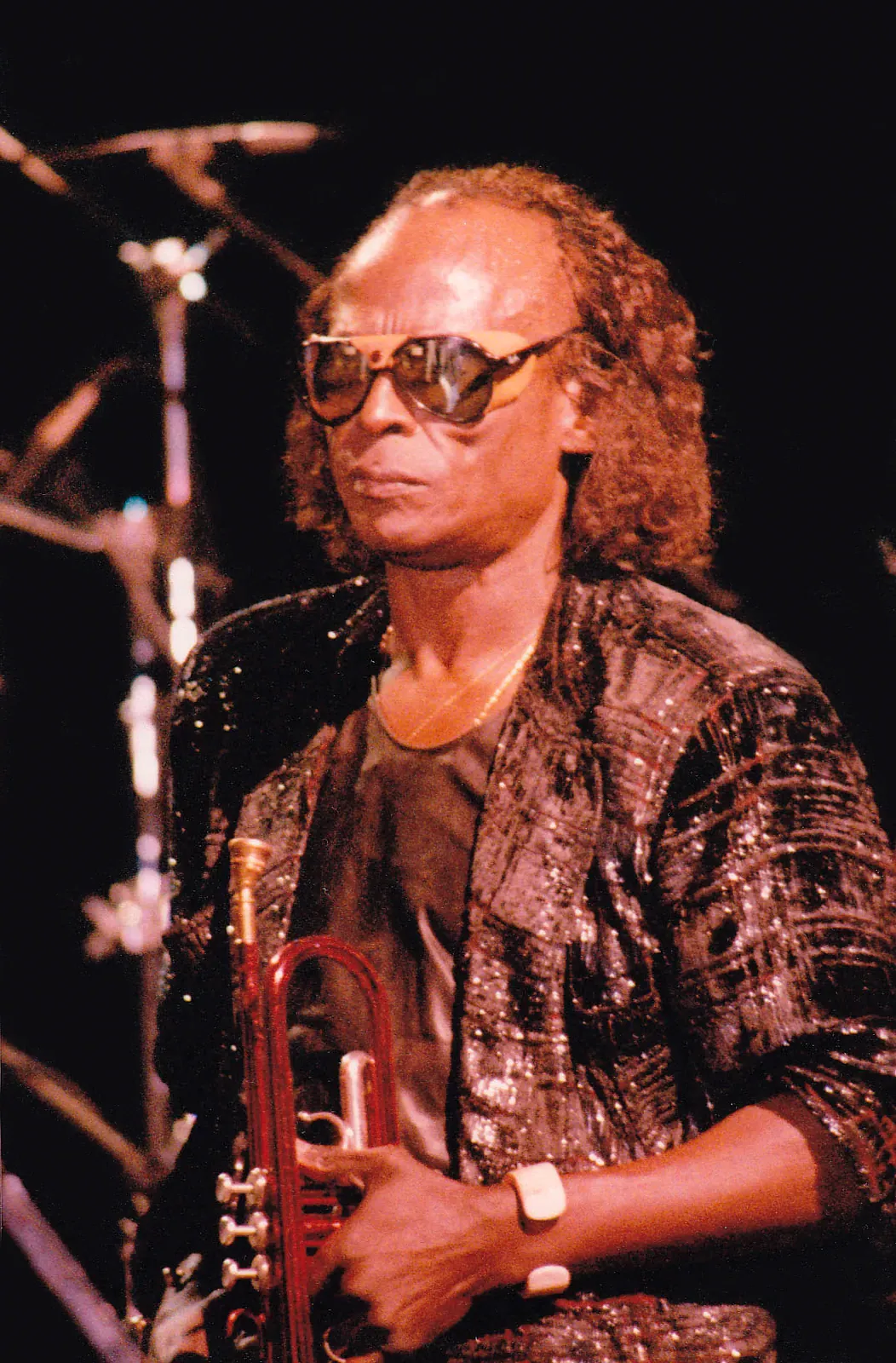
Blue Note and the wider circle
The same players recorded for Blue Note under their own names at Rudy Van Gelder’s studio in Englewood Cliffs, New Jersey. Hancock’s Maiden Voyage, cut on 17 March 1965, is a concept album with a sea theme and a title tune built on slowly moving suspended chords. Shorter’s Speak No Evil, also from 1965, shows his writing for a quintet with lyrical themes over ambiguous harmony. Tony Williams made his debut album Life Time in 1964, and Eric Dolphy’s Out to Lunch! from the same year, with vibraphonist Bobby Hutcherson, trumpeter Freddie Hubbard and Williams, sat at the avant-garde edge of the circle. Andrew Hill’s Point of Departure, recorded in 1964 and released in 1965, and Hutcherson’s Components, released in 1966, extended the range further.
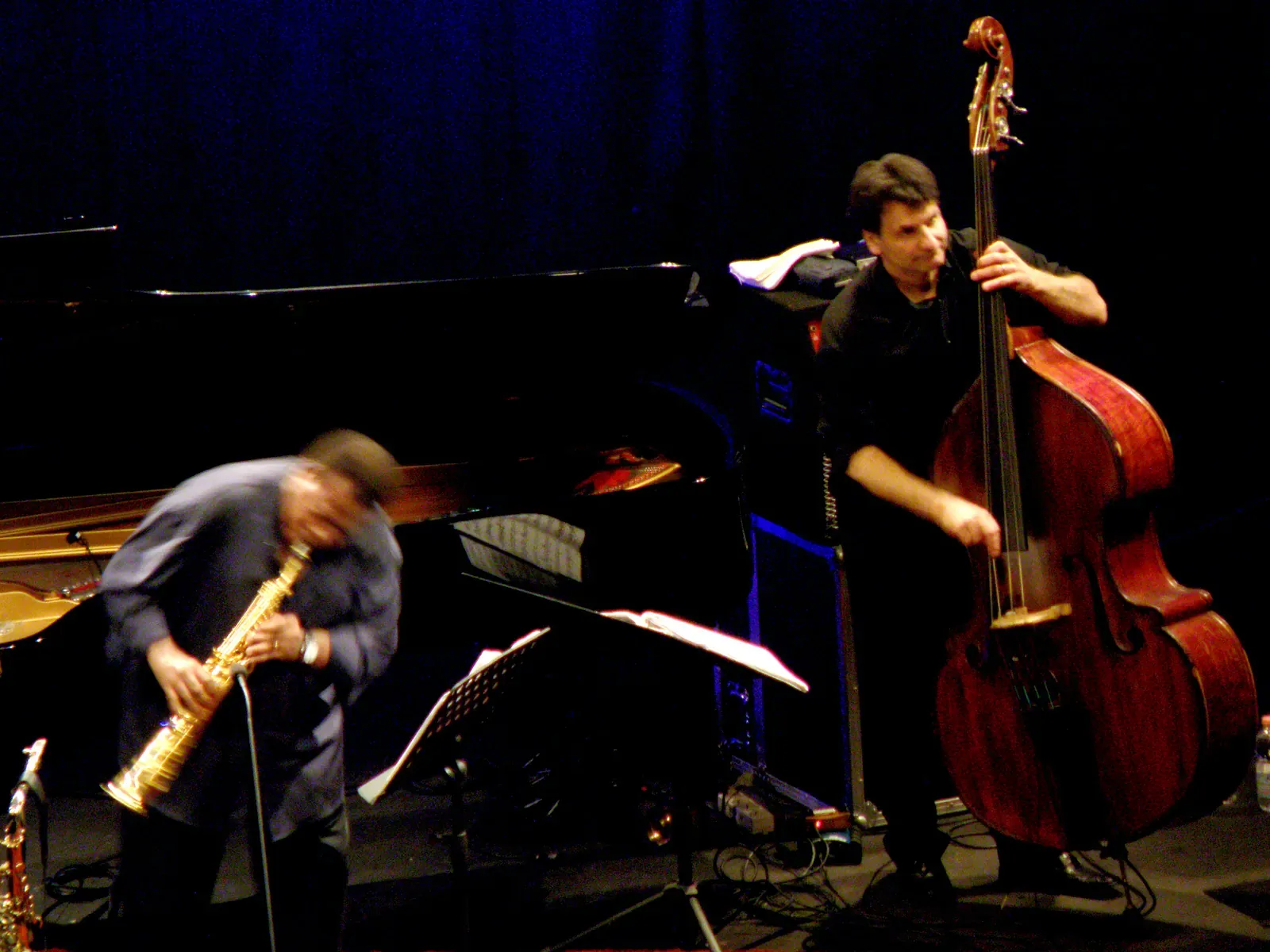
Other labels supplied a parallel strand. Impulse recorded Coltrane’s quartet, in which pianist McCoy Tyner developed the voicings built from stacked fourths that became a post-bop piano signature, and later issued Tyner’s own albums. The Munich label ECM, founded in 1969, gave the style a more spacious European sound.
Characteristics
Post-bop is mostly instrumental and mostly played by a quintet or smaller group of trumpet or saxophone, piano, bass and drums. Its tunes are usually original, often with irregular lengths and unusual chord movement, and many become standards used by later players. Scholars describe a slower harmonic rhythm borrowed from modal jazz, a habit of playing inside and outside the underlying harmony, a conversational rhythm section, and the occasional dropping of the chorus structure under a solo.
Tempo covers a wide span. Ballads such as Hutcherson’s Little B’s Poem and Shorter’s Infant Eyes sit in the 60s and 70s, mid-tempo pieces like Maiden Voyage and Nefertiti move at about 105 to 125 beats per minute, and fast pieces such as Hancock’s The Eye of the Hurricane pass 145. Meter is usually 4/4, with waltz and 6/4 pieces as regular exceptions.
Instruments and production
The line-up is acoustic. A trumpet or tenor and soprano saxophone carries the theme, a piano supplies chords and a bass and drum kit keep a loose pulse. Vibraphone, in Hutcherson’s hands, and flute or bass clarinet, in Dolphy’s, add colour. Recording was direct and live in the studio, with the band playing together in a room, and the Van Gelder sound, with its close, warm balance, is a recognisable feature of the Blue Note records. Davis’s Columbia sessions used the label’s former church studio on Thirtieth Street in New York.
Culture
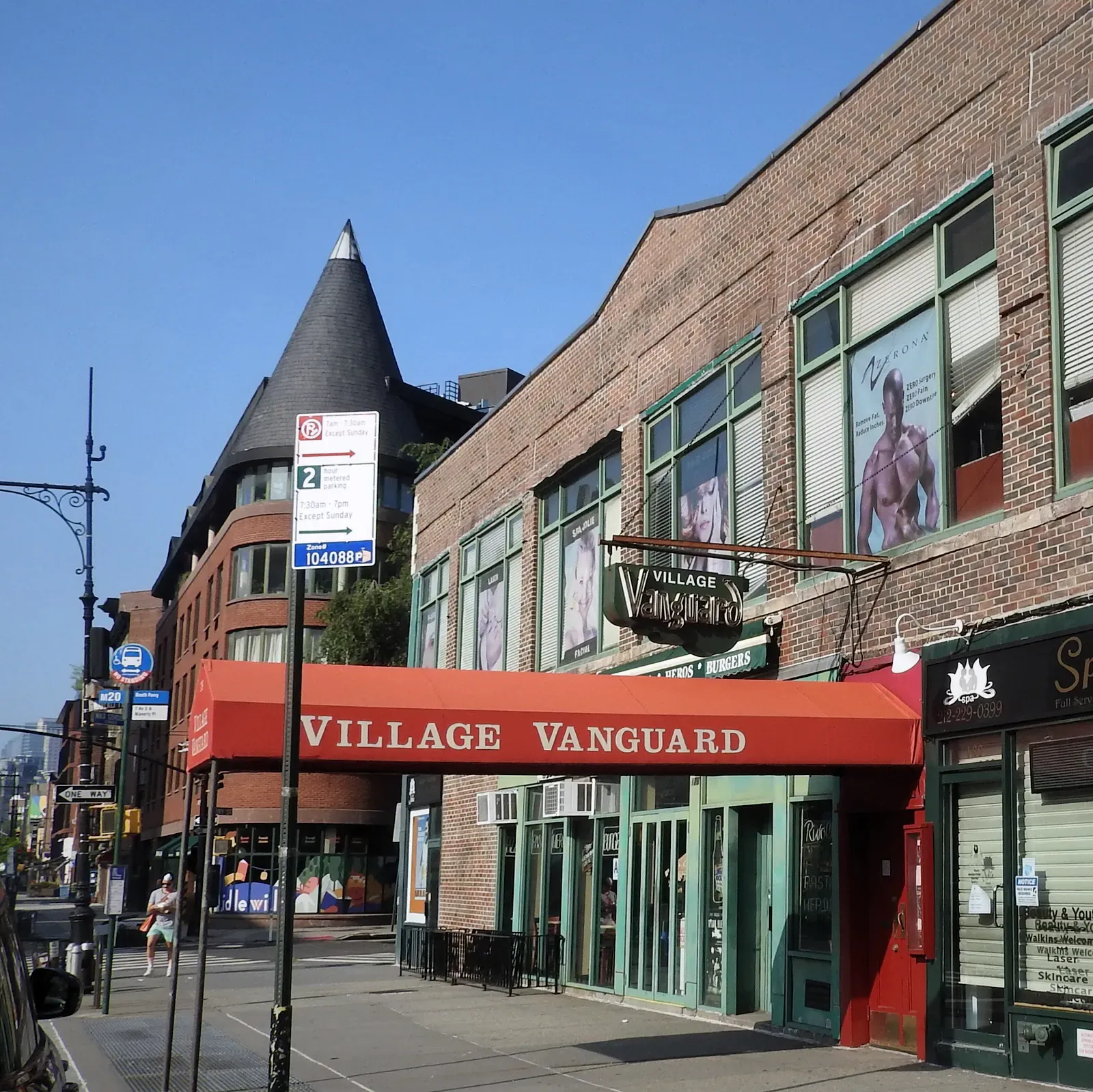
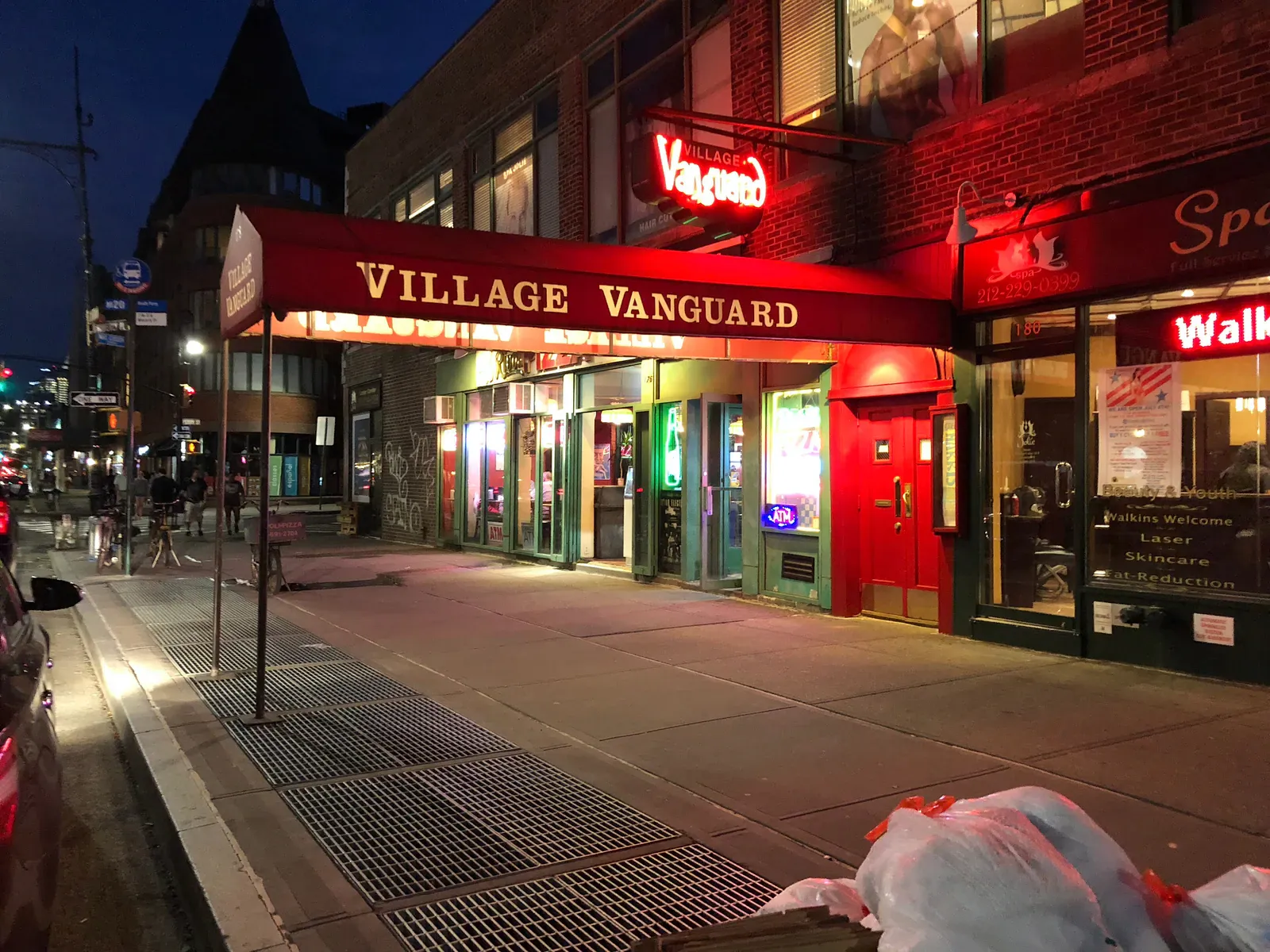
The style grew from a working network of sidemen. A rhythm section such as Hancock, Carter and Williams plays on dozens of albums under different leaders, so a listener meets the same sound in several settings. Blue Note’s covers, with Reid Miles’s typography and Francis Wolff’s photographs, gave the music a visual identity as strong as its sound. Clubs such as the Village Vanguard remained its home for live music, while albums spread it abroad.
Mainstream success
Post-bop was never a chart genre. Its audience bought albums, and its success shows in reputation: Maiden Voyage, Speak No Evil and the quintet records are still reissued and studied. A 2007 book by Jeremy Yudkin analyses the Miles Smiles sessions in detail, and the six quintet albums were collected in one box set in 1998.
Commercially the larger turn was away from it. Davis’s electric records of 1969 and 1970 pulled the style’s best-known players into jazz fusion. Shorter co-founded Weather Report in 1971, and Hancock’s Head Hunters of 1973 became one of the best-selling jazz albums. The acoustic quintet came back in 1976, when Hancock, Shorter, Hubbard, Carter and Williams toured as V.S.O.P., and again in the 1980s with the Young Lions, a group of young acoustic players that included Wynton Marsalis, whose first album for Columbia appeared in 1981. In the same decade Steve Coleman’s M-Base collective in New York developed the style’s rhythmic ideas into asymmetrical, funk-influenced patterns.
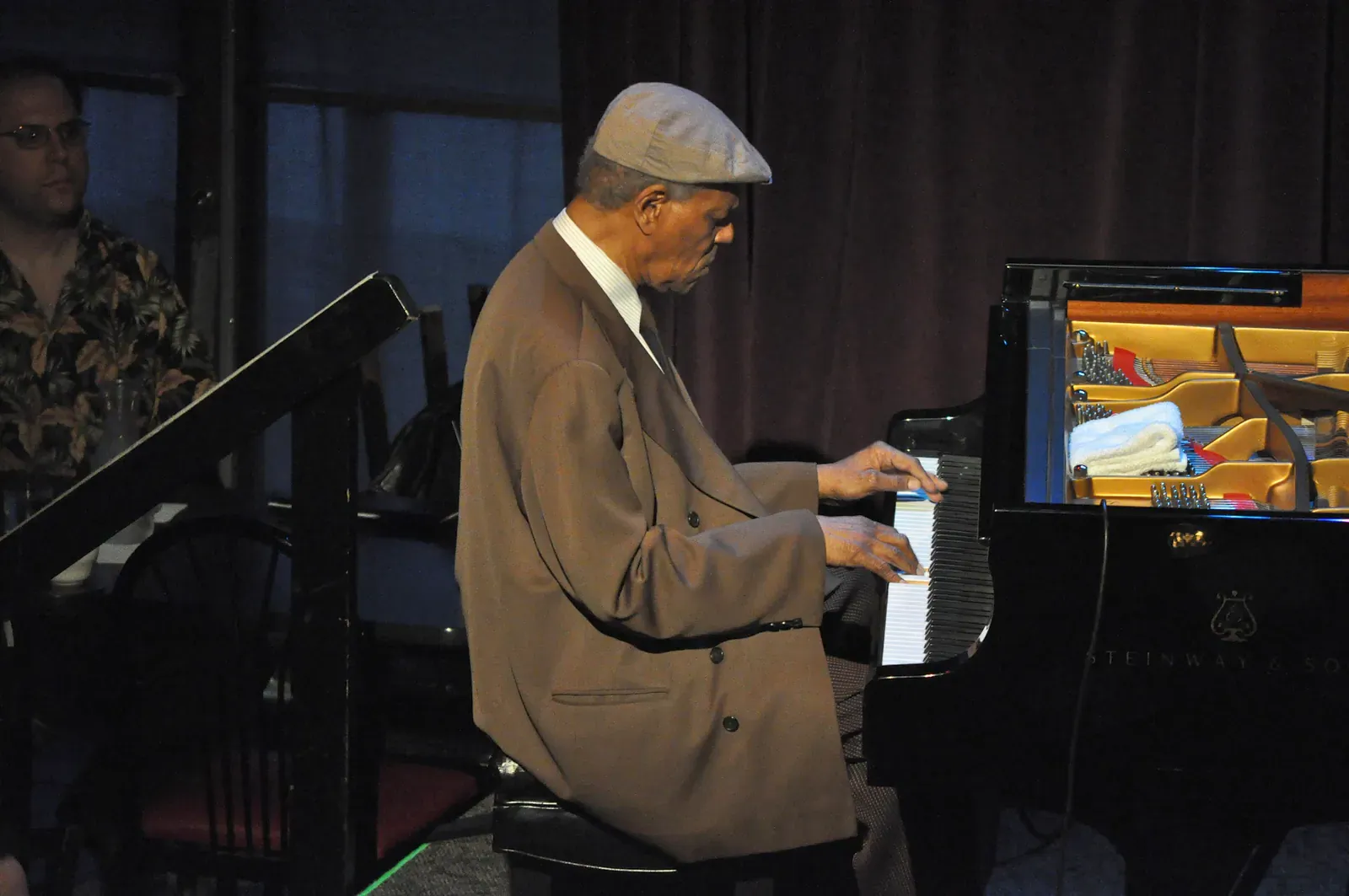
Notable recordings
Maiden Voyage was recorded in a single day with Hancock, Hubbard, Coleman, Carter and Williams, and the title tune keeps a chord for several bars before it shifts, giving soloists space to build a line. Speak No Evil, recorded with Hancock, Hubbard, Carter and drummer Elvin Jones, balances ballad-like themes with tension in the harmony. Nefertiti is the quintet’s clearest statement of its method: the melody is fixed, and everything underneath moves. Little B’s Poem, written by Hutcherson for his three-year-old son, shows the quieter side, a slow vibraphone piece with a floating pulse.
Legacy
Post-bop became the main vocabulary of acoustic jazz after the 1960s. Its tunes are standard material at jam sessions and in conservatories, its drumming and piano methods are widely taught, and Footprints, Maiden Voyage and Nefertiti are often played together. It also left a mark on fusion, on modern mainstream jazz and on the M-Base approach to rhythm.
Misconceptions
One myth is that the term simply means jazz that came after bebop. Writers disagree on the dates and the scope, and a plain chronological reading would include nearly everything made after 1960. Another is that post-bop is the same as free jazz. Post-bop musicians kept composed themes, forms and a pulse, and used freedom selectively. A third is that the style belongs to Miles Davis alone. His quintet is central, but much of the repertoire came from Shorter and Hancock, and the Blue Note and Impulse catalogues hold a large share of the key albums.
Frequently asked questions
What is post-bop jazz?
Post-bop is small-group jazz from the 1960s and after that combines bebop and hard bop with modal and free jazz. It uses original compositions, flexible time and open harmony.
Which albums define post-bop?
The six studio albums of Miles Davis’s second quintet, from E.S.P. in 1965 to Filles de Kilimanjaro in 1968, together with Hancock’s Maiden Voyage and Shorter’s Speak No Evil on Blue Note.
How is post-bop different from hard bop?
Hard bop keeps a steady swing and blues and gospel colouring. Post-bop adds modal harmony, freer time and more abstract writing.
How is post-bop different from free jazz?
Post-bop keeps written themes, forms and a pulse. Free jazz can drop all of them.
Sound
Sound sheet
Anatomy of a track
| # | Part | Bars |
|---|---|---|
| 1 | Head (composed theme) | 16 |
| 2 | Solos over the form | 64 |
| 3 | Rhythm section interplay or drum feature | 16 |
| 4 | Head out | 16 |
Signature sounds
- Quartal chord voicings
- Elastic swing feel
- Original through-composed heads
Drums and percussion
- Acoustic drum kit
Techniques
- Playing outside
- Metric superimposition
- Quartal voicings
- Elastic time
Keys and modes
Modal scales and altered dominants. Slow-moving modal centres mix with extended and suspended chords.
Vocals
Mostly instrumental
Scenes
Where it happened
Where and when the sound lived: one bar per city on a shared timeline.
North America
Europe
Active scenes
Peak 3, 1969-2025
Studios, clubs and the Columbia and Blue Note offices made it the centre of the style.
Rudy Van Gelder's studio recorded most Blue Note sessions of the period.
Home of ECM, which recorded a European strand of small-group jazz.
Venues and places
Englewood Cliffs, 1959 to today. Rudy Van Gelder's New Jersey studio recorded Maiden Voyage and Speak No Evil.
New York, 1949 to today. A converted church where Davis's second quintet recorded Miles Smiles and Nefertiti.
New York, 1935 to today. A basement club in Greenwich Village that hosts small-group jazz.
Culture
Culture markers
- Blue Note cover design
Reid Miles's typography and Francis Wolff's photographs gave the label's sleeves a recognisable look.
Artwork - Original compositions
Band members write the repertoire, and tunes such as Footprints become standards.
Ritual - Sideman networks
The same players moved between leaders' sessions, so one rhythm section sounds across dozens of albums.
Ritual
Media
Key media
- 1998The Complete Studio Recordings of the Miles Davis Quintet 1965-1968
by Miles Davis. Collects all six studio albums of the second quintet.
Compilation - 2007Miles Davis, Miles Smiles, and the Invention of Post Bop
by Jeremy Yudkin. A study of the 1966 sessions that analyses how the quintet worked.
Book
Glossary
Terms on this page
Treating a subdivision of one tempo as the pulse of a new one.
Improvising over one scale or slow-moving chords instead of fast changes.
Moving beyond the written chords and returning to them later.
Piano, bass and drums answer the soloist rather than only accompany.
A feel where the beat continues but the chord cycle is dropped.
Jazz family