Industrial metal
Industrial metal fuses heavy metal with industrial music: looped guitar riffs, drum machines, samplers and distorted vocals, formed in the late 1980s.
United Kingdom, United States, Germany, Switzerland, 1988
Metal family
Born
1988
United Kingdom, United States, Germany, Switzerland
Subgenres
5
Documented branches
Links
14
Genres it drew on or shaped
Tempo
110-155 BPMLineage
Family tree
Grew out of
- Industrial rock
Derived from
Derived from
Influenced by
Pushed back against
United Kingdom, United States, Germany, Switzerland, 1988
Industrial metal
Led to (7)
Timeline
Era by era
From the first sparks to today. Select a dot to read the story behind it.
- Fusion of the two scenes
1988 to 1991
- Platinum and Woodstock
1992 to 1995
- Commercial peak
1996 to 1999
- Backlash and persistence
2000 to today
Eras
Moments
- 1 Fusion of the two scenes, 1988 to 1991
- 2 Platinum and Woodstock, 1992 to 1995
- 3 Commercial peak, 1996 to 1999
- 4 Backlash and persistence, 2000 to today
1988
Fusion of the two scenes
Godflesh's first EP and Ministry's The Land of Rape and Honey put guitar riffs, samplers and drum machines together, while KMFDM and The Young Gods took similar routes.
- 1988Godflesh form in BirminghamJustin Broadrick, a former Napalm Death guitarist, and B. C. Green start Godflesh and release their self-titled EP.
- 1988Ministry record The Land of Rape and HoneyAl Jourgensen rediscovers the guitar during sessions at Southern Studios in London.
- 1989Godflesh release Streetcleaner
- 1989The Young Gods release L'Eau RougeThe Swiss trio adds a pure guitar attack to its sampler sound.
- 1989Nine Inch Nails release Pretty Hate Machine
1992
Platinum and Woodstock
Nine Inch Nails' Broken and Ministry's Psalm 69 went platinum in 1992, The Downward Spiral followed in 1994, and Fear Factory released Demanufacture.
- 1992Ministry release Psalm 69The album reaches platinum in the United States after three years.
- 1992Nine Inch Nails release BrokenThe EP goes platinum and wins a Grammy for Best Metal Performance.
- 1992Fear Factory release Soul of a New Machine
- 1994Nine Inch Nails release The Downward SpiralIt debuts at number 2 and later sells four million copies in the United States.
- 1994Nine Inch Nails play Woodstock 94
- 1995Fear Factory release Demanufacture
- 1995Bob Dole attacks Time Warner over industrial lyricsCampaigners press Time Warner over Nine Inch Nails' Big Man with a Gun.
1996
Commercial peak
Marilyn Manson, Rob Zombie, Rammstein, Static-X and Orgy charted high while established metal acts experimented with the style.
- 1996Marilyn Manson release Antichrist SuperstarIt debuts at number 3 on the Billboard 200.
- 1997Rammstein release Sehnsucht
- 1998Rob Zombie releases Hellbilly DeluxeThe solo debut of the White Zombie singer debuts at number 5 with Dragula.
- 1999Columbine shooting sparks media blameCoverage points at Marilyn Manson, though the shooters preferred KMFDM and Rammstein.
- 1999Nine Inch Nails release The FragileIt reaches number 1 on the Billboard 200.
2000
Backlash and persistence
Critics turned on the style around 2000 and veteran acts dropped the industrial label, yet sales stayed high into the mid-2000s and the bands kept touring.
- 2000Critical backlashReviewers call the style generic and repetitive, and veteran acts reject the industrial label.
Listening path
Start listening
A short path from an easy way in to the deep end. Thumbnails come from YouTube; the player loads only when you press play.
- 01
Ministry, 1992
Fast, riff-driven industrial metal with Burroughs footage; the entry point to Ministry.
- 02
Nine Inch Nails, 1994
The Downward Spiral single that brought the sound to a mass audience.
- 03
Fear Factory, 1995
Machine-tight drums and synths around death metal riffs.
- 04
Rammstein, 1997
German-language industrial metal that crossed borders.
- 05
Rob Zombie, 1998
Horror-themed groove with sampled dialogue, from the commercial peak.
Facts
| Family | Metal |
| Origin | United Kingdom, United States, Germany, Switzerland |
| Emerged | Late 1980s |
| Status | Active |
| Tempo | 110 to 155 BPM |
| Meter | 4/4 |
| Grew out of | Industrial rock, Heavy metal |
| Subgenres | 3 |
Industrial metal is the fusion of heavy metal and industrial music. It joins repeating, down-tuned guitar riffs to drum machines, samplers, synthesizer or sequencer lines and distorted vocals.
The style took shape in the late 1980s in Britain, the United States, Germany and Switzerland, reached platinum sales in the early 1990s and peaked commercially in the second half of that decade. It descends from heavy metal and industrial music and belongs to the metal family.
Origins
Electric guitars had appeared in industrial music from its early days, but archetypal industrial groups such as Throbbing Gristle kept a strong anti-rock stance. The British post-punk band Killing Joke crossed the two worlds earlier and influenced Ministry, Godflesh and Nine Inch Nails, and the noise-rock band Big Black left its own mark on later groups. By the late 1980s industrial and metal began to merge into a shared genre, with Godflesh’s self-titled EP and Ministry’s The Land of Rape and Honey at the front.
Godflesh formed in Birmingham in 1988 around Justin Broadrick, a former Napalm Death guitarist, and bassist B. C. Green. They drew on power electronics, the band Swans, Brian Eno and the heavy rock of their home city, including Black Sabbath. Their 1989 album Streetcleaner on Earache set slow, crushing guitar riffs against machine-made rhythms. It was not a big seller, but Korn, Metallica, Danzig, Faith No More and Fear Factory have all named the band.
Ministry came from the Chicago circle around Wax Trax!, an independent label devoted to industrial music. During the sessions for The Land of Rape and Honey at Southern Studios in London, Al Jourgensen picked up a guitar for the first time in about five years. Feedback from a Marshall stack, combined with keyboard sounds, opened a new set of possibilities for him. He then hired Mike Scaccia, a guitarist from the Texas thrash band Rigor Mortis, and spoke openly of his admiration for Sepultura.
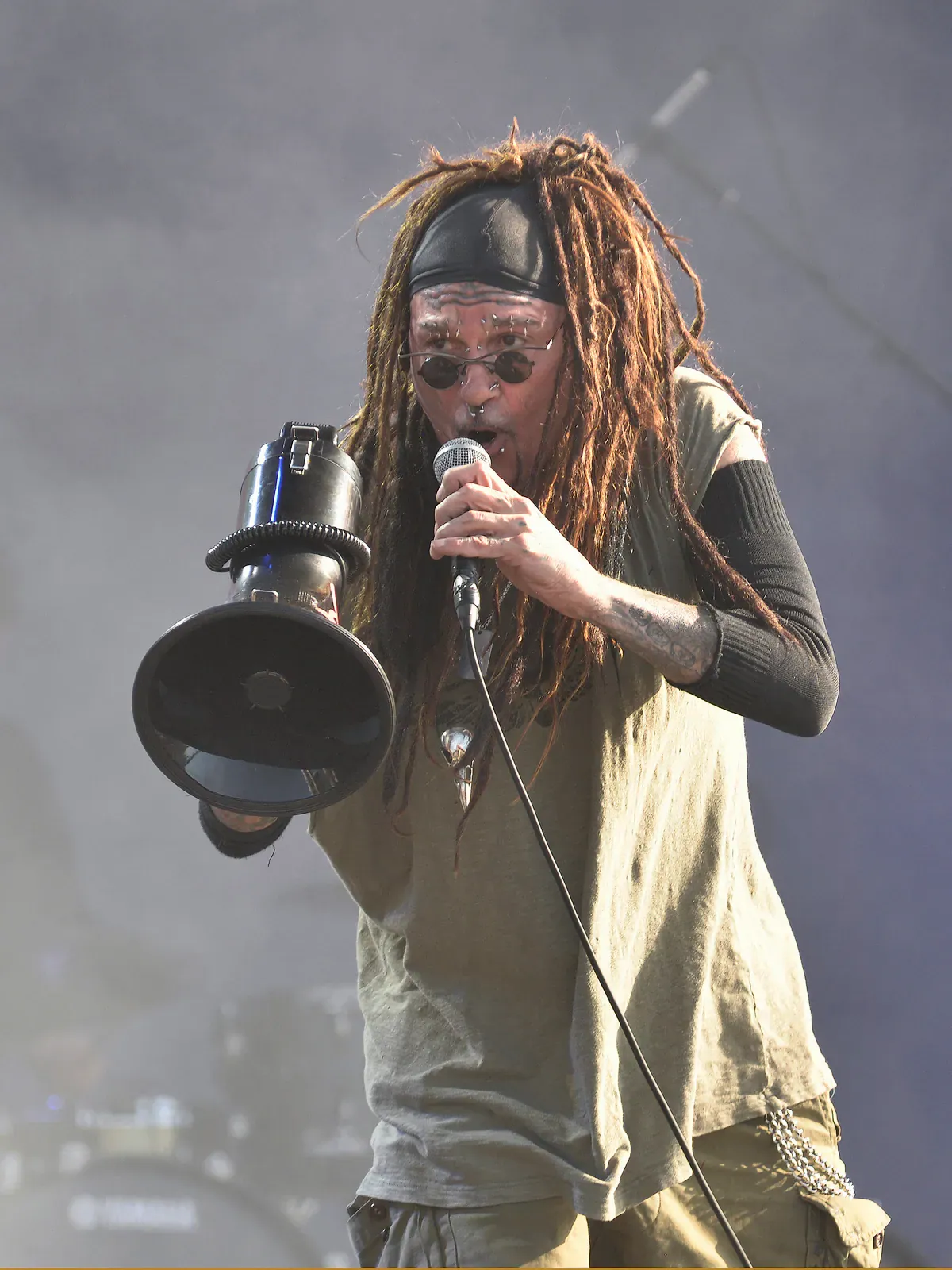
Other acts reached the same sound from different directions. KMFDM leader Sascha Konietzko was not a metal fan, but from late 1986 he sampled metal guitar licks on an E-mu Emax sampler and looped them, finding that the best riffs in metal usually came only once and that repeating them was the point. The Swiss trio The Young Gods added a pure guitar attack on L’Eau Rouge in 1989, and the Canadian thrash band Malhavoc mixed extreme metal with industrial elements in the late 1980s.
Breakthrough, 1990-1995
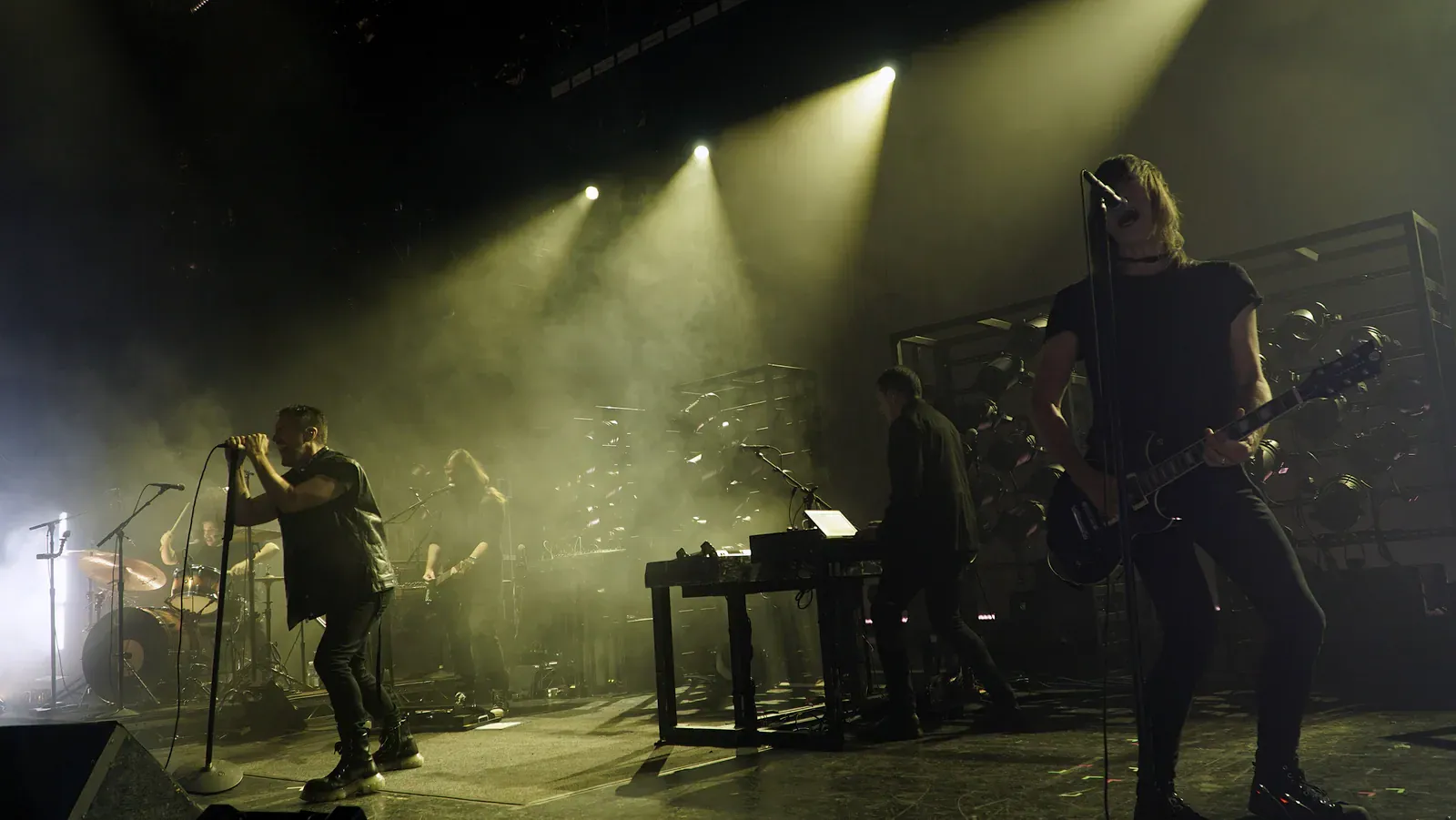
Nine Inch Nails, the project of Trent Reznor, brought the style to mainstream audiences with Broken and The Downward Spiral, and with a performance at Woodstock ’94. A rivethead subculture formed around the music in the same years, and a coldwave strand grew with groups such as Chemlab, 16 Volt and Acumen Nation. Skinny Puppy and Front Line Assembly, from the electro-industrial side, adopted industrial metal techniques; Skinny Puppy’s Rabies was co-produced by Jourgensen.
Los Angeles produced Fear Factory, formed in 1989, which added death metal technique and synthesizers to the formula.
Commercial peak, 1996-1999
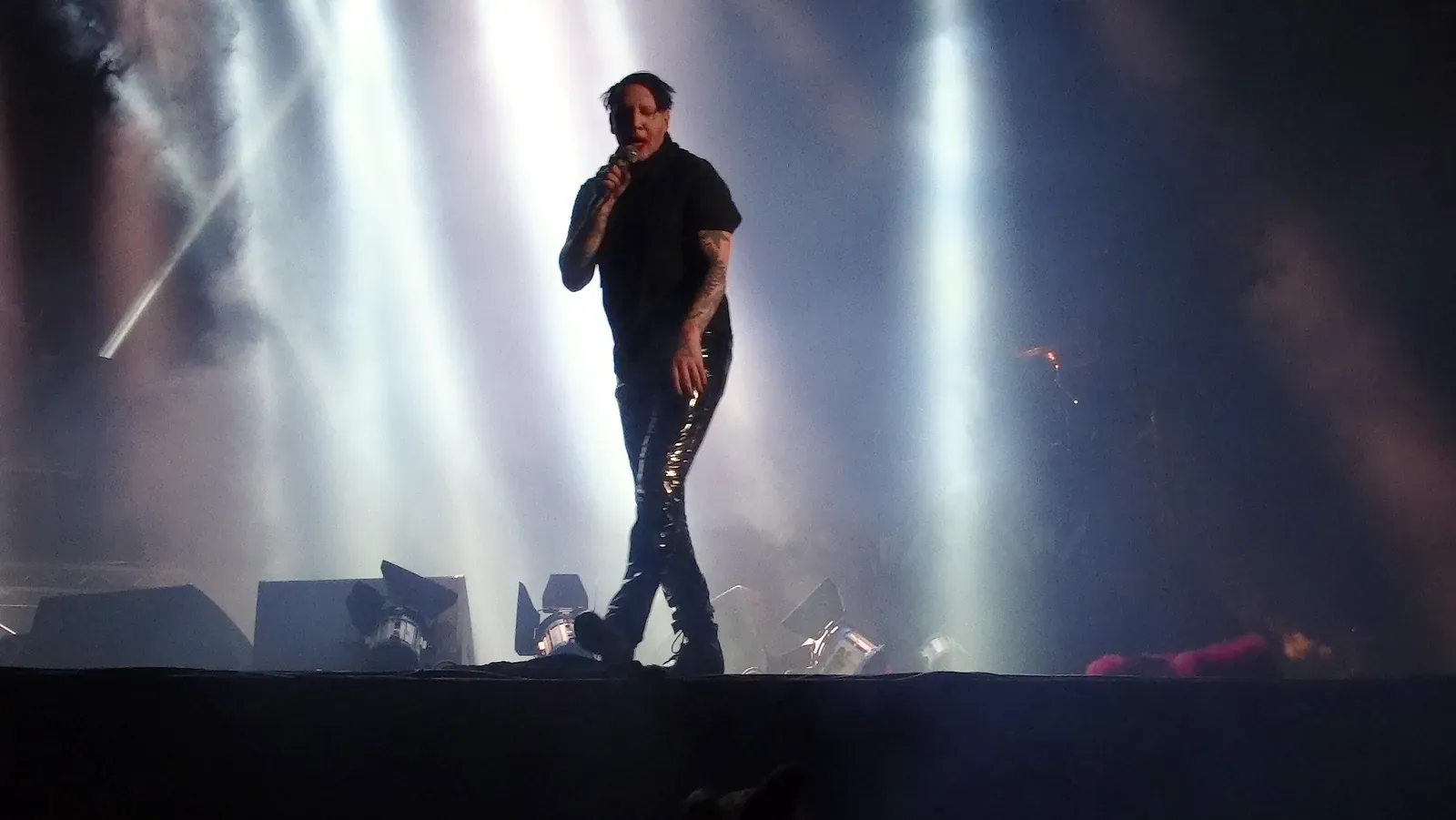
Industrial metal reached its commercial high point in the second half of the 1990s. Records by major acts regularly debuted at the top of the Billboard 200: Rob Zombie’s Hellbilly Deluxe at number 5, Marilyn Manson’s Antichrist Superstar at number 3 and Nine Inch Nails’ The Fragile at number 1. On the Heatseekers chart, Filter’s Short Bus, Stabbing Westward’s Wither Blister Burn + Peel, Rammstein’s Sehnsucht, Orgy’s Candyass and Static-X’s Wisconsin Death Trip all placed in the top three. In 1997 Time chose Reznor as one of the most influential Americans of the year. Established glam metal groups, including Guns N’ Roses and Mötley Crüe, experimented with the style, and hip hop figures sought collaborations and remixes from industrial metal musicians.
Characteristics
The defining trait is repetition. Where traditional metal prized riffs that develop, industrial metal loops a riff, often sampled and played back like a drum pattern, and locks the guitars to a programmed or triggered rhythm. Tempos are mid-range, with songs that sit around the pulse of dance music and not the extremes of thrash or doom. Synthesizers or sequencers add bass pulses and textures, and samples of speech, film dialogue and noise are cut into the mix. Vocals are shouted, snarled or processed, and the lyrics often concern machines, control, addiction, religion and alienation.
Instruments and production
The instrumentation is a metal band plus the studio of an electronic musician. Guitarists tune low and use high-gain distortion for a dense, percussive tone, and bassists often double the riff. The sampler is as important as the amplifier: Jourgensen has described how combining a Fairlight keyboard’s sounds with a Marshall’s feedback produced new options, and Konietzko’s Emax turned riffs into loops. Drum machines supply a rigid beat, while live drummers on records and stage often work with triggers or doubled samples so that the kit sounds machine-exact.
Notable recordings
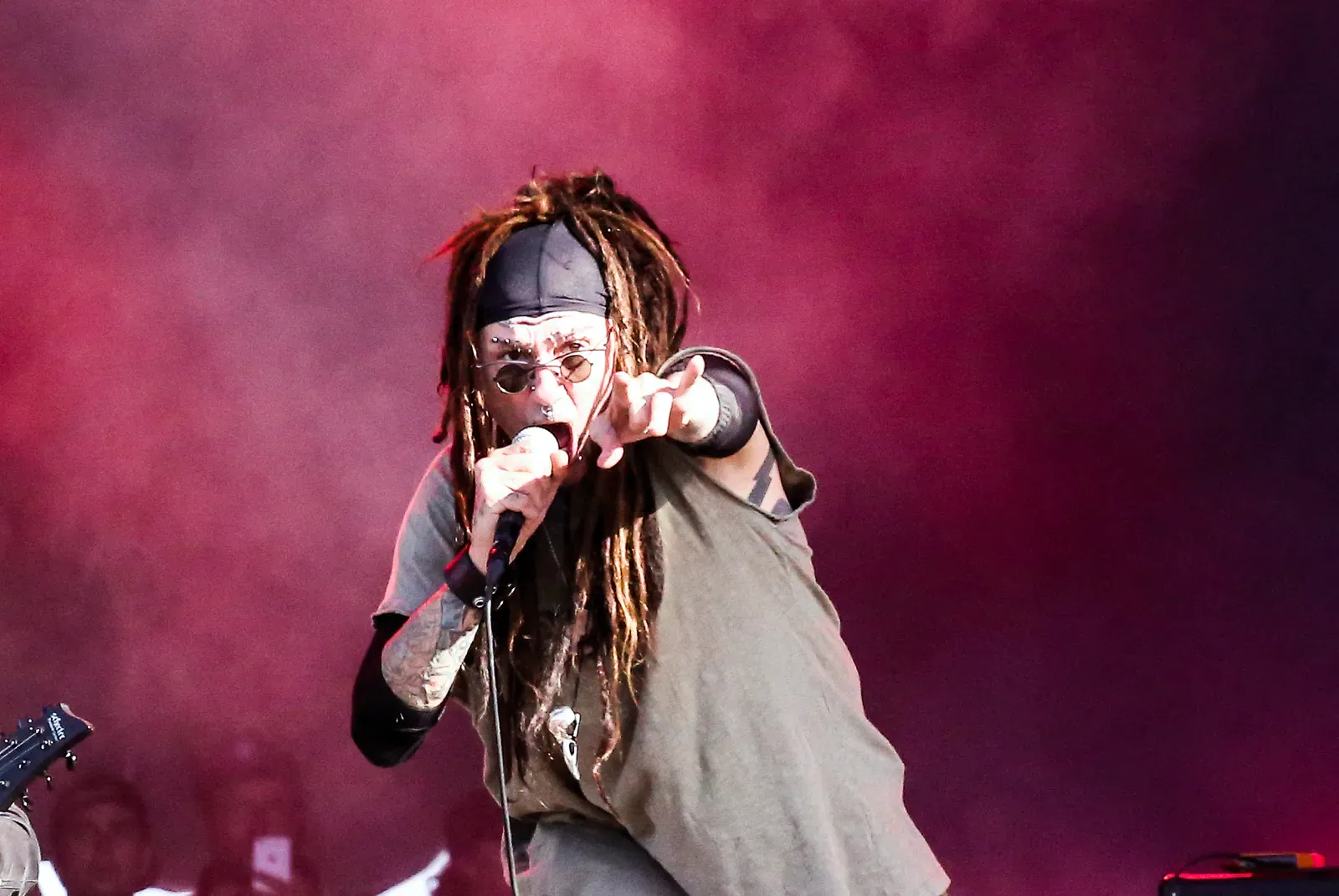
Ministry’s Psalm 69 (1992) and Nine Inch Nails’ Broken (1992) both reached platinum in the United States, although Psalm 69 took three years to do so. Both were nominated for Best Metal Performance at the Grammy awards for 1992, and Nine Inch Nails won. Just One Fix, the Psalm 69 single, came with a video directed by Peter Christopherson that used footage of the author William S. Burroughs. The Downward Spiral followed in 1994, debuting at number 2 and eventually selling four times platinum in the United States.
Fear Factory’s Demanufacture (1995), released by Roadrunner, set a template for cyber metal, a branch that pairs death metal riffs with science-fiction themes and synthesizers. Rammstein’s Sehnsucht in 1997 carried German-language industrial metal to an international audience, and the 1998 single Dragula became the signature song of Rob Zombie’s solo career after White Zombie.
Mainstream success
North American industrial metal eventually sold close to 35 million units. It first became a commercial force in 1992, and the top-selling artists of the late 1990s sold about 17.5 million units between them. Sales stayed high from 2000 to 2005, with at least 10 million records sold, though the audience increasingly absorbed the style through alternative metal and nu metal, and groups such as Powerman 5000 are described by both labels.
Culture
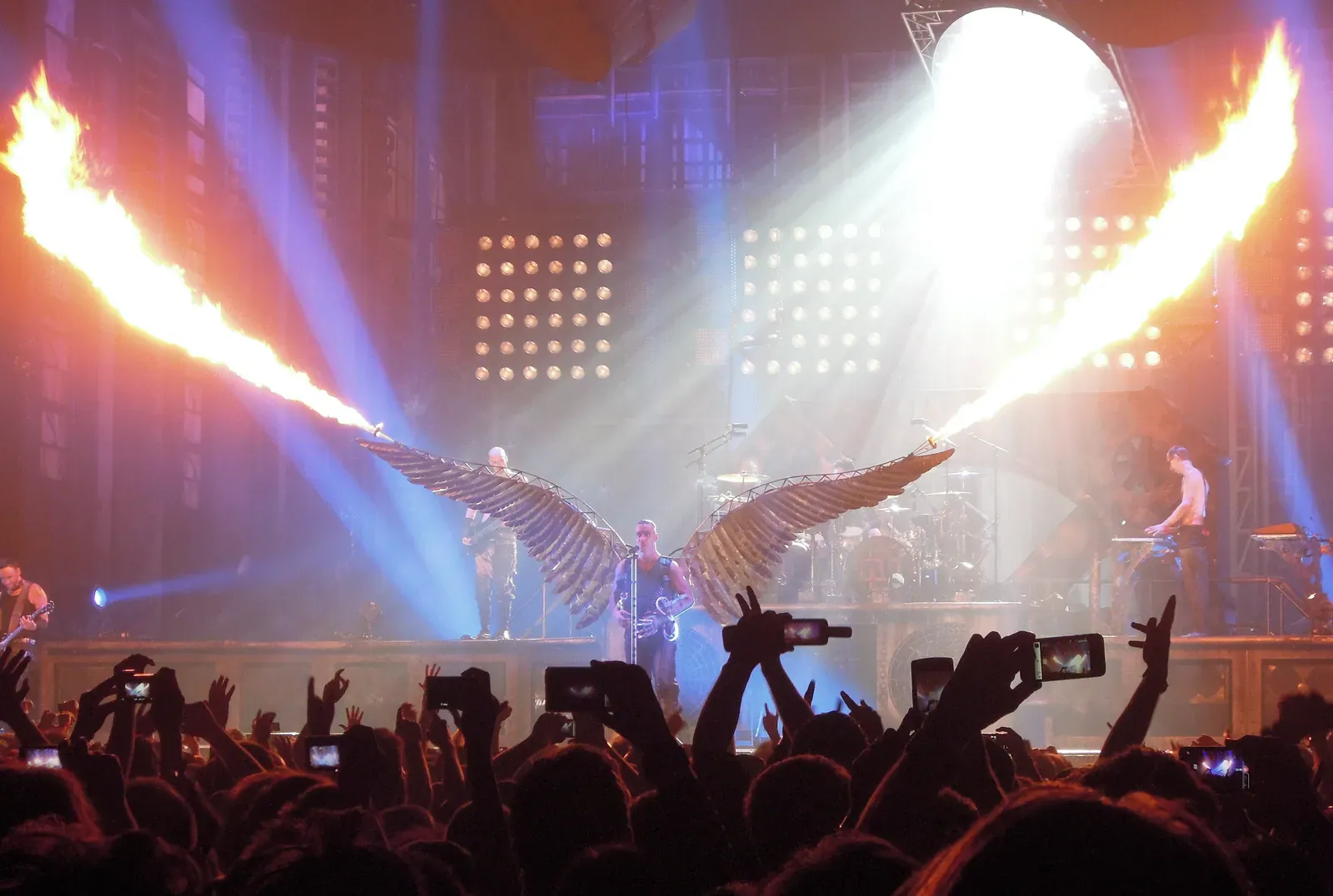
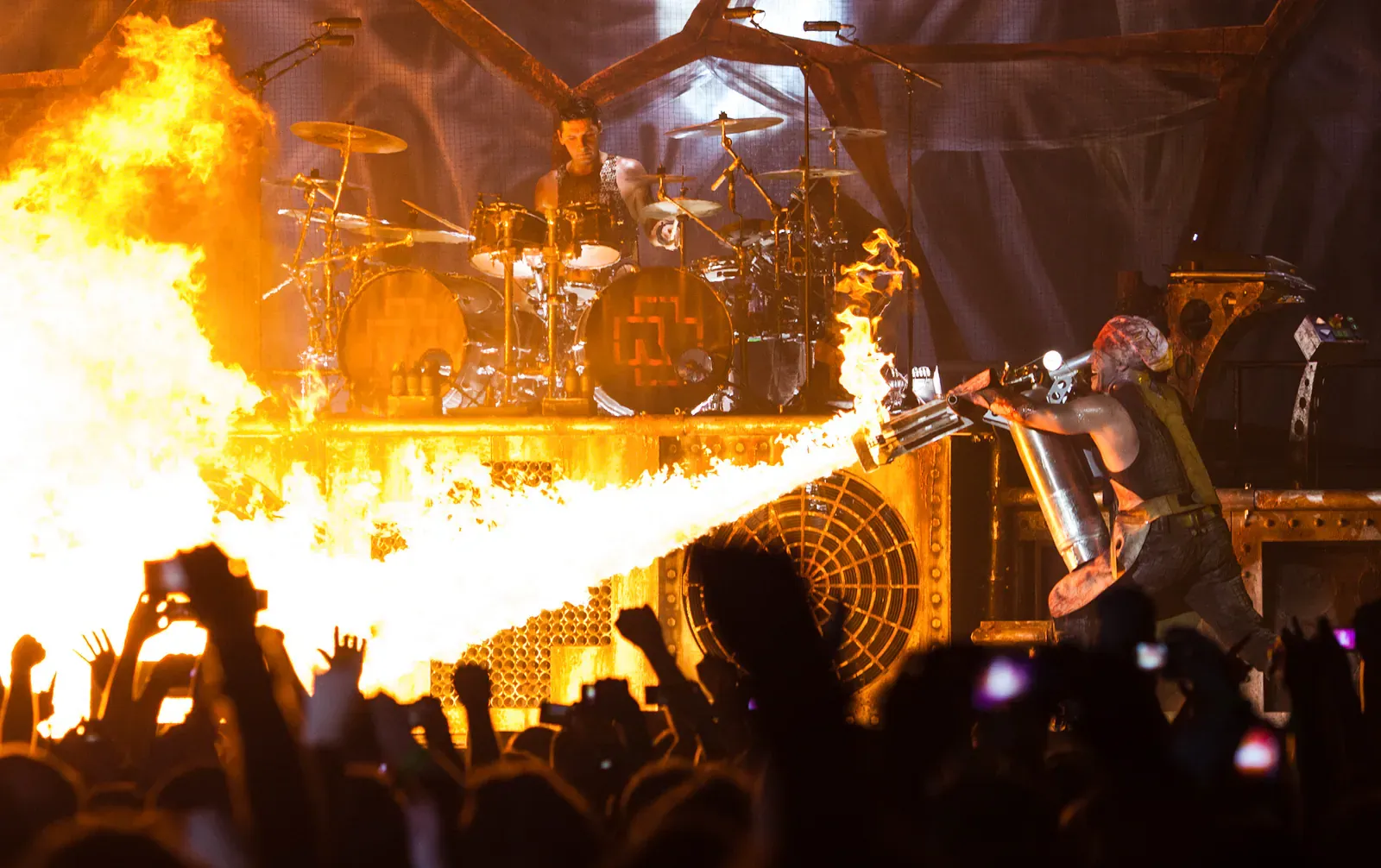
Industrial metal has been visually ambitious from the start. Godflesh collaborated with the photographer Andres Serrano, KMFDM worked with the graphic designer Aidan Hughes, Nine Inch Nails with the director Mark Romanek, Marilyn Manson with Richard Kern and Floria Sigismondi, and Rob Zombie’s visual work for White Zombie earned an MTV Video Music Award for Best Hard Rock Video. Rammstein built stage shows around pyrotechnics, industrial scaffolding and costume.
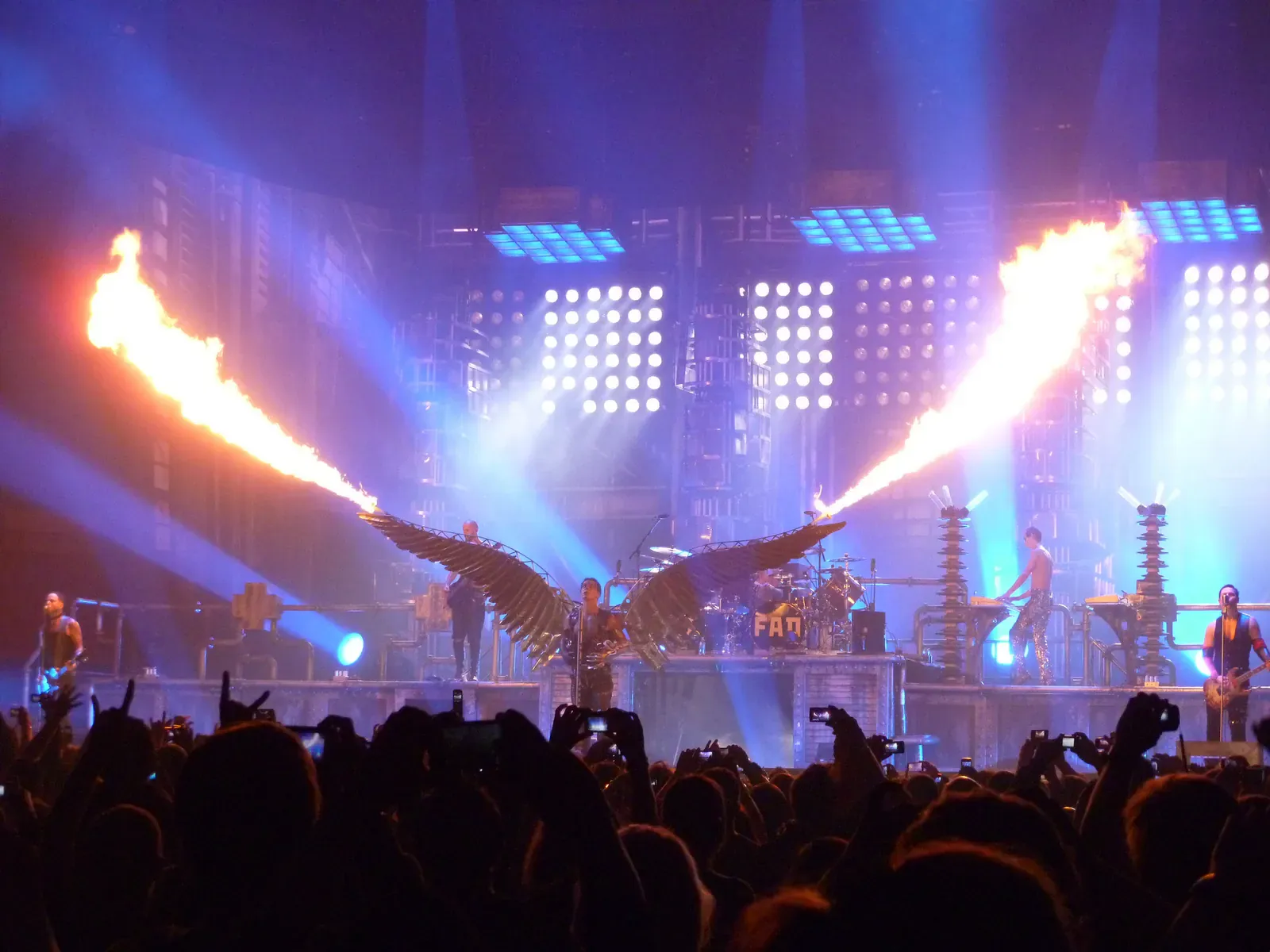
The style also drew political attention. Its transgressive themes made some groups targets of American social conservatives: Senator Bob Dole criticised Time Warner over Nine Inch Nails’ lyrics in 1995. After the Columbine shooting in 1999, early reports linked the attackers to Marilyn Manson, though they preferred KMFDM and Rammstein; both bands condemned the shooting. Rammstein faced separate accusations over Nazi imagery, which the band rejected, and answered with the 2001 song Links 2-3-4.
Legacy
Industrial metal went through a critical backlash around the turn of the millennium. A 2000 review in the Chicago Sun-Times called Nine Inch Nails’ music a generic brand of industrial thrash and accused Ministry of repeating an act that was old by 1992. Veteran acts such as Ministry, Godflesh and White Zombie began to reject the industrial label.
The style survived by spreading. It fed alternative metal, nu metal and the German branch known as Neue Deutsche Harte, and its looped riffs and electronic rhythms became ordinary ingredients in heavier rock. Godflesh, Fear Factory, Ministry, Nine Inch Nails and Rammstein remain active touring acts.
Misconceptions
Industrial metal is often described as metal played by machines, but the guitars, bass and often the drums are played live; the machine feel comes from looping, triggering and tight arrangement. It is also sometimes assumed to belong to the pioneers of industrial music, whereas many of them rejected it as a rock-oriented commercial development.
Frequently asked questions
What is industrial metal?
Industrial metal is a fusion of heavy metal and industrial music that uses repeated metal guitar riffs, sampling, synthesizer or sequencer lines and distorted vocals. Ministry, Godflesh, Nine Inch Nails, Fear Factory, KMFDM and Rammstein are among its best-known acts.
When did industrial metal begin?
Industrial metal developed in the late 1980s. Godflesh’s first EP in 1988 and Ministry’s The Land of Rape and Honey the same year are usually cited as the starting points, with Streetcleaner and L’Eau Rouge following in 1989.
What is the difference between industrial metal and industrial rock?
Industrial rock places industrial textures in a rock song structure, as in much of Nine Inch Nails’ work. Industrial metal uses heavier, down-tuned riffs, thrash and death metal influences and harder drumming. Several acts, including Nine Inch Nails, are filed under both labels, and the boundary is not strict. See also the page on industrial rock.
Sound
Sound sheet
Signature sounds
- Repeated guitar riff acting as a loop
- Programmed or triggered drums
- Sampled speech and noise
- Synthesizer or sequencer line under the riff
Drums and percussion
- Drum machine
- Acoustic drum kit
Techniques
- Riff looping
- Sampled speech
- Sequencer-locked riffing
- Vocal distortion
Keys and modes
Minor keys. Riffs usually sit on the minor scale, often with a repeated tritone or chromatic note.
Tuning
Guitars tuned down, often to drop D or lower
Vocals
Shouted, snarled or processed vocals, often with heavy distortion
Scenes
Where it happened
Where and when the sound lived: one bar per city on a shared timeline.
North America
Europe
Active scenes
Peak 5, 1994-2025
Home of Godflesh, who built on the city's heavy rock tradition and its extreme metal scene.
Wax Trax! Records and Ministry's circle made the city a centre of industrial music.
Fear Factory formed here and mixed death metal with machine-like rhythms.
Trent Reznor started Nine Inch Nails here.
Rammstein formed here and drove the German-language branch of the style.
Venues and places
Saugerties, 1994 to today. Nine Inch Nails played a muddy, widely seen set at the anniversary festival.
Culture
Culture markers
- Rivethead
Name for the fans and subculture that formed around the style in the early 1990s.
Slang - Music video art
Bands worked with artists and directors such as Andres Serrano, Mark Romanek and Floria Sigismondi.
Artwork - KMFDM graphics
Aidan Hughes's poster-style artwork became the band's visual identity.
Artwork
Media
Key media
- 1994Natural Born Killers soundtrack
by Trent Reznor (producer). Reznor produced the soundtrack, linking industrial metal with film.
Film - 1994The Crow soundtrack
by Various. Film whose music included industrial metal acts.
Film - 1997Lost Highway soundtrack
by Trent Reznor (producer). Reznor produced the soundtrack of David Lynch's film.
Film
Glossary
Terms on this page
Name for 1990s industrial metal acts such as Chemlab, 16 Volt and Acumen Nation.
Industrial metal with science-fiction themes and heavy synthesizer use, as in Fear Factory.
A harder-edged strand that mixes industrial textures with thrash and death metal speeds.
German-language branch of the style with Rammstein as its best-known act.
A subculture of fans that grew in the early 1990s around industrial metal and related bands.
Metal family