Fluxus
Fluxus was an international network of composers and artists, named by George Maciunas in 1962, built on event scores, chance and anti-art performance.
United States, Germany, 1960
Experimental family
Born
1960
United States, Germany
Subgenres
4
Documented branches
Links
4
Genres it drew on or shaped
Tempo
90-150 BPMLineage
Family tree
Grew out of
Influenced by
Indeterminacy
United States, Germany, 1960
Fluxus
Led to (4)
Timeline
Era by era
From the first sparks to today. Select a dot to read the story behind it.
- Cage's classes and New York roots
1957 to 1961
- Wiesbaden and the European festivals
1962 to 1963
- FluxShops and splits
1964 to 1977
- After Maciunas
1978 to 1990
Eras
Moments
- 1 Cage's classes and New York roots, 1957 to 1961
- 2 Wiesbaden and the European festivals, 1962 to 1963
- 3 FluxShops and splits, 1964 to 1977
- 4 After Maciunas, 1978 to 1990
1957
Cage's classes and New York roots
John Cage's composition classes at the New School (1957-59) taught chance and indeterminacy, and students such as George Brecht, Dick Higgins and Jackson Mac Low carried the ideas into loft concerts.
- 1957Cage begins teaching at the New SchoolHis classes in experimental composition (1957-59) introduced chance and indeterminacy to future Fluxus artists.
- 1959Brecht's event scoresGeorge Brecht develops the event score, a one or two line instruction for an action, from 1959 (Drip Music).
- 1960Paik cuts Cage's tie in CologneDuring Etude pour Piano at a concert series in Mary Bauermeister's studio, Nam June Paik cuts John Cage's tie and ends the piece by phone.
- 1961Chambers Street loft concertsYoko Ono and La Monte Young curate a series of concerts in New York that anticipates Fluxus.
1962
Wiesbaden and the European festivals
George Maciunas coined the name in 1962 and staged the Fluxfests of September 1962 in Wiesbaden, then printed the first Fluxkits, among them Brecht's Water Yam.
- 1962Fluxus named in WuppertalMaciunas hands out a brochure prospectus with the name Fluxus at the festival Apres Cage on 9 June 1962.
- 1962Piano destroyed in WiesbadenPhilip Corner's Piano Activities ends with a piano taken apart by Maciunas, Higgins and others; German television shows it four times as news of lunatics.
- 1963Water Yam publishedBrecht's boxed event scores become the first Fluxkit, printed by Maciunas in an edition of 1,000 at $4.
1964
FluxShops and splits
Maciunas ran street concerts and a shop on Canal Street, built mail-order outlets across Europe and split the group over Stockhausen's Originale in 1964, while Japanese members such as Yoko Ono and Takehisa Kosugi shaped its quieter side.
- 1964Canal Street concertsTwelve free street concerts run in New York from 11 April to 23 May, with pieces by Ben Vautier, Alison Knowles and Takehisa Kosugi.
- 1964Ono publishes GrapefruitHer book of instruction pieces appears in Tokyo, extending the event score to participatory art.
- 1964Picket of Stockhausen's OriginaleMaciunas and Henry Flynt picket the American premiere on 8 September; Fluxus members cross each other's picket line.
- 1970Yoko Ono/Plastic Ono BandOno's screamed vocals carry Fluxus-era voice experiments onto a rock album.
- 1972Taj Mahal Travellers play July 15The ensemble led by Fluxus member Takehisa Kosugi performs long drone sets, later issued under that date.
1978
After Maciunas
Maciunas died on 9 May 1978; his Fluxfeast and Wake served only black, white or purple food, and surviving members kept performing event scores and sound works.
- 1978Maciunas diesHe dies of cancer on 9 May, three months after a Fluxwedding in a SoHo loft.
- 1981Walking on Thin IceOno's single carries her avant-garde voice into dance and club play.
Listening path
Start listening
A short path from an easy way in to the deep end. Thumbnails come from YouTube; the player loads only when you press play.
- 01
Yoko Ono, 1981
The pulsing single that carried Ono's voice to dance floors; listen for the sparse guitar and her shifting vocal.
- 02
Yoko Ono & The Plastic Ono Band, 1971
A hushed B-side from the Plastic Ono Band years that shows the quiet, meditative side of her work.
- 03
The Taj-Mahal Travellers, 1972
A segment from the July 15 concert: long drones from a group led by Fluxus member Takehisa Kosugi.
Facts
| Family | Experimental |
| Origin | United States, Germany |
| Emerged | 1960 |
| Status | Historical |
| Tempo | 90 to 150 BPM |
| Meter | 4/4 |
| Subgenres | 4 |
Fluxus was an international network of composers, poets and visual artists, active mainly from 1962 to the late 1970s, that treated performance as a set of short written instructions open to anyone.
George Maciunas gave it its name in 1962, and its roots lie in John Cage’s teaching on chance and indeterminacy. Its music is rarely tonal or metered: it works through event scores, found objects, noise and sometimes destruction, and it sits in the Experimental family.
Origins
From 1957 to 1959 Cage taught experimental composition at the New School for Social Research in New York. After studying Zen Buddhism with D. T. Suzuki, he used the classes to explore chance and indeterminacy, with scores that could be performed in many ways. Jackson Mac Low, La Monte Young, George Brecht, Al Hansen and Dick Higgins all sat in them. The other great influence was Marcel Duchamp, whose readymades, ordinary objects declared art, supplied the anti-art attitude.
Several events are counted as proto-Fluxus. In 1960 and 1961 Mary Bauermeister’s studio in Cologne hosted concerts with Nam June Paik and Cage; at one of them Paik cut Cage’s tie off during Etude pour Piano, ran out, and phoned the organisers to say the piece had ended. In 1961 Yoko Ono and La Monte Young curated concerts in a Chambers Street loft in New York, and in May 1963 Brecht and Robert Watts held the month-long Yam festival in upstate New York. As Higgins put it, the name was applied to work that already existed: it started in the middle of things.
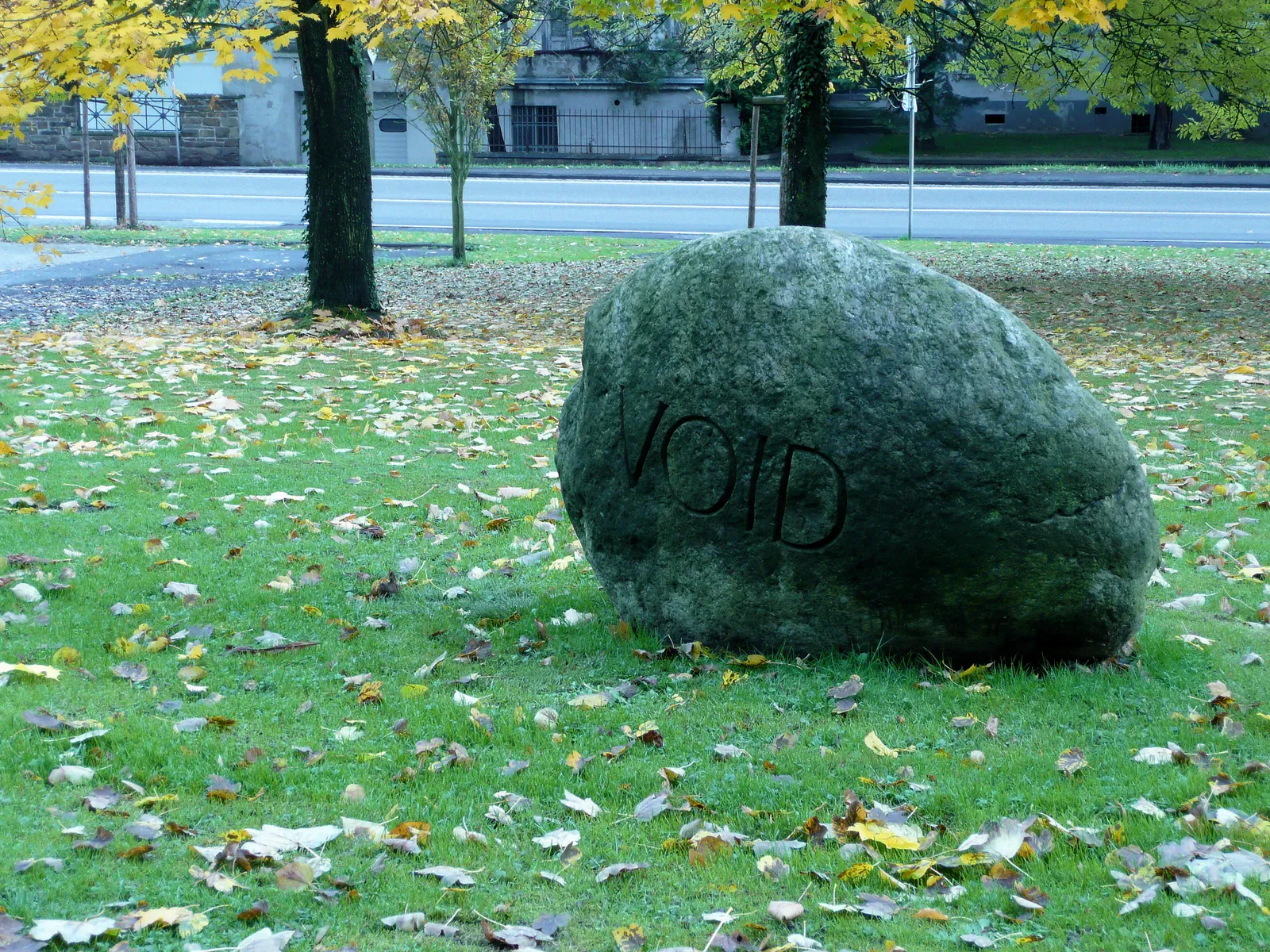
Wuppertal and Wiesbaden, 1962
Maciunas was a trained graphic designer who had opened a short-lived gallery in New York and then moved to Wiesbaden to work for the US Air Force. He first used the word Fluxus, meaning flow, in a brochure handed out at the festival Apres Cage in Wuppertal on 9 June 1962. He had called the group neo-dada until Raoul Hausmann told him the term meant nothing.
Maciunas, Higgins and Alison Knowles then organised the Fluxfests in Western Europe. Fourteen concerts ran in Wiesbaden from 1 to 23 September 1962, mixing music by Cage, Ligeti, Penderecki and Terry Riley with pieces by Higgins, Knowles, Brecht, Paik, Ben Patterson and others. The most notorious was Philip Corner’s Piano Activities, whose score asks performers to pluck, scratch, rub and strike the instrument. Maciunas, Higgins and others took the piano apart, and German television showed the result four times, introduced as the escape of lunatics.
The Fluxkits and New York, 1963-1965
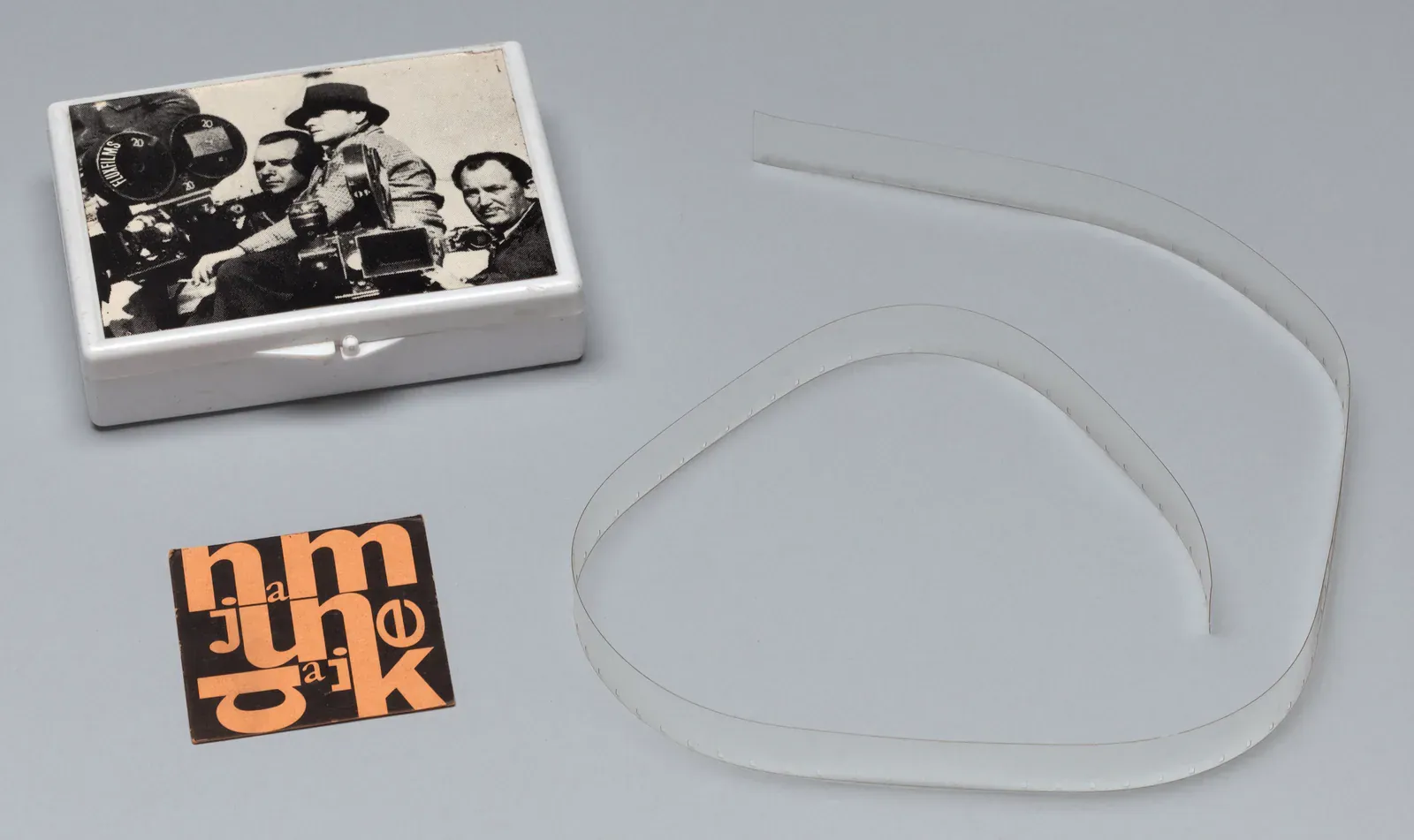
Maciunas used his printing contacts to produce cheap books and boxed multiples. The first were Composition 1961 by La Monte Young, An Anthology of Chance Operations, and Brecht’s Water Yam, a box of event scores on small cards. Water Yam was published in an edition of 1,000 at $4, and by April 1964 he still held 996 copies. Because most of the composers already had publishers, Fluxus moved from music toward performance and visual art, and Cage never published under the Fluxus name because of his contract with Edition Peters.
Back in New York from September 1963, Maciunas ran twelve street concerts on Canal Street from 11 April to 23 May 1964, and opened a shop, the Fluxhall. He built mail-order outlets in Amsterdam, Villefranche-sur-Mer, Milan and London, and by 1965 offered Fluxus 1, an anthology of manila envelopes bolted together. Since he was colorblind, the kits were nearly always black and white.
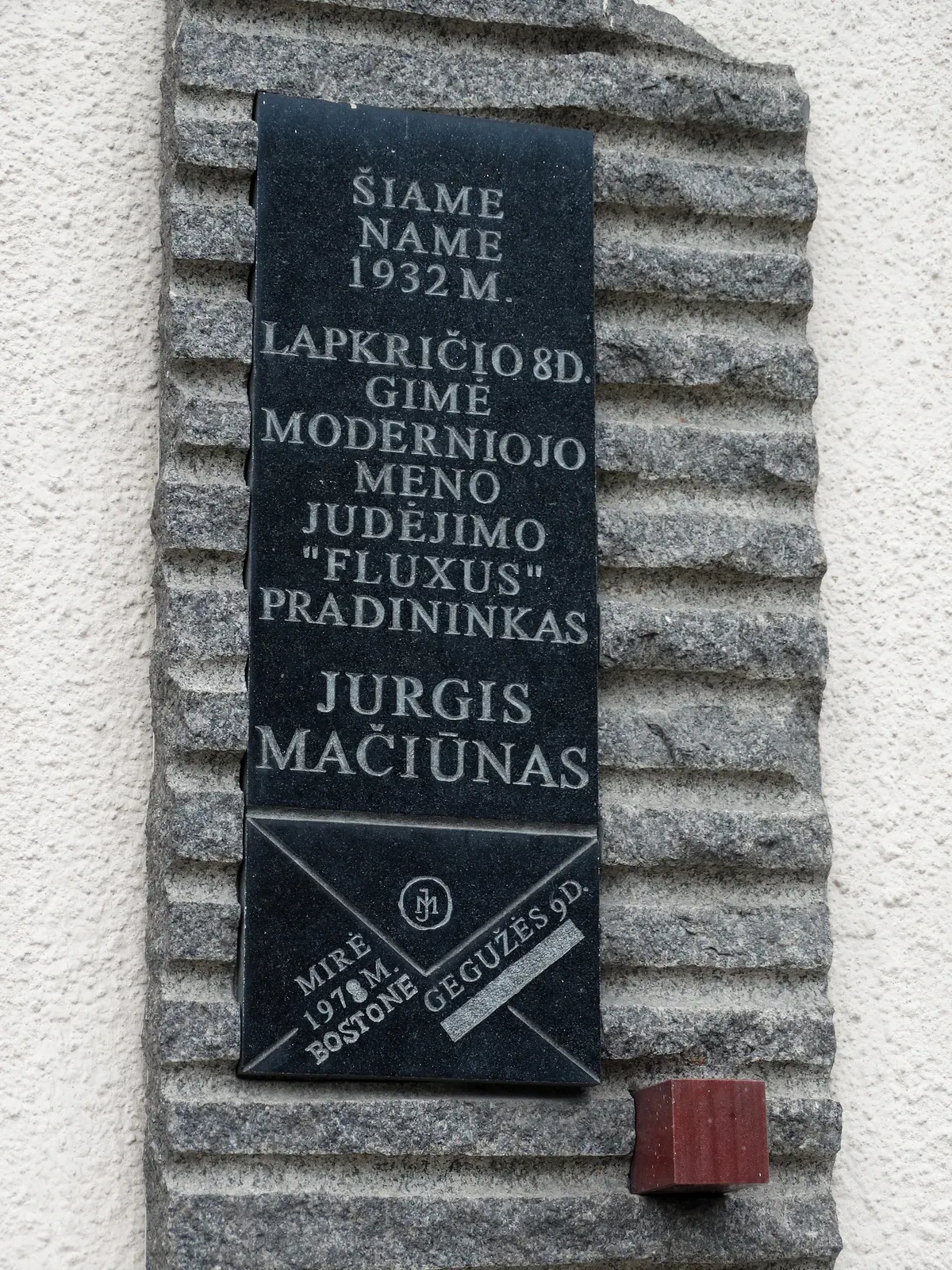
Splits and the Japanese turn, 1964-1977
In September 1964 Maciunas and Henry Flynt picketed the American premiere of Karlheinz Stockhausen’s Originale, which Charlotte Moorman had arranged. Some Fluxus members joined the picket and others crossed it, and Higgins did both. Maciunas also fell out with Higgins over the Something Else Press, and Mac Low and Brecht left. In the gap, Japanese members such as Ono, Mieko Shiomi, Takako Saito, Yasunao Tone and Takehisa Kosugi gave the work a more contemplative cast. Ono published her book Grapefruit in Tokyo in 1964, with pieces such as Cloud Piece, which asks for clouds to be imagined dripping and buried in a hole dug in a garden.
Maciunas moved to western Massachusetts in the late 1970s and died of cancer in a Boston hospital on 9 May 1978, three months after a Fluxwedding in a SoHo loft. His Fluxfeast and Wake served only black, white or purple food.
Characteristics
The central form is the event score, a few lines describing an action. Brecht’s Drip Music is the standard example. Fluxus artists set it apart from the happening: events were short and simple, meant to raise the banal and frustrate high culture, while happenings could be long and complicated. The term traces back to Henry Cowell, teacher of both Cage and Higgins. Since the score is an instruction, anyone can realise it, which is what Ken Friedman called musicality and what Paik called a do-it-yourself approach.
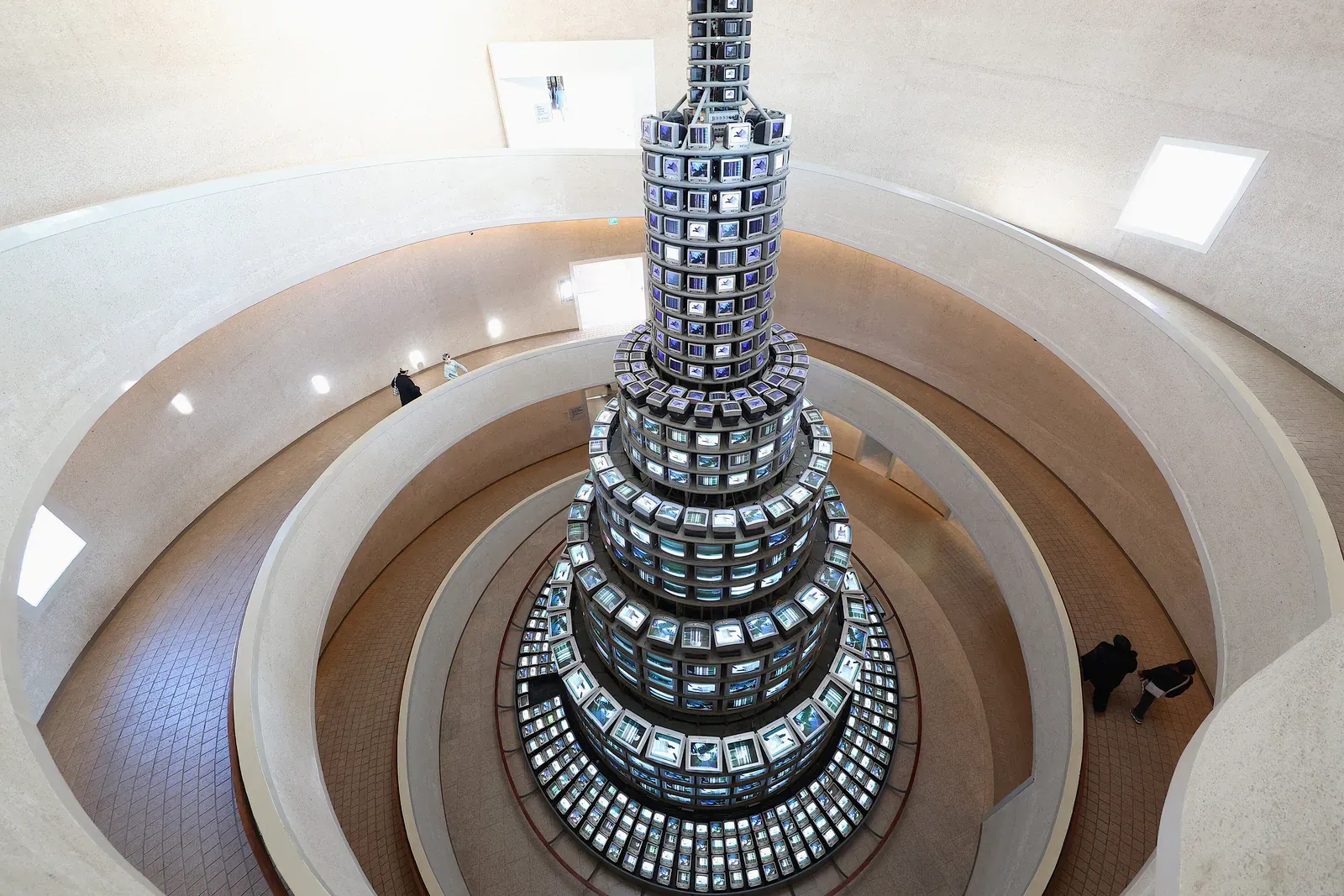
Sound sources are ordinary: pianos, violins, voices, tape and household objects dropped, tapped or rubbed. Many Fluxus artists were composers first, and the movement carried music methods into sculpture, poetry and design. Higgins coined intermedia for work between media in a 1965 essay, and Paik and Wolf Vostell are credited with early video art.
Notable recordings
Fluxus left few records, because its core was live and printed. Ono’s Yoko Ono/Plastic Ono Band (1970), issued by Apple, put her voice experiments on a rock album, and Fly followed in 1971. Her single Walking on Thin Ice (1981) became a dance-floor favourite, with measured tempos in her metered songs running from about 90 to 150 beats per minute. Another thread runs through Kosugi, who formed the Taj Mahal Travellers in 1969; their concert of July 15, 1972 was later issued as long drone sets.
Mainstream success
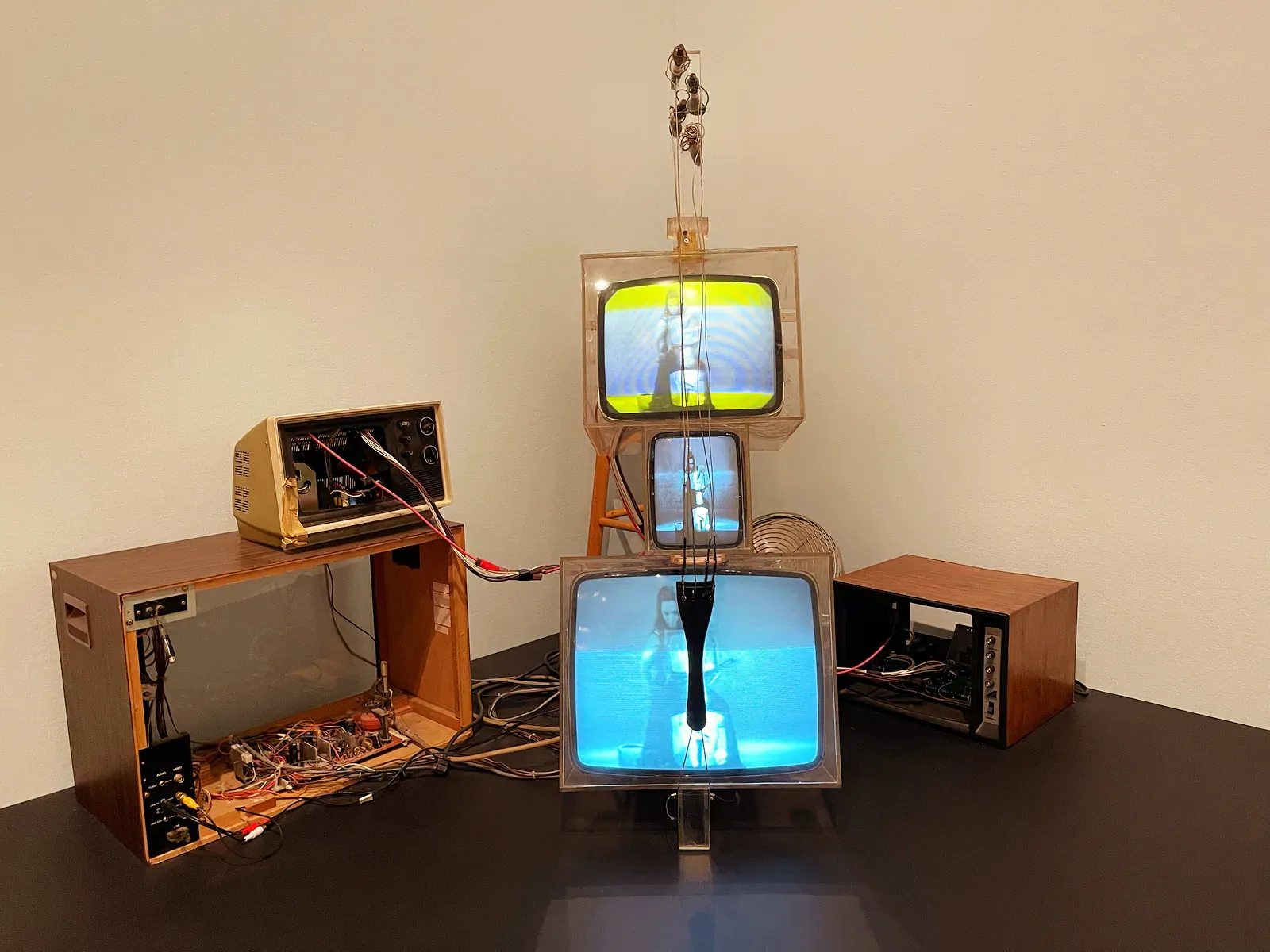
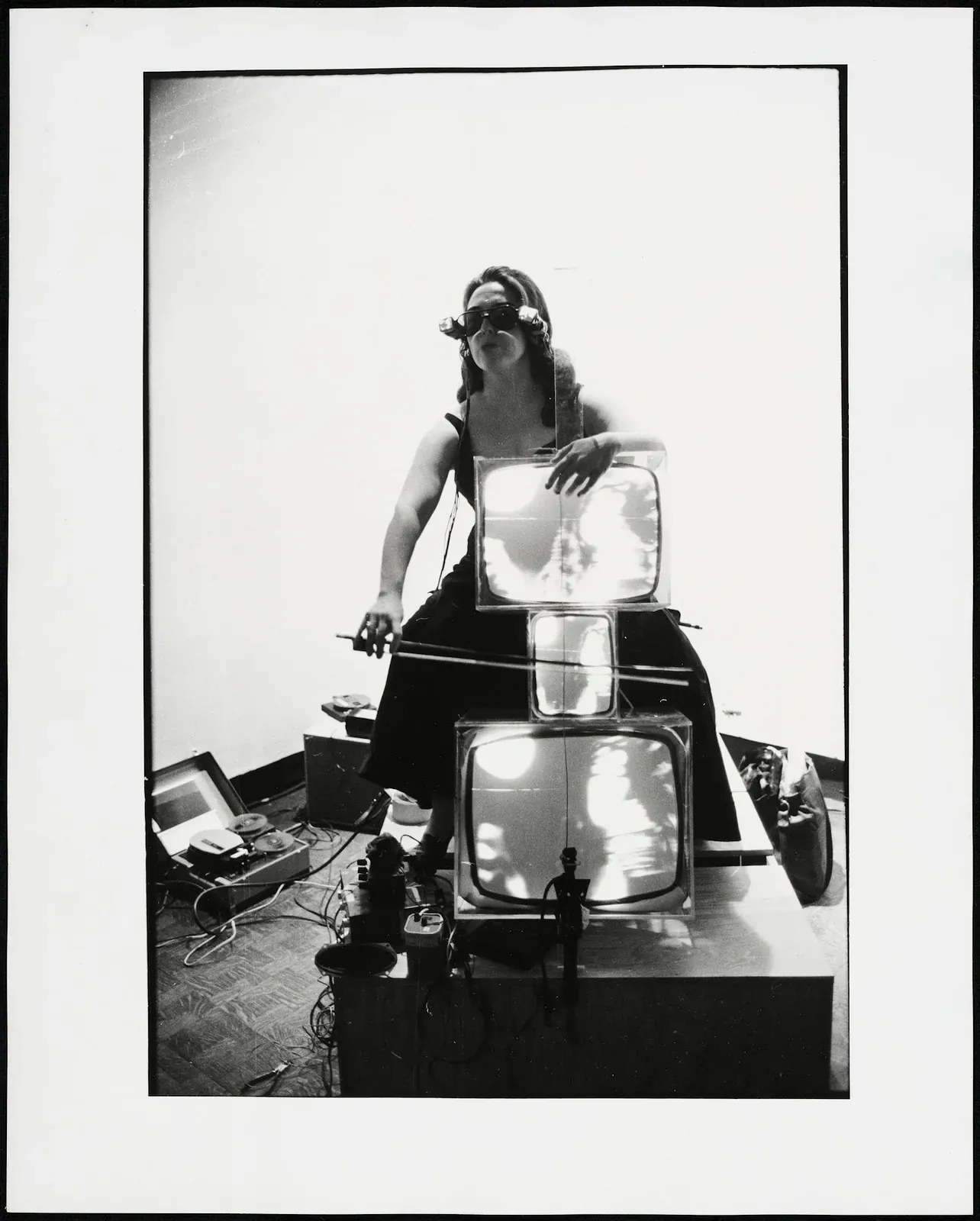
Fluxus never crossed over as music. It reached the public through Ono and through the later fame of Paik, whose TV Cello with Moorman showed the field the idea of video as an instrument, and through the art market, where Fluxkits became collectors’ pieces. Its influence on the experimental scene reaches noise, industrial and sound art, and it overlaps with sound poetry and free improvisation.
Culture
Fluxus artists were anti-commercial and anti-art, preferring streets, homes and railway stations to concert halls, which Brecht called mummifying. Humour, provocation and the boxed multiple were the movement’s signature, and its rituals, the Fluxwedding and the Fluxfeast, kept the same spirit to the end.
Legacy
Fluxus fed conceptual art, performance art, video art and the instruction-based work still taught in art schools. Its core idea, that a composer can hand over a short text and let others realise it, shaped later experimental music. After Maciunas died in 1978, his friends kept the network alive through archives such as the collection built by Jean Brown in Tyringham, Massachusetts, which Maciunas helped turn into a center for artists and scholars.
Misconceptions
Fluxus is often called a movement with a program. Maciunas did write a manifesto, but few members considered it a true movement, and many of them were simply friends who shared a sensibility.
It is often treated as visual art alone, yet it began in music: Paik, Higgins and Corner were composers, and the event score came from musical practice.
Cage is also called a Fluxus founder. He taught many of its members and inspired its ideas, but he never published under the Fluxus name, and the group was organised by Maciunas.
Frequently asked questions
What does Fluxus mean?
Fluxus is Latin for flow. Maciunas used it first in a brochure handed out at the Apres Cage festival in Wuppertal on 9 June 1962.
Is Fluxus a music genre?
Fluxus is an interdisciplinary art network that included many composers. Its music is built from event scores, found objects, chance and noise rather than fixed styles, so it sits at the edge of the experimental family.
What is an event score?
An event score is a short text instruction for an action, such as Brecht’s Drip Music. Anyone can perform it, and each performance differs.
Who were the main Fluxus artists?
George Maciunas organised it, with Brecht, Higgins, Knowles, Paik, Ono, Corner and Ben Patterson among its best-known participants.
Sound
Sound sheet
Signature sounds
- Written instruction in place of notation
- Everyday objects as instruments
- Chance and audience participation
- Humour and anti-art provocation
Techniques
- Event score
- Chance operations
- Instrument destruction
- Prepared and found objects
Tuning
No fixed tuning; pitch often left open, and sources include found objects, voice and tape
Vocals
Spoken instructions, shouts and wordless screams; in Ono's recordings, extended vocal technique over a rock band
Scenes
Where it happened
Where and when the sound lived: one bar per city on a shared timeline.
North America
Europe
Asia
Active scenes
Peak 4, 1962-1977
Home of Cage's classes, the Chambers Street lofts, the Canal Street shop and Maciunas's Fluxhall.
Site of the September 1962 Fluxfests, the first festival series.
Mary Bauermeister's studio hosted concerts with Paik and Cage in 1960-61.
Ono, Kosugi and other Japanese artists worked here before joining Fluxus in New York and Europe.
Venues and places
New York, 1961 to today. Ono's downtown loft, where Ono and La Monte Young curated early proto-Fluxus concerts.
New York, 1964 to today. Maciunas's shop on Canal Street, base of the FluxShop mail-order network.
Cologne, 1960 to today. Concert space for Paik, Cage and others in 1960-61.
Culture
Culture markers
- Fluxkits
Cheap boxed multiples, almost always black and white because Maciunas was colorblind.
Artwork - Fluxwedding
Maciunas and Billie Hutching traded clothing in a SoHo ceremony three months before his death.
Ritual - Fluxfeast and Wake
His funeral served only black, white or purple foods.
Ritual
Media
Key media
- 1963An Anthology of Chance Operations
by La Monte Young and Jackson Mac Low. A compendium of concept art and chance pieces designed by Maciunas, an ancestor of the movement.
Book - 1964Grapefruit
by Yoko Ono. Instruction pieces such as Cloud Piece, still reprinted as a primer for event scores.
Book - 1978Interview with George Maciunas
by Larry Miller. Video conversation in which Maciunas set out his own account of the movement.
Film
Glossary
Terms on this page
A short text instruction for an action, treated as a score anyone may realise.
A festival or concert series of Fluxus performances, such as Wiesbaden in September 1962.
A boxed anthology or multiple of artists' works, assembled and sold by Maciunas.
Dick Higgins's term for works between established media, defined in his 1965 essay.
An early label for the group, later dropped for the name Fluxus, meaning flow.
Experimental family