Sound Art
Sound art treats sound as a primary medium in galleries and public space, from Russolo's 1913 noise machines to Neuhaus, Lucier and Kubisch.
1913
Experimental family
Born
1913
Subgenres
2
Documented branches
Links
6
Genres it drew on or shaped
Tempo
80-205 BPMLineage
Family tree
Timeline
Era by era
From the first sparks to today. Select a dot to read the story behind it.
- Noise and found sound
1913 to 1951
- Silence, feedback and the walk
1952 to 1976
- Installations and the museum
1977 to 1999
- Walks, networks and prizes
2000 to today
Eras
Moments
- 1 Noise and found sound, 1913 to 1951
- 2 Silence, feedback and the walk, 1952 to 1976
- 3 Installations and the museum, 1977 to 1999
- 4 Walks, networks and prizes, 2000 to today
1913
Noise and found sound
Futurist noise machines and Dada experiments treat everyday noise as artistic material long before any gallery shows sound.
- 1913The Art of NoisesLuigi Russolo publishes his noise manifesto and builds the Intonarumori, mechanical noise intoners, with Ugo Piatti.
1952
Silence, feedback and the walk
Cage's 4'33", the Sonic Arts Union and Max Neuhaus move listening and the room itself to the centre of the work.
- 19524'33" premieresJohn Cage's silent piece, first played at Woodstock, New York, reframes ambient sound as the content of a work.
- 1965Music for Solo PerformerAlvin Lucier amplifies brainwaves to strike percussion, an early work of sound made from a physical process.
- 1966Max Neuhaus starts ListenA series of walks through New York, with the word listen stamped on each participant's hand, runs until 1976.
- 1969I Am Sitting in a RoomLucier re-records his voice in a room until speech dissolves into the room's resonant frequencies.
- 1974The term sound art in printThe earliest known published use of the term sits on the cover of the Something Else Press yearbook.
1977
Installations and the museum
Permanent installations, the 1979 MoMA exhibition titled Sound Art and the first named sound sculptures give the field its name and its venues.
- 1977Times Square installationNeuhaus's first permanent work, a low drone from beneath a traffic island grate in Manhattan, runs until 1992 and is restored in 2002.
- 1979Sound Art at MoMAThe Museum of Modern Art in New York stages an exhibition titled Sound Art, curated by Barbara London.
- 1981Il Respiro del MareChristina Kubisch begins working with electromagnetic induction, hearing electronic sounds through special headphones.
- 1994Sechs SpiegelKubisch sets vibrating drinking glasses to the proportions of a German church; the piece is released on CD.
2000
Walks, networks and prizes
Electromagnetic walks, city-scale installations and a Turner Prize win in 2010 carry sound art into public space and mainstream art institutions.
- 2003Electrical Walks beginKubisch hands out induction headphones that make the electromagnetic fields of cities audible.
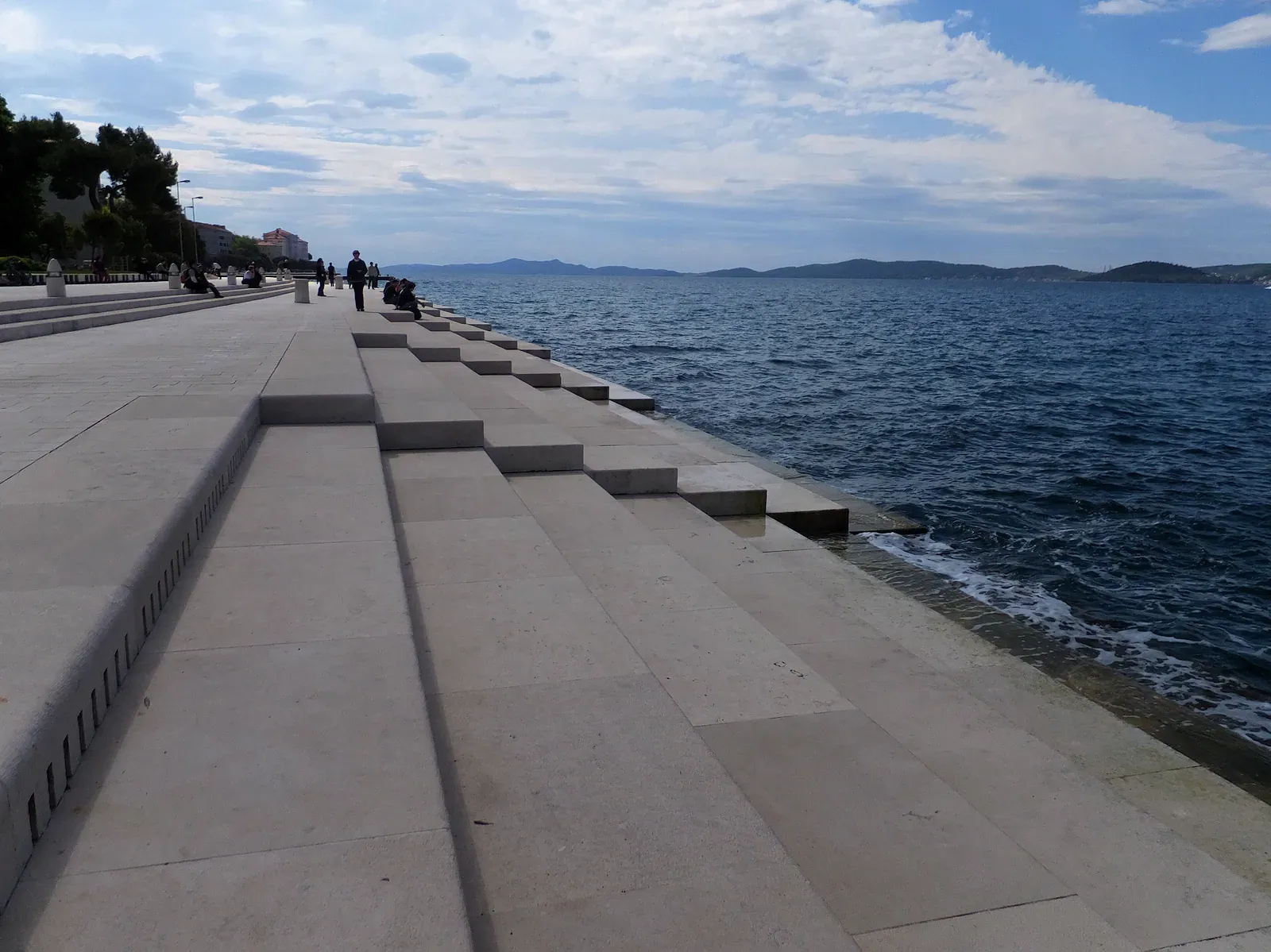
- 2005Sea Organ opens in ZadarA stone stairway with pipes under the steps turns wave motion into chords on the Croatian waterfront.
- 2006Harmonic Bridge at Tate ModernBill Fontana relays live vibrations from London's Millennium Bridge into the museum's Turbine Hall.
- 2010Susan Philipsz wins the Turner PrizeHer sound installation Lowlands, songs sung a cappella under Glasgow bridges, helps win the prize.
- 2013Soundings at MoMAThe New York museum stages Soundings: A Contemporary Score, a large group show of sound-based work.
Listening path
Start listening
A short path from an easy way in to the deep end. Thumbnails come from YouTube; the player loads only when you press play.
- 01
John Cage, 1952
The silent piece performed by the Berlin Philharmonic, where the hall and audience become the music.
- 02
Luc Ferrari, 1970
A seaside dawn compressed to twenty minutes; listen for what was edited and what was left alone.
- 03
Ryoji Ikeda, 2005
Sine tones and noise driven by data, the club-facing end of sound art.
- 04
Ryoji Ikeda, 2008
Barcode-style patterns turned into rhythm and pitch, a deeper cut.
Facts
| Family | Experimental |
| Status | Active |
| Tempo | 80 to 205 BPM |
| Meter | free |
| Subgenres | 2 |
Sound art is an artistic practice that uses sound as its main time-based material, usually in an installation, sculpture, walk, broadcast or performance rather than a song or a score.
Its roots lie in the Futurist noise experiments of the 1910s, and it took its name in the 1970s as artists moved sound out of the concert hall and into galleries and public space. It belongs to the experimental family and overlaps with electroacoustic music and field recording.
Origins
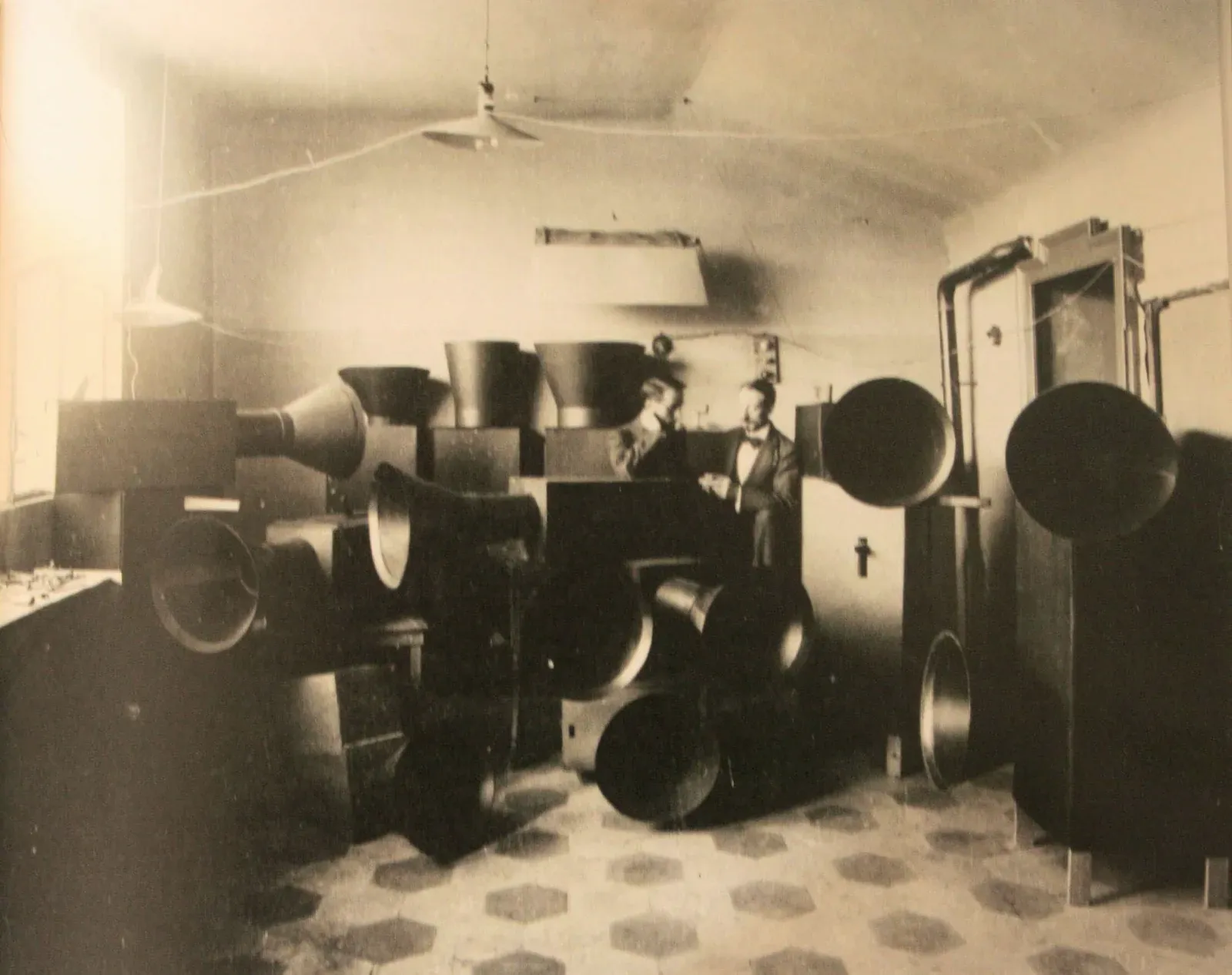
The earliest Western precedent is Luigi Russolo’s 1913 manifesto The Art of Noises, which argued that the sounds of machines and cities deserved a place beside musical tones. With Ugo Piatti he built the Intonarumori, a set of mechanical noise intoners, in Milan. Dadaists, surrealists, the Situationist International and the Fluxus events and Happenings of the 1960s kept noise and chance in play, while conceptual art, minimalism and site-specific art supplied the idea that a work could be tied to one place.
Silence, feedback and the walk, 1952-1976
John Cage’s 4’33”, first performed at Woodstock, New York, in 1952, made the sounds of the room and the audience the substance of a piece. Over the next two decades composers built works from physical processes rather than melodies. Alvin Lucier amplified brainwaves to trigger percussion in Music for Solo Performer (1965), and in I Am Sitting in a Room (1969) he recorded his voice and played it back into the room again and again until only the room’s resonant frequencies remained. The Sonic Arts Union, with Lucier, Robert Ashley, David Behrman and Gordon Mumma among its members, brought this thinking to a wider public.
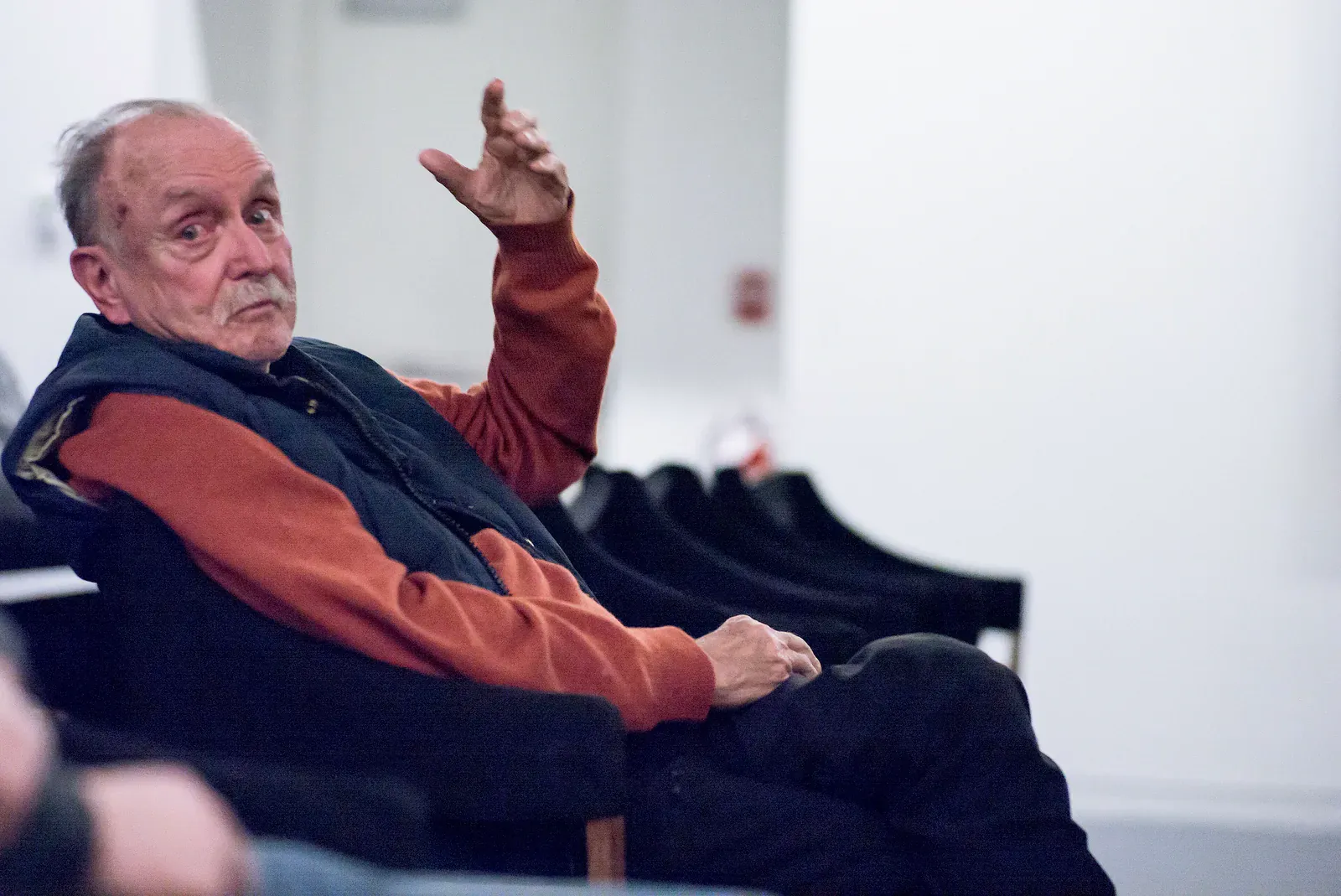
Max Neuhaus, a percussionist who had toured with Pierre Boulez and Karlheinz Stockhausen, moved from performance to art in 1968. His first independent work, Listen (1966 to 1976), took audiences on walks through New York streets with the word listen stamped on their hands. He coined the term sound installation for works that were neither music nor events.
Installations and the museum, 1977-1999
Neuhaus’s Times Square, a low undulating drone from beneath a grate on a Manhattan traffic island, became his first permanent work in 1977. It was switched off in 1992 and restored in 2002. The term sound art appeared on the cover of the Something Else Press yearbook in 1974, and in 1979 the Museum of Modern Art in New York staged an exhibition titled Sound Art, curated by Barbara London, who defined the field as closer to art than to music and shown in the museum, gallery or alternative space.
Bill Fontana began making sound sculptures in 1976, relaying live sound from one place into another. Christina Kubisch moved from concerts and video work to installations in 1980, and in 1981 she began working with electromagnetic induction, which lets special headphones turn electronic fields into sound. Her 1994 piece Sechs Spiegel set the pauses and repetitions of vibrating drinking glasses to the proportions of a church.
Walks, networks and prizes, 2000-present
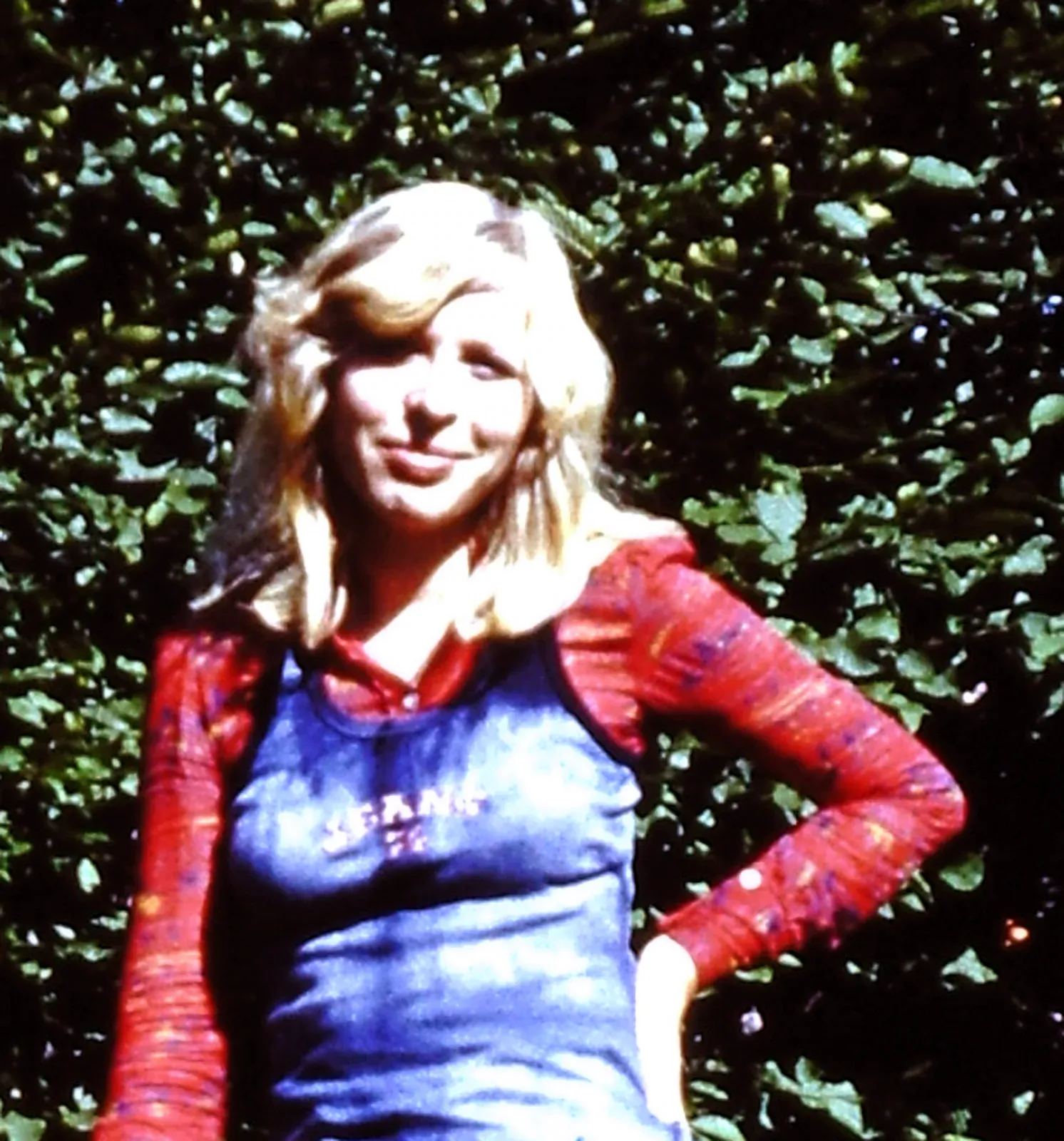
In 2003 Kubisch began her Electrical Walks, handing participants induction headphones that make the electromagnetic fields of city streets audible; she has led them in cities across Europe, Asia and North America. Fontana’s Harmonic Bridge fed live vibration from London’s Millennium Bridge into Tate Modern in 2006. In 2010 Susan Philipsz won the Turner Prize with Lowlands, songs sung a cappella and played back under bridges in Glasgow, and in 2013 MoMA returned to the subject with Soundings: A Contemporary Score. Ryoji Ikeda took another route, building precise, data-driven pieces of sine tones and noise that work in both gallery and club.
Characteristics
Sound art is defined by medium and setting more than by a sound. Most works are open in duration, so a visitor can stay for a minute or an hour, and many are tied to one site and its acoustics. A sound installation is usually three-dimensional and responds to the space around it, while a sound sculpture is an object or structure that produces sound, or sound shaped as a form. Common structures are a loop, an open form built to work for any length of visit, or a linear development like a composition. Whether the field belongs to visual art or experimental music is still argued; Neuhaus himself insisted his works were neither music nor events.
Instruments and production
Tools range from mechanical devices to induction coils. Russolo’s noise intoners gave way to tape, contact microphones and feedback loops, then to multichannel loudspeaker arrays and sensors that let visitors change the sound. Kubisch’s induction headphones and Fontana’s live relays use the environment as the source. Patching languages such as Max/MSP and Pure Data drive interactive work, and Ikeda’s sine-wave generators sit at the edge of hearing. Many of the best-known works use very little equipment, because the room or the site does the work.
Notable recordings
Cage’s 4’33” is often misread as a joke; its three movements are timed and structured, and every performance differs because the hall differs. Luc Ferrari’s Presque rien no. 1 (1970) condenses a coastal dawn into a single piece with minimal editing, and it became a reference point for the later soundscape work covered under field recording. Ikeda’s data.matrix, from the 2005 album Dataplex, shows the most pulsed end of the field, with sine tones and noise driven by data.
Culture
Sound art lives in museums, biennials, festivals and public squares rather than clubs. The sound walk, from Neuhaus’s Listen to Kubisch’s headphone tours, is its characteristic social form, a group learning to listen to a place. Labels that issue sound-art recordings tend to be small and specialist. Touch, Room40 and Gruenrekorder have all released recordings in this territory.
Legacy
Sound art widened what counts as a musical work: a place, a process or a walk can be the piece. Museums now run sound programmes as a matter of course, and the practice has fed into noise, musique concrète and later electronic work, while sound installation and sound sculpture are its two best-defined sub-forms.
Misconceptions
Sound art is not simply experimental music in a gallery. The term was defined by museum curators as closer to art than to music, though the border is disputed, and many of its artists, such as Neuhaus, did not want their work filed as music at all.
It is not a post-1970 invention. Russolo’s noise machines date from 1913, and Dadaists, surrealists and Fluxus artists used sound long before the term existed.
4’33” is not silence. It is a timed piece in which the sounds already in the room, from coughs to ventilation, become the content.
Frequently asked questions
What is sound art?
Sound art is art that uses sound as its main time-based medium, shown as an installation, sculpture, walk or performance rather than as a conventional song or concert piece.
How is sound art different from music?
Sound art is usually site-specific and open-ended, built to be entered and left at any time, whereas a piece of music has a fixed beginning and end. The two overlap, and artists such as Lucier and Cage work in both.
Who are the main sound artists?
Early figures include Luigi Russolo and John Cage. Alvin Lucier, Max Neuhaus, Bill Fontana and Christina Kubisch built the field from the 1960s onward, and Susan Philipsz and Ryoji Ikeda carry it into the present.
What is a sound installation?
A sound installation is a work that places sound in a three-dimensional space and responds to it, usually made for one site and open to visitors for as long as they choose to stay.
Sound
Sound sheet
Signature sounds
- Site-specific, open-ended duration
- Sine tones and noise at the edges of hearing
- Room or object resonance as the instrument
- Found sound with minimal processing
Synths and software
- Sine-wave oscillator
- Max/MSP
- Pure Data
Techniques
- Site-specific design
- Feedback and resonance
- Electromagnetic listening
- Field recording relay
Keys and modes
No fixed key. Pitch comes from the room, the material or sine-tone generators, often unrelated to scales.
Tuning
Free; ruled by room resonance, sine-wave generators or found pitch
Vocals
Mostly absent; where voice appears it is a material (Lucier's speech, Philipsz's unaccompanied singing).
Scenes
Where it happened
Where and when the sound lived: one bar per city on a shared timeline.
Europe
North America
Active scenes
Peak 4, 2005-2025
Cage, Neuhaus and Lucier's circle worked here, and MoMA staged its sound art shows.
Russolo and Piatti built and demonstrated the Intonarumori here.
Home base of Christina Kubisch and a long-running centre of installation and radio art.
Site of the Sea Organ, a waterfront stairway played by waves.
Venues and places
New York, 1977 to today. Neuhaus's drone beneath a traffic island grate, on view from 1977.
New York, 1979 to today. Staged Sound Art in 1979 and Soundings in 2013.
Zadar, 2005 to today. Stone steps with tuned pipes that the sea plays.
Culture
Culture markers
- The sound walk
Participants follow a route in focused listening, from Neuhaus's Listen to Kubisch's headphone walks.
Ritual - Gallery listening
Works shown as speakers or headphones in a gallery, with visitors free to stay as long as they like.
Artwork
Media
Key media
- 1913The Art of Noises
by Luigi Russolo. The Futurist manifesto that argued for noise as musical material.
Book - 1970Presque rien
by Luc Ferrari. The field-recording classic whose edit choices became a model for later work.
Compilation - 2006Background Noise: Perspectives on Sound Art
by Brandon LaBelle. A survey of the field from Futurism to installation, widely used in teaching.
Book
Glossary
Terms on this page
Mechanical noise instruments built by Luigi Russolo and Ugo Piatti from 1913.
Made for one place so that its acoustics, history and use shape the work.
A work that places sound in a three-dimensional space and responds to it, usually site-specific and open to coming and going.
An object or structure that produces sound, or a work where sound is shaped as a sculptural form.
A route through a place, guided or self-led, built around attentive listening to what is already there.
Experimental family