Field Recording
Field recording, or phonography, is sound art made from recordings of real places and events, formalised in the late 1960s by the World Soundscape Project.
Canada, 1889
Experimental family
Born
1889
Canada
Subgenres
2
Documented branches
Links
5
Genres it drew on or shaped
Tempo
85-130 BPMLineage
Family tree
Timeline
Era by era
From the first sparks to today. Select a dot to read the story behind it.
- Documentary roots
1889 to 1959
- Portable recorders and the record shelf
1960 to 1972
- Acoustic ecology and soundscape study
1969 to 1989
- Specialist labels and phonography
1990 to 2009
- Hydrophones, archives and sound design
2010 to today
Eras
Moments
- 1 Documentary roots, 1889 to 1959
- 2 Portable recorders and the record shelf, 1960 to 1972
- 3 Acoustic ecology and soundscape study, 1969 to 1989
- 4 Specialist labels and phonography, 1990 to 2009
- 5 Hydrophones, archives and sound design, 2010 to today
1889
Documentary roots
Wax cylinders captured birdsong and folk music in the field, and sound books taught species identification, long before anyone treated such recordings as art.
- 1889First recording of a wild animalLudwig Koch records a shama bird on a wax cylinder, the earliest documented recording of a non-human subject.
around 1960
Portable recorders and the record shelf
Uher and Nagra reel-to-reel decks made location recording easy, Luc Ferrari composed from a village shoreline, and Irv Teibel sold ocean loops as LPs.
- 1960Uher and Nagra portable recordersHigh-quality portable reel-to-reel decks make location recording practical and popular.
around 1969
Acoustic ecology and soundscape study
R. Murray Schafer's World Soundscape Project at Simon Fraser University catalogued the sound of places, and its members turned that archive into composition and soundwalks.
- 1969World Soundscape Project beginsR. Murray Schafer starts studying the sound environment at Simon Fraser University, partly in reaction to noise in Vancouver.
- 1969Environments 1: The Psychologically Ultimate SeashoreIrv Teibel releases a computer-edited Brighton Beach wave loop that fills a 30-minute LP side.
- 1970Presque rien no. 1Luc Ferrari releases a single day of a fishing village's shoreline, spliced from recordings made at his window.
- 1973The Vancouver SoundscapeThe World Soundscape Project publishes recordings of Vancouver's soundmarks with a spoken analysis by Schafer.
- 1977The Tuning of the WorldSchafer's book popularises the concept of the soundscape and sets out acoustic ecology.
- 1981Watson leaves Cabaret VoltaireChris Watson joins Tyne Tees Television, starting a career in location sound for wildlife documentaries.
- 1982Touch is foundedThe London label begins a catalogue that later carries Chris Watson, Jana Winderen and many other recordists.
- 1989Kits Beach SoundwalkHildegard Westerkamp finishes her piece that layers a Vancouver beach soundwalk with her own voice.
1990
Specialist labels and phonography
Digital recorders and small labels such as Touch and Gruenrekorder gave phonographers an audience, and works like Francisco Lopez's La Selva and Chris Watson's Weather Report became reference albums.
- 1996Stepping into the DarkChris Watson's Touch album of nocturnal and tropical recordings, later honoured at Prix Ars Electronica.
- 1998La SelvaFrancisco Lopez releases a rainforest work built from rainy-season recordings made in 1995 and 1996.
- 2000Prix Ars Electronica honours WatsonStepping into the Dark wins an Award of Distinction in Linz, a rare art-festival nod for pure field recording.
- 2003Weather ReportChris Watson releases three 18-minute pieces from Kenya, Scotland and Iceland, later named in a Guardian list of albums to hear before you die.
- 2003Gruenrekorder is foundedLasse-Marc Riek and Roland Etzin start a Frankfurt label devoted to field recording and sound art.
2010
Hydrophones, archives and sound design
Recordists work underwater, in vibrating structures and in threatened habitats, and film and television sound design draws on the same practice.
- 2018Chernobyl score recordingsWatson helps Hildur Gudnadottir record sounds at the Ignalina nuclear plant for her Grammy-winning score.
Listening path
Start listening
A short path from an easy way in to the deep end. Thumbnails come from YouTube; the player loads only when you press play.
- 01
Environments, 1969
The record that sold a looped beach as an album; listen for the unbroken wave texture with no music.
- 02
Luc Ferrari, 1970
A village shore from dawn into day, edited so the human sounds become the music.
- 03
Francisco Lopez, 1998
Dense rainforest layers meant for close, eyes-closed listening.
- 04
Chris Watson, 2003
A track from Weather Report, a reference for location recording as a stand-alone album.
Facts
| Family | Experimental |
| Origin | Canada |
| Emerged | Late 1960s formalized as art practice |
| Status | Active |
| Tempo | 85 to 130 BPM |
| Meter | free |
| Subgenres | 2 |
Field recording is the practice of capturing sound outside the studio and presenting it as music or sound art, in which the recorded place, not an instrument, supplies the material. It is also called phonography, a name chosen for its likeness to photography.
The practice began as documentation of birds, folk musicians and speech, became an art form in the late 1960s, and was formalised as a discipline by R. Murray Schafer’s World Soundscape Project in Canada. It sits in the experimental family beside electroacoustic music and nature sounds.
Origins
The first documented recording of a non-human subject is a shama bird, captured on a wax cylinder by Ludwig Koch in 1889. Koch later issued sound books that taught listeners to identify species from gramophone records of birdsong. In parallel, ethnomusicologists including Béla Bartók, Charles Seeger and John Lomax took recording equipment into villages and farms to preserve oral music. In these uses the recording served research or a radio programme, and nobody argued about whether it was art.
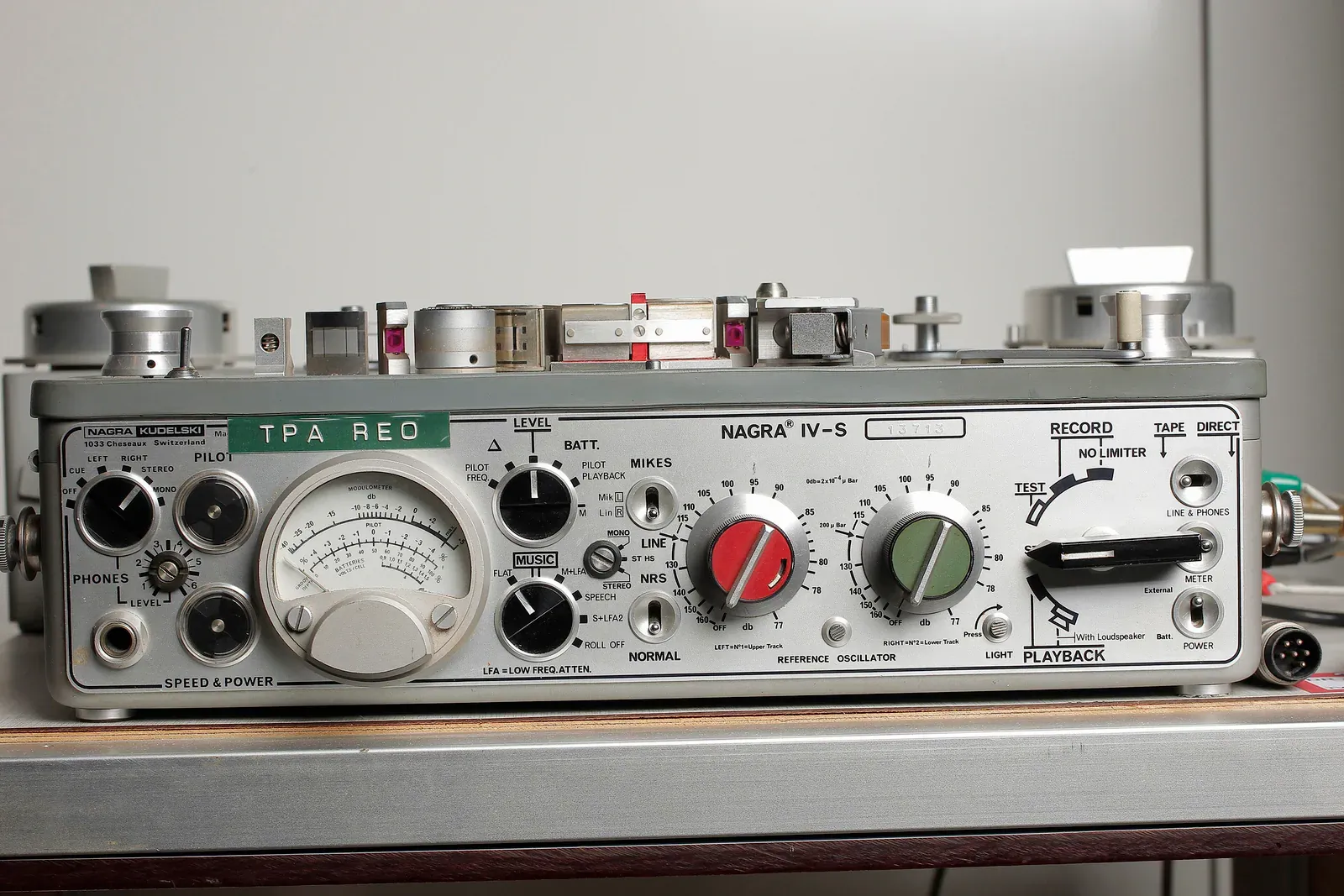
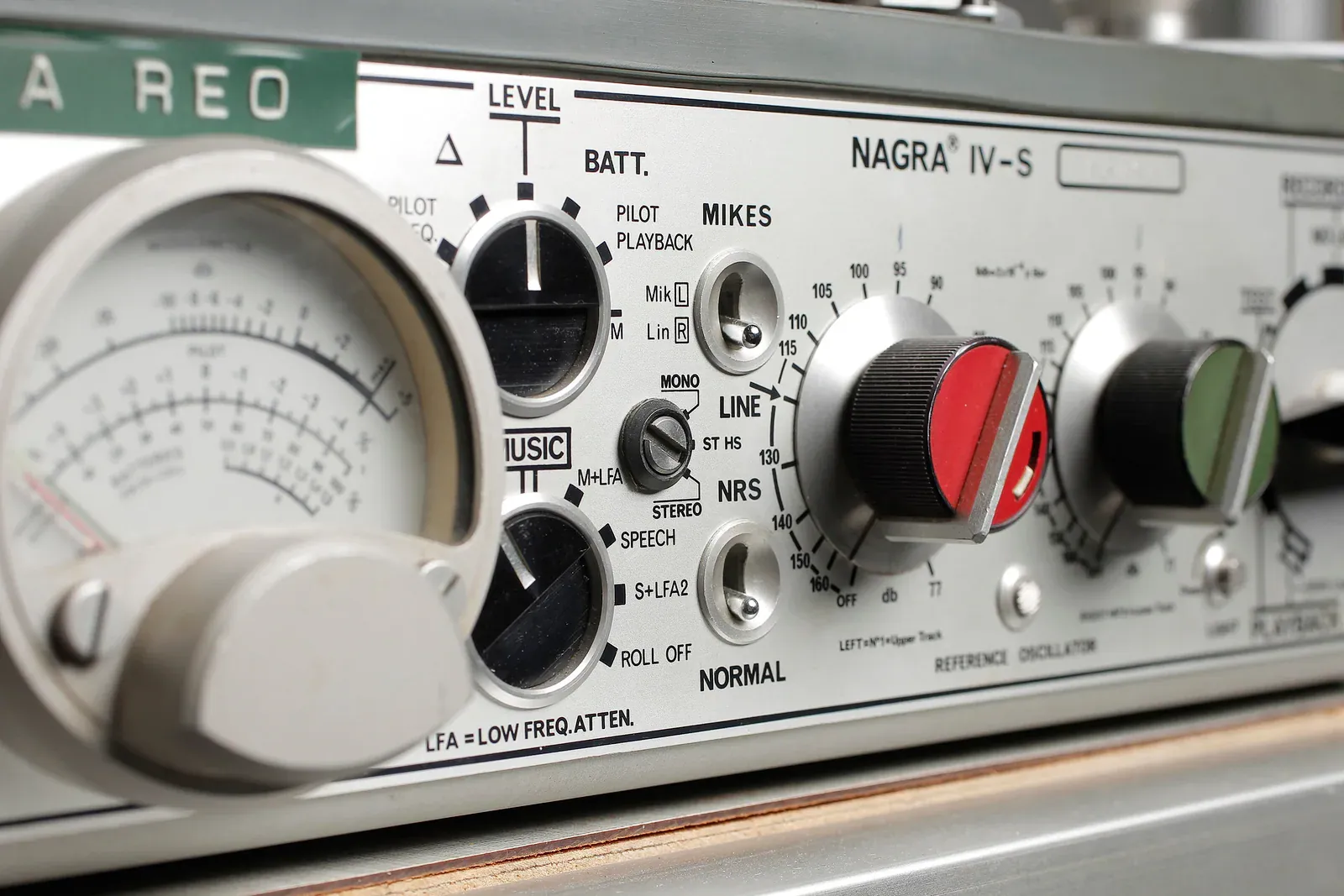
The question arose when equipment improved. High-quality portable reel-to-reel decks such as the Uher and the Nagra spread in the early 1960s, and a recordist could suddenly carry studio-grade fidelity into a forest, a harbour or a street. The Nagra in particular became the standard tool of location sound, and its controls and metering are still the model for field recorders.
Records and composition, 1960-1972
Two works from this period show the two directions the genre would take. In France, Luc Ferrari, a member of the Groupe de Recherches Musicales circle, recorded the shoreline of a fishing village on the Adriatic from his window and spliced the results into a single day. Presque rien no. 1, released in 1970 on a record shared with Société II, has no instrument and almost no processing, and it created what Ferrari’s circle called anecdotal music: recorded reality arranged so that the order of events becomes the composition.
In New York, Irv Teibel took the opposite route. After recording the ocean at Coney Island for a film, he processed a short loop recorded at Brighton Beach with a mainframe computer at Bell Labs and made a continuous half-hour soundscape. It became the first record in his Environments series, issued from 1969 by Syntonic Research as The Psychologically Ultimate Seashore. Each LP side ran 30 minutes and the record could be played at several speeds. The series, which continued to 1979, sold natural sound as a mood device rather than as composition, and many imitations followed in the 1970s and 1980s.
Vancouver and acoustic ecology, 1969-1989
R. Murray Schafer began teaching a course on noise pollution at Simon Fraser University in Vancouver in the late 1960s, a reaction to the increasing degradation of the city’s sound. The World Soundscape Project grew out of it, collecting a small group of young composers and communications students. With support from the Donner Canadian Foundation it began its first study in 1972, and The Vancouver Soundscape was published in 1973. It contains recordings of local soundmarks and a spoken analysis by Schafer of good and bad acoustic design. One track, Entrance to the Harbour, condenses a 30-minute boat journey into a 7-minute montage, an early step towards composition.
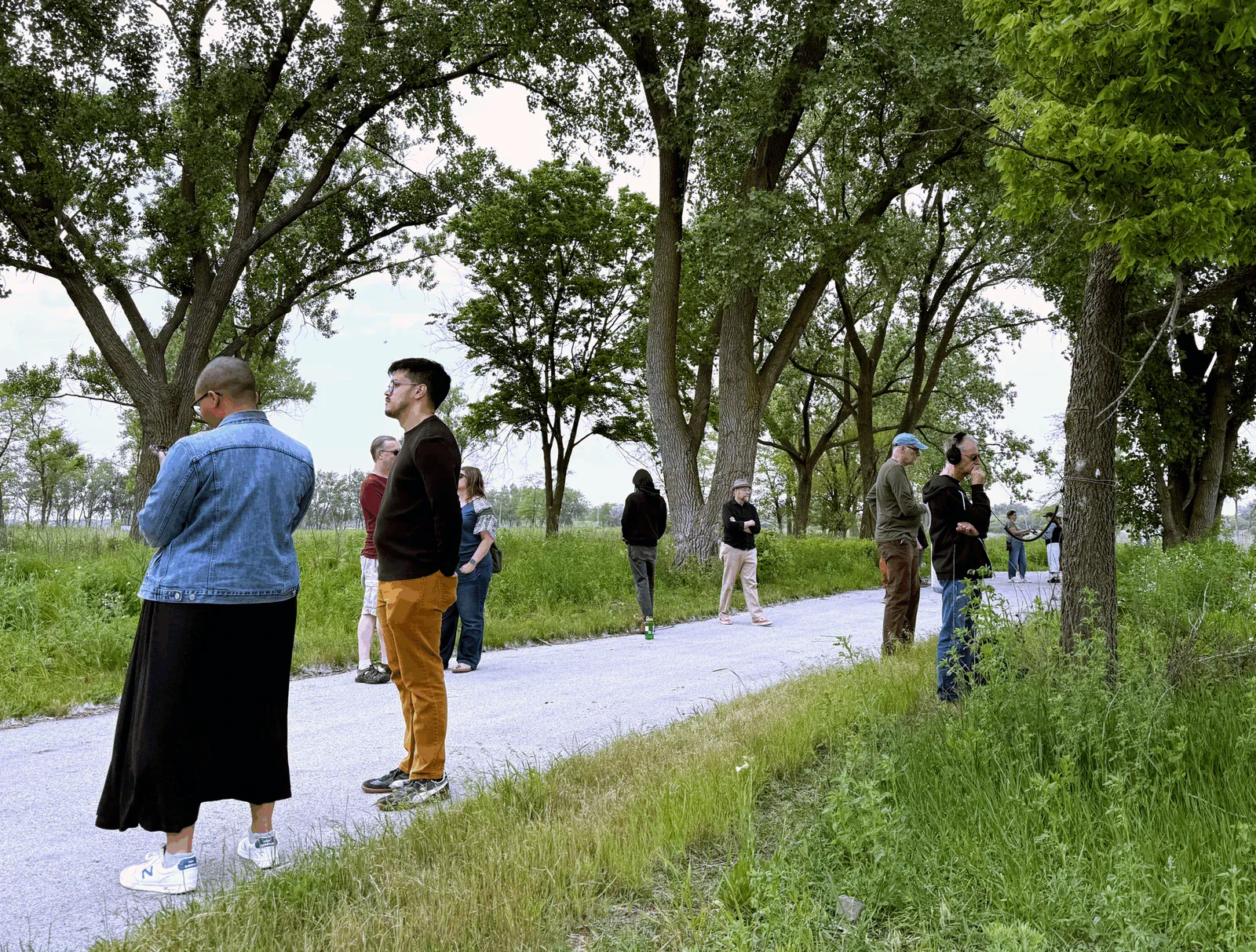
Schafer’s 1977 book The Tuning of the World popularised the word soundscape and set out acoustic ecology, the study of how people and their sound environment relate. The project made two major tours, in Canada and in Europe, and its recordings formed the World Soundscape Library. Its members included Barry Truax and Hildegard Westerkamp, who carried the work into composition. Westerkamp catalogued the archive, joined Schafer in 1973 and made soundwalks central to her practice, defining one as any excursion whose main purpose is to listen to the environment. Her Kits Beach Soundwalk, finished in 1989, layers a Vancouver beach walk with her own spoken comments.
Labels and phonography, 1990-2009
Digital tape in the 1980s, then hard disk and flash recorders, lowered noise and cost, and small labels began to publish field recordings as albums in their own right. Touch, founded in London in 1982, became the best-known home of the form, and Gruenrekorder, a Frankfurt label set up in 2003 by Lasse-Marc Riek and Roland Etzin, was built specifically for field recording, soundscapes and sound art.
Chris Watson is the central figure of this period. A founder member of the Sheffield band Cabaret Voltaire, he left in 1981 to join Tyne Tees Television, which began a career recording sound for natural history programmes. His Touch albums, among them Stepping into the Dark in 1996 and Weather Report in 2003, treat location sound as a finished work. Stepping into the Dark received an Award of Distinction at Prix Ars Electronica in 2000. Weather Report consists of three 18-minute pieces recorded in Kenya, Scotland and Iceland.
Francisco López, a Spanish sound artist with more than 200 releases, supplied a different argument. His La Selva, released in 1998 from rainy-season recordings made in 1995 and 1996, is a rainforest piece meant to be heard without visual context, an approach he calls profound listening. Annea Lockwood, born in New Zealand and working in the United States, made river sound maps: A Sound Map of the Hudson River (1989) follows the water from the Adirondacks to the Atlantic through recordings at 15 locations.
Characteristics and technique
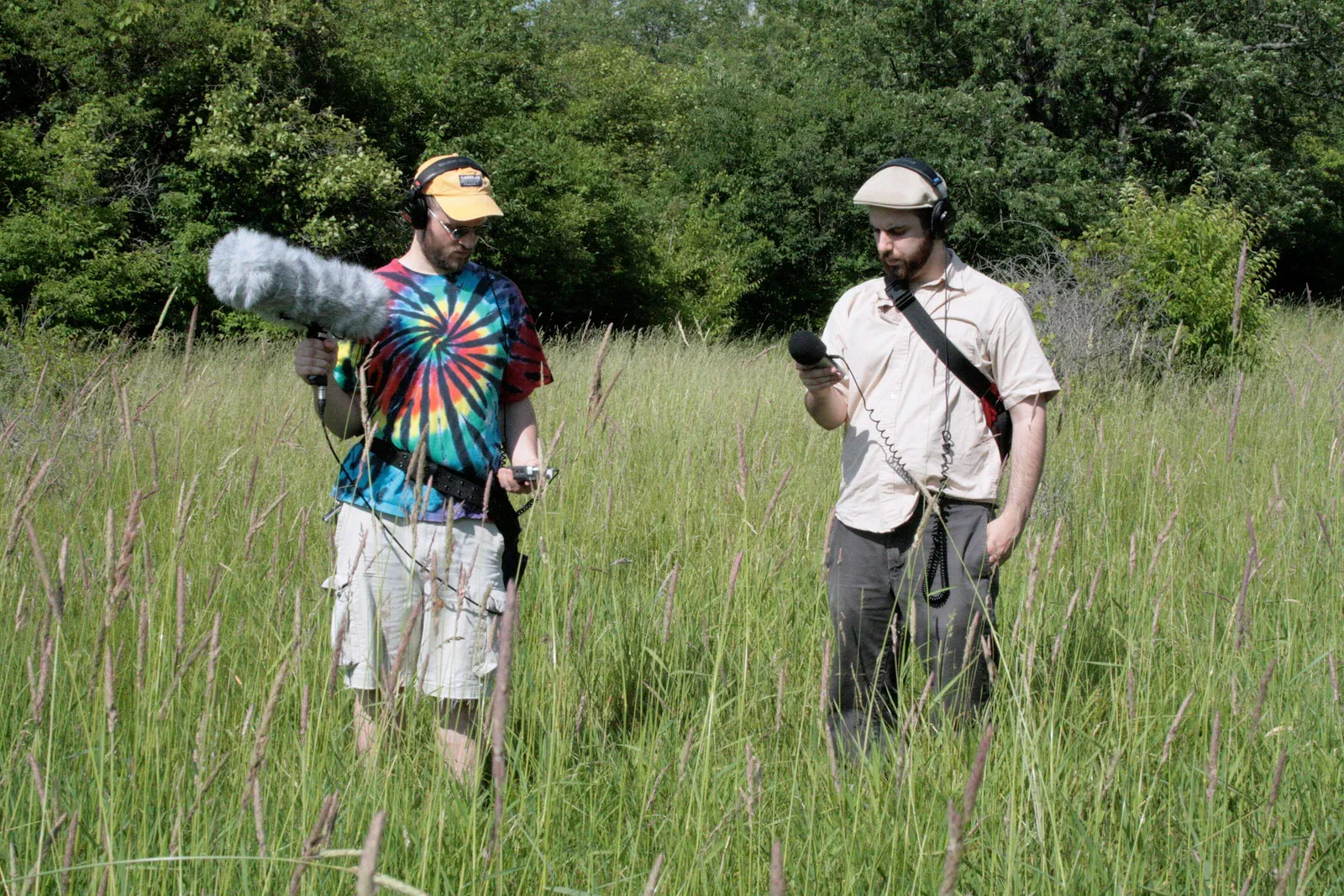
The material is environmental sound left largely intact, and most pieces have no beat, melody or fixed tuning. A typical work establishes an ambience, lets events enter and leave, and returns to the ambience. Because ambient sound is quiet and complex, field recordists have long favoured professional recorders, low-noise microphone pre-amplifiers and accessories such as windscreens and parabolic reflectors. Stereo is captured with spaced pairs (A/B), crossed pairs (X/Y) or mid-side (M/S) arrangements, and a multitrack recording captures many microphones to be mixed later.
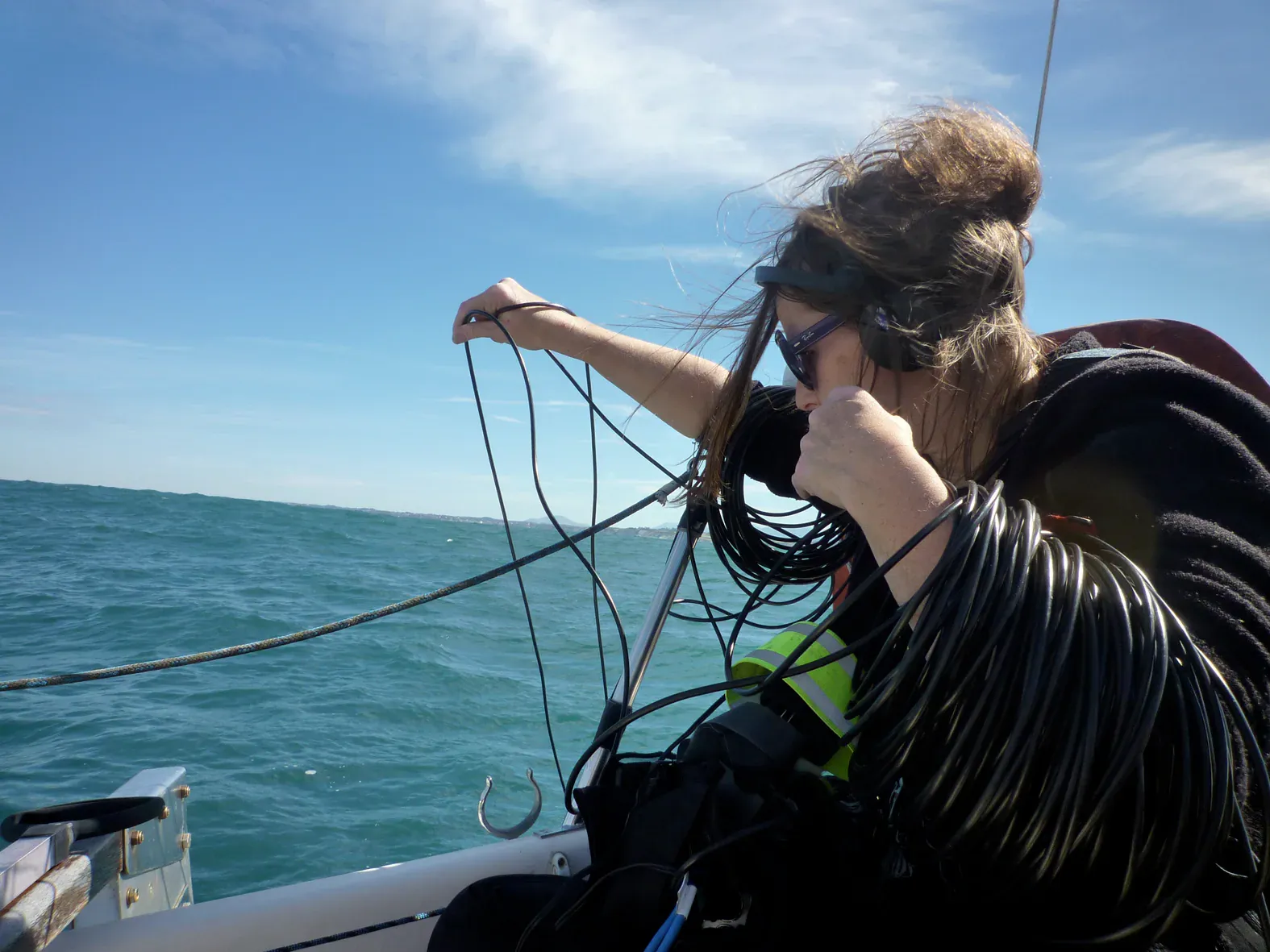
Other tools extend what can be heard. Hydrophones record underwater life, and contact microphones pick up vibrations in structures and surfaces, the method behind much of Toshiya Tsunoda’s work. Jana Winderen, whose releases have appeared on Touch since 2008, records fish and other marine life with hydrophones.
Mainstream success and reach
The genre has no chart tradition of its own, and its reach comes through other channels. Teibel’s Environments records were marketed as relaxation aids. Watson’s Weather Report appeared on a 2007 list of albums to hear before dying in a national newspaper. Watson’s television sound work reached much larger audiences than any record, and in 2018 he helped Hildur Guðnadóttir record sounds at the Ignalina nuclear plant for her Grammy-winning score to the miniseries Chernobyl. Bernie Krause, who coined the terms geophony, biophony and anthropophony, recorded whole habitats and founded the Wild Sanctuary archive of natural soundscapes in 1968.
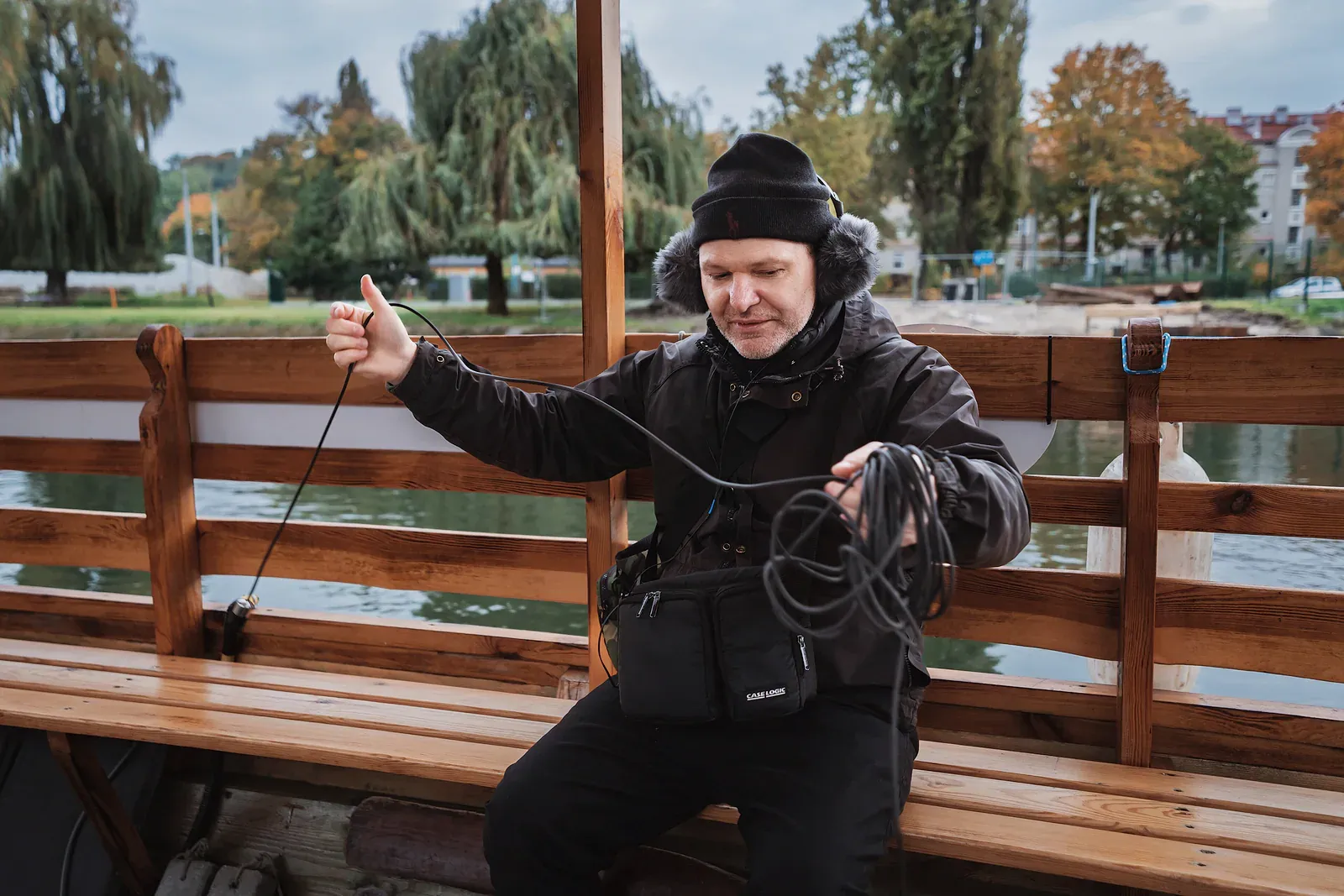
Culture
Soundwalking is the genre’s characteristic ritual: groups walk a route in attentive silence, listening rather than recording. Sound maps such as Lockwood’s pieces on the Hudson and the Danube treat a waterway as a score. Radio is a second home; Watson made BBC Radio 4 series such as The Reed Bed in 2007, and Westerkamp began as a radio producer and host at a Vancouver cooperative station in 1974. Bioacoustics also uses the method to study birdsong.
Misconceptions
The first misconception is that field recording is only a documentary technique. It began as one, but the practice of arranging and presenting the recordings, from Ferrari’s village shore to Westerkamp’s beach, is compositional, and the line between art and document is still described as ambiguous. A second is that it is the same as nature sounds. Field recording includes cities, factories, vibrations, and the human voice, and nature-sound records are one commercial branch of it. A third is that the recordist makes no decisions. Choice of place, time, microphone and position, followed by selection and editing, shapes every piece, as the Vancouver harbour montage shows.
Legacy
Field recording supplied the language of acoustic ecology and soundscape composition, and it feeds sound art, ambient music and the found-sound practices of industrial music. Its tools are now available in a smartphone, and recordists work in habitats such as the open ocean and in structures inaudible to human ears.
Frequently asked questions
What is field recording in music?
Field recording is the capture of sound outside a studio, such as a forest, a street, a river or a factory, and its presentation as an album or installation. When the focus is the aesthetic arrangement of such recordings, the practice is called phonography.
What is the difference between field recording and soundscape composition?
Field recording emphasises the recording of an environment as it is, while soundscape composition, developed by the World Soundscape Project, builds a piece from recorded sounds so as to convey a sense of place. The two overlap and often share material.
Who are the key field recording artists?
R. Murray Schafer founded the movement’s research base, Luc Ferrari and Irv Teibel made its first widely heard records, and Hildegard Westerkamp, Annea Lockwood, Francisco López and Chris Watson are leading figures in the later art tradition.
What equipment is used for field recording?
A portable digital recorder, a low-noise stereo microphone pair and a windscreen are the basic kit. Hydrophones are added for underwater sound and contact microphones for vibration.
Sound
Sound sheet
Anatomy of a track
| # | Part |
|---|---|
| 1 | Establishing ambience |
| 2 | Events entering and leaving the scene |
| 3 | Fade or return to ambience |
Signature sounds
- Unprocessed environmental sound as the main material
- Long takes with no beat or melody
- Wide dynamic range between quiet ambience and sudden events
- Place, date and recording method named in the title or notes
Techniques
- Stereo pair recording
- Contact microphone recording
- Hydrophone recording
- Soundwalk
- Montage compression
Tuning
No fixed tuning: unpitched environmental sound
Vocals
Usually none; Westerkamp's pieces add the composer's own voice and Schafer's spoken analysis frames the Vancouver study.
Scenes
Where it happened
Where and when the sound lived: one bar per city on a shared timeline.
Europe
North America
Active scenes
Peak 5, 2003-2025
Home of the World Soundscape Project at Simon Fraser University and of Westerkamp's soundwalks.
Ferrari and the GRM circle composed with recorded real-world sound here.
Teibel's Environments LPs and Annea Lockwood's river sound maps came out of the city.
Touch has issued phonography here since 1982.
Gruenrekorder publishes field recording and sound art from the city.
Culture
Culture markers
- Soundwalking
Groups walk a route in attentive silence, listening to the environment rather than recording it.
Ritual - River sound maps
Works such as Lockwood's Hudson and Danube pieces follow a waterway through recordings at set points.
Artwork - Phonography
Practitioners use the word as a near-synonym for field recording as an art form.
Slang
Media
Key media
- 1973The Vancouver Soundscape
by World Soundscape Project. The first soundscape study released as a record.
Compilation - 1977The Tuning of the World
by R. Murray Schafer. Popularised the soundscape concept and acoustic ecology.
Book - 2007The Reed Bed
by Chris Watson (BBC Radio 4). Five 15-minute programmes of wildlife sound for broadcast.
Radio
Glossary
Terms on this page
Sound produced by living organisms in a habitat, a term coined by Bernie Krause.
A microphone built to record underwater sound.
Another name for field recording, chosen for its similarity to photography.
A sound unique to a community or place that the World Soundscape Project sought to preserve.
The acoustic environment as perceived by a listener in context, a term popularised by R. Murray Schafer.
An excursion whose main purpose is to listen to the environment, as Hildegard Westerkamp defines it.
Experimental family