Electroacoustic Music
Electroacoustic music is composed from recorded or electronically generated sound, formed in Paris and Cologne radio studios from 1948 onward.
France, Germany, 1948
Experimental family
Born
1948
France, Germany
Subgenres
5
Documented branches
Links
9
Genres it drew on or shaped
Tempo
70-120 BPMLineage
Family tree
Grew out of
France, Germany, 1948
Electroacoustic Music
Led to (6)
Timeline
Era by era
From the first sparks to today. Select a dot to read the story behind it.
- Radio studios
1948 to 1957
- Tape centres and synthesizers
1958 to 1969
- Computers and live electronics
1970 to 1989
- Desktop studios
1990 to 2009
- Open platforms and reissues
2010 to 2026
Eras
Moments
- 1 Radio studios, 1948 to 1957
- 2 Tape centres and synthesizers, 1958 to 1969
- 3 Computers and live electronics, 1970 to 1989
- 4 Desktop studios, 1990 to 2009
- 5 Open platforms and reissues, 2010 to 2026
1948
Radio studios
Broadcasters in Paris, Cologne, Milan and Tokyo give composers tape machines and oscillators. Concrete and electronic schools form, then merge into one practice after Stockhausen's Gesang der Jünglinge.
- 1948Schaeffer broadcasts the first concrete studiesPierre Schaeffer airs five noise studies, among them Étude aux chemins de fer, on French radio in October.
- 1950Symphonie pour un homme seul premieresSchaeffer and Pierre Henry present their first large concrete work in Paris.
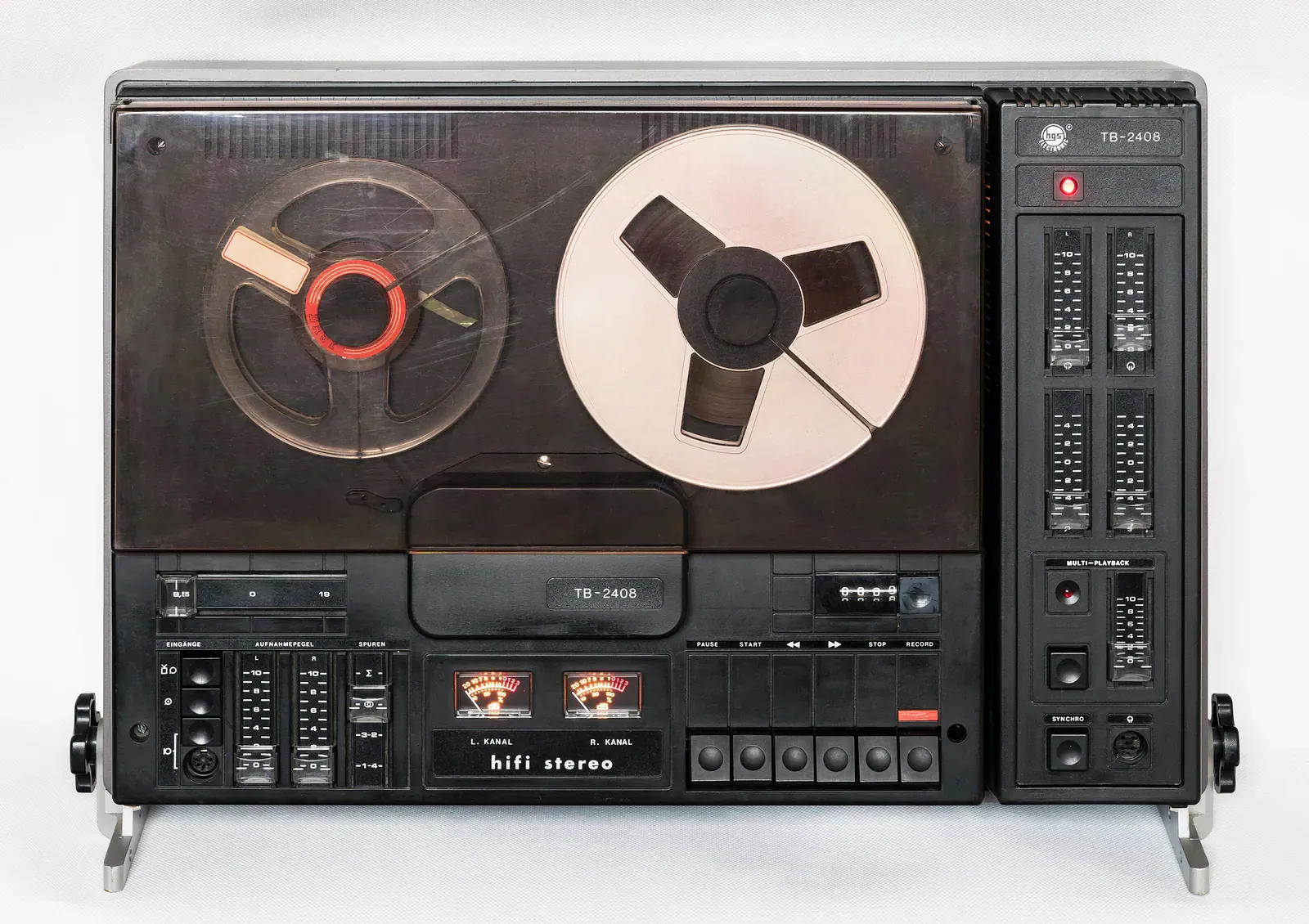
- 1951Paris radio group moves to magnetic tapeThe Groupe de Recherches de Musique Concrète is formed at French radio and tape replaces disc cutting.
- 1952Luening and Ussachevsky present tape music in New YorkOtto Luening and Vladimir Ussachevsky show tape works at the Museum of Modern Art.
- 1953Cologne radio studio produces its first electronic worksStockhausen's Studie I follows work by Herbert Eimert and Robert Beyer at the WDR studio.
- 1955Studio di Fonologia opens in MilanItalian radio gives Luciano Berio and Bruno Maderna an electronic studio.
- 1956Stockhausen completes Gesang der JünglingeA boy's recorded voice and synthetic tones are mixed across five loudspeaker channels.
1958
Tape centres and synthesizers
University and independent studios open in the US while Paris institutionalizes its group. Voltage-controlled synthesizers move the sound from studios to records, from Silver Apples of the Moon to Switched-On Bach.
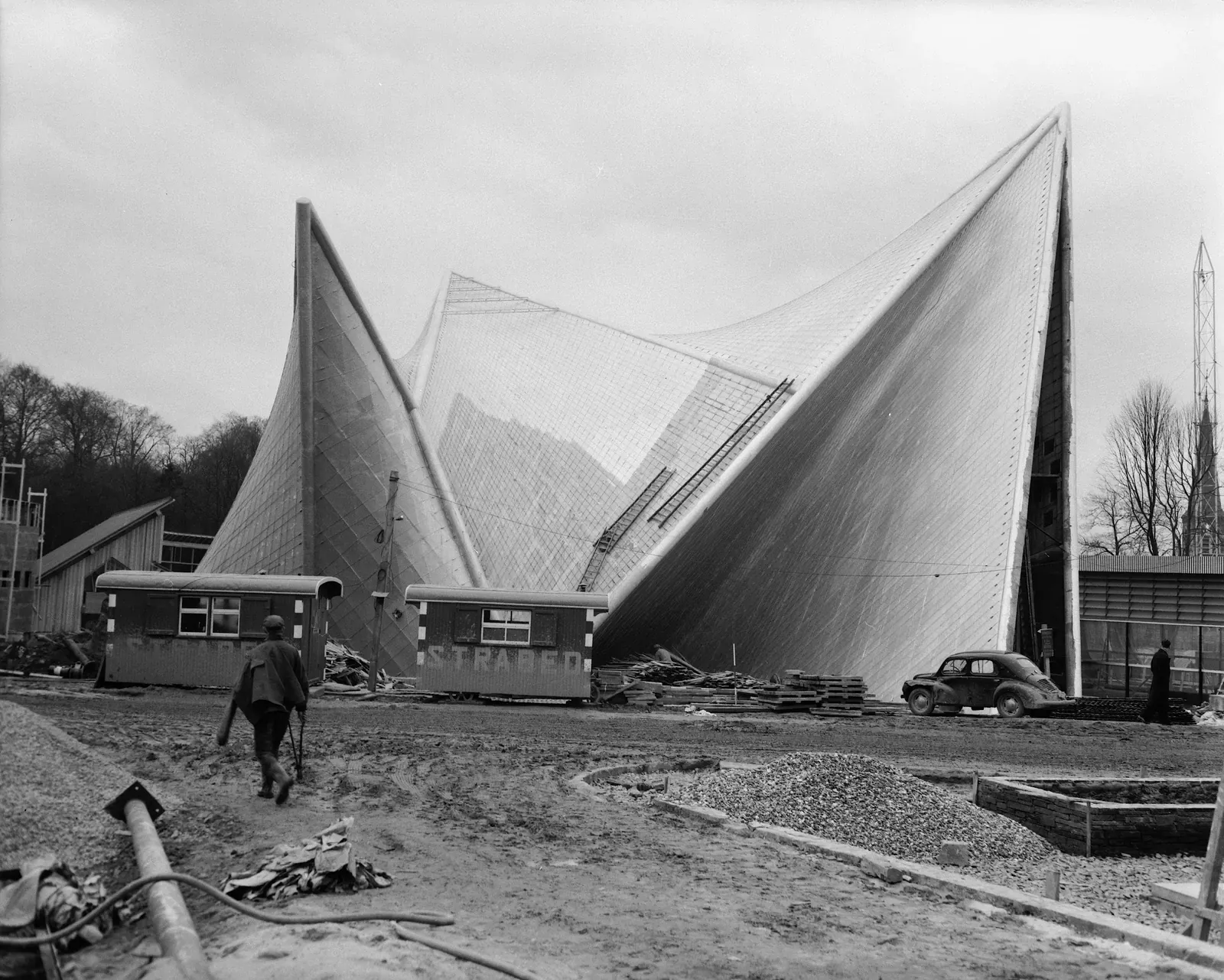
- 1958Poème électronique plays at the Philips PavilionEdgard Varèse's tape work is spread over hundreds of loudspeakers inside a Le Corbusier and Xenakis building at the Brussels world fair.
- 1958Schaeffer founds the Groupe de Recherches MusicalesThe group, later part of INA, becomes the Paris centre for acousmatic composition.
- 1959Columbia-Princeton Electronic Music Center opensA university studio built around the RCA synthesizer serves composers from Babbitt to Wendy Carlos.
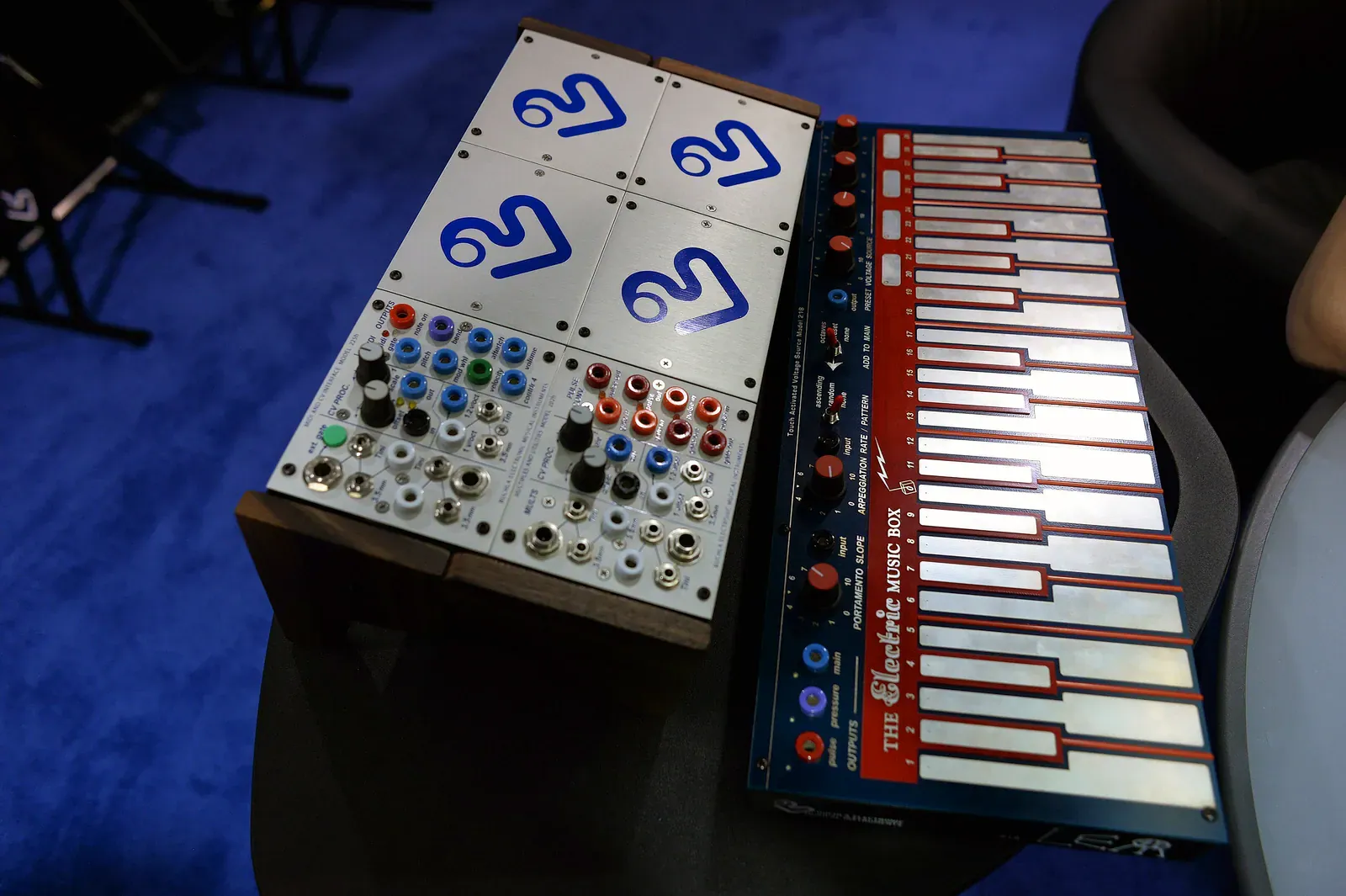
- 1962San Francisco Tape Music Center foundedMorton Subotnick and Ramon Sender start a composer-run studio that later commissions the Buchla synthesizer.
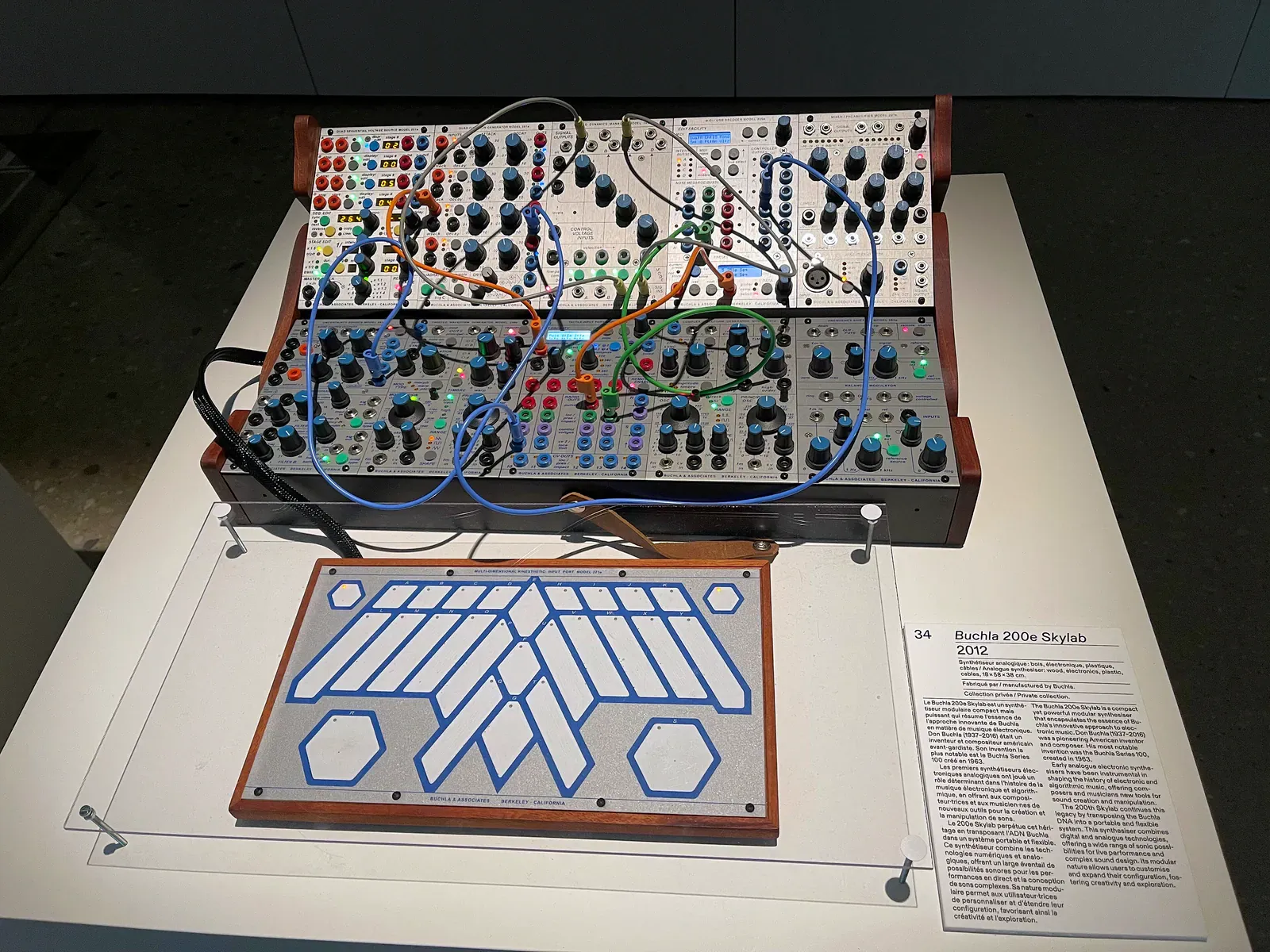
- 1964Moog and Buchla build voltage-controlled modular synthesizersCompact modular instruments take studio sound design out of rack-sized labs.
- 1967Silver Apples of the Moon releasedNonesuch issues the first electronic work commissioned by a record company.
- 1967Psyché Rock enters the dance floorPierre Henry's tape and rock piece for a Maurice Béjart ballet becomes a lasting cult record.
- 1968Switched-On Bach reaches a pop audienceWendy Carlos plays Bach on a Moog modular and sells far beyond the avant-garde audience.
- 1969Alvin Lucier records I Am Sitting in a RoomA spoken text is replayed into a room until its resonances replace the words.
1970
Computers and live electronics
Digital synthesis at Stanford and IRCAM, the loudspeaker orchestra of the Acousmonium, and live electronic ensembles shift the music from fixed tape toward computers and the concert hall.
- 1974Acousmonium built for loudspeaker concertsFrançois Bayle designs an orchestra of loudspeakers for fixed-media diffusion.
- 1977IRCAM opens in ParisPierre Boulez's institute makes computer music research a state-funded concert practice.
- 1977John Chowning completes StriaA computer piece built from golden-ratio spectra using frequency modulation.
- 1980Mortuos Plango, Vivos Voco premieresJonathan Harvey builds a tape piece from the spectrum of a cathedral bell and a boy's voice at IRCAM.
- 1983MIDI and the Yamaha DX7 arriveA shared protocol and a mass-market FM synthesizer, licensed from Stanford, reach thousands of studios.
1990
Desktop studios
Affordable computers put studio-grade processing on a laptop. Real-time software such as Max, dedicated labels and the microsound scene spread the music beyond state institutions.
- 2001Fennesz releases Endless SummerLaptop guitar processing brings electroacoustic texture to an indie audience.
- 2001Curtis Roads publishes MicrosoundA theory of sound built on grains shorter than a note becomes the reference text of the digital scene.
2010
Open platforms and reissues
Institutional archives and indie labels reissue and commission work, and veterans such as Éliane Radigue move to acoustic scores while sound art and installation absorb much of the field.
Listening path
Anthems
The records that built the sound, grouped by the part they played. Thumbnails come from YouTube; the player loads only when you press play.
- 01
Pierre Schaeffer, 1948
Locomotive recordings cut and looped into rhythm: the first piece of musique concrète.
Origin - 02
Pierre Henry, 1950
The first full-length concrete work, made by Schaeffer and Henry from voices, footsteps and objects.
Origin - 03
Karlheinz Stockhausen, 1956
Joined a recorded boy's voice with electronic tones and ended the split between concrete and electronic music.
Origin - 04
Morton Subotnick, 1967 · Nonesuch Records
The first electronic piece commissioned by a record label, with sequenced pulses a home listener can follow.
Start hereBreakthrough - 05
Edgard Varèse, 1958
Played to world fair crowds through hundreds of speakers, the era's most public electroacoustic event.
Anthem - 06
Daphne Oram, 1965
A British example of pulsing electronic design, drawn on film strips with the Oramics system.
Anthem - 07
Alvin Lucier, 1969
Replays a spoken text into a room until only the room's resonances remain.
Anthem - 08
Luc Ferrari, 1970
A lightly edited dawn at the sea shore that opened anecdotal and soundscape composition.
Anthem - 09
John Chowning, 1977
A computer piece that used frequency modulation and golden-ratio spectra to control a whole form.
Anthem - 10
Jonathan Harvey, 1980
Maps the partials of a cathedral bell and a boy's voice into one shimmering IRCAM tape work.
Start hereAnthem - 11
Éliane Radigue, 1988
Opens the Trilogie de la mort with slowly shifting synthesizer drones, a model for later drone music.
Anthem - 12
Pierre Henry, 1967
Henry's rock pulse for a Béjart ballet, later remixed by Fatboy Slim and the root of the Futurama theme.
Start hereCrossover - 13
Fennesz, 2001 · Editions Mego
Processed guitar and laptop glitches reintroduced electroacoustic texture to a pop-minded audience.
Revival
Facts
| Family | Experimental |
| Origin | France, Germany |
| Emerged | Late 1940s-early 1950s |
| Status | Active |
| Tempo | 70 to 120 BPM |
| Meter | free |
| Subgenres | 5 |
Electroacoustic music is composed from recorded or electronically generated sound, with loudspeakers as the main means of presentation instead of acoustic performance.
It began in the late 1940s in radio studios in Paris and Cologne and now covers musique concrète, elektronische Musik, tape and computer music, live electronics and sound installation. Its defining traits are sound treated as material, free rhythm and pitch drawn from the spectrum of a recording or a synthesis.
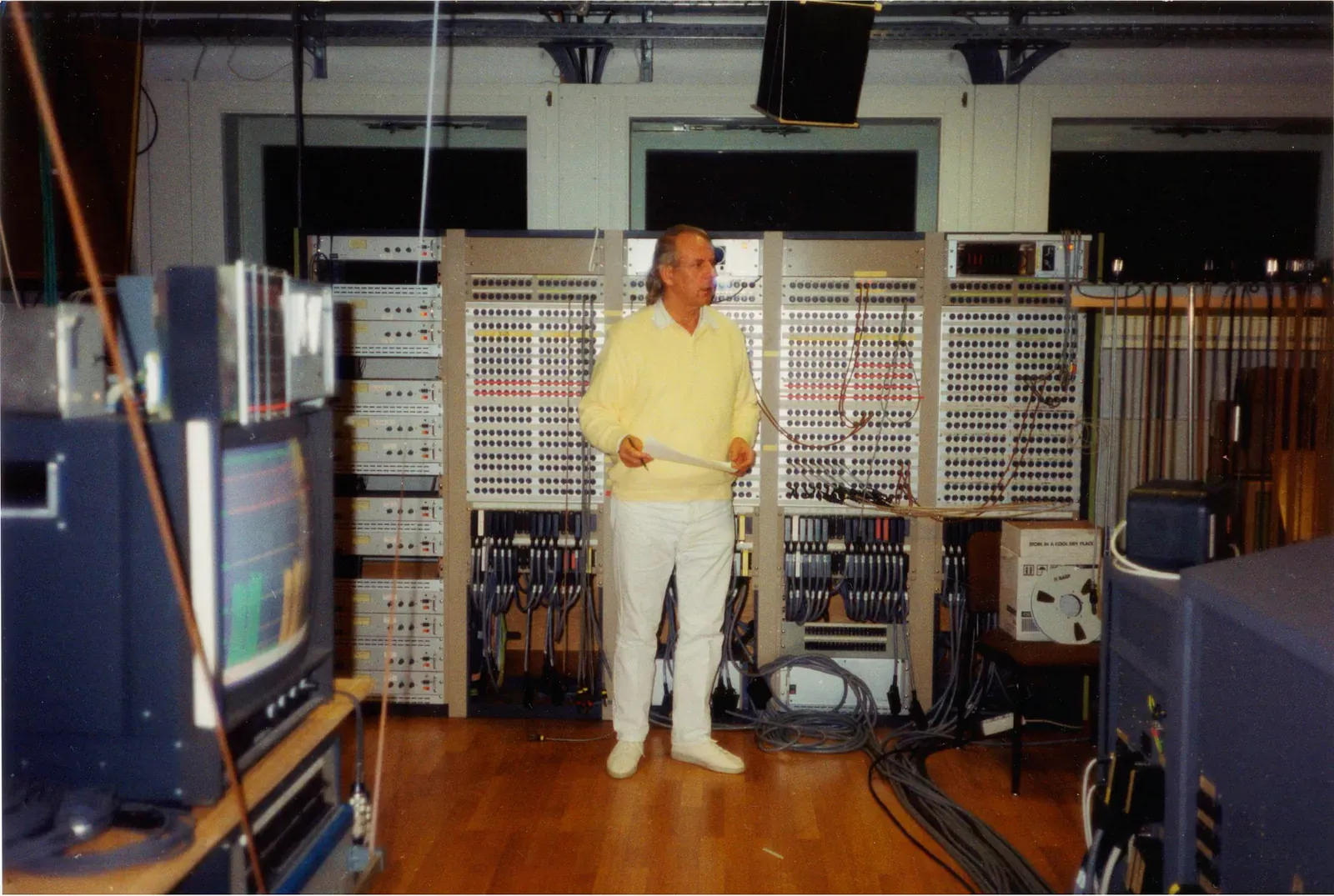
Origins
The genre came out of broadcasting. In October 1948 the French engineer and composer Pierre Schaeffer aired five short noise studies on Paris radio, among them Étude aux chemins de fer, cut from recordings of locomotives. He called the method musique concrète because the composer worked with sounds already recorded instead of writing notes for players. In 1950 Schaeffer and Pierre Henry presented Symphonie pour un homme seul, the first full-length concrete work, built from voices, footsteps and breath.
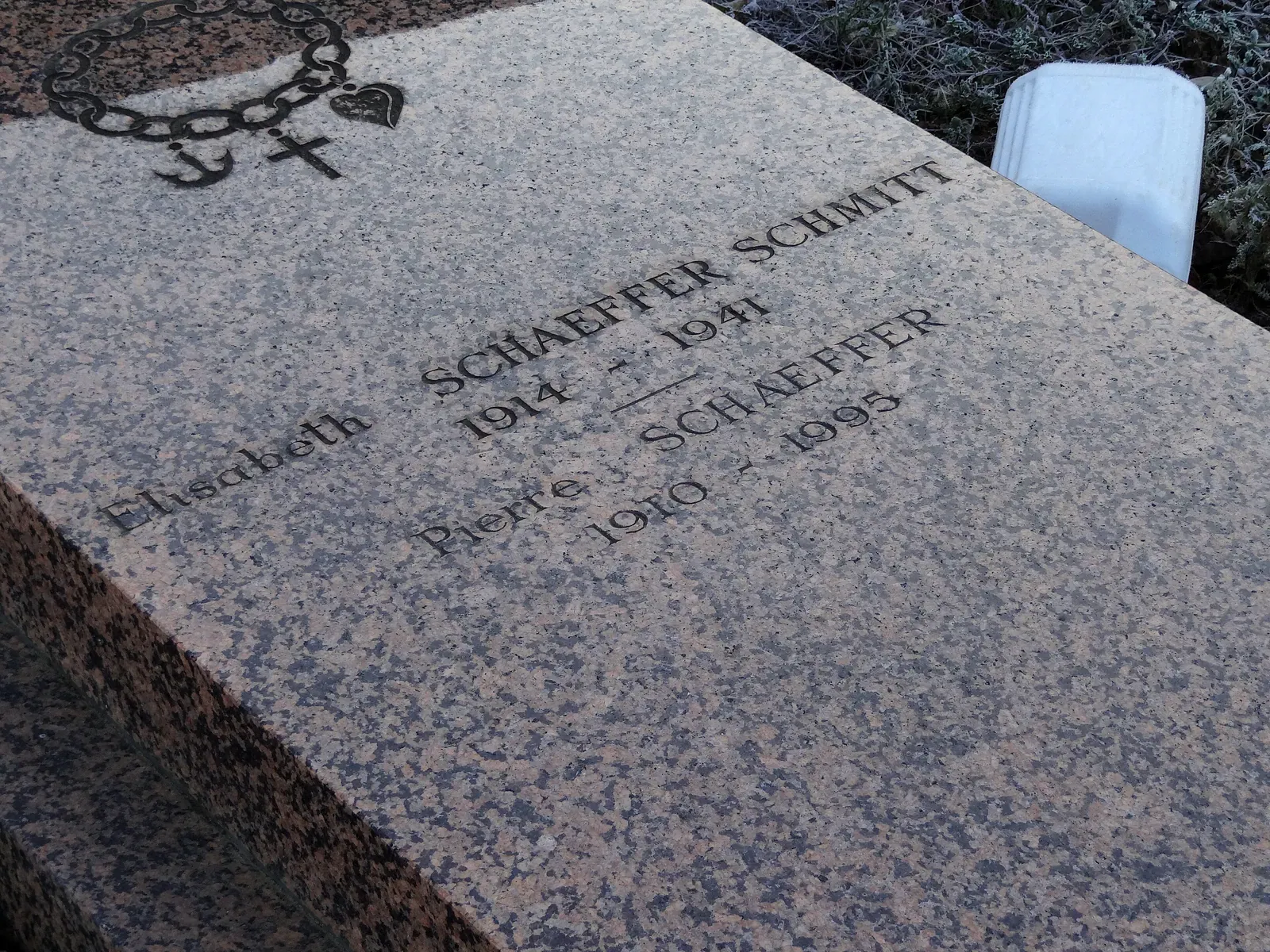
A second school grew in Cologne. The physicist Werner Meyer-Eppler and the composer Herbert Eimert argued for music made only from synthetic tones, and the WDR radio studio, founded in 1951, produced the first works of elektronische Musik. Karlheinz Stockhausen joined the studio and finished Studie I in 1953. The two camps disagreed about sources, concrete recordings against sine-wave construction, but both depended on a new machine, the tape recorder.
Radio studios, 1948-1957
Broadcasters gave composers equipment no concert hall owned. Paris moved from cutting discs to magnetic tape in 1951, when the Groupe de Recherches de Musique Concrète formed at French radio, and tape allowed splicing, looping, reversing and speed change. Cologne layered oscillator tones into additive structures. Milan’s Studio di Fonologia opened in 1955 for Luciano Berio and Bruno Maderna, and a studio at Japan’s NHK brought both traditions to Tokyo the same year. In New York, Otto Luening and Vladimir Ussachevsky showed tape works at the Museum of Modern Art in 1952.
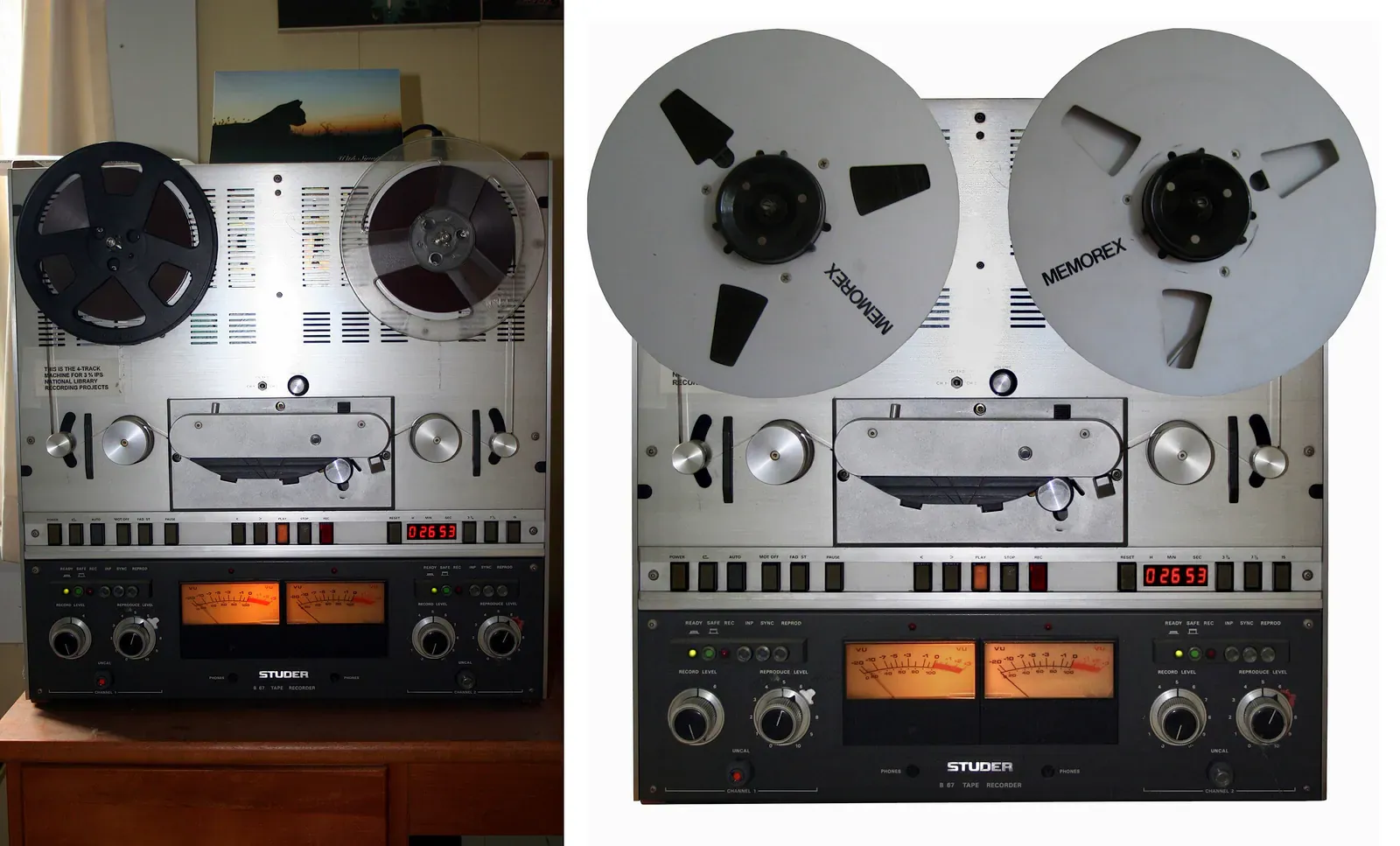
The split between schools closed in 1956 with Stockhausen’s Gesang der Jünglinge. It joined the recorded voice of a boy with electronic tones and spread the result across five loudspeaker channels. After it, the concrete and electronic labels described habits more than separate camps.
Tape centres and synthesizers, 1958-1969
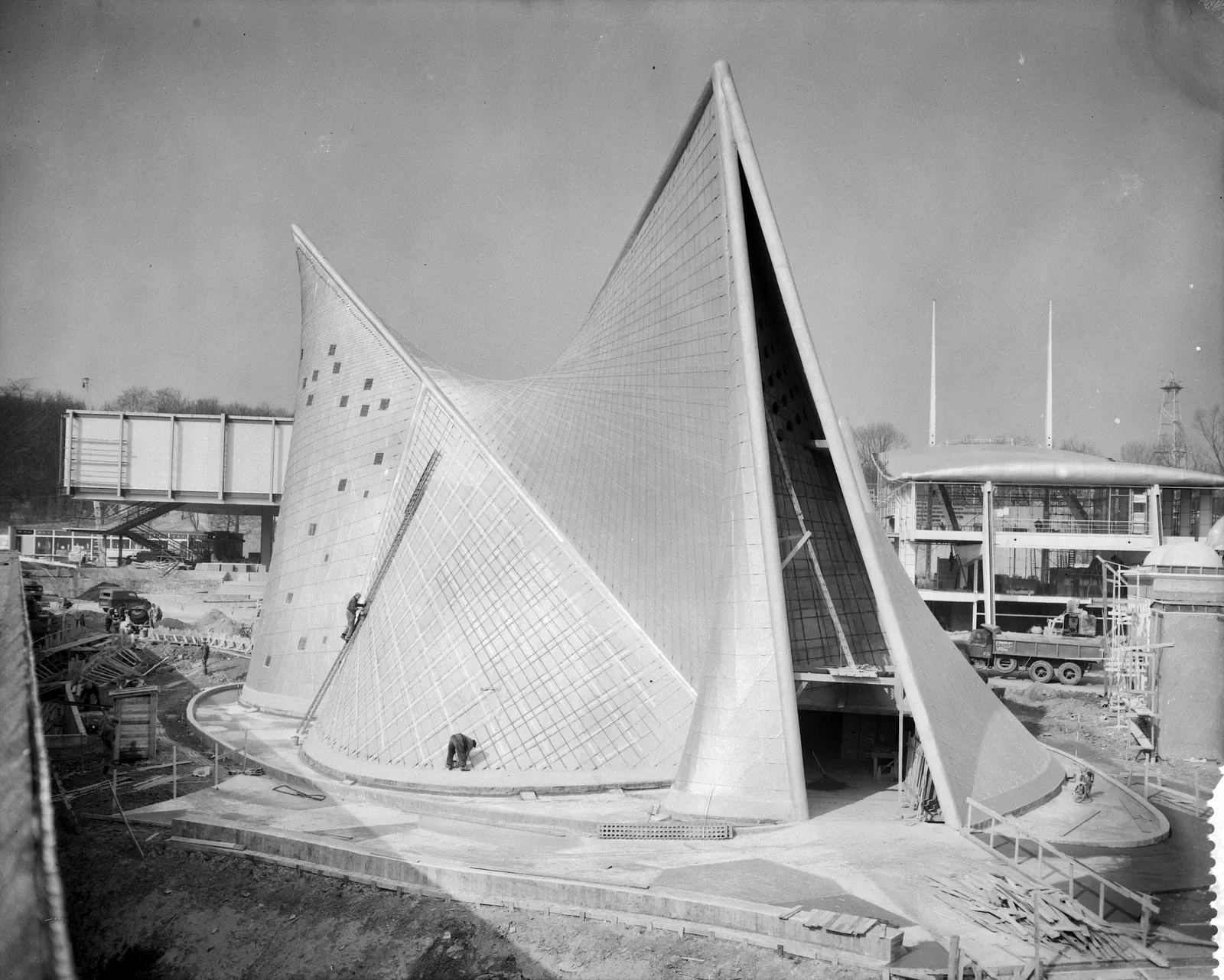
The late 1950s moved the music out of the radio station. Edgard Varèse’s Poème électronique played in 1958 at the Philips Pavilion of the Brussels world fair, a building by Le Corbusier with structural work by Iannis Xenakis, through hundreds of loudspeakers. In Paris, Schaeffer founded the Groupe de Recherches Musicales that year as the centre of acousmatic composition.
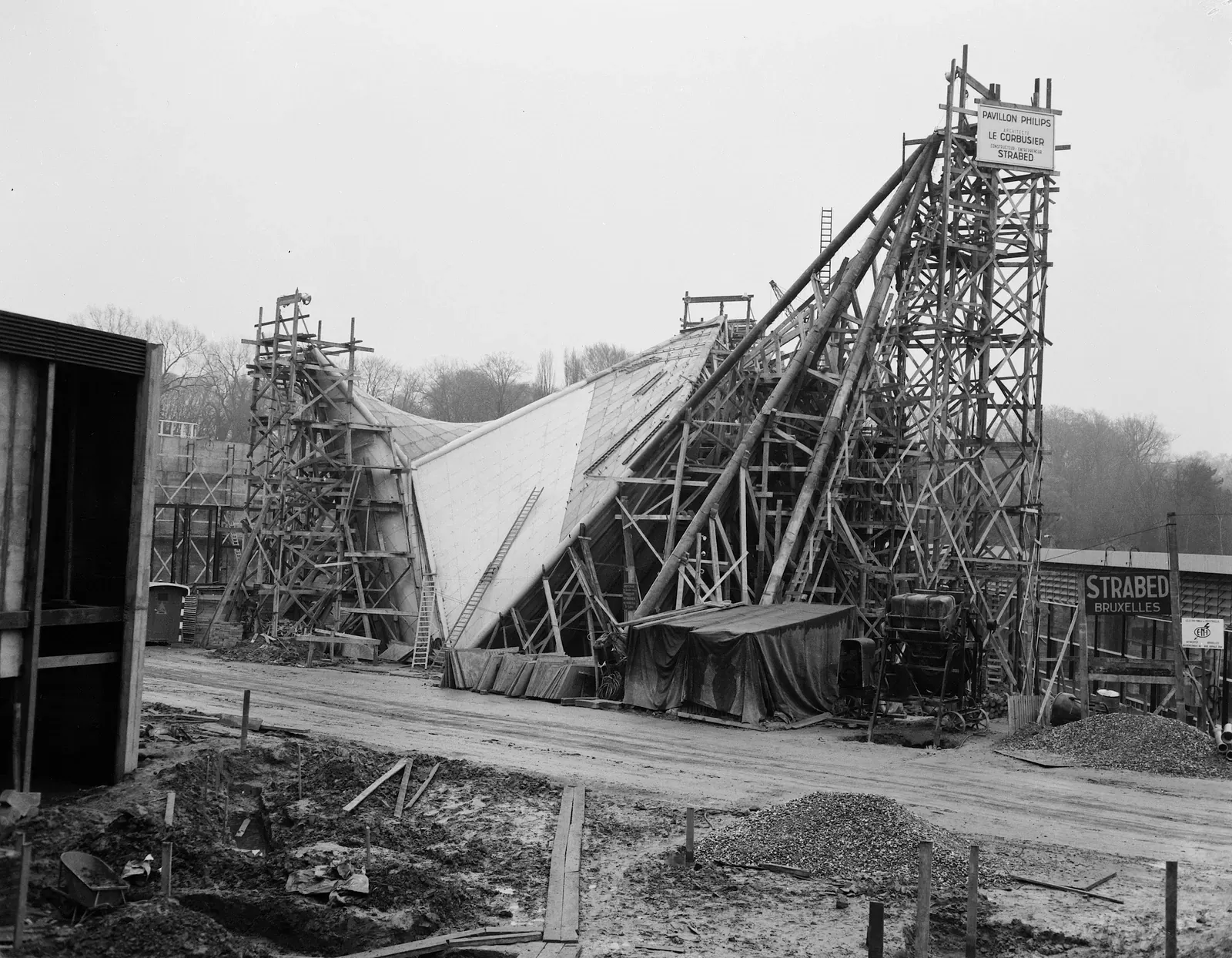
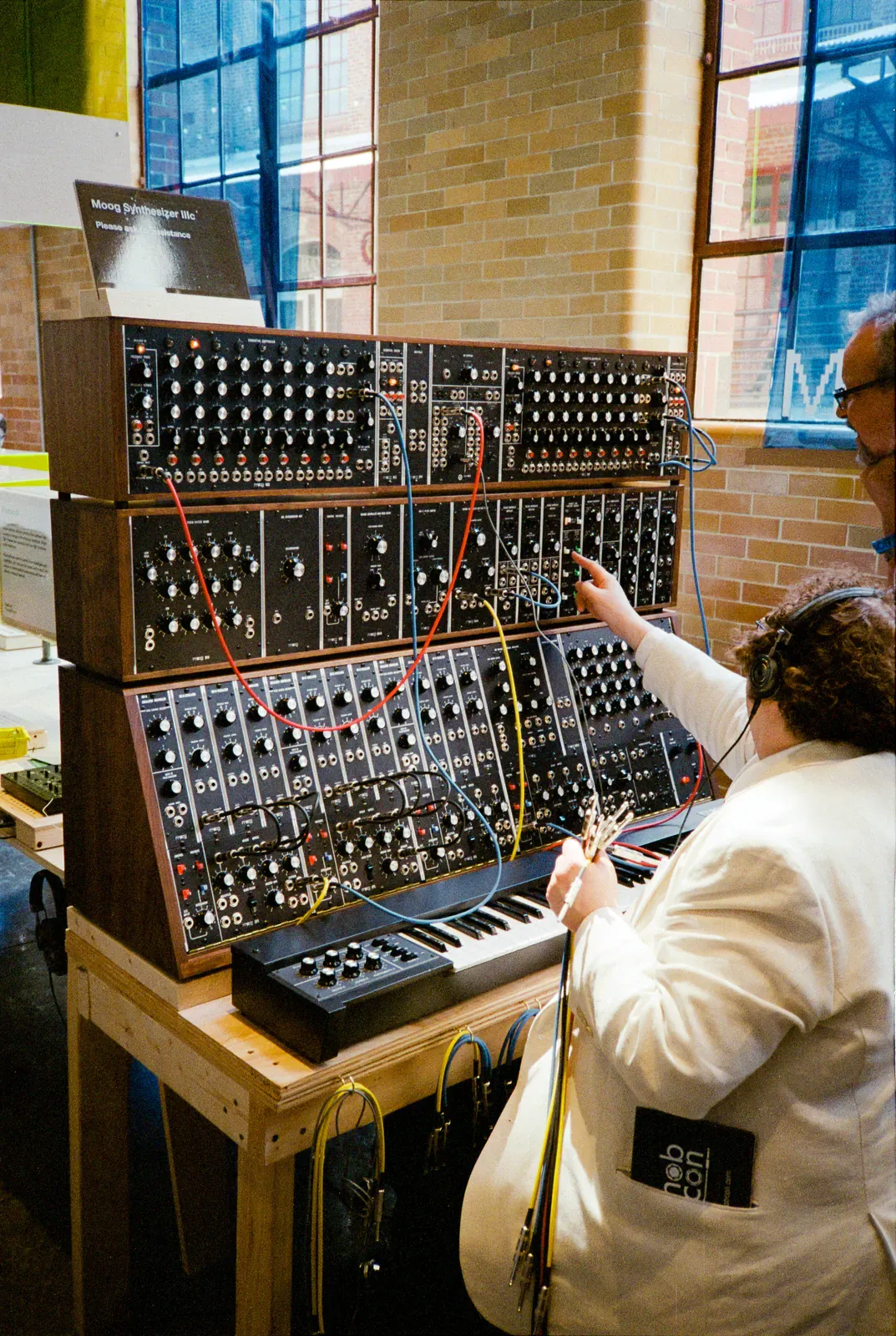
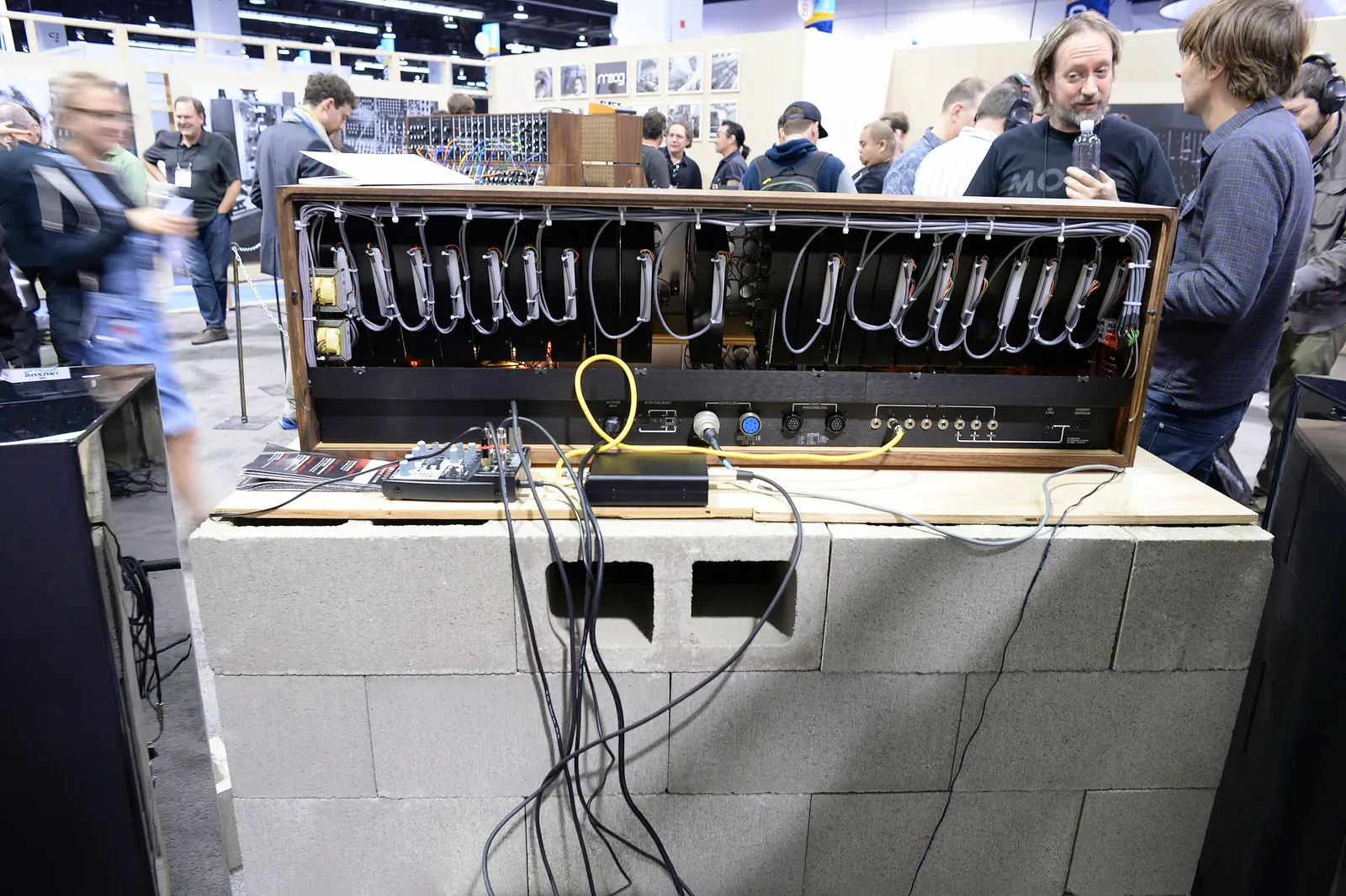
American studios took a different route, tied to universities and composers’ cooperatives. The Columbia-Princeton Electronic Music Center opened in 1959 around the room-sized RCA synthesizer, and Morton Subotnick and Ramon Sender started the San Francisco Tape Music Center in 1962. That centre led to the Buchla modular synthesizer, while Robert Moog developed a keyboard-friendly modular system, both built on voltage control in the mid 1960s. Silver Apples of the Moon, a Buchla piece released by Nonesuch in 1967, was the first electronic work commissioned by a record company. Wendy Carlos reached a pop audience in 1968 with Switched-On Bach, played on a Moog modular.
Not every piece used a synthesizer. Alvin Lucier’s I Am Sitting in a Room (1969) replays a spoken text into a room until only the room’s resonances remain, and Luc Ferrari’s Presque rien no. 1 (1970) presents a lightly edited dawn on a beach, an early work of soundscape composition. Daphne Oram drew sound onto film strips with her Oramics system, as in Pulse Persephone.
Computers and live electronics, 1970-1989
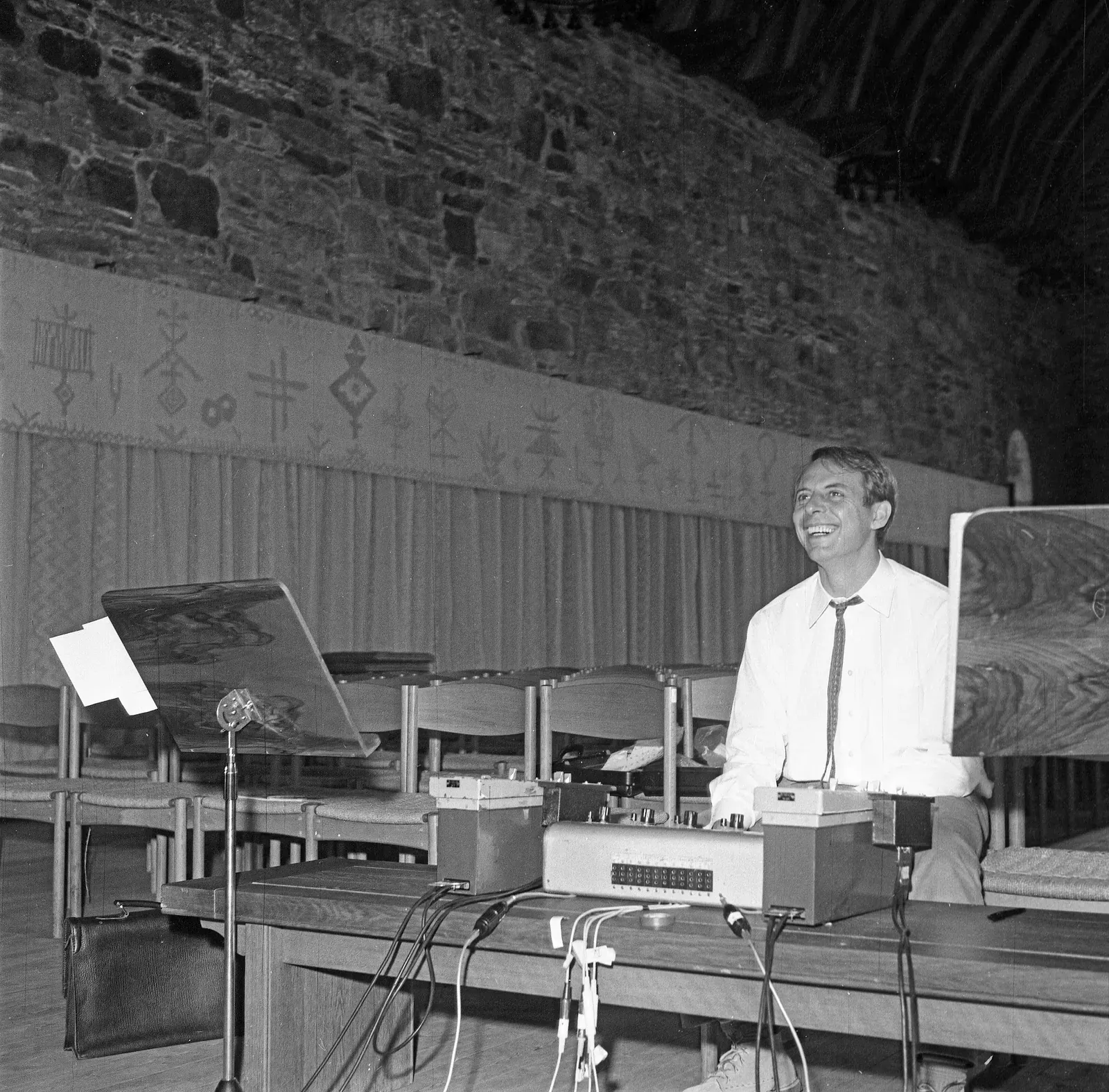
Computers entered the field through research centres. At Stanford, John Chowning found in 1967 that fast frequency modulation produced rich tones from two oscillators, and his piece Stria (1977) used golden-ratio spectra to control a whole form. His method reached thousands of studios in 1983 through the Yamaha DX7, the same year MIDI standardised data exchange between instruments. IRCAM, Pierre Boulez’s institute in Paris, opened in 1977 and made computer music a state-funded practice. Jonathan Harvey’s Mortuos Plango, Vivos Voco (1980) built a tape piece from the partials of a cathedral bell and a boy’s voice.
Presentation changed too. In 1974 François Bayle designed the Acousmonium, an orchestra of loudspeakers of different sizes that a performer plays during a concert to spread fixed-media music through the hall. In the 1960s, John Cage and David Tudor had already moved toward real-time performance on electronic devices, the root of live electronic music. Éliane Radigue worked in the opposite direction, using an ARP 2500 synthesizer for slow drones, as in Kyema, the first part of her Trilogie de la mort (1988).
Desktop studios, 1990-2009
Cheaper computers moved studio-grade processing onto laptops. Max, a graphical patching program from the IRCAM lineage, brought real-time processing to the stage from 1990. The music spread beyond state institutions to independent labels, and a scene around clicks, cuts and very quiet detail grew into microsound. Curtis Roads published Microsound in 2001, a theory of composing with grains of sound shorter than a note. In the same year Fennesz released Endless Summer on Editions Mego, where guitar processed on a laptop gave electroacoustic texture to an indie audience.
Open platforms and reissues, 2010 onward
Archives and independent labels now reissue and commission older work, and the radio-studio generation is documented in print and recordings. Sound art and installation absorb a large share of the field. Some veterans moved back to acoustic scores, as Radigue did in her later years after decades with synthesizers.
Characteristics
Pitch in electroacoustic music often comes from the spectrum of a recording or a synthesis, outside 12-tone equal temperament, and the meter is usually free. Tempo is rarely the organizing principle; a metered section runs at roughly 70 to 120 BPM when it appears. Common features include recorded sound transformed until its source is hard to identify, montage of cut fragments, loops and abrupt silences, movement of sound across a ring of loudspeakers, and long drones with slow spectral change. Voice and room tone appear as raw material.
Composers describe a recorded sound heard for its form instead of its source as a sound object, and the habit of listening that way as reduced listening. A work that exists only as a recording is called fixed media.
Instruments and production
The central machines changed with each generation: the tape recorder, then the voltage-controlled synthesizer, then the computer. The Phonogene played a tape loop at pitches set from a keyboard, and sine-wave oscillators supplied the pure tones of the Cologne studio. The techniques that matter most are tape splicing, varispeed, loudspeaker diffusion, feedback through a room and field-recording montage.
Notable recordings
Three works carry much of the story. Étude aux chemins de fer (1948) is the first concrete piece, with locomotive recordings cut and looped into rhythm. Gesang der Jünglinge (1956) ended the split between concrete and electronic sources. Psyché Rock (1967), Pierre Henry’s tape and rock piece for a ballet by Maurice Béjart, reached dance floors and later served as the base of a television theme, which made it the best-known crossover. The ballets matter in their own right: Béjart also staged Symphonie pour un homme seul.
Culture
The concert form is distinctive. In an acousmatic concert listeners sit facing an arc of loudspeakers, often in low light, with no performer to watch. The Philips Pavilion was a building designed for sound, and the music reached the public mostly through world fairs, radio and a small circle of state-supported studios. A few books framed the field: Schaeffer’s A la recherche d’une musique concrète (1952) and Traité des objets musicaux (1966), and Roads’s Microsound.
Legacy
Tape loops, spectral processing, sampling and spatial sound reached rock, ambient and dance music from this tradition. The genre’s reach is clearest in tools: voltage-controlled modular synthesizers, FM synthesis and real-time patching software began in electroacoustic studios and later entered commercial instruments. Many works are now kept in institutional archives, including those of the GRM in Paris and the WDR studio in Cologne. The wider experimental family and electronic music both draw on it, and its composition methods stay close to the classical concert tradition.
Misconceptions
Electroacoustic music is not the same as electronic dance music. It grew from radio studios and universities in the late 1940s, decades before club music, and it is usually in free rhythm and made for listening in concert halls.
It is also not only fixed tape with no performer. Acousmatic concerts have a diffusion performer who plays the loudspeakers live, and the live electronic tradition of the 1960s, led by John Cage and David Tudor, was a reaction against pieces fixed on tape.
The concrete and electronic schools were also not permanent enemies. Cologne and Paris differed over sources at first, but Gesang der Jünglinge in 1956 used a recorded voice and synthetic tones together, and later work treated the two as one practice.
Frequently asked questions
What is electroacoustic music?
Electroacoustic music is music made from recorded or electronically generated sound and presented through loudspeakers. It began in the late 1940s and includes musique concrète, elektronische Musik, tape music and computer music.
Who started electroacoustic music?
Pierre Schaeffer is credited with the first piece of musique concrète in 1948 at French radio. Herbert Eimert, Werner Meyer-Eppler and Karlheinz Stockhausen then developed elektronische Musik at the WDR studio in Cologne.
What is the difference between musique concrète and electroacoustic music?
Musique concrète is one school of electroacoustic music, built from recorded real-world sound. Electroacoustic music is the wider term that also covers synthesized sound, computer music and live electronics.
Where did electroacoustic music begin?
It began in Paris in 1948 and Cologne in 1951, both in state radio studios. Milan, Tokyo, New York and San Francisco added studios between 1952 and 1962.
Sound
Sound sheet
Signature sounds
- Recorded sound transformed until its source is hard to identify
- Montage of cut fragments, loops and abrupt silences
- Movement of sound across a ring of loudspeakers
- Long drones with slow spectral change
- Voice or room tone treated as raw material
Synths and software
- Buchla 100 series
- Moog modular synthesizer
- ARP 2500
- RCA Mark II
- GRM Tools
Techniques
- Tape splicing and loops
- Varispeed
- Loudspeaker diffusion
- Feedback and room resonance
- FM synthesis
- Field-recording montage
Keys and modes
Inharmonic bell spectra. Mortuos Plango, Vivos Voco builds its harmony from the partials of a cathedral bell.
Golden-ratio spectral scale. Stria derives its pitches from golden-ratio proportions instead of a key.
Tuning
Mostly non-tonal: pitch comes from the spectrum of the recording or synthesis, often outside 12-tone equal temperament
Vocals
Voice is used as sound material, recorded, cut and processed, as in Gesang der Jünglinge
Scenes
Where it happened
Where and when the sound lived: one bar per city on a shared timeline.
Europe
North America
Asia
Active scenes
Peak 6, 1962-1983
Home of musique concrète, the GRM, the Acousmonium and IRCAM.
The WDR radio studio made elektronische Musik with synthetic tones.
RAI's Studio di Fonologia hosted Berio, Maderna and visiting composers.
NHK's electronic music studio brought both traditions to Japan.
Tape music and the Columbia-Princeton studio shaped the US university tradition.
The Tape Music Center linked composers, instrument builders and the counterculture.
Venues and places
Brussels, 1958 to 1958. Temporary building for Expo 58 where Poème électronique played through hundreds of loudspeakers.
Cologne, 1951 to today. Radio studio where Eimert, Beyer and Stockhausen made elektronische Musik.
Milan, 1955 to 1983. RAI electronic music studio run by Berio and Maderna.
New York, 1959 to today. University studio built around the RCA synthesizer.
San Francisco, 1962 to 1966. Composer-run studio, forerunner of the Mills College center, that commissioned the Buchla synthesizer.
Paris, 1977 to today. Boulez's institute for computer music research and performance.
Stanford, 1975 to today. Computer music center founded by John Chowning, where FM synthesis was developed.
Culture
Culture markers
- Acousmatic concert
Listeners sit facing an arc of loudspeakers, often in low light, with no performer to watch.
Ritual - Sound object
A shorthand for a recorded sound heard for its form rather than its source.
Slang - Béjart ballets
Maurice Béjart staged Symphonie pour un homme seul and Messe pour le temps présent.
Dance - Le Corbusier's Philips Pavilion
A building designed for sound, with Xenakis shaping its form and Varèse's tape inside.
Artwork
Media
Key media
- 1952A la recherche d'une musique concrète
by Pierre Schaeffer. Schaeffer's diary of the first years of musique concrète.
Book - 1966Traité des objets musicaux
by Pierre Schaeffer. Sets out the sound object and reduced listening, the theory behind the acousmatic school.
Book - 1967Le solfège de l'objet sonore
by Pierre Schaeffer and others. Three discs of examples that accompany the treatise.
Compilation - 2001Microsound
by Curtis Roads. Theory of sound built from tiny grains, a reference for the digital scene.
Book
Glossary
Terms on this page
Describes sound heard without seeing its cause, a word Schaeffer adopted for loudspeaker music.
Live control of how a fixed piece is distributed across a set of loudspeakers.
Cologne tradition that built sounds from electronic generators instead of recordings.
A finished recording played back in concert, as opposed to live electronics.
Music assembled from recorded real-world sounds, named by Pierre Schaeffer in 1948.
Attending to a sound's pitch, texture and shape while ignoring what made it.
Schaeffer's term for a recorded sound listened to for its own shape rather than its source.
A length of tape joined into a circle so a sound repeats without end.
Experimental family