Sound Poetry
Sound poetry foregrounds the sounds of speech over meaning. It began with Futurists and Dadaists and grew through Schwitters, Chopin and Cobbing.
Switzerland, Germany, 1916
Experimental family
Born
1916
Switzerland, Germany
Subgenres
2
Documented branches
Links
3
Genres it drew on or shaped
Tempo
80-125 BPMLineage
Family tree
Grew out of
Influenced by
Switzerland, Germany, 1916
Sound Poetry
Led to (2)
Timeline
Era by era
From the first sparks to today. Select a dot to read the story behind it.
- Futurist and Dada voices
1914 to 1920
- Merz and the Ursonate
1921 to 1932
- Lettrism and tape
1945 to 1964
- Text-sound and international networks
1963 to 1985
- Solo performers and reissues
1986 to today
Eras
Moments
- 1 Futurist and Dada voices, 1914 to 1920
- 2 Merz and the Ursonate, 1921 to 1932
- 3 Lettrism and tape, 1945 to 1964
- 4 Text-sound and international networks, 1963 to 1985
- 5 Solo performers and reissues, 1986 to today
1914
Futurist and Dada voices
Marinetti turns battle noise into a printed sound text, then Ball, Huelsenbeck and Tzara perform verse without words, bruitist poems and simultaneous poems at Cabaret Voltaire in Zurich.
- 1914Marinetti's Zang Tumb TumbFuturist sound text built from onomatopoeia, drawn from his experience of a battle in Tripoli.
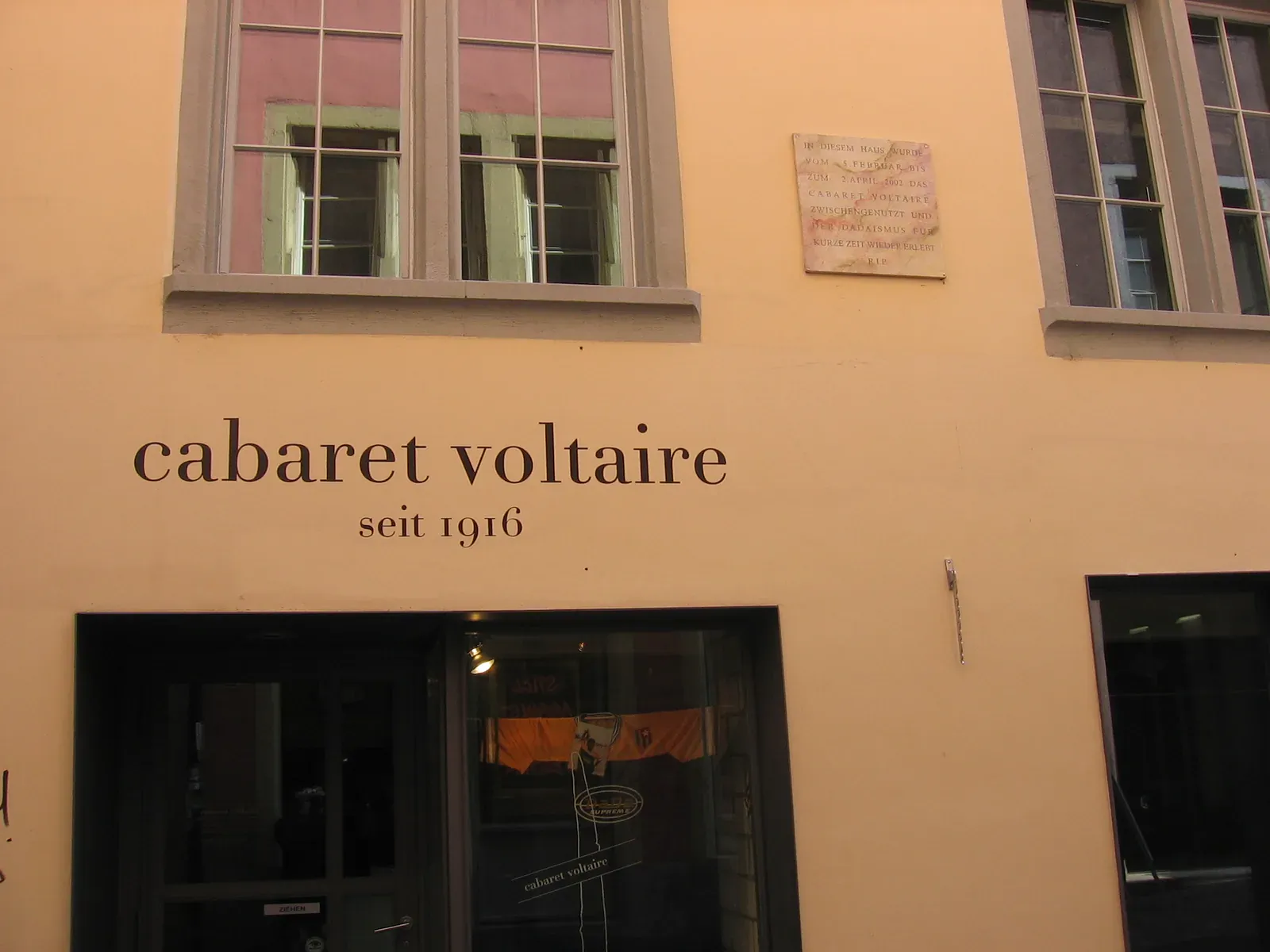
- 1916Cabaret Voltaire opens in ZurichHugo Ball and Emmy Hennings open the club in February 1916; its soirees include sound poetry and simultaneous poetry.
- 1916Ball recites verse without wordsAt the cabaret Ball performs sound poems such as Gadji beri bimba, his own name for a new species of verse.
- 1920Baroness von Freytag-Loringhoven's Klink-HratzvengaThe mourning song in nonsense sounds appears in The Little Review in March 1920 and draws great controversy.
1921
Merz and the Ursonate
Schwitters hears Hausmann's fmsbw in Prague in 1921, builds it into the Ursonate and performs it from 1925; he prints the score in 1932.
- 1921Schwitters hears Hausmann's fmsbwRaoul Hausmann recites the poem in Prague; its opening syllables become the theme of the Ursonate.
- 1925First performance of the UrsonateSchwitters recites the piece on 14 February 1925 at a private home in Potsdam and keeps extending it afterwards.
- 1931Huidobro's AltazorThe Chilean poet's book explores phonetic mutations of words and ends in near-pure sound.
- 1932Ursonate notation publishedSchwitters prints his score for the recital in the last Merz periodical, closing ten years of composition.
1945
Lettrism and tape
Isou and Pomerand found Lettrism in Paris in 1945, Dufrene joins in 1947, and tape recorders give poets such as Chopin and Heidsieck a way to treat the voice as sound material.
- 1945Lettrism founded in ParisIsidore Isou and Gabriel Pomerand launch the movement in November; its early work centres on letters and spoken symbols.
- 1958Chopin starts Cinquieme SaisonThe magazine, followed by OU in 1964, ships recordings with texts and images until 1974.
1963
Text-sound and international networks
Cobbing's Writers Forum in London, Chopin's recorded magazines, Swedish text-sound compositions at Fylkingen and American text-sound anthologies link sound poets across borders.
- 1963Writers Forum begins in LondonBob Cobbing's press publishes over 1,000 titles by 2002 and anchors the British sound poetry scene.
- 1966Fylkingen Records starts in StockholmThe artist-run society's label begins in the decade when text-sound compositions enter its concerts.
- 1971Chopin's Audiopoems LPCollects tape-treated voice works that Chopin made with basic equipment and bricolage methods.
- 197510+2: 12 American Text Sound PiecesAn anthology that places composers such as Beth Anderson among American text-sound works.
- 1976Ladik's PhonopoeticaHungarian poet Katalin Ladik releases an EP of her sound poetry.
- 1980Chopin and Cobbing on MiniaturesThe pair appear on a compilation of fifty-one one-minute pieces produced by Morgan Fisher.
- 1981Laurie Anderson's O SupermanA processed, voice-led single that reaches a wide audience from the experimental art scene.
1986
Solo performers and reissues
Blonk, Tracie Morris and others carry the form into festivals, galleries and recordings, while archives release Chopin, Greenham and Schwitters material.
- 1993Blonk's Flux de boucheAlbum of short vocal pieces by Jaap Blonk, who has memorised and performed the Ursonate for decades.
- 2007Lily Greenham's Lingual Music releasedPosthumous double CD of the Vienna-born performer's electroacoustic voice work.
Listening path
Start listening
A short path from an easy way in to the deep end. Thumbnails come from YouTube; the player loads only when you press play.
- 01
Laurie Anderson, 1981
Looped syllables and a processed voice: listen for the repeating ha-ha-ha under the spoken text.
- 02
Meredith Monk, 1981
A wordless voice composition: listen for syllables and calls used as rhythm, not language.
Facts
| Family | Experimental |
| Origin | Switzerland, Germany |
| Emerged | 1916 onward |
| Status | Active |
| Tempo | 80 to 125 BPM |
| Meter | free |
| Subgenres | 2 |
Sound poetry is a form between literature and music in which the phonetic qualities of the human voice come before meaning and syntax. It is written for performance, often as “verse without words”, and its first body of work came from the Futurists and Dadaists of the 1910s.
The voice is the only required instrument; later poets added tape and microphones. It belongs to the experimental family.
Origins
Poems built from invented words existed before the century turned: Christian Morgenstern’s “Das grosse Lalula” appeared in 1905 in his collection Galgenlieder. Oral poetry traditions are sometimes named as ancestors, but deliberately writing sound texts is a 20th-century step. Filippo Tommaso Marinetti took it in 1914 with Zang Tumb Tumb, a sound text drawn from his experience of a battle in Tripoli and built from onomatopoeia.
The Dadaists then sorted the method into types. Richard Huelsenbeck’s bruitist poem stayed close to the Futurist sound text. Tristan Tzara’s simultaneous poem had several people read different texts, in different languages and rhythms, at once. A third type, the movement poem, added simple physical gestures.
Zurich, 1916-1917
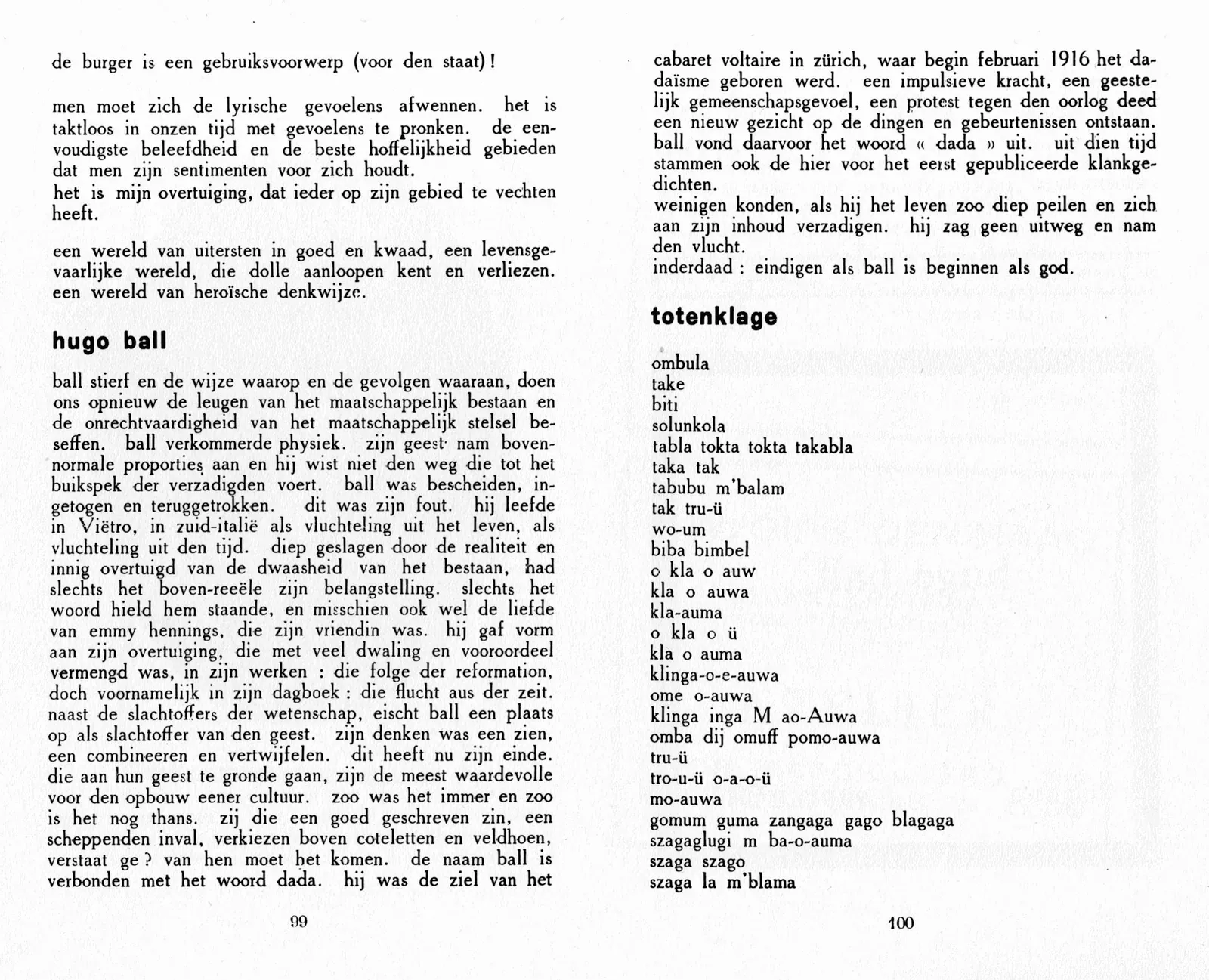
Zurich was neutral during the First World War and filled with refugee artists. Hugo Ball and Emmy Hennings opened Cabaret Voltaire in February 1916 in the back room of the Holländische Meierei at Spiegelgasse 1, with spoken word, music and dance on the programme. Ball recited what he called a new species of verse, “verse without words”, beginning “gadji beri bimba”. He read the Dada Manifesto on 28 July 1916. The cabaret closed that summer, and the group moved on to the Galerie Dada at Bahnhofstrasse 19 in 1917.
For Ball the sound poem also answered the war: a language emptied of ordinary words, set against the sound of the cannons.
Women were part of the early circle, though their work was documented later. Else Lasker-Schuler experimented with what she called Ursprache, and in New York the Baroness Elsa von Freytag-Loringhoven published “Klink-Hratzvenga (Death-wail)” in The Little Review in March 1920. Written after her husband’s suicide, it was a mourning song in nonsense sounds, and it drew great controversy.
Hanover, 1921-1932
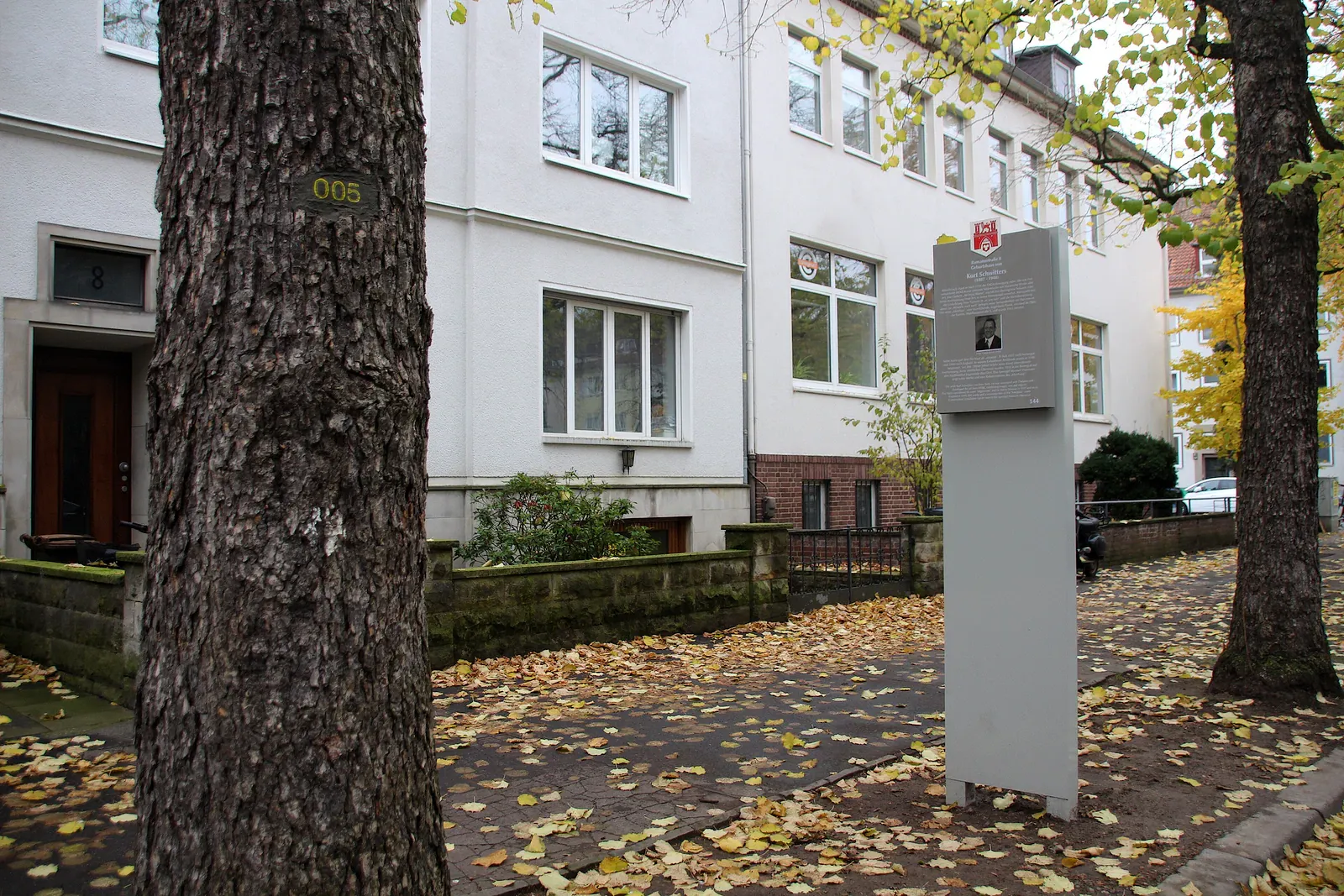
The best-known early sound poem came from Kurt Schwitters. In 1921 he heard Raoul Hausmann recite “fmsbw” in Prague. Hausmann’s syllables became the principal theme of the first movement of the Ursonate, pronounced “Fumms bo wo taa zaa Uu”, and Schwitters spent 1922 to 1932 composing the work in the form of a sonata. He first performed it on 14 February 1925 at a private home in Potsdam, kept performing it and extending it, and printed his notation in the last issue of the Merz periodical in 1932. He kept developing the piece for at least ten years after.
In 1931 the Chilean poet Vicente Huidobro explored phonetic mutations in the book Altazor.
Paris and tape, 1945-1964
After the Second World War the centre moved to Paris. Isidore Isou arrived in August 1945 and founded Lettrism with Gabriel Pomerand that November, building early work on letters and spoken symbols. Francois Dufrene joined in 1947. The tape recorder arrived in the same years as musique concrete (see musique concrete), and poets saw what it could do to the voice.
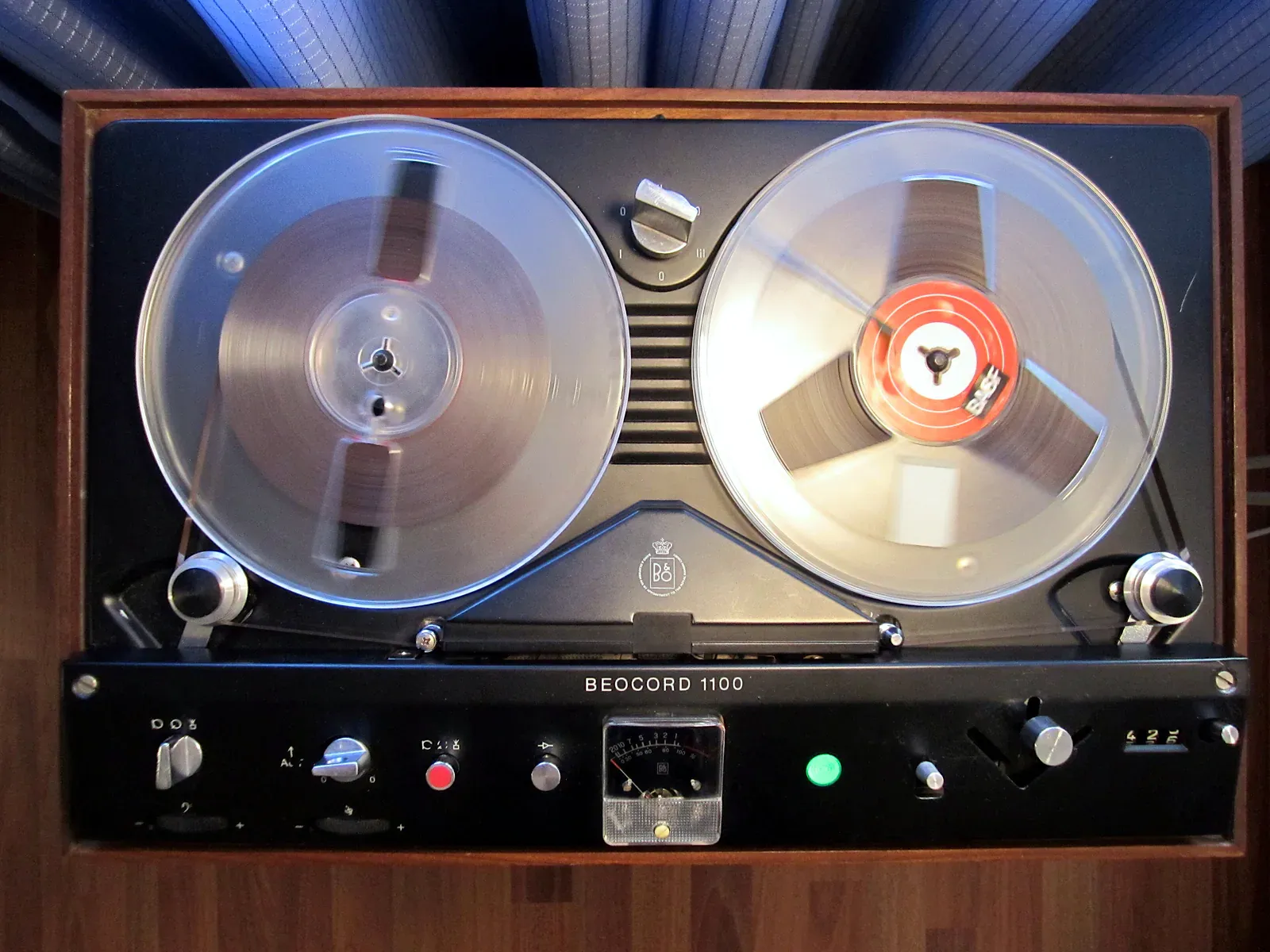
Henri Chopin made that connection the core of his work. Between 1958 and 1974 he published the audio-visual magazines Cinquieme Saison and OU, each with recordings as well as texts and images, gathering Lettrists, Fluxus artists, Brion Gysin, William S. Burroughs and Bernard Heidsieck. Chopin called his approach poesie sonore and kept it deliberately rough: he avoided high-quality studio machines, pushed matchsticks into the erase head of a second-hand recorder and interfered with the tape by hand, exploring the space between distortion and intelligibility. Heidsieck, who also held a senior post at a bank, worked with Beat, Fluxus and minimalist circles.
In Vienna, Ernst Jandl published his first experimental poems in 1952. His “ottos mops” uses only the vowel o, and “schtzngrmm” renders trench warfare through clusters of letters that sound like gunfire. His poems are better heard than read.
London and Stockholm, 1963-1985
In London, Bob Cobbing ran the bookshop Better Books, a hub of the 1960s underground, and in 1963 started the Writers Forum press, which went on to publish more than 1,000 titles by 2002. It issued work by John Cage, Allen Ginsberg and Ian Hamilton Finlay alongside younger British poets. He also performed in groups such as abAna, a trio with Paul Burwell and David Toop. In 1980 he and Chopin appeared together on Miniatures, a compilation of fifty-one one-minute pieces produced by Morgan Fisher.
In Stockholm the artist-run society Fylkingen, founded in 1933, added text-sound compositions to its concerts in the 1960s. Swedish composers such as Ake Hodell, Lars-Gunnar Bodin and Sten Hanson worked there, and Fylkingen Records began in 1966. Chopin also performed there. The term text-sound composition spread to the United States, where an anthology, 10+2: 12 American Text Sound Pieces, appeared in 1975. Katalin Ladik released the EP Phonopoetica in Hungary in 1976, and Lily Greenham, born in Vienna in 1924 and trained as an opera singer, developed what she called lingual music from tape recordings of her own voice.
Contemporary performers
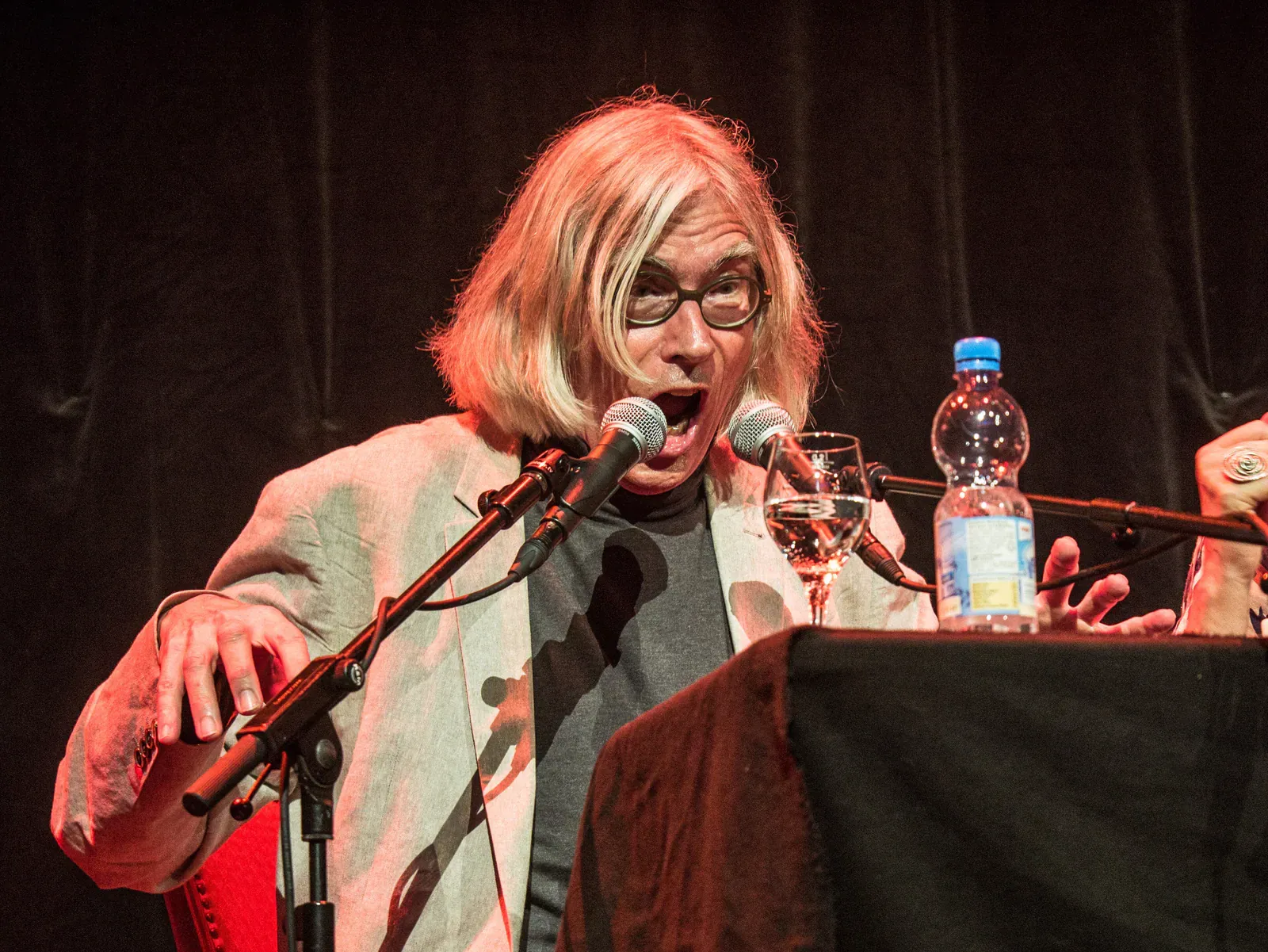
Jaap Blonk first heard the Ursonate in 1979, memorised it and has recited it hundreds of times in public places. His own pieces use phonemes, clicks and hisses, and his performances rely on humour and improvisation. He works solo and with improvisers such as Mats Gustafsson. In New York, Tracie Morris began presenting sound poetry in the mid-1990s, and her work reached the Whitney Biennial in 2002. Greenham’s Lingual Music appeared posthumously as a double CD in 2007.
Characteristics
Sound poems rest on a few devices: syllables without dictionary meaning, repeated phoneme cells that grow into themes, several voices speaking at once, and strict constraints such as a single vowel. Many scores are visual: Cobbing used marked sheets as jumping-off points for improvisation. The performer’s body, from breath to the shape of the mouth, is part of the material.
Instruments and production
The voice does the work. Microphones and tape recorders come next, used as creative tools rather than only for recording. Printing mattered too: Cobbing used a photocopier for the Processual pamphlets of 1982 to 1985.
Mainstream success
Sound poetry never had a mass audience. It travelled through small presses, recorded magazines, festivals and galleries, and by 1979 the museum world had started to take notice of sound-based art generally (see sound art). Its techniques passed into the Beat Generation of the 1950s and the spoken word movement of the 1980s. The nearest crossover was Laurie Anderson’s single O Superman in 1981, built on a processed voice and repeated syllables.
Notable recordings
The Ursonate remains the reference work. Performers such as Blonk have recorded and staged it for decades. Chopin’s Audiopoems (1971) collects tape-treated voice works made with basic equipment. Meredith Monk’s Dolmen Music, released on ECM in 1981, is a wordless vocal composition that sits beside the form without belonging to it, and it points to how far the idea of voice as instrument has travelled into contemporary classical music.
Culture
The scene works through print and archives as much as concerts: Greenham’s papers, for instance, are held at Goldsmiths, University of London. A Sound Poetry Mix Tape, published online in 2021, collects excerpts by over thirty women sound poets.
Legacy
Sound poetry gave later experimental voice work a vocabulary: speech as musical material. Concrete and visual poetry grew from it, and its methods feed text-sound art, performance and electroacoustic composition. Chopin’s magazines and Cobbing’s press showed that a poem could circulate as sound or as an object.
Misconceptions
Sound poetry is often described as random noise, but its pieces are usually structured. The Ursonate takes the shape of a sonata with a rondo theme, and Jandl’s “ottos mops” follows a strict vowel rule.
It is also said to have begun with Dada. Dada gave it names and a stage, but Morgenstern’s invented-word poem predates it by eleven years and Marinetti’s sound text by two.
A third belief is that it can be read silently. By definition, sound poetry is intended primarily for performance, and Jandl’s poems are known to be better heard than read.
Frequently asked questions
What is sound poetry?
Sound poetry is poetry in which the sounds of speech matter more than meaning or grammar. It is made to be performed, with the voice as the main instrument, and sometimes with tape or electronics.
Who invented sound poetry?
No single person did. Marinetti’s Zang Tumb Tumb in 1914 and Hugo Ball’s “verse without words” at Cabaret Voltaire in 1916 are the usual starting points, and Kurt Schwitters’s Ursonate made the form large-scale.
What is the Ursonate?
The Ursonate, or Primeval Sonata, is a sound poem Kurt Schwitters composed between 1922 and 1932 and first performed in 1925. It is built from invented syllables, and its first movement uses a theme from a poem by Raoul Hausmann.
How does sound poetry differ from concrete poetry?
Sound poetry is shaped for the ear, while concrete and visual poetry are shaped for the eye. The two overlap, and many poets, including Chopin and Cobbing, worked in both.
Sound
Sound sheet
Signature sounds
- Invented syllables without dictionary meaning
- The voice as the only instrument
- Repeated phoneme cells that grow into themes
- A written score or visual text as a performance guide
Techniques
- Nonsense syllables
- Simultaneous voices
- Tape treatment
- Single-vowel texts
- Onomatopoeia
Tuning
Unpitched speech, with no fixed tuning or key
Vocals
Solo or group speech, shouted, whispered or chanted, using phonemes, clicks, hisses and breath as material.
Scenes
Where it happened
Where and when the sound lived: one bar per city on a shared timeline.
Europe
North America
Active scenes
Peak 5, 1966-2025
Cabaret Voltaire and Galerie Dada, where Ball and the Dadaists first perform sound poems and simultaneous poems.
From the Baroness's Dada sound poems to Tracie Morris and the American text-sound anthologies.
Jandl publishes his first experimental poems in 1952; Lily Greenham works with the Vienna Group in the 1950s.
Lettrism, Dufrene's and Heidsieck's tape poems and Chopin's recorded magazines.
Cobbing's Writers Forum, Better Books and later Chopin's British base.
Fylkingen hosts text-sound compositions and releases records from 1966.
Venues and places
Zurich, 1916 to 1916. Back room at Spiegelgasse 1 where Ball staged the first sound poems; reopened as a cultural space in 2004.
Zurich, 1917 to 1917. Bahnhofstrasse 19, the Dadaists' next base after the cabaret closed.
Stockholm, 1933 to today. World's oldest artist-run new-music scene; text-sound compositions were presented there in the 1960s.
Culture
Culture markers
- Recital from memory
Performers such as Blonk memorise the Ursonate and recite sections in public places.
Ritual - Typewriter poems
Chopin's dactylopoemes turn the typewriter into a drawing tool and sit in major collections.
Artwork - Score as visual text
Cobbing's marked sheets work as notations, jumping-off points for performance.
Artwork
Media
Key media
- 1958Cinquieme Saison / OU
by Henri Chopin. Audio-visual magazines with a record in every issue, gathering Lettrists, Fluxus artists and Beat writers.
Zine - 197510+2: 12 American Text Sound Pieces
by Various. American anthology of text-sound compositions.
Compilation - 1979Poesie Sonore Internationale
by Henri Chopin. Chopin's survey of the international scene.
Book - 1980Miniatures: a sequence of fifty-one tiny masterpieces
by Various. Fifty-one one-minute tracks by artists and musicians, produced by Morgan Fisher, with Chopin and Cobbing among them.
Compilation - 2021A Sound Poetry Mix Tape
by Various. Online mixtape of excerpts by over thirty women sound poets.
Mix
Glossary
Terms on this page
Dadaist phonetic poem close to the Futurist sound text, invented by Richard Huelsenbeck.
French name for sound poetry, tied to Chopin's tape work.
Poem read by several people at once, in different languages and rhythms; invented by Tristan Tzara.
Spoken poem in German, the term for Jandl's performed poems.
Piece in which spoken text is composed as sound, a name used in Sweden and the United States.
Ball's phrase for poems made of invented syllables, performed at Cabaret Voltaire.
Experimental family