Contemporary classical music
Contemporary classical music is Western art music written since 1945, from serialism and chance to minimalism, spectral music and crossover.
Europe, 1945
Classical family
Born
1945
Europe
Subgenres
11
Documented branches
Links
8
Genres it drew on or shaped
Tempo
70-150 BPMLineage
Family tree
Grew out of
Derived from
Europe, 1945
Contemporary classical music
Led to (11)
Timeline
Era by era
From the first sparks to today. Select a dot to read the story behind it.
- Darmstadt and serial control
1945 to 1959
- Chance, sound mass and early minimalism
1960 to 1975
- Minimalist opera, IRCAM and spectralism
1976 to 1989
- Pluralism and crossover
1990 to 2026
Eras
Moments
- 1 Darmstadt and serial control, 1945 to 1959
- 2 Chance, sound mass and early minimalism, 1960 to 1975
- 3 Minimalist opera, IRCAM and spectralism, 1976 to 1989
- 4 Pluralism and crossover, 1990 to 2026
1945
Darmstadt and serial control
Pupils of Messiaen, including Boulez and Stockhausen, extended Schoenberg and Webern into total serialism, while the Darmstadt courses and radio studios supplied a postwar forum.
- 1946Darmstadt summer courses beginThe first postwar forum for new music in Germany starts with lectures and concerts, later hosting Messiaen, Cage and Stockhausen.
- 1952Cage's 4'33" premieresA score telling performers not to play was met with shock and led musicologists to question the definition of music.
- 1955Boulez's Le Marteau sans maitre premieresA chamber cantata for contralto and six instrumentalists on poems by Rene Char becomes a landmark of serial writing.
- 1955Xenakis's Metastaseis at DonaueschingenAn orchestral work for 61 musicians built from sliding glissandi, with no two players on the same part.
- 1958Stockhausen's Gruppen premieres in CologneThree orchestras under Stockhausen, Maderna and Boulez play spatially distributed groups of sound.
1960
Chance, sound mass and early minimalism
Composers gave up control through indeterminacy, built dense textures such as Atmosphères, and in New York Young, Riley, Reich and Glass turned to repetition and process.
- 1961Ligeti's Atmospheres premieresPremiered at Donaueschingen on 22 October, a dense micropolyphonic texture without melody or metre made Ligeti a talking point.
- 1964Riley writes In CA score of 53 melodic fragments repeated by any number of players becomes a seminal minimalist work.
- 1968In C recorded for ColumbiaThe first recording of In C is later added to the US National Recording Registry.
- 1968Kubrick uses Ligeti in 2001Atmospheres and other Ligeti scores soundtrack the deep-space scenes and bring his music to a wide audience.
1976
Minimalist opera, IRCAM and spectralism
Einstein on the Beach and Music for 18 Musicians reached wide audiences, IRCAM opened in Paris, and Pärt's tintinnabuli and spectral writing offered alternatives to serialism.
- 1976Einstein on the Beach premieres in AvignonGlass's first and longest opera, staged by Robert Wilson, runs about five hours with the audience free to come and go.
- 1976Reich's Music for 18 Musicians premieresEleven sections, each based on one chord, first played at New York's Town Hall on 24 April after a 1975 trial at The Kitchen.
- 1977IRCAM opens in ParisPierre Boulez heads the research institute for music and sound, which grew into a centre for computer music and spectral ideas.
- 1977Tabula Rasa premieres in TallinnPart's double concerto, in his tintinnabuli style, is received as a major success.
- 1984ECM releases Part's Tabula RasaThe album starts Part's long work with Manfred Eicher and the ECM New Series.
- 1987Bang on a Can founded in New YorkJulia Wolfe, David Lang and Michael Gordon start a collective for new concert music.
1990
Pluralism and crossover
Górecki's chart-topping Symphony No. 3, collectives like Bang on a Can and remixes of Reich show a field of many styles, labels and audiences.
- 1992Gorecki's Symphony No. 3 tops classical chartsA London Sinfonietta recording on Nonesuch tops classical charts in Britain and the US and sells over a million copies.
Listening path
Start listening
A short path from an easy way in to the deep end. Thumbnails come from YouTube; the player loads only when you press play.
- 01
Philip Glass, 1981
An easy way in: repeating piano figures from the studio-sized Glassworks that carried minimalism to pop listeners.
- 02
Arvo Part, 1978
Slow tintinnabuli writing: slow piano triads under a long cello line.
- 03
Steve Reich, 1976
The pulsing opening of the eleven-chord piece that moved minimalism into the concert hall.
- 04
Gyorgy Ligeti, 1961
Dense sound texture without melody or metre, the deep-space sound of 2001: A Space Odyssey.
Facts
| Family | Classical |
| Origin | Europe |
| Emerged | 1945 onward |
| Status | Active |
| Tempo | 70 to 150 BPM |
| Meter | varies |
| Grew out of | 20th-century classical music |
| Subgenres | 11 |
Contemporary classical music is Western art music composed since the middle of the twentieth century, usually dated from 1945. It began in Europe and the United States and covers high-modernist serialism, chance and experimental music, minimalism, spectral music and later postmodern styles.
Its defining traits are plurality, support from festivals, ensembles and academies, and the use of both notated scores and electronic resources. It descends from 20th-century classical music and belongs to the classical family.
Origins
The post-1945 field grew from earlier modernism. Early in the twentieth century composers moved toward atonal works, and after the First World War some turned back to neoclassical balance. After the Second World War the modernists sought tighter control through twelve-tone technique and then total serialism, while others explored indeterminacy. Technology added tape and electronic sound, and experiments with tape loops and repetitive textures fed into minimalism.
The summer courses at Darmstadt, founded in 1946, became the first forum for new music in postwar Germany. They opened with premieres of works by Schoenberg, Webern, Stravinsky and Bartok that Germany had not heard, and later hosted Messiaen and Cage. The Donaueschingen festival, founded in 1921 and the oldest of its kind, premiered many works of the new generation. European and American traditions drifted apart: Boulez, Nono and Stockhausen led in Europe, while Babbitt, Cage, Glass, Reich and others formed their own ideas in the United States.
Darmstadt and serial control, 1945-1959
Boulez and Stockhausen were both pupils of Olivier Messiaen. They took the work of Schoenberg and Webern as a starting point and extended the series beyond pitch to duration, dynamics and register, a method called integral or total serialism. Boulez’s Le Marteau sans maitre, premiered in 1955, set surrealist poems by Rene Char for a contralto and six instrumentalists and became one of his most acclaimed works.
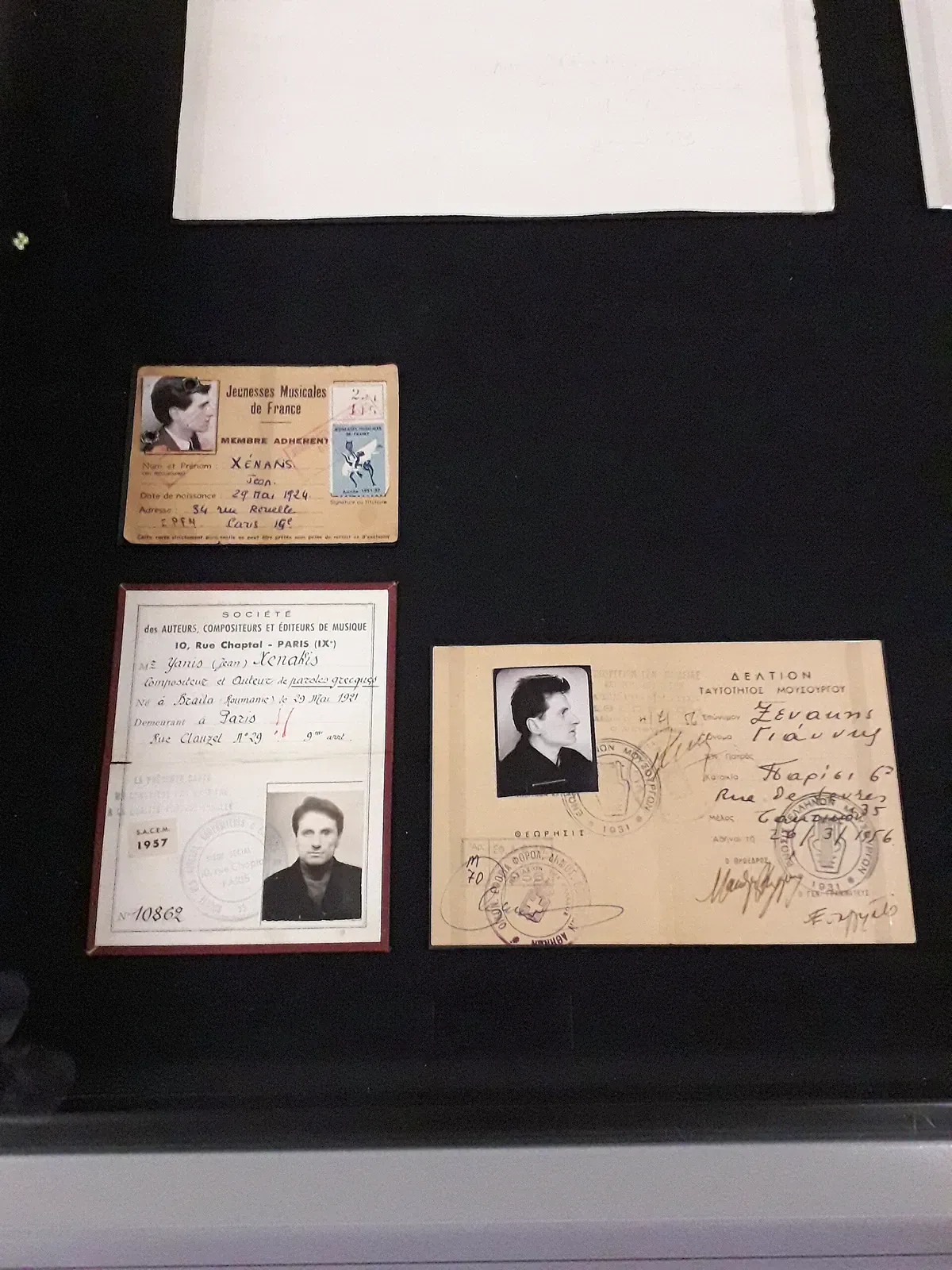
The same year Iannis Xenakis, a Romanian-born Greek who had also studied with Messiaen, saw Metastaseis premiered at Donaueschingen. It is written for 61 players, none of whom share a part, and its strings slide through glissandi at different times so the ear hears a moving mass. Stockhausen’s Gruppen, premiered in Cologne in 1958, divided an orchestra into three groups under three conductors, Stockhausen, Bruno Maderna and Boulez.
Chance, sound mass and early minimalism, 1960-1975
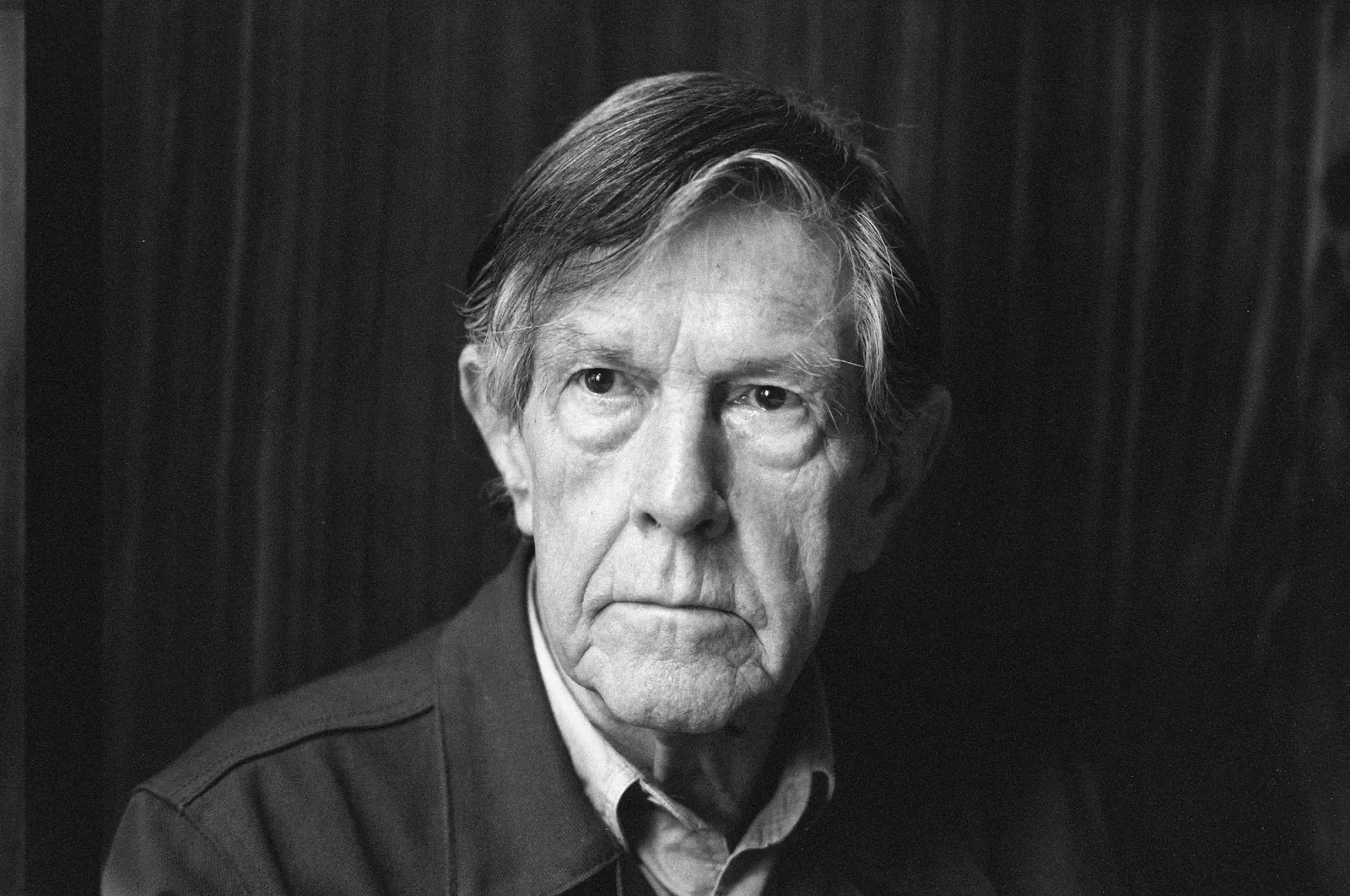
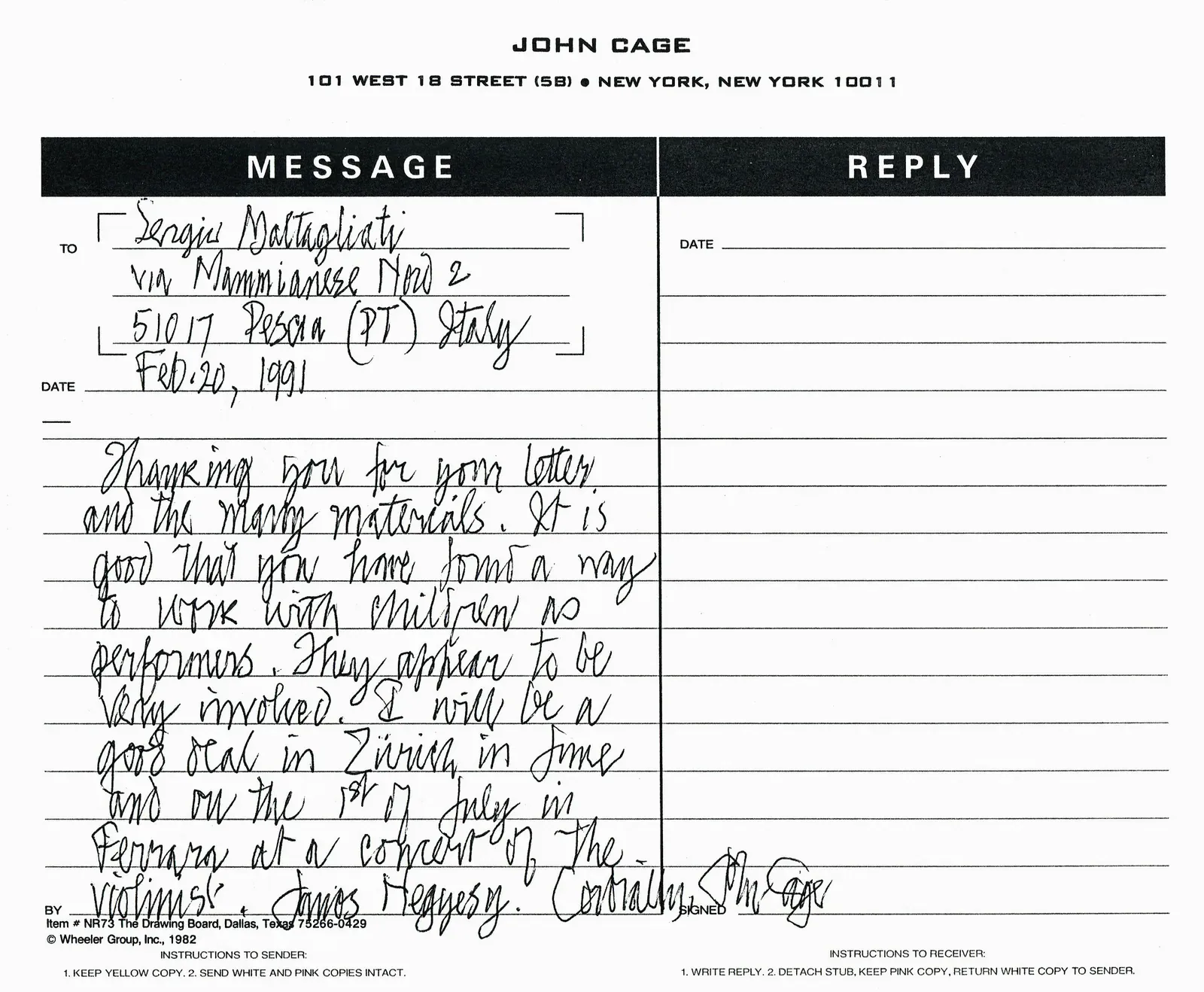
Serial control had an opposite. John Cage used chance procedures and open scores, and in 1952 his 4’33” asked performers to play nothing so that the sounds of the room became the music. It met shock and controversy, and many musicologists revisited what music could be.
In 1961 Gyorgy Ligeti’s Atmospheres, premiered at Donaueschingen under Hans Rosbaud, gave up melody and metre for a dense micropolyphonic texture and made him a talking point. When Stanley Kubrick used it for the deep-space scenes of 2001: A Space Odyssey in 1968, the sound reached a mass audience.
In New York a different reaction was forming. La Monte Young, Terry Riley, Steve Reich and Philip Glass worked with limited materials, and the term minimal music was first applied by Michael Nyman in 1968. Riley’s In C of 1964 tells any number of players to repeat 53 melodic fragments, and a 1968 Columbia recording of it was later added to the US National Recording Registry. Early Glass and Reich works were written for their own small ensembles, built around organs, winds and voices in Glass’s case and mallet percussion in Reich’s, and were often presented in galleries and museums beside visual minimalists.
Minimalist opera, IRCAM and spectralism, 1976-1989
Two works of 1976 carried minimalism to wide audiences. Glass’s Einstein on the Beach, staged by Robert Wilson in Avignon, is an opera in four acts of about five hours with no narrative, and the audience may come and go. Reich’s Music for 18 Musicians, built in eleven sections each based on one chord, was premiered at New York’s Town Hall on 24 April after a trial at The Kitchen the year before.
In Paris, Pierre Boulez was asked in 1970 to found a music research institution. IRCAM opened in 1977 beneath the Place Igor-Stravinsky, linked to the Centre Pompidou, and became a centre for computer music and the analysis and synthesis of sound. Around it grew spectral music, which took the overtone structure of sound as its basis. Gerard Grisey and Tristan Murail led the Paris group, while a German group around Stockhausen’s pupils worked in parallel. Spectralism emerged in the early 1970s partly as a reaction against the pitch-focused thinking of serialism.
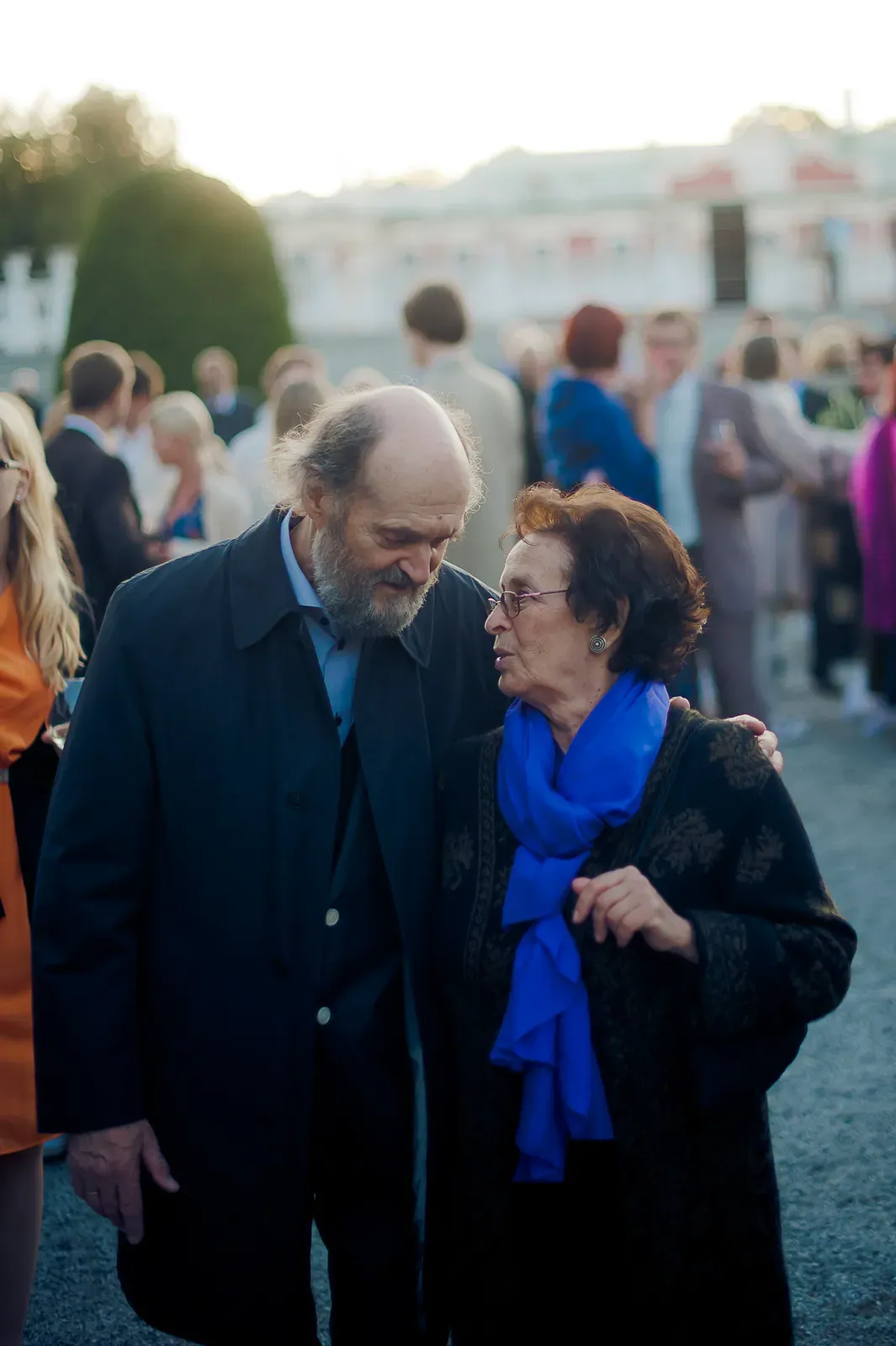
Meanwhile Arvo Pärt in Estonia built a new technique, tintinnabuli, in a minimalist style partly inspired by Gregorian chant. His Tabula Rasa premiered in Tallinn in 1977 to a major success. In 1984 ECM released a recording under that title and began a long partnership with the producer Manfred Eicher.
Pluralism and crossover, 1990 onward
Techniques once tied to schools spread: spectral methods were adopted in Britain, Finland and the United States, and New Simplicity, New Complexity and ambient crossovers appeared alongside. In 1987 Julia Wolfe, David Lang and Michael Gordon founded Bang on a Can in New York as a vehicle for new concert music.
The biggest popular surprise came in 1992, when a recording of Henryk Gorecki’s Symphony No. 3, written in 1976, topped the classical charts in Britain and the United States for Nonesuch. The London Sinfonietta performance sold more than a million copies, a figure far beyond a typical symphonic recording by a twentieth-century composer.
Characteristics
The field has no single sound. Serial music keeps pitch rows and complex rhythms. Experimental music hands control to chance, silence or open instructions. Minimalism repeats short figures that change slowly, and spectral music lets overtones and timbre shape the form. Gorecki’s Symphony No. 3, for solo soprano, has been described as austerely plaintive and steeped in medieval modes, so tonal and modal languages sit beside the dissonant ones.
Meter varies as much: pulse-based minimalism keeps a steady beat, while the sound-mass works of Xenakis and Ligeti have none a listener can count.
Instruments and production
The standard orchestra remains, but composers rearranged it: Xenakis gave each of 61 players an individual part, and Stockhausen split an orchestra into three. Cage’s prepared piano placed objects between the strings, early Glass and Reich ensembles amplified keyboards, winds and mallet percussion, and John Adams returned to the full orchestra.
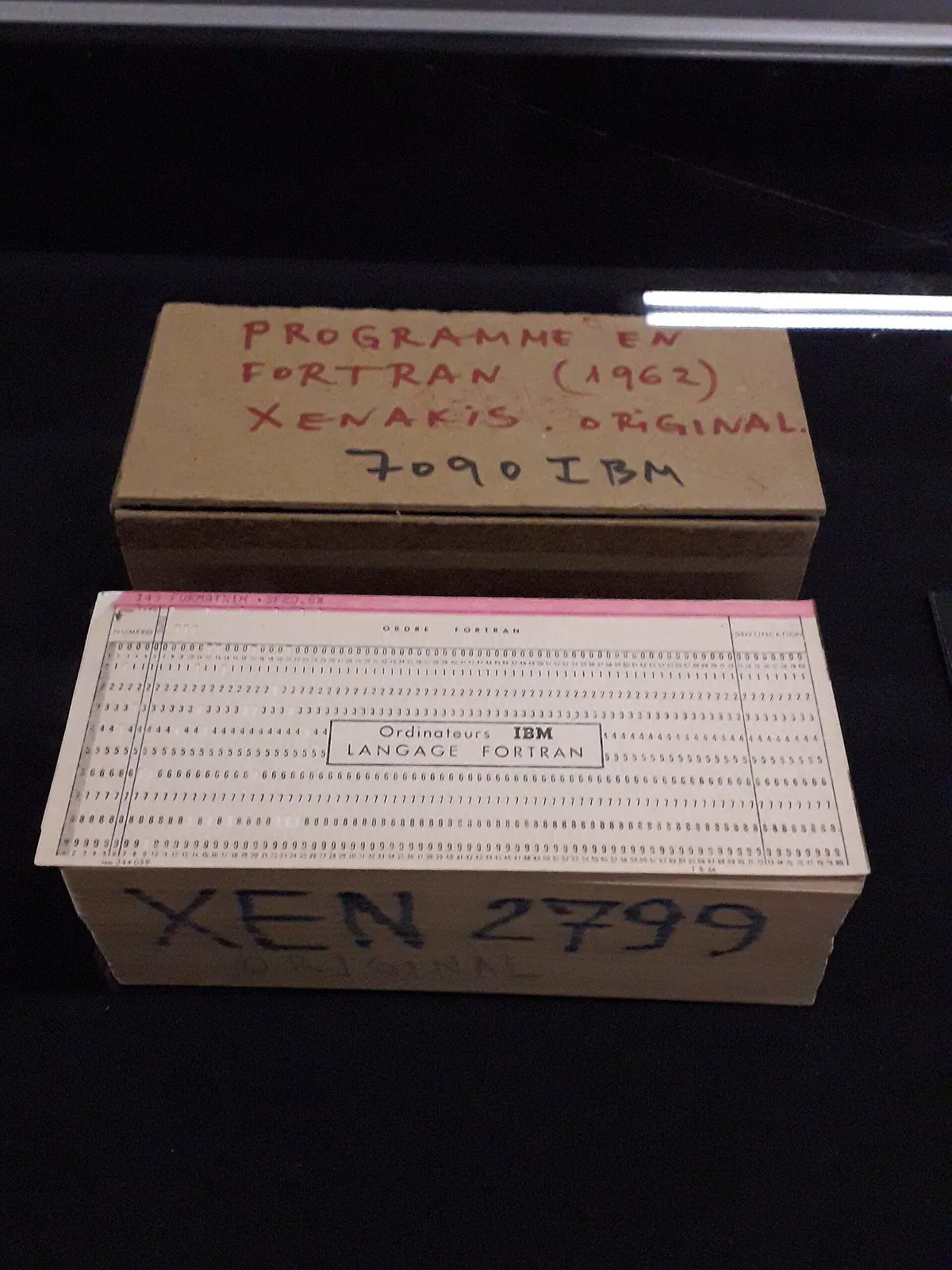
Tape studios fed Stockhausen’s generation, and IRCAM’s computers supported spectral analysis and synthesis.
Notable recordings
Atmospheres reached a wide public through a film. Its 1961 premiere was recorded by the Southwest German Radio for broadcast, and Kubrick later used a recording conducted by Ernest Bour in 2001. Ligeti said that after this piece and Apparitions he became famous.
In C was recorded for Columbia in 1968 and has inspired composers including Glass and Reich as well as pop and rock musicians. Tabula Rasa, in two movements, Ludus and Silentium, is a double concerto for two violins, prepared piano and chamber orchestra. After the 1984 ECM release, Silentium was played to patients in palliative care, and one dying patient asked for the angel music.
Mainstream success
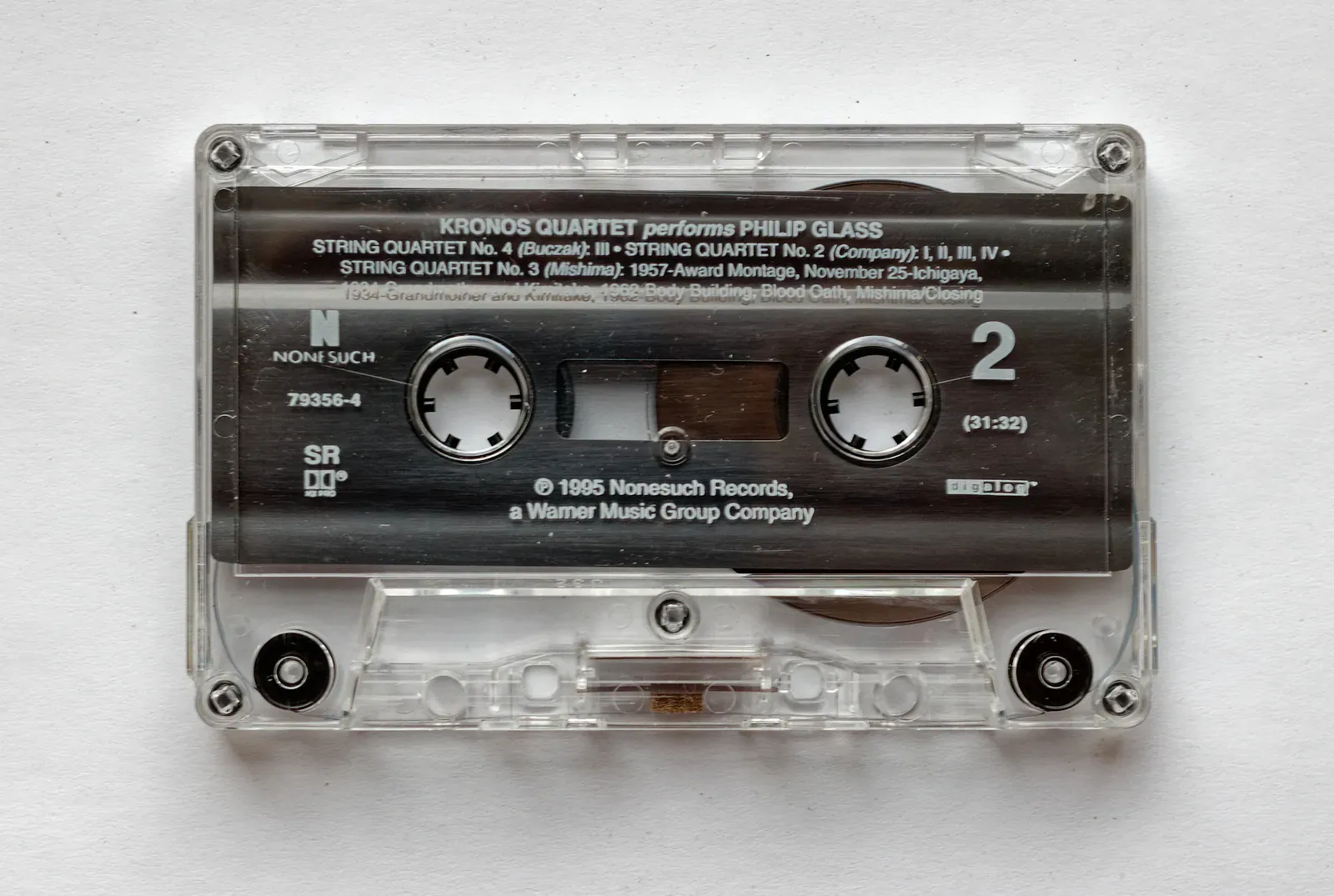
Few works reached the charts. Glass’s Glassworks of 1982 was a set of short studio pieces in an accessible style, and Górecki’s Symphony No. 3 remains the clearest crossover, while Ligeti’s film exposure and Pärt’s use in hospices took the music beyond concert halls. Labels were central: Nonesuch and ECM carried Reich, Glass, Gorecki and Pärt, and Deutsche Grammophon kept Stockhausen and Ligeti recordings available.
Culture
Festivals and summer courses form the scene’s yearly rhythm, from Darmstadt and Donaueschingen to Warsaw Autumn and Huddersfield. Visual art was never far away: Reich and Glass drew early support from galleries and museums, and Einstein on the Beach used Robert Wilson’s storyboards in place of a plot.
Legacy
The field changed what counts as music. Cage’s indeterminacy, Ligeti’s textures and the repetition of Riley, Reich and Glass reached film scores, ambient music and rock, and Górecki showed that a slow, modal work could sell like a pop record.
Misconceptions
One myth is that all of it is atonal and harsh. Serial music is, but minimalism, tintinnabuli and Górecki’s symphony use simple triads and modes. A second myth says Cage’s 4’33” is silence. The score tells performers not to play, but the ambient sound of the room is meant to be the piece. A third treats contemporary classical as the same thing as 20th-century classical music. The term usually means the post-1945 work that followed Webern, while the earlier century belongs to modernism and neoclassicism.
Frequently asked questions
What is contemporary classical music?
Contemporary classical music is Western art music composed close to the present, usually since 1945. It includes serial, electronic, experimental, minimalist and spectral music.
Who are the main contemporary classical composers?
Early figures include Boulez, Stockhausen, Cage, Xenakis and Ligeti. Minimalism brought Young, Riley, Reich and Glass, and Pärt and Górecki are known for modal, slow works.
What is the difference between minimalism and serialism?
Serialism orders pitches and other elements into controlled series. Minimalism uses limited materials such as repeated short figures that change slowly.
Where is new music performed?
Festivals such as Donaueschingen, Darmstadt, Warsaw Autumn and Huddersfield premiere new works, and New York organisations like Bang on a Can run marathon concerts.
Sound
Sound sheet
Signature sounds
- Repeated short figures that change slowly (minimalism)
- Sound masses of many separately moving string parts
- Overtone-based harmony and slowly unfolding processes (spectral)
- Scores that use chance, silence or open instructions
Techniques
- Total serialism
- Chance and indeterminacy
- Repetition and gradual process
- Sound-mass glissandi
- Spectral analysis
Keys and modes
Twelve-tone rows. Serial composers order all twelve pitches into series that shape melody and harmony.
Modal and triadic centres. Minimalist and tintinnabuli works often sit on simple modes or triads, as in Gorecki's medieval-modal Symphony No. 3.
Tuning
Mostly twelve-tone equal temperament, with some spectral works built on the overtone series
Vocals
Soloists and choirs appear in notated works, such as the soprano in Gorecki's Symphony No. 3 and the contralto in Le Marteau sans maitre.
Scenes
Where it happened
Where and when the sound lived: one bar per city on a shared timeline.
Europe
North America
Active scenes
Peak 4, 1970-2025
Summer courses and concerts that became the leading forum for postwar composition.
Stockhausen's base, where the radio orchestra premiered Gruppen in 1958.
Home of IRCAM and of the spectral composers Grisey and Murail.
Where Cage, Reich and Glass, and later Bang on a Can, built the American experimental and minimalist scene.
Venues and places
Donaueschingen, 1921 to today. The oldest festival for contemporary music, where Metastaseis and Atmospheres premiered.
Darmstadt, 1946 to today. Lectures, classes and concerts for international new music, run by the Internationales Musikinstitut.
Paris, 1977 to today. Underground research institute beside the Centre Pompidou for computer music and acoustics.
Culture
Culture markers
- New-music festivals and summer courses
Donaueschingen, Darmstadt and similar events premiere works and train composers each year.
Ritual - Gallery and museum presentation
Early Reich and Glass works drew sponsorship from galleries and museums alongside visual minimalists.
Artwork - Staged opera as visual theatre
Einstein on the Beach used Robert Wilson's storyboards instead of a narrative.
Artwork - Silence as performance
4'33" asks the audience to hear ambient sound as the piece.
Ritual
Media
Key media
- 19682001: A Space Odyssey
by Stanley Kubrick. Used Ligeti's music for the monolith and deep-space scenes, exposing it to a mass audience.
Film - 1974Experimental Music: Cage and Beyond
by Michael Nyman. Expanded the definition of minimal music and framed the experimental tradition.
Book - 1997Reich Remixed
by Various. A Nonesuch remix album released alongside the new Music for 18 Musicians recording.
Compilation
Glossary
Terms on this page
Giving up control of the result through chance procedures or open scores, as in Cage's work.
Music made with limited materials, such as repeated short figures and slowly changing processes.
Composition with series of pitches, and in integral serialism also durations, dynamics and register.
A texture where many players each slide through different pitches, so the ear hears a moving cloud.
Music that uses the acoustic properties and overtone structure of sound as its basis.
Arvo Part's compositional technique, in a minimalist style inspired in part by Gregorian chant.
Classical family