Outsider Music
Outsider music is made by self-taught or naive musicians outside trained technique, named by Irwin Chusid in 1996 and known for eccentric home recordings.
United States, 1996
Experimental family

Born
1996
United States
Links
1
Genres it drew on or shaped
Tempo
100-170 BPMLineage
Family tree
Timeline
Era by era
From the first sparks to today. Select a dot to read the story behind it.
- Isolated eccentrics
1900 to 1959
- Street singers and private pressings
1960 to 1979
- Cassettes and college radio
1980 to 1995
- A named genre
1996 to today
Eras
Moments
- 1 Isolated eccentrics, 1900 to 1959
- 2 Street singers and private pressings, 1960 to 1979
- 3 Cassettes and college radio, 1980 to 1995
- 4 A named genre, 1996 to today
around 1900
Isolated eccentrics
Amateur singers and street composers such as Florence Foster Jenkins and Moondog drew audiences with work that fitted no trade, years before a name for it existed.
- 1944Florence Foster Jenkins at Carnegie HallThe amateur soprano sells out Carnegie Hall in October, a famous case of poor technique drawing a devoted public.
- 1949Moondog's first recordsStreet composer Louis Hardin, called Moondog, issues his first singles, including Snaketime Rhythms.
1960
Street singers and private pressings
Wild Man Fischer, Tiny Tim and the Shaggs reached vinyl in 1968-69, while Jandek began his private Corwood Industries catalogue in 1978.
- 1968An Evening with Wild Man FischerFrank Zappa's Bizarre label releases street singer Larry Fischer's a cappella songs as a double album.
- 1968Tiny Tim's Tip-Toe Thru' the TulipsTiny Tim's falsetto and ukulele reading becomes a Reprise hit after Laugh-In appearances.
- 1969Philosophy of the WorldThe Shaggs record their only album in Massachusetts, pressed in a run of about a thousand copies.
- 1978Jandek's Ready for the HouseA first album from an unnamed Houston artist arrives from the self-run Corwood Industries.
1980
Cassettes and college radio
Home tape dubs, college radio and fanzines carried Daniel Johnston and Wesley Willis to listeners, and Kurt Cobain's endorsements pushed them into the alternative mainstream.
- 1980The Shaggs reissuedA reissue on NRBQ's Red Rooster label brings national coverage and a cult following.
- 1983Hi, How Are YouDaniel Johnston's cassette, recorded at home in Texas, carries a frog drawing that later became a T-shirt.
- 1992Cobain wears the Johnston shirtKurt Cobain is photographed in a Hi, How Are You T-shirt, sending alternative-rock fans to Johnston's tapes.
- 1995Wesley Willis's Greatest HitsWillis's Chicago releases include Rock n Roll McDonald's and spread through record stores and fans of punk.
1996
A named genre
Irwin Chusid's 1996 article and 2000 book gave the field a label, a canon and a compilation series, while documentaries on Jandek, Johnston and Fischer followed.
- 1996Chusid coins outsider musicJournalist and WFMU host Irwin Chusid adapts the art term in a Pulse! magazine article.
- 2000Songs in the Key of ZChusid's book and companion compilation set out a canon of outsider musicians.
- 2003Wesley Willis diesWillis dies of leukemia in Illinois on 21 August at age 40.
- 2004Jandek's first concertThe reclusive artist plays his first public show at the Instal festival in Glasgow on 17 October.
- 2005The Devil and Daniel JohnstonA feature documentary brings Johnston's story and illness to cinemas.
- 2019Daniel Johnston diesJohnston dies in Texas in September, after decades of tributes and cover albums.
Listening path
Start listening
A short path from an easy way in to the deep end. Thumbnails come from YouTube; the player loads only when you press play.
- 01
Tiny Tim, 1968
The biggest hit by an outsider: a falsetto and ukulele reading that sold widely.
- 02
The Shaggs, 1969
Listen for the guitars that drift against a drum part keeping its own time.
- 03
Wild Man Fischer, 1981
A Fischer song that shows his urgent, direct delivery.
- 04
Wesley Willis, 1995
Shouted odes to fast food over a keyboard preset, the best-known Willis song.
Facts
| Family | Experimental |
| Origin | United States |
| Emerged | 1996 (term coined) |
| Status | Active |
| Tempo | 100 to 170 BPM |
| Meter | 4/4, often unstable |
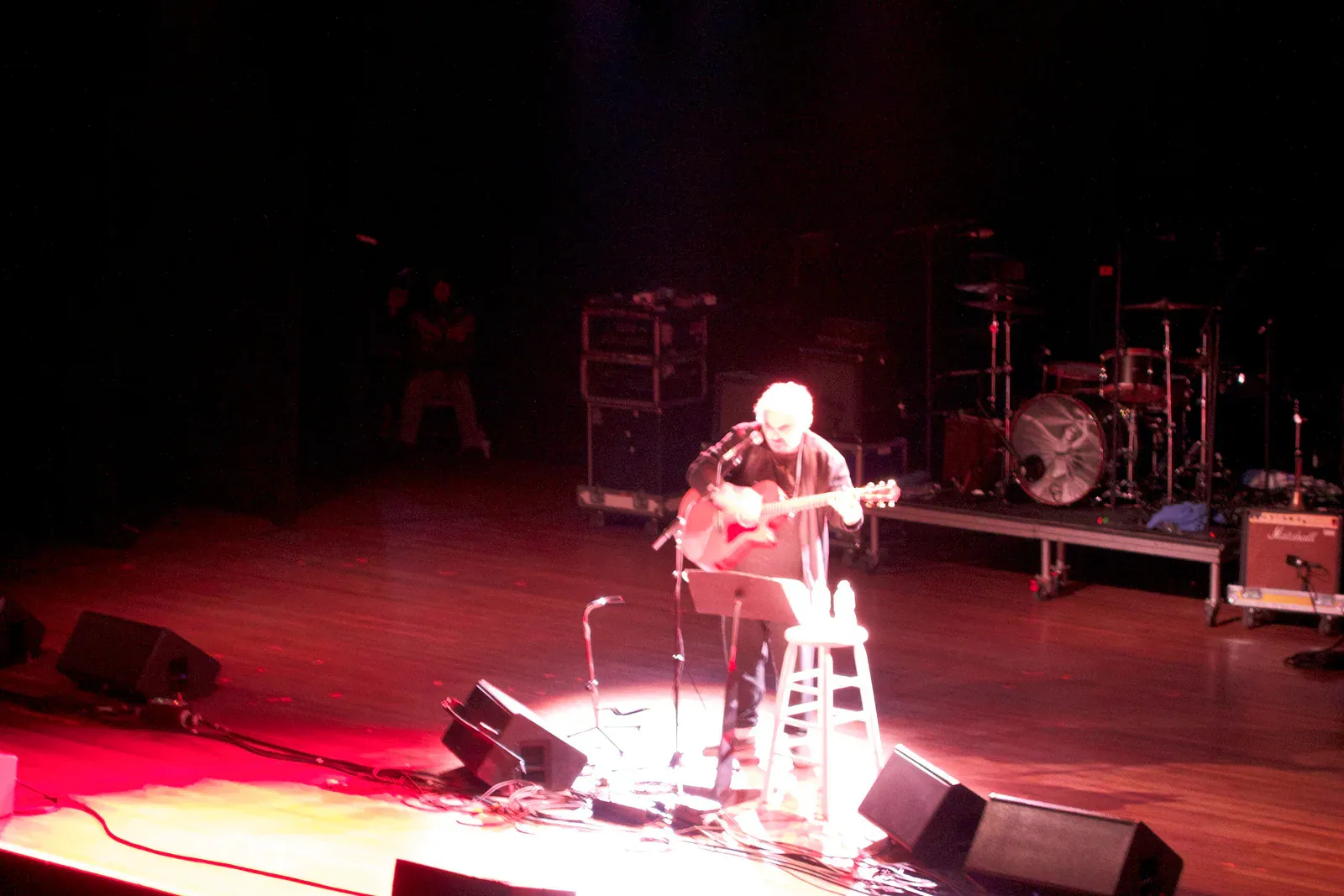
Outsider music is music made by self-taught or naive musicians who work outside conventional training, often with unusual technique, private obsessions and little interest in commercial polish.
The name was adapted from “outsider art” by the American journalist Irwin Chusid in 1996, but the recordings it describes reach back to the 1940s and run through the street singers, home-taping cassette artists and private-press eccentrics of the following decades. It is a loose category defined by how the music was made and received, not by a sound or a scene.
Origins
The term has two roots. “Art Brut”, or raw art, was a French concept of the 1920s for work made outside the trained art world, and “outsider art” became its English equivalent in 1972. The word “outsider” then drifted into music writing: it was applied to jazz as early as 1959 and to rock by 1979, and by the 1980s it was common shorthand for self-taught, untrained or primitive.
Chusid, a DJ at the New Jersey radio station WFMU, carried it across in a 1996 magazine article and then built a canon around it in his 2000 book Songs in the Key of Z, with a companion compilation. His definition was moral as much as musical. Outsiders, he argued, lack self-awareness about their art: they do not break the rules boldly, because they do not know there are rules. He kept out avant-garde composers, world music, camp and novelty records made as a joke, and used the phrase “incorrect music” for work recorded to provoke bad reactions or by people who knew better.
The recordings came well before the name. An amateur soprano, Florence Foster Jenkins, filled Carnegie Hall in October 1944 with a recital that audiences found as gripping as it was inept. In New York, the street composer Louis Hardin, known as Moondog, was releasing his first singles in 1949. Both were treated as curiosities, not as members of a genre.
Street singers and private pressings, 1960-1979
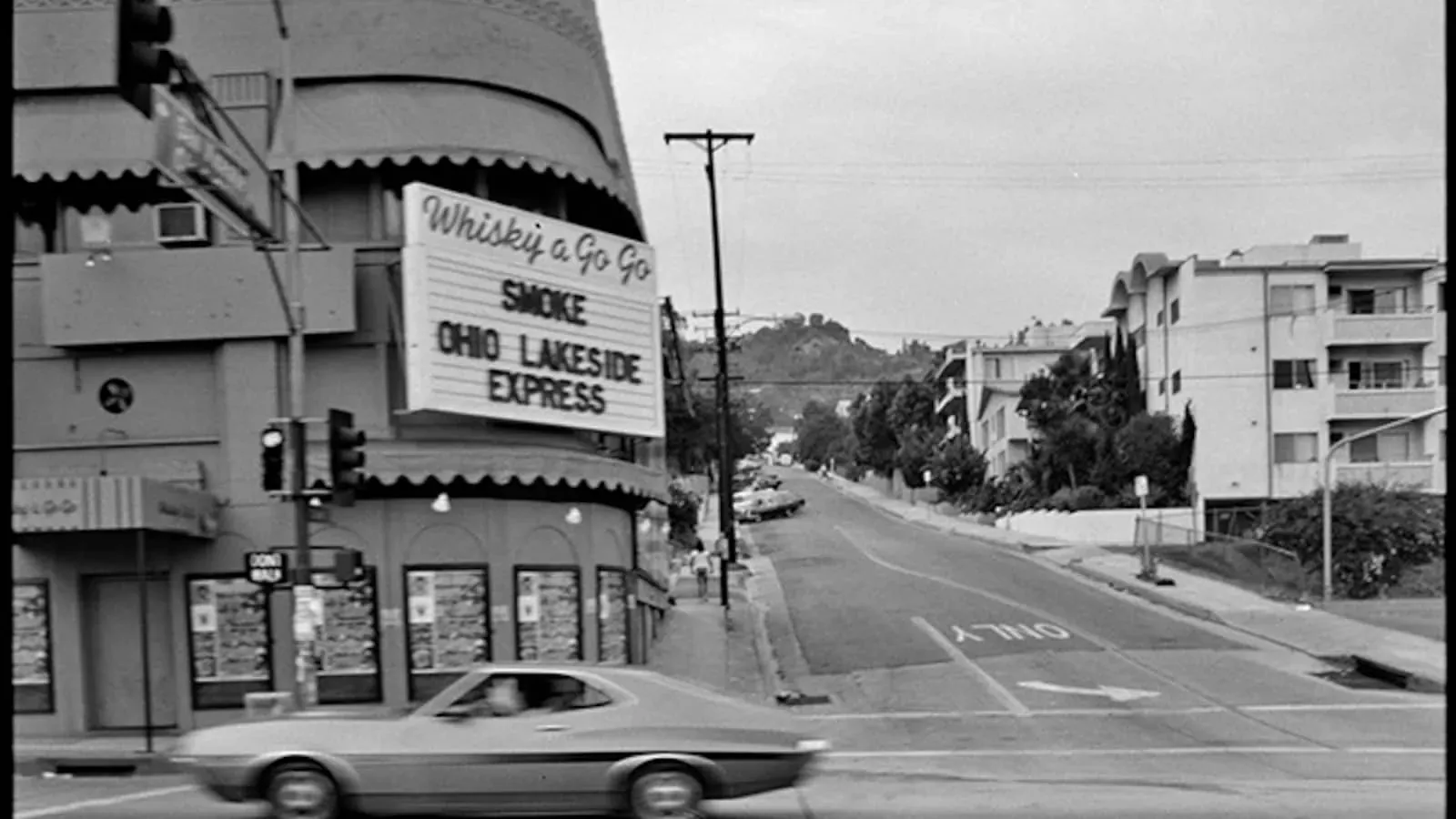
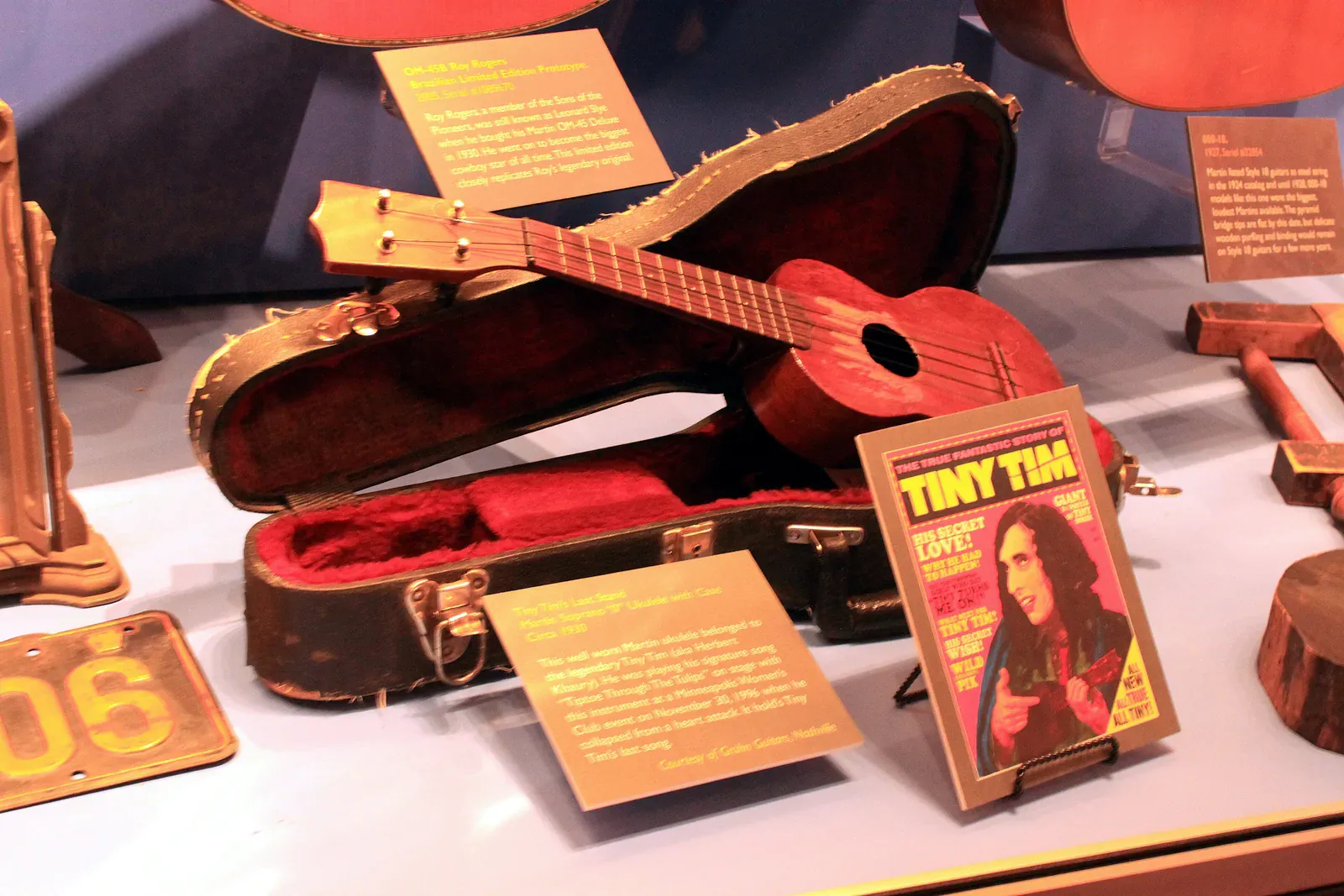
Two 1968 records made outsider music a commercial oddity. Tiny Tim, a falsetto singer with a ukulele, had a hit on Reprise with “Tip-Toe Thru’ the Tulips with Me” after appearing on the television show Laugh-In. The same year, Frank Zappa’s Bizarre label released An Evening with Wild Man Fischer, a double album by Larry Fischer, a Los Angeles street singer who sold unaccompanied songs to passers-by on the Sunset Strip for a dime. Zappa’s liner notes asked buyers to listen several times before deciding, a framing that later writers saw repeated for other mentally ill performers.
The most famous private-press story belongs to the Shaggs. Dot, Betty and Helen Wiggin, later joined by a fourth sister, were pushed into a band by their father, Austin Wiggin, and recorded Philosophy of the World in Massachusetts in 1969. The album, pressed in a small run, carries guitars that drift out of tune, drums that follow their own time and lyrics about pets and family. It sank, and the band stopped in 1975 after their father died.
In 1978 a still-anonymous Houston musician released Ready for the House on a label he ran himself, Corwood Industries. Jandek, as the project is known, has since issued over a hundred albums of atonal folk and blues in a similar manner, rarely granting interviews. His first public concert did not come until 17 October 2004, at a festival in Glasgow.
Cassettes and college radio, 1980-1995
The 1980s moved outsider work onto home tape. The Shaggs were reissued in 1980 on NRBQ’s Red Rooster label, distributed by Rounder, and drew national press, with admirers ranging from Zappa to the writer Lester Bangs. Daniel Johnston, in West Virginia and then Austin, recorded songs alone on cassette, accompanying himself on piano or chord organ, and gave them away. After he took a job at McDonald’s in 1984 he handed tapes across the counter, and the Austin press and MTV’s The Cutting Edge, in 1985, took notice.
Johnston’s illness shaped the story as much as the songs. In 1990 a manic episode in a private plane, piloted by his father, ended in a crash landing and a stay in hospital. Interest rose sharply when Kurt Cobain was photographed in a T-shirt of Johnston’s Hi, How Are You cover. A tribute album by Kathy McCarty in 1994 followed, a bidding war among labels, and a deal with Atlantic after Johnston refused to sign with Elektra because he thought the label’s metal band Metallica was Satanic.
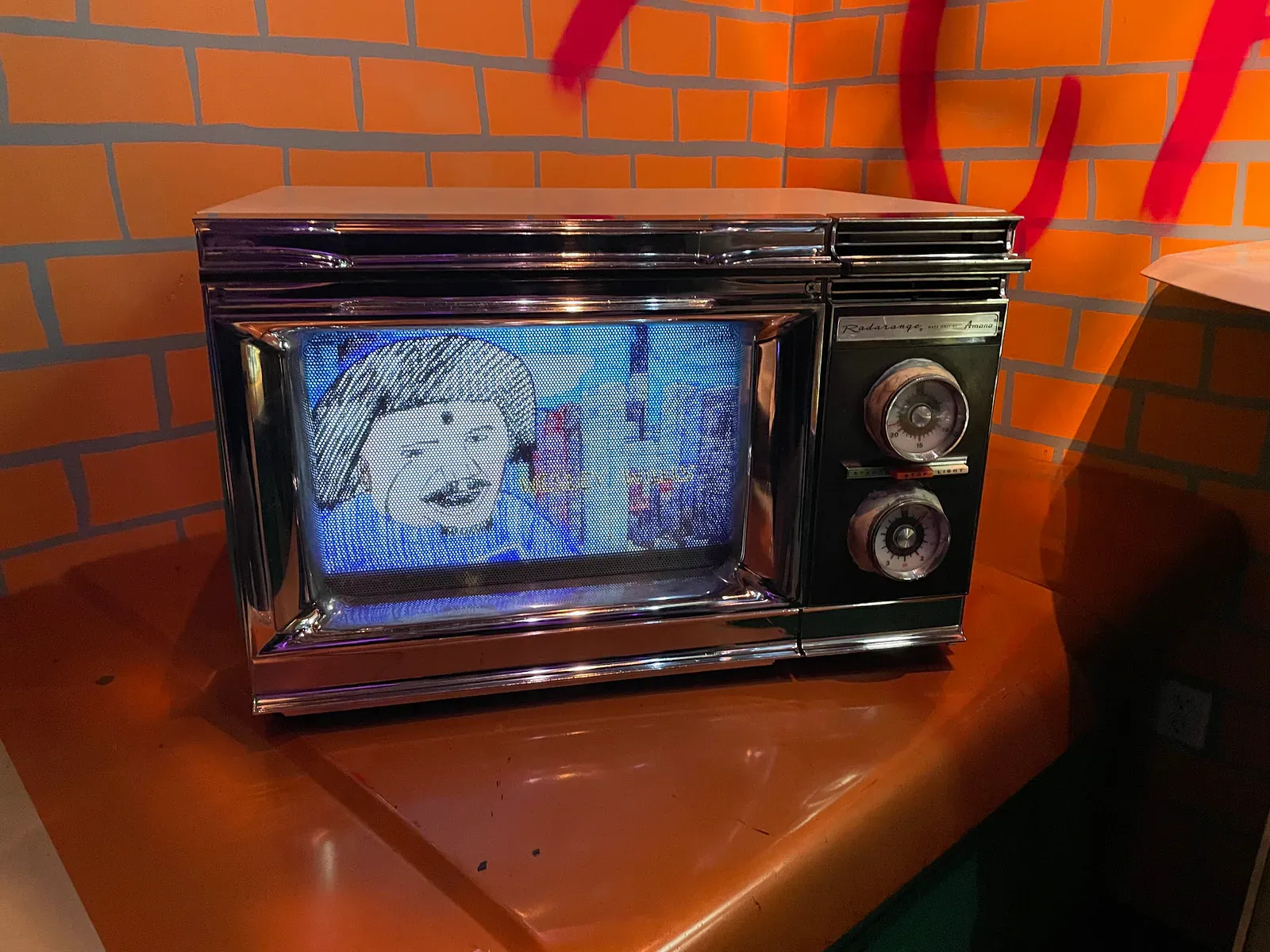
In Chicago, Wesley Willis, a street artist diagnosed with schizophrenia in the late 1980s, turned to music in the early 1990s and formed the Wesley Willis Fiasco in 1991. His songs were shouted over preset keyboard rhythms, with chants about bus routes and fast food. They drew admirers from the punk and alternative scenes, and his 1995 Greatest Hits carried “Rock n Roll McDonald’s”. He died on 21 August 2003 at age 40.
A named genre, 1996 to now
Books and compilations of the mid-1990s, among them Incredibly Strange Music in 1994, had already prepared a readership. With Chusid’s naming and canon the field gained a shelf, and documentaries followed: Jandek on Corwood in 2003, with no interview of Jandek himself, and The Devil and Daniel Johnston in 2005. Jandek began playing live in 2004, and after Johnston died in September 2019, tribute records and cover versions kept his songs in circulation.
Characteristics
Outsider recordings share conditions of production more than a style. Many are made alone, on a cassette recorder or a four-track machine, with no engineer or producer to correct them. Guitars may be untuned, keyboards use built-in rhythm presets, and time signatures shift without a cue. Lyrics concern private matters: love and its failure, mental illness, local landmarks, fast food, bus lines. Vocals tend to be direct and unembellished, shouted, nasal or falsetto, because the singer has little interest in performing a trained voice.
The tempo range is wide. Measured readings of canonical tracks run from about 100 beats per minute for the Shaggs’ loose, stumbling songs to about 170 for Willis’s shouted keyboard-preset numbers, with Johnston’s piano songs in between.
Notable recordings
Philosophy of the World had an unusual afterlife. Reissued in 1980, it was named one of the worst rock albums ever made by some critics and among the greatest garage recordings by others, and it found admirers in Zappa and Cobain. The Shaggs themselves were embarrassed by it. It remains the central example of how outsider status is conferred by listeners long after the recording.
Hi, How Are You, Johnston’s 1983 cassette, became a cult object through its cover drawing of a frog, which turned into a symbol of Austin, a mural subject and a T-shirt. “Rock n Roll McDonald’s” by Willis is an unlikely signature: a shouted ode over a synthetic backing, earning inclusion in Chusid’s first volume of Songs in the Key of Z.
Culture
Outsider music is tied to other visual outsider arts. Johnston made drawings alongside his songs, and Willis drew Chicago streetscapes in ink, giving them away or selling them in parks. His greeting, a head-butt, became part of his stage act. Scenes were small and local: Austin for Johnston, Los Angeles for Fischer, Chicago for Willis, with college radio such as WFMU spreading the tapes and records.
Legacy
Chusid credited outsider musicians with feeding the punk and no-wave belief that anyone could make music regardless of technical skill, and with supporting independent labels such as K Records and Sub Pop. Syd Barrett, Captain Beefheart, Harry Partch and Daniel Johnston appear on his list of artists whose influence reached contemporary pop. The genre sits in the experimental family, close to the home-recording ethos of lo-fi and the unschooled spirit of free improvisation, and the Shaggs are also placed in the history of garage rock.
Misconceptions
One belief is that outsider music is simply bad music. Chusid’s own definition avoids that: it describes the producer’s lack of self-awareness, not a quality judgment, and some outsider records, such as the work of Moondog, are carefully constructed.
Another is that outsider artists are all unknown. Tiny Tim had a major chart hit, the Legendary Stardust Cowboy appeared on national television, and Johnston signed to a major label.
A third is that the category is universally accepted. It is not: some critics call it a hustle that turns mental illness and awkwardness into entertainment, and some featured artists disliked being categorised.
Frequently asked questions
What is outsider music?
Outsider music is music by self-taught or naive musicians who work outside conventional training and technique, often recorded at home and marked by eccentric or visionary qualities.
Who coined the term outsider music?
Journalist and WFMU DJ Irwin Chusid adapted the term from outsider art in a 1996 magazine article and developed it in his 2000 book Songs in the Key of Z.
Who are the best-known outsider musicians?
Daniel Johnston, the Shaggs, Jandek, Wesley Willis and Wild Man Fischer are the most often cited, with Tiny Tim and Moondog also placed in the tradition.
Is outsider music the same as lo-fi?
No. Lo-fi describes a low-fidelity recording sound, and many outsider artists are lo-fi because they record at home, but lo-fi is also a deliberate choice of artists who are not outsiders.
Sound
Sound sheet
Signature sounds
- Untuned or out-of-sync playing
- Home-made tape sound
- Lyrics on private obsessions, love and illness
- Direct, unself-conscious vocals
Drums and percussion
- Standard drum kit
- Keyboard preset rhythms
Techniques
- Home tape recording
- Self-run label
- A cappella street singing
- Detuned or open-chord guitar
Tuning
Often untuned or irregular: out-of-tune guitars on the Shaggs records, open and unconventional chords from Jandek.
Vocals
Direct and unpolished: shouted, nasal or falsetto lines delivered without concern for pitch.
Scenes
Where it happened
Where and when the sound lived: one bar per city on a shared timeline.
North America
Active scenes
Peak 3, 1990-2003
The Sunset Strip, where Fischer sang for a dime and Zappa's Bizarre label recorded him.
Johnston handed out tapes here, and local radio and press built his following.
Willis drew street scenes and played clubs around the Loop with the Wesley Willis Fiasco.
Home of Corwood Industries and Jandek's long-running private catalogue.
Venues and places
New York, 1891 to today. Where Florence Foster Jenkins gave her sold-out recital in 1944.
Los Angeles, 1960 to today. Strip where Wild Man Fischer sold his songs for a dime.
Culture
Culture markers
- Hi, How Are You frog
Johnston's drawn frog cover became a T-shirt and Austin mural, a symbol of the music.
Artwork - Willis's street drawings
Willis also drew Chicago streetscapes in ink, sold or given away in parks.
Artwork - Willis's headbutt greeting
Willis greeted fans with a head-butt as part of his act.
Ritual
Media
Key media
- 1994Incredibly Strange Music
by RE/Search. Guidebook to forgotten oddities that fed 1990s interest in the field.
Book - 2000Songs in the Key of Z: The Curious Universe of Outsider Music
by Irwin Chusid. The book that defined and marketed outsider music.
Book - 2003Jandek on Corwood
by Chad Freidrichs. Documentary assembled with a Corwood representative, without Jandek interviewed.
Film - 2005The Devil and Daniel Johnston
by Jeff Feuerzeig. Feature documentary on Johnston's life and illness.
Film
Glossary
Terms on this page
French term for raw art made outside the trained art world, associated with Jean Dubuffet.
Chusid's name for recordings made to draw bad reactions or by people who know better, kept apart from true outsiders.
Low-fidelity recording, rough in sound, common to home-made outsider tapes.
English term from the 1970s for Art Brut, work by self-taught or isolated makers, later borrowed for music.
A lyric mailed by an amateur to a company that sets it to music for a fee, a source for several compilation tracks.
Experimental family