Algorithmic Composition
Algorithmic composition builds music from formal rules or probabilities, from 18th-century dice games to Xenakis, the Illiac Suite and live coding.
1757
Experimental family

Born
1757
Subgenres
3
Documented branches
Links
2
Genres it drew on or shaped
Tempo
70-150 BPMLineage
Family tree
Timeline
Era by era
From the first sparks to today. Select a dot to read the story behind it.
- Dice games and rule systems
1757 to 1953
- Stochastic scores and mainframes
1954 to 1969
- Studios, UPIC and generative systems
1970 to 1990
- Style models and live code
1991 to today
Eras
Moments
- 1 Dice games and rule systems, 1757 to 1953
- 2 Stochastic scores and mainframes, 1954 to 1969
- 3 Studios, UPIC and generative systems, 1970 to 1990
- 4 Style models and live code, 1991 to today
1757
Dice games and rule systems
Eighteenth-century dice games such as Kirnberger's 1757 minuet composer joined precomposed bars by chance, and counterpoint rules were already close to algorithms.
- 1757Kirnberger's dice minuet composerJohann Kirnberger publishes a system for assembling minuets and polonaises from precomposed fragments, the earliest of the musical dice games.
1954
Stochastic scores and mainframes
Xenakis built scores from probability from 1954, Hiller and Isaacson had the ILLIAC I generate the Illiac Suite in 1957, and Koenig wrote composition programs in Utrecht from 1964.
- 1954Xenakis completes MetastaseisThe orchestral piece, built from architectural and mathematical ideas, is generally regarded as Xenakis's first mature work.
- 1956PithopraktaXenakis scores each string player as a gas molecule obeying statistical laws; Hermann Scherchen conducts the premiere in Munich in March 1957.
- 1957Illiac SuiteLejaren Hiller and Leonard Isaacson program the ILLIAC I at the University of Illinois to generate a string quartet score, generally agreed to be the first scored by an electronic computer.
- 1964Koenig's Project 1At Utrecht, Gottfried Michael Koenig writes a program that formalises variants of musical structure; Project 2 follows in 1966.
- 1969HPSCHD premiereJohn Cage and Hiller present their harpsichord and computer-sound piece on 16 May to about 6,000 people in Urbana, with 208 tapes and 6,400 slides.
1970
Studios, UPIC and generative systems
University and radio studios kept composing with programs, Xenakis finished the UPIC drawing system in 1977, and Eno's Discreet Music (1975) set a self-running system loose in the studio.
- 1975Discreet MusicBrian Eno releases a 30-minute piece in which a synthesizer sequence runs through a tape-delay loop that largely plays itself.
- 1977UPIC completedThe CEMAMu drawing tablet in Paris, devised by Xenakis, turns drawn lines into sound, with time on one axis and pitch on the other.
- 1981Cope begins EMIStuck on an opera commission, David Cope starts writing the Experiments in Musical Intelligence program to model his own style.
1991
Style models and live code
Xenakis's GENDY3 (1991) synthesised sound stochastically, David Cope's EMI recombined classical styles, and live coders turned algorithms into performances, including the algorave nights named in 2011.
- 1991GENDY3Xenakis premieres a piece made entirely with dynamic stochastic synthesis, in which the waveform itself is shaped by random walks.
- 2005Cope deletes EMI's databaseCope erases the program's music database, arguing that infinitely reproducible output was being devalued by critics.
- 2011Algorave namedAlex McLean and Nick Collins coin the word for dance events with algorithmic music, and the first event under that name is held in London.
Listening path
Start listening
A short path from an easy way in to the deep end. Thumbnails come from YouTube; the player loads only when you press play.
- 01
Iannis Xenakis, 1954
Xenakis's first mature orchestral work, where sliding string masses are planned like architecture.
- 02
Iannis Xenakis, 1956
Each string player is a gas molecule under statistical law; the clearest early case of stochastic composition.
- 03
Iannis Xenakis, 1958
A tape piece made only from burning charcoal, a dense texture shaped by density rather than melody.
- 04
Brian Eno, 1975
A synthesizer sequence run through tape loops so that the system, not the composer, shapes the surface.
- 05
Iannis Xenakis, 1991
Sound synthesised by random walks on the waveform itself, the end point of Xenakis's stochastic method.
Facts
| Family | Experimental |
| Status | Active |
| Tempo | 70 to 150 BPM |
| Meter | Free or 4/4, set by the rules |
| Subgenres | 3 |
Algorithmic composition is the making of music by applying algorithms or formal rule systems to generate compositional material.
It reaches back to eighteenth-century dice games, took modern form in the 1950s through Iannis Xenakis’s probability-based scores and the first computer-generated score, and now includes style-imitating programs and live-coded performance. The composer designs the rules and the choices made inside them rather than writing each note.
Origins
Rule-bound composition is older than computers. The procedures used to plot voice-leading in Western counterpoint can often be reduced to algorithmic determinacy, and in the eighteenth century the rules became a parlour game. The musical dice game, the Musikalisches Würfelspiel, joined small precomposed bars into a piece by chance. The earliest printed example is Johann Kirnberger’s minuet and polonaise composer of 1757, followed by C. P. E. Bach in 1758 and Maximilian Stadler in 1780.
The best-known version was published in Berlin in 1792 by Mozart’s publisher Nikolaus Simrock and carried Mozart’s name on its cover, though the attribution has not been authenticated. Each roll of two dice picked one of eleven versions of a bar, which allows about 759 trillion different but similar waltzes.
Writers on the field now sort methods into six overlapping types: mathematical models, knowledge-based systems, grammars, evolutionary methods, systems that learn, and hybrids.
Paris and Urbana, 1954-1969
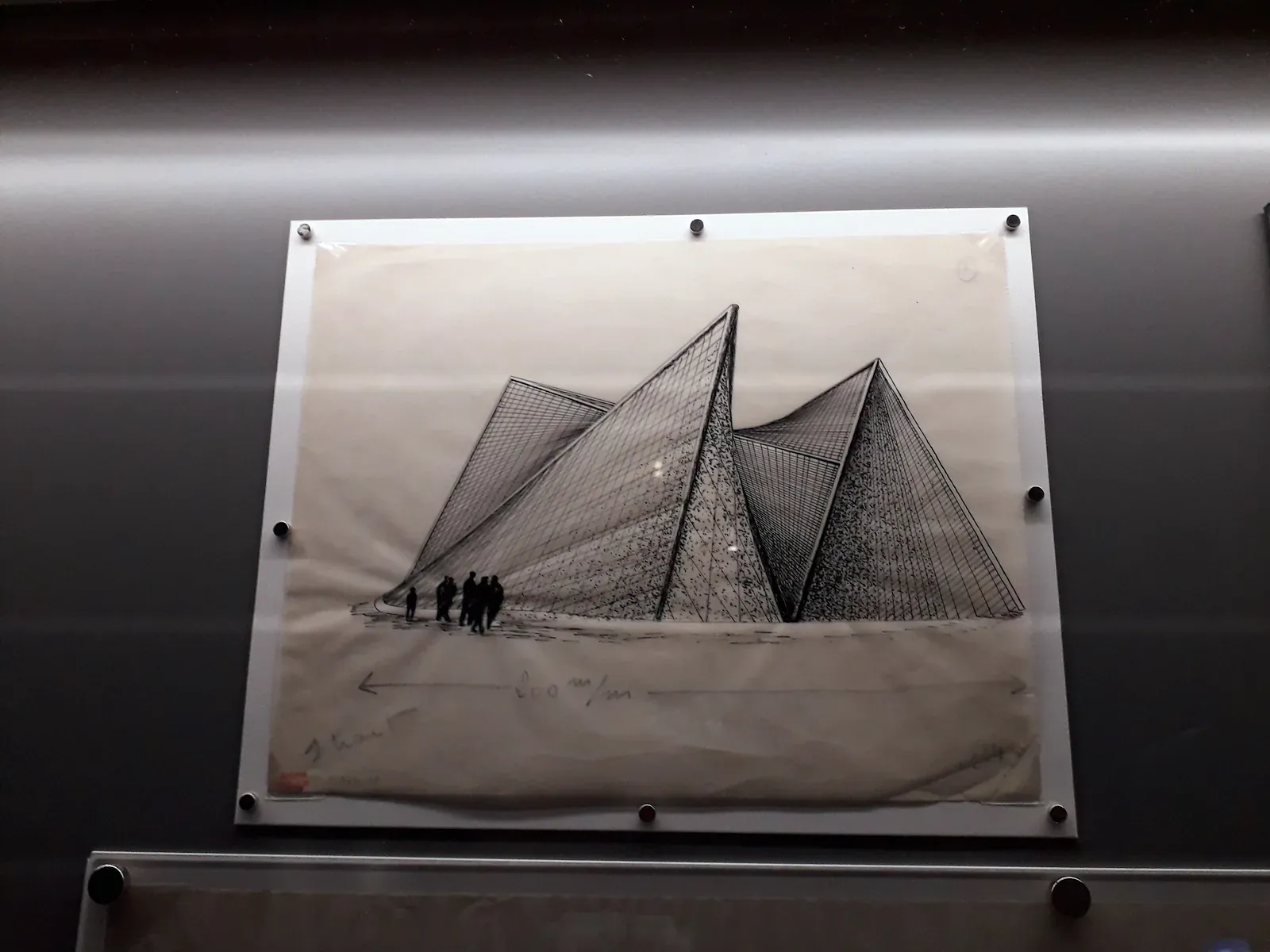
The modern history starts in two places at almost the same time. In Paris, Xenakis had fled Greece in 1947 and worked as an assistant to the architect Le Corbusier while studying composition. Olivier Messiaen told him to use his mathematics and architectural training in his music. Metastaseis (1953-54) took its structure directly from architectural ideas and is generally regarded as his first mature piece. Pithoprakta (1955-56) went further: each of 46 string parts was treated as a molecule in a gas, obeying the Maxwell-Boltzmann distribution, with pitch and time drawn first as a graph and then transcribed into notation. Hermann Scherchen conducted its premiere in Munich in March 1957. Xenakis set out his method in Formalized Music, published in French in 1963 and in English in 1971, and a Fortran program he wrote in 1962 for an IBM 7090 was shown at a Xenakis exhibition.
In Urbana, the chemist and composer Lejaren Hiller, who had studied with Roger Sessions and Milton Babbitt and worked for DuPont, programmed the ILLIAC I computer at the University of Illinois with Leonard Isaacson. The result, the Illiac Suite of 1957, is generally agreed to be the first score composed by an electronic computer. Its four movements are four experiments: cantus firmi, four-voice segments under various rules, rhythm and dynamics, and Markov chains. Hiller met hostility from the musical establishment, and the major music dictionaries left him out until shortly before his death. He founded the Experimental Music Studios in 1958 and, with Robert Baker, the MUSICOMP language for the Computer Cantata of 1963.
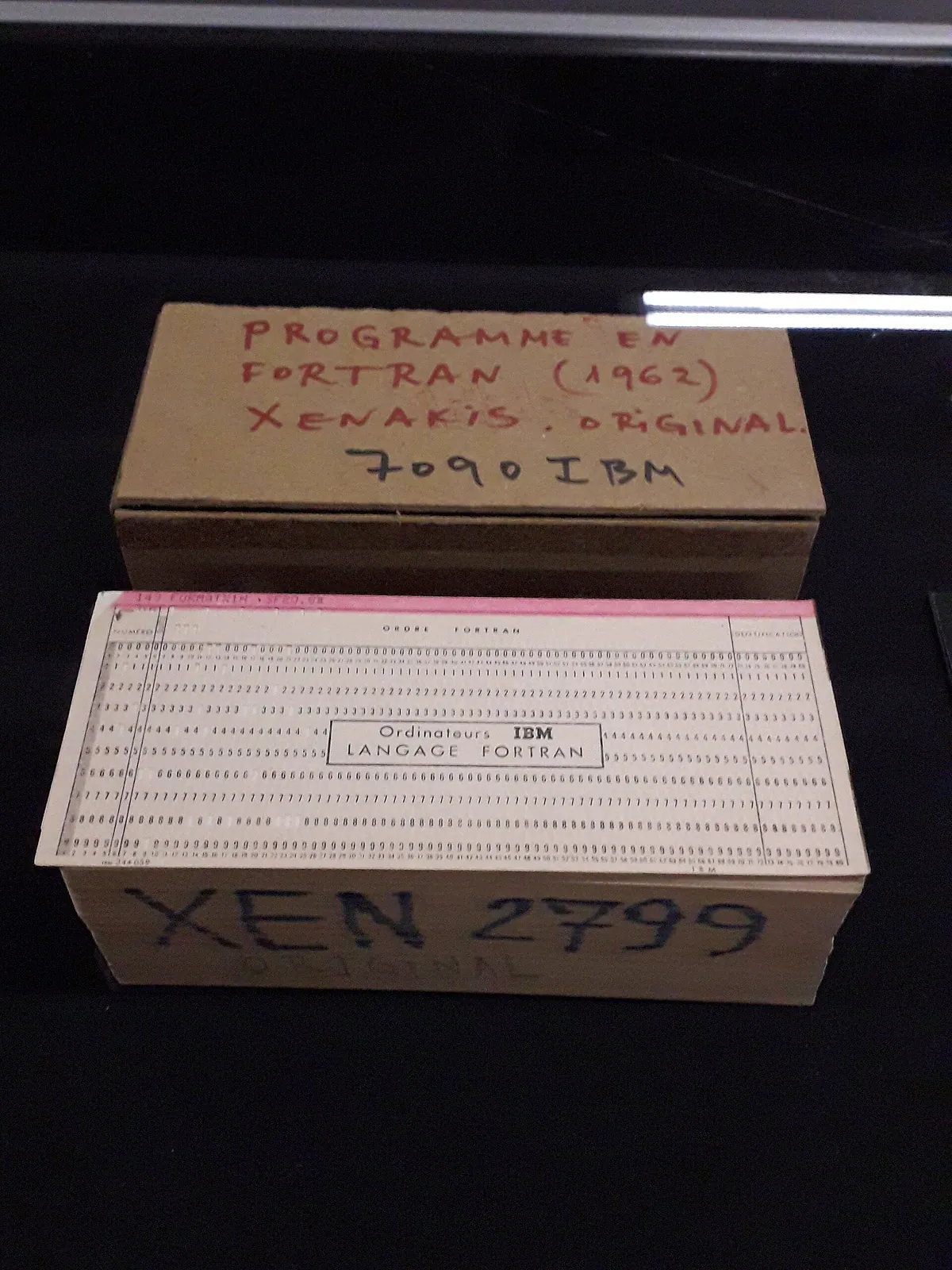
Gottfried Michael Koenig took a different route. After ten years in the electronic studio of West German Radio, where he assisted Stockhausen on Gesang der Jünglinge and Kontakte, he moved to Utrecht in 1964 and wrote Project 1 that year and Project 2 in 1966. These programs formalised variants of musical structure; the output was then worked into scores by hand, which made them an early model of computer-assisted composition. At the end of the decade John Cage and Hiller staged HPSCHD on 16 May 1969 in front of about 6,000 people. Harpsichordists played alongside 208 tapes of computer-generated sound and projections of 6,400 slides and 40 films, in a five-hour event the audience could wander through.
Studios, UPIC and systems, 1970-1990
Through the 1970s the work moved into university and radio studios. Koenig’s studio at Utrecht became the Institute of Sonology, and his electronic works Terminus II and Funktion Grün appeared on a 1970 Deutsche Grammophon LP in its Avantgarde series. Outside the academy, Brian Eno’s Discreet Music (1975) tried to make music with limited planning. A short sequence from a synthesizer’s built-in memory passed through an equaliser and an echo unit, and the signal circulated between two tape machines, so the piece largely ran itself. The record’s second side holds three variations on Pachelbel’s canon performed under written rules, such as players slowing down at rates tied to their instrument’s pitch.
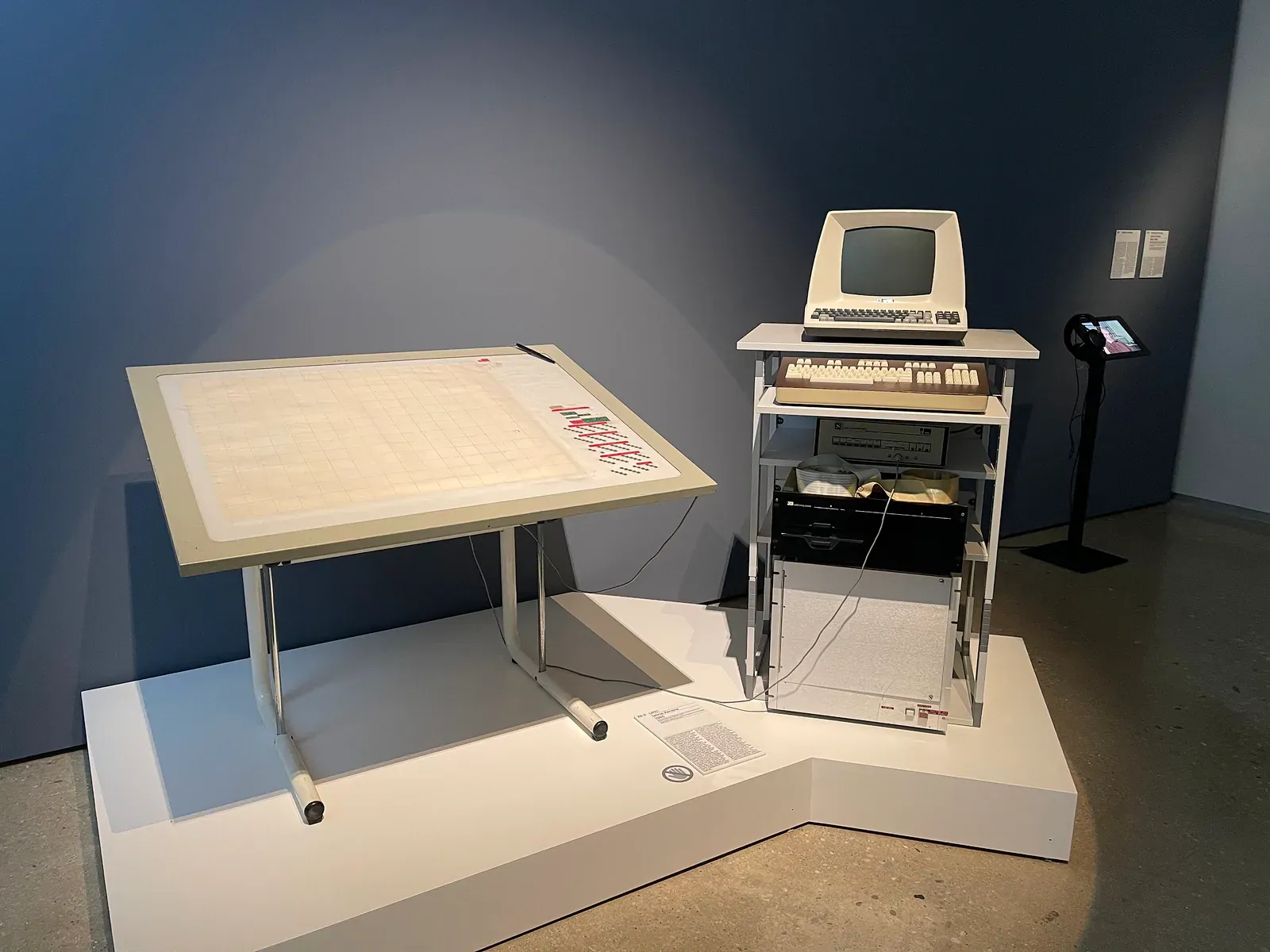
In 1977 Xenakis’s UPIC was finished at the CEMAMu in Paris. It is a digitising tablet linked to a computer, where the horizontal axis stands for time and the vertical axis for pitch, so a drawing becomes a score. He used it for Mycènes Alpha in 1978, and later composers including Jean-Claude Risset and Curtis Roads worked with it. In 1981 David Cope, blocked on an opera commission, began the program that became EMI, Experiments in Musical Intelligence, to model his own style.
Style models and live code, 1991 to present
Xenakis’s GENDY3 of 1991 applied his stochastic thinking to sound itself, shaping a waveform in time and amplitude by random walks. In the same decade Cope turned EMI on the music of Bach, Mozart, Chopin and others and released Bach by Design in 1994, performed on a Disklavier. In 2005 Cope deleted its database, arguing that infinitely reproducible output was being devalued. His next program, Emily Howell, built its own pieces from listener feedback and gave the album From Darkness, Light (2009). Cope died on 4 May 2025.
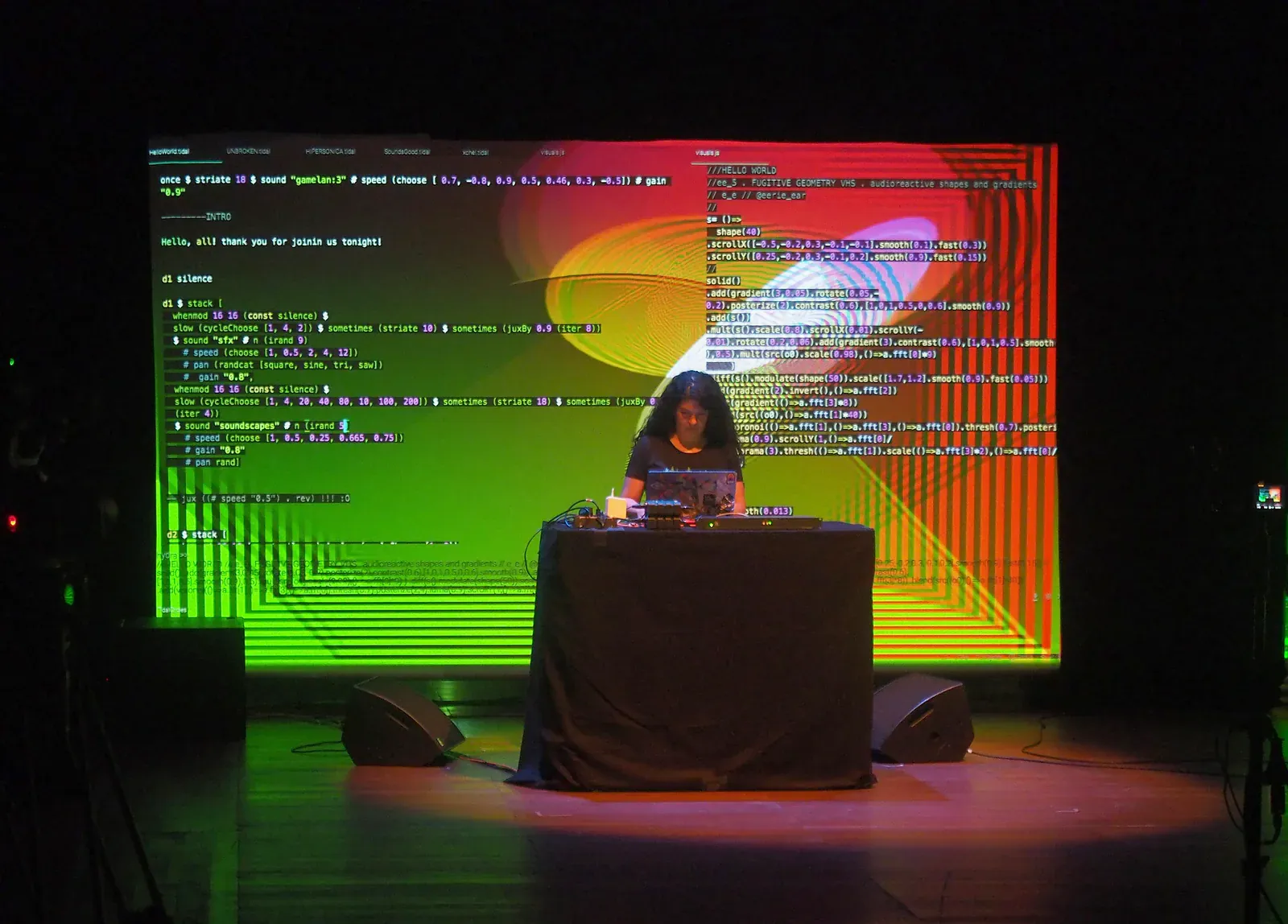
Meanwhile the dance floor took algorithms up. Algorithmic approaches were present in electronic dance music from the 1970s, through Eno’s randomised practices, and fed the 1990s work of Farmers Manual, Autechre and Aphex Twin. Autechre’s Anti EP of 1994 answered the Criminal Justice and Public Order Act with Flutter, a track built for non-repetitive beats. Live coding turned writing the program into the performance itself, and in 2011 Alex McLean and Nick Collins coined the word algorave for events where people dance to such music. Generative music and Black MIDI both grew out of the same ideas.
Characteristics
Most pieces follow the same sequence: material or constraints go in, a rule set or probability model runs, the composer selects from the output, and the result becomes a score for players or sound itself. What the rules govern varies. Xenakis controlled density and pitch distributions, Hiller tested melodies against counterpoint rules, Koenig varied structure, Eno let a tape loop run, and Cope’s programs recombined patterns from existing scores. Tempo and meter come from the rules, not from a genre convention.
Instruments and production
The tools have been as varied as the methods: a vacuum-tube mainframe for the Illiac Suite, a drawing tablet for UPIC, a Disklavier for Cope’s recordings, tape machines for Eno, and laptops running TidalCycles for live coders. Output goes either to players as notation, as in Hiller’s string quartet, or directly to sound, as in GENDY3.
Culture
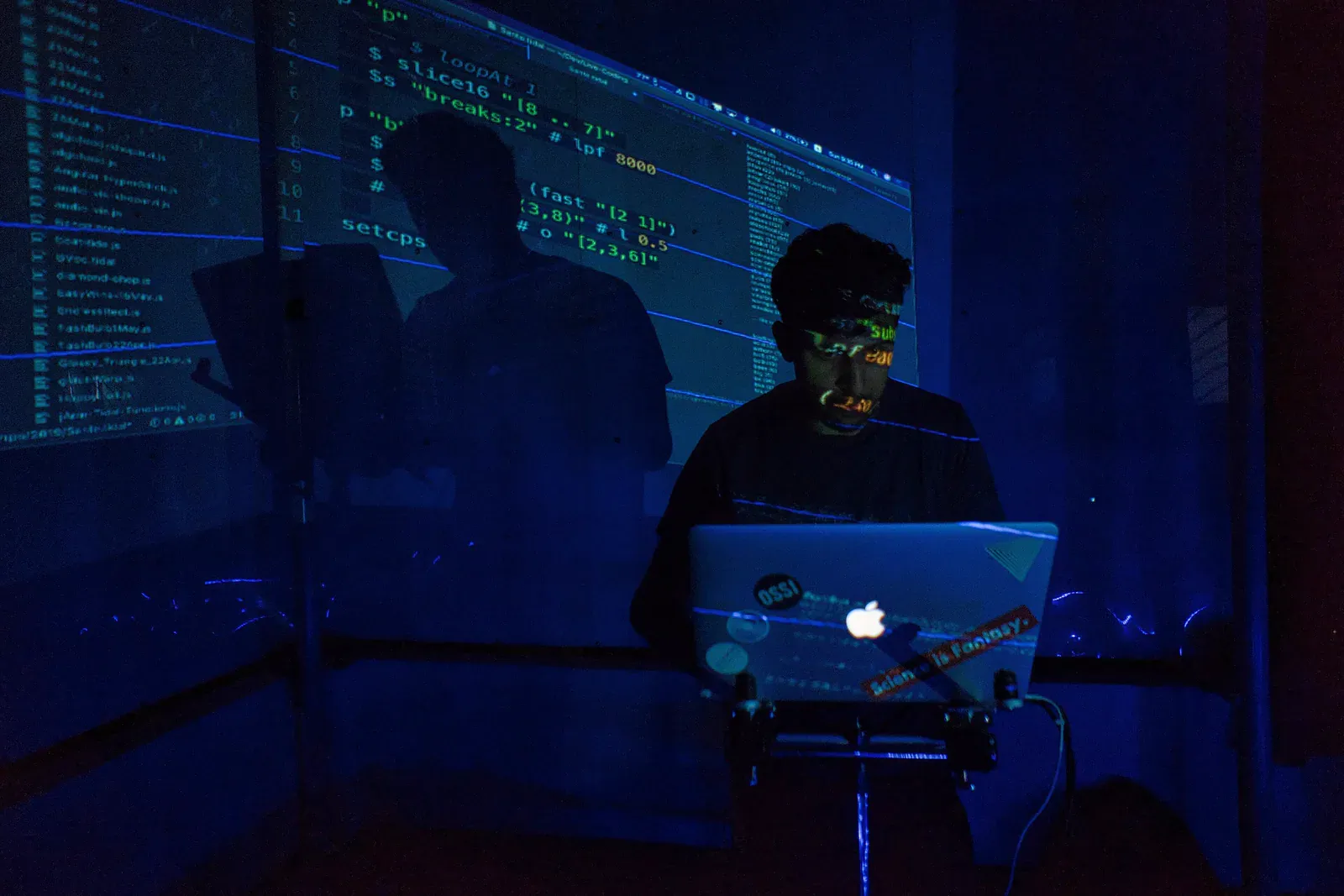
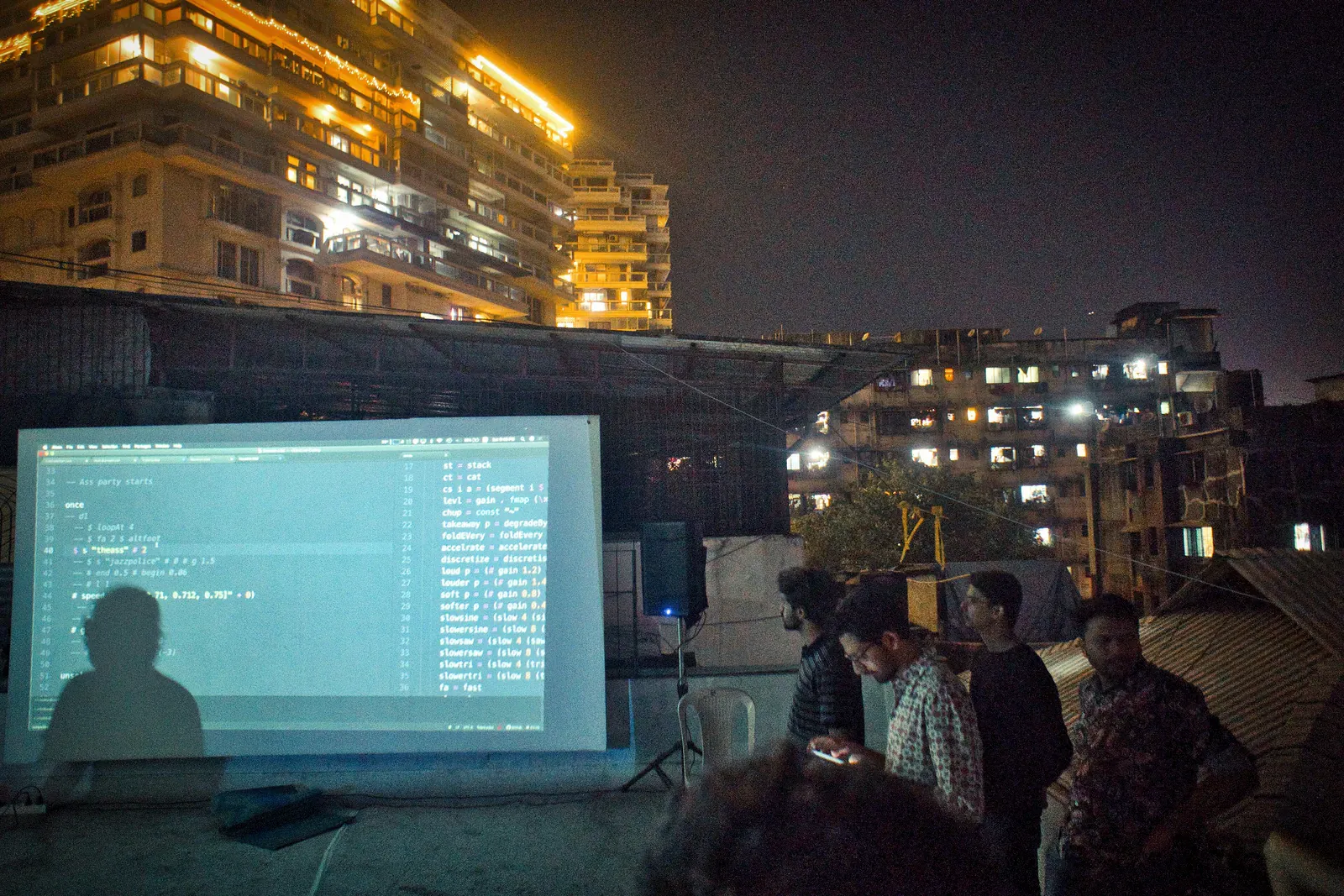
HPSCHD set the tone for a culture of ritual and play around chance. Its posters and paper tunics used images chosen by chance operations, and copies were priced with an I Ching chart. Douglas Hofstadter toured a lecture in which audiences heard a real Chopin piece and an EMI piece and guessed no better than chance which was which. Live coding made the code visible, with the screen projected behind the performer, and algorave nights have spread to cities from London to Bengaluru.
Legacy
The ideas have spread well beyond experimental concert music. The genre sits in the Experimental family beside Electroacoustic music, whose studios hosted much of the early work, and Fluxus, which shared Cage’s chance procedures. Algorithmic methods also reached IDM and, through Eno, ambient music. Generative music, live coding and Black MIDI all branch directly from algorithmic composition.
Misconceptions
Algorithmic composition is often assumed to need a computer. Kirnberger’s dice game dates from 1757, counterpoint rules were already algorithms, and Xenakis was scoring from probability in the mid-1950s with graph paper and calculation.
The Mozart dice waltz is often cited as his invention. The 1792 edition carried his name, but the attribution has never been authenticated, and the 1787 manuscript with 176 one-bar fragments contains no instructions and no evidence that dice were involved.
A third belief holds that the composer disappears. Xenakis weighted the probabilities, Koenig’s output was shaped by hand into performance instructions, and most of Hiller’s works after 1957 did not use computers at all. The rules are an authored decision.
Frequently asked questions
What is algorithmic composition?
Algorithmic composition is the technique of using algorithms or formal rule sets to create music. The rules may be written by hand, as in a dice game, or run by a program, as in the Illiac Suite and live coding.
What was the first computer-composed music?
The Illiac Suite of 1957, by Lejaren Hiller and Leonard Isaacson, is generally agreed to be the first score composed by an electronic computer. It was generated on the ILLIAC I at the University of Illinois.
How did Xenakis use mathematics in music?
Xenakis applied probability theory and statistical mechanics. In Pithoprakta each string instrument behaves like a gas molecule, and in GENDY3 random walks shape the waveform itself.
Is algorithmic composition the same as generative music?
They overlap. Algorithmic composition covers any rule-based method, while generative music describes ever-changing music produced by an ongoing system, a term Brian Eno popularised in 1995.
What is an algorave?
An algorave is an event where people dance to music generated from algorithms, usually live-coded. Alex McLean and Nick Collins coined the term in 2011.
Sound
Sound sheet
Anatomy of a track
| # | Part |
|---|---|
| 1 | Source material or constraints |
| 2 | Rule set or probability model |
| 3 | Generation run |
| 4 | Selection and editing by the composer |
| 5 | Score or synthesis output |
Signature sounds
- Rules written before the notes
- Probability distributions shaping density and pitch
- Many runs, one chosen
- Output as a score for players or as direct sound
Techniques
- Stochastic distributions
- Markov chains
- Rule-based counterpoint
- Chance operations
- Style recombination
- Dynamic stochastic synthesis
Tuning
Mostly 12-tone equal temperament in scored pieces; synthesis and drawn sound can use continuous pitch
Vocals
Mostly instrumental; voices appear as source material in individual scores
Scenes
Where it happened
Where and when the sound lived: one bar per city on a shared timeline.
Europe
North America
Active scenes
Peak 3, 1964-2025
Home of the ILLIAC I, the Illiac Suite and the Experimental Music Studios founded by Hiller in 1958.
Xenakis worked here as an architect and composer, and the UPIC was built here.
Koenig directed the electronic music studio, later the Institute of Sonology, and wrote Project 1 and 2.
Venues and places
Urbana, 1958 to today. Hiller founded the studios at the University of Illinois the year after the Illiac Suite.
Champaign, 1969 to today. Site of the HPSCHD premiere before an audience of 6,000.
Utrecht, 1964 to today. Koenig moved to the Netherlands in 1964 and led the studio until 1986.
Culture
Culture markers
- Algorave
Dance events with code-generated music, often live coded, coined in 2011.
Dance - HPSCHD posters and tunics
Images were chosen by chance operations and copies were priced with an I Ching chart.
Artwork - Graph-paper scores
Xenakis drew Pithoprakta first as a graph of pitch against time before transcribing it into notation.
Artwork - The Chopin test
In Douglas Hofstadter's lectures, audiences guessed no better than chance which piece was Chopin and which was EMI.
Ritual
Media
Key media
- 1963Formalized Music: Thought and Mathematics in Composition
by Iannis Xenakis. Xenakis's theory of stochastic music, first published in French and translated into English in 1971.
Book
Glossary
Terms on this page
Using programs to build structures that the composer then works out by hand into a finished score.
Xenakis's method of distorting a waveform in time and amplitude by random walks, realised in GENDY3.
A process in which the next event depends only on the current state; Hiller used it in the Illiac Suite's fourth experiment.
Eighteenth-century musical dice game that assembles a piece from precomposed bars by dice rolls.
Music whose material is generated by weighted random events, controlled through probabilities rather than fixed notes.
Experimental family