Circuit Bending
Circuit bending rewires battery-powered toys and electronics into instruments, a practice Reed Ghazala found in 1967 and named in 1992.
United States, 1967
Experimental family
Born
1967
United States
Links
1
Genres it drew on or shaped
Tempo
120-170 BPMLineage
Family tree
Timeline
Era by era
From the first sparks to today. Select a dot to read the story behind it.
- Chance discoveries
1967 to 1991
- Naming the practice
1992 to 2003
- Festivals and handbooks
2004 to 2012
- Online builders
2013 to today
Eras
Moments
- 1 Chance discoveries, 1967 to 1991
- 2 Naming the practice, 1992 to 2003
- 3 Festivals and handbooks, 2004 to 2012
- 4 Online builders, 2013 to today
1967
Chance discoveries
A shorted toy amplifier starts Reed Ghazala's instrument building in 1967, while Ghazala's cassettes and Swiss duo Voice Crack's cracked everyday electronics turn accidents into performance in the 1980s.
- 1950Touch-sensitive transistor radioSerge Tcherepnin finds points on a transistor radio that respond to touch and wires them to body contacts on its case.
- 1967A toy amplifier shorts in a drawerReed Ghazala's toy amplifier touches the metal of a desk drawer and sweeps oddly, leading him to build bent instruments on purpose.
- 1978Speak & Spell and the IncantorTexas Instruments introduces the Speak & Spell, and Ghazala builds the Incantor, a heavily modified unit, soon after.
- 1982Sound Theater cassettes beginGhazala's first Sound Theater cassettes, A Watch in the Sea and Sound Theater One, document his instruments.
- 1984Voice Crack's cracked everyday electronicsThe Swiss duo credit radios, transmitters and dictating machines as cracked everyday electronics on their LP.
- 1986Collins's Devil's MusicNicolas Collins releases Devil's Music on Lovely Music, from his home-built electronics work of the 1980s.
- 1990Voice Crack's EarflashThe album pairs the duo's cracked electronics with percussion from Knut Remond.
1992
Naming the practice
Ghazala coins the term circuit bending in 1992 and starts publishing how-to articles, giving scattered tinkerers a shared name and method.
- 1992The term circuit bending is coinedGhazala names the practice and begins publishing about it in the magazine Experimental Musical Instruments.
2004
Festivals and handbooks
New York's Bent Festival begins in 2004, and two books, Ghazala's in 2005 and Nicolas Collins's in 2006, turn toy hacking into a teachable craft.
- 2004Bent Festival opens in New YorkThe festival of circuit bending and DIY electronics offers workshops, concerts and installations, and later runs in Brooklyn.
- 2005Ghazala's handbookWiley publishes Circuit-Bending: Build Your Own Alien Instruments.
- 2006Handmade Electronic MusicNicolas Collins's book on hardware hacking appears from Routledge and gets later editions in 2009 and 2020.
2013
Online builders
Video channels such as Look Mum No Computer, started in 2013, show bent toys and homemade synthesizers to a mass audience.
- 2018The Furby organSam Battle completes an organ built from 44 Furbies and shows it on his Look Mum No Computer channel.
Listening path
Start listening
A short path from an easy way in to the deep end. Thumbnails come from YouTube; the player loads only when you press play.
- 01
Look Mum No Computer, 2018
A talking-toy chip bank played from a keyboard, the best known modern bent instrument.
- 02
Look Mum No Computer, 2016
Game Boys modified for pitch control and tied together as one synthesizer.
- 03
Nicolas Collins, 2014
A self-stabilising feedback piece, showing the hardware hacking side of the practice.
Facts
| Family | Experimental |
| Origin | United States |
| Emerged | 1967 (discovered); 1992 (named) |
| Status | Active |
| Tempo | 120 to 170 BPM |
| Meter | Free or 4/4 |
Circuit bending is the modification of battery-powered toys, keyboards and other cheap electronics so that their circuits make new, unplanned sounds. A bender opens the device, finds connections that change the output when bridged, and fits switches, potentiometers or touch contacts to control them.
The practice grew from a chance discovery by Reed Ghazala in 1967 and was named by him in 1992. It belongs to the experimental family and is most often heard in noise and free-form electronic music.
Origins
The core idea is that a circuit built for one job can be pushed into another by rewiring it without a schematic. Serge Tcherepnin, designer of the Serge modular synthesizers, described earlier experiments in the 1950s in which he found points on a transistor radio that responded to touch and wired them to body contacts on its plastic case.
The founding story is Ghazala’s. In 1967 a toy amplifier with its circuitry exposed slipped against the inside of a metal desk drawer and began to produce sweeping, oscillating sounds. The accident led him to build instruments from altered electronics on purpose. His method relied on chance: what happens, happens, and the sound is kept if it works. He called the idea the immediate canvas, because an open circuit can be played without any theory of electronic design.
Chance discoveries, 1967-1991
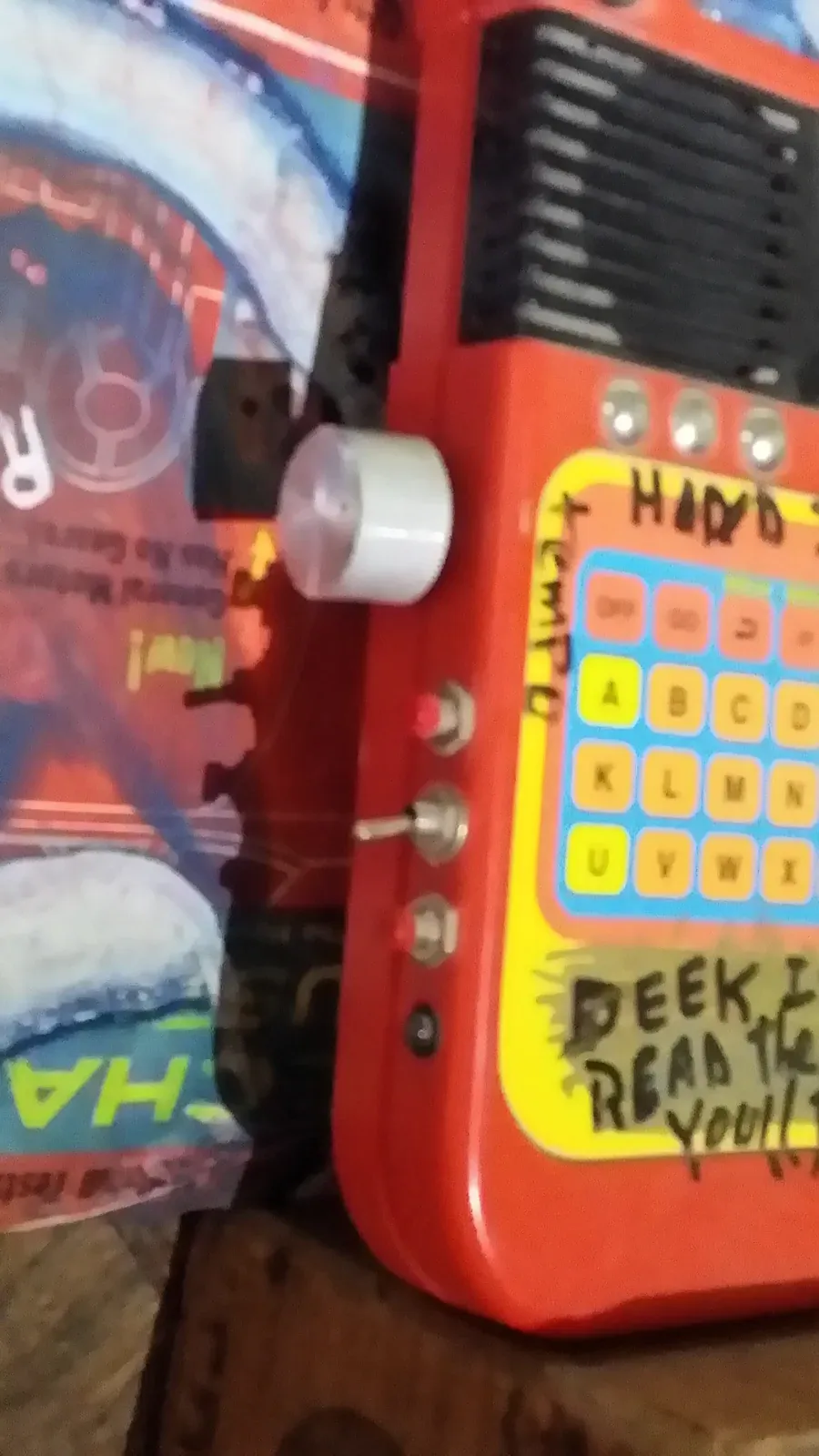
The introduction of Texas Instruments’ Speak & Spell in 1978 gave benders their best-known target. Ghazala built the Incantor, a heavily modified Speak & Spell, soon after, and its stuttering speech chip remains the emblem of the craft. Through the 1980s he issued a run of Sound Theater cassettes, among them A Watch in the Sea, Requiem for a Radio and Posters in the Underground.
Others worked in parallel. From 1984 the Swiss duo Voice Crack, Andy Guhl and Norbert Möslang, built live music from radios, transmitters and dictating machines that they called cracked everyday electronics, played with hand movements and light. Nicolas Collins, an American composer, used home-built circuitry, radio and microcomputers in live performance through the 1980s, and released Devil’s Music in 1986.
Naming the practice, 1992-2003
In 1992 Ghazala coined the term circuit bending and began publishing about the technique in the magazine Experimental Musical Instruments. A shared name and a written method let scattered tinkerers recognise one another. Ghazala has built or advised on instruments for musicians including Tom Waits, Peter Gabriel, King Crimson and the Rolling Stones, and his work has entered museum collections. He has also said that he was not the only or first experimenter, only the one whose work spawned a movement with its own terms and processes.
Festivals and handbooks, 2004-2012
The Bent Festival began in New York in 2004 as a showcase of circuit bending and do-it-yourself electronics, with workshops, concerts and installations, and later ran in Brooklyn. Two books gave the craft a teaching literature. Ghazala’s Circuit-Bending: Build Your Own Alien Instruments came from Wiley in 2005, and Collins’s Handmade Electronic Music: The Art of Hardware Hacking followed from Routledge in 2006, with expanded editions in 2009 and 2020.
Online builders, 2013 onward
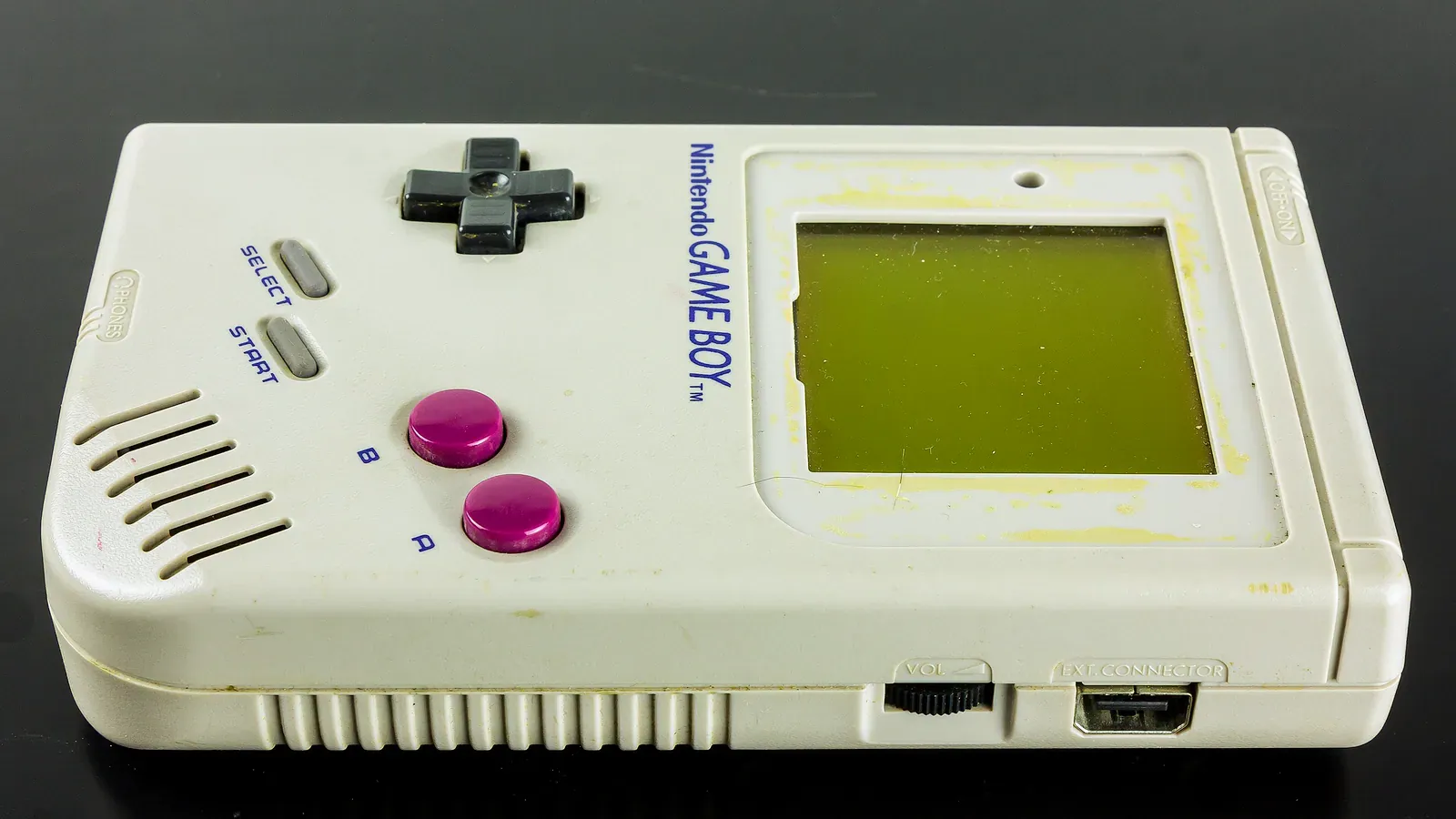
Video platforms turned benders into public performers. Sam Battle began his Look Mum No Computer channel in 2013 and built an organ from 44 Furby toys, finished in 2018 after he first imagined it in 2011. He also built a Game Boy synthesizer from three modified consoles. Battle represented the United Kingdom at the Eurovision Song Contest in 2026, finishing last with one point.
Characteristics
Bending is exploratory. Modifications are made without the maker’s schematic or a set design, and useful bends are found by briefly bridging points on an exposed board and listening. A common target is the clock circuit, which in many toys sets both the pitch of sounds and the speed of programmed sequences, so changing resistance there alters both at once. Useful points are then wired to potentiometers, photoresistors or touch contacts.
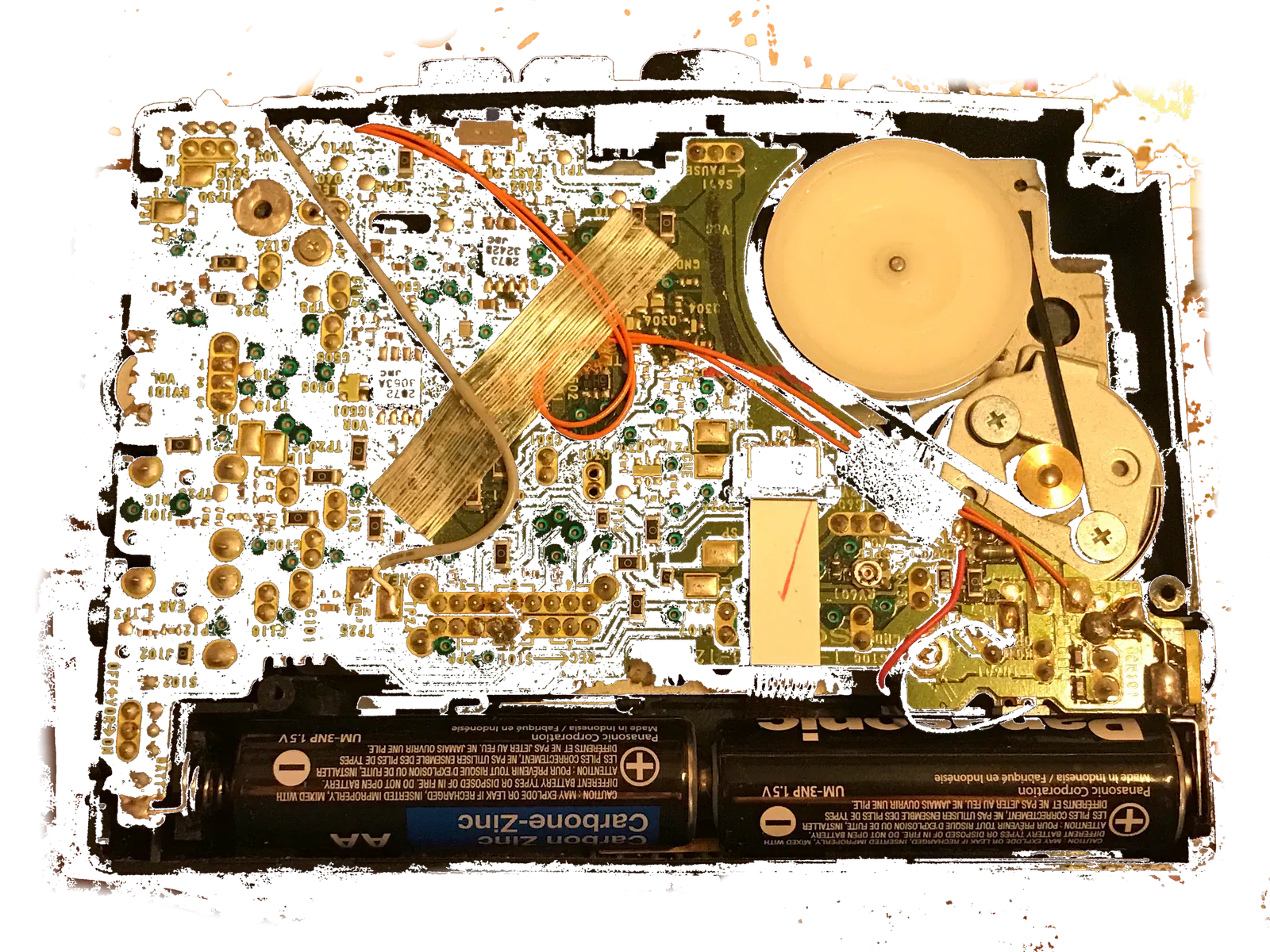
The sound is rarely tuned. Pitch follows component values and the bent clock, so scales are found rather than chosen, and timbres tend toward stutters, drones, glitches and warped speech. Devices with crystal-controlled clocks or heavily integrated circuitry are harder to modify, because few timing parts and connections are reachable. Guides advise using battery-powered devices rather than anything connected to mains electricity.
Instruments and production
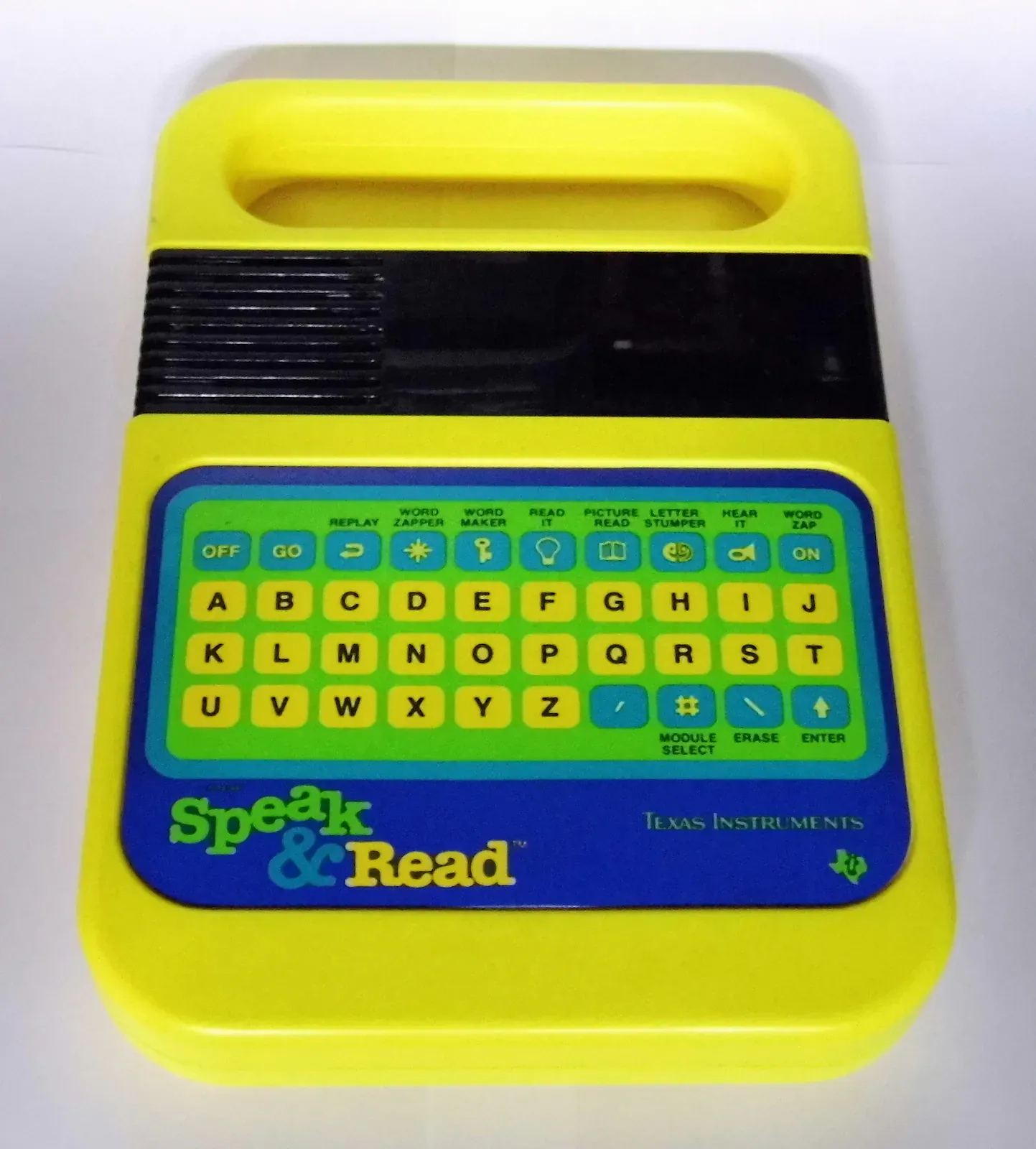
The raw material is cheap and second-hand: toys, small keyboards, drum machines and electronic learning products. The Speak & Spell and its sibling the Speak & Read remain staples, and the Casio SK-1, called the world’s cheapest sampler, is a frequent subject of bending guides.
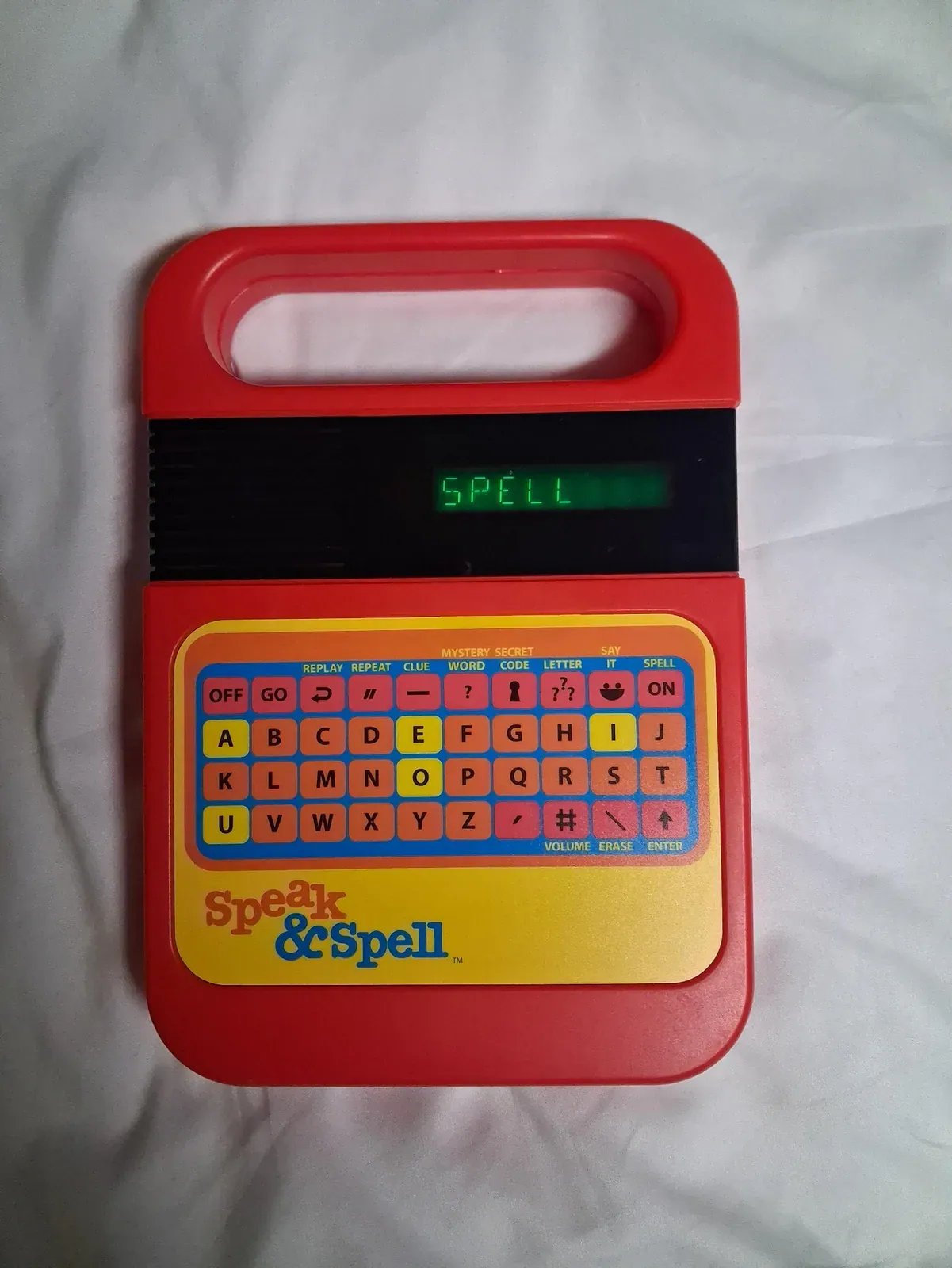
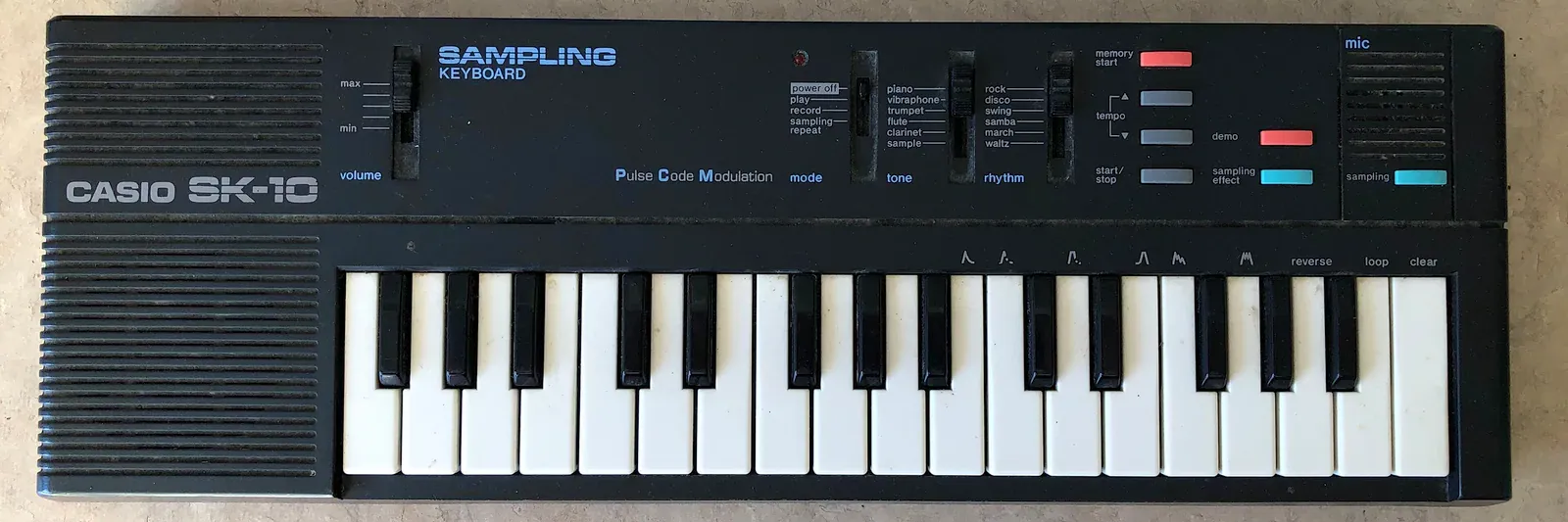
Production is hands-on. A performer may keep the original keys but add toggles and knobs to the shell, or use body contacts so that skin resistance changes the circuit. Many pieces are played live, since a bent device is often unstable and cannot be repeated exactly.
Mainstream success
Circuit bending has no chart history of its own. It reached listeners through celebrity users, museum shows and festivals, and through video channels. The Furby organ and the Game Boy synthesizer made the idea familiar well beyond electronic music. Its closest relatives are noise and chip music, and it overlaps with the chiptune scene where handheld consoles are used.
Notable recordings
Ghazala’s Requiem for a Radio, a Sound Theater cassette of 1985, takes its material from altered radios and other devices. Voice Crack’s Earflash of 1990 shows cracked electronics set against drums. Collins’s Pea Soup, a self-stabilising feedback piece first made in 1974, shows the hardware hacking side of the field, in which a network of circuits regulates itself.
Culture
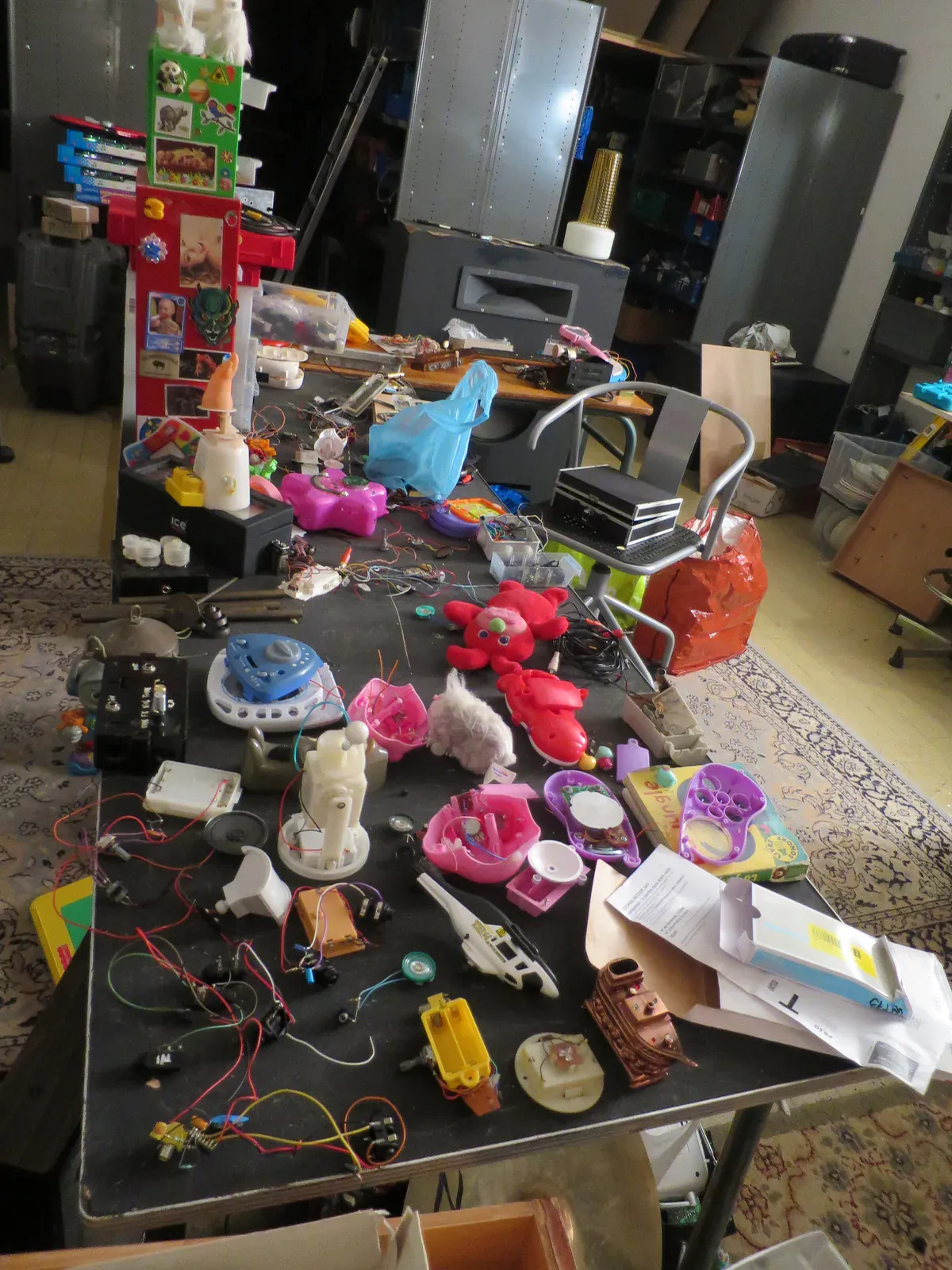
Bending lives in workshops, swaps and festivals rather than clubs. Participants gather around tables of dismantled toys, as at a bending workshop in Le Havre, to solder, test and trade bends. Builders call modified devices bent, and the built object often counts as sculpture as much as instrument, as with the Furby organ. Ghazala also used the term BEAsape, the performer and machine fused through body contacts.
Legacy
The practice made synthesis open to anyone who could open a battery toy, and it fed later hardware hacking and the habit of building and showing homemade instruments online. Its influence is cultural as much as sonic: it showed that mass-produced consumer goods could be remade into one-off instruments.
Misconceptions
Circuit bending was not invented by one person alone. Touch-sensitive radios in the 1950s and Voice Crack’s cracked electronics from 1984 show parallel work, and Ghazala himself has said he was neither the sole nor the first experimenter, only the one who named it and spread it.
Bending does not require a grounding in electronics. The immediate canvas idea holds that anyone can try an open circuit without equations, though the practice does depend on working with battery power only.
The practice is not limited to noise. It is often associated with noise music, yet many musicians have used bent instruments in other styles.
Frequently asked questions
What is circuit bending?
Circuit bending is the modification of toys, keyboards and other electronics, usually by adding switches and potentiometers, so that they make new sounds without a fixed design.
Who invented circuit bending?
Reed Ghazala is credited with founding it after a toy amplifier shorted in a desk drawer in 1967, and he coined the name in 1992. Earlier and parallel experiments exist.
Which devices are best for circuit bending?
Battery-powered toys and small keyboards, such as the Speak & Spell and the Casio SK-1, are the usual choices, because mains-powered equipment is unsafe to modify.
Is circuit bending a music genre?
Circuit bending is a method of building instruments more than a style, and the music made with it ranges from noise and drones to songs.
Sound
Sound sheet
Signature sounds
- Glitching speech chips
- Pitch and speed sweeps from a bent clock
- Touch contacts played with the hand
- Wired switches and knobs on a toy shell
Synths and software
- Speak & Spell
- SK-1
- Game Boy
Techniques
- Bridging with a wire
- Clock bending
- Body contacts
- Added controls
Keys and modes
No fixed key. Pitch comes from clock timing, so scales are found, not set
Tuning
No fixed tuning; pitch follows the bent clock and component values
Vocals
Mostly instrumental; speech chips give stuttering synthetic voices.
Scenes
Where it happened
Where and when the sound lived: one bar per city on a shared timeline.
North America
Active scenes
Peak 2, 2004-2025
Home city of Reed Ghazala, who discovered and named circuit bending.
Host of the Bent Festival and home of Nicolas Collins's hardware hacking circles.
Venues and places
Brooklyn, 2004 to today. Annual New York showcase of circuit bending, hardware hacking and DIY electronics.
Culture
Culture markers
- Workshops and swaps
Festivals such as Bent teach soldering and bending in hands-on sessions.
Ritual - Bent
A device that has been modified, as in a bent Speak & Spell.
Slang - Furby organ
A built object that is both instrument and sculpture.
Artwork
Media
Key media
- 2005Circuit-Bending: Build Your Own Alien Instruments
by Reed Ghazala. The Wiley how-to book by the practice's originator.
Book - 2006Handmade Electronic Music: The Art of Hardware Hacking
by Nicolas Collins. A Routledge handbook of home-built circuits, in three editions.
Book
Glossary
Terms on this page
A found connection on a circuit that changes the sound when closed, usually later fitted with a switch or knob.
Metal touch points that let skin resistance act as a control on the circuit.
Voice Crack's term for opened radios, transmitters and recorders played as instruments.
Nicolas Collins's wider term for rebuilding electronics into music tools.
Ghazala's phrase for building by trial, without electronic theory or a schematic.
Ghazala's name for his heavily modified Speak & Spell instruments.
Experimental family