Post-hardcore
Post-hardcore is a rock genre that kept hardcore punk's intensity but added quiet-loud dynamics and odd structures, born in 1980s Washington, D.C.
Washington, D.C., 1984
Rock family
Born
1984
Washington, D.C.
Subgenres
9
Documented branches
Links
20
Genres it drew on or shaped
Tempo
90-180 BPMLineage
Family tree
Grew out of
Derived from
Derived from
Derived from
Pushed back against
Washington, D.C., 1984
Post-hardcore
Led to (10)
Timeline
Era by era
From the first sparks to today. Select a dot to read the story behind it.
- Revolution Summer
1983 to 1986
- Fugazi and the independent networks
1987 to 1991
- Major-label courtship
1992 to 1998
- Crossover
1998 to 2003
- Reunions and archives
2004 to today
Eras
Moments
- 1 Revolution Summer, 1983 to 1986
- 2 Fugazi and the independent networks, 1987 to 1991
- 3 Major-label courtship, 1992 to 1998
- 4 Crossover, 1998 to 2003
- 5 Reunions and archives, 2004 to today
1983
Revolution Summer
In Washington, D.C., bands such as Rites of Spring and Embrace kept hardcore's force but turned to melody, personal lyrics and a push against macho posturing.
- 1984Husker Du release Zen ArcadeAmong the first post-hardcore bands, Hüsker Dü widened hardcore's range with melody and long form on this double album, out in July 1984.
- 1985Revolution Summer in Washington, D.C.Dischord-linked bands answered violence and posturing in hardcore with introspective songs, benefit shows and protests.
- 1985Rites of Spring release their self-titled albumThe band played only a few shows but its emotional, nuanced hardcore became a template for later emo and post-hardcore.
- 1985Ian MacKaye forms EmbraceThe Minor Threat singer started a short-lived Dischord band with a more personal take on punk, active from summer 1985 to spring 1986.
1987
Fugazi and the independent networks
Fugazi on Dischord and Touch and Go bands in Chicago built a self-run touring and label circuit, with wider dynamics and odd structures.
- 1987Fugazi play their first showThe Washington, D.C. band debuted at a September 1987 benefit concert and went on to release all its records on Dischord.
- 1989Fugazi release 13 SongsCompiling the first two EPs, it introduced the band's mix of punk, funk and reggae influences to a wider audience.
- 1990Fugazi release RepeaterThe first Fugazi full-length, issued by Dischord at low prices in line with the band's affordable-access policy.
- 1991Slint release SpiderlandThe Louisville band's second album, on Touch and Go, set dynamics and time signatures that later fed math rock and post-rock.
- 1991The Jesus Lizard release GoatA Touch and Go album produced by Steve Albini, regarded as a landmark of the Chicago noise-rock side of the genre.
- 1991Gravity Records founded in San DiegoMatt Anderson of Heroin started the label that helped define the chaotic San Diego sound.
1992
Major-label courtship
Helmet, Jawbox, Hum and Drive Like Jehu signed to major labels in the wake of alternative rock, while San Diego and Louisville scenes pushed the sound further out.
- 1992Helmet release MeantimeA major-label Interscope debut with staccato, syncopated riffs, certified gold in 1994.
- 1993Quicksand release SlipThe New York band's debut album, released on the major label Polydor.
- 1994Jawbox release For Your Own Special SweetheartThe D.C. band's Atlantic debut, led by Savory, which got MTV airplay; the band signed with creative control.
- 1994Drive Like Jehu release Yank CrimeThe San Diego band's second album, with long multi-sectioned songs, came out on Interscope.
- 1995Hum release You'd Prefer an AstronautThe Illinois band's RCA major-label debut brought Stars to modern rock radio and sold about 250,000 copies.
1998
Crossover
Refused, At the Drive-In, Glassjaw and Thursday brought the sound to larger audiences, and many key acts broke up soon after.
- 1998Refused release The Shape of Punk to ComeThe Swedish band mixed hardcore with electronics, jazz and ambient textures; it received mixed reviews at first and was later hailed as a classic.
- 2000At the Drive-In release Relationship of CommandProduced by Ross Robinson, the album carried One Armed Scissor to a wide audience and later made many best-of lists.
- 2000Glassjaw release Everything You Ever Wanted to Know About SilenceAlso produced by Ross Robinson, the Long Island band's debut on Roadrunner extended the sound toward the 2000s mainstream.
- 2001Thursday release Full CollapseA Victory Records album from New Brunswick, New Jersey that preceded the band's major-label debut in 2003.
around 2004
Reunions and archives
Original bands reformed or reissued catalogues, and Dischord and Touch and Go kept releasing records by their old and new artists.
Listening path
Start listening
A short path from an easy way in to the deep end. Thumbnails come from YouTube; the player loads only when you press play.
- 01
Rites of Spring, 1985
A Revolution Summer record: hardcore speed with raw, personal singing.
- 02
Fugazi, 1988
The signature track of the scene's most influential band, built on a bass line and sudden bursts.
- 03
Jawbox, 1994
A D.C. post-hardcore song from the band's Atlantic debut that got MTV airplay.
- 04
Refused, 1998
A track from The Shape of Punk to Come, the late-90s album that took hardcore into electronics and jazz.
- 05
At the Drive-In, 2000
The breakout single from Relationship of Command, released on Grand Royal in 2000; this upload comes from a later Fearless Records reissue.
Facts
| Family | Rock |
| Origin | Washington, D.C., United States |
| Emerged | 1980s |
| Status | Active |
| Tempo | 90 to 180 BPM |
| Meter | 4/4 |
| Grew out of | Hardcore punk, Post-punk, Noise rock |
| Subgenres | 7 |
Post-hardcore is a branch of rock that grew out of 1980s hardcore punk by keeping its force while loosening its rules.
It began in Washington, D.C., around 1984, and is marked by quiet-loud dynamics, angular guitar, shouted and sung vocals, and song structures that no longer follow the fast, flat template of hardcore. The genre also drew on post-punk and noise rock, and it is part of the wider rock family.
Origins
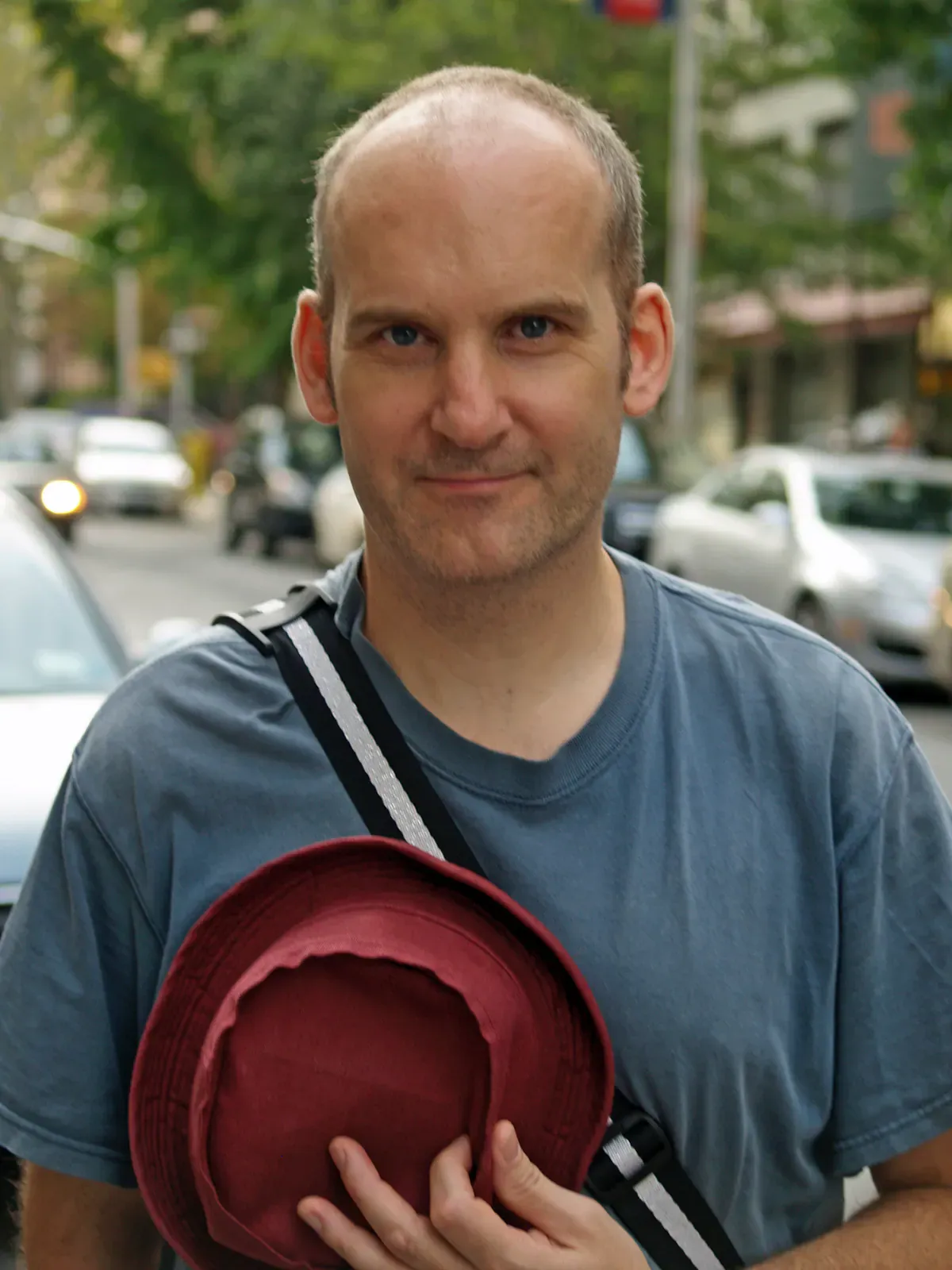
The first signals came from inside hardcore. Hüsker Dü, among the first post-hardcore bands, stretched the form with the double album Zen Arcade, released in July 1984, which added melody and long-form writing. The scene that shaped the genre, though, formed in Washington, D.C., around Dischord Records, the label Ian MacKaye and Jeff Nelson started in 1980.
By 1985 the capital’s hardcore bands faced a problem of their own making: shows had become violent and macho. The response, known as Revolution Summer, was a turn to introspective songs, benefit concerts and protest. Rites of Spring, which played few shows and released its self-titled album in 1985, wrote emotional, nuanced hardcore that later became a template for emo and post-hardcore alike. MacKaye, previously the singer of Minor Threat, formed Embrace the same year, a short-lived band active from summer 1985 to spring 1986 with a more personal take on punk.
The scene’s own vocabulary was ambivalent. A pun on the city’s initials gave the sound its early name, post-harDCore, and journalists tagged the emotional D.C. bands “emocore,” a label that both MacKaye and Guy Picciotto of Rites of Spring rejected.
Revolution Summer, 1983-1986
Revolution Summer was less a style than a change of attitude. Bands kept hardcore’s speed but allowed melody, personal lyrics and open criticism of posturing in the crowd. Positive Force DC, founded in 1985, organised hundreds of benefit shows for community and activist groups, which tied the music to local causes. Clubs such as the 9:30 Club, opened on F Street in 1980 and later moved to V Street, gave young audiences a place to hear the new bands.
Fugazi and the independent networks, 1987-1991
Fugazi played their first show at a benefit concert in September 1987, and all their records appeared on Dischord. The compilation 13 Songs (1989) introduced the band’s mix of punk, funk and reggae influences to a wide audience, and the first full-length, Repeater (1990), came out at low prices in line with the band’s affordable-access policy. A ticket price of five dollars and all-ages shows became a stand against costly concerts, and the model made Fugazi the genre’s central act.
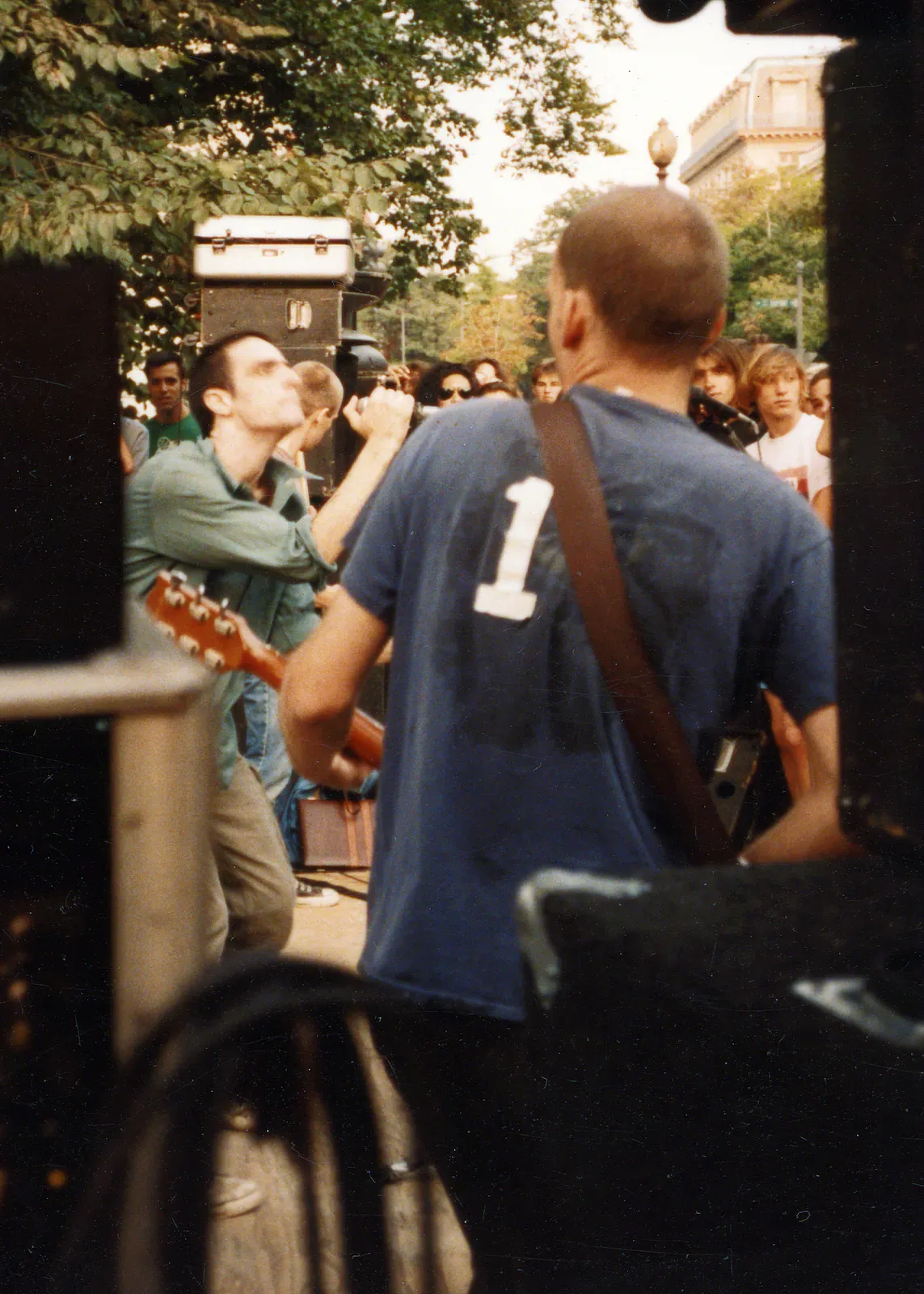
Elsewhere in the United States, other independent centres built parallel circuits. In Chicago, Touch and Go Records released Big Black, The Jesus Lizard and Shellac. The Jesus Lizard’s Goat (1991), produced by Steve Albini, is regarded as a landmark of the Chicago noise-rock side of the genre. In Louisville, Slint recorded Spiderland, also issued by Touch and Go in 1991. The record set swings between quiet and loud and time signatures that later fed math rock and post-rock, and the band had split by the time it appeared.
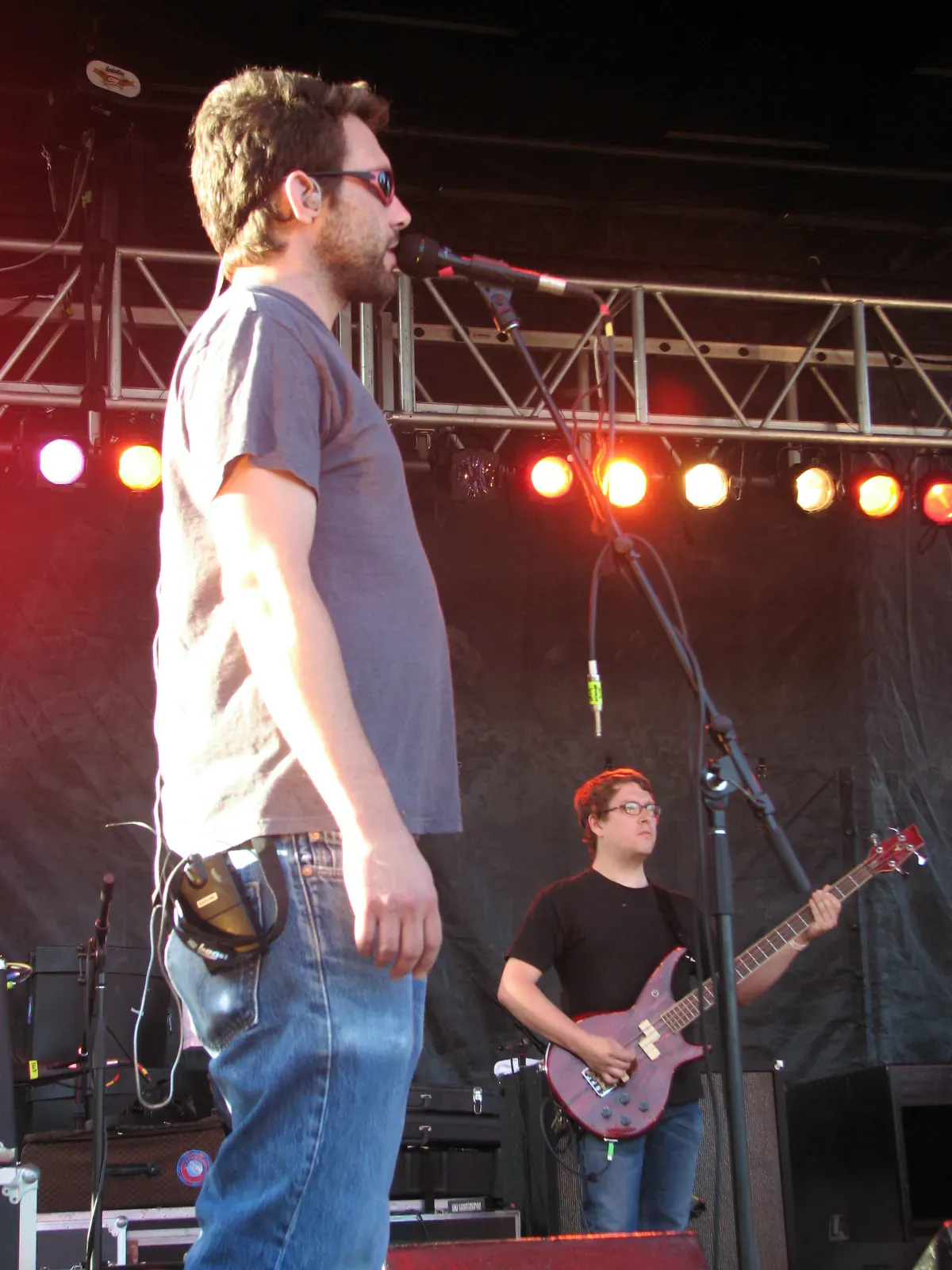
In San Diego, Gravity Records was founded in 1991 by Matt Anderson of Heroin. Its bands, with Drive Like Jehu, shaped a looser and more chaotic regional sound.
Major-label courtship, 1992-1998
The alternative-rock boom of the early 1990s pulled several post-hardcore bands toward major labels. Helmet’s Meantime (1992), a major-label debut on Interscope built on staccato, syncopated riffs, was certified gold in 1994. Jawbox left Dischord for Atlantic with creative control written into the deal, and their video for Savory from For Your Own Special Sweetheart (1994) received MTV airplay. Drive Like Jehu’s Yank Crime (1994), with long multi-part songs, came out on Interscope. Hum’s You’d Prefer an Astronaut (1995) brought Stars to modern rock radio and sold about 250,000 copies.
Crossover, 1998-2003
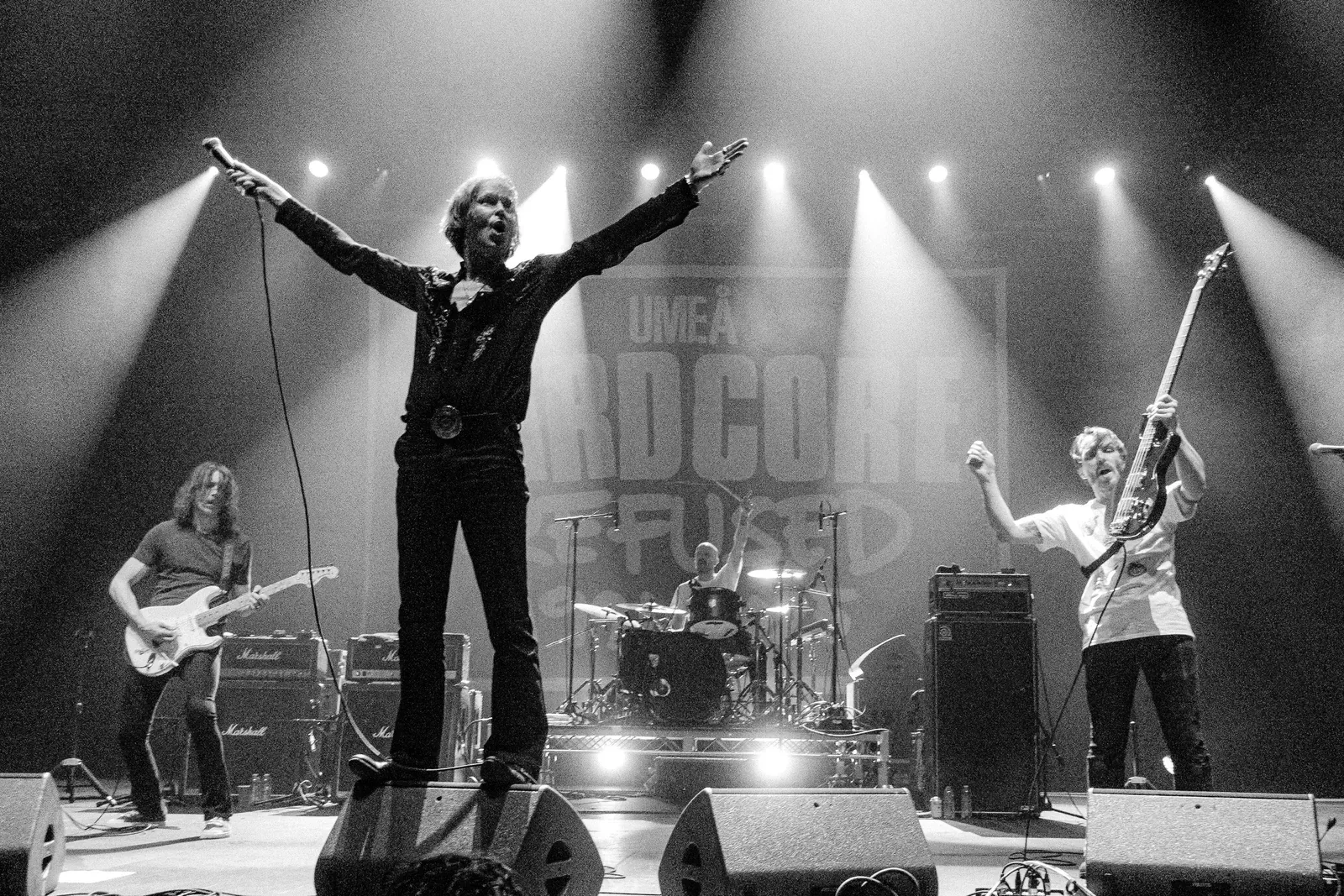
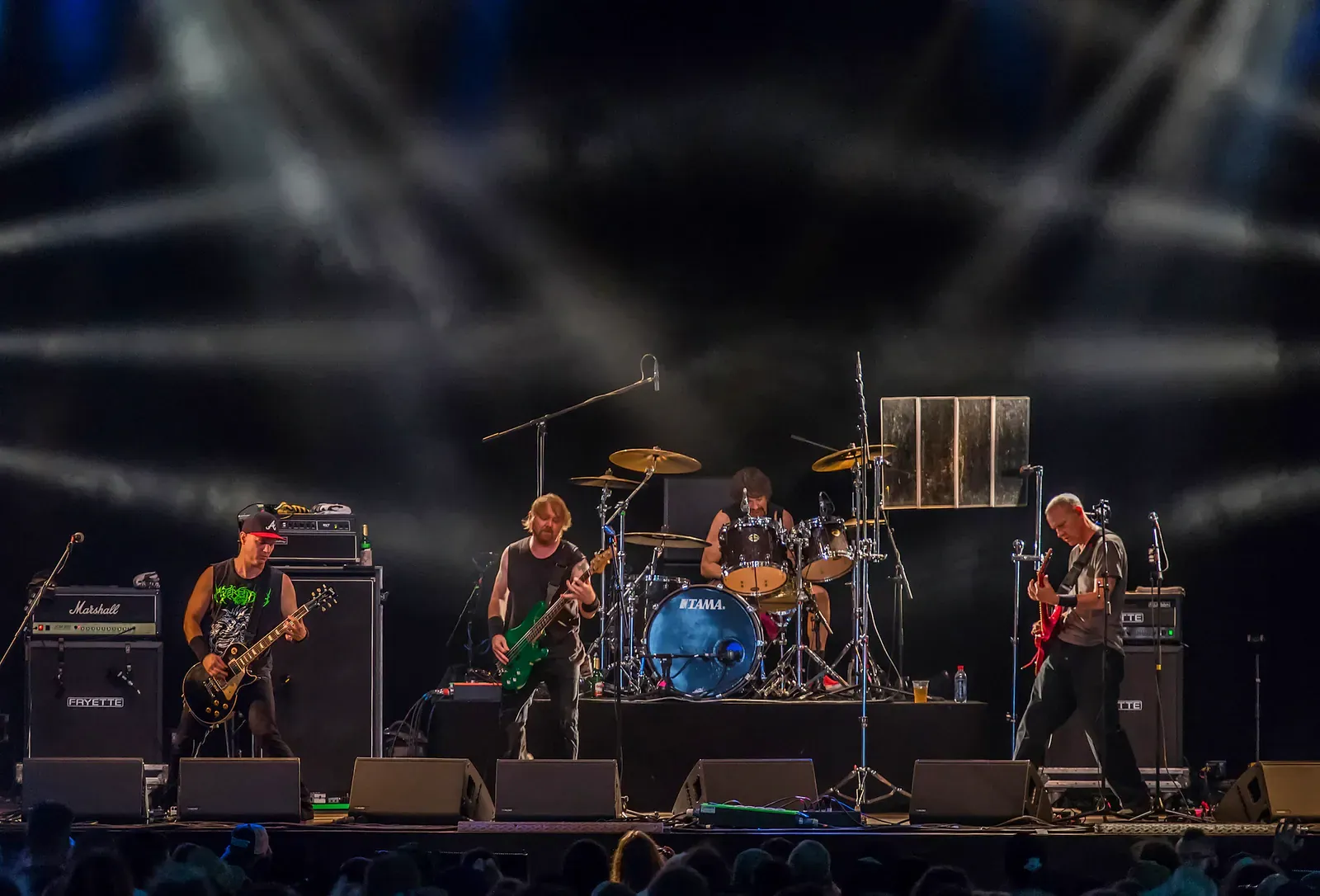
Late-decade bands pushed the sound outward, or toward larger audiences. Refused, from Umea in Sweden, released The Shape of Punk to Come in 1998, a hardcore record that borrowed from electronics, jazz and ambient textures. It received mixed reviews at first and was later hailed as a classic. The band emerged from the Umea hardcore and straight edge scene.
At the Drive-In, from El Paso, followed with Relationship of Command in 2000. Produced by Ross Robinson, it carried One Armed Scissor to a wide audience and later appeared on many best-of lists. The same producer worked on Glassjaw’s debut Everything You Ever Wanted to Know About Silence the same year, an album released on Roadrunner by the Long Island band that extended the sound toward the 2000s mainstream. Thursday, from New Brunswick, New Jersey, released Full Collapse on Victory Records in 2001, which preceded the group’s major-label debut in 2003.
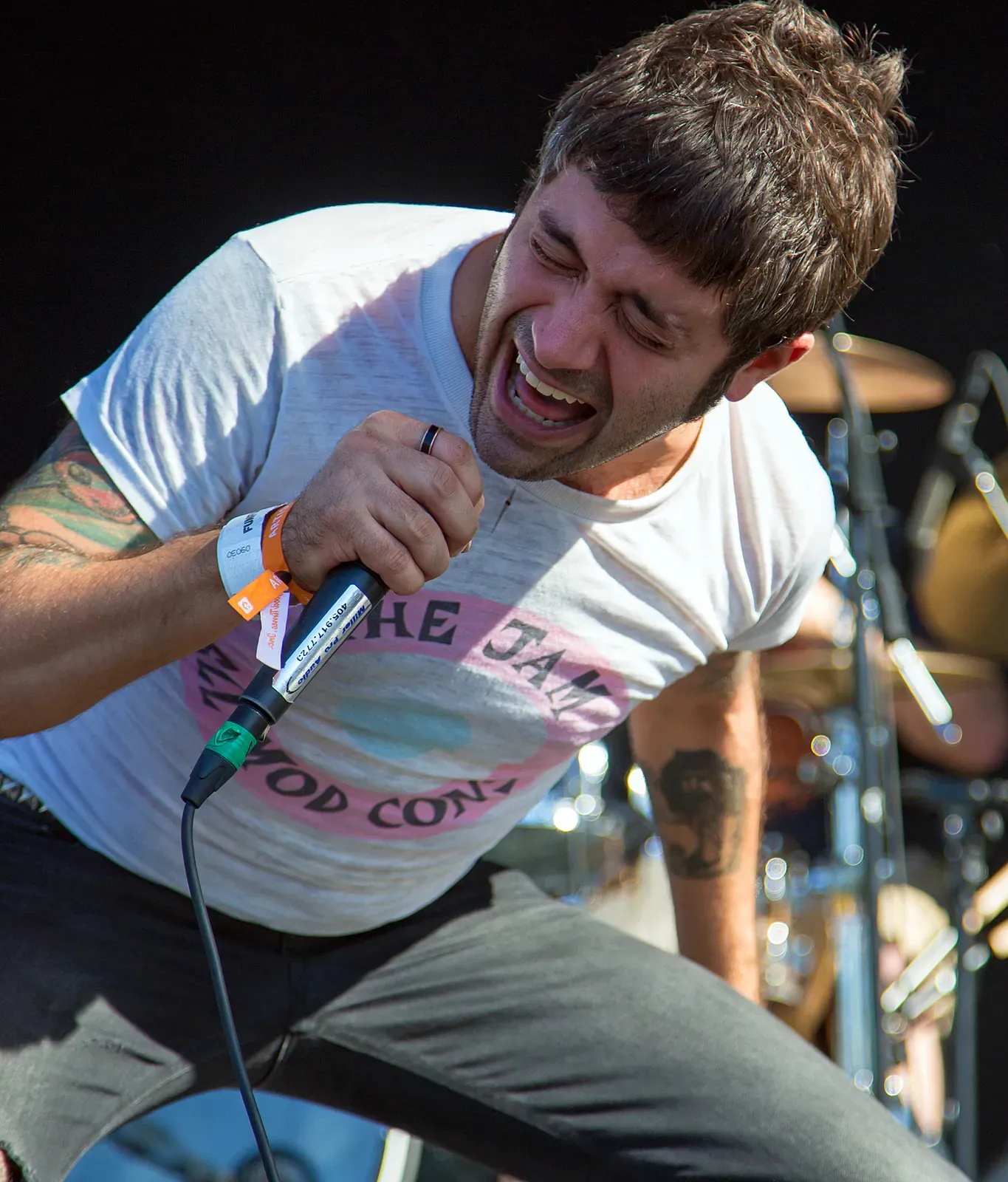
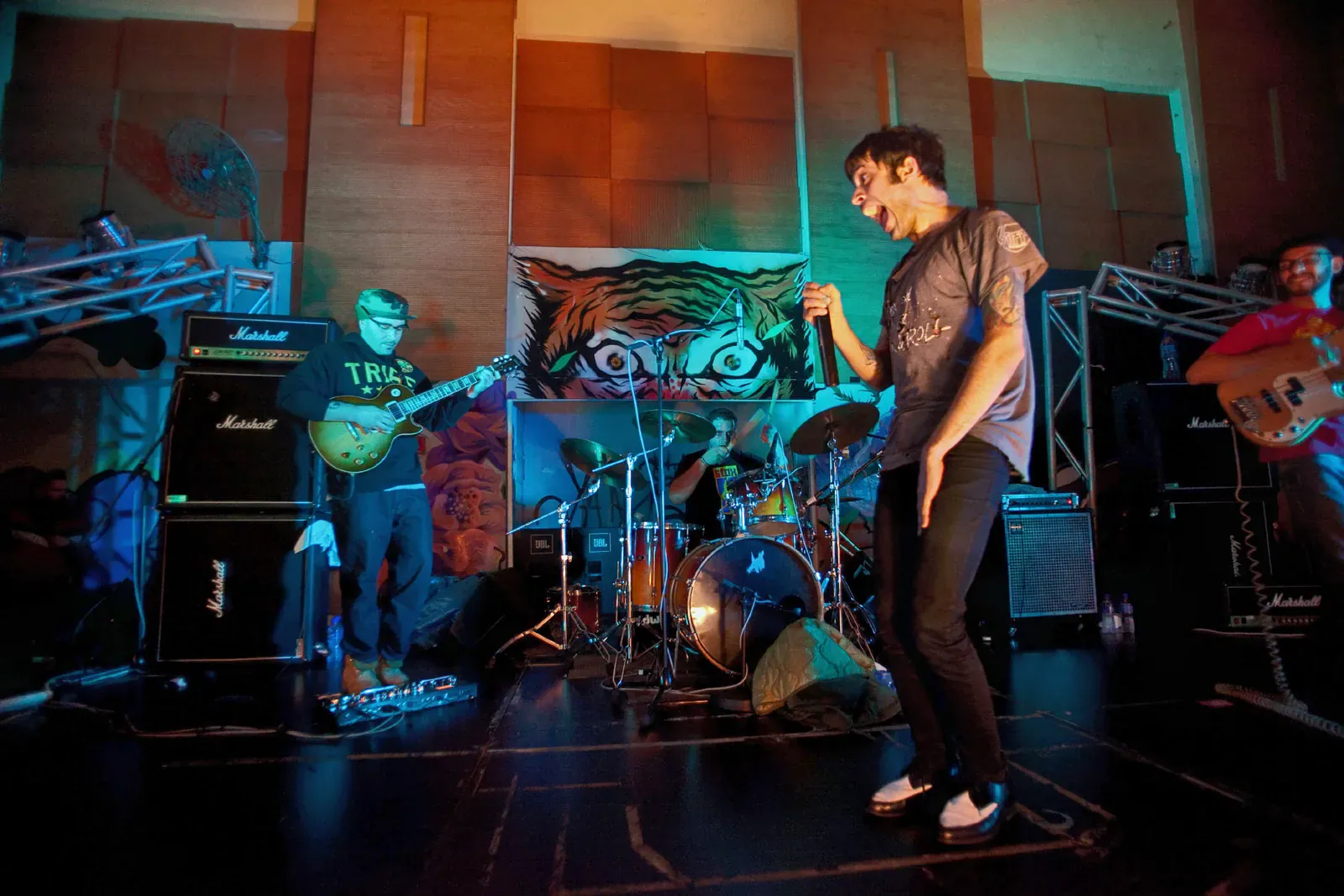
Many of the key acts of this wave broke up soon after, which gave the era a short, intense profile.
Reunions and archives, 2004 onward
From the mid-2000s, original bands reformed and catalogues returned to print. Dischord and Touch and Go kept releasing records by both old and new artists, and the genre’s centre of gravity moved from a handful of cities to an international network of bands. Jawbox, for example, reunited in 2019.
Characteristics
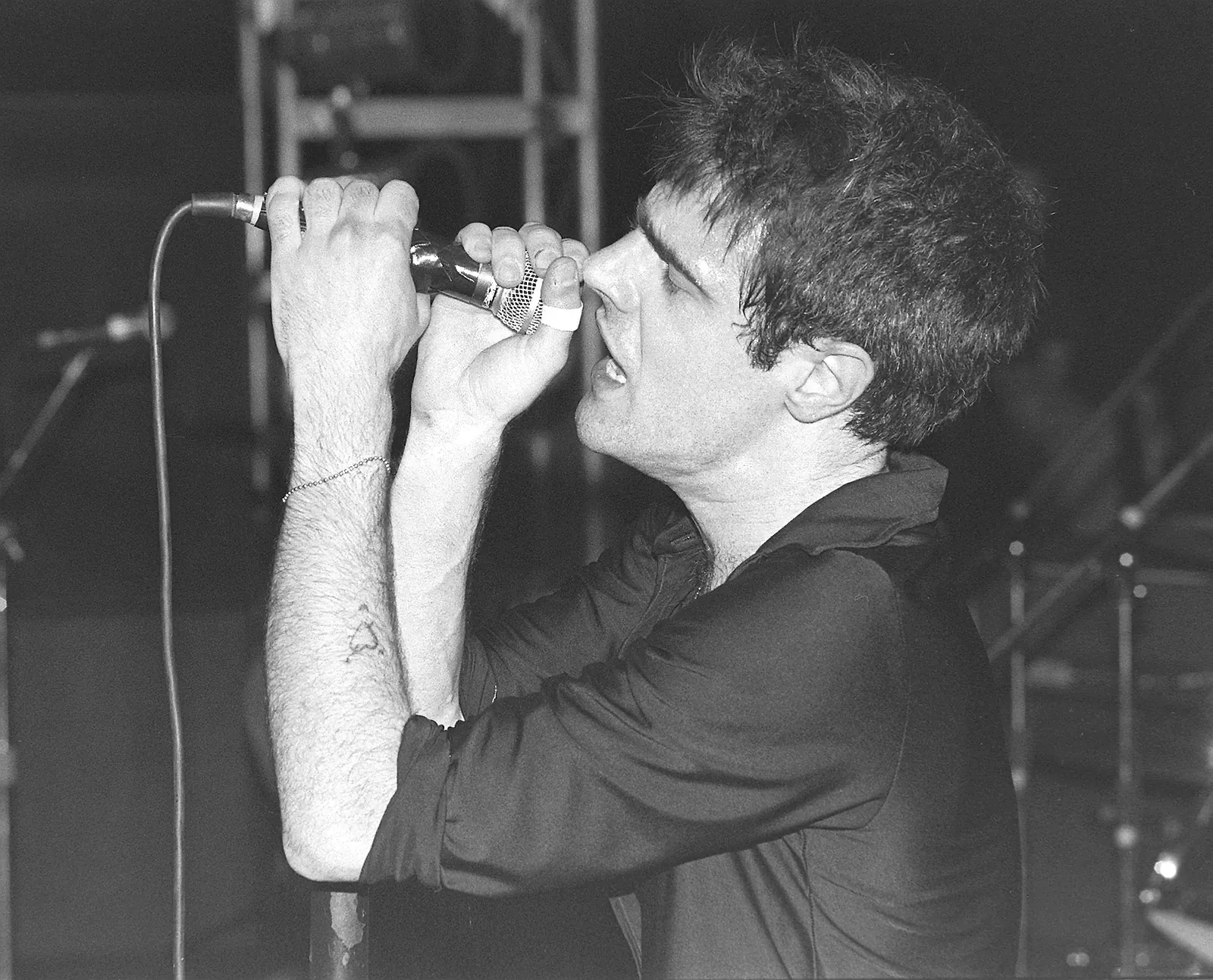
Where hardcore ran on speed and uniformity, post-hardcore runs on contrast. Songs build and release tension instead of holding one tempo, guitars use complex chord shapes and angular lines in place of plain power chords, and drumming moves between hardcore beats and slower, syncopated or odd-meter patterns. Bass often carries a melodic or rhythmic lead, as in Fugazi’s dub- and funk-influenced grooves. Vocals cover a wide span from a whispered croon to a maniacal yelp, and are frequently shared by two singers.
Instruments and production
The line-up is the standard rock one of two guitars, bass and drums, but arranged differently from hardcore: two guitars play complex, interlocking parts, the bass often leads, and two vocalists can trade lines. Producers shaped the genre’s records as well. Steve Albini produced The Jesus Lizard’s Goat, and Ross Robinson produced both At the Drive-In and Glassjaw.
Notable recordings
Rites of Spring’s self-titled 1985 album is the earliest benchmark: hardcore speed with raw, personal singing. Repeater fixed the genre’s combination of punk drive, dub and funk space and a self-run business model. For Your Own Special Sweetheart showed what a major-label deal could look like when the band kept control. The Shape of Punk to Come showed the opposite direction, in which a hardcore band used the form as a base for experiment.
Culture
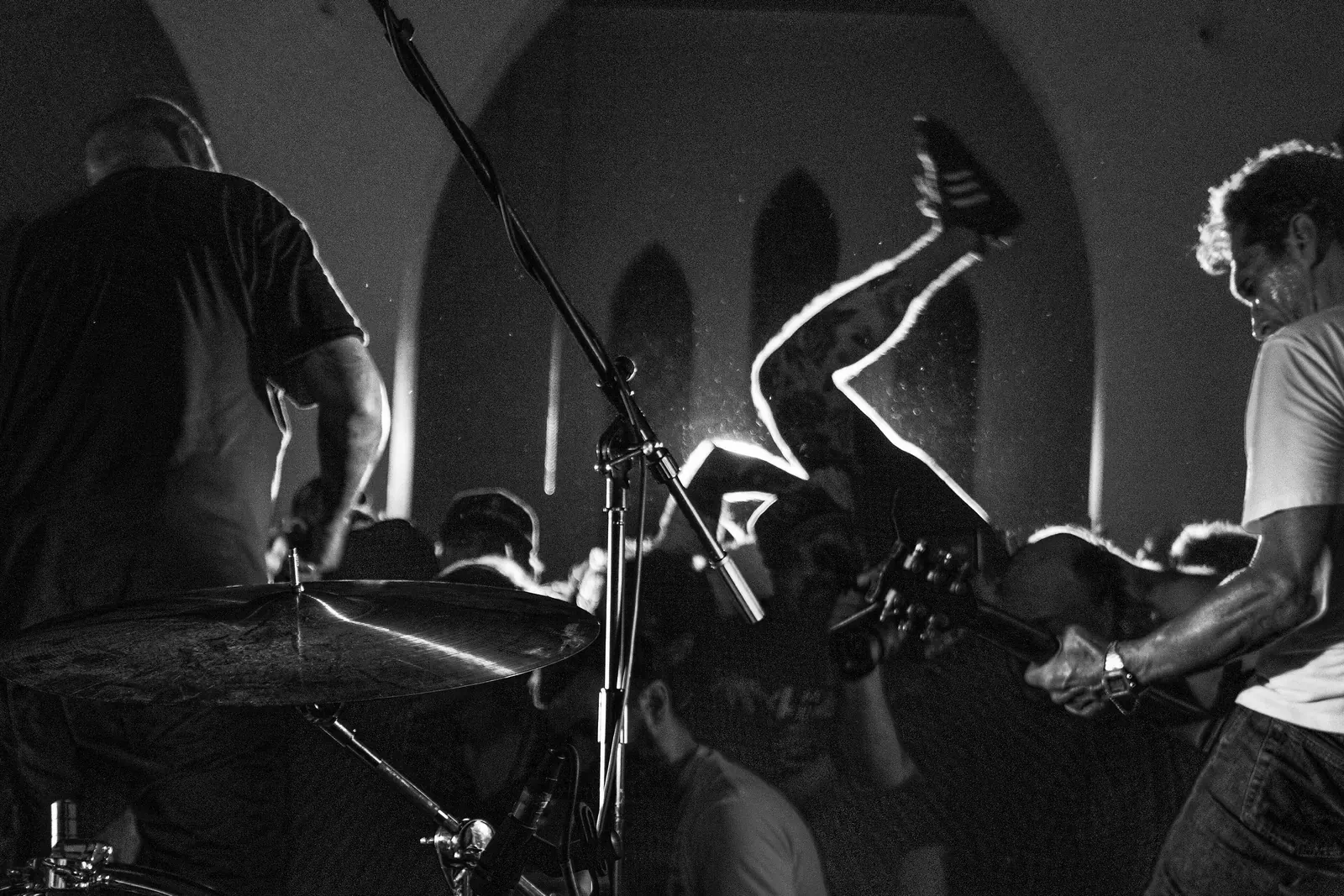
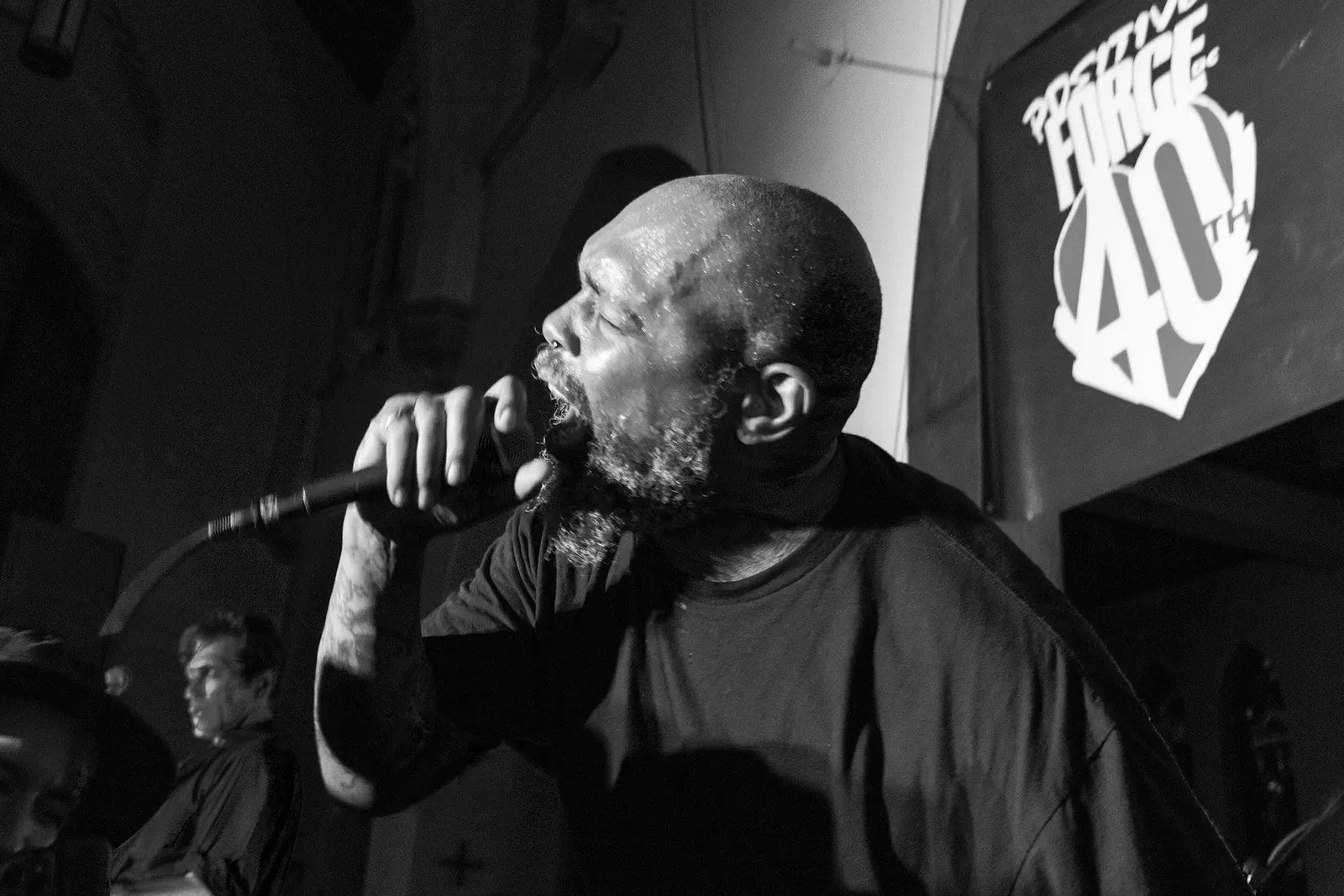
The culture of the genre was shaped by the economics of the independent scene. Dischord kept record prices low, Fugazi held to five-dollar, all-ages shows, and benefit concerts tied bands to causes. Positive Force DC continued to promote such shows for decades; its fortieth-anniversary event is shown below.
The community also produced its own documentation. State of the Union (1989), a Dischord benefit compilation, captured the late-1980s D.C. scene, and Jem Cohen’s film Instrument (1999) followed Fugazi over eleven years, from 1987 to 1998.
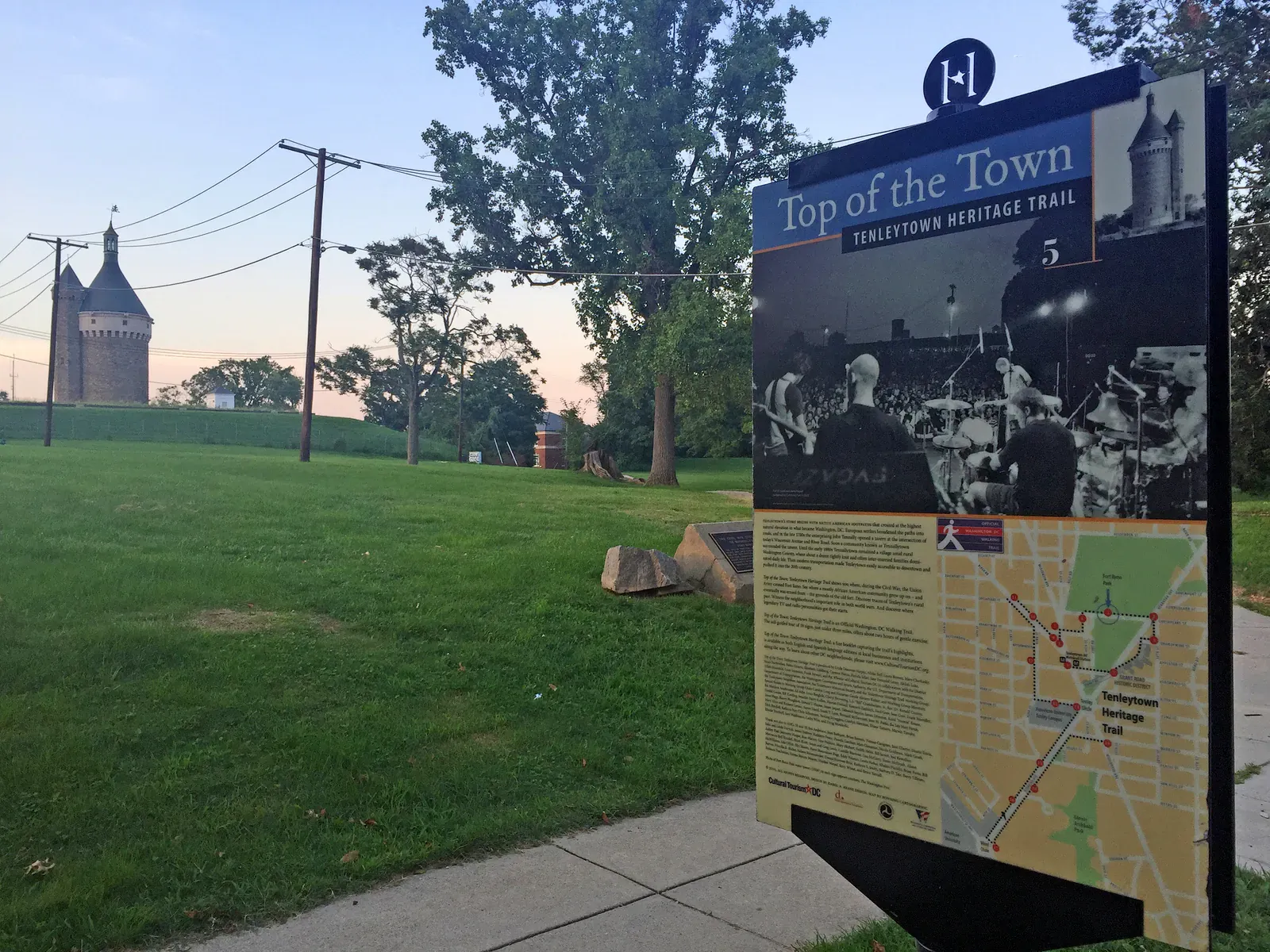
In Washington, the DIY concert tradition also reached outdoor stages such as Fort Reno Park in Tenleytown.
Legacy
Post-hardcore set the template for a series of later styles. The genre’s children include the New Wave of post-hardcore, nintendocore, pop-screamo, progressive post-hardcore, the San Diego sound, sass and swancore. Its dynamics fed math rock and post-rock.
Its business practices, self-run labels, cheap records and all-ages shows, set a standard for independent music beyond the genre.
Misconceptions
One common belief is that post-hardcore and emo are the same thing. The term “emocore” was applied to Washington’s emotional hardcore in 1985 over the objections of the musicians involved, and later emo and post-hardcore developed as related but separate traditions.
A second belief is that the genre is a single Washington sound. The record shows several regional centres: Chicago’s noise-rock Touch and Go circuit, San Diego’s Gravity Records bands, Louisville’s Slint, El Paso’s At the Drive-In and Sweden’s Umea scene all produced distinct versions.
A third belief is that post-hardcore only reached the mainstream in the 2000s. Major labels had signed bands from 1992 onward, Helmet’s Meantime was certified gold in 1994, and Hum sold about 250,000 copies of You’d Prefer an Astronaut in the mid-1990s.
Frequently asked questions
What is post-hardcore?
Post-hardcore is a rock genre that emerged in the 1980s from hardcore punk. It keeps hardcore’s intensity but adds quiet-loud dynamics, angular guitar, shared shouted and sung vocals and unconventional song structures.
Where did post-hardcore start?
Post-hardcore began in Washington, D.C., in the mid-1980s, around Dischord Records and the Revolution Summer movement of 1985. Chicago and San Diego developed their own scenes shortly afterward.
How does post-hardcore differ from hardcore punk?
Hardcore punk favours uniform speed and short, direct songs. Post-hardcore uses dynamics, odd time signatures and more varied vocals, and it often treats personal or political themes with more nuance.
Which bands are essential to post-hardcore?
Fugazi, Rites of Spring, Jawbox, Drive Like Jehu and At the Drive-In are central to the genre’s history, together with Slint, The Jesus Lizard, Helmet and Refused.
Sound
Sound sheet
Signature sounds
- Quiet-loud dynamics
- Complex chord shapes instead of plain power chords
- Two guitars and two vocalists trading lines
- Syncopated, staccato riffs in unconventional time signatures
- Vocals from whispered croon to yell
Techniques
- Quiet-loud dynamics
- Syncopated staccato riffs
- Multi-sectioned song structures
- Shared vocals
Vocals
Shouted to sung, from whispered croon to maniacal yelp.
Scenes
Where it happened
Where and when the sound lived: one bar per city on a shared timeline.
North America
Europe
Active scenes
Peak 6, 1999-2025
Home of Dischord, Revolution Summer, Rites of Spring, Embrace, Fugazi and Jawbox.
Touch and Go's base, with Big Black, The Jesus Lizard and Shellac.
Drive Like Jehu, Heroin and Gravity Records formed the loose, chaotic San Diego sound.
Slint formed here in 1986 and made Spiderland before splitting.
At the Drive-In began here in 1994.
Refused came out of the Umea hardcore and straight edge scene.
Thursday formed in the New Jersey city and released Waiting in 1999.
Venues and places
Washington, D.C., 1980 to today. Opened on F Street in 1980 and later moved to V Street; Embrace played its last show at the old club.
Culture
Culture markers
- Low-priced all-ages shows
Fugazi aimed for $5 admission and all-ages concerts, with low record prices on Dischord.
Ritual - Benefit concerts
Positive Force DC, founded in 1985, ran hundreds of benefit shows for community and activist groups.
Ritual - Emocore
A label for D.C.'s emotional hardcore that the musicians involved disliked.
Slang
Media
Key media
- 1989State of the Union
by Various. A Dischord benefit compilation documenting the late 1980s D.C. punk and post-hardcore scene.
Compilation - 1999Instrument
by Jem Cohen. A documentary on Fugazi filmed over eleven years, from 1987 to 1998.
Film
Glossary
Terms on this page
Fugazi's target ticket price, set as a stand against expensive concerts.
A concert open to under-21s, standard at Dischord-linked bands' gigs.
Nickname for the emotional D.C. hardcore of 1985; Guy Picciotto and Ian MacKaye both rejected the label.
A pun on the D.C. scene's name that gave the genre its early label.
Building and releasing tension between sparse and heavy passages instead of constant speed.
The 1985 D.C. movement that steered hardcore toward introspection, inclusiveness and activism.
Loose, chaotic post-hardcore from Gravity Records bands such as Heroin and Antioch Arrow.
Rock family