Gamelan
Gamelan is the Indonesian orchestra of tuned bronze gongs, metallophones and drums, centred on Java, Bali and Sunda, documented from about 800.
Indonesia, around 800
Southeast Asian family
Born
around 800
Indonesia
Subgenres
8
Documented branches
Links
14
Genres it drew on or shaped
Tempo
60-145 BPMLineage
Family tree
Grew out of
Indonesia
Gamelan
Led to (8)
Timeline
Era by era
From the first sparks to today. Select a dot to read the story behind it.
- Temple reliefs to court ensembles
800 to 1754
- Two courts, two styles
1755 to 1888
- Kebyar, Paris and Bali abroad
1889 to 1955
- Records, universities, a golden disc
1956 to 1978
- Community ensembles and new music
1979 to 2026
Eras
Moments
- 1 Temple reliefs to court ensembles, 800 to 1754
- 2 Two courts, two styles, 1755 to 1888
- 3 Kebyar, Paris and Bali abroad, 1889 to 1955
- 4 Records, universities, a golden disc, 1956 to 1978
- 5 Community ensembles and new music, 1979 to 2026
around 800
Temple reliefs to court ensembles
Bronze and wooden ensembles appear on 8th-century Borobudur reliefs. By the 12th century named court sets exist, and royal workshops tune gongs and keys into pelog and slendro.
- 800Borobudur shows early ensemblesRelief carvings on the Javanese temple are the earliest pictures of gamelan-like instruments.
- 1150Oldest named court ensemblesGamelan Munggang and Kodok Ngorek are the oldest known Javanese court sets, dated to the 12th century.
1755
Two courts, two styles
The 1755 Giyanti treaty splits Mataram and its heirloom gamelans between Surakarta and Yogyakarta. Each court, later joined by Mangkunegaran and Pakualaman, grows its own repertoire and manner.
- 1755Treaty of Giyanti splits MataramRoyal regalia, gamelans included, are divided between the Surakarta and Yogyakarta courts.
- 1853Mangkunegara IV composes PuspawarnaThe Surakarta prince writes the ketawang that later reaches space on the Voyager disc.
1889
Kebyar, Paris and Bali abroad
Debussy hears a Javanese village at the 1889 Paris fair. In 1915 north Bali unveils explosive gong kebyar, and McPhee moves to Bali in 1931, carrying the sound to Western concert halls.
- 1889Debussy hears gamelan in ParisA Javanese village at the Universal Exposition shapes his colour-first harmony.
- 1900Kepatihan cipher notationNumbered pitch notation spreads from the Kepatihan palace conservatory in Java.
- 1903Debussy publishes PagodesThe first piece of Estampes borrows gamelan layering for solo piano.
- 1915Gong kebyar debuts in JagaragaA gamelan competition in north Bali unveils the fast, explosive new ensemble style.
- 1928Commercial gamelan discs cut in BaliRecord companies cut 78 rpm sides of village gong kebyar and other Balinese ensembles.
- 1931Colin McPhee settles in BaliHe stays until 1938, transcribing the music later published as Music in Bali.
- 1936Tabuh-Tabuhan premieres in Mexico CityCarlos Chavez conducts McPhee's toccata for orchestra and a "nuclear gamelan".
1956
Records, universities, a golden disc
Lokananta opens in 1956 and UCLA starts the first US gamelan program in 1958. Nonesuch Explorer LPs reach Western listeners, and a Yogyakarta court piece rides Voyager in 1977.
- 1956Lokananta founded in SurakartaThe state record company starts pressing Javanese karawitan.
- 1958UCLA opens the first US gamelan programMantle Hood ships a Javanese set to Los Angeles with Rockefeller money.
- 1967Music from the Morning of the WorldDavid Lewiston's Bali LP, recorded in 1966 on a portable stereo machine, opens the Nonesuch Explorer Series.
- 1969Condhong Raos society foundedKi Nartosabdho forms the Semarang ensemble that popularises his new gending.
- 1971Javanese Court Gamelan from Pura Paku AlamanRobert E. Brown records the Yogyakarta court ensemble for Nonesuch Explorer.
- 1977Puspawarna launched on VoyagerThe Paku Alaman recording is on the Golden Record carried beyond the solar system.
1979
Community ensembles and new music
American and European groups form, composers such as Ziporyn and Dewa Alit write new works, and UNESCO lists gamelan as intangible heritage in 2021.
- 1979Gamelan Sekar Jaya founded in BerkeleyThe first community-based Balinese gamelan in the United States starts with Balinese teachers.
- 1979Bali Arts Festival beginsThe annual Denpasar festival sets up yearly kebyar competitions and new works.
- 1987Harrison finishes his Piano Concerto with Javanese GamelanLou Harrison writes for a Javanese-style set tuned to just intonation.
- 1993Gamelan Galak Tika formed at MITEvan Ziporyn starts an ensemble devoted to new works for Balinese gamelan.
- 2007Dewa Alit founds Gamelan SalukatHe builds new instruments in his own tuning for experimental Balinese composition.
- 2021UNESCO lists gamelanGamelan is inscribed on the Representative List of Intangible Cultural Heritage.
- 2026Baur Bentur by Dewa Alit and Gamelan SalukatBlack Truffle issues new pieces for Salukat and pianist Sri Hanuraga.
Listening path
Anthems
The records that built the sound, grouped by the part they played. Thumbnails come from YouTube; the player loads only when you press play.
- 01
Pura Paku Alaman Gamelan, 1971 · Nonesuch Records
Court ketawang by Mangkunegara IV, in the classic Yogyakarta reading that later flew on Voyager; the root of the soft Javanese style.
Start hereOrigin - 02
Gamelan Gong of Peliatan (Gunung Sari), 1967 · Nonesuch Records
Opening track of Music from the Morning of the World, the LP that took Balinese gamelan to Western listeners.
Start hereBreakthrough - 03
Gamelan Sunda Salendro of RRI Bandung, 1976
Sundanese salendro from the Bandung radio studios, a rare West Java field recording in the soft Sundanese manner.
Anthem - 04
Ki Nartosabdho, 1982
Ki Nartosabdho and Condhong Raos in his livelier Semarang-style treatment, the sound of modern popular Javanese gending.
Anthem - 05
Claude Debussy, 1903
Debussy turns what he heard of Javanese gamelan at the 1889 Paris fair into layered piano colour, the best known bridge to the concert hall.
Start hereCrossover - 06
Colin McPhee, 1936
McPhee fits Balinese interlocking and a nuclear gamelan into an orchestra, in this Hanson recording of the first movement.
Crossover - 07
Lou Harrison, 1987
Harrison writes a piano concerto for a Javanese-style gamelan, here in a Gamelan Pacifica recording.
Crossover - 08
Evan Ziporyn, 1996
Ziporyn pits Balinese gamelan against double bass and samplers, played here by Gamelan Galak Tika and Robert Black.
Crossover - 09
Dewa Alit, 2026 · Black Truffle
Dewa Alit and Gamelan Salukat set new instruments and tunings beside piano, the cutting edge of Balinese composition.
Revival
Facts
| Family | Southeast Asian |
| Origin | Indonesia |
| Emerged | Ancient |
| Status | Active |
| Tempo | 60 to 145 BPM |
| Meter | Cyclic: gong cycles of 16 beats (ketawang) or 32 beats (ladrang); tempo varies per piece and irama |
| Subgenres | 8 |
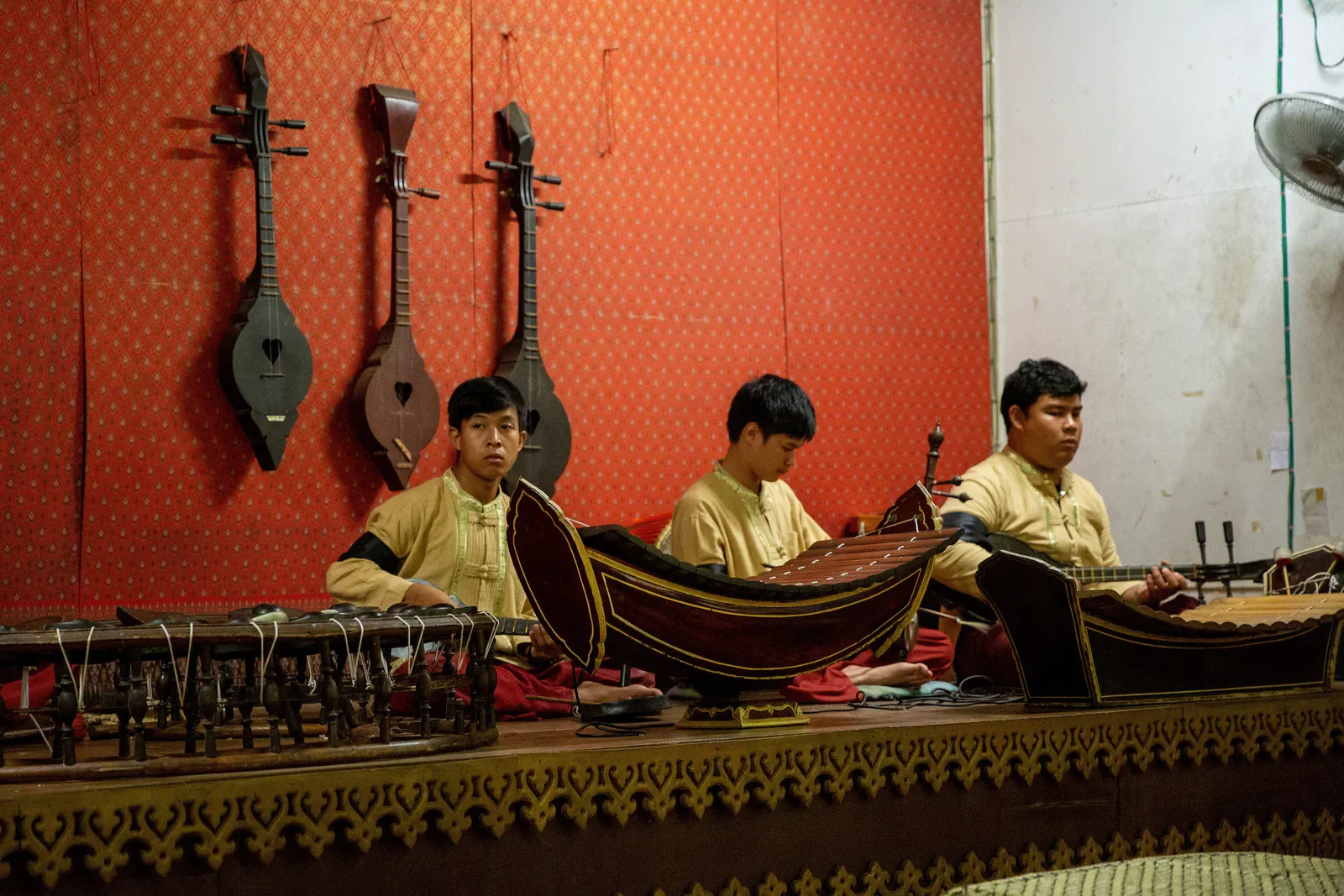
Gamelan is the percussion orchestra of Indonesia, built from tuned bronze gongs, metallophones and drums, with a bowed fiddle, flute and voices in some styles. It has three main homes: central Java, Bali and West Java (Sunda).
Gongs and keyed instruments appear on the Borobudur reliefs from about 800, and the music is still played at courts, temples, dances and shadow-puppet plays. It belongs to the Southeast Asian music family.
Origins
Nobody can date the first gamelan. The earliest pictures are carved on the Borobudur temple in Java, around 800, and show ensembles of gongs, drums and plucked instruments. By about the 12th century named court sets such as Munggang and Kodok Ngorek existed, kept by royal workshops that cast the bronze and tuned every key and kettle by ear.
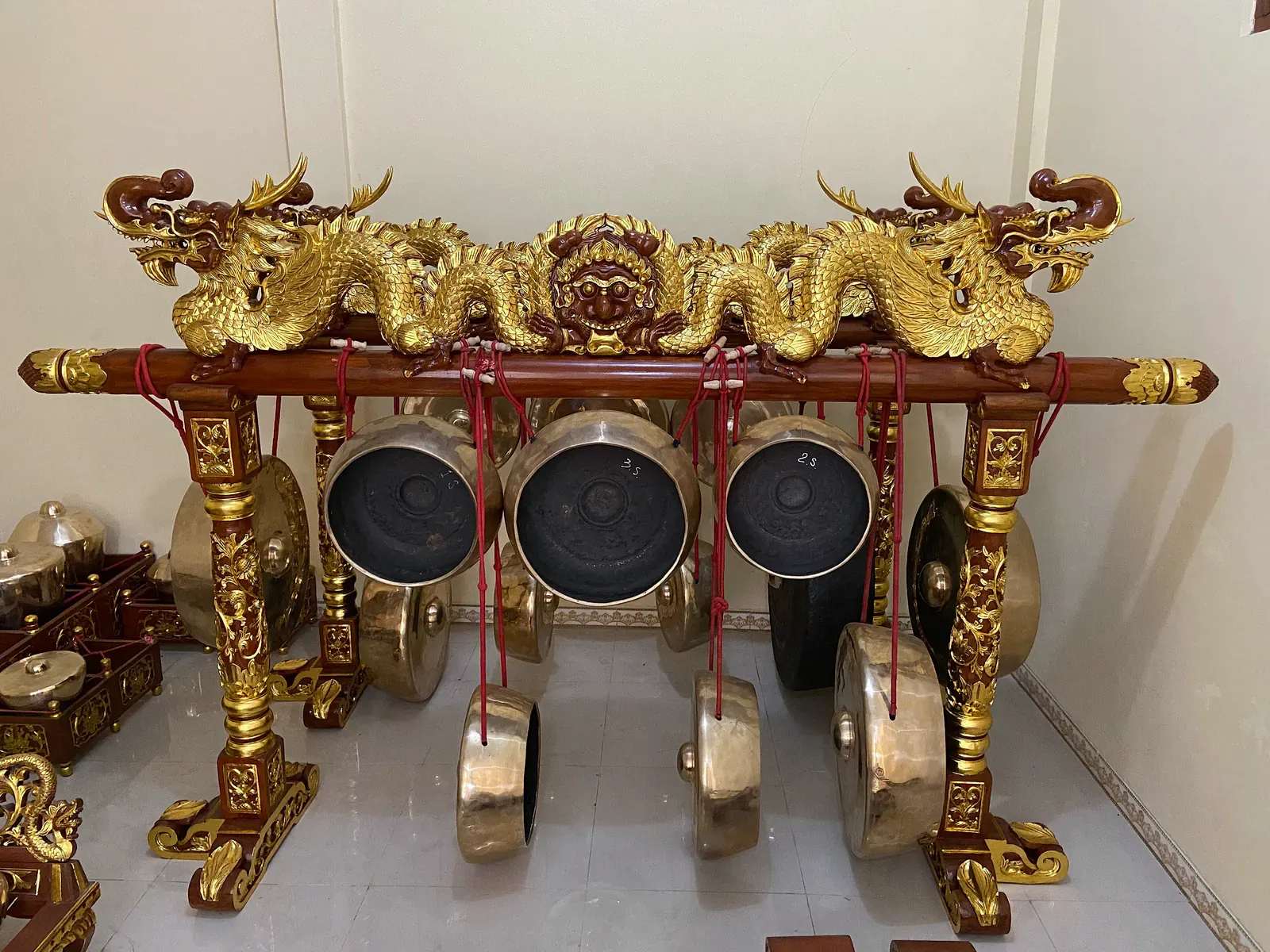
Instruments were treated as living heirlooms and given titles with the honorific Kyai.
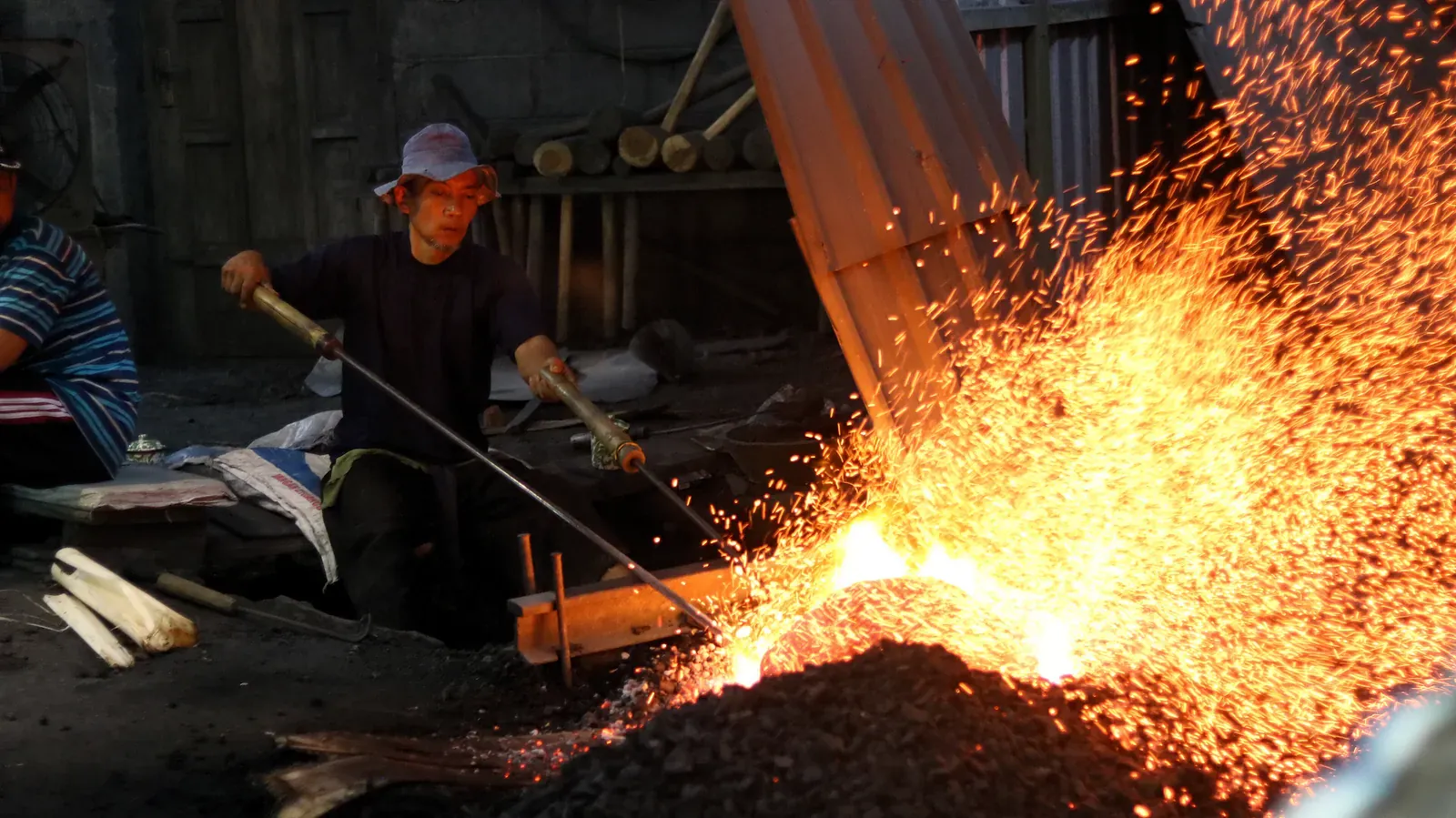
The classic court pieces are cyclic: a solo opening (buka) by rebab, gender or drum, a slow main body, a faster second section and a closing slowdown to the final gong. The ketawang Puspawarna, composed in the 19th century by the Surakarta prince Mangkunegara IV, is the best known of them.
Two courts, two styles, 1755 to 1888
In 1755 the Treaty of Giyanti split the Mataram kingdom, and its royal regalia, gamelans included, were divided between Surakarta and Yogyakarta. Each court, later joined by the Mangkunegaran and Pakualaman houses, built its own repertoire and manner. Yogyakarta stayed firm and grave, Surakarta smoother and more flowing, and rivalry kept both polished.
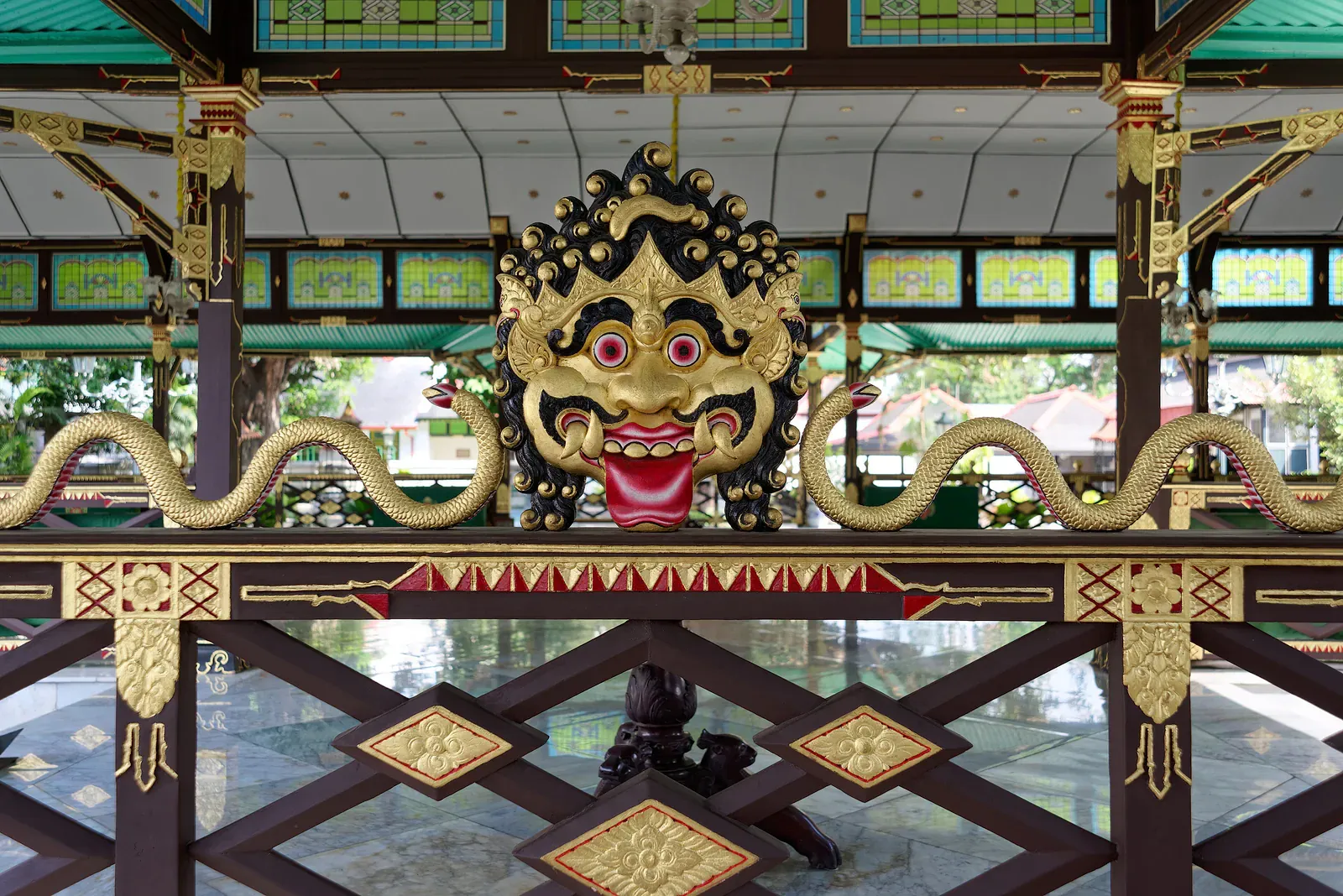
Courts guarded their sets and their pieces, and a palace gamelan played for ceremonies, dances and the sultan’s own hours. Around 1900 numbered pitch notation spread from the Kepatihan palace conservatory in Java, giving a shared written shorthand for tunes that had been passed down by ear.
Kebyar, Paris and Bali abroad, 1889 to 1955
In 1889 a Javanese village at the Paris Universal Exposition put a gamelan in front of Claude Debussy. The layered, colour-first sound stayed with him, and in 1903 he published Pagodes, the first of his Estampes for piano, which borrows that layering. He wrote for piano, never for a gamelan, but the piece became the best known bridge between the two worlds.
In 1915 a competition at Jagaraga in north Bali unveiled gong kebyar, a new style of sudden bursts, sharp stops and fast interlocking parts. It spread across the island within a decade and became the sound most people now picture as Balinese. Record companies cut commercial discs of village ensembles in 1928.
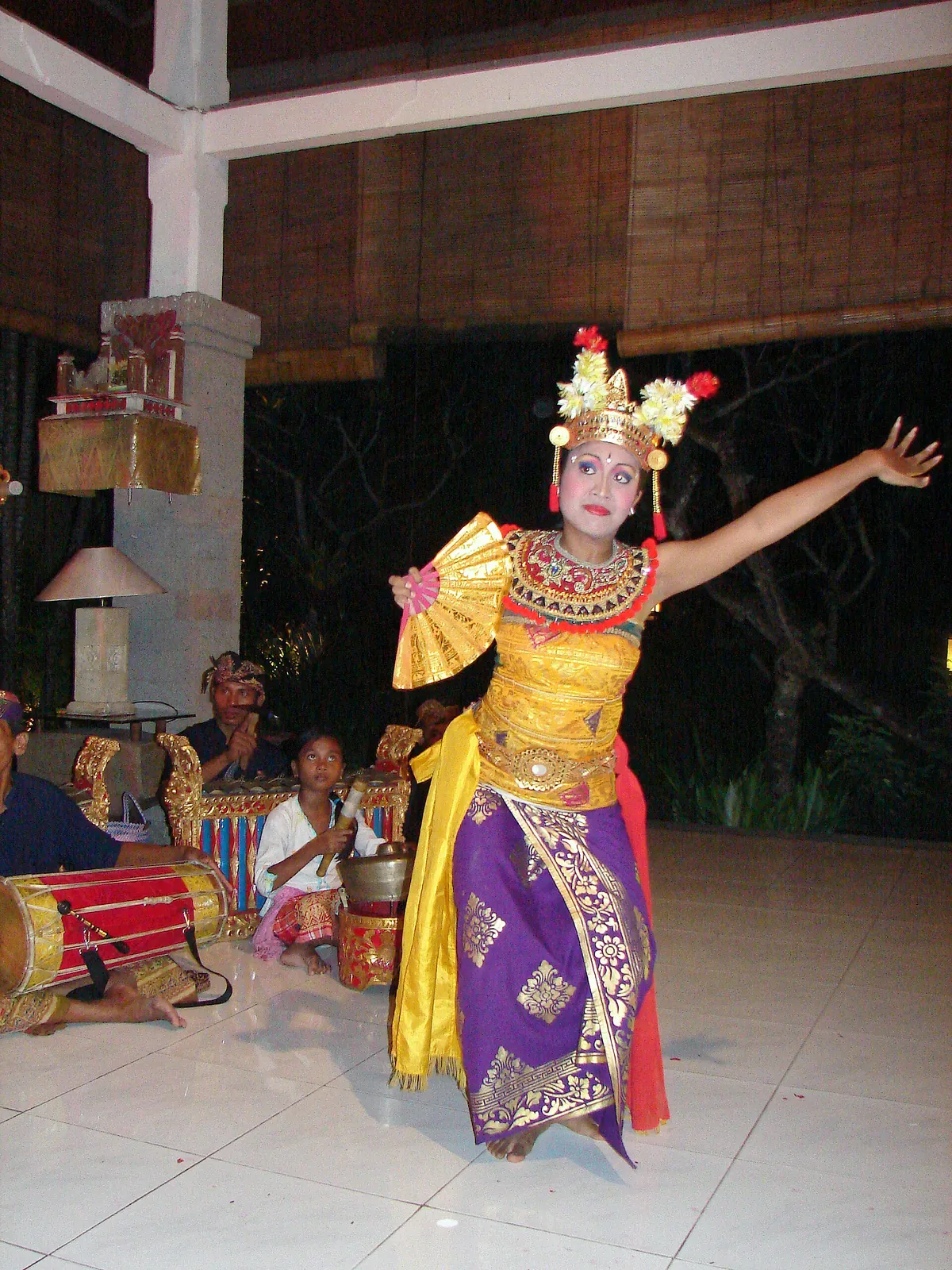
The Canadian-born composer Colin McPhee settled in Bali in 1931 and stayed until 1938, transcribing the music he heard. His memoir A House in Bali appeared in 1946 and his study Music in Bali after his death, in 1966. His orchestral toccata Tabuh-Tabuhan premiered in Mexico City in 1936, under Carlos Chavez, with a “nuclear gamelan” inside the orchestra. In 1952 the Gunung Sari ensemble of Peliatan, near Ubud, toured the West and showed audiences a Balinese ensemble at full strength.
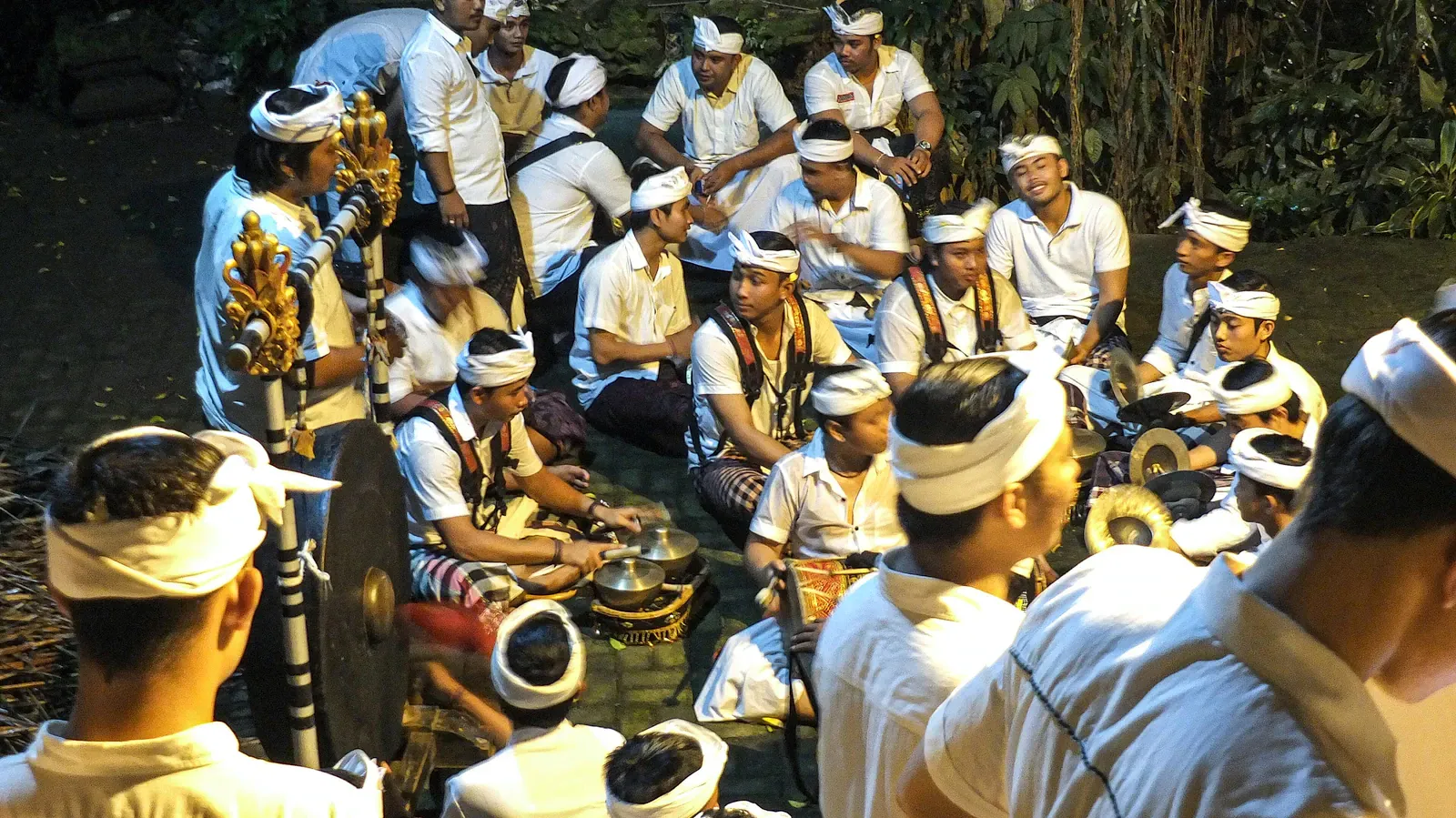
Records, universities and a golden disc, 1956 to 1978
In 1956 the state company Lokananta opened in Surakarta and began pressing Javanese court music. Two years later Mantle Hood started the first US university gamelan program at UCLA, shipping a Javanese set to Los Angeles with Rockefeller money.
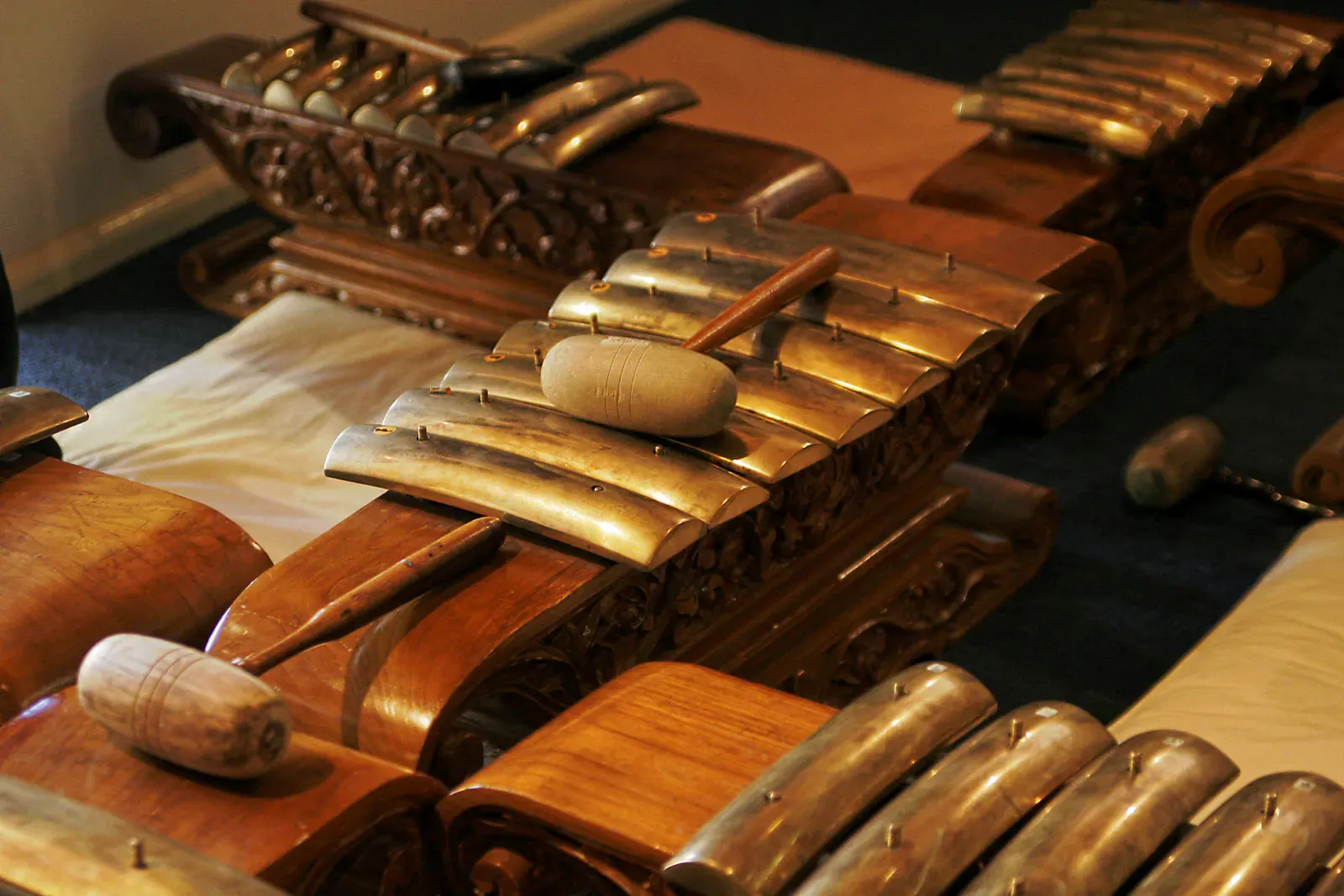
The recordings did the rest. Nonesuch issued David Lewiston’s Bali field tapes as Music from the Morning of the World in 1967, then Golden Rain in 1969 and a Yogyakarta court disc in 1971. Smithsonian Folkways later reissued Sundanese field recordings from West Java. The Voyager Golden Record, launched in 1977, carried Puspawarna in the Paku Alaman reading.
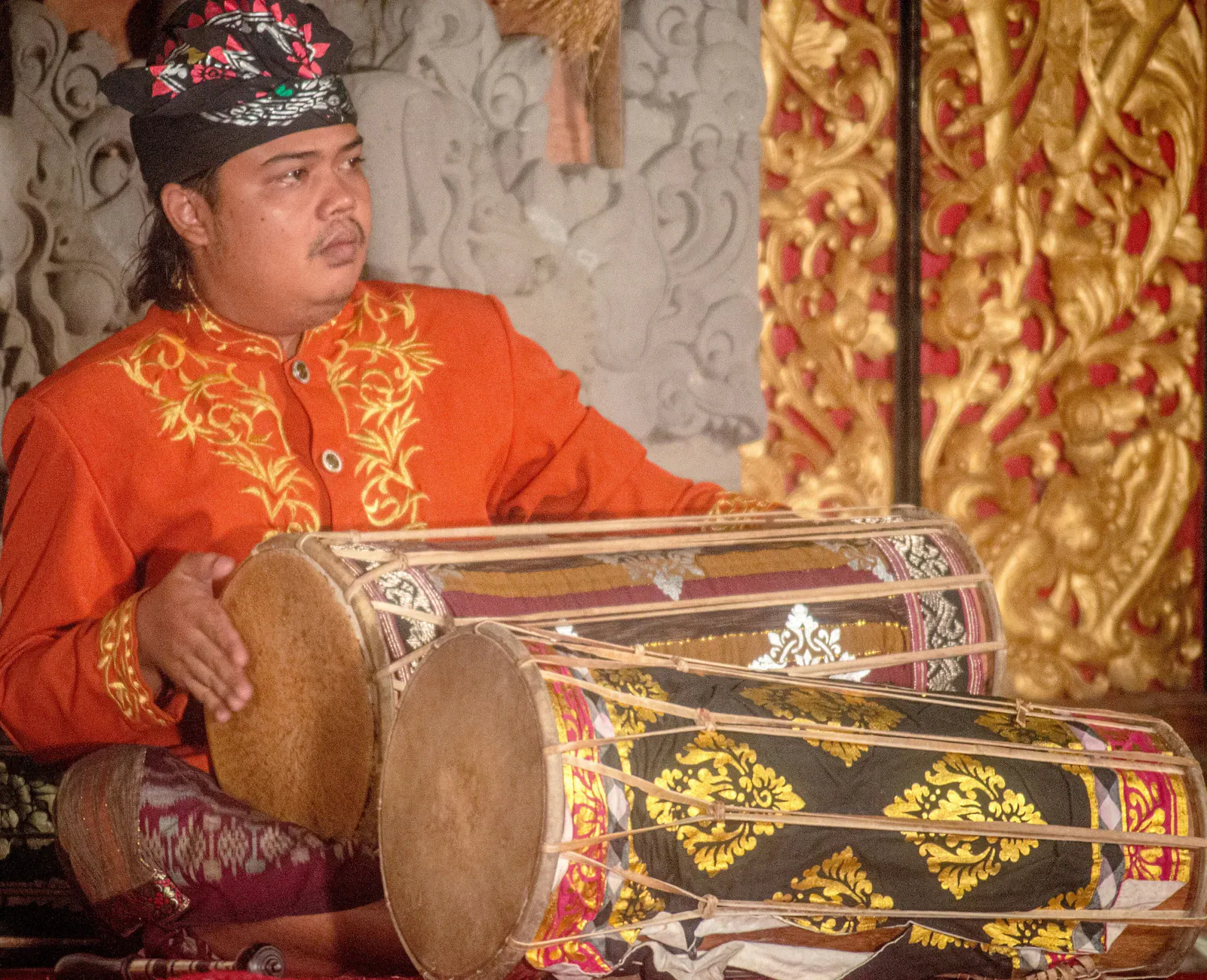
Community ensembles and new music, 1979 to now
In 1979 Gamelan Sekar Jaya started in Berkeley, the first community-based Balinese gamelan in the United States, with Balinese teachers, and the same year the Bali Arts Festival opened in Denpasar with yearly kebyar competitions. Lou Harrison, who had built his own just-tuned sets, finished his Piano Concerto with Javanese Gamelan in 1987. Evan Ziporyn founded Gamelan Galak Tika at MIT in 1993 for new Balinese-style works, and in 2007 the Balinese composer Dewa Alit founded Gamelan Salukat, which plays instruments built in its own tuning.
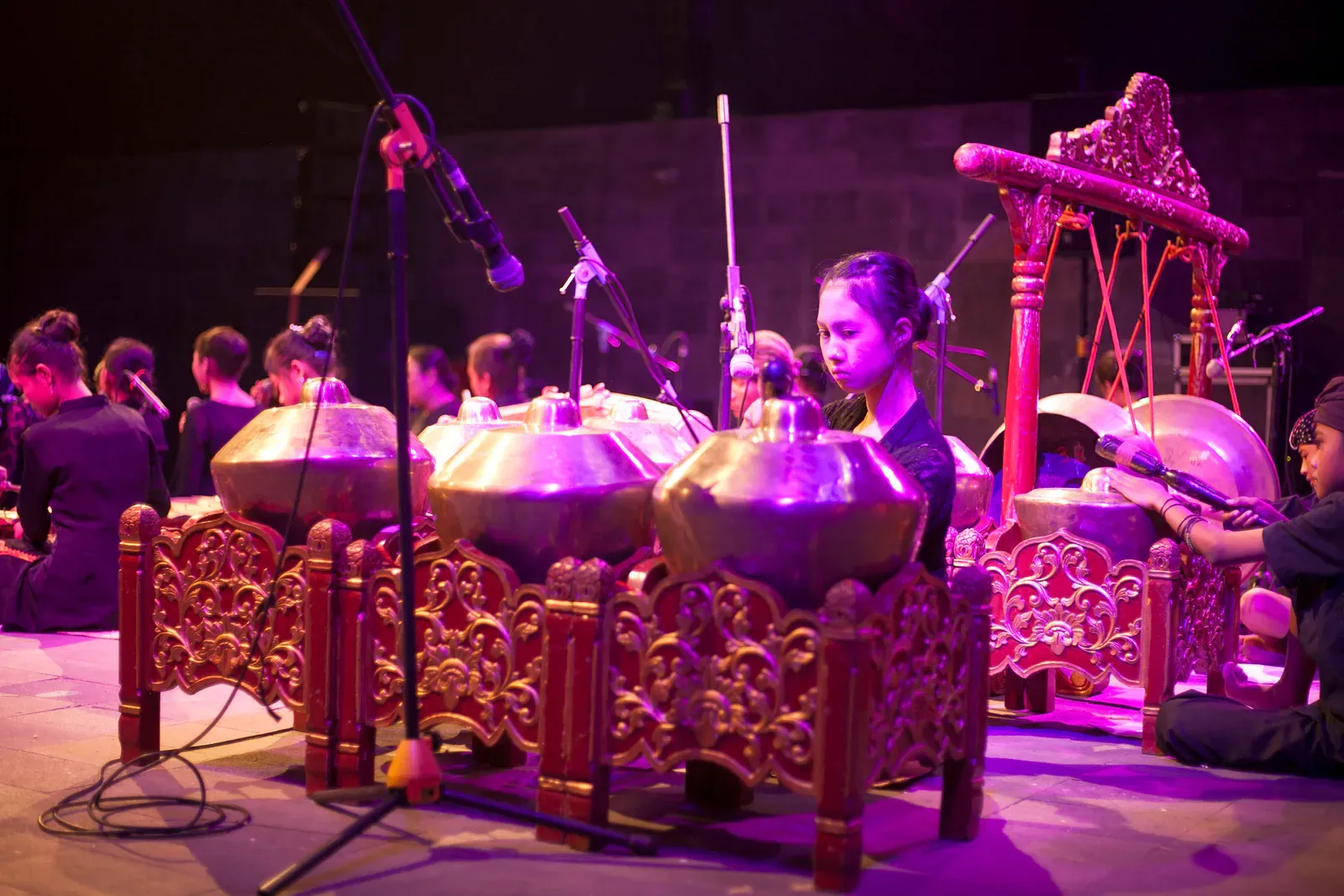
Dewa Alit and Gamelan Salukat are still making records: the album Baur Bentur, for gamelan and pianist Sri Hanuraga, came out on Black Truffle in 2026.
Mainstream success
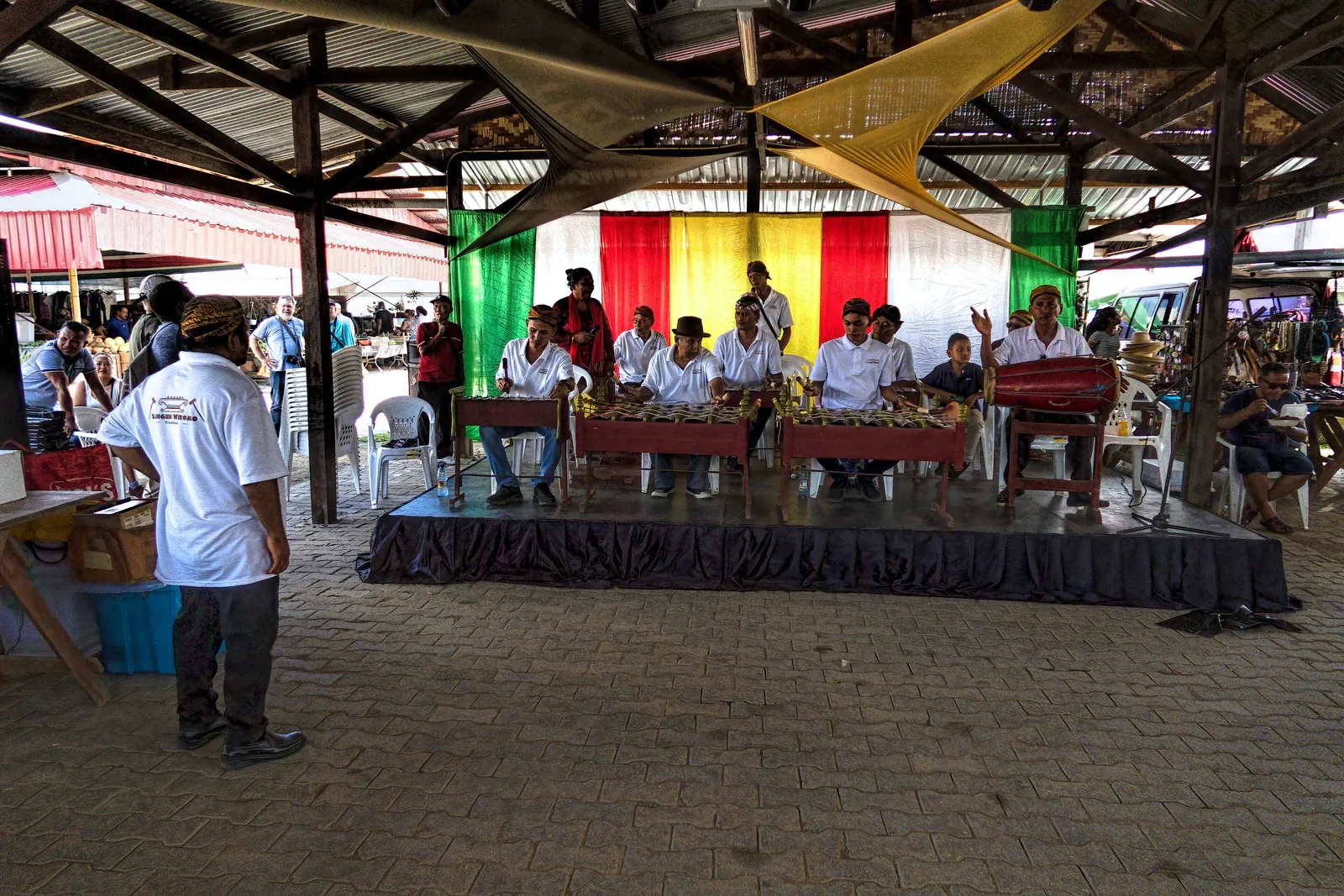
Gamelan never had a chart moment, and its spread was institutional, one step at a time. A fair, a composer, a record label and a university each opened a door. Courts and village clubs in Indonesia kept it alive in place, while Western listeners met it through albums, courses and concert premieres. Javanese communities took it abroad too: labourers shipped to Suriname from 1890 brought their music with them.
The genre has no backlash story. The tension is instead about ownership and authenticity: whether a university ensemble in the United States should play Javanese pieces, or whether new commissions should leave tradition behind. Most teachers, Balinese and Javanese, have welcomed outside players who learn the music properly.
Notable recordings
Puspawarna, 1971. The ketawang was written by Mangkunegara IV in the 19th century, and Robert E. Brown recorded it with the Pura Paku Alaman court ensemble of Yogyakarta for Nonesuch Explorer. Its title means roughly “kinds of flowers”. Six years later it was chosen for the Voyager disc.
Music from the Morning of the World, 1967. David Lewiston recorded in Bali in 1966 and issued the LP in 1967, recorded on a portable stereo tape machine. It opens with the Peliatan ensemble playing gong kebyar. Many Western musicians first heard Balinese music on this record.
Amok!, 1996. Evan Ziporyn wrote it in 1996 for Balinese gamelan set against double bass and samplers, and Gamelan Galak Tika and the bassist Robert Black play it.
Culture
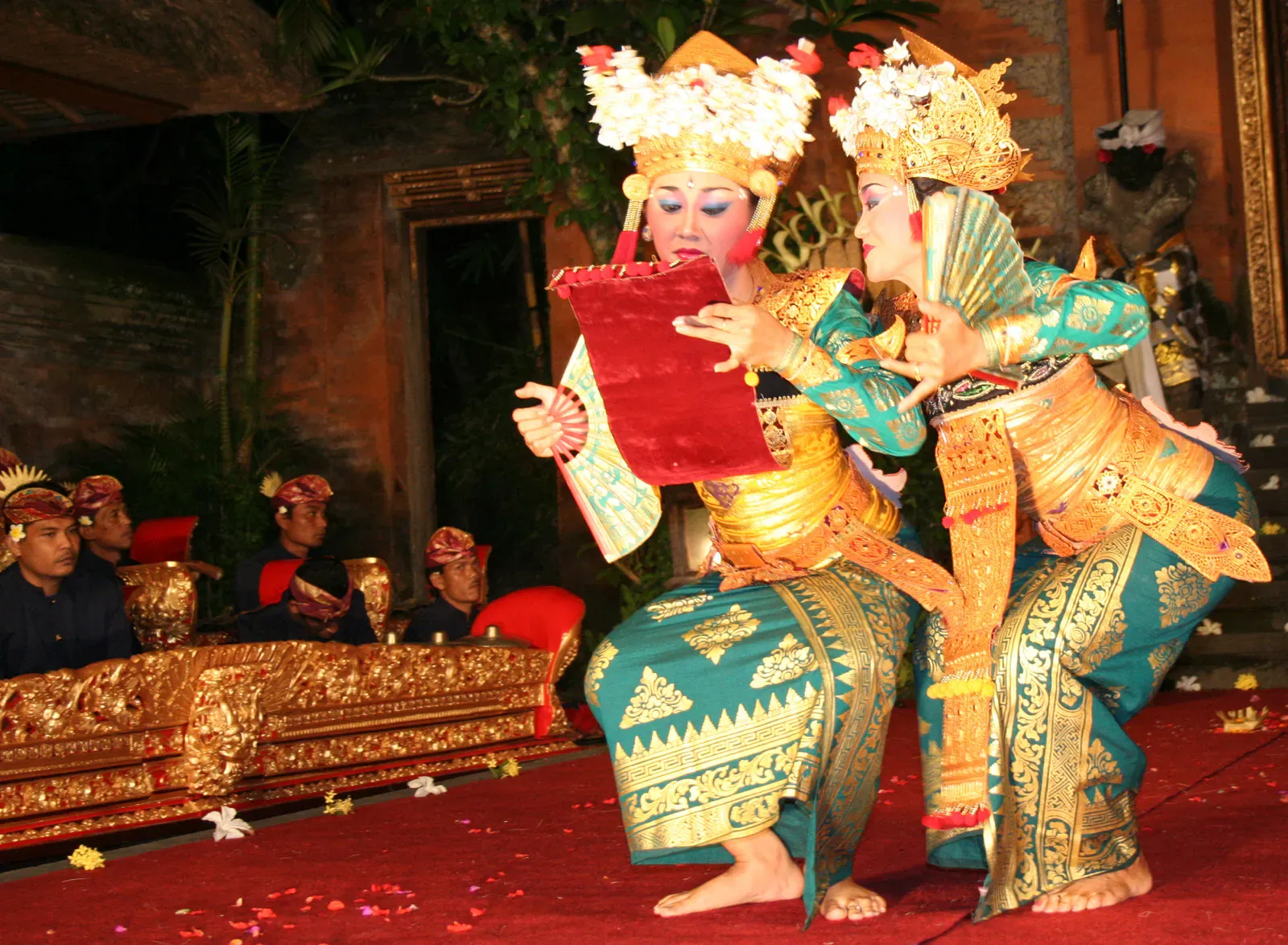
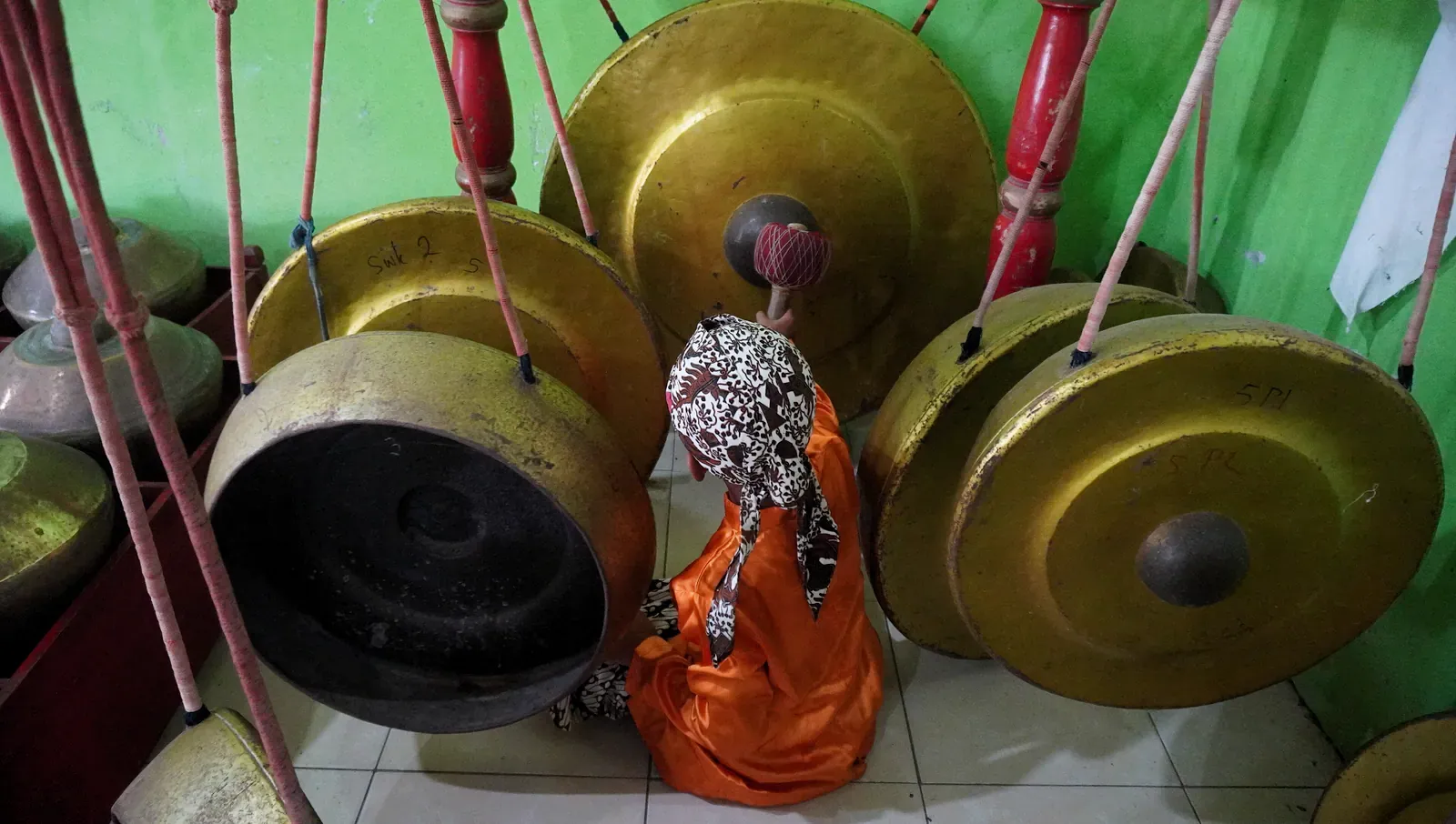
Gamelan seldom plays alone. In Java and Bali it accompanies temple anniversaries and Hindu ceremonies, dances such as baris and legong, and wayang kulit shadow-puppet plays, where a gender-led ensemble plays beneath the puppeteer through the night.
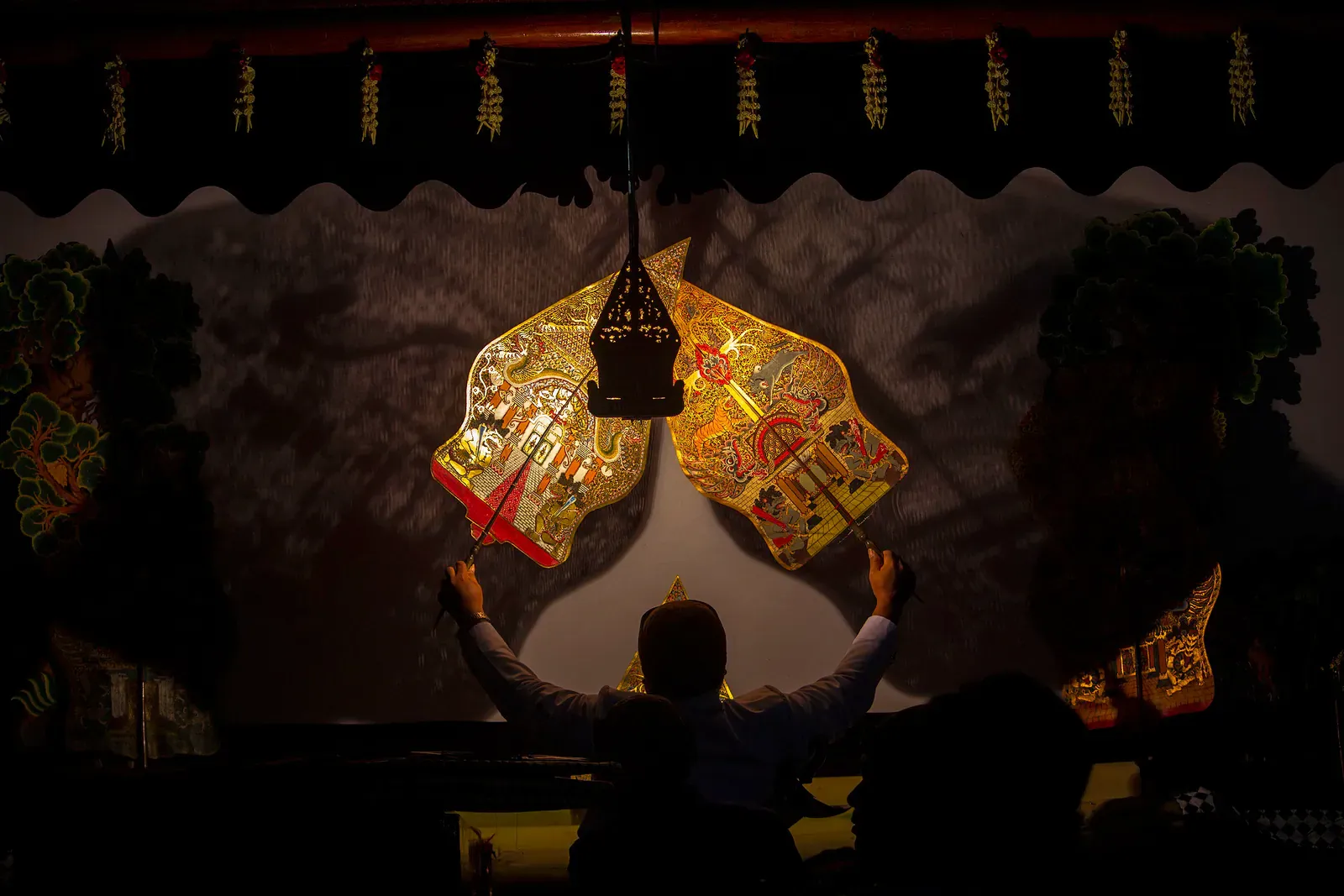
Players in Indonesia are usually amateurs in village clubs and court troupes. Music is learned by ear from a teacher, and individual taste in how to realise a part (garap) matters as much as the notes. Kecak, the Balinese chant often shown with Ramayana scenes, uses no instruments at all, yet is part of the same performing world.

Misconceptions
Out of tune. Gamelan is sometimes called out of tune, but slendro and pelog are different tuning systems, not a flawed version of the piano scale. In Balinese sets, paired instruments are tuned slightly apart on purpose, producing the beating called ombak.
One style. Gamelan is not a single style. Javanese court music, Balinese gong kebyar and Sundanese degung differ in tempo, instruments and attitude. Court gamelan is slow and soft, with a rebab leading, while kebyar is fast and loud and centres on interlocking keys.
Museum art. Gamelan is not a relic. Courts and villages still play it, and composers such as Dewa Alit keep writing new works. UNESCO listed gamelan on its Representative List of the Intangible Cultural Heritage of Humanity in 2021.
Frequently asked questions
What is gamelan music?
Gamelan music is the Indonesian ensemble tradition built around tuned bronze gongs, metallophones and drums. It is played in Java, Bali and Sunda, usually in a set tuned as a unit.
Where did gamelan come from?
Gamelan comes from Java, and bronze ensemble instruments appear on the Borobudur reliefs from about 800. Distinct Balinese and Sundanese styles developed later.
How is Balinese gamelan different from Javanese gamelan?
Javanese gamelan is slower and softer, often led by a rebab fiddle and following long gong cycles. Balinese gamelan, especially gong kebyar, is fast and sudden, with paired keyed instruments interlocking and beating against each other.
Where should a beginner start with gamelan?
Start with Puspawarna for Javanese court music, then the Peliatan gong kebyar track from Music from the Morning of the World for Balinese. Debussy’s Pagodes then shows how the sound entered Western composition.
Sound
Sound sheet
Anatomy of a track
| # | Part |
|---|---|
| 1 | Buka: solo opening by rebab, gender or drum |
| 2 | Merong: main body at a slow, wide irama |
| 3 | Inggah: second section, often faster, on a new gong pattern |
| 4 | Suwuk: closing slowdown to the final gong |
Signature sounds
- Gong cycle marking every phrase
- Skeleton melody (balungan) elaborated by bonang and gender
- Paired detuned instruments beating (ombak)
- Interlocking kotekan in Balinese styles
- Slendro and pelog tunings, never equal temperament
- Drummer cuing tempo and dance changes
Drums and percussion
- Kendang
Techniques
- Colotomic structure
- Kotekan and imbal
- Ombak
- Gembyang
- Garap
- Irama
Keys and modes
Slendro. Five roughly equal steps per octave; set tuning differs from ensemble to ensemble
Pelog. Seven uneven steps per octave, usually played in five-note subsets
Degung. Tuning exclusive to Sundanese gamelan
Tuning
Slendro and pelog, tuned per set, not 12-TET; paired instruments tuned slightly apart in Bali
Vocals
Female solo (sindhen) and male chorus (gerong) singing in Javanese style
Scenes
Where it happened
Where and when the sound lived: one bar per city on a shared timeline.
Asia
North America
Active scenes
Peak 8, 1993-2025
Sultan's court home of the refined Yogyakarta style, with the Paku Alaman court nearby.
Home of the Kasunanan and Mangkunegaran courts, and later the Lokananta record company.
North Bali village where gong kebyar first played in public.
Ubud-area village whose Gunung Sari ensemble toured the West in 1952 and was widely recorded.
Focus of Sundanese degung and salendro since the early twentieth century.
UCLA runs the first US university gamelan program under Mantle Hood.
Gamelan Sekar Jaya starts the first community Balinese gamelan in the US.
MIT is home to Gamelan Galak Tika and Evan Ziporyn's new-music works.
Venues and places
Yogyakarta, 1756 to today. Sultan's palace, built after the Giyanti treaty, with a long-kept royal gamelan tradition.
Surakarta, 1745 to today. Palace of the Susuhunan, keeper of the Surakarta court style and heirloom gamelans.
Surakarta, 1757 to today. Court where Kyai Kanyut Mesem is kept, often called Java's loveliest gamelan.
Yogyakarta, 1812 to today. Court whose ensemble was recorded in 1971 and reached the Voyager disc.
Surakarta, 1956 to today. State record studio and pressing plant that archived Javanese karawitan.
Denpasar, 1979 to today. Annual month-long festival at the Taman Werdhi Budaya Art Centre with gamelan competitions.
Culture
Culture markers
- Temple ceremonies
In Bali, kebyar and other ensembles play at temple anniversaries and Hindu ceremonies.
Ritual - Shadow-play accompaniment
Gender wayang and Javanese sets accompany wayang kulit puppet performances.
Ritual - Baris and legong
Balinese gong kebyar accompanies these dances, with drummer and dancer cuing each other.
Dance - Heirloom gamelans with Kyai names
Javanese courts honour old sets with titled names such as Kyai Kanyut Mesem.
Artwork
Media
Key media
- 1945Radio Republik Indonesia
by RRI. State radio studios broadcast and recorded regional gamelan, including Sundanese salendro from Bandung.
Radio - 1946A House in Bali
by Colin McPhee. Memoir of McPhee's Bali years that popularised the island's music in the West.
Book - 1966Music in Bali
by Colin McPhee. Posthumous landmark study of Balinese music, a foundation of ethnomusicology.
Book - 1967Music from the Morning of the World
by David Lewiston. Explorer Series LP that introduced many Western musicians to gamelan.
Compilation - 1977Voyager Golden Record
by NASA. Space-bound disc with a Javanese court ketawang among its sounds of Earth.
Compilation - 1980Traditional Music in Modern Java
by Judith Becker. Study of Ki Wasitodipuro, Ki Nartosabdho and how composers adapt gamelan to a changing society.
Book
Glossary
Terms on this page
The skeleton melody that the metallophones state and other instruments elaborate.
Melodic patterns that guide how singers and elaborating instruments treat a tune.
Layered gong and kettle patterns that mark the cycle of a piece.
The way a player realises a part inside a piece.
Interlocking figuration where two parts share one fast line.
Beating produced by paired instruments tuned slightly apart, giving the shimmer of Balinese gamelan.
Seven-note tuning with uneven intervals, usually played as five-note subsets.
Five-note tuning with roughly equal intervals.
Southeast Asian family