Dangdut
Dangdut is Indonesian popular music built on the gendang drum, Malay orchestra tunes and Hindi film melody, formed in Jakarta around 1970 and carried by koplo.
Indonesia, around 1950
Southeast Asian family
Born
around 1950
Indonesia
Subgenres
2
Documented branches
Links
15
Genres it drew on or shaped
Tempo
90-140 BPMLineage
Family tree
Grew out of
Influenced by
Indonesia
Dangdut
Led to (2)
Timeline
Era by era
From the first sparks to today. Select a dot to read the story behind it.
- Orkes Melayu and Hindi film songs
1950 to 1969
- Soneta and the dangdut name
1970 to 1978
- Religious themes and the broadcast ban
1979 to 1988
- Pop dangdut and the diva generation
1989 to 2002
- Goyang Inul and television contests
2003 to 2015
- Pop koplo and YouTube
2016 to 2026
Eras
Moments
- 1 Orkes Melayu and Hindi film songs, 1950 to 1969
- 2 Soneta and the dangdut name, 1970 to 1978
- 3 Religious themes and the broadcast ban, 1979 to 1988
- 4 Pop dangdut and the diva generation, 1989 to 2002
- 5 Goyang Inul and television contests, 2003 to 2015
- 6 Pop koplo and YouTube, 2016 to 2026
around 1950
Orkes Melayu and Hindi film songs
Malay orchestras from Riau reach Medan, Jakarta and Surabaya and borrow Hindi film melodies. Ellya Khadam and Kelana Ria shape the proto-dangdut sound.
- 1956Ellya Khadam records Boneka dari IndiaA Hindi-film-melody song later seen as a touchstone of the genre; Ellya is often called the grandmother of dangdut.
- 1961Orkes Melayu Kelana Ria begins recordingBetween 1961 and 1964 the band cuts 48 songs on four records; Munif Bahasuan and M. Mashabi's work counts as proto-dangdut.
1970
Soneta and the dangdut name
Rhoma Irama forms Soneta, adds rock guitar and has the term dangdut printed in 1972. By 1975 about three quarters of recorded Indonesian music is dangdut.
- 1970Rhoma Irama forms SonetaThe band is called the first dangdut group, adding rock instrumentation to orkes melayu.
- 1972Dangdut appears in printPutu Wijaya uses the word, an imitation of the drum sound, in Tempo magazine; Ellya Khadam is Indonesia's top artist that year.
- 1973Soneta release Volume 01, BegadangThe debut album mixes Rhoma solos, Elvy Sukaesih solos and duets; Terajana popularises the term dangdut.
- 1975Raja dan RatuSoneta's album pairs Rhoma Irama and Elvy Sukaesih and makes her name known nationally.
- 1975Dangdut dominates the record shopsAbout three quarters of all recorded Indonesian music is now dangdut.
- 1977Rhoma Irama banned from state TV and radioAfter campaigning for the Islamic PPP party he is kept off state media until 1988.
1979
Religious themes and the broadcast ban
Rhoma moves toward Islamic messages and films while barred from state TV and radio over his political campaigning. The ban ends in 1988.
- 1982Perjuangan dan Doa filmRhoma's film is described as the first Islamic rock musical movie, a sign of his turn to religious themes.
- 1988Broadcast ban on Rhoma liftedRhoma returns to state media after about a decade.
1989
Pop dangdut and the diva generation
Elvy Sukaesih releases Pesta Panen (1990) and The Return of Diva (1992) while Rita Sugiarto's hits fill 1990s weddings and karaoke. Koplo begins to take shape in East Java.
- 1992Elvy Sukaesih releases The Return of DivaA comeback album for the Queen of Dangdut, two years after Pesta Panen.
2003
Goyang Inul and television contests
Inul Daratista's 2003 rise and her pirated VCDs spread koplo nationwide. TV contests (KDI from 2004, Kondang-In from 2005) turn singers into stars.
- 2003Inul Daratista becomes a national nameA televised January concert in Jakarta launches her hip-rotating Goyang Inul, spread further by pirated VCDs.
- 2003MUI fatwa and the Rhoma-Inul clashThe Ulema Council calls her ngebor dance pornographic and Rhoma Irama urges a TV ban; her popularity only grows.
- 2004Kontes Dangdut Indonesia starts on TPIThe first modern dangdut contest starts in June 2004 and later moves to MNCTV, running in seasons since; Siti wins season one.
- 2008Anti-pornography law passedPassed in October after the Inul debate; dangdut stage dress and dance stay a regular target of moral critics.
- 2011Alamat Palsu becomes a hitRecorded years earlier, Ayu Ting Ting's song takes off after comedians cover it.
2016
Pop koplo and YouTube
Via Vallen, Nella Kharisma and Siti Badriah pair koplo drumming with pop styling and K-pop fashion, and their YouTube videos draw hundreds of millions of views.
- 2017Via Vallen's SayangThe koplo-pop single becomes the second most viewed Indonesian music video of the year.
- 2018Lagi Syantik breaks Indonesian view recordsSiti Badriah's March 2018 single becomes the most viewed Indonesian music video, with 160 million views in three months.
- 2018Via Vallen sings the Asian Games themeMeraih Bintang, a pop dangdut song, is the official theme of the Jakarta-Palembang Games.
- 2020Rhoma Irama and Via Vallen duet Cuma KamuThe king of dangdut and the pop koplo queen meet on a new version of his older song.
Listening path
Anthems
The records that built the sound, grouped by the part they played. Thumbnails come from YouTube; the player loads only when you press play.
- 01
Rhoma Irama, 1973
The Hindi-film-derived song that popularised the word dangdut and made Rhoma Irama the genre's pioneer.
Start hereOrigin - 02
Rhoma Irama, 1973
The title track of Soneta's debut album, a nationwide hit that took the sound from orkes melayu halls to the mainstream.
Start hereBreakthrough - 03
Rhoma Irama, 1976
A rock-edged Soneta anthem for young listeners, also the title of the 1970s film built around it.
Anthem - 04
Inul Daratista, 2003
The signature song of the dancer whose hip-rotating style made koplo nationally famous and sparked a fatwa.
Anthem - 05
Ayu Ting Ting, 2007
Recorded in the mid-2000s and a smash in 2011 after comedians covered it; a catchy way into 2010s dangdut.
Start hereAnthem - 06
Via Vallen, 2017
A koplo-pop single with reggaeton and rap touches that became one of 2017's most viewed Indonesian videos.
Crossover - 07
Siti Badriah, 2018
A viral pop dangdut hit that passed 700 million YouTube views and reached an international Billboard chart.
Crossover - 08
Rhoma Irama, 2020
The king of dangdut re-records a classic with pop koplo queen Via Vallen, joining the old and new schools.
Revival
Facts
| Family | Southeast Asian |
| Origin | Indonesia |
| Emerged | 1960s |
| Status | Active |
| Tempo | 90 to 140 BPM |
| Meter | 4/4 |
| Subgenres | 2 |
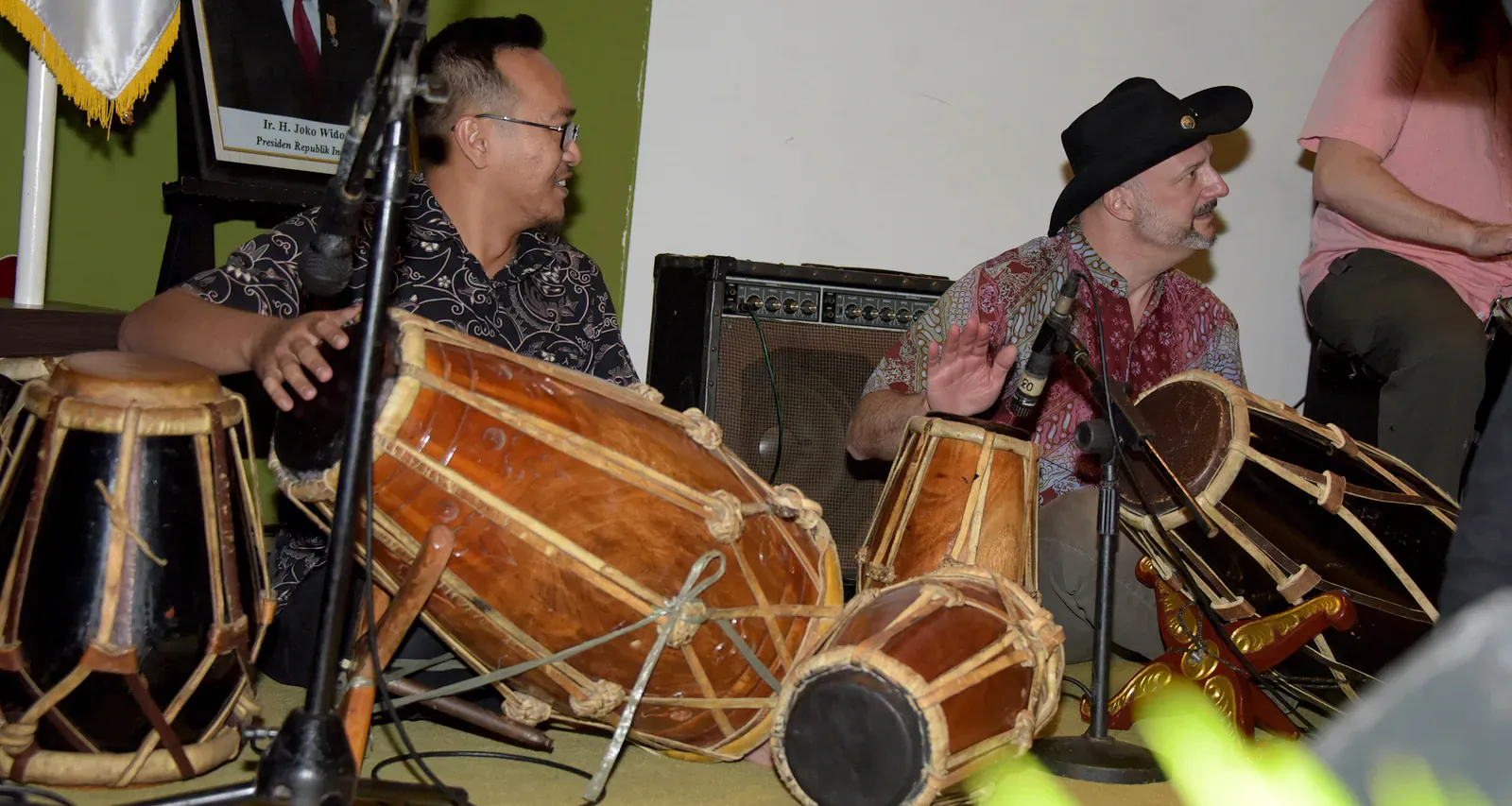
Dangdut is the dominant popular music of Indonesia, a dance genre built on a tabla-style hand drum, melodic hooks from Malay orchestras and Hindi film songs, and an ornamented lead vocal.
It took shape among working-class listeners in Jakarta around 1970 and is part of the wider Southeast Asian popular tradition. The name imitates the sound of the drum: a low “dang” and a higher “ndut”.
Origins
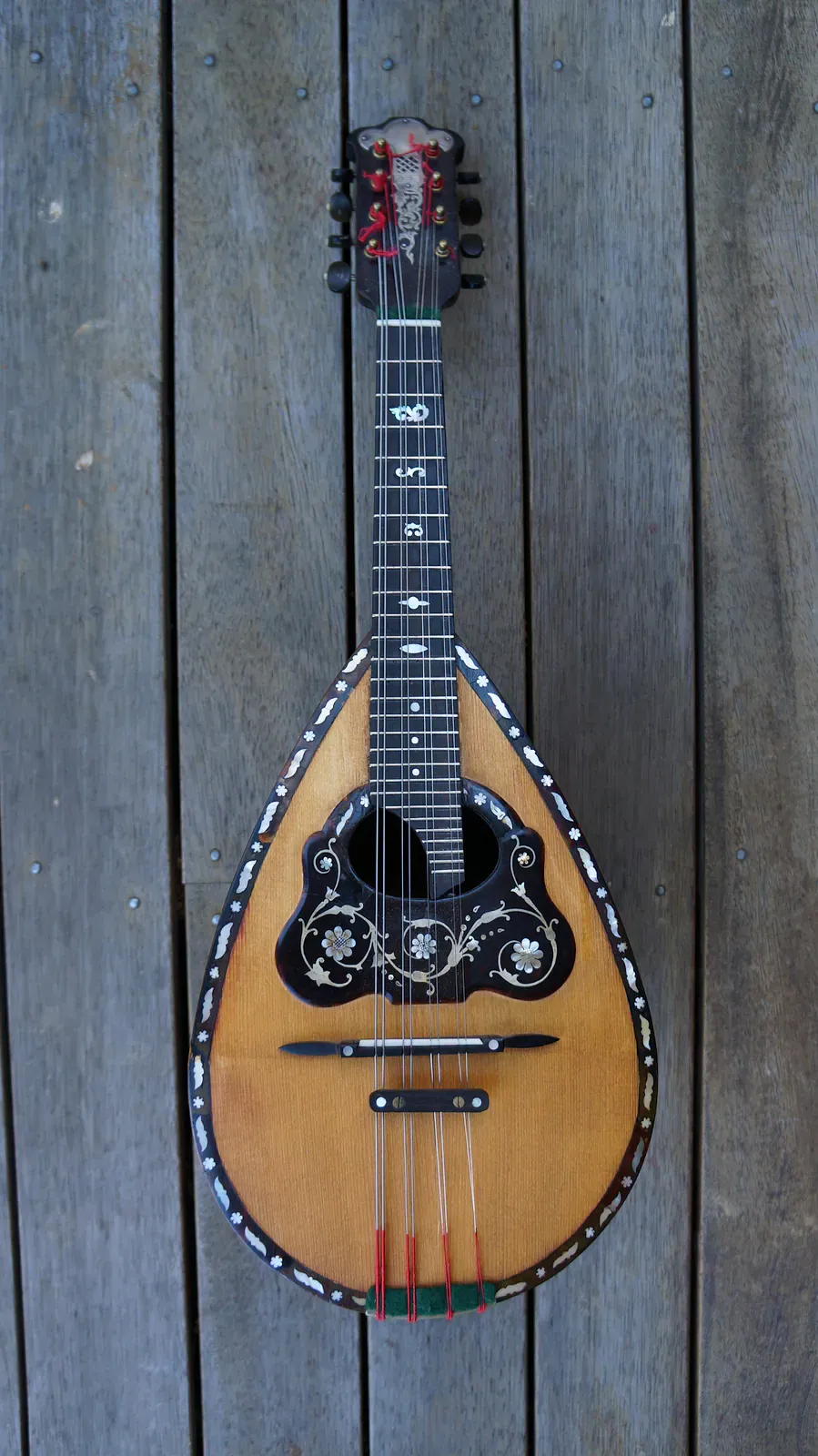
Dangdut grew out of orkes melayu, the Malay orchestras that spread from Riau to Medan, Jakarta and Surabaya in the decades after the Second World War. By the 1950s these bands were borrowing melodies from Hindi film music (see filmi). The mix of Malay song form, Indian melody and a tabla-style drum is the genre’s core.
Medan was an early centre of the Malay side, and Jakarta became the industry centre. Middle Eastern colour from gambus music was part of the blend, and rock was added later.
Orkes Melayu and Hindi film songs, 1950-1969
Ellya Khadam, later called the grandmother of dangdut, recorded Boneka dari India in 1956, a song built on a Hindi film melody that is still treated as a touchstone of proto-dangdut. From 1961 to 1964 the band Kelana Ria cut 48 songs on four records, and the work of Munif Bahasuan and M. Mashabi on those records counts as proto-dangdut.
Nothing yet was called dangdut.
Soneta and the dangdut name, 1970-1978
Rhoma Irama formed Soneta in 1970, and the band is generally called the first dangdut group. Its change was to add electric guitar and rock instrumentation to the orkes melayu line-up, and to pair Rhoma with Elvy Sukaesih for duets. In 1972 the writer Putu Wijaya used the word “dangdut” in Tempo magazine as an imitation of the drum sound; the term stuck.
The debut album, Volume 01, Begadang (1973), carried Begadang and Terajana. Raja dan Ratu (1975) made Elvy Sukaesih a national name. By 1975 about three quarters of all recorded Indonesian music was dangdut, and the Jakarta label Remaco, whose catalogue covered keroncong, Malay music and dangdut, was among the large companies of the period.
Religious themes and the broadcast ban, 1979-1988
In 1977 Rhoma Irama was barred from state television and radio after campaigning for the Islamic PPP party, and the ban lasted until 1988. Rhoma answered by turning toward religious messages in his songs and films. Perjuangan dan Doa (1982) is described as the first Islamic rock musical film, and Darah Muda, the 1977 film built around his song, helped carry the music to cinema audiences.
The period shows dangdut as a political and moral voice, not only dance music.
Pop dangdut and the diva generation, 1989-2002
After the ban ended, women singers led the genre. Elvy Sukaesih, whose catalogue is linked to the Jakarta label Musica Studios, released Pesta Panen in 1990 and The Return of Diva in 1992, albums with pop-leaning production. Rita Sugiarto, known as the Queen of Tears, had hits that filled weddings and karaoke through the 1990s. Koplo, a faster East Javanese style built on kendang drumming, began to take shape in local scenes toward the end of the period.

Goyang Inul and television contests, 2003-2015
In January 2003 Inul Daratista appeared in a televised concert in Jakarta, and her hip-rotating Goyang Inul dance (ngebor, “drilling”) made her famous overnight. Pirated Video CDs of her East Javanese shows carried koplo across the country. The Indonesian Ulema Council called her dance pornographic, and Rhoma Irama urged that she be taken off television; her popularity grew anyway. The anti-pornography law was passed in October 2008 after the Inul debate, and dangdut stage dress and dance have stayed a regular target of moral critics.
Television then turned the genre into a talent business. Kontes Dangdut Indonesia started on TPI in June 2004 and later moved to MNCTV, where it has run in seasons since, and other contests followed. In 2011 Ayu Ting Ting’s Alamat Palsu, recorded years earlier, became a hit after comedians covered it.
Pop koplo and YouTube, 2016-2026
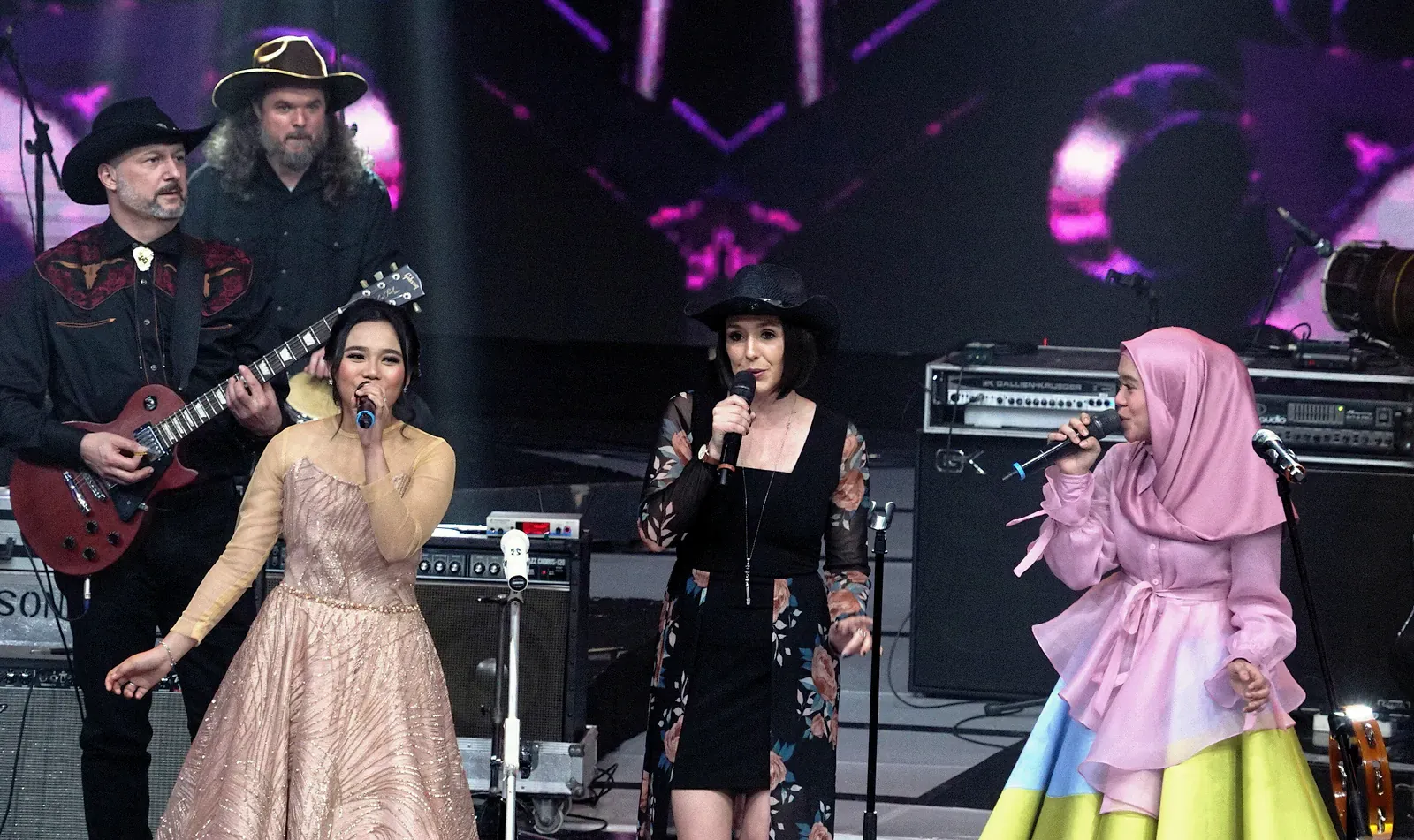
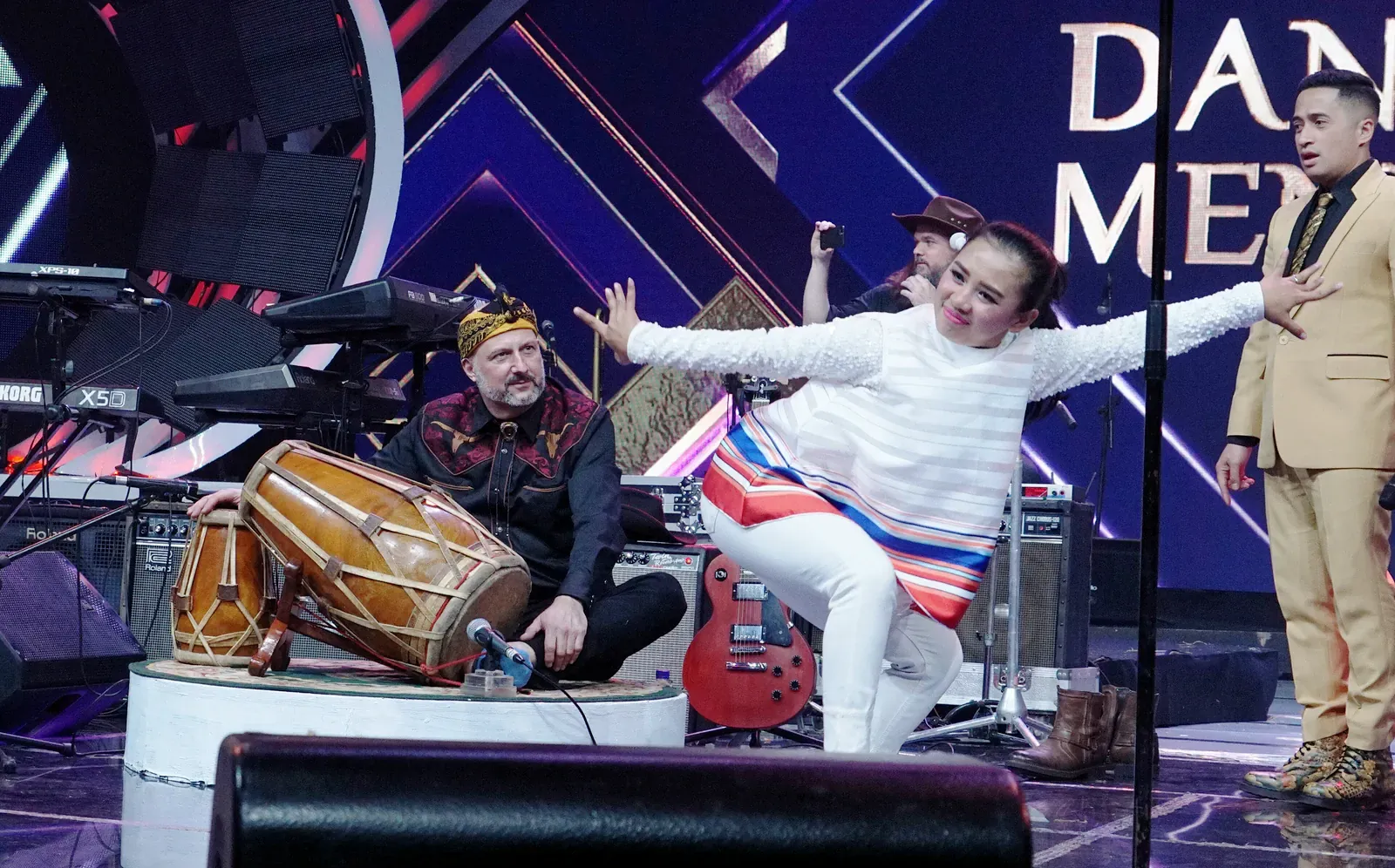
Surabaya singer Via Vallen became known as the pop queen of koplo. Her 2017 single Sayang, which adds reggaeton and rap touches to koplo drums, was the second most viewed Indonesian music video of that year, and in 2018 she sang the official theme of the Asian Games in Jakarta and Palembang. In March 2018 Siti Badriah’s Lagi Syantik became the most viewed Indonesian music video, with 160 million views in three months and over 700 million later. In 2020 Rhoma Irama and Via Vallen recorded a new version of his song Cuma Kamu, joining the old and new schools.
Pop koplo drops the overtly sexual stage acts of the early 2000s and borrows Korean-influenced fashion. YouTube replaced the pirated VCD as the main route to an audience.

Characteristics
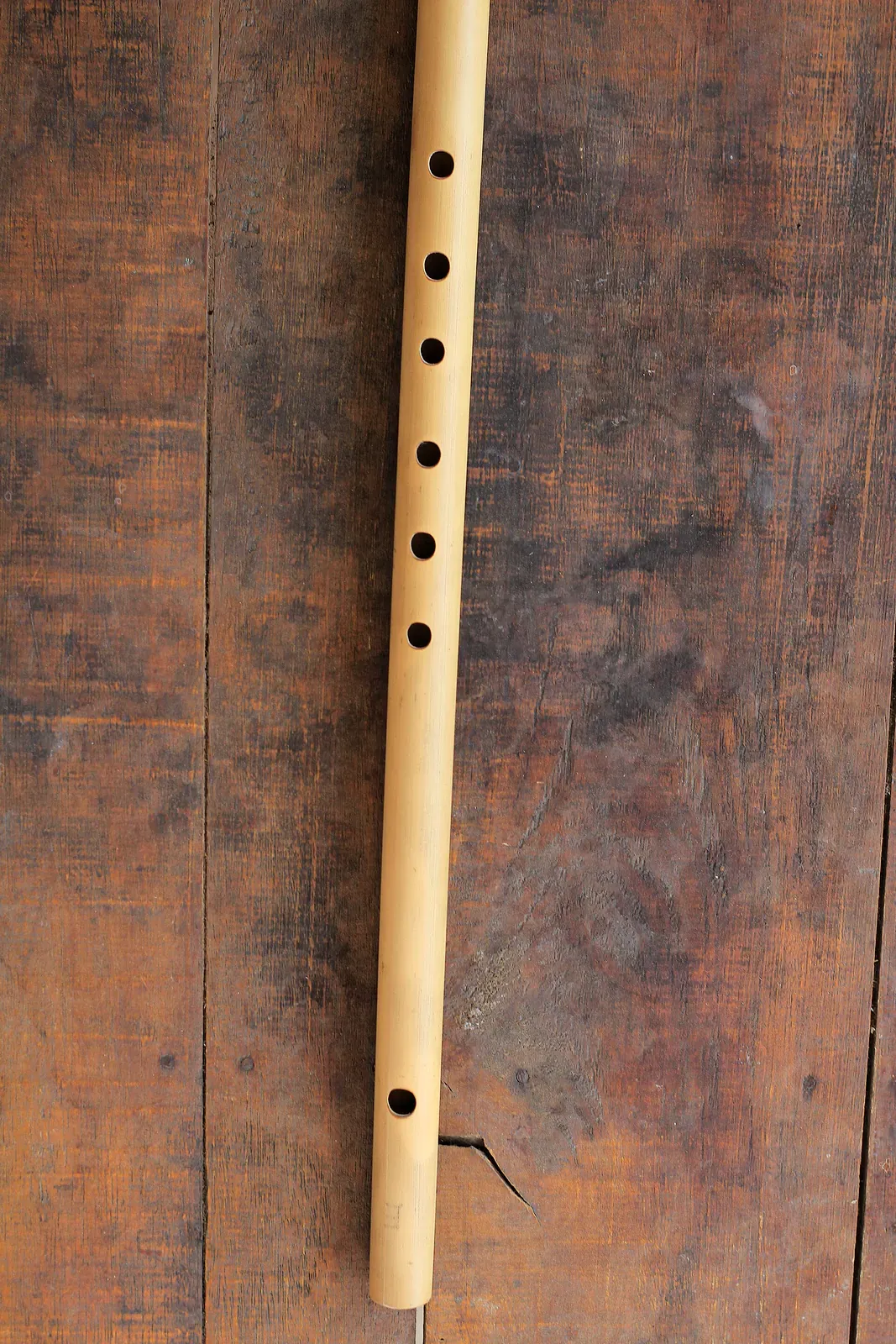
A dangdut song normally opens with an instrumental hook on flute, strings or keyboard, then moves through verses and choruses, an instrumental break and a repeat. The melody is often minor, in the manner of Hindi film songs, and the singer decorates each line with turns that come from Hindustani, Arabic and Malay singing. The beat is anchored by the dang-ndut pattern of the gendang, in 4/4.
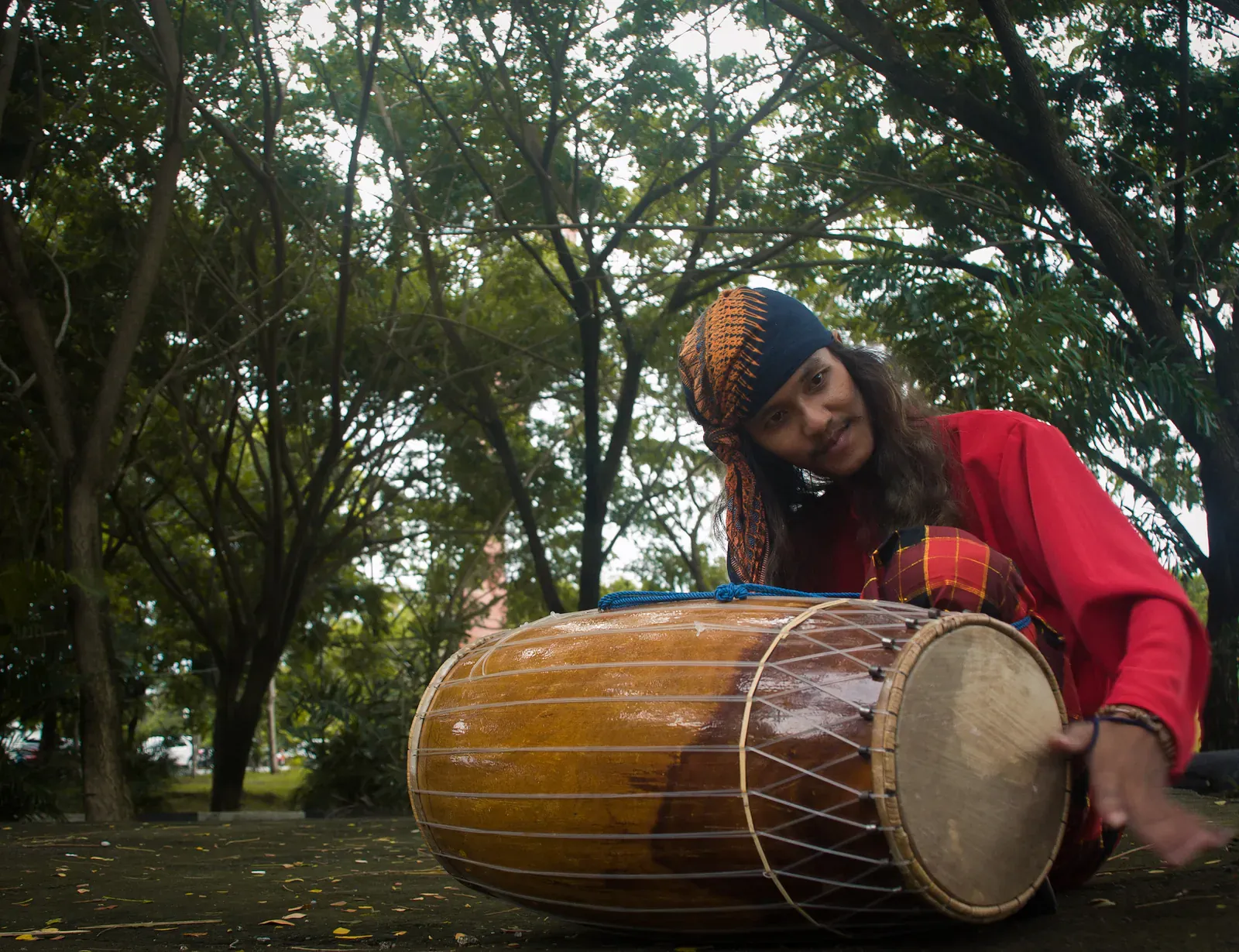
Koplo adds a gendang-led bridge in which the drummer plays about twice as many strokes as in standard dangdut. Soneta recordings keep the rock guitar riff, while pop koplo leans on keyboards and a female lead.
Instruments and production
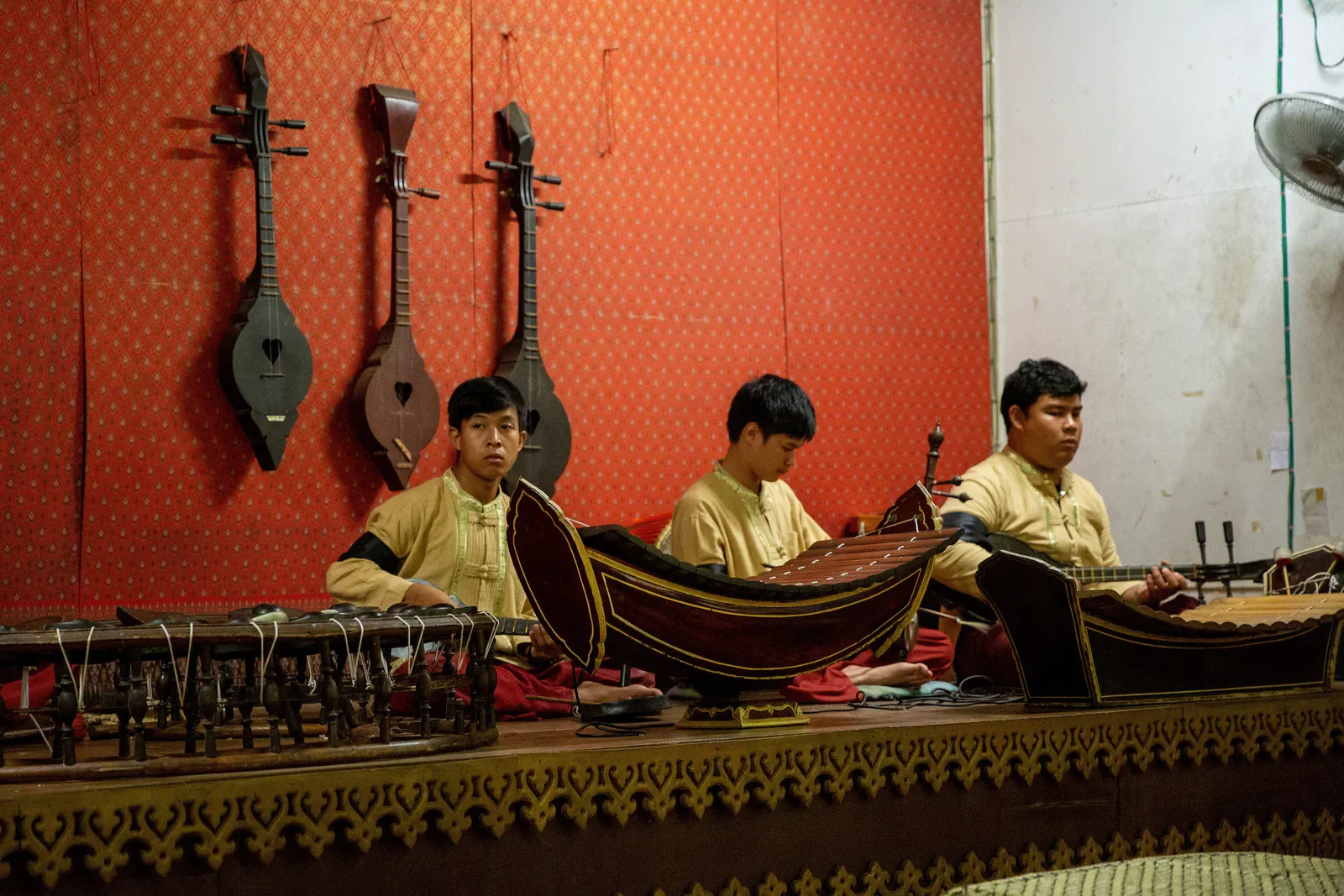
The gendang remains the signature sound, whether played by hand, doubled by a drum kit or imitated by a drum machine in smaller bands and studio tracks. The suling and mandolin keep the Malay orchestra colour, the electric guitar carries the rock influence, and synthesizers or keyboards supply strings, organ and pads.
Notable recordings
Terajana (1973) is the song credited with popularising the word dangdut and made Rhoma Irama the genre’s pioneer, while Begadang took the style from orkes melayu halls to the national mainstream. Darah Muda (1976) is the rock-edged Soneta anthem for young listeners. Goyang Inul (2003) is the signature of the dancer who made koplo national and triggered a fatwa. Alamat Palsu, recorded in 2007, became a smash in 2011 and is a common entry point to the 2010s sound.
Culture
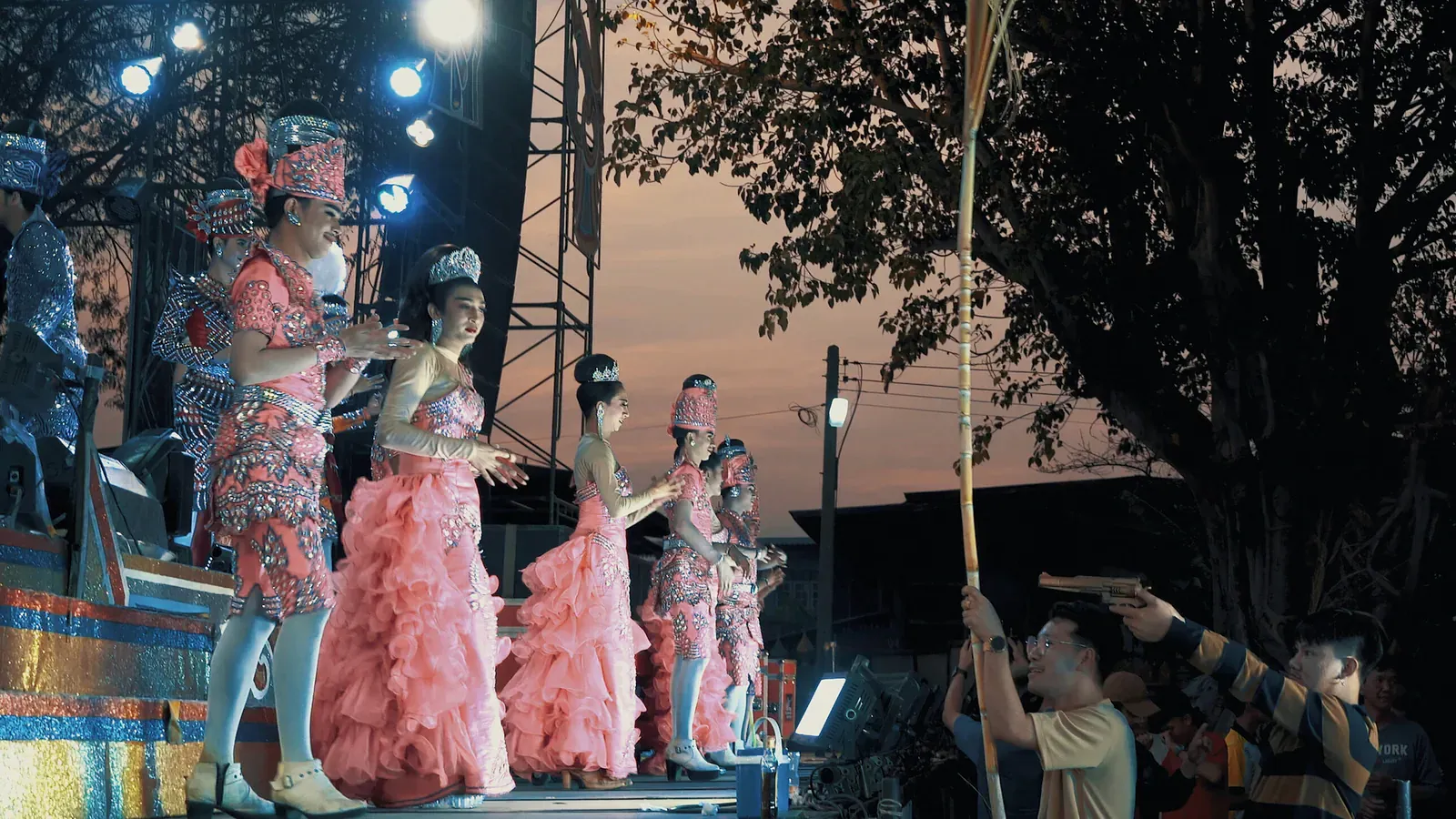
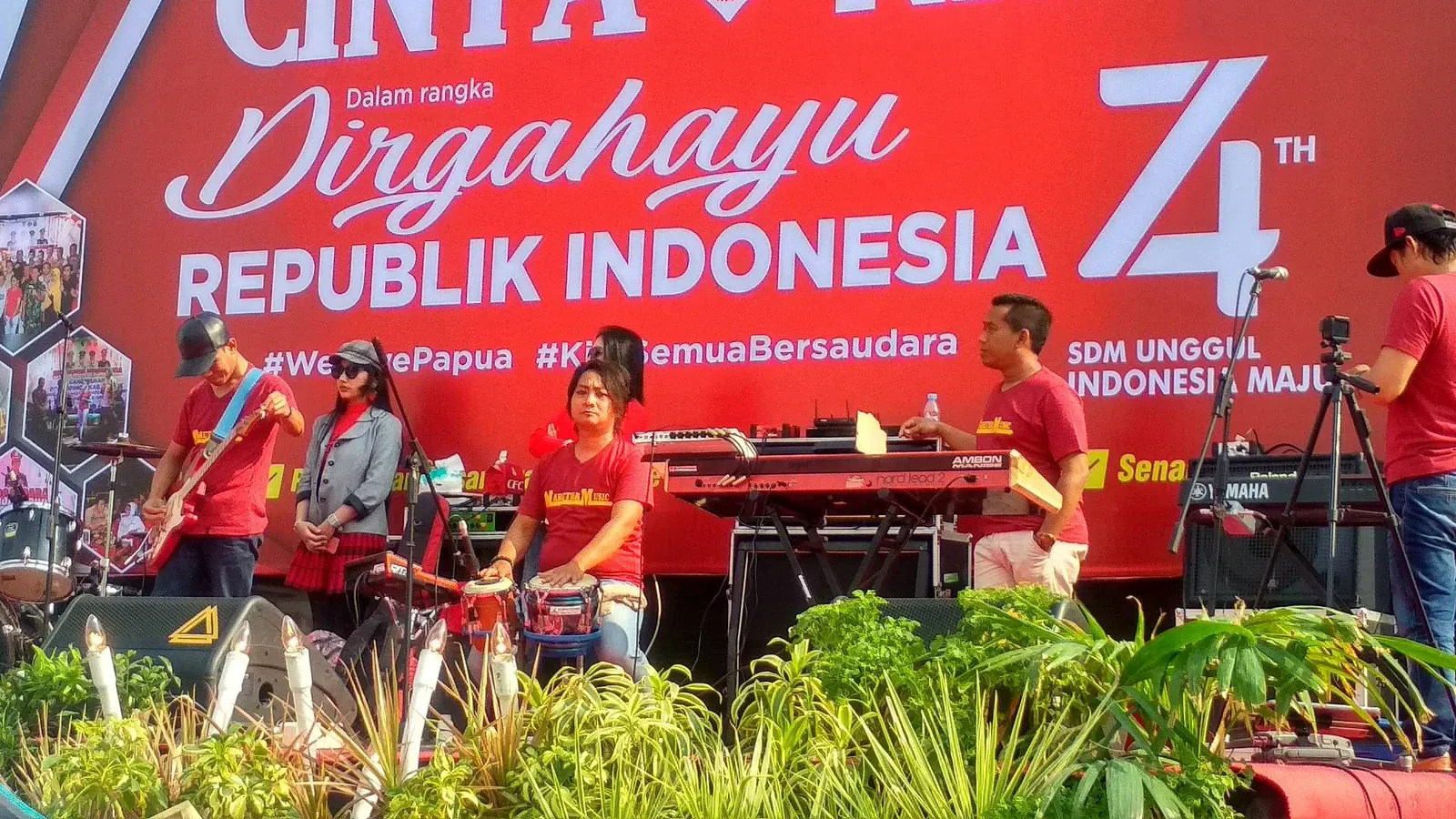
Dangdut is the music of family celebrations, weddings, karaoke, political rallies and office exercise routines, and it began among lower-class Javanese communities and kept that working-class base.
The dance is central. The goyang, the swaying or gyrating of the singer, is both the attraction and the controversy, from Inul’s ngebor in 2003 onward. The word koplo comes from a slang term for a hallucinogenic pill, since the music aims to make listeners feel high. Cinema also spread the sound: Rhoma Irama’s films from the 1970s, and the comedy Mendadak Dangdut (2006), about a rock singer who has to sing dangdut.

Legacy
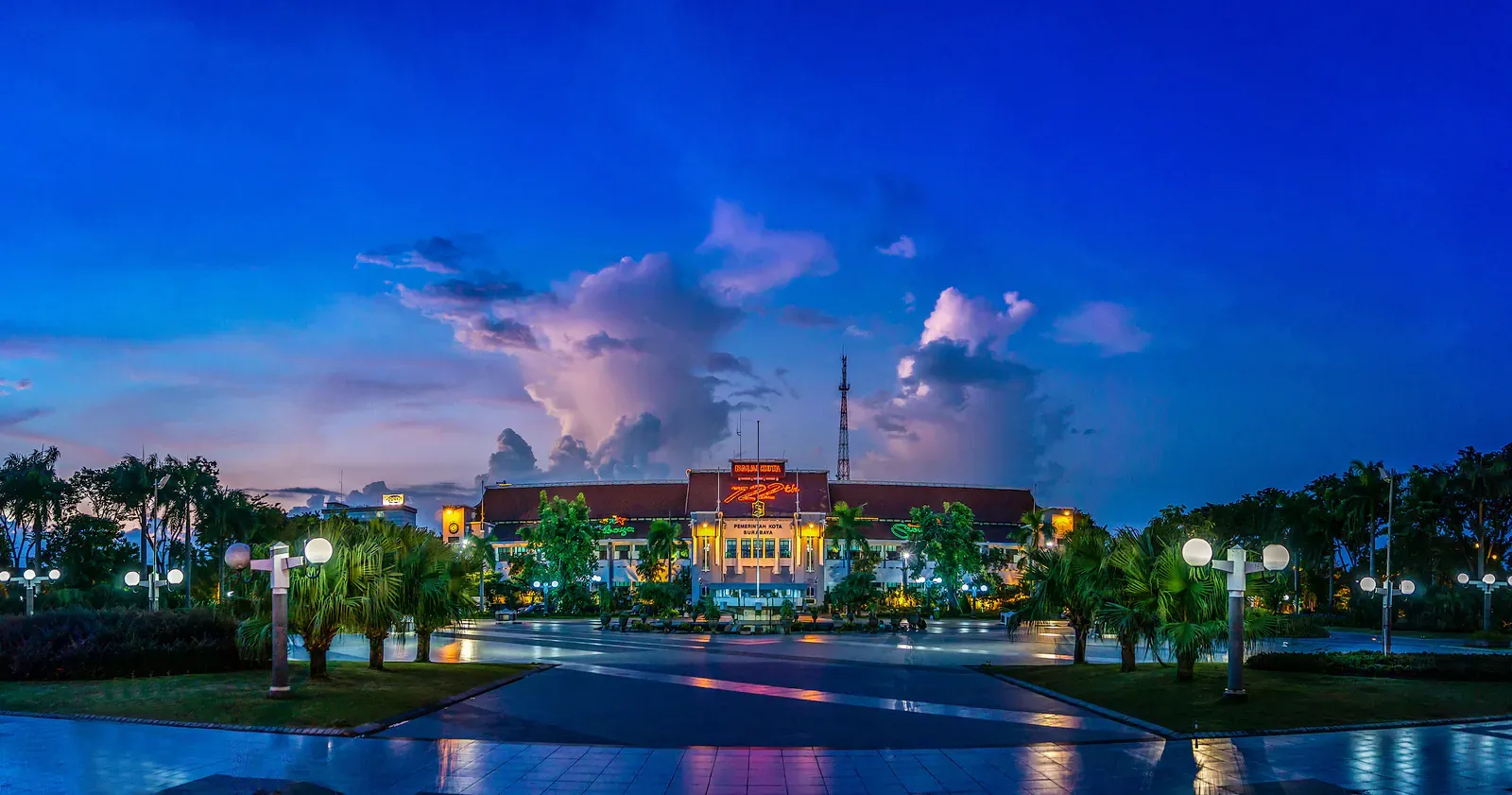
Dangdut gave Indonesia a shared popular music across Java, Sumatra and the islands beyond, and it fed other styles: Indo pop, regional hybrids such as campursari, and later hybrids such as hipdut and funkot all borrow from it. Its branches include koplo and the Cirebon-area tarling. Surabaya and the Pantura north-coast towns such as Indramayu remain koplo strongholds.
Misconceptions
Dangdut is sometimes described as Indian music in Indonesian. The Hindi film melody is one ingredient, but the band format comes from Malay orchestras and the rock guitar from Soneta, so the genre is a fusion that had its own social base in Jakarta.
Koplo is not only Inul’s dance. It is a faster East Javanese dangdut style with intense kendang drumming that existed in local scenes before 2003; Inul and the pirated VCDs made it national, and pop koplo later separated it from the sexual stage act.
Dangdut is also not only entertainment. Rhoma Irama was kept off state media for about a decade for his political campaigning, and his religious films show the genre as a platform for faith and social commentary.
Frequently asked questions
What does dangdut mean?
Dangdut imitates the sound of the gendang drum: “dang” for the low stroke and “ndut” for the higher one. The word was printed in Tempo magazine in 1972 and soon became the genre’s name.
Where does dangdut come from?
Dangdut comes from Indonesia. It developed among lower-class Javanese communities around 1970 in Jakarta from Malay orkes melayu, Hindi film songs and rock guitar.
What is dangdut koplo?
Dangdut koplo is a faster East Javanese form of dangdut built on kendang drumming. It reached the whole country in 2003 and, as pop koplo in the 2010s, became a YouTube-driven pop style.
Who is the king of dangdut?
Rhoma Irama, who formed Soneta in 1970, is called the King of Dangdut, and Elvy Sukaesih, his duet partner on the 1973 and 1975 albums, is the Queen of Dangdut.
Sound
Sound sheet
Anatomy of a track
| # | Part |
|---|---|
| 1 | Instrumental intro (gendang and flute hook) |
| 2 | Verse |
| 3 | Chorus |
| 4 | Instrumental break (flute, guitar or synth solo) |
| 5 | Verse and chorus again |
| 6 | Gendang-led bridge (koplo) |
| 7 | Final chorus and outro |
Signature sounds
- Dang-ndut gendang pattern
- Flute or string hook in a minor, Hindi-film-style melody
- Ornamented vocal line
- Rock guitar riffs (Soneta-style)
- Doubled-up kendang fills in koplo
Drums and percussion
- Gendang
- Drum kit
- Drum machine
Techniques
- Dang-ndut stroke pattern
- Doubled kendang fills (koplo)
- Ornamented vocal melody
- Male-female duets
Keys and modes
Minor keys. Many classic and koplo hits sit in minor, for example Kereta Malam in E minor and Goyang Inul in D minor.
Major keys (pop koplo). Newer pop-leaning songs such as Sayang use major keys like E major.
Vocals
A solo lead singer, often a woman in pop koplo, fronts a band of four to eight players.
Scenes
Where it happened
Where and when the sound lived: one bar per city on a shared timeline.
Asia
Active scenes
Peak 4, 2000-2025
Riau orkes melayu bands reached Medan in the 1930s to 1950s, feeding the Malay side of dangdut.
Home of Kelana Ria, Soneta, the labels and national TV, and the centre of the industry.
East Java's port city is the cradle of koplo and the base of Via Vallen.
A hub of the north coast (Pantura) scene where koplo is played for truck drivers and fishermen.
Culture
Culture markers
- Goyang Inul (ngebor)
A hip-rotating dance that became the centre of the 2003 morality debate.
Dance - Koplo
Named after a slang term for a hallucinogenic pill, since the music aims to make listeners feel high.
Slang - Dangdut
The name imitates the dang and ndut sounds of the gendang.
Slang - Korean-influenced pop koplo style
Pop koplo singers such as Ayu Ting Ting dress with Korean influence and favour vocals over suggestive dance.
Fashion - Weddings, karaoke and celebrations
Dangdut plays at family celebrations, in karaoke, at political rallies and in office exercise routines.
Ritual
Media
Key media
- 1977Darah Muda
by Rhoma Irama. A Soneta film built around the hit song, part of Rhoma's film career that spread the music.
Film - 1982Perjuangan dan Doa
by Rhoma Irama. Described as the first Islamic rock musical movie, it shows Rhoma's turn to religious themes.
Film - 2000The Rough Guide to the Music of Indonesia
by Various. An international world-music compilation that includes Elvy Sukaesih.
Compilation - 2006Mendadak Dangdut
by Rudy Soedjarwo. A comedy about a rock singer who has to sing dangdut, a mainstream screen portrait of the genre.
Film - 2010Dangdut Stories: A Social and Musical History of Indonesia's Most Popular Music
by Andrew N. Weintraub. The first musicological study of dangdut's vocal style, melody, rhythm, form and song texts.
Book
Glossary
Terms on this page
An imitation of the gendang drum sounds dang and ndut, first printed in 1972.
The Indonesian hand drum, played tabla-style in dangdut.
The swaying or gyrating dance of dangdut singers, such as Inul's ngebor (drilling).
A faster East Javanese dangdut style built on intense kendang drumming.
A Malay orchestra, the band format that dangdut grew out of.
A 2010s variant that pairs koplo rhythms with pop styling and without overtly sexual stage acts.
Rhoma Irama's band, formed in 1970 and called the first dangdut group.
Southeast Asian family