Jeongak
Jeongak, or proper music, is the slow court and literati music of Korea: ritual pieces, chamber suites and sung poems that grew under the Joseon dynasty.
South Korea, around 650
East Asian family
Born
around 650
South Korea
Subgenres
6
Documented branches
Links
3
Genres it drew on or shaped
Tempo
20-50 BPMLineage
Family tree
Timeline
Era by era
From the first sparks to today. Select a dot to read the story behind it.
- Chant, song and poem roots
650 to 1392
- Joseon court codification
1392 to 1910
- The Yiwangjik Aakbu years
1910 to 1945
- State conservation
1945 to 2000
- World heritage and reinvention
2001 to today
Eras
Moments
- 1 Chant, song and poem roots, 650 to 1392
- 2 Joseon court codification, 1392 to 1910
- 3 The Yiwangjik Aakbu years, 1910 to 1945
- 4 State conservation, 1945 to 2000
- 5 World heritage and reinvention, 2001 to today
around 650
Chant, song and poem roots
A Baekje-era song later reworked as Sujecheon, Buddhist chant that became the Yeongsan hoesang suite, and Goryeo aristocratic poetry that grew into gagok.
- 650Baekje song behind SujecheonSujecheon is traced to a mid-7th-century Baekje song called Jeongeupsa.
- 1200Sijo poetry at the Goryeo courtSijo verse enjoyed by Goryeo aristocrats is the poetic base from which gagok later developed.
1392
Joseon court codification
Sejong composed Yeomillak and the Jongmyo ritual music in 1447, a court manual fixed rhythm cycles in 1493, and Yeongsan hoesang grew into a multi-movement instrumental suite.
- 1395Jongmyo shrine settled at its Seoul siteThe royal ancestral shrine where Jongmyo jeryeak is performed was set up in Seoul under King Taejo.
- 1447Sejong composes YeomillakA court piece meaning enjoyment with the people, still among the best known in the repertoire.
- 1447Sejong writes Jongmyo ritual musicBotaepyeong and Jeongdaeop were drawn largely from hyangak, with some dangak material.
- 1450Yeongsan hoesang loses its lyricsThe Buddhist chant, once sung to a seven-syllable text, became a purely instrumental suite in the 15th century.
- 1462Jongmyo ritual music revisedThe ritual pieces were reworked a second time, giving the form still used at the shrine.
- 1493Akhak gwebeom compiledCourt music manual of the Seongjong era and the earliest source for the jangdan rhythm cycles.
- 1800Yeongsan hoesang grows into a suiteWriters of the 18th and 19th centuries record added movements such as Jungnyeongsan, Garakdeori and the dodeuri pieces.
1910
The Yiwangjik Aakbu years
With the dynasty gone, court musicians kept the repertoire alive through the Yiwangjik Aakbu, a training institute, and gagok teaching under Ha Gyu-il.
- 1910Court music office reorganized under colonial ruleThe royal music institution became the Yiwangjik Aakdae, and court music lost its palace audience.
- 1913Yiwangjik Aakbu establishedThe Aakbu trained younger court musicians and became the base of jeongak transmission.
- 1926Ha Gyu-il teaches gagok at the AakbuFrom 1926 to 1937 he taught students and staff, and today's gagok ensemble took shape in these years.
- 1928Lee Ju-hwan enters Aakbu trainingHe graduated in 1931 and became a leading gagok and gasa singer.
1945
State conservation
The National Gugak Center formed in 1951, gagok singers such as Kim Wol-ha became designated holders, and the center moved to Seocho in 1987.
- 1951National center for traditional music foundedSeveral music bodies merged into what became the National Gugak Center, home of the jeongak ensemble.
- 1973Kim Wol-ha named gagok holderShe became holder of gagok, Important Intangible Cultural Property No. 30, and later founded a scholarship foundation.
- 1987National Gugak Center moves to SeochoThe center left Unni-dong in Jongno for its present site in Seocho-gu, Seoul.
- 1995Jongmyo listed as World HeritageThe shrine entered the UNESCO World Heritage list, the same year the Museum of Gugak opened.
2001
World heritage and reinvention
UNESCO listed the Jongmyo ritual music in 2001 and gagok in 2010, while the National Gugak Center toured abroad and commissioned modern settings of gagok.
- 2001UNESCO lists Jongmyo jerye and jeryeakThe shrine ritual and its music and dance were named a Masterpiece of the Oral and Intangible Heritage of Humanity.
- 2010UNESCO lists gagokGagok, the lyric song cycles sung with an orchestra, joined the Intangible Cultural Heritage list.
- 2015Ocora releases Gagok lyric songsTen tracks of Kim Wol-ha drawn from a six-album set the Gugak Center issued in the mid-1980s.
- 2021Modern Gagok projectThe National Gugak Center filmed a modern setting of the gagok Pyeonsudaeyeop as part of its Gugak in project series.
Listening path
Anthems
The records that built the sound, grouped by the part they played. Thumbnails come from YouTube; the player loads only when you press play.
- 01
National Gugak Center, 2018
The suite that began as Buddhist chant and became the core instrumental repertoire of jeongak, played here by the center's jeongak ensemble.
Start hereOrigin - 02
National Gugak Center, 2020
Opening movement of Yeongsan hoesang and the slowest piece in the repertoire, here for solo piri.
Origin - 03
National Gugak Center, 2020
Regarded as the most representative jeongak piece, traced to a Baekje song and played by winds with very long beats.
Start hereOrigin - 04
National Gugak Center, 2020
The ritual music Sejong created in 1447 for the royal ancestral shrine, listed by UNESCO in 2001.
Origin - 05
National Gugak Center, 2016
Sejong's 1447 court piece, long used for processions and banquets and still heard on state occasions.
Anthem - 06
National Gugak Center, 2016
A chamber suite in three parts with a lighter, more cheerful mood than most court music, an easy way in.
Start hereAnthem - 07
Kim Wol-ha, 2015 · Ocora
A gagok in the melancholic gyemyeonjo mode sung by Kim Wol-ha with a full ensemble.
Anthem - 08
Kim Wol-ha, 2015 · Ocora
A gagok in the ujo mode from the Ocora recording of Kim Wol-ha.
Anthem - 09
Kim Wol-ha, 1991 · Jigu Records
Kim Wol-ha sings with Lee Ju-hwan, putting two gagok holders on one track.
Anthem - 10
Kim Wol-ha, 1994
A faster ujo-mode gagok, one of the livelier pieces of the male and female cycles.
Anthem - 11
National Gugak Center, 2021
A new arrangement of the old gagok form made by the National Gugak Center for its Gugak in project series.
Crossover
Facts
| Family | East Asian |
| Origin | South Korea |
| Emerged | Joseon dynasty |
| Status | Active |
| Tempo | 20 to 50 BPM |
| Meter | Cycles of 10, 6 and 12 beats for instrumental pieces, 16 beats for gagok |
| Subgenres | 6 |
Jeongak, “proper music”, is the refined court and literati music of Korea, built on slow, dignified orchestral and chamber repertoire and a sung branch of poems set to long-held melodies.
It took its settled form under the Joseon dynasty (1392-1910) and sits opposite folk minsogak in the Korean division of traditional music.
Origins
The repertoire has three roots. Sujecheon, the piece most often named as representative of jeongak, is traced to a Baekje song called Jeongeupsa from about the mid-7th century. Yeongsan hoesang began as Buddhist chant sung to a seven-syllable text. The sung branch grew out of sijo verse enjoyed by Goryeo aristocrats around 1200, which later became gagok.
None of these were written as concert music. They were chant, court song and poem, and the court and the educated class gave them their slow pace and their rule that the melody stays fixed while each player decorates it.
Joseon court, 1392-1910
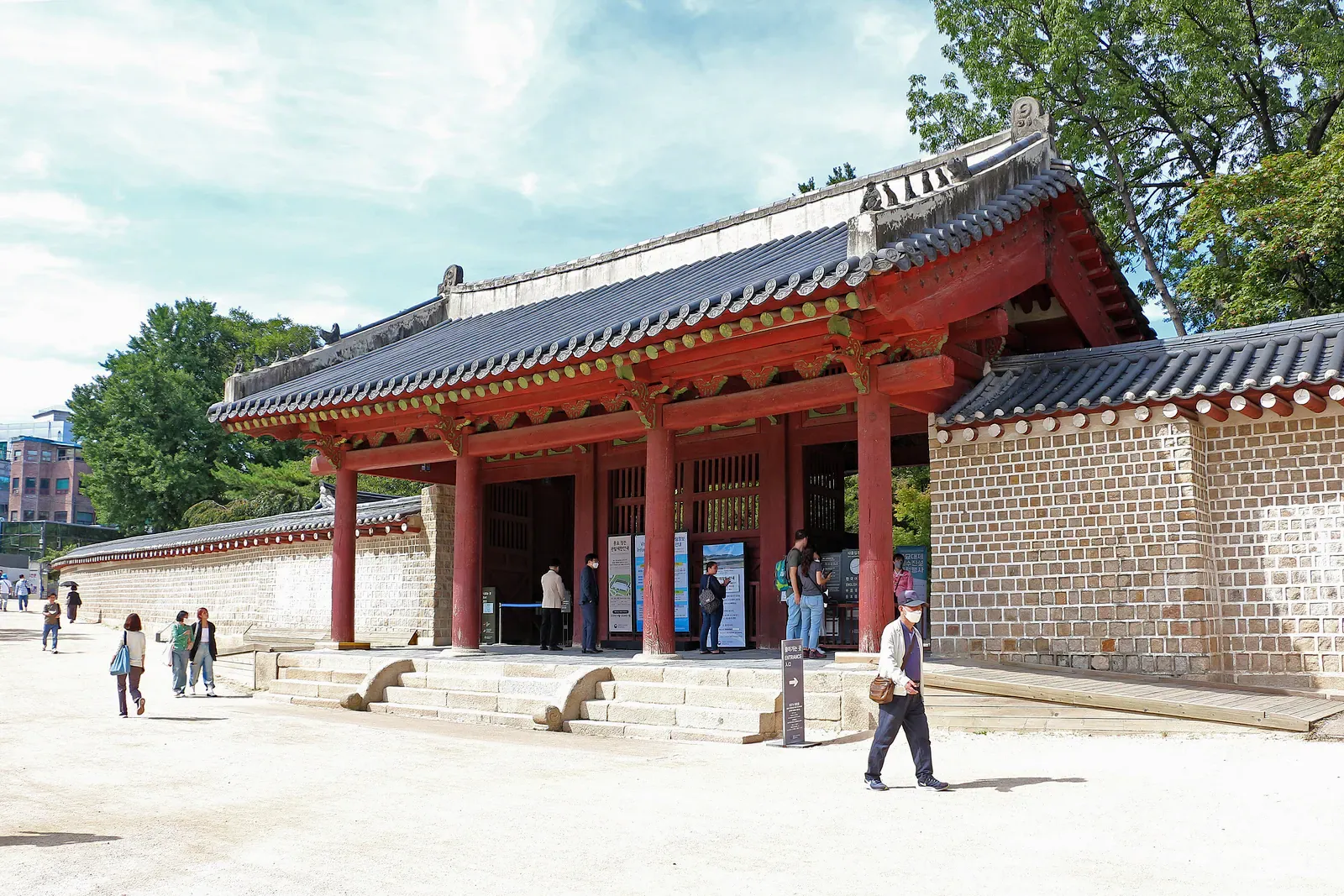
The Joseon court turned inherited material into a system. The royal ancestral shrine, Jongmyo, was settled at its Seoul site in 1395, and in 1447 King Sejong composed two sets of music: Yeomillak, a court piece whose title means enjoyment with the people, and the Jongmyo ritual music. The ritual pieces drew largely on hyangak, native Korean music, with some material from the Chinese-derived dangak. They were reworked a second time in 1462, giving the form still used at the shrine.
Writing followed. The court manual Akhak gwebeom, compiled in 1493, is the earliest source for the jangdan rhythm cycles that organise the repertoire. Meanwhile Yeongsan hoesang lost its words in the 15th century and, in the 18th and 19th, gained movements such as Jungnyeongsan, Garakdeori and the dodeuri pieces until it became a long instrumental suite running from very slow to lively.
The Aakbu years, 1910-1945
When the dynasty ended in 1910, court music lost its palace audience. The royal music office was reorganised as the Yiwangjik Aakdae, and in 1913 the Yiwangjik Aakbu was established to train younger court musicians. It became the base of jeongak transmission.
Ha Gyu-il taught gagok there from 1926 to 1937, and today’s gagok ensemble took shape in those years. Lee Ju-hwan entered training in 1928, graduated in 1931 and became a leading gagok and gasa singer.
State conservation, 1945-2000
In 1951 several music bodies merged into what became the National Gugak Center, home of the jeongak ensemble. Kim Wol-ha was named holder of gagok, Important Intangible Cultural Property No. 30, in 1973. The center moved from Unni-dong in Jongno to Seocho-gu in 1987.
Recordings from this period carried the repertoire beyond Seoul. The center issued a six-album gagok set in the mid-1980s, and a 1991 volume of a Korean traditional music series paired Kim Wol-ha and Lee Ju-hwan on the piece Taepyeongga. Jigu Records released that series, and Ocora later drew ten tracks of Kim Wol-ha from the 1980s set for a 2015 international edition.
World heritage and reinvention
UNESCO listed Jongmyo as a World Heritage site in 1995, and in 2001 named its ritual and music a Masterpiece of the Oral and Intangible Heritage of Humanity. Gagok joined the Intangible Cultural Heritage list in 2010.
Jeongak also travelled: the National Gugak Center presented a programme for the opening of the Korea Center in New York in 2024. In 2021 the center filmed a modern setting of the gagok Pyeonsudaeyeop for its Gugak in project series, a sign that the form is being rearranged, not only preserved. Jeongak never crossed into a commercial mainstream: it spread through institutions, tours and heritage listings.
Characteristics
Pieces sit on rhythm cycles, or jangdan, with 10 beats for Sangnyeongsan, 6 for dodeuri, 12 for taryeong and 16 for gagok, and the tempo is very slow. A suite such as Yeongsan hoesang moves from very slow to lively across its movements. The instrumental pieces have no lyrics. Players ornament a fixed melody with bends and vibrato, so two performances of the same piece differ in detail.
Three modes colour the repertoire: the peaceful pyeongjo, the brighter ujo and the plaintive gyemyeonjo. Gagok singers hold vowels very long over few syllables, in solo or in male and female duets.
Instruments and production
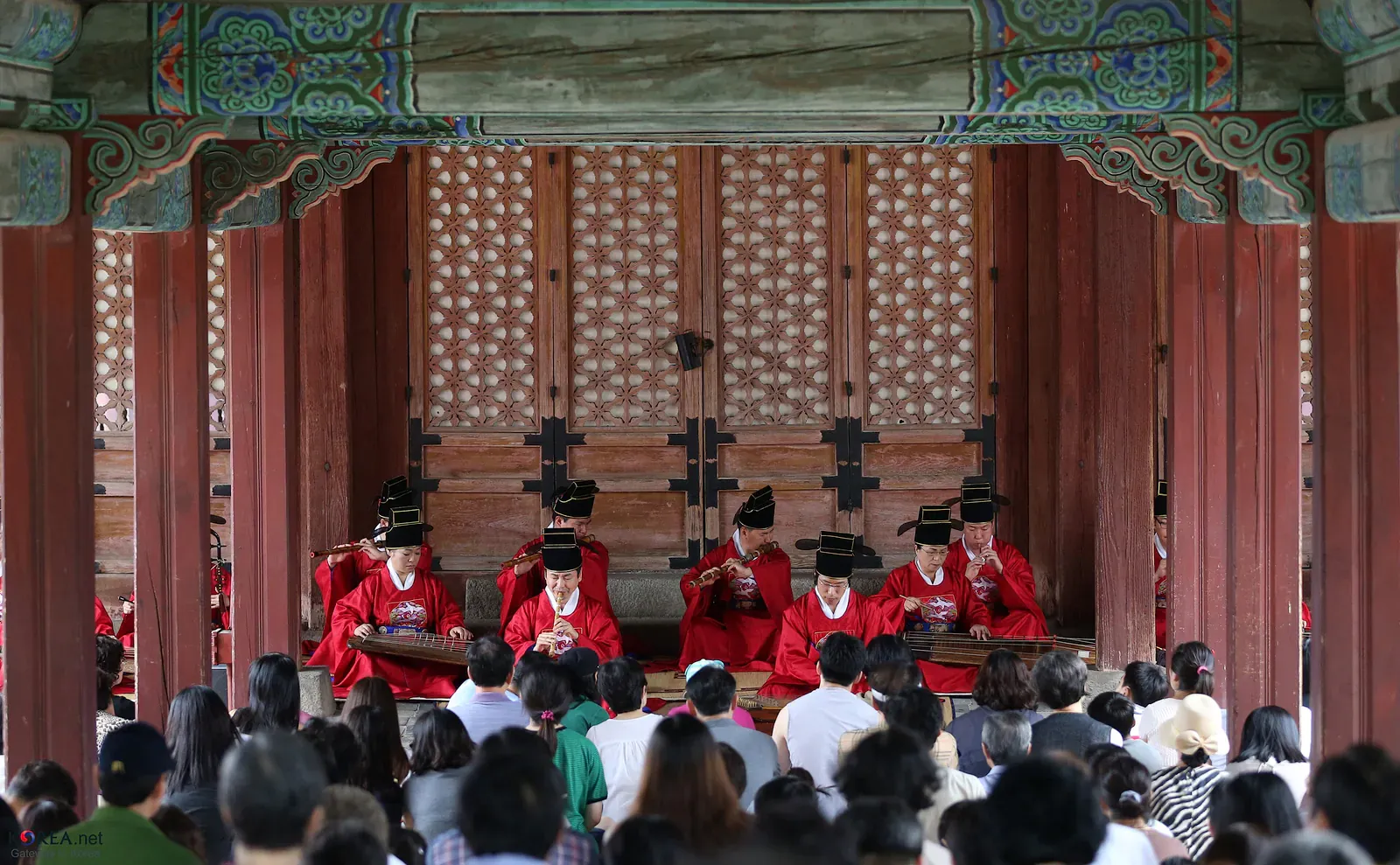
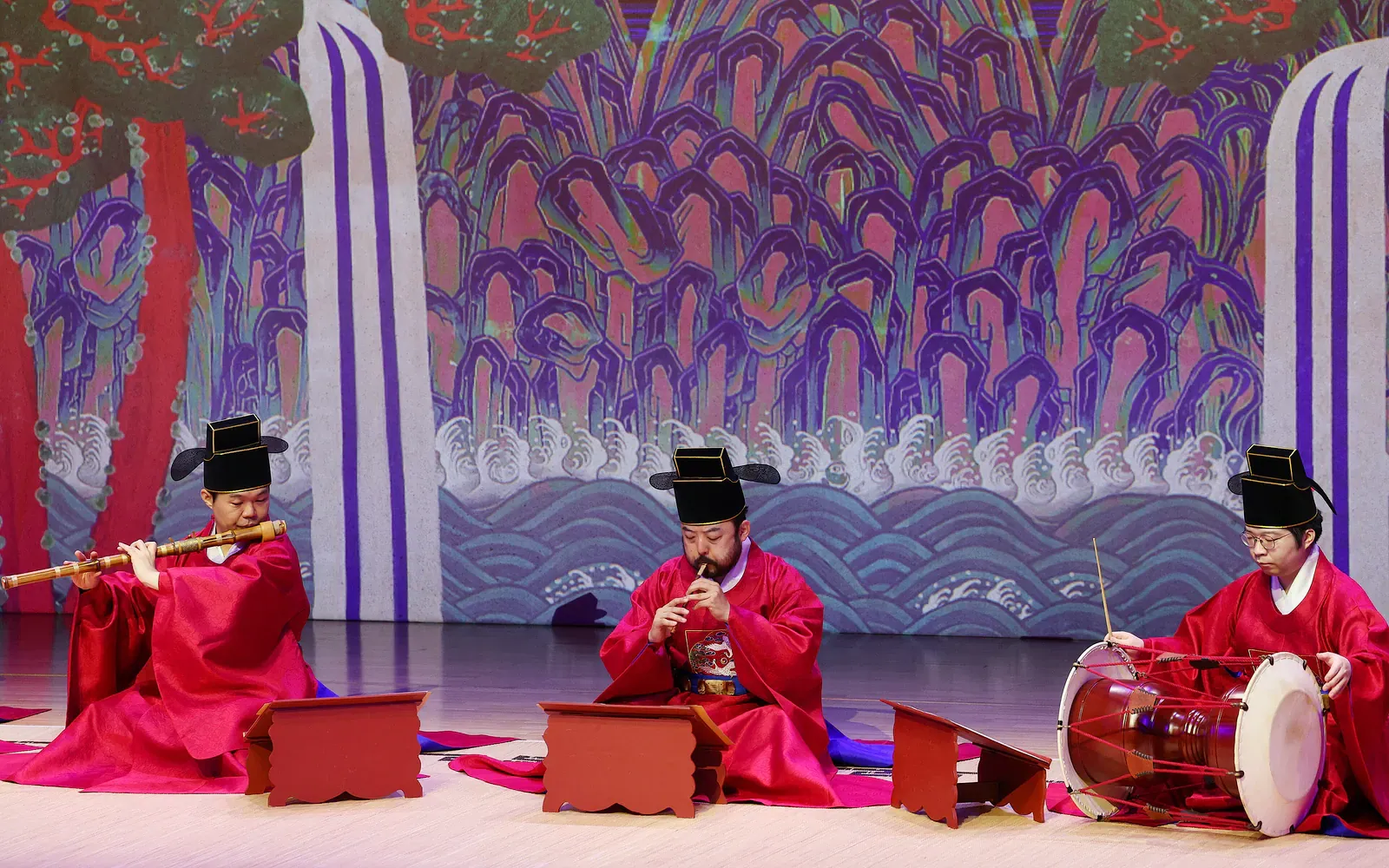
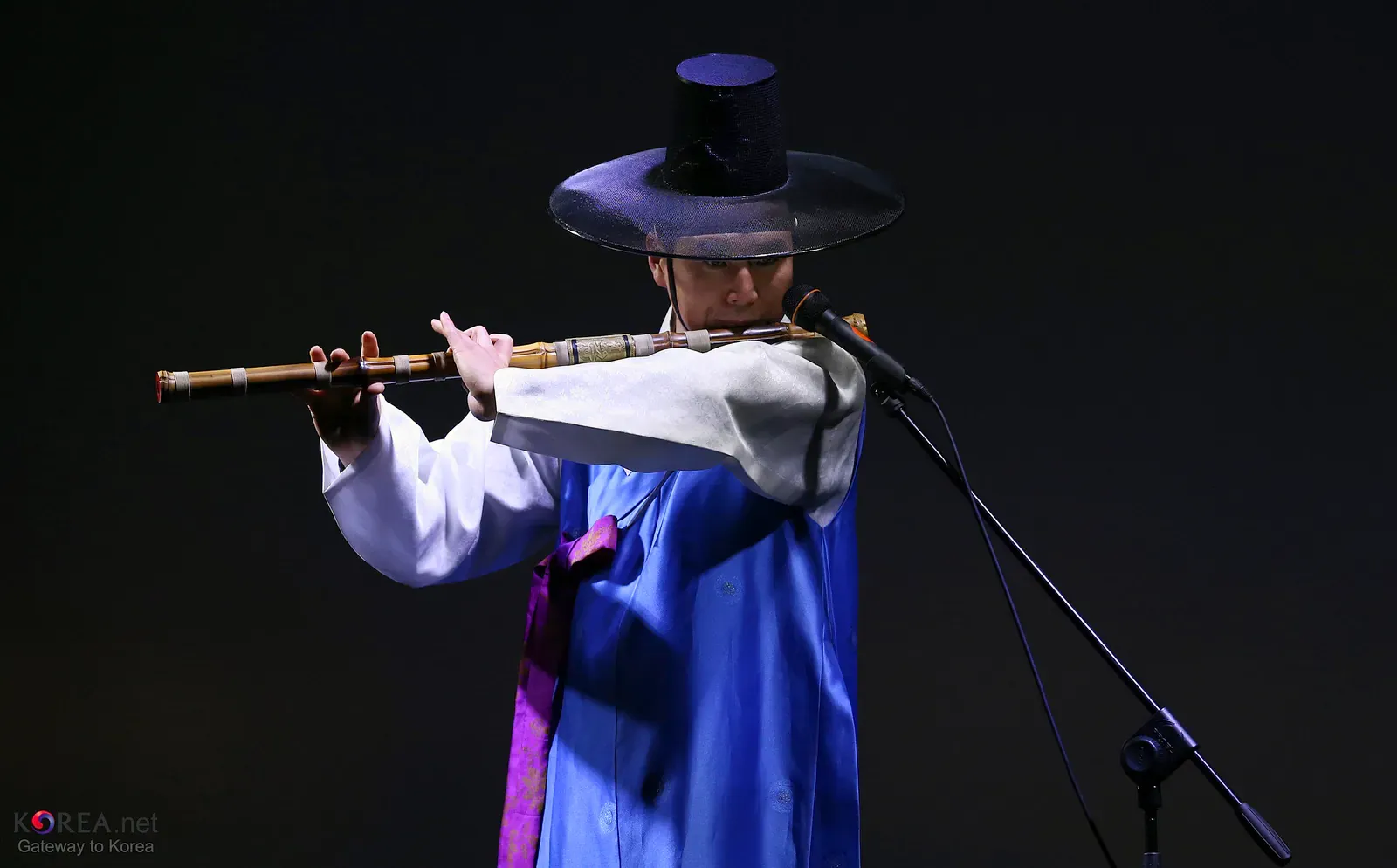
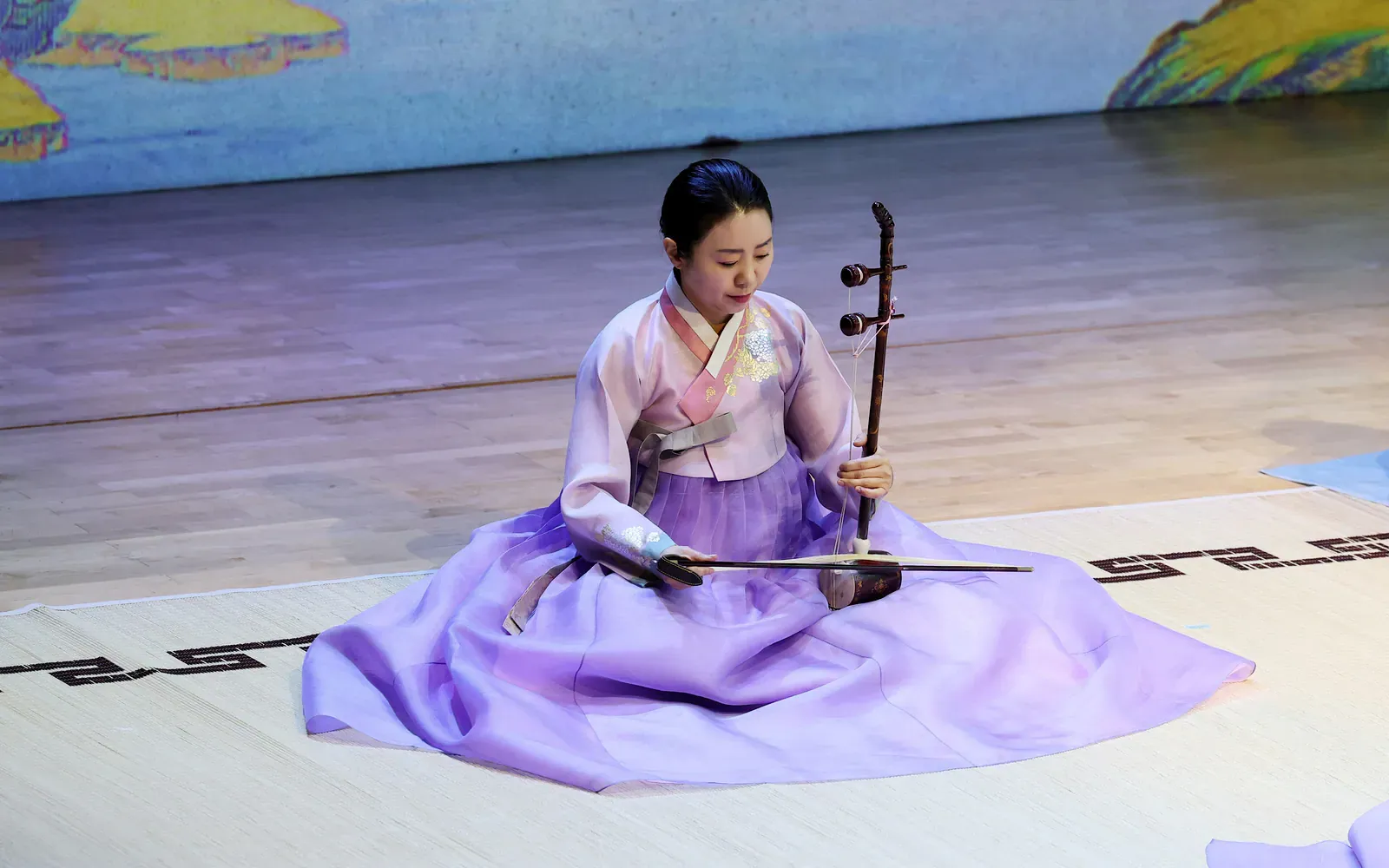
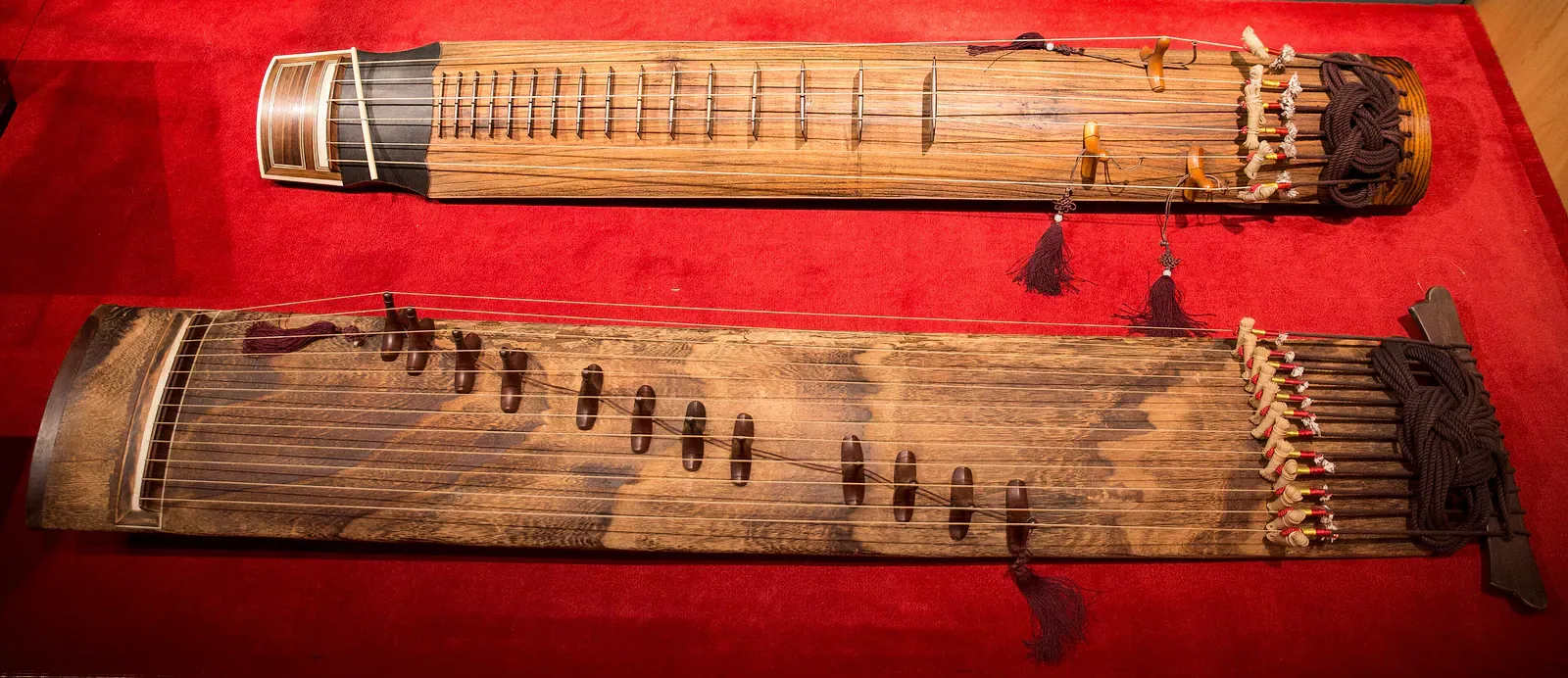
Winds, strings and one drum make up the usual ensemble. The daegeum, a large transverse bamboo flute, and the piri, a bamboo double-reed oboe, carry the melody. The haegeum fiddle, the twelve-string gayageum, the six-string geomungo and the hammered yanggeum fill in the strings, and the hourglass janggu drum marks the jangdan cycle.
Notable recordings
Yeongsan hoesang is the suite most often cited as the core of the instrumental repertoire, and its first movement, Sangnyeongsan, is among the slowest pieces in it. Sujecheon, written for winds with very long beats, is the other pillar. Cheonnyeonmanse, a chamber suite in three parts with a lighter mood, is the easiest in.
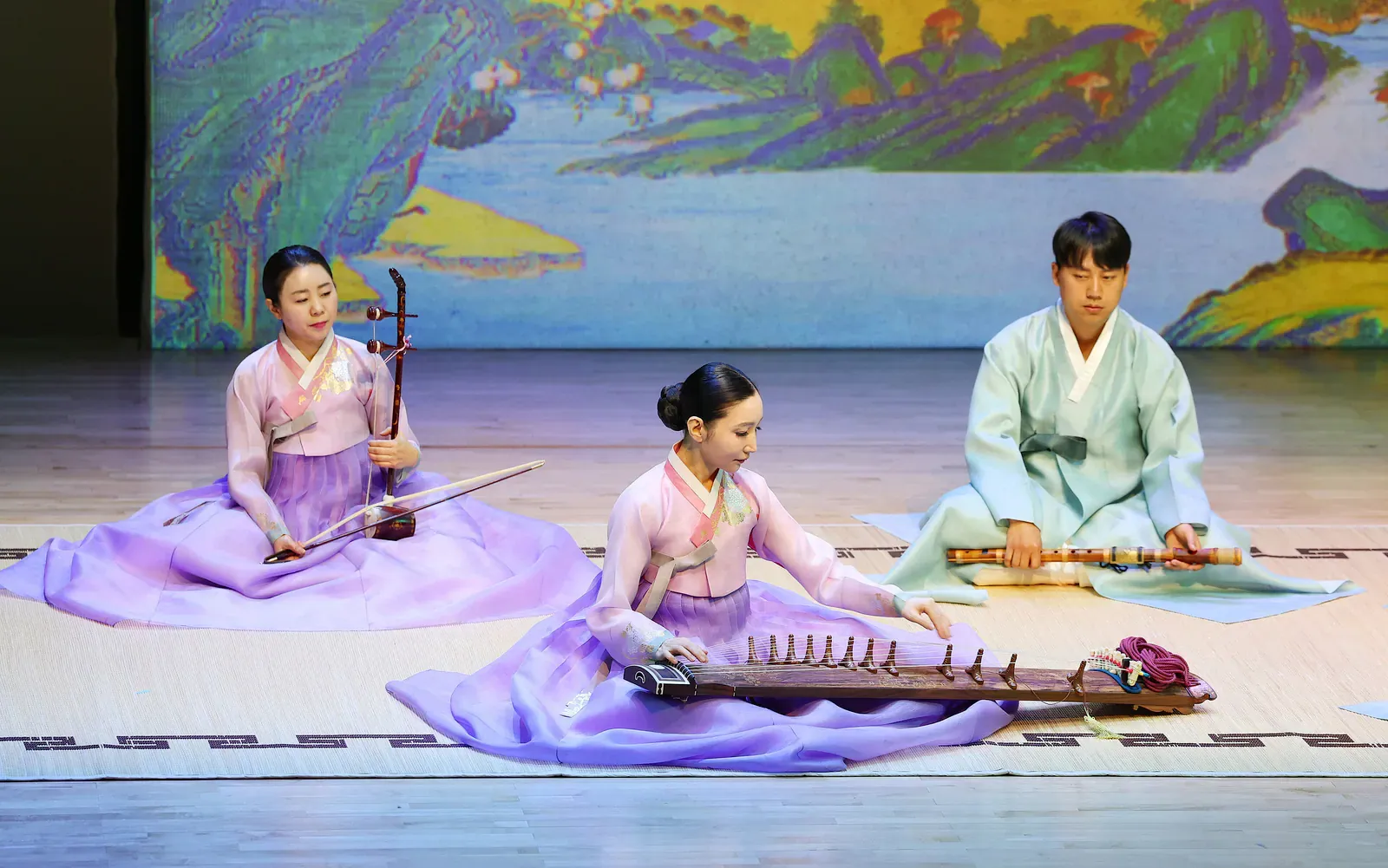
For the sung branch, Kim Wol-ha’s recordings of gagok are the main reference, including Pyeonsudaeyeop in the melancholic gyemyeonjo mode and the ujo piece Uak. Her Taepyeongga with Lee Ju-hwan puts two gagok holders on one track.
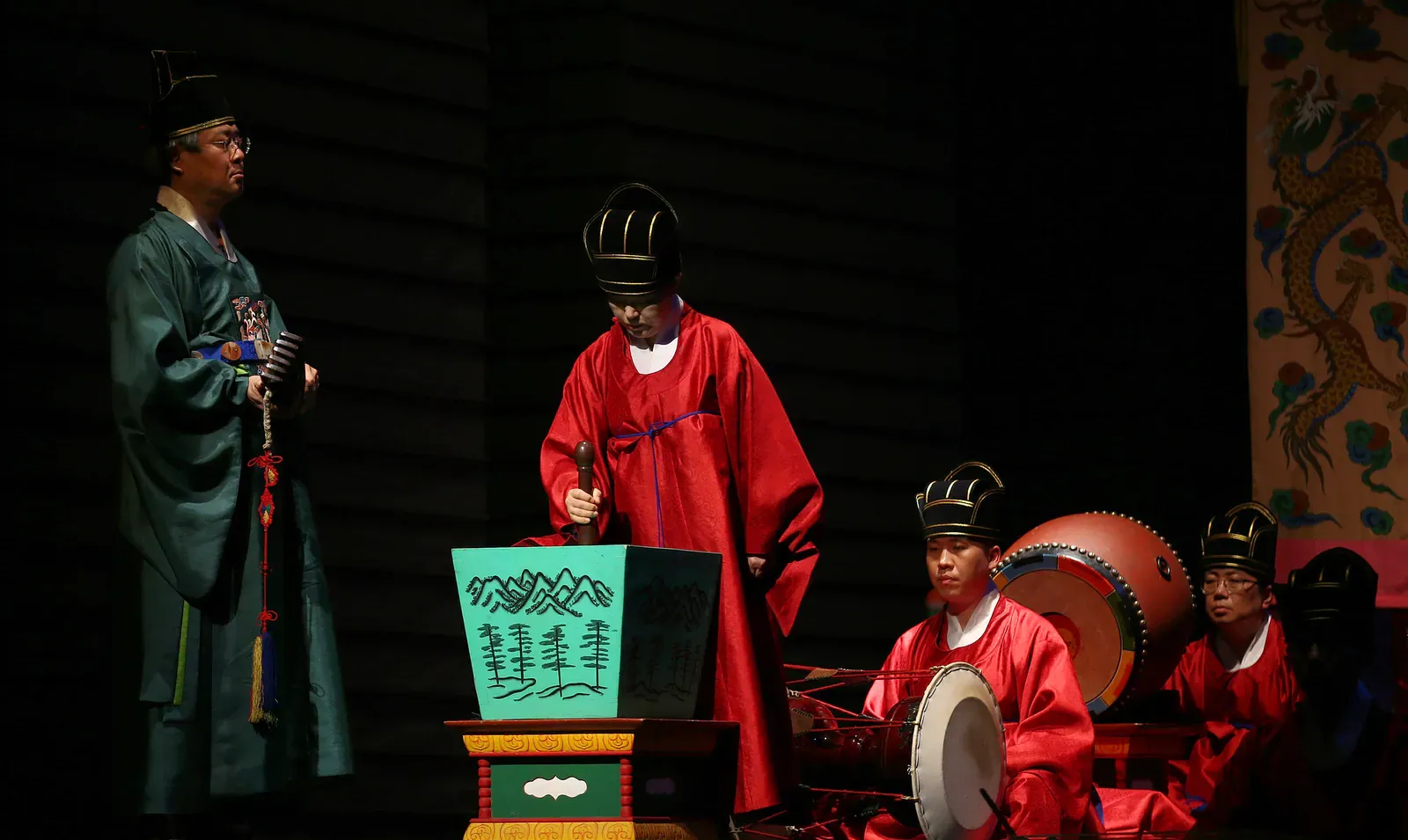
Culture
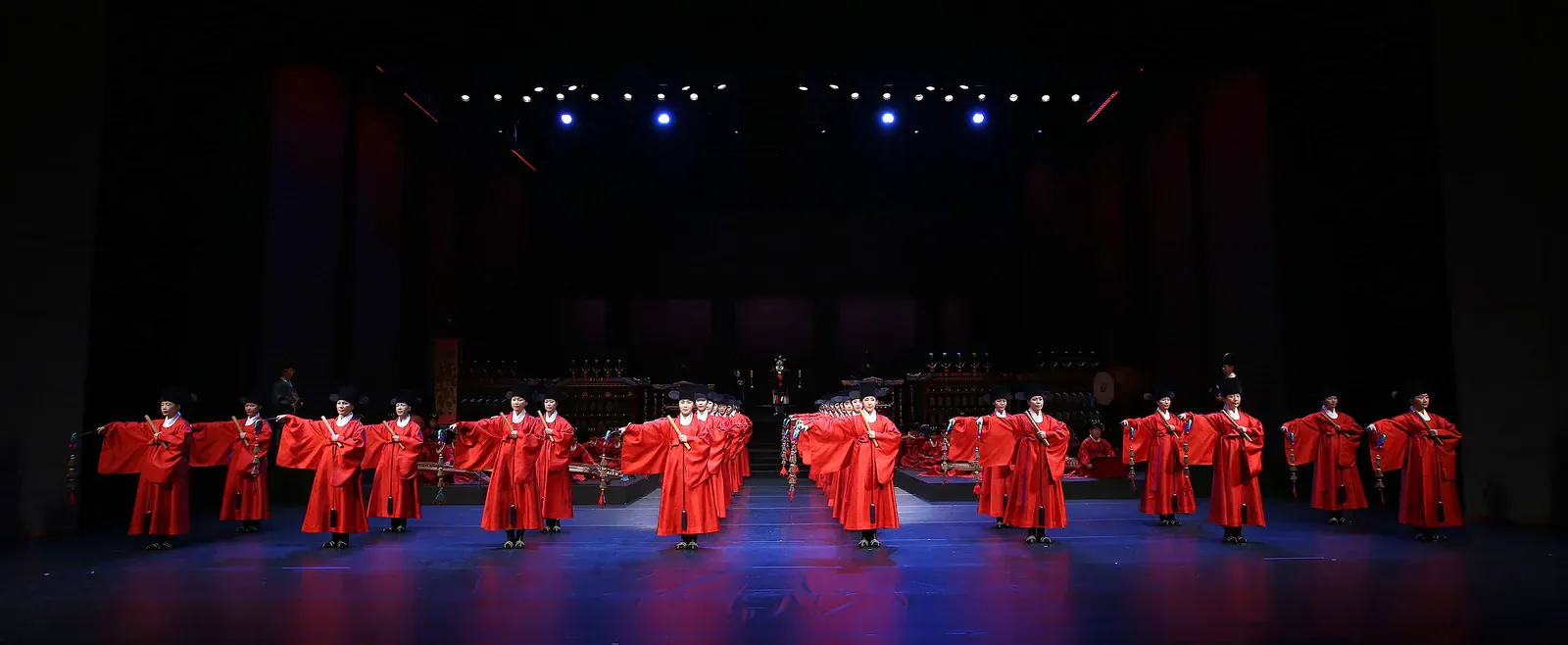
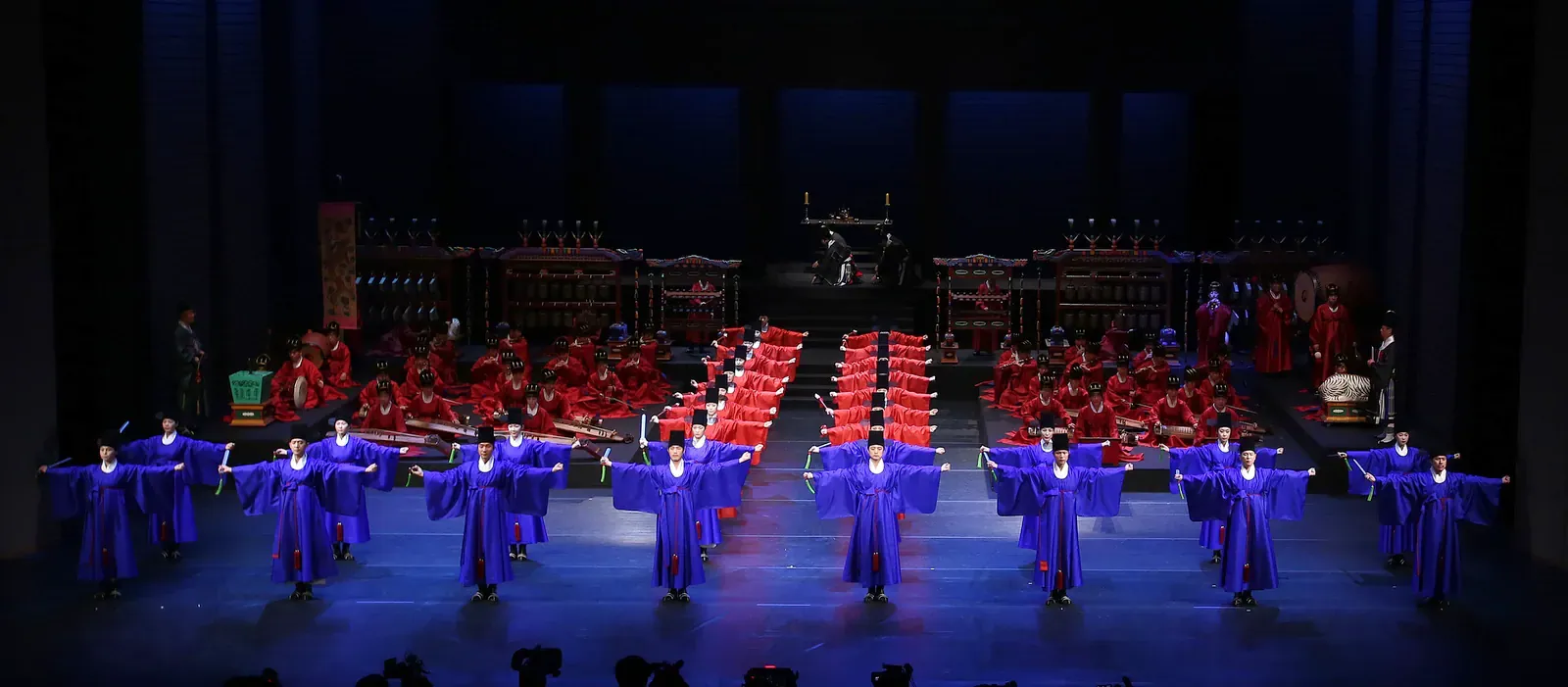
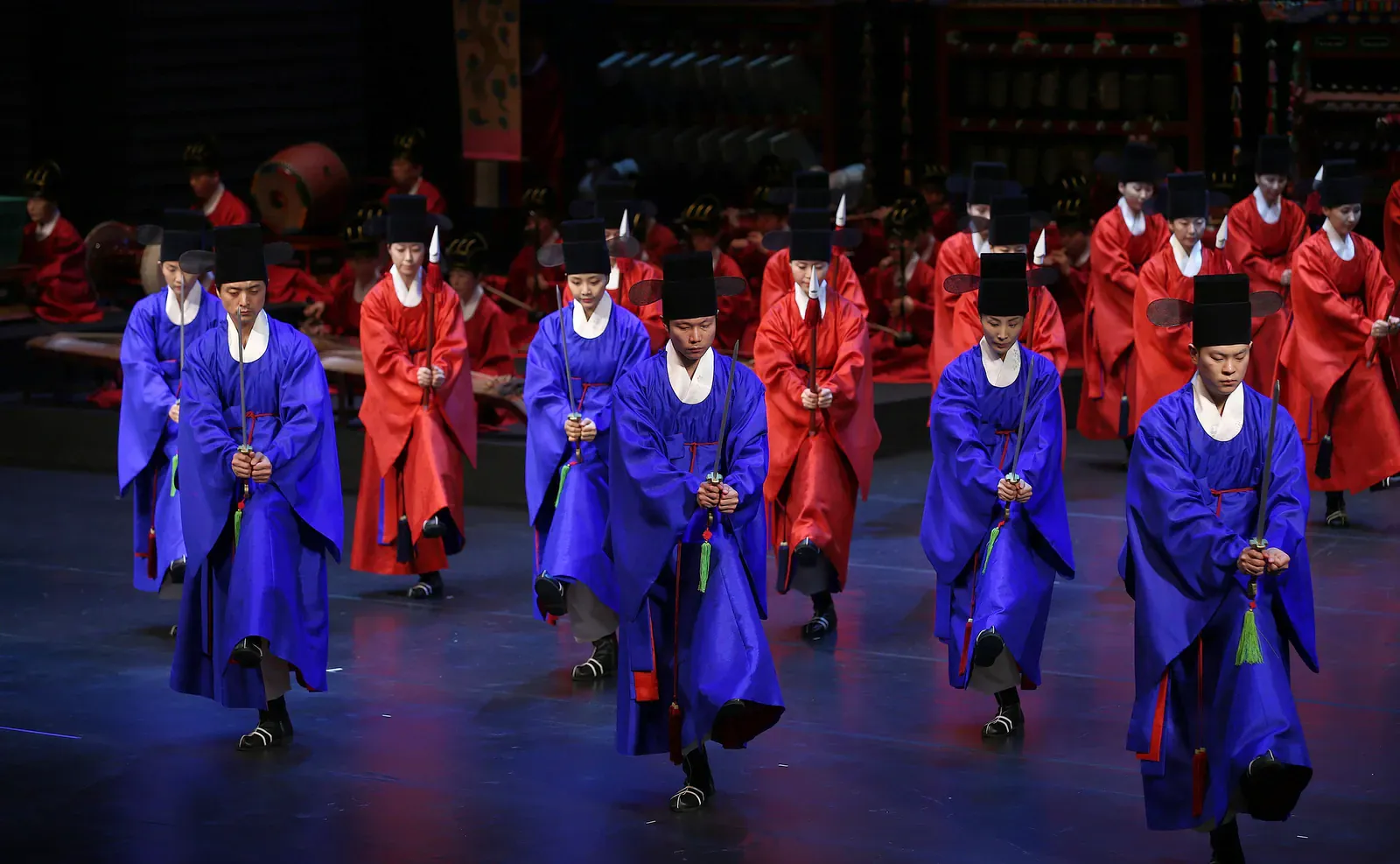
Jongmyo jerye, the ancestral rite at the royal shrine, is held each May and combines ritual music with dance. The ilmu line dance sets eight rows of dancers in purple to perform civil and martial dances to the Jongmyo music. Chamber music of the literati, called pungnyu, was played in private gatherings with strings, winds and a drum, slowly and with clear spaces between sounds.
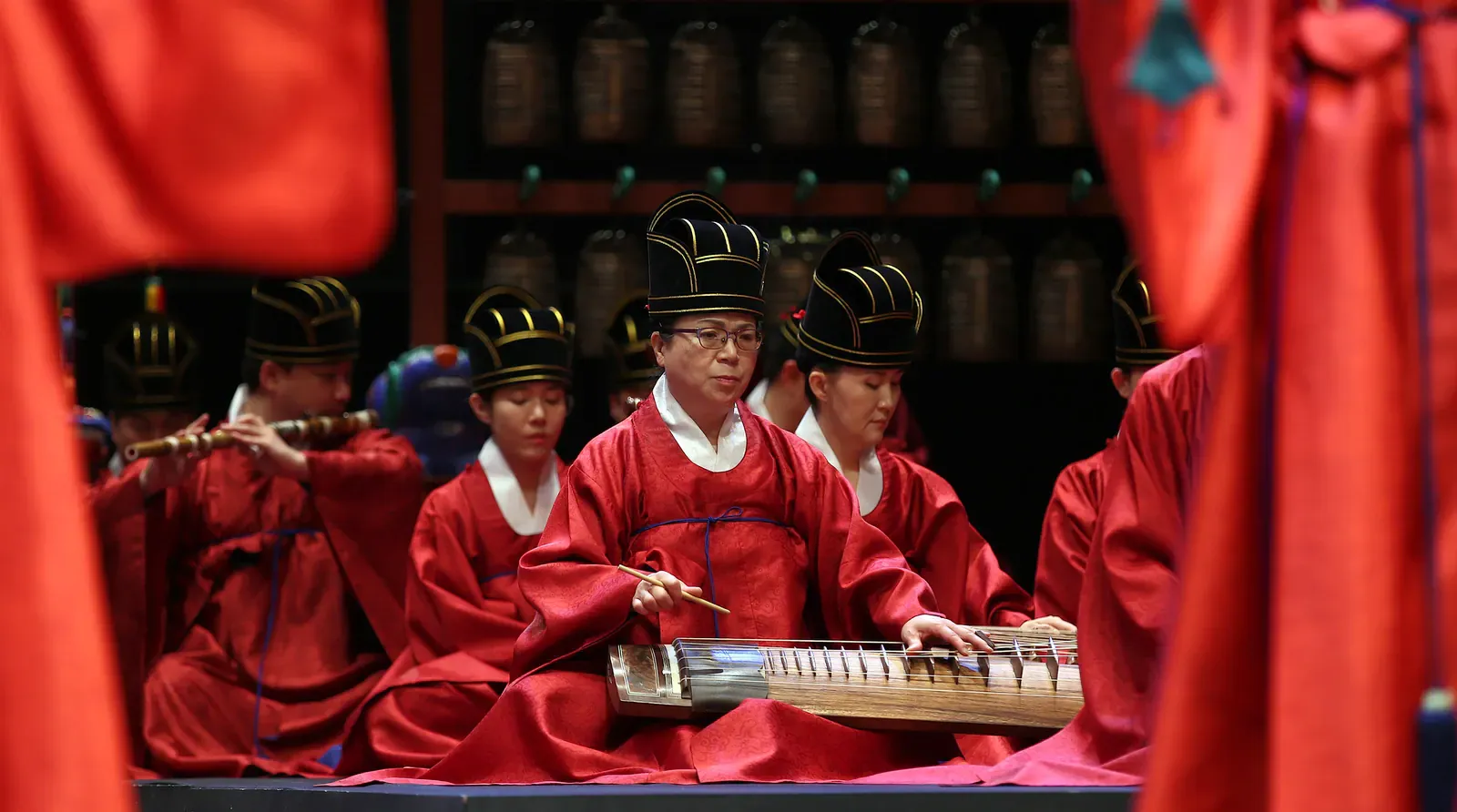
Legacy
Jeongak is the court and literati base of what the Korean state now calls gugak, shown to the public through the National Gugak Center in Seoul. Its sung branch of gagok, gasa and sijo is called jeongga, and its folk counterpart is minsogak. The wider family is covered under East Asian music.
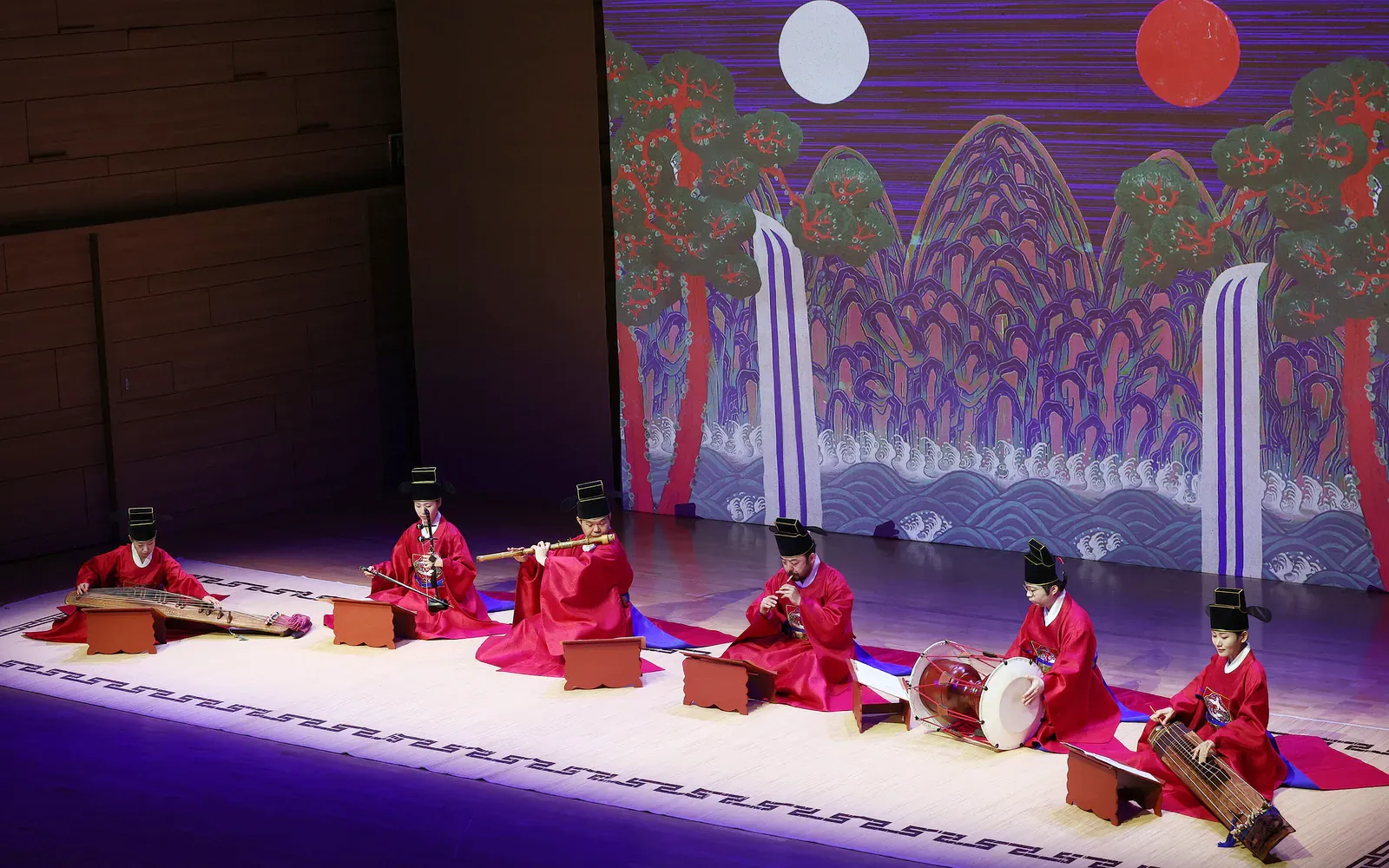
Misconceptions
Jeongak is not simply “Korean traditional music”. Gugak is the umbrella term, and jeongak is the court and literati half of it, set against the folk repertoire of minsogak such as pansori and nongak.
It is also not Chinese music in Korean dress. The Jongmyo ritual music was drawn largely from native hyangak, with only some dangak, and Sujecheon is traced to a Baekje song.
Finally, it is not a closed museum art. The repertoire has an active ensemble, new settings of old gagok, and appearances abroad, such as New York in 2024.
Frequently asked questions
What does jeongak mean?
Jeongak means “proper music” or “right music”. It names the refined court and literati repertoire of Korea, as opposed to folk minsogak.
What instruments are used in jeongak?
The usual ensemble combines the daegeum flute, the piri oboe, the haegeum fiddle, the gayageum and geomungo zithers, the yanggeum and the hourglass janggu drum.
What is Yeongsan hoesang?
Yeongsan hoesang is the central instrumental suite of jeongak. It began as Buddhist chant, lost its text in the 15th century, and grew into a long suite that moves from very slow to lively.
Is jeongak still performed?
Yes. The National Gugak Center in Seoul keeps a jeongak ensemble, Jongmyo jeryeak is performed at the shrine each May, and UNESCO lists both Jongmyo jerye and gagok.
Sound
Sound sheet
Anatomy of a track
| # | Part |
|---|---|
| 1 | Sangnyeongsan (very slow, 10 beats) |
| 2 | Jungnyeongsan (slightly faster) |
| 3 | Seryeongsan (faster again) |
| 4 | Garakdeori |
| 5 | Dodeuri set (6 beats) |
| 6 | Taryeong (12 beats) |
| 7 | Gunak (closing, lively) |
Signature sounds
- Slow-to-fast progression across a suite
- No lyrics in the instrumental suites
- Wind and string blend of daegeum, piri, haegeum and zithers
- Ornamented melody within a fixed frame
- Gagok vowels held very long with few syllables
Drums and percussion
- Janggu
Techniques
- Slow-to-fast suite progression
- Sigimsae ornamentation
- Jangdan cycles
- Gagok vowel extension
Keys and modes
Pyeongjo. Peaceful mode, also the name of the Pyeongjo hoesang version.
Ujo. Brighter, energetic mode of gagok and Cheonnyeonmanse.
Gyemyeonjo. Melancholic mode used for plaintive gagok and Cheonnyeonmanse.
Vocals
Gagok is sung solo or in male and female duets, with falsetto passages and very long vowels over few syllables.
Scenes
Where it happened
Where and when the sound lived: one bar per city on a shared timeline.
Asia
North America
Active scenes
Peak 3, 2024-2025
Jongmyo shrine and the former Aakbu stood here, the old centre of ritual and court performance.
Home of the National Gugak Center and its jeongak ensemble since 1987.
The Korea Center opening in June 2024 featured a National Gugak Center programme.
Venues and places
Seoul, 1395 to today. Royal ancestral shrine where Jongmyo jeryeak is performed each May.
Seoul, 1913 to today. Training institute and concert base for court musicians during the colonial period.
Seoul, 1987 to today. Performance halls, museum and archive in Seocho-gu, home of the jeongak ensemble.
Culture
Culture markers
- Jongmyo jerye
Ancestral rite at the royal shrine each May, performed with court music and dance.
Ritual - Ilmu line dance
Eight rows of dancers in purple perform civil and martial dances to Jongmyo music.
Dance - Pungnyu gatherings
Literati chamber-music sessions where strings, winds and drum play slow, spaced pieces.
Ritual
Media
Key media
- 1981Essays on Korean Traditional Music
by Lee Hye-ku. Collected essays by the founding scholar of Korean music studies at Seoul National University.
Book - 2015Corée: chants lyriques Gagok
by Kim Wol-ha. Ocora's ten-track selection from the Gugak Center's mid-1980s gagok set.
Compilation
Glossary
Terms on this page
A suite, as in Yeongsan hoesang, whose movements run from very slow to quick.
A rhythm cycle, such as the 10-beat Sangnyeongsan, the 6-beat dodeuri, the 12-beat taryeong or the 16-beat gagok cycle.
Literally proper music, the refined court and literati repertoire as opposed to folk minsogak.
The sung branch of jeongak: gagok, gasa and sijo.
Chamber music of the literati, played slowly with clear spaces between sounds.
Melodic ornamentation that lets each player shape a line within the fixed melody.
East Asian family