Chinese opera
Chinese opera (xiqu) is China's regional sung theatre forms, including Kunqu, Peking, Cantonese and Yue opera, dating from the Song and Yuan dynasties.
China, Taiwan, around 1200
East Asian family
Born
around 1200
China, Taiwan
Subgenres
33
Documented branches
Links
1
Genres it drew on or shaped
Tempo
70-135 BPMLineage
Family tree
Grew out of
China, Taiwan
Chinese opera
Led to (33)
Timeline
Era by era
From the first sparks to today. Select a dot to read the story behind it.
- Zaju and nanxi
1200 to 1549
- The Kunqu age
1550 to 1789
- Peking opera takes shape
1790 to 1899
- Discs and stars
1900 to 1948
- State troupes and Hong Kong
1949 to 1976
- Revival and heritage
1977 to today
Eras
Moments
- 1 Zaju and nanxi, 1200 to 1549
- 2 The Kunqu age, 1550 to 1789
- 3 Peking opera takes shape, 1790 to 1899
- 4 Discs and stars, 1900 to 1948
- 5 State troupes and Hong Kong, 1949 to 1976
- 6 Revival and heritage, 1977 to today
around 1200
Zaju and nanxi
Song and Yuan theatre fixes role types and mixes song, speech, mime and music. Southern drama later feeds regional forms.
- 1300Zaju drama matures under the YuanRole types and sung drama settle into a form later opera inherits.
around 1550
The Kunqu age
Wei Liangfu refines the "water mill" tune and Tang Xianzu writes The Peony Pavilion (1598). Kunqu becomes the court and scholar favourite.
- 1598Tang Xianzu writes The Peony PavilionThe best known Kunqu play, still revived in new productions.
1790
Peking opera takes shape
Anhui troupes reach Beijing in 1790, Hubei troupes follow in 1828, and the blend is mature by the 1840s. Empress Dowager Cixi patronises it from 1884.
- 1790Four Great Anhui troupes reach BeijingArrive for the Qianlong emperor birthday, the usual start date of Peking opera.
- 1828Hubei troupes join Anhui players in BeijingTheir tunes merge into Peking opera xipi and erhuang.
- 1884Empress Dowager Cixi becomes a regular patronCourt favour lifts Peking opera above Kunqu.
1900
Discs and stars
Gramophone and Pathe record opera from 1903 and 1908. Mei Lanfang, Cheng Yanqiu and Tan Xinpei become household voices.
- 1903Gramophone and Typewriter records Chinese operaFirst commercial discs in China, nearly all opera.
- 1908Pathe Orient founded in ShanghaiStarts recording Peking opera excerpts in Beijing in 1909.
- 1911Tan Xinpei records Selling the Horse for Pathe
- 1912Ban on women performers liftedFemale actors may officially share the stage after the Republic is founded.
- 1930Mei Lanfang tours the United StatesA two-week run stretches to five weeks.
- 1935Mei Lanfang performs in the USSR and Europe
- 1946Yuan Xuefen stars in Sister XianglinLandmark of Yue opera reform, from a Lu Xun story.
1949
State troupes and Hong Kong
China Record Corporation opens in 1949, hundreds of regional forms are listed, and Hong Kong makes Cantonese opera films. Only model works are allowed 1966-76.
- 1949China Record Corporation foundedState label takes over the old Shanghai Pathe/EMI plant.
- 1952Pathe moves to Hong Kong
- 1954Butterfly Lovers filmed in colorYue opera film with Yuan Xuefen and Fan Ruijuan.
- 1955Mei Lanfang films Farewell My Concubine
- 1958Crown Records founded in Hong Kong
- 1960Crown issues Di Nu Hua with Yam Kim-fai
- 1966Cultural Revolution restricts opera to model worksTraditional repertoire is denounced until 1976.
- 1976A list of 41 traditional Peking operas is cleared for the stageTroupes may again perform old plays instead of only model works.
1977
Revival and heritage
Traditional repertoire returns. UNESCO lists Kunqu (2001), Cantonese opera (2009) and Peking opera (2010); crossover stars reach pop audiences.
- 2001UNESCO proclaims Kunqu a masterpiece of heritage
- 2009UNESCO lists Cantonese opera
- 2010UNESCO lists Peking opera
- 2011Li Yugang stages The Painting of Four BeautiesCrossover show for pop audiences.
Listening path
Anthems
The records that built the sound, grouped by the part they played. Thumbnails come from YouTube; the player loads only when you press play.
- 01
Tan Xinpei, 1911 · Pathe Records (China)
Early Pathe disc by the founding laosheng, the earliest sound of Peking opera on record.
Origin - 02
Mei Lanfang, 1955 · China Record Corporation
Mei Lanfang as Lady Yu in the film soundtrack of the play he first staged in 1921, the work that carried Peking opera abroad.
Start hereBreakthrough - 03
Yam Kim-fai, 1958 · Crown Records
Early Crown record of Yam Kim-fai from the label first year, showing the low male-lead register that made her a star.
Anthem - 04
Yam Kim-fai, 1959 · Crown Records
Yam Kim-fai and Pak Suet-sin in a Tong Tik-sang opera released by Crown in 1959.
Anthem - 05
Yam Kim-fai, 1960 · Crown Records
Yam Kim-fai in the tragic death scene of the Cantonese opera favourite.
Start hereAnthem - 06
Yam Kim-fai, 1960 · Crown Records
Yam Kim-fai and Bai Xue Xian in the Crown studio recording of the Di Nu Hua love scene.
Anthem - 07
Li Yugang, 2011
Crossover take on the Mei school showpiece for a pop audience.
Start hereCrossover - 08
Xun-fa Yu, 1992
Shanghai recording of a Cultural Revolution model-opera aria made in January 1992, the model works reborn as concert music.
Revival
Facts
| Family | East Asian |
| Origin | China, Taiwan |
| Emerged | Song-Yuan dynasties onward |
| Status | Active |
| Tempo | 70 to 135 BPM |
| Subgenres | 33 |
Chinese opera, or xiqu, is the umbrella name for China’s regional theatre traditions that join singing, speech, mime, acrobatics and instrumental accompaniment in one stylised performance.
It grew out of Song and Yuan dynasty drama, and more than a hundred regional branches survive, each with its own dialect and tunes. Kunqu, Peking opera, Cantonese opera and Yue opera are the best known. It belongs to the East Asian music family.
Origins
The roots lie in the zaju drama of the Yuan dynasty (around 1300) and the southern nanxi theatre of the Song period. Zaju settled the role types and mixed song, speech, mime and music, and later regional forms inherited that mix. Southern drama then fed the regional forms that grew up across the country from the 16th century on. Open-air performance at temple fairs, tied to honouring the gods, is the oldest setting and still survives next to the great city theatres.
Kunqu, 1550-1789
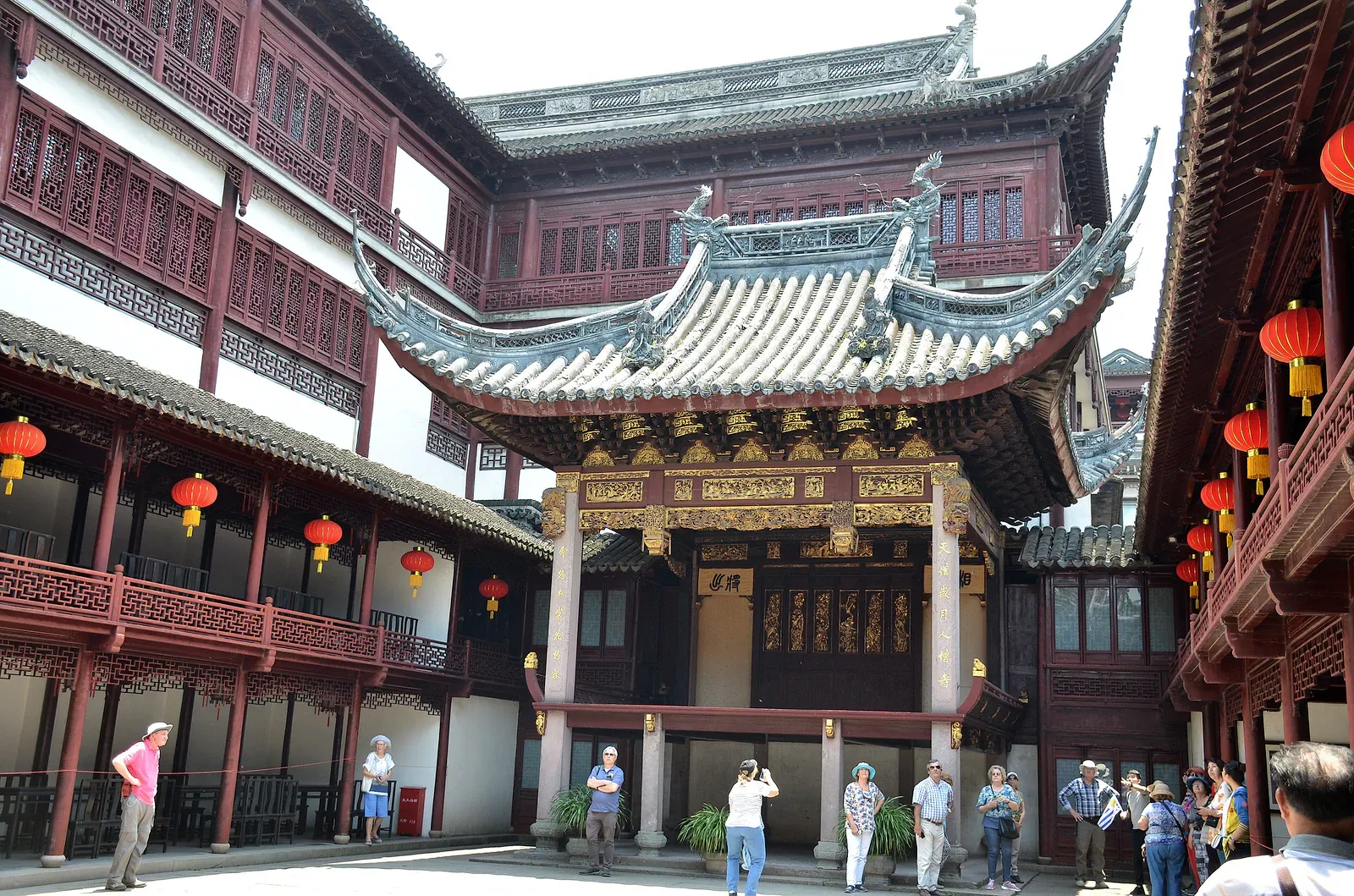
Kunqu is the refined branch. Wei Liangfu polished the soft “water mill” tune in the 16th century, and Kunqu became the favourite of scholars and the court. Tang Xianzu wrote The Peony Pavilion in 1598, the best known Kunqu play, and it is still revived in new productions. Suzhou became its centre, and garden performances there set the image of a slow, lyrical opera carried by the bamboo flute (dizi) rather than the fiddle.
Peking opera, 1790-1899
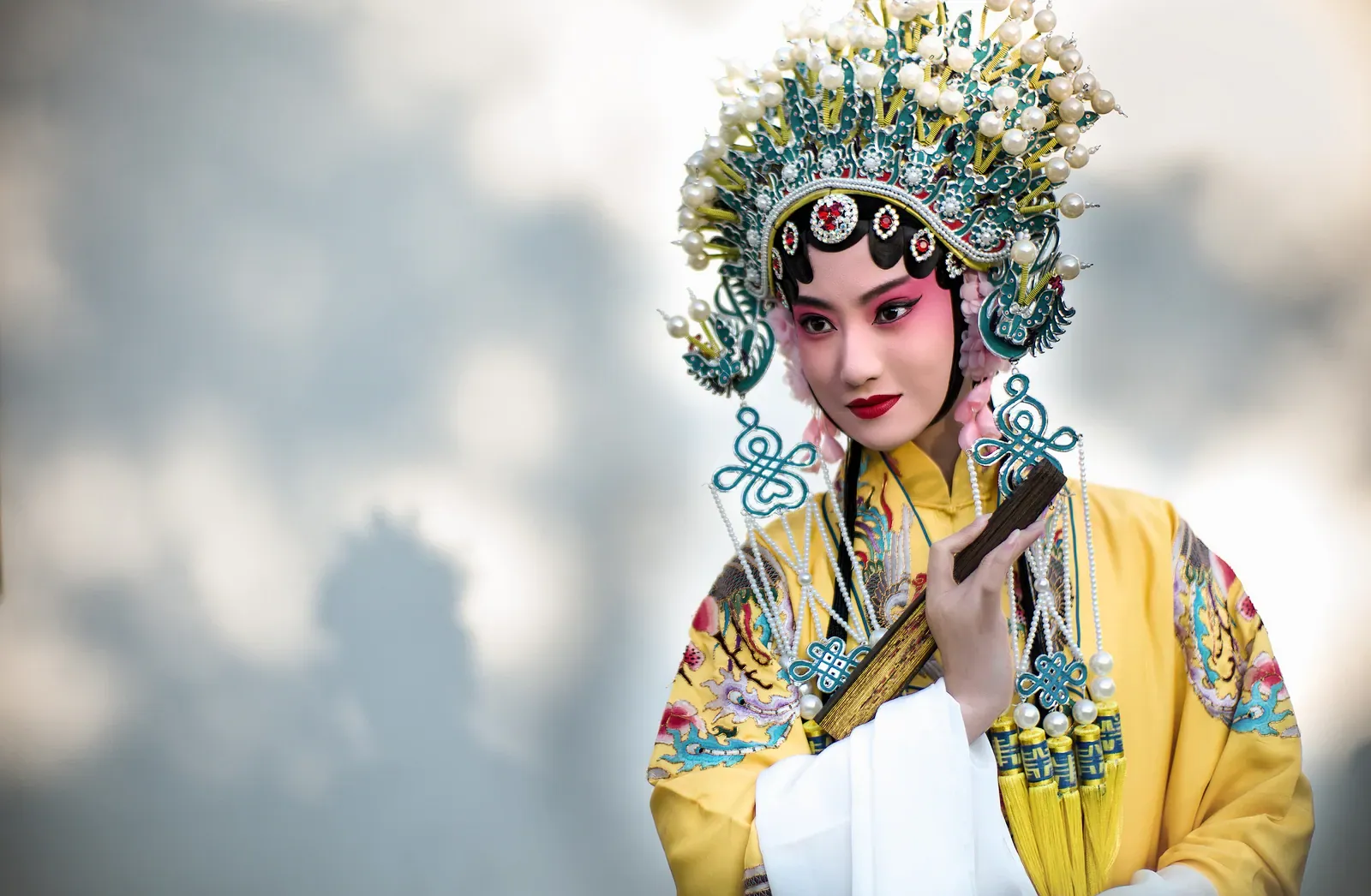
Peking opera is younger than Kunqu. In 1790 four great Anhui troupes reached Beijing for the Qianlong emperor’s birthday, and this is the usual start date. Hubei troupes joined them in 1828, and their tunes merged into the two systems called xipi and erhuang. By the 1840s the blend was mature. The Empress Dowager Cixi became a regular patron in 1884, and court favour lifted Peking opera above Kunqu.
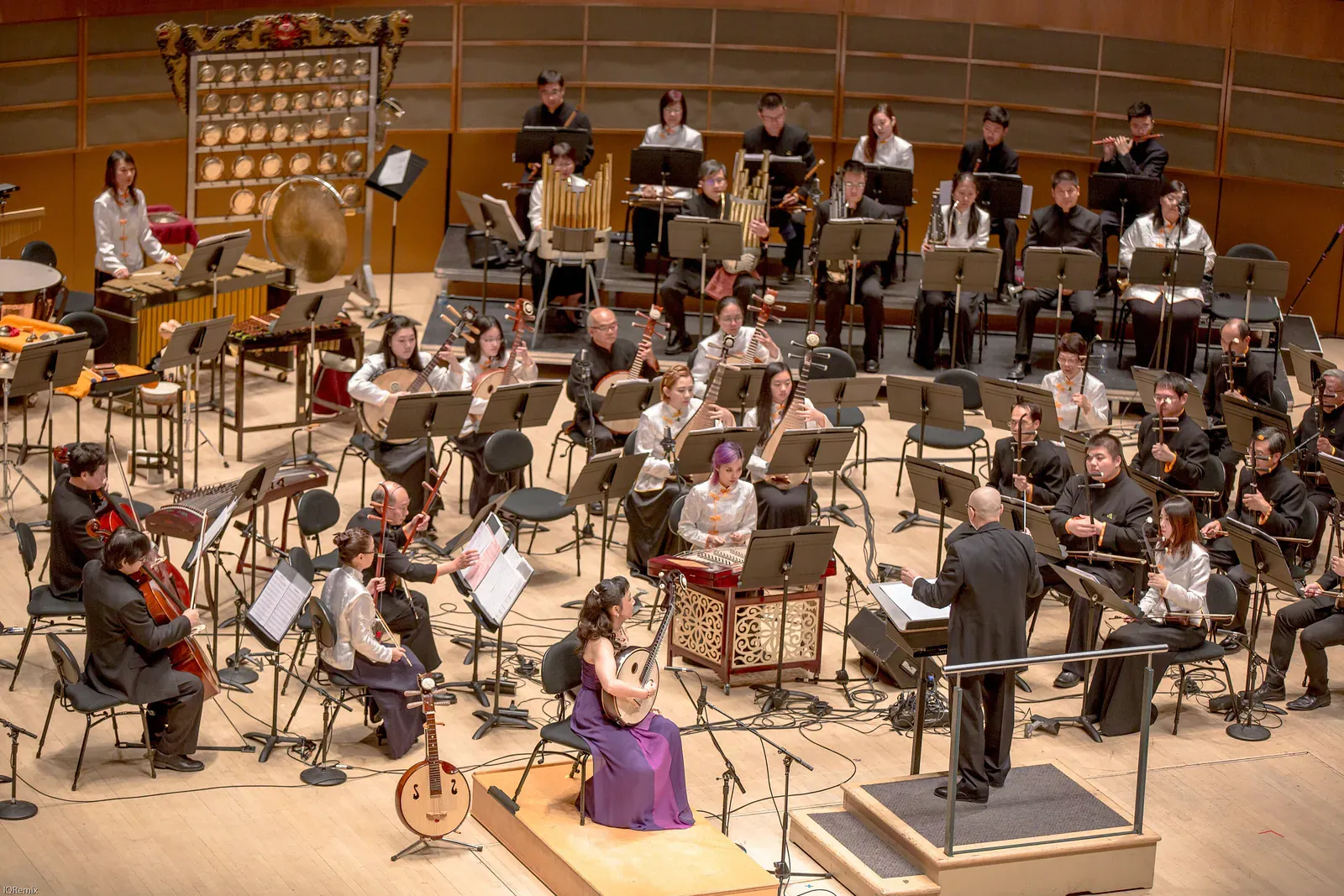
The sound is built on the jinghu, a high two-string fiddle that leads the line, with the yueqin moon lute and the sanxian plucked lute underneath. Wooden clappers (ban) mark the tempo, and the luogu gongs and drums cue every entrance, fight and gesture. Speech and song are both stylised, from the walk to the flick of a sleeve.
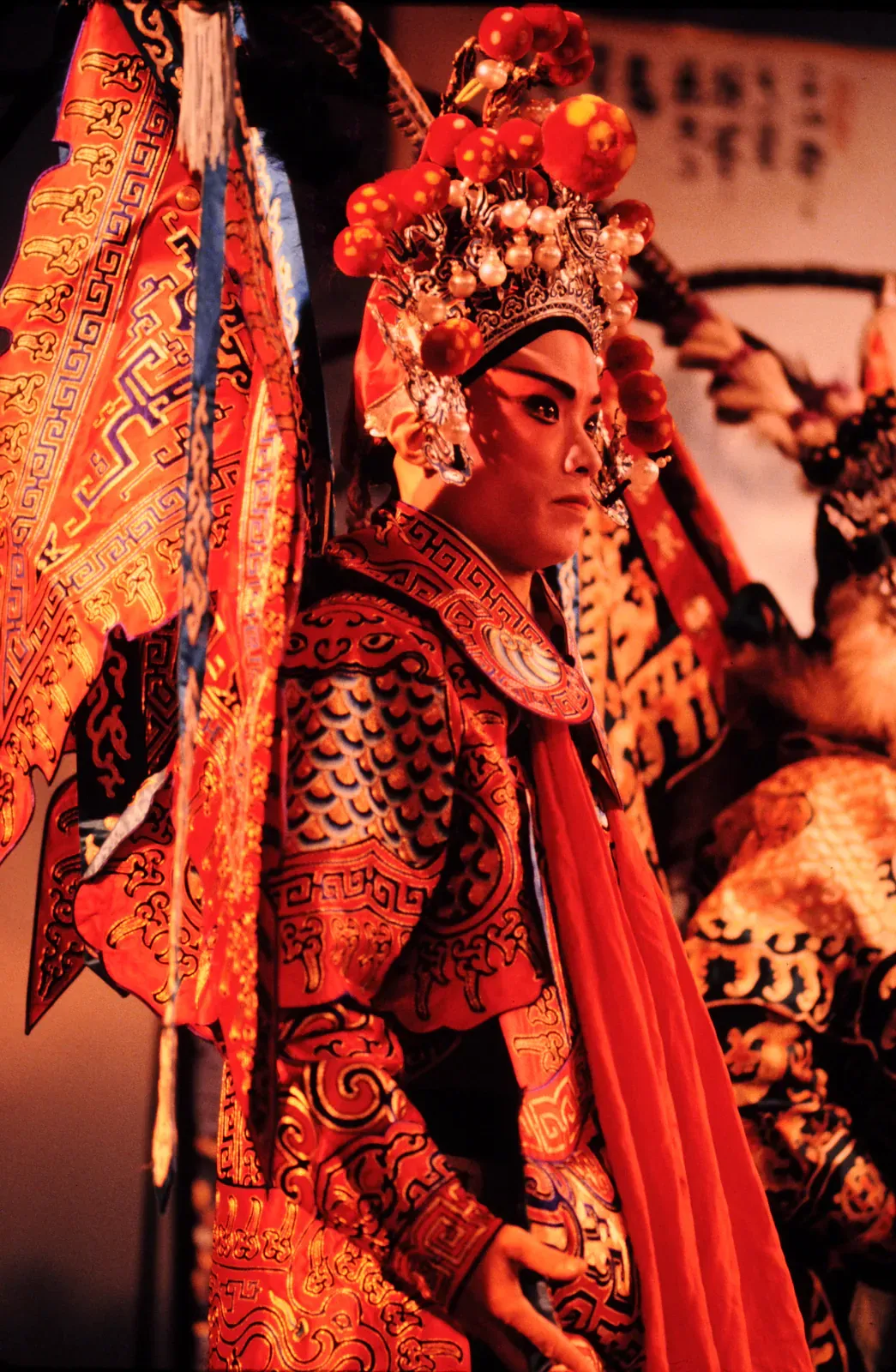
Role types and painted faces
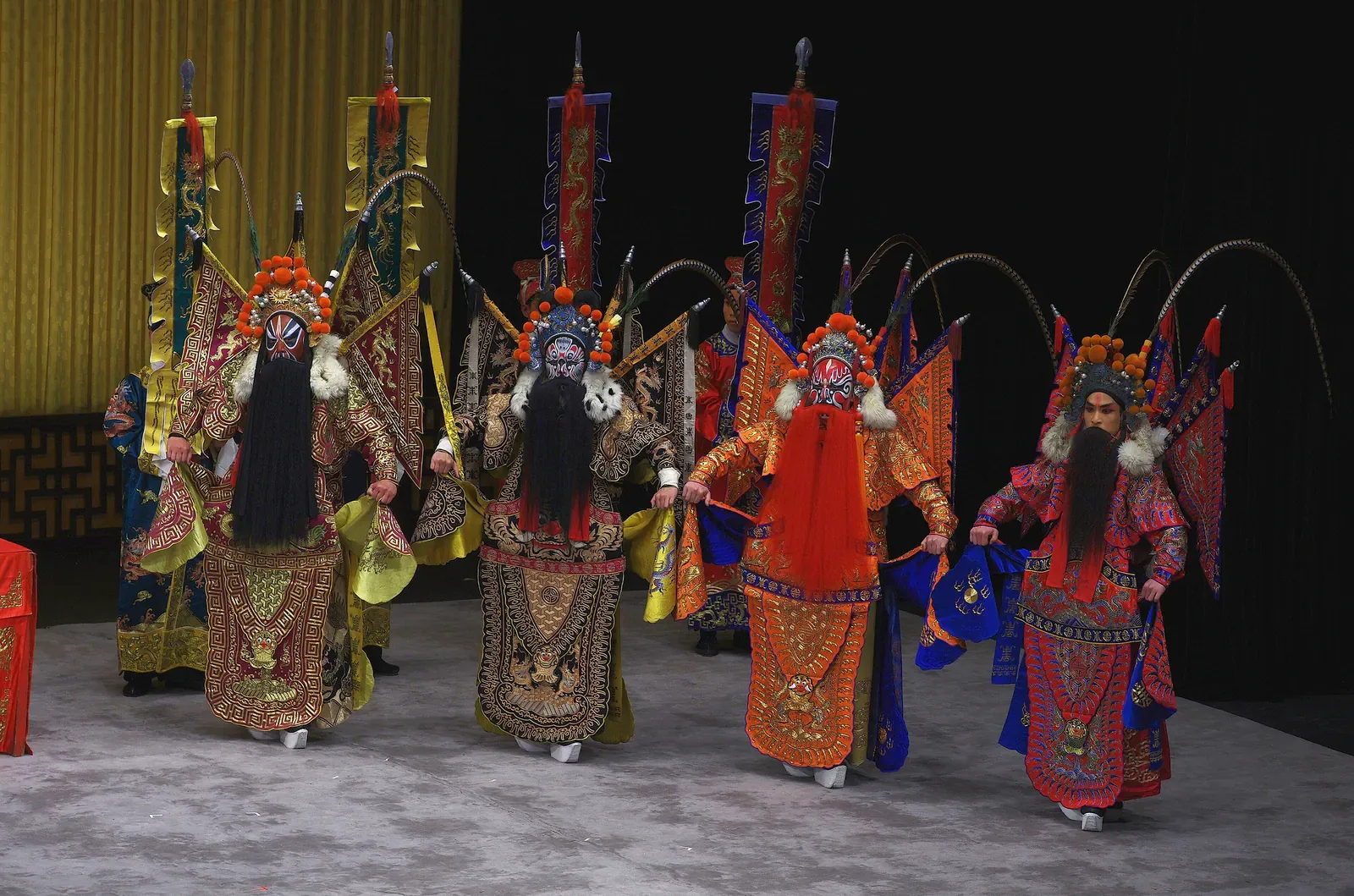
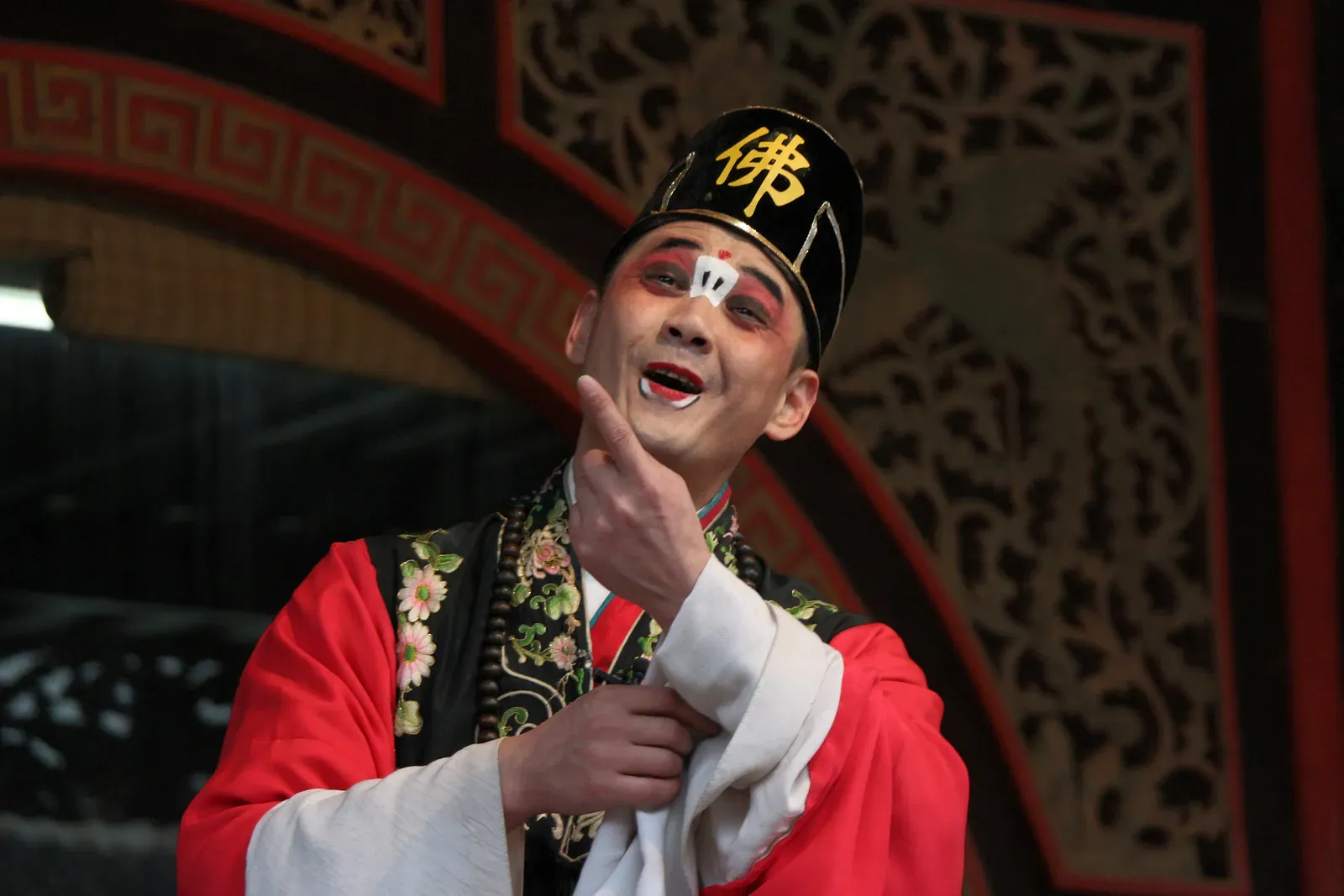
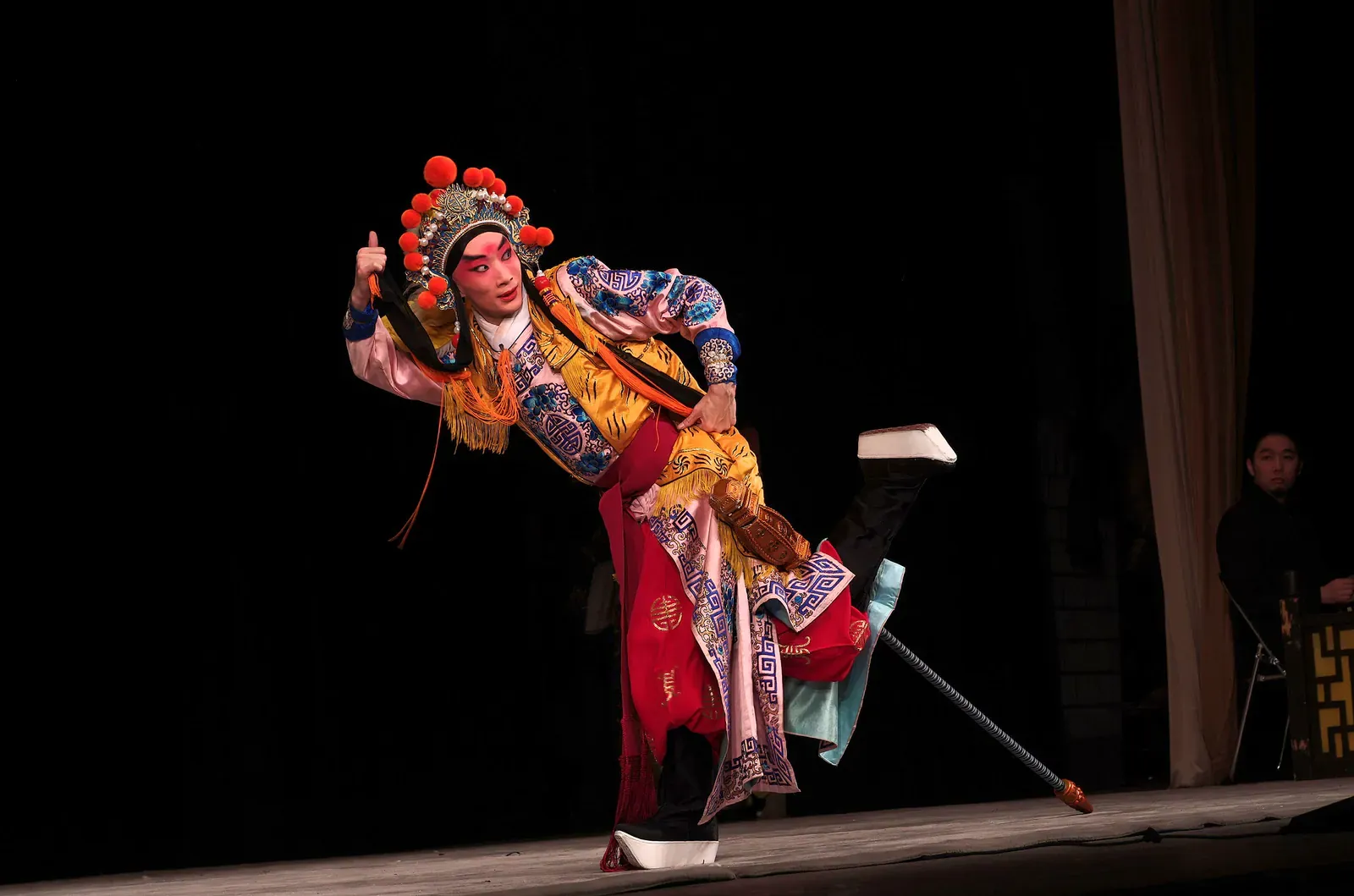
Four role types organise every troupe. Sheng are the male roles, from the old men (laosheng) to the young men (xiaosheng). Dan are the female roles, and in Peking opera they were often played by men. Jing wear painted faces for strong or rough characters, and chou are the clowns. Colour and pattern signal the character, and the face painting (lianpu) is worked out for each one.
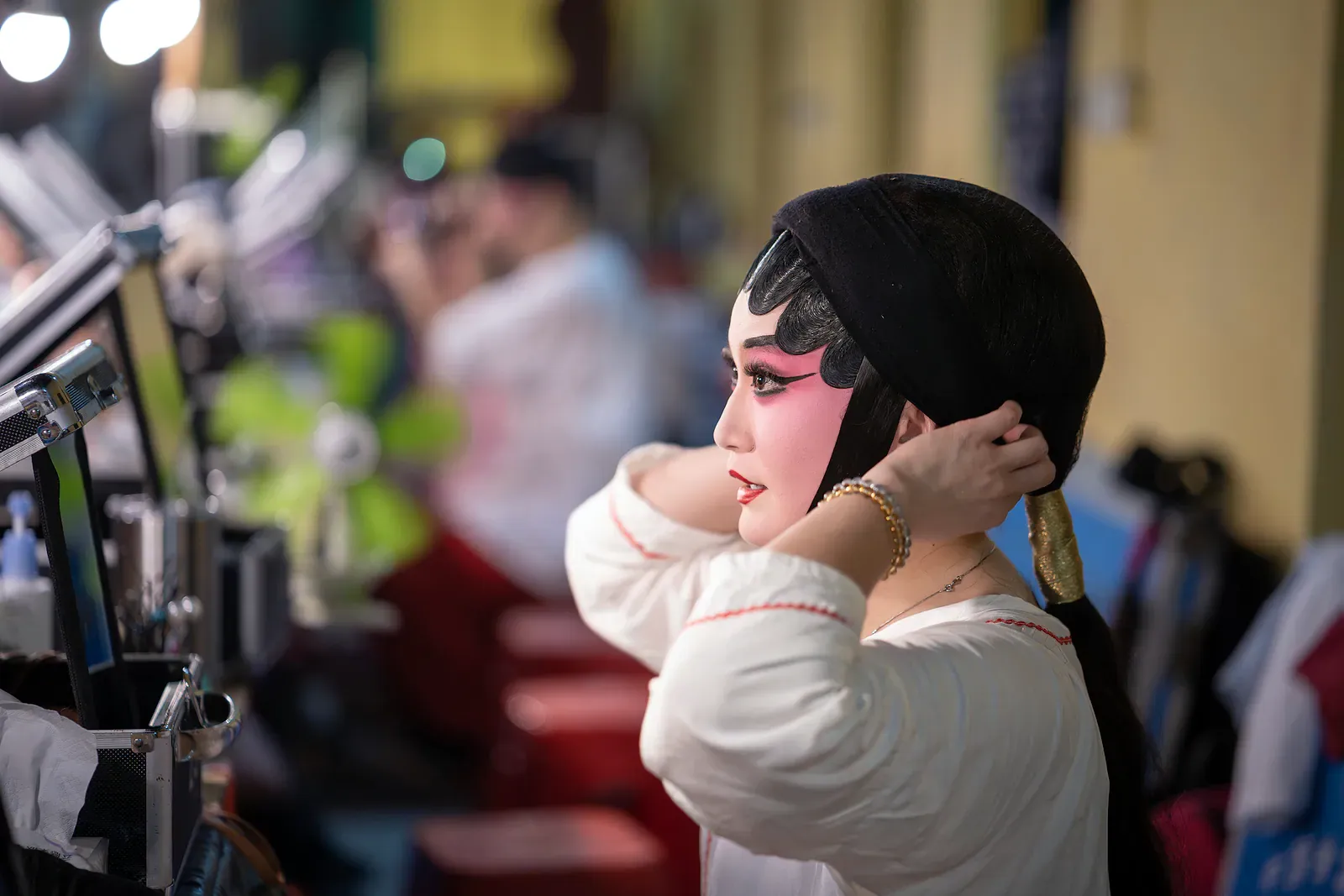
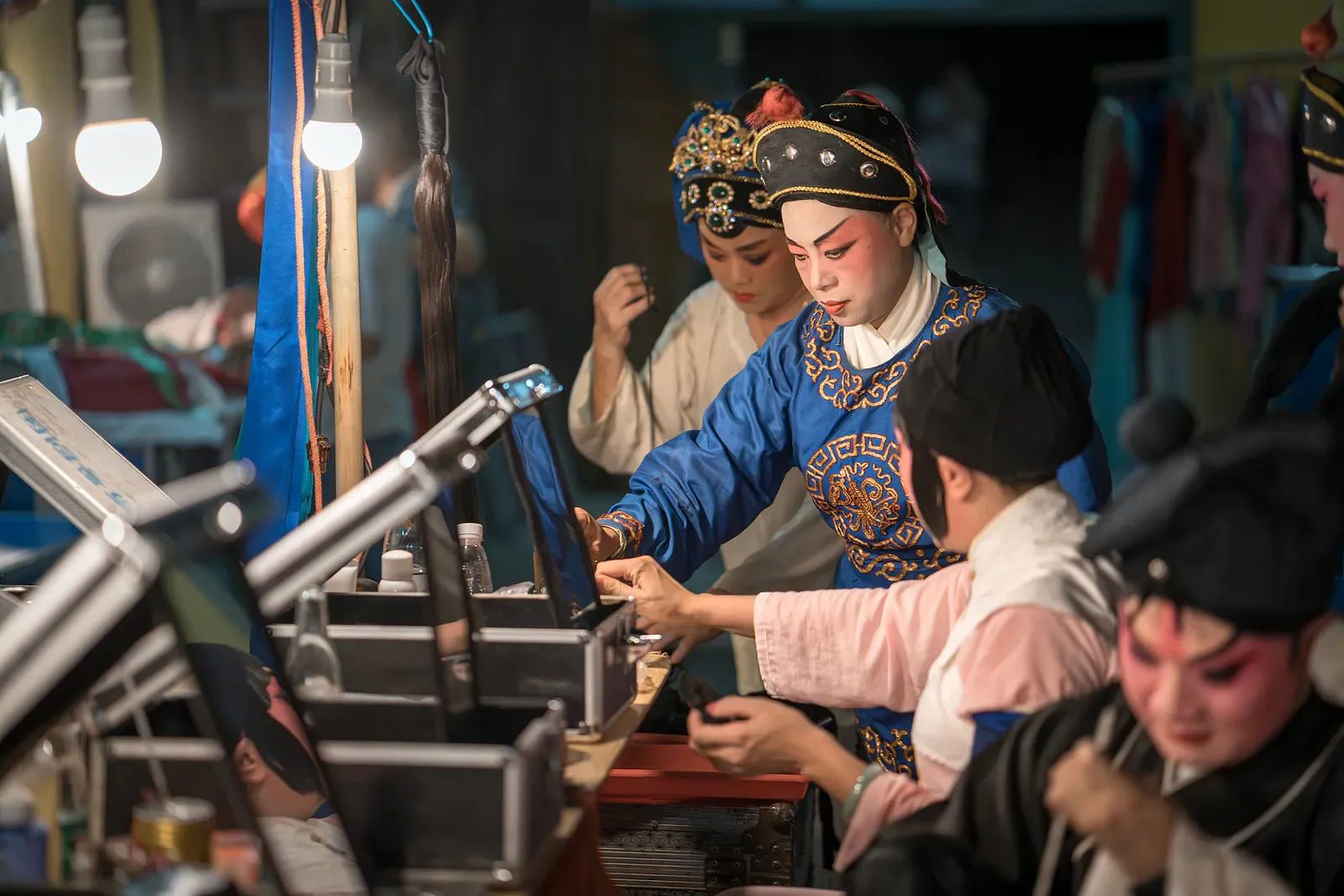
Recordings and stars, 1900-1948
The gramophone changed how opera reached people. Gramophone and Typewriter made the first commercial discs in China in 1903, and nearly all of them were opera. Pathe China was founded in Shanghai in 1908 and began recording Peking opera excerpts in Beijing the next year. After the Republic was founded, the ban on women performers was lifted in 1912.
The decade also made stars. Tan Xinpei, the founding laosheng, recorded Selling the Horse (Mai Ma) for Pathe in 1911, the earliest recorded sound of the genre most listeners know. Mei Lanfang, Cheng Yanqiu and Tan became household voices. Mei toured the United States in 1930, where a two-week run stretched to five weeks, then played the USSR and Europe in 1935.
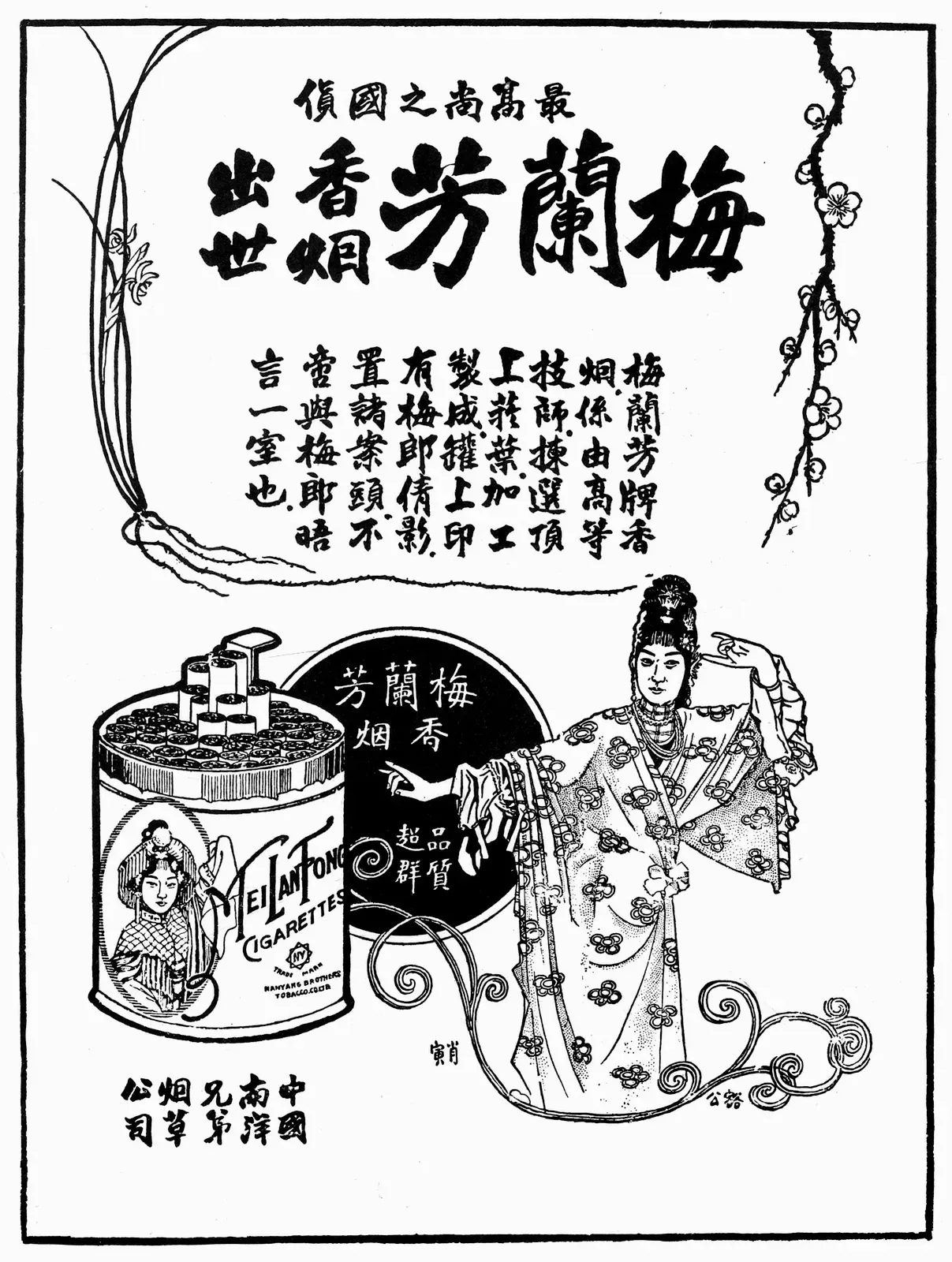
State troupes and Hong Kong, 1949-1976
After 1949 the state took over the recording industry. The China Record Corporation opened that year in the old Shanghai Pathe plant, and hundreds of regional forms were listed. Pathe moved to Hong Kong in 1952, and Hong Kong made Cantonese opera films and records. Crown Records was founded there in 1958, and Yam Kim-fai, Pak Suet-sin and the playwright Tong Tik-sang made the city the home of the form’s golden age in the 1950s and 1960s.
Mei Lanfang filmed Farewell My Concubine in 1955, the play he first staged in 1921, and the work carried Peking opera abroad. A colour film of Yue opera, Butterfly Lovers (1954), with Yuan Xuefen and Fan Ruijuan, had already shown that form to national audiences.
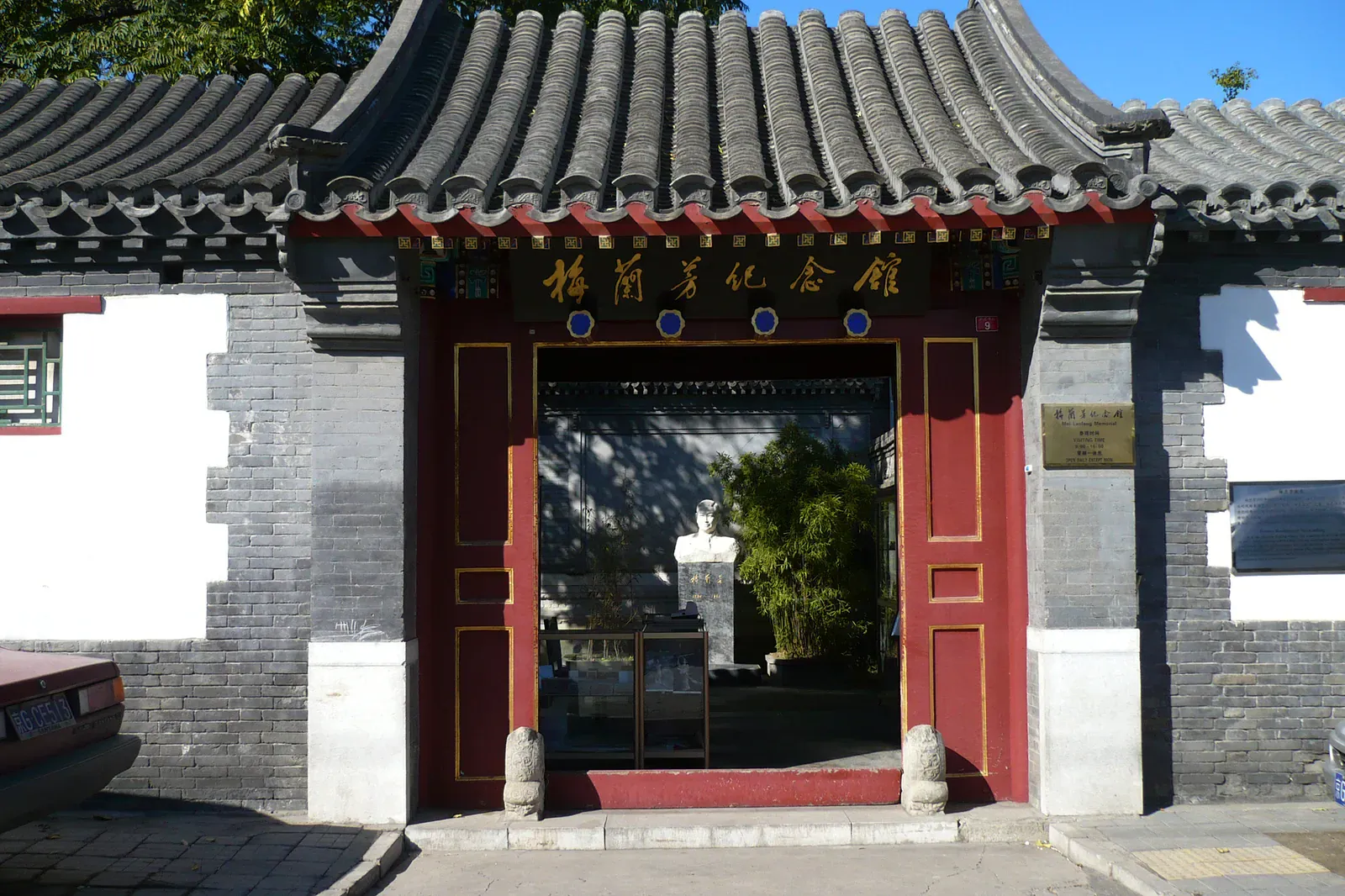
The model operas
In 1966 the Cultural Revolution restricted the stage to approved modern works called yangbanxi, or model works, and the traditional repertoire was denounced until 1976. Taking Tiger Mountain by Strategy and The Red Lantern are among the best known. In 1976 a list of 41 traditional Peking operas was cleared for the stage, and troupes could perform old plays again. The model arias outlived the period as concert pieces: a Shanghai recording of one was made in January 1992, and a collection of arias from The Red Lantern and others was issued by the China Record Corporation in 2003.
Regional forms: Cantonese, Yue and Huangmei opera
The regional forms differ most in sound.
Cantonese opera belongs to Guangdong, Hong Kong and Macau, and is performed across the Cantonese diaspora. It belongs to the same pihuang tune tradition as Peking opera. Foshan was its guild city under the Qianlong reign, from 1736, and Guangzhou later became home to Hung Sin Nui. Crown’s studio records show the style: Yam Kim-fai in Di Nu Hua (1960), a tragic romance by Tong Tik-sang that became the best loved Cantonese opera. The Sunbeam Theatre in Hong Kong hosted the form from 1972 until it closed in March 2025.
Yue opera began in Shengzhou in 1906 and was reformed in Shanghai, where all-female casts became its trademark. Yuan Xuefen starred in Sister Xianglin in 1946, a landmark of that reform adapted from a Lu Xun story, and the 1954 Butterfly Lovers film took it national.
Huangmei opera, from Anhui and eastern Hubei, is lighter and more lyrical than Peking opera.
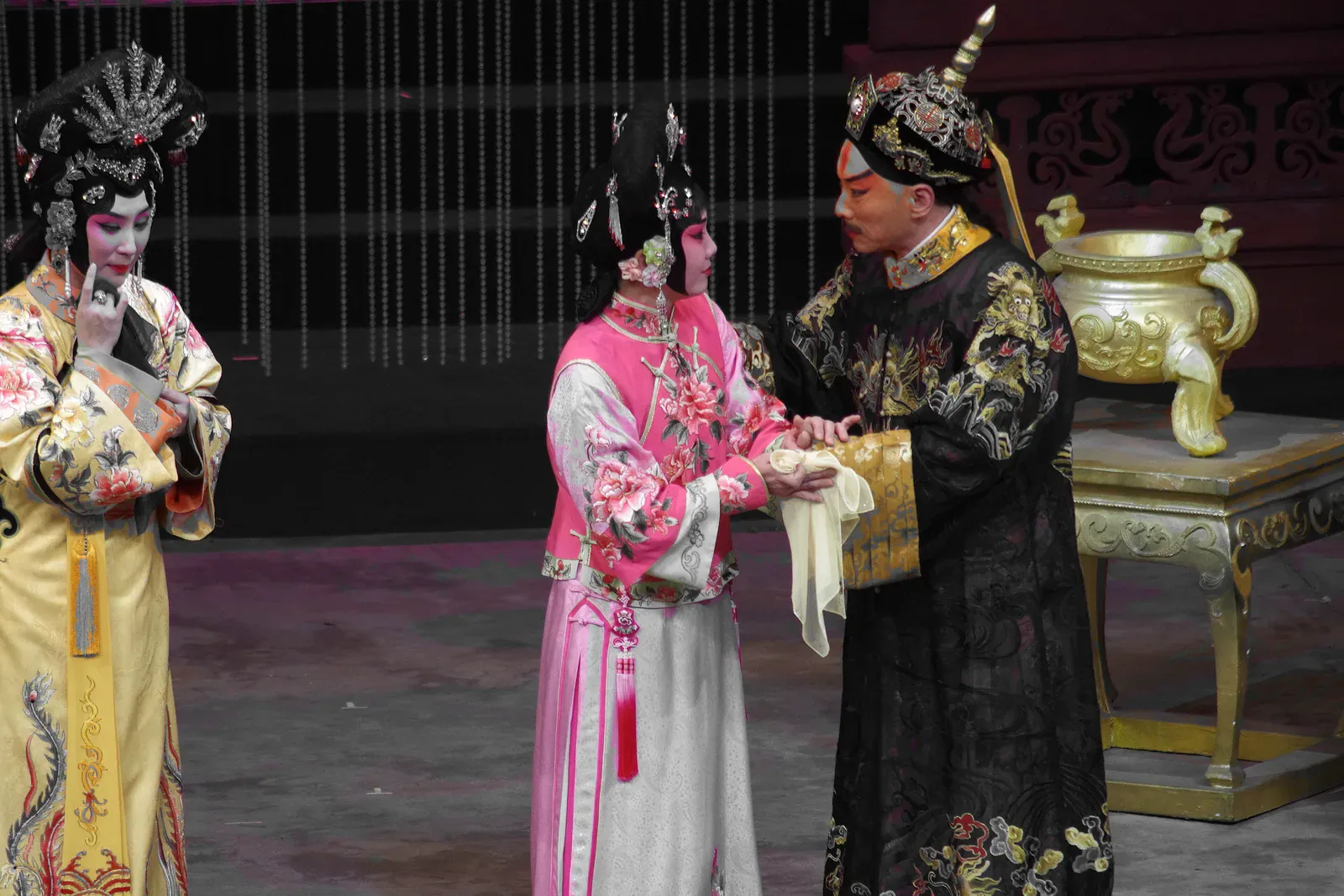
Revival and heritage, 1977 onward
After 1977 traditional plays came back. UNESCO proclaimed Kunqu a masterpiece of heritage in 2001, and listed Cantonese opera in 2009 and Peking opera in 2010. Crossover came with Li Yugang, who staged The Painting of Four Beauties in 2011, released a pop-facing version of The Drunken Beauty that year, and followed with the album The New Flowers in the Mirror, Moon in the Water in 2012.
Culture
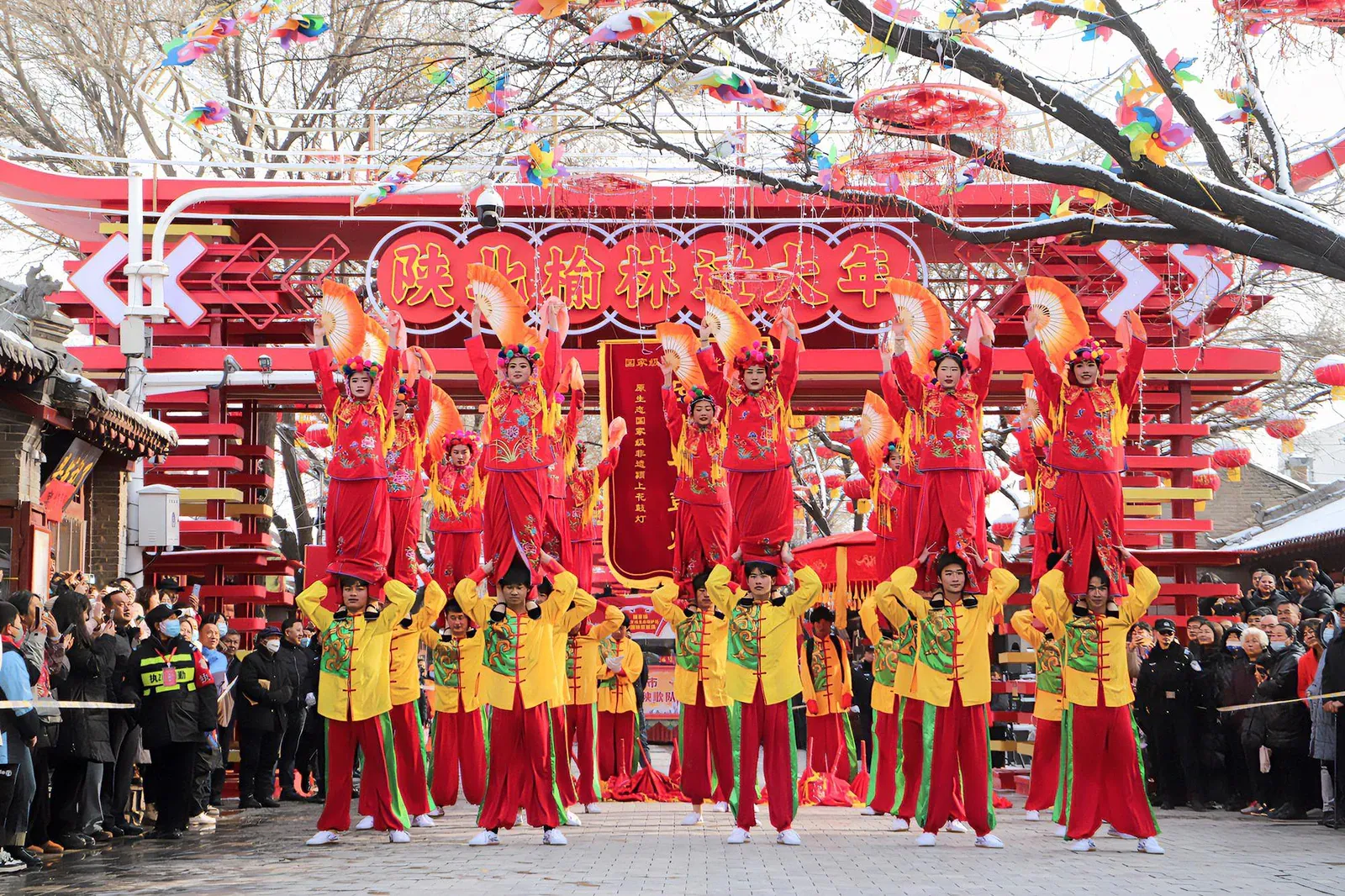
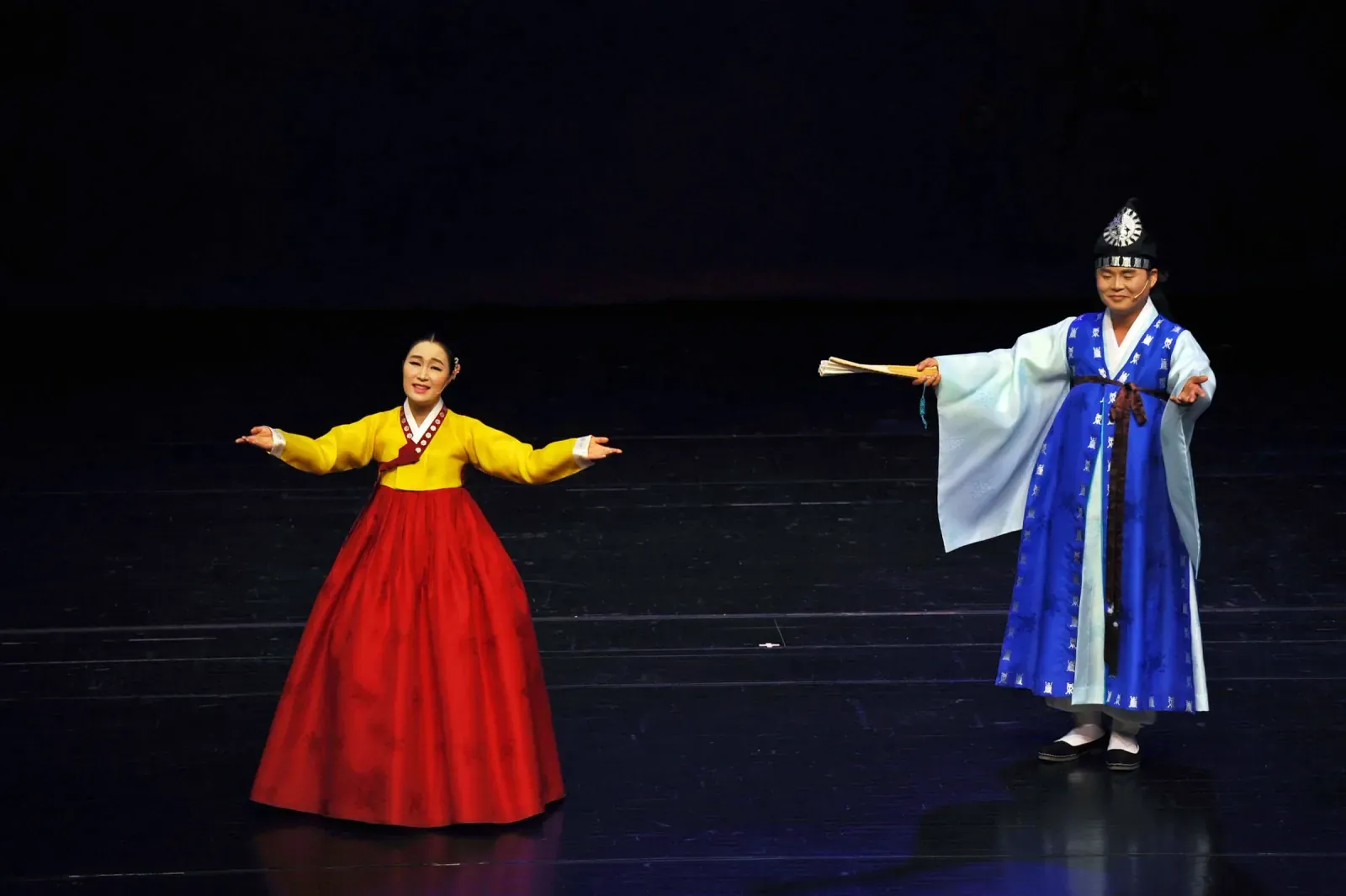
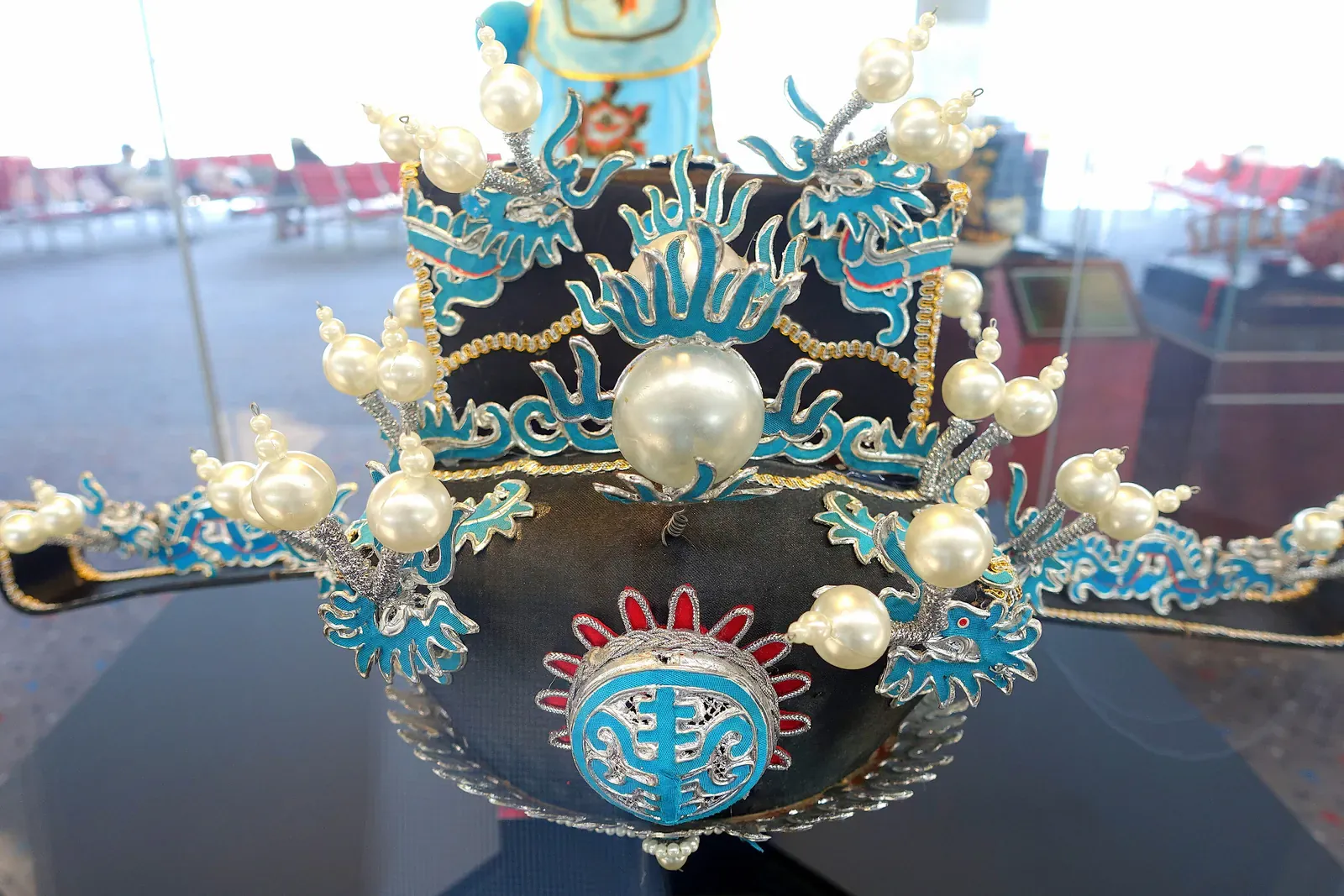
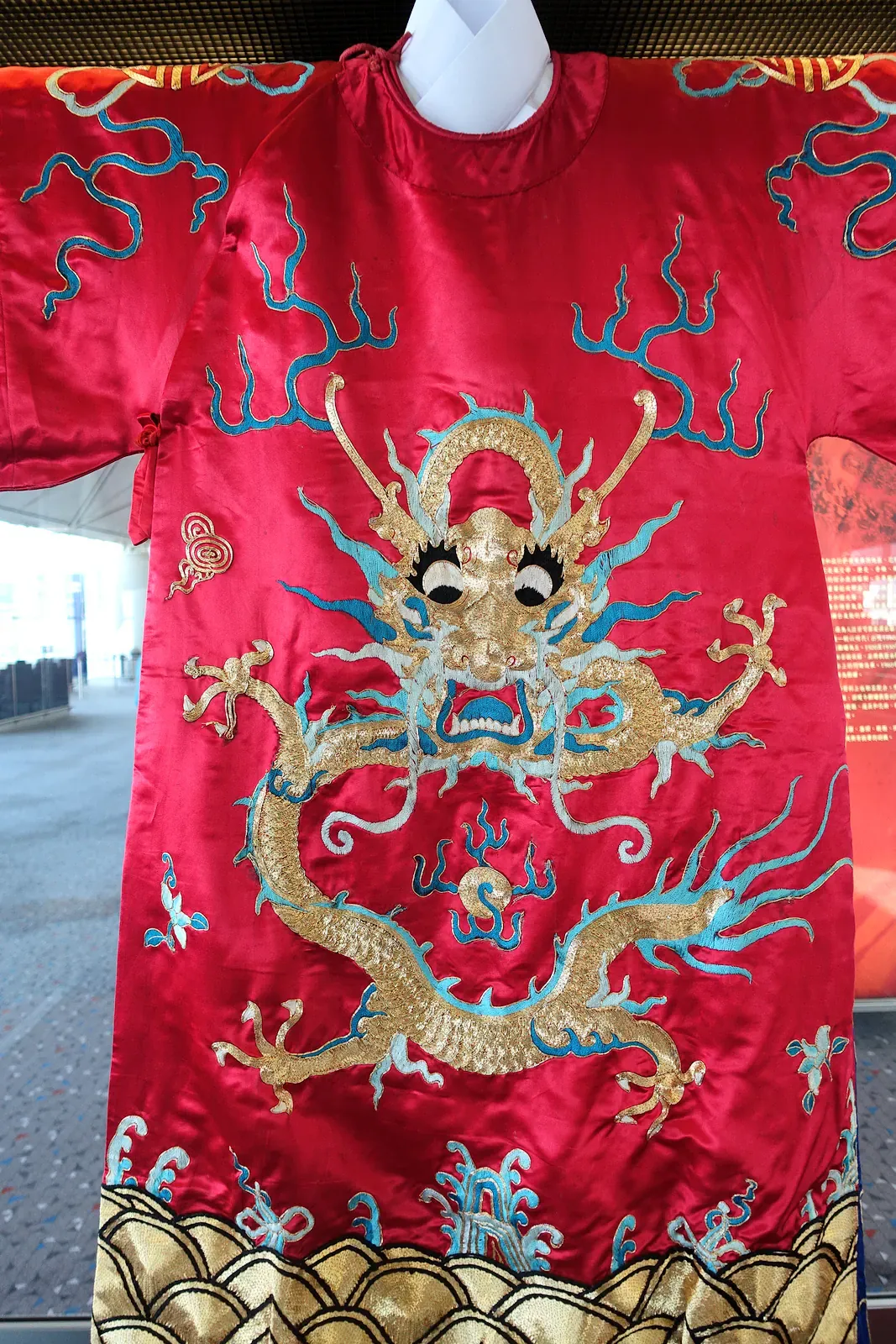
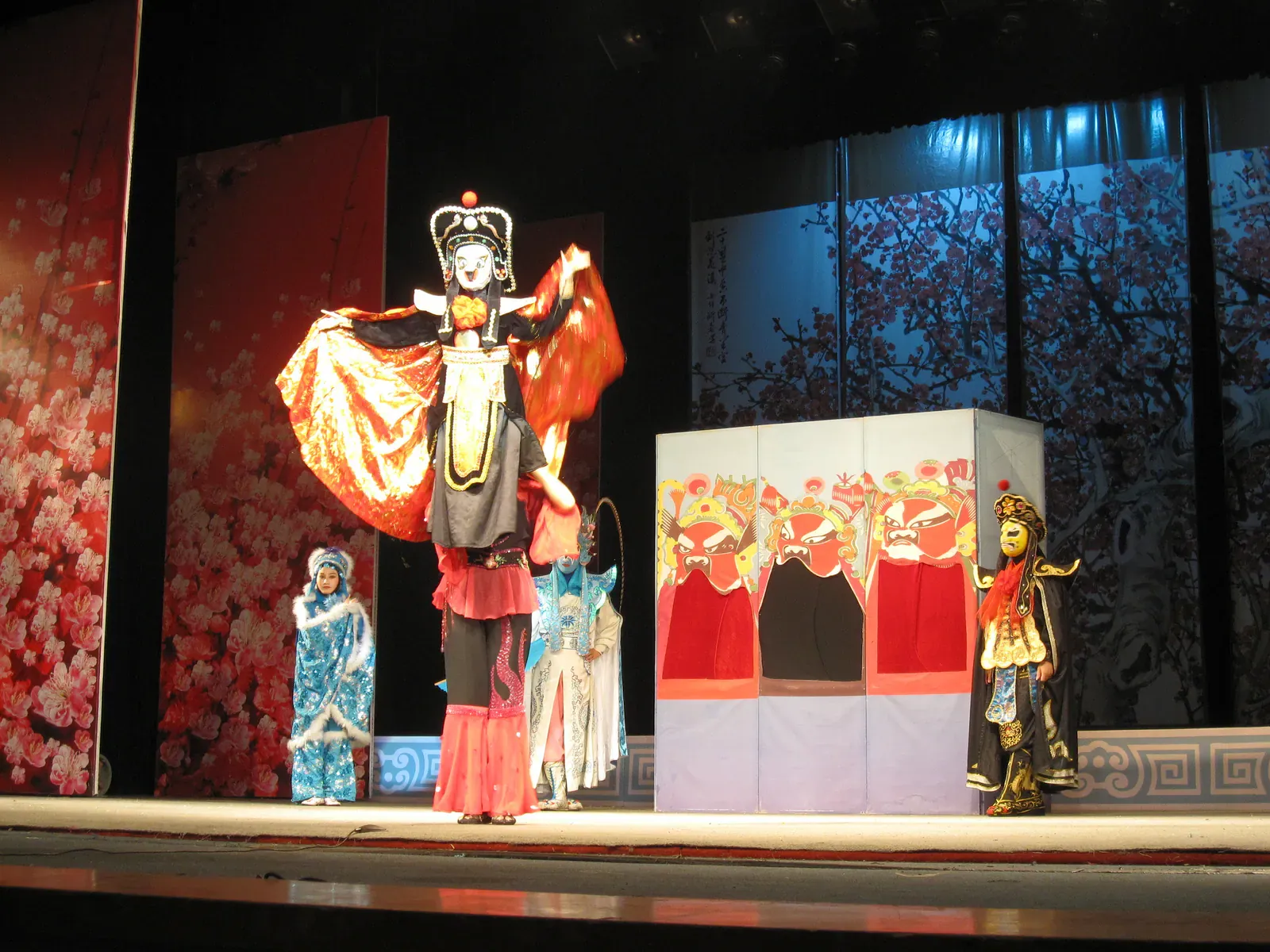
Opera is a visual art as much as a musical one. The embroidered costumes and headdresses mark rank and role, the water sleeves flick to show emotion in dan roles, and face painting uses colour and pattern to signal a jing character. Temple-fair stages remain a living setting next to the great urban theatres. Sichuan opera adds its own party piece, the face change, in which a performer swaps masks in a blink.
Misconceptions
Myth: Peking opera is the oldest Chinese opera. Kunqu is older: its refined tune goes back to the 16th century, and Peking opera only took shape from Anhui and Hubei troupes after 1790.
Myth: Chinese opera is one art form. Xiqu is an umbrella term, and more than a hundred regional forms survive, each with its own tunes.
Myth: face changing is Peking opera. The mask-swapping act is a specialty of Sichuan opera.
Frequently asked questions
What is Chinese opera?
Chinese opera, or xiqu, is traditional Chinese sung drama that combines singing, speech, mime and acrobatics with live instrumental accompaniment. It grew from Song and Yuan dynasty theatre and survives in more than a hundred regional forms.
What is the difference between Peking opera and Cantonese opera?
Peking opera took shape in Beijing from 1790 from Anhui and Hubei troupes, and the jinghu fiddle leads its band. Cantonese opera belongs to Guangdong, Hong Kong and Macau and flourished in Hong Kong in the 1950s and 1960s. Both draw on the pihuang tradition.
Why do men play women in Chinese opera?
Female roles (dan) were often played by men in Peking opera, and the ban on women performers was lifted in 1912. Mei Lanfang became the best known dan. Yue opera, by contrast, is known for all-female casts.
Which Chinese opera recordings introduce the genre?
Mei Lanfang’s Farewell My Concubine represents Peking opera, and Yam Kim-fai in Di Nu Hua represents Cantonese opera. For Kunqu, productions of The Peony Pavilion are the standard reference.
Is Chinese opera the same as Western opera?
No. Western opera is sung throughout to an orchestra, while Chinese opera mixes song with speech, mime and martial skill, and its melodies are shaped by the dialect of each region.
Sound
Sound sheet
Signature sounds
- Jinghu fiddle leading the line
- Male falsetto for dan roles
- Gongs and drums cueing gestures
- Xipi and erhuang tune systems
- Stylised speech and sung dialogue
Drums and percussion
- Bangu
- Ban clapper
- Daluo
- Xiaoluo
- Naobo
Techniques
- Banyan tempo system
- Percussion cueing
- Fixed-tune melodies (qupai)
- Stylised sung and spoken delivery
- Falsetto
Keys and modes
Pentatonic modes (gong, shang, jue, zhi, yu). Five-note scale base of the traditional music.
Xipi tune system. Jinghu-led tune system for passionate, joyful scenes.
Erhuang tune system. Jinghu-led tune system for sad, lyrical scenes.
Tuning
Jinghu strings tuned a fifth apart
Vocals
Dialect-shaped singing and stylised speech by role type, with falsetto for young and female roles and a rough, strong voice for painted-face roles
Scenes
Where it happened
Where and when the sound lived: one bar per city on a shared timeline.
Asia
Active scenes
Peak 7, 1950-2025
Home of Peking opera and Mei Lanfang.
Centre of Kunqu and its garden performances.
Recording hub (Pathe) and Yue opera reform city.
Birthplace of Yue opera.
Cantonese opera guild city under the Qianlong reign.
Home of Hung Sin Nui and Cantonese opera.
Golden age of Cantonese opera and film in the 1950s and 1960s.
Venues and places
Beijing, 1830 to today. Beijing guild hall whose theatre, added in 1830, hosted Tan Xinpei and Mei Lanfang.
Hong Kong, 1972 to today. North Point home of Cantonese opera until it closed in March 2025.
Guangzhou, 1998 to today. Archive and memorial for Hung Sin Nui, opened by the city.
Culture
Culture markers
- Face painting (lianpu)
Colour and pattern signal a jing role character.
Artwork - Embroidered costumes and headdresses
Rich robes and headgear mark rank and role.
Fashion - Water sleeves
Long sleeves flick to show emotion in dan roles.
Dance - Temple-fair performance
Open-air opera at festivals long tied to honouring gods.
Ritual
Media
Key media
- 1954Liang Shanbo and Zhu Yingtai
by Various. Color Yue opera film starring Yuan Xuefen and Fan Ruijuan.
Film - 1955Farewell My Concubine (stage film)
by Mei Lanfang. Film record of Mei Lanfang as Lady Yu.
Film - 2000Shadow Magic
by Ann Hu. Film that features Tan Xinpei in its story.
Film - 2007Centennial Classics: Peking Opera Vol. 1
by Various. China Record Corporation anthology of Peking opera masters.
Compilation
Glossary
Terms on this page
Clown role with white nose patch.
Female role type, often played by men in Peking opera.
Painted-face role for strong or rough characters.
Gongs and drums that cue action.
Male role type, including laosheng old men and xiaosheng young men.
Two main tune systems of Peking opera.
Umbrella Chinese term for traditional sung drama.
Model works allowed during the Cultural Revolution.
East Asian family