Chinese instrumental music
Chinese instrumental music covers China's non-operatic solo and ensemble traditions: scholar zither, silk-and-bamboo groups, temple bands and modern orchestras.
China, Taiwan, around 1425
East Asian family
Born
around 1425
China, Taiwan
Subgenres
10
Documented branches
Links
4
Genres it drew on or shaped
Lineage
Family tree
Grew out of
China, Taiwan
Chinese instrumental music
Led to (10)
Timeline
Era by era
From the first sparks to today. Select a dot to read the story behind it.
- Scholars, temples and tea houses
1425 to 1899
- Reform and the new ensembles
1900 to 1949
- Conservatories and state orchestras
1950 to 1976
- Heritage and the global stage
1977 to today
Eras
Moments
- 1 Scholars, temples and tea houses, 1425 to 1899
- 2 Reform and the new ensembles, 1900 to 1949
- 3 Conservatories and state orchestras, 1950 to 1976
- 4 Heritage and the global stage, 1977 to today
around 1425
Scholars, temples and tea houses
Solo qin and pipa repertoire is written down in printed handbooks, while ritual wind and drum bands and amateur silk-and-bamboo groups spread in the cities.
- 1425Shen Qi Mi Pu, the oldest surviving qin handbookCollects 64 qin pieces and documents a solo tradition older than most written instrumental music.
- 1819Hua Collection prints pipa solo scoresPrinted in 1819 with the Hua family repertoire, including Ambush from Ten Sides.
1900
Reform and the new ensembles
Societies in Shanghai and Beijing rebuild instruments and enlarge small ensembles into orchestras. Liu Tianhua makes the erhu a solo instrument and Lu Wencheng creates the gaohu for Cantonese music.
- 1920Datong Music Society founded in ShanghaiZheng Jinwen grows a silk-and-bamboo group to 35 players in sections.
- 1920Lu Wencheng helps develop the gaohuA higher erhu with steel strings, played between the knees, becomes the lead voice of Cantonese music.
- 1930Lu Wencheng composes Ping Hu Qiu YueAutumn Moon over the Calm Lake becomes one of the best known Cantonese pieces.
- 1932Liu Tianhua dies at 37He left 47 erhu studies and about ten solo pieces that built the erhu repertoire.
1950
Conservatories and state orchestras
Abing is recorded in 1950, conservatories teach folk instruments, metal strings change the pipa sound, and new virtuoso solos such as Horse Racing appear.
- 1950Abing is recorded on wire in WuxiTwo Central Conservatory professors record six pieces, including Erquan Yingyue, months before he dies.
- 1959Huang Haihuai writes Horse RacingThe galloping erhu solo becomes a set piece for players worldwide.
1977
Heritage and the global stage
Guqin music travels on the Voyager Golden Record, UNESCO lists guqin, nanyin and Xi'an drum music, and players such as Wu Man and Liu Fang build international careers.
- 1977Guan Pinghu's Liu Shui flies on VoyagerHis seven-minute guqin recording is the only Chinese music on the Golden Record.
- 1977Hong Kong Chinese Orchestra foundedThe Urban Council sets up a full-size professional Chinese orchestra of bowed, plucked, wind and percussion sections.
- 2003UNESCO proclaims guqin musicLater placed on the Representative List in 2008; fewer than 1,000 trained players were counted.
- 2009Nanyin and Xi'an drum music inscribed by UNESCOBoth regional traditions join the Representative List of the Intangible Cultural Heritage.
- 2010Wu Man releases Immeasurable LightPipa album of reconstructed ancient melodies and new pieces, with the Kronos Quartet on two tracks.
Listening path
Anthems
The records that built the sound, grouped by the part they played. Thumbnails come from YouTube; the player loads only when you press play.
- 01
Liu Fang, 1819
The battle piece of the martial pipa style, printed in the 1819 Hua Collection; this is Liu Fang's reading.
Origin - 02
Min Huifen, 1959
Huang Haihuai's galloping erhu solo, the showpiece that took the instrument to wide audiences.
Start hereBreakthrough - 03
Guan Pinghu, 1977
The guqin piece Voyager carried into space in Guan Pinghu's performance.
Start hereCrossover - 04
Wu Man, 2010
Solo pipa piece from Immeasurable Light, the album where Wu Man also plays with the Kronos Quartet.
Crossover - 05
Liu Fang, 2005
Ancient qin theme played on the guzheng for the 2005 Emerging Lotus album.
Revival
Facts
| Family | East Asian |
| Origin | China, Taiwan |
| Emerged | Ancient |
| Status | Active |
| Subgenres | 10 |
Chinese instrumental music is the umbrella name for China’s non-operatic music for solo instruments and ensembles. It reaches from the scholar’s seven-string zither and small amateur silk-and-bamboo groups to temple wind bands and the large orchestras built in the twentieth century.
Its melodies are pentatonic and ornamented, and a single tune is often shaped differently by each player and each region.
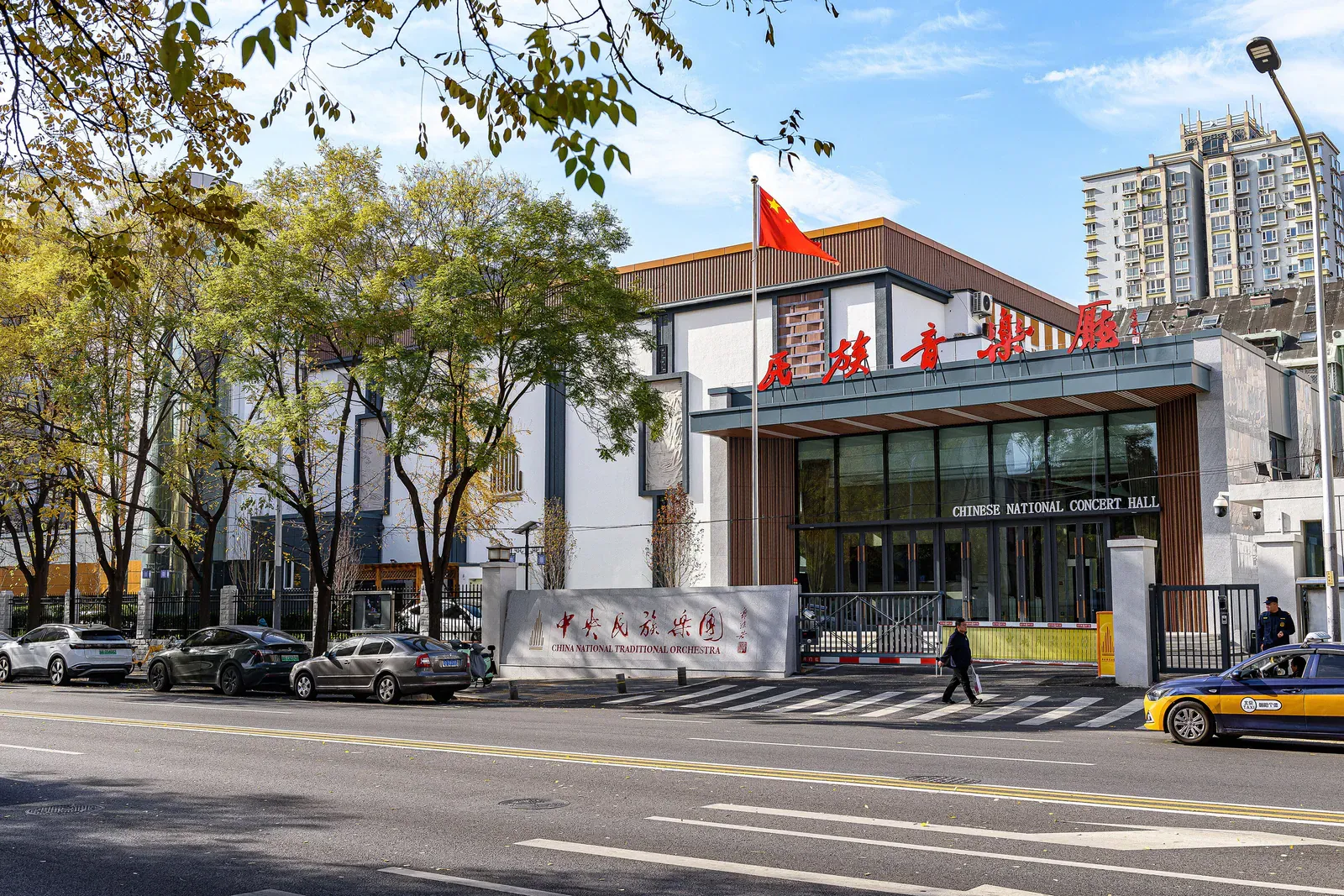
Origins
The tradition has no single starting point. Its oldest documented repertoire belongs to the guqin, the quiet zither that educated men were expected to master as one of the scholarly arts. The surviving handbook Shen Qi Mi Pu, compiled in 1425, collects 64 pieces and shows a solo practice that was already old.
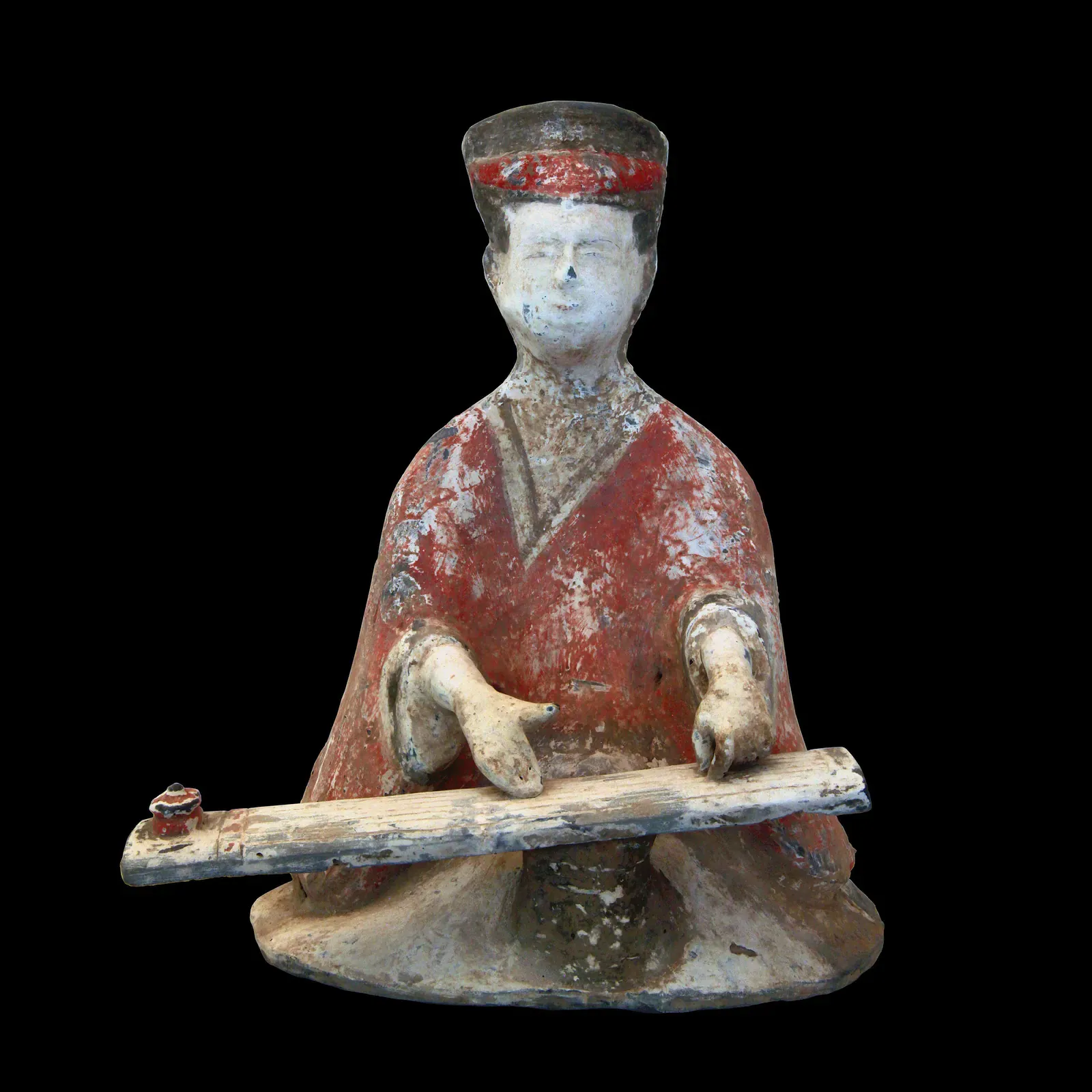
The pipa, a pear-shaped lute, built a repertoire of civil pieces and martial battle pieces, and the first printed pipa solo scores appeared in the Hua Collection of 1819. In temples and at fairs, wind and percussion bands played ritual and processional music; the Xi’an ensembles kept handwritten scores, some dating to 1689. In Fujian, the slow chamber music of nanyin took root around Quanzhou. In the cities of the Yangtze delta, amateurs gathered in tea houses and homes to play sizhu, silk-and-bamboo music, for friends rather than an audience.

Scholars, temples and tea houses, 1425-1899
For roughly four centuries the main repertoires lived in separate circles. Qin music passed from teacher to student through printed tablature, and later players rebuilt old pieces from notation, a practice known as dapu. Pipa players kept northern and southern repertoires. Temple bands and tea-house clubs kept their own tunes, and all of these groups shared one habit: players embellished a common melody rather than playing it as written, which is why two performances of one piece rarely match.
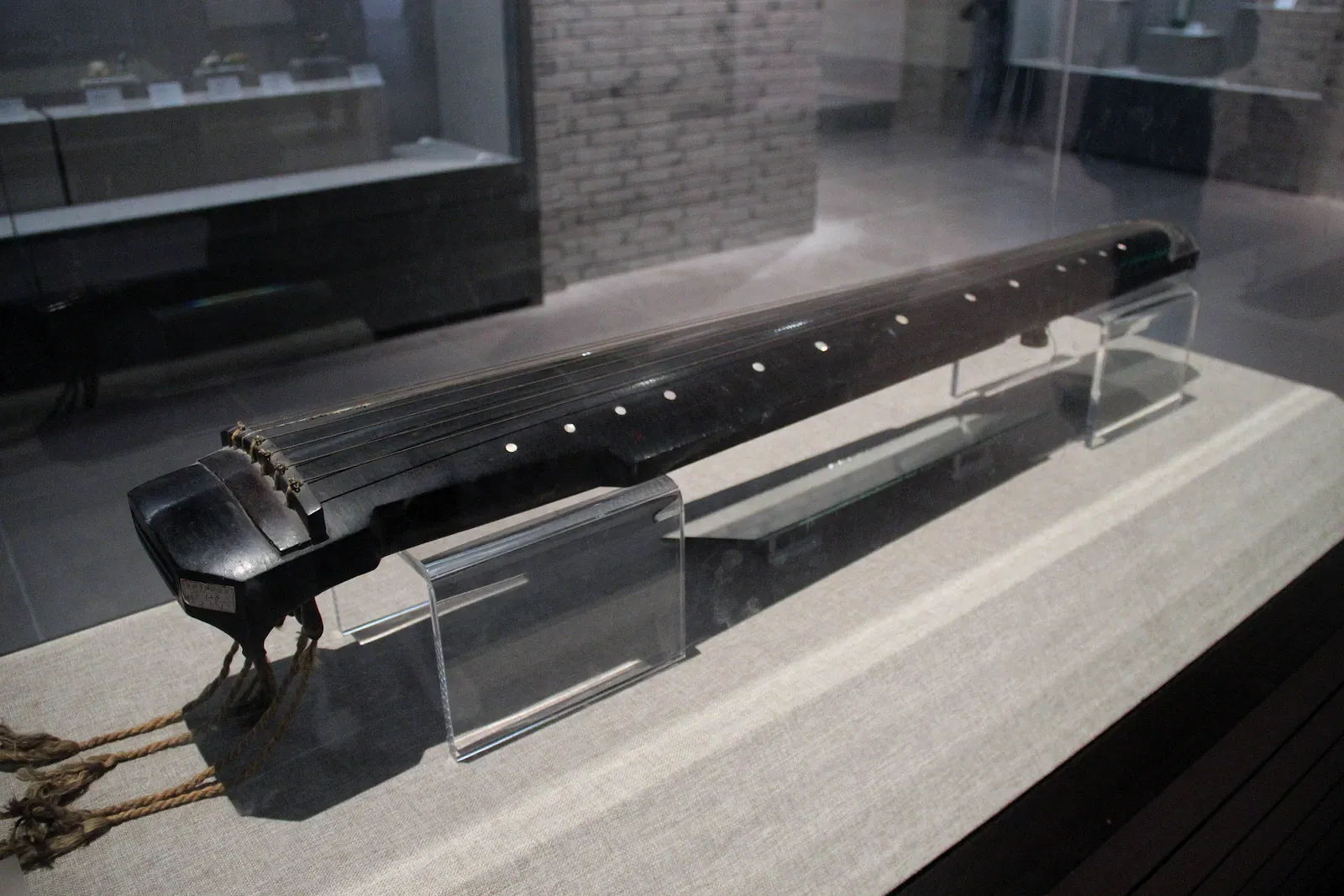
Reform and the new ensembles, 1900-1949
Shanghai and Beijing drove the next change. Music societies rebuilt old instruments and enlarged small groups into sectioned orchestras. The Datong Music Society, founded in Shanghai around 1920 by Zheng Jinwen, grew a silk-and-bamboo group to 35 players divided by instrument type, which is the seed of the modern Chinese orchestra.
Two musicians remade the sound of the period. Liu Tianhua took the erhu, until then an accompanying fiddle, and gave it a concert repertoire: 47 studies and about ten solo pieces before he died at 37 in 1932. In the south, Lu Wencheng helped develop the gaohu, a higher steel-stringed fiddle played between the knees, and it became the lead voice of Cantonese music, a style that had grown from Cantonese opera tunes and new compositions in Guangzhou. His Ping Hu Qiu Yue, written around 1930, remains one of the best known Cantonese pieces. He settled in Hong Kong in 1932.
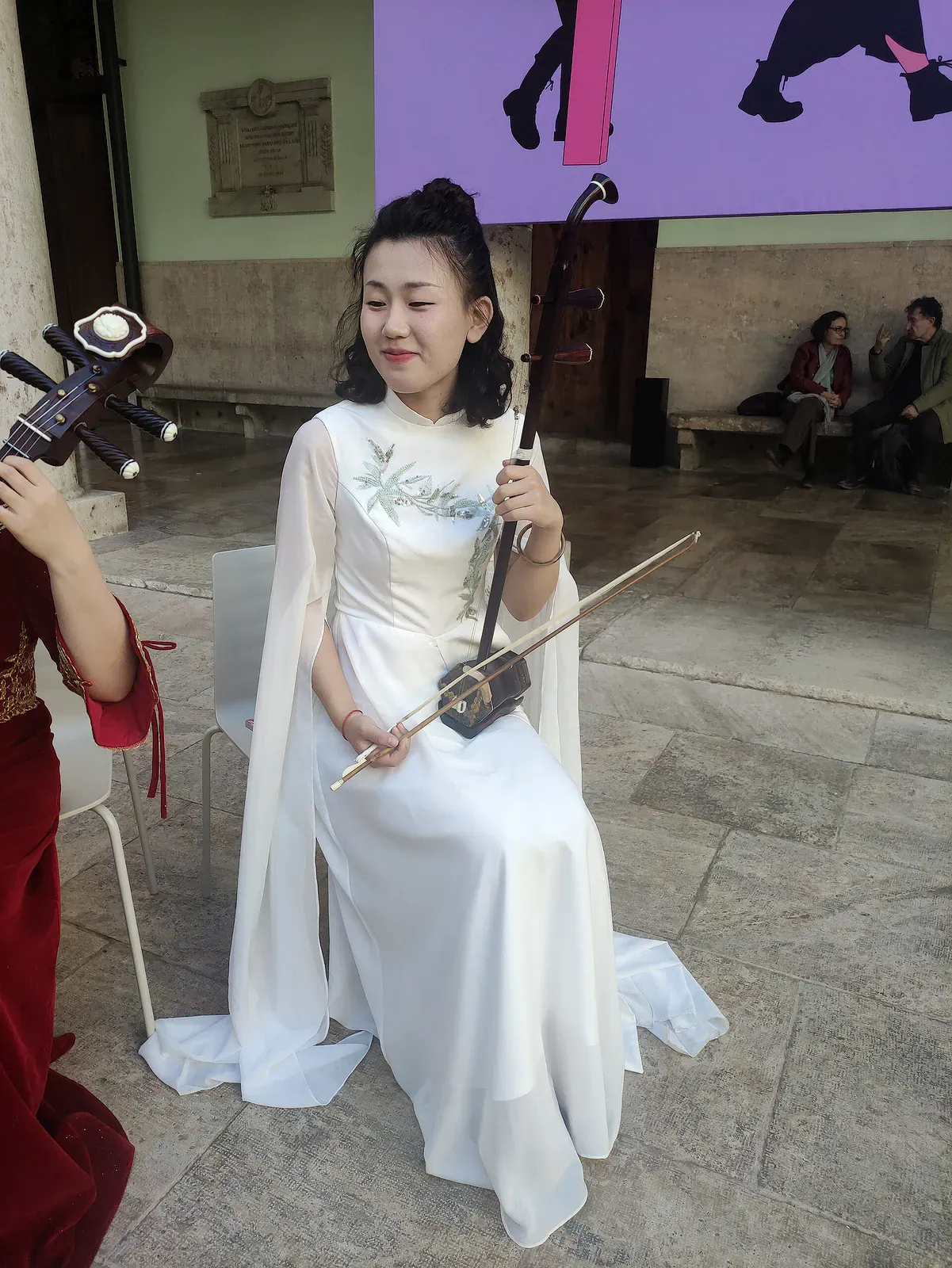
Conservatories and state orchestras, 1950-1976
In 1950 two professors from the Central Conservatory travelled to Wuxi and recorded the blind street musician Abing on wire. They captured six pieces, including Erquan Yingyue, months before his death. Those recordings are the only surviving trace of his playing, and the erhu piece became the most loved solo of the tradition.
After 1949 the state took over training and recording. Conservatories taught folk instruments in the same system as Western ones, state orchestras multiplied, and the China Record Corporation in Beijing, founded in 1949, became the main domestic record company. Metal strings replaced silk on the pipa and changed its sound, and composers wrote virtuoso solos for the new concert stage. Huang Haihuai’s Horse Racing of 1959, a galloping erhu showpiece, became a set piece for players worldwide.
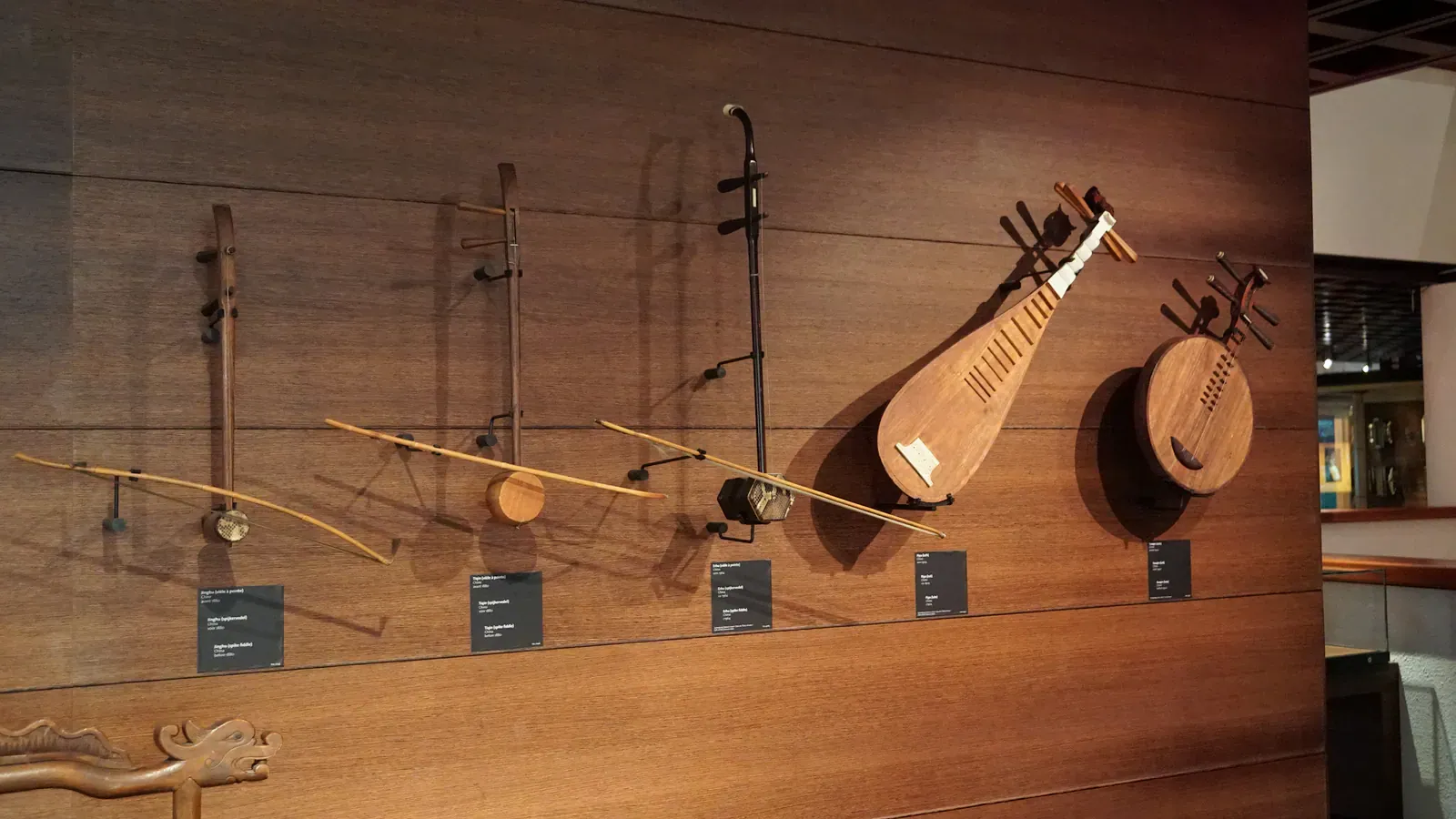
Heritage and the global stage, from 1977
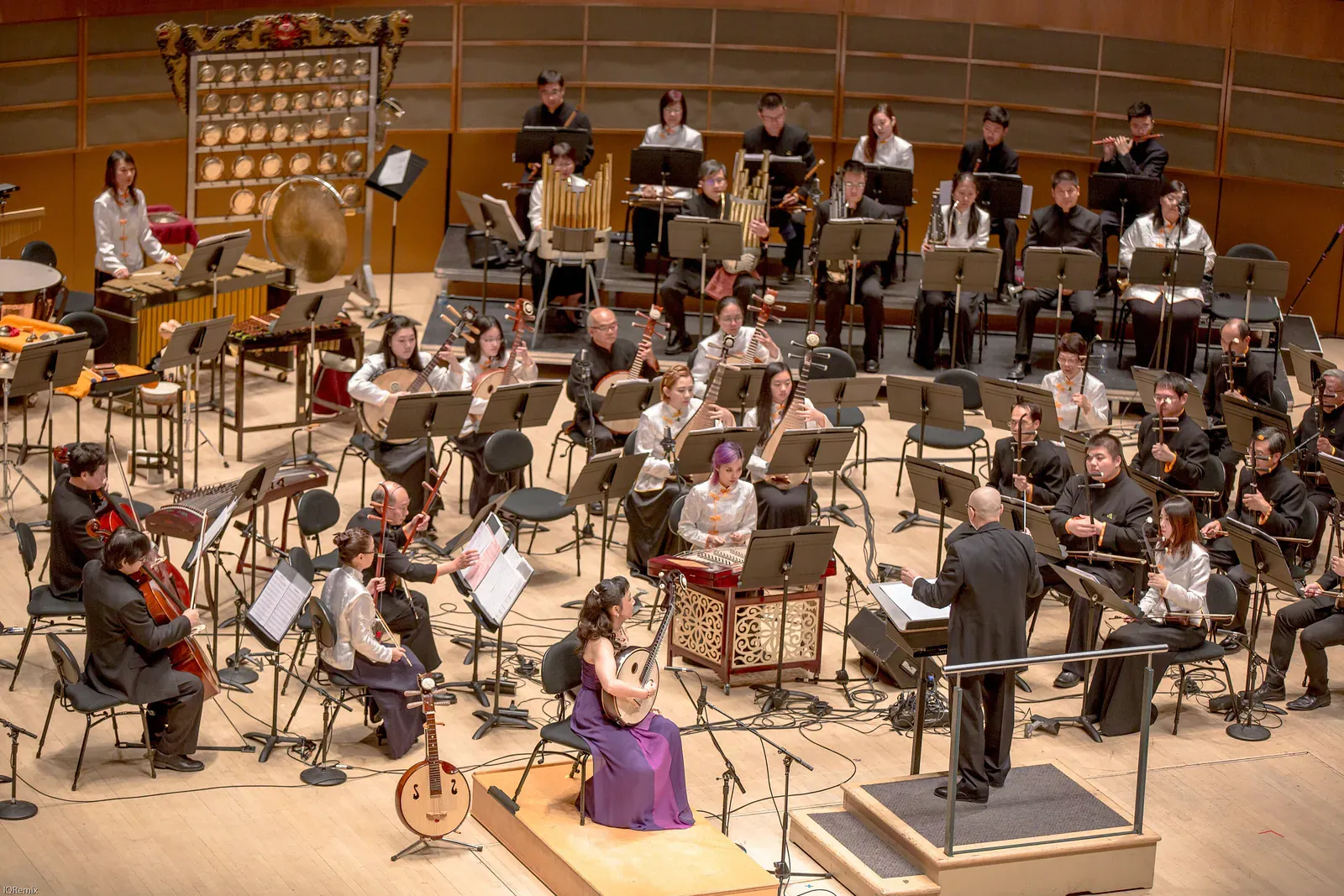
Recognition outside China began in 1977, when Guan Pinghu’s seven-minute guqin performance of Liu Shui was placed on the Voyager Golden Record, the only Chinese music on it. The same year the Urban Council in Hong Kong founded the Hong Kong Chinese Orchestra, a full-size professional orchestra of bowed, plucked, wind and percussion sections.
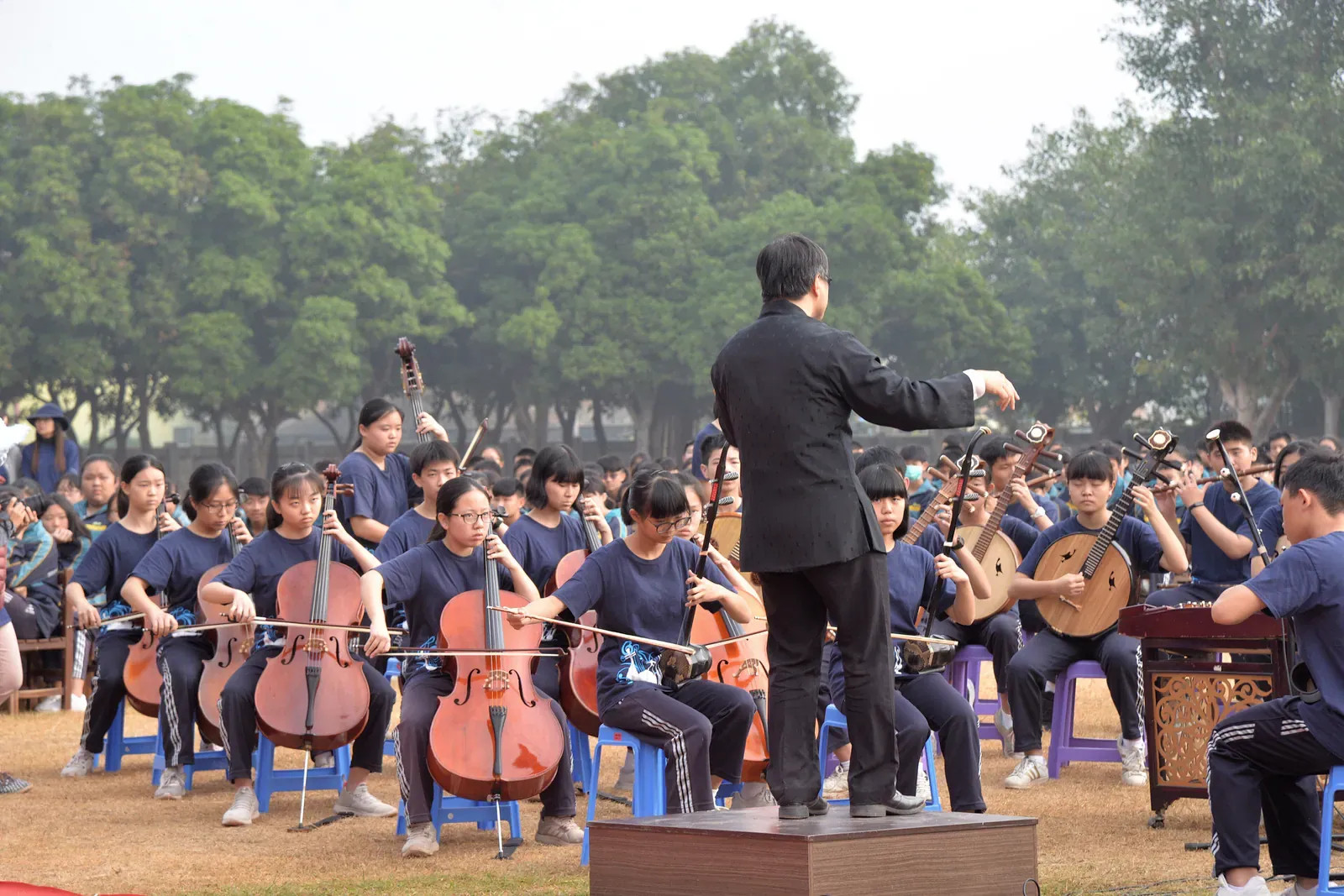
Heritage listing followed. UNESCO proclaimed guqin music in 2003 and placed it on the Representative List in 2008, when fewer than 1,000 trained players were counted. Nanyin and Xi’an wind and percussion music were inscribed in 2009. Players also built careers abroad: Liu Fang, born in Kunming and based in Montreal, recorded the guzheng album Emerging Lotus in 2005 with a guqin theme, High Mountain and Flowing Water, transcribed for the zither. Wu Man, a pipa virtuoso, released Immeasurable Light in 2010, with the Kronos Quartet on two tracks, and later brought Uyghur muqam singers into her Borderlands project.
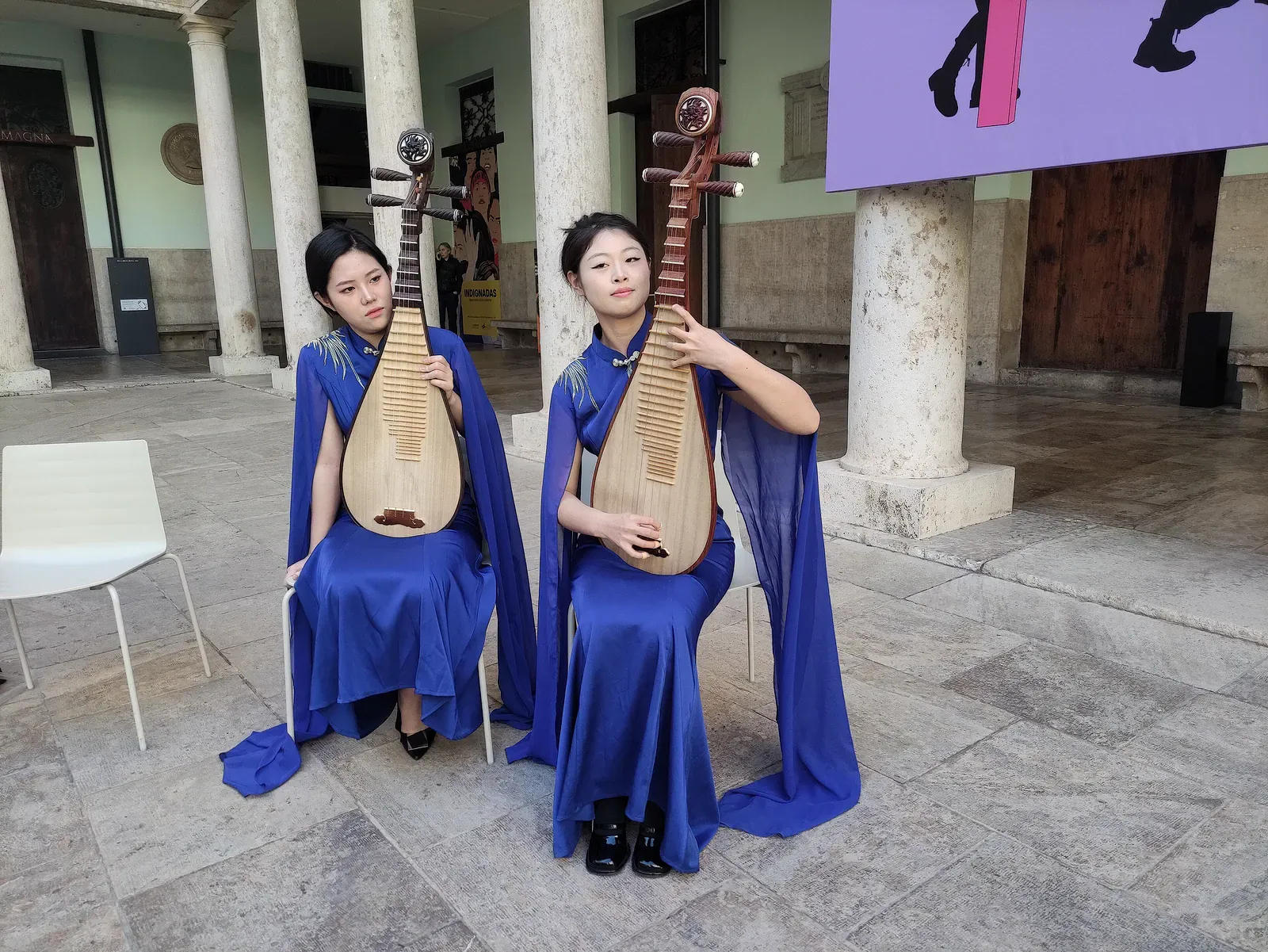
Characteristics
Heterophony defines the ensemble sound: each player decorates the shared tune with slides, vibrato and added notes. Solo repertoire is often programmatic, tied to a landscape, a battle or a mood, and its titles name the picture: Autumn Moon over the Calm Lake, Ambush from Ten Sides, Flowing Water. Metre and tempo are set by a system of accented and unaccented beats called banyan, and Jiangnan sizhu pieces typically move from slow to fast.
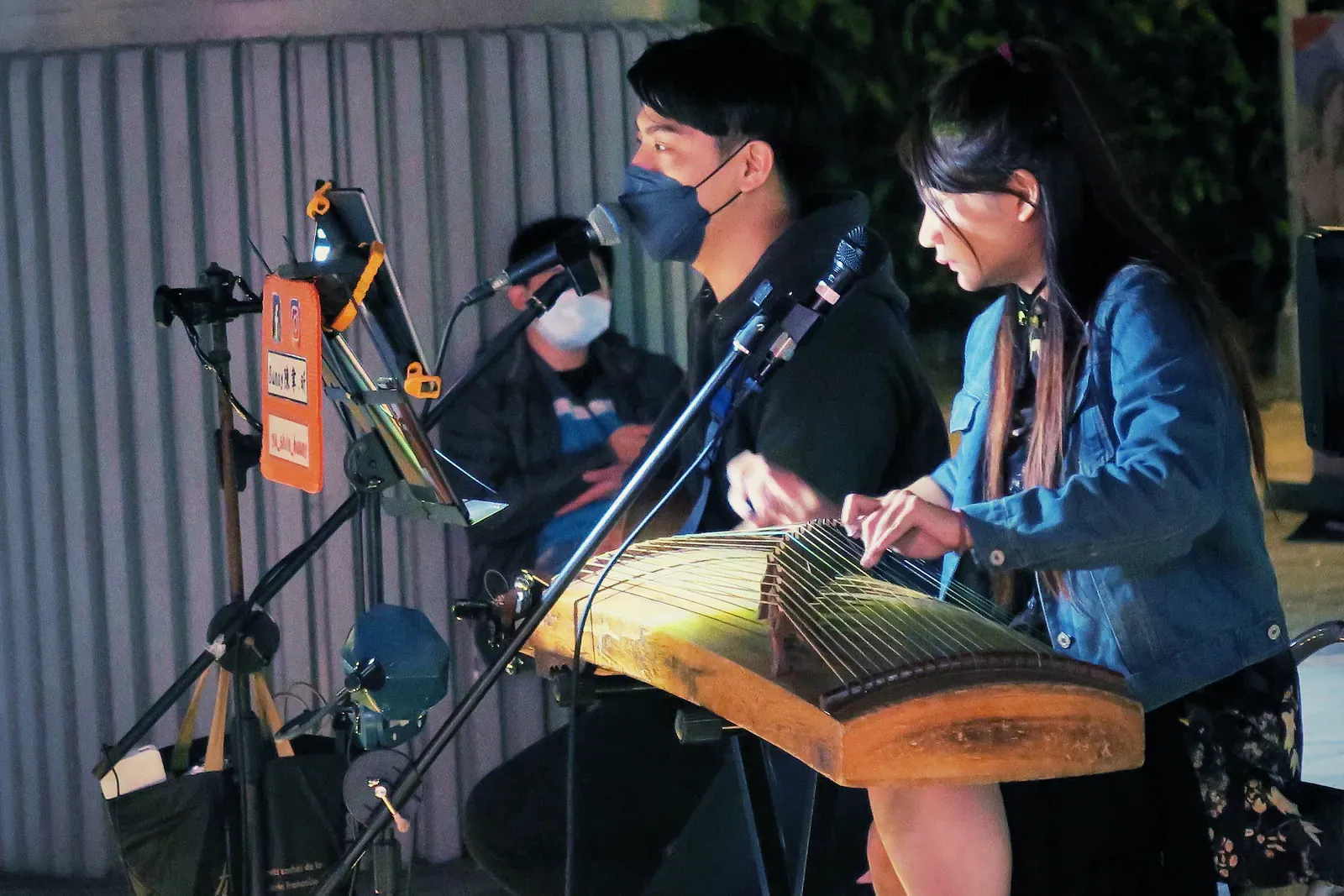
Instruments and production
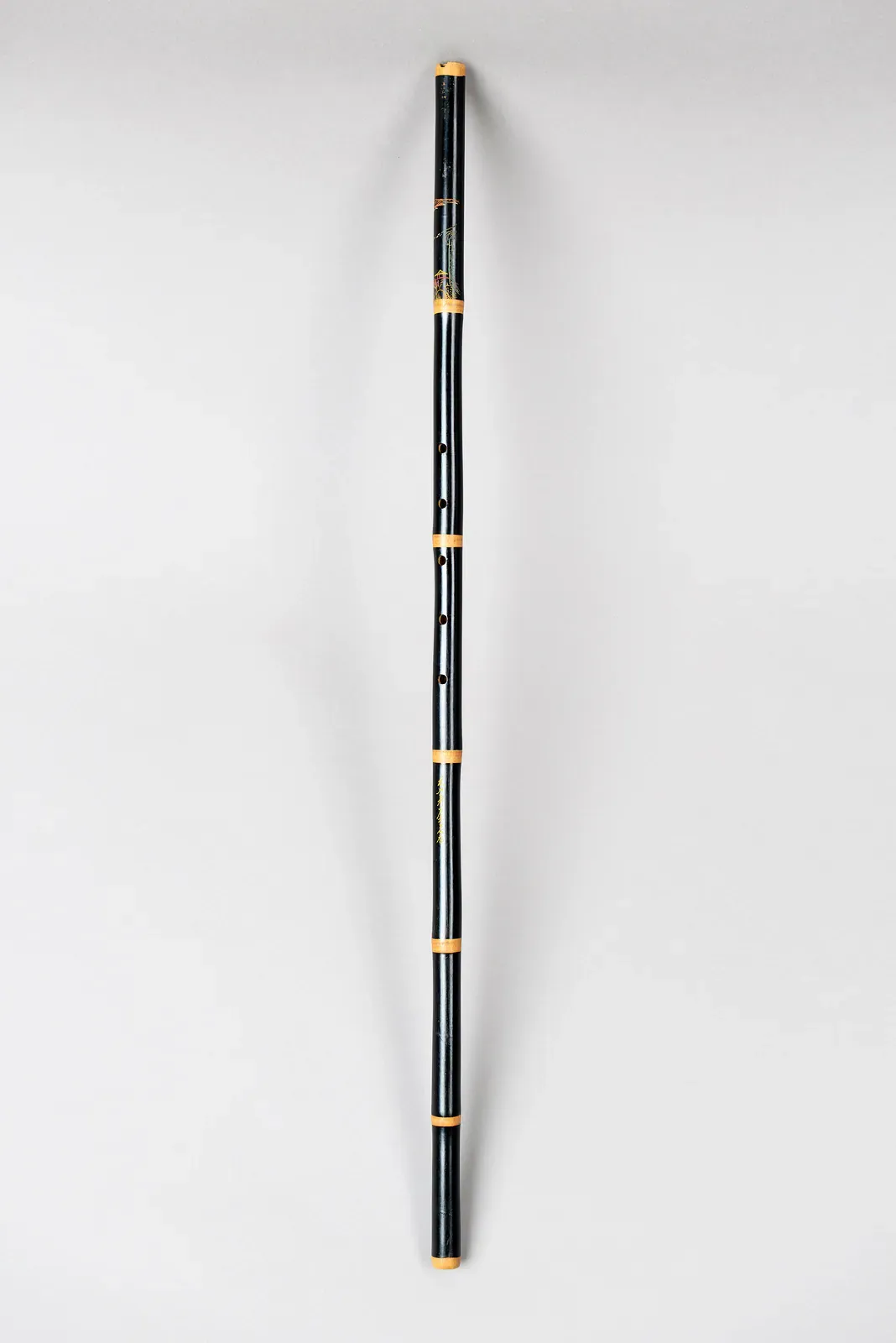
Instrument reform shaped the modern sound more than any single composer. Steel strings on the gaohu and metal strings on the pipa, together with enlarged sections, gave the bowed and plucked families a stronger voice for concert halls, while the bamboo dizi, with its buzzing membrane hole, supplied a bright upper line.
Mainstream success
Chinese instrumental music has not worked as a charts genre. Its wide reach came through showpieces and symbolic moments: Horse Racing as the piece every erhu student learns, Erquan Yingyue as the erhu’s best loved lament, Liu Shui as the sound of China carried into space. Cross-genre projects, such as Wu Man’s records with the Kronos Quartet, brought the pipa to listeners who had never heard it live. Modern pop styles that borrow its sounds, such as Zhongguofeng and Gufeng, grew from it, and it has also fed into Sinogrime.
Notable recordings
The 1950 Abing sessions are the most unusual: six pieces captured on a wire recorder just before the player’s death, and the only evidence of a street musician whose music became canon. Guan Pinghu’s Liu Shui shows how one performance can stand for a whole instrument. Its appearance on the Voyager Golden Record in 1977 made a guqin reading of a very old theme the most distant Chinese music ever sent. Min Huifen, nicknamed the Queen of Erhu, was the leading voice of the instrument for about fifty years, and her album The River of Sorrow (2000) collects erhu solos including Horse Racing.
Culture
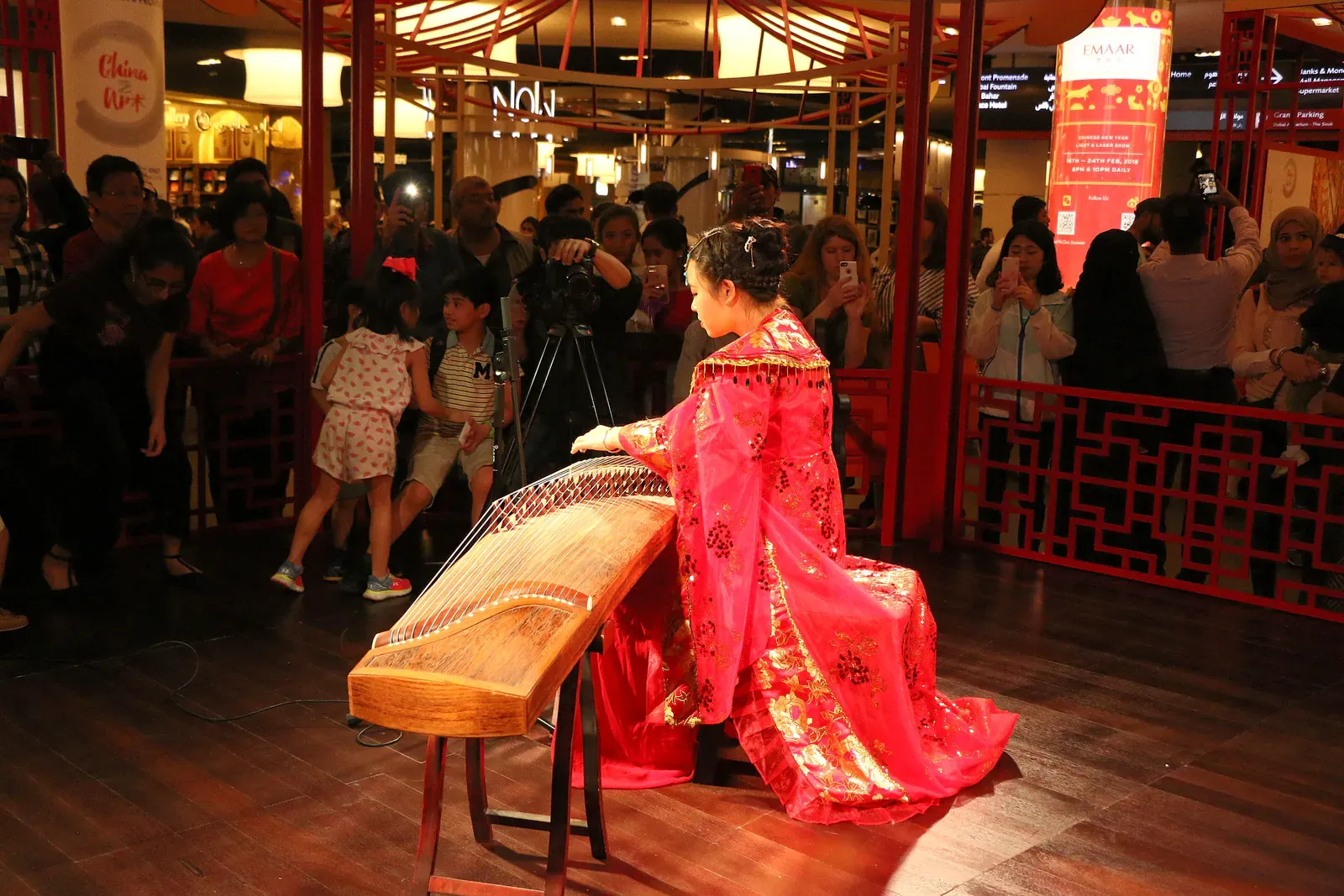
The qin was one of the four arts of the Chinese scholar, and playing it was a private discipline more than a performance. Sizhu is still played informally in tea houses and homes rather than on stage. Xi’an temple fair bands play wind and percussion music, both seated and walking, at fairs and funerals.
Legacy
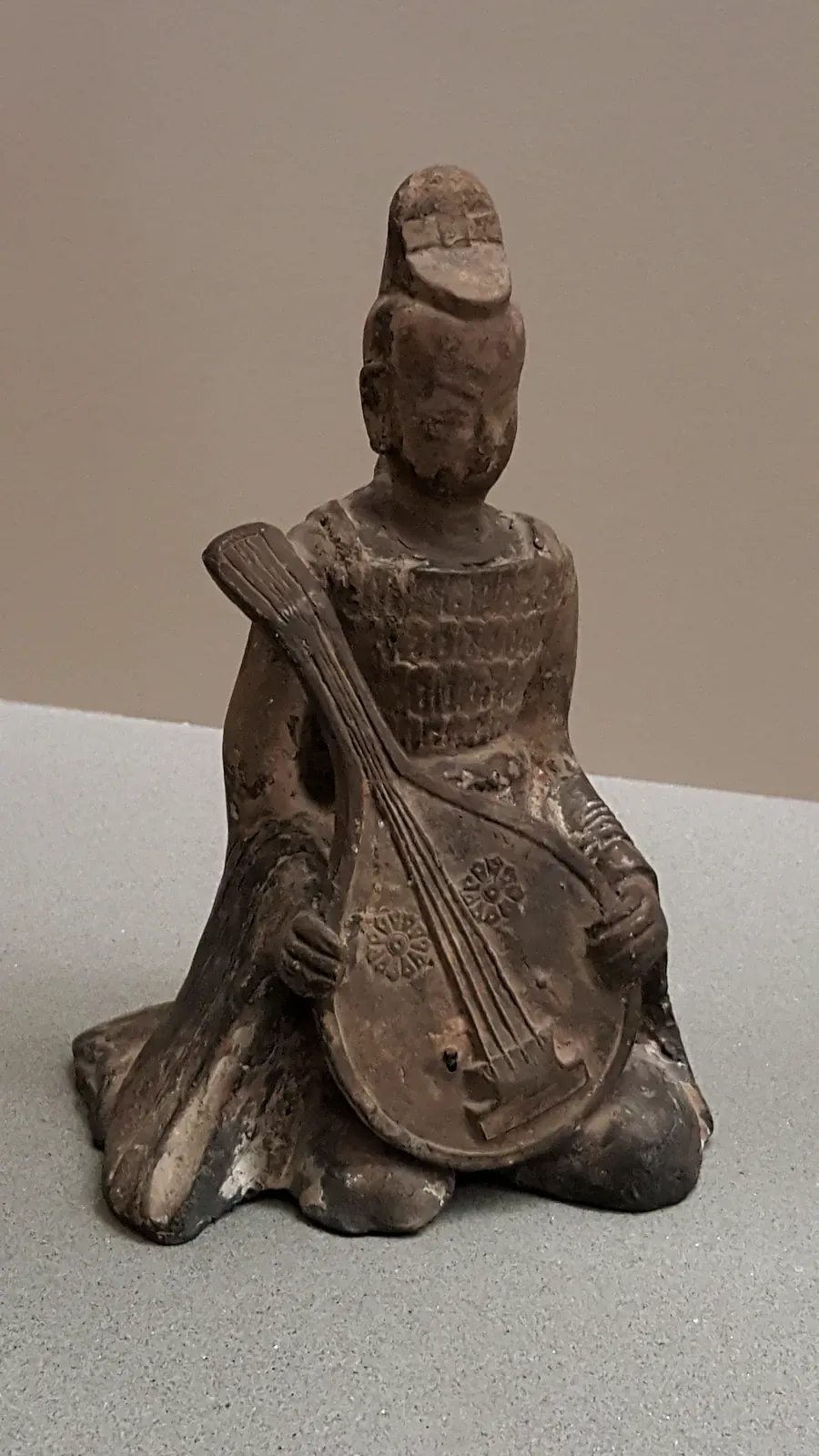
The tradition now operates on three levels: a conservatory canon of solos and orchestral arrangements, a heritage movement that preserves regional music such as nanyin and Xi’an drum music, and an international scene of players and composers who mix the instruments with Western quartets and electronic music. At the same time, it links to Chinese opera, the shared source of many Cantonese ensemble tunes, and to the wider East Asian family of court, folk and theatrical music.
Misconceptions
One misconception is that Chinese instrumental music is a single ancient tradition. It is a set of separate traditions, each with its own instruments, settings and repertoire, from the scholar’s zither to Jiangnan tea-house groups to Cantonese ensembles and Xi’an temple bands.
Another is that the Chinese orchestra is an old court institution. The full-size orchestra of bowed, plucked, wind and percussion sections dates from the early twentieth century societies in Shanghai and from later state and city ensembles such as the Hong Kong Chinese Orchestra, founded in 1977.
A third is that the erhu has always been a solo instrument. For centuries it mainly accompanied opera and ensembles. Liu Tianhua’s studies and solo pieces of the 1920s and early 1930s created its concert repertoire.
Frequently asked questions
What is Chinese instrumental music?
Chinese instrumental music is China’s non-operatic music for solo instruments and ensembles. It includes guqin music, pipa and erhu solos, regional ensembles such as Jiangnan sizhu and Cantonese music, and modern Chinese orchestras.
What is the oldest surviving Chinese instrumental music?
The oldest surviving qin handbook, Shen Qi Mi Pu, dates from 1425 and collects 64 pieces for the guqin. It documents a solo tradition that is older than the book.
Who was Abing?
Abing was a blind street musician from Wuxi. Two Central Conservatory professors recorded six of his pieces in 1950, including Erquan Yingyue, months before he died, and those recordings are all that survives of his playing.
Which Chinese music is on the Voyager Golden Record?
Guan Pinghu’s guqin performance of Liu Shui (Flowing Water), about seven minutes long, is the only Chinese music on the Voyager Golden Record of 1977.
What is sizhu?
Sizhu means silk and bamboo: small ensembles of string and wind instruments, best known from the Jiangnan region around Shanghai, in which each player embellishes one shared tune.
Sound
Sound sheet
Signature sounds
- Small silk-and-bamboo group sharing one melody with added flowers
- Pentatonic melody with slides and vibrato on the bowed lead
- Slow-to-fast tempo progression in Jiangnan sizhu pieces
Techniques
- Lunzhi tremolo
- Jiahua embellishment
- Banyan metre
Keys and modes
Pentatonic scales. Five-note scales underlie most melodies; the modern guzheng is tuned to a major pentatonic scale.
Tuning
Erhu strings a fifth apart on D and A; pipa tuned A-D-E-A
Scenes
Where it happened
Where and when the sound lived: one bar per city on a shared timeline.
Asia
Active scenes
Peak 5, 1932-2025
Home of the silk-and-bamboo clubs, the Datong Music Society and Pathe-era recording.
Abing played in the streets here and was recorded in 1950.
Centre of Cantonese music built on Cantonese opera tunes and new pieces from the 1920s.
Lu Wencheng settled here in 1932; the Hong Kong Chinese Orchestra followed in 1977.
Temple wind and percussion ensembles with scores that date back to 1689.
Venues and places
Shanghai, 1920 to today. Society that enlarged sizhu groups into sectioned ensembles and rebuilt ancient instruments.
Shanghai, 1900 to today. Where amateur silk-and-bamboo clubs played for friends in a closed circle.
Wuxi, 1930 to today. Where Abing performed in the street before the 1950 recording.
Culture
Culture markers
- Xi'an temple fair bands
Wind and percussion ensembles play sitting and walking music at temple fairs and funerals.
Ritual - Qin as a scholar art
Guqin playing was one of the four arts expected of a Chinese scholar.
Artwork - Tea house sessions
Jiangnan sizhu is played informally in tea houses and homes, not on a stage.
Ritual
Media
Key media
- 1977Voyager Golden Record
by NASA. Carries Guan Pinghu's Liu Shui as its only Chinese music.
Compilation
Glossary
Terms on this page
System of accented and unaccented beats that fixes metre and tempo.
Reconstruction of an old qin piece from notation.
High-pitched fiddle with steel strings, lead of Cantonese music.
Added flowers: each player embellishes the shared tune.
Pipa tremolo made by all right-hand fingers in turn.
Silk and bamboo: small string and wind ensembles, best known from Jiangnan.
East Asian family