Minsogak
Minsogak is Korean folk music: pansori storytelling, sanjo solos, minyo songs, sinawi ensembles and the farm-band drumming of nongak and samulnori.
South Korea, around 1600
East Asian family
Born
around 1600
South Korea
Subgenres
7
Documented branches
Links
3
Genres it drew on or shaped
Tempo
40-130 BPMLineage
Family tree
Grew out of
South Korea
Minsogak
Led to (7)
Timeline
Era by era
From the first sparks to today. Select a dot to read the story behind it.
- Village, ritual and market roots
1600 to 1889
- Master singers and the first records
1890 to 1945
- Heritage protection
1946 to 1977
- Samulnori and the concert stage
1978 to 1992
- Film, festivals and world listing
1993 to 2018
- Pansori pop
2019 to today
Eras
Moments
- 1 Village, ritual and market roots, 1600 to 1889
- 2 Master singers and the first records, 1890 to 1945
- 3 Heritage protection, 1946 to 1977
- 4 Samulnori and the concert stage, 1978 to 1992
- 5 Film, festivals and world listing, 1993 to 2018
- 6 Pansori pop, 2019 to today
around 1600
Village, ritual and market roots
Farm bands, shaman ritual music and itinerant singers shape the oral forms. Pansori emerges in the Honam region in the late 17th century and wins elite audiences by the mid-18th.
- 1690Pansori takes shape in the Honam regionLate 17th century folk entertainment by shamans and street performers, sung by one singer with a drummer.
- 1754Elite audiences are documented at pansoriBy the mid-18th century the form had moved up from lower-class crowds to educated listeners.
around 1890
Master singers and the first records
Sanjo takes solo form around 1890, singers like Im Bang-ul build star careers on stage and gramophone, and colonial rule reshapes how farm music is named and policed.
- 1890Kim Chang-jo shapes gayageum sanjoThe gayageum player is credited with turning folk melodies from pansori and shaman music into a solo suite.
- 1910Colonial rule recasts farm music as nongakThe term nongak was introduced under Japanese rule (1910-1945) and narrowed the older, wider meaning of the tradition.
- 1929Im Bang-ul debuts with Ssukdaemori at a singing contestThe song from Chunhyangga later sold over a million copies as a gramophone single.
- 1931Namwon starts its Chunhyang festivalThe annual rite for the heroine of Chunhyangga becomes a stage for pansori contests; Kim So-hee wins it at 14.
1946
Heritage protection
The state starts designating masters as living holders of intangible heritage; pansori is listed as Important Intangible Cultural Property No. 5 in 1964. Farm music doubles as protest culture in the 1960s and 70s.
- 1964Pansori is listed as Intangible Cultural Property No. 5Kim So-hee is among the singers recognised as holders under the heritage programme.
- 1970Pungmul becomes protest cultureIn the 1960s and 70s student and pro-democracy movements adopt farm-band drumming, and public performers risk arrest.
1978
Samulnori and the concert stage
Four percussionists move farm-band rhythm indoors in 1978. Albums on Nonesuch, Jigu and CMP and tours of Japan and Europe make samulnori Korea's best-known traditional export.
- 1978Samulnori gives its first performanceOn 22 February four percussionists led by Kim Duk-soo play farm-band rhythm on a small Seoul stage.
- 1982Samulnori plays Tokyo and the Epcot Center opening
- 1984Drums and Voices of Korea on Nonesuch ExplorerA widely distributed Western release of samulnori, produced for the Asia Society.
- 1988Record of Changes on CMPA CD release for the German jazz and world-music market.
1993
Film, festivals and world listing
Sopyonje (1993) draws audiences back to pansori. UNESCO lists pansori in 2003 and nongak in 2014, and festivals such as Jeonju Sori (2001) give the forms regular stages.
- 1993Sopyonje becomes the first Korean film past a million in SeoulIm Kwon-taek's pansori drama and Kim Soo-chul's score trigger a revival of interest in pansori.
- 1993The original samulnori quartet disbandsKim Duk-soo founds the large Hanullim orchestra to carry the form on.
- 1994Then Comes the White Tiger on ECMSamulnori meets the jazz group Red Sun on Manfred Eicher's label.
- 1998Ahn Sook-sun performs at the Avignon Festival
- 2001Jeonju International Sori Festival is foundedIt becomes South Korea's main festival for traditional music and adds world music in 2011.
- 2003UNESCO proclaims pansori a masterpiece of intangible heritage
- 2014UNESCO lists nongak, Korean community band music
2019
Pansori pop
Leenalchi pairs pansori singers with a rock rhythm section. Tiger Is Coming turns a Sugungga scene into a global viral hit, and the band wins three Korean Music Awards in 2021.
- 2019Leenalchi and Ambiguous Dance Company release Tiger Is ComingThe 19 September video reworks a Sugungga scene as a pansori pop song and dance.
- 2020Leenalchi release the album SugunggaReleased 29 May; the Tiger Is Coming theme runs through Korea's tourism campaign.
- 2021Leenalchi win three Korean Music AwardsMusician of the Year, Best Modern Rock Song and Best Jazz and Crossover Album.
- 2022Ahn Sook-sun is named national holder of Chunhyangga
Listening path
Anthems
The records that built the sound, grouped by the part they played. Thumbnails come from YouTube; the player loads only when you press play.
- 01
SamulNori, 1988
Samulnori's own take on farm-band rhythm, the stage form that started the modern wave of Korean folk drumming.
Start hereOrigin - 02
SamulNori, 1988
A shaman-ritual rhythm adapted for the four-instrument quartet, showing where samulnori drew its material.
Origin - 03
Kim Soo-chul, 1993
Theme from the Sopyonje score, the film that made pansori popular again in 1993.
Start hereBreakthrough - 04
Leenalchi, 2020
A Sugungga scene turned into a dance-pop hook that took pansori to a worldwide audience.
Breakthrough - 05
Ahn Sook-sun, 1997
Love-song scenes from the best-loved pansori story, sung by its most celebrated living voice.
Start hereAnthem - 06
Kim Young-im, 2004
The folk song a pansori-singing family belts out in Sopyonje, in a classic minyo reading.
Anthem - 07
Kim Young-im, 2004
The slow mountain Arirang of Gangwon, one of the best known Korean folk songs.
Anthem - 08
Leenalchi, 2024
A classic pansori-style bird song reworked by the band for the drama Jeongnyeon, bringing the sound to TV viewers.
Revival
Facts
| Family | East Asian |
| Origin | South Korea |
| Status | Active |
| Tempo | 40 to 130 BPM |
| Meter | Jangdan cycles, from 6-beat jinyangjo to 4-beat jajinmori |
| Subgenres | 7 |
Minsogak (민속악) is the folk music of Korea, the music of villages, markets, shaman rituals and travelling entertainers, as opposed to the refined court tradition of jeongak.
It includes pansori sung storytelling, the instrumental solo form sanjo, regional minyo songs, the improvised ensemble music sinawi and the percussion of nongak and samulnori. Its defining traits are oral transmission, improvised ornament and rhythm cycles called jangdan, usually carried by an hourglass drum.
Origins
Minsogak grew out of work and ritual. Farming villages made band music to coordinate planting, harvest and festivals. Shamans used drums, gongs and improvised wind and string playing in rites in the south-west. Itinerant troupes sold song, acrobatics and drumming in markets. None of this was written down, so each region and teacher kept a distinct style, and the word minsogak itself is a later label for the whole non-court field.
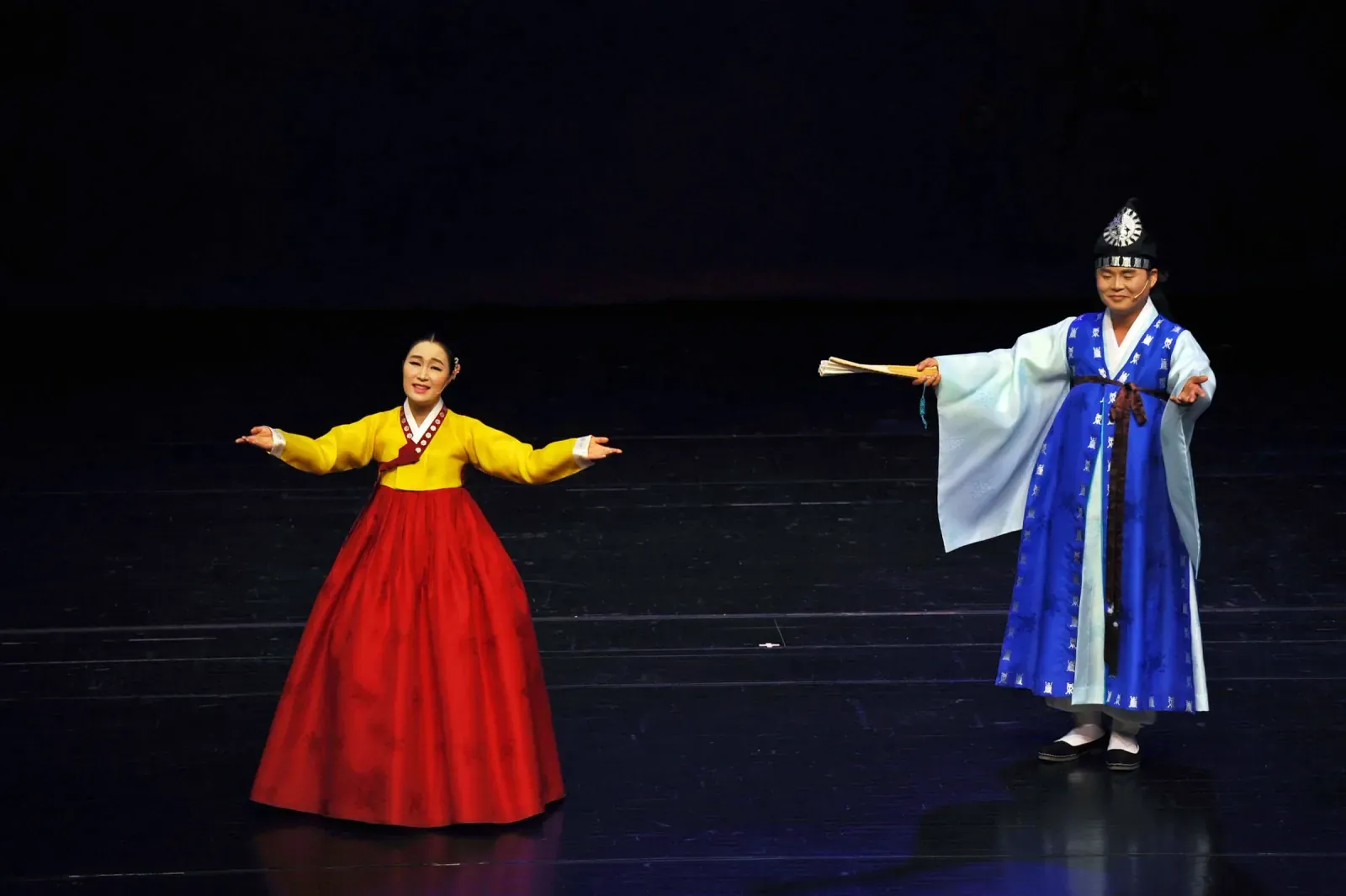
Pansori is the clearest product of that world. It developed among shaman families and street performers in the Honam region, in the south-west, in the late 17th century. A single singer tells a long story, mixing sung passages, spoken narration and gesture, while a drummer on the buk, the barrel drum, keeps time and calls out encouragement known as chuimsae. By the mid-18th century, educated listeners were attending, and the form had moved up from the crowds that first supported it.
Honam and village Korea, 1600-1889
The period before recording is known through descendants of its practice. Pansori repertoires were handed from master to pupil, and singers were judged on voice, stage presence and storytelling. Five full stories survive in the repertoire, among them Chunhyangga, a love story, and Sugungga, an undersea fable. Farm bands played in circles outdoors, with the small gong kkwaenggwari leading, and shaman ensembles shaped the instrumental idiom that later fed sinawi and sanjo.
Colonial Korea, 1890-1945
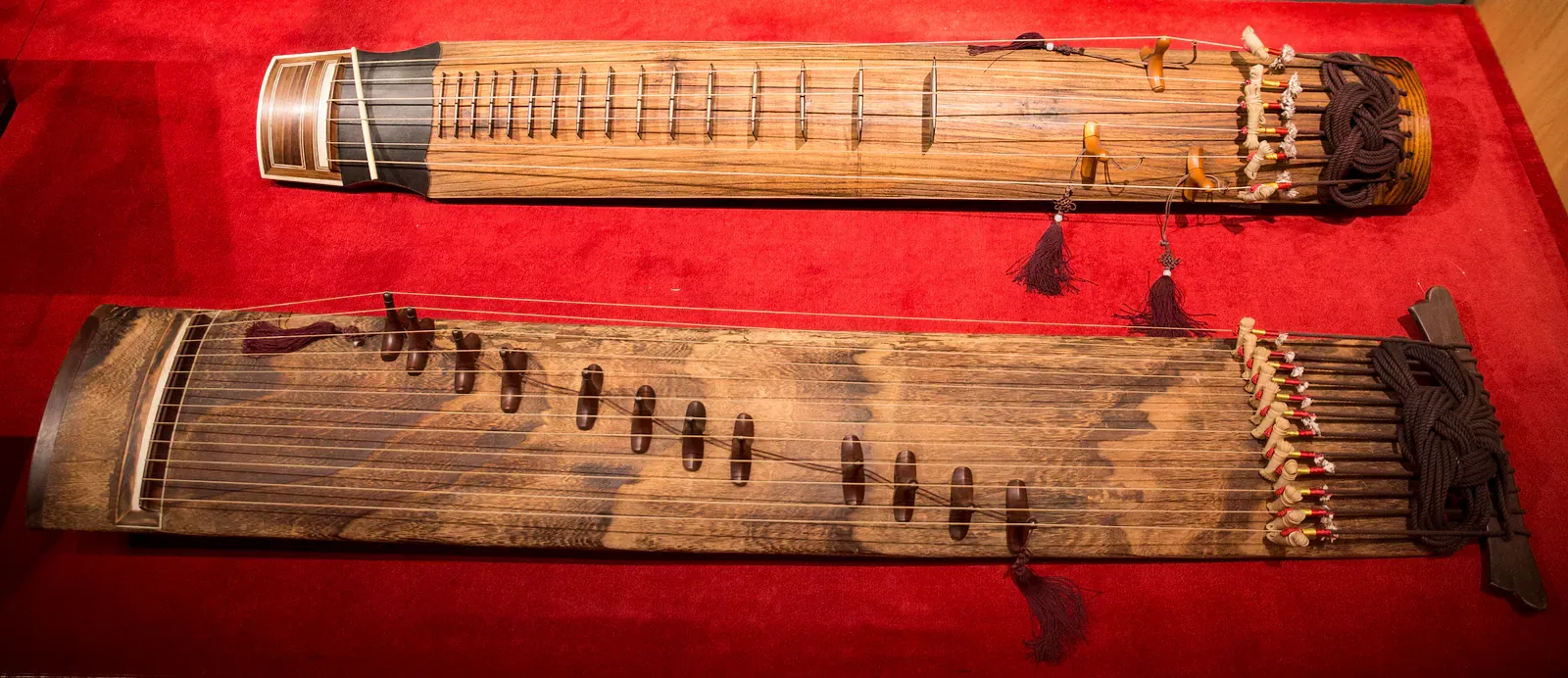
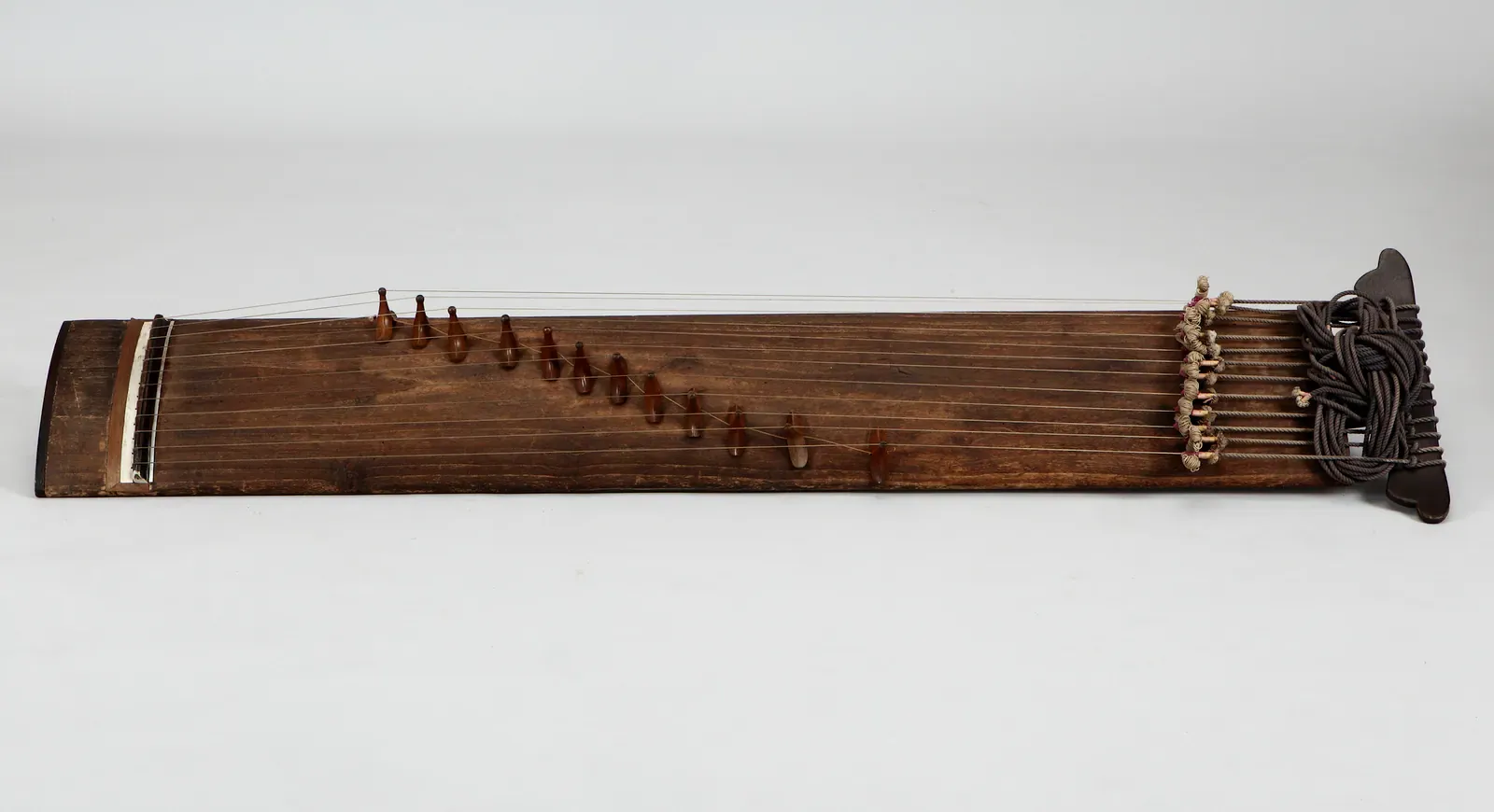
Around 1890 the gayageum player Kim Chang-jo is credited with turning folk melodies from pansori and shaman music into a solo suite, the earliest form of gayageum sanjo. Sanjo works through movements that run from slow to fast, with a drummer tracing the rhythm cycle underneath. The form later spread to other instruments, including the bamboo flute daegeum and the bowed zither ajaeng.
The same decades brought the gramophone and national stardom. Im Bang-ul, who debuted at a singing contest in 1929, became one of the first pansori singers to build a career on stage and disc. Japanese rule, from 1910, also reshaped the vocabulary: the term nongak was introduced in this period and narrowed the older, wider meaning of the farm-band tradition.
State protection, 1946-1977
After 1945 the question became preservation. Pansori was listed in 1964 as Important Intangible Cultural Property No. 5, and the heritage programme recognised living masters as holders of their repertoires, among them the Chunhyangga specialist Kim So-hee. Recognition brought money and prestige but also a standard version of each art to be kept intact.
Outside the official channel, farm music took on another life. In the 1960s and 1970s, student and pro-democracy movements adopted pungmul drumming as protest culture, and performers in public risked arrest. The sound of the village band came to stand for common people against authority.
Seoul stage, 1978-1992
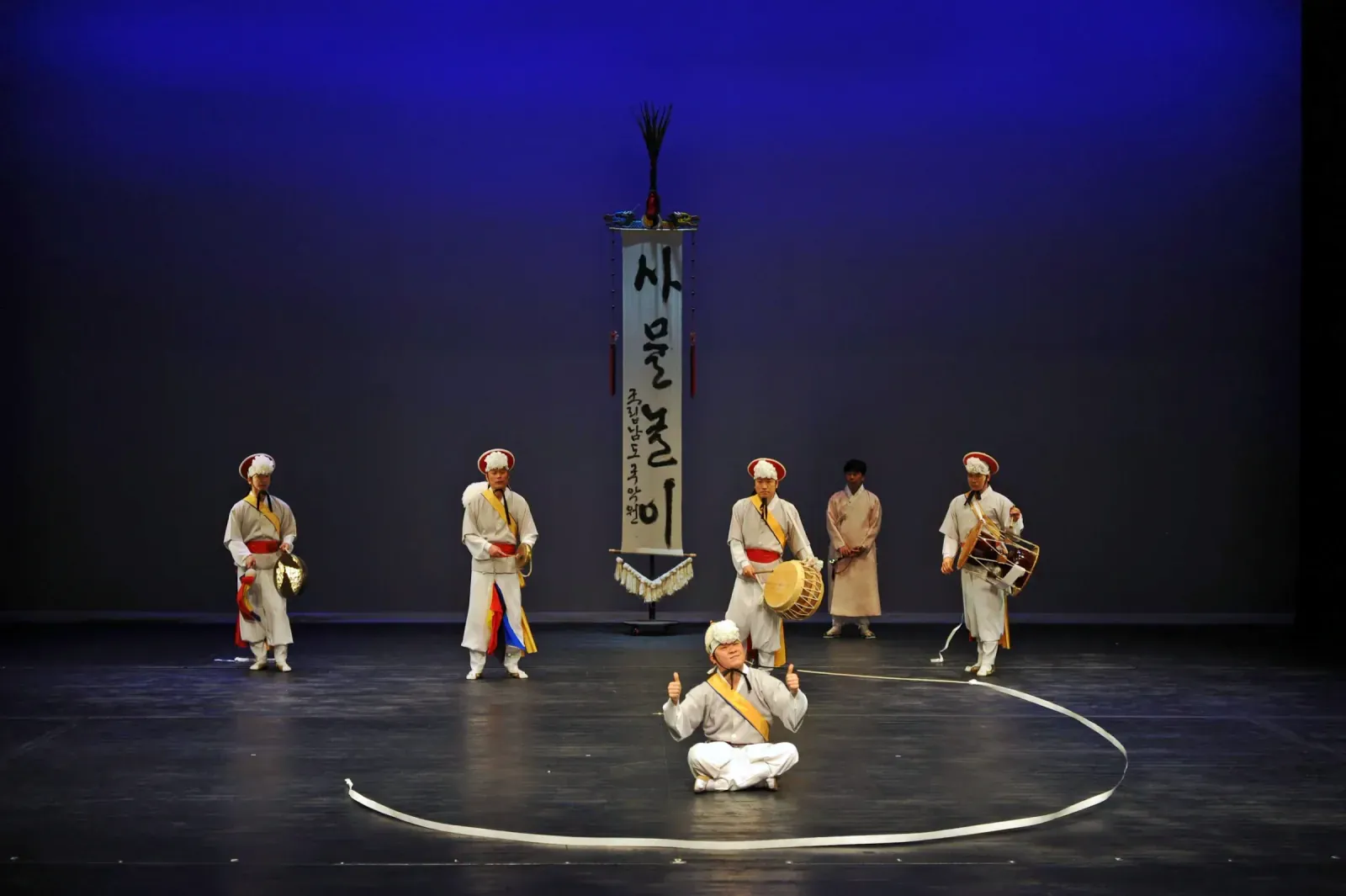
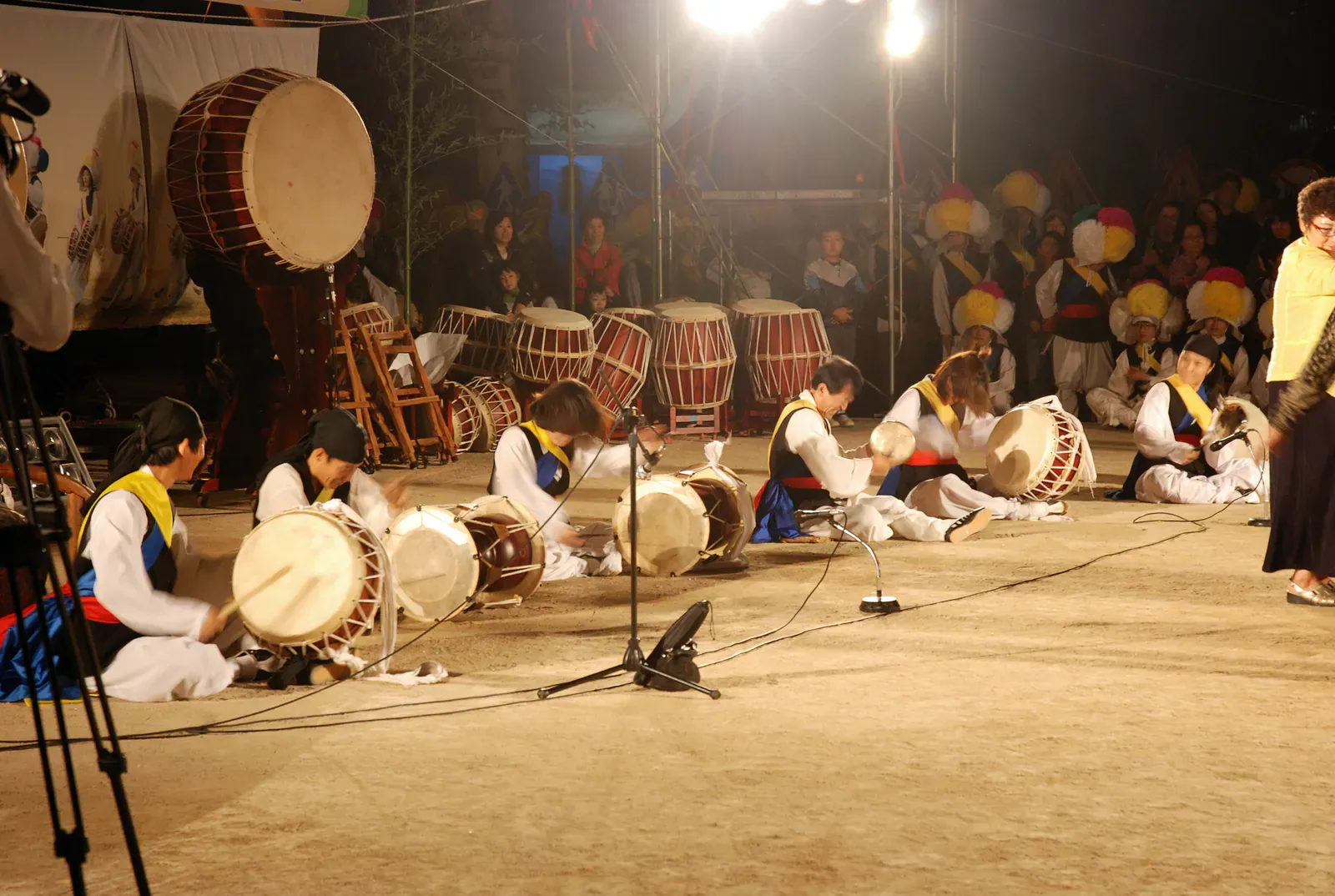
On 22 February 1978, four percussionists led by the janggu player Kim Duk-soo played farm-band rhythm on a small Seoul stage. The quartet, SamulNori, used four instruments: kkwaenggwari, jing, janggu and buk. It moved the music indoors and made it a seated concert form, where earlier it had been played standing, walking and dancing in the open air.
International exposure followed. The group played Tokyo and the opening of the Epcot Center in 1982, and Drums and Voices of Korea reached Western listeners in 1984 through the Explorer series of Nonesuch. In 1994, the quartet joined the jazz group Red Sun on Then Comes the White Tiger for ECM. The original quartet disbanded in 1993, and Kim Duk-soo founded the large Hanullim orchestra to carry the form on.
Screen and festival, 1993-2018
In 1993 Im Kwon-taek’s film Sopyonje, about a family of pansori singers, became the first Korean film to draw more than a million viewers in Seoul, and its score by Kim Soo-chul is regarded as the soundtrack of a pansori revival. Younger audiences who had met the form only in textbooks began to attend recitals.
Institutions followed. The Jeonju International Sori Festival opened in 2001 and became South Korea’s main yearly meeting for traditional music. UNESCO proclaimed pansori a masterpiece of intangible heritage in 2003 and listed nongak, Korean community band music, in 2014. Singers such as Ahn Sook-sun, who performed all five surviving pansori stories in full at the National Theater of Korea, became public figures.
Pansori pop, 2019 onward
The Seoul band Leenalchi paired pansori singers with a rock rhythm section. The video for Tiger Is Coming, released on 19 September 2019 with the Ambiguous Dance Company, reworked a Sugungga scene into a dance-pop hook. The album Sugungga followed in 2020, the song ran through a national tourism campaign, and the band won three Korean Music Awards in 2021. Luaka Bop released the EP Here Comes That Crow in 2026.
Characteristics
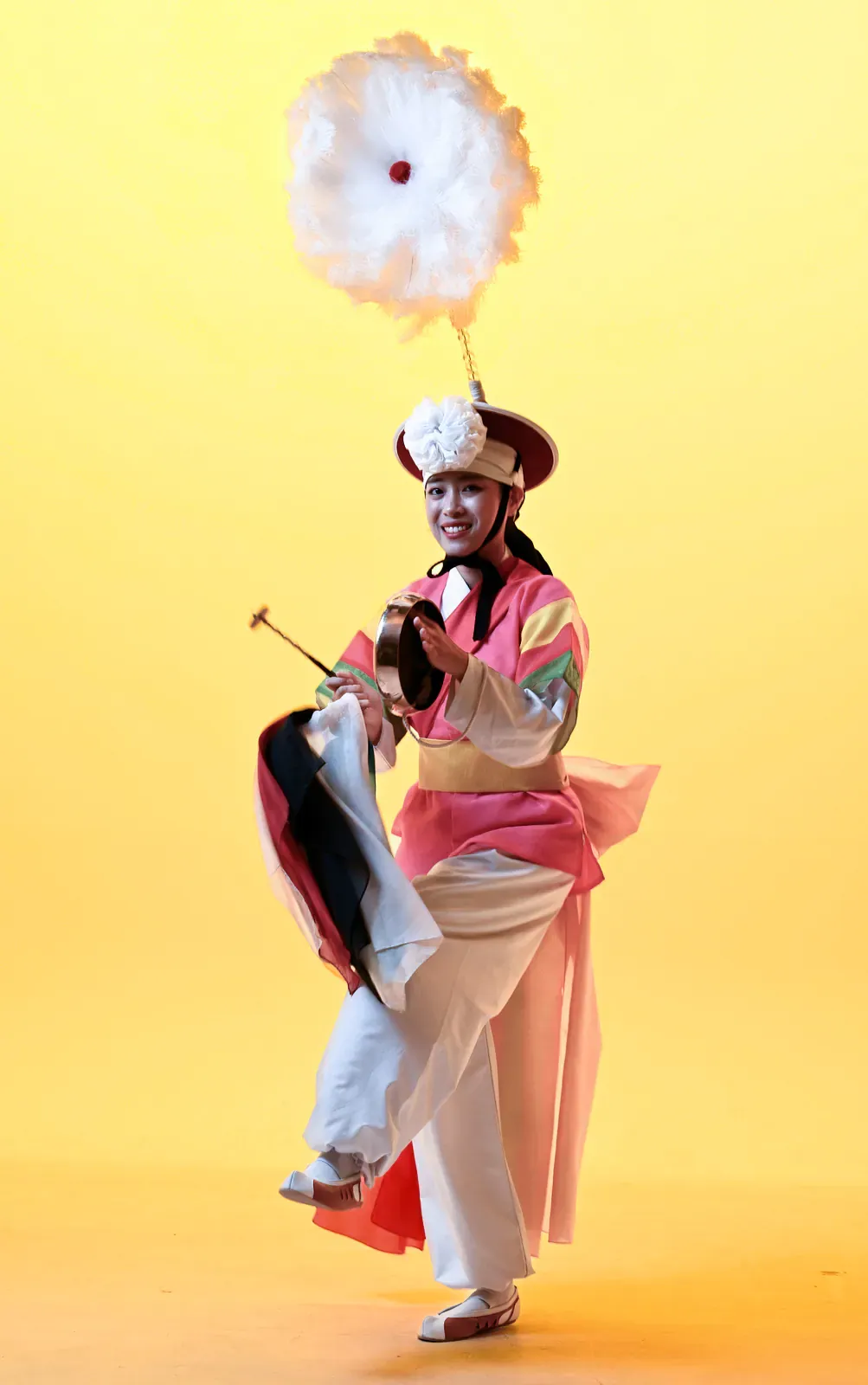
Rhythm comes first. Jangdan are named cycles, such as jinyangjo (slow and stately), jungmori, jungjungmori, jajinmori and hwimori (the fastest), and sanjo moves through them in order, accelerating over the course of a piece. Sinawi, by contrast, is an ensemble of improvised dialogue over a fixed rhythm, with the ajaeng’s rough, vocal edge setting the colour.
Voice and ornament matter more than harmony. Pansori singers use a strained, weathered tone and wide vibrato, and melodies bend between notes rather than hitting fixed pitches. Regional minyo songs, such as Jindo Arirang and Jeongseon Arirang, show different local scales and rhythms; Arirang itself exists in many variants.
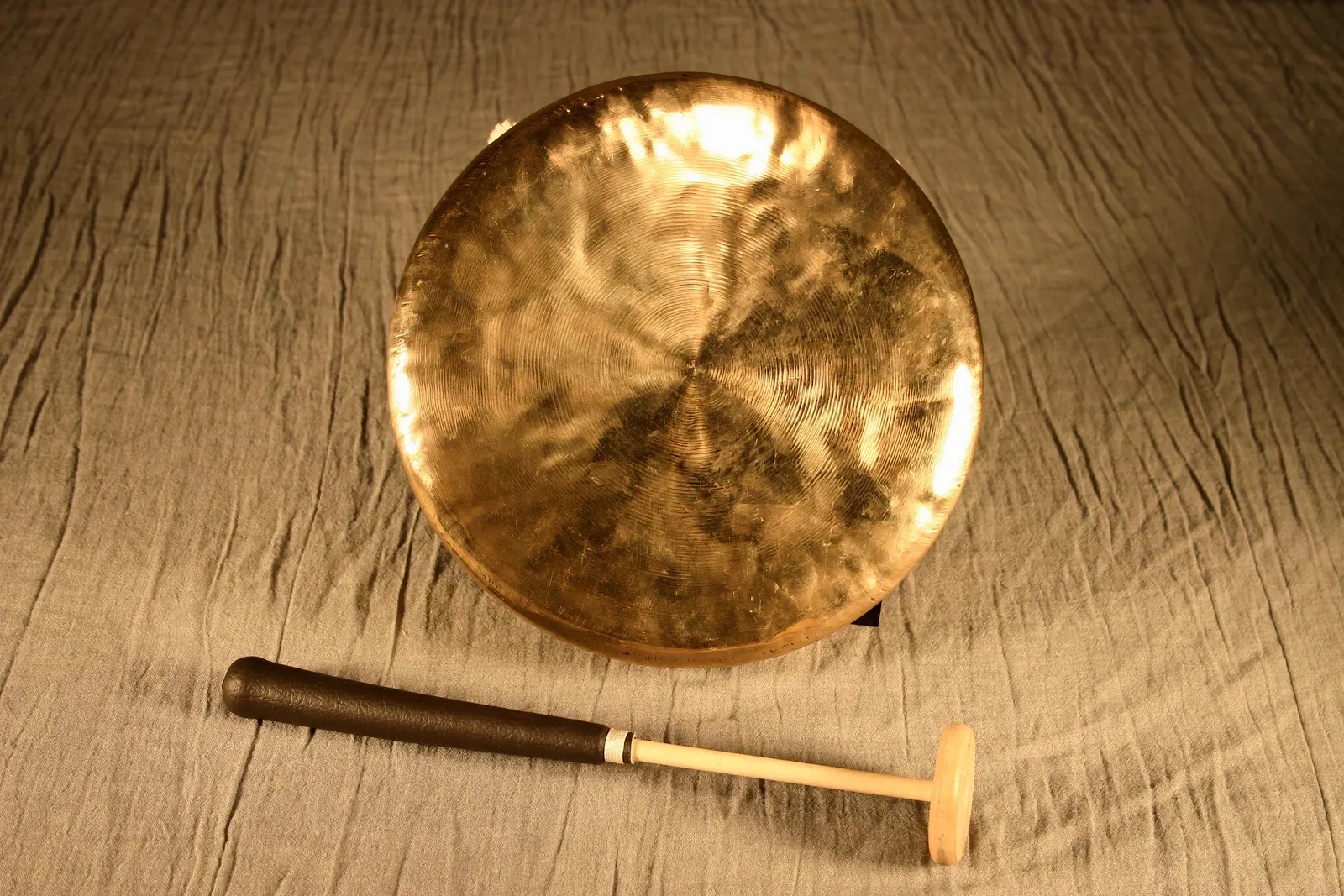
The main instruments are few and easy to recognise: janggu, buk, kkwaenggwari and jing for percussion; gayageum, daegeum, haegeum and ajaeng for sanjo and sinawi.
Mainstream success
Minsogak seldom charted, but it has reached mass audiences in bursts: Sopyonje in 1993, the global spread of samulnori in the 1980s, and Tiger Is Coming after 2019. Each one worked through another medium, a film, a concert tour or a viral video, rather than through radio.
Notable recordings
- Samul-Nori: Drums and Voices of Korea (1984), a widely distributed Western release of the quartet.
- Then Comes the White Tiger (1994), Red Sun and SamulNori on ECM.
- Seopyeonje (1993), Kim Soo-chul’s film score.
- Chunhyangga (1997), Ahn Sook-sun, a love-song scene from the best-loved pansori story.
- Sugungga (2020), Leenalchi.
Culture
The community is the audience. A pansori recital is a conversation: the drummer and listeners shout back, and a full performance of Chunhyangga can last about eight hours. Namwon holds an annual Chunhyang festival each spring with singing contests, and pungmul gatherings, known as pangut, bring dozens of players to outdoor events tied to farming and village life.
Legacy
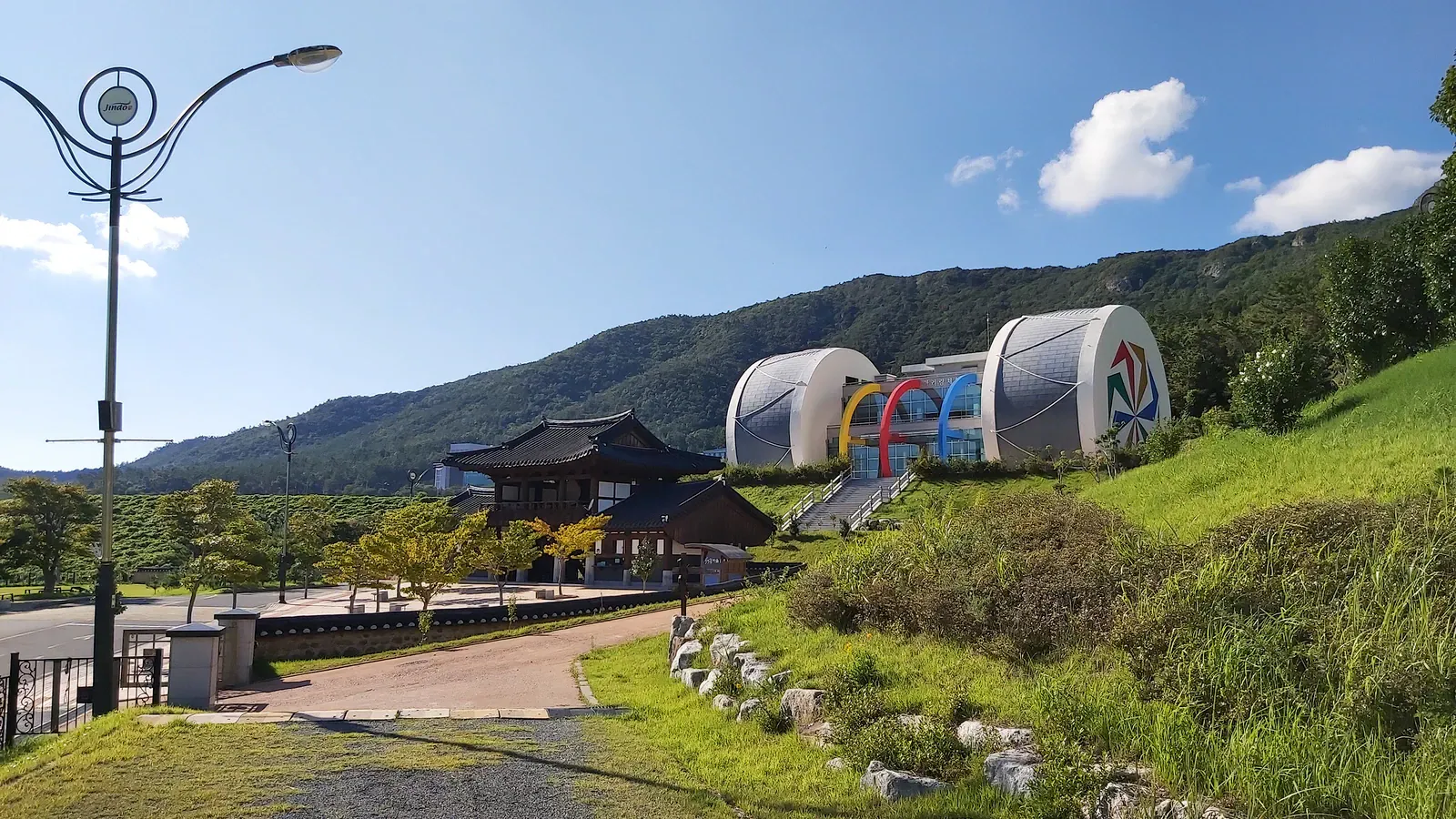
Samulnori entered school curricula in South Korea and university programmes abroad. Pansori is taught, staged and now mixed with rock and jazz. Fusion gugak, which draws on these forms, has become its own area of Korean music.
Misconceptions
Minsogak is not simply old. Pansori in its modern form dates from the 17th century, samulnori was formed in 1978, and the term nongak in its modern sense came with the 20th century. Much of what is called traditional is a modern arrangement.
It is also not only rural. Samulnori began as an urban stage show, and its first fans were city youth.
Folk does not mean unskilled. Pansori singers train for years, and sanjo players learn lineages of named schools.
Frequently asked questions
What is minsogak?
Minsogak is the Korean folk music tradition, including pansori, sanjo, minyo, sinawi, nongak and samulnori. It is set against jeongak, the court and literati music.
What is the difference between pansori and samulnori?
Pansori is solo storytelling in song with a drummer, dating to the late 17th century. Samulnori is a four-instrument percussion form first staged in 1978.
What is nongak?
Nongak is the farm-band music and dance of Korean villages. It is also called pungmul, and UNESCO listed it in 2014.
Where can minsogak be heard today?
It is performed at the Jeonju International Sori Festival, the Namwon Chunhyang Festival, the National Theater of Korea and in pansori pop by Leenalchi.
Sound
Sound sheet
Anatomy of a track
| # | Part |
|---|---|
| 1 | Jinyangjo (slow, stately) |
| 2 | Jungmori (medium) |
| 3 | Jungjungmori (faster) |
| 4 | Jajinmori (quick) |
| 5 | Hwimori (fastest) |
Signature sounds
- One singer with a barrel drum in pansori
- Tempo rising from slow to fast in sanjo
- Improvised dialogue over a fixed rhythm in sinawi
- Four-instrument layered percussion in samulnori
- Drummer's spoken encouragement
Drums and percussion
- Janggu
- Buk
- Kkwaenggwari
- Jing
- Sogo
Techniques
- Gosu accompaniment
- Sanjo tempo ladder
- Sinawi group improvisation
- Layered cross-rhythm
Keys and modes
Gyemyeonjo. Plaintive pentatonic mode used for sorrowful pansori scenes.
Ujo. Brighter pentatonic mode used for heroic or cheerful scenes.
Vocals
Pansori singers use a strong, raw voice and wide dynamics, mixing sung passages, spoken narration and gesture.
Scenes
Where it happened
Where and when the sound lived: one bar per city on a shared timeline.
Asia
Active scenes
Peak 4, 2015-2025
Home of the first samulnori show, the national theatre and gugak institutions, and most professional ensembles.
Its Chunhyang festival and Dongpyeonje pansori school make it a pilgrimage town for singers.
Hosts the Jeonju International Sori Festival, the main yearly meeting of traditional and world music.
The Asia Culture Center is where the future members of Leenalchi met in 2018.
Venues and places
Seoul, 1978 to today. The small Seoul stage where samulnori was first performed on 22 February 1978.
Seoul, 1950 to today. The stage where Ahn Sook-sun performed all five pansori madang in full.
Namwon, 1931 to today. Annual rite and pansori contest honouring the heroine of Chunhyangga.
Jeonju, 2001 to today. South Korea's main yearly festival of traditional music, with world music since 2011.
Gwangju, 2015 to today. Site of the 2018 Dragon King performance where Leenalchi's members met.
Culture
Culture markers
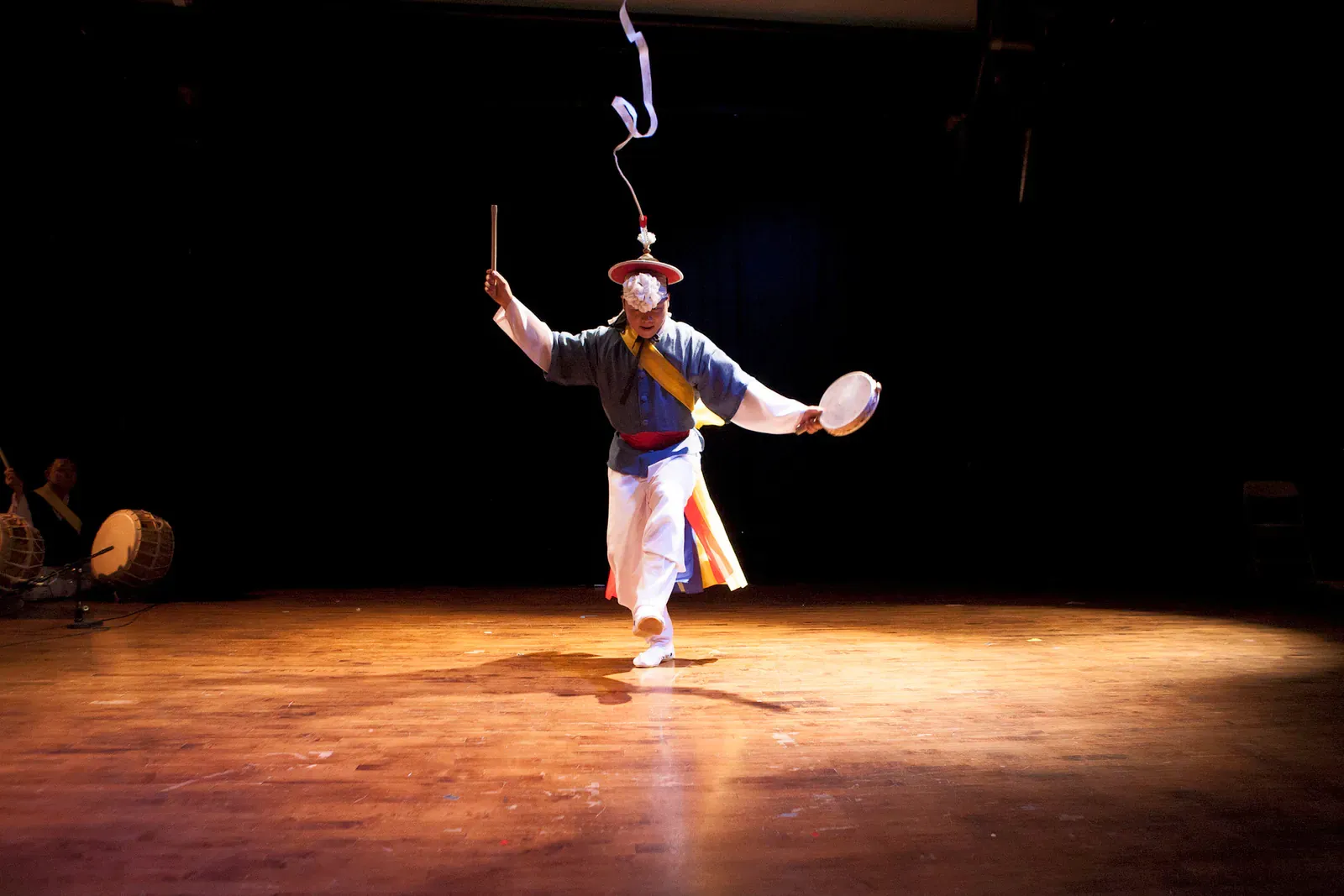
- Sangmo ribbon-hat spinning
Pungmul dancers spin hats with long streamers while playing and moving in circles.
Dance - Pangut community gatherings
Outdoor farm-band performances with dozens of musicians, tied to farming and village life.
Ritual - Chuimsae calls
Audience and drummer shout encouragement during a pansori performance.
Slang - Chunhyang festival at Namwon
Each spring Namwon honours the Chunhyangga heroine with rites and singing contests.
Ritual - Marathon pansori recitals
A full Chunhyangga run can last about eight hours, performed by one singer.
Artwork
Media
Key media
- 1993Seopyeonje (Sopyonje)
by Im Kwon-taek. The first Korean film to pass a million viewers in Seoul and the spark of the pansori revival.
Film - 2012SamulNori: Contemporary Korean Drumming and the Rebirth of Itinerant Performance Culture
by Nathan Hesselink. Book-length study of the quartet and its roots in itinerant troupes.
Book - 2020Feel the Rhythm of Korea
by Korea Tourism Organization. Tourism campaign videos built around Tiger Is Coming that spread the song worldwide.
Film - 2022Midnight Asia: Eat. Dance. Dream.
by Netflix. A documentary series that featured Leenalchi.
Film
Glossary
Terms on this page
Shouts of praise from drummer and audience during a pansori performance.
The drummer who accompanies a pansori singer, keeps time and calls out encouragement.
A rhythmic cycle that structures pansori, sanjo and farm music.
One complete pansori story cycle; five remain in the repertoire.
A community farm-band gathering of drumming, dancing and singing.
Concert percussion form for four instruments, created in 1978 from farm-band rhythm.
A solo suite in which tempo rises from slow to fast over a drum cycle.
Improvised ensemble music from southern shaman ritual, played over a set rhythm.
East Asian family