Okinawan music
Okinawan music is the sanshin-based song tradition of the Ryukyu Islands, split into classical court and folk branches and now also a pop style.
Okinawa, around 1400
East Asian family
Born
around 1400
Okinawa
Subgenres
3
Documented branches
Links
0
Genres it drew on or shaped
Tempo
75-160 BPMLineage
Family tree
Grew out of
Okinawa
Okinawan music
Led to (3)
Timeline
Era by era
From the first sparks to today. Select a dot to read the story behind it.
- Ryukyu Kingdom and village songs
1400 to 1879
- Prefecture and first records
1880 to 1944
- Postwar golden age of min'yo
1945 to 1971
- Reversion and island folk rock
1972 to 1989
- Okinawa pop and the world stage
1990 to today
Eras
Moments
- 1 Ryukyu Kingdom and village songs, 1400 to 1879
- 2 Prefecture and first records, 1880 to 1944
- 3 Postwar golden age of min'yo, 1945 to 1971
- 4 Reversion and island folk rock, 1972 to 1989
- 5 Okinawa pop and the world stage, 1990 to today
around 1400
Ryukyu Kingdom and village songs
The sanshin arrives from China in the 15th century, Shuri court musicians perform heterophonic chamber music, and the lyric ryuka form replaces the older omoro verses while village folk song grows beside the court.
- 1350Omoro versesCourt and ritual verses called omoro take shape in the 14th century and decline rapidly from the late 16th century, replaced by the eight-eight-eight-six syllable ryuka.
- 1400Sanshin arrives from ChinaThe three-stringed sanshin, descended from the Chinese sanxian, enters Okinawa through trade in the 15th century and later gives rise to the Japanese shamisen.
- 1700Kunkunshi notationA tablature for sanshin, believed to be developed by Mongaku Terukina or his student Choki Yakabi in the early to mid 1700s, is standardised for writing sanshin music by the end of the 19th century.
- 1879Kingdom abolishedThe end of the Ryukyu Kingdom ends court patronage and begins the era of what musicologists call popular music.
1880
Prefecture and first records
With the kingdom abolished, former Shuri samurai spread court culture to the countryside, folklorists lift the status of min'yo, and a record company in Osaka begins pressing Okinawan folk songs.
- 1927Marufuku records Okinawan folk songChoki Fukuhara founds a label in Osaka, home to many Okinawan emigrants, said to be the first devoted to Okinawan folk music; sources give 1926 or 1927.
1945
Postwar golden age of min'yo
Radio from the 1950s, the Ryukyu Folk Music Association and LPs from 1965 carry singers such as Rinsho Kadekaru, while composers such as Tsuneo Fukuhara fuse the island style with other genres.
- 1962Ryukyu Folk Music Association foundedSingers including Rinsho Kadekaru found the association that later names its masters min'yo meijin.
- 1965Kadekaru's first LPRinsho Kadekaru, whose repertoire passes a thousand songs, releases his first LP; the same year Tsuneo Fukuhara writes Bashofu, later covered by Rimi Natsukawa.
1972
Reversion and island folk rock
After the American occupation ends in 1972, Okinawan music gains a mainland audience; Shoukichi Kina and Champloose electrify the sanshin and Rinken Band mixes eisa rhythms with pop.
- 1972End of the American occupationReversion to Japan brings a surge of national interest in Okinawan music, and Haisai Ojisan by Shoukichi Kina becomes his first big hit.
- 1977Champloose debut and Rinken BandShoukichi Kina and Champloose release a self-titled folk-rock album with electric sanshin; Rinken Teruya forms Rinken Band the same year.
- 1985ArigatouRinken Band's first hit starts a wider popular audience for Okinawan folk forms and eisa-style ballads and dance tunes.
1990
Okinawa pop and the world stage
Nenes, Begin and Rimi Natsukawa bring sanshin songs to national charts and television, while Kina reaches overseas listeners and electronic acts such as Ryukyu Underground rework the folk repertoire.
- 1990Nenes formedSadao China forms the four-woman group Nenes, singing folk songs in traditional costume with sanshin accompaniment.
- 1994Overseas tours and Luaka Bop releaseNenes tour Europe and play New York; Luaka Bop issues the Kina compilation Asia Classics 2: Peppermint Tea House in May.
- 2001Nada Soso by Rimi NatsukawaHer cover of the Begin and Ryoko Moriyama song climbs slowly, first charting in May 2002 and selling over 680,000 copies.
- 2002Shimanchu nu TakaraBegin's eisa-chant song reaches number 47 on the Oricon weekly chart and is performed at the Kohaku Uta Gassen.
Listening path
Start listening
A short path from an easy way in to the deep end. Thumbnails come from YouTube; the player loads only when you press play.
- 01
Champloose, Shoukichi Kina, 1992
The song that made Kina and the electric sanshin known across Japan, in a 1992 recording.
- 02
Rimi Natsukawa, 2001
The best-known Okinawan pop ballad, a slow, steady seller of 2001 that grew into a national hit.
- 03
Begin, 2002
Ishigaki anthem built on sanshin and an eisa-style chanted refrain.
Facts
| Family | East Asian |
| Origin | Okinawa, Japan |
| Status | Active |
| Tempo | 75 to 160 BPM |
| Subgenres | 3 |
Okinawan music, also called Ryukyuan music, is the music of the Okinawa Islands in southwestern Japan, centred on the three-stringed sanshin. Musicians and listeners have long divided it into koten, the classical music of the Ryukyu Kingdom court, and min’yo, the folk song of villages and islands.
Its scales and instruments set it apart from mainland Japanese traditions, and from the 1970s a pop branch has carried it to national and international audiences. It belongs to the East Asian family.
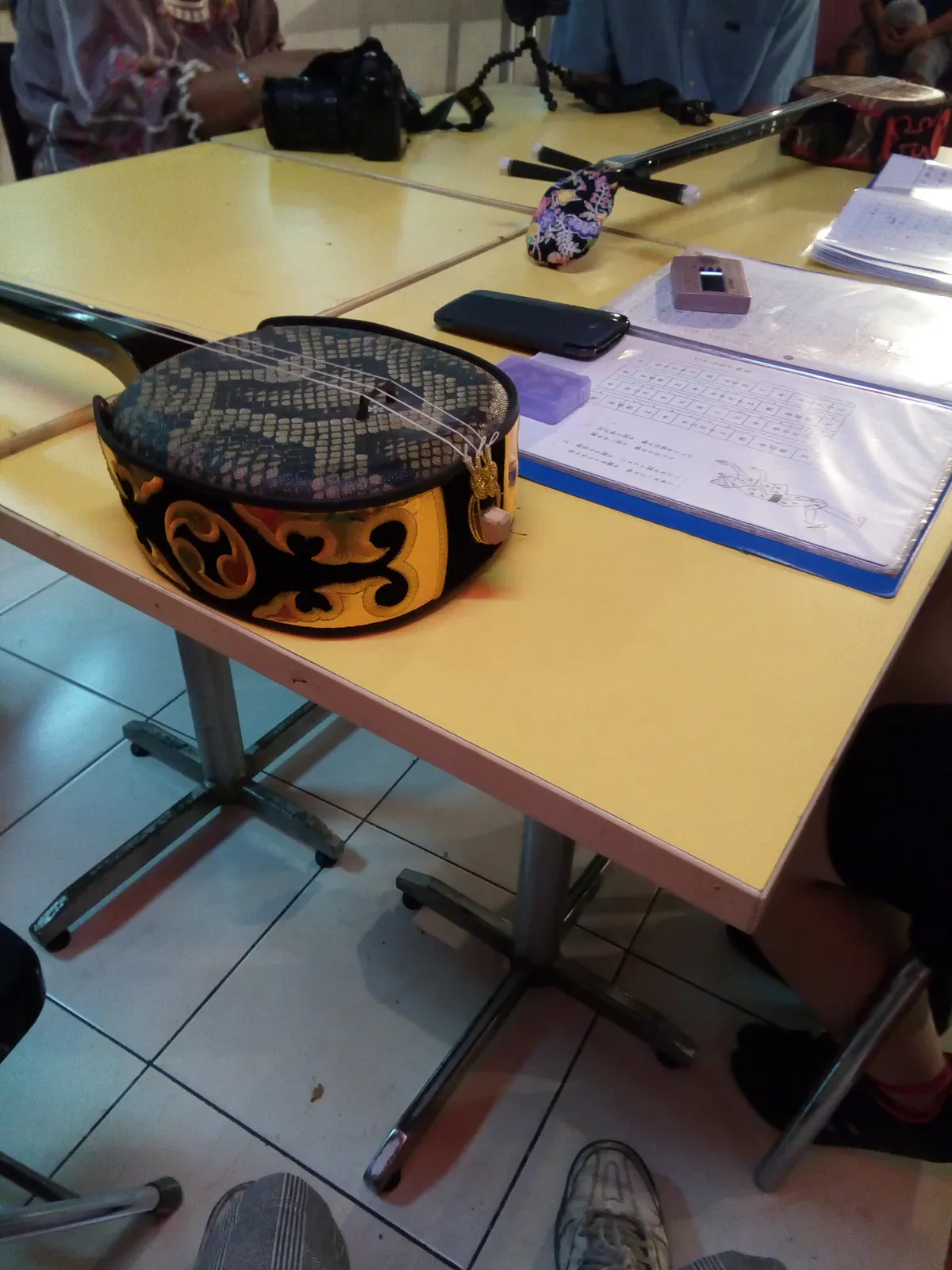
Origins and the Ryukyu Kingdom
The oldest sung forms of the islands were magical incantations, from which epic songs and then lyric songs developed. In the Ryukyu Kingdom on Okinawa Island, the court and ritual verses called omoro took shape in the 14th century and declined quickly from the late 16th. They were replaced by the ryuka, a lyric form with an eight-eight-eight-six syllable pattern that scholars debate: one view ties it to mainland Japanese popular verse, another to development inside Okinawa.
The instrument that defines the music arrived in the 15th century. The sanshin descends from the Chinese sanxian and came to Okinawa through trade. In the 16th century it reached the port of Sakai, where it was reshaped into the Japanese shamisen. After the early 17th century conquest of the kingdom by the Satsuma domain, the samurai class in the capital Shuri took up the high culture of the mainland while also keeping a court music of its own.
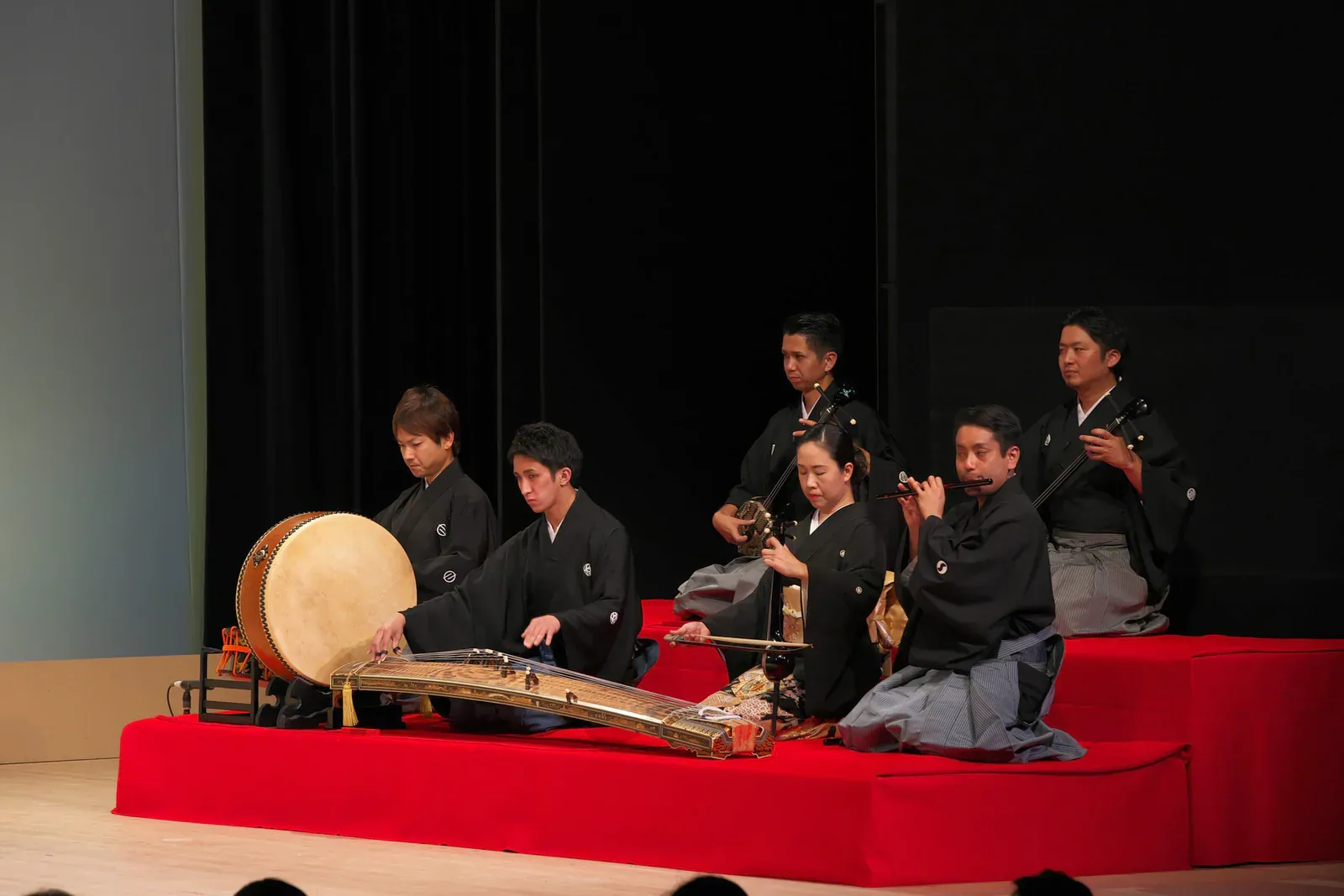
That court music was uzagaku, the chamber music of the royal palace at Shuri Castle, performed by bureaucrats as an official duty. Its texture is heterophonic, each accompanying instrument varying the single vocal line. Musicians wrote sanshin music in kunkunshi, a tablature believed to have been developed by Mongaku Terukina or his student Choki Yakabi in the early to mid 1700s and standardised by the end of the 19th century. The samurai class saw village song as low culture, and the two branches grew apart.
Prefecture and first records, 1879-1944
The kingdom was abolished in 1879, and with it court patronage ended. Some former Shuri samurai carried the capital’s refined culture into the countryside. Folk song itself gained a better reputation through the rise of folklore studies led by Yanagita Kunio.
Recording followed the emigrants. Choki Fukuhara founded the Marufuku label in Osaka, a city with many Okinawan residents, in 1926 or 1927 by different accounts, and it is described as the first company devoted to Okinawan folk music.
Postwar golden age, 1945-1971
The Battle of Okinawa in 1945 killed at least 149,000 islanders by the local authorities’ count. In the decade after it, public radio began broadcasting from Okinawa, and singers such as Rinsho Kadekaru, Shoei Kina, Shotoku Yamauchi and Shuei Kohama led what is called a golden age of folk music. Kadekaru made his first formal recording in 1950, although it was not released until 1958. He built a repertoire of over a thousand songs, and his style became known as Kadekaru-bushi.
The Ryukyu Folk Music Association was founded in 1962, and Kadekaru’s first LP appeared in 1965. In the same decade Tsuneo Fukuhara, who debuted in 1961, wrote pieces such as Bashofu in 1965, mixing the island style with classical music, rhythm and blues and bossa nova. American rock had reached the islands with the end of the war, and many musicians began to blend native instruments and folk style with it.
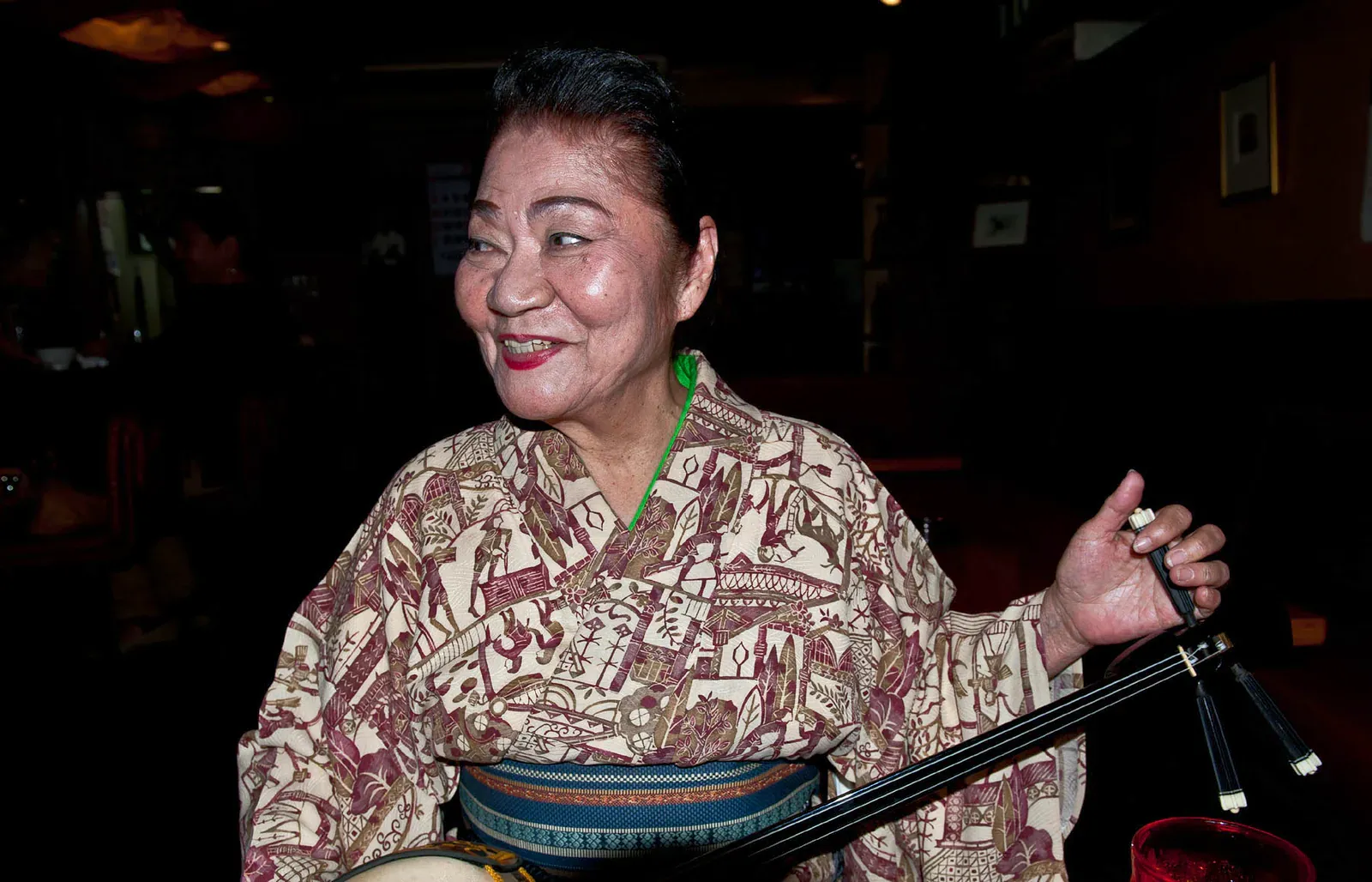
Reversion and island folk rock, 1972-1989
When the American occupation ended in 1972, interest in Okinawan music surged across Japan. Shoukichi Kina, born in Koza in 1948, had a first big hit that year with Haisai Ojisan, written while he was still at high school. With his band Champloose he played electric sanshin, and their self-titled 1977 album remains a classic of Japanese folk rock. Their ballad Hana, sung by Kina’s wife Tomoko, became a favourite in many Asian countries,.
Rinken Band formed in 1977 under Rinken Teruya, son of the folk singer Rinsuke Teruya. It joined folk song, pop and the celebratory eisa tradition, and its 1985 hit Arigatou widened the audience for the island sound. Composers such as Sadao China and Seijin Noborikawa wrote new min’yo in the older style, often heard in pop arrangements.
Okinawa pop, 1990 onward
In 1990 Sadao China formed Nenes, four women singing folk songs in traditional costume with sanshin. They toured Europe and played New York in 1994, and an independent release led to a Sony contract and a collaboration with Ryuichi Sakamoto. In May 1994 Luaka Bop released Asia Classics 2: Peppermint Tea House, a Kina compilation with Ry Cooder on many tracks, that introduced him to overseas listeners.
The trio Begin, three friends from Ishigaki who first used the name at a friend’s wedding on 5 December 1988, brought the sound to television. Their song Nada Soso, written with the singer Ryoko Moriyama, was first released by Moriyama in 1998. Rimi Natsukawa covered it as her third single in March 2001. The record sold very slowly: it first entered the Oricon top 100 in May 2002, reached number 8 after a New Year Kohaku Uta Gassen performance, and stopped charting six years after release with over 680,000 copies sold.
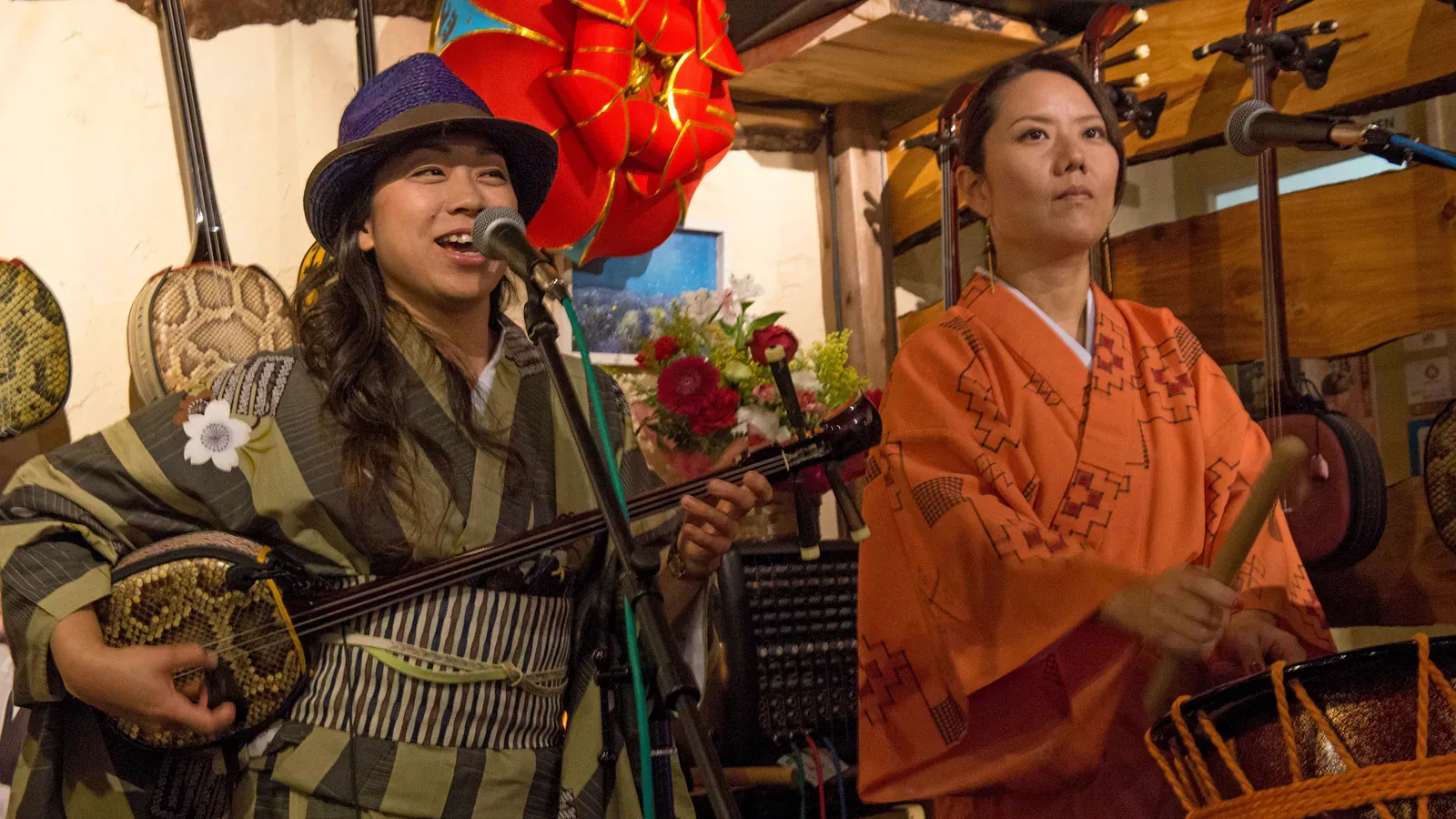
Characteristics
Okinawan music uses a different set of scales from the mainland. The chief mainland pentatonic scale avoids half steps by leaving out the fourth and seventh degrees. Okinawan tunes instead use degrees 1, 3, 4, 5 and 7, or a six-note version with the second degree added, and half steps fall between the third and fourth and between the seventh and the first. The interval from the seventh degree up to the first is common enough that a folk tune can often be recognised as Okinawan by its presence.
Songs are usually a solo voice with sanshin, answered by a chorus called hayashi that sings refrains or interjects shouts. Dance music such as eisa and kachashi has its own styles, and finger whistling is common in both.
Instruments and production
The sanshin is played with a plectrum of buffalo horn, a guitar pick or a fingernail, and has five traditional tunings called chindami. Percussion includes shime-daiko and hira-daiko drums, the small paranku hand drum, sanba clackers and yotsutake bamboo strips. Classical ensembles add the kutu, an Okinawan koto, the kucho fiddle and the fue flute. Okinawa pop blends these native instruments with those of American pop and rock, and Kina’s electric sanshin was the best-known step in that direction. The electronic duo Ryukyu Underground, formed in 2002, blends classical and folk material with dub.
Notable recordings
Haisai Ojisan, whose title means “Hey, old man”, was written by Kina in high school and stays the typical example of new min’yo. Later recordings run faster than the 1972 original. Shimanchu nu Takara began with an argument at Ishigaki Middle High School in 2001 over whether the graduation song should be My Way or Yaya by Southern All Stars, and the singer Eisho Higa asked classmates what Ishigaki meant to them. The answers, grandparents and the sea, kept returning to the word treasure. The song, released on 22 May 2002, reached number 47 on the Oricon weekly chart and became an Okinawan emblem through its sanshin and eisa-style chanting.
Culture
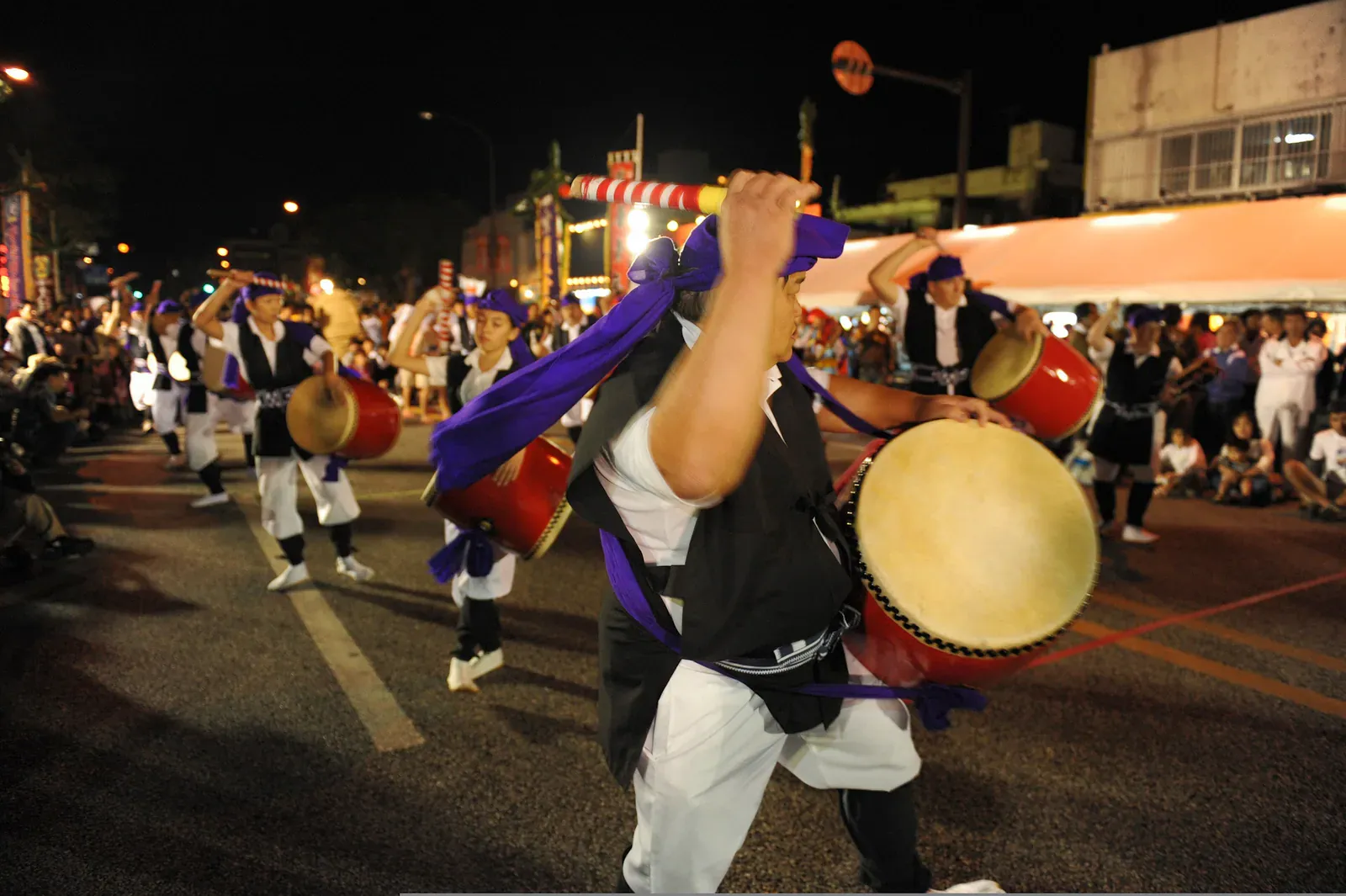
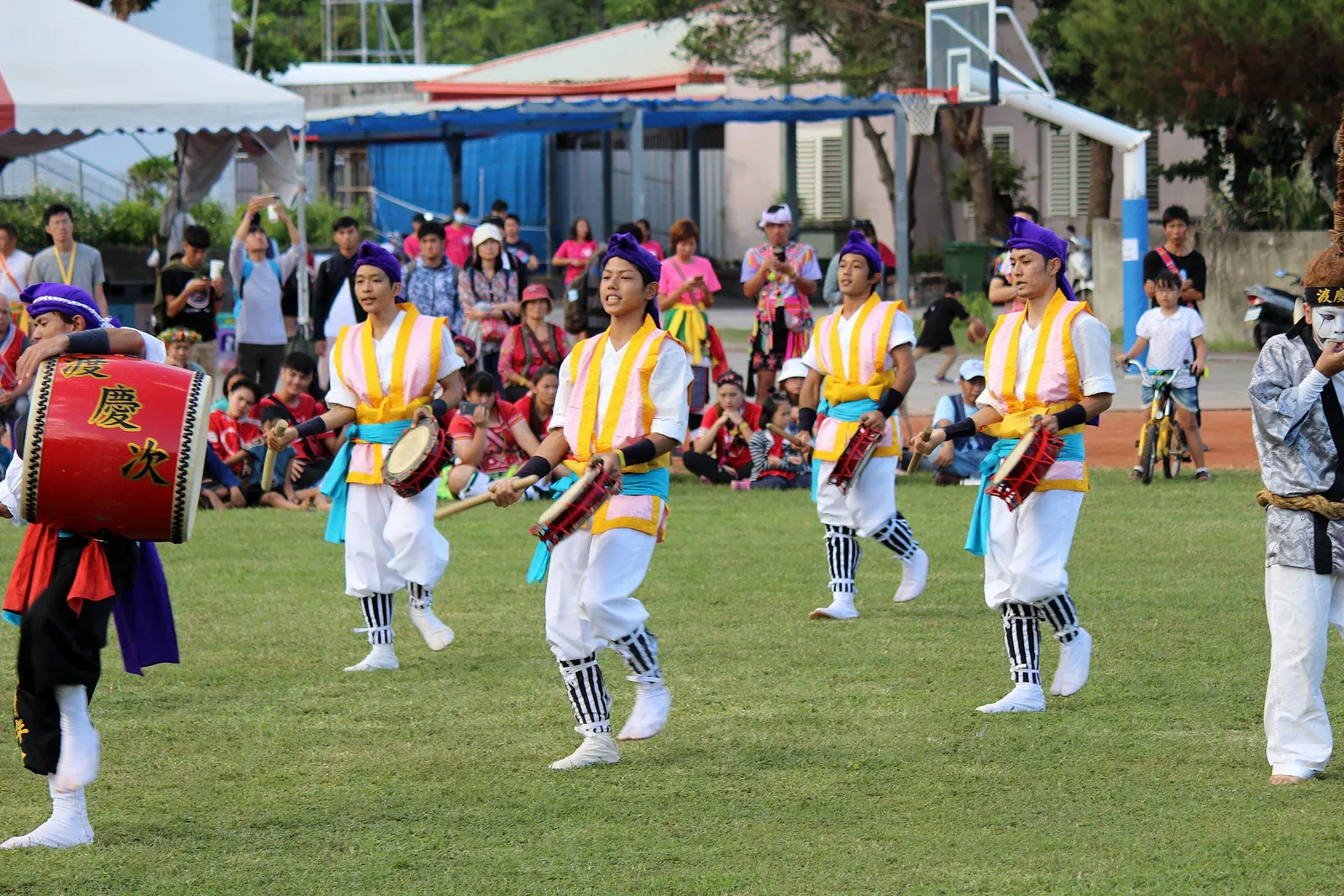
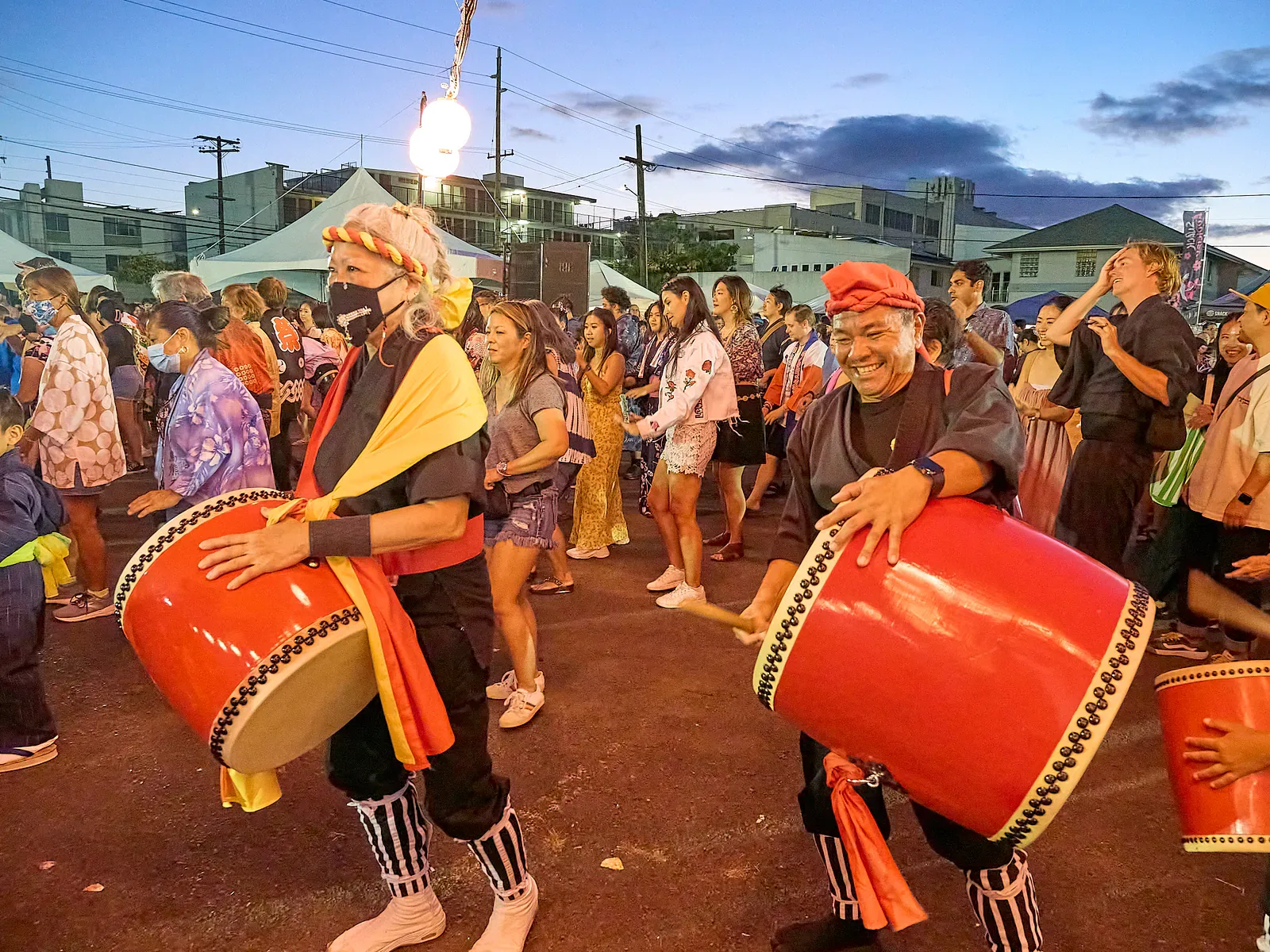
Eisa is a festival dance accompanied by drums and chanted shouts. Kachashi is a lively dance with its own music style. Most Okinawan homes keep a sanshin for family gatherings, weddings, birthdays and community festivals, and it is often treated as carrying the voices of the deities.
Legacy
Since reversion the popular branch has kept growing beside the folk and classical ones: pop singers sell folk-style songs nationally, and electronic acts such as Ryukyu Underground rework the repertoire. The word shima-uta, borrowed in the 1970s from the neighbouring Amami Islands, is often applied to new Okinawan folk song, though some listeners reserve it for Amami.
Misconceptions
Okinawan folk music is sometimes described as a regional form of mainland min’yo. Its scales differ in their half steps, its main instrument is the sanshin rather than the shamisen, and it grew from a separate kingdom’s tradition. The Okinawan sanshin is also the precursor of the shamisen, not a copy of it.
Another belief is that shima-uta is simply the word for Okinawan folk song. The term is a regional brand of the Amami Islands, borrowed by Okinawa in the 1970s, and people who see it as Amami’s own object to its use for Okinawan music.
Frequently asked questions
What is Okinawan music?
Okinawan music is the song tradition of the Ryukyu Islands, usually described as classical court music, folk song and popular music, played mainly on the sanshin.
What instrument is Okinawan music known for?
The sanshin, a three-stringed snakeskin-covered lute descended from the Chinese sanxian, plucked with a plectrum on the index finger.
How is Okinawan music different from mainland Japanese folk music?
It uses a pentatonic scale on degrees 1, 3, 4, 5 and 7 with many half steps, while the mainland scale avoids half steps, and it has its own instruments, tunings and vocal style.
Who are the best-known Okinawan musicians?
Shoukichi Kina, Rinken Band, Nenes, Begin and Rimi Natsukawa, with Rinsho Kadekaru the postwar folk master.
Sound
Sound sheet
Signature sounds
- Sanshin as lead instrument, plucked with a plectrum
- Pentatonic scale with half steps, 1 3 4 5 7
- Chorus of hayashi answering the singer
- Finger whistling and shouts in dance tunes
Drums and percussion
- Paranku
- Sanba
- Yotsutake
Techniques
- Plectrum sanshin
- Heterophony
- Hayashi chorus
- Yubi-bue
Keys and modes
Okinawan pentatonic. Scale degrees 1 3 4 5 7 with half steps between 3 and 4 and between 7 and 1, the interval that marks a tune as Okinawan.
Okinawan hexatonic. The pentatonic with the second degree added, 1 2 3 4 5 7.
Tuning
Sanshin standard tuning hon choshi is C3 F3 C4, with four other chindami
Vocals
Solo singer with sanshin, answered by a chorus; Okinawan or standard Japanese lyrics, often in the 8-8-8-6 ryuka form.
Scenes
Where it happened
Where and when the sound lived: one bar per city on a shared timeline.
Asia
Active scenes
Peak 3, 1988-2025
Home to many Okinawan emigrants, where the Marufuku label pressed the first folk records.
Birthplace of Shoukichi Kina and base of the island's home-grown folk-rock scene of the 1970s and 1980s.
Yaeyama Islands town where the three members of Begin, friends since school, formed the band.
Culture
Culture markers
- Eisa
Festival dance with drums and chanted shouts, with music written in folk and pop styles.
Dance - Kachashi
Fast celebration dance whose tunes include finger whistling.
Dance - Sanshin in the home
Most Okinawan homes keep a sanshin for family gatherings, weddings and festivals, and it is treated with deep respect.
Ritual
Media
Key media
- 2006Nada Soso
by TBS. Film tied to the Nada Soso Project, which also produced two TV dramas in 2005.
Film
Glossary
Terms on this page
One of five sanshin tunings, such as standard hon choshi (C3 F3 C4).
Okinawan festival dance accompanied by drums and chanted shouts.
Okinawan dance with its own music style, like eisa.
Shouts interjected by hayashi, the chorus that answers folk singers.
Classical branch of Okinawan music, descended from court chamber music at Shuri Castle.
Japanese term for folk song; in Okinawa it names the branch opposite koten, the classical court tradition.
East Asian family