Russian folk music
Russian folk music is the village song and instrumental tradition of ethnic Russians, built on chest-voice choirs, the balalaika, domra, gusli and bayan.
Russia, around 1000
European folk family
Born
around 1000
Russia
Subgenres
3
Documented branches
Links
5
Genres it drew on or shaped
Tempo
70-170 BPMLineage
Family tree
Timeline
Era by era
From the first sparks to today. Select a dot to read the story behind it.
- Village song and skomorokhi
1000 to 1879
- Instrument and choir movements
1880 to 1917
- State ensembles
1918 to 1972
- Authentic revival and crossover
1973 to today
Eras
Moments
- 1 Village song and skomorokhi, 1000 to 1879
- 2 Instrument and choir movements, 1880 to 1917
- 3 State ensembles, 1918 to 1972
- 4 Authentic revival and crossover, 1973 to today
around 1000
Village song and skomorokhi
Sung epics, lyric songs and ritual songs live in village life, with wandering skomorokhi entertainers until the Tsar bans their instruments in 1648.
- 1648Tsar Alexis bans instrumentsThe Tsar bans the skomorokhi and their instruments, cutting off the Russian instrumental tradition for generations.
- 1870The chastushka crystallizesAfter the abolition of serfdom, short rhymed four-line songs spread among peasants and factory workers.
1880
Instrument and choir movements
Vasily Andreyev standardizes the balalaika and builds the first orchestra of Russian instruments, while Mitrofan Pyatnitsky puts a peasant choir on the concert stage.
- 1880Andreyev concert balalaikaVasily Andreyev and the violin maker V. Ivanov develop the standardized balalaika in the 1880s.
- 1888First orchestra of Russian instrumentsInspired by a mandolin orchestra, Andreyev assembles balalaikas of several sizes into an ensemble that grows into a full orchestra.
- 1910Pyatnitsky founds his choirMitrofan Pyatnitsky gathers 18 peasants from Voronezh, Ryazan and Smolensk; the first concert follows on 2 March 1911 in Moscow.
1918
State ensembles
The Soviet state funds folk choirs, orchestras and dance companies, from the Osipov orchestra to the Alexandrov Ensemble, and professionalizes performers at the cost of village practice.
- 1919Osipov orchestra foundedThe balalaika player B. Troyanovsky founds the orchestra later named after Nikolai Osipov, who led it from 1940.
- 1928Alexandrov Ensemble foundedThe Red Army song ensemble, later known worldwide as the Red Army Choir, is formed in Moscow.
- 1932Resolution on musical literacyA Central Committee resolution prescribes musical literacy, and authentic village performance practice declines markedly afterwards.
- 1960Zykina goes soloLyudmila Zykina, a Pyatnitsky Choir member since 1947, starts a solo career that makes her the leading voice of Soviet folk song.
1973
Authentic revival and crossover
Conservatory-trained researchers return to village singers and styles, the Pokrovsky Ensemble tours the world, and festivals and the internet carry folk songs to new audiences.
- 1973Pokrovsky Ensemble foundedDmitri Pokrovsky and Tamara Smyslova found an ensemble that learns songs from village singers on research expeditions.
- 1987Earthbeat with Paul WinterThe Pokrovsky Ensemble joins the Paul Winter Consort for an album and tour that brings Russian village polyphony to Western audiences.
- 2016Alexandrov Ensemble air crashOn 25 December the artistic director Valery Khalilov and 63 other members of the ensemble die in a Black Sea aircraft crash.
Listening path
Start listening
A short path from an easy way in to the deep end. Thumbnails come from YouTube; the player loads only when you press play.
- 01
The Ossipov Balalaika Orchestra, 1996
The best-known Russian folk tune in a balalaika orchestra arrangement; listen for the slow start and the accelerating dance.
- 02
Balalaika Ensemble Wolga, 1996
A peddler's song for balalaika, domra and bayan; listen for the tremolo and the sharply accented strumming.
- 03
Paul Winter Consort with the Dmitri Pokrovsky Ensemble, 1987
Village-style chest voices in a crossover setting; listen for the open, shouted polyphony.
Facts
| Family | European folk |
| Origin | Russia |
| Status | Active |
| Tempo | 70 to 170 BPM |
| Meter | 2/4, 4/4 |
| Subgenres | 3 |
Russian folk music is the song and instrumental tradition of the ethnic Russian people, mainly vocal and rooted in village life.
It serves as the base of Russian professional music and covers three layers: authentic village singing, stage folklore arranged by professionals, and art music composed in a folk manner. Its sound rests on chest-voice singing, long lyric songs, short fast verses and instruments such as the balalaika, domra, gusli and bayan.
Origins
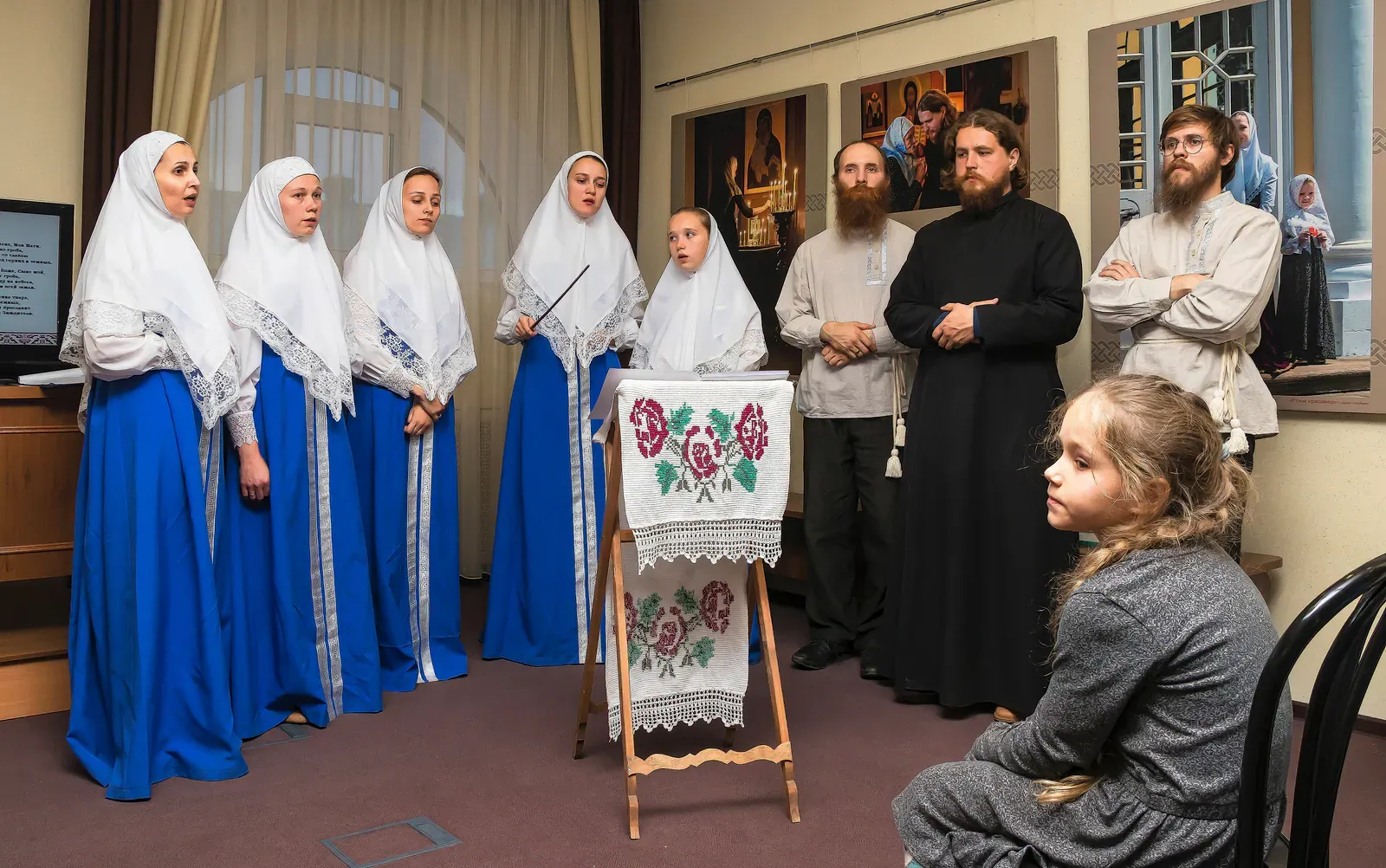
Authentic Russian folk song was sung from morning to night and followed the four seasons and the events of village life: weddings, harvests, funerals and feasts. Singers were usually not professionals, and most villagers could not read notation, so songs passed from person to person. Church services, in which much of the liturgy is sung, formed a second source of melody and of habits of collective singing.
Instruments were rare and often under suspicion. The wandering entertainers called skomorokhi played and sang material the Orthodox Church judged obscene, and in 1648 Tsar Alexis banned their performances and their instruments. The ban cut the instrumental line of the tradition for generations, while the sung forms carried on. Three of them have a page of their own in the genre tree: the bylina, an oral epic about bogatyr heroes such as Ilya Muromets, sung to the gusli; the protyazhnaya, a drawn-out lyric song; and the chastushka, a quick rhymed four-line verse.
Folk instruments and choirs, 1880-1917
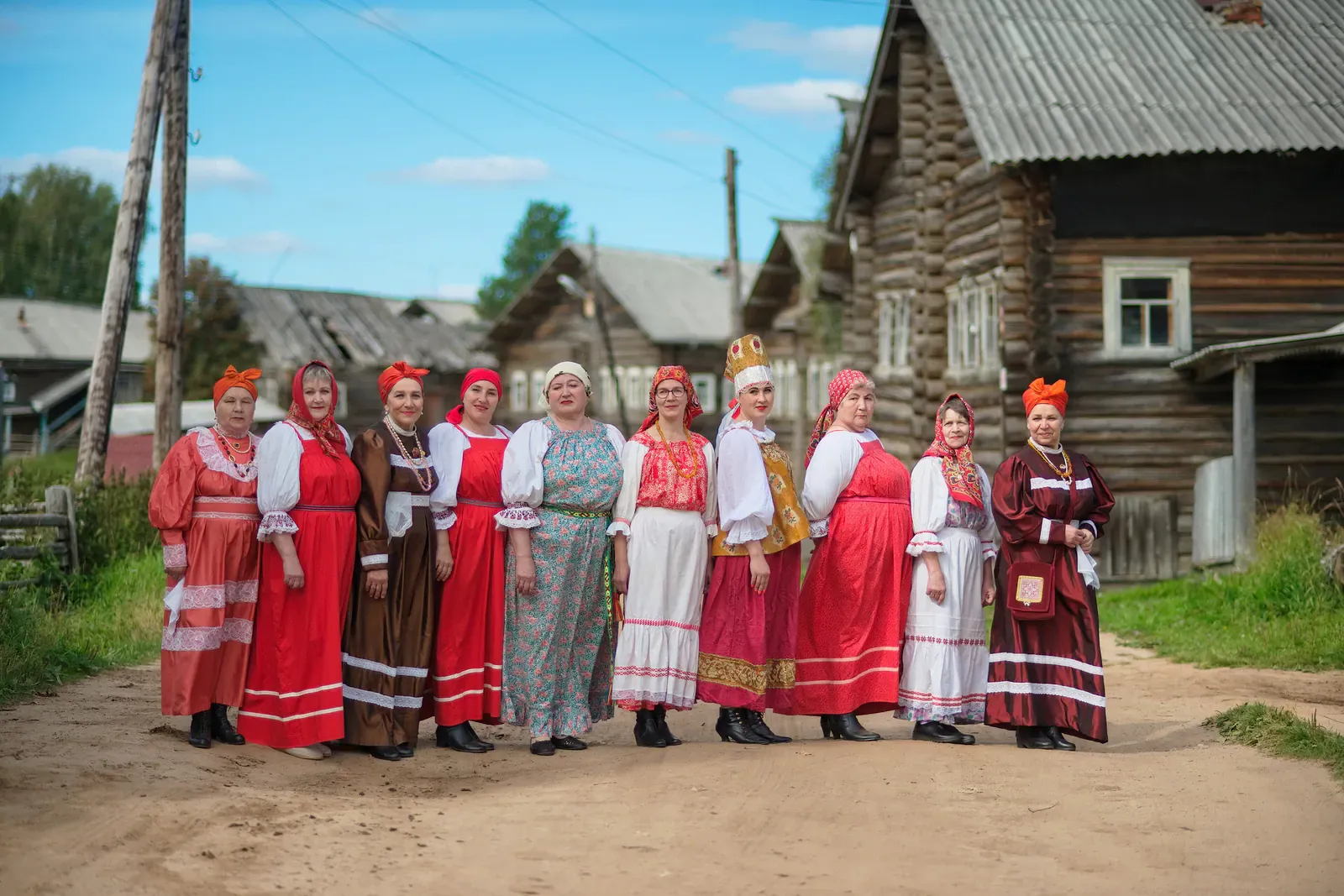
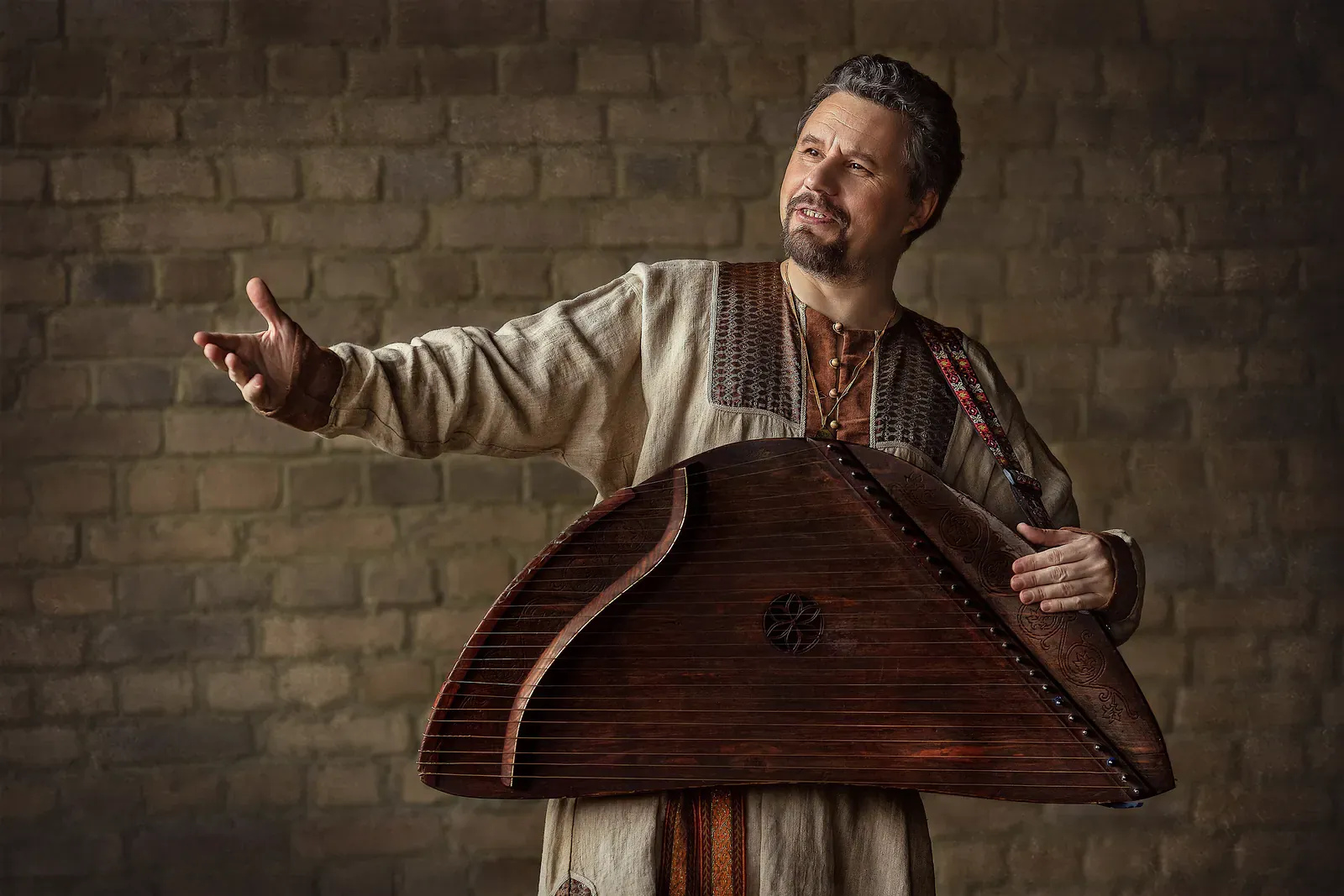
In the 1880s the violinist Vasily Andreyev, who played in St Petersburg salons, heard a peasant playing the balalaika and set out to turn it into a concert instrument. With the violin maker V. Ivanov he developed a standardized balalaika, and another St Petersburg maker later added a fully chromatic set of frets and the orchestral sizes still used. Inspired by a mandolin orchestra, Andreyev then assembled balalaikas of different sizes into an ensemble that grew into the first orchestra of Russian instruments. He also revived the domra and the gusli and arranged many folk songs for his players. A tour to the Paris world exhibition made the group famous.
The same years produced the folk choir movement. In 1910 the collector Mitrofan Pyatnitsky gathered 18 peasants from Voronezh, Ryazan and Smolensk provinces into a choir, which gave its first concert in a Moscow hall on 2 March 1911. Its chest-voice singing, developed by Pyatnitsky and by the Ukrainian choir director Demutsky in the early 1900s, was praised by Rachmaninoff and Chaliapin. The singer Nadezhda Plevitskaya, born in 1884, was a popular folk singer of the period and later lived in exile.
State ensembles, 1918-1972
After the revolution the new state supported folk art, and the Pyatnitsky chorus moved to Moscow in 1918. Lenin is recorded as urging it to perform in concert halls and factories. Larger institutions followed: the orchestra founded in 1919 by the balalaika player B. Troyanovsky and renamed after Nikolai Osipov in 1940, and in 1928 the army song ensemble that later took the name of its first director, Alexander Alexandrov, and became known abroad as the Red Army Choir.
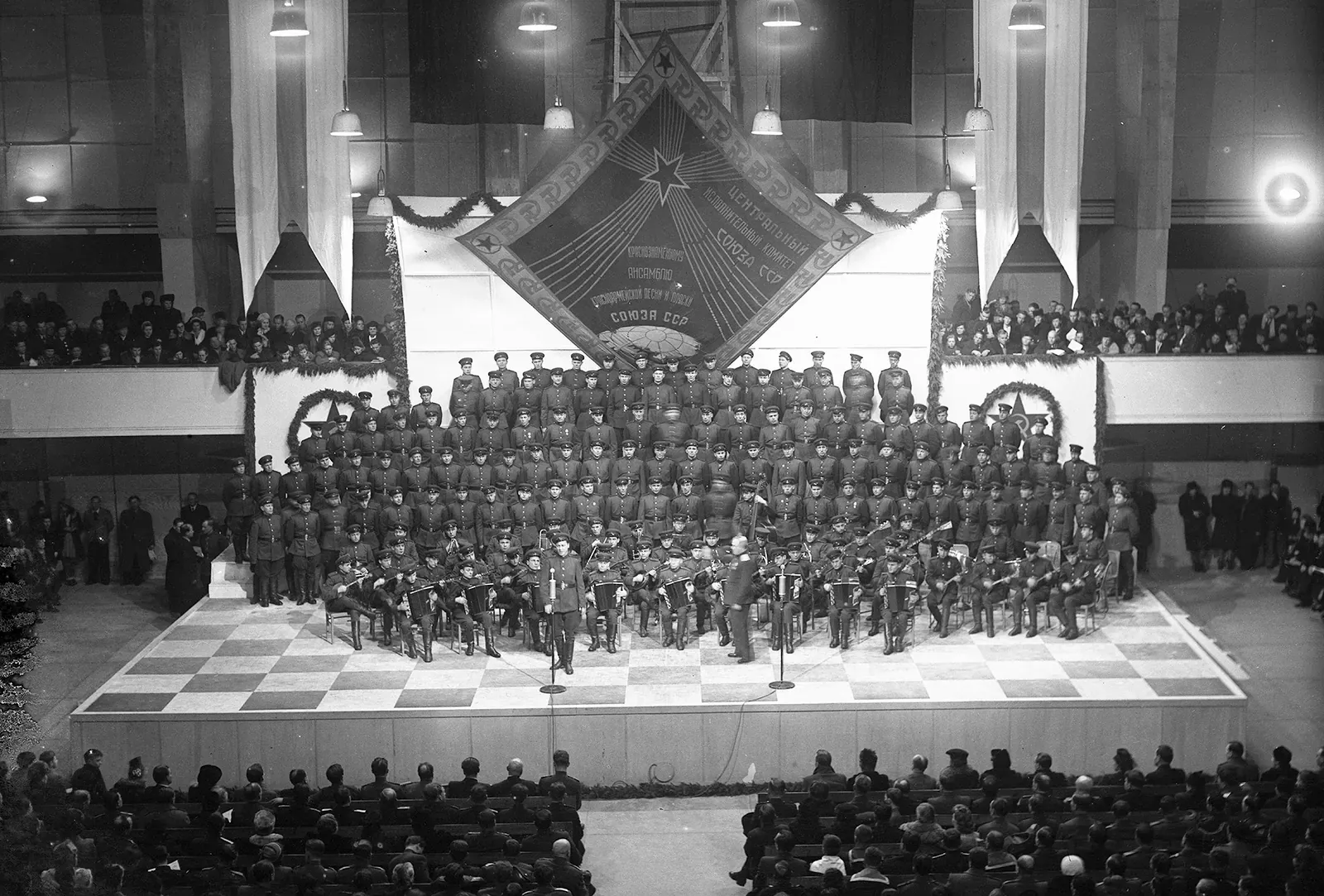
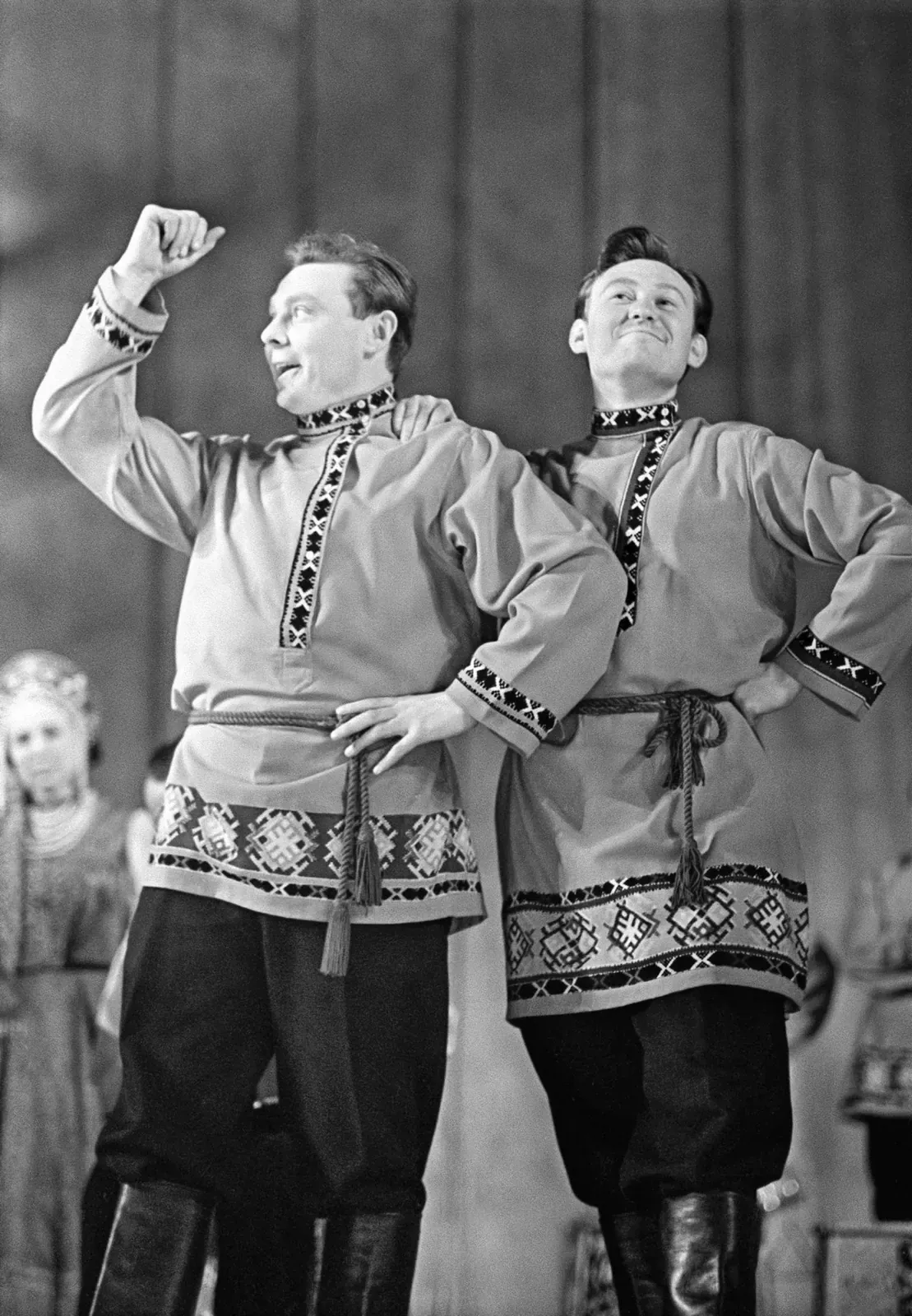
The cost was authenticity. A Central Committee resolution of 1932 prescribed musical literacy, and village performance practice declined markedly afterwards. Regional styles and religious parts were cut from songs, texts were made more patriotic or simpler, and singers were required to learn Western notation and classical repertoire to count as professionals. Folkloric ensembles performed polished versions in stylized costumes, and staged Cossack squatting dances in perfect synchrony, a convention closer to ballet than to actual Cossack custom. Observers sometimes call the result “fakeloric”.
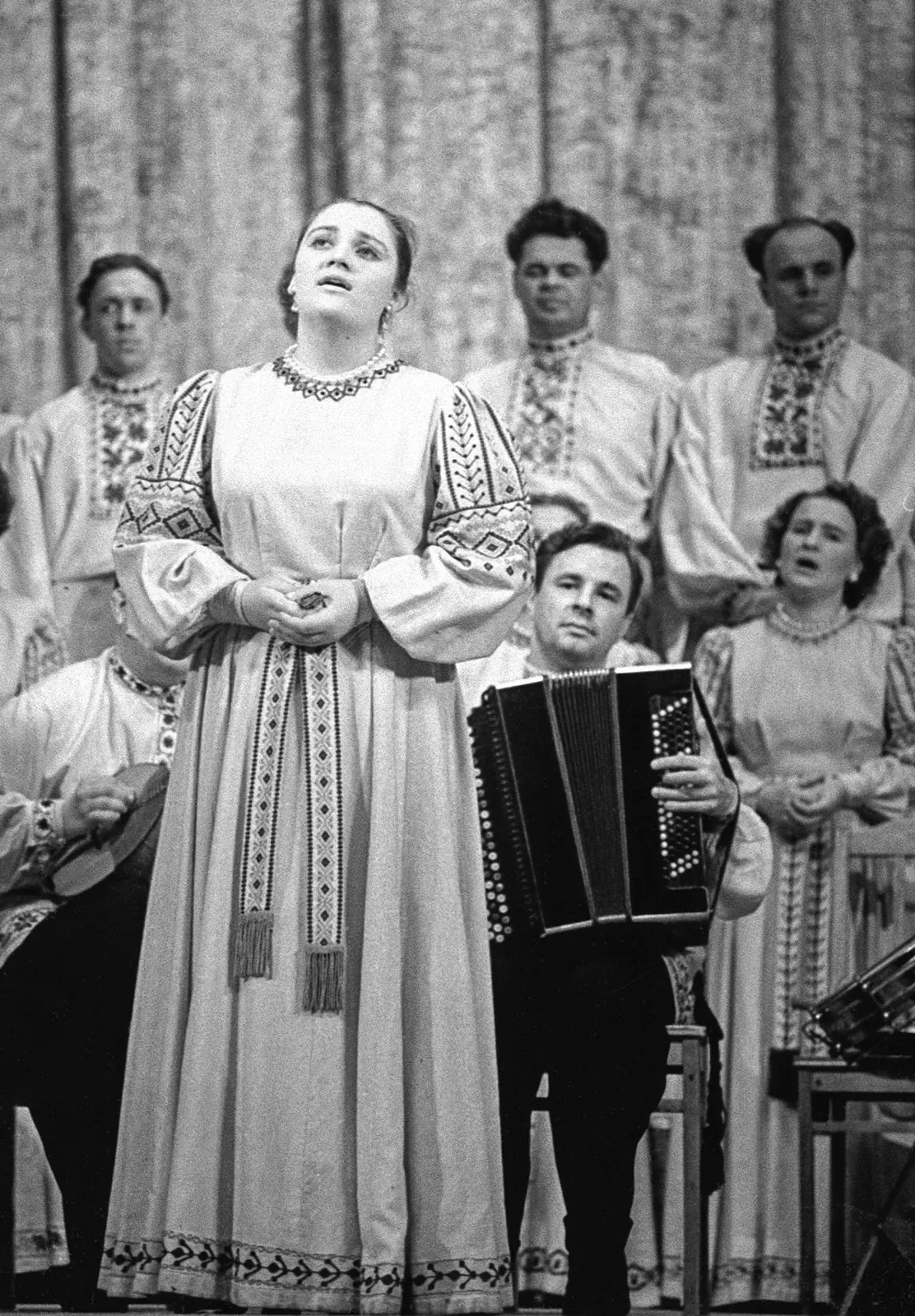
Folkloric music nevertheless kept wide support after the Second World War and, in the 1960s, was promoted as the counterpart of Western pop. Foreign tours raised the status of folk performers, in some cases above academic musicians. In this setting Lyudmila Zykina, a member of the Pyatnitsky chorus from 1947 and a soloist from 1960, became the best-known voice of the long lyric song, with Techot Volga and Orenburgskiy platok as signature pieces.
Characteristics
Authentic village singing uses the chest register almost exclusively and is often called white voice. It is described as controlled shouting, with a narrow range of an octave to about a dozen notes for women. Songs carry refrains and calls: women sing ay luli luli, singers of both sexes add opa, and whistling often marks a high note. Slow lyric songs have free rhythm and asymmetrical phrases, with tonal ambiguity between modal and minor centers, while chastushki and dances are fast and square in meter. Overall tempos run from about 70 beats per minute in the long songs to about 170 in fast arrangements of tunes such as Kalinka.
Instruments and production
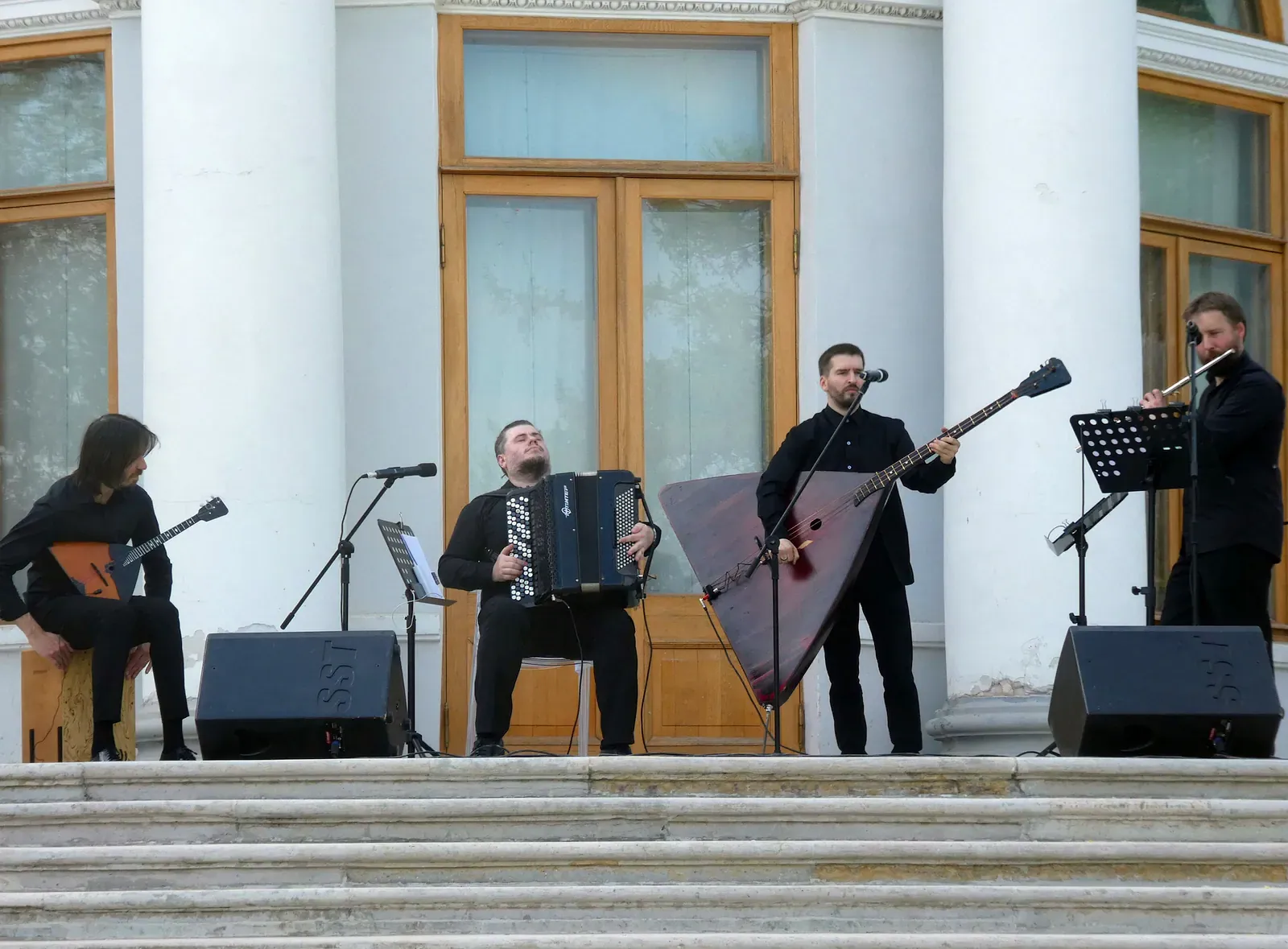
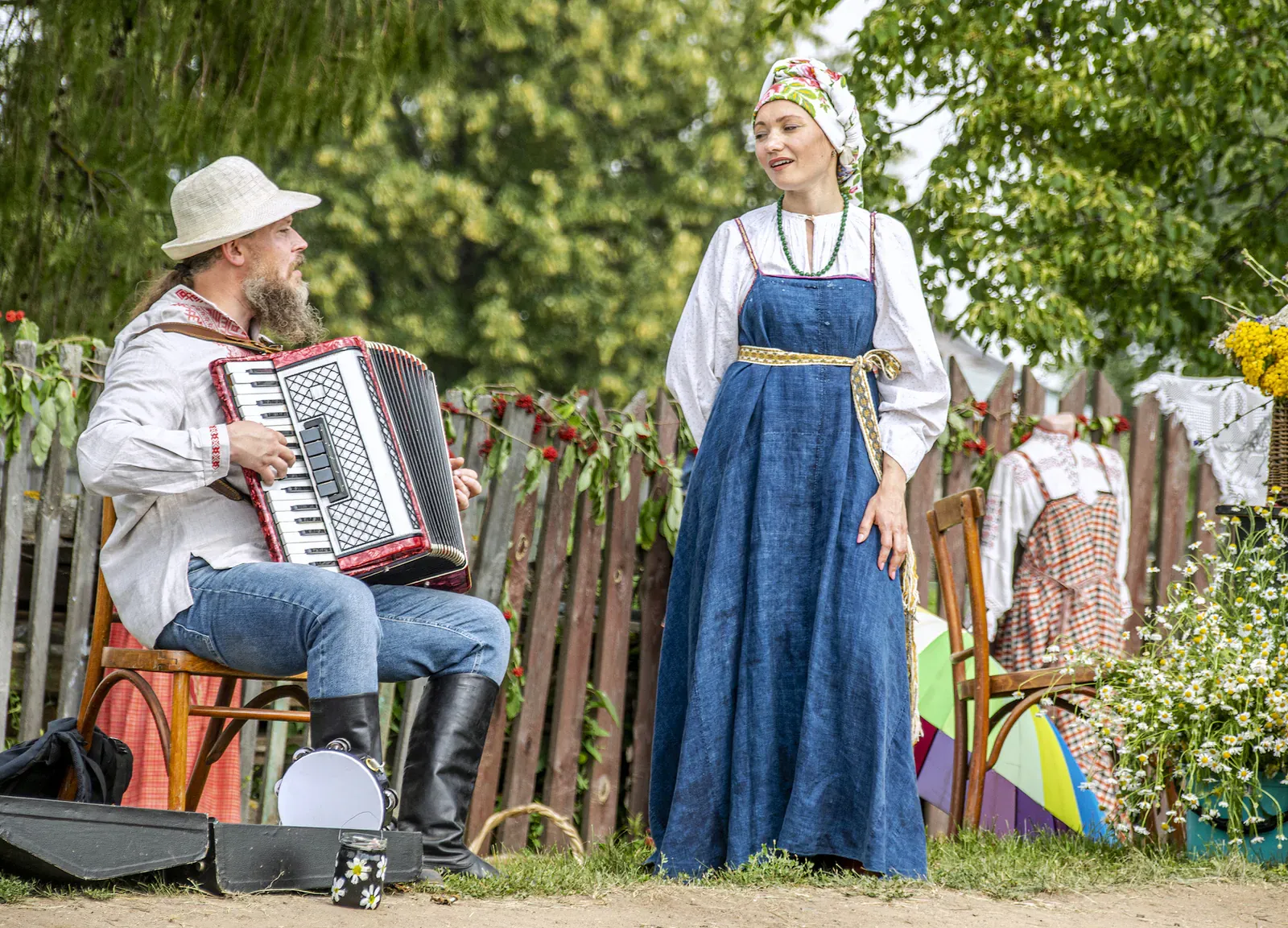
The balalaika family runs from piccolo to contrabass, with the prima most common. Notes die away quickly, so melodies are played with rapid strumming or plucking. The domra has a round body and is played with a plectrum, the gusli is a plucked psaltery with many regional types, the gudok is a small bowed instrument tuned in fifths, and the seven-string guitar uses an open G major tuning. The bayan, a chromatic button accordion, supplies chords and fills in ensembles. Orchestras of folk instruments follow academic playing techniques and score arrangements, which is why some conservatory-trained players question how far this music is truly folk.
Revival and reach
From 1973 the Dmitri Pokrovsky Ensemble in Moscow went on research expeditions to learn songs from village singers and staged them with their original voices, in contrast to the polished state style. Its Russian Folk Polyphony appeared on Melodiya in 1978. In 1987 it joined the Paul Winter Consort for the album Earthbeat and a tour, and its album The Wild Field followed on Real World in 1991. Musicologists at the Moscow Conservatory taught authentic performance, and singers such as Zhanna Bichevskaya, Olga Arefieva and Elena Frolova took up songs with religious content.
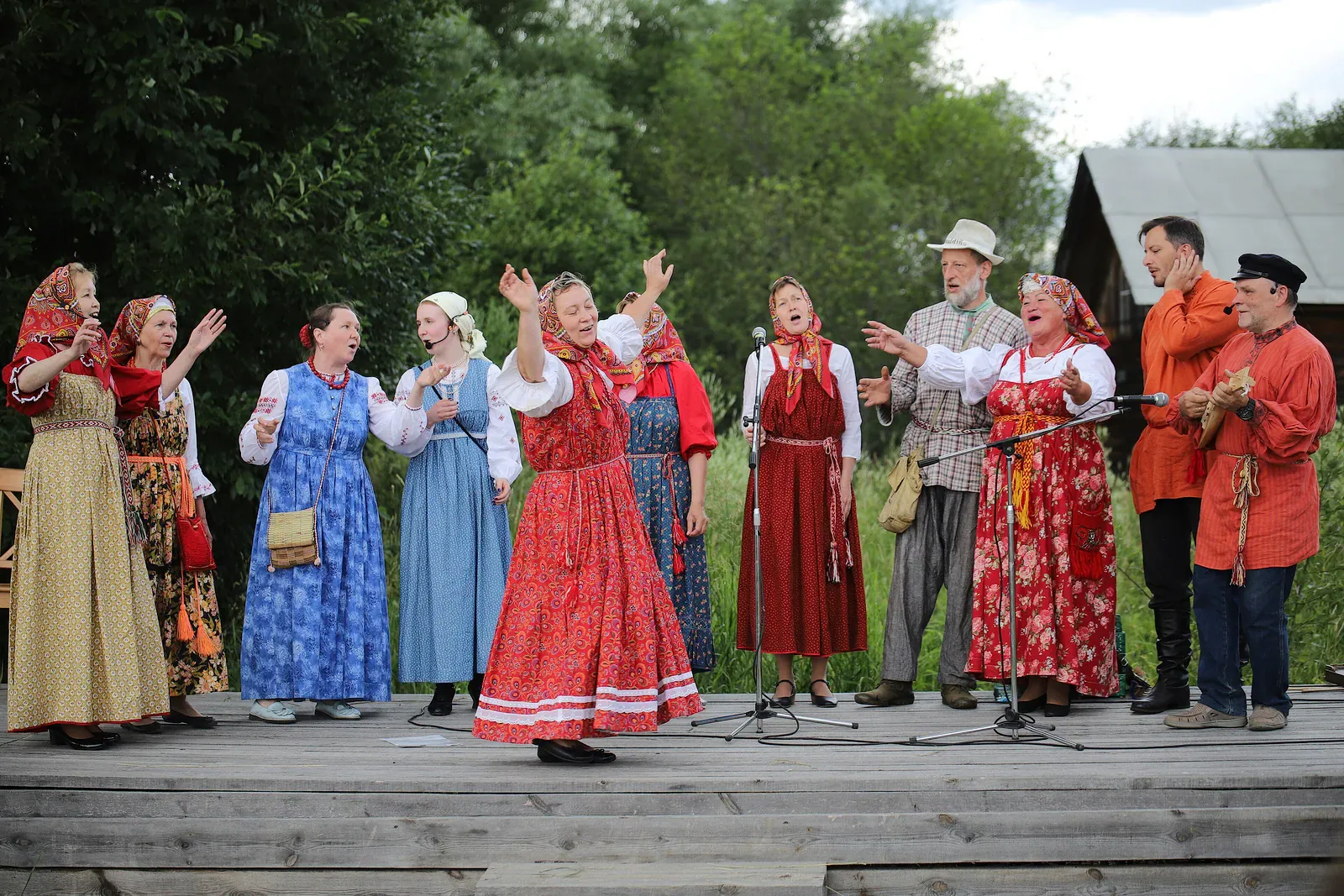
Today festivals and online video carry the tradition. Groups such as Yat-Kha, which pairs rock with throat singing, and Narechie work at its edges, and the singer Pelageya recorded folk songs in rock arrangements.
Mainstream success
Russian folk music has reached listeners abroad mainly through ensembles. The Red Army Choir and the Pyatnitsky chorus toured widely, and the Osipov orchestra has recorded many albums of balalaika favorites. Kalinka, written in 1860, became the best-known Russian folk tune in the world through these arrangements, with a slow beginning that speeds up to a dance. The Melodiya label issued much of the Soviet-era repertoire, including recordings of Zykina. The Alexandrov Ensemble lost its artistic director Valery Khalilov and 63 members in an aircraft crash on 25 December 2016.
Legacy
The tradition supplied melodies and instruments to Russian classical music and to the popular genres that followed. It also set a long-running argument between faithful reproduction of village practice and polished stage versions, which the Pokrovsky Ensemble and the revival of the 1970s reopened. The wider genre tree places it in European folk, next to related regional traditions such as the Ukrainian kobzar tradition and Baltic folk music.
Misconceptions
Staged versions are often taken for village practice. The synchronized squatting dances and uniform choirs known abroad come from Soviet professional ensembles, and the authentic form is the rougher chest-voice singing recorded by researchers in the villages.
The balalaika is not an ancient peasant instrument in its modern shape. Its standardized concert form dates from Andreyev’s work in the 1880s, and the orchestral sizes came a few years later.
Russian folk music is not the same as the folk music of all peoples in Russia. The country has about 300 ethnic groups, many of them non-Slavic, and the genre here covers only the ethnic Russian tradition.
Frequently asked questions
What is Russian folk music?
Russian folk music is the traditional song and instrumental music of ethnic Russians. It includes authentic village singing, arranged stage folklore and art music in a folk style, played on the balalaika, domra, gusli and bayan.
What is white voice singing in Russian folk music?
White voice is the chest-register village style, often described as controlled shouting, with a narrow range. Folk choirs such as the Pyatnitsky chorus developed it into a concert style in the early 1900s.
Who created the modern balalaika?
Vasily Andreyev developed the standardized concert balalaika in the 1880s with the violin maker V. Ivanov, and later built the first orchestra of Russian folk instruments around it.
What is the best-known Russian folk song?
Kalinka is the best-known tune abroad, chiefly through the Red Army Choir and balalaika orchestras. In Russia, Techot Volga and Orenburgskiy platok are closely tied to the singer Lyudmila Zykina.
Sound
Sound sheet
Anatomy of a track
| # | Part |
|---|---|
| 1 | Slow free-rhythm lyric verse |
| 2 | Verse and refrain with calls and exclamations |
| 3 | Accelerating dance section |
Signature sounds
- Chest-register white voice
- Balalaika and domra tremolo
- Refrains such as ay luli and exclamations such as opa
- Slow start that speeds up in Kalinka-style arrangements
Techniques
- White voice
- Village polyphony
- Rapid strumming and tremolo
- Calls and whistling
- Melismatic drawn-out singing
Keys and modes
Modal and ambiguous minor. Slow lyric songs shift between modal and minor centers with asymmetrical phrases.
Tuning
Balalaika: two strings in unison and the third a fourth higher; seven-string guitar in open G major
Vocals
Chest-voice solo, unison and polyphonic choir singing, often with refrains and calls
Scenes
Where it happened
Where and when the sound lived: one bar per city on a shared timeline.
Europe
Active scenes
Peak 3, 1911-2025
Home of the Pyatnitsky Choir, the Alexandrov Ensemble, the Osipov orchestra and the Pokrovsky Ensemble.
City where Andreyev played in salons and built the concert balalaika and the first folk instrument orchestra.
Home region of many of the 18 peasant singers in Pyatnitsky's first choir.
Venues and places
Moscow, 1911 to today. Hall of the House of the Unions where the Pyatnitsky Choir gave its first concert on 2 March 1911.
Moscow, 1973 to today. Home of the folk music faculty where Dmitri Pokrovsky taught authentic village performance.
Culture
Culture markers
- Staged Cossack prisiadka
Squatting dance performed in perfect synchrony, closer to ballet traditions than to actual Cossack custom.
Dance - Stylized stage costumes
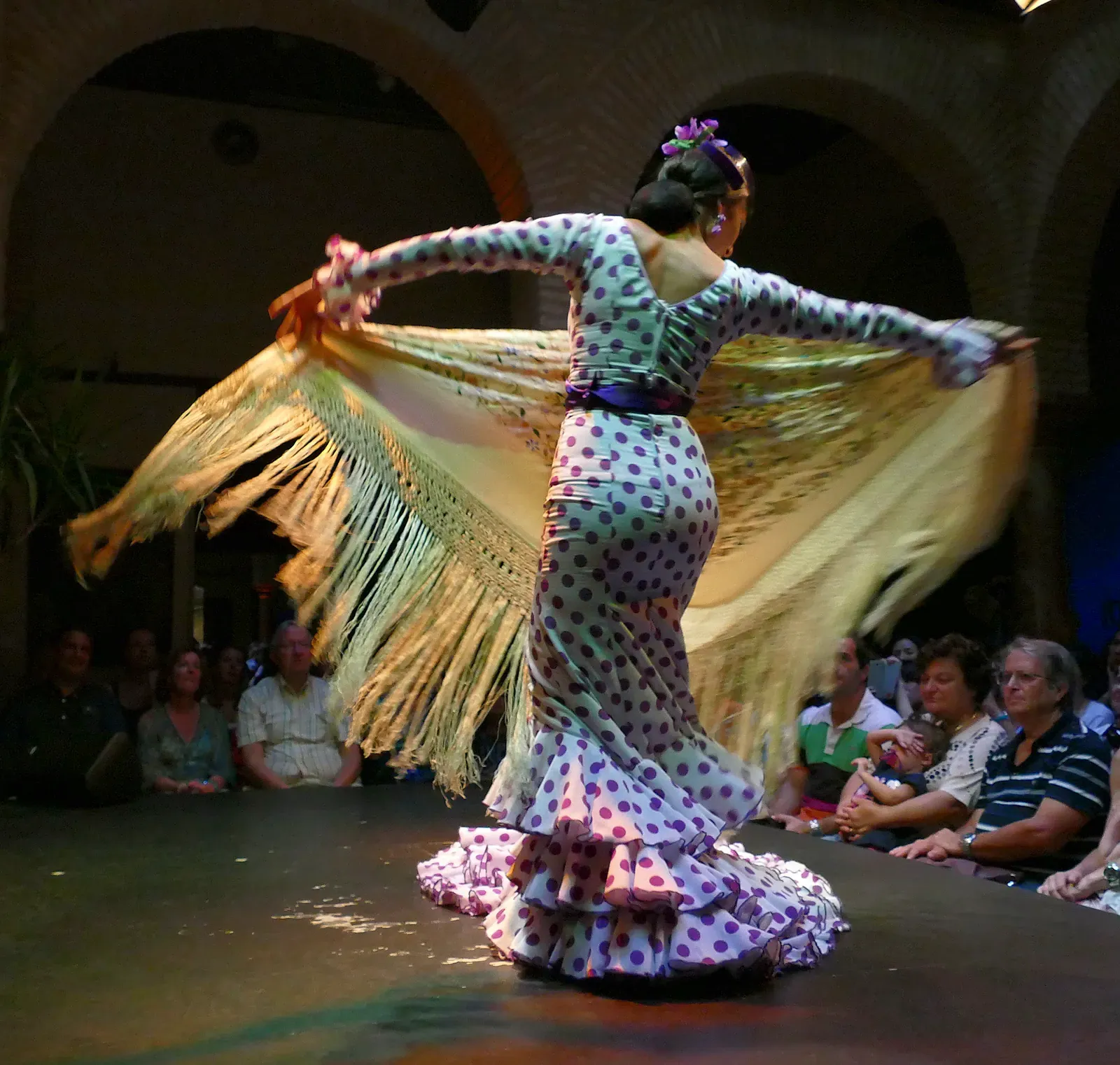
Costumes based on village dress and modified for the stage, worn by folk ensembles and dance companies.
Fashion - Calls and exclamations
Women sing ay luli luli, and singers of both sexes add opa, whistles and Cossack shouts.
Slang
Glossary
Terms on this page
Oral epic song about bogatyr heroes such as Ilya Muromets, sung to the gusli.
Fast four-line rhymed verse song of humor and satire, sung in long series to balalaika or accordion.
Low-squatting dance step, staged in synchrony by Soviet folk dance companies.
Drawn-out lyric song of longing with free rhythm and melismatic lines.
Wandering entertainers of medieval and early modern Russia whose music the Church and the Tsar suppressed in 1648.
Chest-register village singing, often described as controlled shouting, with a narrow range.
European folk family