Baila
Baila is Sri Lankan dance music in 6/8 time that grew from Afro-Portuguese kaffrinha and chicote, with a sung chorus and comic lyrics, popular since the 1960s.
Sri Lanka, 1505
South Asian family
Born
1505
Sri Lanka
Subgenres
4
Documented branches
Links
7
Genres it drew on or shaped
Tempo
100-130 BPMLineage
Family tree
Grew out of
Influenced by
Sri Lanka
Baila
Led to (4)
Timeline
Era by era
From the first sparks to today. Select a dot to read the story behind it.
- Chicote and kaffrinha
1505 to 1939
- Chorus baila
1940 to 1959
- Mainstream and the pop labels
1960 to 1979
- Cassettes and CDs
1980 to 1999
- Non-stop and electronic baila
2000 to today
Eras
Moments
- 1 Chicote and kaffrinha, 1505 to 1939
- 2 Chorus baila, 1940 to 1959
- 3 Mainstream and the pop labels, 1960 to 1979
- 4 Cassettes and CDs, 1980 to 1999
- 5 Non-stop and electronic baila, 2000 to today
1505
Chicote and kaffrinha
Portuguese Burghers and African Kaffirs in coastal Sri Lanka developed the slow chicote and the fast, jerky kaffrinha, played on violins, mandolins and rabana.
- 1505Portuguese arrive in CeylonPortuguese traders reach the island and begin converting people to Catholicism, setting up the contact from which baila grew.
- 1630African Kaffirs brought to the islandAfricans arrive as soldiers and slaves, and their humorous, satirical song and dance forms merge with Portuguese ones.
- 1879Kaffrinha reaches the stageC. Don Bastian brings kaffrinha into Sinhala theatre in the play Rolina Nadagama.
- 1894First written descriptionAdvocate Charles Matthew Fernando describes chicote as slow and stately and kaffrinha as faster, with a jerky movement.
around 1940
Chorus baila
Wally Bastiansz, a Colombo traffic policeman, added a sung chorus to the older debate form and wrote songs about everyday people in Sinhala.
around 1960
Mainstream and the pop labels
Baila entered national pop. M. S. Fernando, Sooriya Records, Radio Ceylon and calypso and Latin influences brought it to records, films and electric bands.
- 1960Baila enters the mainstreamPolice officer turned singer Wally Bastiansz brings Sinhala-language baila into national popular culture.
- 1967Tamil baila beginsNithi Kanagaratnam starts recording baila in Tamil.
- 1968Sooriya Records foundedGerald and Dulcie Wickremesooriya turn their Colombo bookshop into a label that records the pop bands and baila singers of the day.
- 1970The Gypsies formAnton Perera and his sons start a band in Ratmalana that later becomes the best-known baila act.
- 1973First Sinhala songs by the GypsiesLinda Langa Sangamaya and Amma Amma are released.
- 1976Dance With the Gypsies, Vol. 1The first of five late-1970s albums of dance-floor baila by the band.
1980
Cassettes and CDs
The Gypsies and others sold cassettes and then CDs of dance-floor baila and non-stop medleys, and the music settled into weddings, hotels and parties.
- 1980Kurumitto on cassetteThe Gypsies release their first cassette with the novelty hit Kurumitto, a Sinhala version of a Dutch children's song.
2000
Non-stop and electronic baila
Keyboards, drum machines and electronic production took over, with Bailatronic mixing baila and electronic music while older bands marked their jubilees.
- 2006Sri Lankan Open House PartyA non-stop CD of baila hits directed by Suresh Maliyadde is released in December.
- 2021Gypsies golden jubileeThe band marks 50 years with virtual concerts; lead singer Sunil Perera dies on 6 September.
Listening path
Start listening
A short path from an easy way in to the deep end. Thumbnails come from YouTube; the player loads only when you press play.
- 01
Gypsies, 1977
A dance-floor baila from the band's first decade; listen for the chorus answering the lead voice over a 6/8 beat.
- 02
Gypsies, 1997
The title song of the CD era, showing the keyboard and drum machine sound of late-century baila.
- 03
Gypsies, 2018
A recent release that shows baila still being recorded by its best-known band.
Facts
| Family | South Asian |
| Origin | Sri Lanka |
| Emerged | Developed after 1505, mainstream from the 1960s |
| Status | Active |
| Tempo | 100 to 130 BPM |
| Meter | 6/8 |
| Subgenres | 4 |
Baila (also bayila, from the Portuguese verb bailar, “to dance”) is a Sri Lankan dance music in 6/8 time with a sung chorus and humorous, topical lyrics.
It grew from the Afro-Portuguese song and dance forms of the island’s coast, reached the national mainstream in the 1960s, and now fills weddings, parties and hotel dances. It belongs to the South Asian family and shares its Caribbean flavour with calypso.
Origins
The Portuguese reached Ceylon in 1505 and began converting people to Catholicism. As early as 1630 Africans were brought to the island as soldiers and slaves, and their carefree, satirical song and dance met Portuguese traditions along the coast. Two forms came out of this mixing: chicote, slow and stately, and kaffrinha, faster and more boisterous, with a jerky movement. The name kaffrinha joins “Kaffir” with a Portuguese diminutive. A paper of 1894 by Charles Matthew Fernando is the first detailed description of both.
Kaffir communities and the Portuguese Burghers mixed freely, and the two forms came to be called baila. Cuban habanera, popular in the 1800s, left some influence. Kaffir groups in Puttalam tie baila to weddings, accompanied by percussion alone, while Burgher families in Batticaloa played it on violin, viola, guitar and tambourine. In 1879 C. Don Bastian took kaffrinha into Sinhala theatre in the play Rolina Nadagama.
Chorus baila and the move to the mainstream
Before the chorus song, the best-known coastal form was wada baila, a contest in which singers improvise verses on a set topic. Wally Bastiansz, a police officer in the Colombo traffic division who played guitar, banjo and violin, added a sung chorus to the form. His songs described everyday people, such as a nurse or a jilted lover in a famous trial, and he also reworked tunes from marching and army songs. He is called the Father of Baila. From the early 1960s his Sinhala-language songs brought baila into national culture.
His circle produced the next generation. Anton Jones joined his group in the early 1950s and later wrote songs about real events. Desmond de Silva, who launched his career in 1963, turned to baila after becoming a fan of Bastiansz and went on to record many of his songs.
Sooriya, calypso and the pop bands
In 1968 Gerald and Dulcie Wickremesooriya founded Sooriya Records out of their bookshop in Colombo Fort. Weekly auditions at Gerald’s house gave the label singers such as M. S. Fernando, Paul Fernando and Desmond de Silva, and electric guitars, drum kits and synthesisers entered baila through its records. Radio Ceylon, through broadcasters such as Vernon Corea, carried the music to listeners beyond the island.
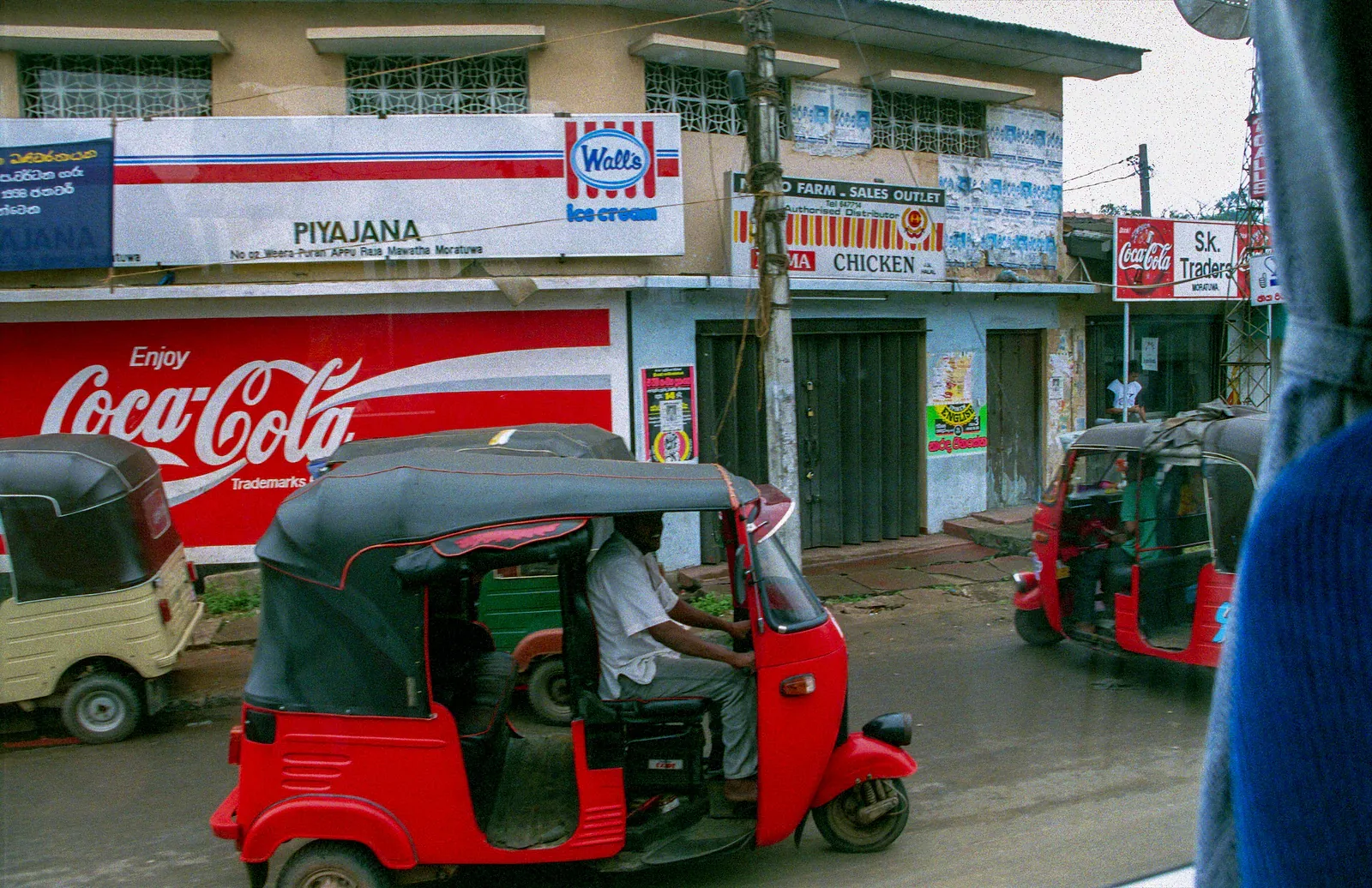
Caribbean calypso and Latin bands shaped the late 1960s and 1970s sound, giving rise to a calypso-style baila played on acoustic guitars and bongo drums. M. S. Fernando, who began in 1956, became the leading voice of the decade, nicknamed the Baila Emperor. Moratuwa, his hometown, is often called the unofficial home of baila.
The Gypsies and the cassette era
The Gypsies formed in 1970 around Anton Perera’s five sons, including lead singer Sunil Perera, and recorded in a studio built next to the family house on Galle Road in Ratmalana. They began with Western repertoire, and their first Sinhala songs, Linda Langa Sangamaya and Amma Amma, appeared in 1973. Five albums called Dance With the Gypsies followed in the late 1970s, the first in 1976. A first cassette with the novelty hit Kurumitto came in 1980, and CDs followed. The band is credited with the first baila non-stop medley, a string of songs played without a break for dancing, and Lunu Dehi (1987) and Signore (1997) became staples.

Sunil Perera, nicknamed the Baila Chakravarti, died on 6 September 2021, the year the band celebrated its golden jubilee with virtual concerts. Several of its songs were banned from state media for criticising the government.
Characteristics
Baila sits in 6/8, with a treble rhythm against a 3/4 bass that gives it a syncopated, jerky drive; the beat is still audible in later styles such as papare drumming. Melody and harmony follow the Western major scale, and the words are Sinhala, with Tamil and English versions. The lyrics are light and comic, often drawn from history, folklore or current events, and most songs follow a call-and-response chorus. Dancing is central: the older kaffrinha dance sends a man and woman towards each other with exaggerated courtesies, handkerchief waving and skirt-lifting.
Instruments and production
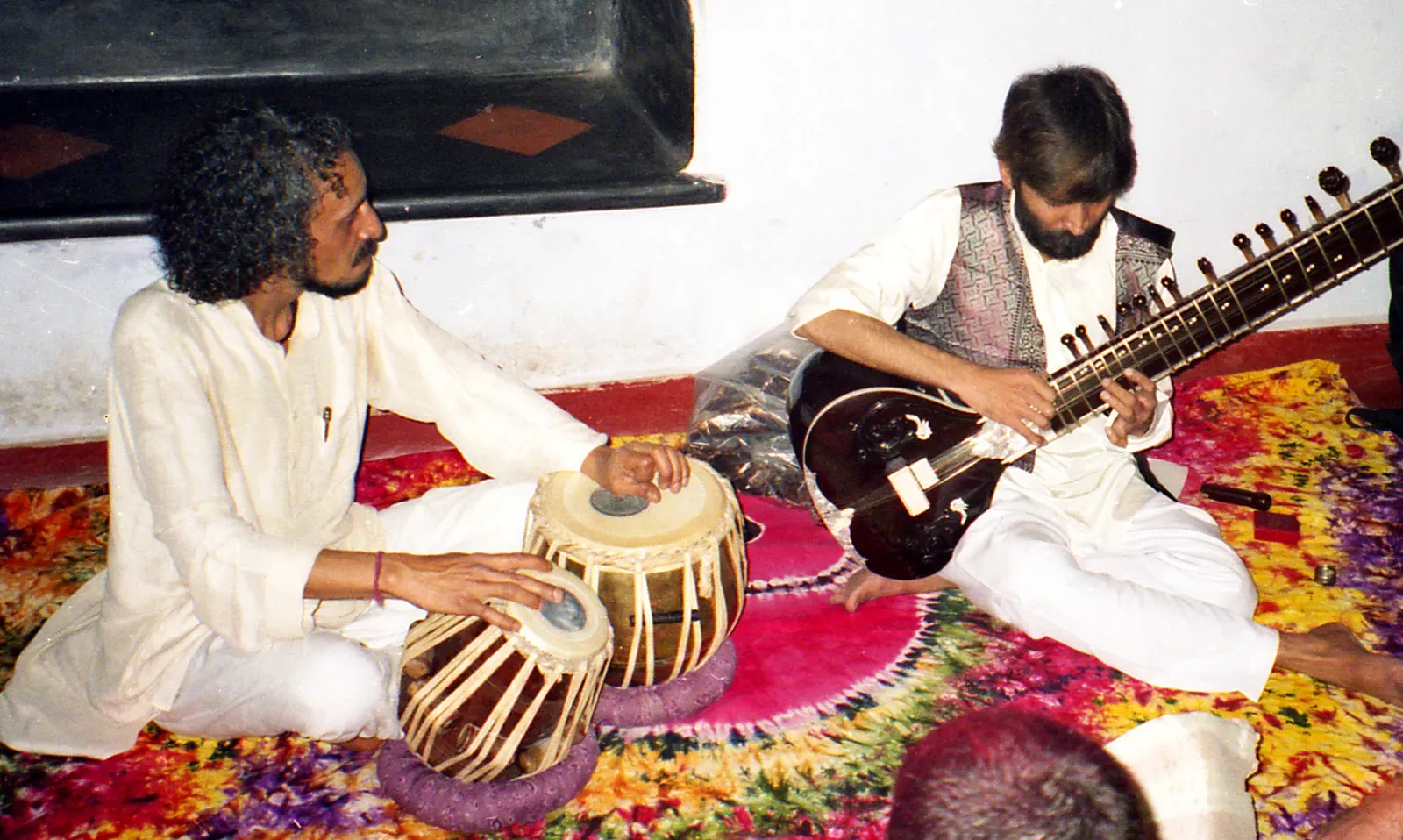
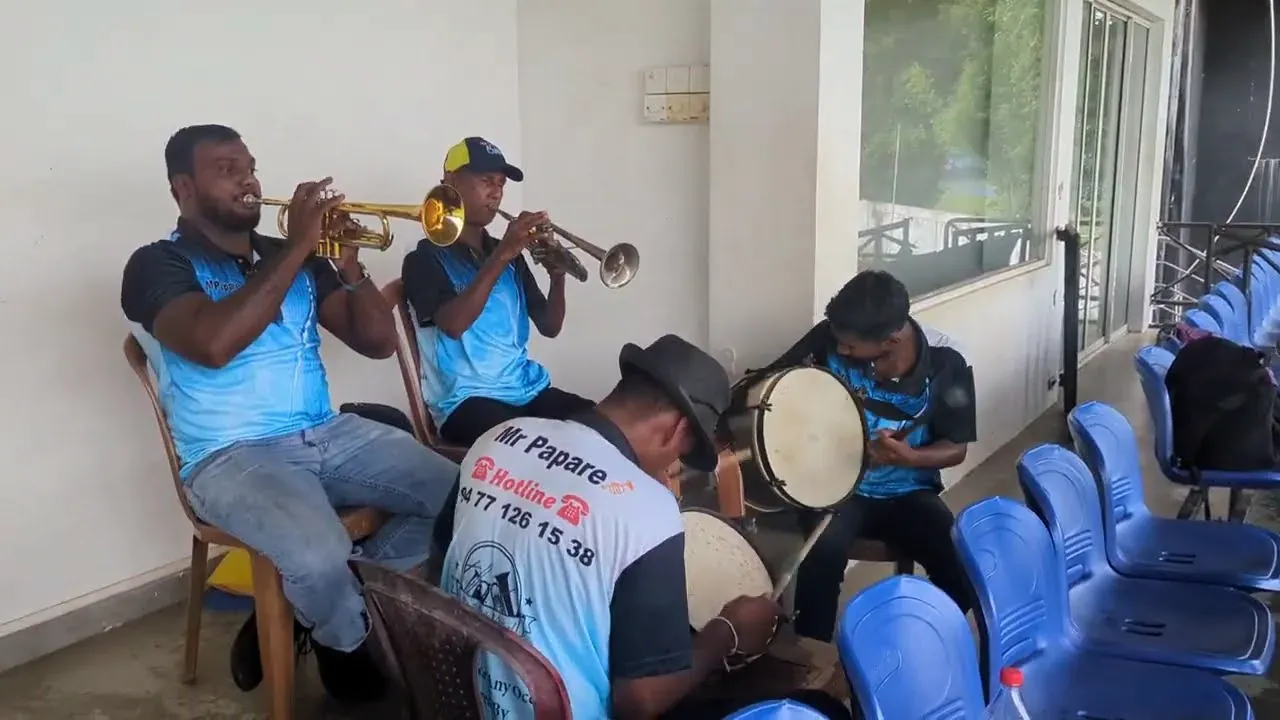
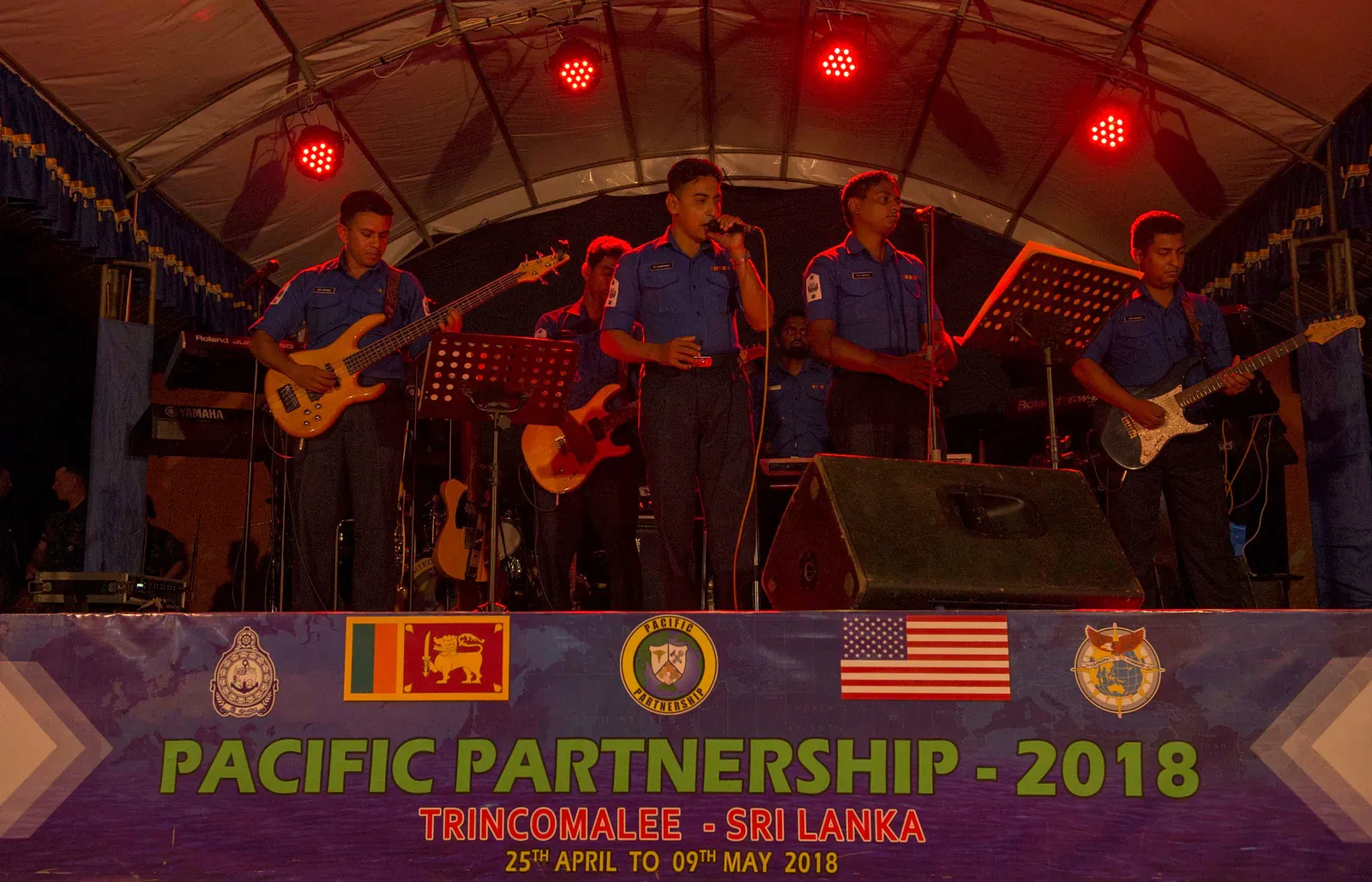
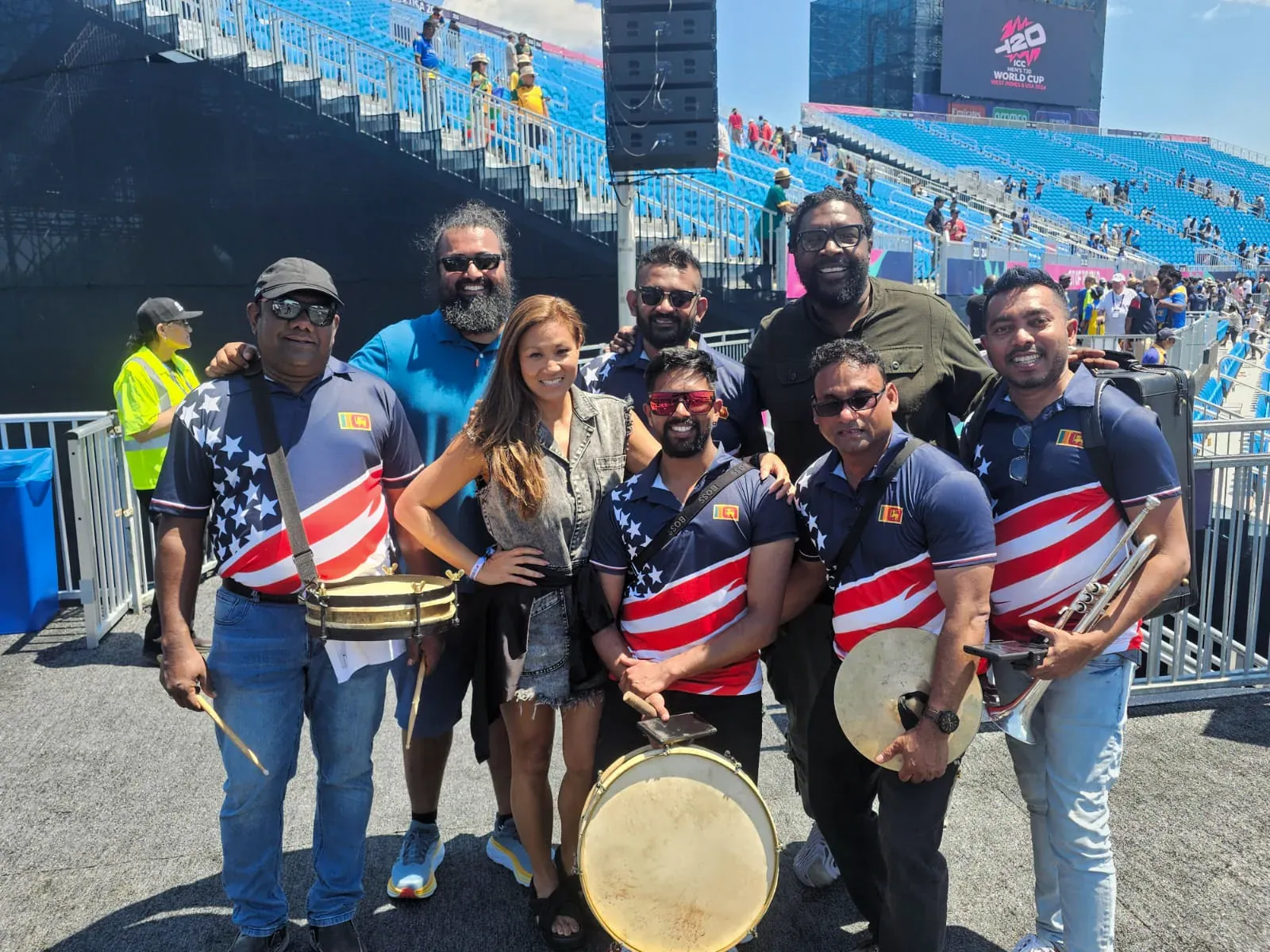
The older Burgher and Kaffir bands used violin, viola, mandolin, acoustic guitar, tambourine and rabana, a large hand drum. Today the same 6/8 pattern is played on electric guitar, bass, keyboards, octapad and drum kit, a shift driven by labels such as Sooriya. Papare bands use trumpets, snare drums and cymbals, taking their style from marching bands, and play at cricket matches and carnivals.
Subgenres and offshoots
Chorus baila is the typical song. Wada baila survives as a contest judged on wit, flow and rhyme. Papare baila is instrumental and played outdoors, calypso baila uses guitars and bongos, and Bailatronic, introduced by Ranidu Lankage, mixes baila with electronic music. Nithi Kanagaratnam began recording baila in Tamil in 1967.
Culture
Baila is the music of celebrations: weddings, school reunions, charity dinner dances, hotel concerts and stadium stands. Singers such as Paul Fernando built a stage identity around moving rhythmically across the platform, and non-stop CDs, such as Sri Lankan Open House Party of December 2006, are staples for dance parties.
Legacy
Baila has influenced Sri Lankan pop and film music, and artists such as Annesley Malewana, Clarence Wijewardene and even W. D. Amaradeva drew on it. Goan and Mangalorean Catholic communities in India have their own baila tradition.
Frequently asked questions
What does baila mean?
Baila comes from the Portuguese verb bailar, which means to dance. It names both the music and the party dancing it accompanies.
Where does baila music come from?
Baila comes from Sri Lanka. It grew from kaffrinha and chicote, dance forms created by Portuguese Burghers and African Kaffirs after the Portuguese arrived in 1505.
What time signature is baila in?
Baila is in 6/8 time, with a syncopated cross-rhythm of 6/8 treble against a 3/4 bass.
Who is the father of baila?
Wally Bastiansz, a police officer and singer, is called the Father of Baila because he introduced the sung chorus to the traditional form and brought it into Sinhala popular music.
Sound
Sound sheet
Anatomy of a track
| # | Part |
|---|---|
| 1 | Instrumental intro |
| 2 | Verse sung by the lead |
| 3 | Chorus answered by the group |
| 4 | Repeated verses and chorus, often a faster close |
Signature sounds
- 6/8 feel with cross-rhythm against 3/4
- Call-and-response chorus
- Comic, topical Sinhala lyrics
- Western major-scale harmony
- Non-stop medley of songs
Drums and percussion
- Rabana
- Bongos
- Snare drum
- Drum kit
Techniques
- Chorus call-and-response
- 6/8 against 3/4
- Wada improvisation
- Non-stop medley
Keys and modes
Western major scale. Melody and harmony are built on the major scale with Sinhala lyrics.
Vocals
Sinhala, sometimes Tamil or English, with comic and topical lyrics and a group chorus.
Scenes
Where it happened
Where and when the sound lived: one bar per city on a shared timeline.
Asia
Active scenes
Peak 2, 1970-2025
Home of Sooriya Records, Radio Ceylon and the hotel and party circuit where baila bands play.
Suburb on Galle Road where the Gypsies built a home studio and recorded their first albums.
Venues and places
Colombo, 1959 to today. Fort bookshop and record seller where Sooriya began and where singers such as Wally Bastiansz dropped in.
Ratmalana, 1970 to today. Studio built next to the family house on Galle Road for the band's first albums.
Culture
Culture markers
- Kaffrinha couple dance
Man and woman approach across the room with exaggerated courtesies, handkerchief waving and skirt lifting.
Dance - Weddings and parties
Baila closes weddings, school reunions and hotel dinner dances, and coastal Kaffir communities tie it to wedding ceremonies.
Ritual - Cricket stand papare
Brass and drum bands play baila-rhythm tunes for crowds at cricket matches.
Ritual
Media
Key media
- 2006Sri Lankan Open House Party
by Various. Non-stop CD of baila hits directed by Suresh Maliyadde and sung by several vocalists.
Compilation
Glossary
Terms on this page
Slower and more stately Portuguese-influenced dance music that merged with kaffrinha.
Sung-chorus form introduced by Wally Bastiansz and still the usual type of baila song.
Fast Afro-Portuguese dance song in 6/8, from which baila grew.
A medley of baila songs played without a break for dancing.
Instrumental baila for trumpets and drums, played at sports grounds and festivals.
Improvised contest in which singers answer a set topic in verse.
South Asian family