Bhajan
Bhajan is Hindu devotional song in regional languages, raga-based and free in form, from the Bhakti saints to Gandhi's ashrams, HMV LPs and T-Series cassettes.
India, Nepal, around 600
South Asian family
Born
around 600
India, Nepal
Subgenres
6
Documented branches
Links
10
Genres it drew on or shaped
Tempo
65-100 BPMLineage
Family tree
Grew out of
India, Nepal
Bhajan
Led to (6)
Timeline
Era by era
From the first sparks to today. Select a dot to read the story behind it.
- Bhakti and Sant roots
600 to 1700
- Reform, Gandhi and radio
1701 to 1946
- LPs and film singers
1947 to 1982
- The cassette boom
1983 to 1999
- Television and streaming
2000 to 2026
Eras
Moments
- 1 Bhakti and Sant roots, 600 to 1700
- 2 Reform, Gandhi and radio, 1701 to 1946
- 3 LPs and film singers, 1947 to 1982
- 4 The cassette boom, 1983 to 1999
- 5 Television and streaming, 2000 to 2026
around 600
Bhakti and Sant roots
Saints such as Kabir, Mirabai, Surdas and Tulsidas write devotional verse in regional languages, moving worship out of Sanskrit and into songs ordinary listeners can follow.
- 600Bhakti movement spreads bhajanFrom roughly the 6th century, saint-poets compose devotional songs in regional languages.
- 1450Narsinh Mehta writes Vaishnava Jana ToThe 15th-century Gujarati poem later becomes one of the best known bhajans in India.
around 1701
Reform, Gandhi and radio
Paluskar founds a music school in 1901, Gandhi's ashrams sing bhajans daily, and radio and film carry tunes such as Vaishnava Jana To beyond their home regions.
- 1901Paluskar founds Gandharva MahavidyalayaVishnu Digambar Paluskar opens the school on 5 May; he also sang the original Raghupati Raghava Raja Ram.
- 1925Narayan Khare sets Vaishnava Jana To in Mishra KhamajThe semi-classical tune made at Gandhi's Sabarmati ashram in the 1920s is the one now widely sung.
- 1930Ram Dhun sung on the Salt MarchGandhi's version adds Ishwar and Allah to the refrain to stress Hindu-Muslim unity.
- 1940Narsi Bhagat closes with Vaishnava Jana ToVijay Bhatt's Hindi film, made at Gandhi's suggestion, takes the song to cinema audiences.
1947
LPs and film singers
The Gramophone Company of India issues devotional LPs; playback singers and bhajan specialists such as Lata Mangeshkar and Hari Om Sharan record for a home audience.
- 1973Hari Om Sharan turns professionalHe records his first album for His Master's Voice and goes on to release over 20 devotional albums.
- 1974Hari Om Sharan records Hanuman ChalisaThe Gramophone Company of India issues the rendition in raga Mishra Khamaj.
- 1974Lata Mangeshkar sings Meera bhajans on Chala Vahi DesThe HMV LP sets Mirabai's verses to music by Hridaynath Mangeshkar.
1983
The cassette boom
T-Series, founded in 1983, mass-produces cheap devotional cassettes; Hanuman Chalisa renditions and singers like Anuradha Paudwal become household names.
- 1983T-Series foundedGulshan Kumar's Super Cassettes Industries turns devotional tapes into a mass market.
- 1983Chalo Bulawa Aaya Hai in AvtaarNarendra Chanchal leads the goddess song that is still played at Navratri.
- 1992T-Series issues Hariharan's Hanuman ChalisaThe recording uses the same traditional melodies as the 1974 version.
- 1995Hari Om Sharan's Hanuman Chalisa re-releasedSuper Cassettes Industries reissues it, and it remains a staple in temples and homes of northern India.
2000
Television and streaming
Bhajan singers move to television and YouTube, where a single Hanuman Chalisa upload from 2011 grows into one of the most viewed videos in India.
- 2004Hari Om - Salutation tribute albumPt. Jasraj, Hariharan, Anup Jalota, Sonu Nigam and others sing Hari Om Sharan's bhajans.
- 2011T-Series posts Hanuman Chalisa videoThe 10 May upload later passes 5 billion views.
- 2012Padma Shri for Anup JalotaThe Bhajan Samraat receives India's fourth highest civilian honour.
Listening path
Start listening
A short path from an easy way in to the deep end. Thumbnails come from YouTube; the player loads only when you press play.
- 01
Lata Mangeshkar, 1974
Slow Meera bhajan with a classical melody and sparse accompaniment.
- 02
Hari Om Sharan, 1974
The reference Hanuman Chalisa tune, plain and steady, in Mishra Khamaj.
- 03
Narendra Chanchal, 1983
High-energy goddess bhajan with chorus, played at Navratri.
Facts
| Family | South Asian |
| Origin | India, Nepal |
| Emerged | Roots in Vedic Samaveda chant; flourished during the Bhakti movement, 6th-17th centuries |
| Status | Active |
| Tempo | 65 to 100 BPM |
| Meter | Dadra or Keherwa |
| Subgenres | 6 |
Bhajan is the devotional song of Hindu India and Nepal, sung in a regional language to a melody usually drawn from a raga, with no fixed structure and often a single lead voice.
It rose to prominence in the Bhakti and Sant movements of about the 6th to 17th centuries, and it also appears in Jain, Buddhist and Sikh practice. Today it lives in temples, homes, festivals and on label channels, where a few recordings count their listeners in billions.
Origins
The word comes from the Sanskrit root bhaj, to revere, as in the phrase Bhaja Govindam. Its ancestry is traced to the sung chant of the Samaveda, but the bhajan as a song of personal devotion belongs to the medieval saint-poets. Kabir, Mirabai, Surdas and Tulsidas wrote in the languages people spoke rather than in Sanskrit, and their verses on divine love moved worship out of priestly ritual and across barriers of caste and class. Narsinh Mehta, a Gujarati poet of the 15th century, wrote Vaishnava Jana To, a poem that defines a devotee by conduct instead of ritual.
Most early bhajans were composed anonymously and passed on as a community tradition, so the repertoire has no single founder or birthplace. Vaishnava circles built much of it around Krishna, Rama, Vitthal and Narayana, and southern India developed its own congregational form, the sampradaya bhajan. A bhajan may be sung by one person, or by a group (mandali) with a lead singer, in a temple, under a tree or beside a river.
Reform, Gandhi and radio, 1901-1946
At the start of the 20th century classical musicians began to arrange bhajans. Vishnu Digambar Paluskar opened the Gandharva Mahavidyalaya school on 5 May 1901 and sang the original version of Raghupati Raghava Raja Ram, set in raga Mishra Gara. Gandhi’s ashrams sang bhajans daily, and he adopted this Ram Dhun as a prayer for unity, adding the line Ishwar Allah tere naam; it was sung on the 1930 Salt March. Some Hindus and Muslims later objected to the change, and the line still draws protest.
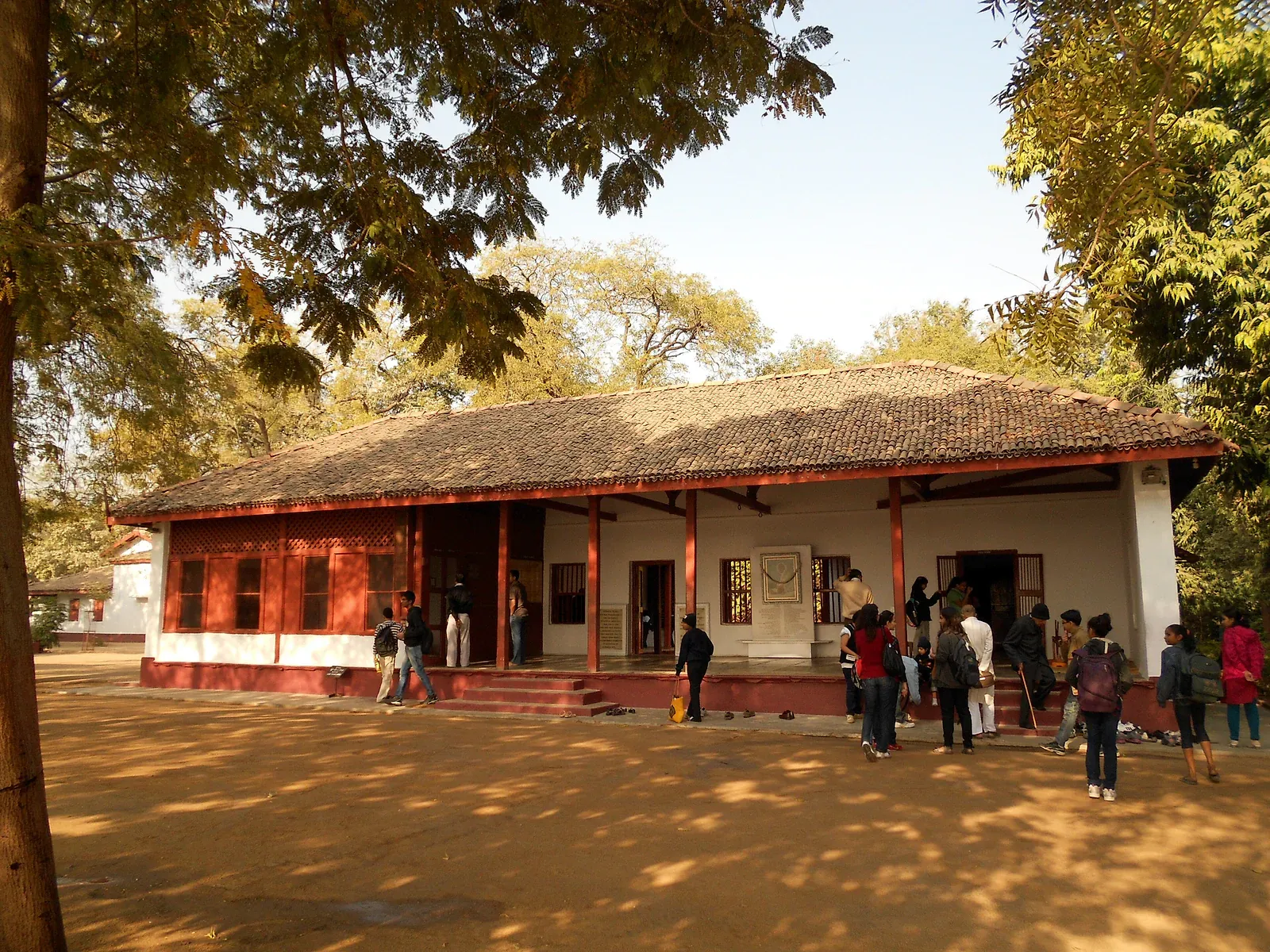
Vaishnava Jana To was a favourite. Narayan Khare, a musician at Gandhi’s Sabarmati ashram, gave it a semi-classical tune in raga Mishra Khamaj, an evening raga, to carry it beyond Gujarat. Bombay radio stations played it in the 1940s, the 1940 Hindi film Narsi Bhagat ended with it, and the Carnatic singer M. S. Subbulakshmi took it into her concert repertoire. This was the period in which the bhajan became a national, recorded repertoire instead of a local one.
LPs and film singers, 1947-1982
After independence the Gramophone Company of India, the HMV label now known as Saregama, issued devotional records alongside film music. Hari Om Sharan turned professional in 1973 with an album for His Master’s Voice, and his Hanuman Chalisa followed in 1974. It is built on traditional melodies in Mishra Khamaj with the base note set on the second black key of the harmonium, and it was later reissued on cassette. Lata Mangeshkar’s Chala Vahi Des, a set of Mirabai’s songs with music by Hridaynath Mangeshkar, appeared on an HMV LP in 1974.
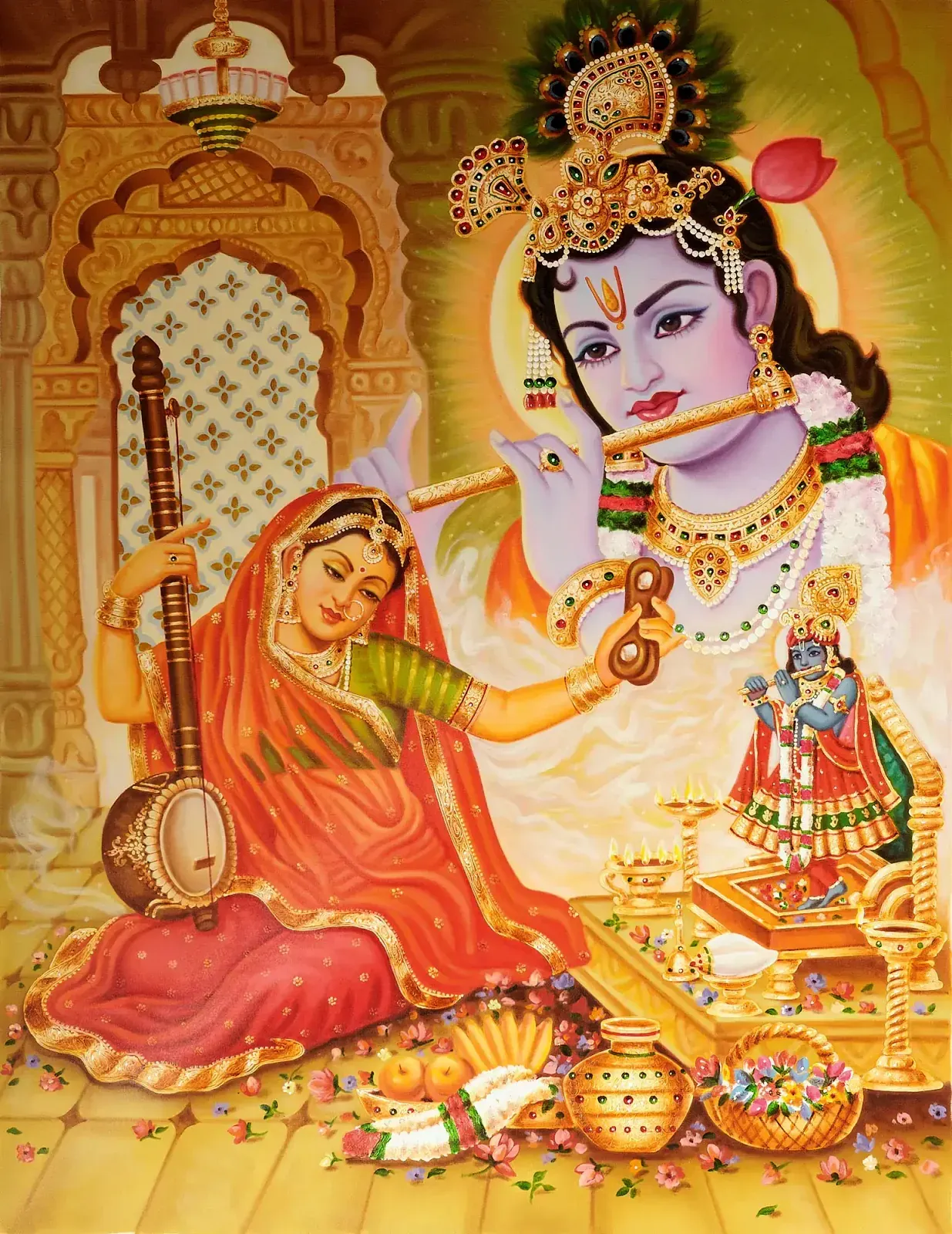
Film and bhajan overlapped. Narendra Chanchal sang Beshak Mandir Masjid in the 1973 film Bobby and then built a career on devotional songs, and in 1983 his lead in Chalo Bulawa Aaya Hai, a goddess song in the film Avtaar, became a standard at Navratri. Anup Jalota, a student of the Bhatkhande Music Institute in Lucknow and the son of the bhajan singer Purshottam Das Jalota, began his career in the mid-1970s as a chorus singer at All India Radio.
The cassette boom, 1983-1999
Gulshan Kumar founded Super Cassettes Industries and its T-Series label in 1983, and the cheap audio cassette brought bhajans to millions of homes. The company’s annual earnings rose from 20 crore rupees in 1985 to 200 crore in 1991. Devotional music was a core line. Anuradha Paudwal, a playback singer, sang goddess songs at Kumar’s request, saw them sell out, and went on to record more than 1,500 bhajans. In 1992 T-Series released Hariharan’s Hanuman Chalisa on the same traditional tune as the 1974 version, and in 1995 it reissued Hari Om Sharan’s. Gulshan Kumar was killed in 1997, and his family still runs the label.
Television and streaming, 2000-2026
Television made bhajan singers into presenters, and Anup Jalota, known as the Bhajan Samraat, received the Padma Shri in 2012. In 2004 singers including Pt. Jasraj, Hariharan, Anup Jalota and Sonu Nigam recorded the tribute album Hari Om - Salutation. Online, T-Series posted the Hariharan Hanuman Chalisa video on 10 May 2011, and it became the first Indian video to pass 5 billion views. Bhajans have also left India: Krishna Das, Deva Premal and Miten recorded Hindu chants for Western listeners, and communities taken to Trinidad, Fiji and South Africa as plantation workers in the 19th and 20th centuries used bhajans to organise.
Characteristics
A bhajan is usually lyrical and based on a raga with a tala, yet it can be as plain as a mantra or as elaborate as a dhrupad, thumri or kriti. Its subject is loving devotion to a deity, an episode from the epics, the teaching of a saint or a theme from scripture. It differs from kirtan in form: a bhajan can be a single melody for one singer, while kirtan is a team performance in call and response with at least two instruments. The two sit within the wider devotional and classical traditions of South Asia, and bhajans sung by film playback singers show how far the form travels. The classical side is covered at Hindustani classical music.
Kumar Gandharva, a classical singer, made the Nirguni bhajans of Kabir famous; Nirguni bhajan addresses the formless divine, in contrast to songs about a deity with form.
Instruments and production
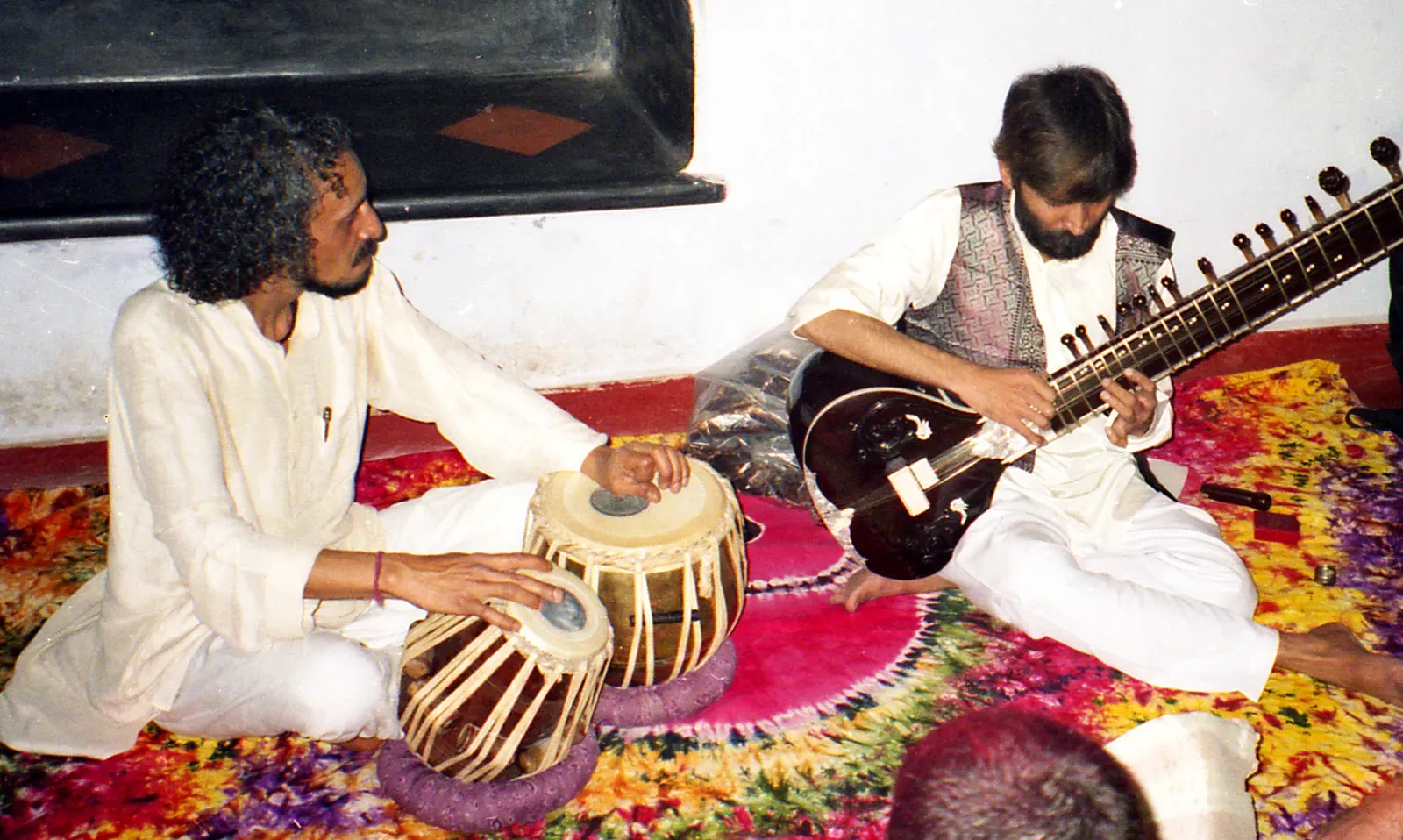
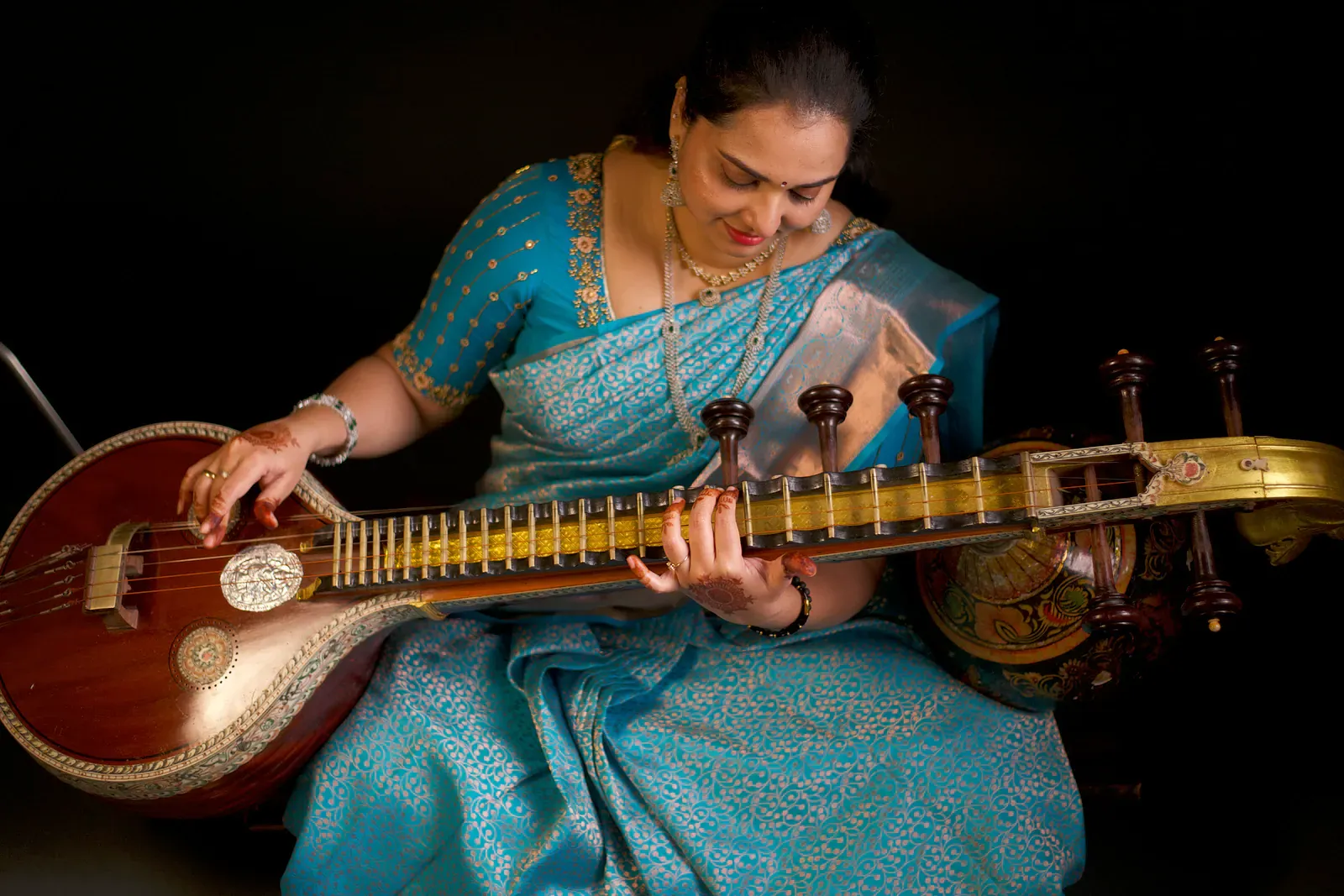
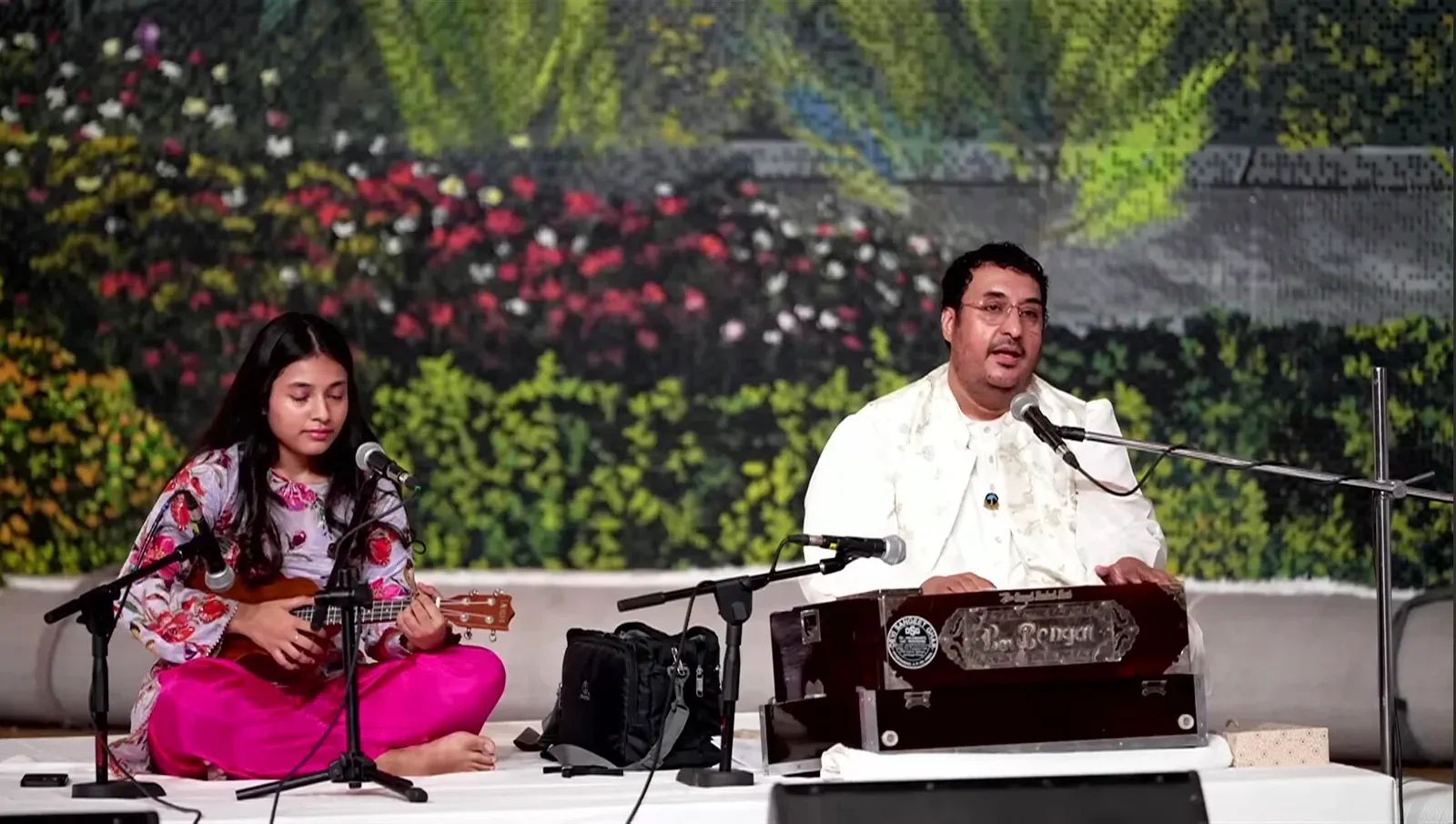
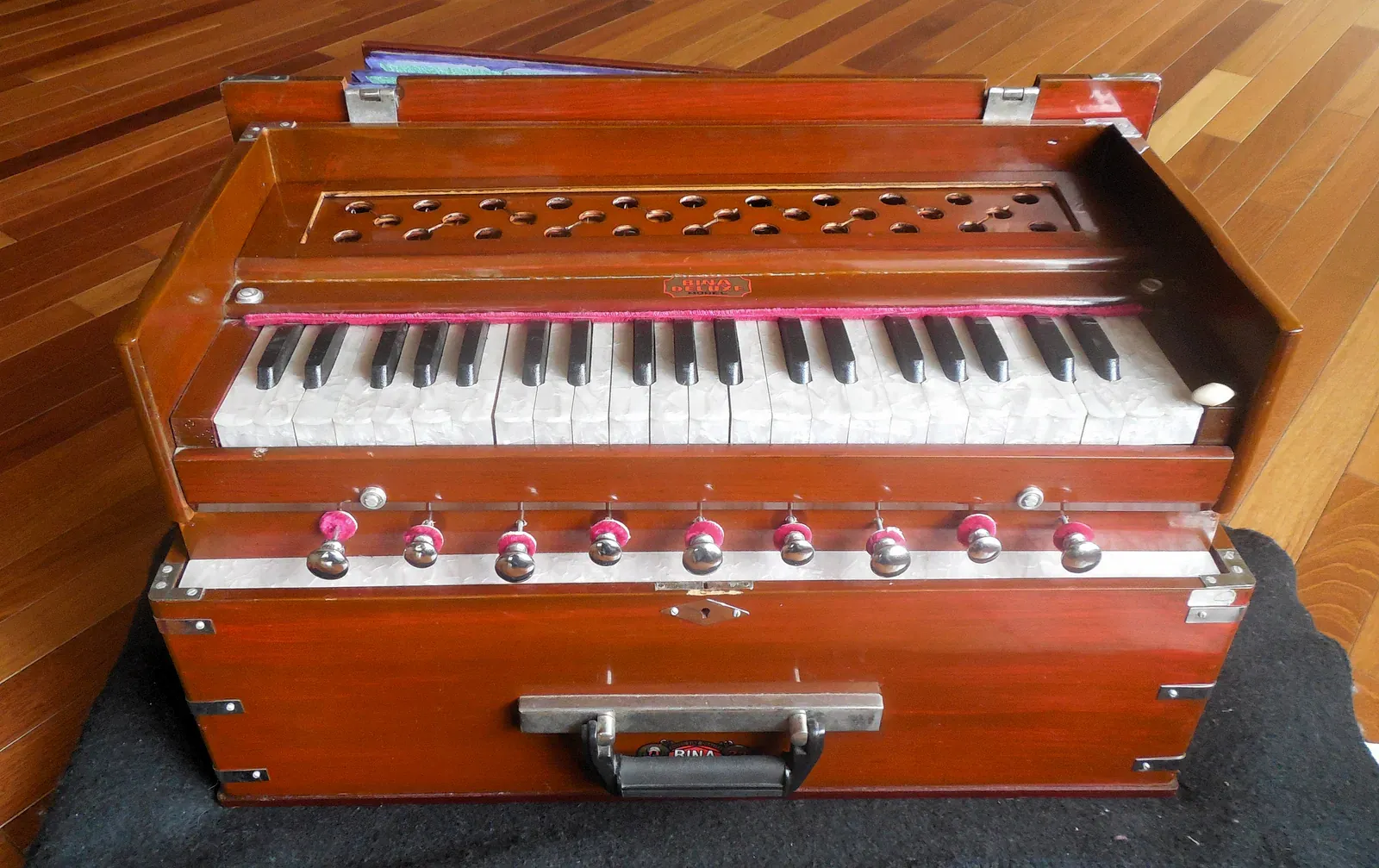
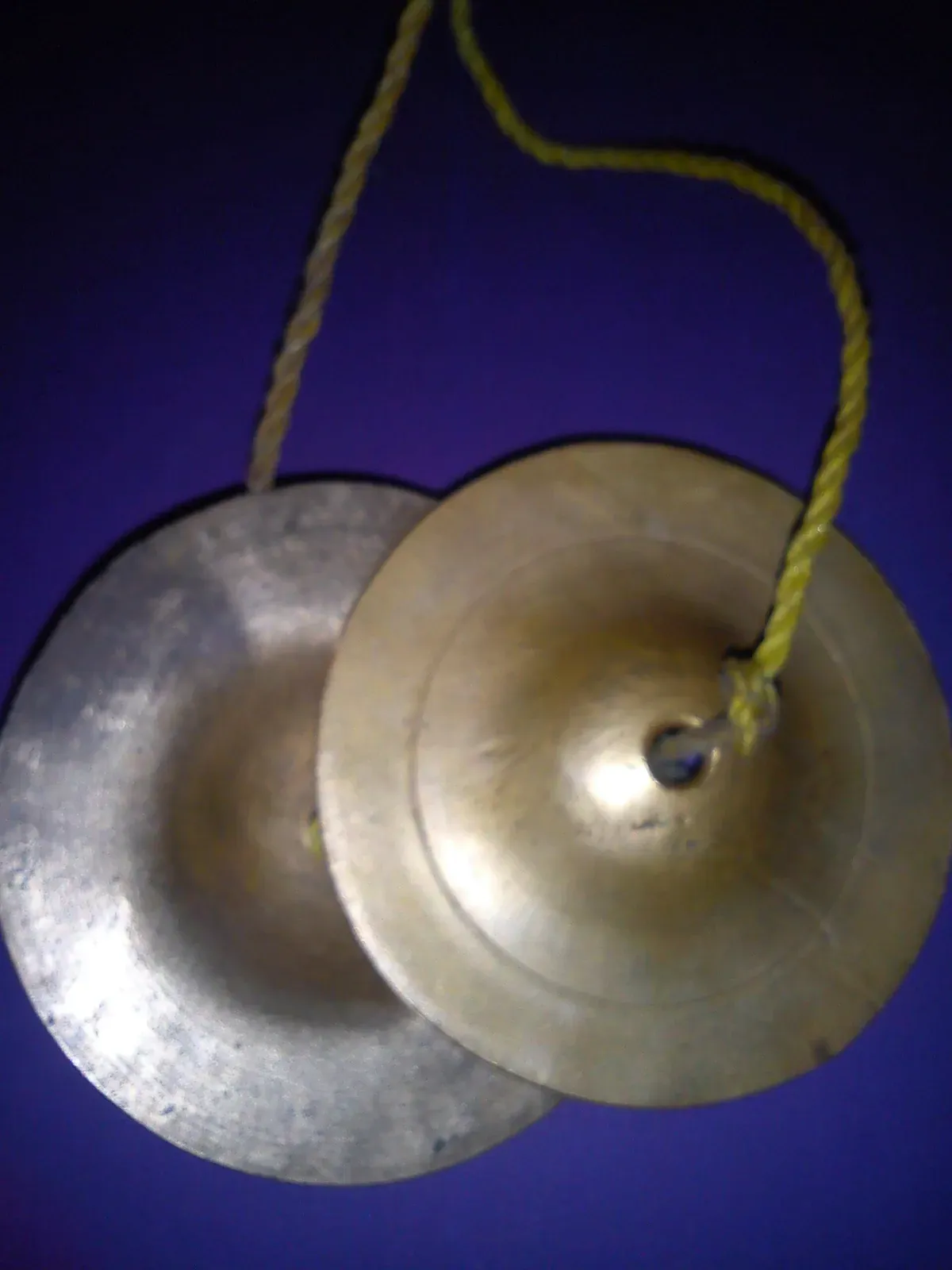
A harmonium supplies the melody and the pitch, hand drums such as tabla and dholak keep the cycle, and small cymbals called kartal mark the beat. Studio bhajans add santoor, sarod, sarangi, violin, sitar and guitar.
Culture
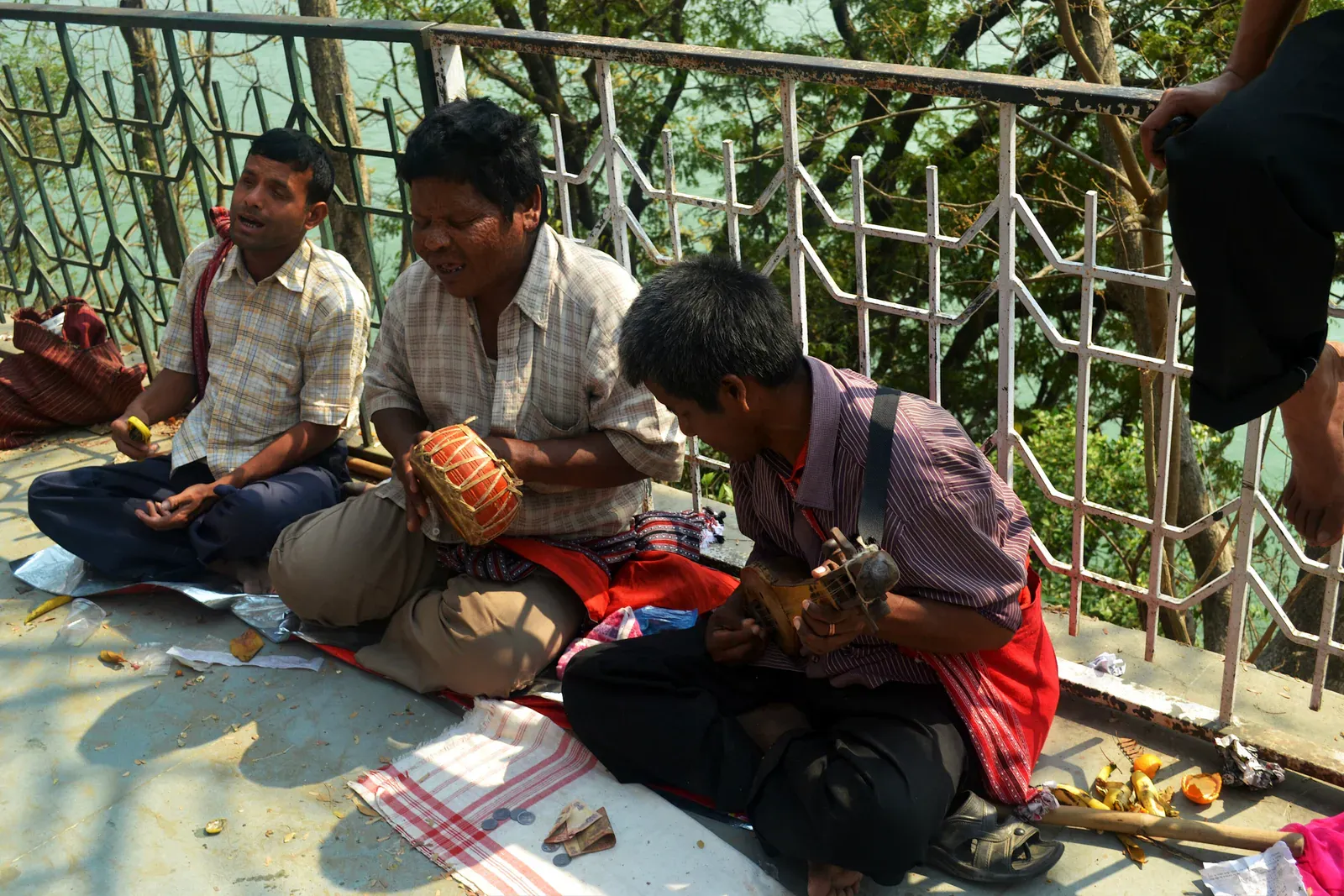
Bhajan belongs to everyday worship: Hanuman Chalisa recordings play in temples and homes across northern India, and goddess bhajans fill Navratri festivals; Narendra Chanchal sang at Katra each year on the last days of December. Sung in groups, bhajans give an individual a part in a shared liturgy and bring a community to eat, meet and reconnect. They are performed in the open air, inside temples, at festivals and at pilgrimage sites.
Legacy
Bhajan carried the language of the saints into recorded music and then into mass media. Its Hanuman Chalisa renditions became the reference for the text. It still gives temples, homes and festivals a shared repertoire, and its melodies, such as the Mishra Khamaj tunes of the Hanuman Chalisa and Vaishnava Jana To, are known well beyond the circles that sing them.
Misconceptions
Bhajan is not a single Hindu style. Vaishnava, Shaiva and Shakta songs, Jain stavan and Sikh and Buddhist devotional singing all share the name or the model, and Nirguni, Gorakhanathi, Vallabhapanthi and Sampradaya bhajan each keep their own repertoire.
It is also not the same as kirtan. Bhajan has no prescribed form and can be sung by one person, while kirtan is a structured group performance with call and response.
Finally, a bhajan is not always old. Some are centuries old and passed down as community tradition, while others are newly composed, and any believer is free to write one in praise of a deity.
Frequently asked questions
What is a bhajan?
A bhajan is a devotional song with a religious theme, sung in a regional language, based on a raga and with no fixed form. It can be sung by one person or by a group.
What is the difference between bhajan and kirtan?
Bhajan is freer in form and often a single melody for one singer, while kirtan is a structured group performance in call and response with at least two instruments.
Who are the best known bhajan singers?
Anup Jalota, known as the Bhajan Samraat, Anuradha Paudwal, Hari Om Sharan and Narendra Chanchal built careers on bhajans, and playback singers such as Lata Mangeshkar and the Carnatic singer M. S. Subbulakshmi recorded bhajan albums.
Which instruments accompany a bhajan?
A harmonium, tabla or dholak and kartal cymbals are the usual set, sometimes with santoor, sarod, sarangi, violin or sitar.
Sound
Sound sheet
Anatomy of a track
| # | Part |
|---|---|
| 1 | Instrumental intro or alap |
| 2 | Refrain (sthayi) |
| 3 | Verses (antara) |
| 4 | Refrain returns at a faster tempo |
Signature sounds
- Raga-based melody
- Harmonium and tabla accompaniment
- Repeated refrain that listeners can sing along to
Drums and percussion
- Tabla
- Dholak
Techniques
- Raga-based melody
- Solo lead
- Group sing-along
- Kartal timekeeping
Keys and modes
Raga Mishra Khamaj. Base of the best known Hanuman Chalisa and Vaishnava Jana To tunes.
Raga Mishra Gara. Paluskar's setting of Raghupati Raghava Raja Ram.
Tuning
Just intonation around a harmonium or tanpura drone
Vocals
Solo lead voice, often joined by a group on the refrain
Scenes
Where it happened
Where and when the sound lived: one bar per city on a shared timeline.
Asia
Active scenes
Peak 3, 1940-2025
Paluskar's Gandharva Mahavidyalaya opens here and teaches classical music to bhajan singers.
Sabarmati ashram, where Gandhi's daily bhajans and the Khare tune of Vaishnava Jana To took shape.
Radio, film and the record companies that spread bhajans nationwide are based here.
Culture
Culture markers
- Temple and home recitation
Hanuman Chalisa recordings play daily in temples and homes of northern India.
Ritual - Navratri and goddess songs
Goddess bhajans fill Navratri festivals; Chanchal sang at Katra each year.
Ritual - Gandhi's prayer meetings
Daily ashram bhajans, including Ram Dhun, expressed an inclusive faith.
Ritual
Media
Key media
- 1940Narsi Bhagat
by Vijay Bhatt. Hindi film that closes with Vaishnava Jana To.
Film - 1979Meera
by Gulzar. Film on the life of the saint-poet whose verses fill the bhajan repertoire.
Film
Glossary
Terms on this page
Devotional song in any language, free in form and usually based on a raga.
Small hand cymbals used to keep time.
A group of bhajan performers who sing together.
Bhajan addressing the formless divine, linked with the poetry of Kabir.
Repetitive chant of the name of Rama, such as Raghupati Raghava Raja Ram.
South Asian family