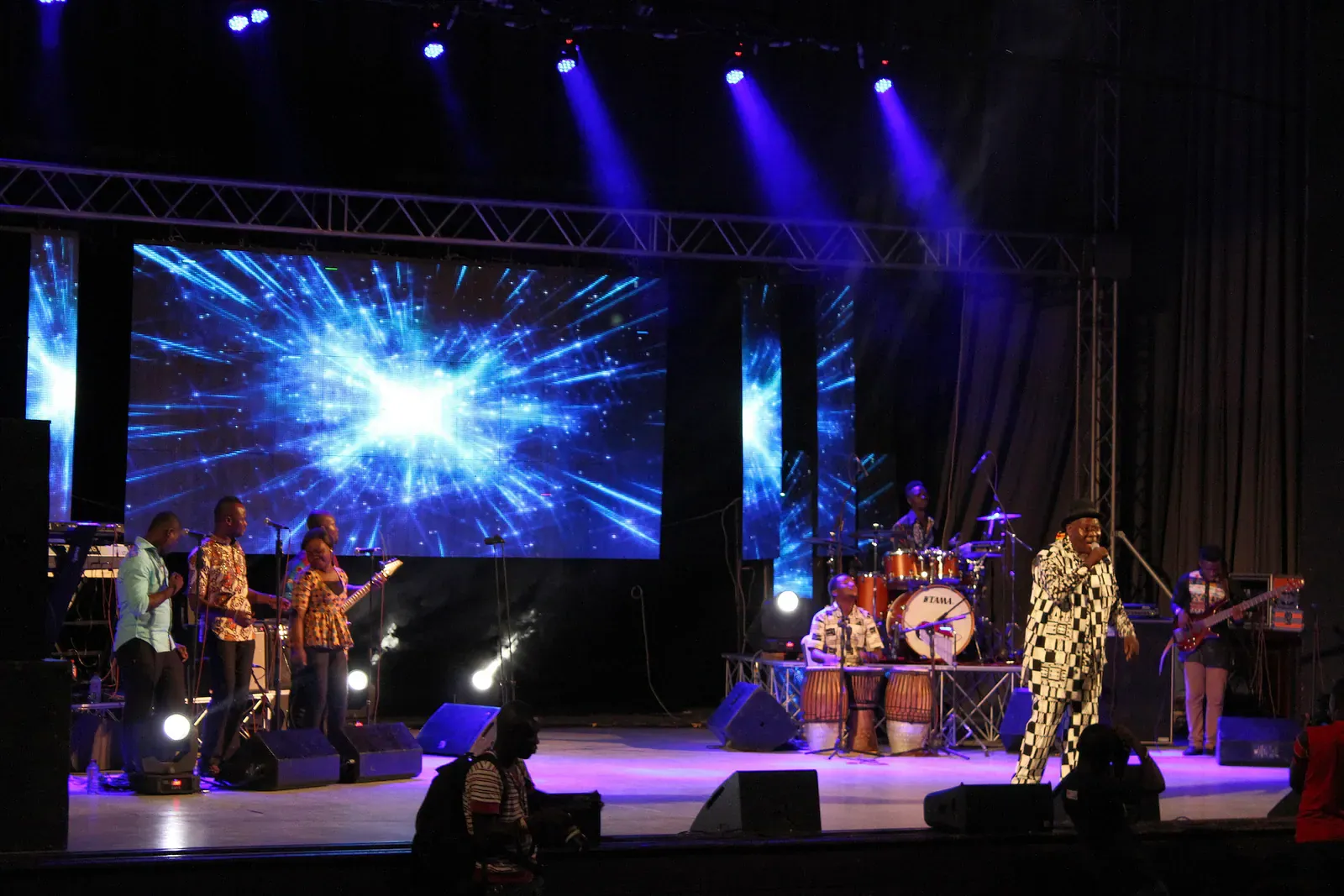
Bikutsi
Bikutsi is a dance music of the Beti people of central Cameroon, built on a fast 6/8 pulse and balafon-style guitar, recorded from the 1940s.
Yaoundé, 1940
African family
Born
1940
Yaoundé
Links
6
Genres it drew on or shaped
Tempo
125-160 BPMLineage
Family tree
Timeline
Era by era
From the first sparks to today. Select a dot to read the story behind it.
- Beti balafon and mvet
1900 to 1959
- Electric guitars and orchestras
1960 to 1984
- Les Têtes Brûlées and export
1985 to 1999
- Female stars and dance craze
2000 to today
Eras
Moments
- 1 Beti balafon and mvet, 1900 to 1959
- 2 Electric guitars and orchestras, 1960 to 1984
- 3 Les Têtes Brûlées and export, 1985 to 1999
- 4 Female stars and dance craze, 2000 to today
around 1900
Beti balafon and mvet
Gatherings of the Beti (Ewondo) around Yaoundé paired mvet storytelling with balafon and women's choruses; Anne-Marie Nzié's 1950s records first put the sound on disc.
- 1940First popular bikutsi singingAnne-Marie Nzié begins performing bikutsi, the music of her Beti home region.
- 1954Ma Ba Nze singleNzié and her brother Moise release their first single on the Opika label.
- 1957Nzié becomes a solo singerAfter winning a guitar competition she records in Paris and signs with Pathé-Marconi.
1960
Electric guitars and orchestras
Messi Me Nkonda Martin and Los Camaroes copied the balafon on electric guitar, while Mama Ohandja and bands such as Les Vétérans built full electric ensembles.
- 1965Balafon sound on electric guitarMessi Martin links guitar strings with cotton cord so the electric guitar sounds like a balafon.
- 1971Confiance jazzMama Ohandja's successful release defines his blend of tradition and electric instruments.
1985
Les Têtes Brûlées and export
Les Têtes Brûlées, founded in Yaoundé in 1985, brought a muted-guitar bikutsi rock to Europe and North America, and the style touched Paul Simon's 1990 album.
- 1985Les Têtes Brûlées formedJean-Marie Ahanda founds the band in Yaoundé.
- 1987First Cameroon television appearanceThe band's first national TV appearance launches its career.
- 1988Death of guitarist ZanzibarThe inventor of the foam-damped guitar technique dies before the debut album's international release.
- 1990Hot HeadsThe first full-length bikutsi album reaches international release.
- 1992Bikutsi RockReleased in North America by Shanachie, it is the band's best-known international album.
- 1999Béza Ba DzoNzié returns after a long absence with an album featuring Manu Dibango.
2000
Female stars and dance craze
K-Tino, Lady Ponce and other women singers made bikutsi a club and radio style, with provocative dance and lyrics that drew public criticism.
- 2007Le ventre et le bas-ventreLady Ponce's debut earns two Canal 2'Or awards.
- 2010Debate over explicit lyrics and dancePresent-day bikutsi is criticised for sexual content, as mapouka is in Côte d'Ivoire.
- 2014Lady Ponce made knight of the Order of Valour
- 2025Lève toiBlanche Bailly and Lady Ponce release a bikutsi-themed afrobeat single.
Listening path
Start listening
A short path from an easy way in to the deep end. Thumbnails come from YouTube; the player loads only when you press play.
- 01
Les Têtes Brûlées, 1992
The title track of the band's international album, with muted guitars over a driving 6/8.
- 02
Blanche Bailly ft. Lady Ponce, 2025
A recent single that mixes bikutsi with afrobeat, featuring the Queen of Bikutsi.
Facts
| Family | African |
| Origin | Yaoundé, Cameroon |
| Emerged | 1940s, electrified from the 1960s |
| Status | Active |
| Tempo | 125 to 160 BPM |
| Meter | 6/8 |
Bikutsi is a dance music of the Beti (Ewondo) people of central Cameroon, centred on the capital Yaoundé. Its name means “beat the earth”, after the stomping dance that goes with it.
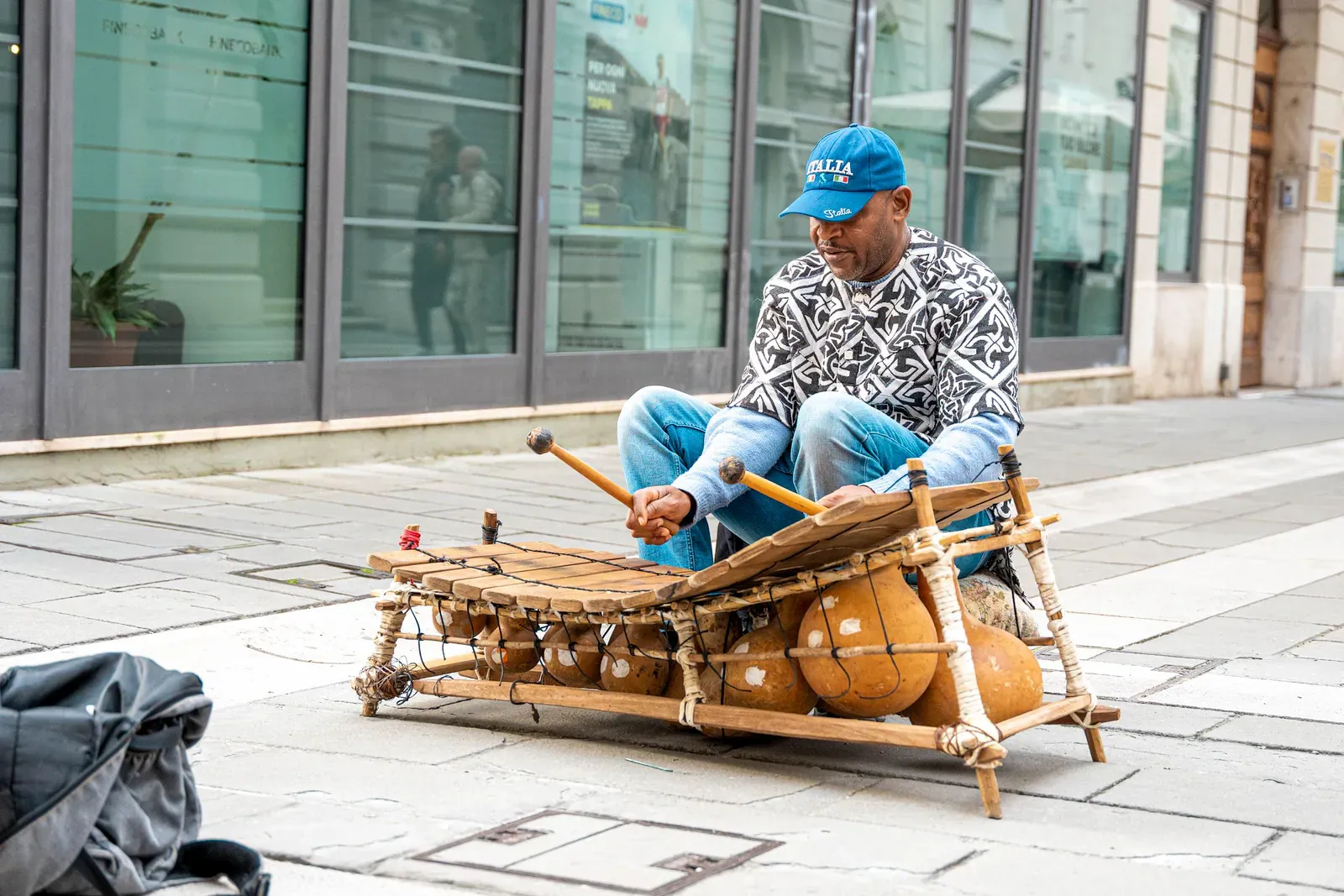
The music rests on a fast 6/8 pulse felt in two main beats, and in its modern form the electric guitar imitates the balafon, the wooden xylophone of the tradition.

Origins
Bikutsi grew out of the gatherings of the Beti, held at parties, weddings and funerals. These events had two phases. The Ekang phase dealt with myth and spiritual questions, with storytellers accompanying themselves on the mvet, a double-sided harp with calabash resonators. It was usually musical all night, with poetic recitation, clapping, dancing and improvised balafon interludes, some of them obscene. Those interludes marked the shift to the bikutsi phase, when everyday matters were discussed, women danced and sang along with the balafon, and lyrics turned to relationships, sexuality and the lives of famous people.
Popular recorded bikutsi dates from the 1940s, when Anne-Marie Nzié, born in 1932 in the Lolodorf district, began performing it. She learned Hawaiian guitar as a child, released her first single, “Ma Ba Nze”, with her brother Moise on the Opika label in 1954, and in the later 1950s became a solo singer. After a guitar competition she recorded in Paris and signed with Pathé-Marconi. She remained active for decades and earned the title Queen Mother of Bikutsi.
Electric guitars and orchestras, 1960-1984
About twenty years after the first records the style was electrified, with keyboards and guitars. The leading figure was Messi Me Nkonda Martin, frontman of Los Camaroes and now called the father of modern bikutsi. He was born in 1946 and became a national star in the 1970s. To carry the balafon into an electric band he tied the guitar strings together with lengths of cotton cord, so that the instrument sounded like the xylophone. The music was only slightly altered, but its image changed a great deal: bikutsi stopped sounding like a rural tradition in decline.
Other orchestras joined him, among them Les Vétérans. Mama Ohandja, who began his career in the 1960s in cabaret and released the successful “Confiance jazz” in 1971, combined tom-toms and balafons with electric instruments and became the most prominent regional musician to marry tradition and international styles.
Les Têtes Brûlées, 1985-1999
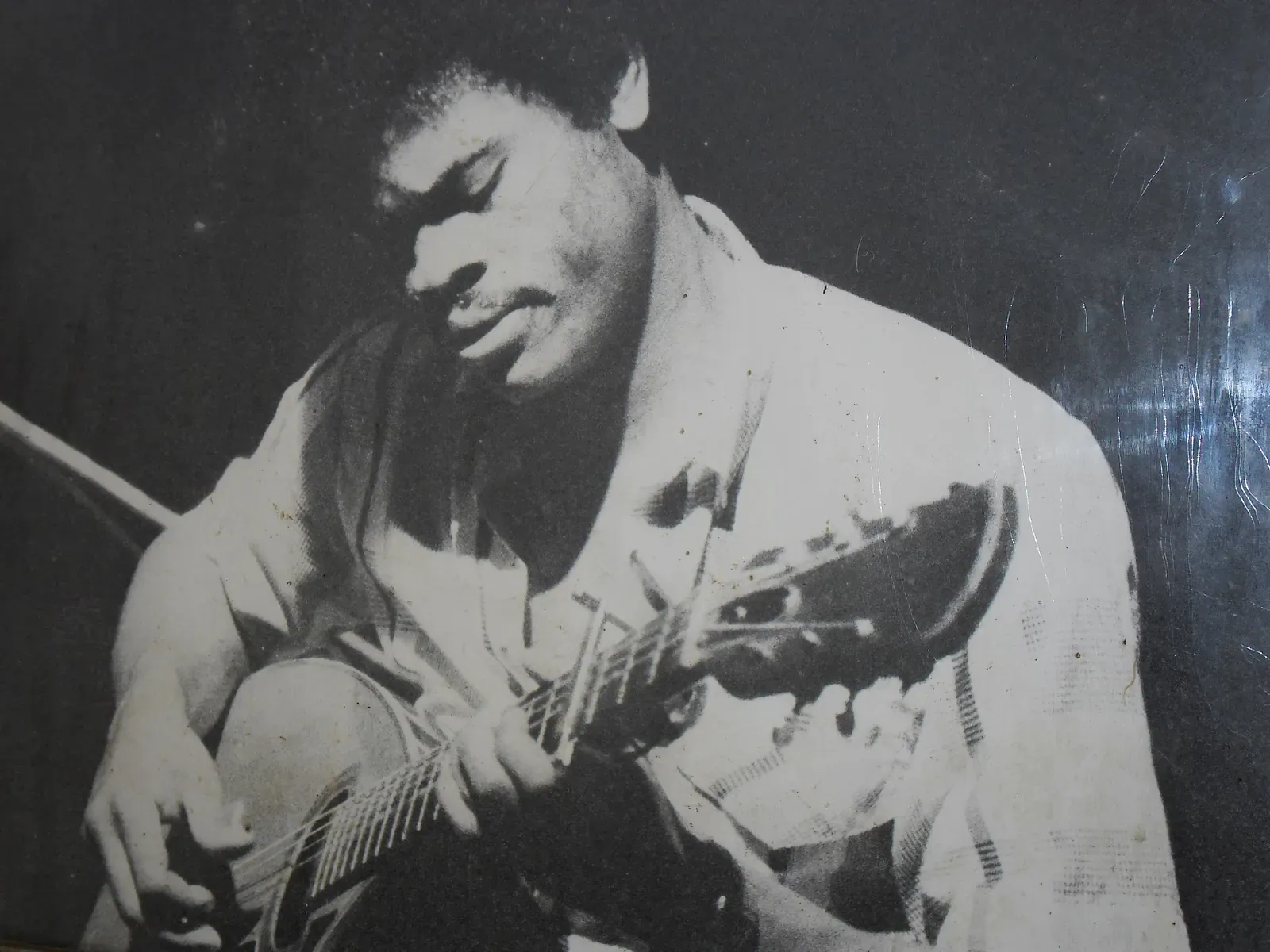
International attention came with Les Têtes Brûlées, founded in Yaoundé in 1985 by Jean-Marie Ahanda; the name is usually rendered “burnt minds” or “hotheads”. Its guitarist Zanzibar damped his strings with a strip of foam rubber, producing the dry, balafon-like thunk that became the sound of the genre. The band first appeared on Cameroon television in 1987. Zanzibar died in about 1988, before the debut album reached an international audience.
“Hot Heads” came out internationally in 1990 and was the first full-length bikutsi album, with lyrics on social issues. “Bikutsi Rock” followed in 1992 on the North American label Shanachie Records and remains the band’s best-known album abroad. Bikutsi also influenced Western musicians; Paul Simon’s 1990 album “The Rhythm of the Saints” is one example. In 1999 Nzié returned after a long absence with “Béza Ba Dzo”, with a guest appearance by the saxophonist Manu Dibango.

Female stars and the dance craze, 2000 onward
The present generation is led by women. Lady Ponce, born Adèle Ruffine Ngono in Mbalmayo, released her debut “Le ventre et le bas-ventre” in 2007 and won two Canal 2’Or awards that year; she is called the Queen of Bikutsi and was made a knight of the Order of Valour in 2014. K-Tino, who described herself as a woman of the people, saw her part as helping the emancipation of Cameroonian women. Newer singers have mixed bikutsi with zouk, reggae and afrobeat, as in the 2025 single “Lève toi” by Blanche Bailly with Lady Ponce.
Characteristics
The rhythm is an intense 6/8 grouped 3+3 with a strong “two” feel, and it is occasionally 9/8; the beat is usually felt as a quarter note. Over it, rapid interlocking guitar patterns recall balafon and xylophone parts, often at breakneck speed. A female chorus, with its shouts and intense dancing, is an essential part of the genre.
Instruments and production
Traditional bikutsi uses the balafon and the stomping of the dancers for its pulse, with the mvet in the Ekang phase. In the electric era the guitar took over the balafon’s role through damping, with cotton cord or foam rubber under the strings. The bass guitar anchors the low end, and a drum kit adapts the traditional pattern, with the bass drum in 12/8 and the ride cymbal landing on the first and second beats of the bar.
Mainstream success
Bikutsi was popular in the middle of the twentieth century across West Africa and in modern form rivals makossa as Cameroon’s most renowned style. Makossa came from the coastal city of Douala; bikutsi came from the inland Beti country. Outside Africa the breakthrough was brief but visible: the 1992 North American release of “Bikutsi Rock” and the band’s touring, including a documentary, “Man No Run” by Claire Denis, brought the foam-damped guitar to European and American listeners.
Notable recordings
“Liberté”, recorded in 1984 by Anne-Marie Nzié, was her most successful album. Its title song was dedicated to President Paul Biya and his party, yet it was borrowed by an opposition campaign in 1992, and student protesters changed its words; she vehemently opposed both uses. “Hot Heads” gave the genre its first full-length album on the international market. “Bikutsi Rock” is the title track of the 1992 album, with muted guitars driving a 6/8 groove.
Culture
Bikutsi is above all dance music, and the dance is a stomping one. The lyrics are often ironic, a trait that goes back to the traditional form. Present-day bikutsi has been criticised for sexual content in its lyrics and dance, much as mapouka from Côte d’Ivoire has. Yet it is still often performed by female singers who use it as a means of self-expression in a traditionally male-dominated society.
Legacy
The balafon-on-guitar idea remains the signature of the genre, from Messi Martin’s cotton cord to Zanzibar’s foam. Bikutsi gave Cameroon a second national popular style beside makossa, and its female stars still sell the style at home and abroad. Related genres such as makossa share the country and part of the audience, and bikutsi sits in the wider African family of popular music.
Misconceptions
One common belief is that bikutsi and makossa are the same thing. They are separate: makossa is a Douala style, bikutsi is the music of the Beti around Yaoundé. Another is that bikutsi is only an indecent dance. Traditional bikutsi was often ironic, and some present-day singers present it as a way for women to speak publicly. A third is that bikutsi began with the electric guitar. It began as balafon music, was first recorded in the 1940s, and was electrified only in the 1960s.
Frequently asked questions
What does bikutsi mean?
Bikutsi means “beat the earth” or “let’s beat the earth”, from a Beti root meaning to beat and the word for earth. It names a dance accompanied by stomping on the ground.
What time signature does bikutsi use?
Bikutsi is in 6/8, grouped 3+3 with a strong second beat, and is occasionally in 9/8.
Who is called the father of modern bikutsi?
Messi Me Nkonda Martin, frontman of Los Camaroes, is called the father of modern bikutsi for adapting the balafon sound to the electric guitar in the 1960s and 1970s.
Why does bikutsi guitar sound like a xylophone?
Guitarists damp the strings, first with cotton cord and later with foam rubber, so each note is short and dry like a struck wooden bar on a balafon.
Sound
Sound sheet
Anatomy of a track
| # | Part | Bars |
|---|---|---|
| 1 | Balafon-style guitar riff | 4 |
| 2 | Verse with call and response | 8 |
| 3 | Female chorus refrain | 8 |
| 4 | Guitar break | 8 |
Signature sounds
- Interlocking damped-guitar patterns
- Strong two feel in a 3+3 pulse
- Female chorus with shouts
Drums and percussion
- Drum kit
- Balafon
Techniques
- String damping
- Interlocking guitar patterns
- Call-and-response choruses
- 3+3 stress with strong two
Keys and modes
Pentatonic and major modes. Balafon-derived melodic cells repeated in short interlocking patterns
Tuning
12-TET, electric guitars in standard tuning
Vocals
Lead singer with a women's chorus, often shouting, with ironic or sexual lyrics
Scenes
Where it happened
Where and when the sound lived: one bar per city on a shared timeline.
Africa
Active scenes
Peak 3, 2000-2025
Capital and home of the Beti, where bikutsi bands, cabarets and recording rose.
Home district of Anne-Marie Nzié, where she began performing bikutsi in the 1940s.
Birthplace of Lady Ponce, south of Yaoundé.
Venues and places
Yaoundé, 2000 to today. Cabaret in Yaoundé where Lady Ponce performed before her debut.
Culture
Culture markers
- Stomping dance
The name means beat the earth and refers to foot-stomping dance.
Dance - Funerals, weddings and parties
Bikutsi is played at all kinds of Beti gatherings.
Ritual - Ekang and bikutsi phases
Mvet storytelling by night gives way to the more open, balafon-led bikutsi phase.
Ritual
Media
Key media
- 1989Man No Run
by Claire Denis. A documentary on Les Têtes Brûlées on tour in France.
Film
Glossary
Terms on this page
Wooden xylophone central to traditional bikutsi.
The Ewondo and related peoples of central Cameroon, creators of bikutsi.
A Beti word meaning beat the earth, for the dance and the music.
The Beti term for the phase of mythological and spiritual discussion at gatherings.
Harp-zither used by storytellers in the Ekang phase of Beti gatherings.
African family