Chalga
Chalga is Bulgarian pop-folk dance music that blends local folk with Greek, Turkish, Romani and Arabic sounds and boomed after the fall of communism in 1989.
Bulgaria, 1989
European folk family
Born
1989
Bulgaria
Links
8
Genres it drew on or shaped
Tempo
85-130 BPMLineage
Family tree
Timeline
Era by era
From the first sparks to today. Select a dot to read the story behind it.
- Parallel roots
1960 to 1988
- Post-communist boom
1989 to 1999
- Television and the stars
2000 to 2009
- Hip-hop, EDM and trap
2010 to today
Eras
Moments
- 1 Parallel roots, 1960 to 1988
- 2 Post-communist boom, 1989 to 1999
- 3 Television and the stars, 2000 to 2009
- 4 Hip-hop, EDM and trap, 2010 to today
around 1960
Parallel roots
Pop-folk grew beside Yugoslav turbo-folk in the 1960s and 70s, but communist-era authorities persecuted musicians who played western-influenced styles.
- 1960Pop-folk emerges alongside turbo-folkParallel development in Bulgaria and the former Yugoslavia, with Greek and Turkish popular music as neighbours.
1989
Post-communist boom
Once broadcast limits fell in 1989, new singers took daring, openly sexual songs to the public, and studios such as Payner and ARA issued tracks every week.
- 1989Fall of communism lifts broadcast limitsPop-folk can be broadcast and sold openly, and the genre's commercial rise begins.
- 1990Payner founded in DimitrovgradMitko Dimitrov starts the company that grows into the largest Bulgarian label by roster.
- 1994Gloria debut album Zhivey za miga
- 1995Payner opens its own recording studio
- 1999Azis debuts with BolkaThe album starts a career that turns him into the genre's most controversial star.
2000
Television and the stars
Dedicated music channels and bolder themes lifted chalga above Serbian turbo-folk and Greek laiko in popularity, with Azis and a generation of Payner singers as its faces.
- 2001Planeta TV launchedPayner's television channel gives chalga a daily video outlet; Planeta Folk follows in 2007.
- 2002Anelia single Pogledni me v ochiteHer second single brings her to popularity.
- 2004Preslava debut album
- 2004Azis releases Kak boli
- 2007Gloria named Singer of the Decade
2010
Hip-hop, EDM and trap
Labels now work with partners across the Balkans and blend chalga with R&B, hip-hop, house, trap and drum and bass, widening its audience beyond Bulgaria.
- 2012Sofi Marinova represents Bulgaria at EurovisionShe performs Love Unlimited, bringing a pop-folk singer to the contest stage.
- 2022Desi Slava and Azis release BrutalenThe two veterans pair up on an official video.
- 2026Payner acquired by Hit Mix Music and YellowcakeA Macedonian composer's company and a regional distributor take over the label in April.
Listening path
Start listening
A short path from an easy way in to the deep end. Thumbnails come from YouTube; the player loads only when you press play.
- 01
Desi Slava and Ivana, 2001
Duet from the first wave of television-era chalga.
- 02
Preslava, 2005
Early Preslava single, listen for the synth-led folk melody.
- 03
Desi Slava, 2016
Mid-2010s pop-folk dance production.
- 04
Preslava, 2017
Modern studio sound at about 90 BPM.
- 05
Desi Slava and Azis, 2022
Two veterans over a contemporary dance beat.
Facts
| Family | European folk |
| Origin | Bulgaria |
| Emerged | Roots 1960s-70s, boomed after 1989 |
| Status | Active |
| Tempo | 85 to 130 BPM |
| Meter | 4/4 |
Chalga is a Bulgarian pop-folk genre that blends traditional Bulgarian music with Greek, Serbian, Turkish, Romani and Arabic influences.
Its roots reach back to the 1960s and 70s, but the form heard today emerged in 1989, when the fall of the communist government lifted restrictions on broadcasting it. The name comes from the Turkish word for a musical instrument, and the music is also called pop-folk or ethno-pop. It is among the most popular music in Bulgaria and part of the wider European folk tradition.
Origins
Pop-folk developed in parallel with Serbian turbo-folk in the 1960s and 70s. Under the communist government, musicians who played western or western-influenced styles were persecuted, so the genre could not reach a mass market. After 1989 the limits on broadcasting were removed, and a new generation of singers performed daring, openly sexual songs that had been forbidden. Mass media attacked the result, and it was widely called degenerate and lower class, yet it grew through the following decade.
The 1990s: first stars and studios
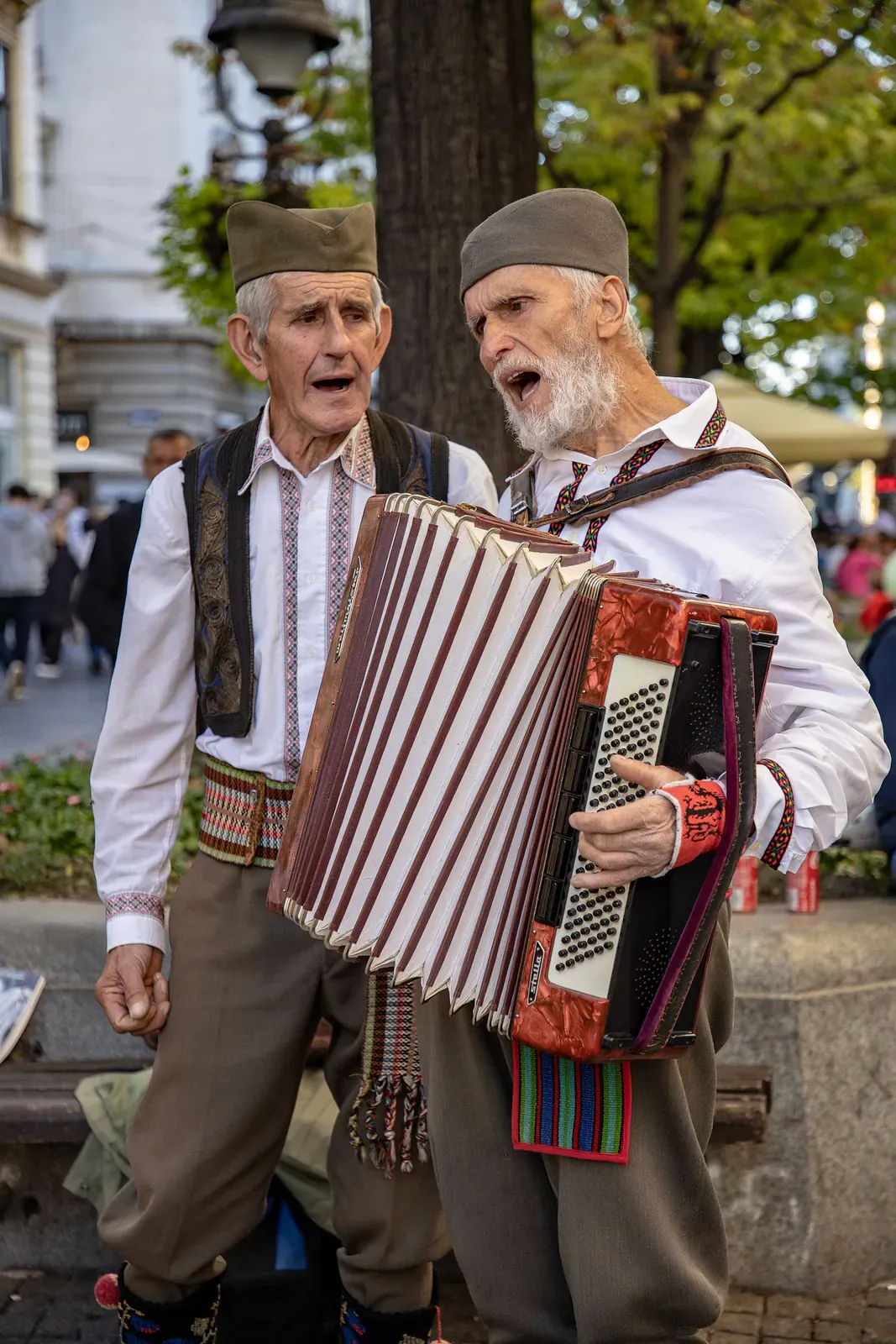
The early divas and kings came from the circle of the Kristal orchestra and from solo singers: Toni Dacheva, Gloria, Valdes, Rado Shisharkata and Sasho Roman opened the way, and Sashka Vaseva, Desi Slava, Ivana, Kamelia and Reni followed. Gloria’s debut album came in 1994 and she later became known as the prima of pop-folk. Early melodies drew on Arabic, Turkish, Romani and Greek folk music, with zurna, clarinet, accordion and buzuki. Studios such as Payner and ARA Music supplied tracks every week to dedicated television channels.
The 2000s: television and Azis
By the 2000s chalga was far more popular than neighbouring turbo-folk or Greek laiko. Its lyrics dealt openly with sex, money, alcohol and drugs, in an attitude close to hip-hop videos. The Romani-Bulgarian singer Azis came to prominence with provocative public displays, vulgar lyrics and an openly queer image, which raised both the genre’s profile and its controversy; many Bulgarians call him the king of chalga. Payner’s channels, Planeta TV from 2001 and Planeta Folk from 2007, gave singers such as Preslava, Anelia and Emilia a daily showcase.
Characteristics
Chalga is danceable pop built on folk melody and a syncopated kyuchek rhythm. Synthesizers now carry the lines that clarinets and accordions once played, and vocals are ornamented and dramatic. Lyrics are mainly Bulgarian but mix in Serbian, Albanian, Turkish, Romani, Greek, Romanian and Arabic, and more recently English, Russian, French, Spanish, Italian and German.
Mainstream success
Chalga spread through Bulgarian music channels to North Macedonia, Greece, Romania, Albania, Serbia, Kosovo, Montenegro, Bosnia and Herzegovina and Turkey, and to a lesser extent Russia, Ukraine, Moldova, Georgia, Armenia and Azerbaijan. In 2012 Sofi Marinova took pop-folk to the Eurovision stage with Love Unlimited. Today labels work with partners across the Balkans and blend chalga with R&B, hip-hop, house, trap, dubstep and drum and bass.
Culture and criticism
Chalga clubs, called diskoteka, are among the busiest venues in Sofia. The scene is also among the most debated in the country. Critics fault it for tawdriness, sexist video imagery, lax entry rules for minors at venues, formulaic production and plagiarism. Supporters call it the new Bulgarian folk music, while critics say it has little link to local tradition. Bulgarian heavy-metal fans have long been its fiercest opponents, and fans are sometimes called chalgari, a word that can be used as an insult.
Legacy
Chalga showed that a pop genre could be built from Balkan and Middle Eastern folk elements after a closed society opened. The label model of Payner, with its own studio and television channels, tied recording and broadcast together in a single company. Its stars from Gloria to Preslava keep winning national awards, and veterans such as Desi Slava and Azis still record together, as on Brutalen in 2022.
Misconceptions
Chalga is not simply Bulgarian folk music: it is a modern pop genre that draws on Greek, Turkish, Arabic and Romani sources as well as local ones, which is exactly what its critics and defenders argue over. It is also not a niche taste. It is one of the most popular forms of music in Bulgaria, with a large television and club industry. And it is not only made by or for one community, even though it is strongly associated with Bulgaria’s Romani minority and some critics claim it is made mainly for them.
Frequently asked questions
What does chalga mean?
Chalga comes from the Turkish word calgi, meaning musical instrument. In Bulgaria it names the local pop-folk genre.
When did chalga begin?
Pop-folk existed from the 1960s and 70s, but chalga as known today took off in 1989 after communism fell and broadcast limits ended.
How is chalga different from turbo-folk?
Both grew in parallel from regional folk and popular music. Turbo-folk is the Serbian form, while chalga is the Bulgarian one, with its own stars and labels.
Who are the best-known chalga artists?
Azis, Preslava, Gloria, Ivana and Desi Slava are among the best-known, and most record for Payner.
Sound
Sound sheet
Signature sounds
- Syncopated kyuchek rhythm
- Eastern-sounding folk melody on synth or clarinet
- Melismatic lead vocal
- Dance beat with hip-hop or EDM touches
Techniques
- Kyuchek rhythm
- Melismatic vocals
- Synth-folk doubling
Keys and modes
Eastern-influenced modes. Melodies draw on Arabic, Turkish, Romani and Greek folk music.
Vocals
Mostly female lead singing in Bulgarian, often with phrases in Serbian, Turkish, Romani, Greek or English.
Scenes
Where it happened
Where and when the sound lived: one bar per city on a shared timeline.
Europe
Active scenes
Peak 3, 2008-2025
Chalga discotheques fill the capital and rank among the busiest venues for tourists and locals.
Home of Payner offices, studio and Planeta complex.
Birthplace of Payner singer Tsvetelina Yaneva.
Venues and places
Dimitrovgrad, 1995 to today. In-house recording studio of the largest Bulgarian pop-folk label.
Culture
Culture markers
- Chalga discotheques
Clubs called diskoteka play pop-folk for dancing, and critics fault some for lax entry rules.
Ritual - Music video style
Videos often show wealth, partying and provocative imagery, a main target of critics.
Artwork - Azis stagewear
Unusual outfits and an openly queer public image set him apart and widened the genre controversy.
Fashion - Chalgar
Fan of chalga, sometimes used as a derogatory label by opponents such as metal fans.
Slang
Media
Key media
- 2012Zlatnite hitove na Payner
by Various. Numbered series of Payner hit collections, with volumes by Ivana, Emilia and others.
Compilation
Glossary
Terms on this page
Bulgarian pop-folk genre; the name comes from the Turkish word calgi, meaning musical instrument.
Bulgarian term for the clubs where pop-folk is played.
Syncopated Romani dance rhythm typical of the genre.
Common English name for chalga, also called ethno-pop.
Serbian counterpart that grew in parallel with chalga.
European folk family