Laïko
Laïko is Greek urban popular song led by the bouzouki, grown from commercial rebetiko in the 1930s and the mainstream sound of Greece in the 1960s and 1970s.
Greece, 1930
European folk family
Born
1930
Greece
Subgenres
3
Documented branches
Links
7
Genres it drew on or shaped
Tempo
65-155 BPMLineage
Family tree
Timeline
Era by era
From the first sparks to today. Select a dot to read the story behind it.
- Rebetiko on record
1930 to 1945
- Postwar Athens and the new bouzouki
1946 to 1959
- Classic laiko
1960 to 1979
- Contemporary laiko
1980 to today
Eras
Moments
- 1 Rebetiko on record, 1930 to 1945
- 2 Postwar Athens and the new bouzouki, 1946 to 1959
- 3 Classic laiko, 1960 to 1979
- 4 Contemporary laiko, 1980 to today
around 1930
Rebetiko on record
Rebetiko discs of the 1930s made bouzouki songs the first mass market for Greek urban music, until the Metaxas censorship of 1937 and the wartime shutdown of the record companies.
- 1932Vamvakaris makes his first recordsMarkos Vamvakaris records his first bouzouki sides in 1932, among the first rebetiko discs that fed the later laiko song.
- 1937Metaxas censorship of lyricsFrom 1937 the Metaxas regime censors all song lyrics and closes the hashish dens, pushing drug and underworld themes out of Greek studio recordings.
- 1938Tsitsanis settles in ThessalonikiVassilis Tsitsanis moves to Thessaloniki and stays about ten years, writing many songs that are recorded after the war.
- 1943Tsitsanis writes Synnefiasmeni KyriakiThe song, dated to 1943 or 1944, becomes one of the best known Greek popular songs and is later called an unofficial national anthem.
1946
Postwar Athens and the new bouzouki
Tsitsanis returned to Athens in 1946, Chiotis rebuilt the bouzouki as a four-course virtuoso instrument, and Stelios Kazantzidis turned bouzouki songs into dramatic star vehicles in the nightclubs.
- 1946Tsitsanis returns to AthensTsitsanis resumes recording in Athens and launches singers such as Sotiria Bellou and Marika Ninou, westernizing rebetiko for a wider public.
- 1948Hadjidakis lectures on rebetikoManos Hadjidakis defends rebetiko as serious music in a lecture and praises Vamvakaris and Tsitsanis, changing its reputation among educated listeners.
- 1952Kazantzidis records for ColumbiaStelios Kazantzidis makes his first studio recording in July 1952 and soon scores a hit, becoming the leading voice of the new laiko.
- 1956Four-course bouzouki arrives on recordManolis Chiotis popularizes the four-course bouzouki with guitar-like tuning, and the first recording with it dates to 1956.
1960
Classic laiko
Laiko became Greece's mainstream sound through singers such as Kazantzidis, Bithikotsis and Marinella, art composers like Hadjidakis and Theodorakis, a film hit that won an Oscar, and the junta years of 1967 to 1974.
- 1960Never on Sunday wins an OscarThe bouzouki theme of Jules Dassin's film becomes an international hit and wins the Academy Award for Best Original Song for Manos Hadjidakis.
- 1960Bithikotsis records Vamvakaris songsGrigoris Bithikotsis records a set of Markos Vamvakaris songs, starting the first phase of the rebetiko revival inside laiko.
- 1967Junta yearsUnder the regime of the Colonels from 1967 to 1974 rebetiko is banned, and its songs gain a protest meaning among listeners.
- 1969Kazantzidis and Marinella albumThe singers, married from 1964 to 1966, release the joint album Kazantzidis - Marinella in 1969.
- 1974Marinella at EurovisionMarinella sings Krasi, thalassa kai t' agori mou for Greece, the country's first Eurovision entry, and places eleventh.
around 1980
Contemporary laiko
From the early 1980s modern laiko mixed the song tradition with Western pop and dance, filled the nightclub circuit and drew criticism for formulaic songs, while older laiko stayed in the catalogue.
- 1982Contemporary laiko emergesIn the early 1980s a new laiko style appears that blends the song tradition with pop and dance and later fills the nightclub scene.
Listening path
Start listening
A short path from an easy way in to the deep end. Thumbnails come from YouTube; the player loads only when you press play.
- 01
Vassilis Tsitsanis, 1943
The song that took rebetiko into the mainstream; start here for the bouzouki line and the slow laiko mood.
- 02
Grigoris Bithikotsis, 1960
The 1960 revival that brought a Vamvakaris song into the laiko mainstream.
- 03
Stelios Kazantzidis, 1973
The dramatic voice of the classic nightclub era at its late height.
Facts
| Family | European folk |
| Origin | Greece |
| Emerged | 1930s commercialization, mainstream 1960s-70s |
| Status | Active |
| Tempo | 65 to 155 BPM |
| Meter | 2/4, 4/4, 9/8 |
| Grew out of | Rebetiko |
| Subgenres | 3 |
Laïko (Greek: λαϊκό, “of the people”) is the urban popular song of Greece, sung in Greek and led by the bouzouki.
It grew out of the commercial recordings of rebetiko in the 1930s, became the mainstream sound of the country in the 1960s and 1970s, and since the early 1980s has mixed with Western pop and dance. The term covers a classic repertoire of dramatic love, exile and hardship songs as well as a modern nightclub pop.
Origins
Until the 1930s Greek discography was dominated by two kinds of music: demotic folk song and the light, theatrical elafro tragoudi, the Greek version of international popular music, carried by singers such as Attik and Nikos Gounaris. The first rebetiko records of the 1930s changed that. Markos Vamvakaris, who made his first records in 1932, later said that his generation was the first to record laïka songs, and the style they started became the mainstream of Greek music.
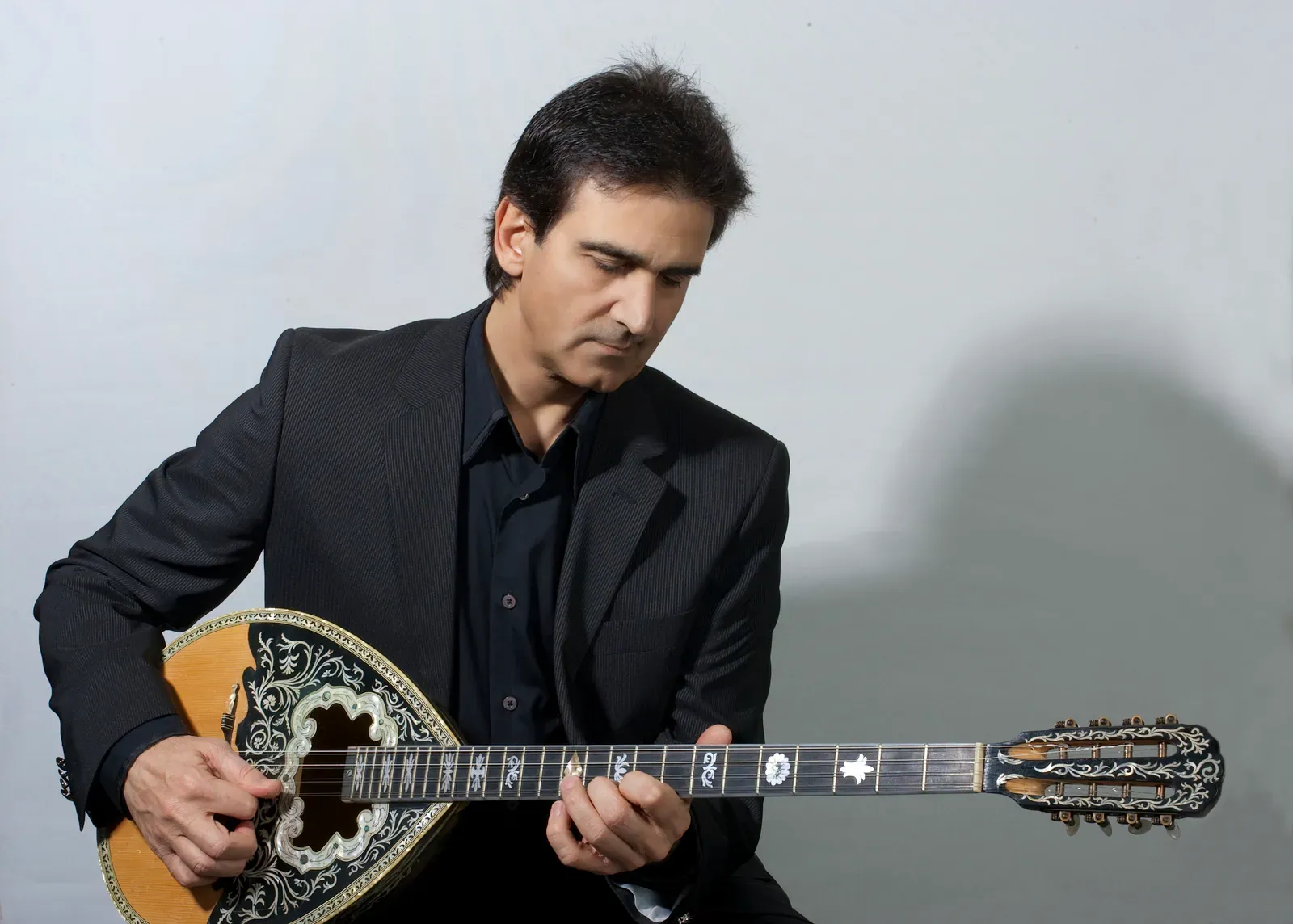
The bouzouki gave the sound its identity. The long-necked, metal-strung lute reached Greece with the refugees of the 1919 to 1922 war in Asia Minor and the exchange of populations that followed, and it soon became the central instrument of rebetiko and its offshoots. Rebetiko is the direct ancestor, and laïko is usually described as what it became once it left the margins of the port cities for a mass audience.
Rebetiko on record, 1930-1945
Recorded bouzouki songs of the 1930s worked as the first mass market for Greek urban music. Censorship interrupted it. The Metaxas regime, in power from 1936, censored all song lyrics from 1937 and closed the hashish dens, and references to drugs and the underworld disappeared from studio recordings. Composers rewrote lyrics or censored themselves before submission. Recording stopped altogether during the Axis occupation from 1941 to 1944 and resumed in 1946.
Vassilis Tsitsanis, born in Trikala in 1915, spent these years laying the foundation of the next style. He went to Athens in 1936, learned the bouzouki, made his first recording by 1937 and moved to Thessaloniki in 1938, where he stayed about ten years, ran an ouzeri and wrote many songs that were recorded only after the war. By 1941 he had recorded about 100 of his own songs.
Postwar Athens, 1946-1959
Tsitsanis returned to Athens in 1946 and recorded many of his compositions with singers such as Sotiria Bellou, Marika Ninou, Ioanna Georgakopoulou and Prodromos Tsaousakis. His westernized rebetiko reached a much wider public and set the base for laïko. In 1948 the composer Manos Hadjidakis gave a lecture defending rebetiko as serious music, praising Vamvakaris and Tsitsanis, and in 1951 he adapted classic rebetika in the piano work Six Folk Paintings.
Manolis Chiotis pushed the sound further toward Europe and Latin America, mixing in flamenco, rumba and mambo and playing in the first high-profile nightclubs to feature laïko. In the mid-1950s he made the four-course bouzouki popular; the first recording with it dates to 1956. Tuned like the upper four strings of a guitar, it allowed fast virtuoso playing and angered purists, but it became the most common bouzouki in Greek music.
Singing changed too. Stelios Kazantzidis, born in 1931 in Nea Ionia to a family of Pontic and Asia Minor refugees, made his first studio recording at Columbia in July 1952, a song by Apostolos Kaldaras. Composers such as Kaldaras, Chiotis and Giannis Papaioannou then wrote songs for his powerful voice, with more complex melodies and a more dramatic character. From 1956 he worked with Tsitsanis, whose older rebetiko classics such as “Synnefiasmeni Kyriaki” he sang to an audience that had not known them.

Classic laiko, 1960-1979
In these two decades laïko was the mainstream popular music of Greece. Singers such as Nikos Xanthopoulos and Kazantzidis, composers such as Mimis Plessas, Chiotis, Tsitsanis and George Zambetas, and lyricists of the older generation shared the stage with composers from the art-song tradition such as Stavros Xarchakos and Mikis Theodorakis. The lighter variant, elafro laïko, fed the musicals of the golden age of Greek cinema.
Two events in 1960 show how far the style had travelled. The bouzouki theme of Jules Dassin’s film Never on Sunday became an international hit and won the Academy Award for Best Original Song for Manos Hadjidakis. In the same year Grigoris Bithikotsis recorded a set of Vamvakaris songs, which opened the first phase of the rebetiko revival inside the laïko mainstream, and Vamvakaris made his first recording since 1954. From 1960 Theodorakis and Hadjidakis hired bouzouki virtuosi such as Chiotis, Zambetas and Thanassis Polyhandriotis for their recordings.
Kazantzidis dominated the nightclubs. His own “Mantoubala”, inspired by the Indian actress Madhubala, was the first record in Greece to sell over 100,000 copies when the country had about 7.5 million people. He married the singer Marinella in 1964 and the pair toured Germany and the United States; they divorced in 1966. In 1965 he stopped performing in clubs and for ten years released only studio albums, among them “Gialinos Kosmos” in 1973 and the hit “Iparho” in 1975. He then stopped recording, accusing his label of colonial-like contracts, and returned in 1987 with an album that sold 200,000 copies within hours.
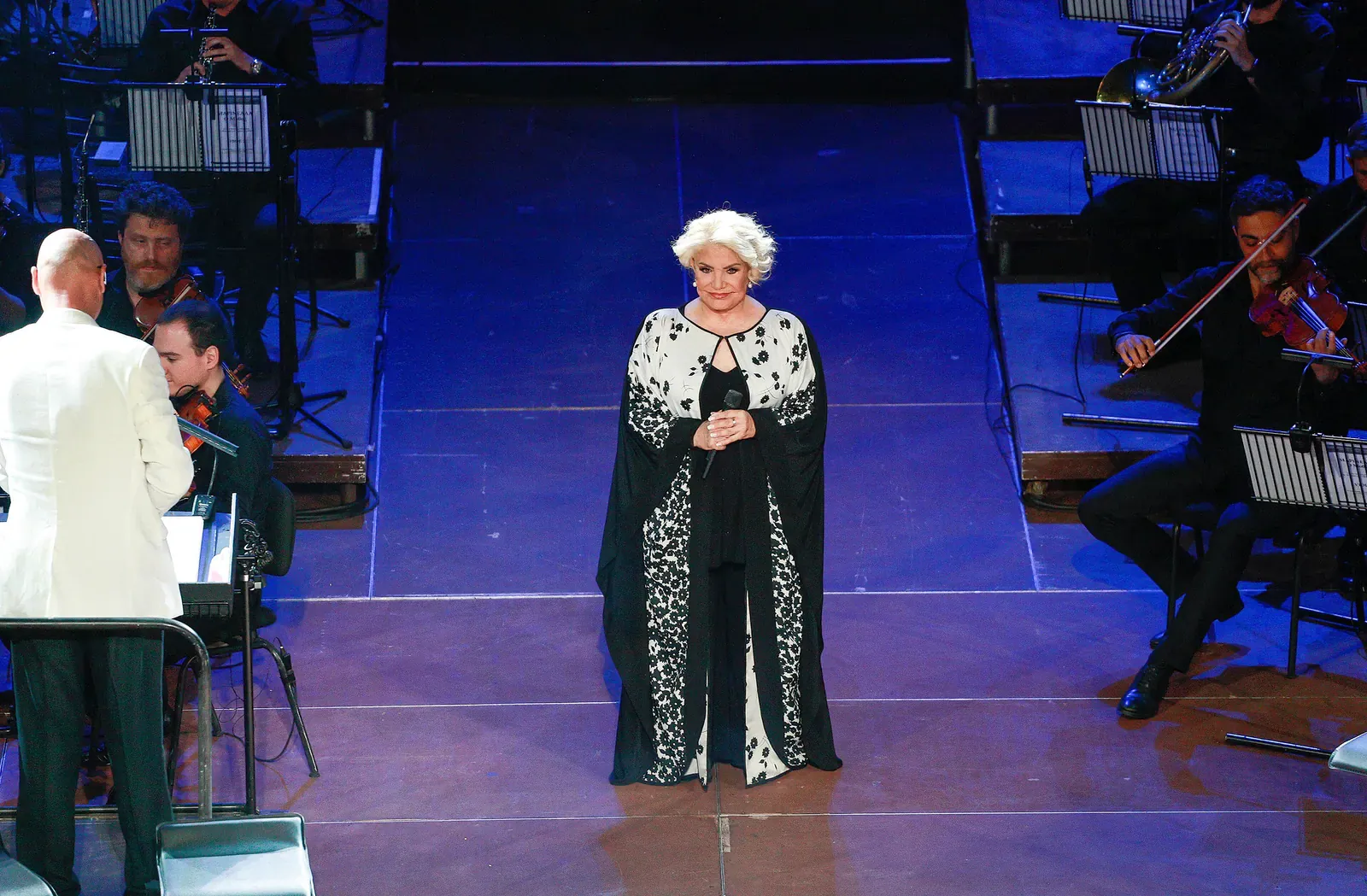
Marinella, born in Thessaloniki in 1938, became the leading woman voice of the genre. She began professionally in 1956, finished fourth at the Rio de Janeiro popular song festival of 1970 with “Kyra Giorgena”, and in 1974 sang “Krasi, thalassa kai t’ agori mou” at Eurovision, Greece’s first entry in the contest, placing eleventh. She released 66 solo albums.
The junta of 1967 to 1974 banned rebetiko, and the old songs took on a protest meaning. After the regime fell, revival groups appeared, while LP reissues of old 78 rpm records from the early 1970s fed a second phase of the revival that aimed at the sound of the originals.
Contemporary laiko, 1980-present
Contemporary laïko, also called modern laïko or laïko-pop, emerged in the early 1980s. It mixes the song tradition with international pop and dance and is now Greece’s mainstream pop. Songwriters and lyricists of the period after 1990 include Alekos Chrysovergis, Nikos Karvelas, Phoebus, Nikos Terzis, Spyros Giatras and Giorgos Theofanous. The nightclub dance floor, the pista, is central to the scene, and clubs playing only this music were called hellinadika in the 1990s and 2000s.
Greek has no single name for the style. It is often called synchrono laïko, a term also used for new songs in the older tradition, and the contrast between “westernized” and “genuine” laïko often rests on ideological and aesthetic grounds. Critics have charged laïko-pop with musical clichés, average singing and slogan-like lyrics, and with being neither laïko nor pop. Skyladiko is a derogatory term for the debased form of laïko and for the cheap, sometimes unlicensed nightclubs on the edges of towns where amplified bouzouki and electric guitars play it.
Characteristics
Laïko songs centre on a solo voice, often a man and woman in duet, singing of love, loss, exile and poverty, over a bouzouki lead and chordal guitar. A song often opens with a short improvised bouzouki taximi that sets the mode. The rhythms and dances most associated with it are zeibekiko, hasapiko, kalamatianos, syrtaki, syrta and the island nisiotika. Tempos run from slow, heavy zeibekiko ballads at about 65 beats per minute to fast dance songs near 155.
Instruments and production
The early bouzouki had three courses, six strings in three pairs, tuned according to the scale being played; that version is still preferred for old rebetiko style. The four-course bouzouki, eight strings in four pairs, replaced it in laïko. The baglamas, a small relative, adds high plucked lines, and the guitar supports the harmony. Amplification came with the nightclubs and defines the loud sound of the contemporary style, while keyboards and drum kits entered with the pop production of the 1980s.
Notable recordings
“Synnefiasmeni Kyriaki” (“Cloudy Sunday”), written by Tsitsanis in 1943 or 1944, is one of the most celebrated songs of the repertoire and has been called an unofficial national anthem. Kazantzidis, among others, made it known to the postwar public. Bithikotsis’s 1960 version of “Ta Matoklada Sou Laboun”, a Vamvakaris song, shows the revival that put the old repertoire into the mainstream. Kazantzidis’s 1973 “Gialinos Kosmos” represents the dramatic nightclub-era style at its late height.
Mainstream success
Laïko did not need a crossover: it was the country’s popular music for two decades. Its reach abroad came through film, with Never on Sunday in 1960 and the 1964 film Zorba the Greek, whose Theodorakis score spread the bouzouki sound internationally. At home the records came largely from the Greek branches of the major companies: Columbia, where Kazantzidis made his first studio recording, and later Minos-EMI.
Culture
The nightclub was the social centre: Kazantzidis rose through clubs such as Theios, Mpertzeletos and Rosignol. Zeibekiko, a slow 9/8 solo dance of improvised, inward movement, belongs to the heavy mood of many songs. The pista culture of the contemporary scene turns the club into a stage where the audience dances and sings. Rebetiko was added to the UNESCO intangible heritage lists in 2017, which renewed attention to the roots of laïko.
Legacy
Laïko links the port-city rebetiko of the 1930s with Greece’s present pop. Its descendants include elafro laïko, modern laïko and skyladiko. The art-song tradition of entechno overlapped with it through composers such as Xarchakos and Plessas, and the demotic folk song remained its older neighbour. It belongs to the wider European folk family of regional popular music.
Misconceptions
Laïko and rebetiko are often treated as one style. Rebetiko is the urban song of the poorest Greeks, from the late 19th century to the 1950s; laïko is the mass-market form that developed from it after the 1930s recordings. The four-course bouzouki is sometimes described as a copy of the guitar that replaced the traditional instrument. Its tuning is guitar-like, but the three-course instrument remains in use for older rebetiko. And skyladiko is not a synonym for laïko: it is a derogatory label for one debased branch and for the clubs that play it.
Frequently asked questions
What is laïko music?
Laïko is the Greek urban popular song, sung in Greek over a bouzouki lead, that grew out of commercial rebetiko recordings in the 1930s and dominated Greek popular music in the 1960s and 1970s.
What is the difference between laïko and rebetiko?
Rebetiko is the older urban song of the Greek poor, up to the 1950s. Laïko is the mass-market style that developed from it, with a fuller four-course bouzouki, bigger bands and dramatic singers.
Who are the most important laïko artists?
Vassilis Tsitsanis, Manolis Chiotis, Stelios Kazantzidis, Grigoris Bithikotsis and Marinella shaped the classic sound.
What is contemporary laïko?
Contemporary or modern laïko, from the early 1980s, mixes the laïko song tradition with Western pop and dance and is the mainstream pop of Greece, played in nightclubs on the pista.
Sound
Sound sheet
Anatomy of a track
| # | Part | Bars |
|---|---|---|
| 1 | Bouzouki taximi (improvised intro) | 4 |
| 2 | Verse and refrain with singer | 16 |
| 3 | Bouzouki instrumental | 8 |
| 4 | Final refrain | 8 |
Signature sounds
- Bouzouki lead with chordal guitar
- Zeibekiko 9/8 and hasapiko 4/4 rhythms
- Dramatic, ornamented solo voice
- Short improvised bouzouki taximi before the song
Drums and percussion
- Drum kit
Synths and software
- Keyboards and synthesizers
Techniques
- Bouzouki taximi
- Pick tremolo
- Zeibekiko 9/8 pattern
Keys and modes
Modes of the dromos tradition. Rebetiko-derived modes colour the melodies, over increasingly Western chords.
Minor keys. Most classic laiko songs sit in minor or harmonic minor, with a slow, sorrowful character.
Tuning
Four-course bouzouki tuned C-F-A-D
Vocals
A powerful, ornamented solo voice, often a man and woman in duet, singing of love, exile, loss and poverty.
Scenes
Where it happened
Where and when the sound lived: one bar per city on a shared timeline.
Europe
Active scenes
Peak 3, 1946
Capital of the recording industry and the nightclub circuit where laiko became a mass entertainment.
Port city where the bouzouki and its earliest recorded songs took shape.
Tsitsanis lived here for about ten years and wrote many songs of the postwar repertoire.
Culture
Culture markers
- Zeibekiko
Slow 9/8 solo dance of improvised, inward movement, tied to the heavy mood of many laiko songs.
Dance - Nightclub pista
Contemporary laiko lives in clubs with a stage and dance floor, called pista, where the audience sings and dances.
Ritual - Hasapiko and syrtaki
Hasapiko and its stage form syrtaki are the dances most known abroad from the bouzouki repertoire.
Dance
Media
Key media
- 1960Never on Sunday
by Jules Dassin. Greek film whose bouzouki theme won an Oscar and gave laiko a worldwide hearing.
Film - 1964Zorba the Greek
by Michael Cacoyannis. Film with a Mikis Theodorakis score that spread the bouzouki sound and the sirtaki dance abroad.
Film
Glossary
Terms on this page
Long-necked metal-strung lute, the lead instrument of laiko.
Lighter, more cheerful laiko used in musicals of the golden age of Greek cinema.
Dance rhythm in 4/4 often heard in laiko and rebetiko.
Greek for songs of the people, the urban popular song that grew from rebetiko.
Derogatory term for a debased form of laiko and the cheap nightclubs that play it.
Slow 9/8 rhythm and improvised solo dance, a staple of laiko.
European folk family