Czech tramping music
Czech tramping music is campfire song of the Czech tramping movement, set to guitar and later banjo and mandolin, formed after the First World War.
Bohemia, 1920
Country family
Born
1920
Bohemia
Links
7
Genres it drew on or shaped
Tempo
70-105 BPMLineage
Family tree
Grew out of
Derived from
Derived from
Bohemia, 1920
Czech tramping music
Led to (1)
Timeline
Era by era
From the first sparks to today. Select a dot to read the story behind it.
- Campfire songs
1920 to 1949
- Modern tramping song
1950 to 1989
- Festivals and heritage
1990 to today
Eras
Moments
- 1 Campfire songs, 1920 to 1949
- 2 Modern tramping song, 1950 to 1989
- 3 Festivals and heritage, 1990 to today
around 1920
Campfire songs
Tramping, scouting and woodcraft groups sang simple, harmonised songs round camp fires to guitar, drawing on Czech folk, cabaret couplets, jazz and Wild West adventure fiction.
- 1920Tramping music beginsSongs sung at camp fires accompany the Czech tramping movement that grew after the First World War.
- 1930Settlers Club foundedSix amateurs form the vocal club that becomes the popular group Settleři.
- 1949SALP foundedJiří Fallada, Josef Dobeš and Wiktor Wagner form SALP, a group playing American country in the 1950s.
around 1950
Modern tramping song
From the turn of the 1960s songs grew more poetic and arrangements richer, with mandolin, banjo, double bass and drums, while country and bluegrass bands such as Greenhorns won the Porta festival.
- 1960Modern tramping song emergesA new generation writes less naive, more poetic songs as folk and country reach Czechoslovakia.
- 1963Hoboes formThe Zlatý klíč camp band forms around songs of Wabi and Miki Ryvola.
- 1965Greenhorns formedJan Vyčítal and colleagues start a bluegrass and country group.
- 1967Greenhorns win PortaThe band wins the country and western category and records its first Supraphon single.
- 1972Brontosauři foundedJan and František Nedvěd rename their Toronto camp group Brontosauři.
- 1972Greenhorns renamed ZelenáčiThe regime forces the band to use a Czech form of its name.
- 1976Hoboes receive the Golden Porta
- 1984Rosa na kolejích releasedWabi Daněk debut LP on Supraphon carries the later unofficial tramping anthem.
1990
Festivals and heritage
Tramping songs live on through the Porta regional rounds and national final, radio programmes and festivals, and in the repertoire of singer-songwriters.
Listening path
Start listening
A short path from an easy way in to the deep end. Thumbnails come from YouTube; the player loads only when you press play.
- 01
Wabi Daněk, 1984
The modern unofficial anthem of Czech tramping.
- 02
Brontosauři, 1994
A Nedvěd brothers song from the folk side of the scene.
- 03
Brontosauři, 2001
A fast, banjo-bright camp song.
Facts
| Family | Country |
| Origin | Bohemia, Czechia |
| Emerged | 1920s to |
| Status | Active |
| Tempo | 70 to 105 BPM |
| Meter | 4/4 |
| Grew out of | Western music, Country |
Czech tramping music (trampská hudba, also trampská píseň) is the song tradition of the Czech tramping movement, the outdoor hiking and camping culture that arose after the First World War.
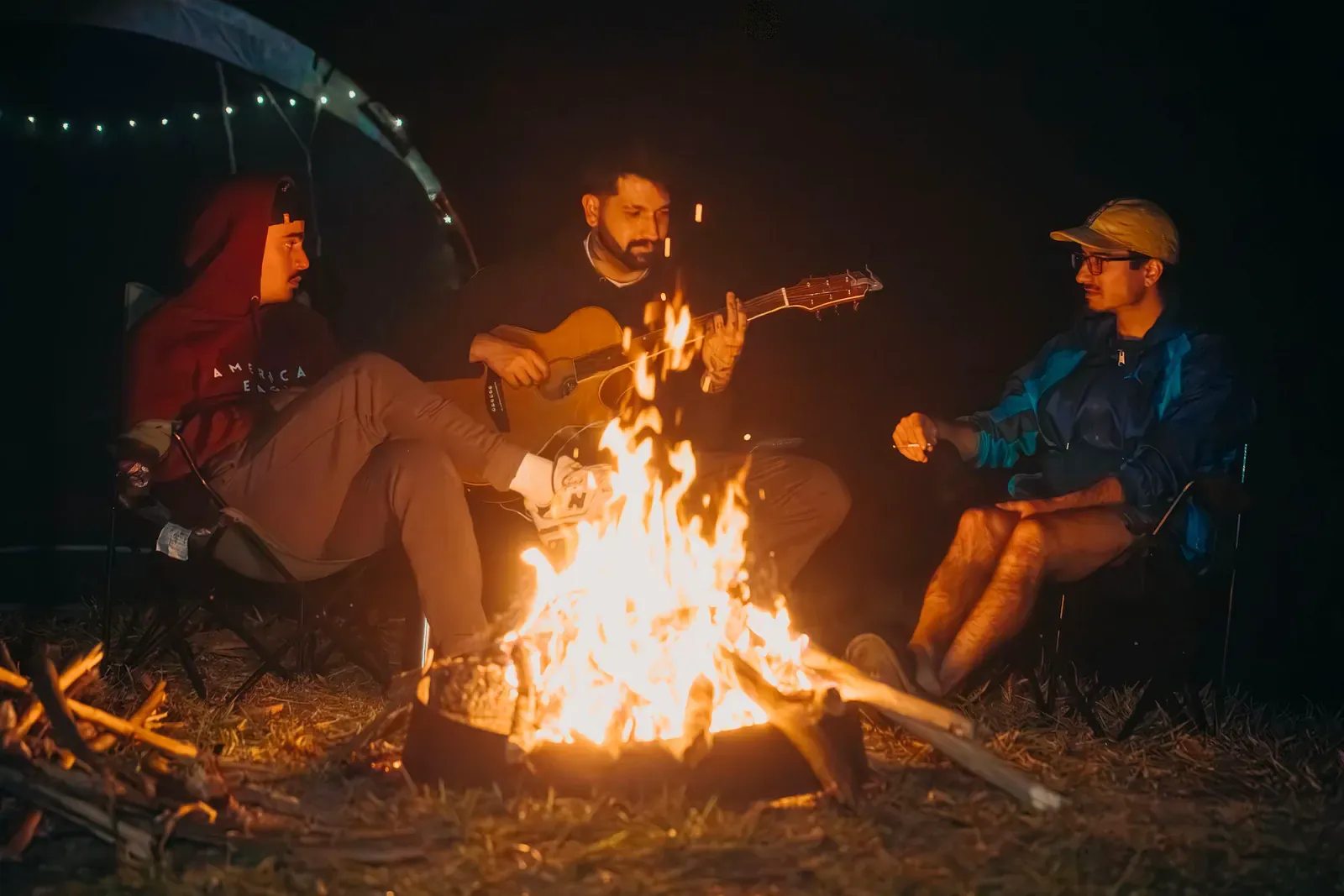
It pairs the instruments of American country music with Czech-language lyrics and Czech folk melody, and it was written to be sung on the trail and round the camp fire, usually in harmony by many amateur singers.
Origins
The first tramping songs were informal and spontaneous, sung at weekends at the fires of camps, meetings and tramping settlements (osady) to guitar. Melodies and harmonies were simple, the texts plain and often sentimental, and the singing was usually part-singing by a larger group.
The sources were varied. Adventure fiction about the Wild West and exotic lands supplied the imagery. Musically the songs grew from Czech folk song, broadsheet ballads, the songs of workers’ choral societies, the singing of the National Revival and cabaret couplets, and the new jazz of the period left its mark too. Jarka Mottl, born in 1900, is regarded as the author of the first tramping song text, and with his collaborator Karel Melíšek he wrote in the 1930s. Other early writers include Vladimír Eddy Fořt, Jenda Korda, Eduard Ingriš and Mirko Vostrý, and the composer Jaroslav Ježek is also counted among the authors.
The unofficial tramping anthem of the old days is “Vlajka” (“Vlajka vzhůru letí”) by Jenda Korda. Many early songs passed into general use and were taken up by record companies and radio.
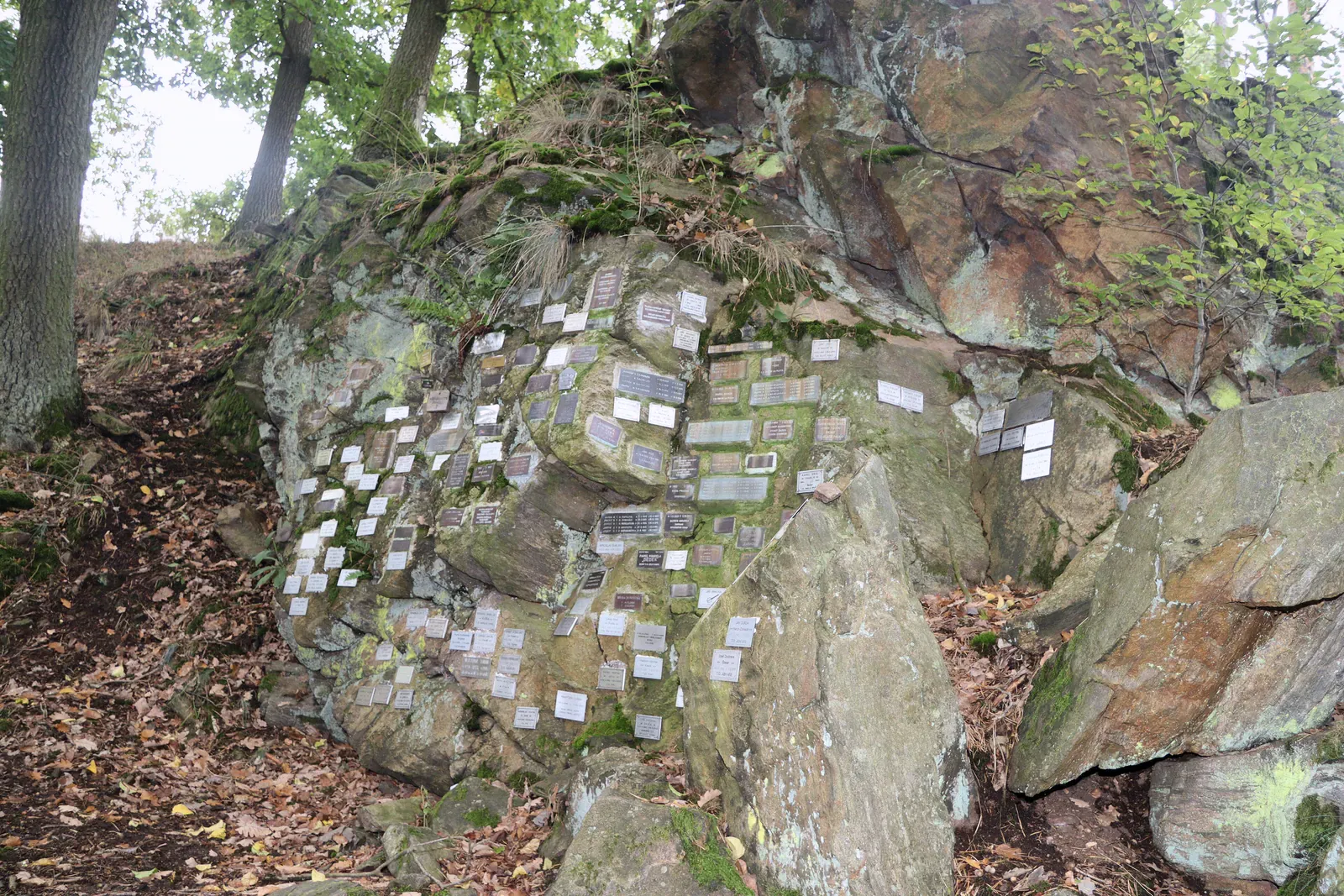
The 1930s and the vocal groups
Settleři, first called Settlers Club, began in 1930 as a six-member amateur club devoted to tramping songs. During the 1930s it became a classical vocal quartet with a much wider repertoire of operetta, musical and mainstream popular songs, helped by the broad popularity of classic tramping music. It broadcast on Czechoslovak radio and later television, recorded for Esta, Ultraphon and later Supraphon, and remained active until the mid-1980s. Duo Červánek is another interpreter of the period.
Modern tramping song, 1950s-1989
Modern tramping music began to form at the turn of the 1950s and 1960s, at about the same time as folk music appeared in the world and in Czechoslovakia, with Spirituál kvintet as the usual example. American country reached Czech audiences too, in the 1950s through SALP, a group founded in 1949 by Jiří Fallada (the lyricist of “Buráky”), Josef Dobeš, later the steel guitarist of Greenhorns, and Wiktor Wagner.
The songs changed with a new generation. They became less naive, rhythmically and harmonically richer, and turned towards the poetry of everyday life. Men’s choirs singing unaccompanied parts nearly vanished, and arrangements added mandolins, banjos, double basses and drums beside the guitar. Rock and roll, beat music and American country all influenced the sound. Communist cultural policy slowed the arrival of Western styles and sometimes met them with official disapproval, which left room for original Czech work.
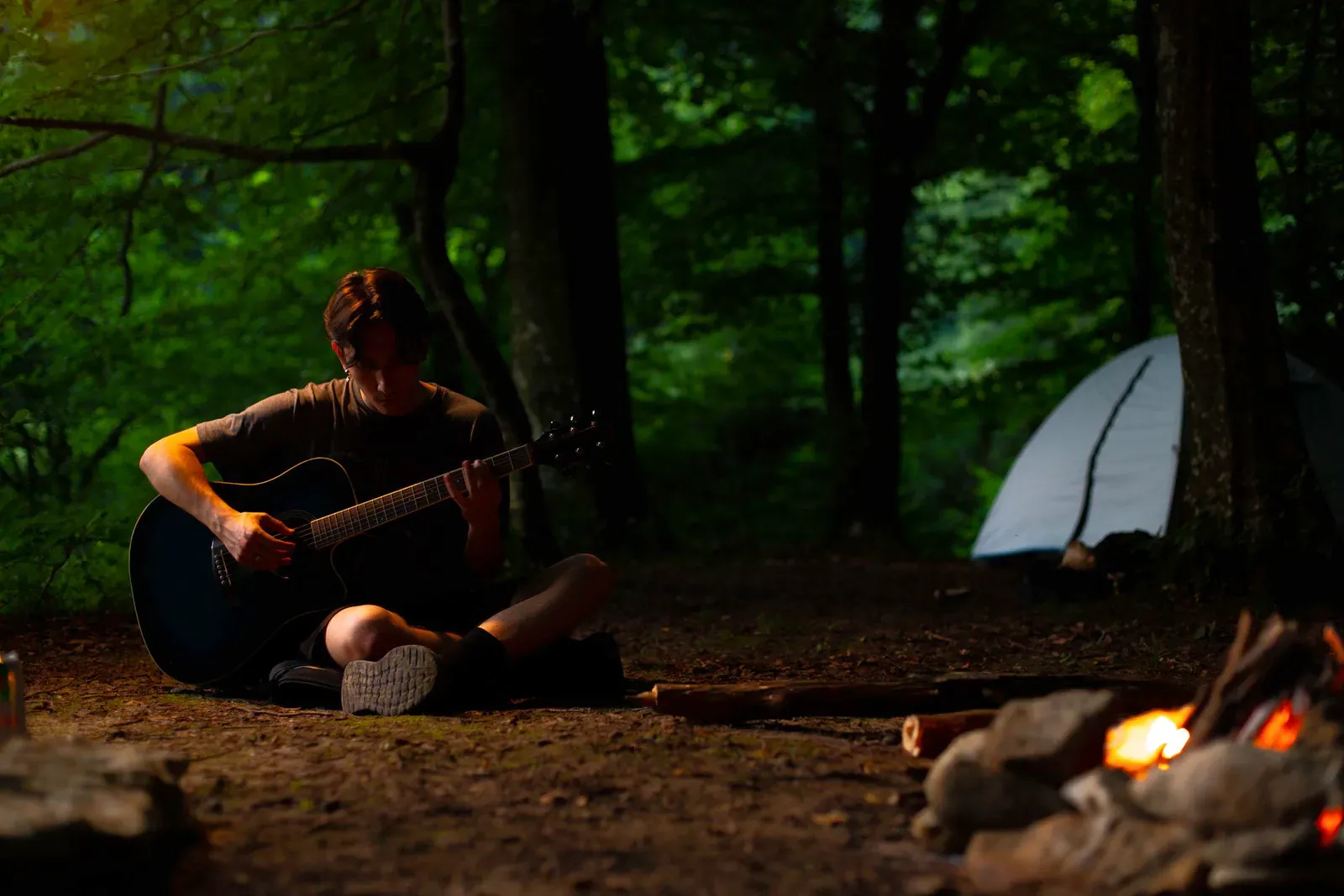
One of the most distinctive modern bands was Hoboes, formed between 1963 and 1965 as the band of the Zlatý klíč settlement around the songs of the brothers Wabi (Jiří) and Miki (Mirko) Ryvola. They placed high at the Porta festival around the turn of the 1970s and received the Golden Porta in 1976. Wabi Ryvola, born in 1935 in Kladno, was active from the end of the 1950s into the 1990s.
In the 1960s the first amateur groups playing American country also appeared: Greenhorns, White Stars, Rangers and others. Greenhorns came from the beat-club scene: founded in 1965 by Jan Vyčítal, Josef Šimek, Marko Čermák, Petr Bryndač and Jiří Fallada, they flopped at their first gig in the Olympic beat club and then quickly found success among trampers. They played on the radio in December 1965, on television in 1966 and in clubs in West Germany. In 1967 they won the country and western category at Porta and recorded their first single for Supraphon, and they won again in 1968, the year of their first EP. The August 1968 occupation caught them on tour in Bavaria; they considered emigrating but returned at the end of the year. In 1972 the regime forced them to adopt the Czech form of the name, Zelenáči. The band, built on bluegrass and classic country, was active until 2020 and is tied to its singer and lyricist Jan Vyčítal.
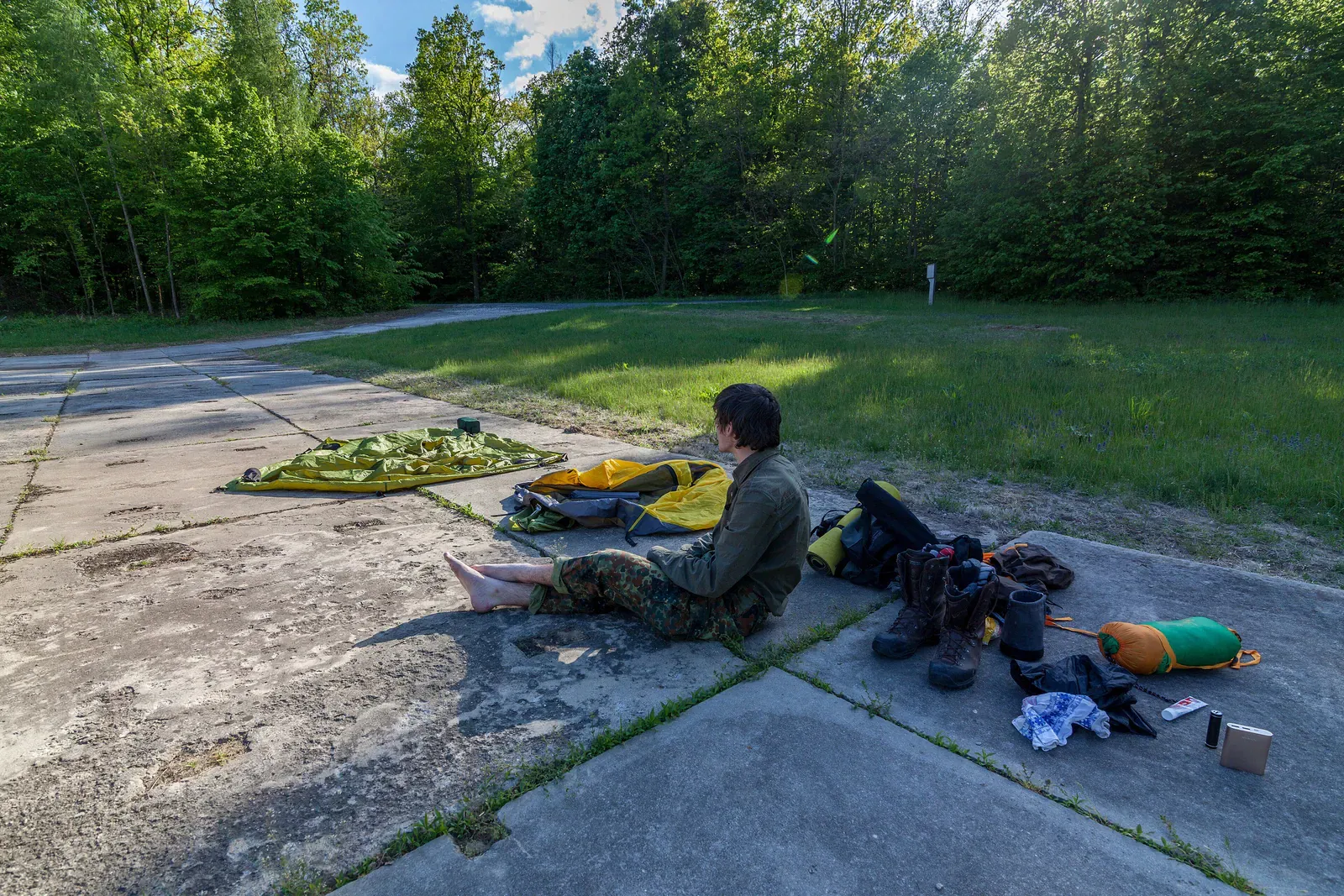
Among the other makers of the modern style are Pacifik of Tony Linhart, Brontosauři of the brothers František and Jan Nedvěd, Hop Trop, Kamarádi táborových ohňů, and the crime-novel writer Jaroslav Velinský, known as Kapitán Kid. Brontosauři were founded in 1972 by renaming the group Toronto, which began in a tramping settlement of the same name on the Sázava, and soon had success at Porta. Miroslav “Skunk” Jaroš wrote songs including “Montgomery” (“Jižní eskadrona”), “Rychlejší koně” and “Dopis amerického vojáka”. Karel Kryl, the most prominent of the first singer-songwriters, belongs to the neighbouring folk song world.
Characteristics
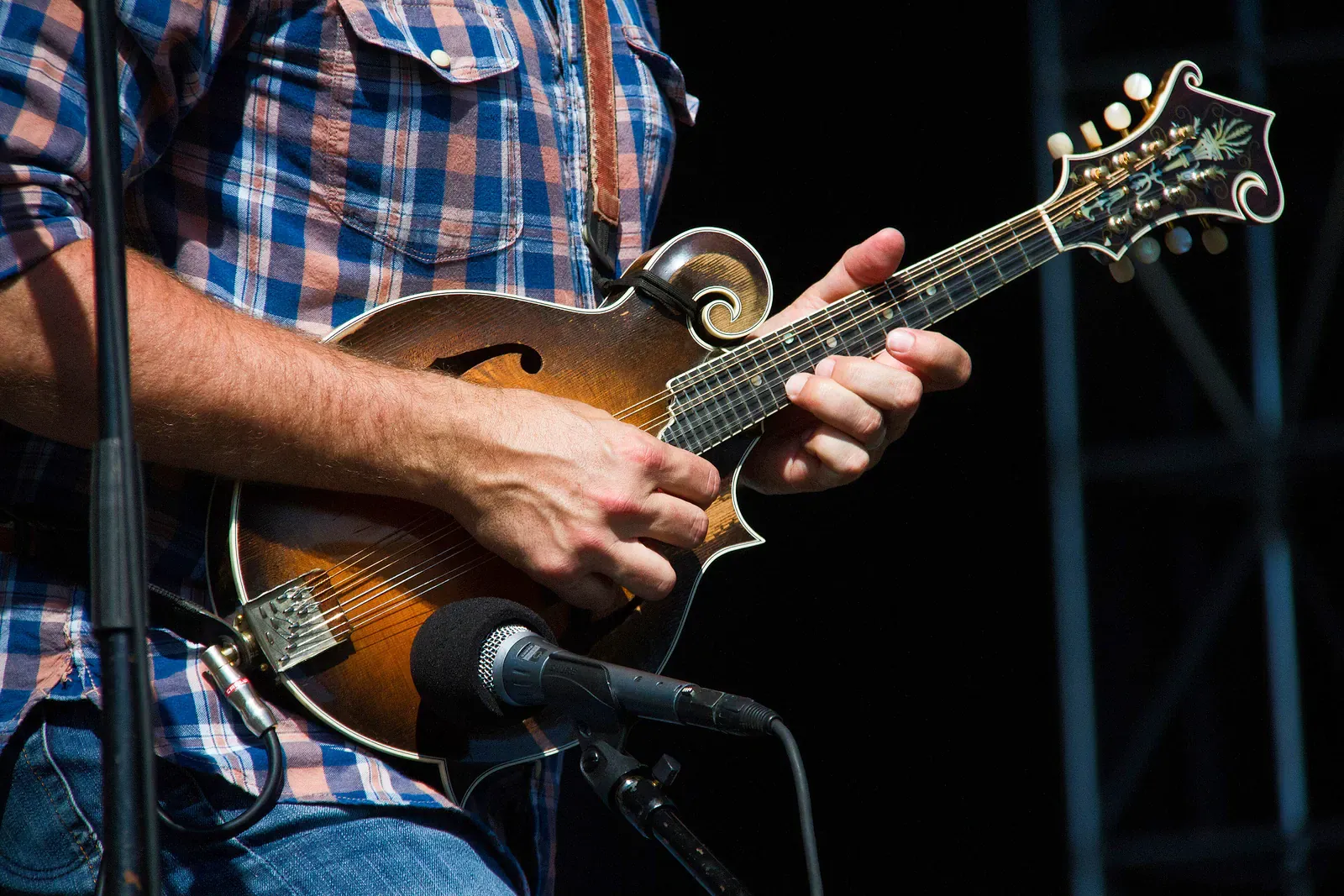
The core is the guitar, accompanied in the modern era by banjo, mandolin, harmonica and double bass, with steel guitar in country-leaning groups. Singing is often two- or three-part and meant to be joined by the listener, in Czech, with a repertoire shaped by camp fires, campsites and the outdoor life. Waltz and polka inflections tie the songs to Central European dance. The measured recordings run at moderate tempos and sit in keys such as C major, D major and E minor, the guitar-friendly ones.
Instruments and production
Tramping music was made by amateurs round a fire, and its production reflects that: acoustic instruments, simple chord structures and voices in unison or parts rather than studio effects. When bands took it to records and radio, the sound stayed acoustic, with banjo and mandolin added in the bluegrass-leaning style and steel guitar in the country-leaning one. Supraphon issued many of these records.
Notable recordings
“Rosa na kolejích” (“Dew on the Tracks”) by Wabi Daněk, from the album of the same name on Supraphon in 1984, is the modern unofficial anthem. Daněk, born in Zlín in 1947, was a trained fitter and ambulance driver who turned professional in 1983, took his nickname from Wabi Ryvola, whose songs he played in his youth, and wrote over 150 songs. The critic Jiří Černý called him the most prominent figure of the new wave of tramping song and the album one of the best debuts in Czech popular music.
Brontosauři’s “Zahrádky” shows the folk-leaning side of the scene, and their “Tulácký ráno” the livelier, faster side.
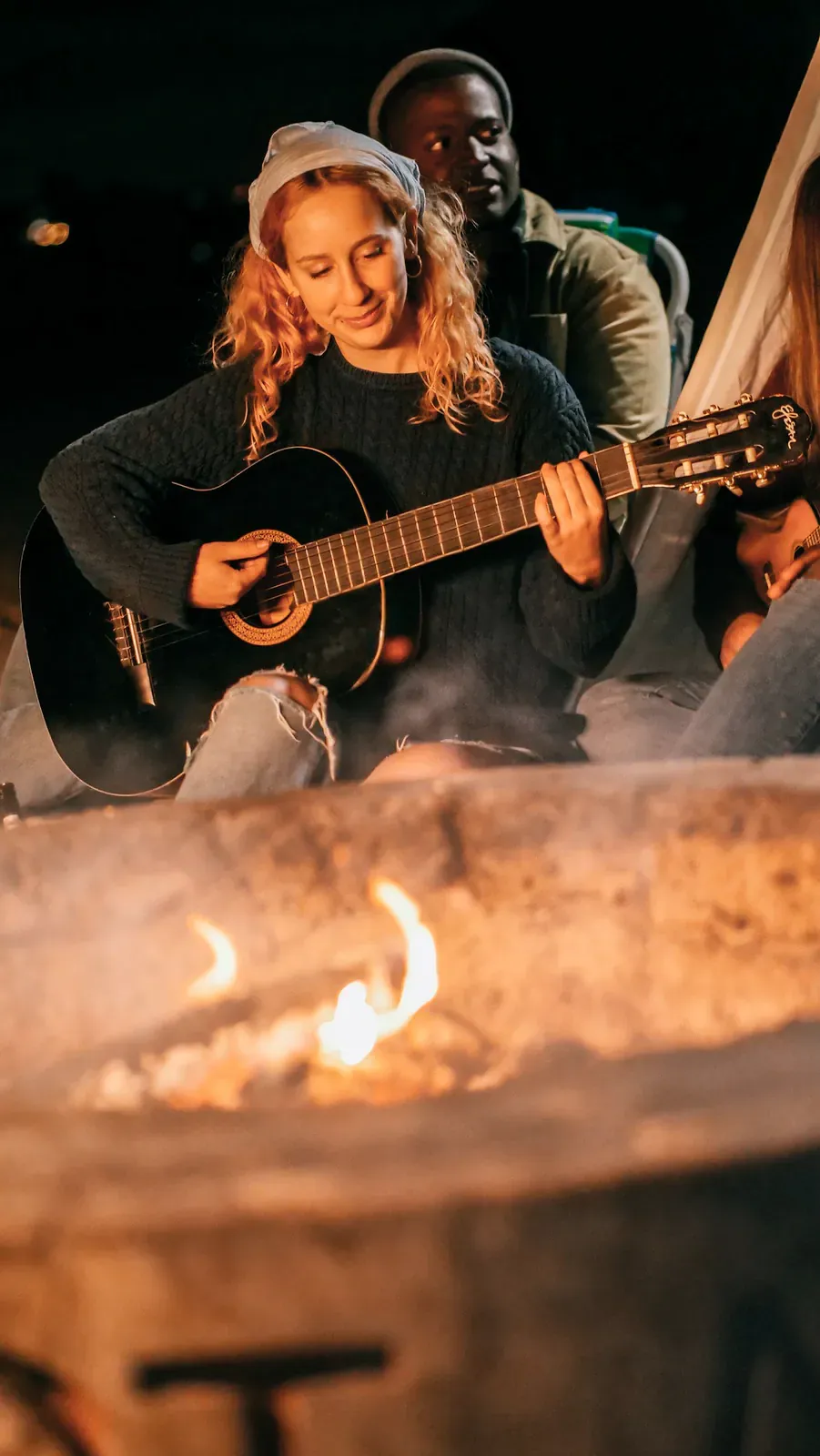
Festivals and radio
The Porta festival, whose regional rounds send winners to the Czech national final in Řevnice, gives tramping music a firm place. Olešnická kytka, a festival of country, folk and tramping music organised by T. O. Zmijáci, takes place in Olešnice in Moravia on the first weekend of June. Czech country radio broadcasts the programme Ozvěny osadních ohňů, long hosted by Antonín Linhart of Pacifik. The CD series Nejhezčí české trampské písničky collects classic and popular songs.
Legacy
The tradition fed the later Czech singer-songwriter scene, and the boundaries between tramping, folk and country are not sharp: Wabi Daněk was counted both as modern country and as contemporary folk. Present-day authors such as Radůza and Ivan Mládek build on it. Tramping song also gave rise to a group of related styles later presented at Porta, known as the “porta genres”.
Misconceptions
Tramping music is sometimes called a Czech copy of American country. In fact it grew from Czech folk song, broadsheet ballads, choral-society singing and cabaret couplets, and American country entered in a later wave. It is also not only old campfire repertoire: from the early 1960s a modern tramping song with richer arrangements and poetic lyrics existed beside it. And it is not confined to the woods: concerts of tramping songs are popular in music venues and private gatherings away from nature.
Frequently asked questions
What is Czech tramping music?
Czech tramping music is the song tradition of the Czech tramping movement, sung in Czech to guitar, later with banjo and mandolin, in harmony and meant to be sung round a camp fire.
When did Czech tramping music begin?
It arose after the First World War together with the tramping movement, in the 1920s and 1930s; a modern tramping song followed from the turn of the 1950s and 1960s.
What is the anthem of Czech tramping music?
The old unofficial anthem is “Vlajka” by Jenda Korda, and the modern one is “Rosa na kolejích” by Wabi Daněk.
How is Czech tramping music related to bluegrass and country?
Its instrumentation comes from American country, and Czech bluegrass is a significant component of the tramping style. See bluegrass and the country family.
What is the Porta festival?
Porta is a festival of folk, country and tramping music with regional rounds whose winners go to the Czech national final in Řevnice.
Sound
Sound sheet
Signature sounds
- Guitar-led campfire accompaniment
- Two- and three-part sung harmony
- Waltz and polka inflections
- Czech-language lyrics
Techniques
- Part-singing
- Bluegrass banjo and mandolin
- Steel guitar
Keys and modes
Major and minor guitar keys. Measured recordings sit in C and D major and E minor.
Vocals
Group singalong with solo verses, in Czech.
Scenes
Where it happened
Where and when the sound lived: one bar per city on a shared timeline.
Europe
Active scenes
Peak 2, 1990-2025
Capital and base of the Ryvola brothers and many camp bands.
Host of the Czech national final of the Porta festival.
Glossary
Terms on this page
Name used in Czechoslovakia for American-style country music.
A tramping camp community, often with its own band.
Festival of folk, country and tramping music with regional rounds and a national final.
Czech outdoor hiking and camping movement that arose after the First World War.
Country family