Polka
Polka is a Bohemian 2/4 couple dance and dance music from the 1830s that spread across Europe and the Americas, with accordion-led regional band styles.
Bohemia, 1830
European folk family
Born
1830
Bohemia
Subgenres
4
Documented branches
Links
22
Genres it drew on or shaped
Tempo
100-160 BPMLineage
Family tree
Grew out of
Bohemia, 1830
Polka
Timeline
Era by era
From the first sparks to today. Select a dot to read the story behind it.
- Bohemian origin and European craze
1830 to 1859
- Ballroom and concert polka
1860 to 1899
- Records and immigrant bands
1900 to 1939
- Polka kings and regional styles
1940 to 1984
- Grammy era and alternative polka
1985 to today
Eras
Moments
- 1 Bohemian origin and European craze, 1830 to 1859
- 2 Ballroom and concert polka, 1860 to 1899
- 3 Records and immigrant bands, 1900 to 1939
- 4 Polka kings and regional styles, 1940 to 1984
- 5 Grammy era and alternative polka, 1985 to today
around 1830
Bohemian origin and European craze
A half-step couple dance from Bohemia reached Prague by 1835, Vienna by 1839, Paris by 1840 and London by 1844, setting off a polkamania across the ballrooms of Europe.
- 1830First polka danced in BohemiaA later account credits a young woman, Anna Slezakova, with dancing in an unusual way to the folk song Uncle Nimra Bought a White Horse, noticed by the music teacher Josef Neruda.
- 1835Polka reaches Prague ballroomsThe dance moves from the Bohemian countryside into the city ballrooms.
- 1839Polka reaches ViennaThe capital of the Habsburg empire takes up the dance, and its dance composers begin writing polkas.
- 1840Polkamania in ParisPrague dance teacher Johann Raab introduces the polka in Paris, where its popularity is called polkamania.
- 1844London and the first printed origin storyThe polka becomes fashionable in London and arrives in America, and the Bohemian periodical Bohemia prints the first account of its origin.
around 1860
Ballroom and concert polka
Vienna's composers, led by the Strauss family, wrote polkas in four-theme form, from the graceful French polka to the fast polka schnell, while Smetana set the dance in The Bartered Bride.
- 1869Pizzicato Polka by the Strauss brothersJohann Strauss II and Josef Strauss write a polka played entirely on plucked strings, composed for a trip to Russia.
around 1900
Records and immigrant bands
Gramophone discs spread the dance, Czech, Slovene, German and Polish immigrants built polka bands in the American Midwest, and Vejvoda's 1927 polka became Beer Barrel Polka in 1939.
- 1927Vejvoda composes the Modrany polkaJaromir Vejvoda writes the tune later known as Skoda lasky and Beer Barrel Polka, first played without words as Modranska polka.
- 1939Beer Barrel Polka becomes a worldwide hitThe Andrews Sisters record the English version, and Will Glahe's instrumental reaches number 3 on Your Hit Parade in June.
1940
Polka kings and regional styles
Frankie Yankovic's Just Because sold a million in 1947, Cleveland, Chicago and Milwaukee developed distinct band styles, and the Avsenik ensemble made Slovenian polka a hit across German-speaking Europe.
- 1947Just Because sells a millionRecorded in late 1947, Frankie Yankovic's Just Because becomes the first polka record to sell over a million copies.
- 1948Yankovic is crowned America's Polka KingHe wins a battle of the bands against five rival bandleaders at the Milwaukee Arena on 9 June.
- 1953Avsenik Brothers Ensemble formedSlavko and Vilko Avsenik found their ensemble in Begunje na Gorenjskem, Slovenia.
- 1955Na Golici is releasedSlavko Avsenik's instrumental, sometimes called the most played instrumental piece in history, becomes the ensemble's signature.
- 1956Polka Varieties begins on Cleveland televisionThe hour-long programme runs until 1983 and is for years the only US television show devoted to polka.
- 1979Brave Combo formed in DentonCarl Finch's band starts mixing polka with rock and Latin dance styles.
1985
Grammy era and alternative polka
A Grammy category for polka ran from 1985 to 2009 and was dominated by Jimmy Sturr, while Brave Combo and Weird Al Yankovic recast polka for rock audiences.
- 1986First Grammy for polkaFrankie Yankovic wins the new Best Polka Album award for 70 Years of Hits.
- 2009Grammy polka category droppedThe Recording Academy eliminates the category after a declining number of polka albums are submitted.
Listening path
Start listening
A short path from an easy way in to the deep end. Thumbnails come from YouTube; the player loads only when you press play.
- 01
Johann Strauss II and Josef Strauss, 1869
The concert-hall polka of the Strauss brothers, played entirely on plucked strings.
- 02
Frankie Yankovic, 1947
The first million-selling polka record; listen for the accordion lead over a steady two-beat pulse.
- 03
Avsenik Brothers Ensemble, 1955
The Slovenian instrumental whose trumpet, clarinet and accordion lines defined the Oberkrain sound.
- 04
Jimmy Sturr and His Orchestra, 2014
A live brass-band reading of an American polka novelty favourite.
- 05
Weird Al Yankovic, 2011
A polka medley of pop hits that shows how the style gets recast for new audiences.
Facts
| Family | European folk |
| Origin | Bohemia, Czechia |
| Emerged | C. 1830, documented 1844 |
| Status | Active |
| Tempo | 100 to 160 BPM |
| Meter | 2/4 |
| Subgenres | 4 |
Polka is a couple dance in 2/4 time and the dance music written for it, which began in nineteenth-century Bohemia, now the Czech Republic. It is built on a quick half-step, a strong two-beat pulse and tunes carried by accordion, clarinet or brass.
After a ballroom craze across Europe in the 1840s it settled into folk, concert and immigrant traditions on several continents.
Origins
The name probably comes from the Czech word půlka, meaning half, and points to the half-step and the half-tempo of the dance, which is counted in 2/4. A competing explanation links it to the Czech and Polish word for a Polish woman: after the November Uprising of 1830 to 1831 the dance was renamed as a gesture of sympathy for Poland, and the new name entered the major European languages in the early 1840s.
The origin story first appeared in print in 1844, in the periodical Bohemia. It credits a young Bohemian woman, Anna Slezáková, who in 1830 danced in an unusual way to a folk song called “Uncle Nimra Bought a White Horse”. The music teacher Josef Neruda noticed her, wrote down the tune and taught other young men the steps. Historians treat the polka as a quicker relative of the waltz, its rise tied to Romantic idealising of peasant culture.
Spread across Europe, 1835-1869
The dance reached the ballrooms of Prague by 1835 and Vienna by 1839. In 1840 a Prague dance teacher, Johann Raab, introduced it in Paris, where the enthusiasm was named polkamania. London followed in 1844, when the polka was considered highly fashionable, and it crossed to America in the same period. In the United States it stayed a popular ballroom dance, especially among growing Central, Northern and Eastern European immigrant communities, into the late nineteenth century.
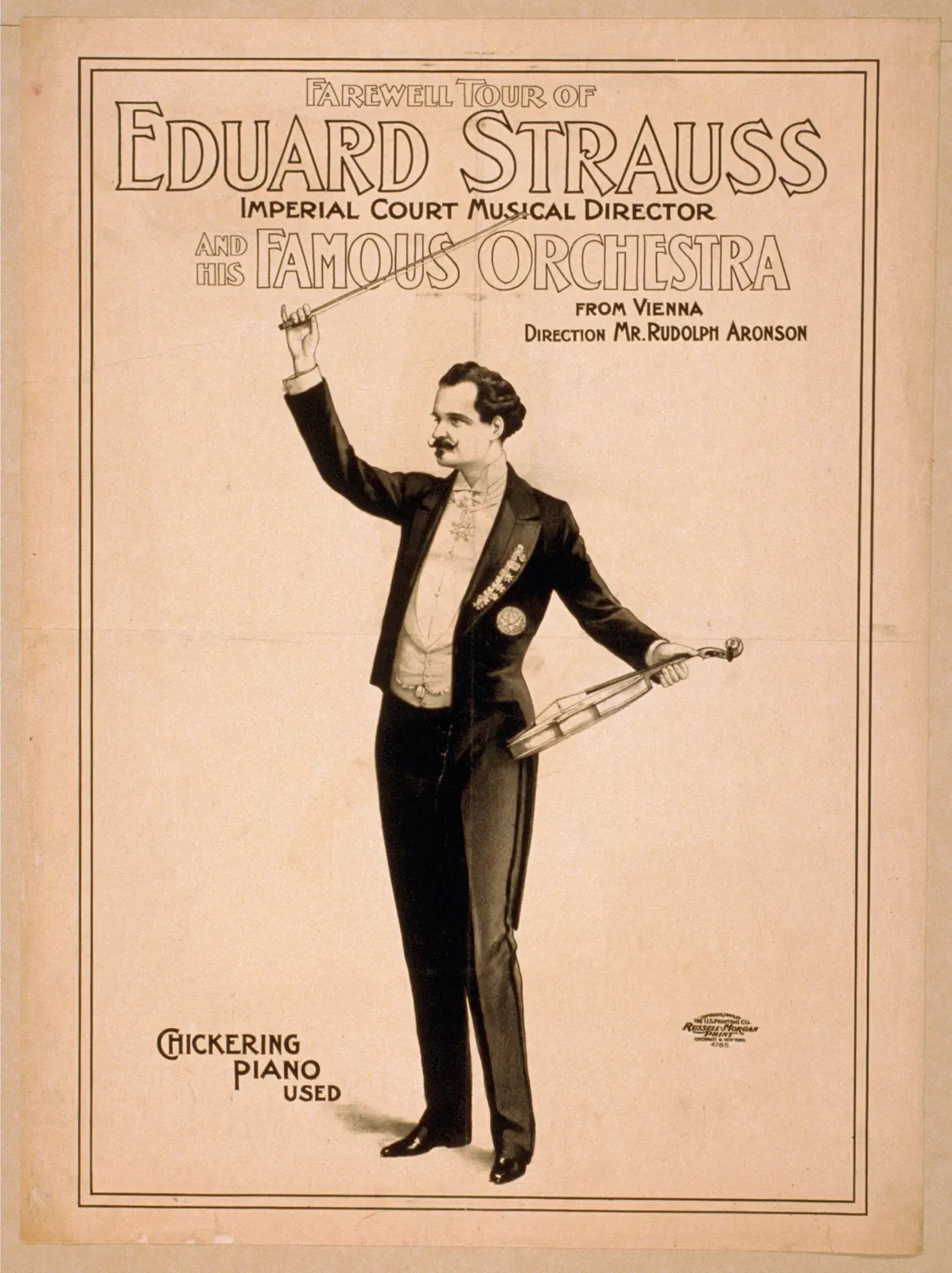
Vienna, the cultural centre of the Habsburg empire, turned the polka into concert music. Most of its dance composers wrote polkas, and the Strauss family, better known for waltzes, left several that survive. A nineteenth-century concert polka usually has four themes: two main themes, then a Trio of two more, sometimes introduced by a short intrada. The repertoire split into types. The polka française is slower and more graceful, the polka-mazurka borrows the mazurka’s tempo, and the polka schnell is a fast polka close to the galop, the speciality of Eduard Strauss. In 1869 Johann Strauss II and his brother Josef wrote the Pizzicato Polka, played entirely on plucked strings, for a trip to Russia. Bedřich Smetana put the dance into The Bartered Bride.
Records and immigrant bands, 1900-1939
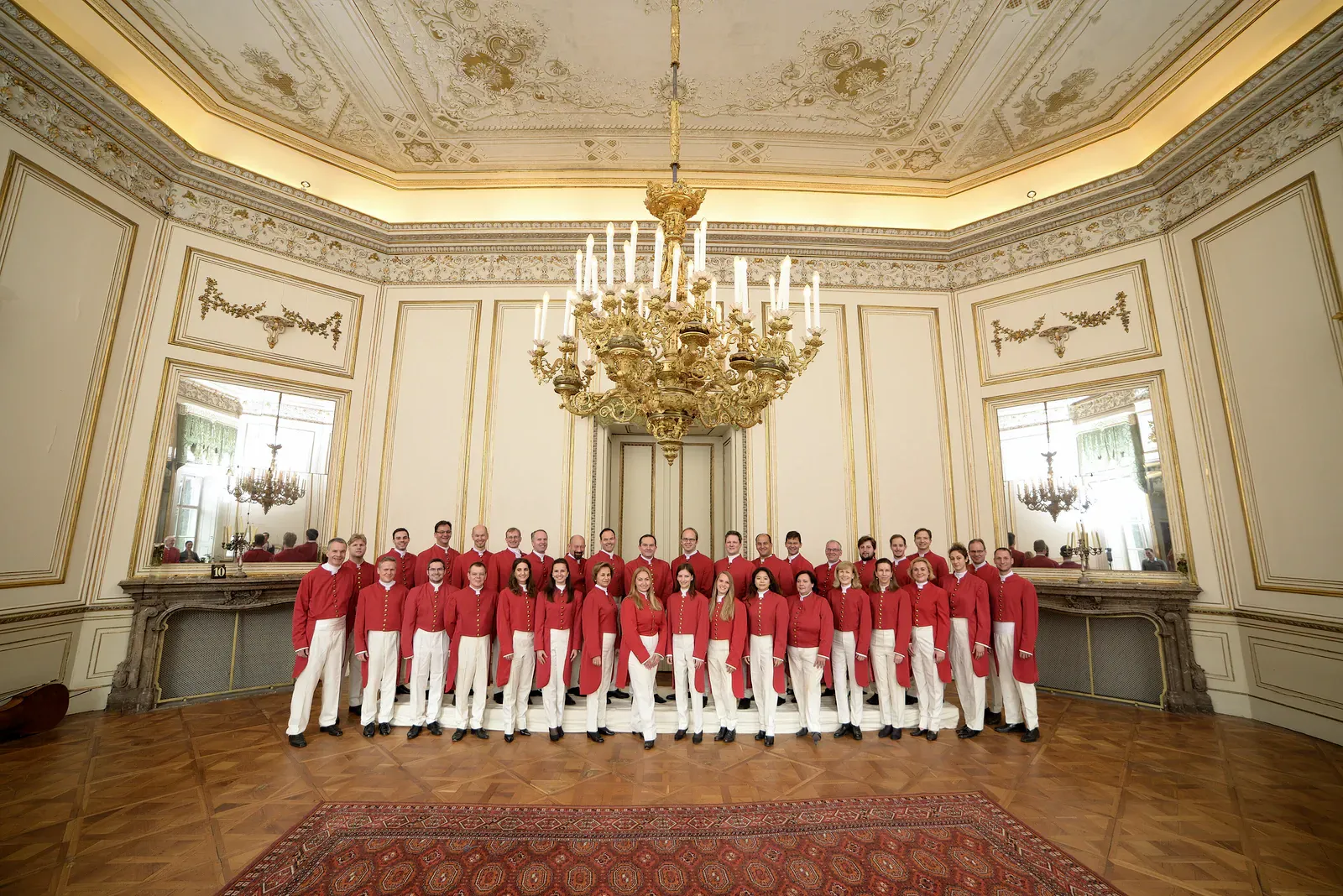
Emile Berliner’s Gramophone company issued some of the earliest polka discs. In the American Midwest, Czech, German, Polish and Slovene immigrants built dance bands that played for ethnic clubs and union halls, and the polka became the music of the parish hall and the wedding.
The most widely heard polka melody dates from this period. Jaromír Vejvoda composed it in 1927, and it was first played without words as “Modřanská polka”. Vašek Zeman added Czech lyrics in 1934 under the title “Škoda lásky”, about unrequited love. English words by Lew Brown and Wladimir Timm recast it as a celebration of the end of Prohibition, and the song became a hit after The Andrews Sisters recorded it in 1939. Will Glahé’s instrumental the same year reached number 3 on the radio hit chart in June. During the war, soldiers on every side sang versions in many languages, and for years several countries claimed it as their own folk song.
Polka kings and regional styles, 1940-1984
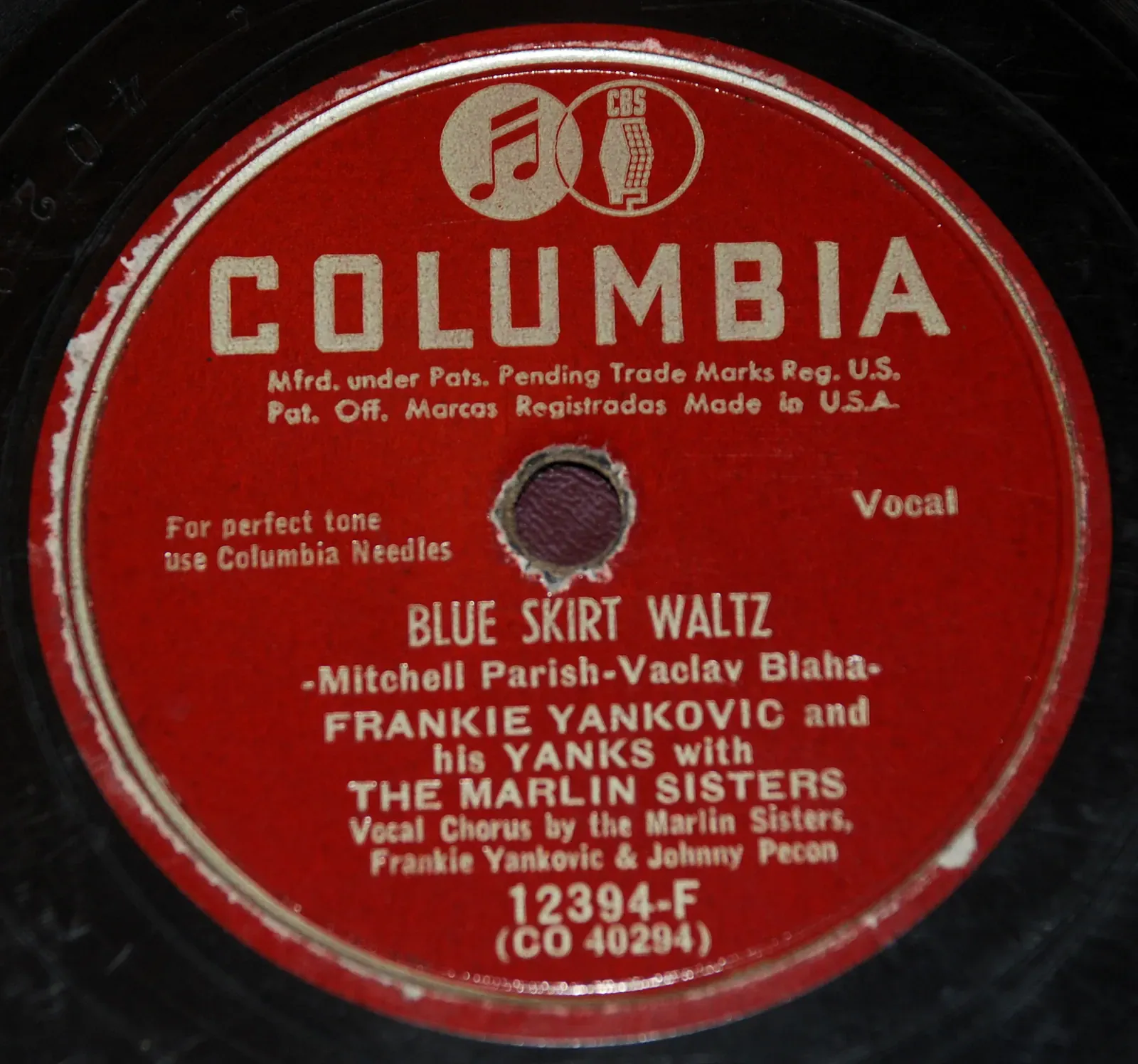
Cleveland produced the first polka star. Frankie Yankovic, a Cleveland accordionist who grew up around Slovenian social clubs, recorded “Just Because” in late 1947, and it became the first polka record to sell over a million copies. Columbia reportedly agreed to issue it only after he promised to buy the first 10,000 copies himself. On 9 June 1948 he won a battle of the bands against five rival bandleaders at the Milwaukee Arena and became known as America’s Polka King. His 1949 “Blue Skirt Waltz”, a Bohemian waltz tune given new English words, sold over 2.5 million copies. Both sides of one of his Columbia discs appear below.
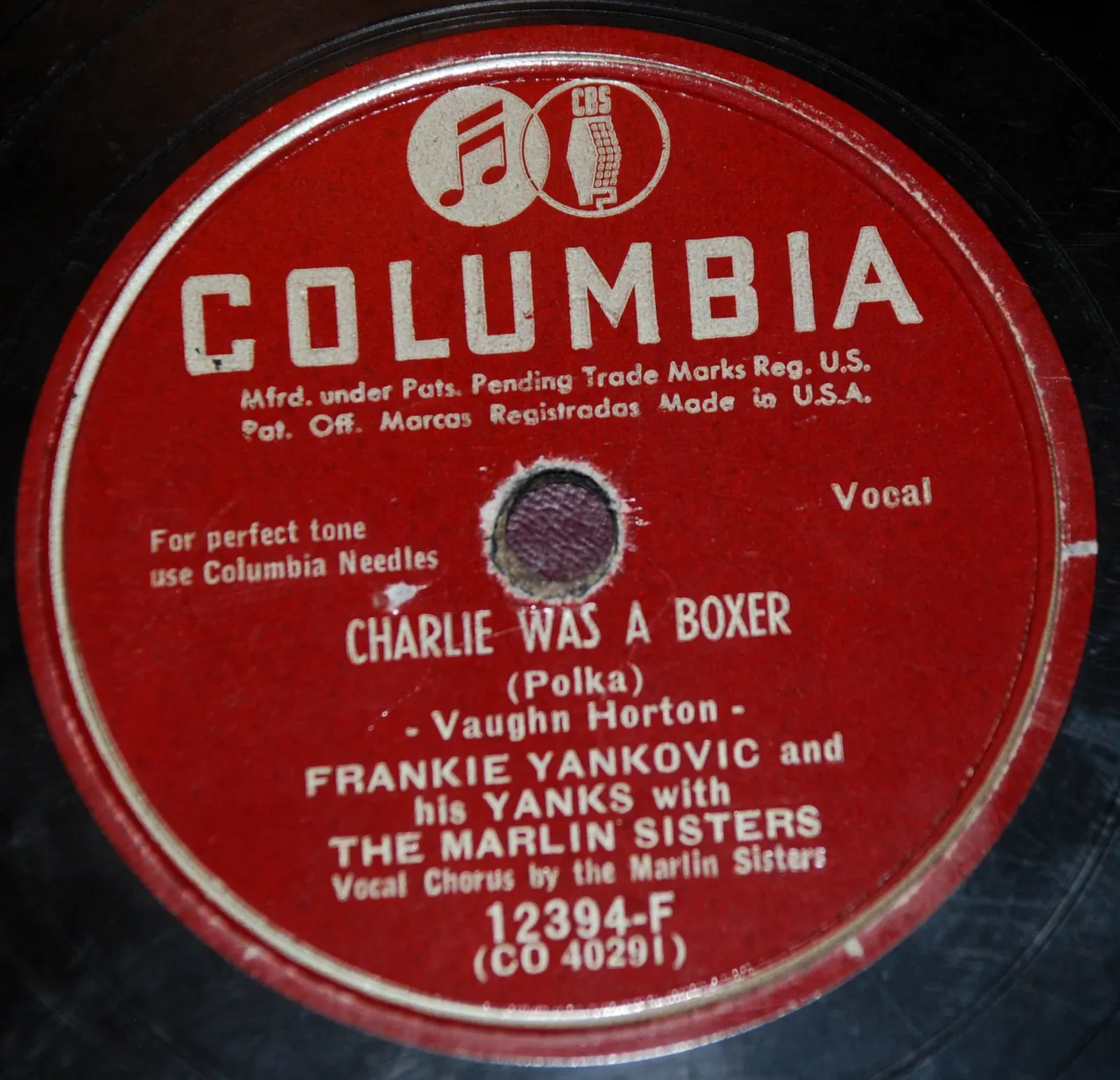
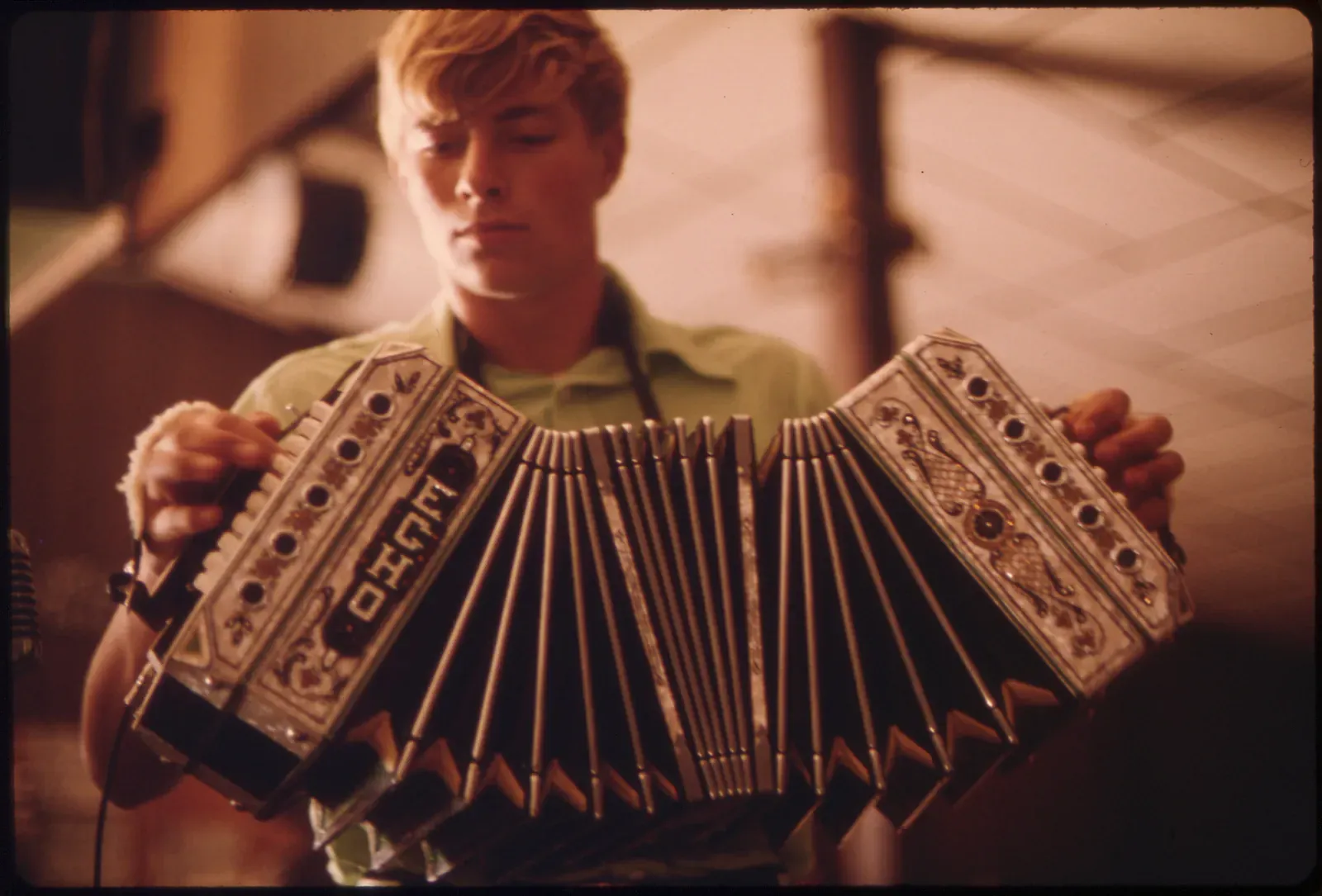
Several American styles took shape around him. Slovenian or Cleveland style is fast and built on piano accordion, chromatic accordion or a diatonic button box, with clarinet or saxophone, bass, drums and guitar or banjo. Chicago’s Polish style includes the Chicago Honky, with clarinet and one trumpet, and the Chicago Push, with accordion or concertina, bass, drums and two trumpets. The Dutchmen style has an oom-pah sound, often with tuba and banjo, while the conjunto polkas of northern Mexico and Texas, also called norteño, grew from the dance brought by European immigrants in the 1800s. A Cleveland television programme, Polka Varieties, ran from 1956 to 1983.
In Slovenia, Slavko Avsenik and his brother Vilko founded the Avsenik Brothers Ensemble in 1953 in Begunje na Gorenjskem. Their 1955 instrumental “Na Golici” is sometimes described as the most played instrumental piece in history. The ensemble wrote over a thousand pieces, added a trumpet to the usual accordion and clarinet line-up, and found audiences across Europe and North America.
Characteristics
The pulse is two even beats to the bar, with a bass note on the beat and a chord on the off-beat. Tempos in canonical recordings range from about 100 to 160 beats per minute, the slower end belonging to concert pieces such as the Pizzicato Polka and the faster to the polka schnell. Melodies are tuneful and built from regular repeated sections. Irish polkas run to 32 bars in four parts played AABB, usually above 130 beats per minute.
Instruments and production
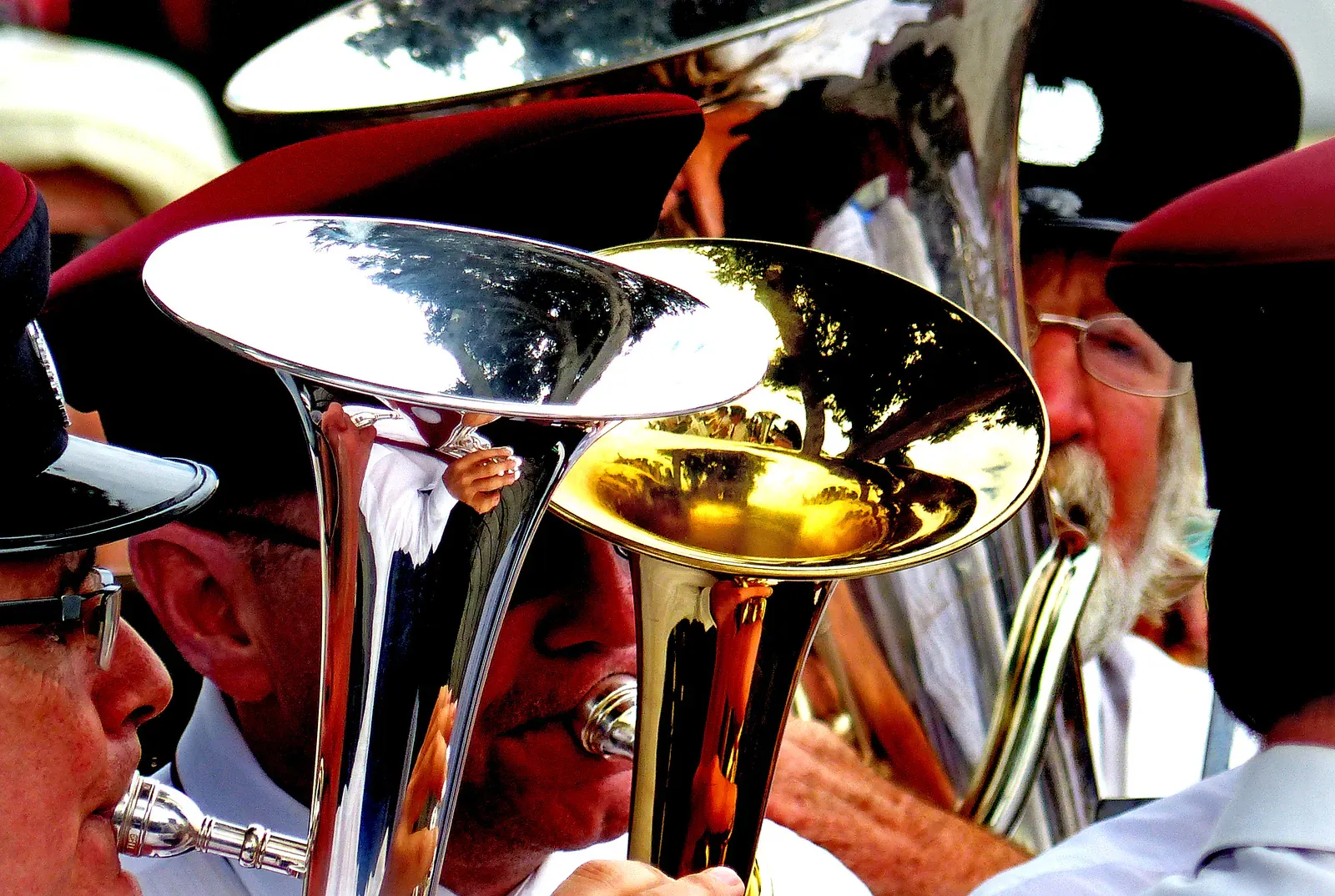
The accordion is the common core; clarinet, trumpet, tuba and concertina vary by region. The oom-pah bass line comes from a tuba, an upright bass or the accordion’s left hand, with drums added in the dance-band line-ups of Chicago and Cleveland. Irish and Nordic players carry polka tunes on fiddle, button accordion, hardingfele or nyckelharpa.
Mainstream success
Polka’s American commercial peak came with Yankovic in the late 1940s. The Recording Academy introduced a Best Polka Album Grammy in 1985, and Frankie Yankovic won the first one for 70 Years of Hits. Jimmy Sturr and His Orchestra, the only brass-led polka group to play the Grand Ole Opry, won 18 of the 24 awards, and Brave Combo’s Polkasonic won in 1999. The Academy dropped the category in 2009 as fewer polka albums were submitted.
Notable recordings
Vejvoda’s tune shows how a dance melody travels: Czech love song, English drinking song, wartime standard, then a ritual played at the seventh-inning stretch at Milwaukee Brewers games. Avsenik’s “Na Golici” shows the alpine route, a trumpet-led instrumental with no vocal at all.
Culture
The dance is a half-jump step in couples, and it is still the chief dance at formal balls in the Czech Republic. In the United States, polka is the official state dance of Wisconsin, and the International Polka Association in Chicago and the United States Polka Association in Cleveland keep halls of fame. In the 1980s and 1990s several American bands, among them Brave Combo of Denton, Texas, founded in 1979, mixed polka with rock, Latin and other dance styles. Weird Al Yankovic, no relation to Frankie, has put polka medleys of famous songs on nearly every album since 1984, including “Polka Face” in 2011.
Legacy
Polka became several traditions. In the Philippines it is more mellow and played by rondalla or brass band. In Argentina’s pampas the polca runs very fast in three beats, and in southern Brazil it mixed with European and African styles to help form choro. Nordic countries made it part of the gammeldans repertoire. It sits within the wider European folk dance repertoire, and polka-style parody lives on in comedy rock.
Misconceptions
Polka is not Polish in origin. The dance began in Bohemia, and the Polish connection lies in the name, which was adopted as a gesture of sympathy after the 1830 uprising.
Beer Barrel Polka is not an old Bavarian drinking song. Vejvoda, a Czech composer, wrote the tune in 1927, and the drinking words were written in English in the 1930s. The belief that it was a local folk tune was common in several countries in wartime.
Polka is not one fast, jolly tempo. The polka française is slow and graceful, the polka schnell very fast, and regional styles differ in instrumentation and swing.
Frequently asked questions
What time signature is polka in?
Polka is in 2/4 time, two beats per bar, played at roughly 100 to 160 beats per minute.
Where did polka come from?
Polka began in Bohemia around 1830, reached Prague by 1835, Vienna by 1839, Paris in 1840 and London in 1844.
What instruments are used in polka?
The accordion is the usual lead, with clarinet, trumpet, tuba, concertina, bass and drums depending on the regional style.
Who is the best-known polka musician?
Frankie Yankovic and Jimmy Sturr in the United States, Slavko Avsenik in Slovenia.
Sound
Sound sheet
Anatomy of a track
| # | Part | Bars |
|---|---|---|
| 1 | First theme (1A) | 8 |
| 2 | Second theme (1B) | 8 |
| 3 | Trio, often after a short intrada | 16 |
Signature sounds
- Two-beat oom-pah accompaniment
- Four themes: two, then a contrasting Trio of two more
- Accordion-led melody with clarinet or trumpet
- Added trumpet beside accordion and clarinet in the Avsenik sound
Drums and percussion
- Drum kit
Techniques
- Oom-pah accompaniment
- Four-theme form
- Pizzicato strings
- Polka covers and medleys
Keys and modes
Bright major keys. Singable melodies; B-flat and C recur in canonical recordings.
Vocals
Many polkas are instrumental; sung ones use the community's own language, and US Slovenian-style bands sing English translations of old Slovene songs.
Scenes
Where it happened
Where and when the sound lived: one bar per city on a shared timeline.
Europe
North America
Active scenes
Peak 4, 1953-2025
First city ballrooms to take up the Bohemian dance.
Imperial capital whose composers, led by the Strauss family, wrote polkas for concert and ballroom.
Home of the Slovenian-style polka and of Frankie Yankovic.
Where the Avsenik brothers formed the ensemble behind the Oberkrain sound.
Culture
Culture markers
- Half-step polka
A couple dance built on a half-jump step in 2/4 time, still the chief dance at formal balls in the Czech Republic.
Dance - Ballpark Beer Barrel Polka
In Milwaukee the tune is played at the seventh-inning stretch and halftime of Brewers and Bucks games.
Ritual - Wisconsin state dance
Polka is the official state dance of Wisconsin.
Dance
Glossary
Terms on this page
A slower, more graceful concert polka, as in Johann Strauss II's Annen-Polka.
A fast polka close to the galop, the speciality of Eduard Strauss.
A polka danced to the tempo of a mazurka.
The craze for the dance that swept Paris after its 1840 introduction.
Czech word for half, the likely root of polka, naming the half-step and half-tempo of the dance.
The contrasting final section of a 19th-century polka, after the first two themes.
European folk family