Forró
Forró is northeastern Brazilian dance music built on an accordion, zabumba and triangle trio, formed in the 1940s and tied to the June São João festivals.
Northeast Brazil, 1940
Latin family
Born
1940
Northeast Brazil
Subgenres
10
Documented branches
Links
14
Genres it drew on or shaped
Tempo
80-160 BPMLineage
Family tree
Timeline
Era by era
From the first sparks to today. Select a dot to read the story behind it.
- Forrobodo parties
1880 to 1940
- Gonzaga and the baião boom
1941 to 1960
- Migration and regional stars
1961 to 1989
- Electronic and university forró
1990 to 2009
- Heritage and new offshoots
2010 to today
Eras
Moments
- 1 Forrobodo parties, 1880 to 1940
- 2 Gonzaga and the baião boom, 1941 to 1960
- 3 Migration and regional stars, 1961 to 1989
- 4 Electronic and university forró, 1990 to 2009
- 5 Heritage and new offshoots, 2010 to today
around 1880
Forrobodo parties
Rural and suburban dances of the Northeast, called forrobodo or forrobodanca in the press, were played on sanfona, zabumba and triangle ahead of any national fame.
- 1890Forrobodo in Pernambuco pressNewspapers in Pernambuco report forrobodo, forrobodanca and forrobodao parties, the likely root of the word forró.
- 1912Luiz Gonzaga is born in ExuThe future King of Baião is born on 13 December in Exu, Pernambuco, son of an accordion player.
1941
Gonzaga and the baião boom
Luiz Gonzaga's RCA Victor records from 1941, and baião hits with Humberto Teixeira from 1946, put the accordion trio on national radio and made northeastern dance music a mainstream style.
- 1941Gonzaga's first recordsLuiz Gonzaga records his first sides on 14 March, including Vira e Mexe, for Victor in Rio de Janeiro.
- 1946Baião becomes a hitGonzaga and Humberto Teixeira's Baião, recorded this year, becomes their commercial breakthrough and starts a dance craze.
- 1947Asa BrancaGonzaga and Teixeira's song of drought and migration appears on a 1947 single and becomes the northeastern anthem.
- 1953Jackson do Pandeiro starts recordingJackson do Pandeiro begins recording for Copacabana and scores with the coco Sebastiana.
- 1958Trio Nordestino forms in SalvadorLindu, Coroné and Cobrinha form the trio, which records for Copacabana and later CBS.
1961
Migration and regional stars
Northeastern migrants carried forró to Brasília, Rio and São Paulo, where forró houses grew. Jackson do Pandeiro, Marinês, Trio Nordestino and Dominguinhos led it while electric instruments crept in.
- 1967Quarteto Novo's baião albumQuarteto Novo, with Hermeto Pascoal and Airto Moreira, records its only LP for Odeon and recasts baião for the MPB audience.
- 1983Campina Grande's São João festival startsThe first edition of the festival that later claims the title of Brazil's biggest São João.
- 1989Luiz Gonzaga diesGonzaga dies in Recife on 2 August, aged 76.
- 1989Maids and Taxi Drivers compilationRounder issues Brazil: Forró - Music for Maids and Taxi Drivers, compiled by Gerald Seligman from Rio studio tapes.
1990
Electronic and university forró
Fortaleza bands such as Mastruz com Leite built a pop forró with keyboards and drum kits, while São Paulo students revived the three-instrument trio through Trio Virgulino and Falamansa.
- 1990Mastruz com Leite founded in FortalezaThe band founded by Emanuel Gurgel is called the mother of electronic forró, adding keyboards, electric guitar and bass.
- 1991Grammy nomination for forró compilationBrazil: Forró - Music for Maids and Taxi Drivers is nominated for Best Traditional Folk Album at the 33rd Grammys.
- 1998Falamansa forms in São PauloFormed after a Mackenzie festival, the band spreads forró universitário nationwide from the Remelexo house.
- 2000Falamansa's Deixa EntrarThe debut album of the university-forró band is released and sells hundreds of thousands of copies in Brazil.
2010
Heritage and new offshoots
Forró scenes spread to Europe and beyond, newer pop offshoots appeared in the Northeast, and in 2021 forró was recognised as Brazilian intangible cultural heritage.
- 2013Dominguinhos diesDominguinhos, the leading accordionist after Gonzaga, dies in São Paulo on 23 July.
- 2021Forró recognised as heritageBrazil's heritage institute IPHAN registers forró as intangible cultural heritage.
Listening path
Start listening
A short path from an easy way in to the deep end. Thumbnails come from YouTube; the player loads only when you press play.
- 01
Luiz Gonzaga, 1947
The song of drought and migration that carried baião to the nation; listen for the accordion, zabumba and triangle trio.
- 02
Trio Nordestino, 1970
The xote that made the trio a mass-market success, a slow couple-dance feel.
- 03
Falamansa, 2000
The hit that took forró universitário to a national audience, a relaxed xote with a rock band edge.
Forró is a family of dance rhythms from northeastern Brazil, led by an accordion over a zabumba bass drum and a triangle and danced by couples in close embrace. The sound took its modern form in the 1940s through Luiz Gonzaga’s records, and the word also names the dance party itself.
It peaks every June at the São João festivals of Pernambuco and Paraíba.
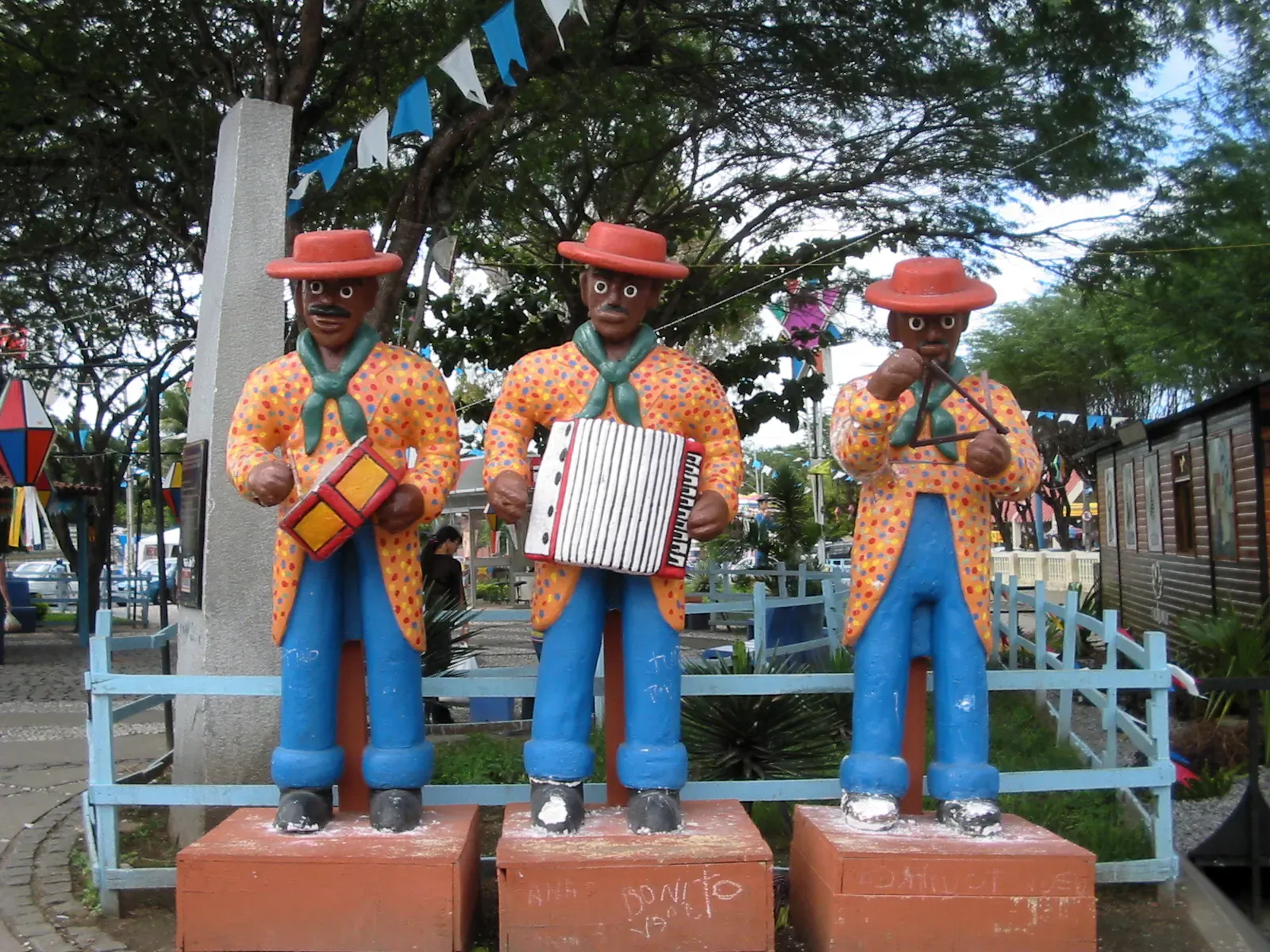
Origins
Long before anyone recorded it, northeastern dance parties were called forrobodó, forrobodanca or forrobodão in the regional press, and the word forró is most likely a shortening of these. The dances themselves came from several directions. The schottische arrived in Rio de Janeiro in the nineteenth century and settled into the xote, the slow couple dance of the forró floor. The baião, a syncopated duple-meter rhythm built on the zabumba, supplied the beat that later defined the style.
What these gatherings lacked was a national voice. Rural and suburban parties ran on the sanfona (accordion), zabumba and triangle for decades without radio exposure, and the music stayed regional until a young accordionist took it to Rio de Janeiro.
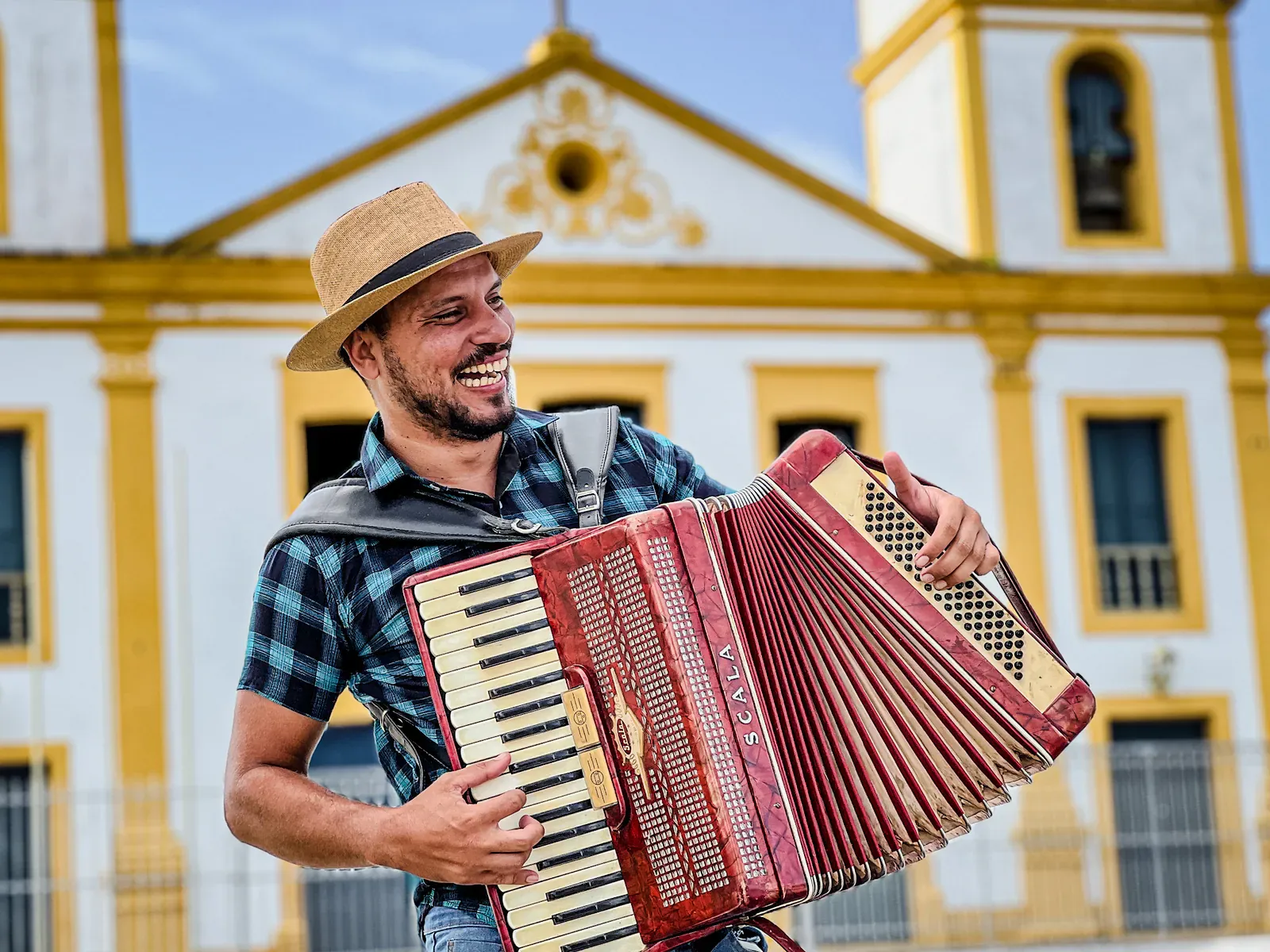
Gonzaga and the baião boom, 1941-1960
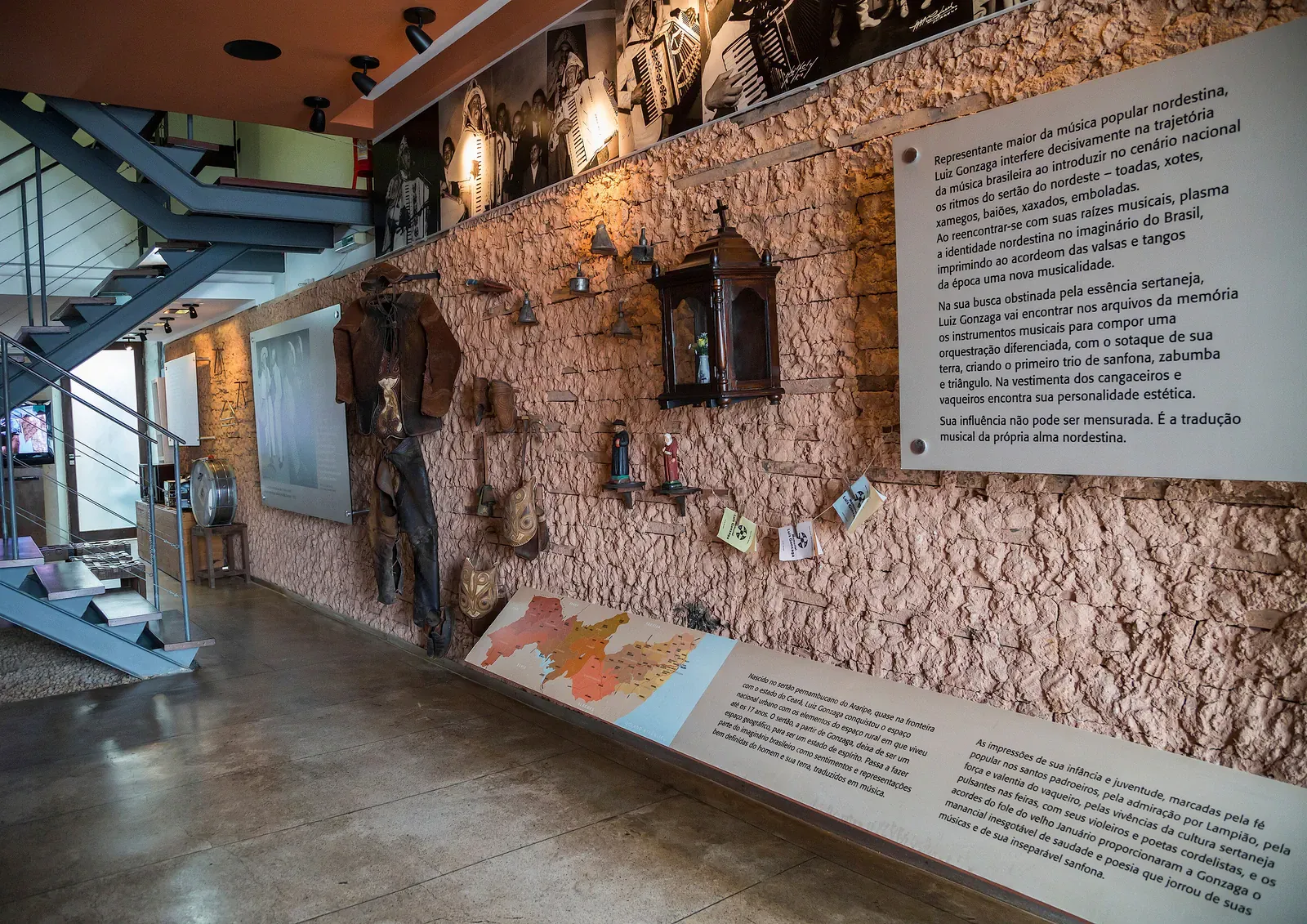
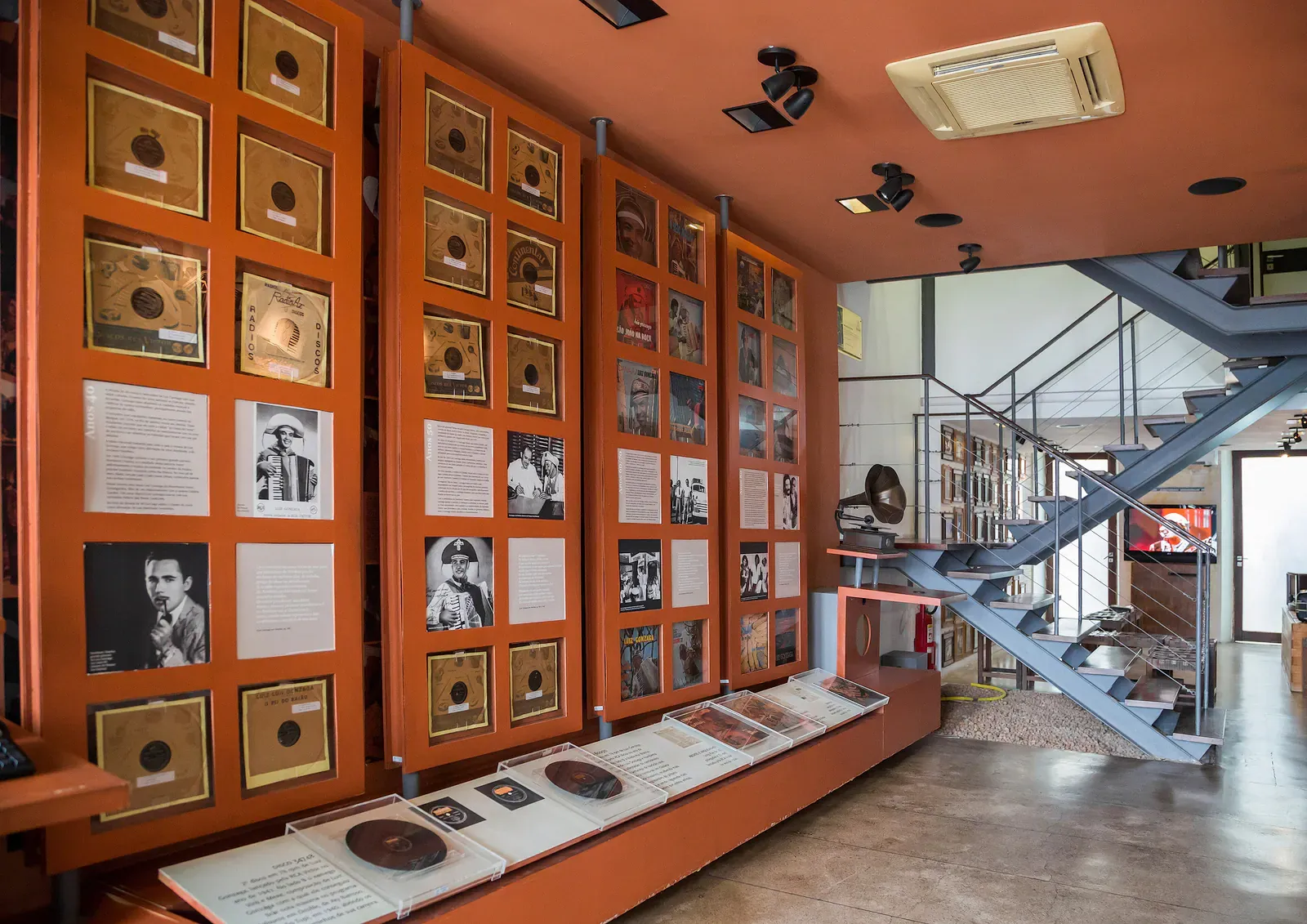
Luiz Gonzaga was born on 13 December 1912 in Exu, Pernambuco, the son of an accordion player. He recorded his first sides for Victor in Rio de Janeiro on 14 March 1941, including “Vira e Mexe”, and the label that issued them is now RCA Records. His breakthrough followed in 1946 with “Baião”, written with the Ceará lawyer Humberto Teixeira, and their songwriting partnership produced the baião hits that fixed the style.
Gonzaga also built the image. From the 1940s his leather hat and cangaceiro-style dress, borrowed from the northeastern backlands, became the look of the genre, and his trio format of sanfona, zabumba and triangle became the standard small ensemble.
Migration and regional stars, 1961-1989
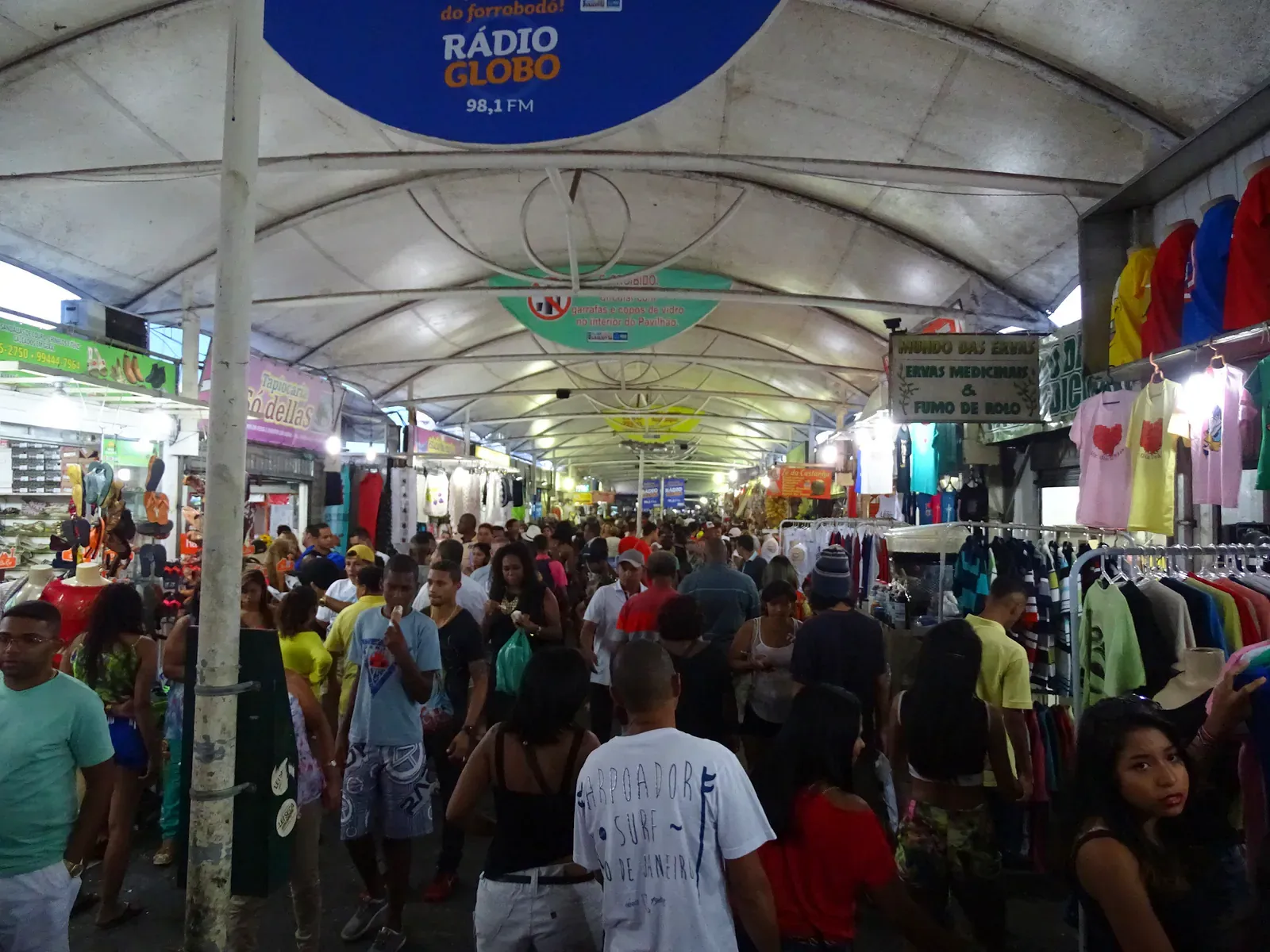
Northeastern migrants carried forró to Brasília, Rio and São Paulo, where forró houses grew. Rio’s São Cristóvão fair, held in a former exhibition pavilion, became a meeting place that still has forró on two stages.
A generation of regional stars filled the gap left by Gonzaga’s national peak. Jackson do Pandeiro, a Paraíba percussionist-singer, began recording for Copacabana in 1953 and had a hit with the coco “Sebastiana”; his mixing of coco, rojão, baião and samba made him the most rhythmically adventurous figure of the period. Marinês, later called the Queen of Xaxado, led one of the first forró groups fronted by a woman. Dominguinhos, a Gonzaga protégé, became the leading accordionist after his mentor. Trio Nordestino, formed in Salvador in 1958, had its biggest hit with the xote “Procurando Tu”.
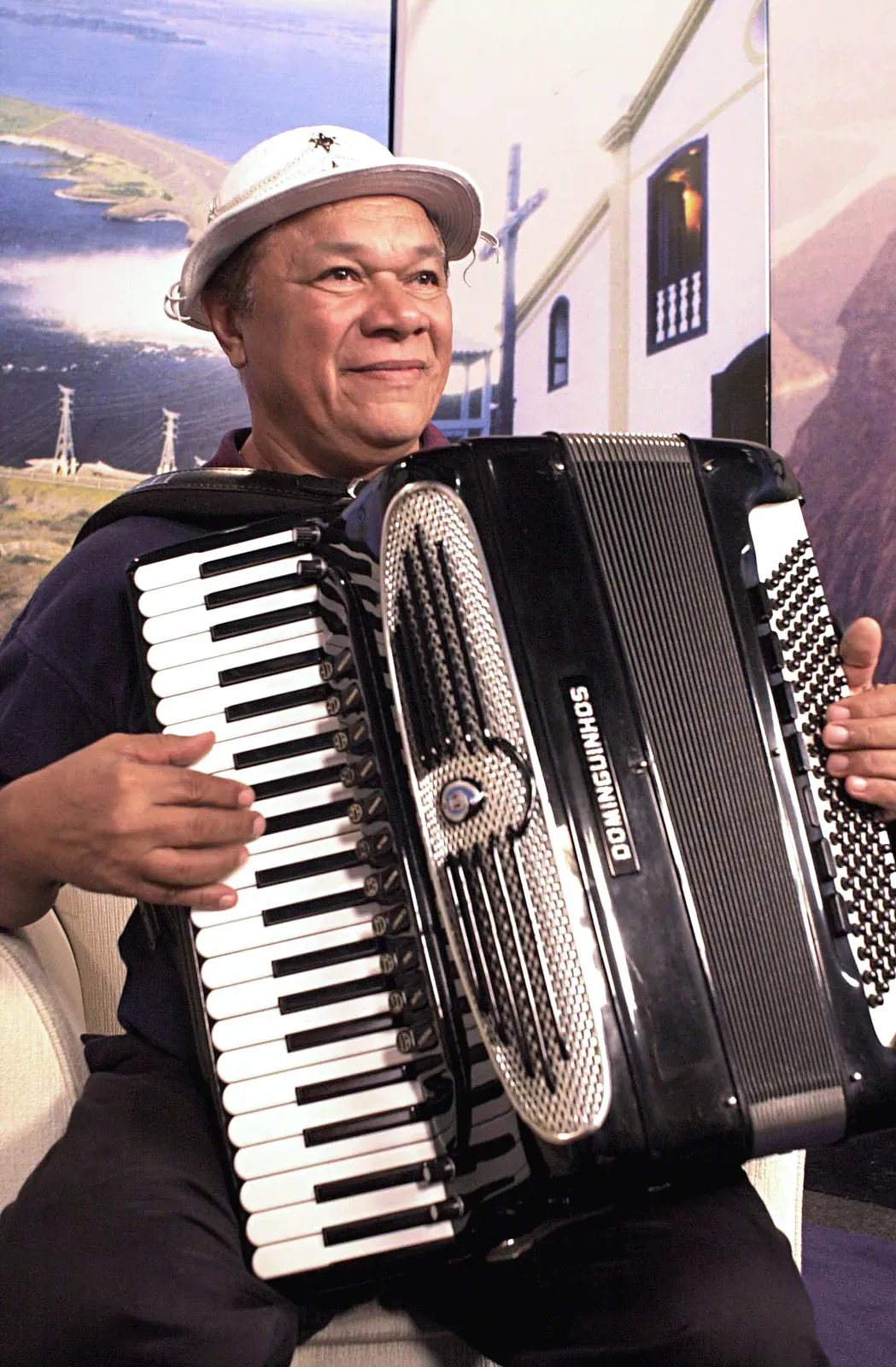
Outside the folk circuit, forró fed other genres. Quarteto Novo, with Hermeto Pascoal and Airto Moreira, recorded its only LP for Odeon in 1967 and recast baião for the audience of the MPB movement. In 1983 Campina Grande held the first edition of its São João festival, which later claimed the title of Brazil’s largest. Gonzaga died in Recife on 2 August 1989, aged 76.
Electronic and university forró, 1990-2009
The 1990s split the genre in two directions. In Fortaleza, Mastruz com Leite, founded in 1990 by Emanuel Gurgel, added keyboards, electric guitar and bass and is called the mother of electronic forró. In São Paulo, a student circuit went the opposite way: Trio Virgulino and then Falamansa, formed in 1998 after a festival at Mackenzie university, brought back the stripped three-instrument trio for city audiences. Falamansa’s 2000 debut “Deixa Entrar” sold hundreds of thousands of copies in Brazil, and its single “Rindo à Toa” made forró universitário a national style.
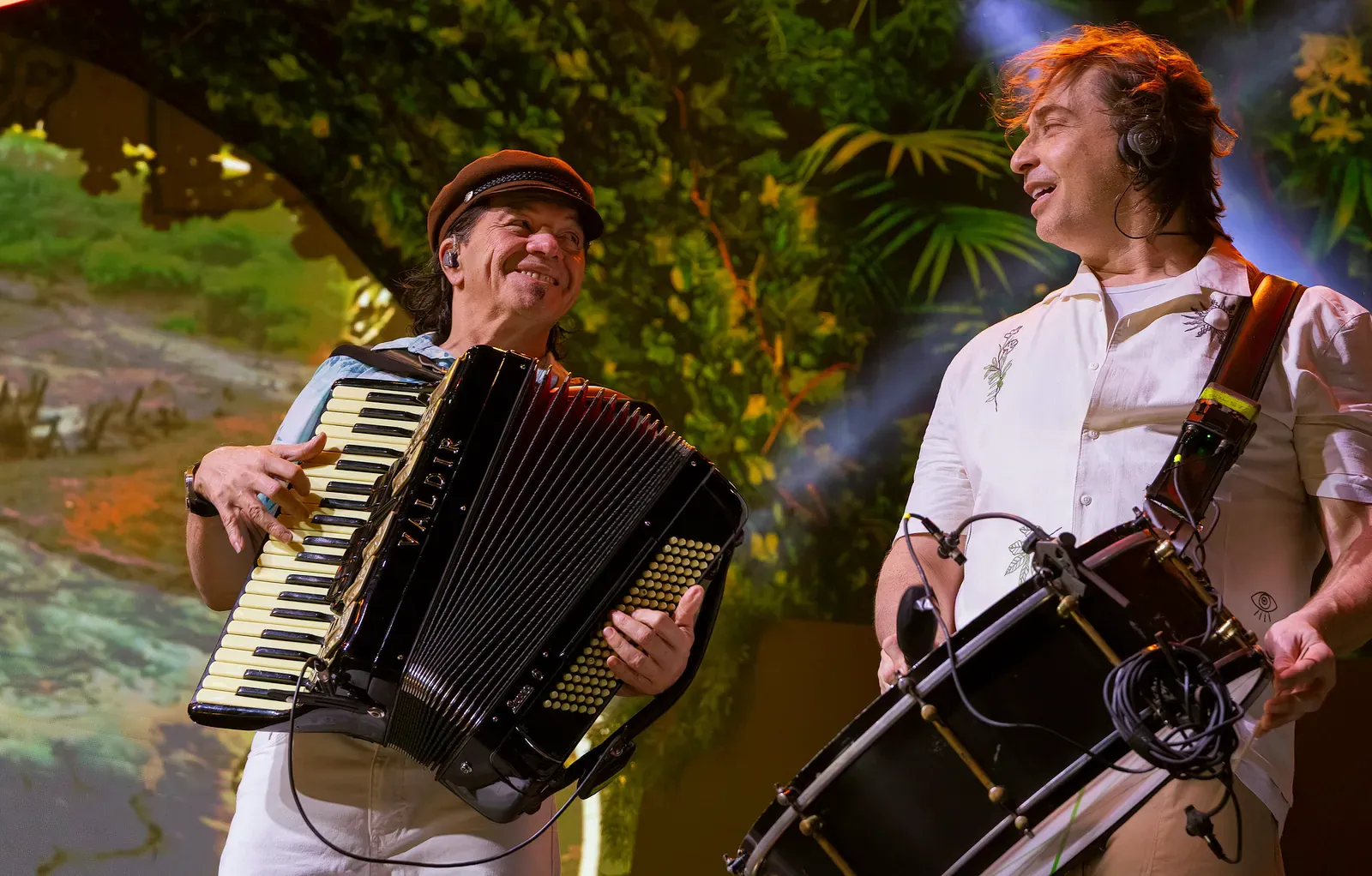
Forró also reached listeners outside Brazil. In 1989 Rounder issued a compilation of roots forró recorded in Rio studios, “Brazil: Forró - Music for Maids and Taxi Drivers”, which was nominated for Best Traditional Folk Album at the 1991 Grammys.
Heritage and new offshoots, 2010-present
After 2010 forró scenes spread to Europe and beyond, with university-style dancing the main export. In the Northeast, newer pop offshoots appeared alongside the older trio tradition. In 2021 Brazil’s heritage institute IPHAN registered forró as intangible cultural heritage.
Characteristics
Forró is a dance music first. The accordion carries melody and chords over only a zabumba and triangle, and the lyrics trace drought, migration, work and longing, later turning to romance in the electronic and university styles. Its rhythms are named by the dance they serve: the baião, the slower xote, the very fast arrasta-pé, the xaxado and the coco. The tonal colour comes from a northeastern scale usually described as Mixolydian,.
Instruments and production
The core trio is built on the sanfona, zabumba and triangle. Bigger groups add the pandeiro, which Jackson do Pandeiro made central to his coco and rojão. From the 1980s and 1990s the electronic bands added electric guitar, bass and keyboards, giving forró a pop band instrumentation. University forró deliberately went back to the trio.
Notable recordings
“Asa Branca”, released on a 1947 single by Gonzaga and Teixeira, tells of drought and migration in the backlands and became the northeastern anthem. “Procurando Tu” shows how a xote could become a mass-market success. Quarteto Novo’s 1967 album took baião to concert listeners, and Dominguinhos’ “Chegando de Mansinho” won a Latin Grammy in 2002. Falamansa’s “Amigo Velho” later won the Latin Grammy for Regional or Brazilian Roots Album, honouring university forró.
Culture
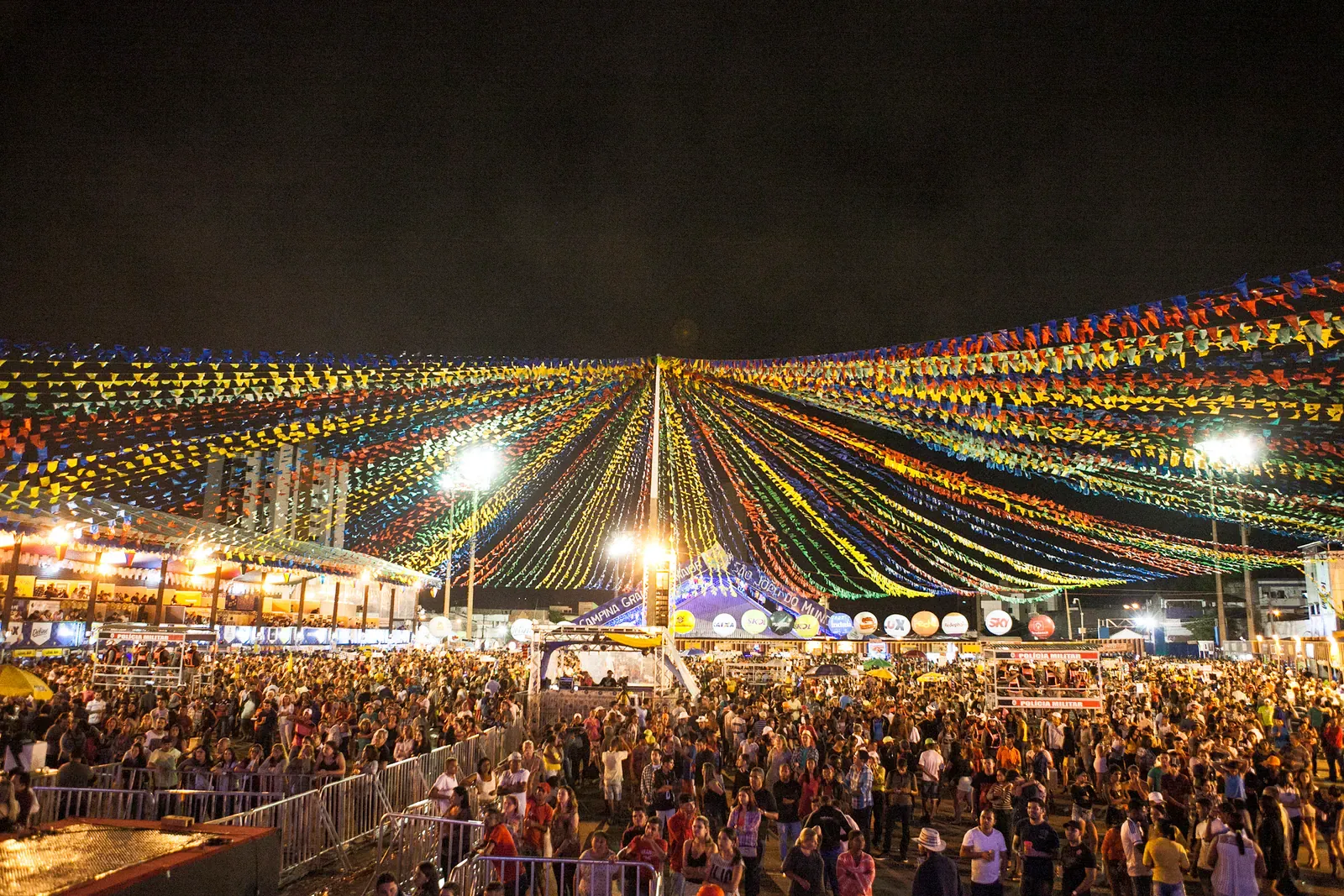
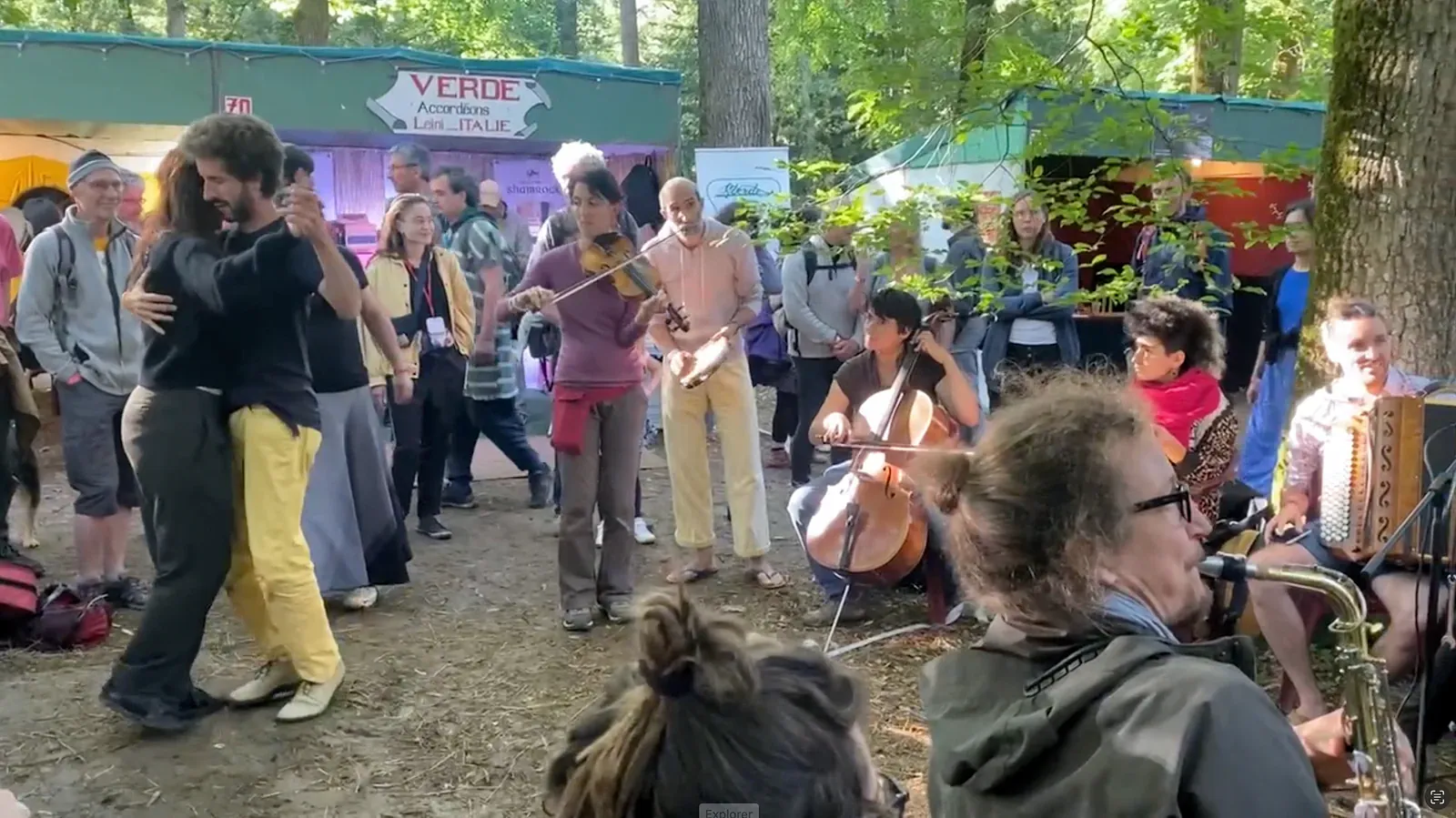
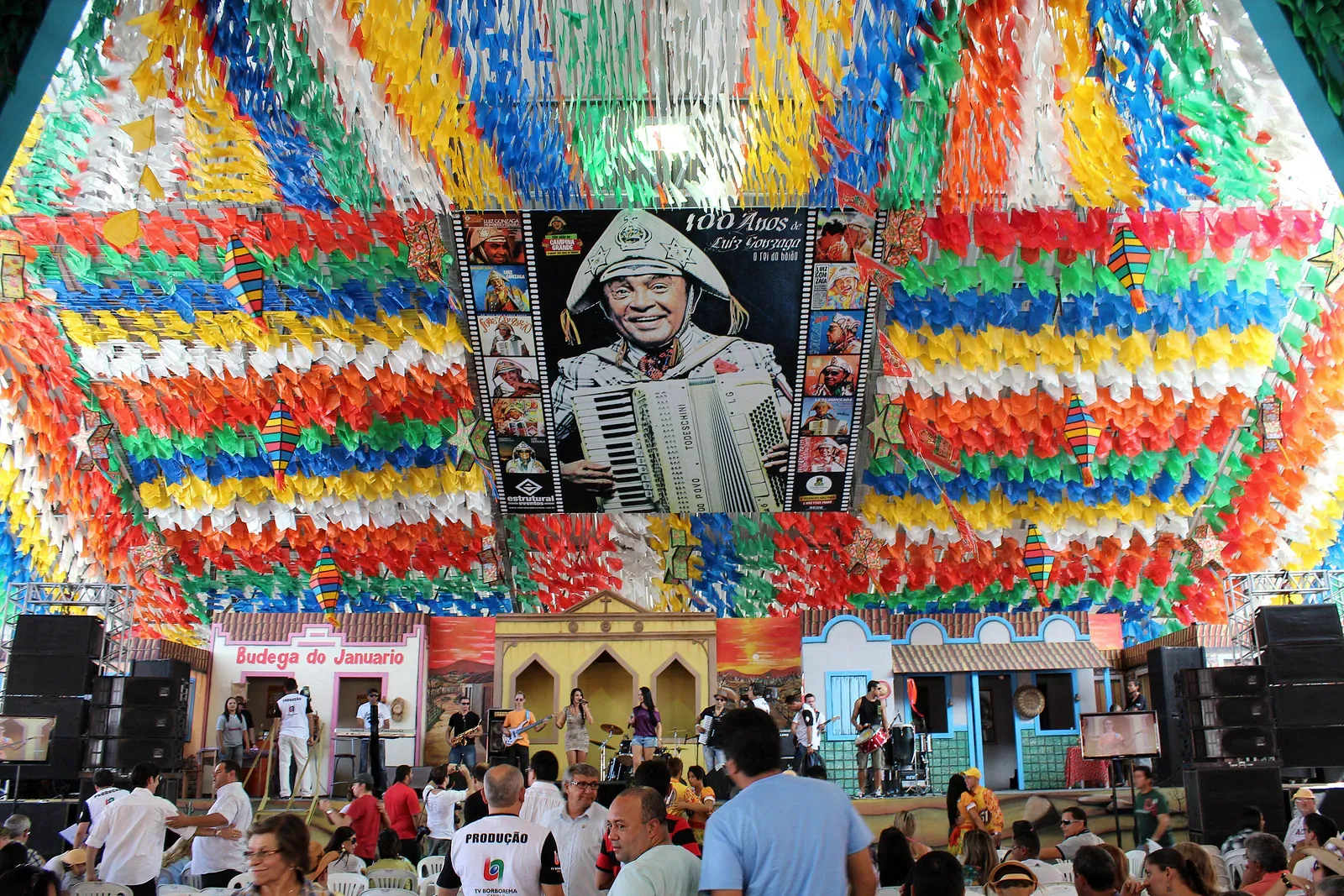
The June São João festivals are forró’s peak season. Campina Grande’s Parque do Povo has three forró islands for trios, and Caruaru’s Pátio do Forró covers 44,000 square metres and bears Gonzaga’s name. Quadrilha dance troupes in elaborate costume perform under ribbon bunting at the same festivals.
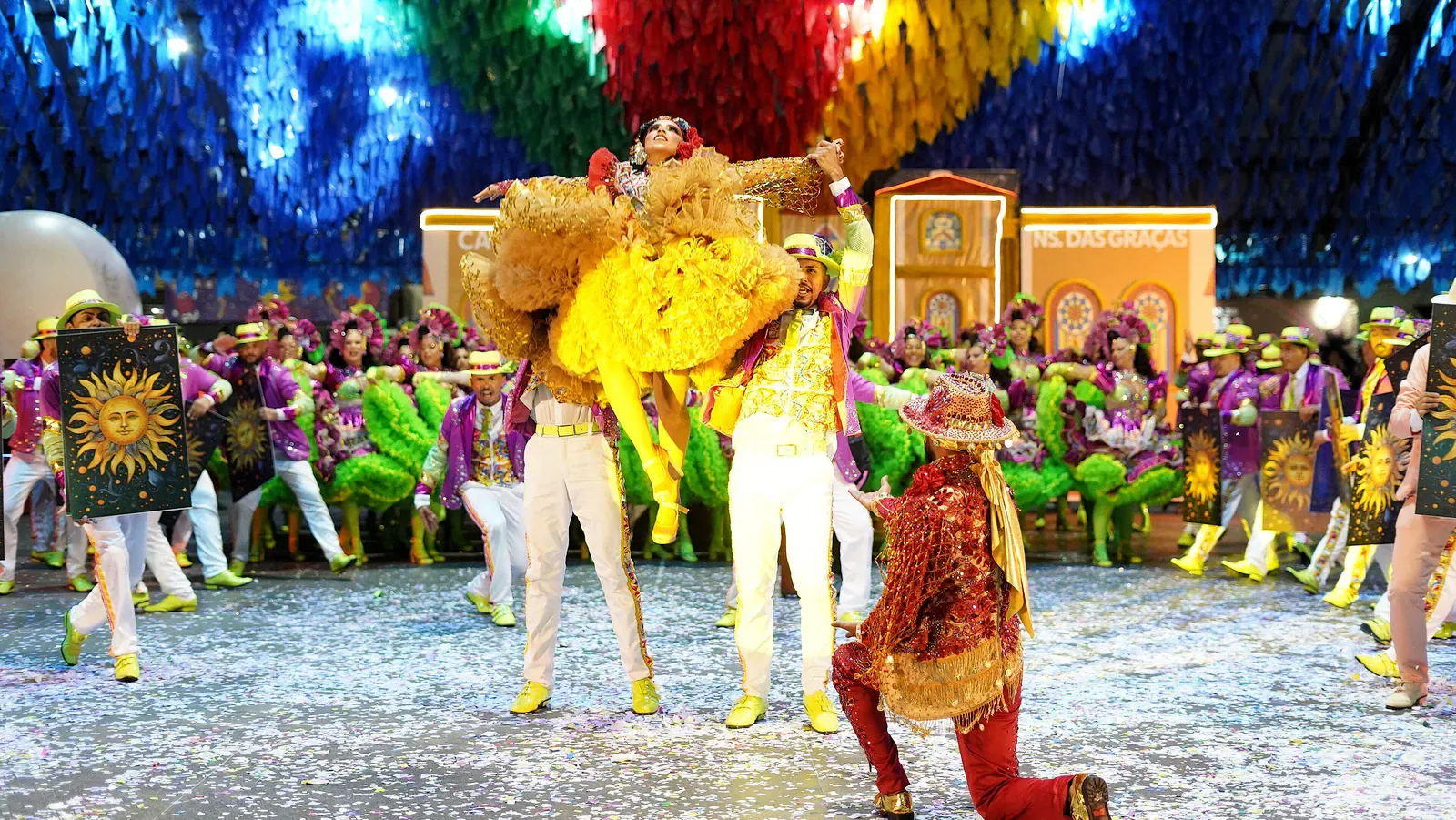
Social dancing is central. Couples dance xote in close embrace with a left-left-right-right step, while the university style is more open, with turns and arm figures borrowed from swing and rock dancing. Going to “the forró” historically just meant going to a party, and the word still names the dance event.
Legacy
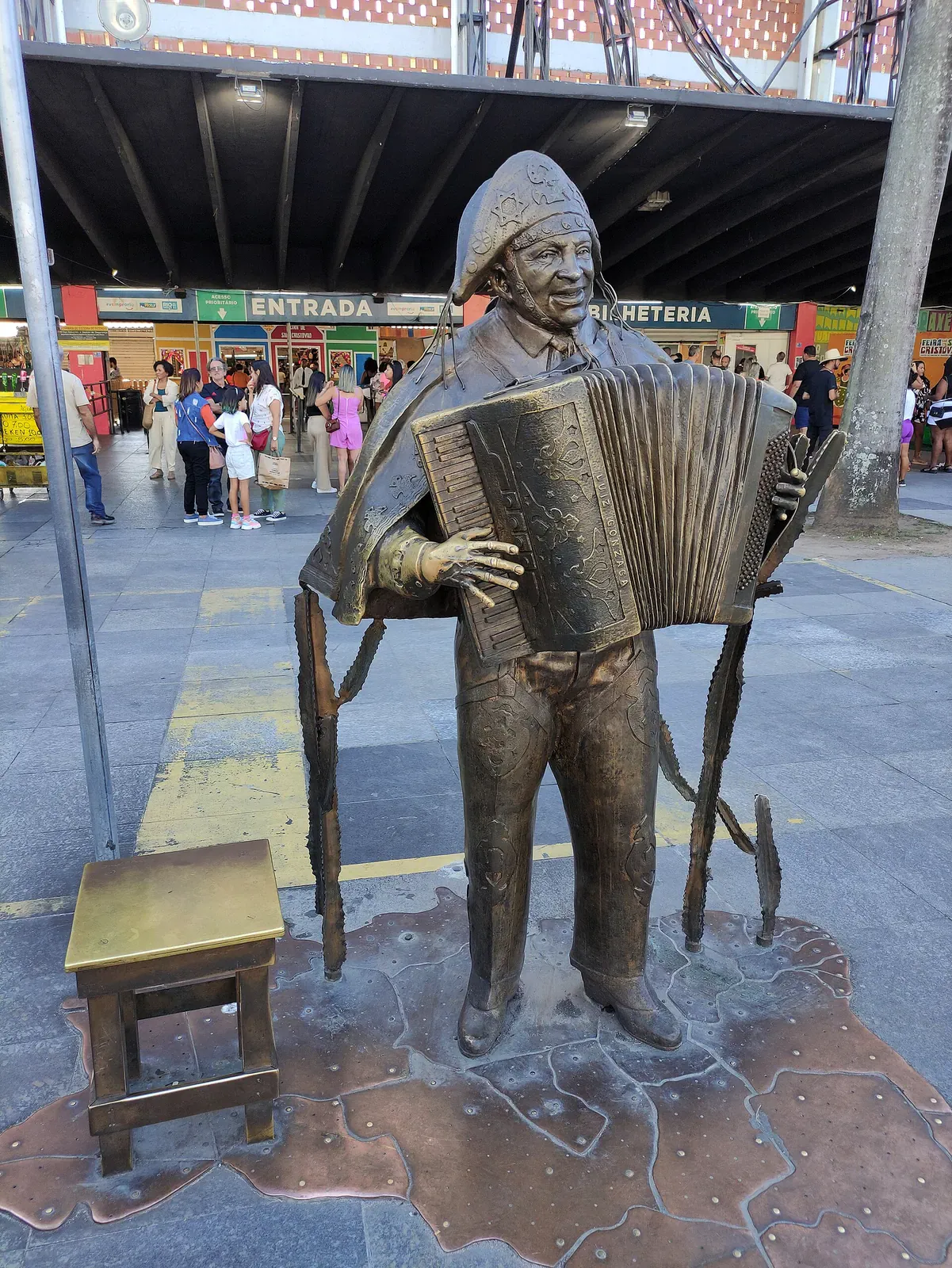
Gonzaga’s trio, repertoire and look still frame what forró is, and the tradition has since split into trio, electronic and university lines. The format reaches from northeastern festival grounds to city dance halls and festivals abroad. A statue of Gonzaga in his leather hat now stands at the entrance of Rio’s São Cristóvão fair.
Misconceptions
Forró is sometimes said to begin with Luiz Gonzaga. The parties and the word forrobodó are older, recorded in Pernambuco newspapers around the 1890s, and Gonzaga took an existing party music to national radio. It is also treated as a single rhythm, when it is a family that includes baião, xote, xaxado and arrasta-pé; the baião was only the first to reach the airwaves. A third misconception is that it is purely rural: forró grew into an urban genre through migration, and the São Paulo university scene and the electronic bands of Fortaleza were products of the city.
Frequently asked questions
What is forró music?
Forró is northeastern Brazilian dance music centred on an accordion, zabumba and triangle trio. The name covers a family of rhythms, including baião, xote, xaxado and arrasta-pé, danced by couples in close embrace.
Who created forró?
Luiz Gonzaga, born in Exu, Pernambuco, in 1912, is regarded as its foundational figure. His Victor recordings from 1941 and his baião hits with Humberto Teixeira from 1946 took the music to national audiences.
What is the difference between forró pé-de-serra, electronic and university forró?
Pé-de-serra is the traditional trio style of Gonzaga and his contemporaries. Electronic forró, from Fortaleza in the 1990s, adds keyboards, guitar and bass. University forró, from São Paulo, revived the trio for city audiences with a more open dance style.
When is forró most popular in Brazil?
June, during the São João festivals. Towns such as Campina Grande and Caruaru stage large festivals with forró grounds dedicated to the music.
Is forró recognised as Brazilian heritage?
Yes. In 2021 Brazil’s heritage institute IPHAN registered forró as intangible cultural heritage.
Sound
Sound sheet
Signature sounds
- Accordion, zabumba and triangle trio
- Triangle accenting the third sixteenth
- Syncopated zabumba pattern with mallet and stick
- Accordion in the northeastern scale
- Lyrics of drought, migration and longing
Drums and percussion
- Zabumba
- Triangle
Techniques
- Mallet-and-stick zabumba
- Triangle sixteenth pattern
- Trio texture
Keys and modes
Northeastern scale. Usually described as the Mixolydian mode.
Vocals
Direct sung stories of drought, migration, work and saudade, later romance in the electronic and university styles.
Scenes
Where it happened
Where and when the sound lived: one bar per city on a shared timeline.
Latin America
Active scenes
Peak 7, 1995-2025
Pernambuco's capital, where radio talent shows and Gonzaga's circle shaped the trio sound.
Gonzaga's recording base and home of the São Cristóvão northeastern fair.
Birthplace of Trio Nordestino.
Host of a month-long São João festival whose Parque do Povo is called forró headquarters.
Home of Mastruz com Leite and the electronic forró bands.
University circuits from the early 1990s gave rise to forró universitário and Falamansa.
Its São João festival has a Pátio do Forró for up to 100,000 people.
Venues and places
Rio de Janeiro, 2003 to today. Fair in a former exhibition pavilion where forró plays on two stages for northeastern migrants.
Campina Grande, 1983 to today. Centre of the month-long São João festival, with three forró islands for trios.
Caruaru, 1995 to today. 44,000 square metre ground of Caruaru's São João, bearing Luiz Gonzaga's name.
Culture
Culture markers
- Xote close-embrace dance
Couples dance in close embrace with a left-left-right-right step, with lighter variants in the university style.
Dance - Forró universitário steps
A more open version with turns and arm figures borrowed from swing and rock dancing.
Dance - São João festivals
June festivals in towns like Campina Grande and Caruaru are forró's peak season.
Ritual - Gonzaga's leather hat
From the 1940s Gonzaga's cangaceiro-style leather hat and sertanejo dress became the look of the genre.
Fashion - Going to the forró
Historically the phrase just meant going to a party, and the word still names the dance event.
Slang
Media
Key media
- 1989Brazil: Forró - Music for Maids and Taxi Drivers
by Various. Rounder release of roots forró that brought the style to international ears and a Grammy nod.
Compilation - 2009O Homem que Engarrafava Nuvens
by Lírio Ferreira. Documentary on Humberto Teixeira, Gonzaga's key songwriting partner, directed by his daughter.
Film - 2012Gonzaga: De Pai pra Filho
by Breno Silveira. Feature film on Luiz Gonzaga and his difficult relationship with his son Gonzaguinha.
Film
Glossary
Terms on this page
Very fast xote danced with alternating leg work that drags the feet along the floor.
Syncopated duple-meter rhythm built on the zabumba, the original forró rhythm.
Northeastern scale, usually described as the Mixolydian mode.
Nineteenth-century word for a lively party, the likely root of forró.
The traditional trio style of Gonzaga and his contemporaries.
Northeastern rhythm and dance, associated with Marinês, the Queen of Xaxado.
Slower couple dance and rhythm descended from the schottische.
Latin family