Lundu
Lundu is an Afro-Brazilian song and couple dance of Bantu origin, built on strummed guitar and syncopation, that reached Luso-Brazilian salons in the 1700s.
Brazil, 1750
Latin family
Born
1750
Brazil
Subgenres
2
Documented branches
Links
12
Genres it drew on or shaped
Tempo
80-120 BPMLineage
Family tree
Timeline
Era by era
From the first sparks to today. Select a dot to read the story behind it.
- Colonial roots
1700 to 1779
- Lisbon and the salons
1780 to 1849
- Theatre and street
1850 to 1901
- The record era
1902 to 1930
- Folk survival and revival
1931 to today
Eras
Moments
- 1 Colonial roots, 1700 to 1779
- 2 Lisbon and the salons, 1780 to 1849
- 3 Theatre and street, 1850 to 1901
- 4 The record era, 1902 to 1930
- 5 Folk survival and revival, 1931 to today
around 1700
Colonial roots
Bantu and Angolan dance-songs reach Brazil with the slave trade; colonial authorities read them as witchcraft before elites grow fond of them.
- 1749Botelho takes lundu to LisbonThe musician Manuel de Almeida Botelho moves to Lisbon, bringing modinha and lundu with him.
- 1750Lundus and gandus tried as witchcraftInquisition records of the 18th century treat lundu and related dances as sorcery, yet owners tolerate them to keep peace.
- 1779Brazilian modinhas named in satireA poem by Nicolau Tolentino de Almeida mentions Brazilian modinhas, most likely the songs of Caldas Barbosa.
around 1780
Lisbon and the salons
Lundu moves into Luso-Brazilian drawing rooms as a sung genre for voice and guitar, tied to the modinha and to poets such as Caldas Barbosa.
- 1798Viola de Lereno, first volumeCaldas Barbosa's collection of lundu and modinha texts is printed in Lisbon; a second volume follows in 1826.
around 1850
Theatre and street
Staged and sold as sheet music, lundu feeds the choro, the maxixe and early samba while a duple-meter, syncopated lundu-song settles.
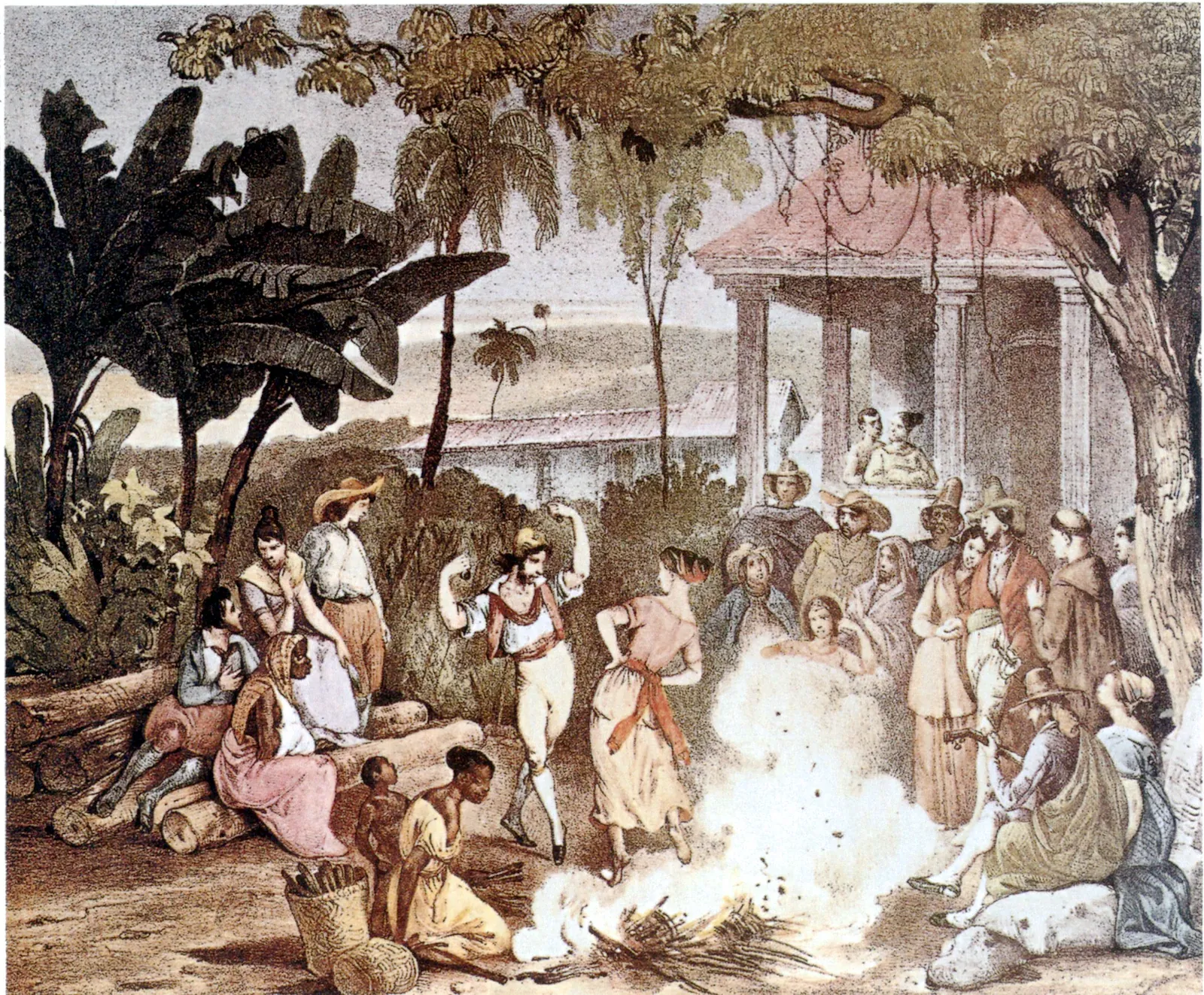
- 1859Ribeyrolles describes the lunduA French journalist records a Saturday night on a Rio fazenda, calling the lundu a frenzied dance of gaze, breasts and hips.
1902
The record era
Casa Edison issues lundus on disc from 1902, then samba takes over urban popular taste.
- 1902Isto é bom recordedBaiano sings Xisto Bahia's lundu for Casa Edison, considered the first song commercially recorded in Brazil.
- 1910Marocas on OdeonEduardo das Neves records the lundu Marocas on Odeon disc 108073.
- 1917Samba overtakes lundu on discPelo Telefone, issued as a samba, marks the shift of popular taste toward samba.
around 1931
Folk survival and revival
Lundu lives on in Afro-riverine communities of Marajó and in occasional concert and folkloric revivals.
Listening path
Start listening
A short path from an easy way in to the deep end. Thumbnails come from YouTube; the player loads only when you press play.
- 01
Arraial do Pavulagem, 2016
A living Marajó lundu, with the call-and-response and drum pulse of the Amazonian tradition.
Lundu is an Afro-Brazilian song and flirtatious couple dance, also spelled landu or landum, that grew from Bantu traditions brought from Angola in the 1700s. It is built on strummed guitar or viola chords moving between tonic and dominant over a syncopated rhythm.
It was the first Afro-diasporic genre accepted in the salons of Brazil and Portugal and is a direct ancestor of the choro, the maxixe and samba.
Origins
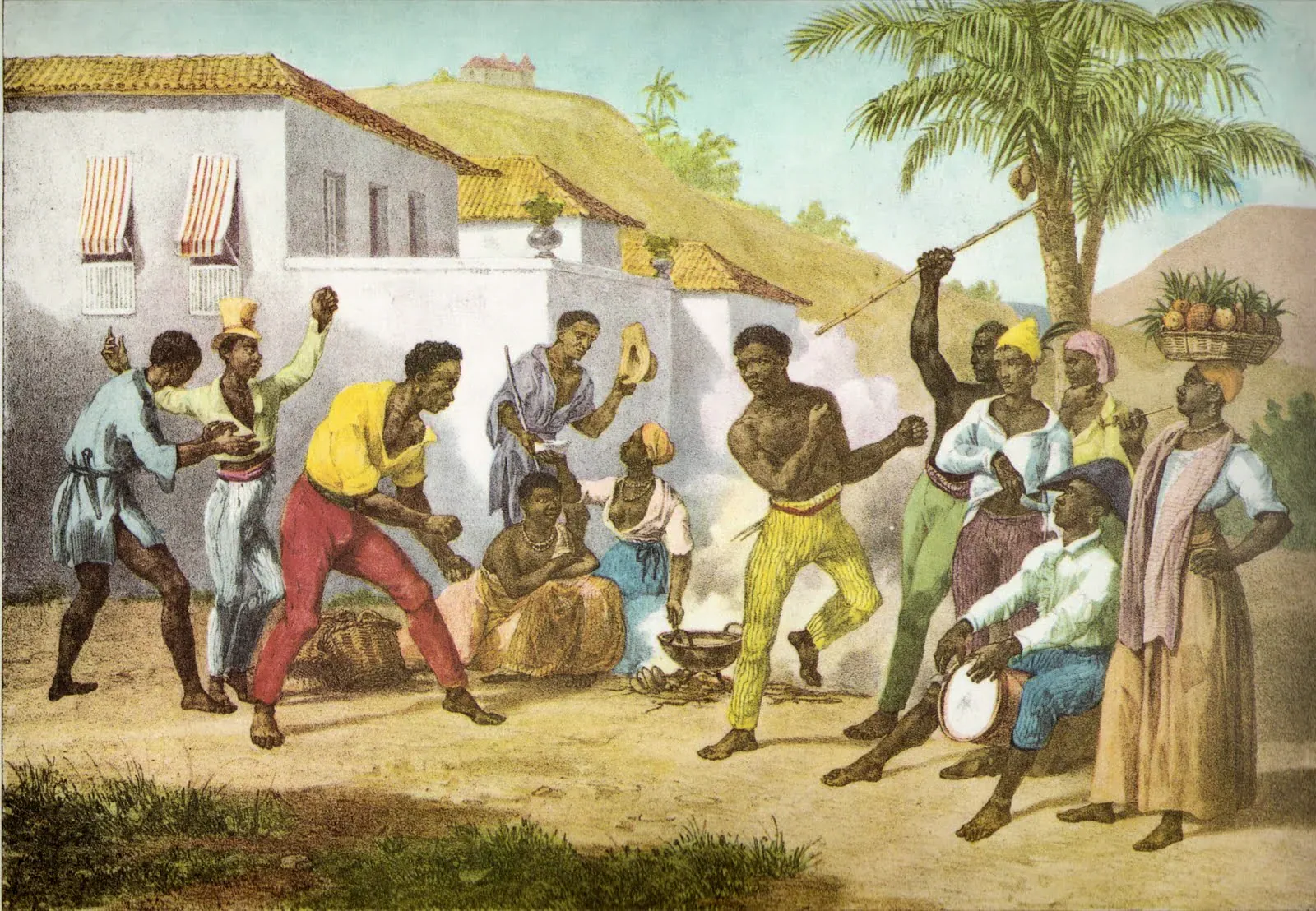
Lundu came with enslaved people from Angola and the Congo region, and the traffic between Brazil and Angola in the 1600s and 1700s let steps, songs and words move in both directions. In the colonial period the dance was a circle of onlookers around a couple who tapped their feet, swayed their hips and touched bellies in the gesture called umbigada. Church and inquisition records of the 1700s treat lundus and the related gandus as witchcraft. Many owners nonetheless tolerated them, partly to keep the peace.
A French journalist who watched a Saturday night on a farm in Rio de Janeiro province in 1859 set the lundu apart from the capoeira and the batuque: a frenzied dance of gaze, breasts and hips. The description shows how a form that Europeans first feared was also felt to be erotic and fascinating.
Lisbon and the salons
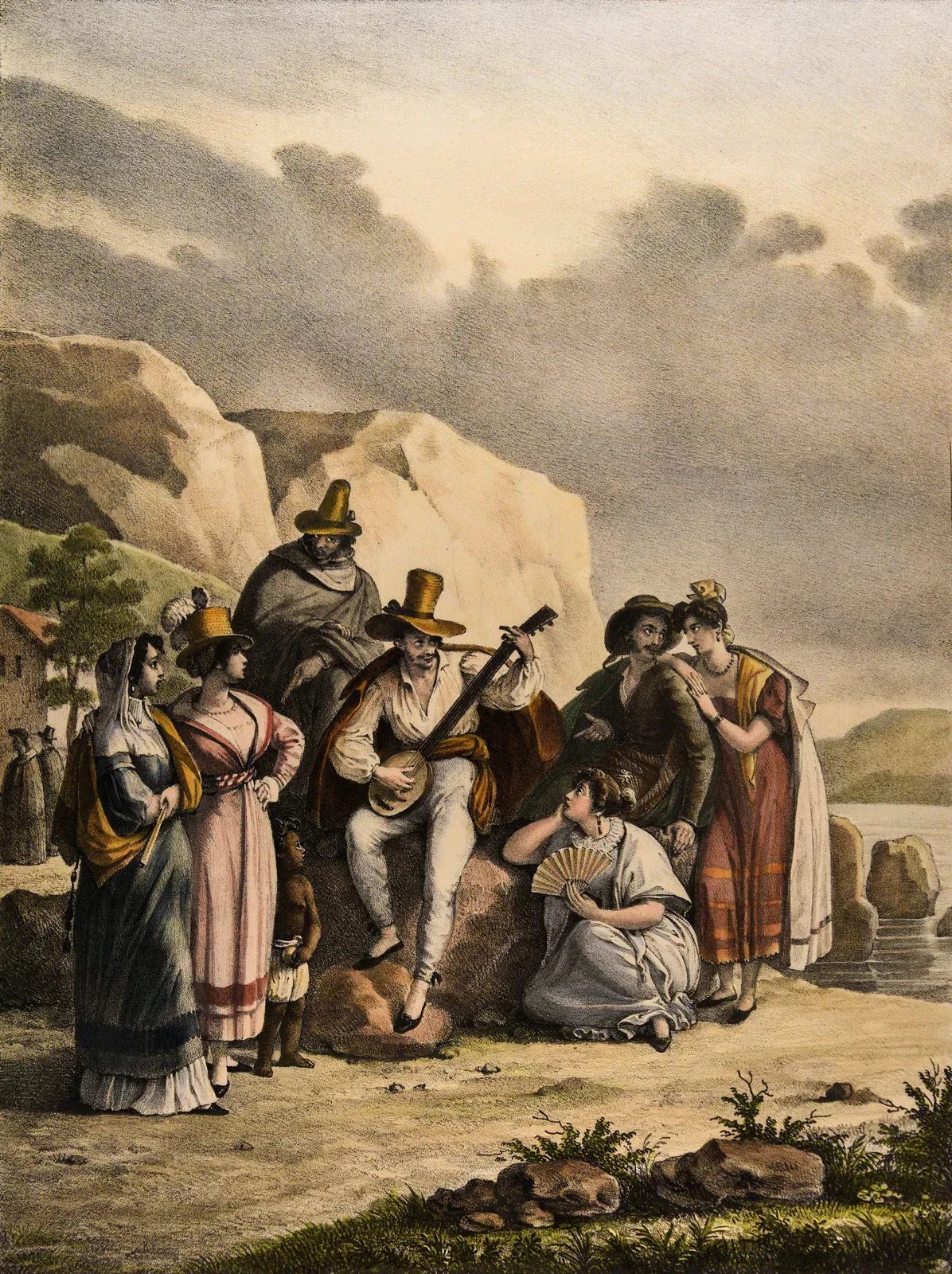
The lundu crossed from the senzala to the drawing room within a few decades. Manuel de Almeida Botelho took modinha and lundu to Lisbon in 1749, and the Rio-born poet Domingos Caldas Barbosa made himself a fixture of Lisbon society in the following decades, singing to his own viola. His verses, gathered in two volumes of Viola de Lereno in 1798 and 1826, mix neoclassical conventions with Afro-Brazilian turns of phrase. A lundu sung for voice and guitar or keyboard, later called a lundu-canção, grew beside the sentimental modinha and shared its audience.
By the nineteenth century the lundu was the preferred music of the Luso-Brazilian middle class. Composers wrote them, theatres staged them and publishers sold them as sheet music. Francisco Manuel da Silva, who also composed the Brazilian national anthem, is credited with the popular Lundu da Marrequinha.
Characteristics
Lundus differ in structure, but most rest on alternating tonic and dominant chords strummed over a syncopated figure that recalls West African practice. The lundu-song of the late nineteenth century was usually in duple meter, and a simple, repeated syncopation gave its melody a local character. The dance accompaniment could add hand drums or, in some places, a thumb piano. As in the fandango, the Argentine zamba, the Peruvian zamacueca and other New World dances, couples used handkerchiefs and raised arms. Verses were playful, flirtatious and often comic.
Theatre, records and decline
From the 1850s the lundu was a staple of Rio’s comic theatre, and its syncopations passed into the choro, the maxixe and early samba. The singer and actor Xisto Bahia, born in Salvador, wrote the best-known theatre lundu, Isto é bom. In 1902 Baiano recorded it for Casa Edison, the Rio shop and recording house founded by Frederico Figner. It is regarded as the first song commercially recorded in Brazil and the first entry in the house catalogue. Eduardo das Neves later recorded lundus such as Marocas for Odeon.
Within two decades samba had displaced the lundu as the dance music of the cities. A record such as Pelo Telefone, issued as a samba in 1917, shows the shift. The lundu lost its place as a commercial genre but was never fully lost.
Legacy
Few early lundus survive on record, and today the form is known mostly through sheet music, concert revivals and the rhythmic fingerprints that run through Latin popular music. On Marajó Island in Pará, the lundu marajoara is still danced and sung in Afro-riverine communities beside carimbó, and the Amazonian group Arraial do Pavulagem has recorded a version. Guitarists such as Paulo Bellinati have included lundu in their repertoire, and the form is a standard reference in histories of how African rhythm entered Brazilian popular song.
Misconceptions
One common claim is that lundu was only a slave dance. In fact it belonged to several classes: it began among enslaved Africans, was tolerated and sometimes feared by owners, and by the nineteenth century was sung in parlours and theatres. Another is that lundu and modinha are the same thing. They share singers and an audience, but the modinha is a European-rooted sentimental song and the lundu an Afro-Brazilian dance-song. A third is that samba replaced lundu overnight. The older form fed samba its syncopation and slowly gave way as tastes changed.
Frequently asked questions
What is lundu music?
Lundu is an Afro-Brazilian song and couple dance of Bantu origin, accompanied by strummed guitar or viola over a syncopated rhythm. It was popular in Brazil and Portugal from the 1700s into the early 1900s.
Where did lundu come from?
Lundu came from Bantu and Angolan dance traditions brought to Brazil through the Atlantic slave trade. Over the 1700s it spread from enslaved communities to the salons of Rio de Janeiro and Lisbon.
What was the first song recorded in Brazil?
The lundu Isto é bom, written by Xisto Bahia and sung by Baiano for Casa Edison in 1902, is considered the first song commercially recorded in Brazil.
How is lundu related to samba and choro?
The lundu was a source of the choro, the maxixe and the samba in the nineteenth century. Its syncopated rhythm over strummed chords carried into all three.
Sound
Sound sheet
Anatomy of a track
| # | Part |
|---|---|
| 1 | Instrumental or strummed introduction |
| 2 | Verse sung over strummed tonic-dominant harmony |
| 3 | Refrain, often a call and response |
Signature sounds
- Syncopated rhythm under strummed chords
- Tonic and dominant harmony
- Umbigada dance gesture
- Playful, flirtatious verses
Techniques
- Strummed chords
- Syncopated melody
- Call and response
Keys and modes
Major with tonic-dominant movement. Songs alternate tonic and dominant chords over a syncopated figure.
Vocals
Sung verses, often humorous or flirtatious, in Portuguese with Afro-Brazilian turns of phrase.
Scenes
Where it happened
Where and when the sound lived: one bar per city on a shared timeline.
Europe
Latin America
Active scenes
Peak 4, 1900-2025
Home of Caldas Barbosa, the theatres and the recording house that set the lundu on disc.
Court and salon audience where Brazilian lundu and modinha became fashionable.
Birthplace of Xisto Bahia, author of the best-known theatre lundu.
On Marajó Island lundu survives in Afro-riverine communities, danced alongside carimbó.
Venues and places
Rio de Janeiro, 1900 to today. Frederico Figner's shop and Brazil's first recording house, where Isto é bom was issued in 1902.
Culture
Culture markers
- Umbigada
Couple dance in a ring of onlookers, with foot tapping, swaying hips and the belly-bump that gave it its scandal.
Dance - Handkerchiefs and raised arms
Like the fandango and zamacueca, the dance uses handkerchiefs, castanets and arms held above the head.
Dance - Condemned, then courted
Seen first as witchcraft, lundu was later prized by elites for its sensual charm and believed power against spells.
Ritual
Media
Key media
- 1798Viola de Lereno
by Domingos Caldas Barbosa. The printed collection of lundu and modinha texts by the poet who brought them to Lisbon.
Book - 2002Capoeira: The History of an Afro-Brazilian Martial Art
by Matthias Roehrig Assuncao. Study of Afro-Brazilian practice that quotes accounts of the lundu.
Book
Glossary
Terms on this page
Umbrella term for Afro-Brazilian drum dances, a close relative of the lundu.
Afro-Brazilian song and couple dance of Bantu origin, also spelled landu or landum.
Salon-style lundu for solo voice with guitar or keyboard.
Sentimental Luso-Brazilian love song, the sung companion of the lundu.
Belly-bump gesture that invites a new dancer into the circle.
Latin family