Modinha
Modinha is a sentimental Luso-Brazilian love song of the late 18th and 19th centuries, sung in salons and later in street serenades with guitar and flute.
Rio de Janeiro, 1770
Latin family
Born
1770
Rio de Janeiro
Links
10
Genres it drew on or shaped
Tempo
60-100 BPMLineage
Family tree
Timeline
Era by era
From the first sparks to today. Select a dot to read the story behind it.
- Lisbon salons
1770 to 1807
- The court in Rio
1808 to 1888
- Street serenades
1889 to 1913
- Records and radio
1914 to 1950
Eras
Moments
- 1 Lisbon salons, 1770 to 1807
- 2 The court in Rio, 1808 to 1888
- 3 Street serenades, 1889 to 1913
- 4 Records and radio, 1914 to 1950
around 1770
Lisbon salons
Domingos Caldas Barbosa carries the Brazilian modinha to Lisbon, where it becomes fashionable salon song and reaches print.
- 1733Modinhas appear in Portuguese operaPlaywright Antonio Jose da Silva and composer Antonio Teixeira are credited with putting modinhas into stage works in the 1730s.
- 1770Caldas Barbosa reaches PortugalThe Rio-born poet and viola player brings the songs of colonial Brazil to Lisbon.
- 1779First literary mention of the Brazilian modinhaSatirist Nicolau Tolentino de Almeida refers to it, most likely meaning Caldas Barbosa songs.
- 1787Beckford arrives in LisbonThe English traveller writes admiringly of the Brazilian modinhas he hears in the city.
- 1798Viola de Lereno publishedThe first volume of Caldas Barbosa poems and modinhas is printed in Lisbon.
1808
The court in Rio
The Portuguese court moves to Rio de Janeiro. Court musicians write learned modinhas with piano and bel canto lines.
- 1808The court settles in Rio de JaneiroThe Royal Chapel musicians turn the modinha into a learned genre with piano accompaniment.
- 1813Viola de Lereno reprinted in BahiaA third edition appears in Brazil, bringing the founding modinhas home.
- 1859Carlos Gomes writes Quem sabe?The future opera composer sets verses by Bittencourt Sampaio in one of the best known art modinhas.
1889
Street serenades
The modinha leaves the salon for the street, sung under windows with flute, guitar and cavaquinho.
- 1902Casa Edison starts recording in RioThe first commercial discs made in Brazil carry serenade singers and popular songs.
- 1912Chiquinha Gonzaga Lua brancaA modinha from her stage work that became one of the most recorded Brazilian songs.
1914
Records and radio
Disc and radio stars sing modinha-style songs until samba-canção takes over the role of the solo lyric song.
- 1914Luar do sertaoCatulo da Paixao Cearense lyrics set to a melody by guitarist Joao Pernambuco become a national favourite.
- 1937Vicente Celestino records Coracao maternoThe tenor dramatic tango-cancao, built on a legend, is his biggest hit.
- 1937Silvio Caldas sings Chao de estrelasOrestes Barbosa lyrics and a Caldas melody carry the modinha spirit into the radio age.
- 1940Samba-cancao takes overMario de Andrade observed that samba-cancao gradually replaced the modinha as the solo lyric song.
Listening path
Start listening
A short path from an easy way in to the deep end. Thumbnails come from YouTube; the player loads only when you press play.
- 01
Chiquinha Gonzaga, 1912
A well loved modinha in an orchestral setting, the easiest way in.
- 02
Vicente Celestino, 1937
Radio-age sentimental song with a dramatic tenor voice.
- 03
Carlos Gomes, 1859
The learned 19th-century modinha for voice and piano.
Facts
| Family | Latin |
| Origin | Rio de Janeiro, Brazil |
| Emerged | Late 18th century |
| Status | Historical |
| Tempo | 60 to 100 BPM |
| Meter | 2/4 or 3/4 |
Modinha is a sentimental love song that flourished in Portugal and Brazil from the late 18th century into the early 20th. A single voice sings melancholic verses over a guitar, a viola or a keyboard.
It began as salon entertainment in Lisbon, became a learned court genre in Rio de Janeiro and ended as the serenade of the street. Together with the lundu, it is counted among the roots of Brazilian popular music, and it belongs to the wider Latin family of Iberian-rooted song.
Origins
The word is the diminutive of moda, a Portuguese term for a song, and for most of the 18th century it covered very different things in Portugal. Salon pieces by trained composers, often to verses by Arcadian poets and accompanied by harpsichord, were called modinhas. So were the improvised songs that foreign travellers heard from farmers near Lisbon and from blind beggars in the capital’s streets, usually with a plain guitar accompaniment and a nostalgic tone.
The origin of the form is disputed. One account points to the 1730s, when the playwright Antonio Jose da Silva and the composer Antonio Teixeira put modinhas into stage works. Another credits Domingos Caldas Barbosa, a poet and viola player born in Rio de Janeiro, who reached Lisbon around 1770 and is often called the father of the modinha. By 1775 he was a fixture of the city’s salons, singing his own verses to the viola. The earliest known literary reference to the Brazilian modinha dates from 1779, when the satirist Nicolau Tolentino de Almeida mentioned it, most likely with Caldas Barbosa in mind.
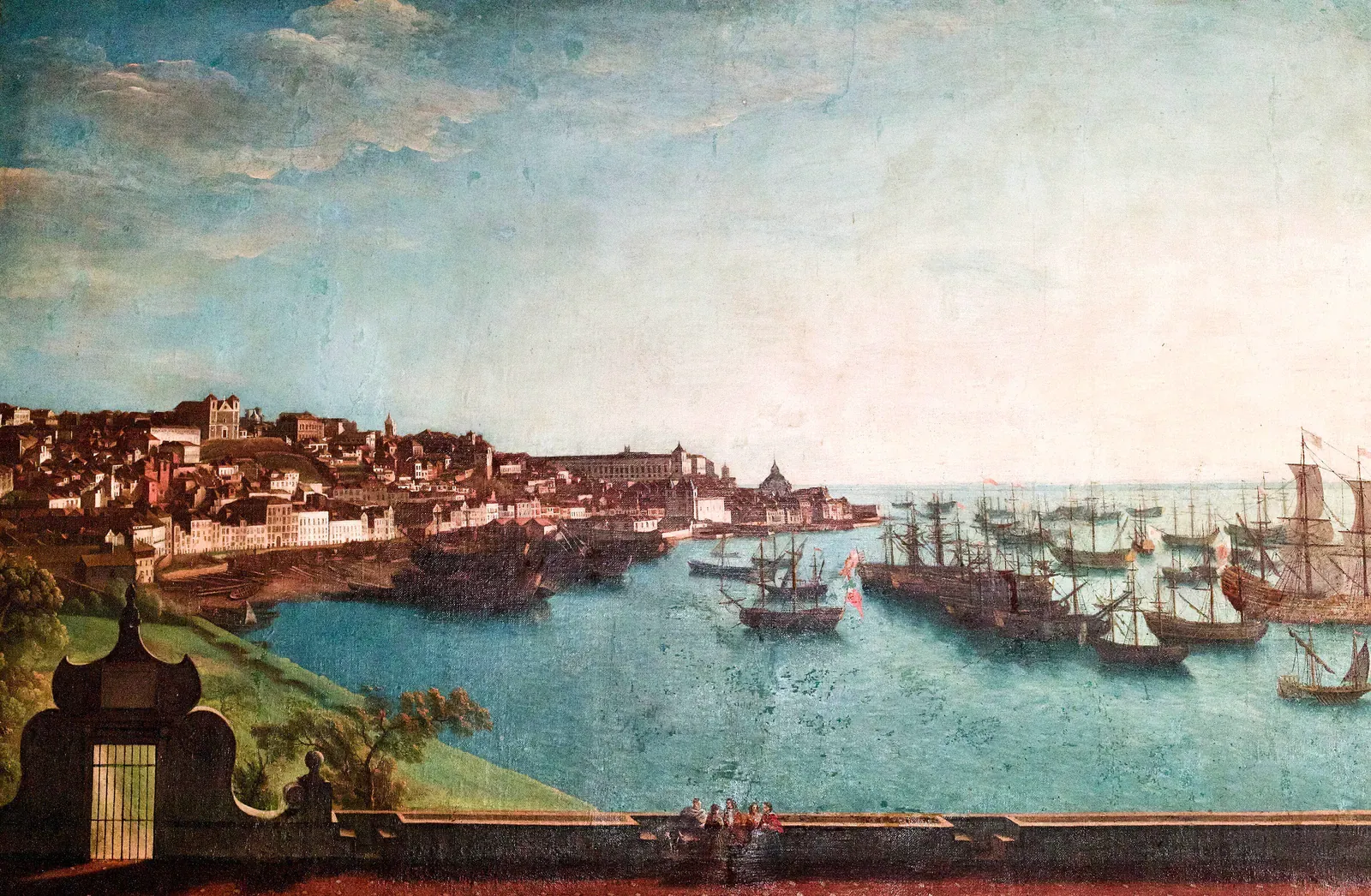
Lisbon salons, 1770-1807
Aristocratic society took to the genre because it sounded unlike the Portuguese repertoire. Contemporaries described the Brazilian songs as soft and languid, and the English traveller William Beckford, who reached Lisbon in 1787, wrote admiringly of them. The performer was often the composer, and the poem mattered as much as the tune. In 1798 Caldas Barbosa published the first volume of Viola de Lereno, a collection of his poems and modinhas, in Lisbon. Only the texts were printed in full, but the book shows what the Brazilian modinha looked like in the 18th century and fixed its reputation. A third edition appeared in Bahia in 1813, so the founding songs of the genre returned to Brazil in print.
The court in Rio, 1808-1888
In 1808 the Portuguese court, fleeing Napoleon, settled in Rio de Janeiro and brought its musicians. The Royal Chapel there employed a large body of singers and instrumentalists, among them the Brazilian composer Jose Mauricio Nunes Garcia, and its modinheiros wrote songs of considerable refinement. Influenced by Italian bel canto, they gave the vocal line long, shaped phrases and often replaced the guitar with the piano.
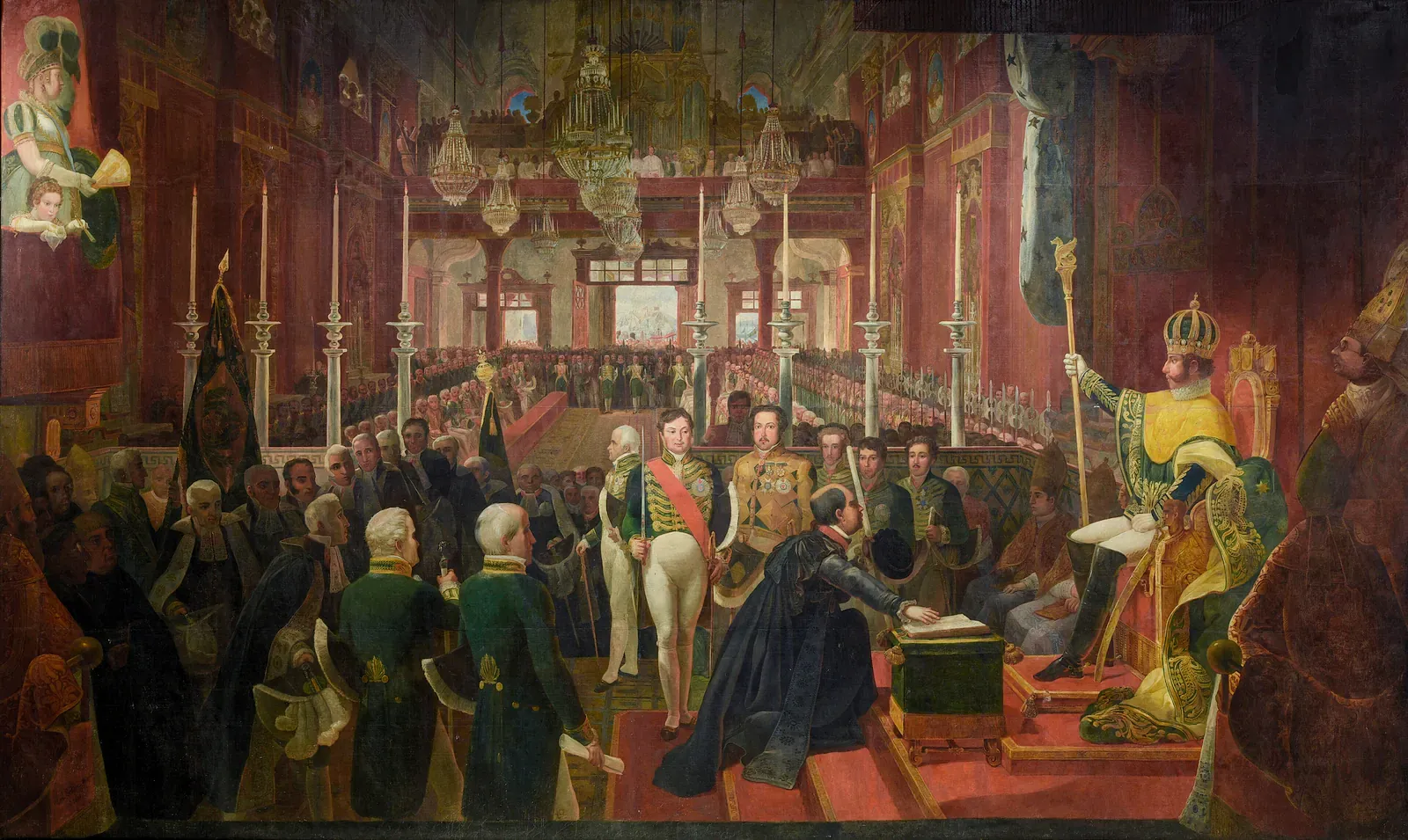
The best known art modinha of the period is Quem sabe?, which Antonio Carlos Gomes wrote in 1859 to verses by Bittencourt Sampaio, years before his operas made him famous in Europe. Gomes treated the form as a short operatic aria. Where the court tradition was strict about vocal line, the genre in the provinces and the countryside kept the older, simpler habits: guitars, wire-strung violas, mandolin or cavaquinho, and texts about unrequited love, daydreams and gentle irony aimed at the injustices of those in power.
Street serenades, 1889-1913
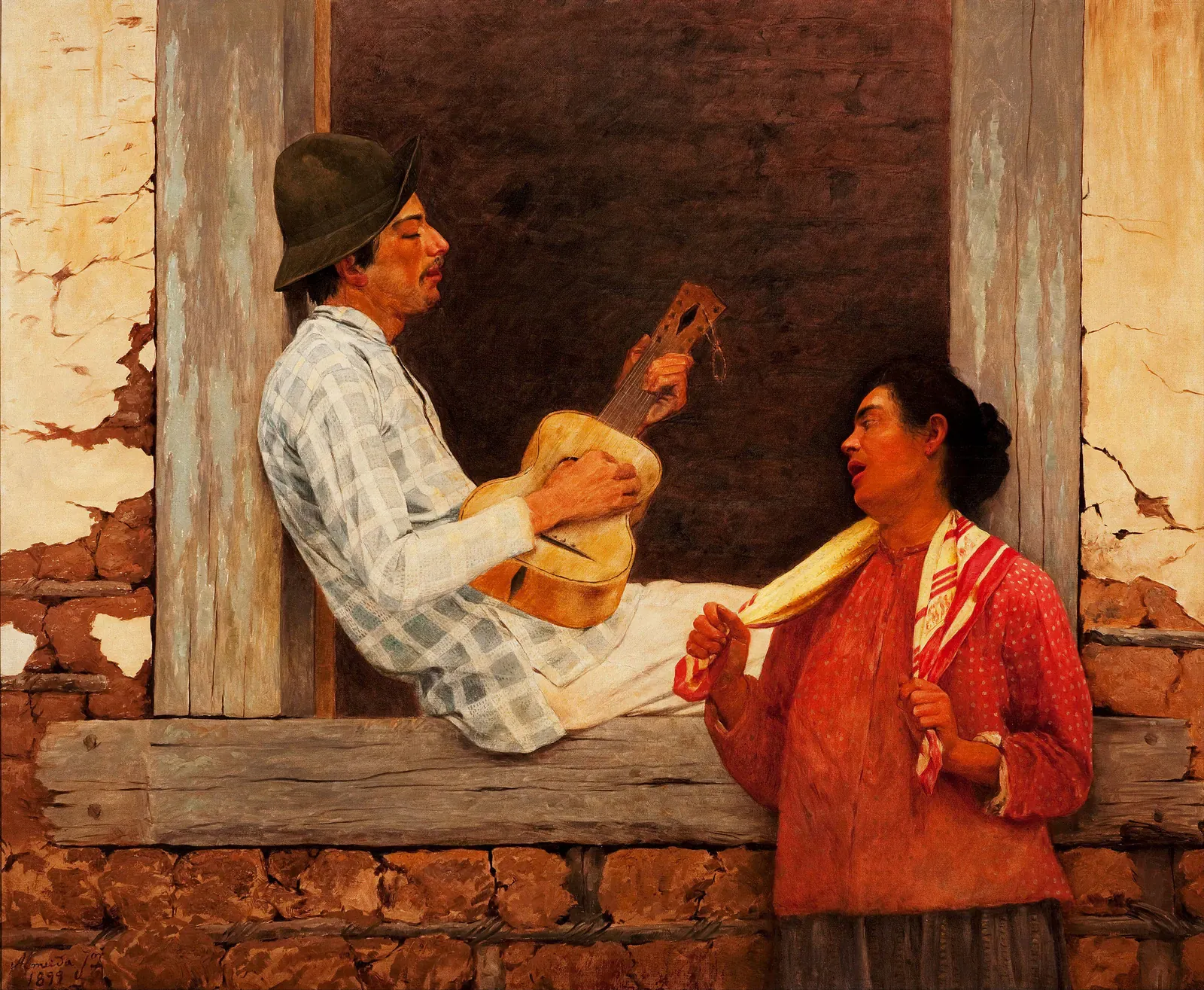
By the late 19th century the modinha had become the music of the serenade, or seresta. Groups of singers and players with flute, guitar and cavaquinho walked the streets at night and sang beneath a window. The repertoire now overlapped with the choro and the early popular song of Rio, and composers moved easily between them. Chiquinha Gonzaga, a pianist and the first woman to conduct an orchestra in Brazil, wrote waltzes, polkas and stage operettas, and her song Lua branca, associated with her theatre work of about 1912, became the most durable modinha of the century.
Records and radio, 1914-1950
The poet Catulo da Paixao Cearense carried the serenade mood into the 20th century. Luar do sertao, with words by Catulo and a melody by the guitarist Joao Pernambuco, dates from 1914 and has been sung ever since. Gramophone discs, which Casa Edison began issuing in Rio in 1902, took the songs from the street into homes, and by the 1930s radio singers performed the same kind of material. Vicente Celestino, a tenor, recorded Coracao materno in 1937, a melodramatic song built on a legend, and it became his greatest hit; he recorded for RCA Victor. Silvio Caldas had a comparable success the same year with Chao de estrelas, to lyrics by Orestes Barbosa.
Characteristics
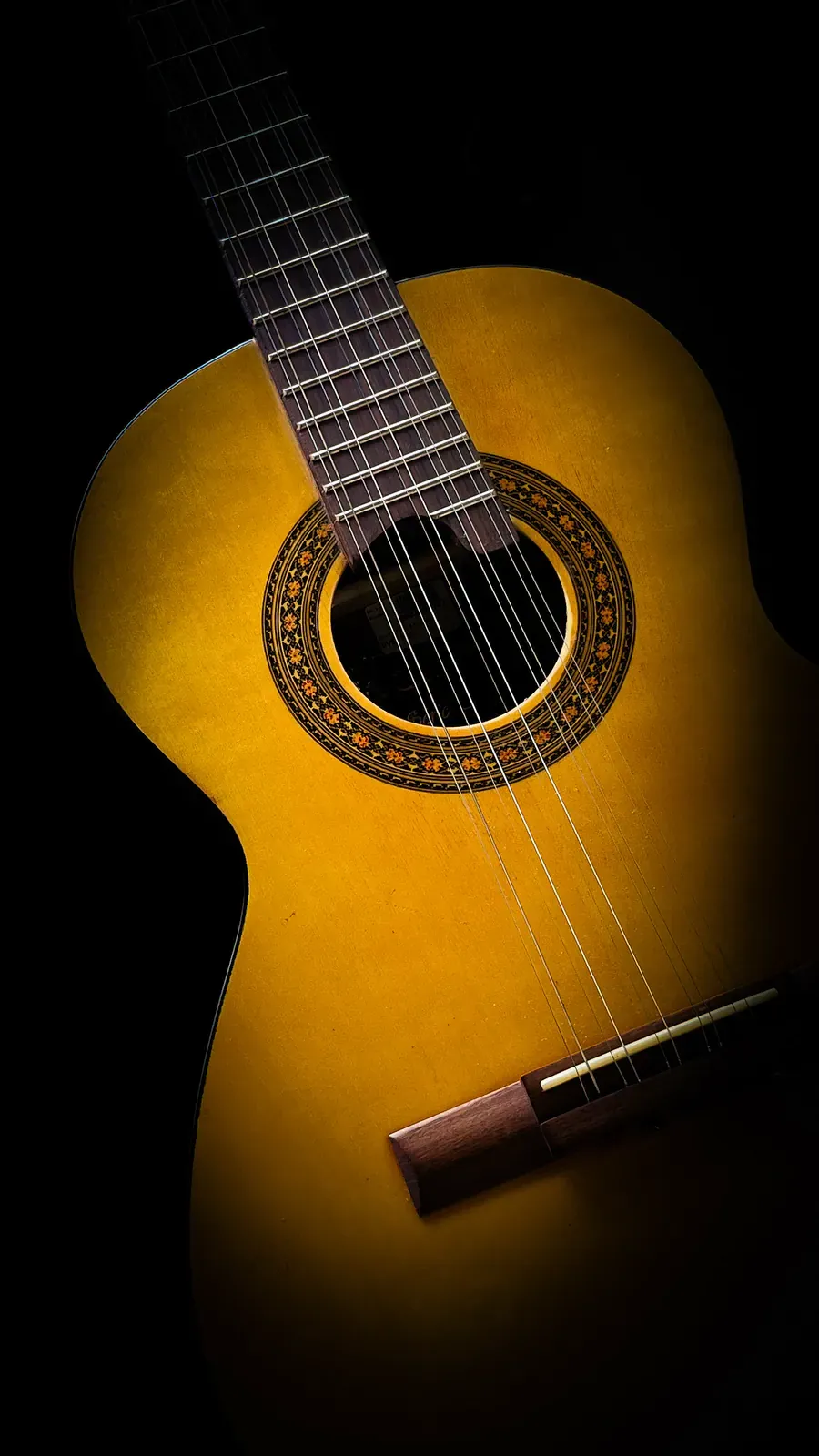
Musically the modinha is plain. A solo voice sings stanzas of verse, usually to a slow and melancholic melody, over arpeggiated guitar or a keyboard part. The salon and court versions were strictly composed; the street versions were more improvised, and singers varied both words and tune. The subject is almost always love, whether answered, lost or imagined.
Legacy
The genre faded as a living form in the 20th century. Mario de Andrade noted in his musical dictionary that samba-cancao gradually replaced the modinha as the solo lyric song, and the later samba and bossa nova singers inherited its role. Its place in history is secure: with the lundu it is counted as one of the first types of music in which Brazilians recognised a sound of their own, one European in root, the other African. The Brazilian art-song tradition that runs from Gomes to later composers also draws on it. Modern studies, such as Edilson de Lima’s book and CD As modinhas do Brasil, have brought the repertoire back to performers.
Misconceptions
One common belief is that the modinha is a Brazilian invention that Portugal merely received. In fact the term and the practice existed in Portugal before Caldas Barbosa arrived, and scholars still disagree about where the form began. Another is that it was only salon music. The same word was used for the songs of street beggars and farmers, and the serenade tradition of the 19th century was thoroughly public. A third is that the modinha is a kind of fado or of lundu. It is related to both, but the lundu is an Afro-Brazilian song and dance, while the modinha is a European-rooted sentimental song.
Frequently asked questions
What is a modinha?
A modinha is a sentimental love song for one voice with guitar, viola or keyboard accompaniment, popular in Portugal and Brazil from the late 18th century.
Who created the modinha?
Its origin is debated, but Domingos Caldas Barbosa, a poet and viola player from Rio de Janeiro who performed in Lisbon from about 1770, is called its father.
What is the difference between modinha and lundu?
Both are founding forms of Brazilian popular music. The modinha is a European-rooted lyrical song, whereas the lundu has African roots and is tied to dance.
Is the modinha still played?
It is no longer a mainstream form, but songs such as Lua branca and Luar do sertao remain well known, and concert singers still perform the art modinhas of Carlos Gomes.
Sound
Sound sheet
Anatomy of a track
| # | Part | Bars |
|---|---|---|
| 1 | Instrumental introduction | 4 |
| 2 | First stanza | 8 |
| 3 | Second stanza or refrain | 8 |
| 4 | Return of the first stanza | 8 |
Signature sounds
- Sentimental love text sung by one voice
- Plucked guitar or keyboard accompaniment
- Slow, melancholic melody
Techniques
- Strophic form
- Bel canto vocal line
- Improvised delivery
Keys and modes
Diatonic major and minor. European tonal harmony shaped by Italian opera and salon song.
Vocals
A solo voice, sentimental and restrained in the salon, more open in the street serenade.
Scenes
Where it happened
Where and when the sound lived: one bar per city on a shared timeline.
Europe
Latin America
Active scenes
Peak 2, 1813
Caldas Barbosa songs charm the salons of the capital.
Court, serenades and the first recording studios are all in the capital of Brazil.
The third edition of Viola de Lereno is printed in Bahia.
Venues and places
Lisbon, 1775 to today. Where Caldas Barbosa sang to his own viola accompaniment.
Rio de Janeiro, 1808 to today. Its musicians wrote the learned court modinhas with piano.
Rio de Janeiro, 1902 to today. The first Brazilian recording house.
Culture
Culture markers
- Street serenade
Singers and guitarists performed under a beloved window at night.
Ritual - Salon performance
Aristocratic evenings where the modinha was sung for guests.
Ritual - Printed song books
Collections like Viola de Lereno circulated texts and music.
Artwork
Media
Key media
- 1798Viola de Lereno
by Domingos Caldas Barbosa. Printed poems and modinhas that spread the genre.
Book - 1989Dicionario musical brasileiro
by Mario de Andrade. Its entry on the modinha traces how samba-cancao replaced it.
Book - 2001As modinhas do Brasil
by Edilson de Lima. Modern study with a CD of modinhas.
Book
Glossary
Terms on this page
Italian vocal style that shaped the learned modinhas of the Royal Chapel in Rio.
Afro-Brazilian song and dance that travelled alongside the modinha as a founding genre of Brazilian popular music.
The Portuguese word for a song or fashion, of which modinha is the diminutive.
A composer or singer of modinhas.
Slow lyrical samba that replaced the modinha as the solo love song.
A serenade, singing and playing under a window at night, the later home of the modinha.
Latin family