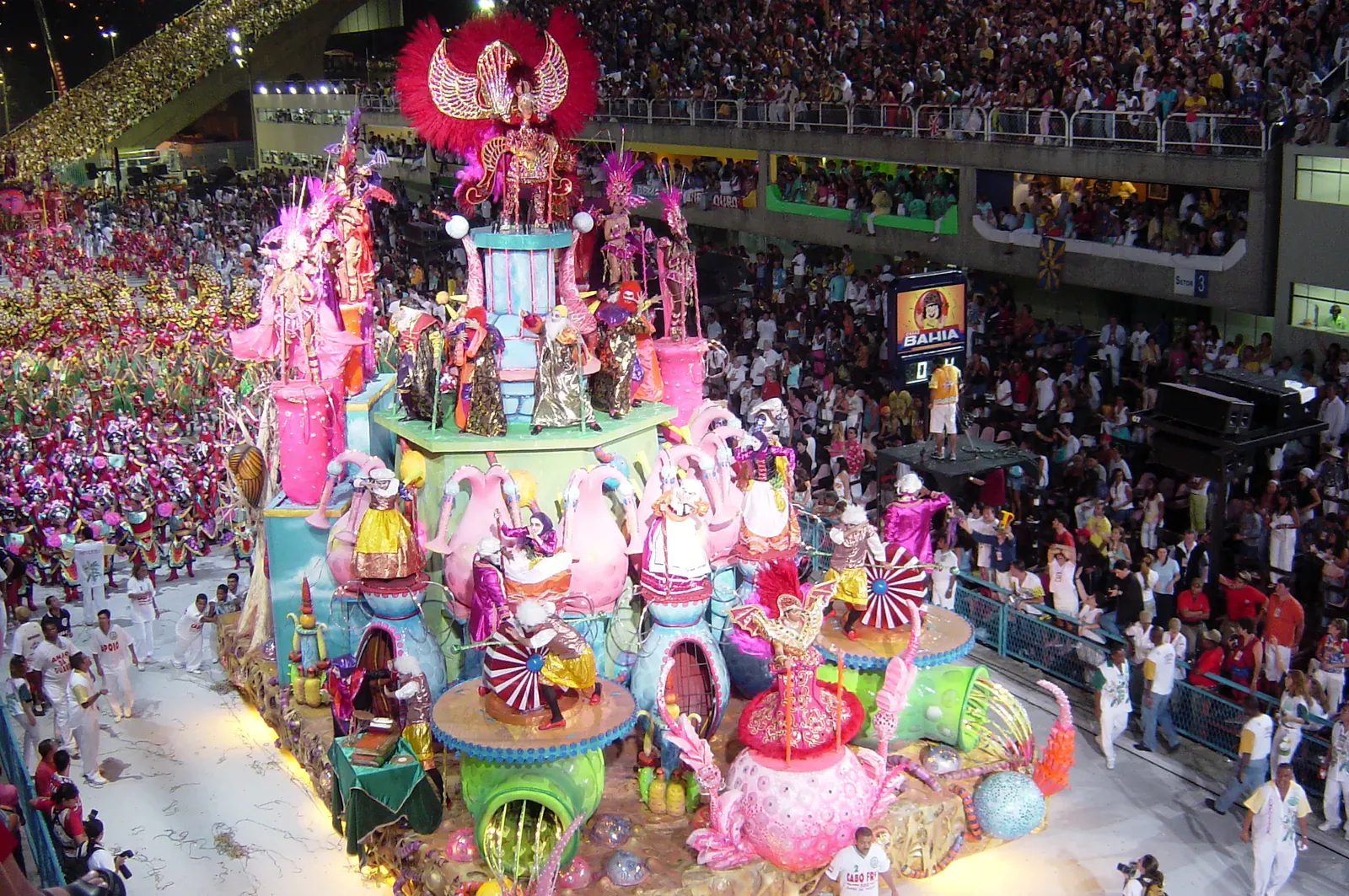
Cumbia
Cumbia is a dance music from Colombia's Caribbean coast, from gaita flutes and drums to Peruvian chicha, Mexican sonidero and Argentine villera.
Colombian Caribbean coast, around 1700
Latin family
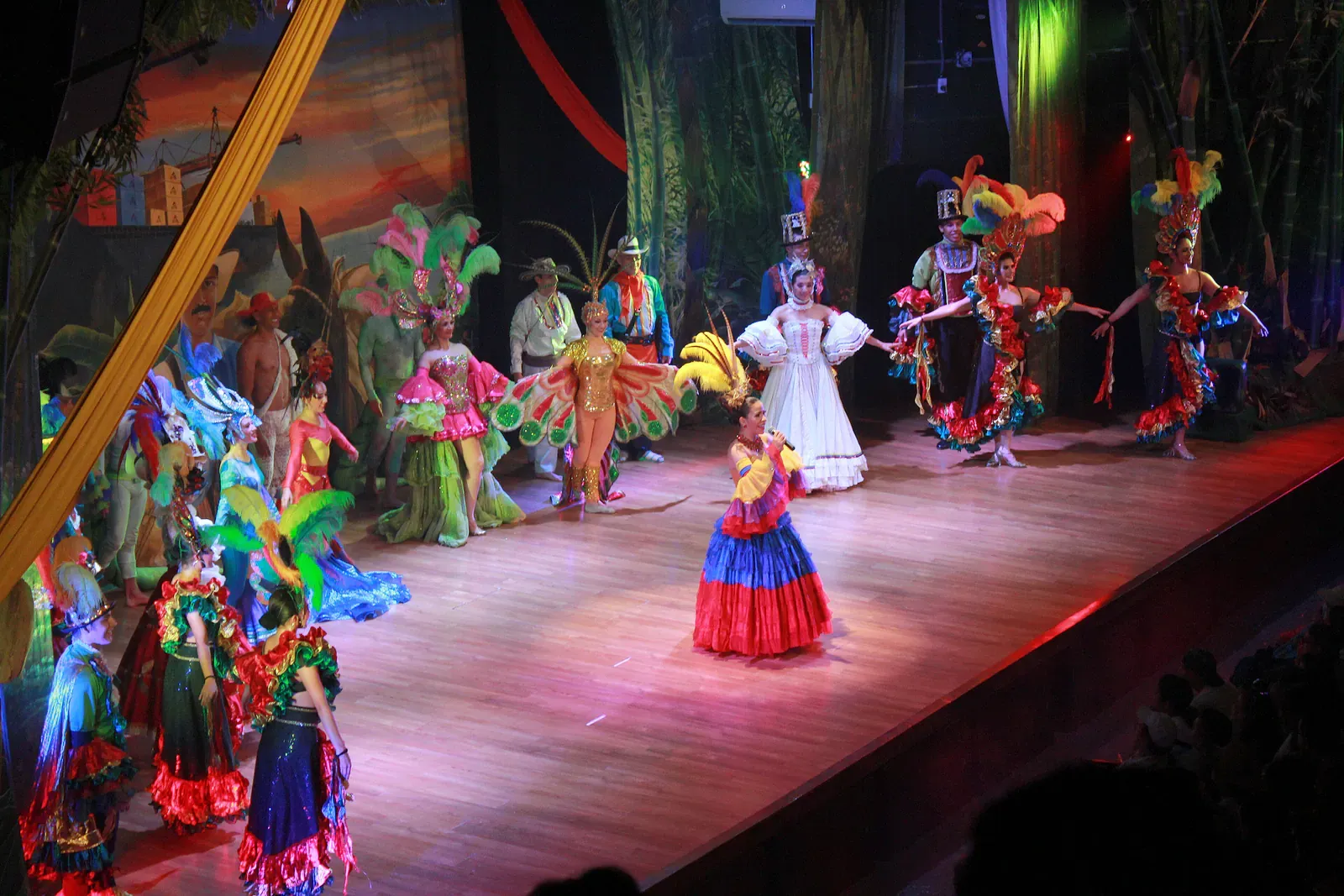
Born
around 1700
Colombian Caribbean coast
Subgenres
27
Documented branches
Links
27
Genres it drew on or shaped
Tempo
80-110 BPMLineage
Family tree
Grew out of
Derived from
Influenced by
Colombian Caribbean coast
Cumbia
Led to (28)
Timeline
Era by era
From the first sparks to today. Select a dot to read the story behind it.
- Coastal folk roots
1700 to 1933
- Records and ballroom orchestras
1934 to 1959
- Accordion, guitar and the road abroad
1960 to 1979
- Mexican, Tejano and global stages
1980 to 1999
- Revival and fusion
2000 to today
Eras
Moments
- 1 Coastal folk roots, 1700 to 1933
- 2 Records and ballroom orchestras, 1934 to 1959
- 3 Accordion, guitar and the road abroad, 1960 to 1979
- 4 Mexican, Tejano and global stages, 1980 to 1999
- 5 Revival and fusion, 2000 to today
around 1700
Coastal folk roots
Afro-descendant, Indigenous and Spanish elements meet on the Colombian Caribbean coast. Gaitas, drums and guacharaca accompany a candle courtship dance.
1934
Records and ballroom orchestras
Discos Fuentes opens in Cartagena and bandleaders such as Lucho Bermúdez arrange cumbia and porro for big orchestras. The rhythm becomes a national dance-hall style.
- 1934Discos Fuentes opens in CartagenaColombia first notable record label starts recording coastal styles.
- 1943Lucho Bermúdez plays El Metropolitan in BogotáThe success of Prende la Vela earns him a season at the Bogotá nightclub.
- 1946Danza Negra recorded in Buenos AiresBermúdez cuts around 60 themes with RCA Víctor during a six-month Argentine contract.
- 1947Lucho Bermúdez Orchestra debuts at Hotel GranadaA Bogotá hotel residency starts a lifelong run of tours and recordings.
- 1955Cumbia turns orchestral and stylizedFrom the 1950s the rhythm is arranged and sung in a polished form unlike its folk roots.
1960
Accordion, guitar and the road abroad
Colombian records travel to Peru and Mexico. Electric guitars give Peruvian chicha its sound, while Rigo Tovar blends cumbia with rock in Mexico. Salsa pushes cumbia aside at home.
- 1960La Sonora Dinamita forms in CartagenaBandleader Lucho Argaín founds the group that later reaches Mexico.
- 1960First Colombian compilation albumDiscos Fuentes issues Colombia's first compilation album.
- 1962Alegre Majagual releasedThe first Corraleros de Majagual LP mixes cumbia, porro and vallenato around the accordion.
- 1963Festival en Guararé hitsAlfredo Gutiérrez, credited as author, records a Panamanian tune with the Corraleros.
- 1966Los Destellos form in LimaEnrique Delgado puts electric guitar and bass at the front of Peruvian cumbia.
- 1970Elsa sells a millionThe Los Destellos 45 rpm single becomes a Peruvian cumbia landmark.
- 1972Rigo Tovar debuts with Matamoros QueridoHis first album blends cumbia, tropical sounds and rock.
- 1973Los Mirlos sign with InfopesaThe Amazonian band starts a long run of psychedelic cumbia releases.
- 1975Salsa pushes cumbia aside in ColombiaCumbia nearly vanishes at home but holds ground in Mexico, Central America and Peru.
- 1976Los Ángeles Azules formSiblings from Iztapalapa start the group that later pioneers symphonic cumbia.
- 1979Rigo Tovar breaks a Monterrey crowd recordA free concert draws over 300,000 people, topping a papal crowd set the same year.
1980
Mexican, Tejano and global stages
Los Ángeles Azules, Selena and sound-system DJs carry cumbia through Mexico and Texas. Totó la Momposina brings coastal tradition to world-music audiences, and Argentina grows its own slum sound.
- 1982Totó la Momposina performs at the Nobel ceremonyShe joins the Colombian delegation that accompanies Gabriel García Márquez.
- 1986Joe Arroyo releases La RebeliónThe Musa Original track fuses salsa and coastal tropical music.
- 1987First Colombian CDDiscos Fuentes issues the first compact disc made in Colombia.
- 1992Selena releases Como la FlorThe Tejano cumbia ballad becomes her signature song.
- 1993Totó la Momposina issues La Candela VivaThe Peter Gabriel Real World label presents coastal drumming to world audiences.
- 1996Cómo Te Voy a Olvidar releasedThe Los Ángeles Azules cumbia on Disa becomes a Mexican standard.
- 1999Cumbia villera starts in Buenos AiresPablo Lescano and others begin the slum cumbia sound in Villa La Esperanza.
2000
Revival and fusion
Celso Piña mixes accordion cumbia with rock and hip hop, Monterrey slows records into cumbia rebajada, and bands play it with symphony orchestras. Cumbia is now a continent-wide family.
- 2001Celso Piña releases Barrio BravoCumbia Sobre el Río mixes accordion cumbia with rock and hip hop guests.
- 2014Los Ángeles Azules play with a symphony orchestraThey perform cumbia sinfónica with the Mexico City Symphony Orchestra.
- 2023Billboard Latin Lifetime Achievement for Los Ángeles AzulesThe group is honored again in 2024 with a Latin Grammy Lifetime Achievement Award.
Listening path
Anthems
The records that built the sound, grouped by the part they played. Thumbnails come from YouTube; the player loads only when you press play.
- 01
Lucho Bermúdez, 1946 · RCA Records
Bermúdez orchestral cumbia composition that carried the coastal dance into ballrooms.
Origin - 02
Los Corraleros de Majagual, 1963 · Discos Fuentes
Accordion cumbia hit that spread across Colombia and Latin America.
Start hereBreakthrough - 03
Los Destellos, 1970
Million-selling single that defined electric Peruvian cumbia.
Anthem - 04
Rigo Tovar, 1972
Title hit of the debut that fused cumbia with rock in Mexico.
Anthem - 05
Los Ángeles Azules, 1996 · Disa Records
Romantic Mexican cumbia that became a generational singalong.
Start hereAnthem - 06
Joe Arroyo, 1986 · Discos Fuentes
Story song that blended salsa with coastal tropical music and became a Colombian standard.
Crossover - 07
Selena, 1992
Tejano cumbia ballad that made the style a hit for US Latin audiences.
Start hereCrossover - 08
Totó la Momposina, 1993 · Real World Records
Brought coastal drums and chant to a world-music audience.
Revival - 09
Celso Piña, 2001
Accordion cumbia with rock and hip hop guests that relaunched the genre in Mexico.
Revival
Cumbia is a Latin American dance music that grew out of a courtship dance on Colombia’s Caribbean coast, where Indigenous, African and Spanish traditions met. Its defining traits are a 2/4 pulse of hand drums and a scraped guacharaca, with flutes, accordion or brass on the tune.
National versions in Peru, Mexico, Argentina and elsewhere make it arguably the most widely spread rhythm on the continent.
Origins
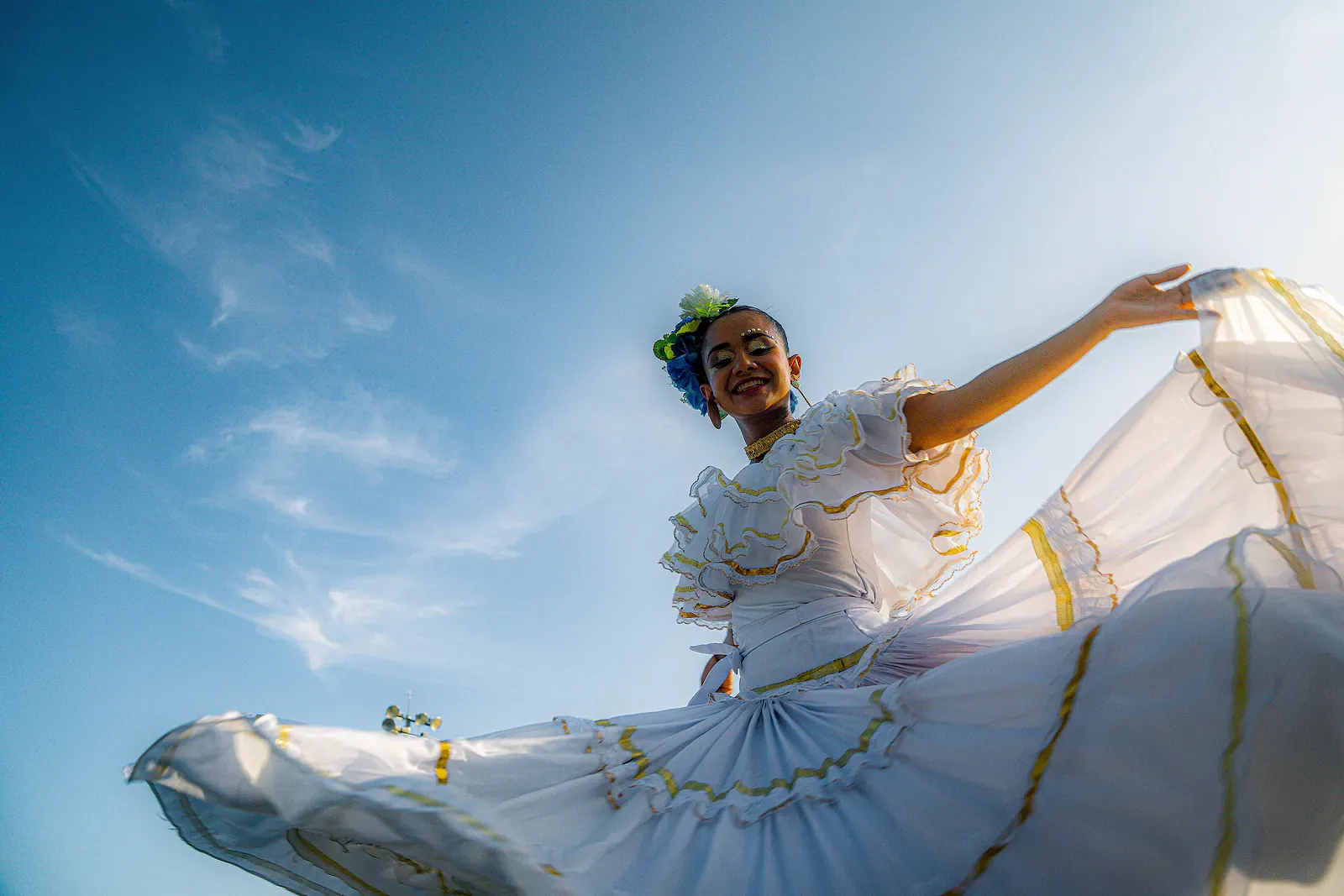
It started in the villages and river ports of the Colombian Caribbean coast, in areas such as Magdalena and Bolivar. The origin is usually placed between the 17th and 19th centuries, among descendants of enslaved Africans, Indigenous communities and Spanish settlers. Each group left a mark: the African drumming, the Indigenous flutes and the Spanish melody, dress and harmony.
The classic ensemble is small and acoustic. A pair of gaitas, long flutes played in a male and female pair, carry the tune. A caña de millo, a cane flute, does the same job in some bands. Drums such as the tambor alegre, the llamador and the tambora hold the rhythm, and the guacharaca gives the scraped chu-chucu-chu.
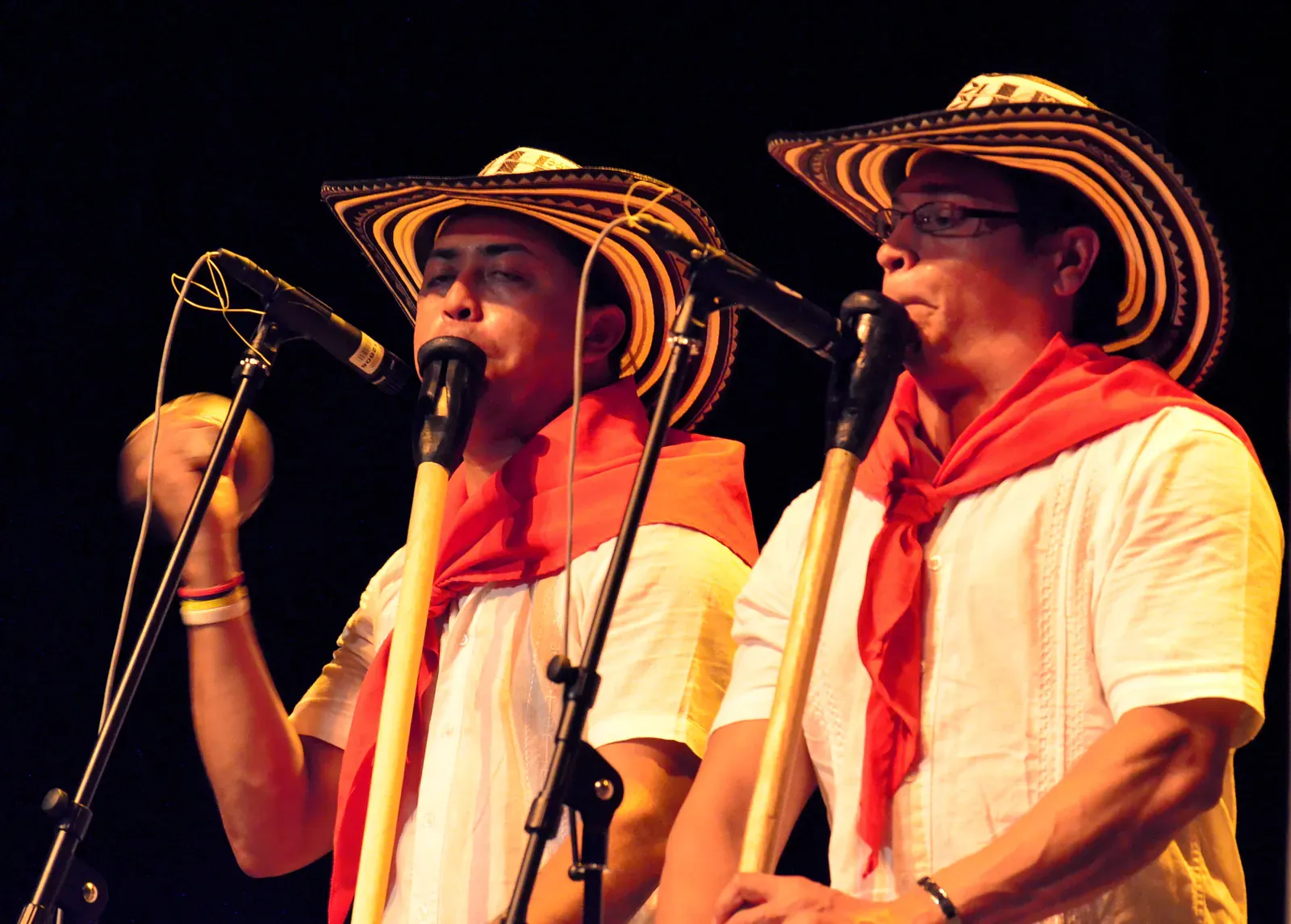
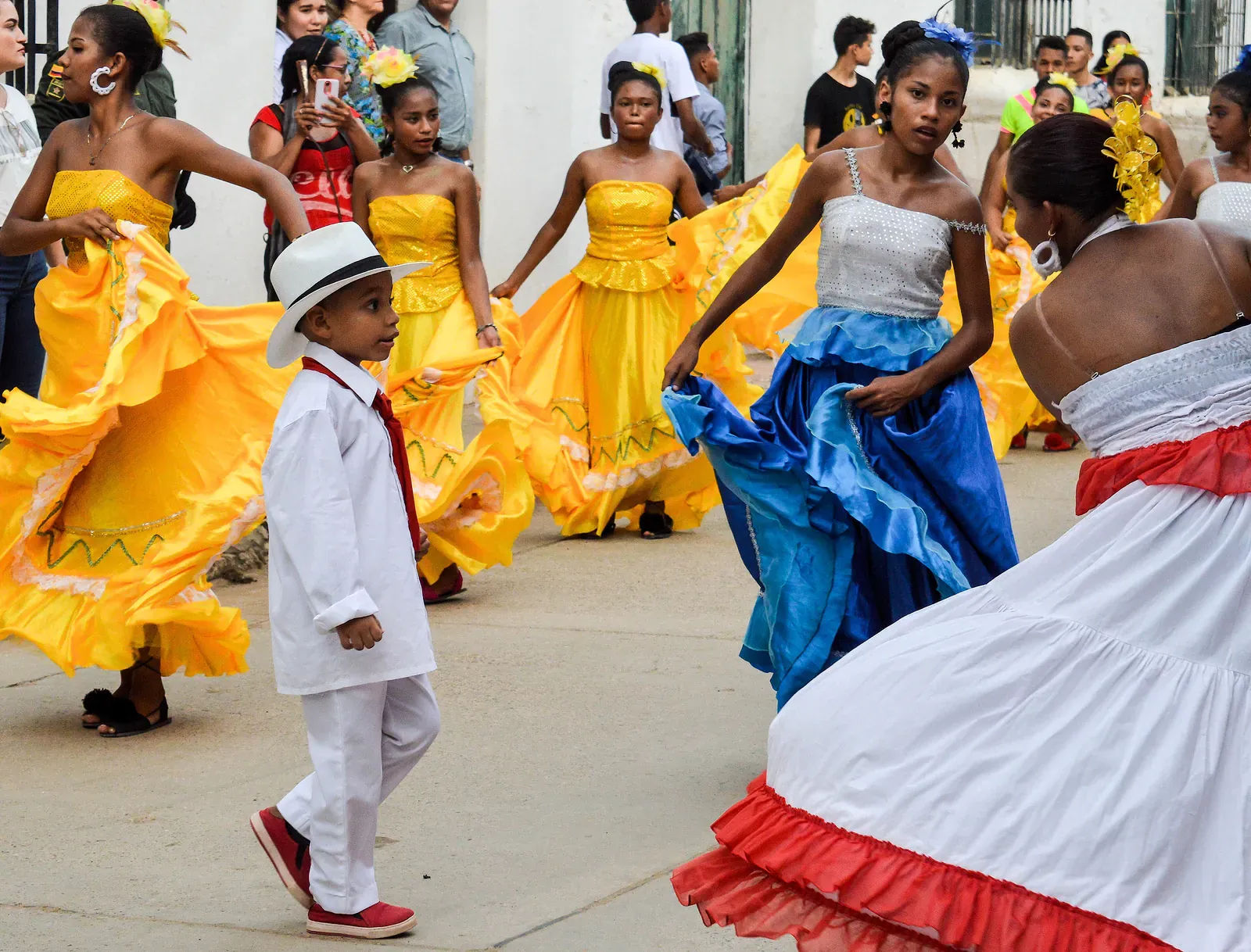
The dance is as important as the music. In the traditional version the woman carries lit candles in her right hand to keep her partner at a distance, while the man circles her, hat in hand, trying to place it on her head.
Records and ballroom orchestras, 1930s-1950s
Discos Fuentes opened in Cartagena in 1934 and began recording coastal styles. From the 1940s bandleaders such as Lucho Bermudez rewrote cumbia for large dance orchestras with brass, clarinets and written arrangements.
Bermudez played at El Metropolitan in Bogota from 1943 and at the Hotel Granada from 1947, putting a rural dance in front of city audiences. In 1946 he spent six months in Buenos Aires cutting about 60 pieces for RCA Victor, including “Danza Negra”. By the mid-1950s cumbia was being arranged and sung in a polished form that sounded very different from the gaita ensembles that had made it.
Accordion, guitar and the road abroad, 1960s-1970s
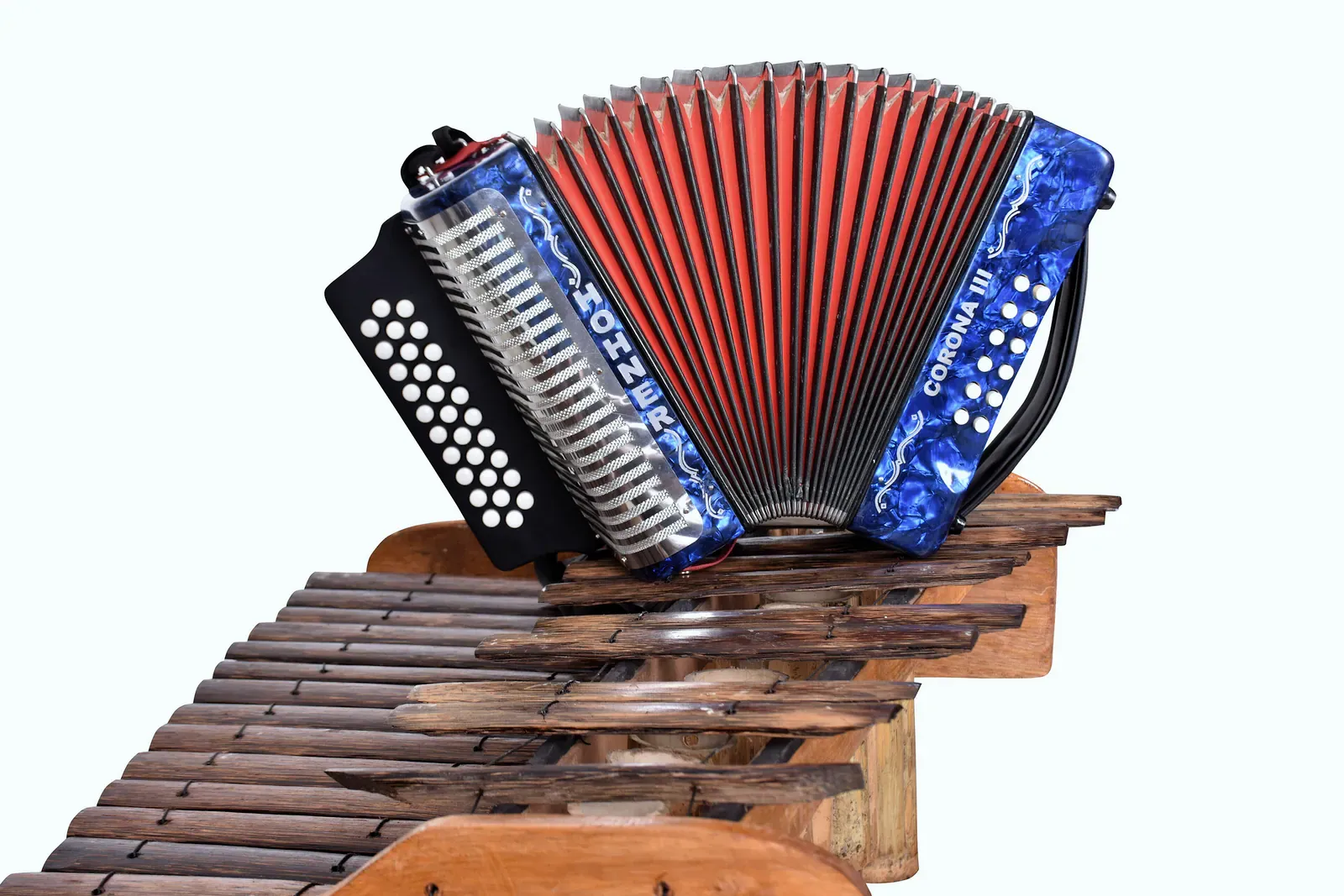
The 1960s are when cumbia stopped being only Colombian. At home, Los Corraleros de Majagual put the accordion at the front and mixed cumbia, porro and vallenato on the 1962 LP “Alegre Majagual”. Their version of “Festival en Guarare” became a hit across Latin America in 1963. La Sonora Dinamita, founded in Cartagena in 1960 by Lucho Argain, later took the sound to Mexico.
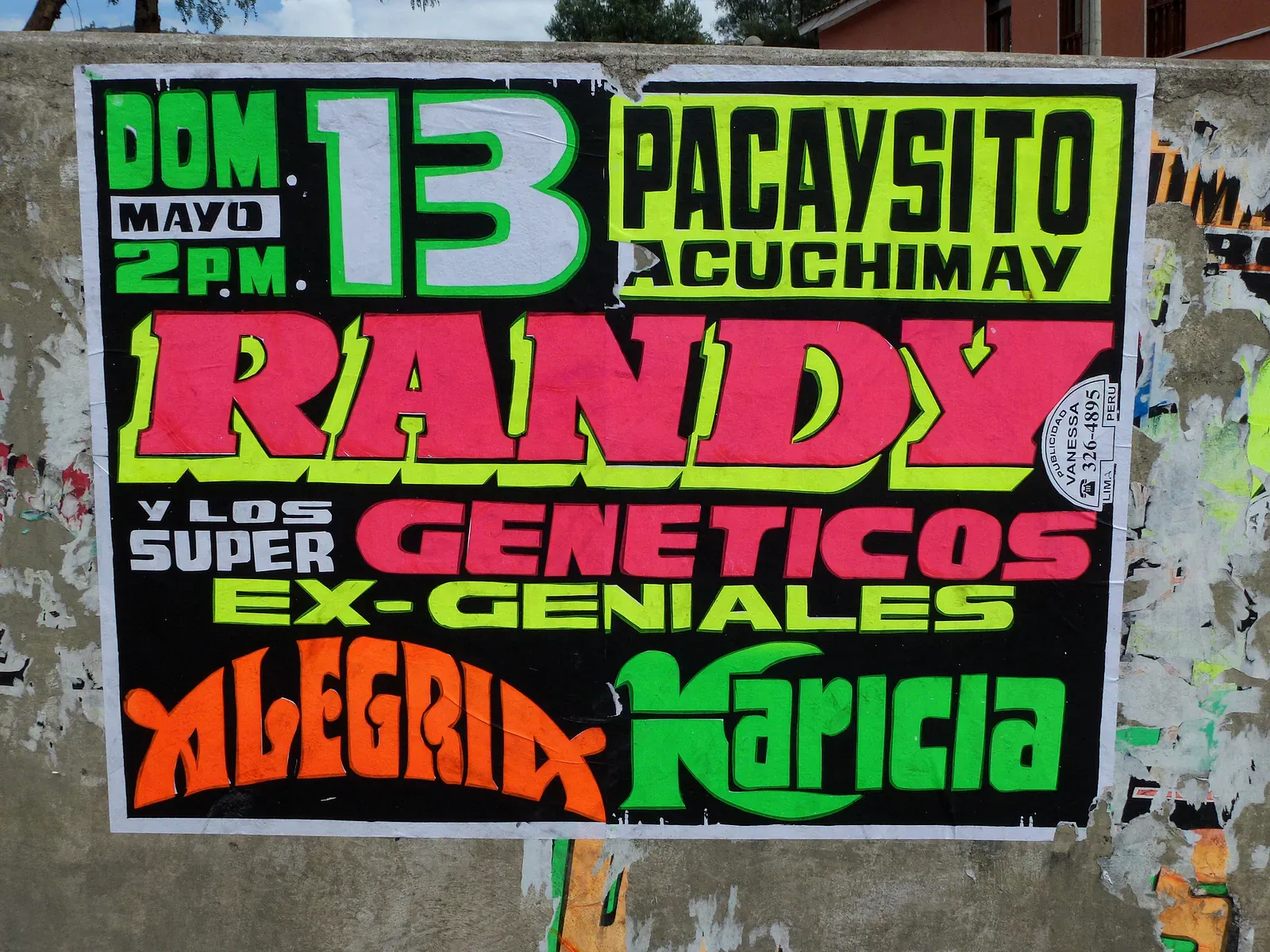
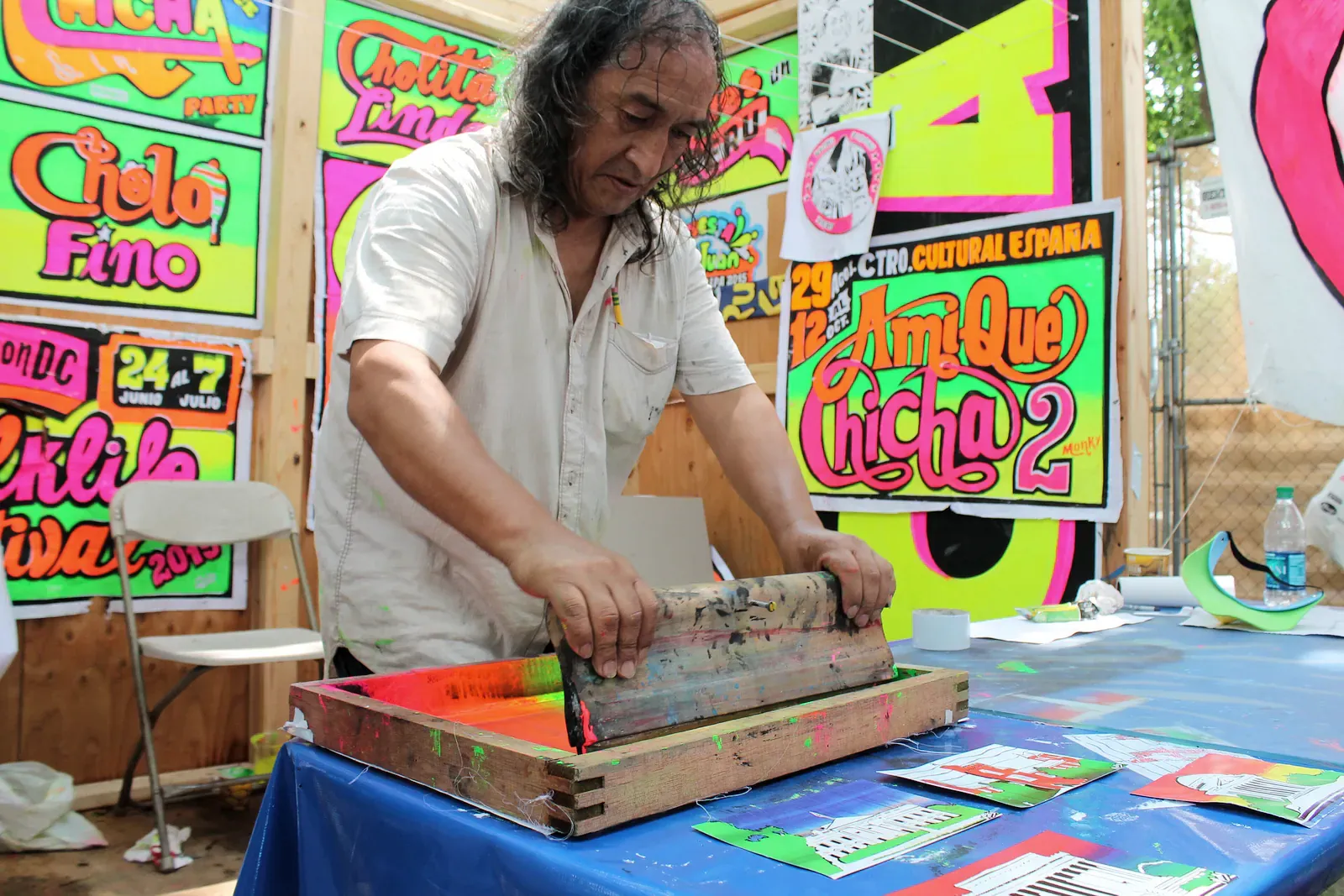
Abroad, local musicians rebuilt the genre from what they had. In Lima, Enrique Delgado formed Los Destellos in 1966 and gave electric guitar and bass the leading role. Their 1970 single “Elsa” sold a million copies and is one of the landmarks of Peruvian cumbia. In the Amazon town of Moyobamba, Los Mirlos signed with Infopesa in 1973 and made a psychedelic, jungle-tinged cumbia. This guitar-led Peruvian sound is known as chicha, a name borrowed from the maize drink.
In Mexico the road ran through Monterrey, Mexico City and Houston. Rigo Tovar debuted in 1972 with “Matamoros Querido”, blending cumbia with rock, and in 1979 a free show in Monterrey drew more than 300,000 people. Back in Colombia the picture was grimmer: from about 1975 salsa pushed cumbia aside, and it nearly vanished at home while surviving in Mexico, Central America and Peru.
Mainstream success
Its mainstream moment came in Mexico and the United States in the 1980s and 1990s. Los Angeles Azules, siblings from Iztapalapa in Mexico City, formed in 1976. Their romantic “Como Te Voy a Olvidar”, released on Disa in 1996, became a generational singalong across Mexico. In Texas, Selena turned the style into a hit for US Latin audiences with “Como la Flor” in 1992, a Tejano cumbia ballad that remains her signature song.
Colombia reclaimed its own tradition in a different way. Joe Arroyo fused salsa with coastal tropical music on “La Rebelion” in 1986, and Toto la Momposina brought coastal drums and chant to world-music audiences. She joined the Colombian delegation that accompanied Gabriel Garcia Marquez to the 1982 Nobel ceremony, and her album “La Candela Viva” followed in 1993 on Real World.
In 1999 a new branch appeared in Argentina. Cumbia villera started in the slums of Buenos Aires, where Pablo Lescano and others combined synthesizers with street slang and prison slang from lunfardo.
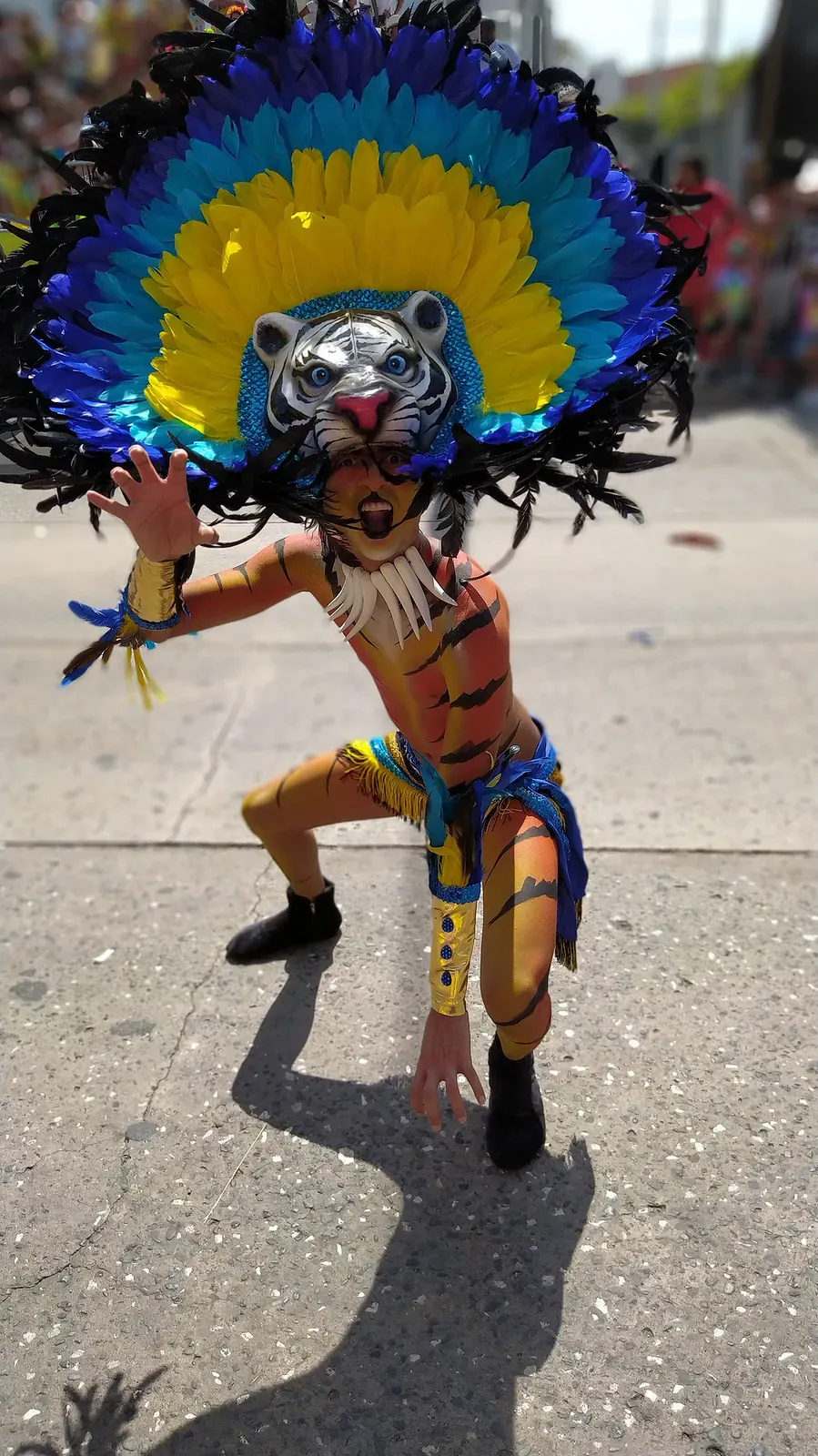
Revival and fusion, 2000 onward
After 2000 cumbia returned as a continent-wide family. Celso Piña’s 2001 album “Barrio Bravo” mixed accordion cumbia with rock and hip hop guests and relaunched the sound in Mexico. In Monterrey, sound-system DJs slowed records to about 76 BPM, creating cumbia rebajada, and a whole youth scene grew around it. In 2014 Los Angeles Azules played with the Mexico City Symphony Orchestra, a show that led to the term cumbia sinfonica. They were honored with a Billboard Latin Lifetime Achievement award in 2023 and a Latin Grammy Lifetime Achievement Award in 2024.
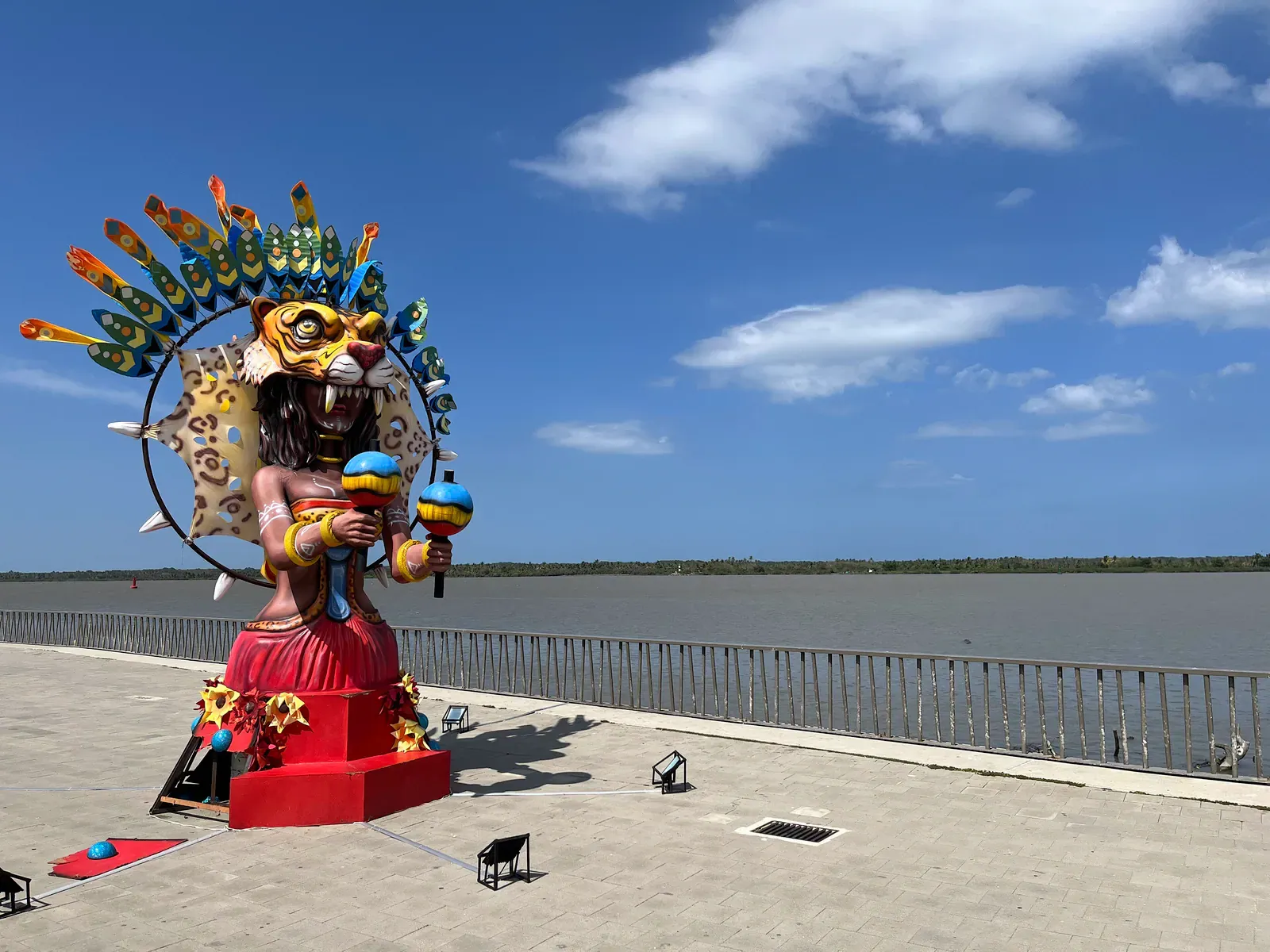
Notable recordings
“Festival en Guarare” (1963). It began as a Panamanian tune. Alfredo Gutierrez, credited as its author, recorded it with the Corraleros de Majagual, and the accordion-led recording on Discos Fuentes spread across Colombia and Latin America.
“Elsa” (1970). Los Destellos recorded it in Lima, and its electric guitar line became the template for chicha. It sold a million copies as a 45 rpm single.
“Como la Flor” (1992). Selena sang a slow Tejano cumbia ballad that did not need a dance floor.
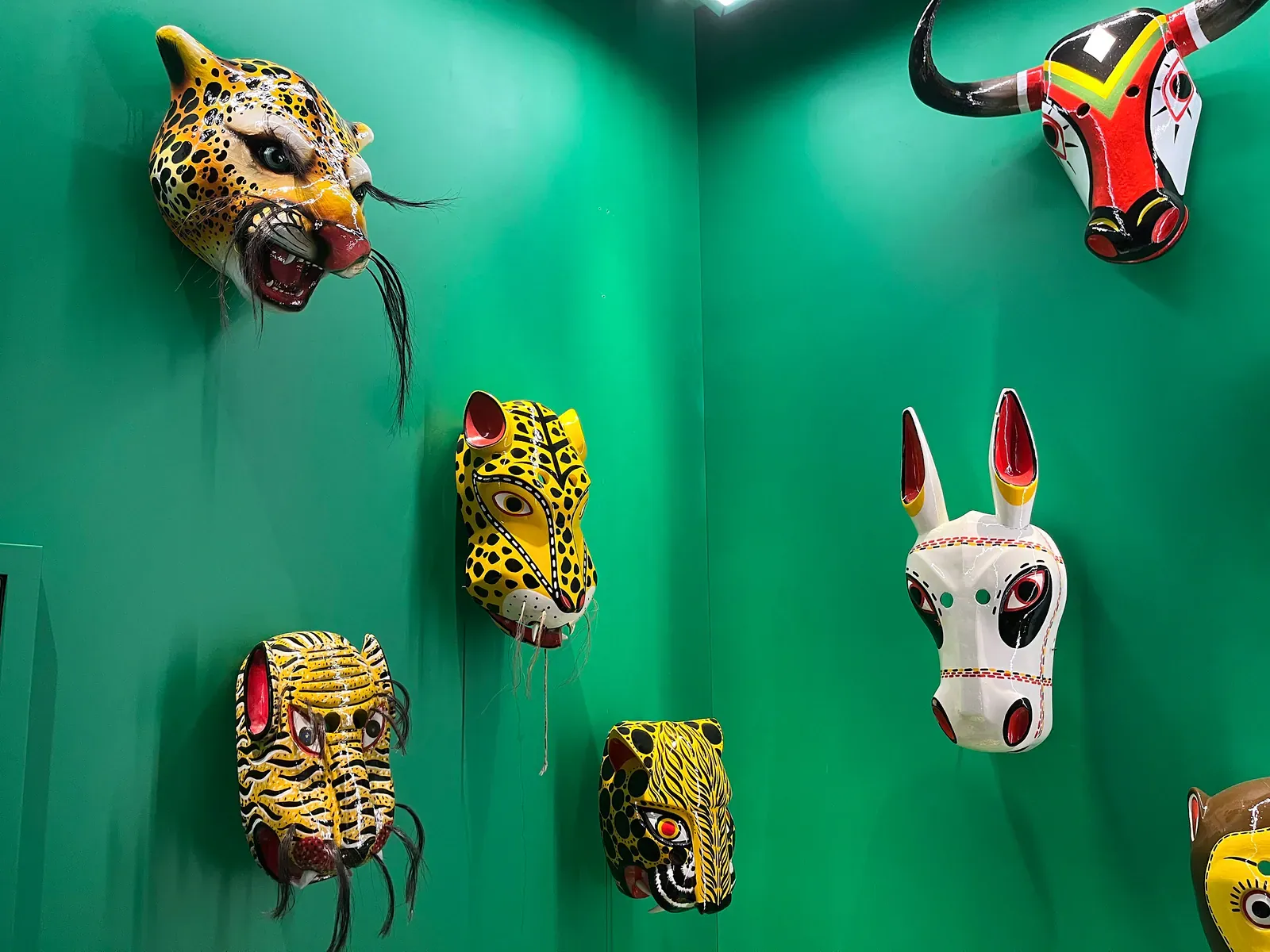
Culture
In Colombia it lived at carnivals and village dances, with the woven sombrero vueltiao and the candle dance as its emblems. In Mexico it lived in the sonidero dances of the neighbourhood, where sound systems such as Sonido La Changa reshape old cumbias for street parties. In Monterrey, youth culture around slow accordion cumbia gave rise to the cholombiano look. In Argentina, villera lyrics drew on lunfardo and prison slang. The same rhythm served very different communities.
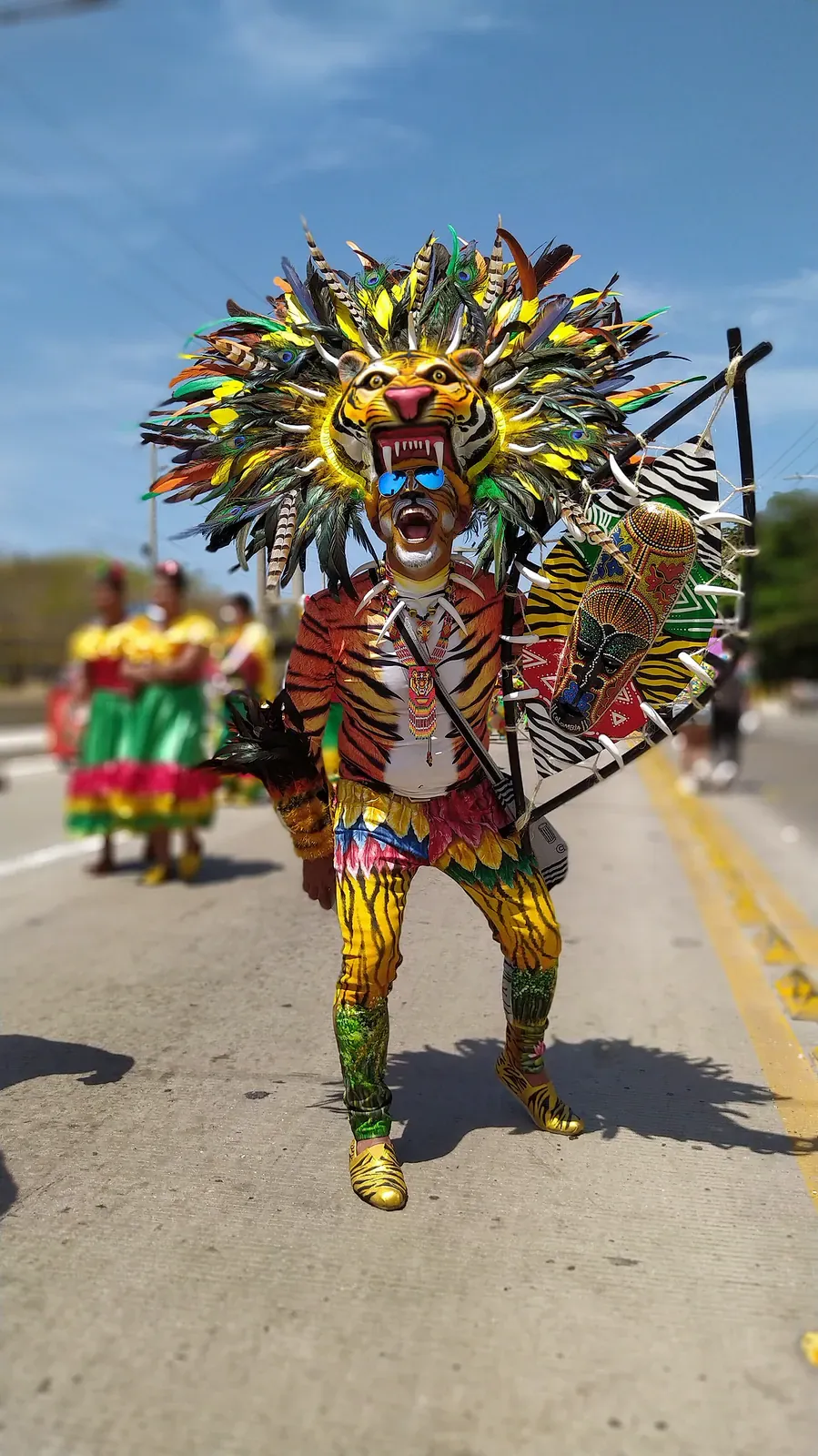
Misconceptions
Cumbia is not Mexican. It is Colombian in origin. Mexico built some of its biggest scenes, but the dance and its instruments come from the Caribbean coast of Colombia.
Cumbia is not one rhythm. Peruvian chicha is built on electric guitar and Andean scales, Mexican sonidera on sound-system culture, villera on synthesizers, and rebajada on slowed tempos around 76 BPM. They share a pulse, not a sound.
Cumbia was not always popular in Colombia. From about 1975 salsa pushed it aside, and the style held on abroad while fading at home.
Frequently asked questions
Where does cumbia come from?
Cumbia comes from the Caribbean coast of Colombia, in areas such as Magdalena and Bolivar. It formed between the 17th and 19th centuries from Indigenous, African and Spanish traditions.
What instruments are used in cumbia?
Traditional cumbia uses gaita and caña de millo flutes, a tambor alegre, a llamador, a tambora and a guacharaca. Later forms added accordion, brass, electric guitar and synthesizers.
What is chicha music?
Chicha is Peruvian cumbia with electric guitars and Andean scales. It began in Lima and the Amazon in the 1960s and 1970s with bands such as Los Destellos and Los Mirlos.
What is cumbia villera?
Cumbia villera is the slum cumbia of Argentina. It started in 1999 in Buenos Aires, with synthesizers and street slang in the lyrics.
Which cumbia songs should a beginner hear first?
Good entry points are “Como la Flor” by Selena and “Como Te Voy a Olvidar” by Los Angeles Azules, then “Festival en Guarare” by Los Corraleros de Majagual for the Colombian root. For the deeper sounds, try Los Destellos and Los Mirlos.
Cumbia belongs to the wider Latin family. For another strand of Mexican popular music, see regional Mexican.
Sound
Sound sheet
Anatomy of a track
| # | Part | Bars |
|---|---|---|
| 1 | Percussion intro | 8 |
| 2 | Verse | 16 |
| 3 | Chorus | 8 |
| 4 | Instrumental break (brass, accordion or guitar) | 16 |
| 5 | Verse and chorus repeat | 24 |
| 6 | Closing chorus | 8 |
Signature sounds
- Guacharaca chu-chucu-chu scrape
- Llamador and tambor alegre pulse
- Accordion or brass lead melody
- Electric guitar solos in chicha
Drums and percussion
- Tambor alegre
- Llamador
- Tambora
Techniques
- Guacharaca scrape
- Llamador pulse against tambor alegre
- Slowed playback
Keys and modes
Minor tonality. Many cumbias are set in minor tonality, with the tune carried by flutes, accordion or brass over percussion.
Tuning
12-TET, A=440 for accordion, brass and guitar; gaitas follow their own flute tuning
Scenes
Where it happened
Where and when the sound lived: one bar per city on a shared timeline.
Latin America
North America
Active scenes
Peak 8, 1999-2025
Home of Discos Fuentes at its start and of La Sonora Dinamita.
Discos Fuentes relocated here, and orchestras like Bermúdez worked its hotels.
Los Destellos and the electric chicha sound took shape here.
Origin of Los Mirlos and Amazonian cumbia.
Aniceto Molina worked here from 1973 and Los Ángeles Azules grew up in Iztapalapa.
Colombian records and sound systems here gave rise to cumbia rebajada.
Rigo Tovar career took off here in the early 1970s.
Birthplace of cumbia villera in the slums of the metropolitan area.
Venues and places
Bogotá, 1943 to today. Bogotá nightclub where Bermúdez won a season after Prende la Vela.
Bogotá, 1947 to today. Hotel where the Lucho Bermúdez Orchestra debuted in July 1947.
Cartagena, 1934 to today. Recording home of coastal cumbia, porro and vallenato.
Pacheco, 1999 to today. Emblematic nightclub of the cumbia villera scene.
Culture
Culture markers
- Candle dance
The woman holds lit candles in her right hand to fend off her partner in a courtship dance.
Dance - Sombrero vueltiao
The male dancer holds the hat and tries to place it on his partner head.
Fashion - Sonidero dances
Mexican sound systems such as Sonido La Changa reshape old cumbias for street dances.
Ritual - Lunfardo and street slang
Cumbia villera lyrics use Argentine lunfardo and prison slang.
Slang - Cholombiano scene
Monterrey youth culture grew around slowed accordion cumbia.
Dance
Media
Key media
- 2009The Milk of Sorrow
by Claudia Llosa. Peruvian film with music from the reformed Los Destellos.
Film - 2022La Danza de los Mirlos
by Álvaro Luque. Documentary on the birth of Los Mirlos and Amazonian cumbia.
Film
Glossary
Terms on this page
Peruvian cumbia with electric guitars and Andean scales.
Colombian coastal dance rhythm that gave rise to many national variants across Latin America.
Slowed-down cumbia from Monterrey, around 76 bpm.
Mexico City variant tied to sound-system dances.
Argentine slum cumbia of the late 1990s with synths and street slang.
Long Colombian flute, played in a male and female pair.
Scraper that produces the chu-chucu-chu rhythm.
Woven hat the male dancer tries to place on his partner head.
Latin family