Zouk
Zouk is a dance music from Guadeloupe and Martinique, created by the band Kassav' from 1979 with drum machines, horns and gwo ka rhythms.
Guadeloupe, Martinique, around 1960
Caribbean family
Born
around 1960
Guadeloupe, Martinique
Subgenres
4
Documented branches
Links
23
Genres it drew on or shaped
Tempo
90-140 BPMLineage
Family tree
Grew out of
Influenced by
Guadeloupe, Martinique
Zouk
Led to (4)
Timeline
Era by era
From the first sparks to today. Select a dot to read the story behind it.
- Kadans and carnival roots
1960 to 1978
- Kassav' and zouk béton
1979 to 1985
- Crossover and zouk-love
1986 to 1995
- Zouk beyond the Antilles
1996 to today
Eras
Moments
- 1 Kadans and carnival roots, 1960 to 1978
- 2 Kassav' and zouk béton, 1979 to 1985
- 3 Crossover and zouk-love, 1986 to 1995
- 4 Zouk beyond the Antilles, 1996 to today
around 1960
Kadans and carnival roots
Guadeloupean and Martinican dance bands played kadans and compas, while gwo ka drumming and carnival songs supplied the local rhythmic base that zouk later modernized.
- 1965Zouk as a dance-hall wordMartinican percussionist Henri Guédon recalls that from the 1960s the word zouk named places of popular dance, not a style of music.
- 1976Experience 7 forms in GuadeloupeThe kadans band, led by Guy Houllier and Yves Honoré, produced with Henri Debs and later fed Zouk Machine.
1979
Kassav' and zouk béton
Kassav' formed in 1979 and released Love and Ka Dance. Fast, carnival-rooted zouk béton took shape, and the 1984 hit gave the genre its name.
- 1979Kassav' is formedPierre-Edouard Décimus, Georges Décimus and Jacob Desvarieux set out to modernize Guadeloupean carnival music with studio production.
- 1979Love and Ka DanceKassav's debut album, later treated as the model for the genre.
- 1984Zouk-la sé sèl médikaman nou niThe hit from the album Yélélé that made zouk a dance craze and fixed the genre's name.
1986
Crossover and zouk-love
Zouk Machine and solo records by Kassav' members reached French charts. A slower, MIDI-based romantic style, zouk-love, grew close to compas.
- 1986Zouk Machine beginsTwo former Experience 7 members start the female trio that brought zouk to French pop charts.
- 1986Jocelyne Béroard releases SiwoThe solo album contains Kolé séré, an early zouk-love standard.
- 1986Kassav au ZénithLive album recorded in the large Paris hall where the band built its concert reputation.
- 1988Edith Lefel releases La KléDebut album of the singer later called the voice of zouk.
- 1990Maldòn tops the French chartZouk Machine's single, released in 1989, reached number one in France and sold over a million copies.
1996
Zouk beyond the Antilles
Zouk spread to Africa, Cape Verde and Brazil, where derivatives such as kizomba and cabo zouk developed, while Antillean artists kept recording zouk-love.
- 2021Death of Jacob DesvarieuxThe Kassav' guitarist and co-founder died in Guadeloupe.
Listening path
Start listening
A short path from an easy way in to the deep end. Thumbnails come from YouTube; the player loads only when you press play.
- 01
Kassav', 1984
The song that named the genre; listen for the drum machine, horns and shared vocals.
- 02
Kassav', 1987
Fast zouk béton at carnival pace.
- 03
Zouk Machine, 1989
The pop crossover hit that sold over a million copies.
Facts
| Family | Caribbean |
| Origin | Guadeloupe, Martinique |
| Emerged | Early 1980s |
| Status | Active |
| Tempo | 90 to 140 BPM |
| Meter | 4/4 |
| Subgenres | 2 |
Zouk is a dance music from the French Antilles, created by the band Kassav’ in the early 1980s from Guadeloupean and Martinican traditions. It was first fast, at about 120 to 145 beats per minute, with a percussion-driven groove, a loud horn section and Creole lyrics.
It later gave rise to a slower, romantic branch called zouk-love. The wider region is covered on the Caribbean family page.
Origins
The word zouk predates the music. From the 1960s it named places of popular dance in Martinique, and a house party could be called a zouk. It was a venue before it was a style.
The style came from Guadeloupe’s carnival bands. Pierre-Edouard Décimus, a veteran of the kadans group Les Vikings de la Guadeloupe, wanted to bring carnival music up to modern studio standards. In 1979 he joined his brother Georges, a bass player, and the Paris studio guitarist Jacob Desvarieux. Together they founded Kassav’, whose name is the Creole word for a cassava pancake. Their first album, Love and Ka Dance, appeared that year.
The band drew on several sources at once. Gwo ka, Guadeloupe’s drum and voice tradition, supplied the rhythmic base, and Martinican tibwa and bélé rhythms were added. From outside the islands came kadans and compas, the Haitian-derived dance styles that Experience 7, Exile One, Grammacks and Tabou Combo played across the Antilles. Funk and makossa from Cameroon also fed the mix. Kassav’ was the first group to apply MIDI technology to kadans, which let a small studio team build a large, polished dance sound.
Early records met resistance from French labels, which called them too ethnic. The band instead worked with West Indian producers and distributed through Sonodisc, the Paris company that carried zouk to European record shops. Disques Debs in Pointe-à-Pitre documented gwo ka and the zouk that followed.
Zouk béton, 1979-1985
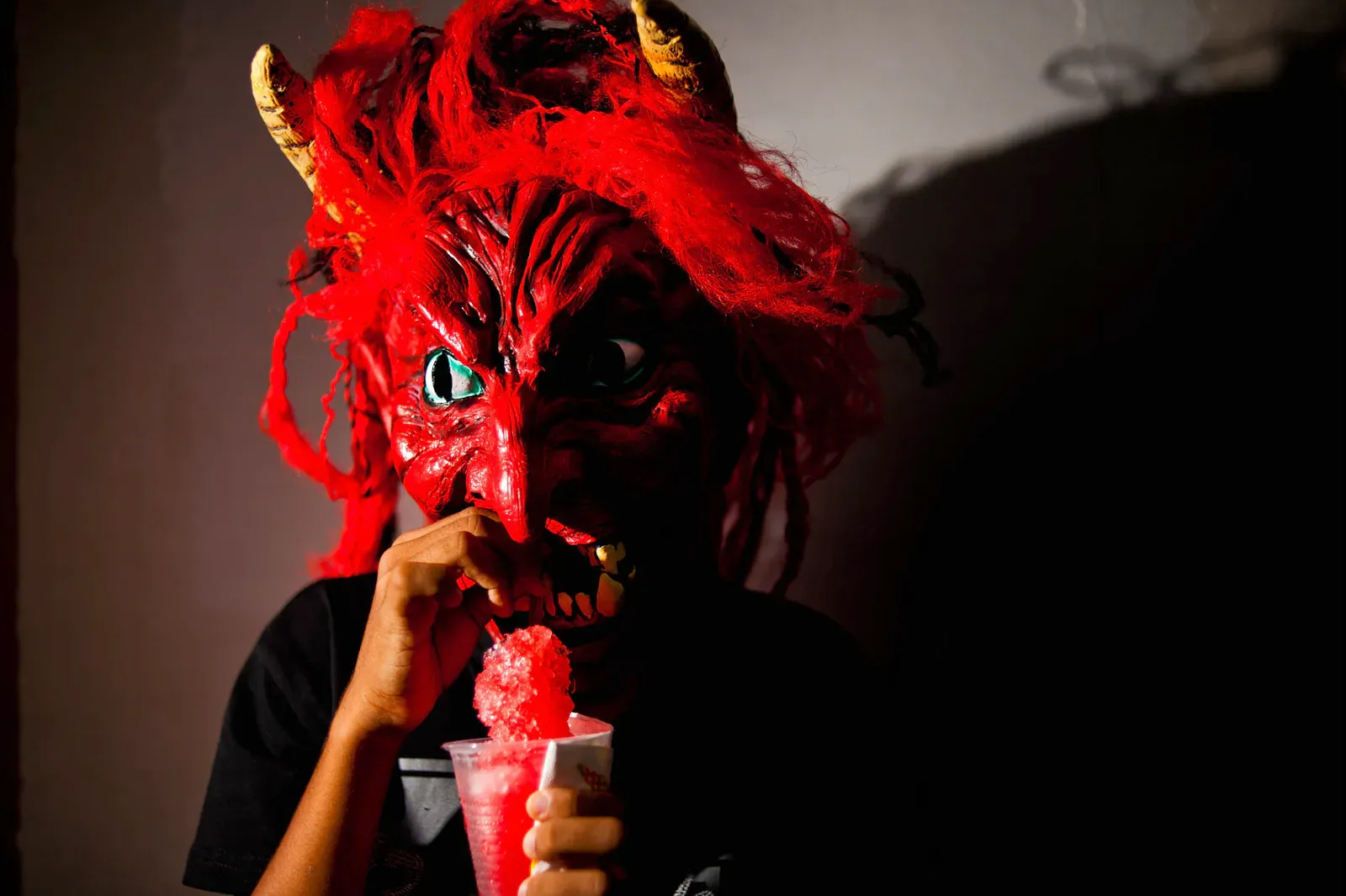
The founding style is called zouk béton, or chiré: fast, carnival-driven and sung in Creole. It is usually danced without a partner. The Creole phrase voyé monté, meaning music that makes people move, is often attached to it.
The band grew beyond Guadeloupe. Martinicans Jean-Philippe Marthély, Jocelyne Béroard and Jean-Claude Naimro joined, along with Guadeloupeans Patrick Saint-Éloi and Claude Vamur. The gravelly voice of Desvarieux, Georges Décimus’s driving bass and layered keyboards became the trademarks.
The turning point was the 1984 album Yélélé and its song Zouk-la sé sèl médikaman nou ni, “Zouk is the only medicine we have”. The title named the genre for good. Within a few years zouk was a dance craze in Latin America and the Caribbean and was popular in Europe, Africa and Asia. Kassav’ became known as an exceptional live act, with theatrical shows, stage effects and dancers as part of the band. It was also the first Black group to play in the Soviet Union.
Crossover and zouk-love, 1986-1995
From the mid-1980s the style widened. Experience 7, a kadans band from Guadeloupe led by Guy Houllier and Yves Honoré, produced with Henri Debs. Two of its members then started Zouk Machine, an all-female group. Its 1989 single Maldòn (La musique dans la peau) reached number one in France in 1990 and sold more than a million copies, more than any other Antillean band including Kassav’.
Kassav’ members also recorded alone. Jocelyne Béroard released Siwo in 1986, which contains the slow Kolé séré. Patrick Saint-Éloi issued solo records from 1984, and the singer Edith Lefel, born in Cayenne, became strongly associated with the Kassav’ circle. Slower, romantic songs built on MIDI keyboards formed the branch called zouk-love, which grew so close to Haitian compas that the two became hard to tell apart.
Characteristics
Zouk keeps a steady, dance-floor pulse with programmed drums set against live percussion. The bass is melodic and prominent, keyboards fill the harmony and the horns punctuate the fast songs. The vocal approach is shared: several lead singers alternate, with simple Creole lyrics that invite a chorus. Tempo separates the two branches: zouk béton sits at the top of the range, zouk-love well below it.
Culture
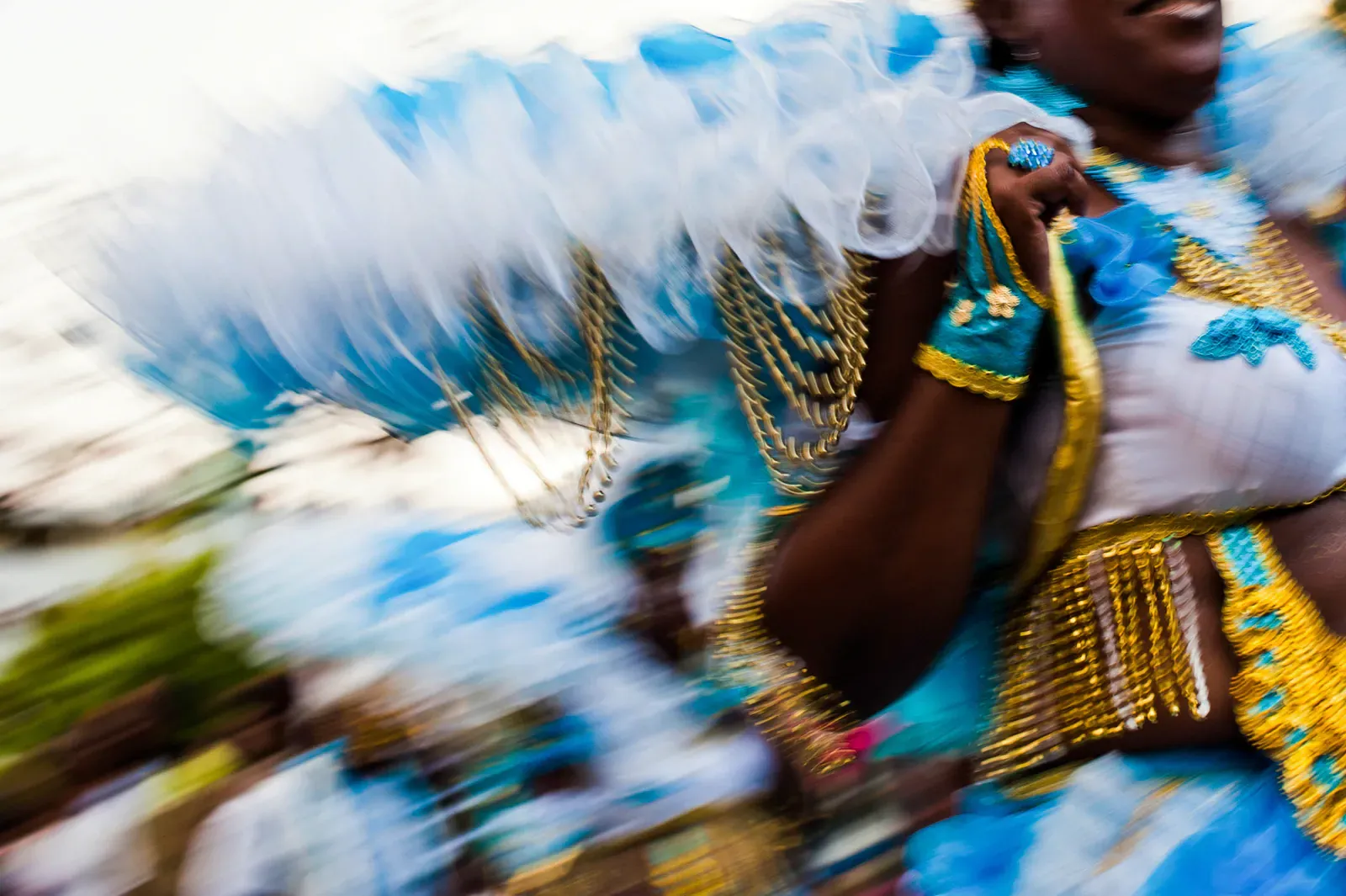
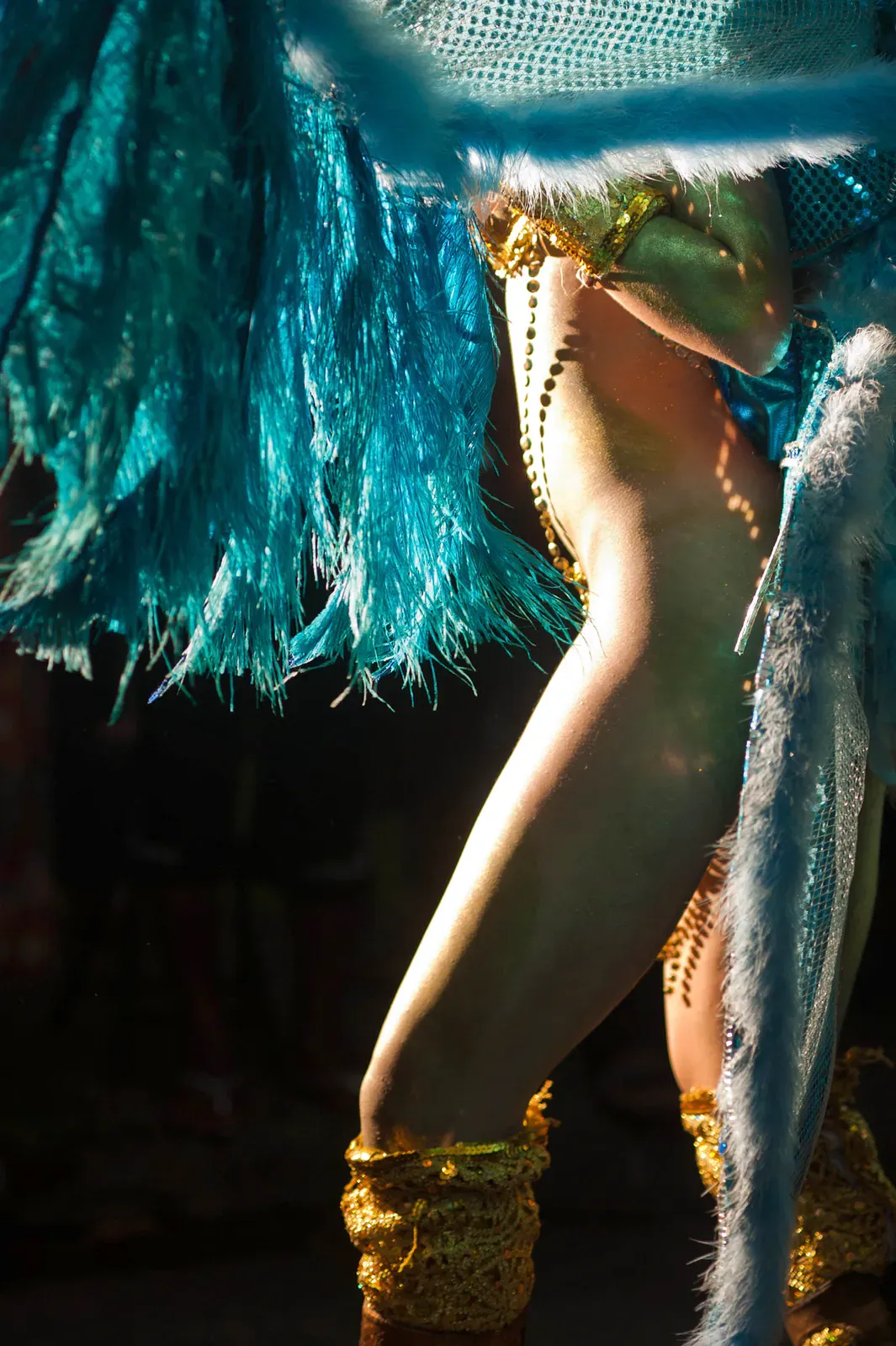
Carnival remains the core event. Zouk béton came from carnival songs and is still played in the season of parades. The dance culture grew in step with it: solo dancing in the fast style, close couple dancing in zouk-love, and on-stage dancers in the Kassav’ show.
Legacy
Zouk travelled. Kizomba in Angola, afro-zouk, and cabo zouk in Cape Verde grew from it. Kizomba is the closest documented descendant, and the older drum tradition behind zouk is covered on the gwo ka page. Patrick Saint-Éloi died in 2010, Edith Lefel in 2003 and Jacob Desvarieux in 2021.
Misconceptions
Zouk is often called the music of the whole Caribbean, but it comes from Guadeloupe and Martinique and sings mostly in Creole. Zouk is also not the same as compas: the two share roots, and zouk-love later became almost indistinguishable from it, but zouk béton began as a faster, carnival-driven style.
Frequently asked questions
What is zouk music?
Zouk is a dance music from Guadeloupe and Martinique that Kassav’ developed from 1979, mixing gwo ka drumming, kadans, compas and funk with drum machines, synthesizers and a horn section.
Who invented zouk?
Kassav’, founded in 1979 by Pierre-Edouard Décimus, Georges Décimus and Jacob Desvarieux, is credited with creating zouk.
What is the difference between zouk béton and zouk-love?
Zouk béton is the fast carnival original. Zouk-love is a slower romantic style built on MIDI instruments that came close to compas.
What does the word zouk mean?
It began as Creole for a dance hall or lively party. Kassav’ turned it into the name of a music style with its 1984 hit.
Sound
Sound sheet
Signature sounds
- Drum-machine groove over live percussion
- Loud horn section hits
- MIDI keyboard layers
- Creole-language lead vocals
Techniques
- MIDI sequencing
- Gwo ka rhythm modernized
- Horn punctuation
- Shared lead vocals
Tuning
Equal temperament
Vocals
Creole lead vocals shared among several singers, with simple danceable lyrics.
Scenes
Where it happened
Where and when the sound lived: one bar per city on a shared timeline.
Caribbean
Europe
Active scenes
Peak 3, 1979-2025
Guadeloupe's main city, home of Kassav's founders and the Debs studio.
Martinican capital and the birthplace of Kassav' singer Jocelyne Béroard.
Studio base of Kassav' and the home of the large Antillean audience that filled its Zénith concerts.
Venues and places
Paris, 1984 to today. Large Paris hall where Kassav' built its live reputation and recorded a live album in 1986.
Culture
Culture markers
- Carnival roots
Zouk béton grew from Guadeloupean carnival songs and is still played at carnival.
Ritual - Solo zouk béton dancing
The fast style is usually danced without a partner.
Dance - On-stage dancers
Kassav' brought featured dancers on stage as part of the band's show.
Dance
Glossary
Terms on this page
Guadeloupean drum and voice tradition built on the ka drum.
Cadence rampa, the Haitian-derived dance music of the Antilles that preceded zouk.
Creole phrase for lively music that makes people move a lot.
Creole word for a lively dance party or hall, later the name of the music of Kassav' and its followers.
The original fast carnival style, also called chiré, usually danced without a partner.
Slower romantic zouk with MIDI instrumentation, close to Haitian compas.
Caribbean family