Fusion gugak
Fusion gugak blends Korean traditional music with rock, jazz and pop, from 1980s electric experiments to Jambinai, Black String and Leenalchi.
South Korea, around 1965
East Asian family
Born
around 1965
South Korea
Links
2
Genres it drew on or shaped
Tempo
80-130 BPMLineage
Family tree
Timeline
Era by era
From the first sparks to today. Select a dot to read the story behind it.
- Newly composed gugak
1965 to 1984
- Electric instruments
1985 to 1999
- Crossover ensembles
2000 to 2014
- Global exposure
2015 to today
Eras
Moments
- 1 Newly composed gugak, 1965 to 1984
- 2 Electric instruments, 1985 to 1999
- 3 Crossover ensembles, 2000 to 2014
- 4 Global exposure, 2015 to today
around 1965
Newly composed gugak
Composers such as Hwang Byungki write new pieces for traditional instruments from the mid-1960s, and Kim Duk-soo's Samulnori puts farm-band rhythm on the concert stage in 1978.
- 1965Changjak gugak emergesNewly composed Korean traditional music appears as gugak loses ground to Western culture; Hwang Byungki is credited as a key figure.
- 1978Samulnori foundedKim Duk-soo moves farm-band percussion to the concert stage, a model for later stage-ready gugak.
around 1985
Electric instruments
From the mid-1980s gayageum and janggu players join electric bass, guitar and keyboards, a first wave of fusion that critics often found formulaic.
- 1985First electric gugak waveGayageum and janggu appear alongside electric bass, guitar and keyboards.
around 2000
Crossover ensembles
Traditional musicians pair gugak with pop, post-rock and jazz; duo Su:m forms in 2007 and Jambinai in 2009, and both start to tour festivals abroad.
- 2007Su:m formedPiri and gayageum duo Jiha Park and Jungmin Seo start modernizing traditional Korean music.
- 2009Jambinai formed in SeoulA post-rock band built around haegeum, piri and geomungo.
- 2010Su:m's Rhythmic SpaceThe duo's first album, released in November.
- 2011Black String formedFormed in a Korea-UK cultural exchange programme around a geomungo-led quartet.
- 2012Jambinai's DifféranceThe debut album, released in February in Korea.
- 2013Korean Music Award for DifféranceBest Crossover Album for Jambinai's debut.
2015
Global exposure
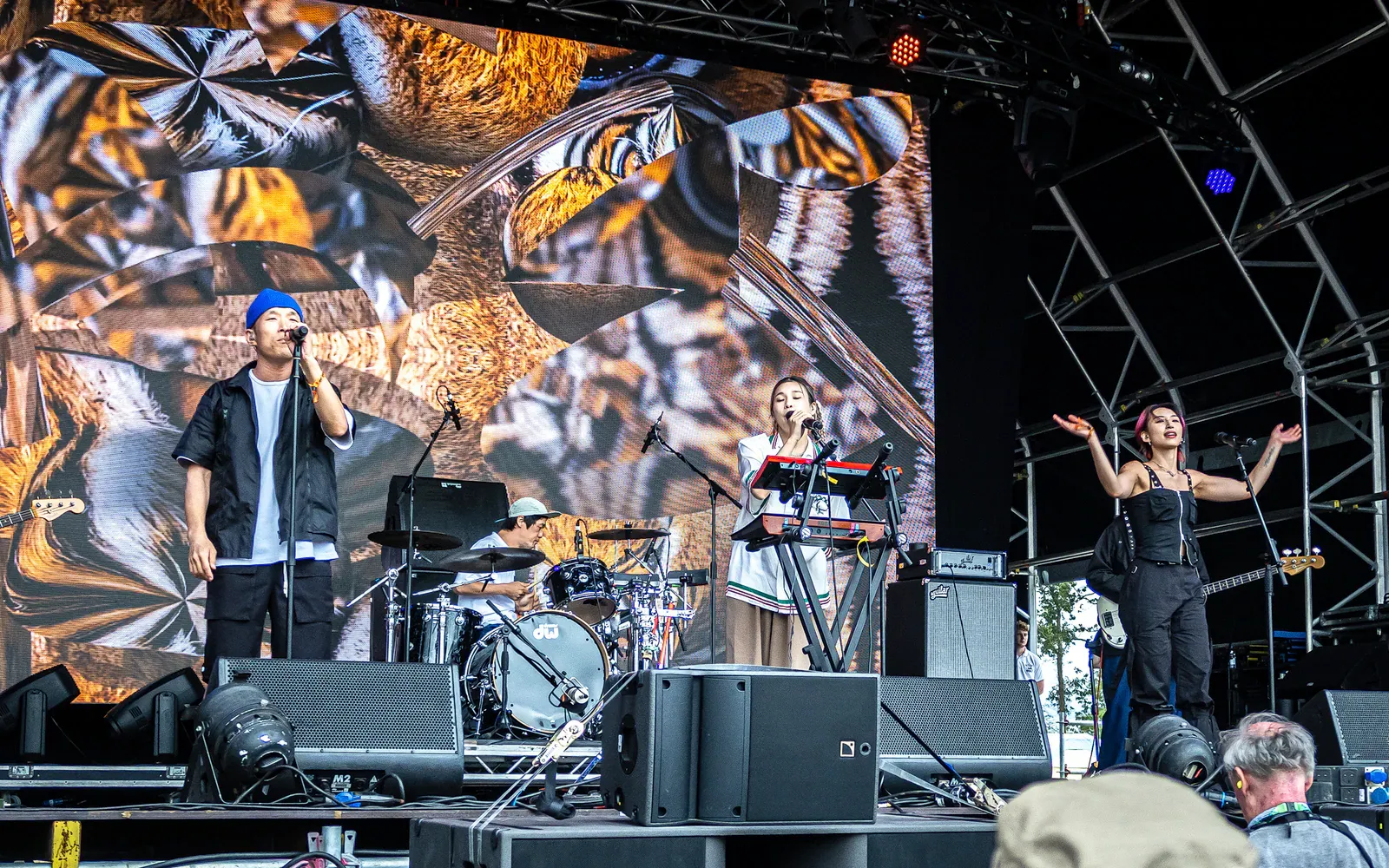
Ak Dan Gwang Chil, Black String and Leenalchi bring shamanic songs, jazz improvisation and pansori pop to European and North American stages, and Leenalchi's Tiger Is Coming goes viral.
- 2015Ak Dan Gwang Chil formedA nine-member band playing shamanic ritual songs and Hwanghae folk songs on traditional instruments.
- 2016Black String's Mask DanceThe first album, released in October, followed by a deal with German jazz label ACT.
- 2016Jambinai's A HermitageThe first album for UK label Bella Union.
- 2018Pyeongchang Olympics closing ceremonyJambinai perform with an orchestra of geomungo players.
- 2018Leenalchi members meet in GwangjuA performance of Dragon King at the Asia Culture Center brings the future band together.
- 2019Leenalchi formedA pansori pop band with four traditional singers, two bassists and a drummer.
- 2020Leenalchi's SugunggaThe album behind Tiger Is Coming, released on 29 May.
- 2021Three Korean Music Awards for LeenalchiMusician of the Year, Best Modern Rock Song and Best Jazz and Crossover Album.
- 2026Leenalchi sign to Luaka BopThe band releases the six-song EP Here Comes That Crow in the US and Canada in June.
Listening path
Start listening
A short path from an easy way in to the deep end. Thumbnails come from YouTube; the player loads only when you press play.
- 01
Leenalchi, 2020
The pansori-pop hit that carried the genre worldwide; listen for the singers against a bass groove.
- 02
Ak Dan Gwang Chil (ADG7), 2020
Traditional instruments and shamanic singing with a funk drive.
- 03
Jambinai, 2012
A post-rock rise built from haegeum and distorted geomungo.
Facts
| Family | East Asian |
| Origin | South Korea |
| Emerged | 1980s onward, popularized 2000s |
| Status | Active |
| Tempo | 80 to 130 BPM |
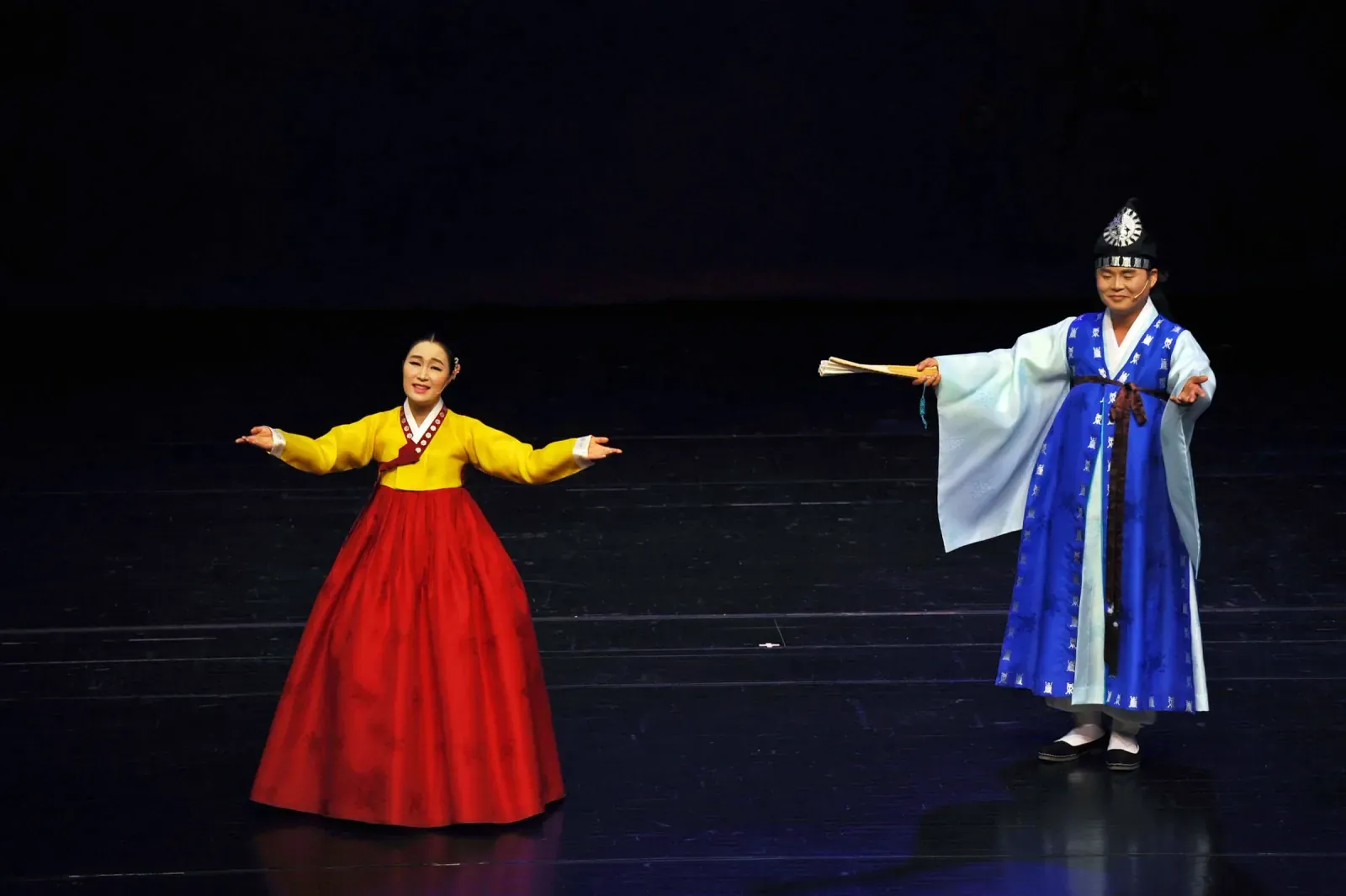
Fusion gugak is newly composed South Korean music that sets the instruments, scales, rhythm cycles and singing of gugak, Korea’s traditional music, inside rock, jazz, pop or electronic arrangements.
It grew out of the mid-1960s changjak gugak movement, took electric form in the 1980s and reached international audiences from the 2010s. Its defining trait is that the traditional material stays audible: a geomungo is bowed through a distortion pedal, or a pansori singer carries the melody over a bass and drum groove. It belongs to the East Asian family and borrows from both minsogak, the folk branch, and jeongak, the refined court and literati branch.
Origins
Changjak gugak, “newly composed” traditional music, appeared in the mid-1960s, when gugak was losing ground to Western culture and its performers began writing new pieces rather than only preserving old ones. The gayageum virtuoso Hwang Byungki is credited as a key figure, writing original works that used Western compositional ideas while keeping Korean modes. These pieces were still acoustic, but they established that gugak instruments could carry new repertoire.
A second root was staging folk percussion. In 1978 Kim Duk-soo founded Samulnori, which moved the rhythms of farm bands and shaman ritual from village squares to the concert hall, and showed that traditional music could fill an indoor stage with an audience that did not know the old contexts.
Electric experiments, 1985-1999
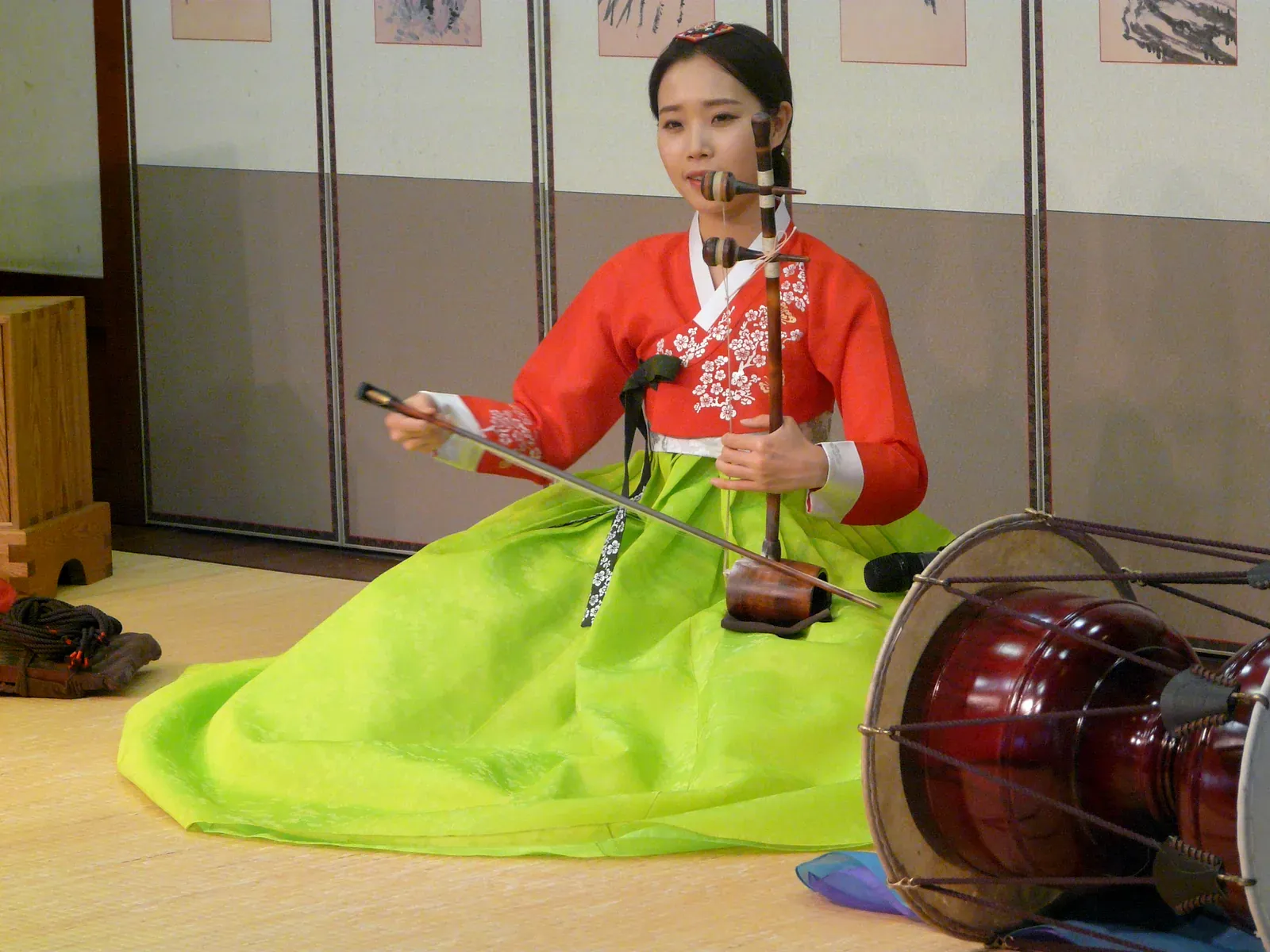
From the mid-1980s traditional musicians began pairing the gayageum and the janggu hourglass drum with electric bass, guitar and keyboards. This first fusion wave leaned on popular-music structures with a gugak colour on top, and one critic found much of it emotionally empty. It nonetheless fixed the basic lineup that later bands rebuilt: a traditional melody instrument, a rock rhythm section and a keyboard or electronics layer.
Crossover ensembles, 2000-2014
From the early 2000s, traditional musicians sought out pop, jazz and rock partners on their own terms. The duo Su:m, formed in 2007 around the piri and the gayageum, released its first album in November 2010. Jambinai formed in Seoul in 2009 around the haegeum, piri and geomungo with guitar, bass and drums, and its debut Différance, released in February 2012, won Best Crossover Album at the 2013 Korean Music Awards. The band’s loud, slow-building pieces were compared to bands such as Explosions in the Sky and Mogwai, and the band played the Roskilde Festival in Denmark in 2014. The style sits close to post-rock.
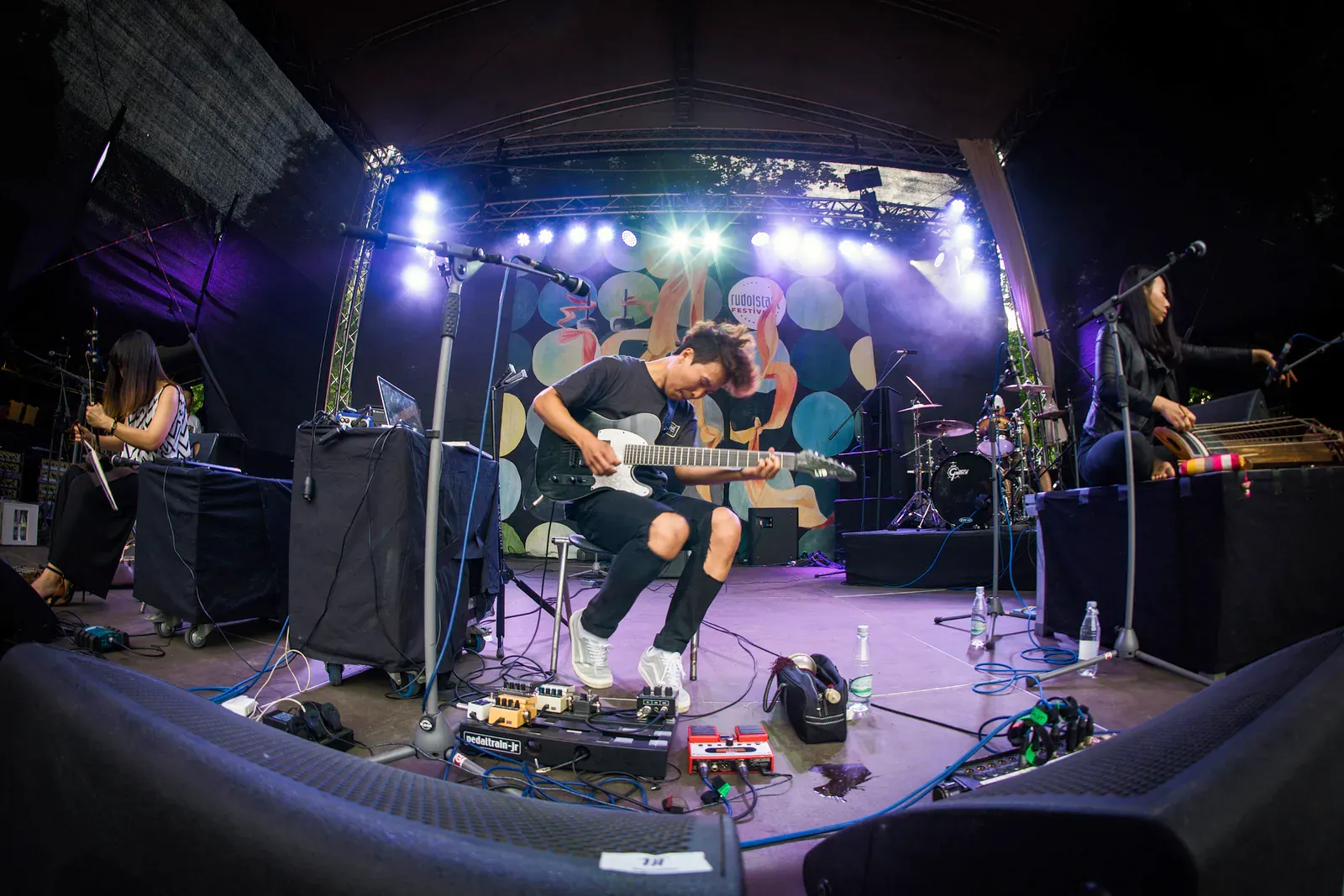
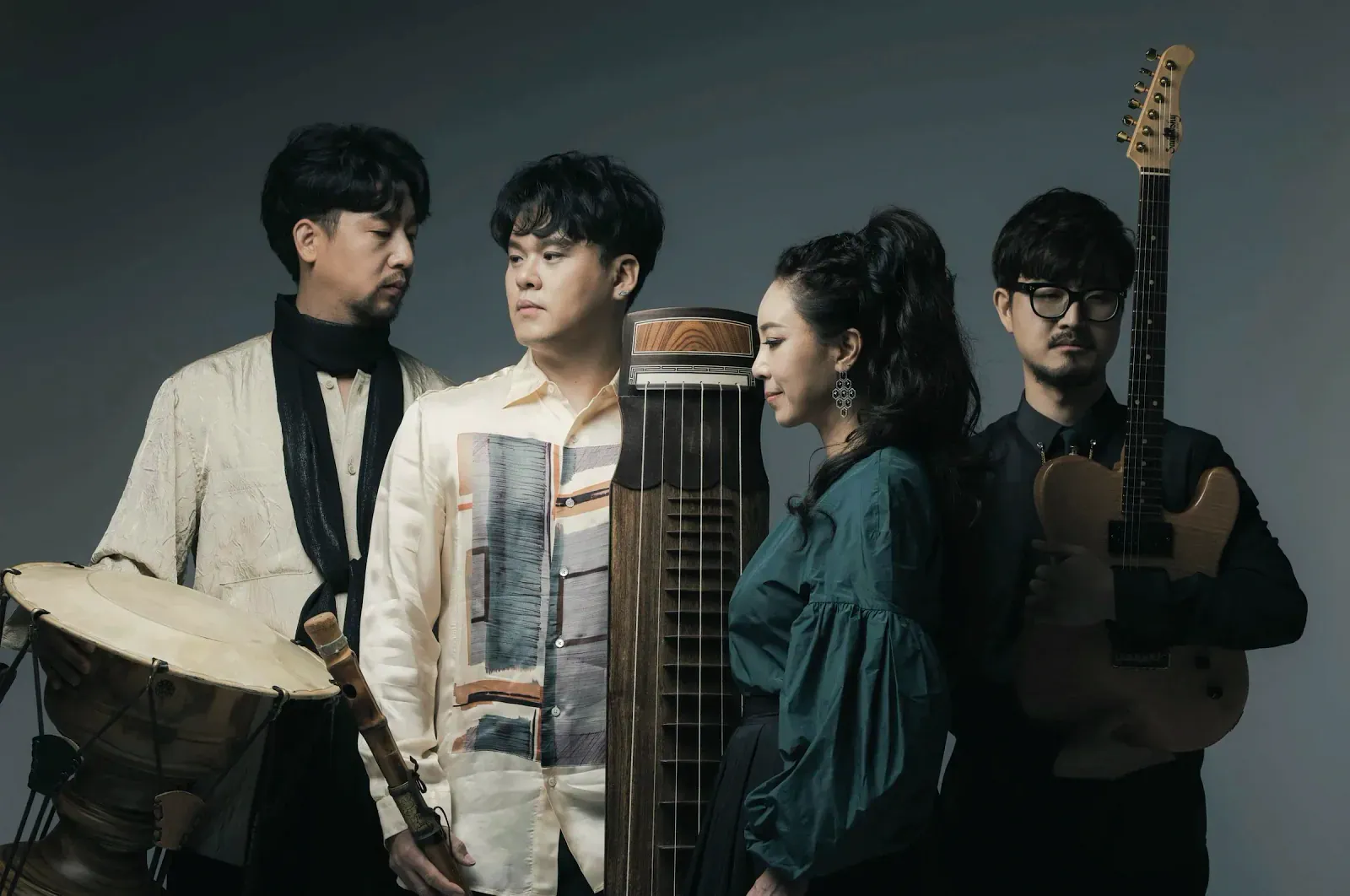
Black String formed in 2011 through a Korea-UK cultural exchange programme. Built around the geomungo, a six-string zither, together with the daegeum flute, janggu and guitar, it works from jazz and free improvisation. Its 2016 album Mask Dance led to a contract with the German jazz label ACT, which released Karma in 2019.
Global exposure, 2015 onward
Ak Dan Gwang Chil, also written ADG7, formed in 2015. Its nine members play only traditional instruments, but the repertoire is shamanic gut ritual song and Hwanghae Province folk song, delivered with a funk drive that took it on a US tour in 2021 and to a studio concert broadcast in 2022. Its second album, Such Is Life, came out in 2020.
In 2018 a performance of Dragon King at the Asia Culture Center in Gwangju brought together the future members of Leenalchi. The band formed in 2019 with four traditional singers, two bassists and a drummer; the singers are graduates of Seoul National University’s traditional music department. Its debut Sugungga, released on 29 May 2020, drew on the pansori Sugungga, and its song Tiger Is Coming became a worldwide viral hit.
Characteristics
Fusion gugak is not one sound but a method: keep a traditional element at the front and let the arrangement around it be modern. Three approaches recur. The post-rock approach of Jambinai builds long crescendos from slow haegeum or piri lines to loud, distorted peaks. The jazz approach of Black String treats the geomungo as an improvising voice. The pop approach of Leenalchi puts pansori vocal delivery on top of dance-friendly grooves, and Ak Dan Gwang Chil keeps the instruments traditional while changing the rhythm feel. Tempos run roughly from slow dirges near 80 beats per minute to dance tracks above 120.
Instruments and production
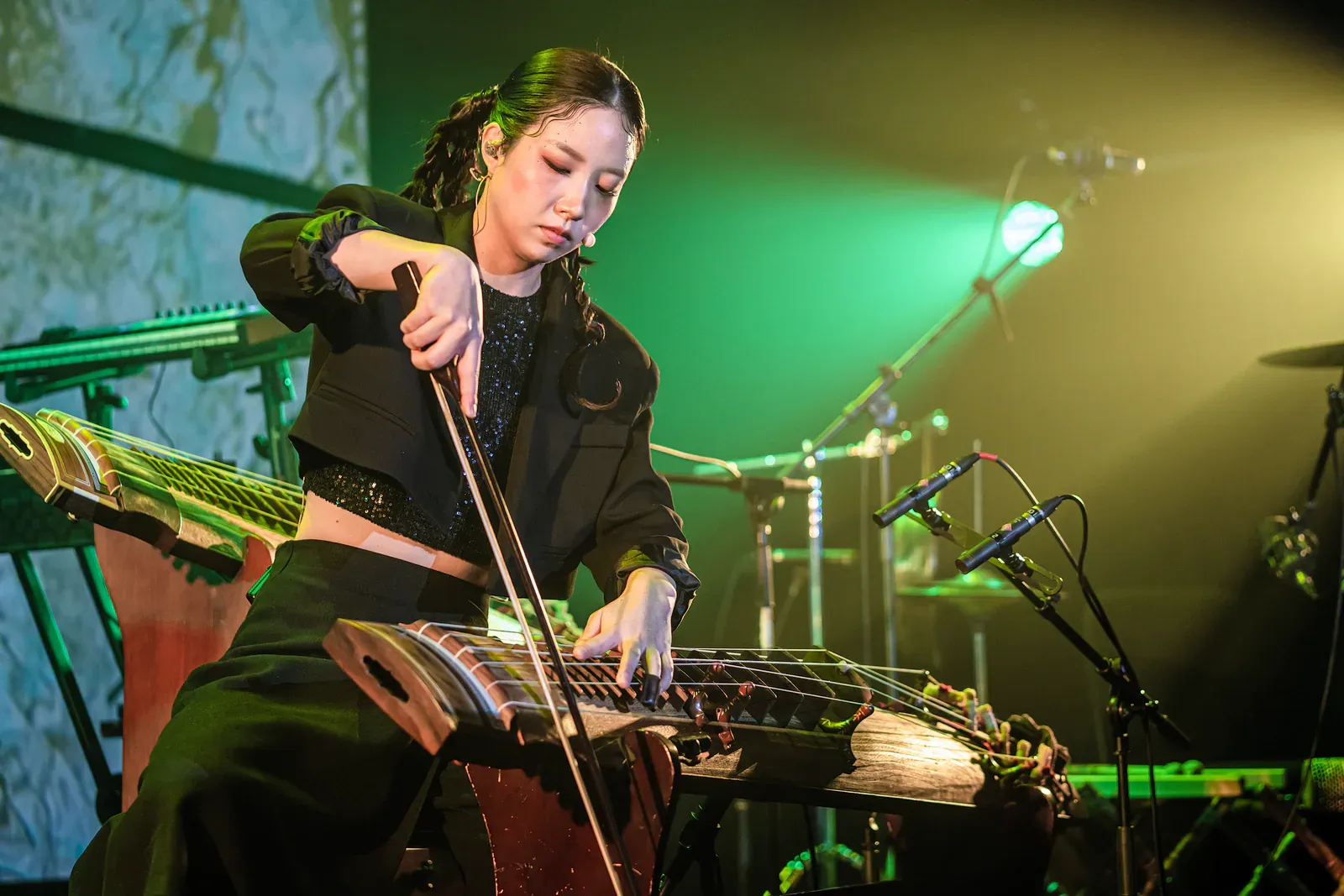
The core instruments are the gayageum and geomungo zithers, the haegeum fiddle, the piri oboe, the daegeum flute and the janggu drum, joined by electric guitar, bass and a standard drum kit. Players often adapt the instruments: a bow on the geomungo, amplification and effects pedals on zithers and fiddles.
Mainstream success
For decades fusion gugak was a niche of festivals and arts centres. Two things changed that. First, bands began touring Europe and North America, helped by labels outside Korea: Bella Union released Jambinai’s A Hermitage in 2016, ACT signed Black String, and Luaka Bop signed Leenalchi in 2026. Second, tourism and streaming media used it. A Korea Tourism Organization video series put Leenalchi’s songs behind footage of Korean cities, and the band won three Korean Music Awards in 2021: Musician of the Year, Best Modern Rock Song and Best Jazz and Crossover Album. A 2022 Netflix documentary mini-series showed it in Seoul nightlife. Jambinai played with an orchestra of geomungo players at the closing ceremony of the 2018 Winter Olympics in Pyeongchang.
Notable recordings
Jambinai’s Time of Extinction, the opening track of Différance, sets a plaintive string line against distorted guitar and drums and shows the post-rock method at its most compact. Tiger Is Coming by Leenalchi draws on the pansori tradition, with sung lines that rise over a bass riff and a danceable drum pattern. Ak Dan Gwang Chil’s Widmung, from Such Is Life, keeps a purely traditional instrument line but lets the rhythm section drive.
Culture
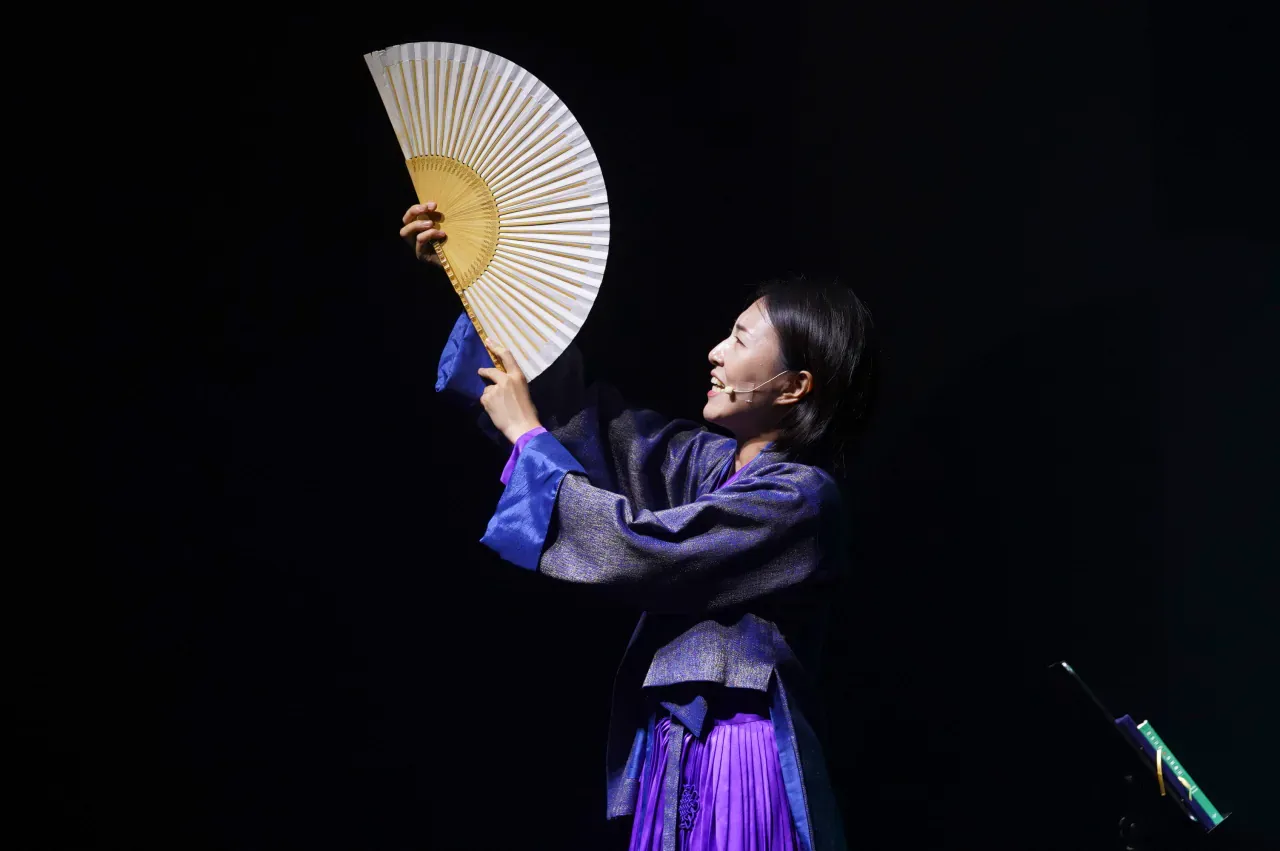
The scene is closely tied to traditional performance practice. Ak Dan Gwang Chil draws its songs from shaman ritual, and Leenalchi often collaborates with Ambiguous Dance Company, so stage shows combine sung storytelling with contemporary dance.
Legacy
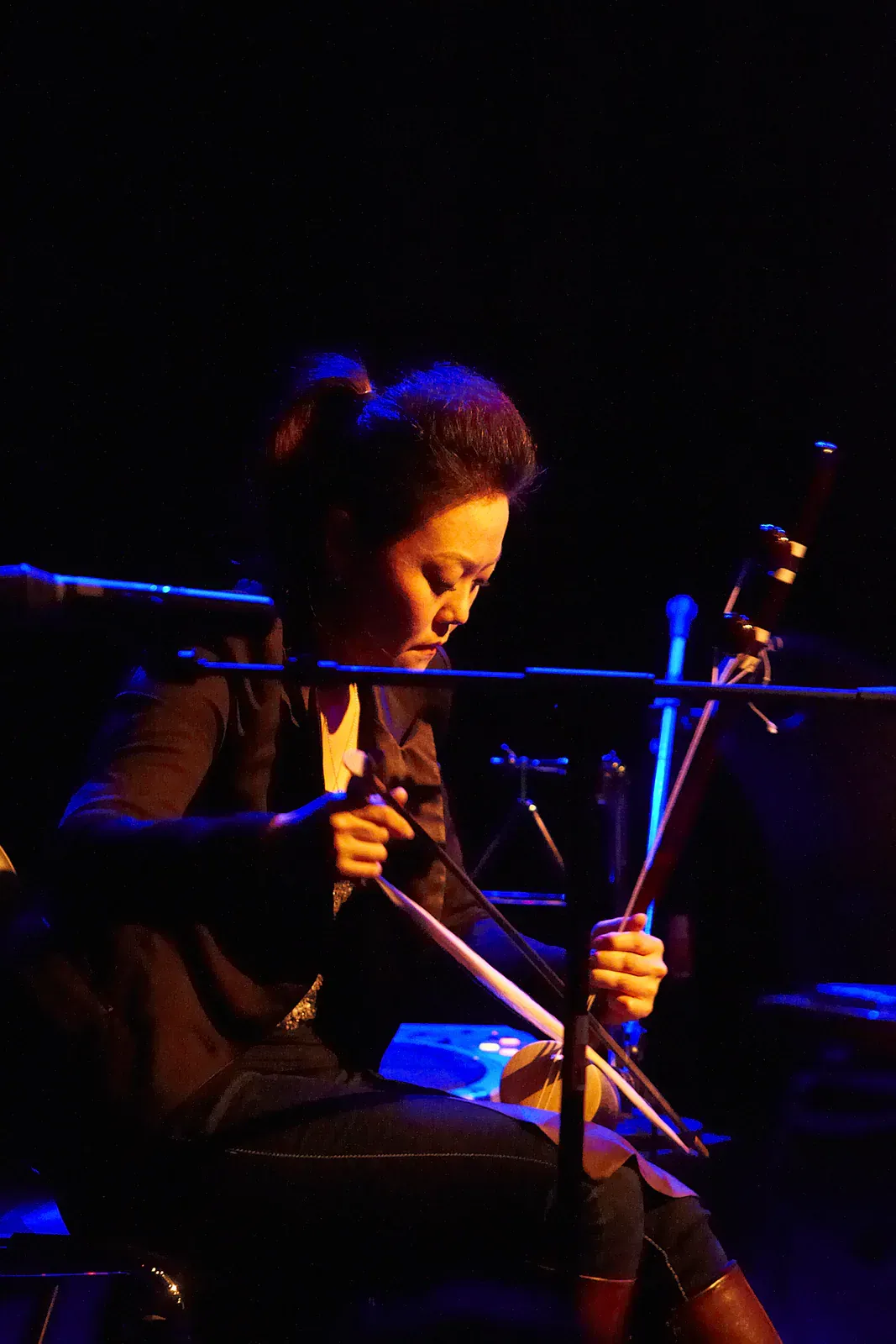
Fusion gugak gave traditional musicians a route to rock and jazz festivals and to labels outside Korea, and it became a visible way in which Korean traditional music reaches international audiences. The term covers acts that share little beyond their instruments, so it describes a method more than a single style.
Misconceptions
It is often assumed that fusion gugak means pansori with a beat. Only Leenalchi builds on pansori; Ak Dan Gwang Chil centres on shamanic gut and folk songs, and Jambinai and Black String are largely instrumental. Another assumption is that the traditional instruments are replaced by electric ones. In practice the zithers, fiddles and flutes stay at the front and the electric instruments sit beside them. A third assumption is that the genre appeared overnight with a viral song. The line from changjak gugak in the 1960s through the electric experiments of the 1980s to the crossover ensembles of the 2000s is continuous.
Frequently asked questions
What is fusion gugak?
Fusion gugak is Korean music that combines gugak instruments, scales and singing with rock, jazz, pop or electronic production. Bands such as Jambinai, Black String and Leenalchi are typical examples.
Which instruments are used in fusion gugak?
Typical instruments are the gayageum, geomungo, haegeum, piri, daegeum and janggu, usually with electric guitar, bass and drums.
What is the difference between fusion gugak and K-pop?
K-pop is idol-based popular music built on global pop styles. Fusion gugak starts from traditional Korean instruments or vocal styles and adds modern elements around them. The two meet occasionally, but their repertoire and audiences are different.
Who are the best-known fusion gugak acts?
Leenalchi, whose Tiger Is Coming became a worldwide hit, Jambinai, Black String, Ak Dan Gwang Chil and Su:m.
Sound
Sound sheet
Signature sounds
- Pansori voice over a bass and drum groove
- Bowed or distorted geomungo and gayageum
- Slow haegeum or piri build to a loud climax
- Janggu rhythm cycles under rock drums
Techniques
- Sigimsae ornamentation
- Bowed geomungo
- Jangdan rhythm cycles
- Call and response
Keys and modes
Pyeongjo and gyemyeonjo. Traditional Korean modes: pyeongjo is calm and open, gyemyeonjo plaintive.
Vocals
Trained pansori and minyo singers using the full, open sori voice, often in groups.
Scenes
Where it happened
Where and when the sound lived: one bar per city on a shared timeline.
Asia
Active scenes
Peak 2, 2018-2025
Home of Su:m, Jambinai, Black String and Leenalchi, and base of the National Gugak Center.
The Asia Culture Center staged the Dragon King performance where Leenalchi's members met.
Culture
Culture markers
- Gut
Shamanic ritual songs, especially from Hwanghae Province, supply the repertoire of Ak Dan Gwang Chil.
Ritual - Contemporary dance partnerships
Leenalchi often collaborates with Ambiguous Dance Company.
Dance
Media
Key media
- 2020Feel the Rhythm of Korea
by Korea Tourism Organization. A video series that put Leenalchi in front of a mass audience.
Film - 2022Midnight Asia: Eat. Dance. Dream.
by Netflix. A documentary mini-series that featured Leenalchi in Seoul's nightlife.
Film
Glossary
Terms on this page
Newly composed music for traditional instruments, in contrast to inherited repertoire.
Korean traditional music, covering court, folk and shamanic repertoires.
Korean shamanic ritual with songs, dance and instrumental music.
Korean folk song, such as the Seodo minyo that Ak Dan Gwang Chil perform.
Epic storytelling in song by one singer with a drummer, the voice model for Leenalchi.
Korean term for sung voice, used for the trained delivery of pansori and folk song.
East Asian family