Guarania
Guarania is a slow, melancholic Paraguayan song form in 6/8, created by José Asunción Flores in 1925 from a slowed polka and played on harp and guitar.
Asunción, 1925
Latin family
Born
1925
Asunción
Links
6
Genres it drew on or shaped
Tempo
80-100 BPMLineage
Family tree
Grew out of
- Polca paraguaya
Derived from
Asunción, 1925
Guarania
Timeline
Era by era
From the first sparks to today. Select a dot to read the story behind it.
- Purahéi asy and the Paraguayan polka
1900 to 1924
- Creation and first recordings
1925 to 1944
- Brazil and the world tours
1945 to 1974
- Heritage repertoire
1975 to today
Eras
Moments
- 1 Purahéi asy and the Paraguayan polka, 1900 to 1924
- 2 Creation and first recordings, 1925 to 1944
- 3 Brazil and the world tours, 1945 to 1974
- 4 Heritage repertoire, 1975 to today
around 1900
Purahéi asy and the Paraguayan polka
Slow lament songs of the countryside and the fast polca paraguaya form the base from which the new style is drawn.
- 1910The word guarania appears in a poemGuillermo Molinas Rolón's poem Canto a la raza uses the term for the land of the Guaraní, which Flores later adopts.
1925
Creation and first recordings
José Asunción Flores names and composes the first guaranias, records them in Buenos Aires and sees India made a national song.
- 1925Flores creates the first guaraniaJosé Asunción Flores composes Jejuí as a slow, melancholic 6/8 piece in Asunción.
- 1928India, Kerasy and Arribeño resayThe first three guaranias are dated 1928; India sets words by Manuel Ortiz Guerrero to Flores's music.
- 1934Odeon records the Ortiz Guerrero orchestraFlores leads recordings for Odeon with leading Paraguayan musicians, with Agustín Barboza as principal soloist.
- 1940Brazilian countryside adopts guaraniaSeasonal yerba mate workers and visiting composers bring it into Brazilian caipira and sertaneja music.
- 1944India declared a national songThe Paraguayan government names India a national song.
1945
Brazil and the world tours
Recordings, Brazilian duos and the trio Los Paraguayos carry guarania across South America and to audiences abroad.
- 1950Recuerdos de Ypacaraí is writtenDemetrio Ortiz and Zulema de Mirkin's song becomes the best-known guarania abroad.
- 1951India sells in Brazil on 78 rpmThe José Fortuna version, with Mi primer amor and Lejanía by Herminio Giménez, spreads guarania across Brazil.
- 1953Bajo el cielo del ParaguayThe trio Los Paraguayos publish an album that includes Mis noches sin ti.
- 1954Agustín Barboza joins Los ParaguayosLuis Alberto del Paraná invites the singer into the trio with harpist Digno García.
- 1955Discos Guarania is foundedThe first Paraguayan label to record the nation's folk music, polka and guarania locally; before it, artists recorded in Buenos Aires.
- 1972Flores diesThe creator of the genre dies on 16 May 1972.
- 1974Luis Alberto del Paraná diesParaguay's best-selling musician, who took the repertoire around the world, dies in 1974.
1975
Heritage repertoire
Guarania remains a pillar of Paraguayan identity, played by harpists, singers and orchestras and passed on in schools and festivals.
Listening path
Start listening
A short path from an easy way in to the deep end. Thumbnails come from YouTube; the player loads only when you press play.
- 01
Luis Alberto del Paraná y Los Paraguayos, 1953
A gentle, harp-led entry point at about 90 BPM.
- 02
Julio Iglesias, 1950
The best-known guarania abroad, in a pop vocal setting.
- 03
Alberto de Luque, 1928
The foundational song of the genre, with words by Ortiz Guerrero and music by Flores.
- 04
Alberto de Luque, 1940
A Guaraní-titled standard that shows the form's regional character.
Facts
| Family | Latin |
| Origin | Asunción, Paraguay |
| Emerged | 1925 |
| Status | Active |
| Tempo | 80 to 100 BPM |
| Meter | 6/8 |
| Grew out of | Polca paraguaya |
Guarania is a Paraguayan song form in slow 6/8, built on minor-mode melodies and usually played on harp and guitar. José Asunción Flores created it in Asunción in 1925, adapting the rhythm of the Paraguayan polka to a much slower pace.
Its themes are love, longing for homeland and social hardship, and it became the most widely loved Paraguayan music of the twentieth century. It belongs to the wider Latin family.
Origins
Guarania did not grow out of nothing. Its ancestor in the countryside was the purahéi asy, a Guaraní term for pained or sorrowful song, and the other pillar was the polca paraguaya, a fast dance. Flores, a composer from a Paraguay that had few of its own recording facilities, took the polka’s lilting 6/8 pulse and slowed it until it became a vehicle for long, aching melodic phrases.
The name came from a poem. Guillermo Molinas Rolón’s Canto a la raza, from around 1910, used the word guarania for the land of the Guaraní, the Indigenous people from whom most Paraguayans descend. Flores borrowed it for his new style. The first piece to be played as a guarania was reportedly a Paraguayan polka, Ma’erápa reikuaase, which Herminio Giménez performed at a slower tempo. Flores’s own Jejuí, dated 1925, is counted as the first guarania, although the score has not survived. The three earliest pieces recorded as guaranias date from 1928: Jejuí, Kerasy and Arribeño resay.
Few countries can name the person who created one of their main musical forms. In Paraguay the answer is exact, and that fact is part of why the genre carries so much symbolic weight.
India and the creation years, 1925-1944
The song that defined the genre was India, composed by Flores in 1928 to words by the poet Manuel Ortiz Guerrero. The two worked as a team: Ortiz Guerrero supplied verse about longing, love and the land, and Flores gave it a melody in minor that moves in long, sorrowful arcs. In 1944 the Paraguayan government declared India a national song.
Recording was the obstacle. Paraguay had no commercial studio, so artists registered and recorded their work in Buenos Aires. In 1934 Flores led recordings for Odeon with an orchestra named after Ortiz Guerrero, bringing together leading Paraguayan musicians with Agustín Barboza as the principal soloist. Argentine studios shaped the early sound of the genre, and the city remained a gathering place for Paraguayan musicians. Argentina’s own folk and city styles, such as folklore argentino and tango, shared its record shops and radio audiences.
Brazil and the world tours, 1945-1974
After the Second World War guarania travelled well beyond its home. In Brazil it moved into the music of the countryside, partly through seasonal yerba mate workers who crossed the border and partly through composers such as Raúl Torres, Ariovaldo Pires and Mário Zan, who travelled to Paraguay and brought repertoire back. From the 1940s it became one of the forms most used by composers of caipira and sertaneja music, and the duo Cascatinha e Inhana had a huge success with Torres’s Colcha de retazos. In 1951 a 78 rpm record of India in a Brazilian version by José Fortuna, with Herminio Giménez’s Mi primer amor and Lejanía on the other side, widened the audience further.
The other great vehicle was the trio Los Paraguayos, led by the singer and guitarist Luis Alberto del Paraná. Throughout the 1950s, 1960s and early 1970s the group toured the world, and Del Paraná became the best-selling Paraguayan musician ever. Barboza joined the trio in 1954, bringing a voice that had already recorded with Flores’s orchestra. A 1953 album, Bajo el cielo del Paraguay, included Mis noches sin ti, still a staple. Recuerdos de Ypacaraí, written around 1950 by Demetrio Ortiz and Zulema de Mirkin, became the best-known guarania abroad, taken up by pop singers of many languages.
Local recording finally arrived in 1955 with Discos Guarania, founded in Asunción as the first Paraguayan label to record the nation’s folk music, polka and guarania at home. Harpists such as Félix Pérez Cardozo were among its artists.
Characteristics
The slow 6/8 is the defining trait. Because the tempo allows long phrases, guarania melodies stretch across many bars and sit mostly in the minor mode, with accompaniment that keeps rolling underneath rather than driving forward. Lyrics are sung in Guaraní or Spanish, solo or in duo, and speak of love, the homeland, heroic episodes in national history and poverty. Harmony picked up influences from other styles, among them the bolero and, later, bossa nova.
Instruments and production
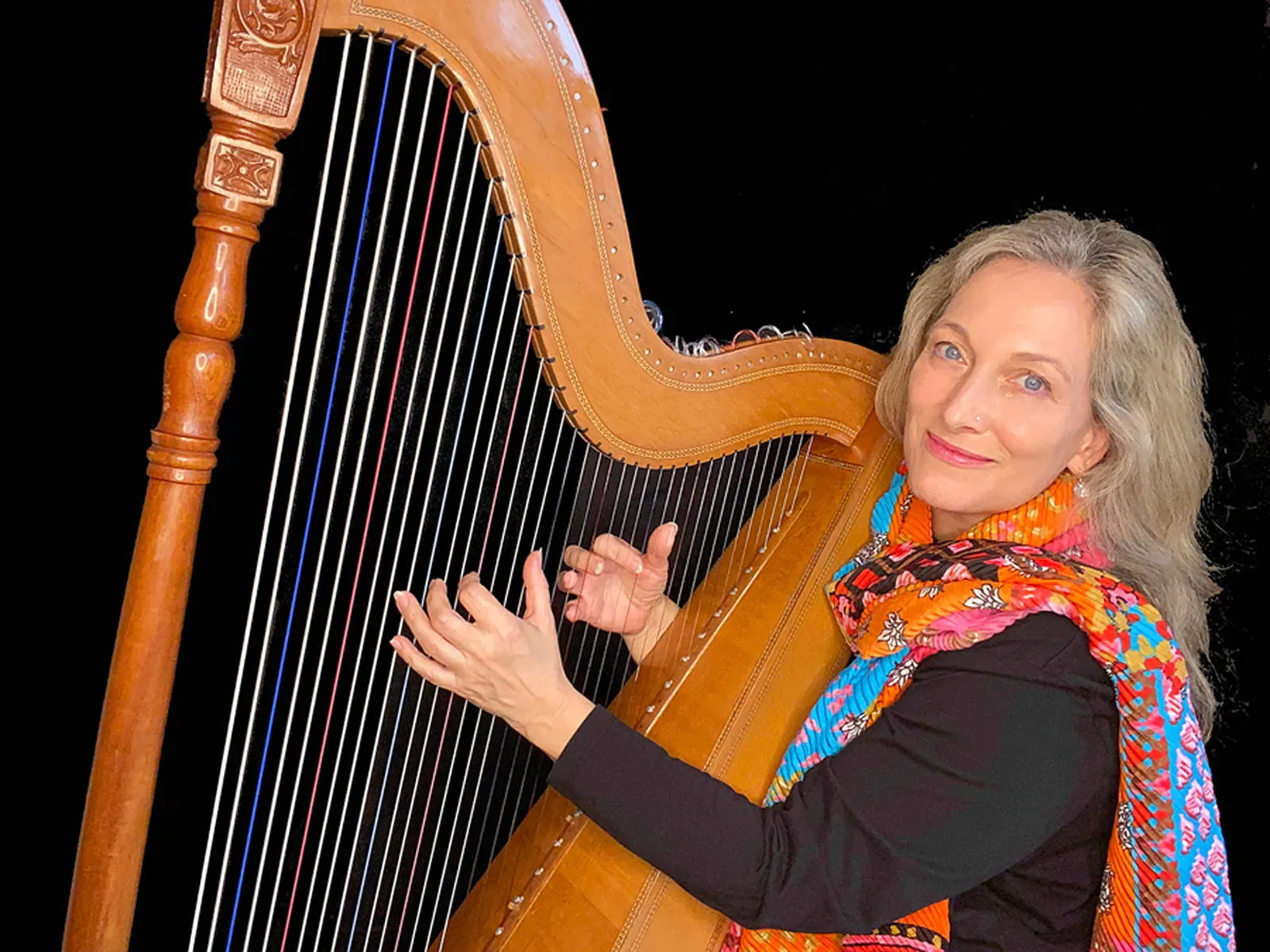
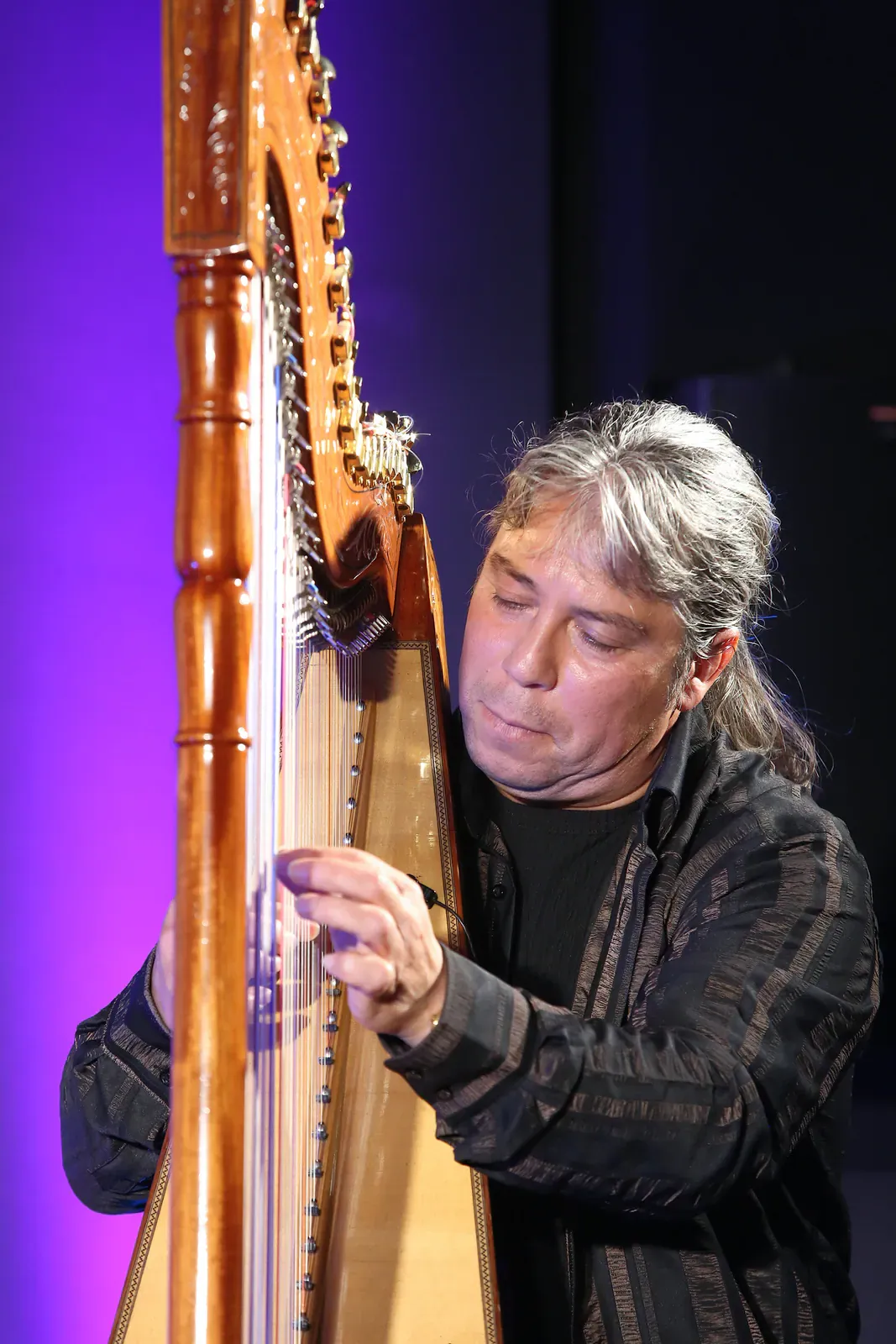
The Paraguayan harp is the heart of the sound. It is played with the fingers, and the right hand carries the melody while the left plays a bass line and rolling arpeggios. The guitar supplies chords and a second melodic line; in trios and duos the two instruments trade phrases around the singer. Flores also wrote for orchestra, so the form can sound at concert scale as well as in a small ensemble. In pop settings, arrangements tend to substitute strings and light percussion for the harp.
Culture
Guarania is valued far more in cities than in the countryside. Rural audiences prefer faster, danceable styles such as the Paraguayan polka, and the sentimental repertoire is sometimes dismissed with a mocking name, purahéi jahe’o, meaning lament song. Yet the music has shaped national identity: it carries stories about Paraguayan life, pairs composers with poets, and appears in almost every major concert of Paraguayan music.
Legacy
Flores died in 1972 and Del Paraná in 1974, but the repertoire kept its place as a core of Paraguayan identity. Guaranias remain standards for singers and harpists in Paraguay, Argentina and Brazil, and its melodic approach lives on in the sertaneja ballads of Brazil. Its slow, plaintive language remains recognisable even to listeners who do not know a word of Guaraní.
Frequently asked questions
Who created guarania?
José Asunción Flores, a Paraguayan composer, created guarania in Asunción in 1925. He took the rhythm of the Paraguayan polka and played it more slowly in a minor mode.
What is the difference between guarania and polca paraguaya?
Both are in 6/8, but the polca paraguaya is fast and made for dancing, while guarania is slow, with longer melodic lines and a more melancholic character.
What instruments are used in guarania?
The Paraguayan harp and guitar are the standard pairing, often with a singer or a duo of singers. Orchestral versions also exist.
What are the best-known guaranias?
India, Recuerdos de Ypacaraí, Mis noches sin ti, Ne rendápe aju and Panambí Vera are the most widely known.
Sound
Sound sheet
Signature sounds
- Slow 6/8 with long phrases
- Minor-mode melody with a sad turn
- Harp and guitar accompaniment
- Sung in duo, in Guaraní or Spanish
Techniques
- Slow dotted 6/8
- Duo singing
- Harp arpeggios
- Guaraní and Spanish lyrics
Keys and modes
Minor mode. Most pieces are in minor, which gives them a wistful, sad tone.
Vocals
Sung solo or in duo in Guaraní or Spanish, with sustained, plaintive phrasing.
Scenes
Where it happened
Where and when the sound lived: one bar per city on a shared timeline.
Latin America
Active scenes
Peak 4, 1950-1972
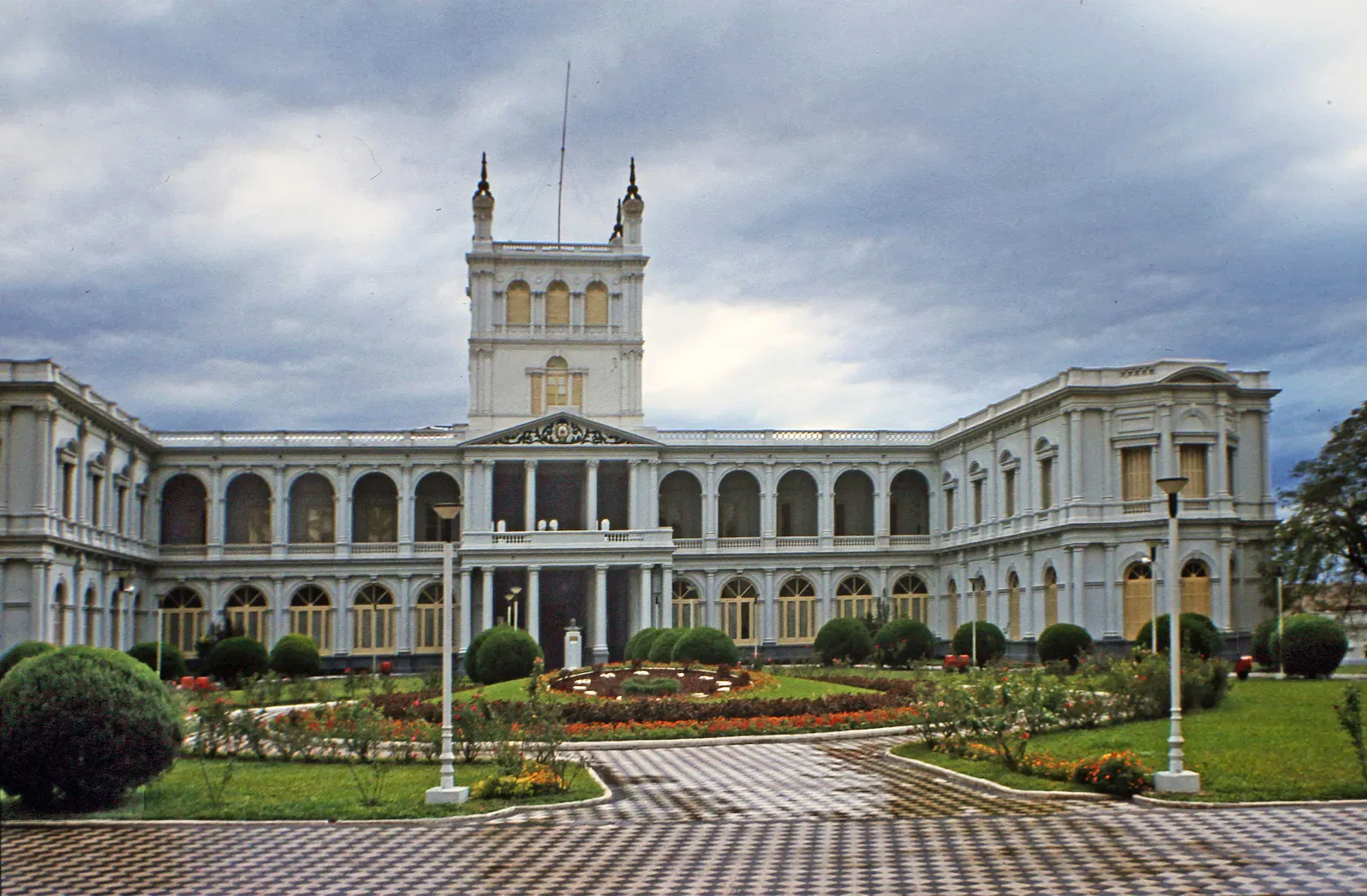
Where Flores created the genre and where its composers, poets and singers worked.
The recording centre for Paraguayan musicians before local studios existed; Flores spent his later years there.
Brazilian duos and sertaneja composers recorded guarania here and made it a mass-market style.
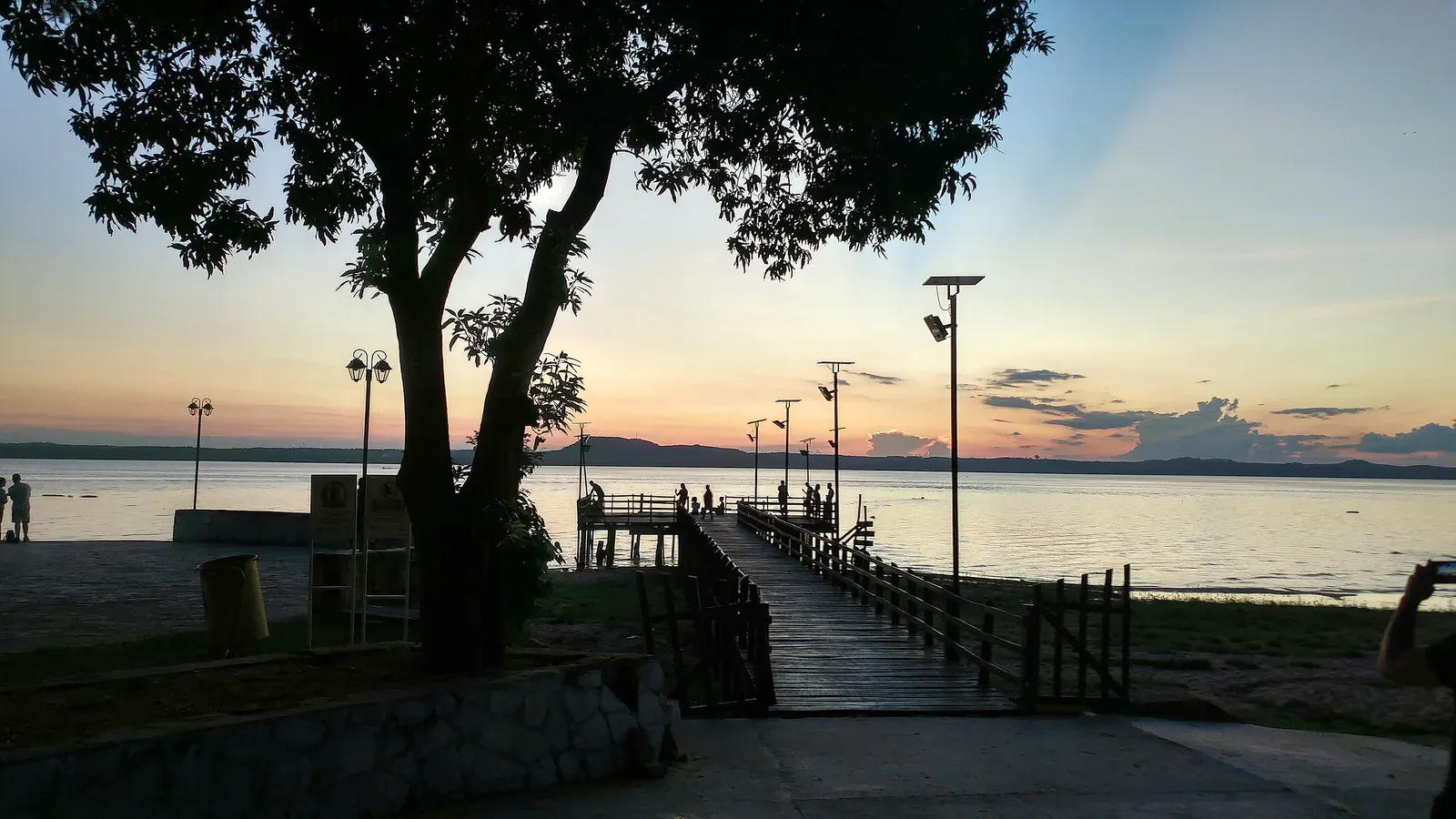
The lake town that gave its name to the genre's best-known song.
Venues and places
Asunción, 1889 to today. The main municipal theatre of the capital, a stage for art and popular Paraguayan music.
Buenos Aires, 1934 to today. Where Flores's orchestra recorded in the 1930s, before Paraguay had its own studios.
Asunción, 1955 to today. The first Paraguayan studio and label to record folklore, polka and guarania at home.
Culture
Culture markers
- Purahéi asy
Guaraní term for sorrowful song, the roots of the genre's melancholy.
Slang - Purahéi jahe'o
A label for the lament song, sometimes used dismissively.
Slang - Poet-composer partnerships
Flores and the poet Manuel Ortiz Guerrero wrote together, with lyrics on love, homeland and poverty.
Artwork
Media
Key media
- 1910Canto a la raza
by Guillermo Molinas Rolón. The poem whose use of the word guarania Flores adopted for his new style.
Book - 1951India / Mi primer amor / Lejanía
by José Fortuna. The Brazilian 78 rpm release that made guarania popular there.
Compilation - 1953Bajo el cielo del Paraguay
by Trío Los Paraguayos. An early album of the trio that carried the repertoire abroad.
Compilation
Glossary
Terms on this page
The Paraguayan harp, the national instrument and the core voice of the music.
The Indigenous language spoken across Paraguay and used in many guarania lyrics.
A slow, melancholic Paraguayan song form in 6/8 created by José Asunción Flores in 1925.
A fast, danceable Paraguayan polka from which guarania took its rhythm at a slower pace.
Guaraní for pained or sorrowful song, a rural genre that guarania grew out of.
A lament song, a name sometimes used dismissively for sentimental Paraguayan music.
Latin family