Hardstyle
Hardstyle is hard dance built on a distorted, pitched kick and an offbeat reverse bass, formed in the Netherlands, Belgium and Italy around 1999 to 2002.
Netherlands, Belgium, Italy, 1999
Electronic family
Born
1999
Netherlands, Belgium, Italy
Subgenres
6
Documented branches
Links
26
Genres it drew on or shaped
Tempo
137-155 BPMLineage
Family tree
Grew out of
- Hard trance
Derived from
- Gabber
Derived from
- New beat
Derived from
Influenced by
TechnoUK hard house
Netherlands, Belgium, Italy, 1999
Hardstyle
Led to (7)
Timeline
Era by era
From the first sparks to today. Select a dot to read the story behind it.
- Reverse bass and the first parties
1999 to 2006
- Anthems and festival stages
2007 to 2011
- Subgenre split and crossover
2012 to 2016
- Return to hardstyle and hybrids
2017 to 2023
- Fewer events, same core
2024 to today
Eras
Moments
- 1 Reverse bass and the first parties, 1999 to 2006
- 2 Anthems and festival stages, 2007 to 2011
- 3 Subgenre split and crossover, 2012 to 2016
- 4 Return to hardstyle and hybrids, 2017 to 2023
- 5 Fewer events, same core, 2024 to today
1999
Reverse bass and the first parties
Dutch and Italian DJs move hard trance and hardcore toward a distorted kick and an offbeat reverse bass at about 140 BPM. Qlubtempo, Scantraxx and the hardstyle trademark appear.
- 1999Q-dance starts as Qlass EliteFounded in Landsmeer; renamed Q-dance in 2001.
- 2000Qlubtempo in ZaandamNamed as the first event credited as a hardstyle event; its run is dated 2001 to 2007.
- 2002Scantraxx founded by The ProphetFirst release is Slavez by Taq 9.
- 2002Q-dance trademarks hardstyleRegistered on 4 July 2002.
- 2003DJ Duro releases Just BegunScantraxx cites it as a new standard for the reverse bass.
- 2003Defqon.1 starts; Qlimax moves to GelreDomeDefqon.1 starts in Almere; Qlimax settles in Arnhem.
- 2004Shizzle My DizzleDJ Duro and The Prophet on Scantraxx; Scantraxx calls it one of hardstyle's biggest anthems.
- 2006Dirty Workz founded in BelgiumStarted by Coone.
- 2006ID&T acquires Q-danceTakeover in late 2006.
2007
Anthems and festival stages
Yearly Qlimax and Defqon.1 anthems turn the genre into a festival product. Headhunterz, Noisecontrollers and Wildstylez lead a more melodic sound.
- 2007Headhunterz releases Rock CivilizationOut on Scantraxx Reloaded in June.
- 2008Technoboy writes the Qlimax 2008 anthemNext Dimensional World, released 18 November 2008.
- 2009CTRL.ALT.DELETENoisecontrollers anthem for the In Qontrol event, released April 2009.
- 2009Defqon.1 Australia startsSydney International Regatta Centre hosts it until 2018.
- 2010Dubstyle appearsA fusion of hardstyle kicks with reversed wobble bass lines.
- 2011Defqon.1 moves to BiddinghuizenWalibi Holland grounds replace the Almere beach site.
2012
Subgenre split and crossover
Tempo moves from 135-150 toward 150-160 BPM. Dubstyle, euphoric and rawstyle separate, and artists such as Showtek and Coone work with mainstream EDM acts.
- 2012Dragonborn releasedHeadhunterz releases the Skyrim-inspired single in January 2012.
- 2013Get Loose on OWSLAShowtek and Noisecontrollers bring a hardstyle producer into mainstream EDM.
- 2016Rise of the CelestialsCoone writes the Qlimax 2016 anthem.
2017
Return to hardstyle and hybrids
Headhunterz returns to hardstyle in 2017 and acts such as Sub Zero Project blend psy-style kicks with euphoric and raw styles. Australian editions of Defqon.1 end in 2018.
- 2017Headhunterz returns to hardstyleHe announced the return at Defqon.1 in June; Destiny came out in September.
- 2018Defqon.1 Australia endsOverdose deaths and regulatory changes close the Sydney edition.
- 2018Coone plays Tomorrowland main stageFirst hardstyle artist on that stage.
- 2023The Prophet retiresHis last set was Defqon.1 on 25 June 2023.
- 2023Showtek return to hardstyleThey play Qlimax and release 360 Yellow.
2024
Fewer events, same core
Qlimax ends after 2024 and Q-dance keeps Defqon.1 and Dominator. Scantraxx, Dirty Workz and Q-dance keep releasing.
- 2024Q-dance ends QlimaxAnnounced 25 July 2024; the last edition took place on 16 November 2024.
Listening path
Anthems
The records that built the sound, grouped by the part they played. Thumbnails come from YouTube; the player loads only when you press play.
- 01
DJ Duro, 2003 · Scantraxx
Early Scantraxx single that Scantraxx credits with raising the standard of the reverse bass.
Origin - 02
DJ Duro, 2004 · Scantraxx
Early scene classic, with The Prophet, that the label calls one of the biggest hardstyle anthems ever.
Anthem - 03
Noisecontrollers, 2009 · Q-dance
In Qontrol 2009 anthem that fixed the melodic festival sound.
Anthem - 04
Wildstylez, 2010 · Q-dance
Official Defqon.1 anthem of 2010, melodic and pitched-kick driven.
Anthem - 05
Noisecontrollers, 2011 · Q-dance
Defqon.1 2011 anthem, an easy entry to the festival sound.
Start hereAnthem - 06
Headhunterz, 2012
Single from January 2012 with a melody inspired by the video game Skyrim.
Start hereAnthem - 07
Brennan Heart, 2012
Brennan Heart and Wildstylez collaboration, a staple of the euphoric era.
Anthem - 08
Coone, 2016 · Q-dance
Qlimax 2016 anthem by the Dirty Workz founder.
Anthem - 09
Sub Zero Project, 2023 · Q-dance
Defqon.1 2023 anthem from a duo that mixes psy-style kicks into hardstyle.
Anthem - 10
Showtek, 2013
Showtek and Noisecontrollers on Skrillex's OWSLA, a hardstyle producer entering mainstream EDM.
Crossover - 11
Headhunterz, 2017
The track that marked his return to hardstyle at Defqon.1 2017.
Start hereRevival
Facts
| Family | Electronic |
| Origin | Netherlands, Belgium, Italy |
| Emerged | Late 1990s to early 2000s |
| Status | Active |
| Tempo | 137 to 155 BPM |
| Meter | 4/4 |
| Grew out of | Hard trance, Gabber, New beat |
| Subgenres | 6 |
Hardstyle is a hard dance genre built on an overdriven kick drum tuned to the key of the track, an offbeat reverse bass and big synthesizer melodies. It formed in the Netherlands, Belgium and Italy between about 1999 and 2002, growing out of hard trance, gabber and new beat.
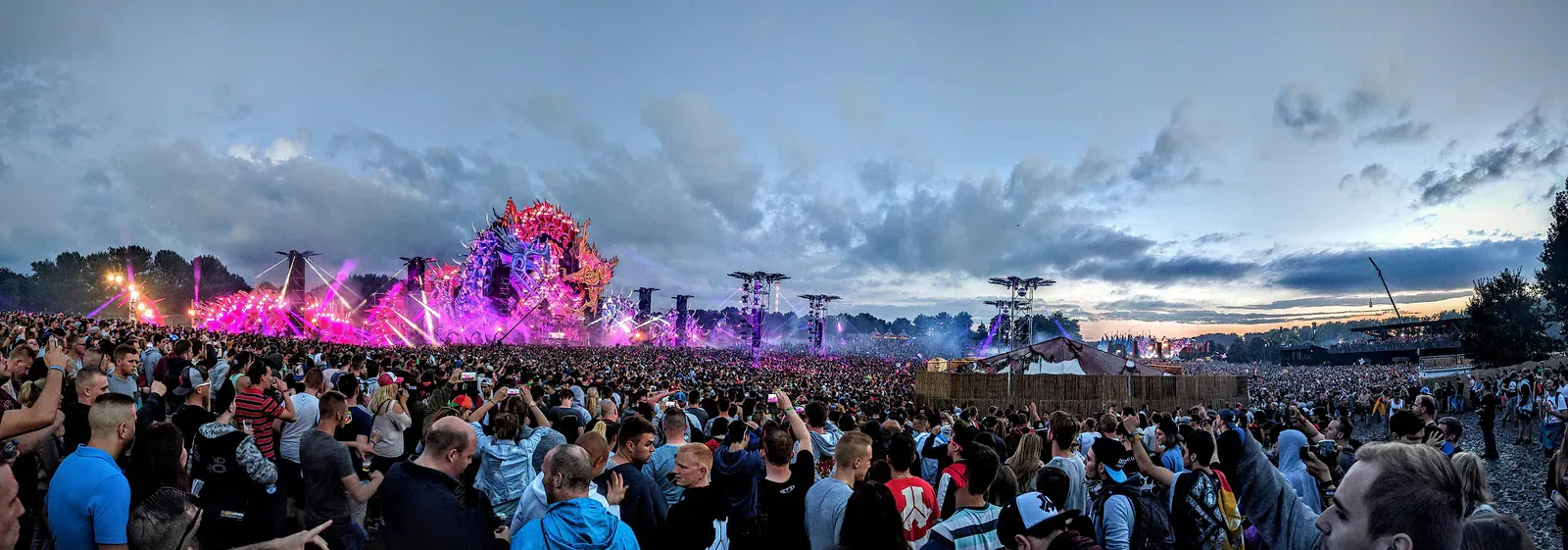
Its home is the festival stage, where each year’s official anthem is part of the event.
Origins
Hardstyle came from DJs who wanted something harder than hard trance and more melodic than hardcore. Producers in the Netherlands and Italy pushed the kick toward distortion and moved the bass off the beat, so that it sat in the gap between kick hits. That offbeat bass, called reverse bass, was inherited from hard trance and became the genre’s first fixed trait.
The scene needed a home as much as a sound. Q-dance began in 1999 in Landsmeer as Qlass Elite and took its present name in 2001. Its Qlubtempo parties in Zaandam, running from about 2000 or 2001 to 2007, are the first events credited as hardstyle events. On 4 July 2002 Q-dance registered the word “hardstyle” as a trademark, which tied the name to an event brand almost from the start.
The record side formed in parallel. The Prophet founded Scantraxx in 2002, and its first release was “Slavez” by Taq 9, built on a sample from a late-1990s hardcore track. Italian producers such as Technoboy and Tuneboy, who came from Bologna, supplied much of the early melodic vocabulary.
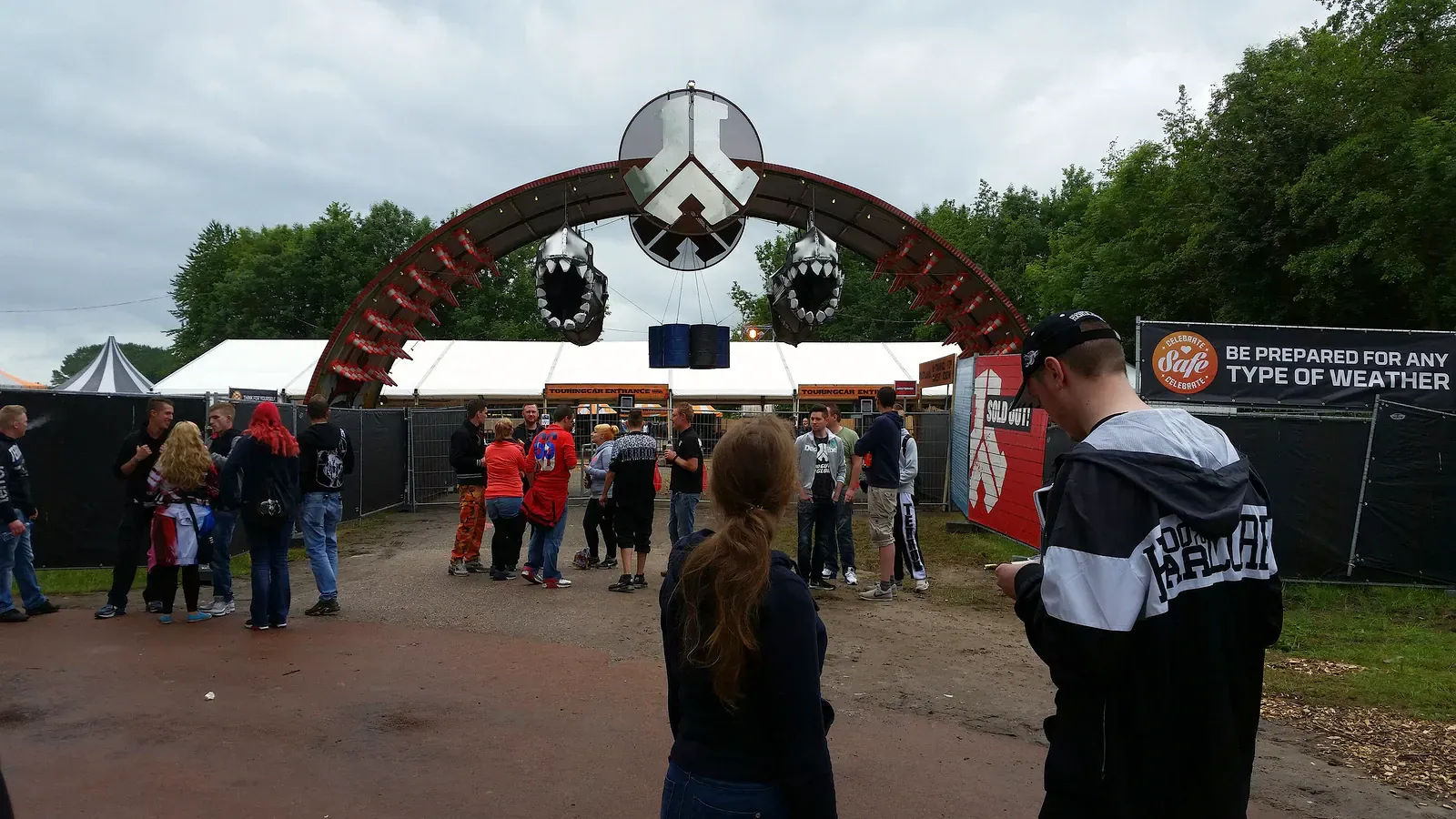
Reverse bass and the first parties, 1999-2006
The early period was about fixing the form. DJ Duro’s “Just Begun” (2003) is singled out by its own label, Scantraxx, for resetting the standard of the reverse bassline, and “Shizzle My Dizzle” (2004), made with The Prophet, became an early scene classic. The two tracks show the template: a heavy kick, a rolling offbeat bass and a short hook rather than a long melody.
Two festivals appeared in 2003. Defqon.1 began on the beach site at Almere, and Qlimax moved into the GelreDome in Arnhem for its long run. In 2006 Coone started Dirty Workz in Belgium, giving the genre a second label centre outside the Q-dance orbit, and ID&T took over Q-dance late in the same year.
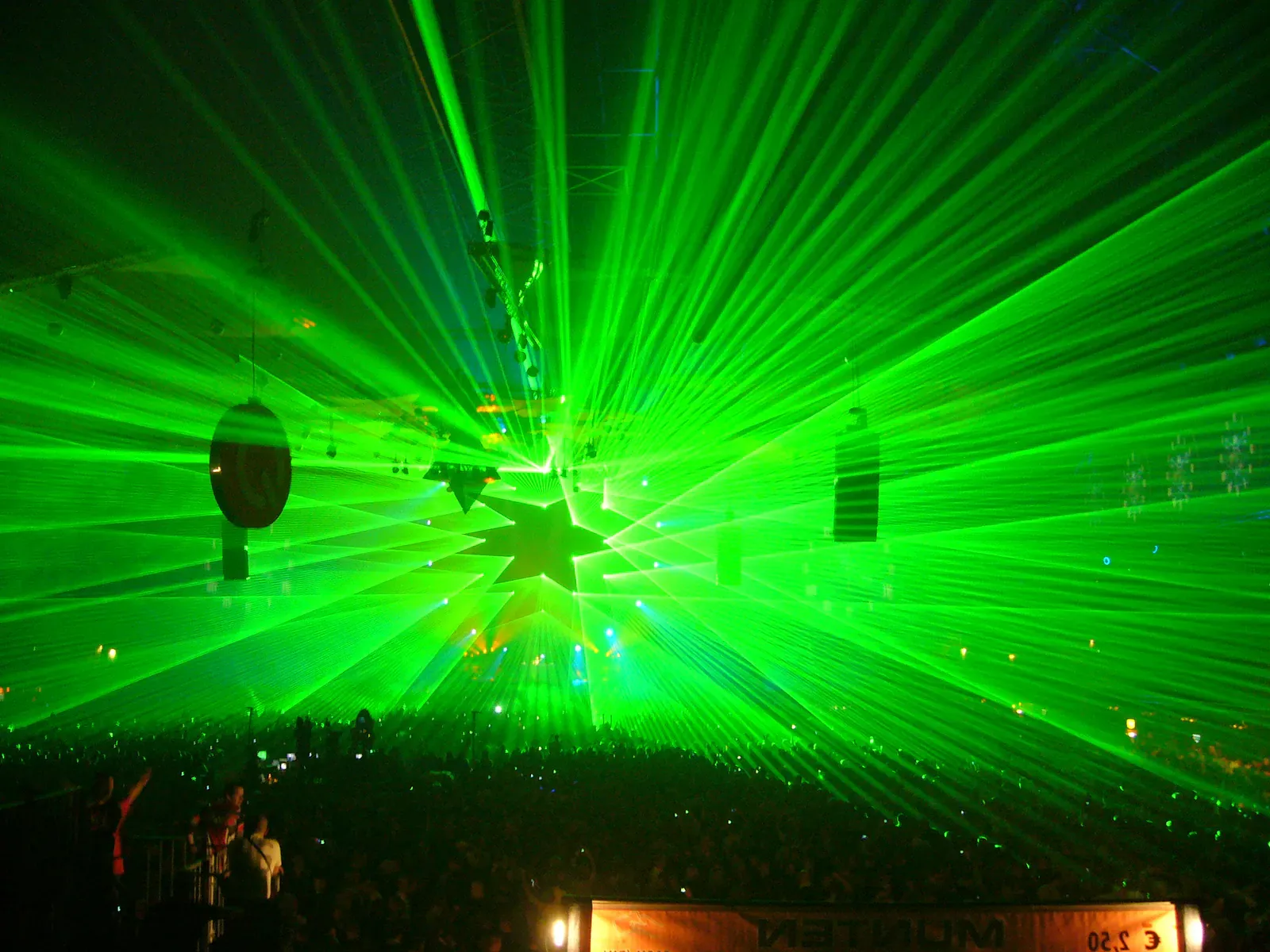
Anthems and festival stages, 2007-2011
From 2007 the genre turned into a festival product built around yearly anthems. Headhunterz released “Rock Civilization” on Scantraxx Reloaded in June 2007. Technoboy wrote the Qlimax anthem of 2008, “Next Dimensional World”, and Noisecontrollers released “CTRL.ALT.DELETE” in April 2009 as the anthem of the In Qontrol event. Wildstylez wrote the official Defqon.1 anthem of 2010 and Noisecontrollers that of 2011.
The sound became more melodic. Leads were layered from detuned saw oscillators and kicks were pitched more precisely, which led to the style later called euphoric hardstyle. Producers from the town of Veenendaal, among them Headhunterz, Noisecontrollers and Wildstylez, shaped much of this sound.
Growth moved abroad and across the Dutch landscape. Defqon.1 Australia began in 2009 at the Sydney International Regatta Centre, and in 2011 the main Defqon.1 moved to Biddinghuizen, replacing the Almere beach.
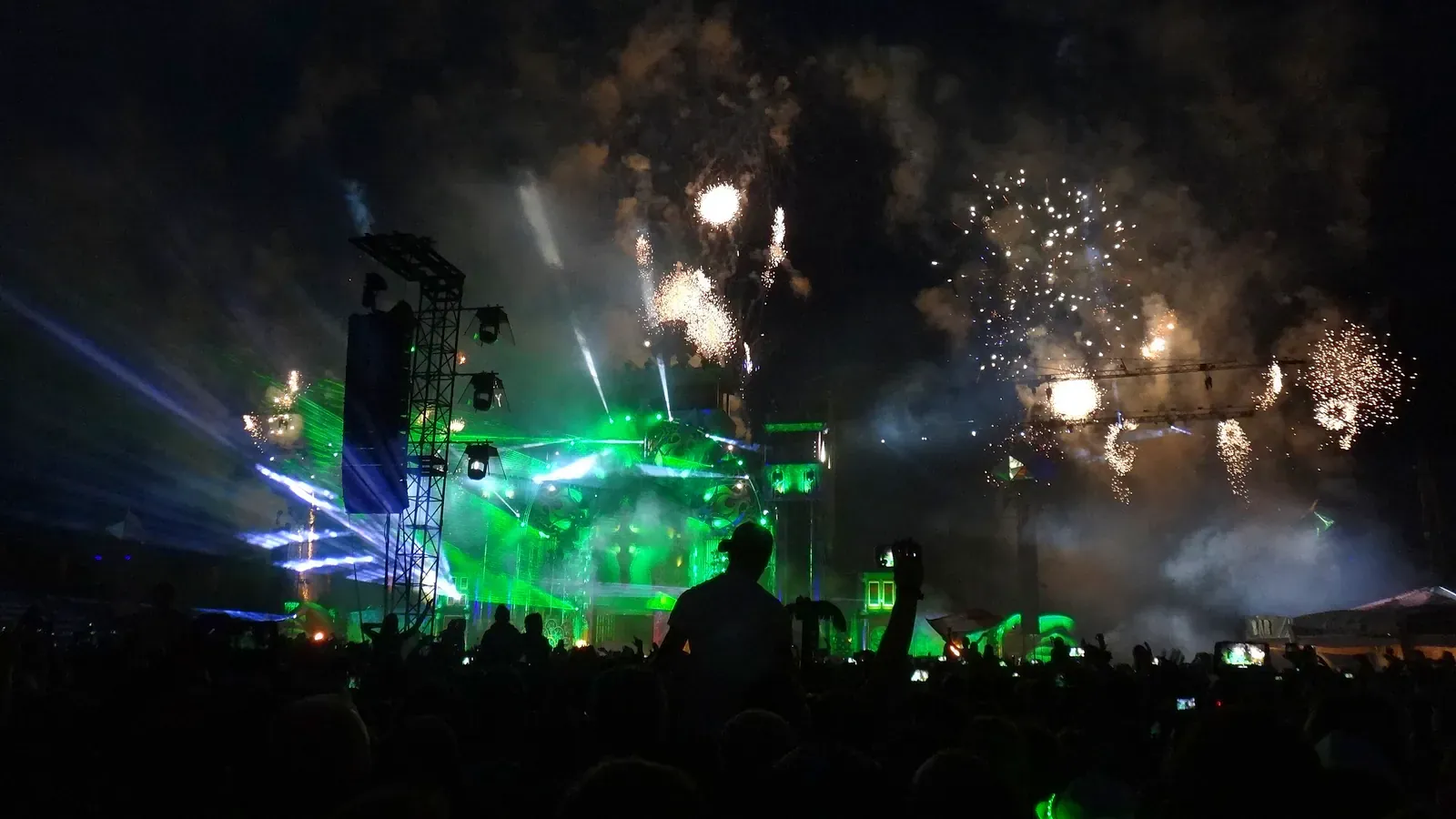
Subgenre split and crossover, 2012-2016
Between 2012 and 2016 tempo rose and the styles separated. Dubstyle, a fusion of hardstyle kicks with reversed wobble bass lines, appeared in 2010. Euphoric hardstyle and the darker rawstyle then pulled apart, and typical speeds moved from the 135 to 150 range toward 150 to 160.
Hardstyle also reached outside its own scene. Headhunterz released “Dragonborn” in January 2012, with a melody inspired by the video game Skyrim. In 2013 Showtek and Noisecontrollers released “Get Loose” on Skrillex’s label OWSLA, a rare case of a hardstyle producer entering mainstream EDM. Coone wrote the Qlimax anthem of 2016, “Rise of the Celestials”.
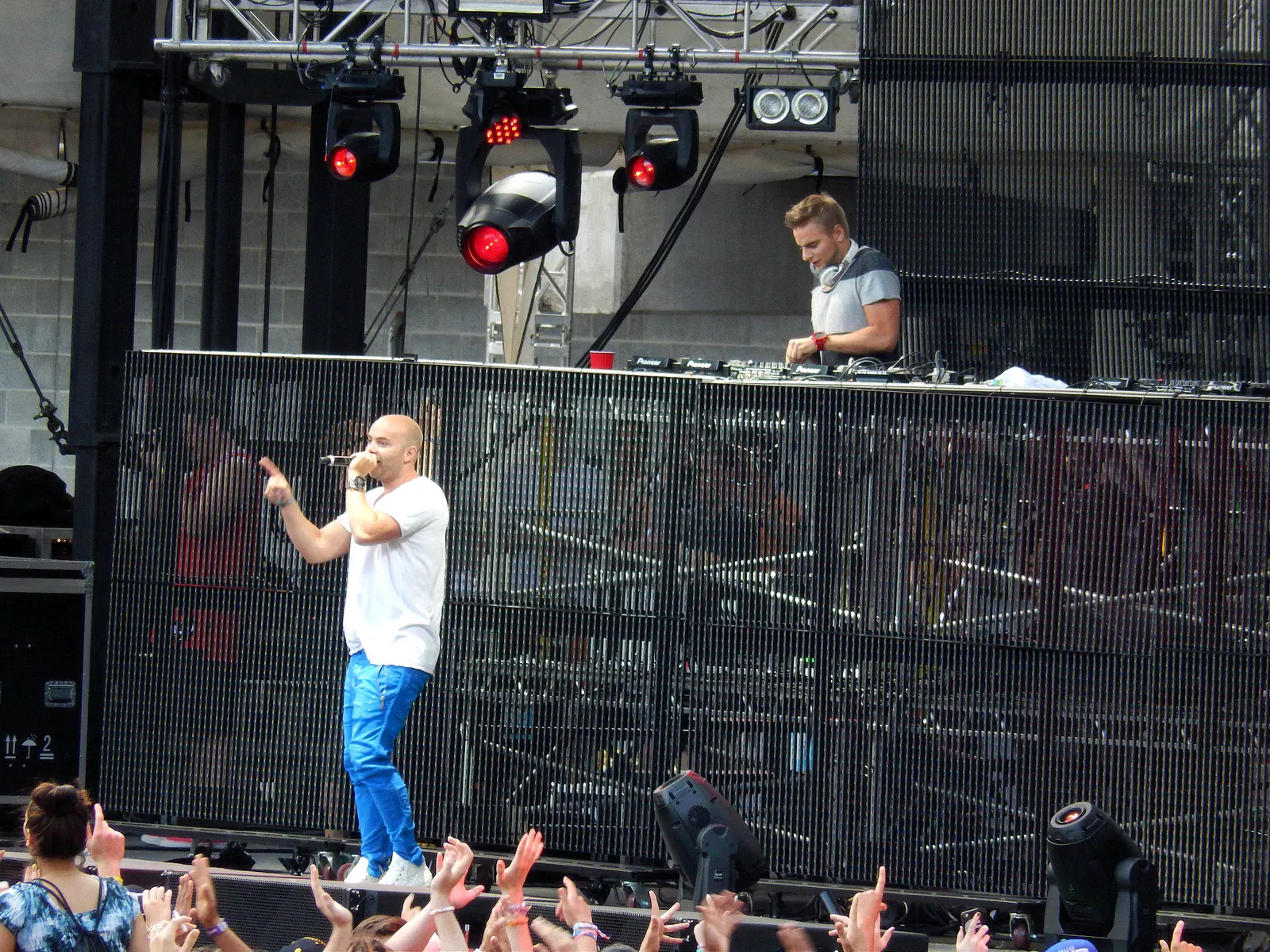
Return to hardstyle and hybrids, 2017-2023
The late 2010s brought a return to the core sound. Headhunterz announced at Defqon.1 in June 2017 that he was coming back to hardstyle, and released “Destiny” that September. In 2018 Coone became the first hardstyle artist on the Tomorrowland main stage.
Hybrids multiplied in the same years. Sub Zero Project mixed psystyle kicks into euphoric and raw structures and wrote the Defqon.1 anthem of 2023, “Path of the Warrior”. Showtek returned to hardstyle in 2023, playing Qlimax and releasing “360 Yellow”. The Prophet, whose Scantraxx label had shaped the early years, played his last set at Defqon.1 on 25 June 2023.
Fewer events, same core, 2024 onward
Qlimax ended after 2024. Q-dance announced the closure on 25 July 2024 and the last edition took place on 16 November 2024. Q-dance continues Defqon.1 and Dominator, and Scantraxx, Dirty Workz and Q-dance keep releasing new music.
Characteristics
Three elements identify a hardstyle track. The kick is distorted and shaped by equalisation and layering until it plays a note of the key, so it also acts as the bass line. The reverse bass fills the space between kicks. The break carries the melody, usually a supersaw lead in the euphoric styles and a harsh screech texture in rawstyle.
A track follows a long arrangement of intro, mid-intro, break, climax, mid-outro and outro, designed for DJs to blend and for crowds to wait through a build to the drop.
Instruments and production
Hardstyle is made inside a computer. Producers shape a single kick sample through distortion, pitching and EQ for hours, because that sound defines the track.
Mainstream success
Hardstyle’s mass audience is largely a live one. Qlimax filled stadium-sized rooms and Defqon.1 grew into a multi-day festival, while the crossovers were occasional: “Get Loose” reached EDM audiences through OWSLA, and Coone’s Tomorrowland slot brought the sound to a major international stage.
Notable recordings
“Shizzle My Dizzle” is remembered as the track where the early hardcore-influenced sound became a crowd song. “CTRL.ALT.DELETE” fixed the melodic festival sound in 2009. “Destiny” is the record that carried a major artist back into the scene.
Culture
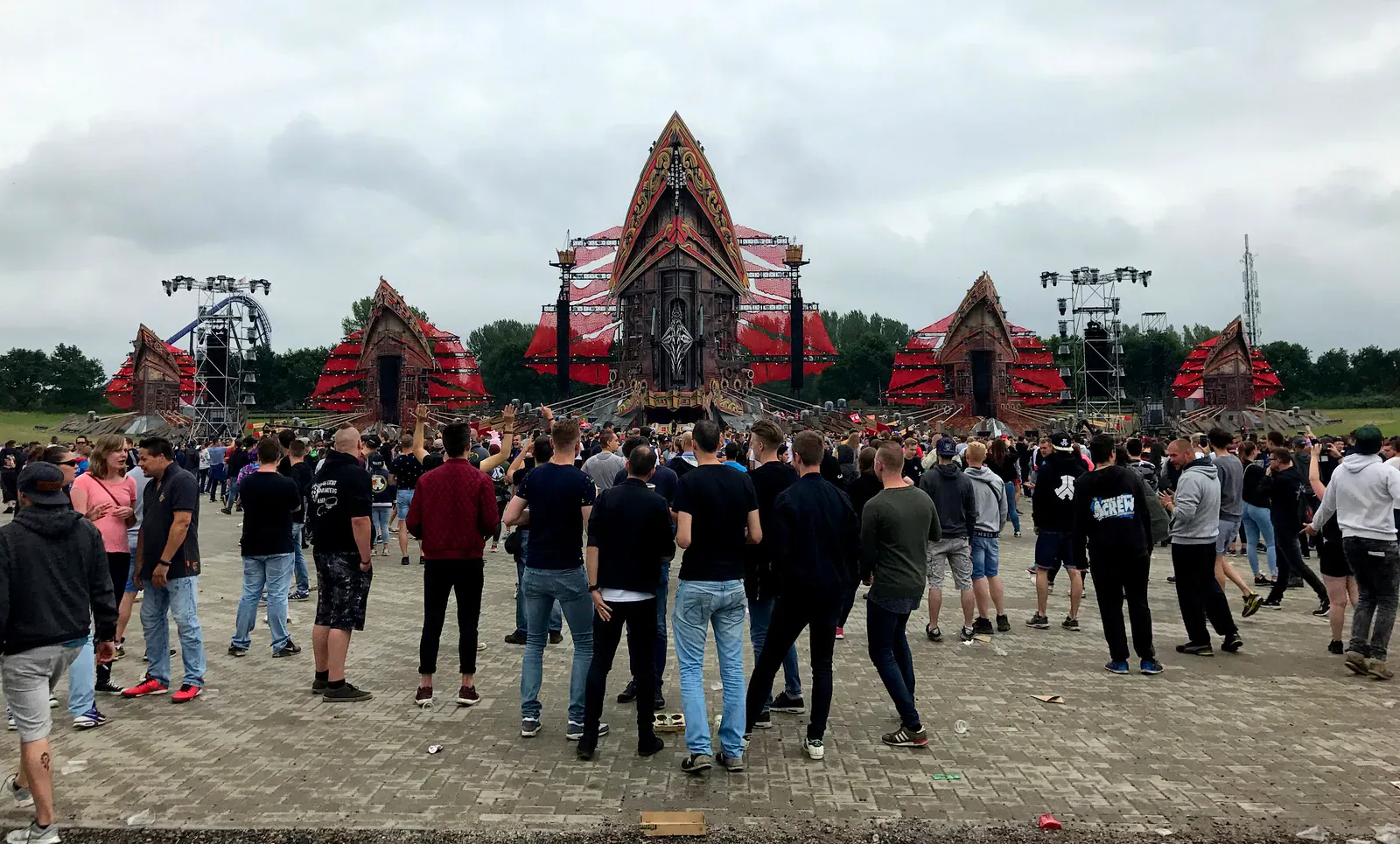
Hardstyle audiences wear club and artist merchandise, and Defqon.1 gives each hard dance style its own coloured stage. The anthem and the end show are rituals: Qlimax and Defqon.1 each commission one official track per edition, and every Defqon.1 closes with a show built around it.
The scene has also faced the costs of large events. Defqon.1 Australia ended in 2018 after overdose deaths and regulatory changes.
Legacy
Hardstyle established a model that other hard dance scenes copied: a branded event, a yearly anthem and a closing show. It also left a family of subgenres, from euphoric hardstyle and rawstyle to psystyle and trapstyle, that still release on a regular schedule. Its sound sits between techno and trance, and its dubstyle episode links it to dubstep. It belongs to the wider electronic music family.
Misconceptions
One myth says hardstyle is only a Q-dance product. Q-dance registered the name in 2002 and runs its biggest events, but Scantraxx was founded the same year by The Prophet, Dirty Workz followed in Belgium in 2006, and Italian producers such as Technoboy took part from early on.
A second myth treats hardstyle as one sound. Euphoric hardstyle is melodic, rawstyle is dark with few or no melodies and many screeches, and dubstyle borrows wobble bass lines from dubstep, so tracks under the same name can feel very different.
A third myth says hardstyle never left the Netherlands. Defqon.1 Australia ran from 2009 to 2018, Coone played the Tomorrowland main stage in 2018, and Showtek released on a mainstream EDM label in 2013.
Frequently asked questions
What is hardstyle music?
Hardstyle is a hard dance genre with a distorted, pitched kick drum, an offbeat reverse bass and synth melodies. It began around 1999 to 2002 in the Netherlands, Belgium and Italy.
What is reverse bass in hardstyle?
Reverse bass is an offbeat bass note that sits inside the same beat as the kick. Hardstyle took the idea from hard trance, and it gives the genre its rolling pulse.
What is the difference between euphoric hardstyle and rawstyle?
Euphoric hardstyle, which took shape from about 2010, uses emotional melodies and heavily pitched kicks. Rawstyle is darker, has little or no melody and draws on hardcore and gabber.
What are Defqon.1 and Qlimax?
Defqon.1 is a multi-day hard dance festival, held at Walibi Holland in Biddinghuizen since 2011. Qlimax was an indoor night event in the GelreDome in Arnhem that ran until its final edition in November 2024. Both released one official anthem per year.
Sound
Sound sheet
Anatomy of a track
| # | Part |
|---|---|
| 1 | Intro |
| 2 | Mid-intro |
| 3 | Break |
| 4 | Climax |
| 5 | Mid-outro |
| 6 | Outro |
Signature sounds
- Pitched, distorted kick as bass line
- Offbeat reverse bass
- Screeches in rawstyle
- Supersaw lead on the break melody
Techniques
- Kick pitching
- Reverse bass
- Screech kicks and leads
- Supersaw layering
Scenes
Where it happened
Where and when the sound lived: one bar per city on a shared timeline.
Europe
Oceania
Active scenes
Peak 7, 2009-2018
Qlubtempo, named as the first hardstyle event, was held here.
Hometown of Headhunterz, Noisecontrollers and Wildstylez.
Qlimax was held in the GelreDome from 2003 until 2024.
Defqon.1 was held on the Almeerderstrand site before 2011.
Defqon.1 home at Walibi Holland, under contract through 2032.
Technoboy and Tuneboy, early Italian hardstyle producers, come from here.
Coone and the Dirty Workz label are Belgian hardstyle anchors.
Defqon.1 Australia ran here until the 2018 shutdown.
Venues and places
Arnhem, 2003 to 2024. Home of Qlimax from 2003 until the event ended in 2024.
Biddinghuizen, 2011 to today. Multi-day hard dance festival with colour-coded stages.
Almere, 2003 to 2010. Beach site of the first Defqon.1 editions.
Penrith, 2009 to 2018. Venue of Defqon.1 Australia.
Culture
Culture markers
- Endshow and anthem
Each Defqon.1 closes with an end show built around that year's anthem.
Ritual - Yearly anthems
Qlimax and Defqon.1 each commission one official track per edition.
Ritual - Colour-coded stages
Defqon.1 gives each hard dance style its own coloured stage.
Artwork
Media
Key media
- 2025Defqon.1: de magie van de eindshow
by VPRO 3voor12. Dutch documentary on how the Defqon.1 closing show is made.
Film
Glossary
Terms on this page
Official track of one Qlimax or Defqon.1 edition, released each year.
2010 fusion of hardstyle and dubstep with reversed wobble bass lines.
From about 2010, a melodic style with emotional leads and heavily pitched kicks.
Distorted kick shaped by EQ and layering so that it plays a note of the track.
Darker hardstyle with little or no melody and many screeches, drawing on hardcore and gabber.
Offbeat bass note that sits inside the same beat as the kick.
Dissonant, high synth sound used heavily in rawstyle.
Electronic family