Horrorcore
Horrorcore is hip-hop built on horror-themed, darkly transgressive lyrics and imagery, formed in the late 1980s in Houston, Detroit and Memphis.
Detroit, 1989
Hip Hop family
Born
1989
Detroit
Subgenres
2
Documented branches
Links
12
Genres it drew on or shaped
Tempo
70-95 BPMLineage
Family tree
Grew out of
- Hardcore hip hop
Derived from
- Gangsta rap
Derived from
Influenced by
Shock rockDeath metal
Detroit, 1989
Horrorcore
Led to (2)
Timeline
Era by era
From the first sparks to today. Select a dot to read the story behind it.
- Horror-themed precursors
1980 to 1988
- Houston, Detroit and the first records
1988 to 1993
- Mainstream attempt
1994 to 1999
- Underground and online scene
2000 to today
Eras
Moments
- 1 Horror-themed precursors, 1980 to 1988
- 2 Houston, Detroit and the first records, 1988 to 1993
- 3 Mainstream attempt, 1994 to 1999
- 4 Underground and online scene, 2000 to today
1980
Horror-themed precursors
Jimmy Spicer's Dracula story, Dana Dane's Nightmares, Ganxsta N.I.P.'s psycho rap and the Freddy Krueger novelty tracks of 1988 put horror imagery into rap before the genre had a name.
- 1980Adventures of Super RhymeJimmy Spicer's single, with a long segment about meeting Dracula, is cited as proto-horrorcore.
- 1986Geto Boys form in HoustonThe Houston group, later signed to Rap-A-Lot, begins; Ganxsta N.I.P. also starts performing horror-themed lyrics he calls psycho rap.
1988
Houston, Detroit and the first records
The Geto Boys' Making Trouble, Esham's Boomin' Words from Hell and the formation of Insane Clown Posse set the template, and the term horrorcore first appeared on a 1991 KMC album.
- 1988A Nightmare on My StreetDJ Jazzy Jeff and the Fresh Prince release a Freddy Krueger story; the Fat Boys record a similar Nightmare on Elm Street tie-in.
- 1988Making Trouble by the Geto BoysIts track Assassins is cited by Violent J as the first recorded horrorcore song.
- 1989Esham's Boomin' Words from HellA 16-year-old Detroit rapper releases a horror-heavy debut; he calls his style acid rap.
- 1989Insane Clown Posse forms in Detroit
- 1991The term horrorcore is printedIt first appears on KMC's album Three Men With the Power of Ten.
- 1991Mind Playing Tricks on MeThe Geto Boys single about paranoia peaks at number 23 on the Billboard Hot 100.
- 1991Psychopathic Records is foundedAlex Abbiss and Insane Clown Posse start the Detroit-area label.
1994
Mainstream attempt
Gravediggaz, Flatlinerz, Three 6 Mafia and Insane Clown Posse released their best-known albums as the style drew press attention and blame for violent crimes.
- 1994Gravediggaz release 6 Feet DeepThe New York group's debut (Niggamortis abroad) and Flatlinerz's album bring horrorcore wider attention.
- 1995Mystic Stylez by Three 6 MafiaThe Memphis debut covers drug use, murder and Luciferianism; the film The Fear also appears with an all-horrorcore soundtrack.
- 1996Colorado killings tied to Brotha Lynch HungA Colorado teenager who killed his roommates was reported to be a fan of Locc 2 da Brain; no evidence of causation was given.
- 1999Columbine and Insane Clown PosseThe group is named as a possible influence on the shooters, and responds publicly.
2000
Underground and online scene
Detroit's Psychopathic roster, Tech N9ne and an internet network of artists kept the style alive, with an annual free Halloween compilation running since 2003.
- 2003Devilz Nite compilations beginEvery Halloween since 2003, artists worldwide have released a free online compilation.
- 2019There Existed an Addiction to BloodThe experimental trio clipping. release an album described as a transmutation of horrorcore.
Listening path
Start listening
A short path from an easy way in to the deep end. Thumbnails come from YouTube; the player loads only when you press play.
- 01
Geto Boys, 1991
The psychological-horror track from We Can't Be Stopped, a Hot 100 hit.
- 02
Gravediggaz, 1995
Single from 6 Feet Deep, produced by Prince Paul.
- 03
Three 6 Mafia, 1997
Memphis dark rap from the group behind Mystic Stylez.
Facts
| Family | Hip Hop |
| Origin | Detroit, United States |
| Emerged | Late 1980s to early 1990s |
| Status | Active |
| Tempo | 70 to 95 BPM |
| Grew out of | Hardcore hip hop, Gangsta rap |
| Subgenres | 2 |
Horrorcore is a subgenre of hip-hop based on horror-themed and often darkly transgressive lyrics and imagery.
It grew out of hardcore hip-hop and gangsta rap in the late 1980s, when rappers in Houston, Detroit and Memphis began pushing violence beyond realistic street crime into the occult, madness and slasher-film gore. Its beats are moody and minor-key, and its writing often borrows from horror film scores.
Origins
Horror imagery reached rap before the genre had a name. Jimmy Spicer’s 1980 single “Adventures of Super Rhyme” includes a long segment about meeting Dracula and is cited as proto-horrorcore. Dana Dane’s “Nightmares” told a frightening story, and from 1986 Ganxsta N.I.P. in Houston performed horror-themed lyrics he called psycho rap, though he was not considered horrorcore until the term spread. In 1988 DJ Jazzy Jeff and the Fresh Prince released “A Nightmare on My Street” about Freddy Krueger, and the Fat Boys recorded a tie-in for a Nightmare on Elm Street film. Those were novelties. The same year, His Majesti released “Twelve Strokes Till Midnight,” one of the first records made specifically as horrorcore.
The founding records came from the Geto Boys and Esham. Violent J of Insane Clown Posse, in his book Behind the Paint, names “Assassins” from the Geto Boys’ 1988 debut Making Trouble as the first recorded horrorcore song. The Houston group went on with “Mind of a Lunatic” on Grip It! On That Other Level (1989) and, in 1991, We Can’t Be Stopped, with the paranoia and psychological horror of “Chuckie” and “Mind Playing Tricks on Me,” which peaked at number 23 on the Billboard Hot 100. The group is also filed under Southern hip hop.
In Detroit, Esham released Boomin’ Words from Hell in 1989, at 16, and became the main influence on Midwest horrorcore, although he rejects the word and calls his style acid rap. He co-founded the horror group Natas in 1992. The term itself first appeared in print on the 1991 KMC album Three Men With the Power of Ten. Kool Keith claimed to have invented horrorcore and drew attention to horror-influenced rap through Ultramagnetic MC’s and his 1996 solo debut Dr. Octagonecologyst.
Detroit, 1989-1999
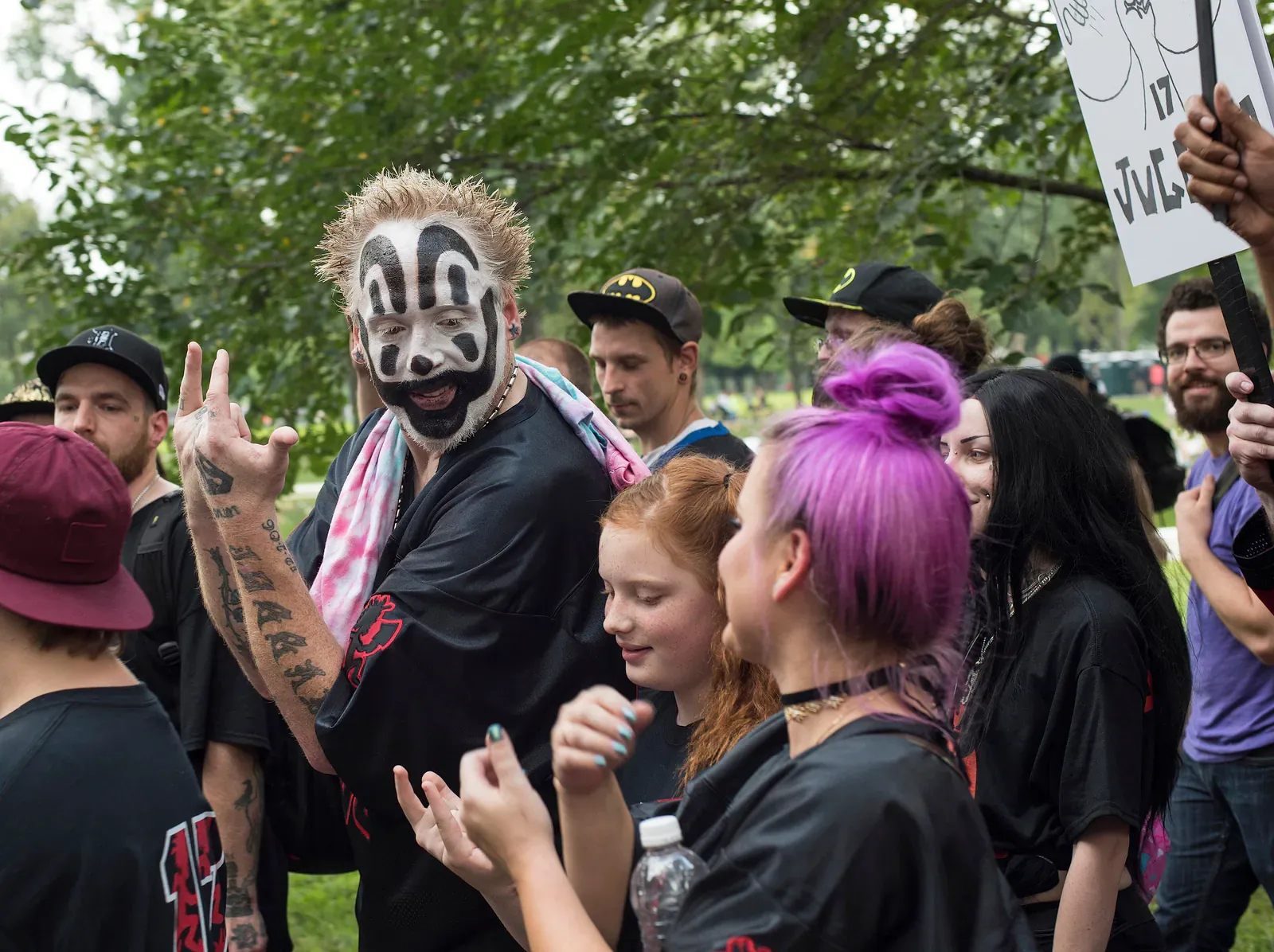
Esham and his brother James H. Smith founded Reel Life Productions in 1989, and it released much of his catalogue. Insane Clown Posse formed in Detroit the same year and founded Psychopathic Records in 1991 with Alex Abbiss. Their 1992 debut Carnival of Carnage and the 1995 album Riddle Box, which holds their biggest radio hit “Dead Body Man,” built a carnival-themed horror style around the duo of Violent J and Shaggy 2 Dope. Esham later recorded for Psychopathic too. In Detroit horrorcore became the dominant local style of hip-hop, and the city’s acts, including Twiztid, were commercially successful across the United States. The wider Midwest hip hop underground helped carry it.
New York and the 1994-1995 attempt at the mainstream
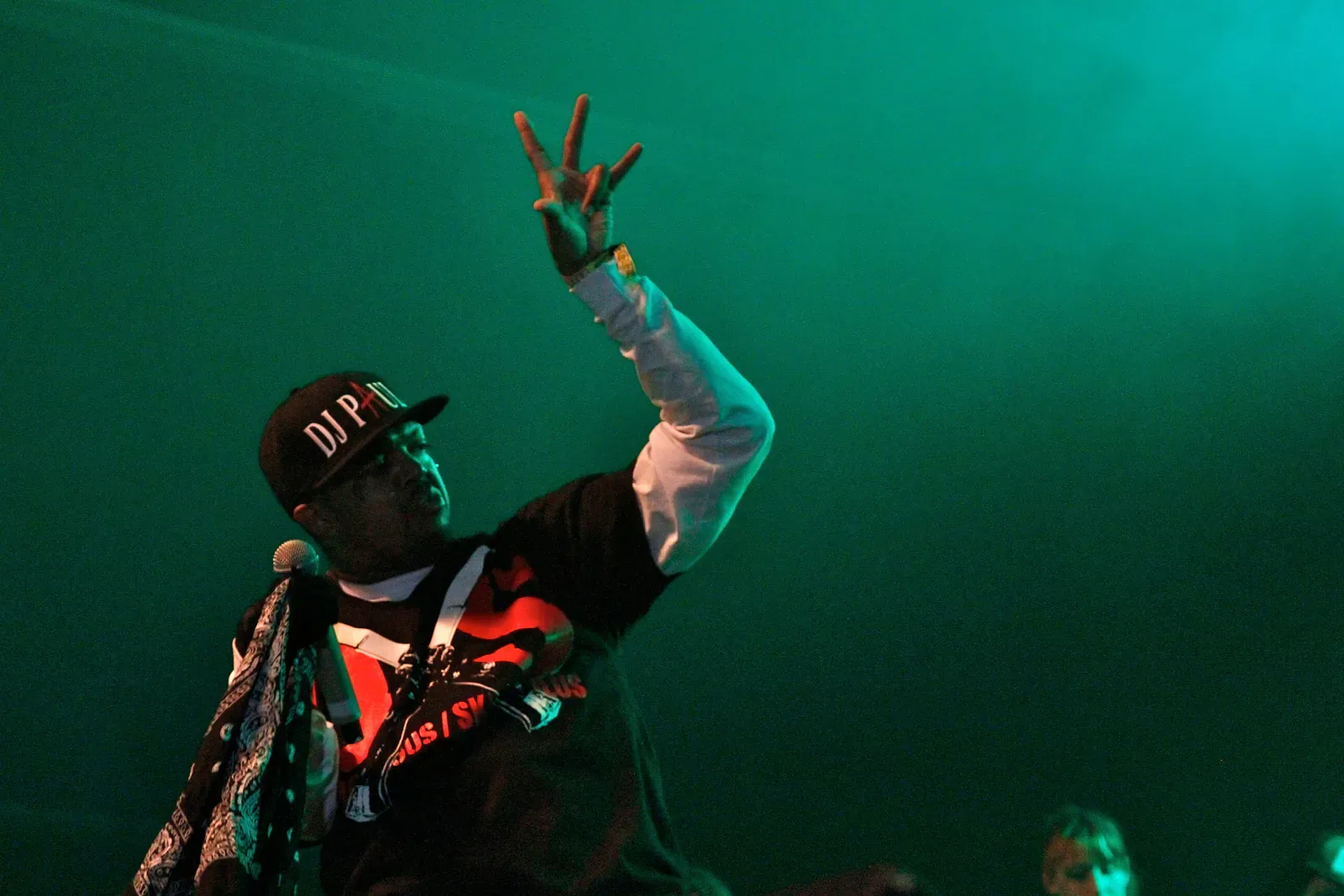
Two 1994 albums, Flatlinerz’s U.S.A. (Under Satan’s Authority) and Gravediggaz’s 6 Feet Deep (released abroad as Niggamortis), gave horrorcore wide attention. Gravediggaz were a New York group of Prince Paul, Frukwan, Too Poetic and RZA, who recorded as the Undertaker, the Gatekeeper and the Grym Reaper and mixed hardcore rap with horror elements and dark comedy. Their single “1-800 Suicide” followed in 1995. That year also brought the independent film The Fear, whose soundtrack consisted entirely of horrorcore songs, including Insane Clown Posse’s “Dead Body Man,” and Three 6 Mafia’s debut Mystic Stylez, covering drug use, ritualistic sex, mass murder, torture and Luciferianism. Bone Thugs-N-Harmony’s E. 1999 Eternal, also from 1995, carries occult tales, and tension arose between Bone Thugs and Three 6 over their presumed similarities.
Memphis, 1995-1999
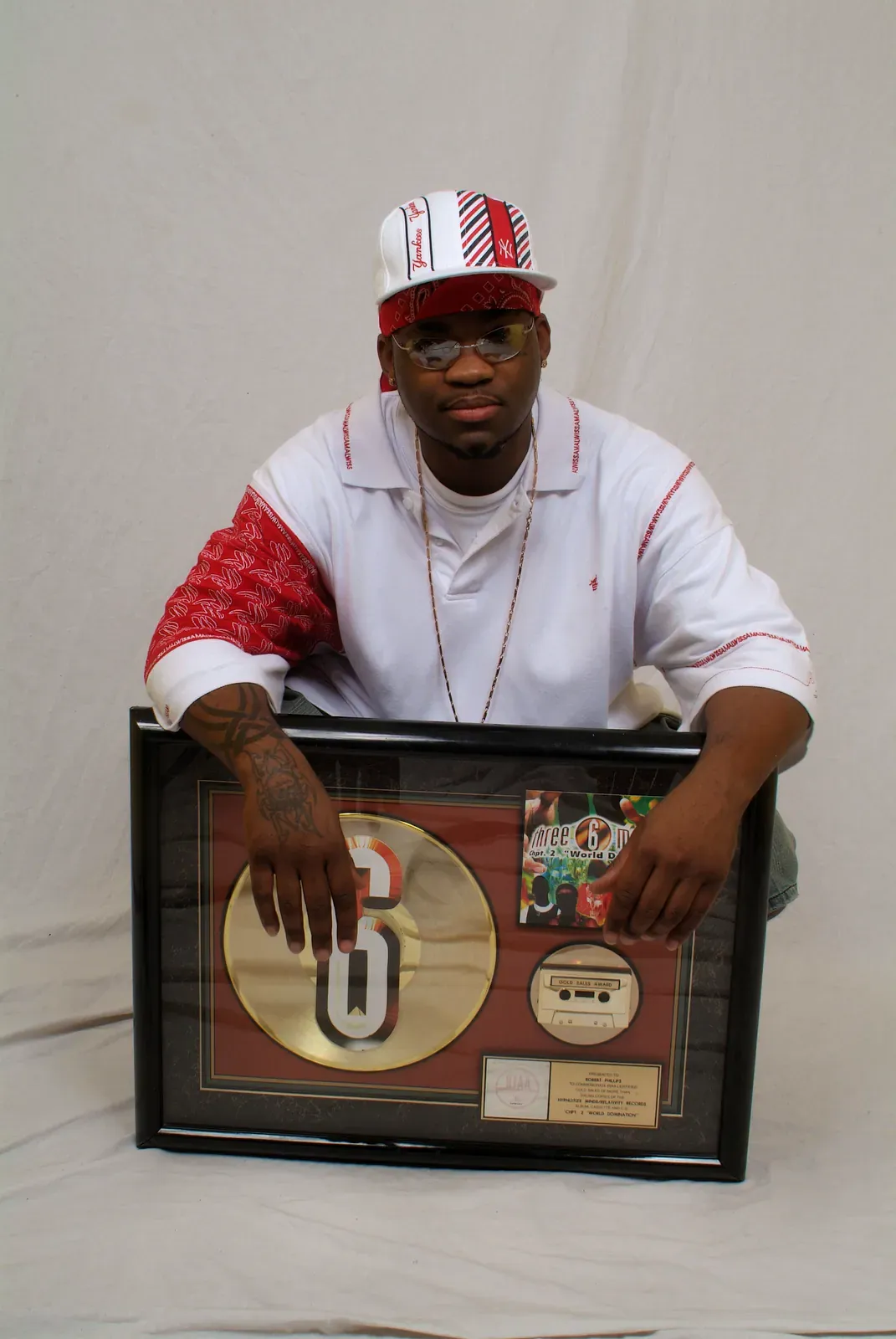
Three 6 Mafia took the style to Memphis. The group’s label, Hypnotize Minds, was founded by DJ Paul and Juicy J in 1997 and became the main engine of Memphis rap. “Tear da Club Up ’97” appeared on Chapter 2: World Domination the same year. The dark, slow Memphis sound later fed trap, while the horror imagery of Mystic Stylez is where the group meets horrorcore.
Characteristics
Lyrics focus on dark, violent, gothic and macabre subjects: death, psychosis, mental illness, satanism, self-harm, cannibalism, mutilation, murder, drug abuse and supernatural or occult themes. Entertainment Weekly called horrorcore a blend of hardcore rap and bloodthirsty metal in 1995, and the writing is sometimes compared with death metal, which gave rise to the label “death rap”. Not every artist leans on gore. Some prefer subtler psychological horror, and some portraits of mental illness and addiction are realistic rather than supernatural. Beats are moody and hardcore, music videos use dark imagery, and songs are often based on horror film scores.
Instruments and production
Horrorcore has no fixed set of gear. Its production is defined by sampled or imitated horror film scores, minor-key menace and, in Esham’s and Insane Clown Posse’s case, rock elements in the beats. Canonical recordings sit slowly by hip-hop standards, with felt tempos of roughly 70 to 95 beats per minute.
Mainstream success
Horrorcore was never broadly popular. Rolling Stone called it a short-lived trend in 2007 that generated “more shlock than shock,” although in Detroit it stayed dominant. The Geto Boys’ “Mind Playing Tricks on Me” was its biggest hit, and Insane Clown Posse have earned two platinum and five gold albums. Tech N9ne’s 2001 album Anghellic was named an influential record for the genre by a horror website in 2009, and his label Strange Music, founded in 1999, works in the same Midwest territory. A 2004 BBC documentary, Underground USA, described the genre as having a massive following across the United States and spreading to Europe.
Notable recordings
“Mind Playing Tricks on Me” turns horror inward: paranoia and a mind coming apart, rather than monsters. “1-800 Suicide” by Gravediggaz works through dark humour, and its video differs from the album version, with anti-suicide lyrics and a real hotline number at the end. “Dead Body Man” was Insane Clown Posse’s biggest radio hit and appears on The Fear soundtrack.
Culture
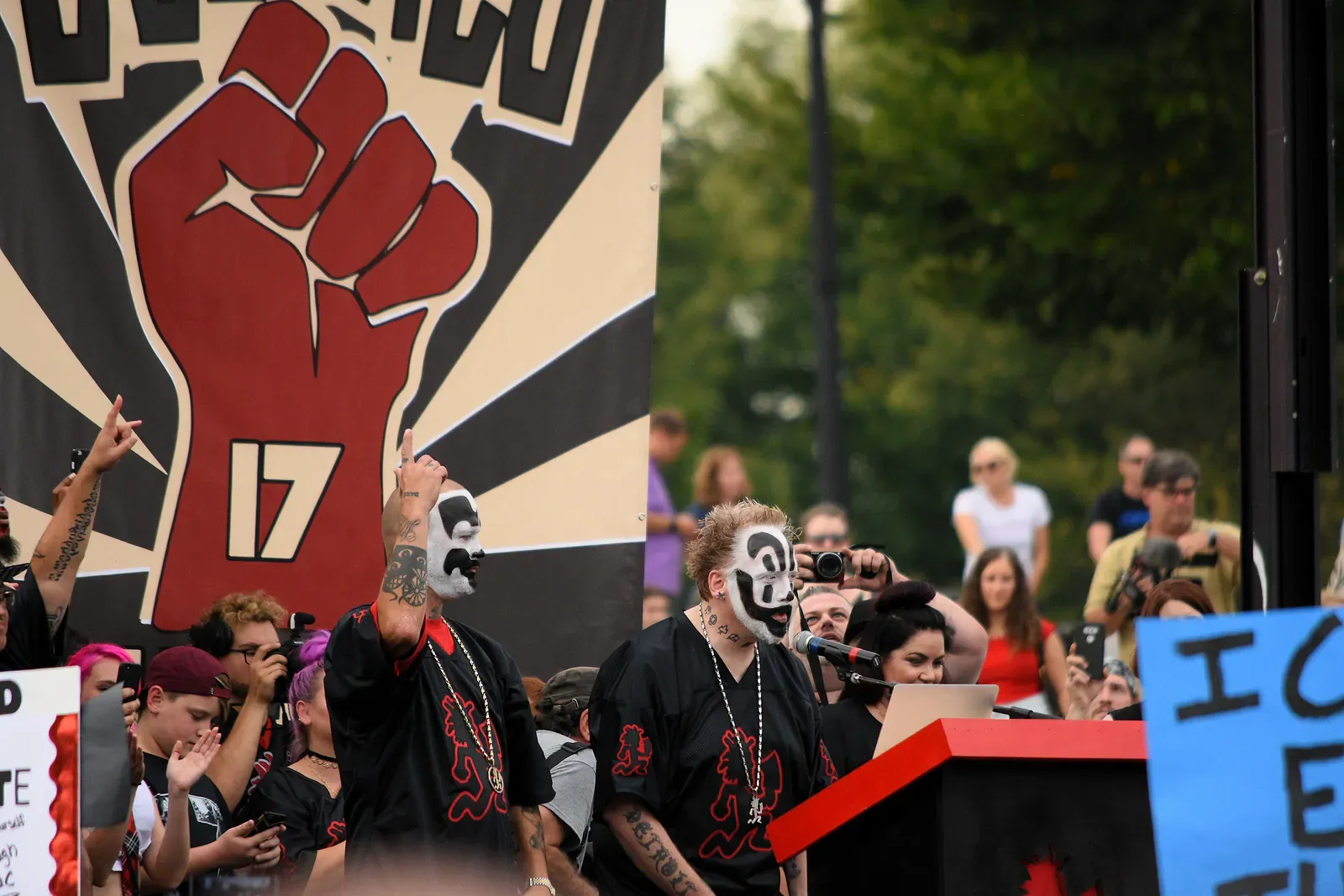
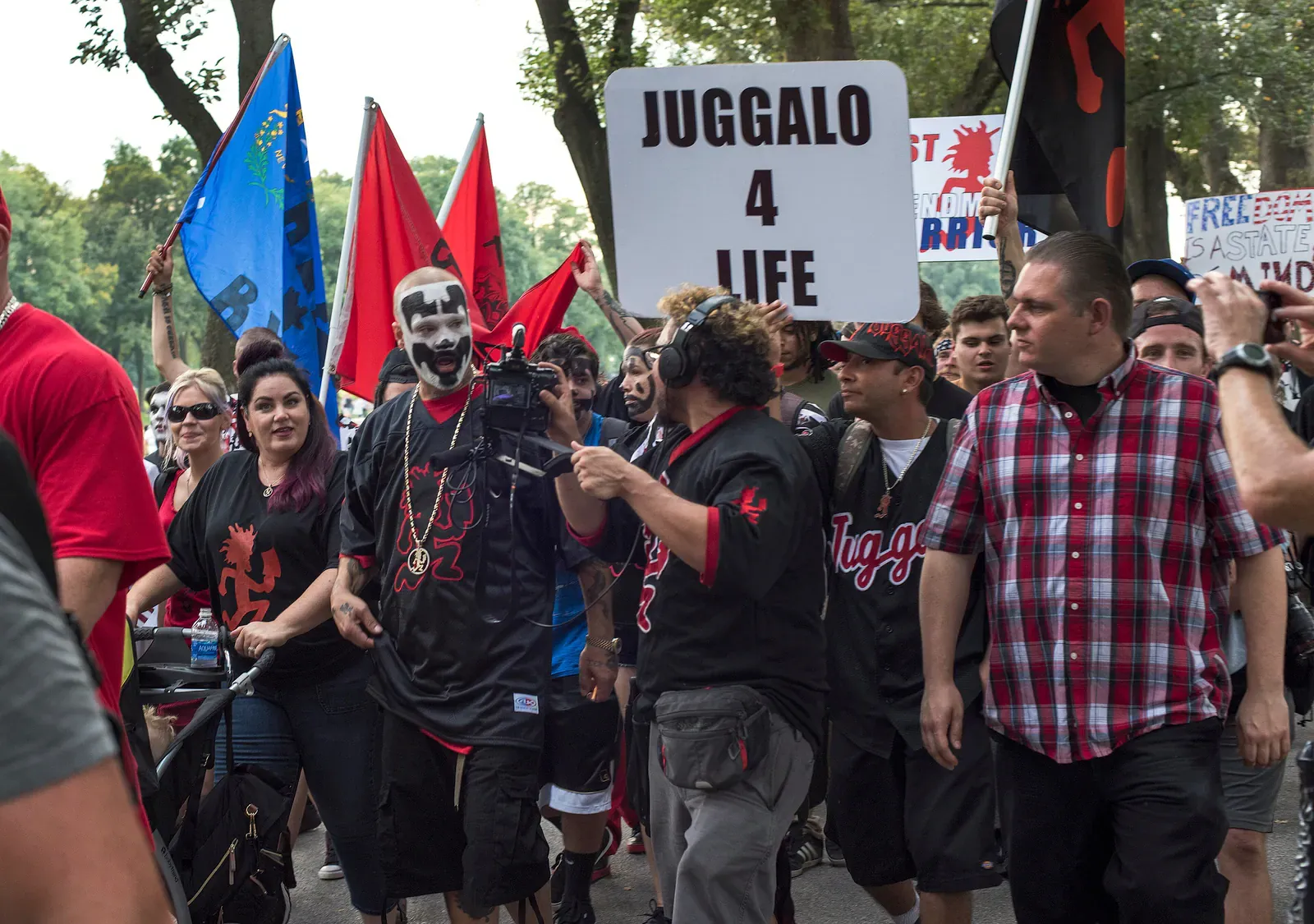
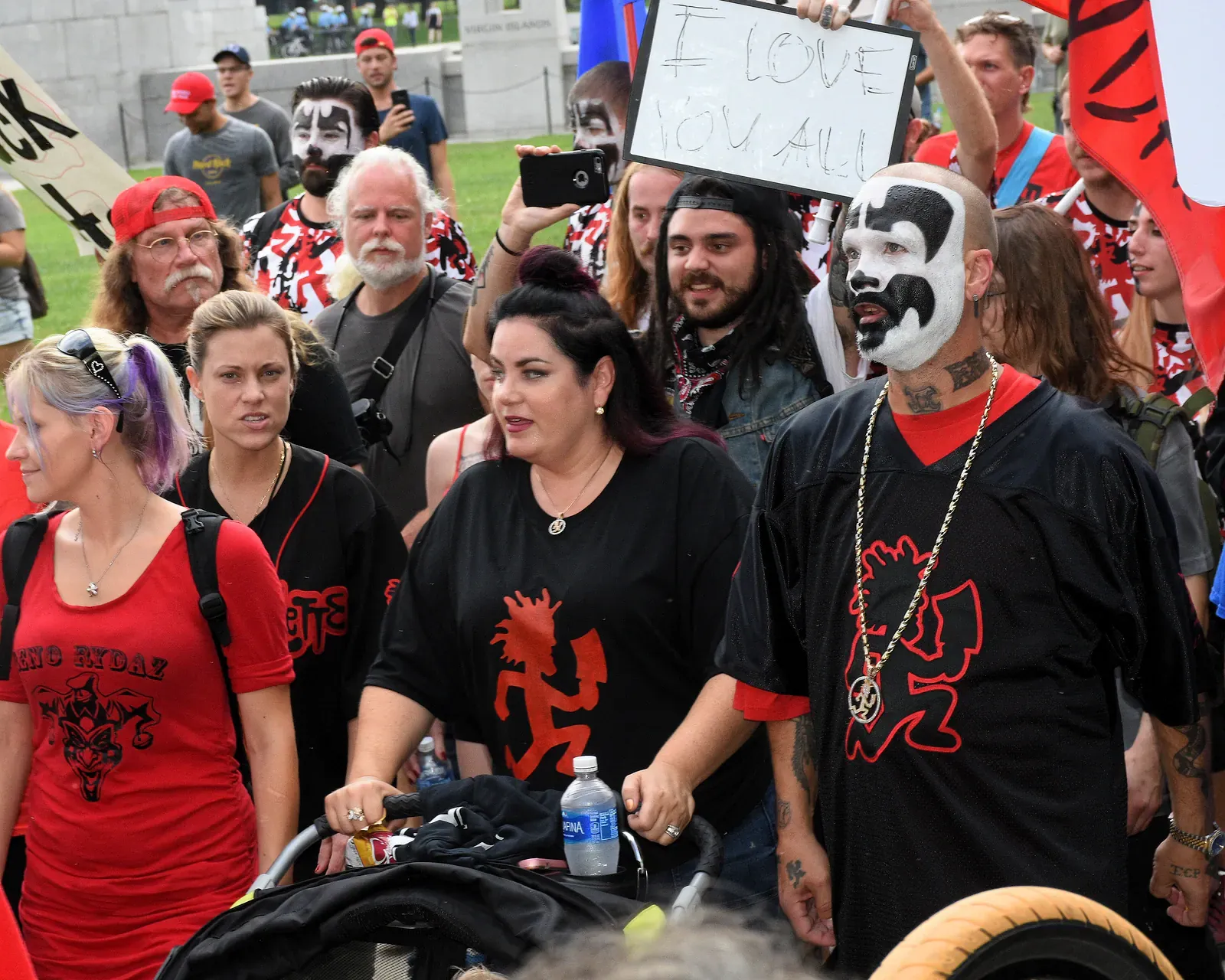
Insane Clown Posse’s fans, called Juggalos, share an iconography built around a man with a meat cleaver. Since 2003, horrorcore artists around the world have released a free compilation, Devilz Nite, online every Halloween. The genre has thrived in internet culture, and in 2019 the experimental trio clipping. released There Existed an Addiction to Blood, described as a transmutation of horrorcore.
Controversy
Horrorcore has drawn blame for violent crime. In September 1996 an 18-year-old in Bayfield, Colorado, killed his roommates after taking methamphetamine and listening repeatedly to Brotha Lynch Hung’s “Locc 2 da Brain”; his minister suggested the music played a role but offered no evidence. After the 1999 Columbine shooting, Insane Clown Posse was named as a possible influence, and the duo pointed out that a friend of the shooters, a Juggalo, had introduced one of them to their music. Some United States police departments have linked Juggalo gangs to violent crime, though a 2017 Denver police guide admitted it lacked data to support its claims. Experts widely disagree on whether violent music has any effect on listeners.
Legacy
Horrorcore lives on mostly in the underground, but its imagery has spread into other genres, and its themes of violence, mental illness and drug abuse have been used to talk about real-world problems. Detroit’s two strands, acid rap and Juggalo rap, remain active, and Psychopathic Records released new Insane Clown Posse and Ouija Macc records in 2025.
Misconceptions
One common claim is that horrorcore began with Insane Clown Posse. The Geto Boys recorded “Assassins” in 1988 and Esham released his debut in 1989, both before Insane Clown Posse’s first album in 1992. A second is that the music causes violence. Cases such as the 1996 Colorado killings were linked to it by commentators, but the claim there came without evidence, and researchers disagree about any effect. A third is that it is all supernatural horror. Much of it is psychological, focusing on mental illness and addiction, and some artists, Esham among them, reject the horrorcore label.
Frequently asked questions
What is horrorcore?
Horrorcore is a subgenre of hip-hop built on horror-themed, often transgressive lyrics about death, madness, the occult and slasher-film violence, over moody hardcore beats.
Who started horrorcore?
The Geto Boys, Ganxsta N.I.P. in Houston and Esham in Detroit are its early originators. Insane Clown Posse, Gravediggaz and Flatlinerz followed, and the term horrorcore first appeared on KMC’s 1991 album Three Men With the Power of Ten.
What is acid rap?
Acid rap is Esham’s name for his Detroit style, which mixes rap with horror and religious imagery and is the template for Detroit horrorcore.
Is horrorcore connected to heavy metal?
It borrows from it: critics have described it as hardcore rap blended with bloodthirsty metal, and its lyrical subjects are compared with death metal.
Sound
Sound sheet
Signature sounds
- Samples and imitations of horror film scores
- Moody, hardcore beats under gore or occult narratives
- Dark imagery in music videos
Techniques
- Horror score sampling
- Slasher-style narration
- Psychological horror
- Rock and metal blending
Keys and modes
Minor keys. Minor-key menace is a stated trait of the style.
Vocals
Hardcore rap delivery, often through stage personas such as Gravediggaz's Undertaker, Gatekeeper and Grym Reaper.
Scenes
Where it happened
Where and when the sound lived: one bar per city on a shared timeline.
North America
Active scenes
Peak 5, 1995-2025
Home of Esham, Insane Clown Posse and Twiztid; horrorcore is the dominant local style of hip-hop.
Geto Boys and Ganxsta N.I.P. brought occult and psychological horror into Southern rap.
Three 6 Mafia's Mystic Stylez brought Luciferian imagery to Memphis rap.
Gravediggaz and Kool Keith's horror-tinged hip-hop.
Brotha Lynch Hung's gore-heavy releases began here.
Culture
Culture markers
- Juggalo fandom
Insane Clown Posse fans use a man with a meat cleaver as a shared symbol.
Ritual - Horror-film visuals
Videos use dark imagery and base songs on horror film scores.
Artwork - Halloween releases
Artists worldwide release free compilations every 31 October.
Ritual
Media
Key media
- 1995The Fear
by Various. Independent horror film with a soundtrack made entirely of horrorcore songs.
Film - 2003Devilz Nite
by Various. Free annual online horrorcore compilation released every Halloween.
Compilation
Glossary
Terms on this page
Esham's own name for his Detroit style of horror, metal and religious imagery.
The free online horrorcore compilation released every Halloween since 2003.
A fan of Insane Clown Posse.
Ganxsta N.I.P.'s label for his horror-themed lyrics, used from 1986.
Brotha Lynch Hung's name for his more graphic gore and cannibalism sub-style.
Hip Hop family