Lăutărească music
Lăutărească music is the professional tradition of Romani lăutari in Romania, played by tarafs led by a violin primaș at weddings since the 18th century.
Wallachia, 1570
European folk family
Born
1570
Wallachia
Subgenres
3
Documented branches
Links
7
Genres it drew on or shaped
Tempo
110-170 BPMLineage
Family tree
Grew out of
Influenced by
Romani music
Wallachia
Lăutărească music
Led to (4)
Timeline
Era by era
From the first sparks to today. Select a dot to read the story behind it.
- Court musicians and guilds
1570 to 1843
- Emancipation and dynasties
1844 to 1943
- State folklore and censorship
1944 to 1989
- Revival and world stages
1990 to today
Eras
Moments
- 1 Court musicians and guilds, 1570 to 1843
- 2 Emancipation and dynasties, 1844 to 1943
- 3 State folklore and censorship, 1944 to 1989
- 4 Revival and world stages, 1990 to today
1570
Court musicians and guilds
Romani lăutari play for princes, boyars and monasteries as slaves, then form town guilds in Craiova (1723), Iași (1761) and Huși (1795) that control the local market for musical services.
- 1570First explicit mention of a lăutarA Moldavian act of voivode Bogdan IV Lăpușneanu, granting estates with Romani slaves, records the word lăutar for the first time.
- 1723Craiova guildThe first recorded guild of lăutari appears in Craiova, followed by Iași in 1761 and Huși in 1795.
1844
Emancipation and dynasties
After slavery ends, families settle in villages and pass the craft from father to son. Virtuosos tour Europe after the 1889 Paris exposition, and the taraf takes root in rural communities.
- 1847Liszt meets Barbu LăutaruLiszt is reported to have heard the Iași guild head Barbu Lăutaru's taraf of violin, nai and cobza during his Romanian tour.
- 1847Emancipation of Romani slavesSlavery is abolished in Moldavia in 1844 and in Wallachia in 1847, freeing lăutari to settle and trade as musicians in villages.
- 1889Dinicu family at the Paris expositionIonică and Angheluș Dinicu perform at the 1889 Exposition Universelle, including the nai tune Ciocârlia.
- 1906Hora staccatoGrigoraș Dinicu writes the violin showpiece that becomes the best-known symbol of the tradition.
- 1932Electrecord foundedThe Romanian record company that later issues most state-era lăutărească albums is founded.
1944
State folklore and censorship
The communist state sponsors stage orchestras while policing everyday lăutari playing. Urban songs leave the radio, yet Electrecord records and wedding bands keep the tradition alive.
- 1949Orchestra Barbu Lăutaru foundedThe first state folk orchestra becomes the model for similar ensembles across communist Romania.
- 1973Film LăutariiEmil Loteanu's film portrays the legendary taraf leader Toma Alistar.
- 1974Romani origin erased from scholarshipScholarly literature stops mentioning Romani people, and commissions monitor the purity of the music.
1990
Revival and world stages
Taraf de Haïdouks and Fanfare Ciocărlia reach Western audiences and film, wedding bands adopt synthesizers, manele crowd the dance floor, and heritage bodies take up the craft.
- 1990Taraf de Haïdouks formsThe Clejani taraf forms and becomes one of the best-known lăutari groups after 1989.
- 1994Honourable Brigands, Magic Horses and Evil EyeCrammed Discs releases the Taraf de Haïdouks album that introduces the Clejani lăutari to Western listeners.
- 2002BBC Radio 3 World Music AwardTaraf de Haïdouks wins the Europe and Middle East category of the BBC Radio 3 Awards for World Music.
- 2025Cobza inscribed by UNESCOThe art of playing the cobza in Romania and Moldova joins the Representative List of Intangible Cultural Heritage.
Listening path
Start listening
A short path from an easy way in to the deep end. Thumbnails come from YouTube; the player loads only when you press play.
- 01
Taraf de Haïdouks, 1994
A fast Clejani hora; listen for the violin lead over cimbalom and accordion.
- 02
Taraf de Haïdouks, 2001
Shows the Turkish-Balkan layer of the repertoire through its modal turns and ornaments.
- 03
Fanfare Ciocărlia, 2001
The brass-band branch of the tradition from Moldavia, with trumpets leading the melody.
- 04
Taraf de Haïdouks, 2007
A later Taraf piece built on a repeating figure, with wind and string textures.
Facts
| Family | European folk |
| Origin | Wallachia, Romania |
| Emerged | Professional guild from late 18th century |
| Status | Active |
| Tempo | 110 to 170 BPM |
| Meter | 2/4 |
| Subgenres | 3 |
Lăutărească music (muzică lăutărească) is the professional music tradition of the Romanian lands, played by lăutari, who are mostly Romani musicians hired for weddings, village dances, christenings and funerals.
It is learned by ear inside families, performed by a taraf led by a first violin, and shaped by Romanian folk melody together with Ottoman-Balkan and Western European influences. It belongs to the European folk family and has been a working trade since at least the 18th century.
Origins
The word lăutar comes from lăută, a lute-type instrument and an early form of the cobza. A musician called an alăutar appears in the 16th century, and the term is first recorded explicitly in a Moldavian act of 1570, by which voivode Bogdan IV Lăpușneanu granted estates together with Romani slaves, among them lăutari.
The profession took shape under slavery, which lasted in the Romanian lands from the late 14th century until the mid-19th. Princes, boyars and monasteries owned Romani musicians and counted them among their craftsmen, so the words violinist, lăutar and “Gypsy” were often treated as synonyms.
Guilds and courts, 1723-1843
As towns grew, lăutari organised. The first recorded guild appeared in Craiova in 1723, followed by Iași in 1761 and Huși in 1795. Members paid taxes in return for control of the local market for musical services.
The Iași guild head Vasile Barbu, known as Barbu Lăutaru, became the best-remembered figure of the period. An account from the 19th century reports that Franz Liszt heard his taraf of violin, nai and cobza in January 1847 and was struck by his ability to reproduce a piano piece by ear.
Emancipation and dynasties, 1844-1943
Slavery ended in Moldavia in 1844 and in Wallachia in 1847. Freedom of movement let families settle in villages and make music their only occupation, and rural dynasties grew up in which skills passed from father to son under a code of professional secrecy. The folklorist Ovidiu Bîrlea called them rural conservatories.
The tradition also reached foreign audiences. After the 1889 Exposition Universelle in Paris, major tours followed in European, Russian and American cities. Ionică Dinicu and his father Angheluș played there, including the nai tune Ciocârlia attributed to Angheluș. In 1906 Ionică’s son Grigoraș Dinicu wrote the violin showpiece Hora staccato, and his violin arrangement of Ciocârlia became one of the symbols of the tradition. Electrecord, the Bucharest record company, opened in 1932.
State folklore and censorship, 1944-1989
After 1944 the communist state promoted stage-oriented concert tarafs and large folk orchestras, starting with the Orchestra Barbu Lăutaru in 1949, while placing everyday lăutari performance under administrative and ideological control.
The elite of Bucharest’s urban lăutari still became a privileged group, nicknamed the silk Gypsies, and singers Romica Puceanu and Gabi Luncă held prominent places on record and television. From 1974 scholarly writing on lăutărească music stopped naming Romani people, commissions policed the purity of the music, and urban songs left central restaurants and the radio. Only in the 1980s did Electrecord receive permission to issue four or five lăutărească records a year in substantial pressings. Those records outsold the officially promoted folklore albums they were meant to subsidise.
Characteristics
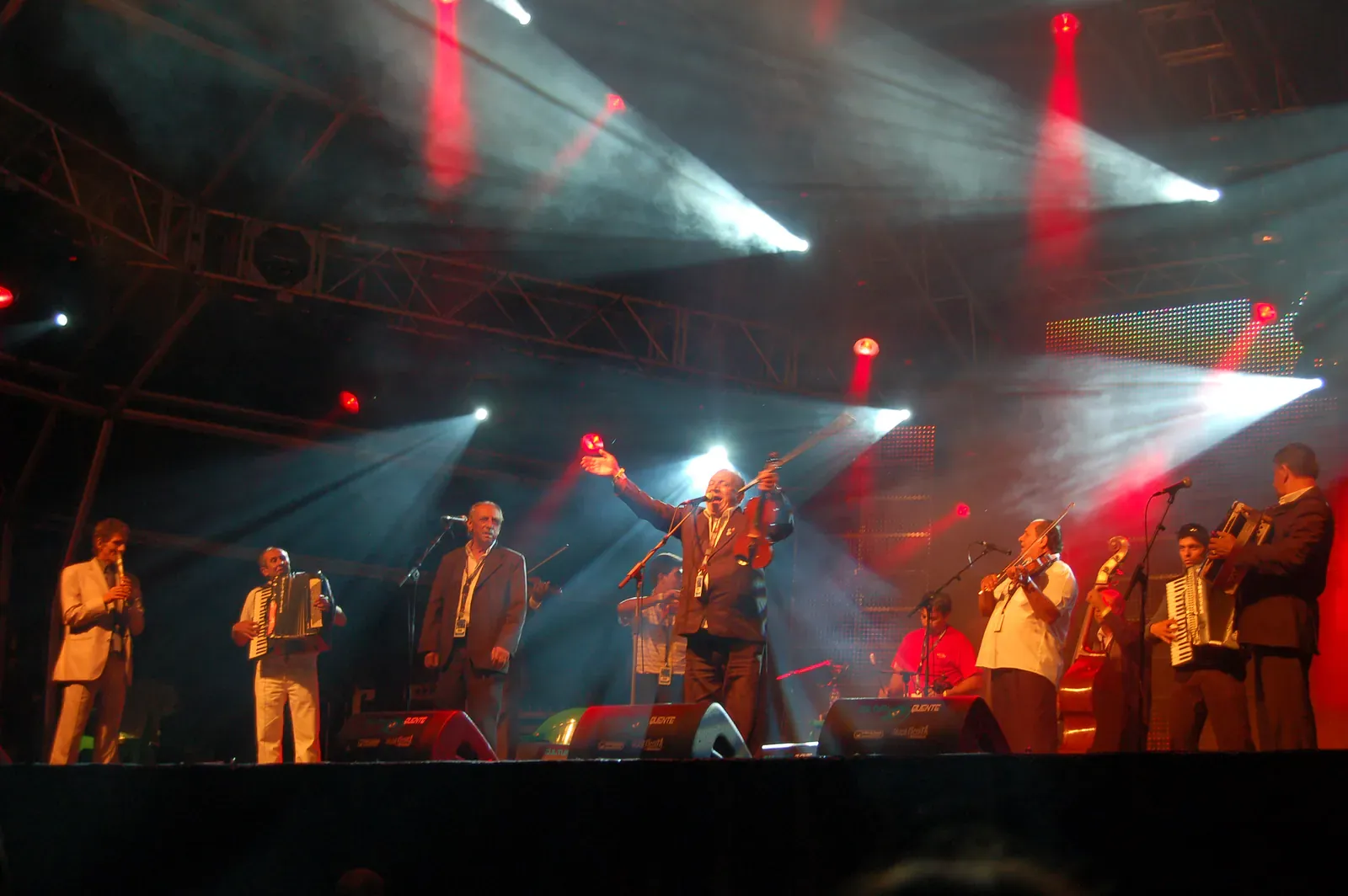
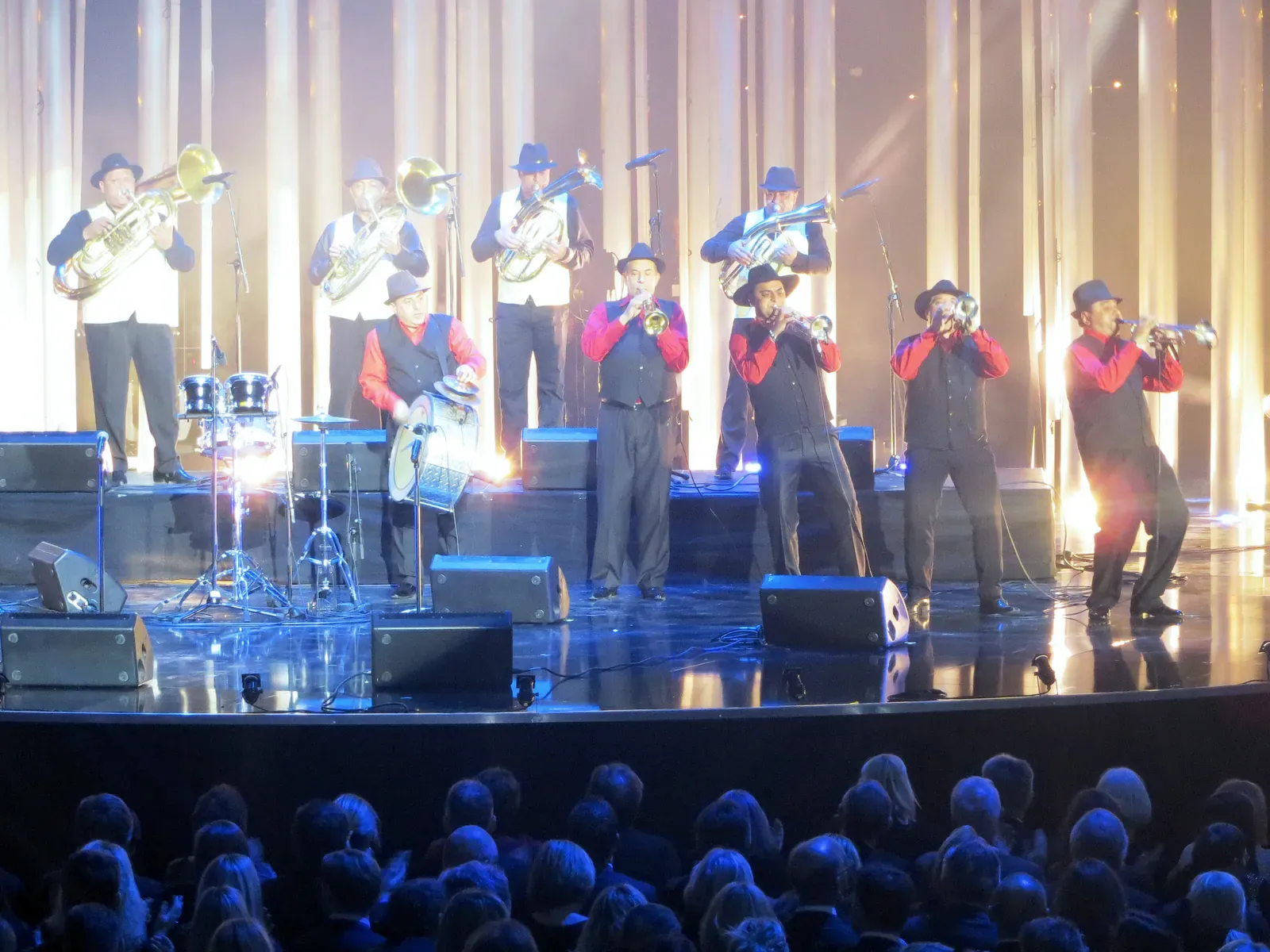
The central ensemble is the taraf. The first violin, the primaș, directs the group, carries the melody, improvises, sets the tempo and signals changes of section. The rest of the ensemble forms an accompanying group that repeats rhythmic-harmonic formulas called țiituri. In Moldavian brass bands the trumpet can lead, and in Banat tarafs the taragot.
Rhythm is flexible. Lăutari play with time inside a steady accompaniment, speeding up, delaying and shifting accents to shape the dance. Asymmetrical aksak rhythms are common, such as the seven-beat geamparale and the nine-beat cadînească. The doina is free in peasant practice, but in a taraf the solo line stays free while the ensemble keeps strict meter at the tempo of a fast hora. Part of the repertoire uses major and minor, and part draws on makam-like modes, with hijaz the most frequent, strongest in the south where Turkish influence was greatest. Intonation is often non-tempered and ornamentation dense.
Instruments and production
The violin leads. Lăutari commonly modify factory instruments by changing the soundboard or adding sympathetic strings, and they tune a semitone or whole tone off pitch or use scordatura to change the timbre.
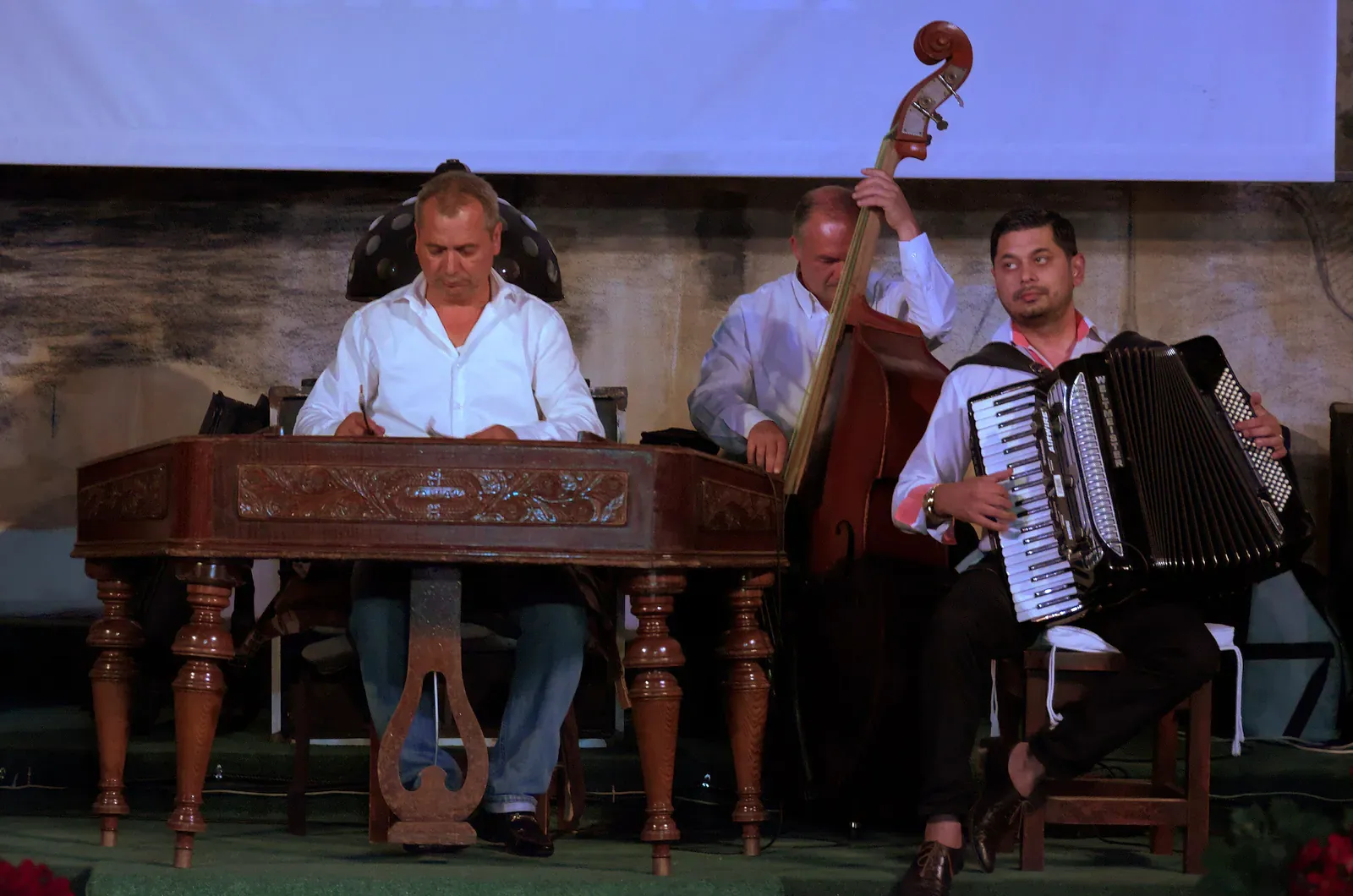
The accompaniment changed over time. In the 18th and 19th centuries the cobza, a fretless plucked lute with eight to twelve strings, supplied the harmony in Moldavia and Muntenia. From the late 19th century the cimbalom, or țambal, replaced it in many tarafs as small portable models appeared. The accordion joined in the 20th century, and cello and double bass entered later still to cover the low register.
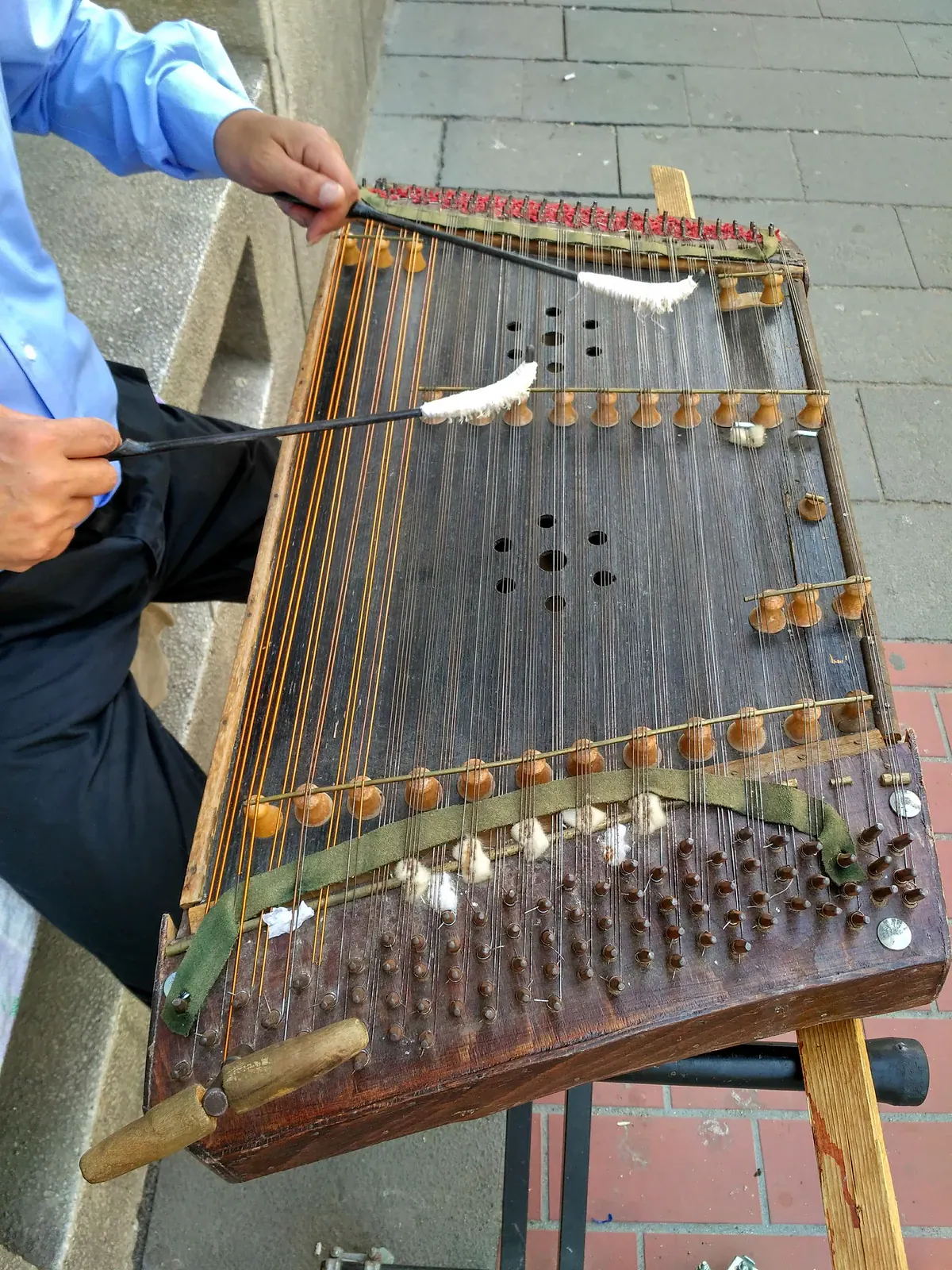
In the 1990s wedding ensembles added synthesizers that copy absent instruments, electric violins and accordions, and far louder amplification.
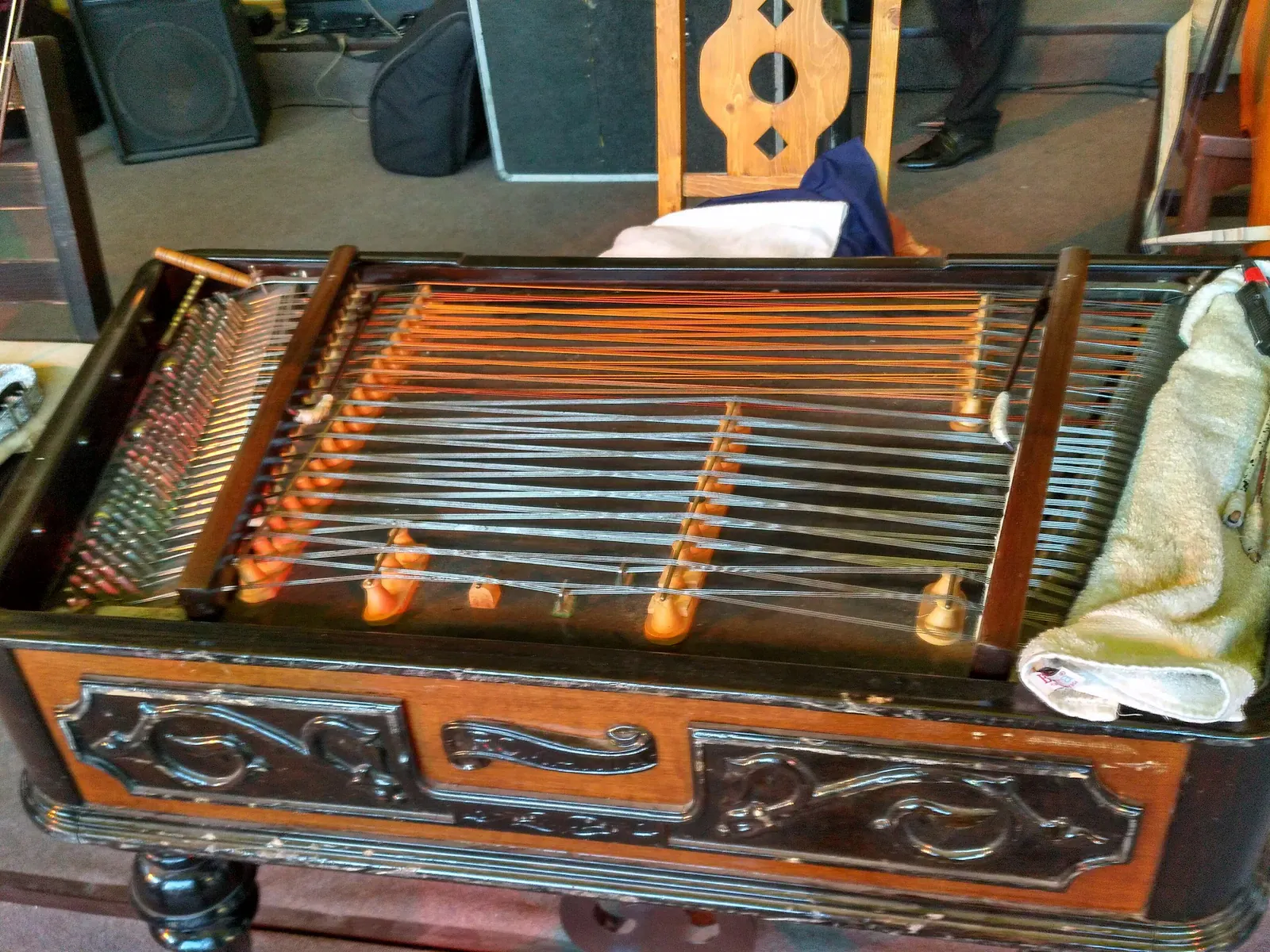
Repertoire and the wedding
The wedding is the main setting. Lăutari accompany the shaving of the groom, the bride’s departure from her parents’ home, the honouring of the wedding parents, the main feast and the dancing, and they manage the pace of the whole event. At the masa mare, the main feast, they play the cântec de dragoste. Despite its name this love song is a musical category, not a poetic one, marked by changeable melody, recitative insertions, melismas and intense delivery. It is structurally close to the doina and was probably created by lăutari themselves.
Dance music centres on the hora and sârba. The hora lăutărească, in duple pulse with syncopated melody, is often preferred at weddings to the large village hora.
Notable recordings
Grigoraș Dinicu’s Hora staccato, written in 1906, remains the showpiece of lăutari violin virtuosity. Taraf de Haïdouks, a Romani taraf from Clejani formed in 1990, brought the village dynasties to Western listeners. Crammed Discs, an independent Brussels label, issued their international debut Honourable Brigands, Magic Horses and Evil Eye in 1994, and the group followed it with Dumbala dumba in 1998 and Maškaradă in 2007. In 2002 they won the Europe and Middle East category of the BBC Radio 3 Awards for World Music.
Mainstream success
Success abroad came in the 1990s, led by Taraf de Haïdouks and the brass band Fanfare Ciocărlia. Taraf de Haïdouks appeared in Tony Gatlif’s Latcho Drom (1993) and Sally Potter’s The Man Who Cried (2000), where lăutărească music often signals a Balkan or Eastern European setting. Fanfare Ciocărlia’s Iag Bari followed in 2001; its sound belongs to the wind-band tradition of Moldavia, which links the style to Balkan brass.
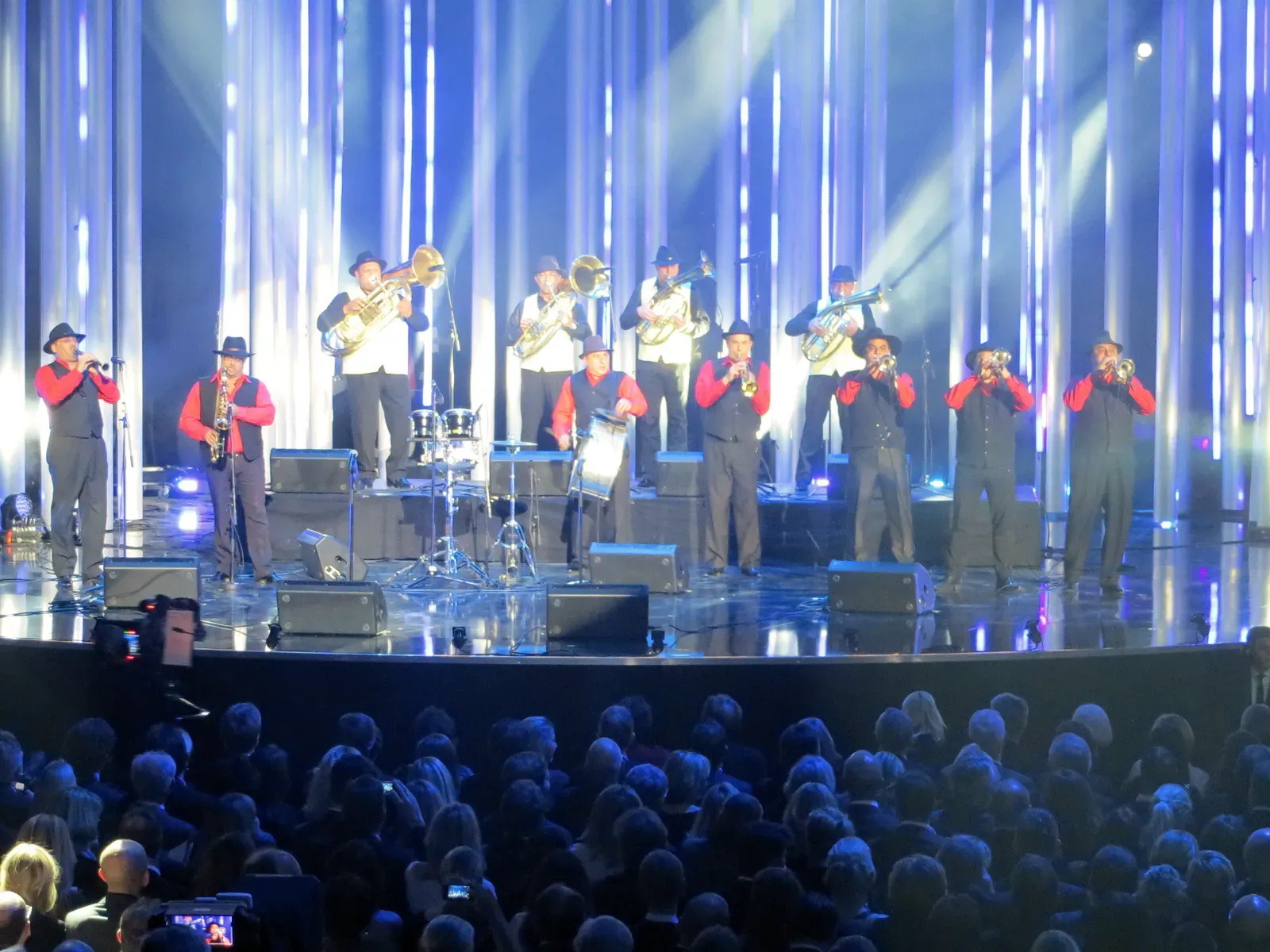
At home the picture is mixed. Manele, a genre that developed among Bucharest Romani musicians in the mid-1960s and spread nationwide after censorship ended in the early 1990s, now competes with the lăutărească hora for the wedding dance floor.
Culture
Nineteenth-century urban lăutari wore the long anteriu and zăbun, garments that marked the trade and set them apart from peasants. Emil Loteanu’s film Lăutarii (1973) portrays the taraf leader Toma Alistar. The tradition also overlaps with klezmer: lăutari and klezmorim worked side by side in Moldavia from the late 18th century, and mixed Jewish-Romani ensembles were common. Moldavian music is the main non-Jewish source of the klezmer tradition.
Legacy
A revivalist movement began in the 1970s with the singers Alexandru Mica and Tudor Gheorghe, who performed ballads of earlier Romani masters taken from folklore archives. Traditional lăutari tarafs of Romania were nominated in 2020 for the UNESCO Representative List of the Intangible Cultural Heritage of Humanity, and in 2025 the art of playing the cobza in Romania and Moldova was inscribed on it.
The Romanian label Electrecord preserved much of the state-era repertoire, including Romica Puceanu and Gabi Luncă.
Misconceptions
One claim holds that Romani musicians corrupted peasant tradition. The composer Sabin Drăgoi argued this in the 1920s, but George Enescu replied that Romani musicians also preserved older layers that peasants were abandoning. The ethnomusicologist Speranța Rădulescu put it in 1981: Romani musicians do not distort Romanian music, they make it live.
Another holds that the tradition is exotic entertainment made for outsiders. At the 1889 Paris exposition some Romanian intellectuals objected to the country being shown in an exotic, Orientalist light, but the music itself grew out of a working trade for weddings and social events.
A third holds that it has disappeared. It survives in village weddings, in groups such as Taraf de Haïdouks, and in heritage programmes, though it has changed in instruments and volume.
Frequently asked questions
What is lăutărească music?
Lăutărească music is the professional tradition of Romanian-lands lăutari, mostly Romani, played in a taraf led by a first violin for weddings and other social events.
What instruments are used in lăutărească music?
The violin leads, with cimbalom or accordion and double bass accompanying. The cobza and the nai were core instruments in the 18th and 19th centuries, and brass bands and the taragot lead in some regions.
How is lăutărească music different from manele?
Manele grew from Turkish-influenced songs and, in the mid-1960s, from çiftetelli rhythms among Bucharest musicians. Lăutărească music is the older professional tradition built on the taraf, doina, hora and wedding repertoire.
Who are the best-known lăutari?
Barbu Lăutaru, Grigoraș Dinicu, Romica Puceanu, Gabi Luncă and Taraf de Haïdouks are among the best known, along with Fanfare Ciocărlia for brass.
Sound
Sound sheet
Anatomy of a track
| # | Part |
|---|---|
| 1 | Prelude or key signal from the primaș |
| 2 | Free solo over steady accompaniment |
| 3 | Hora or sârba dance section |
| 4 | Faster closing variation |
Signature sounds
- Violin lead with dense ornamentation
- Țiitură accompaniment on cimbalom or accordion
- Makam-style turns such as hijaz
- Aksak rhythms in seven and nine pulses
Techniques
- Ornamentation and free variation
- Playing with time
- Solo over strict meter
- Scordatura
Keys and modes
Hijaz. The most frequent makam, with a raised third and augmented second, strongest in the south.
Major and minor. Western tonality dominates in Transylvania and large parts of the repertoire.
Tuning
Often non-tempered, violin shifted a semitone or whole tone or in scordatura
Vocals
Wedding love songs with recitative insertions, melismas and an emotionally intense delivery
Scenes
Where it happened
Where and when the sound lived: one bar per city on a shared timeline.
Europe
Active scenes
Peak 4, 1949-2025
Home of the urban lăutărească song and of the privileged circle of Bucharest musicians in the late 20th century.
Seat of the guild headed by Barbu Lăutaru, with strong Jewish-Romani musical exchange.
City of the first recorded guild of lăutari.
Village near Bucharest known for its dynasty tarafs, among them Taraf de Haïdouks.
Culture
Culture markers
- Hora lăutărească
Duple dance whose syncopated melody rides a steady accompaniment, preferred at weddings to the large village hora.
Dance - Anteriu and zăbun
Long caftan-like garments worn by 19th-century urban lăutari to mark their trade.
Fashion - Wedding cycle
Lăutari accompany the shaving of the groom, the bride's departure and the main feast, and steer the pace of the party.
Ritual - Silk Gypsies
Nickname (țigani de mătase) for the privileged elite of Bucharest lăutari in the late 20th century.
Slang
Media
Key media
- 1973Lăutarii
by Emil Loteanu. Feature film built around the taraf leader Toma Alistar.
Film - 1993Latcho Drom
by Tony Gatlif. Documentary-style film in which Taraf de Haïdouks appears.
Film - 2000The Man Who Cried
by Sally Potter. Feature film that features Taraf de Haïdouks.
Film
Glossary
Terms on this page
Term for asymmetrical rhythms such as the seven-beat geamparale and nine-beat cadînească.
Professional musician of a Romanian-lands tradition, mostly Romani, who plays at weddings and village events.
The main wedding feast, where lăutari play the love song and listening pieces.
The leading first violinist who sets form and tempo and signals the other players.
Ensemble of lăutari led by a first violin, with melodic and accompanying groups.
Repeated rhythmic-harmonic accompaniment formula chosen by the primaș.
European folk family