Lavani
Lavani is a Maharashtrian song and dance genre driven by the dholki, traced to the 1560s and shaped by Peshwa-era poets, Tamasha theatre and Marathi film.
Maharashtra, around 1560
South Asian family
Born
around 1560
Maharashtra
Subgenres
2
Documented branches
Links
5
Genres it drew on or shaped
Tempo
120-150 BPMLineage
Family tree
Timeline
Era by era
From the first sparks to today. Select a dot to read the story behind it.
- Early roots
1560 to 1749
- Peshwa shahirs
1750 to 1818
- Tamasha troupes and mill towns
1819 to 1949
- Film lavani
1950 to 2009
- Natarang and after
2010 to today
Eras
Moments
- 1 Early roots, 1560 to 1749
- 2 Peshwa shahirs, 1750 to 1818
- 3 Tamasha troupes and mill towns, 1819 to 1949
- 4 Film lavani, 1950 to 2009
- 5 Natarang and after, 2010 to today
around 1560
Early roots
Beginnings are traced to the 1560s. The songs link back to Prakrit Gathas and served as entertainment and a morale booster for tired soldiers.
- 1560Earliest traceable lavaniThe beginnings of lavani are traced back to the 1560s in Maharashtra.
around 1750
Peshwa shahirs
Under Peshwa patronage, poet-singers such as Honaji Bala and Ram Joshi wrote and staged lavani, and the seated baithakichi form took shape.
- 1818Peshwa period endsThe Peshwa era, the peak of court patronage for lavani, ends in 1818.
1819
Tamasha troupes and mill towns
Travelling Tamasha companies carried lavani to villages and to Bombay's mill districts, where Kolhati, Mahar and Mang performers kept the tradition alive.
- 1843Marathi theatre beginsMarathi theatre starts in 1843, and Tamasha adds short comic and dramatic skits called vag natya to its songs and dances.
around 1950
Film lavani
Marathi films made lavani a mass-market song. Playback singers recorded it for cinema while the stage Tamasha lost urban audiences.
- 1957Vithabai Narayangaonkar honouredThe Tamasha star receives a medal from the President of India, with another following in 1990.
- 1959Sangtye Aika and Bugadi Majhi Sandali GaThe film's lavani, sung by Asha Bhosle for Jayshree Gadkar, becomes very popular and sets the model for film lavani.
- 1964Sawaal Majha Aika!Sulochana Chavan sings several lavanis for this Tamasha-themed film, including Solaawa Varees Dhokyacha.
- 1965Malhari MartandSulochana Chavan's Tuzhya Usala Lagal Kolha comes out on Saregama as part of this film's songs.
- 1972PinjaraV. Shantaram's Tamasha film, with songs by Ram Kadam sung by Lata and Usha Mangeshkar, runs 134 weeks in Pune.
- 1975Stage Tamasha loses audiencesYamunabai Waikar's stage career ends in 1975 as cinema and thinner audiences cut returns for live troupes.
- 2002About 450 troupesMaharashtra counts roughly 450 Tamasha troupes with about 10,000 artistes.
2010
Natarang and after
The film Natarang and later hits such as Chandra gave lavani a new pop audience, with stage troupes still working across Maharashtra.
- 2010NatarangAjay-Atul's score brings Apsara Aali and Wajle Ki Bara, sung by Bela Shende, to a mass audience.
- 2022ChandraShreya Ghoshal's Chandra, released on 29 March for the film Chandramukhi, becomes a hit with Ajay-Atul as composers.
Listening path
Start listening
A short path from an easy way in to the deep end. Thumbnails come from YouTube; the player loads only when you press play.
- 01
Bela Shende & Ajay-Atul, 2010
The Natarang lavani to start with: listen for the dholki-led Keherwa pulse under a showy stage vocal.
- 02
Shreya Ghoshal, 2022
A recent film lavani by Ajay-Atul that shows how the form sounds with a modern studio production.
Facts
| Family | South Asian |
| Origin | Maharashtra, India |
| Emerged | Traceable to the 1560s, flourished under the Peshwas 18th-19th century |
| Status | Active |
| Tempo | 120 to 150 BPM |
| Meter | 4/4 |
| Subgenres | 2 |
Lavani is a song and dance genre of Maharashtra, India, performed to the beat of the dholki, a two-headed hand drum, and known for a quick tempo and a strong rhythmic delivery.
Its beginnings are traced to the 1560s, it flourished under Peshwa rule in the eighteenth and early nineteenth centuries, and it became the musical core of Tamasha, the region’s travelling folk theatre. Women in nine-yard saris traditionally dance and sing it, to lyrics usually written by men. It is part of the wider South Asian family of regional and popular traditions.
Origins
The name is said to come from lavanya, a word for beauty. The earliest traceable lavani dates to the 1560s, and its origin is believed to lie in the Prakrit Gathas, a collection of verses compiled by Hala. In its early life it served as entertainment and a morale booster for tired soldiers, and Maratha lords and kings patronised its performers. Two strands of material developed. Nirguni lavani is philosophical and devotional, and its devotional music is popular across the Malwa region. Shringari lavani is sensual and treats love between man and woman in many forms: a wife bidding farewell to a husband leaving for war, the pain of separation, adulterous passion, childbirth. Many songs are also sharp political and social satire.
Peshwa shahirs
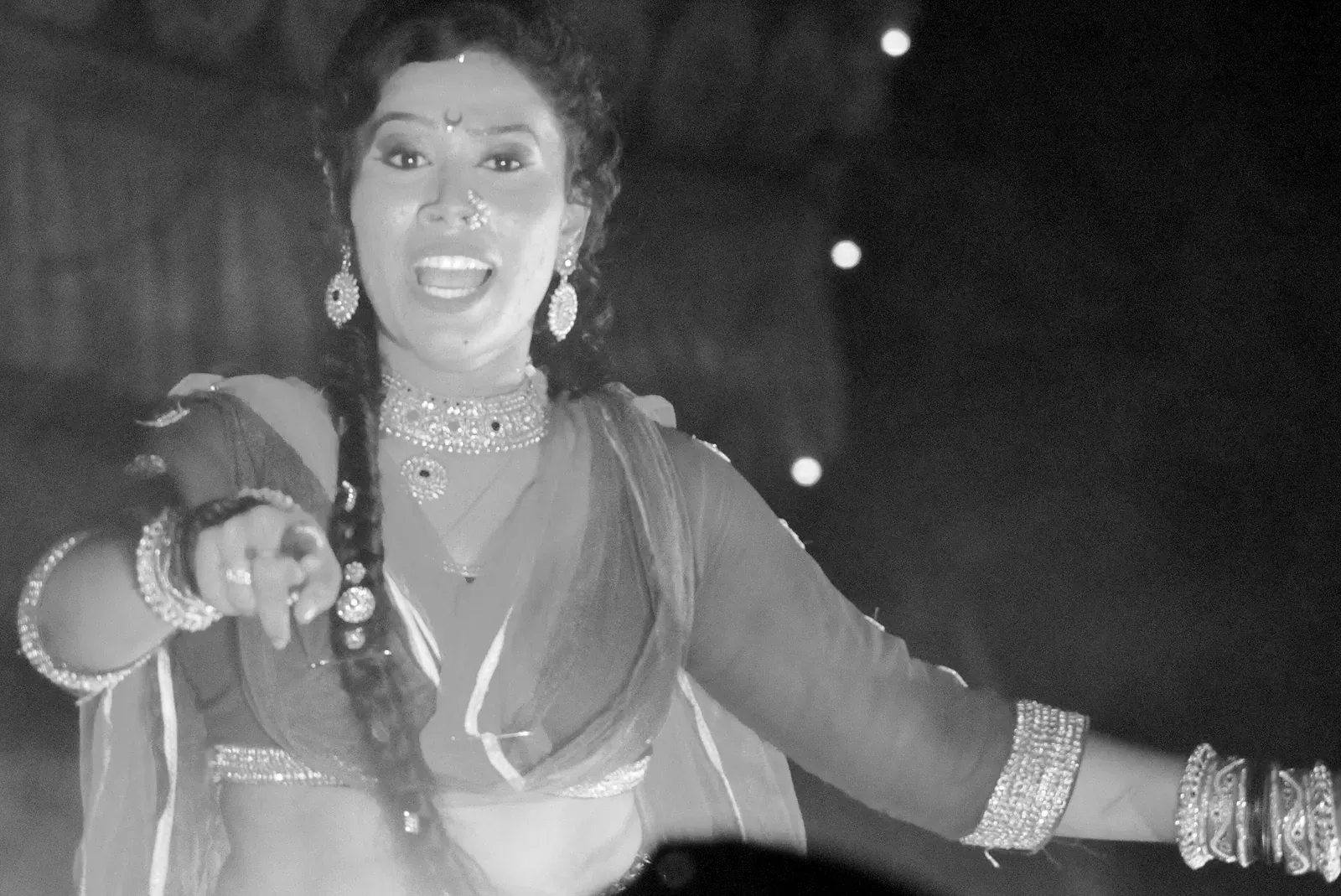
Lavani reached its peak during the Peshwa period, which ended in 1818. The poet-singers who wrote and staged it were called shahirs. Honaji Bala (1754-1844), born into a family of musicians in Saswad and settled in Pune, performed in an entertainment troupe at the Peshwa household and was supported by Sawai Madhavrao Peshwa and later Baji Rao II. He composed more than 200 lavanis and powadas (ballads), and with Baji Rao II’s encouragement wrote shringari lavanis, often from a woman’s point of view. He was the first to set lavanis in classical ragas, brought the tabla in place of the dholki, and developed the seated form known as baithakichi lavani.
Ram Joshi (1762-1812), born in Solapur, left a priestly family to join a Tamasha troupe and composed romantic lavani poetry for the shahir Dhondiba before staging his own shows. Later he turned to kirtan and spiritual verse, and his lavanis on sacred sites such as Pandharpur and Tuljapur date from that period. Lavani split into two performance settings. Phadachi lavani is staged for a large audience and forms a main section of every Tamasha troupe (phad). Baithakichi lavani is sung seated for a small private audience, usually men, and its lyrics often carry sexually explicit double meanings.
Tamasha troupes and mill towns
Tamasha acquired its distinct form in the late Peshwa period, drawing on older forms such as dashavatar, gondhal and kirtan. A traditional troupe included dancing boys called nachya, who also played women’s roles, a shahir who acted as poet-composer, and a jester called the songadya who compered the show. Women later joined as performers. The older kind, sangeet baari, holds more music and dance than drama.
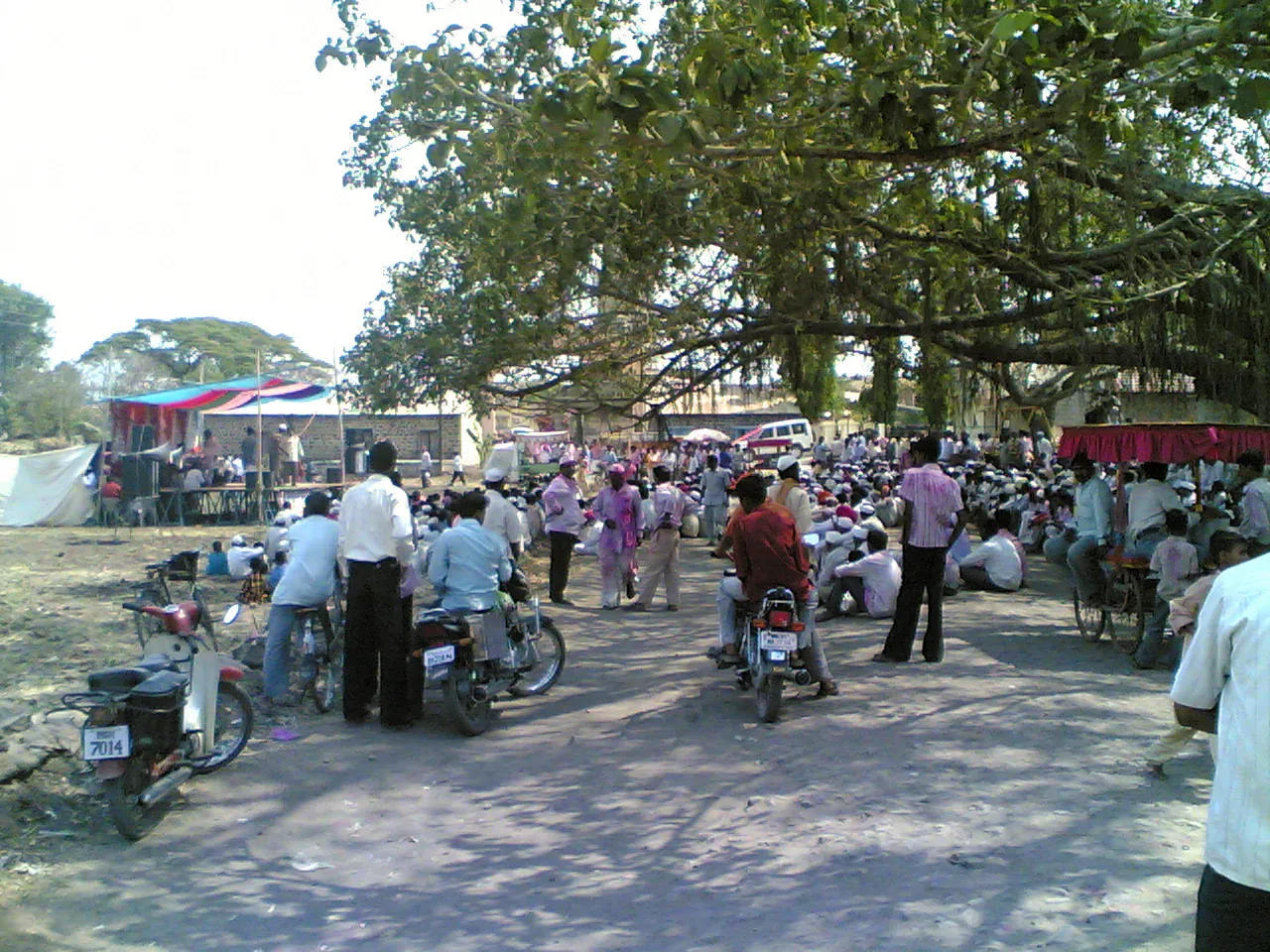
Marathi theatre began in 1843, and Tamasha added short comic and dramatic skits called vag natya. As Bombay’s textile industry grew in the nineteenth century, rural workers moved to the city and their entertainment followed them. Tamasha companies played for mill workers in Girgaum, and the city’s mill districts became a regular audience. The performers came mostly from Kolhati, Mahar, Mang and Bhatu communities, regarded as low castes, and reformers such as the Satyashodhak Samaj of Jyotirao Phule used the Tamasha tradition in political and reformist stage shows.
The folk poet Annabhau Sathe (1920-1969) contributed to lavani poetry, and Bashir Momin Kavathekar (1947-2021) wrote lavanis and short vag natya on dowry, education and other social topics for leading troupes from the early 1970s. Vithabai Narayangaonkar (1935-2002), born in Pandharpur into a family troupe founded by her grandfather, became known as Tamasha Samradini, the Tamasha Empress, and received medals from the President of India in 1957 and 1990. Yamunabai Waikar (1915-2018), a Kolhati performer who began as a street dancer with her family, kept a stage career going until 1975 and later received the Sangeet Natak Akademi award and the Padma Shri.
Film lavani
Marathi cinema made lavani a mass-market song. In Sangtye Aika (1959), a Tamasha-themed hit that ran for over 131 weeks in a single Pune cinema, Asha Bhosle sang “Bugadi Majhi Sandali Ga” to music by Vasant Pawar and words by G. D. Madgulkar. The song became very popular. Sulochana Chavan (1933-2022), who recorded her first lavani for the 1962 film Rangalya Raatri Asha, then sang many for Sawaal Majha Aika! (1964) and Malhari Martand (1965), including “Tuzhya Usala Lagal Kolha”. She was named Lavani Samradhni, the Lavani Queen.
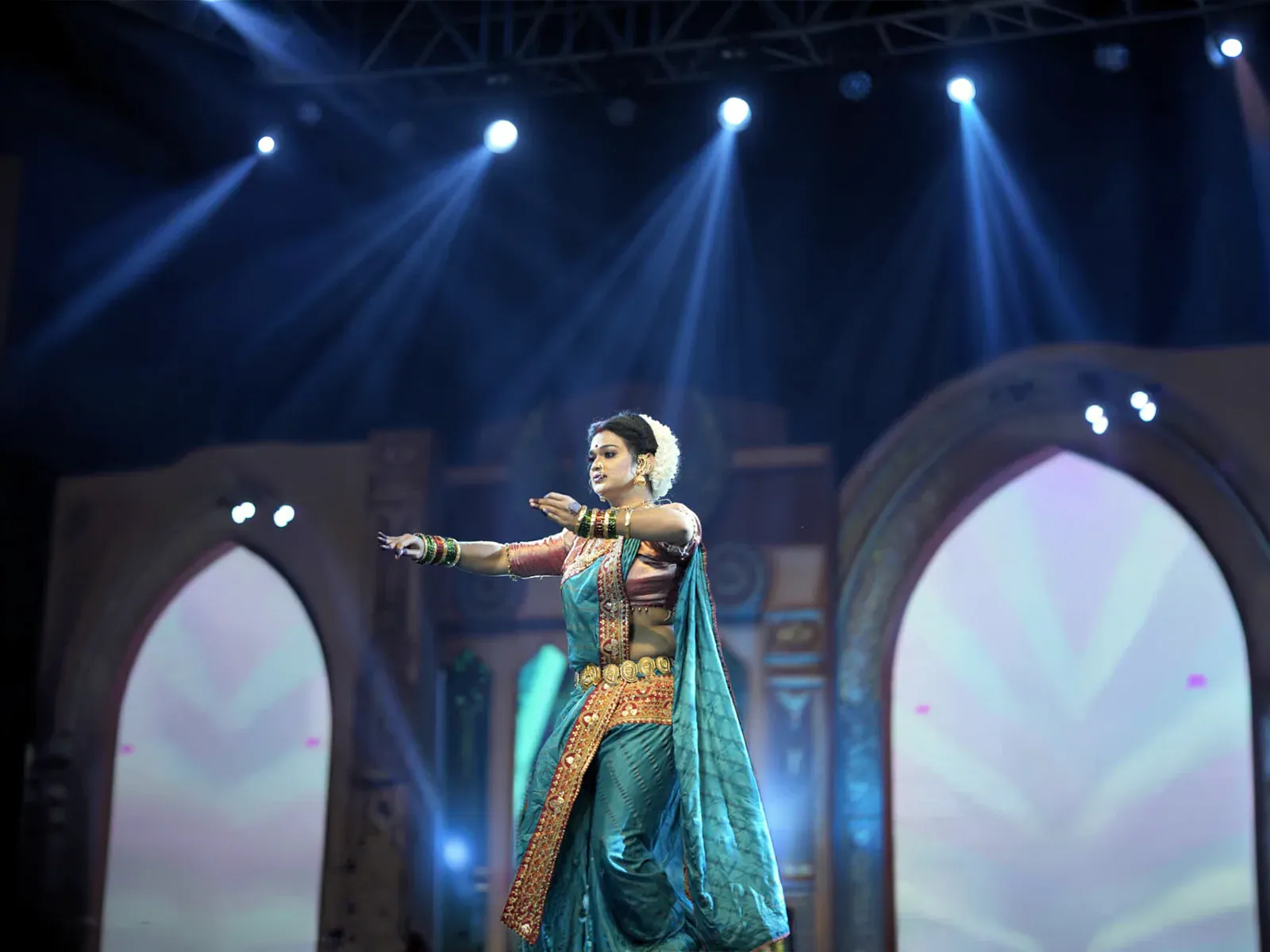
V. Shantaram’s Pinjara (1972), set in the Tamasha world, had music by Ram Kadam and lyrics by Jagdish Khebudkar, with dance numbers sung by Lata Mangeshkar and Usha Mangeshkar. It ran for 134 weeks in Pune and was also released in Hindi. Films such as Pinjara and Natarang blended traditional music with social messages and showed lavani in a positive light.
While cinema grew, the stage troupes lost ground. Urban middle-class audiences had turned away from Tamasha after independence, and Yamunabai Waikar’s own stage career ended in 1975 as film and thinner crowds cut earnings. By 2002 Maharashtra still counted about 450 troupes with some 10,000 artists. Hindi cinema, the home of filmi music, also borrowed from the form: loud humour, suggestive lyrics and dance numbers from Tamasha fed the Bollywood idiom, and Hindi films have included lavani songs.
Natarang and after
Ravi Jadhav’s film Natarang (2010), with music by Ajay-Atul, brought lavani to a new pop audience. “Apsara Aali”, sung by Bela Shende with lyrics by Guru Thakur and choreography by Phulwa Khamkar, is built on the eight-beat Keherwa rhythm arranged at four levels of complexity. It topped the charts and its official video passed 90 million views. Some traditional performers said the film’s lavani had the feel of an item song. Bela Shende won the Maharashtra State Film Award for best female playback singer, and “Wajle Ki Bara” won her a Zee Gaurav award in the same year.
The next big film lavani came in 2022. “Chandra”, the title song of Chandramukhi, was composed by Ajay-Atul and sung by Shreya Ghoshal. She recorded her part in a single day, and the dancer wore a nine-and-a-half-metre sari and ankle bells weighing up to three kilograms on each leg. The video had passed 100 million views by October 2022, and Ghoshal won a best female playback award for it.
Characteristics
Lavani is sung at a quick tempo over a strongly accented dholki pulse, and the songs are often emotional, sensual or pungently satirical. A woman lead usually sings and dances, with male dancers called nat or kinnars sometimes joining her. Delivery differs by setting: baithakichi lavani is sung seated for a private audience, while phadachi lavani is staged for a crowd.
Instruments and production
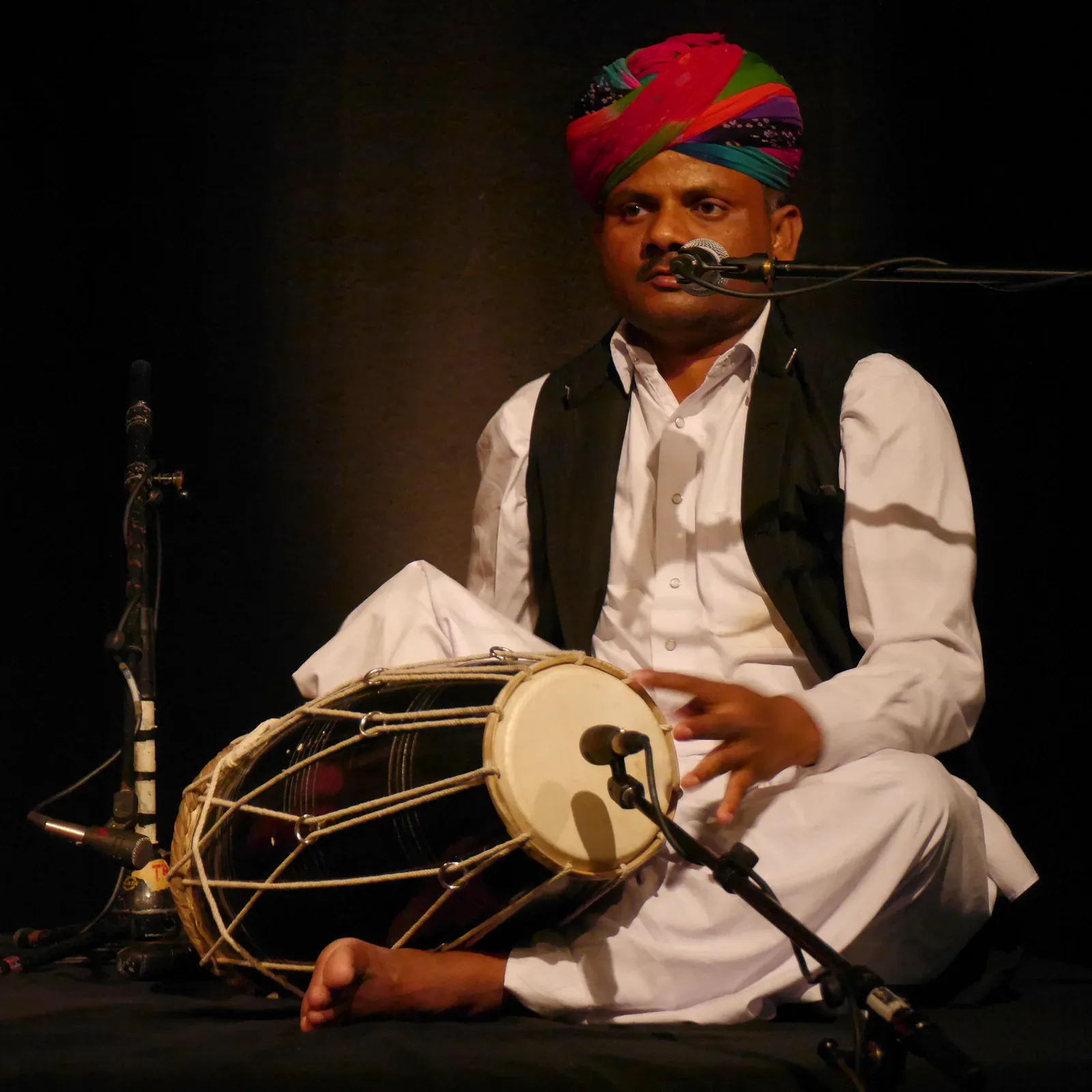
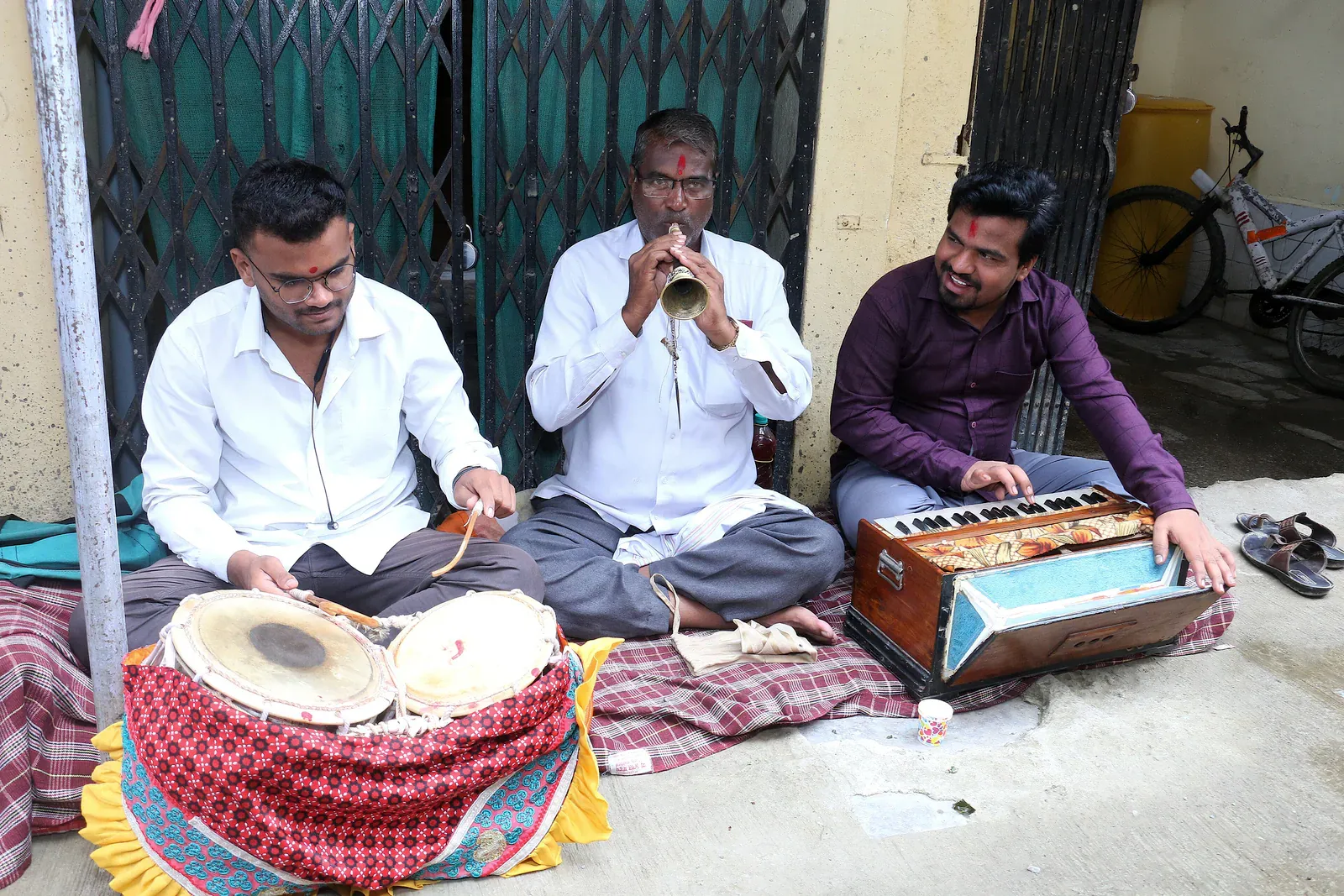
The dholki is the core instrument, its two heads giving bass and treble. Harmonium supplies melody and drone. Honaji Bala brought in the tabla in place of the dholki and added the tambori to his performances. In the film era, recorded lavani kept the dholki rhythm at its centre.
Culture
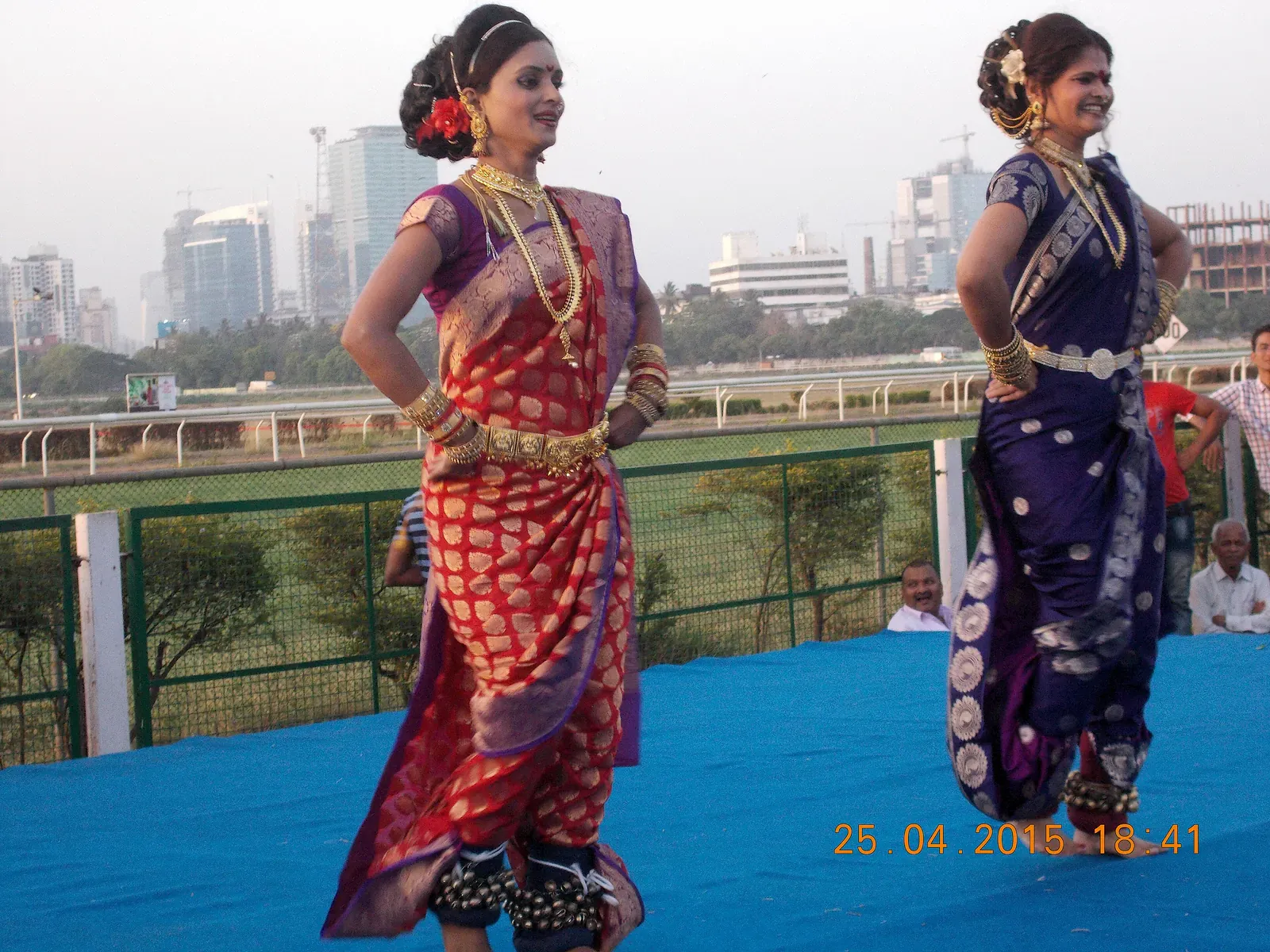
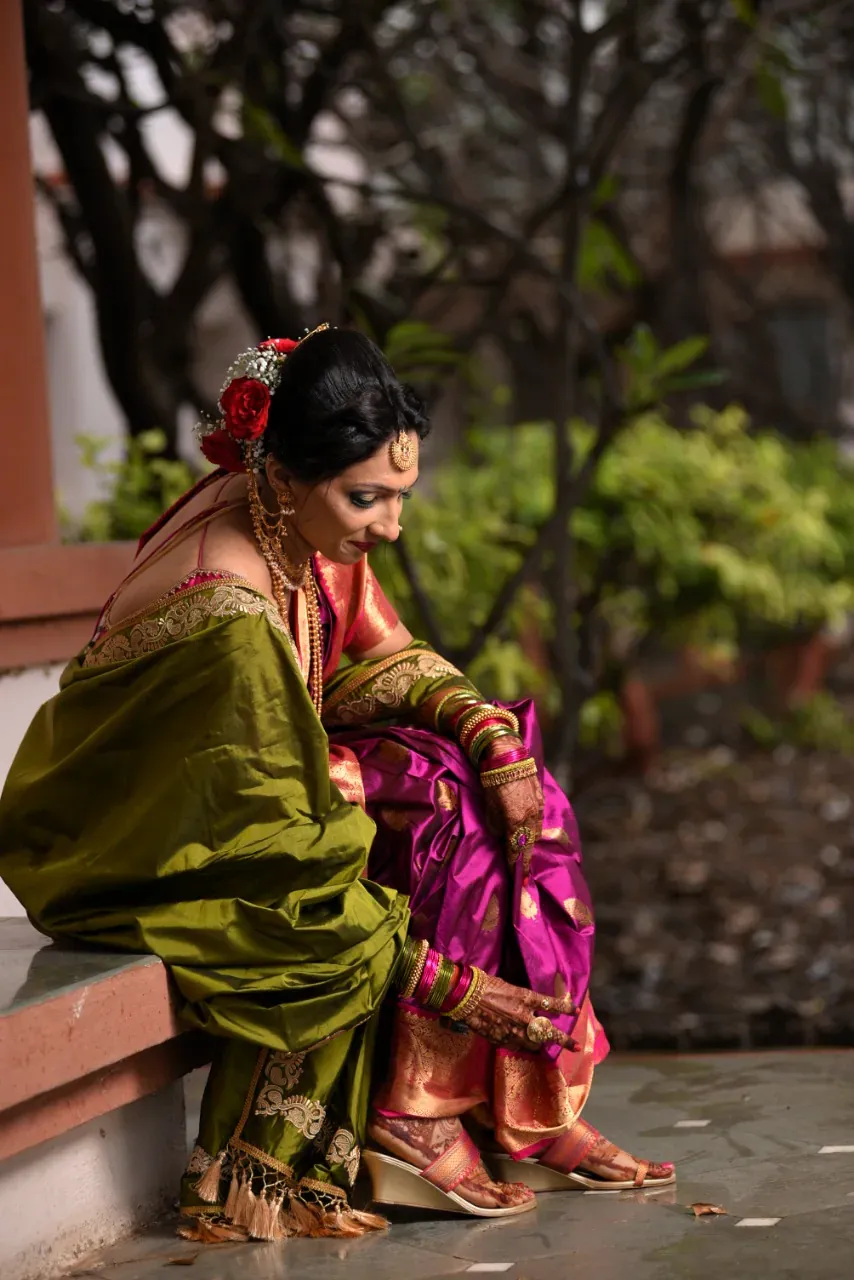
The lavani costume is the nine-yard sari called nauvari or lugade, draped in a trouser-like style that frees the legs for fast footwork. Dancers tie their hair in a bun and wear a large dark red bindi, heavy ornaments such as thushi, bormaal and pohehaar necklaces, zumka earrings, a kamarpatta waist belt, bangles and ghungroo ankle bells.
Performers have long been respected for their skill and stigmatised for their caste and for the sensual content of their songs. In 2006 the Government of Maharashtra instituted an annual award in memory of Vithabai Narayangaonkar for contributions to the preservation of Tamasha.
Legacy
Lavani gave Marathi film a signature dance song and fed the item number of Hindi cinema. Stage Tamasha continues in a smaller form, with about 18 to 20 full-time troupes, each performing around 210 days a year across Maharashtra and some border villages of Karnataka and Gujarat.
Misconceptions
Lavani is often reduced to its sensual side, yet the Nirguni strand is philosophical and devotional, and lavani has long carried political and social satire. Writers such as Annabhau Sathe and Bashir Momin Kavathekar used it to speak about social reform.
Lavani is not a film invention. The form is traced to the 1560s and flourished under the Peshwas, centuries before Marathi cinema made it a mass-market song.
Frequently asked questions
What is lavani?
Lavani is a Maharashtrian song and dance genre performed to the dholki, known for quick tempo, strong rhythm and costume of the nine-yard nauvari sari.
What is the difference between phadachi and baithakichi lavani?
Phadachi lavani is staged for a large audience as part of a Tamasha troupe. Baithakichi lavani is sung seated for a small private audience, a form Honaji Bala developed.
Which film songs popularised lavani?
“Bugadi Majhi Sandali Ga” (1959), “Tuzhya Usala Lagal Kolha” (1965), “Apsara Aali” (2010) and “Chandra” (2022) are widely known film lavanis.
What instrument drives lavani?
The dholki, a two-headed hand drum, drives the rhythm, with harmonium for melody and, in some traditions, the tabla.
Sound
Sound sheet
Signature sounds
- Dholki-driven fast pulse with strong accents
- Eight-beat Keherwa cycle in film lavani
- Female lead voice with a chorus
- Erotic, satirical or devotional lyrics
Drums and percussion
- Dholki
- Tabla
Techniques
- Quick dholki pulse
- Raga-based settings
- Keherwa cycle
- Seated and staged delivery
Keys and modes
Marathi folk modes. Modal tunes with pentatonic elements and rapid melodic movement over a simple harmonic base.
Vocals
Traditionally female lead singers and dancers, with lyrics written mostly by male poets and sung at a quick tempo.
Scenes
Where it happened
Where and when the sound lived: one bar per city on a shared timeline.
Asia
Active scenes
Peak 3, 1801-2025
Peshwa-era seat where shahirs such as Honaji Bala performed for the court and lavani flourished.
Early home of lavani performance, linked to the Dhangar community and to the poet Ram Joshi.
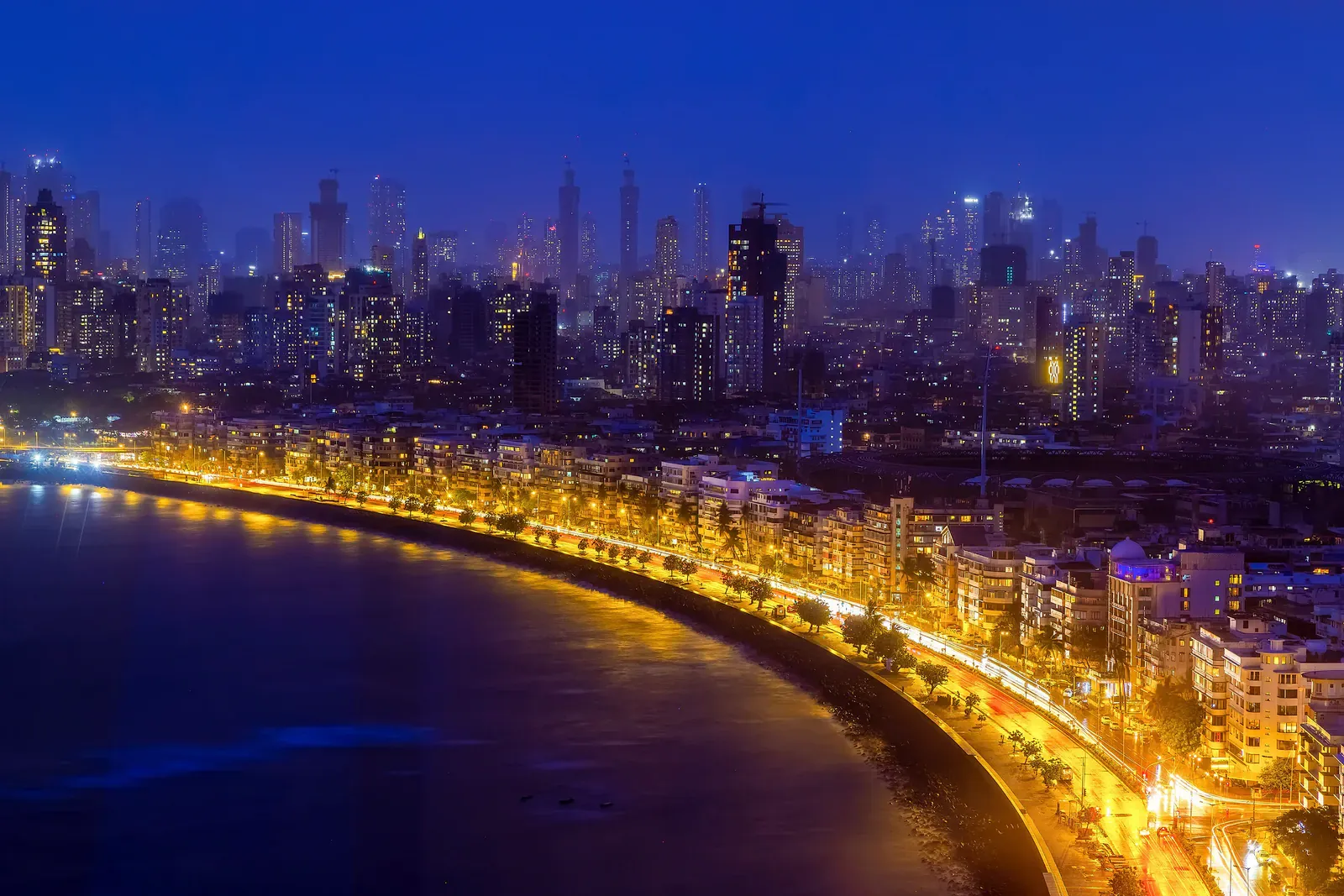
Tamasha companies played for mill workers in Girgaum, and the city's studios later recorded film lavani.
Culture
Culture markers
- Nauvari sari and jewellery
Dancers wear the nine-yard sari with a hair bun, a large dark red bindi, ghungroo anklets, a waist belt and heavy ornaments.
Fashion - Lead dancer and male nat
A female lead performs, joined by male dancers called nat or kinnars.
Dance - Caste stigma
Many performers came from Kolhati, Mahar and Mang communities and were respected for artistry yet stigmatised.
Ritual
Media
Key media
- 1959Sangtye Aika
by Anant Mane. Tamasha-themed hit film whose lavani Bugadi Majhi Sandali Ga became very popular.
Film - 1972Pinjara
by V. Shantaram. Tamasha drama with a Ram Kadam score that helped portray lavani in a positive light.
Film - 2010Natarang
by Ravi Jadhav. Drama about a village artist whose lavani numbers reached a mass audience.
Film
Glossary
Terms on this page
The seated form sung for a small private audience, developed by Honaji Bala.
The nine-yard sari draped like trousers, worn by lavani dancers.
The theatrical form staged for a large audience as a main section of a Tamasha troupe.
The poet-composer of a Tamasha troupe, who writes and often leads the songs.
The sensual strand of lavani, as opposed to the philosophical nirguni strand.
South Asian family