Minangkabau music
Minangkabau music is the song and gong tradition of West Sumatra: talempong, saluang and rabab, dendang singing, and Minang pop from the 1950s onward.
West Sumatra, around 1500
Southeast Asian family
Born
around 1500
West Sumatra
Subgenres
1
Documented branches
Links
4
Genres it drew on or shaped
Tempo
125-165 BPMLineage
Family tree
Timeline
Era by era
From the first sparks to today. Select a dot to read the story behind it.
- Oral traditions and Islamic song
1500 to 1952
- Orkes and Minang pop
1953 to 1969
- Talempong kreasi and revival
1970 to 1999
- Heritage and pop talempong
2000 to today
Eras
Moments
- 1 Oral traditions and Islamic song, 1500 to 1952
- 2 Orkes and Minang pop, 1953 to 1969
- 3 Talempong kreasi and revival, 1970 to 1999
- 4 Heritage and pop talempong, 2000 to today
around 1500
Oral traditions and Islamic song
Talempong gongs, saluang flute and rabab fiddle accompanied kaba stories, pantun and dance, while qasidah and gambus song arrived with Islam and Arab traders. Randai theatre took shape in the early 1900s.
- 1500Qasidah reaches West SumatraIslamic poetry songs, sung over bamboo, wood, stone and tambourine percussion, spread in the 16th century and fed later Minang song.
- 1870Gambus arrives after the Suez Canal opensArab and Egyptian migrants brought the gambus and Arabic music, which mixed with local gongs, saluang and serunai.
- 1900Randai theatre formsLocal martial arts, storytelling and performance traditions fused into the circular folk theatre of Minangkabau villages.
1953
Orkes and Minang pop
Orkes Gumarang formed in Jakarta in 1953 and Minang songs with Latin rhythms reached radio and records; Kumbang Tjari and singer Elly Kasim followed from 1961.
- 1953Orkes Gumarang formed in JakartaMinang musicians in the capital formed a band named after the magic horse of the kaba Cindua Mato; its sound was called Sumatran mambo.
- 1959Elly Kasim sees Orkes Gumarang in JakartaTaken by her uncle to a Gumarang show, she soon joined Orkes Ganto Rio, which became Kumbang Tjari.
- 1961Elly Kasim records her debut singleHer first record with Orkes Kumbang Tjari mixed Latin and surf-rock influences with Minang dialect and ornament.
- 1964Bareh Solok appears on Bertemu KekasihNuskan Sjarif's song with rock and roll electric guitar was released by Irama and became a staple on Radio Republik Indonesia.
around 1970
Talempong kreasi and revival
A conservatory talempong orchestra grew at Padang Panjang around 1970, gamad and new singer-songwriters revived Minang-language song, and Elly Kasim became its best-known voice.
- 1970Talempong orchestra at Padang PanjangThe Academy of Traditional Arts built a talempong orchestra of about 17 players, the start of talempong kreasi.
- 1974Elly Kasim honoured by the Jakarta governorGovernor Ali Sadikin gave her an award; she later became known as the Queen of Minang song.
2000
Heritage and pop talempong
Elly Kasim released her 100th album in 2007 and talempong styles gained national and UNESCO recognition, while talempong goyang mixes the gongs with pop.
- 2007Elly Kasim releases her 100th albumHer recording career ran from 1961 and covered solo records and ensemble albums.
- 2021UNESCO recognises gamelan including talempongThe 2021 listing of gamelan as intangible heritage covers talempong gongs among its instruments.
Listening path
Start listening
A short path from an easy way in to the deep end. Thumbnails come from YouTube; the player loads only when you press play.
- 01
Elly Kasim, 1995
Nuskan Sjarif's rock-tinged Minang song, the Minang pop hit that radio played across Java.
- 02
Elly Kasim, 1995
A Minang folk song sung in the Minang dialect, from the Indonesian Folksongs 8 Minang volume.
- 03
Elly Kasim, 1995
Another Minang folk song from the same volume, for hearing the dialect and ornament.
Facts
| Family | Southeast Asian |
| Origin | West Sumatra, Indonesia |
| Status | Active |
| Tempo | 125 to 165 BPM |
| Subgenres | 1 |
Minangkabau music is the traditional and popular music of the Minangkabau people of West Sumatra, Indonesia. Its older layer centres on the talempong gong ensemble, the saluang bamboo flute and the rabab fiddle, with dendang singing that carries oral stories and rhymed verse.
Its modern branch, Minang pop, grew from Jakarta orchestras in the 1950s and made singers such as Elly Kasim known across Indonesia. It belongs to the wider Southeast Asian family.
Origins
The oldest layer is pre-Islamic folk music: local songs, dances and several styles of talempong gong ensemble, a tradition comparable with Javanese gamelan. Over time it took in Islamic and Malay influences. Qasidah, sung religious poetry, reached West Sumatra with the spread of Islam in the 16th century and was first backed only by bamboo, wood and stone percussion and tambourines. After the Suez Canal opened, Arab and Egyptian migrants brought the gambus and Arabic music to the Dutch East Indies, and these mixed with gongs, saluang, serunai and violin.
Dendang is the vocal core of the tradition. It is a singing style that accompanies kaba, the oral stories of the region, as well as pantun verse and some dances. A kaba master may be backed by the rubbing of a rabab, and the saluang often accompanies dendang. Randai, a folk theatre that fuses song, dance, drama and the martial art silat, took shape early in the 20th century and uses the same stories and songs.
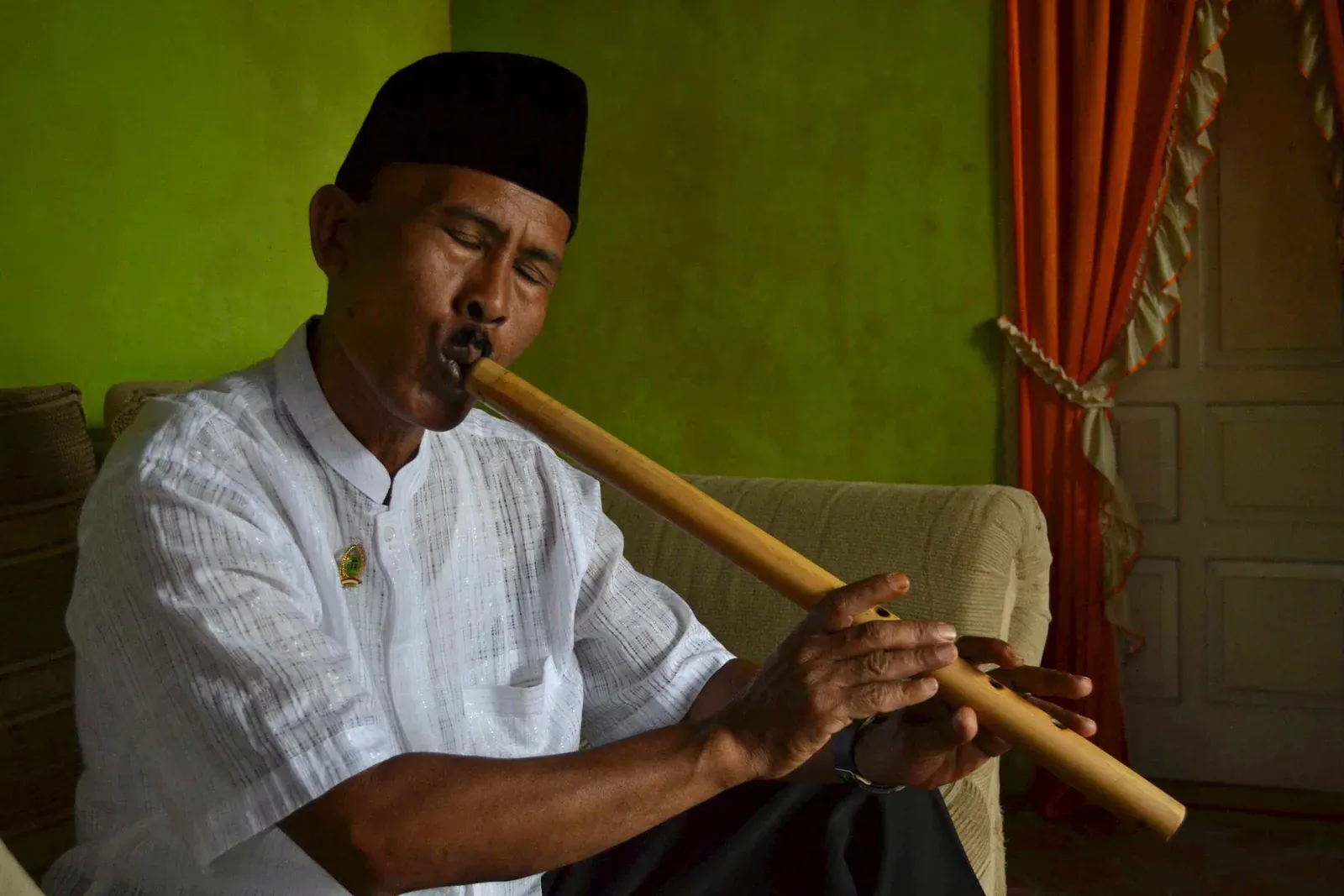
Orkes and Minang pop, 1953-1969
Modern Minang pop is usually traced to the 1950s. Orkes Gumarang formed in Jakarta in late 1953 and took its name from the magic horse of the legend Cindua Mato. Its players were Minangkabau but recorded in Jakarta, far from the highlands, and they won a place on the state broadcaster Radio Republik Indonesia. Pianist Januar Arifin and leader Asbon Madjid brought Latin styles, and singer Nurseha joined the group. Its sound, based on Cuban mambo with Minangkabau touches, was called Sumatran mambo. Its radio sessions were recorded by the state label Lokananta, and a private label, Irama, later signed the band.
The success of Gumarang inspired three other Minang orchestras: Zaenal Combo, Oslan Husein’s Teruna Ria and Nuskan Sjarif’s Kumbang Tjari. Between them they backed most Indonesian singers of the 1960s. Rhythms came from rumba, cha-cha-cha and mambo, with bongos and maracas, and instruments such as accordion, saxophone, trumpet and electric guitar entered the line-up. Oslan Husein became known for Ayam Den Lapeh and Kampuang Nan Jauh Di Mato.
Elly Kasim was born Elimar and went to Jakarta, where in 1959 her uncle took her to see Gumarang. She joined Orkes Ganto Rio, which became Kumbang Tjari when it prepared to record; she suggested the name, taken from a Nuskan Sjarif song, and Nuskan gave her the stage name Elly Kasim. Her first record came in 1961. Her debut mixed Latin and surf-rock influences with the Minang dialect and local ornament.
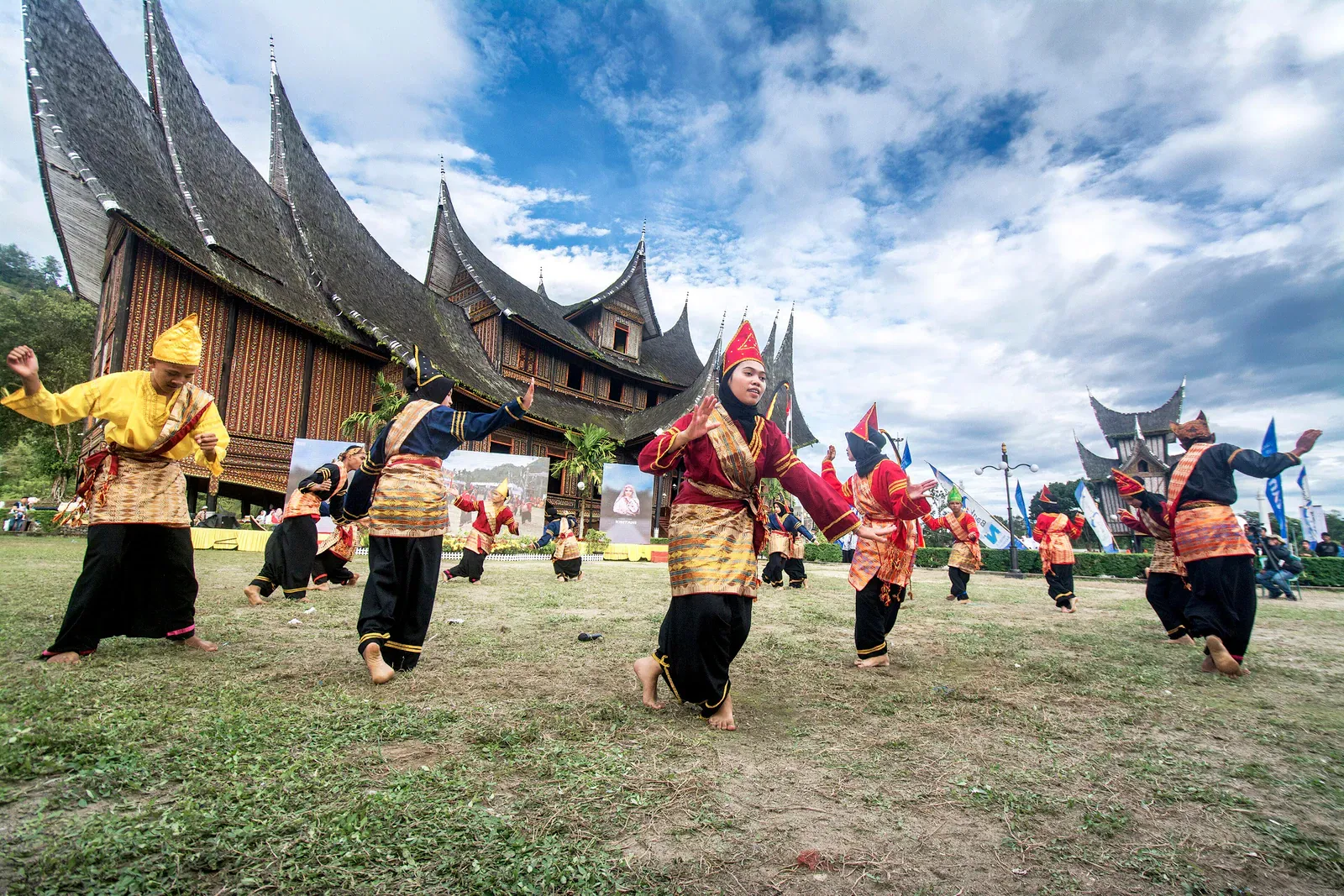
Notable recordings
Bareh Solok is one of the songs most closely tied to Elly Kasim. Nuskan Sjarif wrote it, and Orkes Kumbang Tjari backed it on the 1964 album Bertemu Kekasih, released by Irama. Nuskan played it with a rock and roll edge, especially on electric guitar, at a time when Minang orchestras had mostly leaned towards Latin music. The title means rice from Solok, and the song praises the quality of that rice. Radio Republik Indonesia played it in Java, and listeners and broadcasters treated it like an Indonesian-language pop song, which shows how far Minang songs travelled.
Talempong kreasi and revival, 1970-1999
Around 1970 the Academy of Traditional Arts at Padang Panjang built a talempong orchestra of about 17 players, a style known as talempong kreasi that grew out of the late 1960s and early 1970s. In the 1970s a more traditional strand appeared in gamad, which has Minang-style vocals and Portuguese-derived instruments. Albums by Yan Juneid and others were treated as a revival of Minang music, which until then had been dominated by Western and Indonesian songs. Two songwriters and singers of the decade, Adjis Sutan Sati and Sawir Sutan Mudo, kept the traditional dendang style without mixing in non-Minang music.
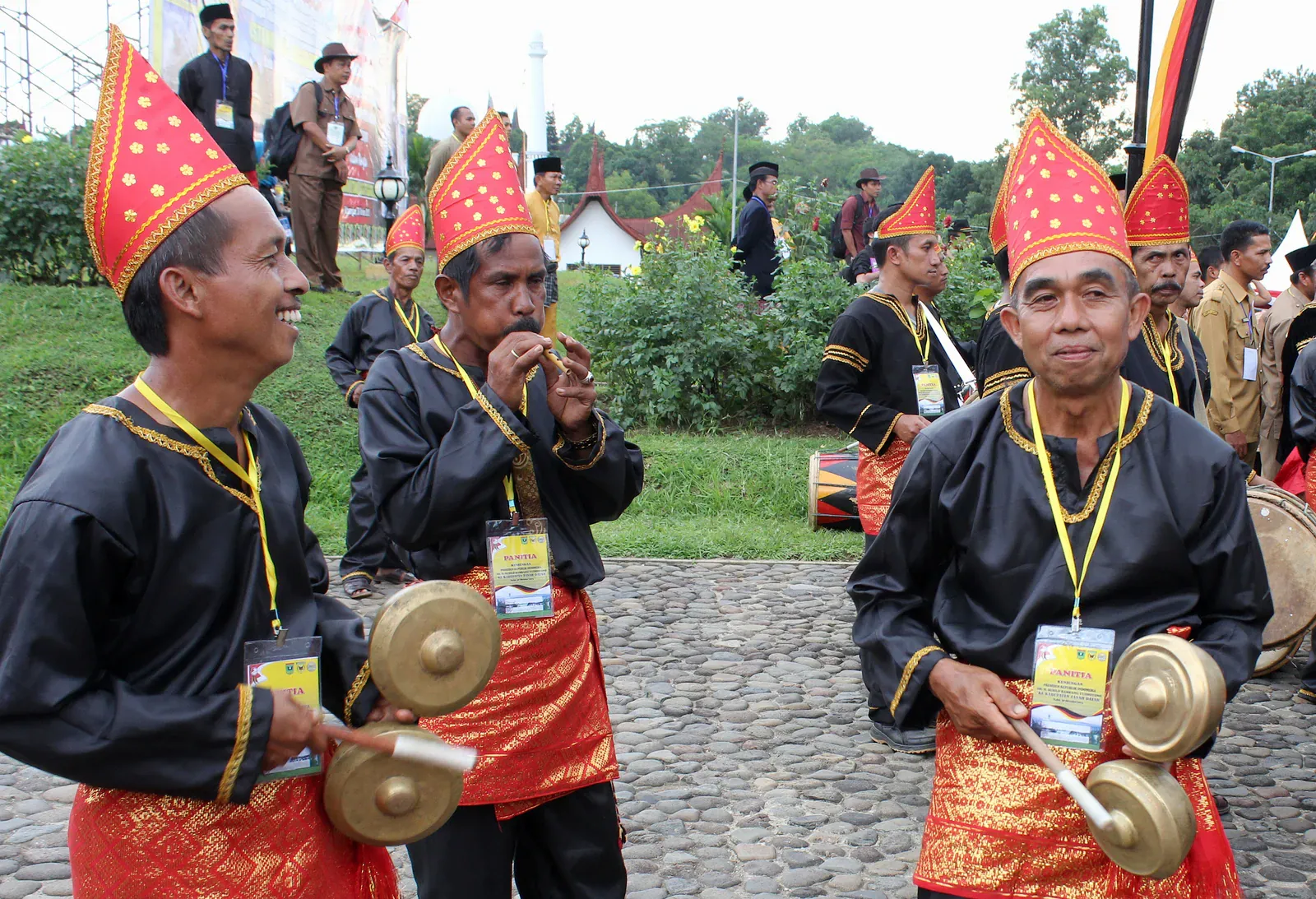
Instruments and production
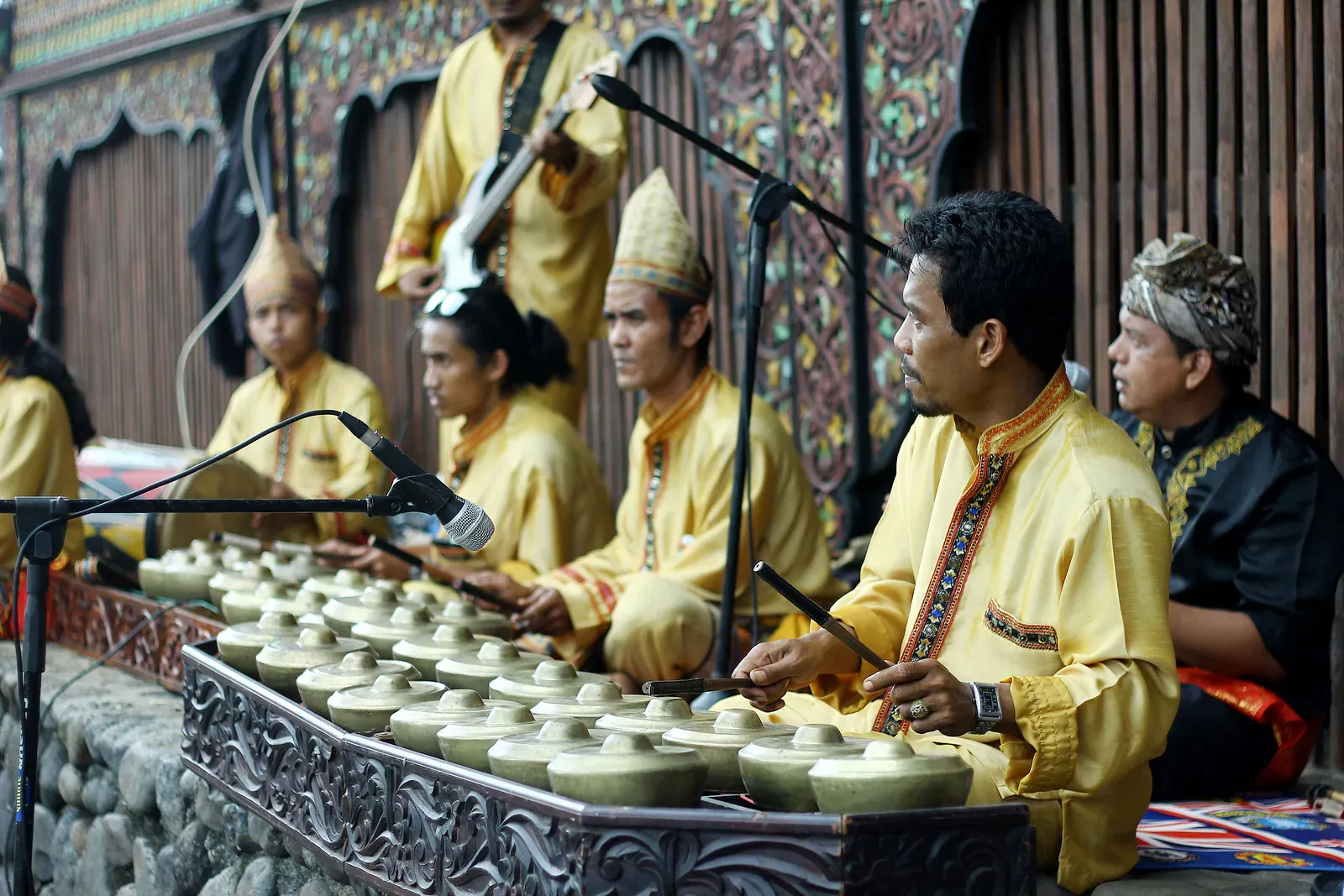
Talempong is a small kettle gong, about 15 to 17.5 centimetres across with a raised boss that is struck with a pair of wooden hammers. Each gong gives one pitch, and a set of four or five, with other gongs and drums, gives the ensemble a static texture of interlocking rhythms. Talempong pacik, played by people holding the gongs, and talempong duduak, played seated, count as the older styles. The saluang is a bamboo flute about 40 to 60 centimetres long with four holes, and players use circular breathing so that a piece can run from start to finish without a pause. Its melodies are named for places, such as Singgalang, Pariaman and Solok. Dance music also uses the serunai, gandang drums, gongs and rebana, and the accordion and violin appear in newer forms.
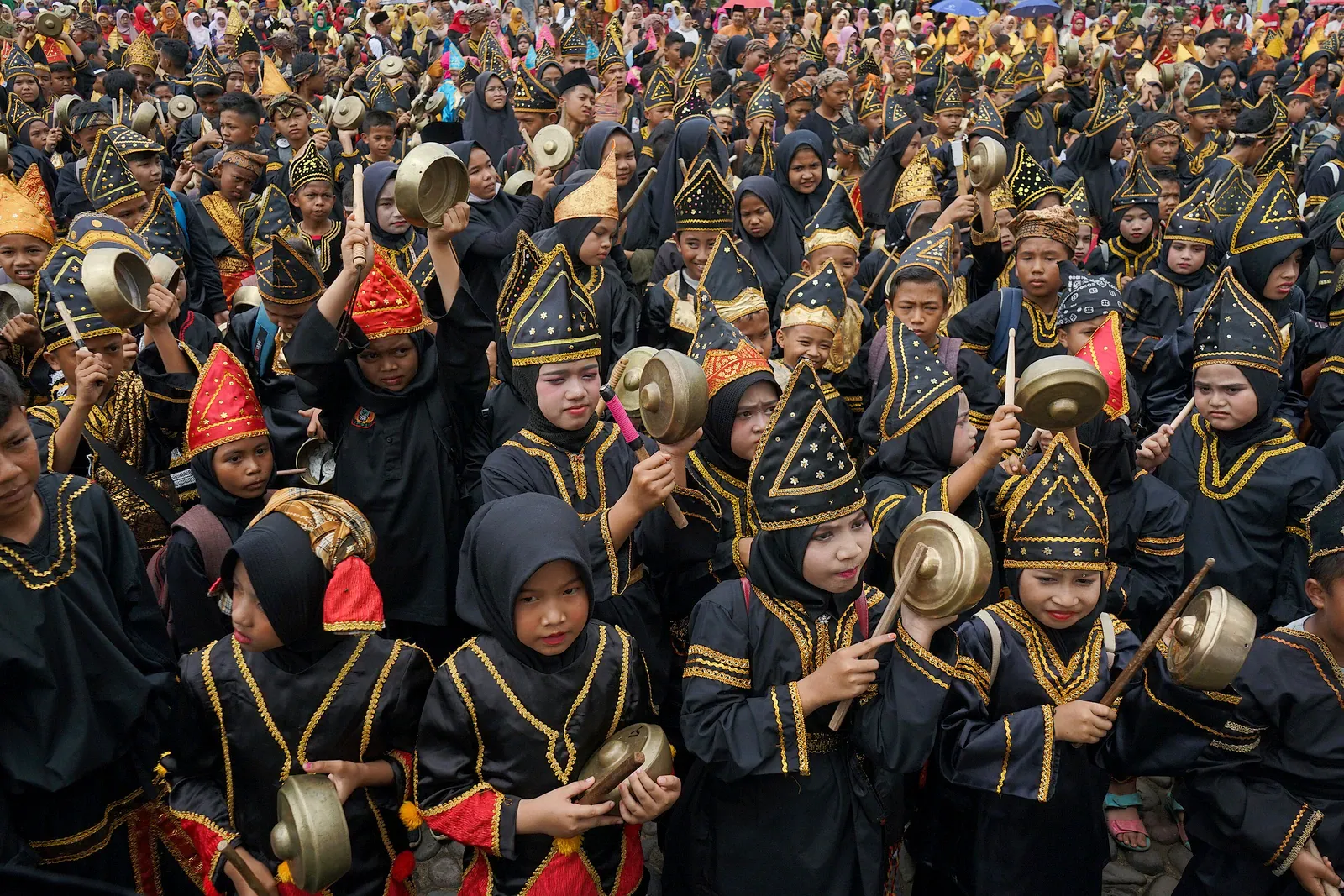
Culture
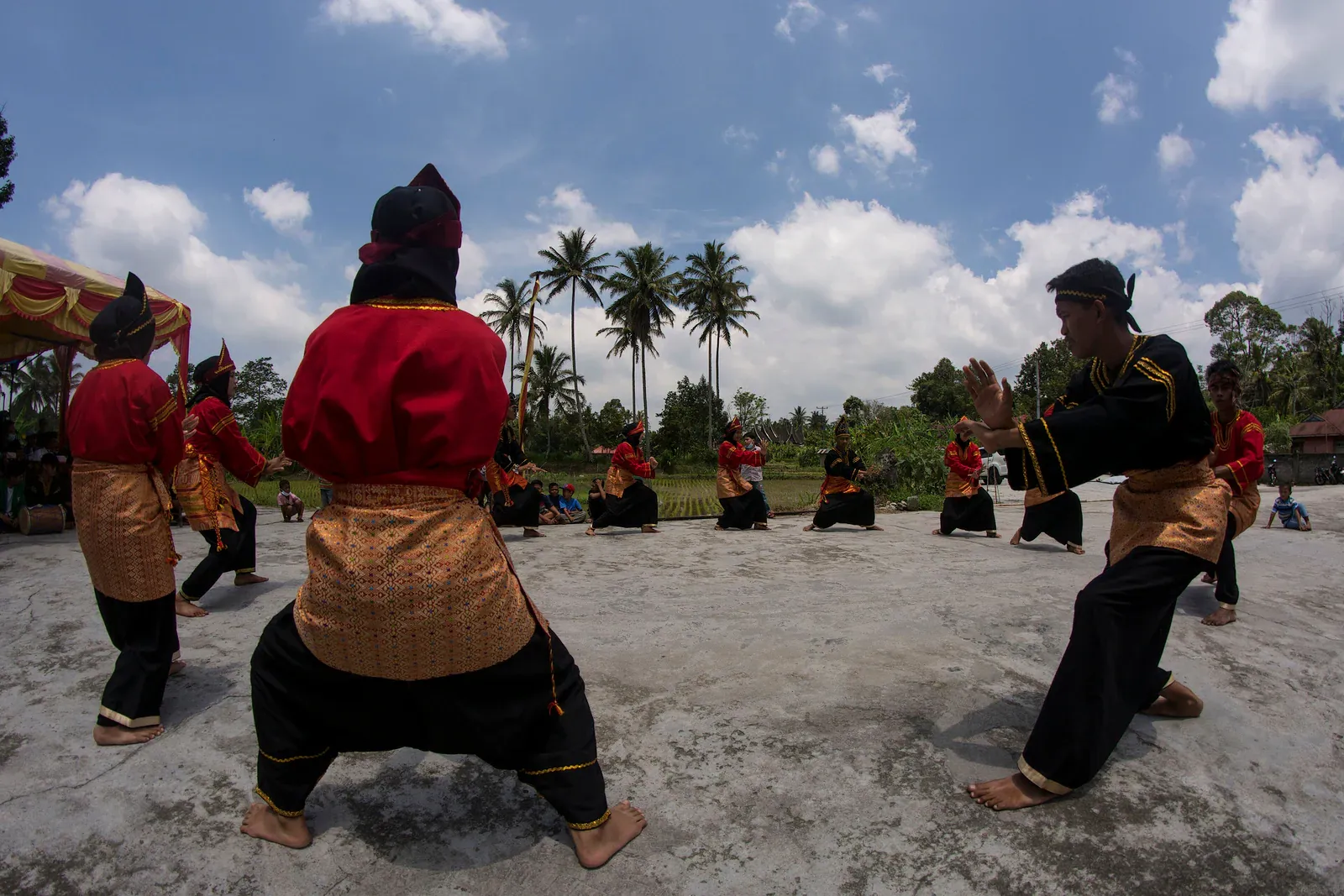
Minang music accompanies ceremonies and dance, including the Pasambahan, Payung and Piring dances, and talempong ensembles are used for welcoming performances. For traditional events such as weddings, Islamic rebana or gambus are never played. In the past some listeners believed a saluang player could hypnotise the audience with a spell. Randai still draws on Minangkabau legends and folktales, and since the 1960s women have also taken part in it.
Legacy
Minang pop is regarded as a forerunner of dangdut, together with Malay music. Elly Kasim kept recording for decades, earned an award from Jakarta’s governor Ali Sadikin in 1974, was called the Queen of Minang song, and released her 100th album in 2007. She died in 2021. Newer styles continue the line: talempong goyang brings pop influences to the gongs, and talempong has been recognised as national intangible heritage; in 2021 UNESCO inscribed gamelan, which includes talempong among its instruments.
Misconceptions
Minang music is not only a village tradition. A large part of what the public hears today began as pop recorded in Jakarta from the 1950s, with Latin rhythms and electric guitars.
Talempong is not just a Minangkabau version of gamelan. The two are comparable gong traditions, but talempong sets are small, often handheld, and bring their own interlocking style and repertoire.
Dendang is not a single song. It is a way of singing that serves many kinds of text, from kaba stories to pantun and salawat dulang, with or without saluang.
Frequently asked questions
What instruments are used in Minangkabau music?
The main traditional instruments are the talempong gongs, saluang bamboo flute, rabab fiddle, serunai, gandang drums and aguang gong. Gambus, rebana, violin and accordion appear in some forms, and Minang pop adds guitars, brass and bongos.
What is Minang pop?
Minang pop is the popular branch of Minangkabau music. It began around 1955 with Orkes Gumarang in Jakarta, drew on Latin rhythms such as rumba, cha-cha-cha and mambo, and later absorbed rock and roll guitar.
Who is Elly Kasim?
Elly Kasim was an Indonesian singer of Minang songs, active from 1961 and known as the Queen of Minang song. She recorded with Orkes Kumbang Tjari, and her best-known songs include Bareh Solok.
What is randai?
Randai is a Minangkabau folk theatre that mixes song, dance, drama and silat. It is performed in a circle at ceremonies and festivals, and its stories draw on local legends.
Sound
Sound sheet
Signature sounds
- Minang dialect and vocal ornament
- Interlocking talempong gongs
- Latin rhythms in Minang pop
- Saluang with circular breathing
Drums and percussion
- Gandang
Techniques
- Circular breathing
- Interlocking talempong
- Dendang singing
- Latin-pop arrangement
Tuning
Each talempong gong sounds one pitch; players interlock their gongs to build melodies.
Vocals
Minang dialect with local ornament, from dendang to pop-folk singing.
Scenes
Where it happened
Where and when the sound lived: one bar per city on a shared timeline.
Asia
Active scenes
Peak 1, 1953-2025
Minang musicians recorded and broadcast here, far from West Sumatra, through Radio Republik Indonesia and local labels.
Culture
Culture markers
- Piring, Payung and Pasambahan dances
Talempong and saluang ensembles accompany these dances at ceremonies.
Dance - Randai theatre
Circular performances mix silat dance, song and stories drawn from Minangkabau legends.
Ritual - Wedding music
Traditional weddings avoid Islamic rebana or gambus and use the local ensemble.
Ritual
Media
Key media
- 1998Theater and Martial Arts in West Sumatra: Randai and Silek of the Minangkabau
by Kirstin Pauka. Study of randai theatre and silat.
Book - 2015Gongs and Pop Songs: Sounding Minangkabau in Indonesia
by Jennifer A. Fraser. Ohio University Press study of talempong and Minang pop.
Book
Glossary
Terms on this page
Minang vocal style that accompanies kaba, pantun and dance, often with saluang.
Oral story told in song or speech, often with rabab.
Four-line rhymed verse used in song and speech.
Circular folk theatre mixing silat dance, song and acted scenes.
New-creation talempong orchestra style developed from the late 1960s and early 1970s.
Handheld gong style where each player holds two or three gongs.
Southeast Asian family