Muziki wa dansi
Muziki wa dansi is Tanzanian big-band dance music, derived from Congolese rumba and soukous and sung in Swahili, active in Dar es Salaam since the 1930s.
Dar es Salaam, 1930
African family
Born
1930
Dar es Salaam
Links
9
Genres it drew on or shaped
Tempo
100-150 BPMLineage
Family tree
Grew out of
- Soukous
Derived from
Derived from
Dar es Salaam, 1930
Muziki wa dansi
Led to (1)
Timeline
Era by era
From the first sparks to today. Select a dot to read the story behind it.
- Ballroom and brass bands
1930 to 1960
- Sponsored bands after independence
1961 to 1977
- Peak and band rivalries
1978 to 1989
- Decline and heritage
1990 to today
Eras
Moments
- 1 Ballroom and brass bands, 1930 to 1960
- 2 Sponsored bands after independence, 1961 to 1977
- 3 Peak and band rivalries, 1978 to 1989
- 4 Decline and heritage, 1990 to today
around 1930
Ballroom and brass bands
Dar es Salaam Jazz Band (1932), Morogoro Jazz and Tabora Jazz played Congolese-flavoured dance music on brass and drums in clubs of colonial Tanganyika.
- 1930Dance bands form in Dar es SalaamBallroom-style dance bands in the Dar es Salaam area are the starting point of dansi.
- 1932Dar es Salaam Jazz Band foundedOne of the first bands of the Tanzanian rumba, alongside Morogoro Jazz and Tabora Jazz.
- 1944Morogoro Jazz Band formedThe band later led by guitarist Mbaraka Mwinshehe blended taarab, benga, Cuban son and pop.
1961
Sponsored bands after independence
State bodies and trade unions sponsored bands such as NUTA Jazz Band, and Maquis Original arrived from Congo in 1972; musicians became salaried band members.
- 1961Independence brings the sponsorship systemJulius Nyerere's government had departments and national bodies sponsor dance bands.
- 1964NUTA Jazz Band foundedSponsored by the national trade union, it became the root of Msondo Ngoma.
- 1970Maquis Original formed in LubumbashiMusicians from the Congolese band Super Teo founded the group that would settle in Dar es Salaam.
- 1971Vijana Jazz foundedSponsored by the youth wing of the ruling party, it became a leading band of the 1980s.
- 1972Maquis Original relocates to Dar es SalaamA trip to Uganda with gigs in Tanzania led the band to settle in Kinondoni.
- 1973Mwinshehe founds Super VolcanoThe guitarist left Morogoro Jazz Band to start another successful dansi band.
1978
Peak and band rivalries
Mlimani Park, International Orchestra Safari Sound and Vijana Jazz competed in contests; legal import of instruments in 1978 brought synthesizers and drum machines.
- 1978Mlimani Park Orchestra foundedFormer Juwata Jazz members founded the band on 1 August as resident band of Mlimani Park Bar.
- 1978Foreign instruments legalisedA new law let bands buy imported instruments, and Vijana Jazz used the change early.
- 1985International Orchestra Safari Sound formedHugo Kisima disbanded Orchestra Safari Sound and hired stars from rival bands.
- 1989Songs for the Poor Man releasedRemmy Ongala and Orchestre Super Matimila reach a world audience on Real World Records.
1990
Decline and heritage
Dansi lost young listeners to newer pop, yet Msondo Ngoma and Maquis Original still play, and reissue series carried the sound abroad.
- 1990Vijana Jazz declinesThe death of its leader in 1990 and changing tastes ended its peak.
- 2024Zanzibara 11 reissues Congo in DarA reissue of early 1980s Maquis and Safari Sound recordings on Buda Musique.
Listening path
Start listening
A short path from an easy way in to the deep end. Thumbnails come from YouTube; the player loads only when you press play.
- 01
Remmy Ongala, 1989
A warm entry point: a Super Matimila song of love and risk from Songs for the Poor Man.
- 02
Remmy Ongala and Orchestre Super Matimila, 1991
A studio performance showing the interlocking guitars and congas of a Dar es Salaam band.
Facts
| Family | African |
| Origin | Dar es Salaam, Tanzania |
| Emerged | 1930s |
| Status | Active |
| Tempo | 100 to 150 BPM |
| Meter | 4/4 |
| Grew out of | Soukous, Congolese rumba |
Muziki wa dansi, usually shortened to dansi, is Tanzanian dance-band music that grew from Congolese rumba and soukous. It began in the 1930s around Dar es Salaam, is sung mostly in Swahili and is built on interlocking electric guitars, with horns in the early bands.
Because “jazz” is used across East and Central Africa for big-band dance music, it is also called Swahili jazz or Tanzanian rumba. It belongs to the African family and descends from Congolese rumba.
Origins
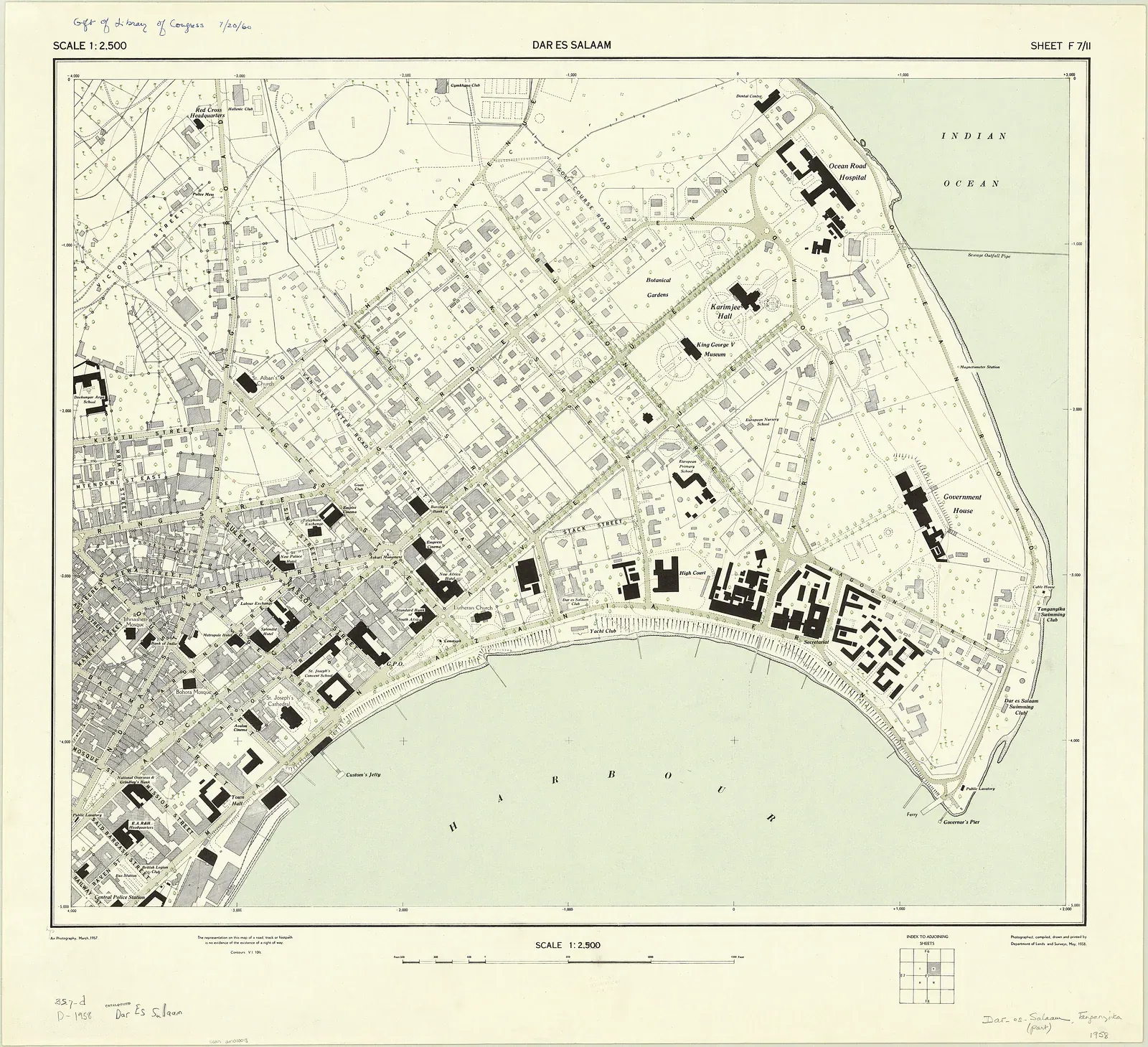
In the early twentieth century, bands from the Belgian Congo and French Congo made Congolese dance music popular across East Africa. Dance clubs in Nairobi and Dar es Salaam booked bands to play seven nights a week. Some of the players were from Zaire, but local groups soon formed in Kenya and Tanzania and began mixing their own version of the style.
Among the first Tanzanian bands were Dar es Salaam Jazz Band, founded in 1932, Morogoro Jazz and Tabora Jazz. They were big bands built on brass and drums. Morogoro Jazz Band, formed in 1944, grew into a seminal group under its guitarist Mbaraka Mwinshehe. Its sound blended taarab, Kenyan benga, Cuban son by way of Congolese rumba, rhythm and blues and British pop. The group began acoustic, and adding the electric guitar pushed it to the front of the Tanzanian scene.
Sponsored bands, 1961-1977
After independence in 1961, the government of Julius Nyerere introduced a sponsorship system in which departments and national institutions financed bands. The NUTA Jazz Band, founded in 1964 and named after the National Union of Tanganyika, was the best-known example. It was also among the first bands to operate as a cooperative of salaried musicians, a model that spread through the 1970s: the band owned the instruments and the players were employees.
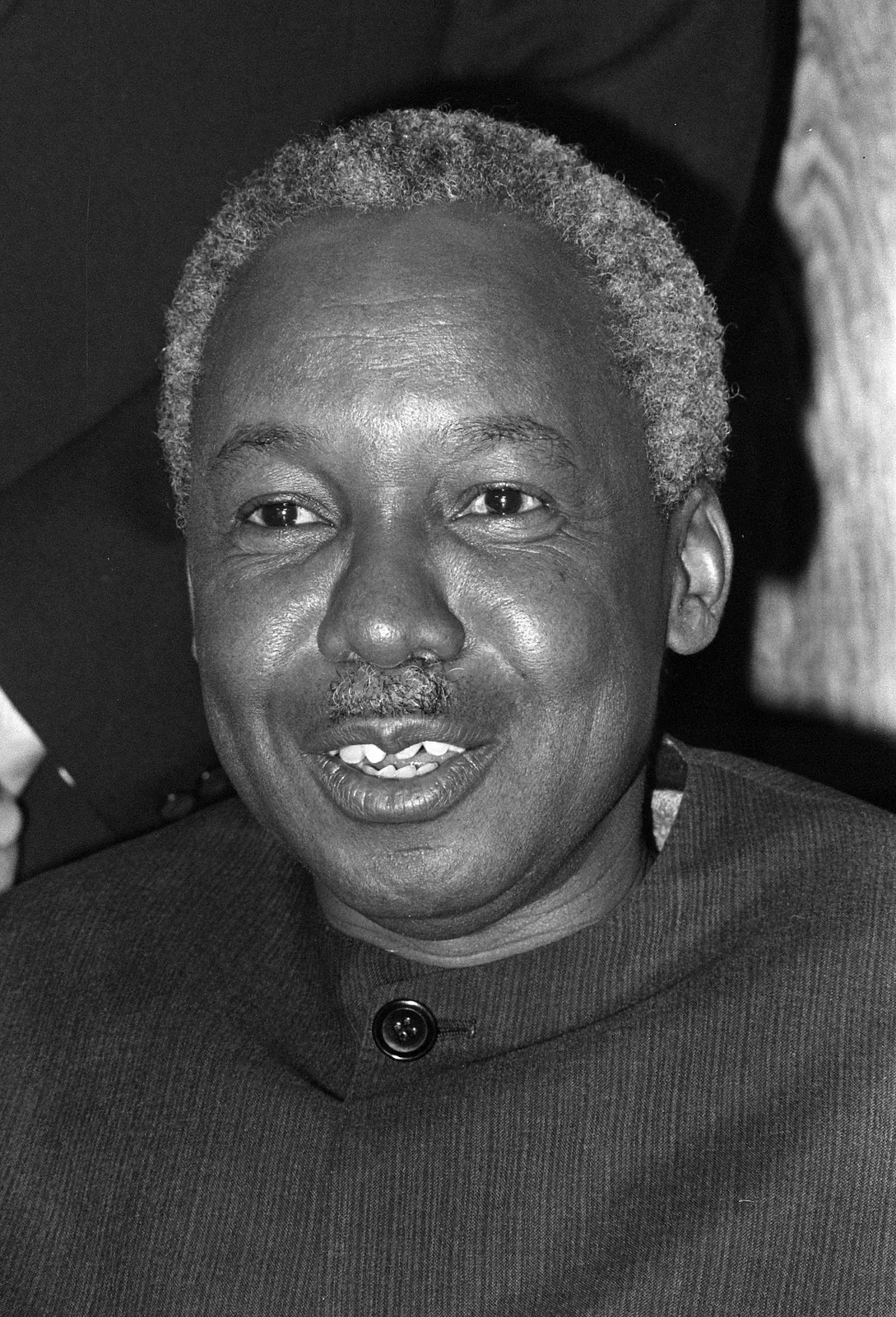
In the 1960s NUTA Jazz Band was led by the trumpeter and singer Joseph Lusungu and the saxophonist Mnenge Ramadhani, who gave it a brass-centred sound. Orchestra Maquis Original reached Dar es Salaam from Congo. Founded in 1970 in Lubumbashi by musicians from the soukous band Super Teo, it was invited to Kampala in 1972, played a few dates in Tanzania on the way and moved to the Kinondoni district of Dar es Salaam. The Congolese arrivals shaped the genre as much as the local players. In 1973 Mwinshehe left Morogoro Jazz Band to found Super Volcano, and Vijana Jazz began in 1971, sponsored by the youth wing of the ruling party.
Because bands were treated as brands, the best musicians moved between them for better offers until they could start their own. Composers such as Muhiddin Maalim and Hassani Bitchuka wrote hits for almost every major band of the time, so that a band’s identity rested on its style rather than on a fixed lineup.
Mlimani Park and the peak, 1978-1989
In 1977 many of NUTA’s leading musicians, including Maalim and Bitchuka, left to form a new group, and the old band took the name Juwata Jazz. Mlimani Park Orchestra was founded on 1 August 1978 by former Juwata members as the resident band of the Mlimani Park Bar in Dar es Salaam. When its first owner went bankrupt around 1982, the bar and the band passed to the city council’s Dar es Salaam Development Corporation, and it became DDC Mlimani Park Orchestra. It kept to one style, sikinde, inspired by traditional ngoma dances, and its motto was ngoma ya ukae, “the home dance”.
Competition drove the scene. Festivals were run as contests, each band had its own fan base like a sports club, and each had a nemesis: Maquis and Orchestra Safari Sound in the 1970s, then International Orchestra Safari Sound and Mlimani Park in the 1980s. Orchestra Safari Sound, led by Ndala Kasheba, brought a slower and more melodic dansi that set it apart from its Congolese ancestor. Its owner, the businessman Hugo Kisima, closed it in 1985 and formed International Orchestra Safari Sound with singer Maalim, guitarist Abel Balthazar and songwriter Bitchuka at the head. Its main style was ndekule, and the snake became its emblem. The group lasted until 1992.
Instrument rules changed the sound. Until 1978 the national music council barred bands from importing instruments. After the law was relaxed, Vijana Jazz moved quickly and became hugely popular in the 1980s with synthesizers and drum machines. Its styles included sindimba, heka heka and koka koka, and its leader’s sudden death in 1990 helped end its peak.
Characteristics
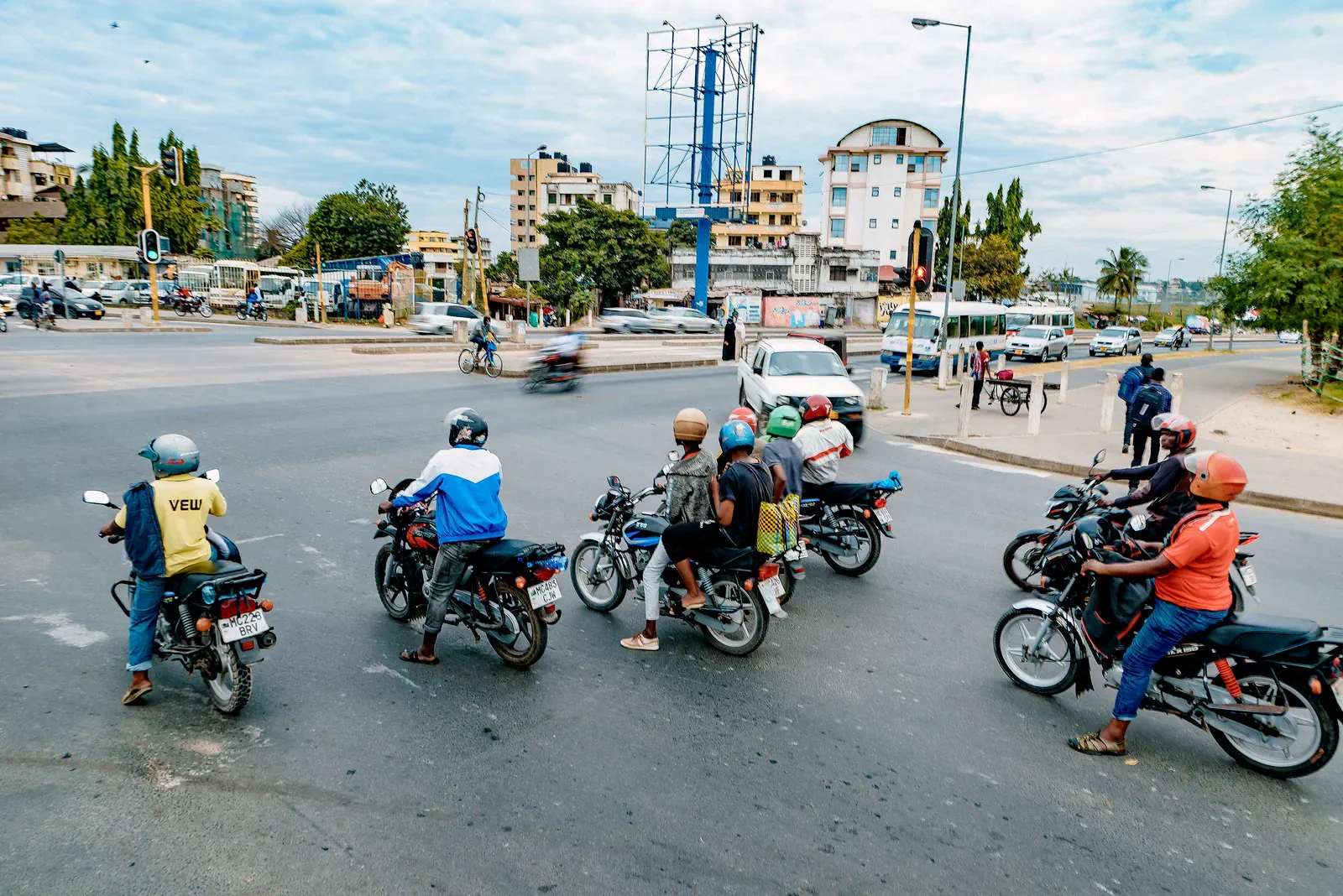
Dansi is dance music first. Each band created its own mtindo, a style tied to a dance and often named after a movement. Maquis’s ogelea piga mbizi means “dive and swim”, because dancers moved their arms as in diving, and the band’s other styles included kamanyola bila jasho (“dance kamanyola without sweating”), sanifu and zembwela. Some musicians were known as mtindo makers. When a player changed bands he changed his style to match.
Melody rests on guitar interplay with a lead singer and a chorus, and the lyrics are in Swahili. Guitar solos were prized: Nguza Mbangu, long with Maquis, was admired for those on “Mpenzi Luta” and “Mabruki”.
Instruments and production
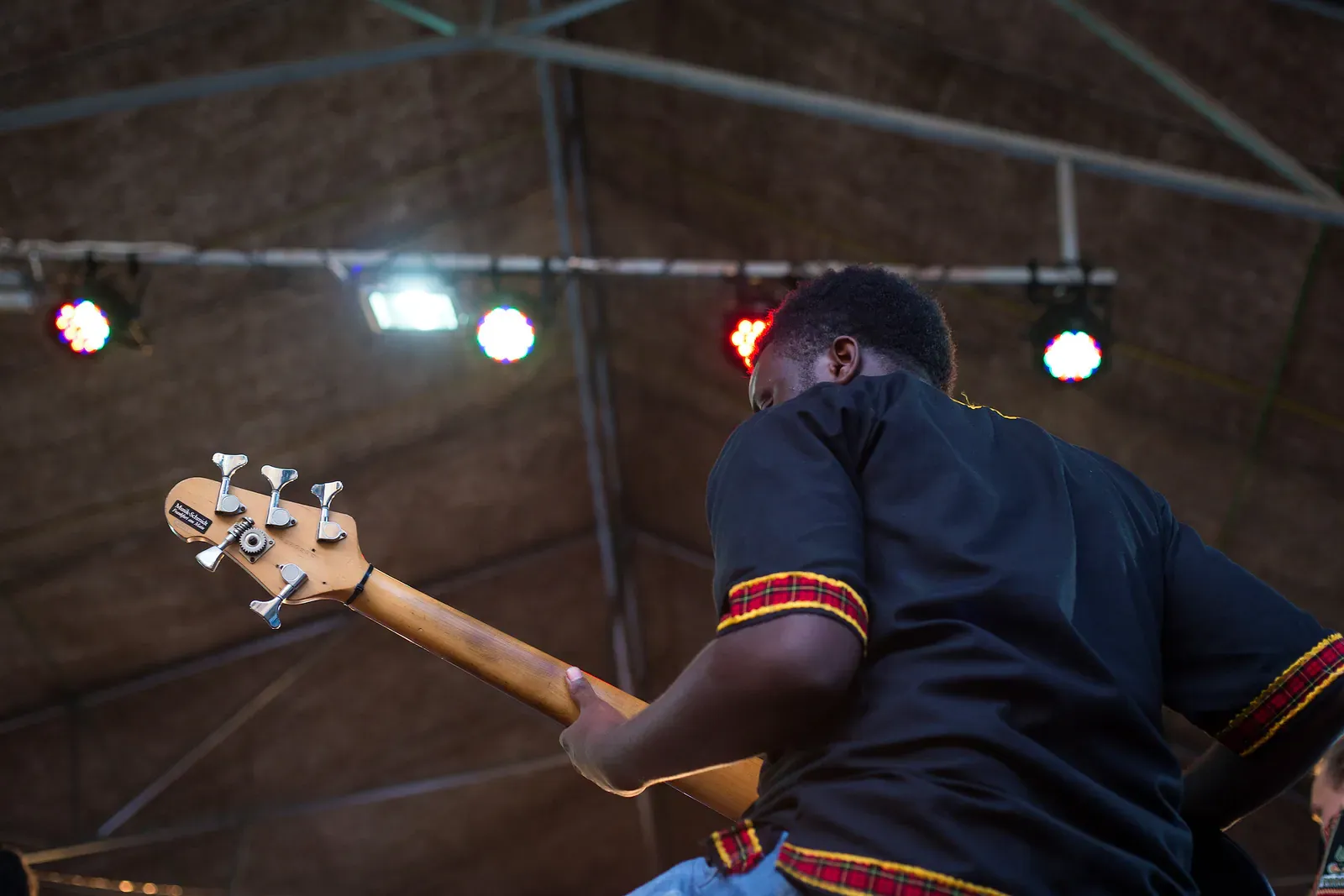
The early dansi bands were brass-based, which gave way to an electric guitar sound in the 1970s. Equipment depended on law and money. State sponsors and owners provided the instruments, which the musicians did not own, and imports were restricted until 1978. Recordings were released on many labels, and reissue labels such as Buda Musique later collected 1960s and 1980s dansi on its Zanzibara series.
Notable recordings
The best-known dansi recording abroad belongs to a musician at the edge of the genre. Remmy Ongala, born in Kindu in what was then the Belgian Congo, arrived in Dar es Salaam in 1978 and joined Orchestra Makassy before leading Orchestre Super Matimila, named after the businessman who owned its instruments. He sang about poverty, urban life and illness and was nicknamed Sauti ya Mnyonge, the voice of the poor man. In May 1989 the band recorded Songs for the Poor Man in three days at Real World Studios in Wiltshire, released that October by Real World Records. Its songs, including “Kipenda Roho”, a song of love and the risk of infidelity, used congas to double the guitar lines. The follow-up Mambo, recorded in August 1991, features four interlocking guitar parts over a rumba beat.
The Maquis song “Mpenzi Luta”, a story of regret and disillusionment, was reissued on the 2024 album Karubandika. In the same year Zanzibara 11 gathered Congolese-led dansi from 1982 to 1986.
Decline and heritage, 1990 to present
By the 1990s, younger listeners were turning to other pop styles. Several bands nonetheless survived. Msondo Ngoma, which began as NUTA Jazz Band and was renamed Juwata Jazz and OTTU Jazz as its sponsor changed, is the oldest active dansi band in Tanzania; its motto is baba ya muziki, “father of music”. Maquis Original is also still active. Reissue series from European labels, and book-length studies of Tanzania’s music business, have kept the history in view.
Culture
Dansi created a fan culture. Contests, nemeses and loyalty to a band resembled sport, and styles spread as dances. Songs often addressed daily life; Nyerere’s ujamaa ideal of familyhood and equality gave state-sponsored bands a national theme, and Ongala’s music carried a similar message into pop. A sponsor’s name was often the band’s name, which is why one group could appear under NUTA, Juwata and OTTU.
Legacy
Researchers link the style of International Orchestra Safari Sound to the later bongo flava, and Remmy Ongala’s music helped feed Tanzanian hip-hop in Dar es Salaam in the 1990s.
Misconceptions
Dansi is not simply imported Congolese music. Congolese bands set the pattern, but Tanzanian groups such as Morogoro Jazz drew on taarab, benga and pop, and the later bands built local styles tied to Swahili dances. It is also not a dead genre: Msondo Ngoma still performs, and the Congolese-founded Maquis Original is still active.
Frequently asked questions
What is muziki wa dansi?
Muziki wa dansi, “dance music” in Swahili, is Tanzanian big-band music derived from Congolese soukous and rumba. It began in the 1930s around Dar es Salaam and is often sung in Swahili.
Why is dansi called Swahili jazz?
Across East and Central Africa, “jazz” is a catch-all word for dance bands playing soukous, highlife and similar styles. Most dansi lyrics are in Swahili, so the music became known as Swahili jazz.
Which are the most important dansi bands?
DDC Mlimani Park Orchestra, Msondo Ngoma, Orchestra Maquis Original, Orchestra Safari Sound, Vijana Jazz and Morogoro Jazz Band are the best-known names. Super Matimila, led by Remmy Ongala, is the group most heard outside Tanzania.
What is an mtindo in dansi?
An mtindo is a band’s signature style, usually linked to a dance. Mlimani Park stayed with sikinde, while Maquis changed its styles over time, among them kamanyola, ogelea piga mbizi and zembwela.
Is muziki wa dansi still played?
Yes. Msondo Ngoma, Maquis Original and other bands still perform in Dar es Salaam, though many younger Tanzanians prefer newer pop styles.
Sound
Sound sheet
Signature sounds
- Swahili lyrics
- Interplaying electric guitars
- Brass sections in early bands
- A band-specific mtindo tied to a dance
Drums and percussion
- Congas
Techniques
- Band-specific mtindo
- Guitar solos
- Brass-led arrangements
- Synth and drum-machine production
Keys and modes
Major, diatonic chord cycles. Soukous-derived guitar lines over simple repeating chords.
Tuning
Equal temperament on Western band instruments
Vocals
Swahili lead and chorus vocals, often with social commentary; star composers wrote hits for several bands.
Scenes
Where it happened
Where and when the sound lived: one bar per city on a shared timeline.
Africa
Active scenes
Peak 2, 1944-2025
Home of most dansi bands, from Dar es Salaam Jazz Band to Mlimani Park and Maquis Original.
Home of Morogoro Jazz Band and Mbaraka Mwinshehe.
Venues and places
Dar es Salaam, 1978 to today. Bar whose resident band became DDC Mlimani Park Orchestra.
Box, 1989 to today. Wiltshire studio where Remmy Ongala recorded Songs for the Poor Man and Mambo.
Culture
Culture markers
- Mitindo dance styles
Each band had its own style, often named after a dance move such as ogelea piga mbizi, 'dive and swim'.
Dance - Band rivalry like sports teams
Contests pitted bands against each other, and each had its own fan base.
Ritual - Ngoma ya ukae
'The home dance', the motto of Mlimani Park, which kept to its sikinde style.
Slang
Media
Key media
- 2011Live from Dar es Salaam: Popular Music and Tanzania's Music Economy
by Alex Perullo. Study of Tanzania's music business, including dansi bands.
Book - 2015Zanzibara 9: Un souffle frais de Tanzanie (1972-74)
by Mbaraka Mwinshehe. Reissue of early 1970s Mwinshehe recordings on the Zanzibara series.
Compilation - 2024Zanzibara 11: Congo in Dar, Dance No Sweat
by Orchestre Maquis du Zaire & Orchestre Safari Sound. Reissue of Congolese-led dansi from 1982 to 1986.
Compilation
Glossary
Terms on this page
Short name for muziki wa dansi, 'dance music' in Swahili.
A band's signature style, plural mitindo, tied to a dance.
'Voice of the poor man', the nickname of Remmy Ongala.
The single mtindo of Mlimani Park, inspired by traditional ngoma dances.
Nickname for dansi, since 'jazz' means big-band dance music in East and Central Africa.
African family