Congolese rumba
Congolese rumba is Lingala-sung guitar dance music from Kinshasa and Brazzaville, formed in the 1940s from maringa and Cuban son and listed by UNESCO in 2021.
Kinshasa, 1938
African family
Born
1938
Kinshasa
Subgenres
5
Documented branches
Links
20
Genres it drew on or shaped
Tempo
80-120 BPMLineage
Family tree
Grew out of
- Maringa
Derived from
Influenced by
Kinshasa, 1938
Congolese rumba
Led to (9)
Timeline
Era by era
From the first sparks to today. Select a dot to read the story behind it.
- Maringa and bar dancing
1920 to 1947
- Studios and the first stars
1948 to 1959
- Independence and the schools
1960 to 1972
- Zairianisation, Paris and heritage
1973 to today
Eras
Moments
- 1 Maringa and bar dancing, 1920 to 1947
- 2 Studios and the first stars, 1948 to 1959
- 3 Independence and the schools, 1960 to 1972
- 4 Zairianisation, Paris and heritage, 1973 to today
around 1920
Maringa and bar dancing
Bakongo maringa partner dances, played on accordion and likembe, spread through the bars of Brazzaville and Leopoldville while Cuban son records arrived and were sold as rumba.
- 1930Maringa spreads across the Congo regionPartner dancing to maringa bands becomes widespread in the French and Belgian Congo, and studio owners start to market it as rumba.
- 1938Congo Rumba ensemble founded in BrazzavilleJean Réal founds an ensemble named Congo Rumba, with Gabriel Kakou and Georges Mozebo among its musicians.
1948
Studios and the first stars
Ngoma, Opika and Loningisa opened recording studios in Leopoldville. Wendo Kolosoy, African Jazz and OK Jazz moved the music from acoustic guitar and accordion to electric guitars and horns.
- 1948Ngoma opens and Marie-Louise is recordedNico Jeronimidis opens the Ngoma studio in Leopoldville; Wendo Kolosoy's Marie-Louise sells more than two million copies.
- 1950Opika takes its nameThe Benatar brothers rename their label from Kina to Opika after a legal dispute with Ngoma, and sign the Bana Opika roster.
- 1953African Jazz formedJoseph Kabasele, known as Le Grand Kallé, forms African Jazz, the band that opens the first school of modern rumba.
- 1956OK Jazz foundedFranco and a house band of Loningisa studio musicians launch OK Jazz on 6 June, later renamed TPOK Jazz.
1960
Independence and the schools
Indépendance Cha Cha made the music the sound of decolonisation. The African Jazz and OK Jazz schools split, the mi-solo guitar arrived, and Zaïko Langa Langa opened a third school in 1969.
- 1960Indépendance Cha Cha in BrusselsAfrican Jazz plays the song at the Bal Congo during the Round Table Conference, and it becomes an anthem of independence across French-speaking Africa.
- 1963African Fiesta formedTabu Ley Rochereau and guitarist Nico Kasanda leave African Jazz to form African Fiesta.
- 1966Congolese bands at the Dakar festivalLes Bantous de la Capitale and OK Jazz are the first rumba bands to play the World Festival of Negro Arts in Dakar.
- 1969Zaïko Langa Langa formedStudents in Kinshasa form the band that starts the third school, with sebene-driven sets and the cavacha drum pattern.
- 1970Tabu Ley headlines the Paris OlympiaIn December Tabu Ley Rochereau becomes the first Congolese rumba artist to headline the Olympia.
1973
Zairianisation, Paris and heritage
Economic collapse under Mobutu pushed musicians to Paris and Brussels. Soukous, kwassa kwassa and ndombolo grew out of the rumba, and in 2021 UNESCO listed Congolese rumba as intangible heritage.
- 1973Zairianisation hits the record industryForeign-owned companies are handed to Congolese owners, vinyl pressing stalls and pirated cassettes spread; musicians leave for Paris and Brussels.
- 1974Zaire 74 festival in KinshasaThree days of concerts put Tabu Ley Rochereau, OK Jazz and Zaïko Langa Langa on a bill with American and Caribbean stars.
- 1985Franco releases MarioThe satirical song about a gigolo is certified gold in Zaire after more than 200,000 sales.
- 1989Franco diesFranco dies on 12 October; Simaro Lutumba takes over TPOK Jazz.
- 1997Wenge Musica splitsThe band that drove ndombolo divides into Wenge Musica Maison Mère under Werrason and Wenge BCBG under JB Mpiana.
- 2021UNESCO inscriptionCongolese rumba is added to the list of intangible cultural heritage in December, a joint listing of the two Congos.
Listening path
Start listening
A short path from an easy way in to the deep end. Thumbnails come from YouTube; the player loads only when you press play.
- 01
Wendo Kolosoy, 1948
The 1948 hit that started the boom: acoustic guitar, a plain vocal and a gentle rumba pulse.
- 02
Le Grand Kallé et l'African Jazz, 1960
Horns, cha-cha rhythm and Lingala harmonies in the song of independence.
- 03
Tabu Ley Rochereau, 1989
Tabu Ley's high, smooth vocals over a soukous-era rhythm section and a long guitar sebene.
- 04
Franco et le TPOK Jazz, 1985
A slow storytelling section followed by a long sebene with interlocking guitars and horns.
Facts
| Family | African |
| Origin | Kinshasa, Congo - Kinshasa |
| Emerged | Late 1930s-1940s |
| Status | Active |
| Tempo | 80 to 120 BPM |
| Meter | 4/4 |
| Grew out of | Maringa |
| Subgenres | 5 |
Congolese rumba, also called rumba lingala or African rumba, is a dance music from the adjacent cities of Kinshasa and Brazzaville, sung mostly in Lingala.
It took shape between the late 1930s and the 1950s, when the Bakongo partner dance maringa met Cuban son records and was rebuilt around interlocking guitars, horns and a long instrumental climax called the sebene. In December 2021 UNESCO listed it as intangible cultural heritage of the two Congos.
Part of the African family, it is the parent of soukous, ndombolo and several related dance styles.
Origins
The word rumba probably comes from the Kikongo nkumba, “navel”, but the music got its name through a misreading. Cuban son records by groups such as Sexteto Habanero and Trio Matamoros were imported into the Congos in the 1930s and 1940s and sold as rumba, so local bands and studio owners applied the label to their own dance music. The musical parentage is closer to son cubano than to the percussion-led Cuban dance now called rumba.
The local root was maringa, a Bakongo couple dance from the old Kingdom of Loango, played on accordion, a bottle struck as a triangle and a small frame drum called patenge. Its dancers swayed the hips from leg to leg, a movement later associated with rumba. Bars in Brazzaville and Leopoldville filled with such bands from the 1920s, and by 1930 partner dancing had spread across the region. In Brazzaville the entertainer Jean Réal founded an ensemble called Congo Rumba in 1938.
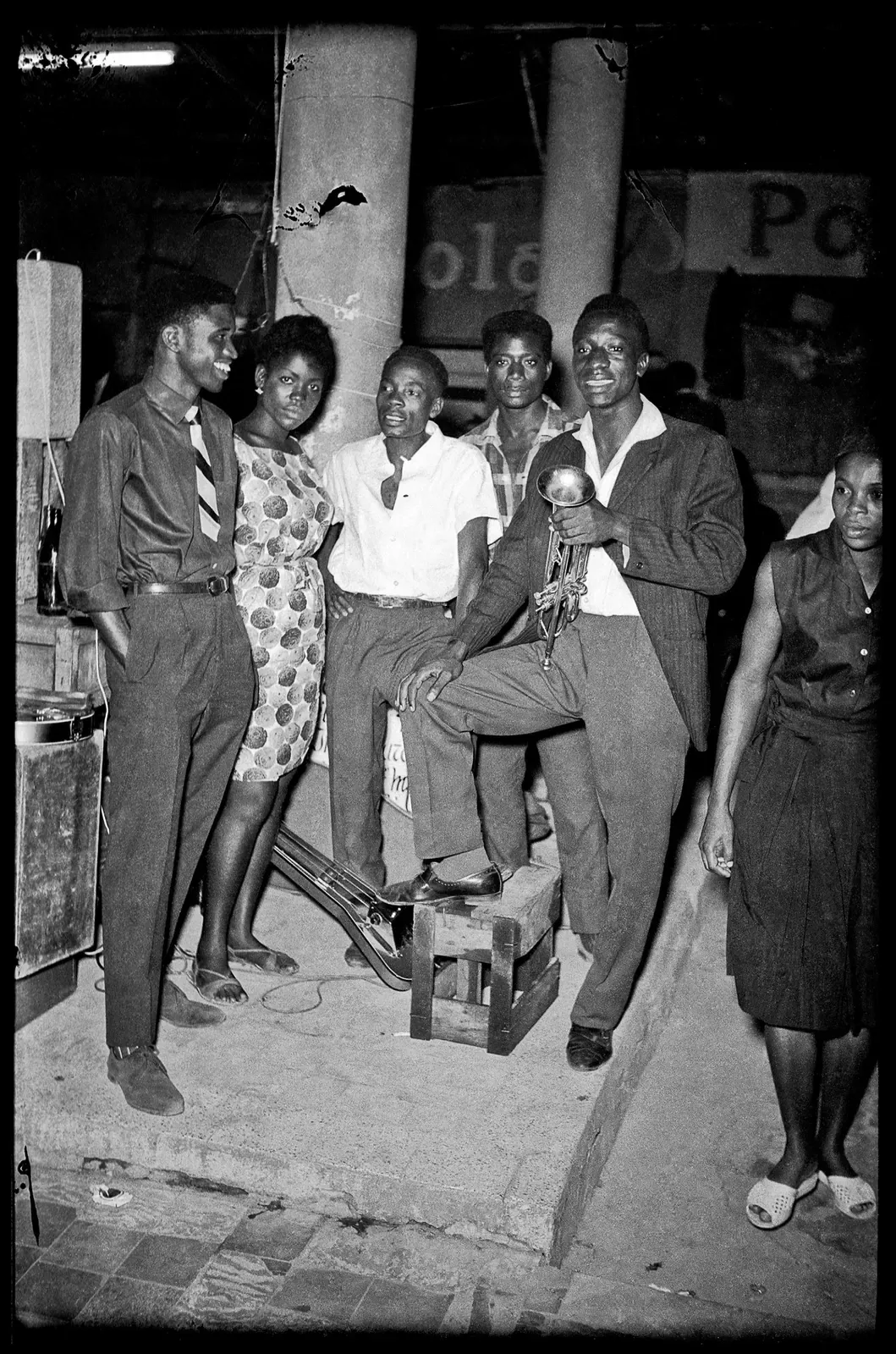
Studios and the first stars, 1948-1959
Recording turned a bar style into a national music. In 1948 the Greek businessman Nico Jeronimidis opened the Ngoma studio in Leopoldville with a direct-to-disc machine. The cutter reached the centre of the disc after about three minutes, which pushed bands toward short, tightly organised songs. Wendo Kolosoy’s Marie-Louise, co-written with the guitarist Henri Bowane, sold more than two million copies, and a rumour that the singer’s voice could summon a lost beauty alarmed colonial officials. Ngoma sent Wendo on tour in a van with loudspeakers on the roof.
Rivals followed. Opika, founded in 1949 by the Benatar brothers as Kina, took its new name in 1950 after a legal dispute with Ngoma. Loningisa, run by the Papadimitriou brothers, kept a house band of session players.
Bands grew from three guitars and a clarinet, as in the San Salvador group of 1952, into orchestras with bass, trumpets, saxophones and fuller percussion. Early guitarists often used an open tuning with a capo, which produced a buzzing tone that listeners prized.
Independence and the schools, 1960-1972
By the mid-1950s two schools had formed. African Jazz, led by Joseph Kabasele, known as Le Grand Kallé, took on jazz and Afro-Cuban accents and added tumba drums. OK Jazz, founded in 1956 around Franco, developed the faster odemba style and made the sebene the centre of the song rather than a break between choruses.
In January 1960 African Jazz travelled to Brussels for the Round Table Conference on Congolese independence and played Indépendance Cha Cha at a gala at the Plaza Hotel. Lumumba and Kasa-Vubu heard their own names in the lyrics, and the song became an independence anthem across French-speaking Africa. A year later OK Jazz recorded Kingotolo Mbuta Ngani Mbote, a satirical portrait of Belgian administrators.
Splits created new bands. Tabu Ley Rochereau and the guitarist Docteur Nico left African Jazz in 1963 to form African Fiesta, and the line-up of three guitarists, with a middle mi-solo part between lead and rhythm, became a mark of the style. In April 1966 OK Jazz and Les Bantous de la Capitale were the first rumba bands to play the World Festival of Negro Arts in Dakar. In 1969 students in Kinshasa formed Zaïko Langa Langa, which opened a third school with a collective of singers, a harmonised choir, the atalaku and the snare-driven cavacha beat.

Characteristics
A song usually opens with a slow, vocal-centred section in a moderate 4/4, then shifts into the sebene, a fast section in which the guitars answer each other in cycles and the drummer cues the band. Lead guitar plays high, quick lines, the mi-solo fills the middle register with arpeggios and picked patterns, and the rhythm guitar keeps the repeating figure. The bass reinforces the clave pulse. The sebene usually follows the I-IV-V-IV progression of Congolese music in a major mode.
Voices sing in Lingala, often in thirds, with call and response between singer and chorus, singer and guitar, and between instrumental sections. Horns punctuate and answer rather than carry the melody. During the sebene the atalaku shout cues and rhythmic phrases, and singers call out patrons’ names in the libanga, a courtesy that also invites tips.
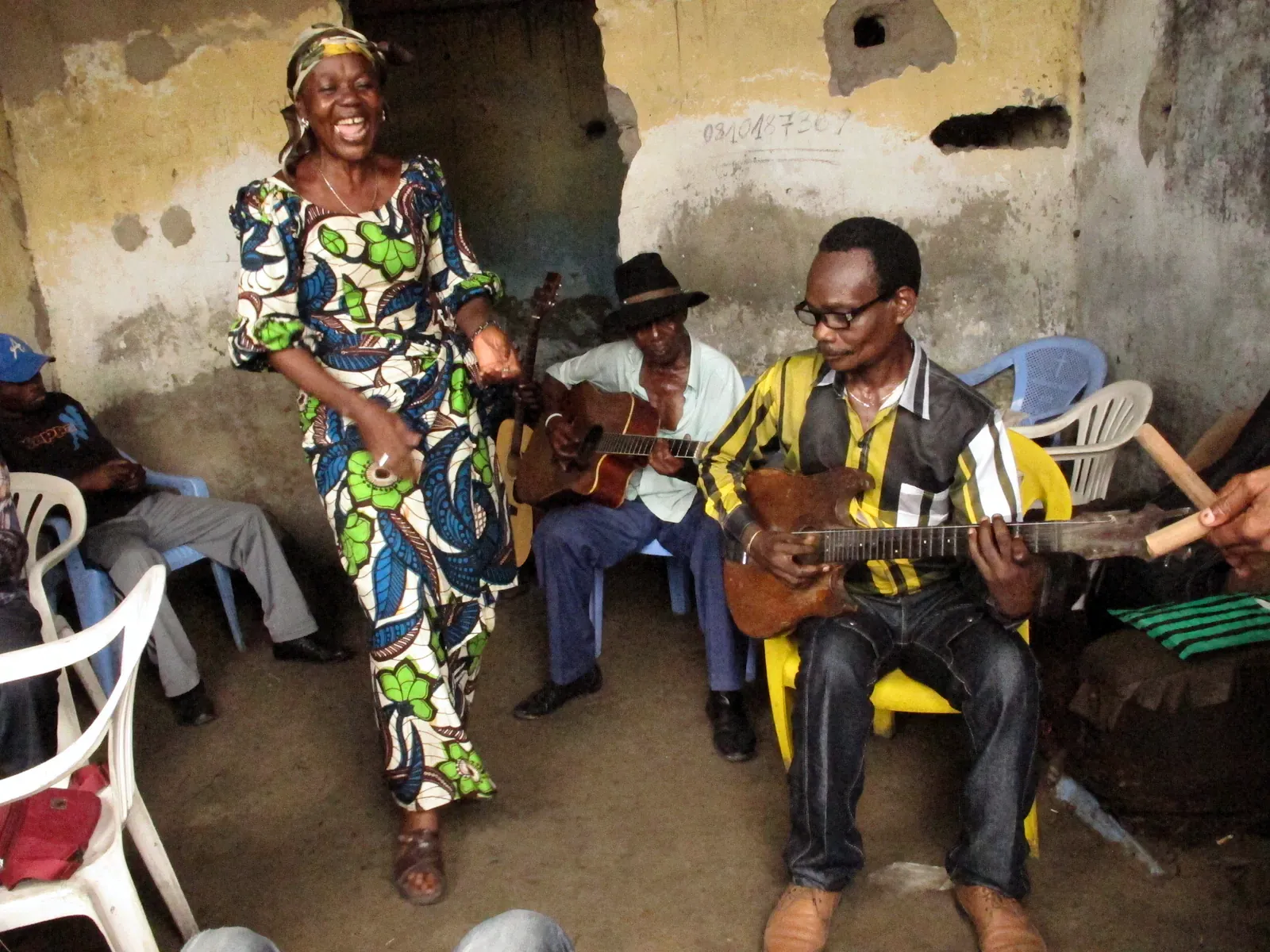
Instruments and production
Acoustic guitars and accordion gave way to electric guitars in the 1950s, a change credited to the Belgian guitarist Bill Alexandre in Leopoldville. Recording stayed close to the live band: guitars, bass, a drum kit or hand percussion, maracas, and horns.
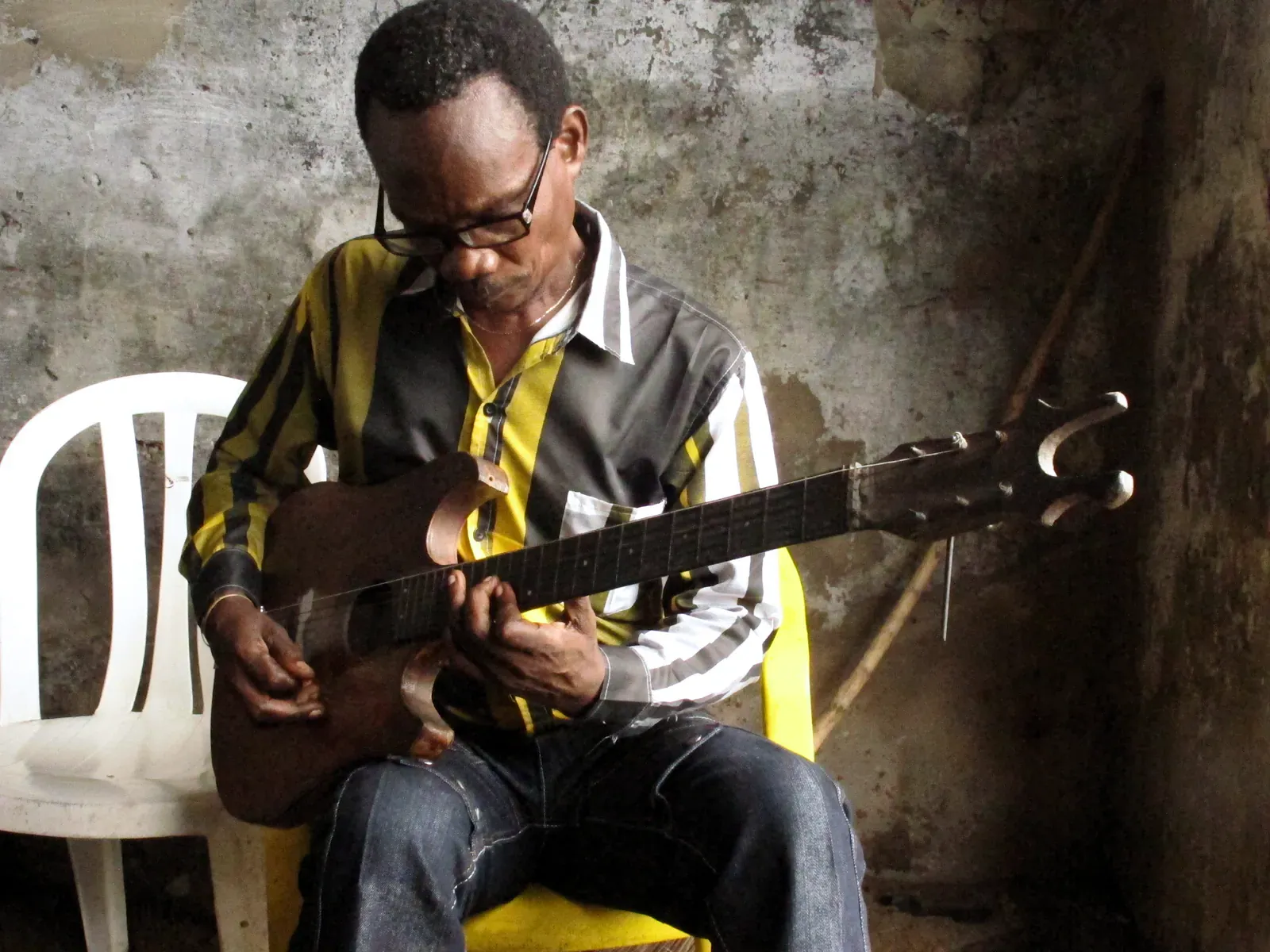
Zairianisation, Paris and soukous
In 1970 Tabu Ley Rochereau became the first Congolese rumba artist to headline the Olympia in Paris. Three years later, under the Zairianisation programme, foreign-owned firms were handed to Congolese owners, record pressing declined, pirated cassettes spread and musicians moved to Paris and Brussels.
The Zaire 74 festival in Kinshasa put Tabu Ley Rochereau, OK Jazz and Zaïko Langa Langa on stage with American and Caribbean artists. By the end of the decade, Paris had specialist African record shops and studios. Faster, lighter styles descended from rumba: soukous in the 1960s and 1970s, then kwassa kwassa, and in the late 1990s ndombolo, which added synthesizers and digital production. Wenge Musica pioneered ndombolo, and in 1997 it split into two groups led by Werrason and JB Mpiana.
Notable recordings
Marie-Louise (1948) set the model of a guitar-accompanied tune with a plain, tender melody. Indépendance Cha Cha (1960) joined rumba to a cha-cha pulse and made the genre a political symbol. Franco’s Mario (1985) tells of an educated young man who lives off an older woman; it was certified gold in Zaire for more than 200,000 sales and is often named among his best work. Tabu Ley Rochereau’s Pitié shows his smooth high voice over a rhythm section from the soukous era.
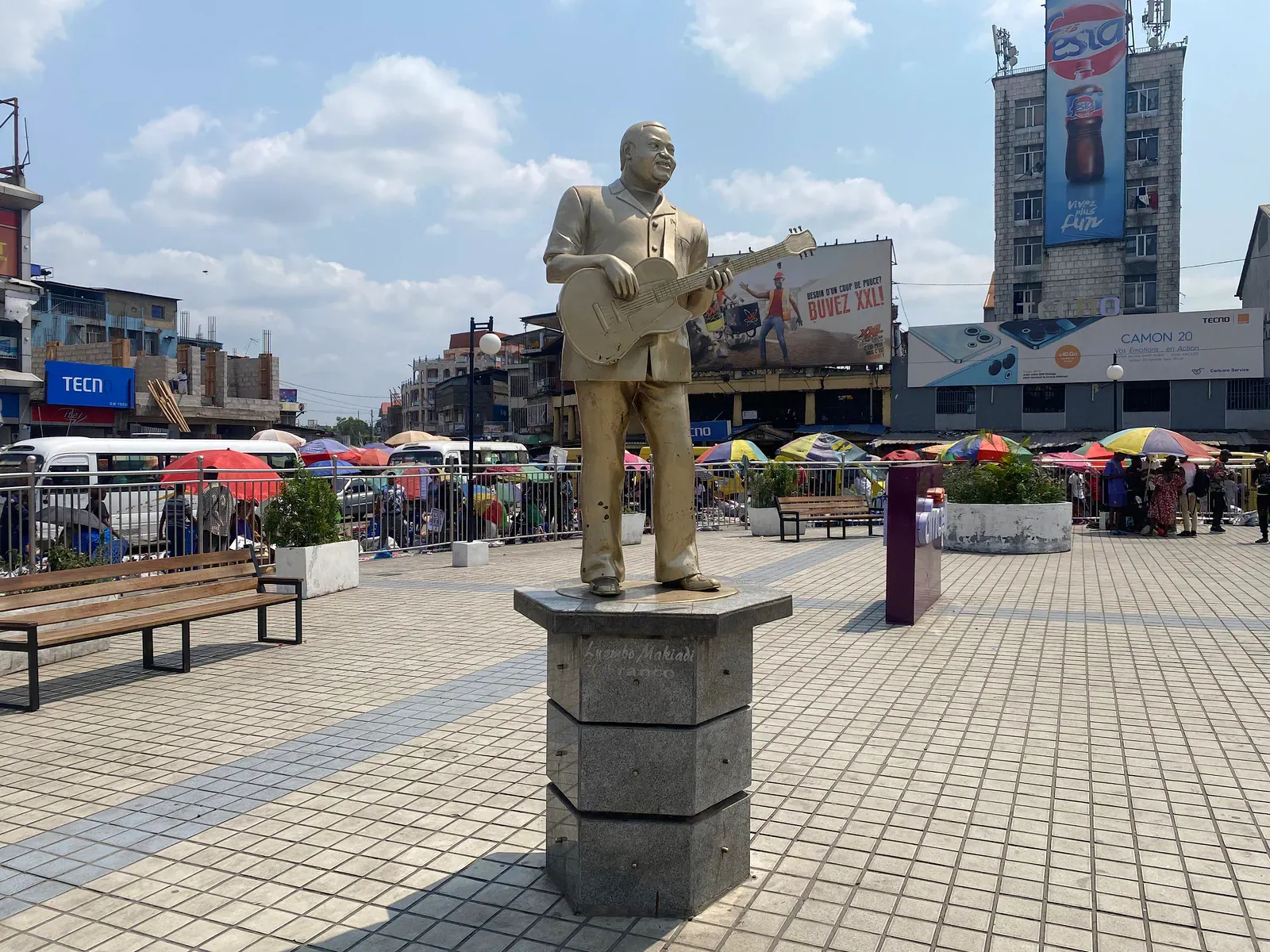
Culture
Dance is part of the music’s form. Maringa dancers shifted weight with a hip sway, soukous later used quicker body movement, and the cavacha rhythm gave its name to a dance craze in the early 1970s. Lyrics cover love, travel, loneliness and social comment, and artists such as Franco used satire about colonial rule, corruption and sexual health. His Attention na SIDA of 1987 is a health warning set to a rumba. Women singers such as Abeti Masikini, who played the Olympia in 1973, helped to widen the audience.
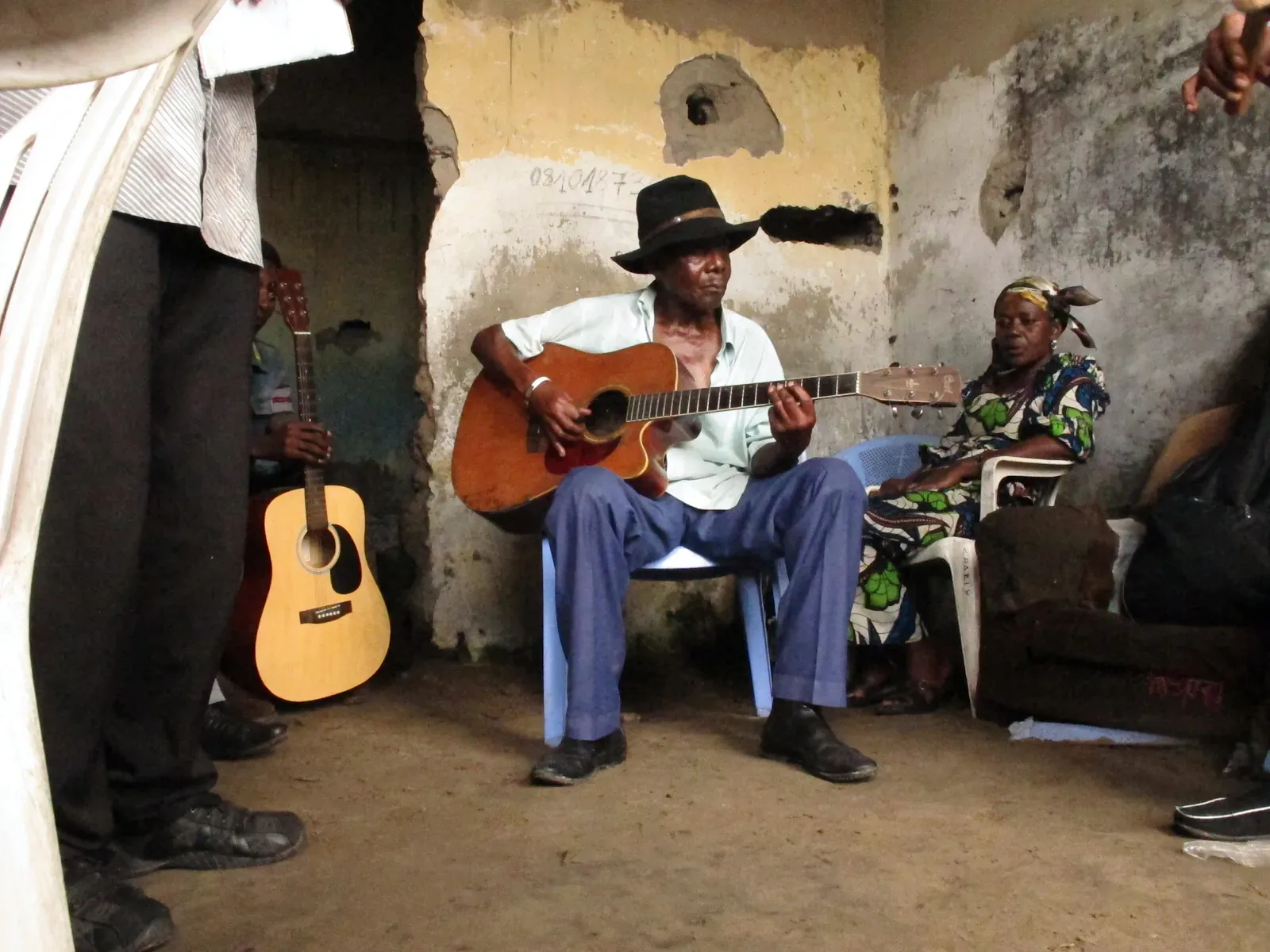
Legacy
Congolese rumba became a reference point for music across Central, East and West Africa. Styles in Colombia, Ivory Coast and France have drawn on it, and its guitar patterns underlie much of the Central African popular music that followed. The 2021 listing recognises the genre as shared heritage of the Democratic Republic of the Congo and the Republic of the Congo.
Misconceptions
Congolese rumba is not a copy of Cuban rumba. The name came from record labels, and the music derives from maringa and from son, not from the Cuban percussion dance. It is also not the same thing as soukous: the two are often used as synonyms in the press, but soukous is faster and has a different song structure and dance. A third myth is that the genre belongs to one country. Both Kinshasa and Brazzaville produced its bands, and both countries shared in the UNESCO listing.
Frequently asked questions
What is Congolese rumba?
Congolese rumba is a guitar-led dance music from Kinshasa and Brazzaville, sung mostly in Lingala. A slow vocal opening gives way to a fast guitar section called the sebene.
Why is Congolese rumba called rumba?
Cuban son records imported in the 1930s and 1940s were labelled rumba by sellers and audiences, and the name stuck to the local music that grew up beside them.
How fast is Congolese rumba?
Most recordings fall between about 80 and 120 beats per minute in 4/4, with the sebene feeling faster because the guitars play denser patterns.
Who are the key figures of Congolese rumba?
Wendo Kolosoy, Le Grand Kallé, Franco, Tabu Ley Rochereau and Docteur Nico are the best known. Wendo is called the father of the genre, and Franco led OK Jazz for more than three decades.
Sound
Sound sheet
Anatomy of a track
| # | Part |
|---|---|
| 1 | Slow vocal introduction |
| 2 | Verses with call and response |
| 3 | Sebene (fast guitar and animation section) |
Signature sounds
- Interlocking lead, mi-solo and rhythm guitars
- Lingala vocals in harmony thirds
- Horns answering the singers
- Sebene with atalaku shouts
Drums and percussion
- Drum kit
- Tumba drums
- Patenge
Techniques
- Interlocking sebene guitars
- Mi-solo arpeggio picking
- Vocal thirds
- Libanga animation
Keys and modes
Major mode, I-IV-V-IV. The standard Congolese progression underlying the sebene.
Tuning
Hawaiian open tuning (D-G-D-G-B-D) with a capo on 1940s and 1950s guitars, later standard tuning
Vocals
Lingala lead and choir in thirds, with vibrato, falsetto and melismatic ornament; atalaku shouts in the sebene.
Scenes
Where it happened
Where and when the sound lived: one bar per city on a shared timeline.
Africa
Europe
Active scenes
Peak 4, 1970-2025
Leopoldville's studios and bars produced most of the genre's stars and its main schools.
Across the river, the French Congo capital where maringa bands and the Congo Rumba ensemble formed.
Host of the 1960 Round Table concerts and later of Belgicain student bands.
Home to African record shops, studios and exiled bandleaders from the 1970s on.
Venues and places
Kinshasa, 1948 to today. A converted storeroom behind Nico Jeronimidis's shop, where Marie-Louise was recorded.
Brussels, 1960 to today. Site of the Bal Congo where African Jazz played Indépendance Cha Cha.
Paris, 1970 to today. Concert hall that Tabu Ley Rochereau headlined in December 1970.
Culture
Culture markers
- Hip-sway partner dance
Maringa and early rumba dancers shifted weight from leg to leg with a rhythmic hip movement.
Dance - Libanga shout-outs
Singers call patrons' names during the song; the practice honours them and invites tips.
Ritual - Cavacha
A dance craze tied to Zaïko Langa Langa's snare-driven drum pattern.
Dance
Media
Key media
- 1992Tango ya ba Wendo
by Documentary. Documentary on Wendo Kolosoy and the first generation of rumba.
Film - 2000Rumba on the River
by Gary Stewart. A history of the Congolese rumba and its bands from the 1930s to the 1990s.
Book - 2008Soul Power
by Jeffrey Levy-Hinte. Concert film from the Zaire 74 festival in Kinshasa.
Film
Glossary
Terms on this page
A hype vocalist who shouts cues and rhythmic phrases over the sebene.
A snare-driven drum pattern and dance associated with Zaïko Langa Langa and drummer Meridjo Belobi.
A shout-out to a patron by name during a performance, a sign of respect that invites tipping.
Bakongo partner dance and music, the local root of Congolese rumba.
The middle guitar between lead and rhythm; the name means half-solo.
The fast instrumental section after the slow vocal opening, built on interlocking guitars.
African family