Cuban rumba
Cuban rumba is an Afro-Cuban drum, voice and dance tradition from the tenement yards of Havana and Matanzas, formed around 1880 and listed by UNESCO in 2016.
Havana, 1850
Latin family
Born
1850
Havana
Subgenres
8
Documented branches
Links
19
Genres it drew on or shaped
Tempo
95-145 BPMLineage
Family tree
Grew out of
Derived from
Influenced by
Havana, 1850
Cuban rumba
Led to (9)
Timeline
Era by era
From the first sparks to today. Select a dot to read the story behind it.
- Solares and cajones
1880 to 1946
- First recordings and jazz crossover
1947 to 1958
- Revolution and state stage
1959 to 1989
- Street revival and heritage listing
1990 to today
Eras
Moments
- 1 Solares and cajones, 1880 to 1946
- 2 First recordings and jazz crossover, 1947 to 1958
- 3 Revolution and state stage, 1959 to 1989
- 4 Street revival and heritage listing, 1990 to today
around 1880
Solares and cajones
Dock workers and neighbours in Havana and Matanzas tenements play rumba on wooden boxes, spoons and tables. Yambu, guaguancó and columbia take shape, mostly outside the record industry.
- 1880Rumba forms in the solares of Havana and MatanzasAfro-Cuban workers combine Central African drumming and dance with Spanish-derived coros de clave.
- 1886Slavery is abolished in CubaFreed and rural workers move into port and city tenements, where rumba becomes a neighbourhood party form.
1947
First recordings and jazz crossover
Chano Pozo records the first commercial rumbas in New York and takes conga drumming into jazz, while Matanzas singers cut guaguancó for Havana labels such as Puchito and Panart.
- 1947Chano Pozo records the first commercial rumbasThe Afro-Cuban rhythm sessions in New York include rumbas, columbias, guaguancós and abakuá pieces.
- 1947Pozo joins Dizzy Gillespie's band at Carnegie HallThe September concert is called a milestone of Latin jazz and sends conga rhythms into bebop.
- 1947Gillespie records MantecaPozo co-wrote the tune, whose drum parts come from rumba and Afro-Cuban ritual.
- 1948Chano Pozo is shot dead in HarlemHe dies on 2 December at age 33, ending the career of the best-known rumbero of his time.
- 1952Conjunto Guaguancó Matancero is foundedThe Matanzas group, later Los Muñequitos de Matanzas, starts on 9 October.
- 1956Los Beodos and the first Puchito LPThe Matanzas group's first 78 and album come out on Puchito, a Havana independent.
- 1957AfroCuba de Matanzas is foundedThe ensemble later pioneers bata-rumba, mixing sacred bata drums into the secular form.
- 1958Panart issues Guaguancó volumes 1 and 2Two records collect the early Matanzas recordings.
1959
Revolution and state stage
After 1959 the state nationalises the record industry and funds folkloric ensembles. Los Papines and Los Muñequitos tour abroad, and Havana drummers invent the guarapachangueo style.
- 1959The Revolution begins institutional support for rumbaMinistry-run folkloric companies split performance into street rumba and a staged, theatre version.
- 1961Guaguancó Marítimo Portuario forms on the Havana docksThe dockworkers' group is the root of Yoruba Andabo.
- 1963Los Papines are founded in HavanaFour Abreu brothers from Marianao form the family rumba group.
- 1964EGREM takes over Cuban record productionThe state company absorbs the nationalised Panart studios and releases rumba on its Areito imprint.
- 1965Los Papines release Fantasía en ritmoAn early Areito album by the family group.
- 1970Los Chinitos create guarapachangueoThe Havana group widens the melodic range of the drums, at first a term of mockery.
- 1981Yoruba Andabo is foundedPancho Quinto leads the Havana ensemble, a leading guarapachangueo group.
- 1983Los Muñequitos record Congo YambumbaJesús Alfonso's title piece becomes the group's best-known rumba.
- 1985The Minister of Culture declares rumba essential to CubaHis line, rumba without Cuba is not rumba and Cuba without rumba is not Cuba, becomes a slogan.
1990
Street revival and heritage listing
Sunday rumba at the Callejón de Hamel and foreign releases of the great groups renew interest, and in 2016 UNESCO lists rumba as intangible cultural heritage of humanity.
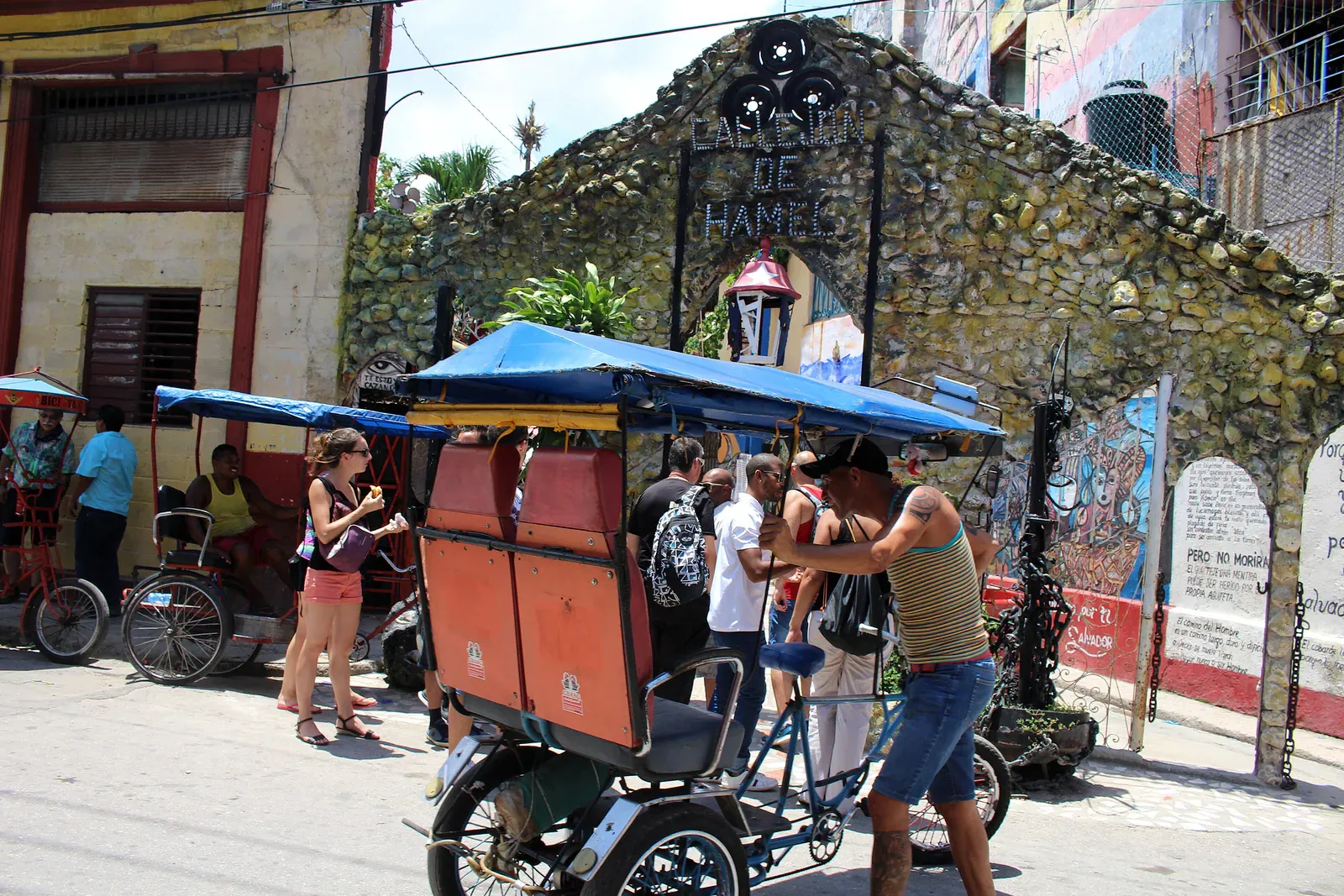
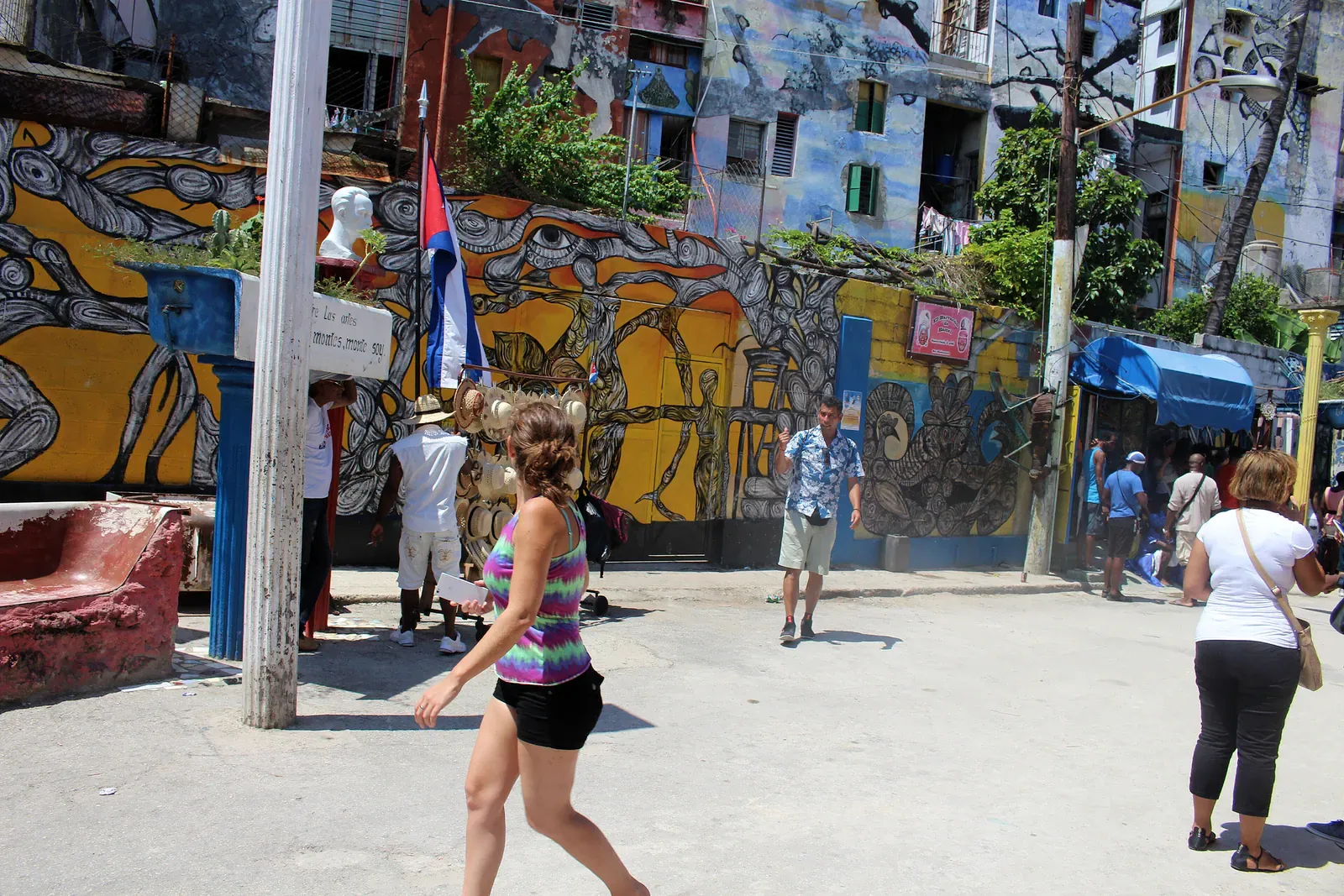
- 1990Callejón de Hamel opensPainter Salvador González Escalona starts the mural alley on 21 April; it hosts Sunday rumba.
- 1993Spirits of Havana with Yoruba Andabo is releasedJane Bunnett's jazz album, recorded in 1991, brings the group to foreign audiences.
- 1994Qbadisc issues Congo Yambumba in the United StatesThe New York label begins a run of releases by Los Muñequitos.
- 2016UNESCO inscribes rumba in CubaThe festive combination of music, dance and associated practices joins the Representative List.
Listening path
Start listening
A short path from an easy way in to the deep end. Thumbnails come from YouTube; the player loads only when you press play.
- 01
Dizzy Gillespie and His Orchestra, 1947
Chano Pozo's co-written piece, where rumba-rooted conga drumming enters jazz.
- 02
Los Muñequitos de Matanzas, 1956
An early Matanzas guaguancó, drum-led and sung in call and response.
- 03
Los Papines, 1965
A virtuoso showcase for the Abreu brothers' hand drums.
- 04
Los Muñequitos de Matanzas, 1983
The group's signature rumba, still played by bands across Latin music.
- 05
Yoruba Andabo, 2015
A modern columbia in fast compound meter from a leading Havana ensemble.
Cuban rumba is a secular Afro-Cuban tradition of drumming, call-and-response singing and dance, formed around 1880 in the tenement courtyards of Havana and Matanzas. Its three main styles are yambú, guaguancó and columbia, all built on a five-stroke clave and the improvising quinto drum.
It belongs to the Latin family and is distinct from ballroom rhumba, Catalan rumba and Congolese rumba.
Origins
Rumba grew out of the meeting of Central African drumming and dance with Spanish-derived song. Afro-Cuban dock workers and neighbours in the port districts of Havana and Matanzas played it in the solares, the shared courtyards of their tenements, on whatever was at hand: wooden boxes, tabletops, spoons. The sung part came from the coros de clave, neighbourhood choral societies of the late 19th century, whose repertoire also fed the criolla and guajira song forms. The abolition of slavery in 1886 sent freed and rural workers into the ports and cities, and rumba became the party form of those neighbourhoods.
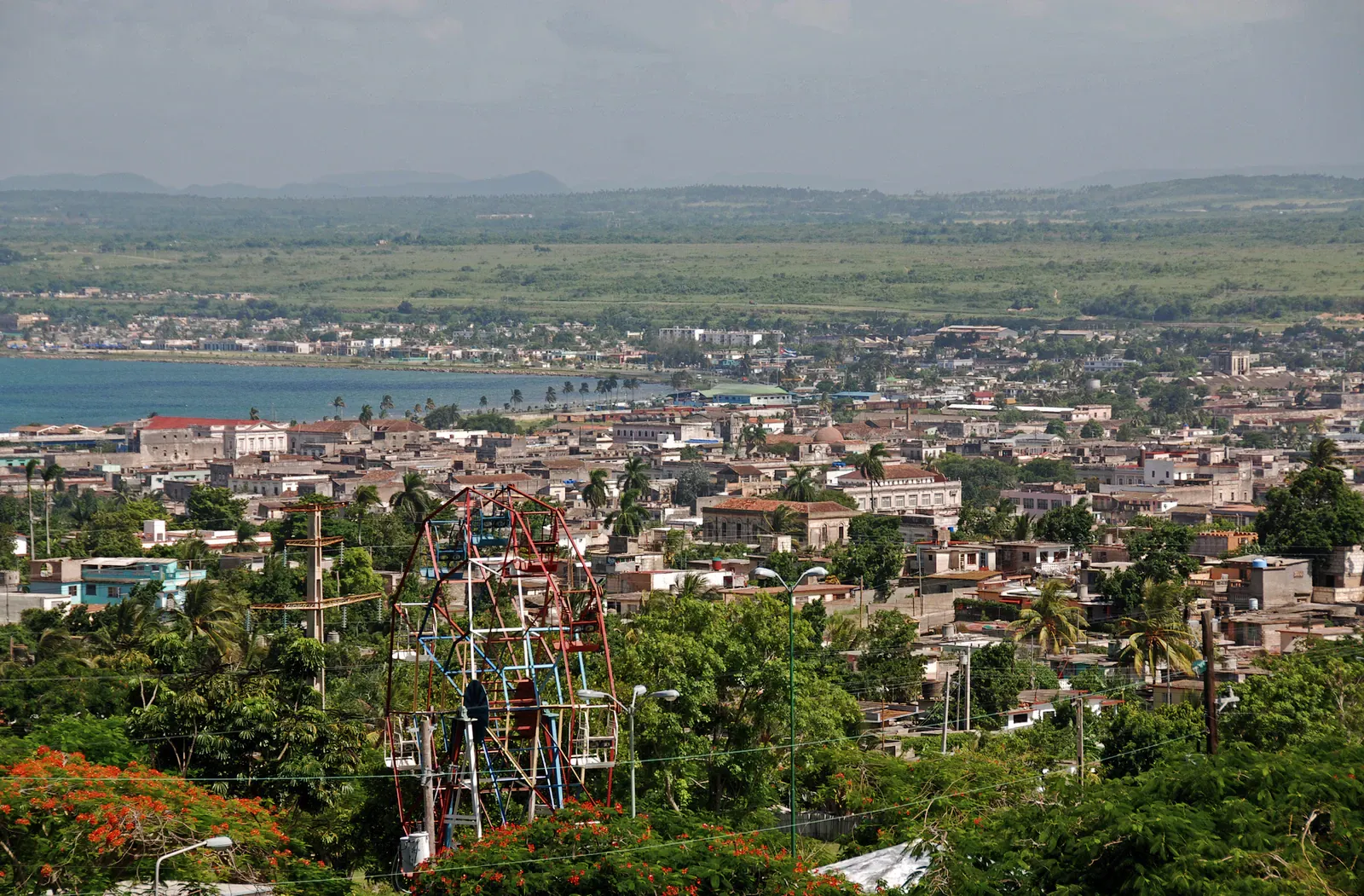
Solares and cajones, 1880-1946
For its first sixty years rumba lived almost entirely outside the record industry. The cajón, a wooden box struck as a drum, was the main instrument until conga drums replaced it in the early 20th century. A session was a neighbourhood event: a singer opened with a wordless diana and an improvised canto, a chorus took up the refrain, and the quinto drummer answered the dancers.
Havana and Matanzas developed different sounds. The dock and tenement neighbourhoods of Havana, such as Marianao and Belén, favoured a faster, more melodic style. In Matanzas, cabildos and port workers shaped a drum-led, conversational guaguancó.
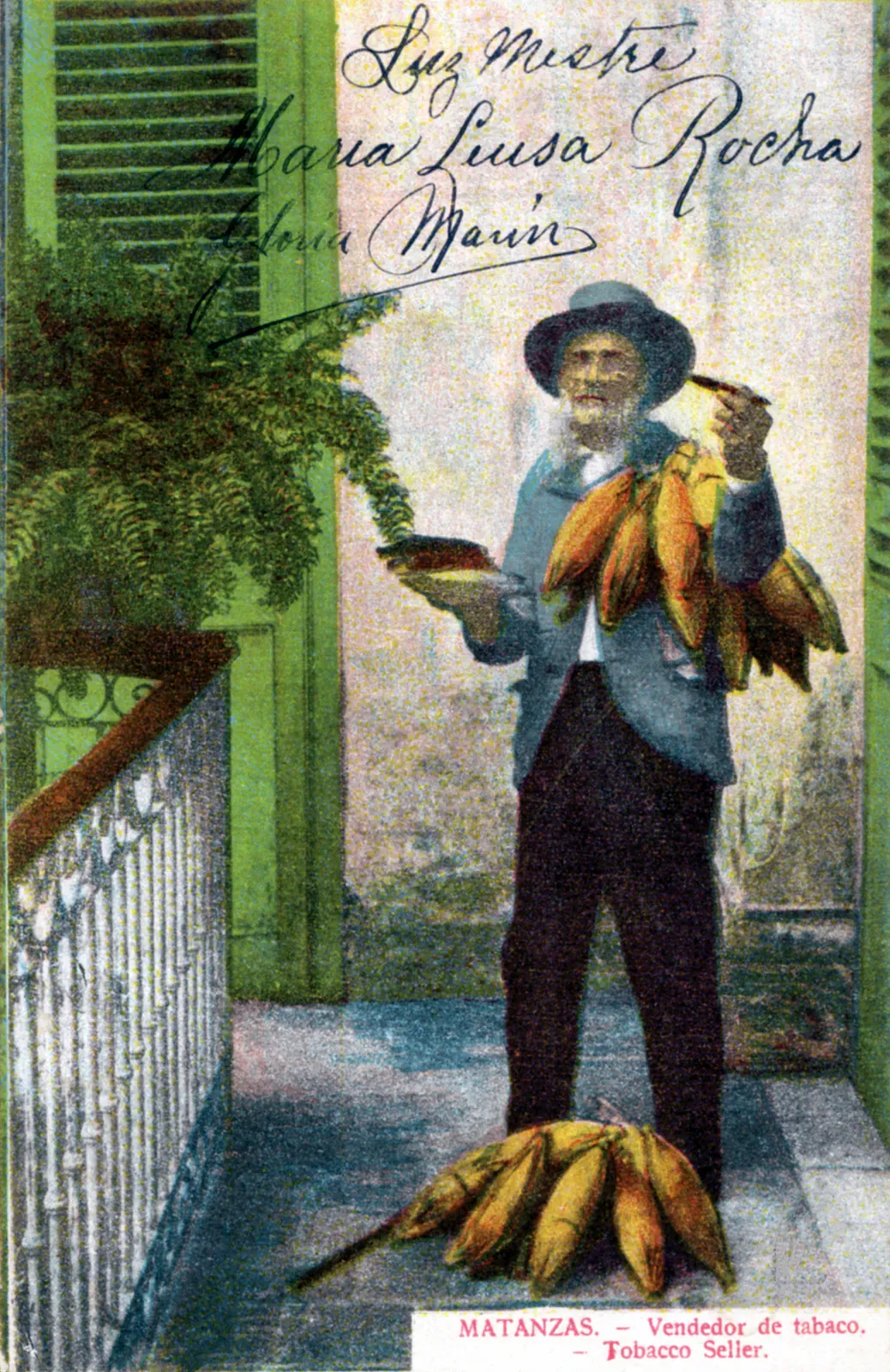
First recordings and jazz crossover, 1947-1958
In 1947 Chano Pozo, a Havana rumbero, recorded the first commercial rumbas in New York, including rumbas, columbias, guaguancós and abakuá pieces. The same year he joined Dizzy Gillespie’s band, and a September concert at Carnegie Hall took conga rhythm into bebop. Pozo was shot dead in Harlem on 2 December 1948, aged 33.
In Cuba, Matanzas singers recorded guaguancó for Havana independents. Conjunto Guaguancó Matancero, founded on 9 October 1952, issued its first 78 and LP on Puchito in 1956, and Panart released two volumes of early Matanzas guaguancó in 1958. AfroCuba de Matanzas was founded in 1957.
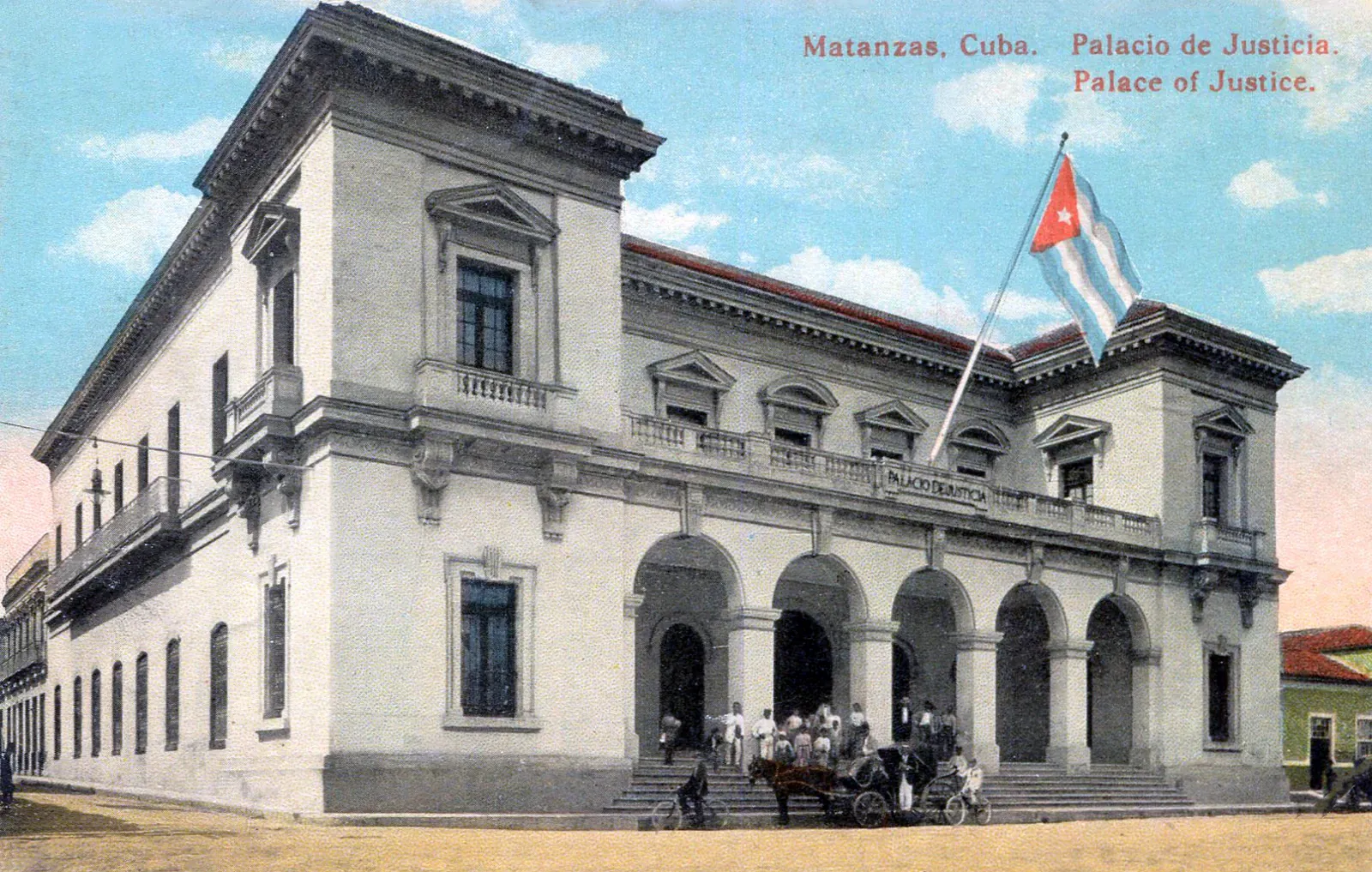
Revolution and state stage, 1959-1989
After 1959 the state nationalised the record industry and funded folkloric companies, which split rumba into a street form and a staged theatre version. EGREM took over record production in 1964, absorbing the studios of Panart and releasing rumba on its Areito imprint.
Several family and neighbourhood groups became touring ensembles. The Guaguancó Marítimo Portuario formed on the Havana docks in 1961 and is the root of Yoruba Andabo. Los Papines, four Abreu brothers from Marianao, began in 1963 and released Fantasía en ritmo in 1965. Around 1970 the Los Chinitos group widened the melodic range of the drums in a style first mocked and then named guarapachangueo. Yoruba Andabo, led by Pancho Quinto, started in 1981 and became a leading guarapachangueo group. In 1985 the Minister of Culture declared rumba essential to Cuba, in a line that became a slogan.
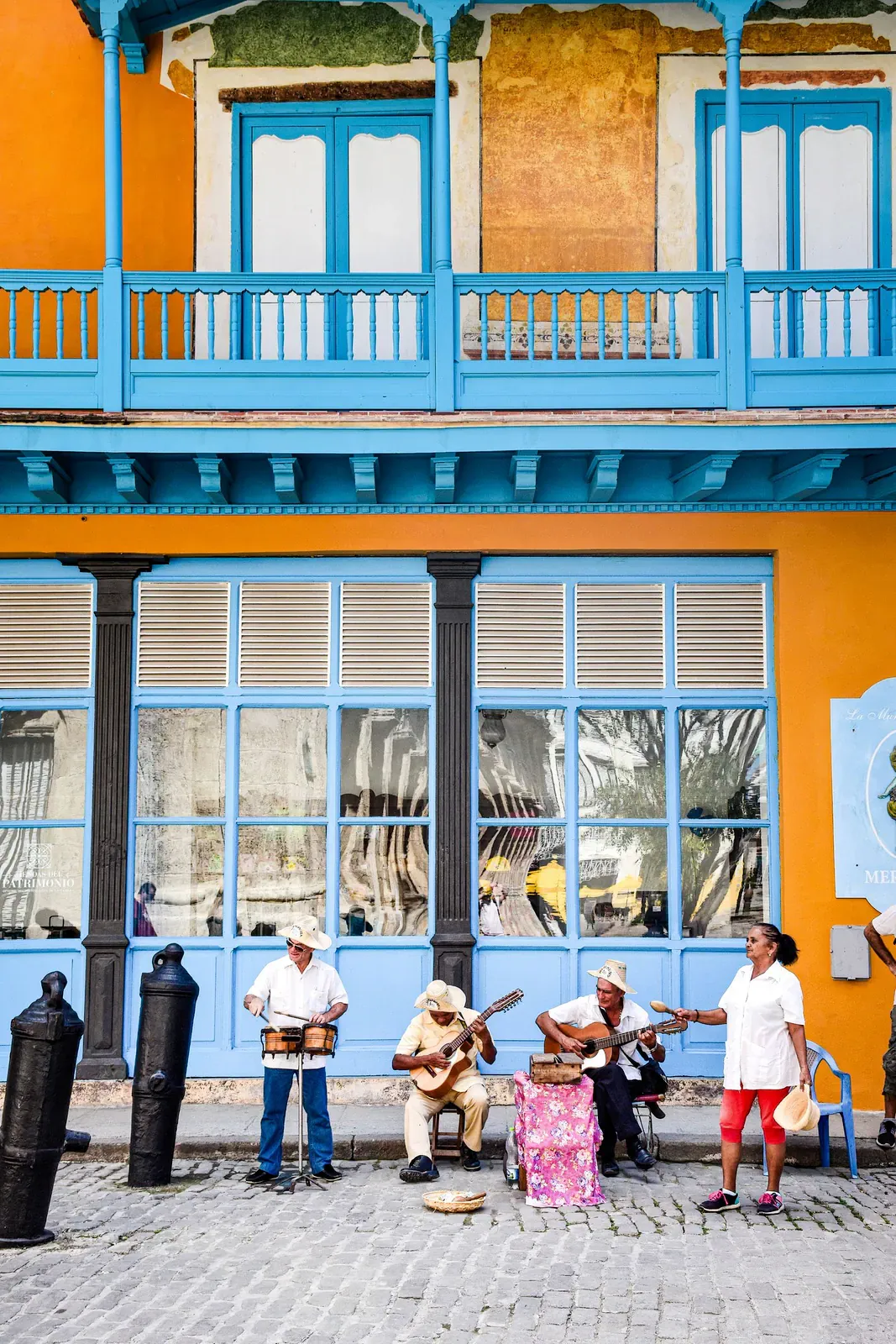
Street revival and heritage listing, 1990 onward
The painter Salvador González Escalona opened the mural alley of the Callejón de Hamel in Havana on 21 April 1990, and it became the home of Sunday rumba. Foreign releases brought the great groups to new audiences: Jane Bunnett’s album Spirits of Havana with Yoruba Andabo appeared in 1993, and the New York label Qbadisc began issuing Los Muñequitos de Matanzas in 1994. UNESCO inscribed rumba on the Representative List of the Intangible Cultural Heritage of Humanity in 2016.
Characteristics
Every part of a rumba is organised around the five-stroke rumba clave, usually played by the lead singer, whose third and fourth strokes sit off the notated grid. The form has three sections: the diana, the canto and the montuno, also called capetillo, where the chorus answers short refrains and the quinto improvises. Singers compose ten-line décima stanzas on the occasion.
The three styles differ in tempo and in the dance:
- Yambú is the slowest and oldest, danced solo or in couples without the vacunao.
- Guaguancó is the most widespread, a mid-tempo couple dance of flirtation in which the man attempts the vacunao and the woman avoids it.
- Columbia is fast and in compound meter, a competitive solo male dance with acrobatic steps.
Instruments and production
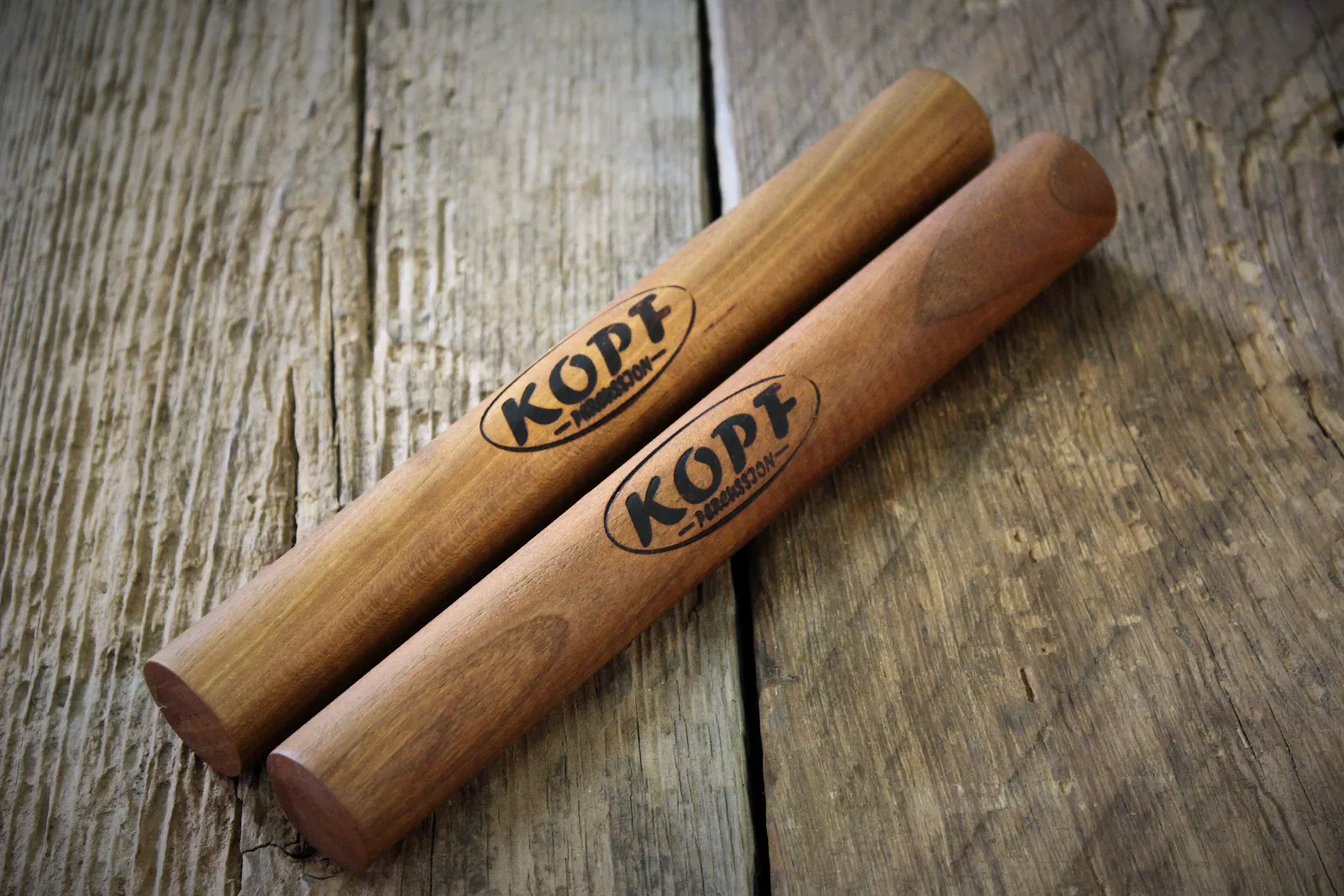
Three conga drums carry the pattern: the high quinto improvises, the middle tres dos keeps an interlocking figure, and the low tumba, also called salidor, holds the basic tumbao. Claves, the guagua (a hollow wooden cylinder struck with sticks) and shakers add cross-rhythms. The drums are tuned by ear to three registers, and the sung line has no fixed key.
Mainstream success
Rumba never had a chart era of its own. It spread through other music. Pozo’s Manteca put rumba-rooted conga playing into jazz, and Congo Yambumba by Los Muñequitos de Matanzas became a staple for later rumba and salsa bands. Its relatives include son cubano, which developed alongside it. State-sponsored tours in the 1960s and 1970s and the foreign releases of the 1990s carried the traditional groups abroad.
Notable recordings
Pozo’s 1947 Ritmo afrocubano sessions are the first commercial recordings of the form, and the Manteca recording he co-wrote carried its drum parts into the jazz repertoire. Los Beodos, the Matanzas guaguancó on the 1956 Puchito 78, gave the group its later name, Los Muñequitos de Matanzas. Congo Yambumba, recorded in 1983, is the group’s signature piece, led by Jesús Alfonso. Yoruba Andabo’s Columbia Libre (2015) shows a modern columbia from a Havana ensemble.
Culture
Rumba is neighbourhood music. Its dances, from the yambú to the columbia, carry ideas about courtship, rivalry and display. Columbia quotes vocabulary from Abakuá and Yoruba ritual in its songs. Since the 1950s some groups, beginning with AfroCuba de Matanzas, have blended sacred batá drumming and Yoruba chant into rumba, a style called batá-rumba. Rumba itself remains a secular party form.
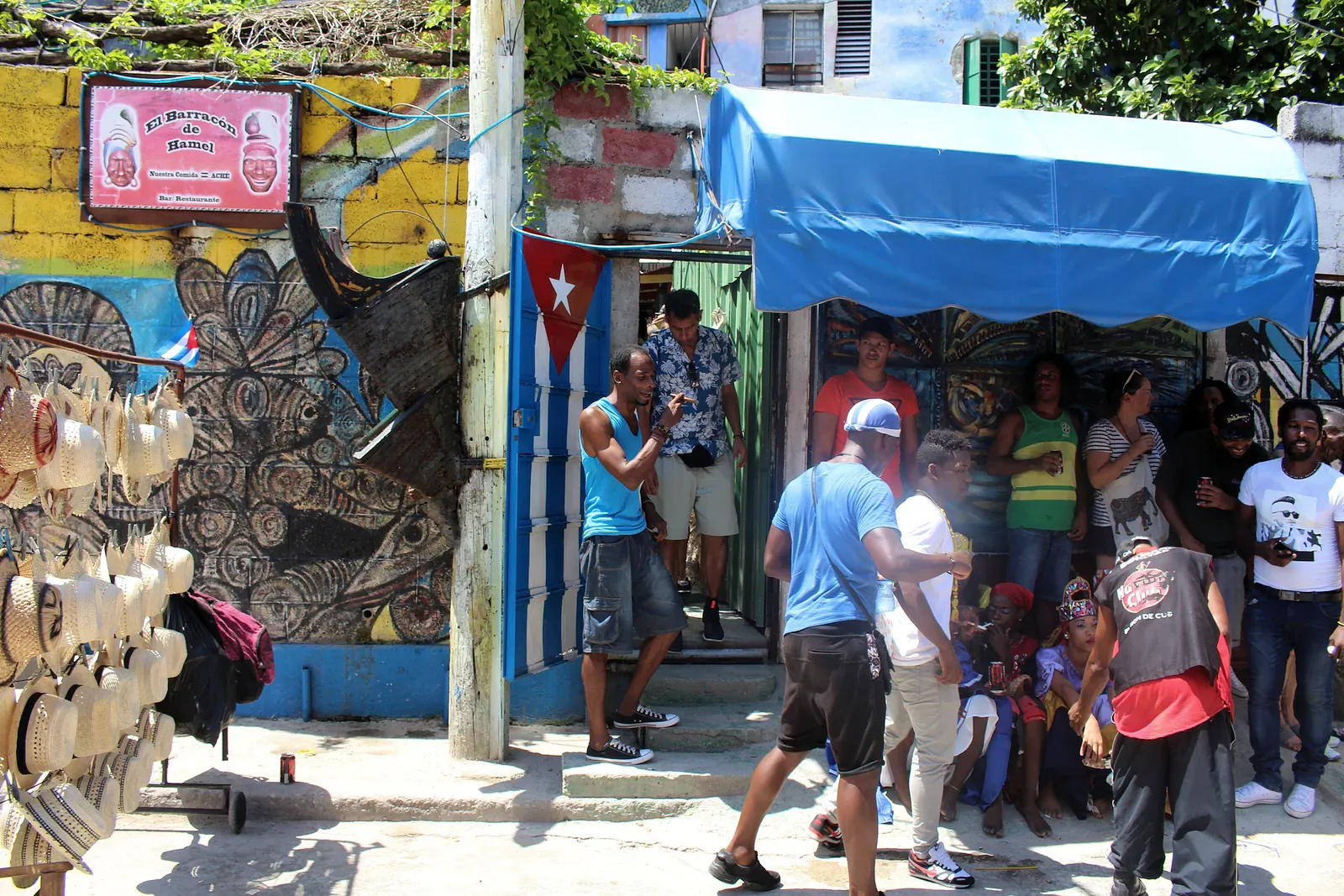
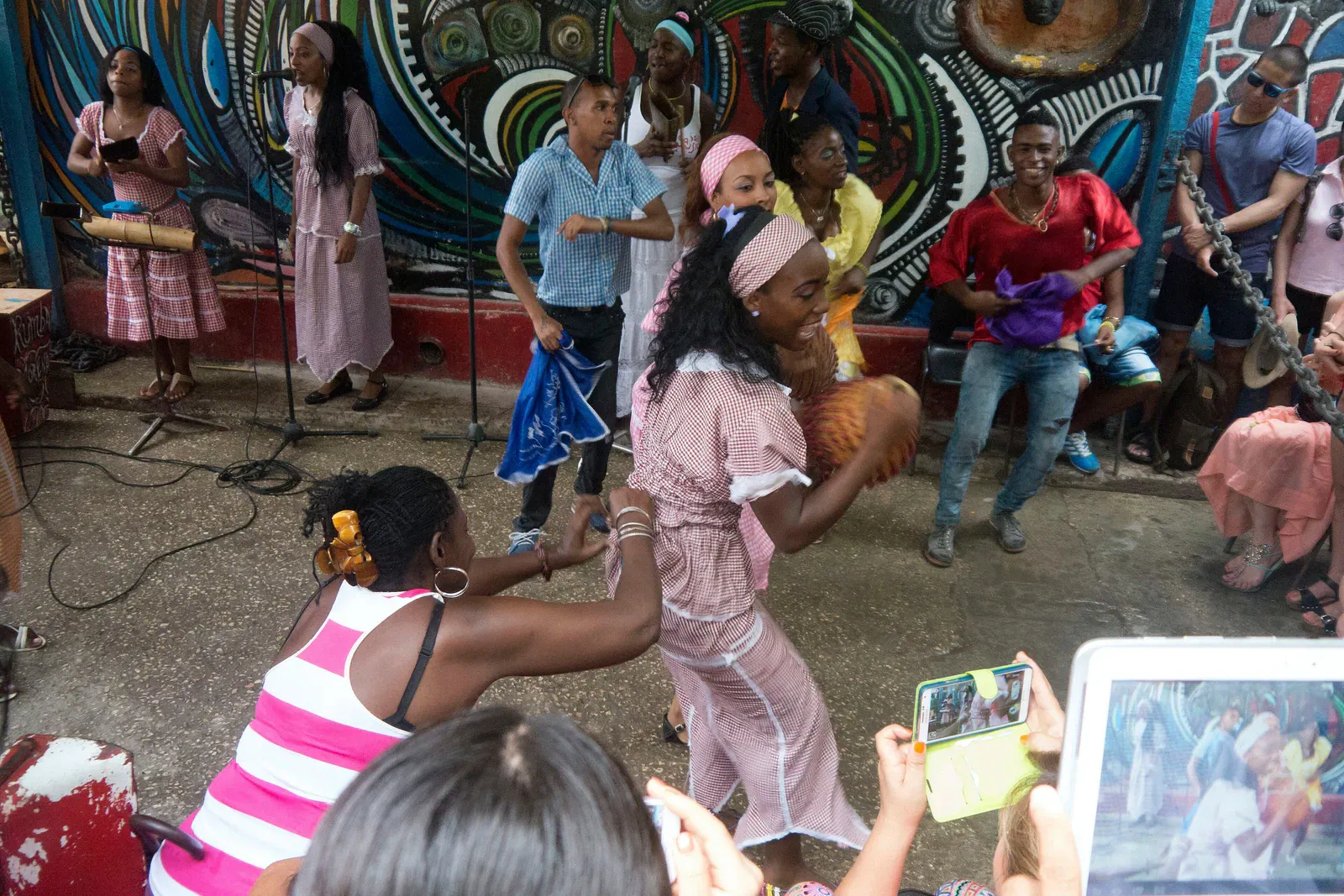
The Callejón de Hamel hosts a weekly open session where singers, drummers and dancers take turns. Los Papines made their professional debut at the Hotel Nacional de Cuba in Havana.
Legacy
Rumba is a root of Cuban popular music. Descendant forms include the guarapachangueo style, batá-rumba, and, through its drumming, Afro-Cuban jazz and salsa. Its drum language and clave pattern appear well beyond Cuba. A great deal of the surviving repertoire is still taught and performed inside families, and its UNESCO listing in 2016 formally recognised the combination of music, dance and associated practices.
Misconceptions
Rumba is often confused with ballroom rhumba, but that dance and its music are built on son and bolero and have little in common with the drum-led street form. Catalan rumba, rumba flamenca and Congolese rumba are also separate traditions that borrowed the name.
Rumba is not a single dance. It is a family of three styles, and the sexual pursuit of the vacunao belongs only to guaguancó, not to yambú or columbia.
Rumba is also not religious music. It is a secular party form, and its link to Afro-Cuban religious traditions is limited to borrowed vocabulary and the later batá-rumba blend.
Frequently asked questions
What is the difference between rumba, guaguancó, yambú and columbia?
Rumba is the whole tradition. Yambú, guaguancó and columbia are its three styles, which differ in tempo, dance and drum pattern.
Where did Cuban rumba originate?
Cuban rumba originated in the tenement courtyards of Havana and Matanzas around 1880, among Afro-Cuban dock workers and neighbours.
What instruments are used in Cuban rumba?
Cuban rumba uses three conga drums called quinto, tres dos and tumba, with claves, a guagua and shakers. Early rumba used wooden cajones instead of congas.
Is Cuban rumba the same as rhumba?
No. Ballroom rhumba is a separate dance and music built on son and bolero, while Cuban rumba is a drum-and-voice tradition.
Sound
Sound sheet
Anatomy of a track
| # | Part |
|---|---|
| 1 | Diana (wordless opening) |
| 2 | Canto (improvised verse) |
| 3 | Montuno (call and response with quinto) |
Signature sounds
- Five-stroke rumba clave on claves
- Quinto improvisation answering the dancer
- Interlocking tumba and tres dos tumbao
- Guagua or palitos cross-rhythm
- Chorus answering the lead singer
Drums and percussion
- Quinto
- Tres dos
- Tumba
- Cajón
Techniques
- Rumba clave
- Quinto improvisation
- Tone-slap quinto
- Call and response
- Décima improvisation
Tuning
Drums tuned by ear to three registers (quinto high, tres dos mid, tumba low); the sung line has no fixed key.
Vocals
A soloist opens with wordless syllables and an improvised verse, then a chorus answers in call and response.
Scenes
Where it happened
Where and when the sound lived: one bar per city on a shared timeline.
Caribbean
North America
Active scenes
Peak 3, 1947-2025
Dock and tenement neighbourhoods such as Marianao and Belén shaped the faster, more melodic Havana style.
The port city's cabildos and dock workers produced the other main guaguancó school, with a drum-led, conversational sound.
Pozo's recordings and Carnegie Hall concert made the city the first stage for rumba outside Cuba.
Venues and places
Havana, 1990 to today. A mural alley by the university where rumba is played every Sunday.
Havana, 1961 to today. Los Papines made their professional debut here.
New York, 1947 to today. Pozo played Gillespie's big band here on 29 September.
Havana, 1961 to today. The former Panart studios, EGREM's main studios for Cuban rumba recordings.
Culture
Culture markers
- Guaguancó
A couple dance of sexual competition in which the man tries the vacunao and the woman avoids it.
Dance - Columbia
A fast, competitive solo male dance with acrobatic steps, with roots in Abakuá and rural work culture.
Dance - Yambú
The slowest and oldest style, danced solo or in couples without the vacunao.
Dance - Callejón de Hamel murals
Sculptures and murals of scrap materials with Afro-Cuban themes surround the Sunday rumba.
Artwork - Sunday rumba
A weekly open street session where singers, drummers and dancers take turns.
Ritual
Media
Key media
- 1992Rumba Caliente 88/77
by Los Muñequitos de Matanzas. A Qbadisc collection of the group's recordings for American listeners.
Compilation - 1995Tumi Cuba Classics Volume 3: Rumba
by Various. A survey of rumba groups from the Tumi series of Cuban reissues.
Compilation - 1997El reino de la rumba
by Los Papines and Celeste Mendoza. An EGREM album pairing the family drummers with a leading guaguancó singer.
Compilation - 2004Cuba and Its Music: From the First Drums to the Mambo
by Ned Sublette. A history of Cuban music that covers the African roots and urban forms behind rumba.
Book
Glossary
Terms on this page
The lead singer's verse, often improvised in ten-line décima stanzas.
A choral song form of the late 19th and early 20th centuries from which guaguancó developed.
The opening, where the singer uses wordless syllables and states the first chorus line.
The call-and-response closing section, also called capetillo, with short refrains.
The five-stroke pattern guiding every part, whose third and fourth strokes sit off the notated grid.
The lowest drum, the tumba, that opens the drum parts in many arrangements.
A tenement courtyard in Havana or Matanzas, the home ground of rumba.
The male dancer's pelvic thrust in guaguancó, which the woman dodges with her hips or skirt.
Latin family