Parang
Parang is Trinidad's Spanish-language Christmas folk music, brought by Venezuelan cocoa farmers and sung by parranderos to cuatro and maracas.
Trinidad & Tobago, Venezuela, around 1780
Caribbean family
Born
around 1780
Trinidad & Tobago, Venezuela
Subgenres
2
Documented branches
Links
2
Genres it drew on or shaped
Tempo
90-130 BPMLineage
Family tree
Timeline
Era by era
From the first sparks to today. Select a dot to read the story behind it.
- Parranda navideña
1780 to 1971
- Competitions and the Queen
1972 to 1977
- Soca parang
1978 to today
Eras
Moments
- 1 Parranda navideña, 1780 to 1971
- 2 Competitions and the Queen, 1972 to 1977
- 3 Soca parang, 1978 to today
around 1780
Parranda navideña
Venezuelan cocoa farmers bring Spanish-language Christmas serenades to Lopinot, Arima and Santa Cruz, where house-to-house parranderos keep the custom alive in Spanish-speaking communities.
- 1780Venezuelan cocoa farmers settle in TrinidadMigrants from Venezuela bring parranda and aguinaldo singing to Lopinot, Arima, Santa Cruz and Moruga.
- 1964Press calls parang a fading customA newspaper article describes parang as dying out, prompting preservation efforts.
- 1971Daisy Voisin steps into the spotlightVoisin gains wide attention at a Best Village competition and leads La Divina Pastora Serenaders.
1972
Competitions and the Queen
The first national parang competition in 1972 and Daisy Voisin's rise with La Divina Pastora turn a fading village custom into a staged national tradition.
- 1972First national parang competitionSylvestre Mata's Ready Mix Parang Group wins the inaugural contest.
1978
Soca parang
Crazy's 1978 Parang Soca fuses parang's Christmas themes with soca rhythm; Scrunter, Marcia Miranda and others build an English-language Christmas season market from the 1980s.
- 1978Crazy releases Parang SocaThe song introduces the term parang soca and starts the fusion with soca rhythm.
- 1981First soca parang albumSinging Francine releases Christmas Is Love, described as the first full-length soca parang album.
- 1981Daisy Voisin's Parang Queen LPHer LP carries Alegria Alegria and Hooray Hoorah, her best-known songs.
- 1983National Parang Association establishedThe association sets up its headquarters in Arima.
- 1988Scrunter's Piece Ah PorkThe former Calypso Monarch's soca parang hit becomes a seasonal staple.
- 1990Crazy releases Christmas Parang PartiSingle on Charlie's, followed by a Parang Soca release in 1992.
Listening path
Start listening
A short path from an easy way in to the deep end. Thumbnails come from YouTube; the player loads only when you press play.
- 01
Scrunter, 1988
The hit that made soca parang a Christmas season staple.
- 02
Scrunter, 1990
A narrative soca parang favourite from the same star.
Facts
| Family | Caribbean |
| Origin | Trinidad & Tobago, Venezuela |
| Emerged | 19th century |
| Status | Active |
| Tempo | 90 to 130 BPM |
| Meter | 4/4 |
| Subgenres | 2 |
Parang is a Christmas folk music of Trinidad and Tobago, rooted in Venezuela and sung in Spanish. Venezuelan migrants, mostly of Amerindian, Spanish, mestizo, pardo and African descent, brought it to Trinidad, and its name comes from the Spanish words parranda, a spree, and parar, to stop.
Singers and players called parranderos accompany their songs on the cuatro and maracas, and since the 1950s the tradition has been staged, recorded and modernized. It belongs to the wider Caribbean family and sits close to joropo and calypso.
Origins
Parang reached Trinidad in the late 18th century with Venezuelan cocoa farmers, who settled in places such as Lopinot, Arima, Santa Cruz and Moruga. After the Spanish governor surrendered the island to Britain in 1797, English gradually replaced Spanish in public life, but the songs kept the language alive in these communities. The earliest form was the parranda navideña, a Christmas serenade in which a group visits homes at night, sings and is rewarded with food and drink.
The visit is the heart of the tradition. Parranderos traditionally woke the household with music, and hosts offered pasteles, sorrel, rum and ponche crema in return. Friends, neighbours and relatives often join the group along the way, playing whatever instruments are at hand.
Preservation and the staged era
By 1964 a newspaper article described parang as a fading custom, which prompted efforts to preserve it. The first national parang competition followed in 1972, won by Sylvestre Mata’s Ready Mix Parang Group. A National Parang Association was established in 1983 with headquarters in Arima, and September is marked as National Parang History Month.
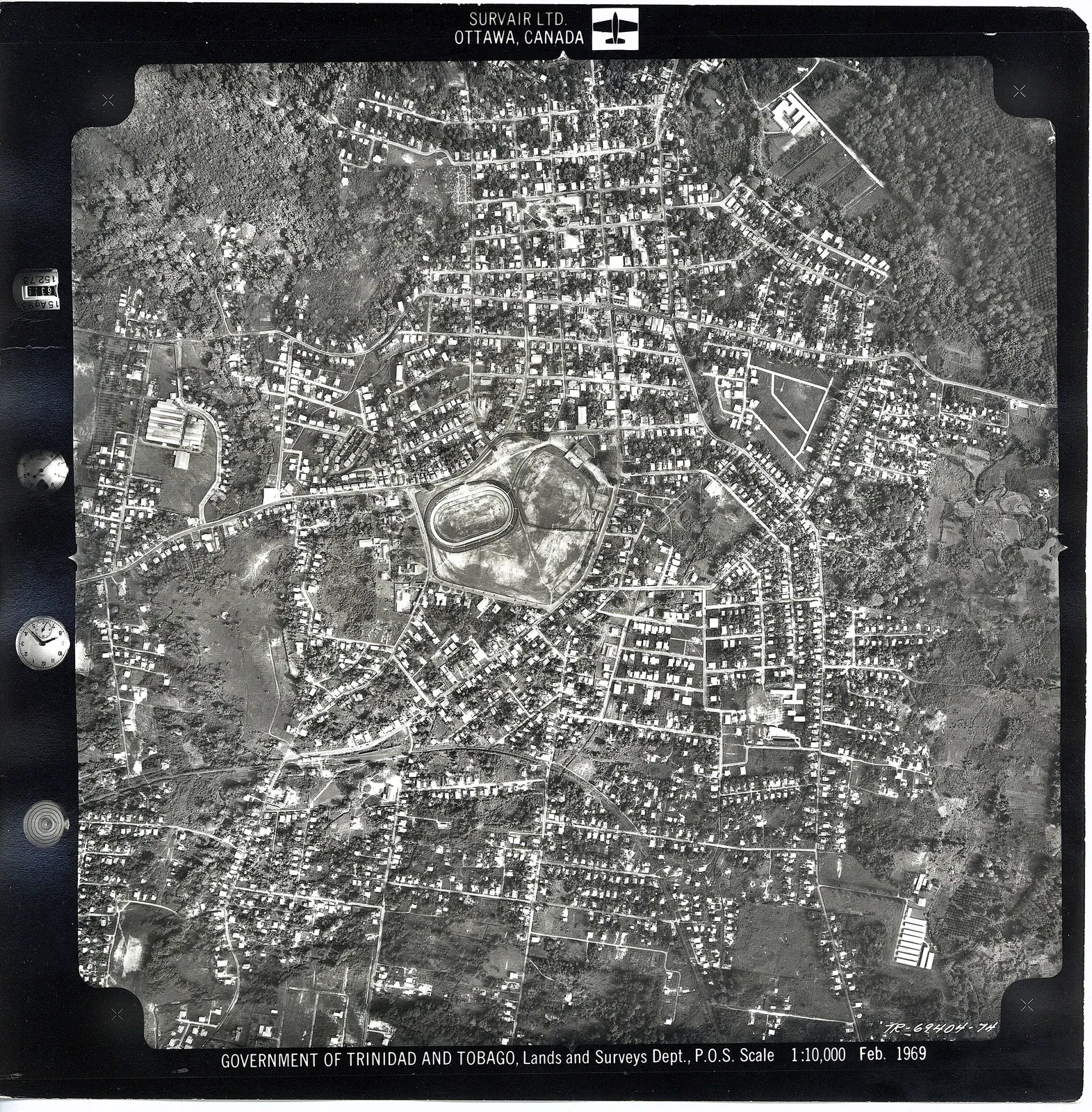
Today the season runs from October to January, with staged parang fiestas building towards a national competition. Communities such as Paramin, Lopinot and Arima remain strongholds.
Daisy Voisin and the Queen of Parang
Daisy Voisin (1924-1991) became the face of the music. She rose to attention at a Best Village competition in 1971 and led the La Divina Pastora Serenaders, formed in 1972 after Leroy Birch took her on his usual house-to-house parang route. Known as the Queen of Parang, she carried the music to Venezuela, Isla de Margarita and North America. Her 1981 LP Parang Queen collects her best-known songs, Alegria Alegria and Hooray Hoorah, which feature her trill, “Aiyee, Aiyee”. Her stage shows were described as explosive and vivacious.
Characteristics
Traditional parang uses several song types. The aguinaldo or serenal tells of the nativity and resembles European carols. The guarapo is a secular song with improvised lyrics whose length depends on the skill of the lead singer. The estribillo is a lively call-and-response song. Other types include the joropo, a waltz-like form, the galeron, the Venezuelan waltz Rio Manzanares, patois cantiques de Noel from Martinique and Guadeloupe, and the despedida, a farewell and thanks that closes a visit.
The core instruments are the cuatro, a small four-string guitar, and maracas, known locally as chac-chacs. Groups often add violin, guitar, claves called toc-toc, box bass, tambourine, mandolin, bandol, caja and marimbola. Dance-oriented soca parang records are generally measured between about 90 and 130 beats per minute.
Soca parang
The best-known modernization began in 1978, when calypsonian Edwin Ayoung, known as Crazy, recorded Parang Soca, introducing the term and fusing parang’s Christmas theme with soca rhythm. His mother was Venezuelan, and he went on to release dozens of such songs. Crazy’s Christmas Parang Parti (1990) and a later Parang Soca release (1992) appeared on Charlie’s Records. In 1981 Singing Francine released Christmas Is Love, described as the first full-length soca parang album.
Scrunter, a former Calypso Monarch, entered the field in 1988 with Piece Ah Pork, followed by Leroy, Madame Jeffrey and a tribute to Daisy Voisin. Marcia Miranda, crowned Soca Parang Monarch in 1999 with Xmas Roast, became known as the Soca Parang Queen. Soca parang is usually sung in English and often refers to North American Christmas imagery such as Santa Claus. Parang has also been combined with chutney to form chutney parang.
Legacy
Parang remains one of the few Spanish-language traditions of Trinidad and Tobago and a fixture of the national Christmas. It is now also performed at Easter, weddings and heritage festivals beyond the season. Its offshoots, soca parang and chutney parang, show how the form has absorbed the island’s other styles while keeping the cuatro and maracas at its centre.
Frequently asked questions
What does the word parang mean?
It comes from the Spanish parranda, a spree or party, and parar, to stop, describing serenaders who visit and halt at each home.
When is parang played?
Mainly at Christmas, with the season running from October to January in Trinidad and Tobago.
What is the difference between parang and soca parang?
Traditional parang is sung in Spanish with cuatro and maracas, while soca parang, which began in 1978, fuses it with soca rhythm and usually uses English lyrics.
Which instruments are used in parang?
The cuatro and maracas are central, with violin, guitar, claves, box bass, mandolin and other instruments added.
Sound
Sound sheet
Signature sounds
- Spanish-language call and response
- Cuatro strumming over maracas and box bass
- Improvised guarapo verses
Techniques
- House-to-house serenading
- Call and response
- Improvised verses
Tuning
Standard cuatro tuning, 12-TET
Vocals
Spanish-language lead with group chorus; soca parang uses English.
Scenes
Where it happened
Where and when the sound lived: one bar per city on a shared timeline.
Caribbean
Active scenes
Peak 3, 1983-2025
Home of the National Parang Association headquarters.
Valley settled by Venezuelan cocoa farmers and a parang stronghold.
Hill community where parang is especially strong.
Glossary
Terms on this page
Nativity song similar to European carols.
Song of farewell and gratitude ending a visit.
Lively call-and-response song.
Secular song with improvised lyrics.
Singers and players who travel from house to house at Christmas.
Caribbean family