Punjabi folk music
Punjabi folk music is the traditional song of the Punjab, from wedding and harvest songs to heroic ballads, sung in India and Pakistan to tumbi, dhol and voice.
Punjab, around 1600
South Asian family
Born
around 1600
Punjab
Subgenres
6
Documented branches
Links
11
Genres it drew on or shaped
Tempo
90-190 BPMLineage
Family tree
Timeline
Era by era
From the first sparks to today. Select a dot to read the story behind it.
- Ballads and life-cycle songs
1600 to 1939
- Radio and gramophone
1940 to 1967
- Story-song stars
1968 to 1990
- Remakes and samples
1991 to today
Eras
Moments
- 1 Ballads and life-cycle songs, 1600 to 1939
- 2 Radio and gramophone, 1940 to 1967
- 3 Story-song stars, 1968 to 1990
- 4 Remakes and samples, 1991 to today
around 1600
Ballads and life-cycle songs
Songs for birth, weddings, harvest and death circulated orally, while dhadi singers carried Sikh devotional verse and heroic vaars and poets retold the Heer and Mirza romances.
- 1606Guru Hargobind fosters the dhadisThe sixth Sikh guru, who established the Akal Takht, has dhadi singers perform devotional verse and heroic vaars to the dhadd and sarangi.
- 1766Waris Shah writes HeerHis epic poem becomes the best-known version of the Heer Ranjha tragedy, later sung by folk singers across Punjab.
around 1940
Radio and gramophone
Lahore radio and HMV discs made folk singers regional stars. Partition in 1947 split singers and audiences between India and Pakistan.
- 1943Surinder Kaur debuts on Lahore RadioShe performs live in August and soon sings duets with her elder sister Prakash Kaur for His Master's Voice.
- 1947Partition divides PunjabFolk dances and songs on both sides of the new border are later staged and promoted as emblems of Punjabi culture.
- 1952Yamla Jatt's first HMV recordingLal Chand Yamla Jatt makes his first disc for His Master's Voice and stays with the company.
- 1952Surinder Kaur settles back in DelhiAfter a few years as a Hindi film playback singer she returns to the stage and revives Punjabi folk songs.
- 1956Gold medal for Yamla JattPrime Minister Jawaharlal Nehru presents the tumbi player and singer with a gold medal.
- 1960Folk dance competitions take shapeFrom the 1960s bhangra and giddha are codified and contested at colleges and fairs in Punjab, and later among Punjabis abroad.
- 1963Das Main Ki Pyar Wichon KhattyaYamla Jatt's best-known song is released and is still recirculated on video platforms.
- 1965Alam Lohar's Jugni LPThe LP of the jugni narrative device wins a gold disc and fixes the style in public memory.
1968
Story-song stars
Alam Lohar, Kuldeep Manak and others sold long story-songs on LP and EP, and the tumbi became the sound of village Punjab on record.
- 1968Kuldeep Manak's first recordAt 17 he records a duet with Seema, which sells strongly.
- 1973Punjab Dian Lok GathawanManak's first EP, with a kali on Heer and tales of Raja Rasalu and Dulla Bhatti, appears on HMV.
- 1976Ik TaraKuldeep Manak's first LP carries the kali Tere Tille Ton.
- 1979Alam Lohar diesHe dies in a road accident near Shamki Bhattian on 3 July, the year he receives Pakistan's Pride of Performance.
- 1984Surinder Kaur wins the Sangeet Natak Akademi AwardIndia's national academy honours the singer known as the Nightingale of Punjab.
1991
Remakes and samples
Old recordings were sampled, remade and reissued on video platforms, and songs like Jugni and Das Main Ki Pyar Wichon Khatya reached new young audiences.
- 1991Lal Chand Yamla Jatt diesThe singer who made the tumbi a symbol of Punjabi song dies on 20 December.
- 2006Arif Lohar's Jugni with Nooran LalAlam Lohar's son brings the jugni to a young audience in Pakistan and India.
- 2011Kuldeep Manak diesThe kali singer dies on 30 November; a statue of him stands in Ludhiana.
- 2018Das Main Ki Pyar Wichon Khatya goes viralA remake by the Pakistani producer Ghauri spreads on TikTok and returns the 1963 song to wide audiences.
Listening path
Start listening
A short path from an easy way in to the deep end. Thumbnails come from YouTube; the player loads only when you press play.
- 01
Lal Chand Yamla Jatt, 1963
Listen for the one-string tumbi and the plain, voice-led delivery that defined his sound.
- 02
Kuldeep Manak, 1976
A kali setting of the Heer legend, sung at the top of the voice over tumbi.
- 03
Kuldeep Manak, 2007
A late Manak song retelling the Ranjha legend in his story-song form.
Facts
| Family | South Asian |
| Origin | Punjab, India |
| Emerged | Traditional |
| Status | Active |
| Tempo | 90 to 190 BPM |
| Subgenres | 6 |
Punjabi folk music is the traditional music of the Punjab region, now divided between India and Pakistan. It is a vast song repertoire that follows life from birth to death: weddings, harvest festivals, love ballads, heroic tales and devotional verse.
It is usually led by a high, strong voice over a few instruments such as the tumbi, dhol, dhadd and sarangi, and it is the root from which Punjabi film songs and modern bhangra later drew.
Origins
Folk song in Punjab was never one style. The region has several sub-areas, Bar, Malwa, Doaba, Majha and Pothohar among them, each with its own dialect shading but the same feelings: pride in hard work, bravery, longing and humour. Songs exist for the birth of a child, the naming ceremony, every stage of a marriage, relatives, seasons and death, and the professional castes of the region have their own repertoires.
Two long traditions stand out. The first is the sung narrative. The Heer and Mirza legends are performed to set traditional melodies, and Heer in particular passed through poets before it reached singers: a first written telling in the 1600s, then Waris Shah’s epic of 1766, which became the version most often sung. The second is the dhadi ballad. The sixth Sikh guru, Guru Hargobind, fostered the dhadis, who turned from praising rulers to singing devotional verse and heroic vaars to the dhadd and sarangi.
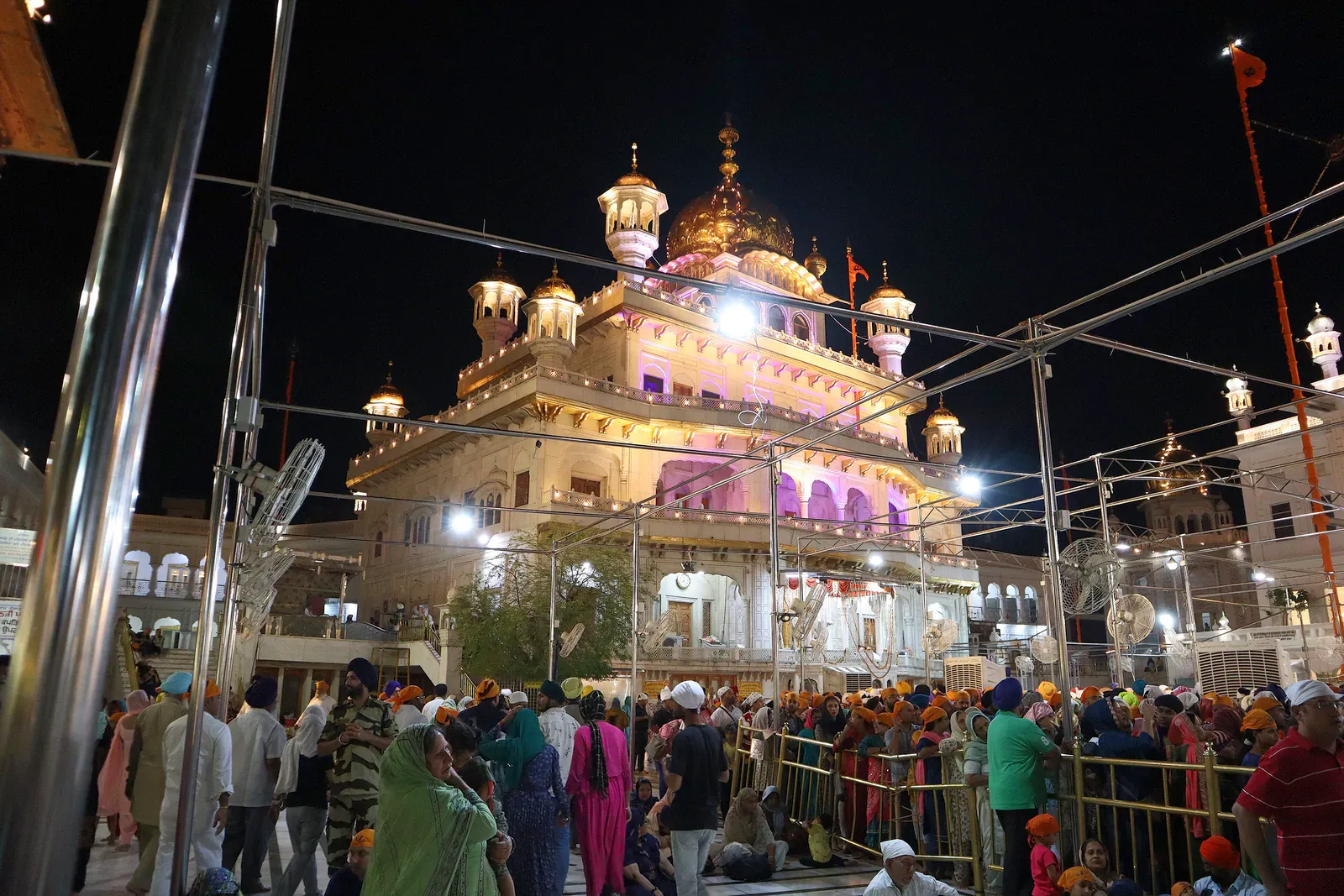
Ballads and life-cycle songs
Women and men sing different parts of the repertoire. Women’s songs carry the softer feelings and the place of daughters: the suhag songs of the bride, the lori lullabies and the boliyan couplets. Men’s songs stress freedom, strength and work, and a heroic strand honours figures such as Dulla Bhatti, Raja Rasalu, Jagga Jatt and Bhagat Singh. Fairs and festivals give the year its musical calendar: Lohri and Maghi mark the change of season, Vaisakhi is the harvest festival, and in the month of Sawan women gather for Teeyan and dance giddha.
A dhadi group, or jatha, usually has three or four singers: a sarangi player, two dhadd players and a narrator, performing standing and alternating sung verse with chanted narrative. Dhadi singing is not counted as shabad kirtan, the seated hymn singing of Sikh worship, though it remains an important part of Sikh music. Seated hymn singing in the related kirtan tradition has a different manner.
Radio and gramophone, 1940-1967
Radio and records turned village singers into regional stars. In Lahore, the elder sister Prakash Kaur was cleared to sing on radio around 1940, and her younger sister Surinder Kaur made her radio debut there in August 1943; the two recorded duets for His Master’s Voice, a catalogue now held by Saregama. Partition in 1947 split Punjab and its audiences. Surinder Kaur moved to Delhi, sang a few Hindi film songs in the late 1940s and early 1950s, then returned to the stage in 1952 to revive Punjabi folk songs, becoming known as the Nightingale of Punjab. Her repertoire joined folk songs, Sufi kafis and verses by modern poets, and her wedding songs became a fixture of Punjabi weddings.
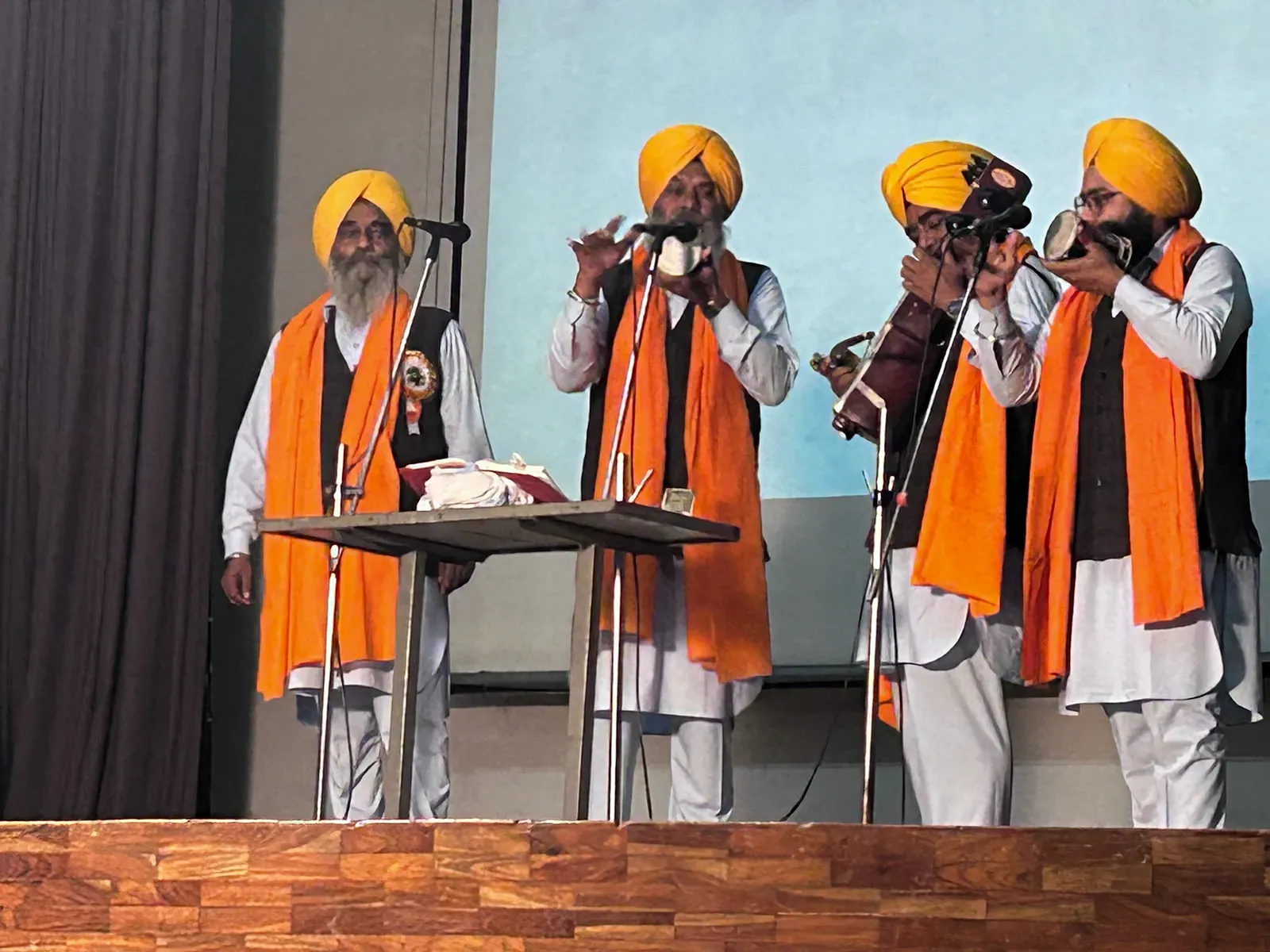
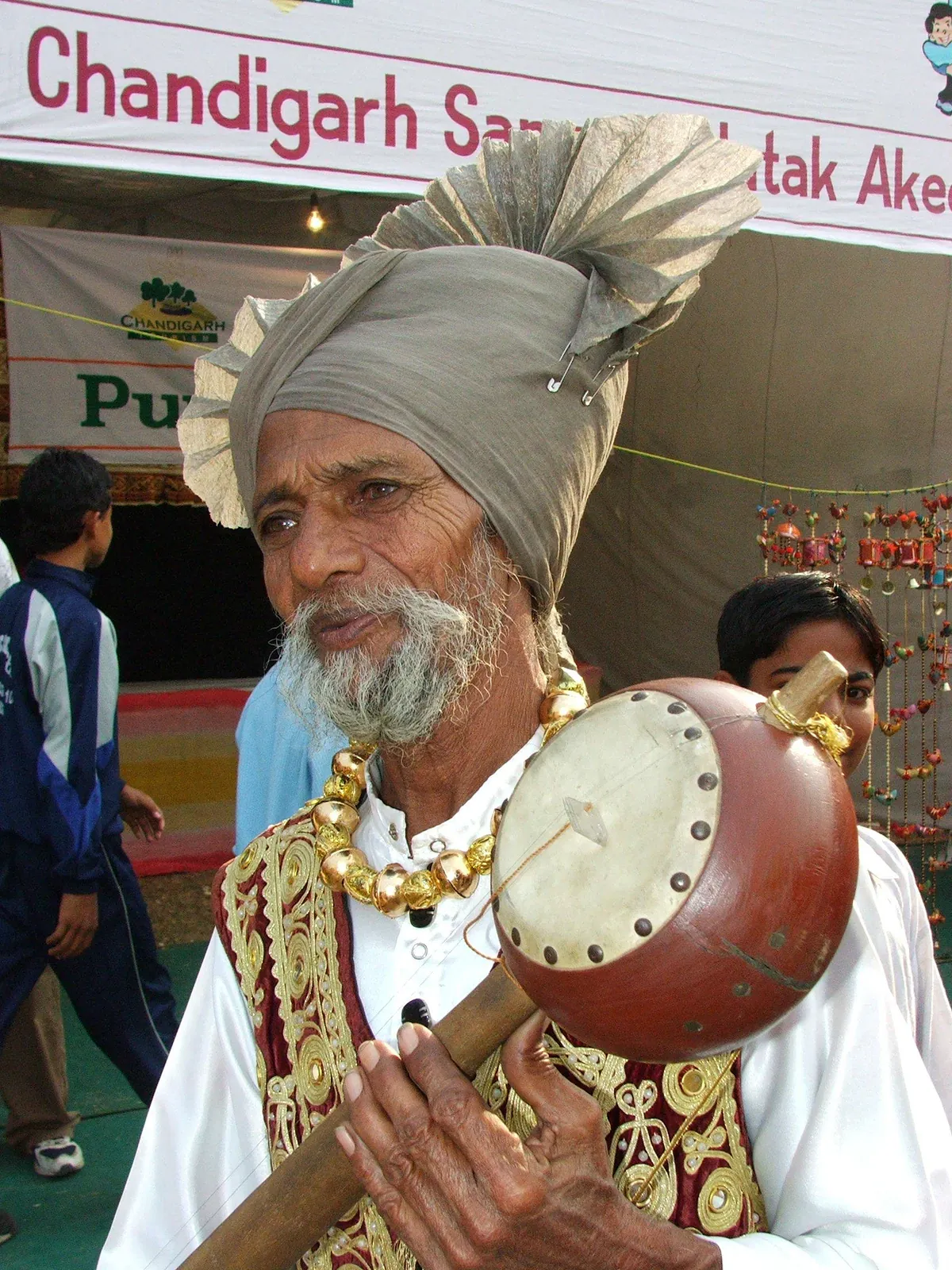
In the same years Lal Chand Yamla Jatt, born in 1910, made his first recording for His Master’s Voice in 1952 and stayed with the company. His trademark was a soft strumming of the tumbi and a distinctive turban style, and he popularised stories such as Dulla Bhatti and Puran Bhagat. Prime Minister Jawaharlal Nehru gave him a gold medal in 1956, and Das Main Ki Pyar Wichon Khattya followed in 1963. On the other side of the new border, Alam Lohar, a blacksmith’s son from Gujrat district, reshaped the Punjabi vaar, a heroic or story ballad, and toured villages and towns. He recorded for EMI and HMV Pakistan, and by his death he held a long list of gold disc LPs, among them Bol Mitti Dia Bavia in 1964 and Jugni in 1965.
Story-song stars, 1968-1990
A new generation turned the story-song into a recorded form. Kuldeep Manak, born Latif Mohammed Khan, learned music in Muktsar and made his first record in 1968 at 17, a duet with Seema. He then became known for the kali, a rare form, and for folk tales put into verse by the lyricist Hardev Dilgir. His first EP, Punjab Dian Lok Gathawan, appeared on HMV in 1973 with songs on Heer, Raja Rasalu and Dulla Bhatti, and his first LP, Ik Tara, followed in 1976. His high, strong voice changed pitch and tone within an album to follow the meaning of each song.
Meanwhile giddha and bhangra were becoming organised. From the 1960s, dance competitions and college troupes codified both forms in Punjab, and later among Punjabis in Britain, Canada and the United States, so the folk repertoire gained a stage and a prize circuit.
Characteristics
The rhythm of the folk repertoire is simple, far plainer than that of modern bhangra, and the melody does the work. Heer and Mirza are sung to traditional compositions, and the singer may perform alone or with only a few instruments. A leader often sings a line and a group repeats it, a call and response that is central to the boliyan of giddha. Measured recordings run from about 90 to 190 beats per minute, from a slow late Manak ballad to the quick kali.
Jugni, for instance, is a narrative device in which a wandering observer meets unexpected people and places and comments on faith, society or life. Alam Lohar is credited with popularising it, and his 1965 LP won a gold disc.
Instruments and production
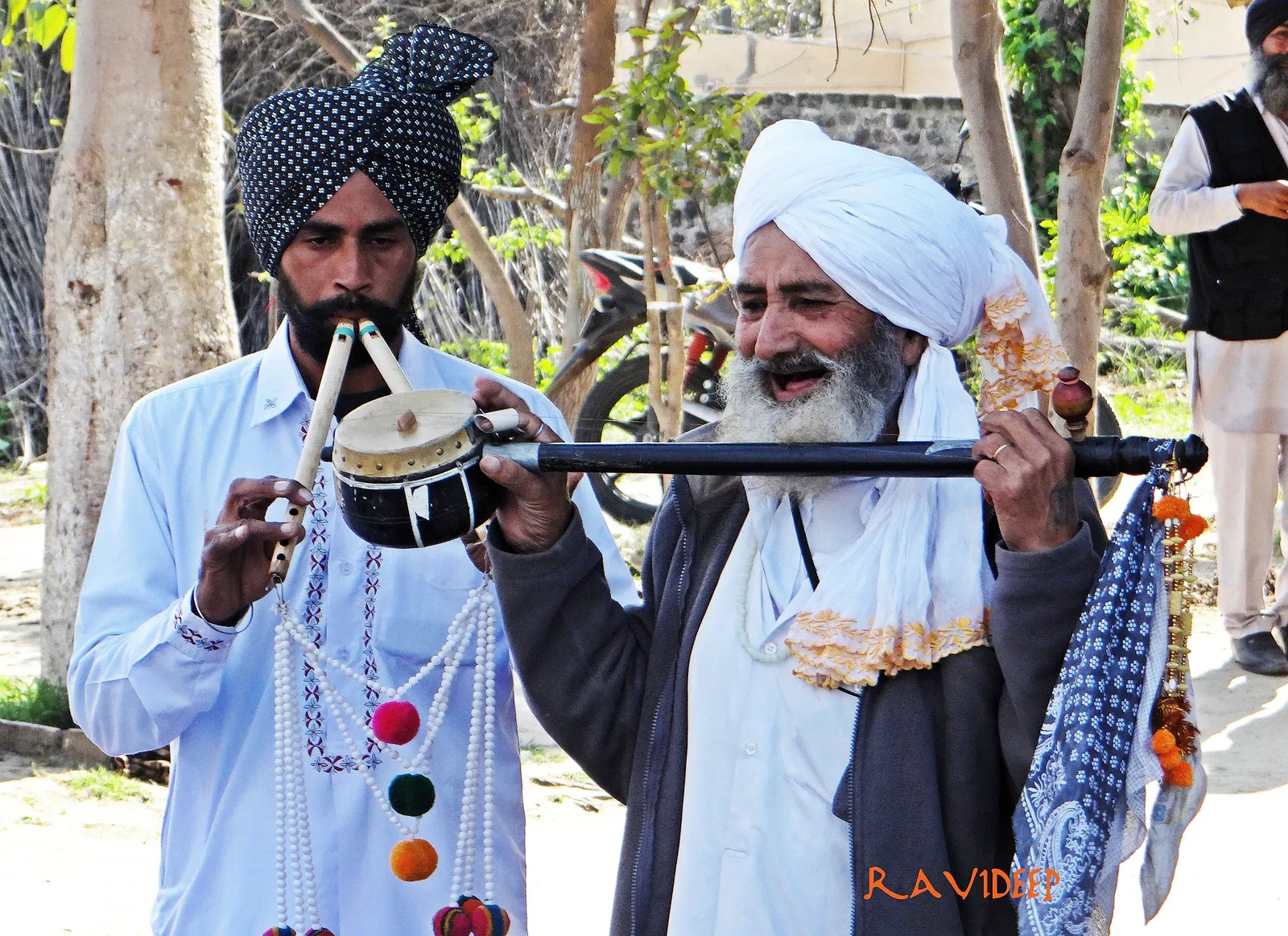
Punjabi singers may perform unaccompanied or with the dhol, tumbi, dhadd, sarangi, chimta, algoze, iktara and the clay pitcher called gharha. The tumbi is a single-string plucked instrument with a gourd body, played by striking the string with a continuous flick of the first finger, and its high pitch has become a signature of Punjabi sound. The chimta, a pair of iron tongs with jingles, supplied Alam Lohar’s rhythm.
Culture
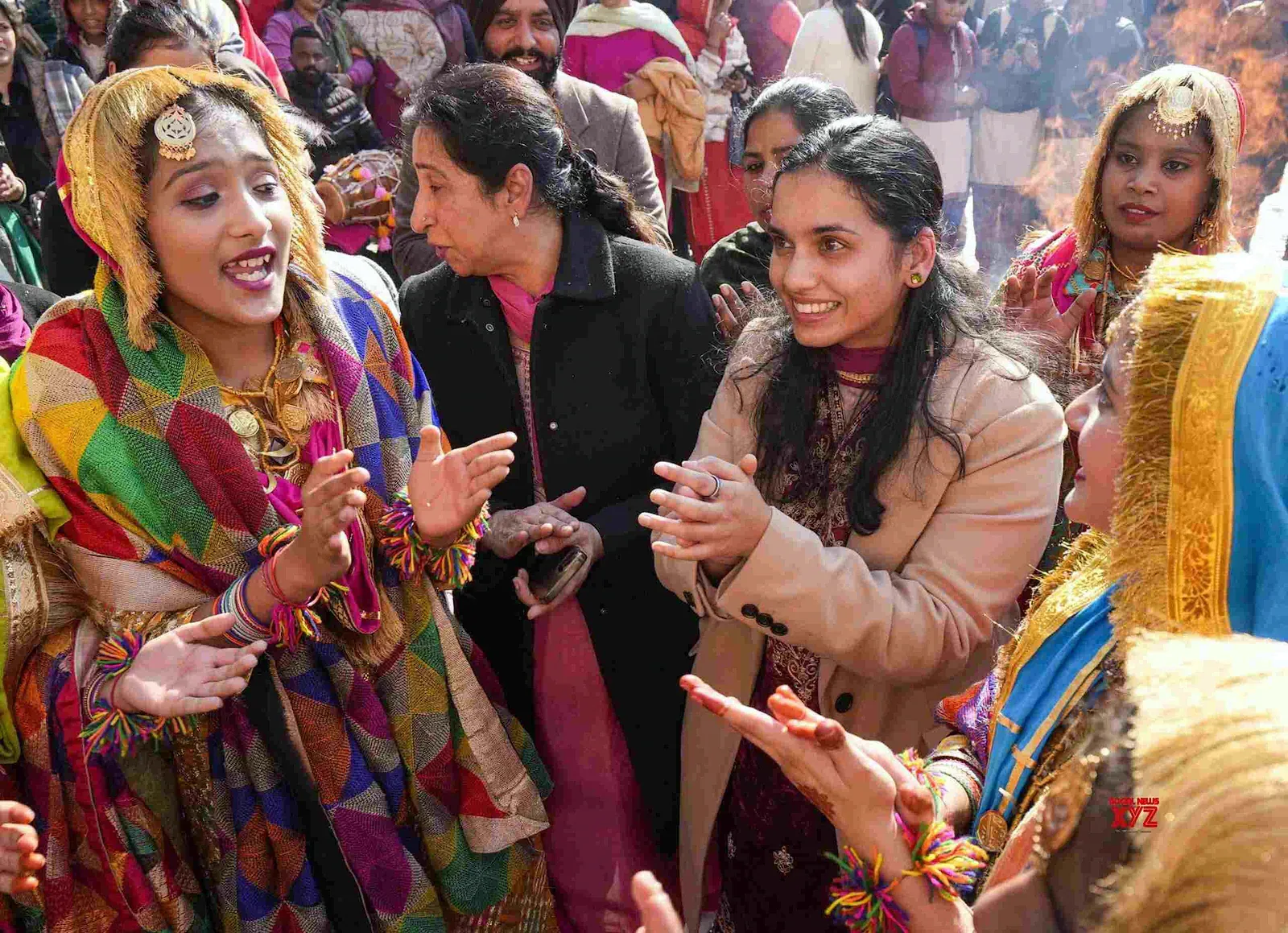
Giddha is the women’s counterpart to men’s bhangra. Women stand in a circle and clap, with a leader reciting a boli whose refrain the circle repeats, and the dance needs no dhol. It is performed at weddings and at festivals such as Teeyan and Lohri, in brightly coloured phulkari embroidery, henna and glass bangles.
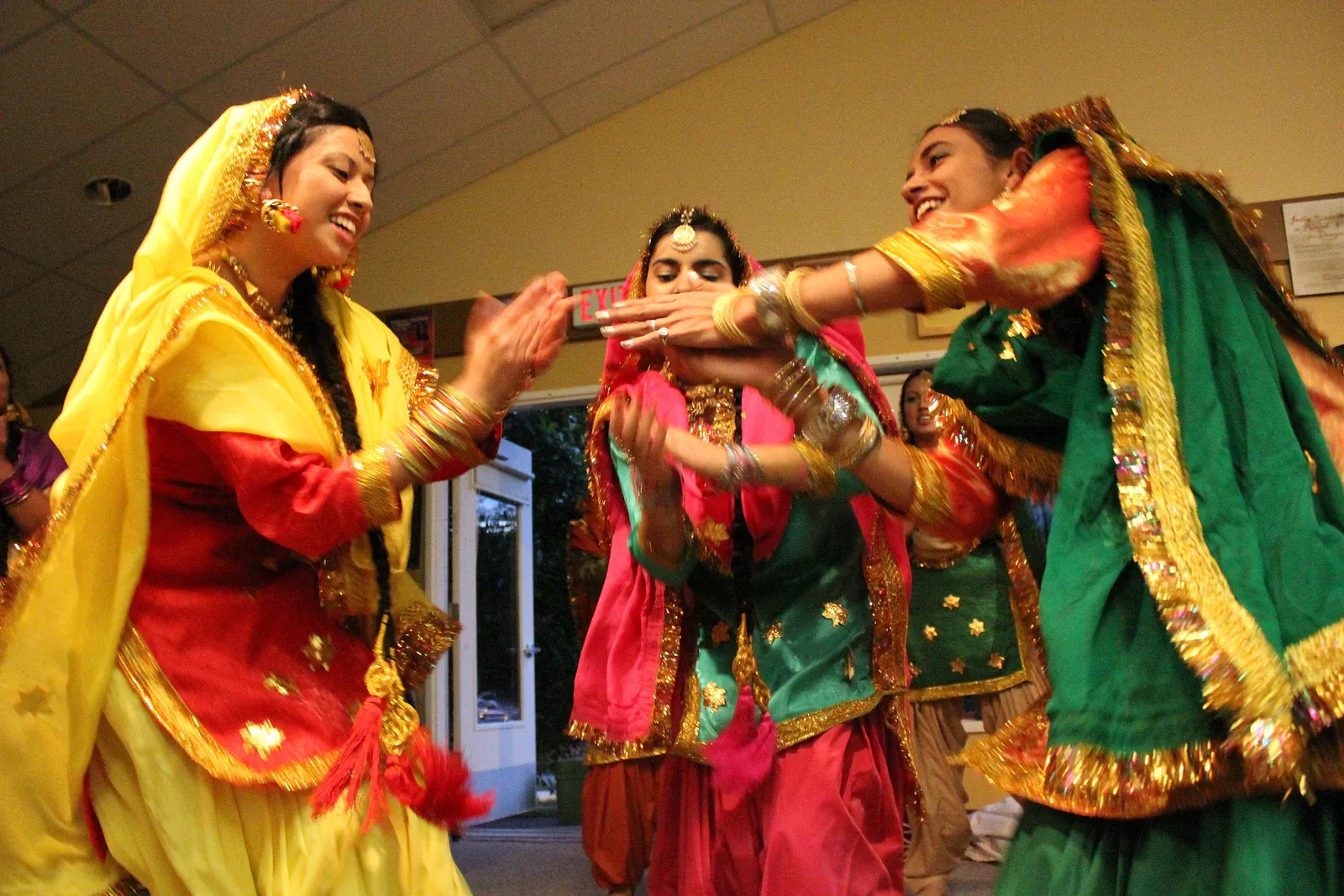
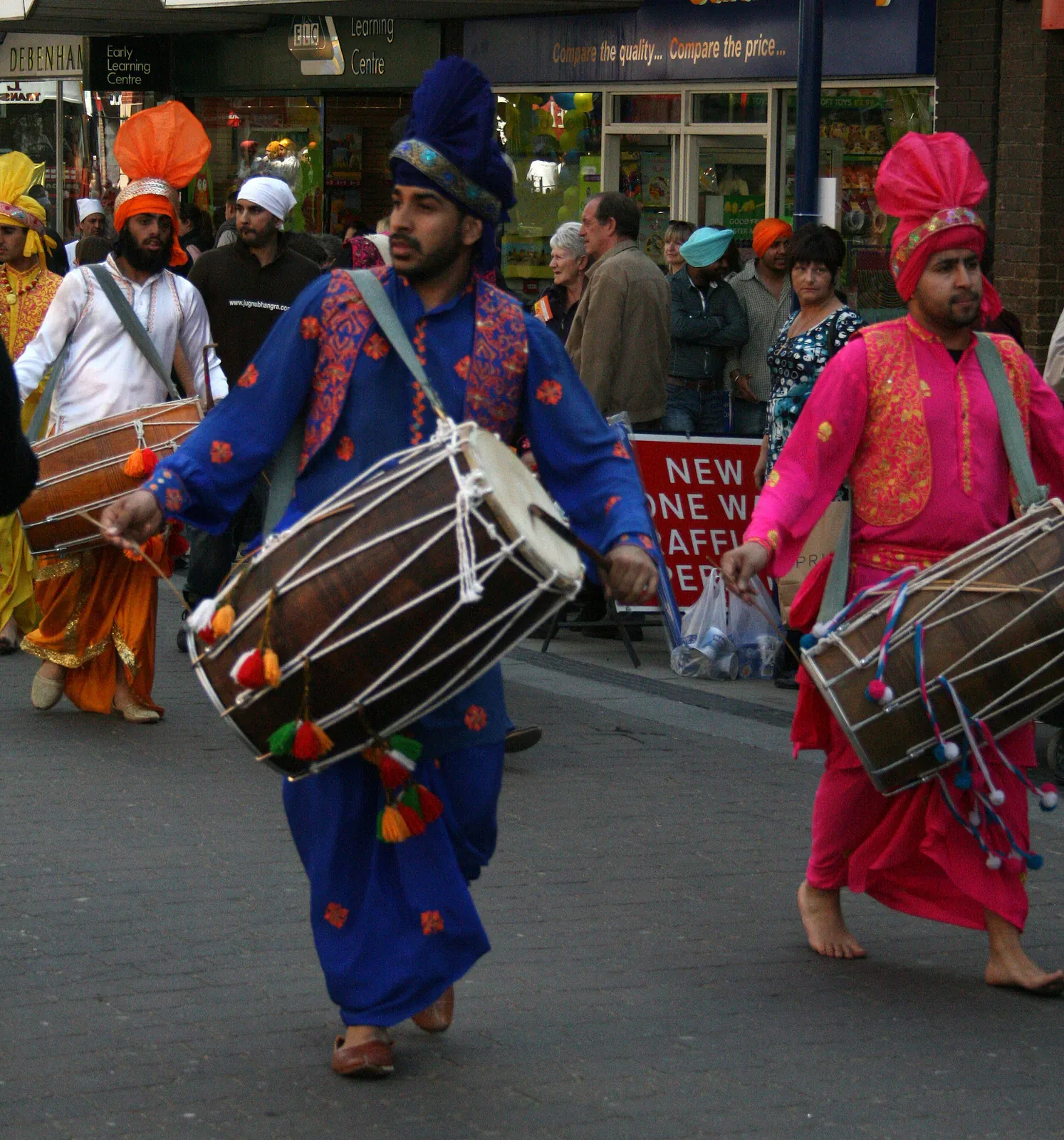
Partition made the folk dances of both halves of Punjab into emblems of Punjabi identity, staged and promoted far from the villages where they began. Competitions and collegiate troupes have spread them through the diaspora. Parts of modern Punjabi song, mostly in bhangra, have also been criticised for promoting caste hierarchy, substance abuse and superstition.
Legacy
Punjabi folk music is the base on which later Punjabi popular song stands. Yamla Jatt’s tumbi was sampled on a best-selling bhangra album, and in 2018 a remake of Das Main Ki Pyar Wichon Khatya by a Pakistani producer spread on short-video platforms and sent the 1963 song to a new audience. The tumbi reached world pop through hits such as Panjabi MC’s Mundian To Bach Ke, and singers across filmi and Sufi song still reach for the same stories. Alam Lohar’s son Arif Lohar brought jugni back in 2006 with Nooran Lal, and the story of Heer and Ranjha is still being retold in film and song. The tradition is part of the wider South Asian musical world.
Misconceptions
Punjabi folk music is not the same as bhangra. Bhangra is a dance, performed by men, and later the name of a popular music built on its rhythms. The folk repertoire is much wider, with songs for every life stage, and its rhythm is simpler.
It is also not the heritage of one religion or one country. Dhadi singing grew out of Sikh history, yet the Mirasi singers who sang in the same period were Muslims, and singers such as Alam Lohar in Pakistan and Lal Chand Yamla Jatt in India often performed together and were friends. Heer, Mirza Sahiban, Sohni Mahiwal and Sassi Punnun are shared stories of the whole region.
Finally, giddha is not a dhol dance. Unlike other Punjabi dances it needs no drum: clapping, a lead singer and a circle of women are enough.
Frequently asked questions
What is Punjabi folk music?
Punjabi folk music is the traditional song of the Punjab region, covering birth, marriage, harvest, love, bravery and death. It is sung in Punjabi on both sides of the India-Pakistan border and by the diaspora.
What instruments are used in Punjabi folk music?
The most common are the tumbi, dhol, dhadd, sarangi, chimta, algoze and iktara, plus the gharha pitcher. Singers often perform with the voice alone or with just one or two of them.
Who are the best-known Punjabi folk singers?
Alam Lohar, Surinder Kaur, Prakash Kaur, Lal Chand Yamla Jatt and Kuldeep Manak are among the most recorded singers of the form. Alam Lohar is linked with jugni, Yamla Jatt with the tumbi, and Manak with the kali.
What is jugni?
Jugni is a narrative device in Punjabi folk song in which a wandering observer meets people and places and comments on them with three or four short verses. It is sung at Punjabi weddings across India, Pakistan and the diaspora.
Sound
Sound sheet
Anatomy of a track
| # | Part |
|---|---|
| 1 | Opening line or verse by the lead singer |
| 2 | Chorus or refrain repeated by the group (call and response) |
| 3 | Story verses over a steady dhol or dhadd pulse |
Signature sounds
- Single-string tumbi strum
- High-pitched, voice-led delivery
- Call and response between leader and circle
- Story-song lyrics from folk legends
Drums and percussion
- Dhol
- Dhadd
Techniques
- Call and response
- Tumbi strumming
- Standing ballad delivery
- Clapped accompaniment
Tuning
Pitch set by the singer; the single-string tumbi and iktara are tuned to the voice
Vocals
High-pitched solo voice, unaccompanied or with tumbi, chimta or dhadd; women sing in groups for giddha
Scenes
Where it happened
Where and when the sound lived: one bar per city on a shared timeline.
Asia
Active scenes
Peak 3, 1952-2025
Seat of the Akal Takht, where dhadi singers performed devotional verse and heroic ballads.
Radio and HMV recording centre where Surinder Kaur and Prakash Kaur became known.
Base of Surinder Kaur and Joginder Singh Sodhi, who arranged and staged Punjabi folk songs.
Culture
Culture markers
- Giddha
Women's circle dance performed to clapping and boliyan at festivals such as Teeyan.
Dance - Wedding songs
Suhag, ghorhian and sithnian songs mark stages of a Punjabi wedding.
Ritual - Seasonal festivals
Lohri, Maghi and Vaisakhi bring music tied to the seasons and the harvest.
Ritual - Phulkari dress
Women dancing giddha wear brightly embroidered dress with mehndi and glass bangles.
Fashion
Glossary
Terms on this page
A sung couplet, led by one singer and repeated by the circle in giddha.
A group of three or four dhadis with one sarangi player, two dhadd players and a narrator.
A narrative device in which a wandering observer comments on life, faith and society.
A rare Punjabi song form associated with Kuldeep Manak, sung in a high-pitched voice.
Folk stories set to music, such as the tales of Dulla Bhatti and Raja Rasalu.
A heroic ballad in Punjabi, sung by dhadis and folk singers.
South Asian family