Punta
Punta is the drum, song and dance tradition of the Garifuna people of Belize, Honduras, Guatemala and Nicaragua, with roots in Saint Vincent and West Africa.
Belize, Honduras, Guatemala, Nicaragua, around 1797
Caribbean family
Born
around 1797
Belize, Honduras, Guatemala, Nicaragua
Subgenres
4
Documented branches
Links
4
Genres it drew on or shaped
Tempo
90-125 BPMLineage
Family tree
Grew out of
Belize, Honduras, Guatemala, Nicaragua
Punta
Led to (4)
Timeline
Era by era
From the first sparks to today. Select a dot to read the story behind it.
- Wake and ritual tradition
1797 to 1977
- Punta rock
1978 to 1989
- Honduran crossover
1990 to 2000
- Heritage and world music
2001 to today
Eras
Moments
- 1 Wake and ritual tradition, 1797 to 1977
- 2 Punta rock, 1978 to 1989
- 3 Honduran crossover, 1990 to 2000
- 4 Heritage and world music, 2001 to today
around 1797
Wake and ritual tradition
After exile from Saint Vincent, Garifuna communities on the Central American coast kept punta as a drum, song and dance form for wakes, ninth-night rites and holidays.
- 1797Garifuna exiled to RoatanBritish forces deport the Garifuna from Saint Vincent to the Bay Islands of Honduras, from where communities spread along the Central American coast.
- 1832Garifuna settle in southern BelizeGarifuna families arrive at Stann Creek, today Dangriga, the town later called the capital of Garifuna culture in Belize.
1978
Punta rock
Pen Cayetano and the Turtle Shell Band added electric guitar to the punta rhythm in Dangriga in 1978, starting a Garifuna pop style that spread through Belize, Honduras and Guatemala.
- 1978Punta rock introducedPen Cayetano and the Turtle Shell Band play electric punta at 5 Moho Street in Dangriga, Belize.
1990
Honduran crossover
Banda Blanca's Sopa de Caracol took a punta-based sound onto Latin radio around 1990 and 1991, while Belizean artists such as Andy Palacio kept recording in Garifuna.
- 1990Sopa de caracol albumHonduran group Banda Blanca releases the album whose title song, written by Belizean Chico Ramos, reaches number one on the Billboard Top Latin Songs chart.
- 1997Palacio's KeimounAndy Palacio releases Keimoun (Beat On), a Garifuna-language album from the Belizean punta scene.
2001
Heritage and world music
UNESCO named Garifuna language, dance and music a masterpiece of intangible heritage in 2001, and Wátina, Umalali and Aurelio's records carried Garifuna music to world-music audiences.
- 2001UNESCO proclamationUNESCO proclaims the Garifuna language, dance and music a masterpiece of the oral and intangible heritage of humanity.
- 2004Garifuna SoulAurelio's debut album Garifuna Soul appears, starting an international career for the Honduran singer.
- 2007Wátina releasedAndy Palacio and the Garifuna Collective release Wátina, produced by Ivan Duran; Palacio and Duran share the WOMEX award that year.
- 2008Andy Palacio diesPalacio dies on 19 January, months after Wátina brought Garifuna music to world audiences.
- 2008The Garifuna Women's ProjectIvan Duran produces Umalali, an album of Garifuna women singers from Belize, Honduras, Guatemala and Nicaragua.
- 2011Laru BeyaAurelio releases Laru Beya, with Youssou N'Dour guesting on two songs.
- 2014Aurelio's LándiniReal World Records issues Lándini, a collection of new and old Garifuna songs.
- 2025Aurelio diesAurelio Martinez dies on 17 March, the leading Garifuna performer since Palacio's death.
Listening path
Start listening
A short path from an easy way in to the deep end. Thumbnails come from YouTube; the player loads only when you press play.
- 01
Umalali, 2008
Women's voices of the Garifuna Women's Project over drums; listen for the lead and chorus exchange.
- 02
Aurelio, 2011
Aurelio and band performing Laru Beya songs with Garifuna drums and guitars.
- 03
Aurelio, 2014
A later Garifuna song where drums and guitar carry the punta pulse.
Facts
| Family | Caribbean |
| Origin | Belize, Honduras, Guatemala, Nicaragua |
| Status | Active |
| Tempo | 90 to 125 BPM |
| Meter | 4/4 |
| Subgenres | 4 |
Punta is the central drum, song and dance tradition of the Garifuna (Garinagu), an Afro-Indigenous people of Belize, Honduras, Guatemala and Nicaragua whose ancestors came from West Africa and the Arawak and Kalinago peoples of Saint Vincent.
It is built on call-and-response singing over two single-headed drums, and it is danced at wakes, on holidays and at community gatherings. Since 1978 it has also been the base of punta rock, an electrified Garifuna pop style.
Origins
The Garifuna descend from West Africans who escaped slavery and from the Indigenous Arawak and Kalinago of Saint Vincent. After the British deported them from the island in 1797, communities settled the Bay Islands of Honduras and then the Central American coast. In Belize the settlement is dated to 1832 and is celebrated every 19 November, above all in Dangriga.
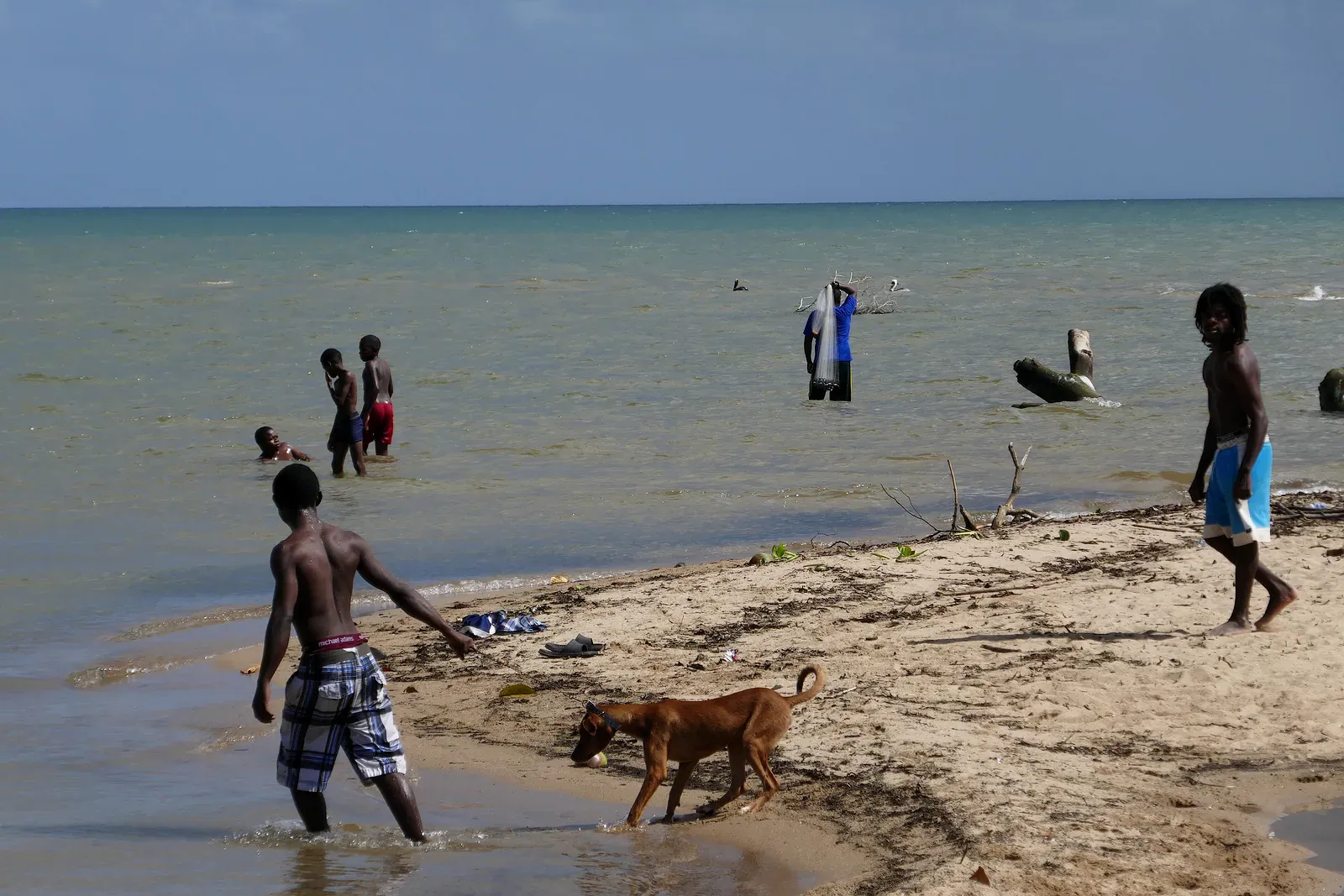
The origin of the word punta is not settled. One account derives it from bunda, a West African rhythm name connected with the Mande word for buttocks; another takes it from the Spanish word for a point, meaning the toes or movement from place to place. The form carries African and Arawak elements and is sometimes called banguity or bunda.
Punta is the most popular dance of Garifuna culture. It is danced on beaches, in parks and, most characteristically, at funerals.
Wake and ritual tradition, to 1977
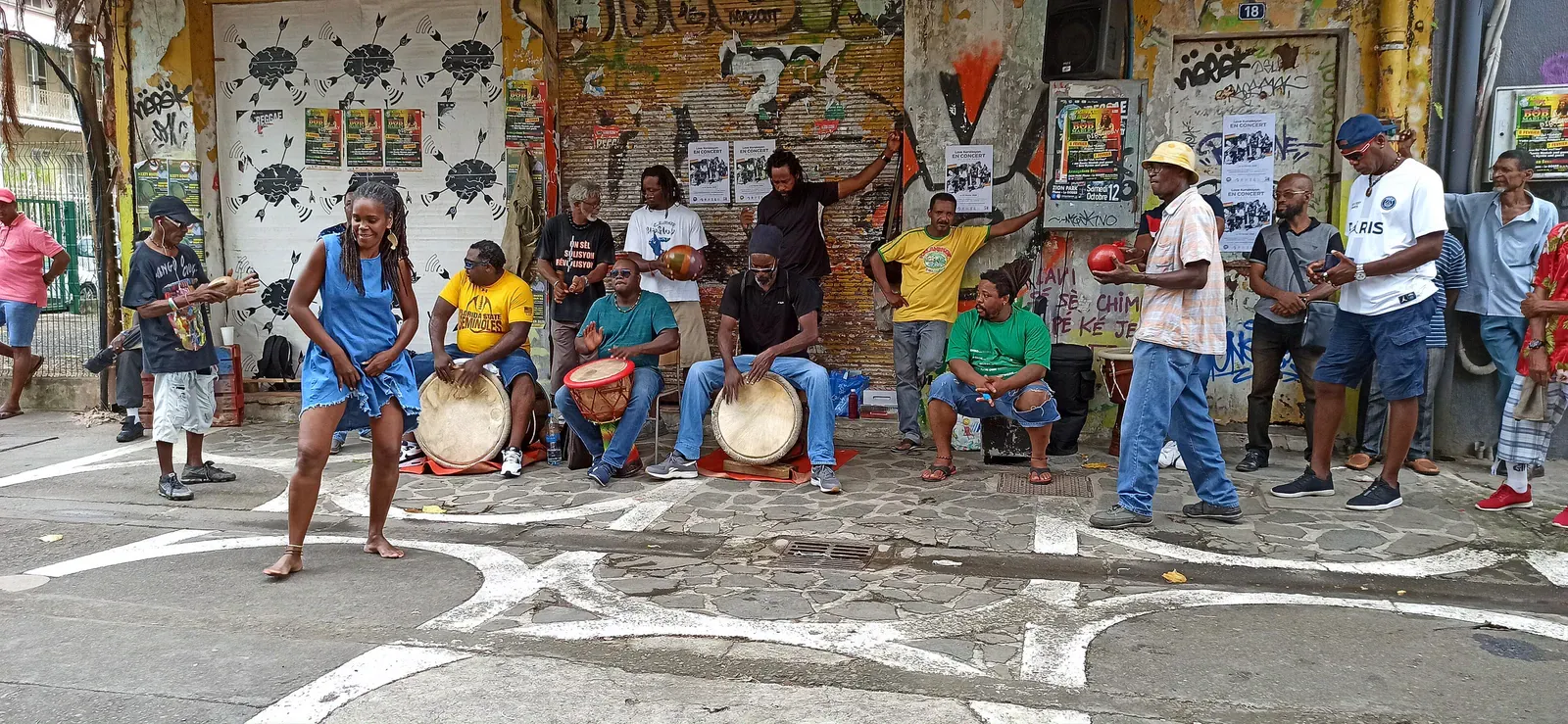
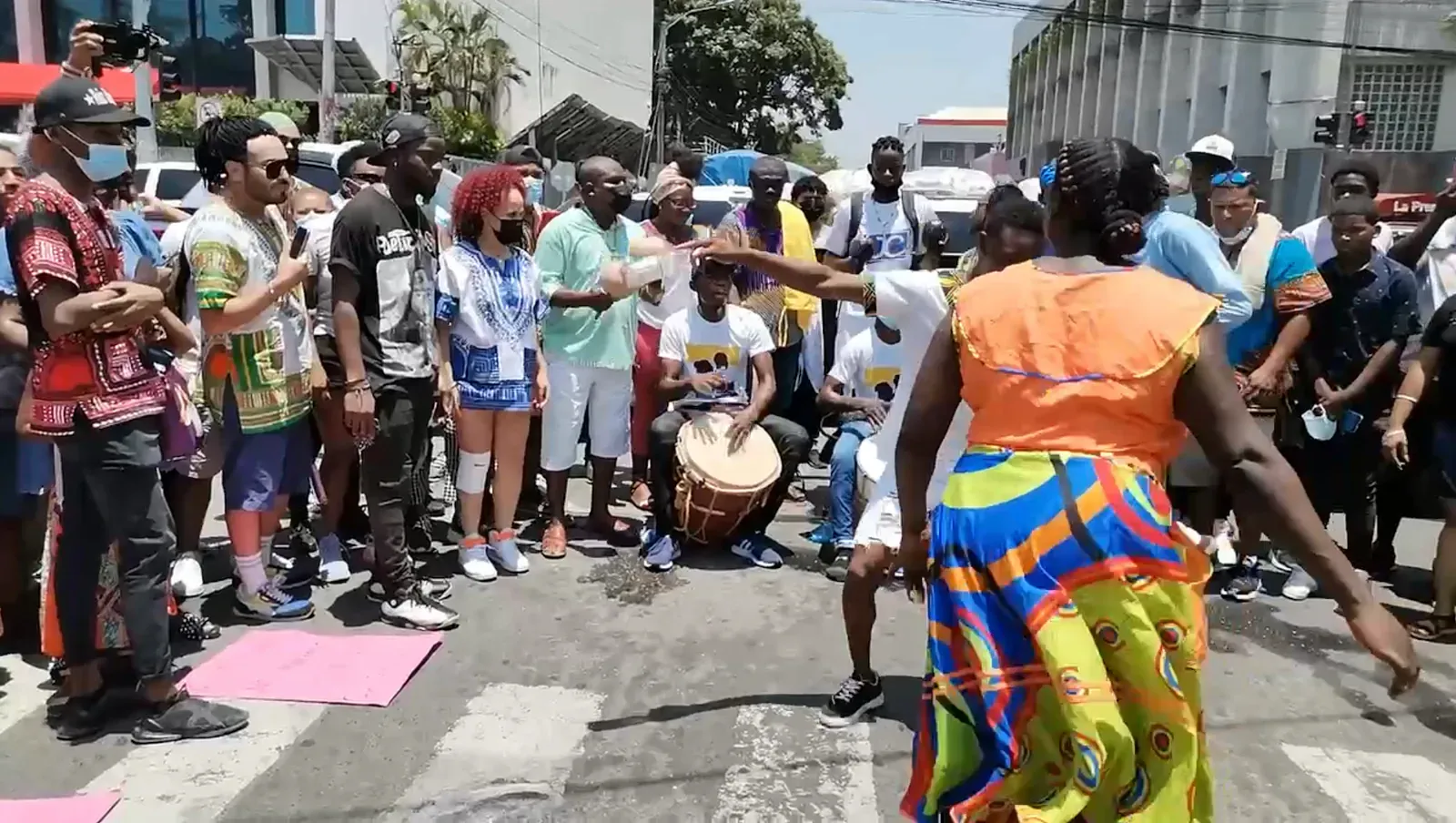
For most of its history punta lived inside community ritual rather than recordings. Its strongest home was the wake, where a soloist and a chorus sing in Garifuna and dancing may continue through the night or into the next afternoon. The ninth-night wake, the gathering nine nights after a death, is the occasion most often described for punta singing, drumming and dancing. The dance also marked Christmas Eve and New Year’s Day.
The dance is a courtship in which a man and a woman move separately inside a circle of spectators. The man pursues, then the woman, and the pair continue until one gives way and another dancer takes the place. Hips and feet move quickly while the upper body stays still, and spectators cheer on their favourite.
Punta rock, 1978-1989
In 1978 the Belizean musician and visual artist Pen Cayetano and the Turtle Shell Band introduced punta rock at 5 Moho Street in Dangriga. They kept the Garifuna songs and punta rhythm and added electric guitar. The style caught on quickly in Belize and then in Garifuna communities in Honduras and Guatemala, where young musicians began composing new Garifuna songs on the old rhythms and gave Belizean Garifuna political, social and economic concerns a wider platform.
Punta rock grew from the early 1980s to include synthesizers, electric bass and further percussion. Andy Palacio described it as Garifuna rhythm mixed with a little reggae, a little rhythm and blues and a little rock and roll. It did not replace the older form: traditional punta continues alongside it and remains the main vehicle for social commentary.
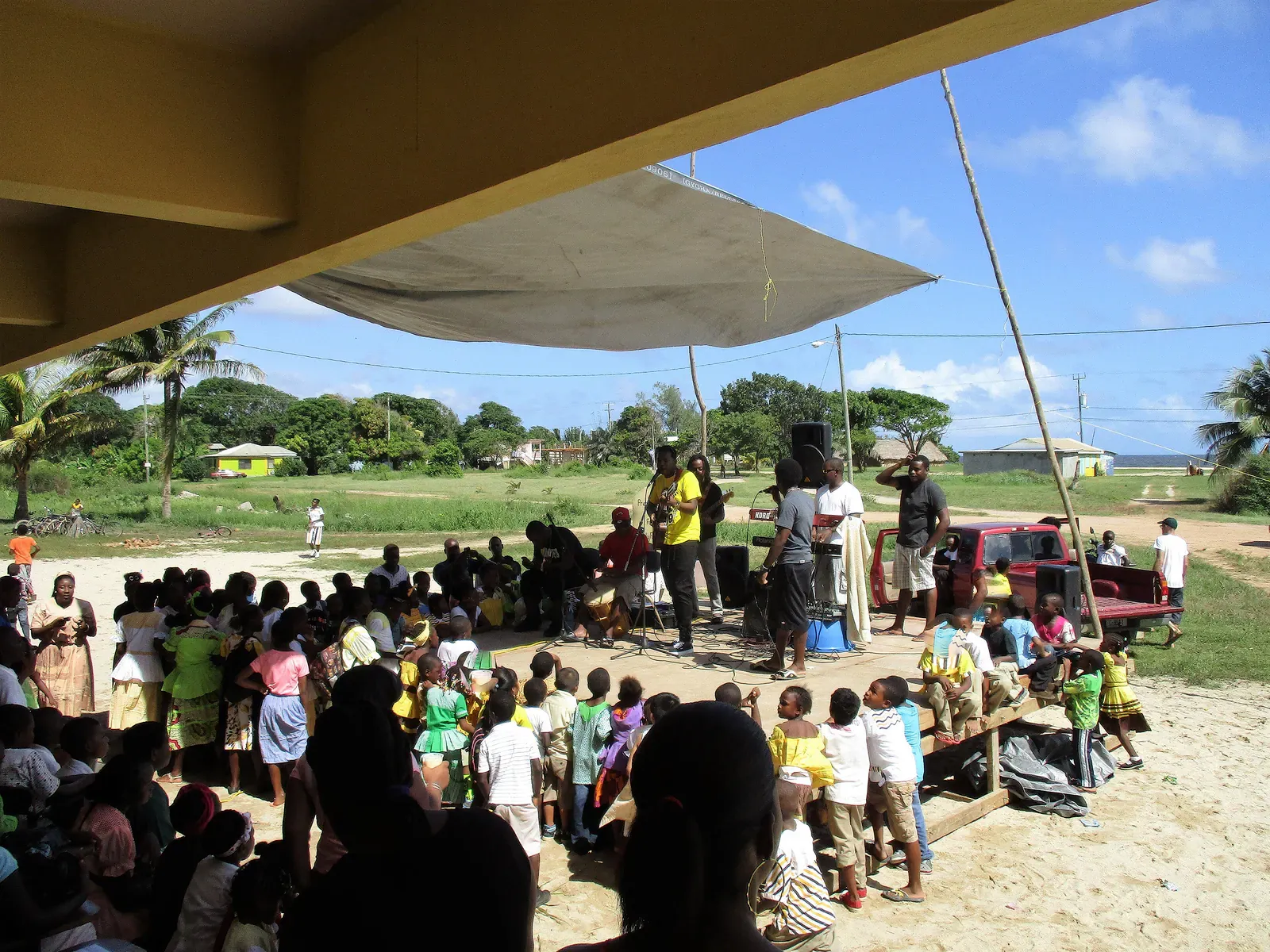
Belizean punta rock differs from the traditional form in language, with songs usually in Kriol or Garifuna and rarely in Spanish or English. Calypso and soca left a mark on it, and like them it carries social commentary and risque humour. Calypso Rose, Lord Rhaburn and the Cross Culture Band helped Belizean Kriol listeners accept it with calypso songs about punta.
Honduran crossover, 1990-2000
Honduras gave the music its largest commercial audience. Banda Blanca, formed in San Pedro Sula in 1971 as a rock band, moved toward merengue and punta rock, and its 1990 album Sopa de caracol made the title song an international success. The song, written by the Belizean Chico Ramos, reached number one on the Billboard Top Latin Songs chart and sold well over a million copies. Garifuna in Belize felt cheated but celebrated the success.
Meanwhile Andy Palacio, born in Barranco, Belize, in 1960, released Keimoun (Beat On) in 1997 and built a career as a Belizean punta musician and a public voice for Garifuna culture. The band Banda Blanca drew on merengue as well as punta rock, one sign of how the style sat among the wider dance music of the Caribbean.
Heritage and world music, 2001 onward
In 2001 UNESCO proclaimed the Garifuna language, dance and music a masterpiece of the oral and intangible heritage of humanity, citing the risk that the culture could be lost. Communities use punta to teach younger people their ancestry, and the Garifuna diaspora, estimated at around 200,000 people, now includes large groups in Honduras, Belize and Guatemala and communities in New York, Miami, New Orleans and Houston.
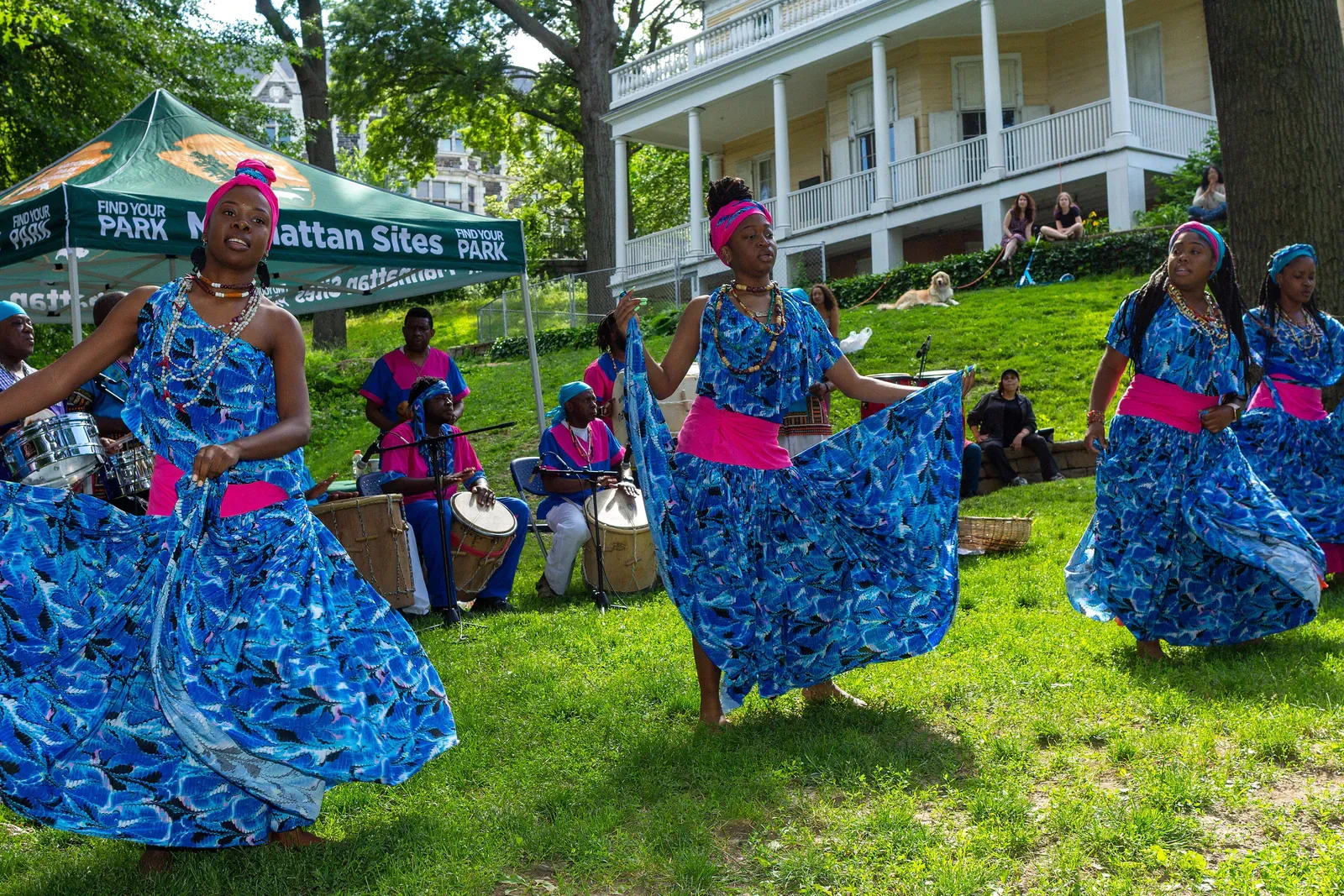
World-music recordings followed. Palacio and the Garifuna Collective released Wátina in 2007, produced by Ivan Duran. The album reached number one on the World Music Charts Europe in June 2007, and Palacio and Duran shared that year’s WOMEX award. Palacio died on 19 January 2008, a few months later.
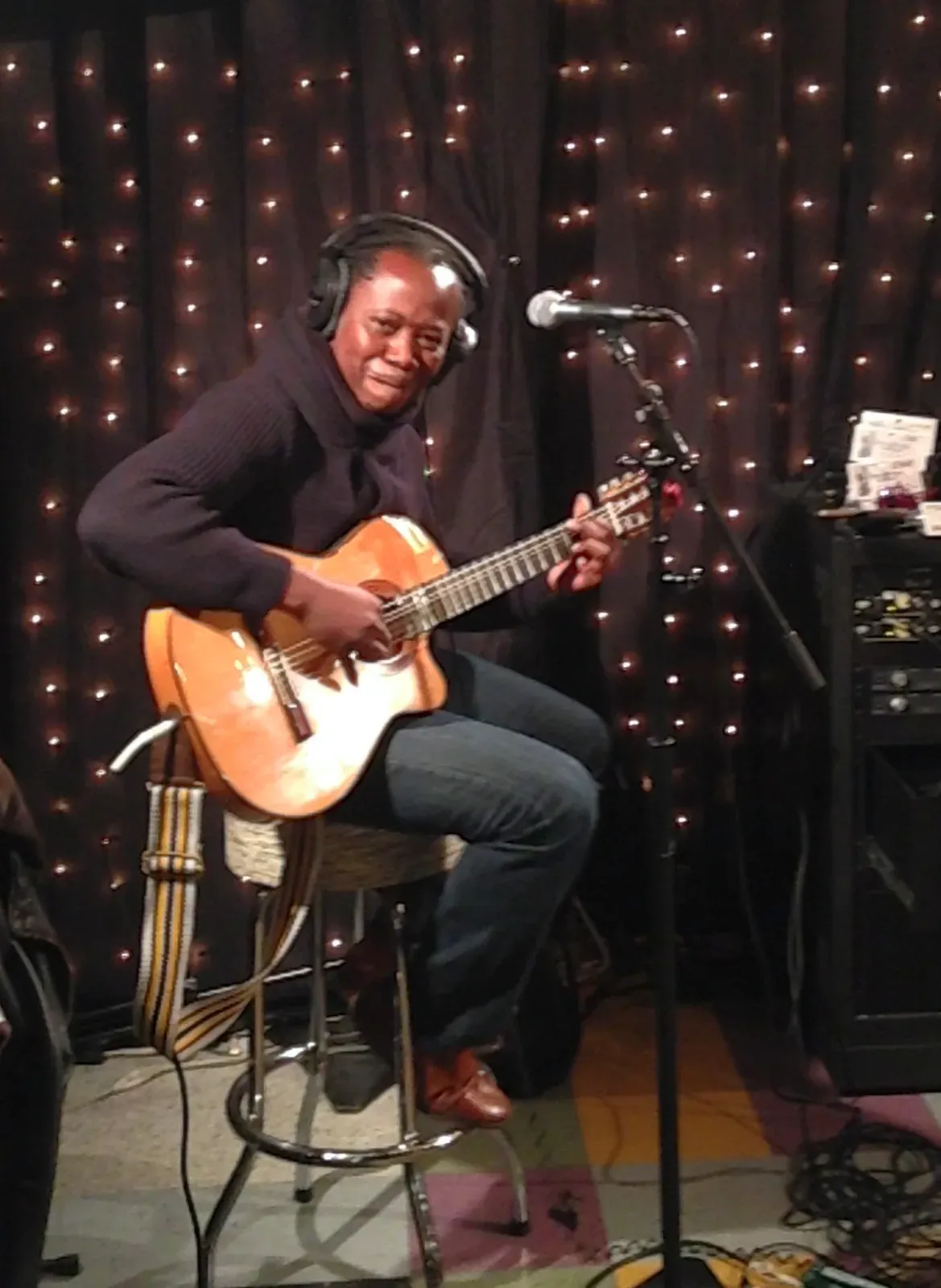
Umalali, a collective of Garifuna women singers from Belize, Honduras, Guatemala and Nicaragua, issued The Garifuna Women’s Project in 2008. Aurelio Martinez, a Honduran singer-songwriter born in Plaplaya, released Garifuna Soul in 2004, Laru Beya in 2011 with Youssou N’Dour on two songs, and Lándini in 2014 on Real World Records. He became the leading Garifuna performer after Palacio’s death and died on 17 March 2025.
Characteristics
Punta is built on responsorial singing: a soloist calls and a chorus answers, over rhythmic drumming that reflects African and Amerindian origins. Garifuna musicians say the songs are less about feeling than about events and the world around them. Lyrics may be in Garifuna, Kriol, English or Spanish, and many songs are adaptations of older Garifuna songs.
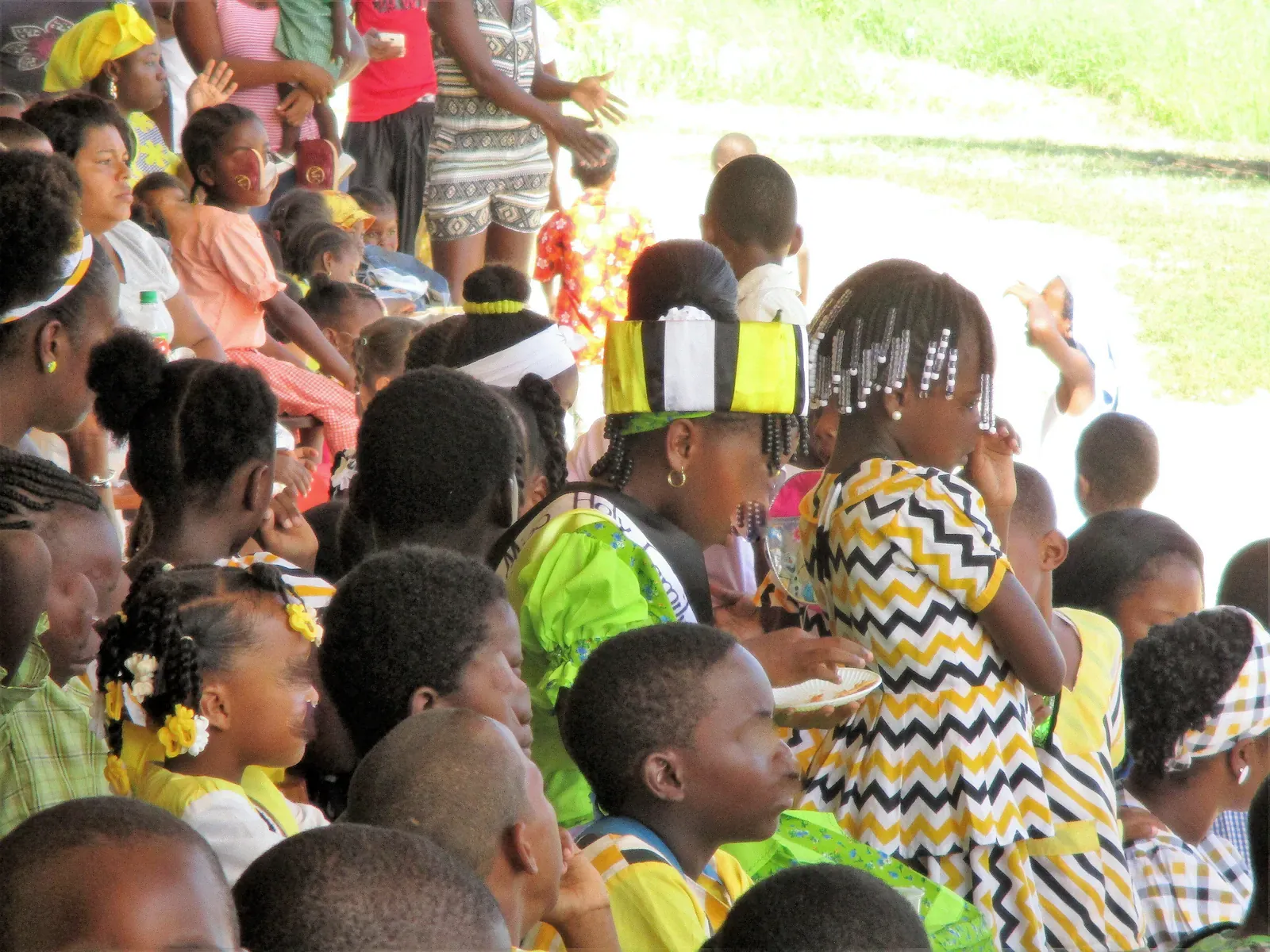
Roles have shifted. Children, once excluded because of the dance’s sensual theme, now take part, and women, once allowed to drum and sing only when no men were available, now work as singers and drummers. The dance has moved from ancestral ritual to birthdays, communions and holiday gatherings.
Instruments and production
Traditional punta uses two single-headed wooden drums, a pair of shakkas (calabash rattles, also called maracas) and sometimes a conch-shell trumpet. The segunda is the bass drum and repeats one duple-meter pattern throughout, while the smaller primera, the lead tenor drum, improvises the rhythms that define punta. Shakkas and conch add solos in a manner often compared to jazz improvisation.
Punta rock added electric guitar and bass, then synthesizers and further percussion, and some bands later brought in piano, brass, woodwind and strings. Much of the studio work behind the world-music records was done in Belize by Ivan Duran, who founded the Stonetree label in 1995 in Benque Viejo del Carmen.
Notable recordings
Sopa de caracol (1990) is the track that put a punta-based sound on international Latin radio. It also shows a tension in the genre: the writer was Belizean and the performing group Honduran, and Garifuna in Belize felt cheated of credit.
Wátina (2007) is the record that carried the Garifuna language abroad. The title track was filmed for a music video in Belize, and the album’s “Weyu Larigi Weyu” takes its rhythm from the dügü, a traditional healing ceremony, and works as a prayer for the community.
Culture
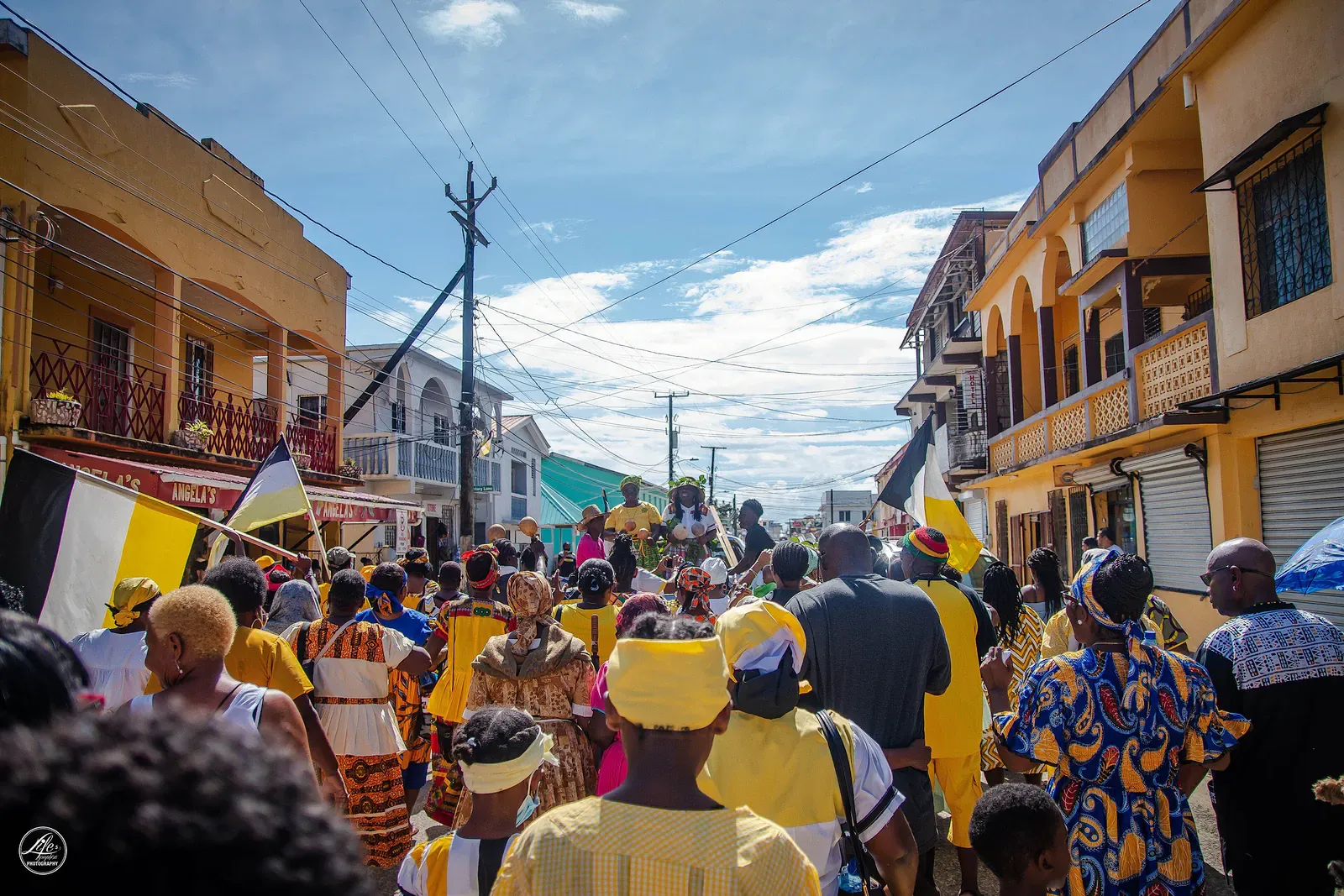
Punta is where the Garifuna talk about themselves. The dance reaffirms heritage, endurance and a link with ancestors, and the wake ties drumming and singing to mourning. In Belize, WAVE Radio and Krem Radio are known for broadcasting it, and it runs through the Settlement Day celebrations each 19 November.
Legacy
Punta gave the Garifuna a pop style of their own through punta rock and a way into world-music circuits through Palacio, Umalali and Aurelio. Related Garifuna forms include chumba and hunguhungu, circular dances often combined with punta, and paranda, a slower acoustic guitar genre.
Misconceptions
The first is that punta is only party music. Its rhythm is lively and the dance is competitive, but the wake songs are often sad, such as one that tells of a person who was well yesterday and dead this morning.
The second is that punta rock replaced punta. It is a modernization created in 1978 and the two forms coexist, with the traditional form kept for ritual and commentary.
The third is that the name has a settled meaning. The two main explanations, a West African word for buttocks and the Spanish word for a point, are both proposed, and neither is confirmed.
Frequently asked questions
What is punta music?
Punta is Garifuna drum-and-song music and a courtship dance from Belize, Honduras, Guatemala and Nicaragua, built on call-and-response singing and two drums. It is danced most often at wakes and festivals.
What is the difference between punta and punta rock?
Punta is the traditional drum-led form. Punta rock is its electrified version, created by Pen Cayetano and the Turtle Shell Band in Dangriga in 1978, with electric guitar and later synthesizers added.
What language is punta sung in?
Garifuna, an Arawakan language, in traditional punta. Belizean punta rock uses Kriol or Garifuna, while Honduran punta uses more Spanish, and English also appears.
Sound
Sound sheet
Anatomy of a track
| # | Part |
|---|---|
| 1 | Drum ostinato (segunda and primera) |
| 2 | Soloist call |
| 3 | Chorus response |
| 4 | Dance section with drum improvisation |
Signature sounds
- Segunda duple-meter ostinato under primera improvisation
- Soloist and chorus call and response
- Lyrics in Garifuna, Kriol, Spanish or English
Drums and percussion
- Primera
- Segunda
Techniques
- Call and response
- Ostinato and improvisation
- Wake singing
- Electrified punta
Keys and modes
Varied keys. Recorded songs sit in different keys with no single tonal centre.
Vocals
Call and response in Garifuna, with Kriol, Spanish or English in popular punta and punta rock.
Scenes
Where it happened
Where and when the sound lived: one bar per city on a shared timeline.
Latin America
Active scenes
Peak 3, 1971-2025
The island where the Garifuna were landed after deportation from Saint Vincent.
Belizean centre of Garifuna life and the birthplace of punta rock.
Home city of Banda Blanca, whose punta-based hit sold across Latin America.
Venues and places
Dangriga, 1978 to today. Address where Pen Cayetano and the Turtle Shell Band introduced punta rock.
Benque Viejo del Carmen, 1995 to today. Studio of the label founded by producer Ivan Duran, who recorded Garifuna albums such as Wátina.
Culture
Culture markers
- Courtship dance
A man and a woman dance separately inside a circle of spectators, with fast hip and foot movement while the upper body stays still.
Dance - Ninth-night wake
Punta singing and dancing are kept for wakes, where a soloist and chorus perform and dancing may last through the night.
Ritual - Holiday punta
Punta is also danced on Christmas Eve and New Year's Day, and now at birthdays, communions and other gatherings.
Ritual
Glossary
Terms on this page
Ritual healing ceremony whose rhythm Andy Palacio drew on for the song Weyu Larigi Weyu.
Plural of Garifuna, the Afro-Indigenous people descended from African and Arawak and Kalinago ancestors.
The two single-headed Garifuna drums, lead tenor and bass.
Garifuna dance and music form; the name may come from a Mande word bunda or the Spanish word for point.
Electrified punta created by Pen Cayetano in 1978 and sung in Garifuna or Belizean Kriol.
Caribbean family